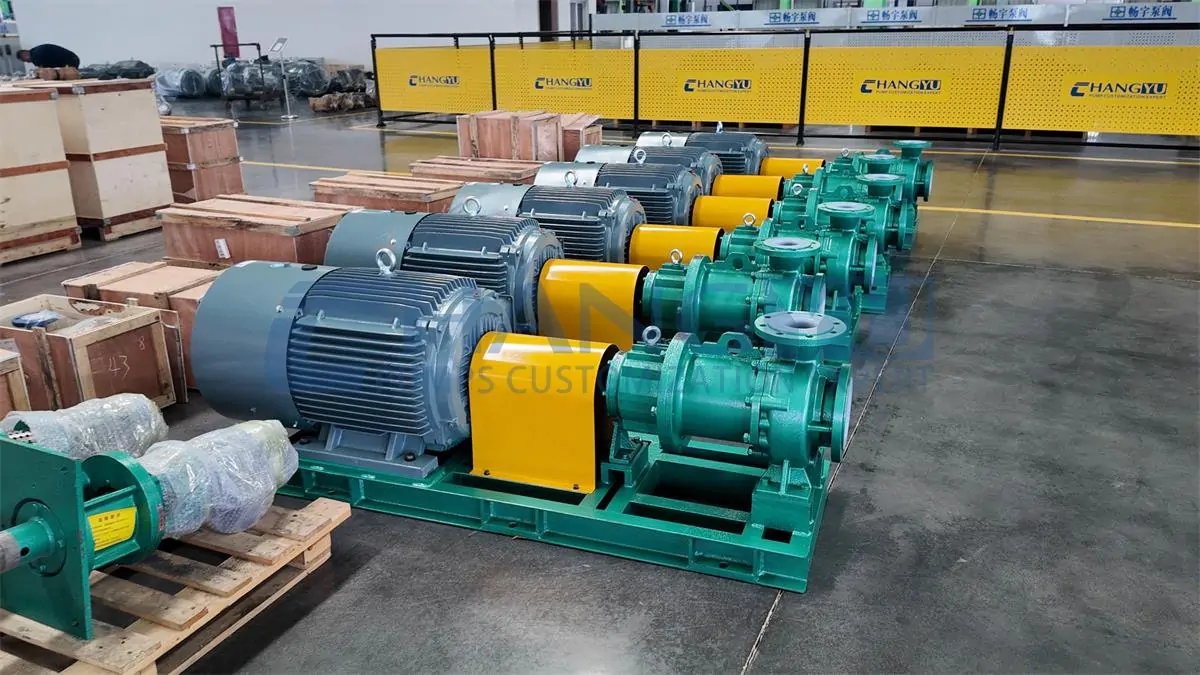
Resposta rápida
A Bomba de polpa SX-EW de cobre atende ao processo hidrometalúrgico que extrai cobre de minérios oxidados por meio de lixiviação com ácido sulfúrico, extração por solvente com reagentes orgânicos e eletrorrecuperação. Nenhuma bomba única atende todas as três etapas. Fatores-chave de seleção:
- A lixiviação exige resistência ao desgaste: A solução de lixiviação grávida (PLS) carrega partículas finas de minério em ácido sulfúrico. Este ataque combinado de abrasão e ácido requer bombas revestidas com UHMWPE ou liga de alto cromo que resistam tanto à erosão quanto à corrosão.
- A extração por solvente exige vedação zero: A fase orgânica — diluente à base de querosene com extratante oxima — é inflamável, cara e regulamentada. Bombas de acionamento magnético sem vedação ou selos mecânicos duplos são o padrão para prevenir risco de incêndio e perda de reagente.
- A eletrorrecuperação exige pureza: O eletrólito rico em cobre deve permanecer livre de contaminação por íons metálicos. Bombas que lixiviam ferro, níquel ou cromo degradam a qualidade do cátodo. Bombas revestidas com fluoroplástico são necessárias para esta etapa.
O SX-EW representa aproximadamente 20% da produção global de cobre. As plantas operam continuamente em locais remotos, onde a confiabilidade do equipamento determina a lucratividade. Uma falha de bomba na lixiviação interrompe a produção. Um vazamento de selo na extração por solvente desencadeia um incidente de segurança. Um evento de contaminação na eletrorrecuperação degrada a pureza do cátodo.
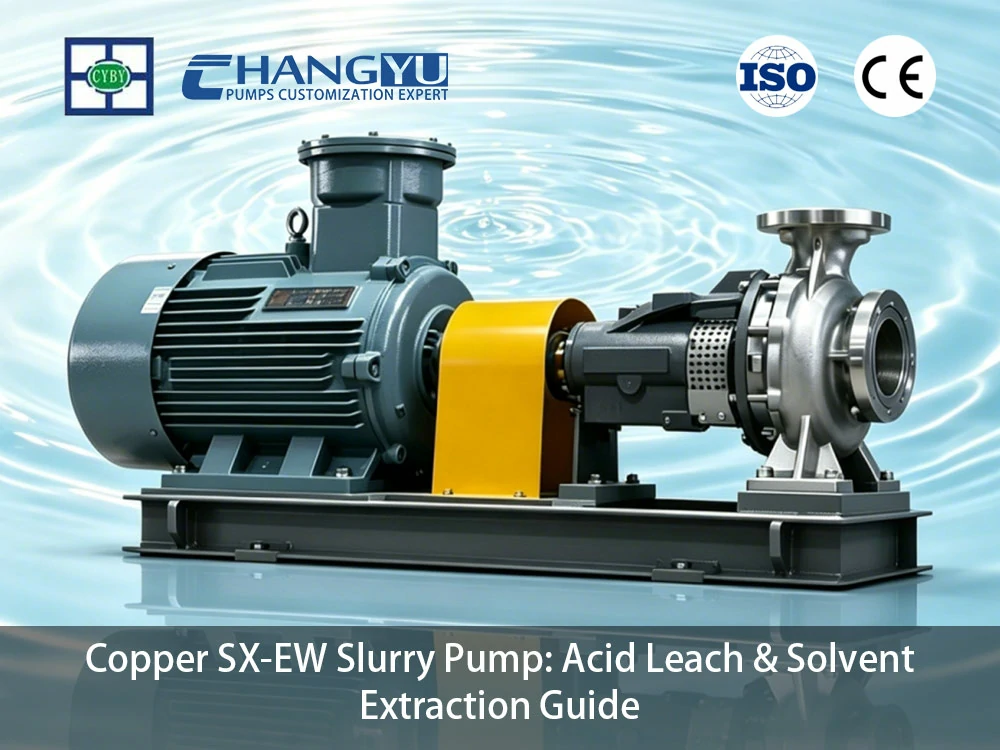
Após ler este guia, você entenderá as demandas de bombeamento de cada etapa do SX-EW, quais materiais resistem à corrosão ácida e à abrasão de sólidos, como especificar bombas à prova de vazamentos para a fase orgânica, quais requisitos de pureza se aplicam às bombas de eletrólito de EW e quais tipos de bomba oferecem o menor custo total de propriedade. Com mais de 20 anos de experiência em fabricação de bombas, a Changyu Pump apresenta este guia de seleção para hidrometalurgia do cobre.
Quais São as Etapas-Chave no SX-EW de Cobre?
Desgaste moderado extração por solvente-eletrorrecuperação produz cátodos de cobre de alta pureza por meio de três etapas, cada uma com requisitos distintos de bombeamento.
Lixiviação: O minério de cobre oxidado triturado é irrigado com ácido sulfúrico diluído ácido sulfúrico. O ácido dissolve o cobre, produzindo PLS (1–5 g/L Cu, pH 1,5–2,0) com partículas finas de minério em suspensão. As bombas de PLS transferem esta solução abrasiva e ácida para a planta de SX. Após a extração do cobre, o rafinato empobrecido retorna à pilha de lixiviação.
Extração por Solvente (SX): O PLS entra em contato com uma fase orgânica — diluente de querosene com extratante oxima — que se liga seletivamente ao cobre. O orgânico carregado é despojado com eletrólito gasto altamente ácido (180–200 g/L H₂SO₄, 30–35 g/L Cu), produzindo eletrólito rico em cobre para eletrorrecuperação. Três fluidos requerem bombeamento: PLS/rafinato aquoso, fase orgânica e eletrólito rico. A bomba de fase orgânica exige atenção particular — os reagentes são inflamáveis e voláteis.
Eletrorrecuperação (EW): O eletrólito rico em cobre flui através de células eletrolíticas onde a corrente contínua deposita cobre puro em blanks de cátodo. Após a colheita, o eletrólito empobrecido retorna ao despojamento do SX.
Características dos Fluidos SX-EW
| Estágio do Processo | Fluido | Desgaste moderado | Ácido / Química | Sólidos | Temperatura |
|---|---|---|---|---|---|
| Lixiviação | PLS / Rafinato | 1–5 g/L | pH 1,5–2,0 H₂SO₄ | Partículas finas de minério | Ambiente a 40°C |
| Extração SX | Fase orgânica | Carregado com Cu | Querosene + oxima | Nenhum no projeto; pode conter borra | 25–35°C |
| Despojamento SX | Eletrólito rico | 30–35 g/L | 180–200 g/L H₂SO₄ | Nenhum | 35–45°C |
| EW | Eletrólito | 30–35 g/L | 180–200 g/L H₂SO₄ | Nenhum | 40–50°C |
Quais Materiais São Compatíveis com os Fluidos SX-EW?
A seleção de materiais é complexa porque as três etapas expõem as bombas a desafios fundamentalmente diferentes.
Matriz de Compatibilidade de Materiais
| Material | PLS / Rafinato | Fase Orgânica | Eletrólito EW |
|---|---|---|---|
| Aço Inoxidável 316L | Não recomendado — erosão-corrosão rápida | Aceitável | Limitado — pode lixiviar metais traço |
| Duplex 2205 | Melhor que 316L | Aceitável | Aceitável |
| Alto Cromo (Cr27–33) | Bom — excelente abrasão | Não para contato orgânico | Não recomendado — pode lixiviar cromo |
| Forro em UHMW-PE | Ótimo — combina resistência a ácido + abrasão | Limitado — ligeiro inchaço possível com querosene | Não recomendado — limite de temperatura 90°C |
| Revestido em FEP / PFA | Bom — excelente resistência a ácido | Excelente — resistência orgânica universal | Excelente — lixiviação zero de metal |
| PP | Bom — escolha econômica | Aceitável | Aceitável — limite de temperatura ~80°C |
Seleção de Material por Etapa
| Estágio | Desafio primário | Material recomendado | Alternativa |
|---|---|---|---|
| Lixiviação (PLS/Rafinato) | Abrasão + ácido | Centrífuga com revestimento em UHMW-PE | Liga de alto cromo |
| Fase Orgânica SX | Inflamável — vazamento zero | Acionamento magnético revestido com FEP/PFA | 316L com selo duplo + motor ATEX/IECEx |
| Eletrólito EW | Alta pureza | Centrífuga revestida com FEP/PFA | Centrífuga PVDF |
Máxima passagem de sólidos + peças de desgaste substituíveis Para PLS e rafinato, especifique bombas centrífugas revestidas com UHMW-PE como linha de base — a combinação ideal de resistência a ácido e abrasão nos pontos de custo da mineração de cobre. Para fase orgânica, especifique bombas de acionamento magnético sem vedação com revestimento FEP/PFA e motores certificados ATEX ou IECEx. Para eletrólito EW, especifique bombas revestidas com FEP/PFA para evitar contaminação por íons metálicos do cobre de qualidade de cátodo.
Como Selecionar Bombas para a Etapa de Lixiviação do SX-EW de Cobre?
As bombas da etapa de lixiviação lidam com os maiores volumes de fluxo nas condições mais exigentes. As bombas de PLS e rafinato movimentam milhares de metros cúbicos diariamente de solução ácida e abrasiva.
Seleção de Bomba para Lixiviação
| Tipo de bomba | Recomendação | Notas |
|---|---|---|
| Centrífuga Revestida com UHMW-PE | Escolha primária | Resistência ótima a ácido + abrasão; revestimentos substituíveis |
| Liga de Alto Cromo (Cr27–33) | Alternativa para sólidos grossos | Menor resistência a ácido que UHMW-PE |
| Super Duplex 2507 | Abrasão moderada, temperatura mais alta | Custo mais alto; requer placas de desgaste |
| Acionamento magnético | PLS intermitente, vazamento zero | Não para alto teor de sólidos |
Principais especificações: Dimensione para o fluxo máximo de PLS mais uma margem de 15–20%. Especifique rotores semi-abertos para passagem de sólidos finos. Proteja os selos mecânicos com lavagem externa (1–2 bar acima da câmara do selo, 2–5 L/min) ou sistema de fluido de barreira em circuito fechado em regiões áridas.
Máxima passagem de sólidos + peças de desgaste substituíveis Especifique bombas centrífugas revestidas com UHMW-PE com rotores semi-abertos, sistema de proteção do selo e controle VFD. O revestimento UHMW-PE fornece a vida útil de desgaste para operação confiável entre paradas.
Como Selecionar Bombas para a Etapa de Extração por Solvente do SX-EW de Cobre?
A etapa SX apresenta os desafios de bombeamento mais diversos: PLS/rafinato aquoso, fase orgânica inflamável e eletrólito rico altamente ácido.
Requisitos da Bomba de Fase Orgânica
Três fatores orientam a especificação da bomba de fase orgânica: segurança contra incêndio (o querosene é inflamável), valor do reagente (o extratante oxima é caro) e regulamentação ambiental (As emissões de VOC são restritas). As bombas de fase orgânica devem eliminar completamente o selo mecânico ou fornecer selo mecânico duplo com fluido de barreira e detecção de vazamento.
Seleção de Bomba para Estágio SX
| Aplicação | Bomba Recomendada | Especificação Chave |
|---|---|---|
| Fase orgânica | Acionamento magnético sem selo com revestimento FEP/PFA | Motor ATEX/IECEx; invólucro de contenção em PEEK |
| PLS / Rafinato | Centrífuga com revestimento em UHMW-PE | Mesmo que o estágio de lixiviação |
| Eletrólito rico | Centrífuga com revestimento FEP/PFA ou acionamento magnético | Alta resistência a ácidos; sem lixiviação de metais |
Máxima passagem de sólidos + peças de desgaste substituíveis Para todo bombeamento de fase orgânica, especifique bombas de acionamento magnético sem selo com revestimento FEP/PFA e motores certificados ATEX ou IECEx. O custo incremental é recuperado no primeiro vazamento orgânico evitado.
Como Selecionar Bombas para o Estágio de Eletroextração de Cobre SX-EW?
O eletroextração estágio produz o produto final de cobre. As bombas de circulação de eletrólito devem fornecer fluxo contínuo com pureza absoluta — a contaminação por íons metálicos degrada diretamente a qualidade do cátodo.
Lixiviação zero de íons metálicos: O eletrólito (180–200 g/L H₂SO₄, 30–35 g/L Cu) a 40–50°C ataca agressivamente o aço inoxidável padrão, lixiviando ferro, níquel e cromo. Esses íons co-depositam com o cobre, reduzindo a pureza do cátodo e o valor de mercado.
Considerações de temperatura: O revestimento FEP atende ao eletrólito EW padrão a 40–50°C. Para circuitos onde são possíveis picos de temperatura acima de 80°C, atualize para revestimento PFA.
Seleção de Bomba para Estágio EW
| Aplicação | Bomba Recomendada | Especificação Chave |
|---|---|---|
| Circulação de eletrólito rico | Centrífuga revestida com FEP/PFA | Lixiviação zero de metais; controle VFD |
| Retorno de eletrólito gasto | Centrífuga revestida com FEP/PFA | Mesmo modelo para padronização de peças de reposição |
| Lavagem de névoa ácida | Centrífuga em PP ou PVDF | Menor custo para sem contato com o produto |
Máxima passagem de sólidos + peças de desgaste substituíveis Para todas as bombas em contato com eletrólito, especifique bombas centrífugas revestidas com fluoroplástico FEP ou PFA. O aço inoxidável padrão lixiviará metais traço e não deve ser usado para serviço de eletrólito EW.
Soluções de Bomba de Polpa para Cobre SX-EW da Changyu Pump
Três séries de bombas atendem aplicações de cobre SX-EW:
Seleção de Bomba SX-EW
| Estágio SX-EW | Aplicação | Série | Característica principal |
|---|---|---|---|
| Lixiviação | PLS / Rafinato | Série UHB | Revestido em UHMW-PE; resistente à abrasão + ácido |
| Fase Orgânica SX | Transferência orgânica | Série CQZ | Acionamento magnético sem selo; vazamento zero; ATEX/IECEx |
| Eletrólito SX / EW | Eletrólito rico / gasto | Série CYB-ZKJ | Revestido em FEP/PFA; lixiviação zero de metais |
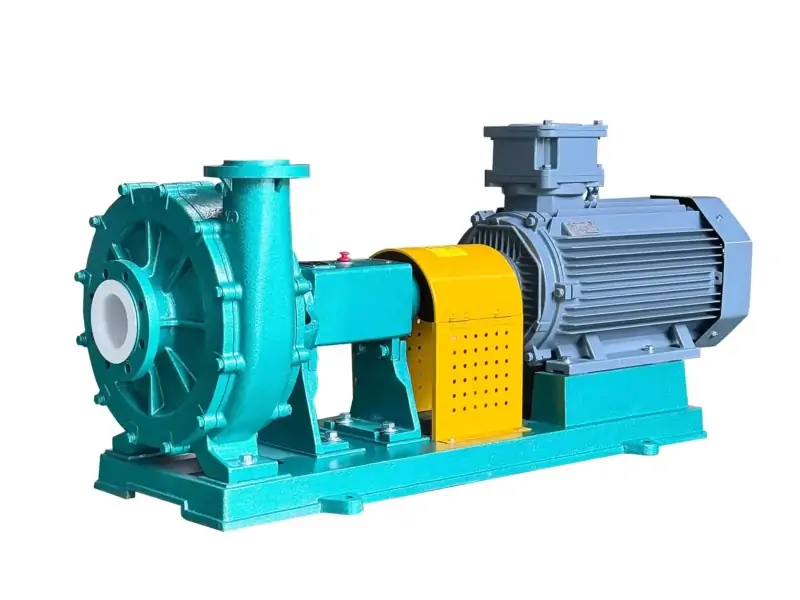
Série UHB — Bomba Revestida em UHMW-PE para PLS e Refinado
O revestimento em UHMW-PE reforçado com aço fornece resistência ideal a ácidos e abrasão. O impulsor semiaberto lida com sólidos finos. Revestimentos de desgaste substituíveis prolongam a vida útil da carcaça.
| Parâmetro | Especificação |
|---|---|
| Caudal | 3-2,600 m³/h |
| Cabeça | 5-100 m |
| Temperatura | -20°C a 90°C |
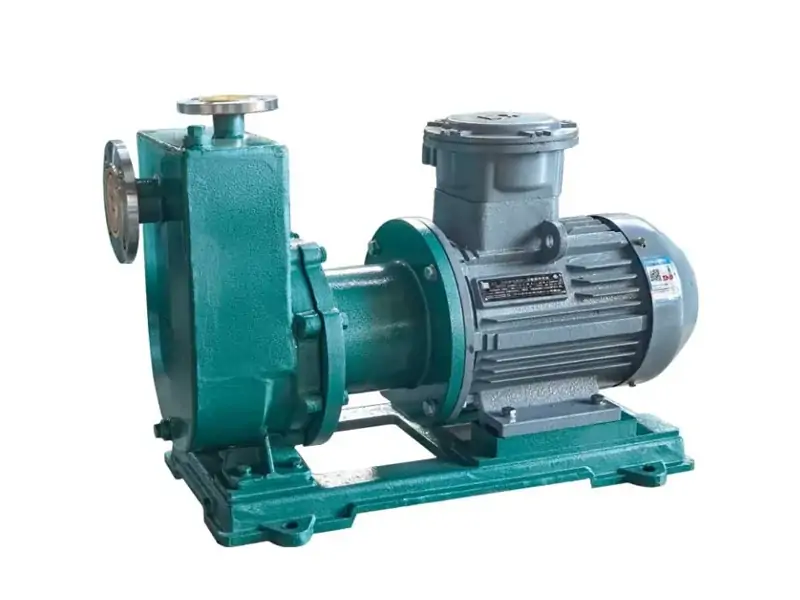
Série CQZ — Bomba de Acionamento Magnético para Fase Orgânica
O acionamento magnético sem selo elimina o selo mecânico. O revestimento FEP/PFA resiste a querosene e reagentes oxima. Motores ATEX/IECEx disponíveis.
| Parâmetro | Especificação |
|---|---|
| Caudal | 3-800 m³/h |
| Cabeça | 12,5–130 m |
| Temperatura | -120°C a 320°C |
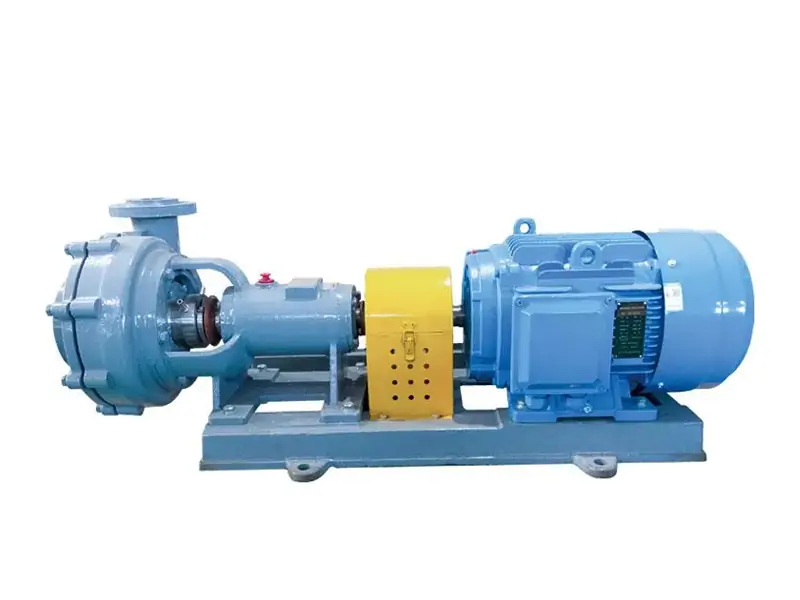
Série CYB-ZKJ — Bomba Revestida em FEP/PFA para Eletrólito
O revestimento fluoroplástico isola o eletrólito da carcaça metálica, prevenindo a lixiviação de íons metálicos. Resistência universal a ácidos em toda a faixa de eletrólito.
| Parâmetro | Especificação |
|---|---|
| Caudal | 3-2,600 m³/h |
| Cabeça | 5-100 m |
| Temperatura | -80°C a 120°C |
Estudo de Caso de Bomba de Polpa para Cobre SX-EW: Resolvendo uma Falha por Desgaste em Bomba de PLS
Uma planta de cobre SX-EW na América do Sul usava bombas centrífugas de aço inoxidável 316L para transferência de PLS. O PLS continha 2 g/L de cobre em ácido sulfúrico a pH 1,8 com partículas finas de minério.
Em quatro meses, as carcaças e os impulsores das bombas apresentaram desgaste severo. Os anéis de desgaste do impulsor erodiram, reduzindo o fluxo em 30%. Os selos mecânicos falhavam a cada 6–8 semanas devido à intrusão de sólidos. Cada bomba exigia reconstrução três vezes por ano.
A análise de causa raiz confirmou que o 316L tinha dureza insuficiente para resistir à erosão por partículas finas de minério. O mecanismo combinado de erosão-corrosão tornou o 316L antieconômico.
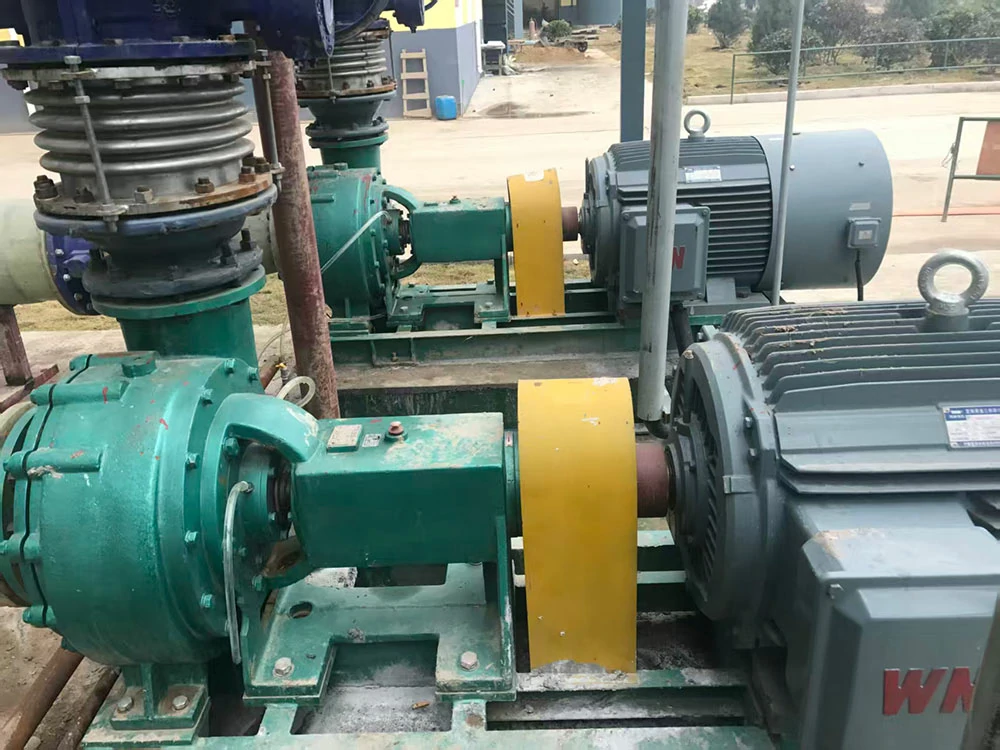
A Changyu Pump substituiu as bombas de 316L por bombas revestidas em UHMW-PE da Série UHB. O revestimento UHMW-PE forneceu resistência a ácidos igual ou superior ao 316L, com resistência à abrasão significativamente superior. A lavagem externa do selo mecânico eliminou a intrusão de sólidos.
Dois anos após a substituição: zero substituições de carcaça ou impulsor. A vida útil do selo mecânico foi estendida de 6–8 semanas para mais de 18 meses. A planta padronizou a Série UHB para todas as aplicações de PLS e refinado.
Conclusão principal: Para PLS e refinado em cobre SX-EW, o aço inoxidável não é o material ideal. Bombas revestidas em UHMW-PE fornecem resistência química e resistência à abrasão para operações contínuas de lixiviação.
Perguntas Frequentes sobre Bombas de Polpa para Cobre SX-EW
P: Que tipo de bomba é recomendado para transferência de PLS em cobre SX-EW?
R: Bombas centrífugas revestidas em UHMW-PE fornecem a combinação ideal de resistência a ácido sulfúrico e resistência à abrasão. Bombas de liga de alto cromo são uma alternativa para sólidos grossos.
P: Posso usar bombas de aço inoxidável para cobre SX-EW?
R: Para PLS e refinado, o 316L não é recomendado — a combinação de ácido e sólidos causa erosão-corrosão rápida. Para eletrólito EW, o aço inoxidável não é recomendado devido à lixiviação de íons metálicos.
P: Por que bombas de acionamento magnético são usadas para a fase orgânica SX?
R: A fase orgânica é inflamável, cara e regulamentada por VOC. Bombas de acionamento magnético sem selo eliminam o selo mecânico, prevenindo risco de incêndio e perda de reagente.
P: Que material previne a contaminação por íons metálicos no eletrólito EW?
R: Bombas revestidas com fluoroplástico FEP ou PFA fornecem lixiviação zero de íons metálicos, protegendo a pureza do cátodo.
P: Como dimensionar uma bomba de PLS para lixiviação em pilhas?
R: Dimensione para o fluxo máximo de PLS mais uma margem de 15–20% com controle VFD. Instale múltiplas bombas em paralelo para operações maiores.
Lista de verificação de prevenção do engenheiro de bombas da Changyu
- Não especifique 316L para PLS ou refinado — a combinação de ácido e sólidos destrói bombas em meses.
- Especifique bombas de acionamento magnético sem selo para todo serviço de fase orgânica SX.
- Use bombas revestidas em FEP/PFA para todo contato com eletrólito EW para proteger a pureza do cátodo.
- Proteja os selos da bomba de PLS com lavagem externa ou sistema de fluido de barreira em circuito fechado.
- Especifique motores certificados ATEX ou IECEx para bombas no prédio SX.
- Dimensione bombas de PLS com controle VFD para condições de fluxo variável.
- Mantenha impulsores, anéis de desgaste e selos mecânicos sobressalentes em estoque.
- Verifique a compatibilidade do material com o reagente orgânico específico usado em sua planta.
Conclusão
Uma planta de cobre SX-EW depende de bombas adequadas a cada estágio do processo. A lixiviação requer bombas revestidas em UHMW-PE que resistam tanto a ácido quanto a abrasão. A extração por solvente exige bombas de acionamento magnético sem selo que eliminem vazamentos orgânicos. A eletroextração requer bombas revestidas com fluoroplástico que protejam a pureza do cátodo.
O custo da bomba errada é medido em perda de produção, incidentes de segurança e degradação do valor do produto. A especificação correta em cada etapa é um investimento em confiabilidade, segurança e qualidade do cobre.