
Réponse rapide
A Pompe à lisier pour SX-EW du cuivre sert le processus hydrométallurgique qui extrait le cuivre des minerais oxydés par lixiviation à l'acide sulfurique, extraction par solvant avec des réactifs organiques, et électro-extraction. Aucune pompe unique ne dessert les trois étapes. Facteurs de sélection clés :
- La lixiviation exige une résistance à l'usure: La solution de lixiviation enceinte (PLS) transporte de fines particules de minerai dans de l'acide sulfurique. Cette attaque combinée d'abrasion et d'acide nécessite des pompes revêtues de UHMWPE ou en alliage à haute teneur en chrome qui résistent à la fois à l'érosion et à la corrosion.
- L'extraction par solvant exige une étanchéité totale: La phase organique — diluant à base de kérosène avec extractant d'oxime — est inflammable, coûteuse et réglementée. Les pompes à entraînement magnétique sans joint ou les doubles garnitures mécaniques sont la norme pour prévenir les risques d'incendie et les pertes de réactif.
- L'électro-extraction exige une pureté: L'électrolyte riche en cuivre doit rester exempt de contamination par des ions métalliques. Les pompes qui lessivent du fer, du nickel ou du chrome dégradent la qualité de la cathode. Des pompes revêtues de fluoroplastique sont nécessaires pour cette étape.
Le SX-EW représente environ 20% de la production mondiale de cuivre. Les usines fonctionnent en continu dans des endroits éloignés où la fiabilité des équipements détermine la rentabilité. Une panne de pompe dans la lixiviation arrête la production. Une fuite de joint dans l'extraction par solvant déclenche un incident de sécurité. Un événement de contamination dans l'électro-extraction dégrade la pureté de la cathode.
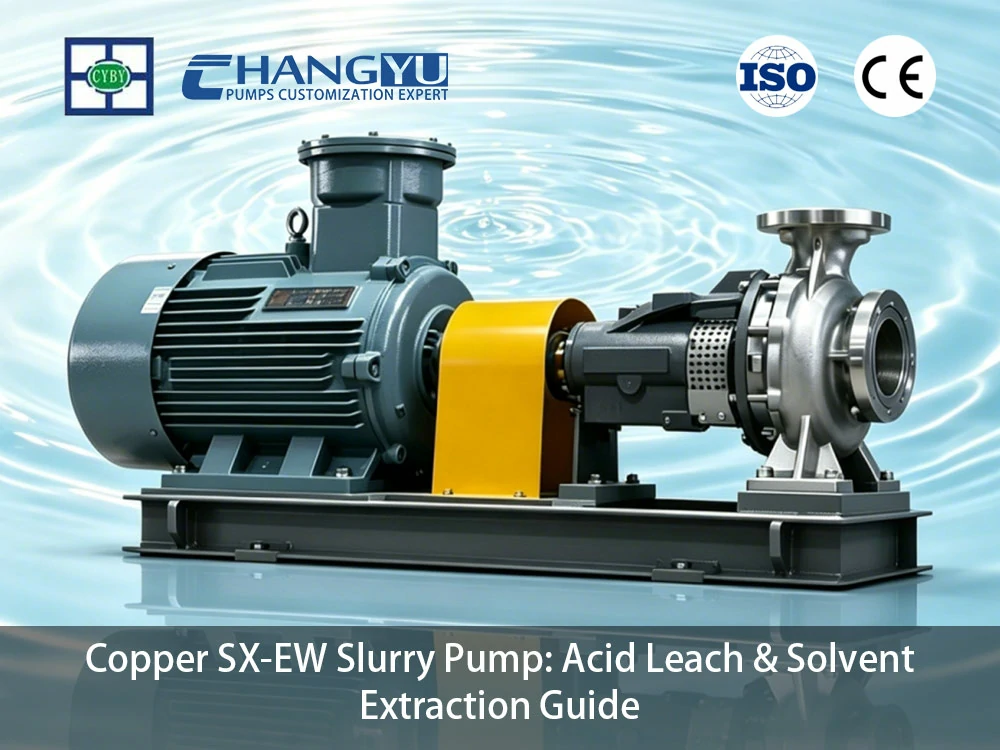
Après avoir lu ce guide, vous comprendrez les exigences de pompage de chaque étape du SX-EW, quels matériaux résistent à la corrosion acide et à l'abrasion des solides, comment spécifier des pompes sans fuite pour la phase organique, quelles exigences de pureté s'appliquent aux pompes d'électrolyte EW, et quels types de pompes offrent le coût total de possession le plus bas. Forte de plus de 20 ans d'expérience dans la fabrication de pompes, Changyu Pump présente ce guide de sélection pour l'hydrométallurgie du cuivre.
Quelles sont les étapes clés du SX-EW du cuivre ?
Cuivre extraction par solvant-électro-extraction produit des cathodes de cuivre de haute pureté en trois étapes, chacune avec des exigences de pompage distinctes.
Lixiviation : Le minerai de cuivre oxydé broyé est irrigué avec de l'acide sulfurique dilué acide sulfurique. L'acide dissout le cuivre, produisant du PLS (1–5 g/L Cu, pH 1.5–2.0) avec de fines particules de minerai en suspension. Les pompes PLS transfèrent cette solution abrasive et acide vers l'usine SX. Après extraction du cuivre, le raffinat appauvri retourne au tas de lixiviation.
Extraction par solvant (SX) : Le PLS entre en contact avec une phase organique — diluant de kérosène avec extractant d'oxime — qui lie sélectivement le cuivre. L'organique chargé est dépouillé avec un électrolyte usé très acide (180–200 g/L H₂SO₄, 30–35 g/L Cu), produisant un électrolyte riche en cuivre pour l'électro-extraction. Trois fluides nécessitent un pompage : le PLS/raffinat aqueux, la phase organique et l'électrolyte riche. La pompe de phase organique nécessite une attention particulière — les réactifs sont inflammables et volatils.
Électro-extraction (EW) : L'électrolyte riche en cuivre circule dans des cellules électrolytiques où le courant continu dépose du cuivre pur sur des ébauches de cathode. Après la récolte, l'électrolyte appauvri retourne au dépouillage SX.
Caractéristiques des fluides SX-EW
| Étape du processus | Fluide | Cuivre | Acide / Chimie | Solides | Température |
|---|---|---|---|---|---|
| Lixiviation | PLS / Raffinat | 1–5 g/L | pH 1,5–2,0 H₂SO₄ | Fines particules de minerai | Ambiante à 40°C |
| Extraction SX | Phase organique | Chargée en Cu | Kérosène + oxime | Aucune dans la conception ; peut contenir des crasses | 25–35°C |
| Dépouillage SX | Électrolyte riche | 30–35 g/L | 180–200 g/L H₂SO₄ | Aucun | 35–45°C |
| EW | Électrolyte | 30–35 g/L | 180–200 g/L H₂SO₄ | Aucun | 40–50°C |
Quels matériaux sont compatibles avec les fluides SX-EW ?
La sélection des matériaux est complexe car les trois étapes exposent les pompes à des défis fondamentalement différents.
Matrice de compatibilité des matériaux
| Matériau | PLS / Raffinat | Phase organique | Électrolyte EW |
|---|---|---|---|
| Acier inoxydable 316L | Non recommandé — érosion-corrosion rapide | Acceptable | Limité — peut lessiver des traces de métaux |
| Duplex 2205 | Meilleur que 316L | Acceptable | Acceptable |
| Haute teneur en chrome (Cr27–33) | Bon — excellente abrasion | Pas pour contact organique | Non recommandé — peut lessiver du chrome |
| Doublure en UHMW-PE | Optimal — combine résistance à l'acide + à l'abrasion | Limité — léger gonflement possible avec le kérosène | Non recommandé — limite de température 90°C |
| Revêtement FEP / PFA | Bon — excellente résistance à l'acide | Excellent — résistance organique universelle | Excellent — zéro lessivage de métaux |
| PP | Bon — choix économique | Acceptable | Acceptable — limite de température ~80°C |
Sélection des matériaux par étape
| Stade | Défi primaire | Matériau recommandé | Alternative |
|---|---|---|---|
| Lixiviation (PLS/Raffinat) | Abrasion + acide | Centrifugeuse à revêtement UHMW-PE | Alliage à haute teneur en chrome |
| Phase organique SX | Inflammable — zéro fuite | À entraînement magnétique revêtu de FEP/PFA | 316L avec double joint + moteur ATEX/IECEx |
| Électrolyte EW | Haute pureté | Centrifuge revêtu de FEP/PFA | Centrifuge en PVDF |
Les ingénieurs de Changyu Pump recommandent : Pour le PLS et le raffinat, spécifiez des pompes centrifuges revêtues de UHMW-PE comme référence de base — la combinaison optimale de résistance à l'acide et à l'abrasion aux coûts des mines de cuivre. Pour la phase organique, spécifiez des pompes à entraînement magnétique sans joint avec revêtement FEP/PFA et moteurs certifiés ATEX ou IECEx. Pour l'électrolyte EW, spécifiez des pompes revêtues de FEP/PFA pour empêcher la contamination par ions métalliques du cuivre de qualité cathode.
Comment sélectionner les pompes pour l'étape de lixiviation du SX-EW du cuivre ?
Les pompes de l'étape de lixiviation traitent les plus grands volumes de débit dans les conditions les plus exigeantes. Les pompes PLS et raffinat déplacent des milliers de mètres cubes par jour de solution acide et abrasive.
Sélection de pompe pour lixiviation
| Type de pompe | Recommandation | Notes |
|---|---|---|
| Centrifuge revêtu de UHMW-PE | Choix principal | Résistance optimale acide + abrasion ; revêtements remplaçables |
| Alliage à haute teneur en chrome (Cr27–33) | Alternative pour solides grossiers | Résistance à l'acide inférieure à UHMW-PE |
| Super Duplex 2507 | Abrasion modérée, température plus élevée | Coût plus élevé ; nécessite des plaques d'usure |
| Entraînement magnétique | PLS intermittent, zéro fuite | Pas pour les solides élevés |
Caractéristiques principales : Dimensionnez pour le débit PLS maximal plus une marge de 15–20%. Spécifiez des roues semi-ouvertes pour le passage des solides fins. Protégez les garnitures mécaniques avec une purge externe (1–2 bar au-dessus de la chambre de garniture, 2–5 L/min) ou un système de fluide barrière en boucle fermée dans les régions arides.
Les ingénieurs de Changyu Pump recommandent : Spécifiez des pompes centrifuges revêtues de UHMW-PE avec roues semi-ouvertes, système de protection de garniture et contrôle VFD. Le revêtement UHMW-PE offre la durée de vie d'usure pour un fonctionnement fiable entre les arrêts.
Comment sélectionner les pompes pour l'étape d'extraction par solvant du SX-EW du cuivre ?
L'étape SX présente les défis de pompage les plus divers : PLS/raffinat aqueux, phase organique inflammable et électrolyte riche très acide.
Exigences de la pompe de phase organique
Trois facteurs déterminent la spécification de la pompe de phase organique : sécurité incendie (le kérosène est inflammable), valeur du réactif (l'extractant d'oxime est coûteux), et réglementation environnementale (Les émissions de COV sont réglementées). Les pompes pour phase organique doivent soit éliminer complètement le joint mécanique, soit fournir un double joint mécanique avec fluide barrière et détection de fuite.
Sélection de la pompe pour l'étape SX
| Application | Pompe recommandée | Spécification clé |
|---|---|---|
| Phase organique | Entraînement magnétique sans joint avec revêtement FEP/PFA | Moteur ATEX/IECEx ; enveloppe de confinement en PEEK |
| PLS / Raffinat | Centrifugeuse à revêtement UHMW-PE | Identique à l'étape de lixiviation |
| Électrolyte riche | Pompe centrifuge ou à entraînement magnétique revêtue de FEP/PFA | Haute résistance aux acides ; aucune lixiviation métallique |
Les ingénieurs de Changyu Pump recommandent : Pour tout pompage de phase organique, spécifiez des pompes à entraînement magnétique sans joint avec revêtement FEP/PFA et des moteurs certifiés ATEX ou IECEx. Le coût supplémentaire est récupéré dès la première fuite organique évitée.
Comment sélectionner les pompes pour l'étape d'électroextraction du cuivre SX-EW ?
Le électroextraction L'étape produit le produit final en cuivre. Les pompes de circulation d'électrolyte doivent fournir un débit continu avec une pureté absolue — la contamination par des ions métalliques dégrade directement la qualité de la cathode.
Aucune lixiviation d'ions métalliques : L'électrolyte (180–200 g/L H₂SO₄, 30–35 g/L Cu) à 40–50°C attaque agressivement l'acier inoxydable standard, lessivant le fer, le nickel et le chrome. Ces ions se co-déposent avec le cuivre, réduisant la pureté de la cathode et sa valeur marchande.
Considérations de température : Le revêtement FEP convient à l'électrolyte EW standard à 40–50°C. Pour les circuits où des excursions de température au-dessus de 80°C sont possibles, passez à un revêtement PFA.
Sélection de la pompe pour l'étape EW
| Application | Pompe recommandée | Spécification clé |
|---|---|---|
| Circulation d'électrolyte riche | Centrifuge revêtu de FEP/PFA | Aucune lixiviation métallique ; contrôle VFD |
| Retour d'électrolyte appauvri | Centrifuge revêtu de FEP/PFA | Même modèle pour la standardisation des pièces de rechange |
| Lavage des brouillards acides | Pompe centrifuge en PP ou PVDF | Coût inférieur pour les applications sans contact avec le produit |
Les ingénieurs de Changyu Pump recommandent : Pour toutes les pompes en contact avec l'électrolyte, spécifiez des pompes centrifuges revêtues de fluoroplastique FEP ou PFA. L'acier inoxydable standard lessivera des métaux traces et ne doit pas être utilisé pour le service d'électrolyte EW.
Solutions de pompes à lisier pour le cuivre SX-EW de Changyu Pump
Trois séries de pompes servent les applications de cuivre SX-EW :
Sélection de pompe SX-EW
| Étape SX-EW | Application | Série | Caractéristique principale |
|---|---|---|---|
| Lixiviation | PLS / Raffinat | Série UHB | Revêtement UHMW-PE ; résistant à l'abrasion et aux acides |
| Phase organique SX | Transfert organique | Série CQZ | Entraînement magnétique sans joint ; zéro fuite ; ATEX/IECEx |
| Électrolyte SX / EW | Électrolyte riche / appauvri | Série CYB-ZKJ | Revêtement FEP/PFA ; aucune lixiviation métallique |
Série UHB — Pompe revêtue d'UHMW-PE pour PLS et Raffinat
Le revêtement UHMW-PE renforcé d'acier offre une résistance optimale aux acides et à l'abrasion. La roue semi-ouverte gère les solides fins. Les garnitures d'usure remplaçables prolongent la durée de vie du corps de pompe.
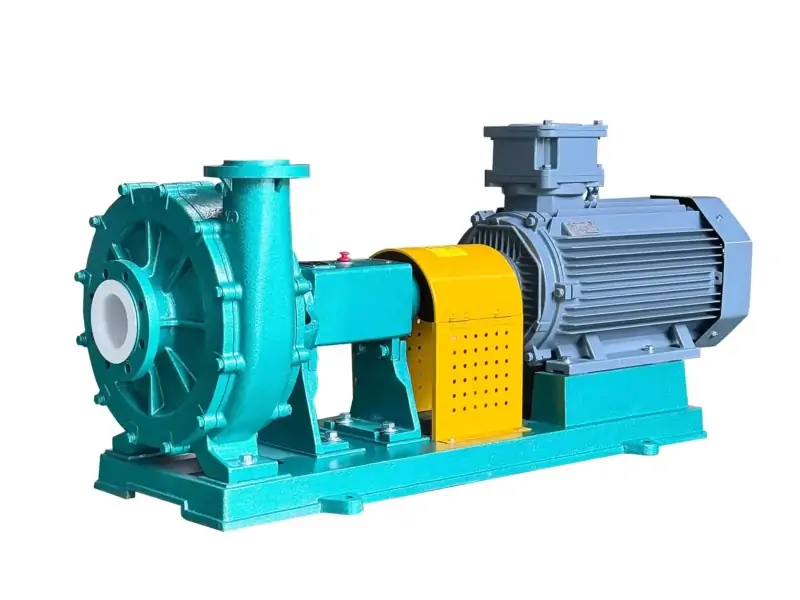
| Paramètres | Spécifications |
|---|---|
| Débit | 3-2 600 m³/h |
| Tête | 5-100 m |
| Température | De -20°C à 90°C |
Série CQZ — Pompe à entraînement magnétique pour phase organique
L'entraînement magnétique sans joint élimine le joint mécanique. Le revêtement FEP/PFA résiste au kérosène et aux réactifs oximes. Moteurs ATEX/IECEx disponibles.
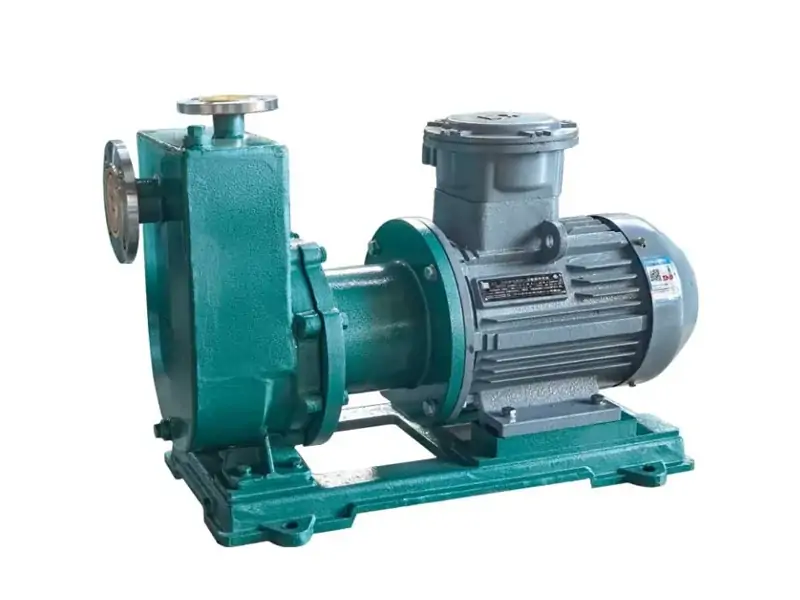
| Paramètres | Spécifications |
|---|---|
| Débit | 3-800 m³/h |
| Tête | 12,5–130 m |
| Température | -120°C à 320°C |
Série CYB-ZKJ — Pompe revêtue de FEP/PFA pour électrolyte
Le revêtement fluoroplastique isole l'électrolyte du corps métallique de la pompe, empêchant la lixiviation d'ions métalliques. Résistance universelle aux acides sur toute la plage d'électrolyte.
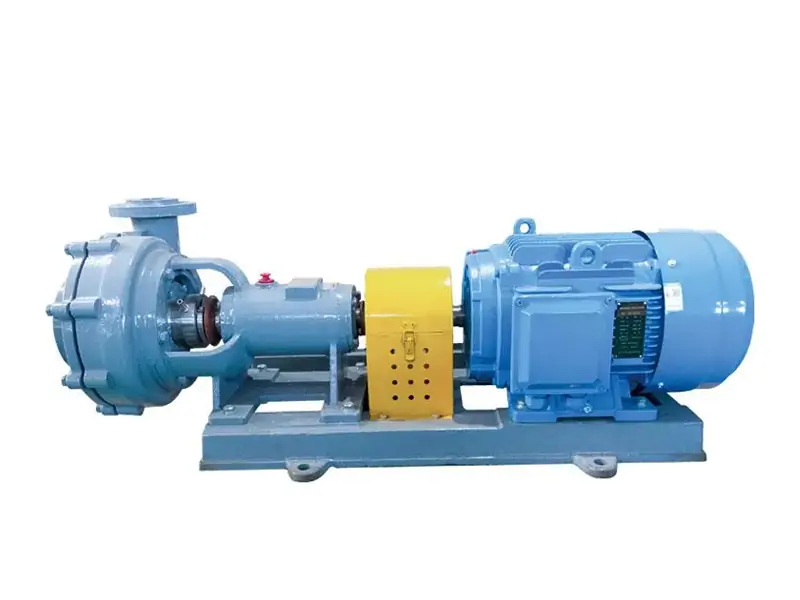
| Paramètres | Spécifications |
|---|---|
| Débit | 3-2 600 m³/h |
| Tête | 5-100 m |
| Température | De -80°C à 120°C |
Étude de cas d'une pompe à lisier pour cuivre SX-EW : Résolution d'une défaillance d'usure de pompe PLS
Une usine de cuivre SX-EW en Amérique du Sud utilisait des pompes centrifuges en acier inoxydable 316L pour le transfert de PLS. Le PLS contenait 2 g/L de cuivre dans de l'acide sulfurique à pH 1,8 avec des particules fines de minerai.
En quatre mois, les corps de pompe et les roues ont montré une usure sévère. Les bagues d'usure des roues se sont érodées, réduisant le débit de 30 %. Les joints mécaniques tombaient en panne toutes les 6 à 8 semaines en raison de l'intrusion de solides. Chaque pompe nécessitait une reconstruction trois fois par an.
L'analyse des causes profondes a confirmé que le 316L n'avait pas une dureté suffisante pour résister à l'érosion par les particules fines de minerai. Le mécanisme combiné d'érosion-corrosion a rendu le 316L non économique.
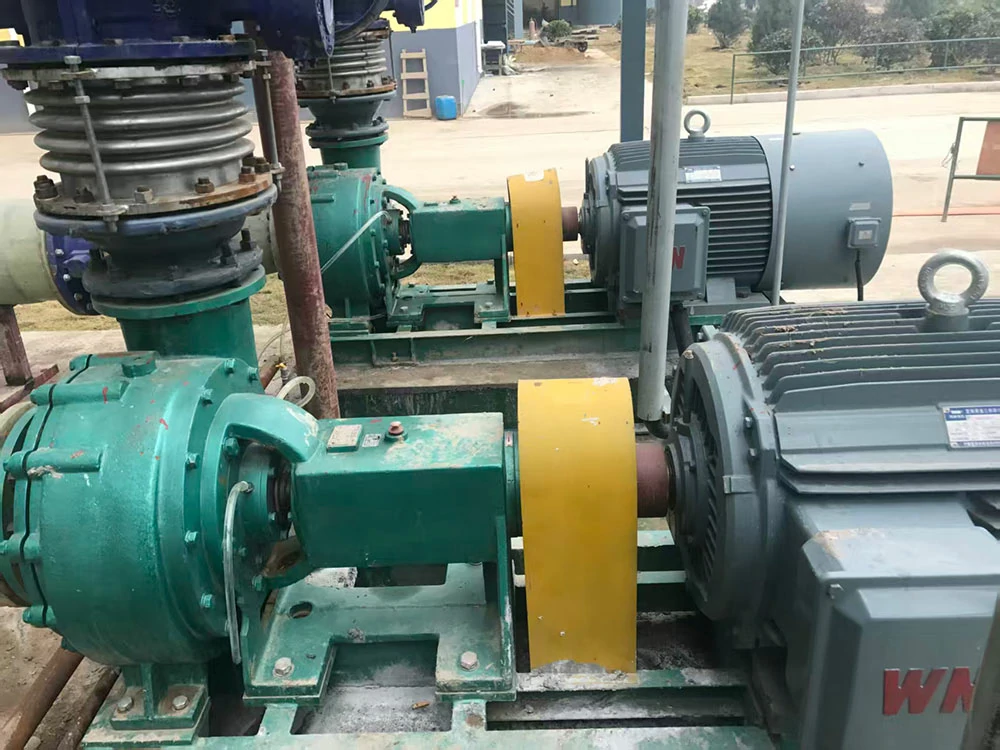
Changyu Pump a remplacé les pompes en 316L par des pompes revêtues d'UHMW-PE de la série UHB. Le revêtement UHMW-PE offrait une résistance aux acides égale ou supérieure au 316L, avec une résistance à l'abrasion significativement supérieure. La purge externe du joint mécanique a éliminé l'intrusion de solides.
Deux ans après le remplacement : zéro remplacement de corps de pompe ou de roue. La durée de vie du joint mécanique est passée de 6 à 8 semaines à plus de 18 mois. L'usine a standardisé la série UHB pour toutes les applications de PLS et de raffinat.
Key takeaway: Pour le PLS et le raffinat dans le cuivre SX-EW, l'acier inoxydable n'est pas le matériau optimal. Les pompes revêtues d'UHMW-PE offrent à la fois une résistance chimique et une résistance à l'abrasion pour les opérations de lixiviation continues.
FAQ sur les pompes à lisier pour cuivre SX-EW
Q : Quel type de pompe est recommandé pour le transfert de PLS dans le cuivre SX-EW ?
R : Les pompes centrifuges revêtues d'UHMW-PE offrent la combinaison optimale de résistance à l'acide sulfurique et à l'abrasion. Les pompes en alliage à haute teneur en chrome sont une alternative pour les solides grossiers.
Q : Puis-je utiliser des pompes en acier inoxydable pour le cuivre SX-EW ?
R : Pour le PLS et le raffinat, le 316L n'est pas recommandé — la combinaison d'acide et de solides provoque une érosion-corrosion rapide. Pour l'électrolyte EW, l'acier inoxydable n'est pas recommandé en raison de la lixiviation d'ions métalliques.
Q : Pourquoi les pompes à entraînement magnétique sont-elles utilisées pour la phase organique SX ?
R : La phase organique est inflammable, coûteuse et réglementée pour les COV. Les pompes à entraînement magnétique sans joint éliminent le joint mécanique, empêchant les risques d'incendie et la perte de réactif.
Q : Quel matériau empêche la contamination par ions métalliques dans l'électrolyte EW ?
R : Les pompes revêtues de fluoroplastique FEP ou PFA offrent une lixiviation d'ions métalliques nulle, protégeant la pureté de la cathode.
Q : Comment dimensionner une pompe PLS pour la lixiviation en tas ?
R : Dimensionnez pour le débit PLS maximum plus une marge de 15 à 20 % avec contrôle VFD. Installez plusieurs pompes en parallèle pour les opérations plus importantes.
Liste de contrôle des mesures de prévention pour les ingénieurs en pompes chez Changyu
- Ne spécifiez pas le 316L pour le PLS ou le raffinat — la combinaison d'acide et de solides détruit les pompes en quelques mois.
- Spécifiez des pompes à entraînement magnétique sans joint pour tout service de phase organique SX.
- Utilisez des pompes revêtues de FEP/PFA pour tout contact avec l'électrolyte EW afin de protéger la pureté de la cathode.
- Protégez les joints des pompes PLS avec une purge externe ou un système de fluide barrière en boucle fermée.
- Spécifiez des moteurs certifiés ATEX ou IECEx pour les pompes du bâtiment SX.
- Dimensionnez les pompes PLS avec un contrôle VFD pour des conditions de débit variables.
- Gardez des roues de rechange, des bagues d'usure et des joints mécaniques en stock.
- Vérifiez la compatibilité des matériaux avec le réactif organique spécifique utilisé dans votre usine.
Conclusion
Une usine de cuivre SX-EW dépend de pompes adaptées à chaque étape du procédé. La lixiviation nécessite des pompes revêtues d'UHMW-PE qui résistent à la fois à l'acide et à l'abrasion. L'extraction par solvant exige des pompes à entraînement magnétique sans joint qui éliminent les fuites organiques. L'électroextraction nécessite des pompes revêtues de fluoroplastique qui protègent la pureté de la cathode.
Le coût d’une pompe inadaptée se mesure en pertes de production, incidents de sécurité et dégradation de la valeur du produit. Une spécification correcte à chaque étape est un investissement dans la fiabilité, la sécurité et la qualité du cuivre.
Contactez Changyu Pump pour une évaluation technique gratuite →