
Bomba de cloreto férrico a seleção deve começar com compatibilidade química, e não apenas o caudal ou a pressão de descarga. O cloreto férrico é amplamente utilizado no tratamento de águas residuais e em sistemas de processos químicos, mas também é altamente corrosivo para muitos materiais metálicos comuns de bombas, o que significa que a conceção incorrecta da bomba pode levar a uma falha rápida, risco de fugas e funcionamento instável a longo prazo.
No serviço industrial real, o manuseamento de cloreto férrico raramente é apenas uma tarefa de transferência básica. A bomba deve ser selecionada em função do trabalho real, incluindo concentração, temperatura, requisitos de confinamento, esquema de instalação, e a compatibilidade total de todos os componentes em contacto com a água.
Este guia explica o que é uma bomba de cloreto férrico, por que o cloreto férrico é difícil de manusear, quais tipos de bomba são mais comumente usados e como escolher a configuração certa para o seu processo. Ele também mostra como os produtos da Changyu Pump se encaixam em diferentes aplicações de transferência e dosagem de cloreto férrico.
O que é uma bomba de cloreto férrico?
A bomba de cloreto férrico é uma bomba química concebida para transferir, fazer circular ou dosear cloreto férrico em serviço industrial corrosivo. Na prática, isso significa que a bomba tem de combinar os materiais molhados certos, uma contenção fiável e um desempenho hidráulico que corresponda à aplicação real.
A maioria das bombas de cloreto férrico continua a basear-se em princípios hidráulicos comuns, como os utilizados numa bomba de bomba centrífuga. O que torna o serviço de cloreto férrico diferente não é o princípio de bombagem em si, mas os requisitos muito mais rigorosos em termos de resistência à corrosão e controlo de fugas.
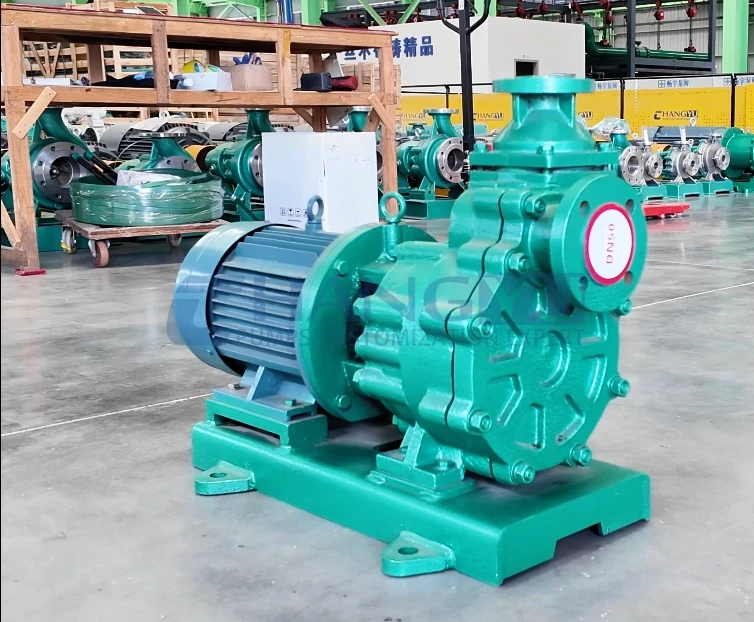
Porque é que o cloreto férrico é difícil de bombear
Cloreto férrico é difícil de bombear porque é simultaneamente fortemente corrosivo e relativamente denso, e pode atacar muitos metais comuns de bombas em condições reais de funcionamento. A orientação da indústria adverte repetidamente que o cloreto férrico é agressivo para o aço carbono e muitos aços inoxidáveis, especialmente à medida que a concentração e a temperatura aumentam.
As soluções de cloreto férrico são também fortemente ácidas em muitas concentrações industriais. Uma fonte da indústria refere que uma solução típica de cloreto férrico de 38% a 42% tem um pH inferior a 1, o que é uma das razões pelas quais as construções revestidas e não metálicas com humidade são frequentemente recomendadas.
Outro desafio é confinamento. O cloreto férrico é normalmente utilizado em sistemas de transferência, armazenamento e dosagem, pelo que os compradores não estão apenas a tentar resistir à corrosão; estão também a tentar reduzir o risco de fugas e manter um funcionamento estável ao longo do tempo.
Bomba Changyu os engenheiros recomendam tratar a seleção da bomba de cloreto férrico como uma revisão completa do processo em vez de uma simples substituição da bomba. Em muitos casos, o melhor resultado vem da correspondência entre o tipo de bomba e o método de transferência, o objetivo de contenção e os requisitos de limpeza de paragem, e não apenas o nome do líquido.
Que tipos de bombas são utilizadas para o cloreto férrico?
São utilizados vários tipos de bombas para serviço de cloreto férrico, mas não são permutáveis. A escolha certa depende do facto de a aplicação ser a transferência a granel, a dosagem de produtos químicos, a descarga, o serviço de aspiração ou a alimentação intermitente.
Descrição geral do tipo de bomba
Bomba de acionamento magnético
A bomba de acionamento magnético é frequentemente uma das melhores escolhas para a transferência de cloreto férrico onde a contenção é mais importante. Uma vez que remove o vedante de veio dinâmico convencional do limite do líquido, ajuda a reduzir um dos pontos de fuga mais comuns nos sistemas de bombagem de produtos químicos.
Bomba de membrana ou doseadora
A diafragma bomba é especialmente útil quando a tarefa é a dosagem controlada e não a transferência a granel. O cloreto férrico é amplamente utilizado no tratamento de água e de águas residuais, e as aplicações de bombas doseadoras baseiam-se frequentemente em modelos com membrana porque oferecem uma melhor precisão de alimentação para o serviço de injeção de produtos químicos.
Bomba de diafragma operada a ar
Um bomba de duplo diafragma acionada a ar é uma opção prática quando a aplicação é intermitente, baseada na descarga, ou requer flexibilidade operacional em vez de um fluxo centrífugo constante. As orientações da indústria referem que as bombas AODD estão frequentemente disponíveis em combinações de materiais adequadas ao manuseamento de produtos químicos corrosivos.
Bomba com revestimento auto-ferrante
A bomba com revestimento auto-ferrante é muitas vezes uma boa opção quando a bomba tem de elevar o cloreto férrico de um tanque, poço ou ponto de transferência sem sucção inundada. Nestes casos, a capacidade de autoaspiração pode simplificar a instalação e melhorar a praticidade em comparação com uma bomba centrífuga padrão sem autoaspiração.
Que materiais são adequados para uma bomba de cloreto férrico?
Para serviço de cloreto férrico, compatibilidade de materiais deve ser tratado como o primeiro critério de seleção e não como uma verificação final após o dimensionamento. O cloreto férrico é altamente corrosivo para muitos materiais metálicos comuns, pelo que uma bomba química metálica padrão nunca deve ser considerada adequada sem uma análise completa da compatibilidade.
Em muitas aplicações do mundo real, termoplásticos e revestido a fluoropolímero são preferíveis porque proporcionam um percurso molhado mais resistente do ponto de vista químico. Os materiais normalmente referidos incluem PP, PVDF, PTFE, e ETFE, embora a adequação final ainda dependa da concentração exacta, da temperatura e de quaisquer aditivos ou sólidos no fluxo.
Um material de referência comum na bombagem de produtos químicos corrosivos é PTFE, que é amplamente conhecido pela sua forte resistência química. Mesmo assim, nenhum material deve ser selecionado apenas pelo nome; a compatibilidade do cloreto férrico tem sempre de ser verificada em função das condições reais de funcionamento.
É igualmente importante rever o percurso molhado completo, e não apenas o invólucro. Os revestimentos, impulsores, diafragmas, juntas, O-rings, peças de válvulas e componentes relacionados com os vedantes têm de ser todos compatíveis com o serviço de cloreto férrico.
Prioridades materiais
| Área de seleção | Porque é importante | O que analisar |
|---|---|---|
| Invólucro ou revestimento húmido | Principal barreira contra o ataque corrosivo | Revestimento de fluoropolímero ou construção não metálica compatível |
| Impulsor e percurso do fluxo interno | Contacto direto e contínuo com o líquido | O mesmo padrão de compatibilidade que a caixa |
| O-rings e juntas de vedação | Pontos fracos comuns em serviço corrosivo | Compatibilidade com elastómeros e fluoropolímeros |
| Diafragmas e peças de válvulas | Crítico em bombas de dosagem e AODD | Confirmar a resistência química total antes da seleção |
Nota: Os engenheiros da Changyu Pump recomendam rever cada componente molhado como um sistema de compatibilidade único. No serviço de cloreto férrico, a fiabilidade a longo prazo é normalmente limitada pelo componente molhado mais fraco e não pelo mais forte.
Onde são utilizadas as bombas de cloreto férrico?
As bombas de cloreto férrico são utilizadas mais frequentemente em tratamento de águas residuais, A indústria de transformação de metais é uma das mais importantes do mundo, onde o cloreto férrico é aplicado para coagulação e tarefas de tratamento relacionadas. Fontes do sector também referem o manuseamento do cloreto férrico em Gravação de PCB, transferência química geral, e outros sistemas de processos industriais.
As aplicações típicas incluem:
- Transferência a granel a partir de navios-tanque ou de navios de armazenagem.
- Dosagem de produtos químicos nos sistemas de tratamento.
- Linhas de transferência de armazenagem para processo.
- Descarga intermitente e movimentação de contentores.
Na prática, um sistema de cloreto férrico pode utilizar mais do que um tipo de bomba. Uma instalação pode utilizar uma bomba centrífuga ou de acionamento magnético para transferência de armazenamento e uma bomba de diafragma para doseamento controlado, embora ambas as tarefas envolvam o mesmo produto químico.
Como escolher a bomba de cloreto férrico correta
Um fiável bomba de cloreto férrico O processo de seleção deve seguir uma sequência técnica em vez de uma comparação de preço em primeiro lugar. O objetivo não é apenas movimentar o produto químico, mas fazê-lo de forma segura, consistente e com uma manutenção controlável ao longo do tempo.
Lista de verificação de seleção
| Fator de seleção | Porque é importante | O que confirmar |
|---|---|---|
| Concentração | O desempenho do material altera-se com a resistência | Concentração exacta de cloreto férrico |
| Temperatura | Uma temperatura mais elevada pode agravar a corrosão | Temperatura normal e máxima |
| Tipo de serviço | A transferência e a dosagem necessitam de estilos de bomba diferentes | Funcionamento contínuo, intermitente ou de dosagem |
| Nível de confinamento | O controlo das fugas é fundamental | Acionamento magnético, diafragma ou design selado |
| Partes molhadas | A compatibilidade total é importante, não apenas a caixa | Revestimento, impulsor, vedantes, válvulas, O-rings |
| Estado de aspiração | Os líquidos densos podem provocar más disposições de aspiração | Nível do tanque, elevação, ventilação, margem NPSH |
Comece por confirmar o número exato de concentração e temperatura de funcionamento. Ambos os factores influenciam fortemente a compatibilidade e a vida útil, e ambos devem ser conhecidos antes de se recomendar qualquer tipo de bomba.
Em seguida, definir o dever. A transferência a granel, a circulação do processo e a dosagem de precisão requerem frequentemente diferentes arquitecturas de bombas, mesmo quando o líquido é o mesmo.
Em seguida, rever todos os materiais húmidos em vez de verificar apenas o material visível do corpo. Depois disso, decida até que ponto a redução do risco de fugas é importante para o processo, uma vez que isso aponta frequentemente o comprador para uma solução de acionamento magnético ou de diafragma.
Para além da resistência à corrosão, as condições de sucção também devem ser verificadas cuidadosamente. Uma vez que o cloreto férrico é um líquido relativamente pesado, o desempenho de sucção adequado e a margem NPSH devem ser revistos antes da seleção final da bomba.
Os engenheiros da Changyu Pump recomendam confirmar se o sistema pode ser drenado e lavado facilmente durante a paragem. Em algumas aplicações de cloreto férrico, a drenagem e a lavagem deficientes podem aumentar o risco de acumulação de resíduos, cristalização e manutenção mais difícil ao longo do tempo.
Soluções recomendadas para bombas de cloreto férrico da Changyu Pump
A forma mais profissional de recomendar produtos para o serviço de cloreto férrico é fazer corresponder cada modelo ao serviço em que melhor se enquadra. Isso dá ao comprador um caminho de engenharia mais realista do que simplesmente listar produtos sem contexto.
Bomba centrífuga de flúor com revestimento de qualidade IHF
Esta é uma das recomendações mais fortes para transferência contínua dever. A Changyu apresenta a série IHF como uma bomba centrífuga de flúor com revestimento para produtos químicos corrosivos, o que a torna uma opção natural para aplicações de cloreto férrico que requerem um fluxo centrífugo estável e uma forte resistência química.
Para os compradores que necessitam de uma solução centrífuga com revestimento prática para a transferência entre o armazenamento e o processo, este modelo enquadra-se na lógica da maioria das orientações de seleção do cloreto férrico, que favorece consistentemente as vias molhadas com revestimento quimicamente resistente.

| Parâmetro | Detalhes |
|---|---|
| Nome do produto | Bomba centrífuga com revestimento |
| Modelo | Série IHF |
| Tipo de bomba | Bomba centrífuga cantilever de aspiração simples e estágio único |
| Estrutura | Revestimento de fluoroplástico (PTFE / PFA / FEP / PVDF) |
| Tipo de acionamento | Motor elétrico |
| Instalação | Horizontal |
| Tipo de impulsor | Impulsor fechado |
| Quantidade de impulsores | 1 |
| Tipo de aspiração | Aspiração simples |
| Aplicação | Bomba de processamento químico |
| Tensão | 380V (personalizável) |
Bomba de acionamento magnético para alta temperatura
Este modelo deve ser posicionado com mais cuidado. A Changyu apresenta este produto como uma bomba química de acionamento magnético de alta temperatura, mas a compatibilidade com o cloreto férrico ainda tem de ser analisada de perto porque o cloreto férrico é agressivo para muitos materiais metálicos comuns.
Por esta razão, este produto é melhor apresentado como um opção de caso especial em vez de uma recomendação universal de cloreto férrico. Este tipo de posicionamento cauteloso torna o artigo mais credível porque reflecte uma lógica de compatibilidade real em vez de uma generalização excessiva.
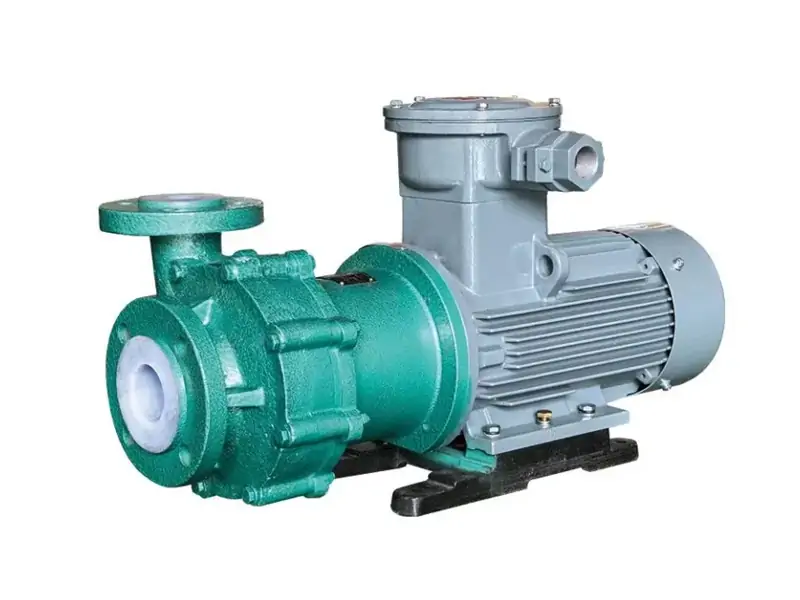
Bomba autoescorvante magnética com revestimento de flúor da série ZCQ
Este é um dos produtos mais adequados para a transferência de cloreto férrico quando ambos capacidade de auto-aspiração e melhor contenção são importantes. A Changyu apresenta a série ZCQ como uma bomba auto-ferrante magnética revestida a flúor, o que a torna especialmente relevante para sistemas de transferência acima do solo, onde a sucção inundada não está disponível.
Para a transferência de tanques, descarga e outras instalações de elevação por aspiração, este modelo oferece ao leitor um forte caminho de solução porque combina a resistência à corrosão do revestimento com as vantagens de contenção de um design de acionamento magnético.

Bomba centrífuga autoescorvante com revestimento de flúor FZB
A série FZB é a mais tradicional centrífuga com aspiração automática opção na linha. O catálogo de produtos da Changyu identifica este modelo como uma bomba centrífuga auto-ferrante com revestimento de flúor, o que a torna uma candidata natural para tarefas com cloreto férrico que exigem flexibilidade de instalação auto-ferrante e resistência à corrosão do revestimento.
Para os compradores que preferem uma disposição centrífuga auto-ferrante mais convencional em vez de uma estrutura de acionamento magnético, a série FZB é uma alternativa útil a mencionar.

| Modelo | Caudal (m³/h) | Cabeça (m) | Potência do motor (KW) | Velocidade (r/min) | Autoaspirante Altura (m) | Tempo de auto-aspiração (s) | Eficiência (%) | NPSHr(m) | Entrada | Saída |
|---|---|---|---|---|---|---|---|---|---|---|
| 25FZB-20LP | 1.5-6 | 16-19 | 2.2 | 2900 | 0.7 | 180 | 10-25 | 3 | 25 | 25 |
| 40FZB-20P | 5-12 | 17-22 | 3 | 2900 | 1 | 180 | 35-46 | 3 | 40 | 50 |
| 40FZB-30L | 5-12 | 28-32 | 4 | 2900 | 3 | 150 | 34-48 | 3.5 | 40 | 50 |
| 50FZB-20P | 8-15 | 17-22 | 3 | 2900 | 1 | 180 | 35-42 | 3 | 50 | 50 |
| 50FZB-30L | 8-15 | 28-32 | 4 | 2900 | 3 | 150 | 24-30 | 3.5 | 50 | 50 |
| 50FZB-45L | 8-15 | 43-47 | 7.5 | 2900 | 3 | 150 | 24-35 | 3.5 | 50 | 40 |
| 50FZB-70L | 8-15 | 68-72 | 15 | 2900 | 3 | 150 | 20-26 | 4 | 50 | 32 |
| 65FZB-30L | 15-35 | 27-32 | 7.5 | 2900 | 3 | 200 | 37-42 | 4 | 65 | 50 |
| 65FZB-45L | 15-35 | 38-47 | 11 | 2900 | 3 | 180 | 30-44 | 4 | 65 | 40 |
| 65FZB-70L | 15-35 | 65-72 | 22 | 2900 | 3 | 180 | 30-42 | 4 | 65 | 40 |
| 80FZB-30L | 35-60 | 28-35 | 11 | 2900 | 3.5 | 180 | 51-63 | 4.5 | 80 | 65 |
| 80FZB-45L | 35-60 | 42-47 | 15 | 2900 | 3.5 | 200 | 45-53 | 4.5 | 80 | 65 |
| 80FZB-70L | 35-60 | 65-72 | 30 | 2900 | 3.5 | 250 | 43-50 | 5 | 80 | 50 |
| 100FZB-30L | 65-110 | 28-32 | 18.5 | 2900 | 3.5 | 200 | 56-80 | 6 | 100 | 80 |
| 100FZB-45L | 65-110 | 40-46 | 30 | 2900 | 4 | 250 | 48-55 | 6 | 100 | 80 |
Controlo de qualidade para um serviço fiável de cloreto férrico
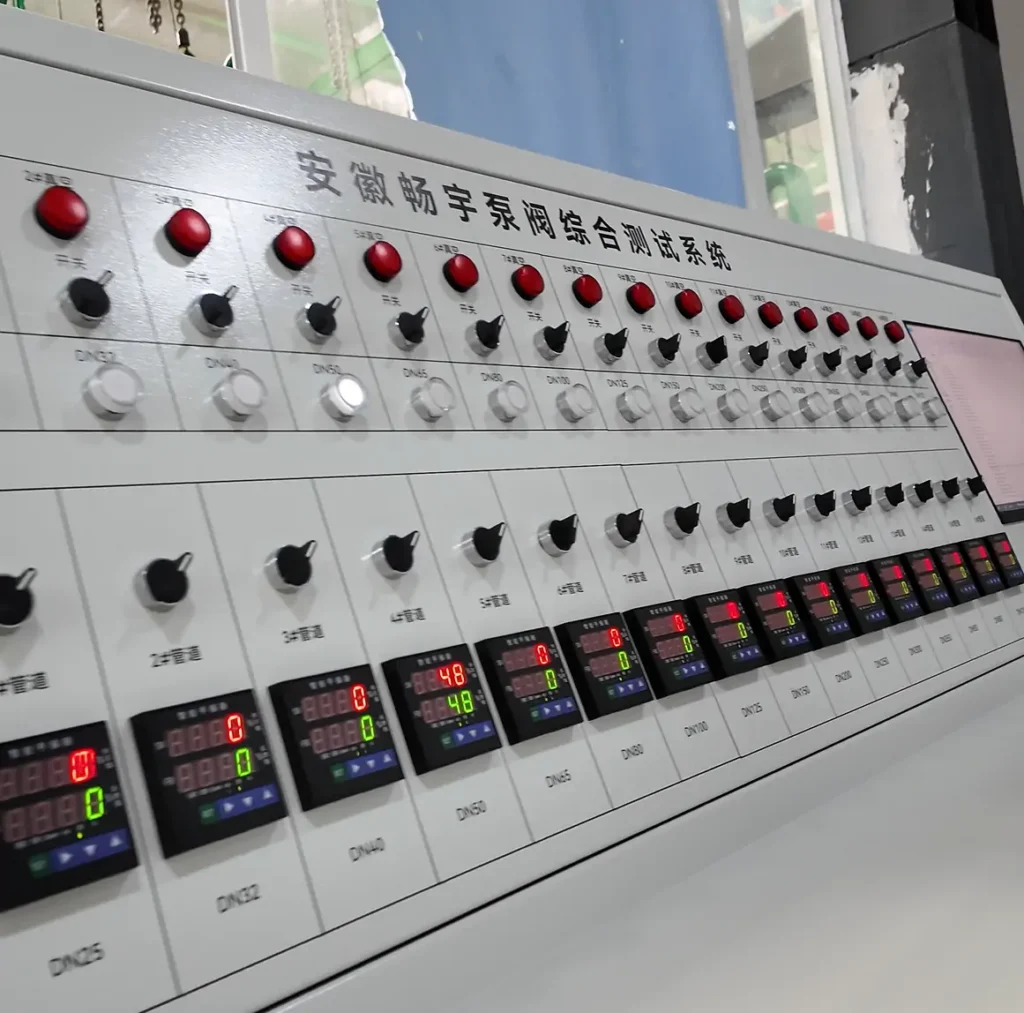
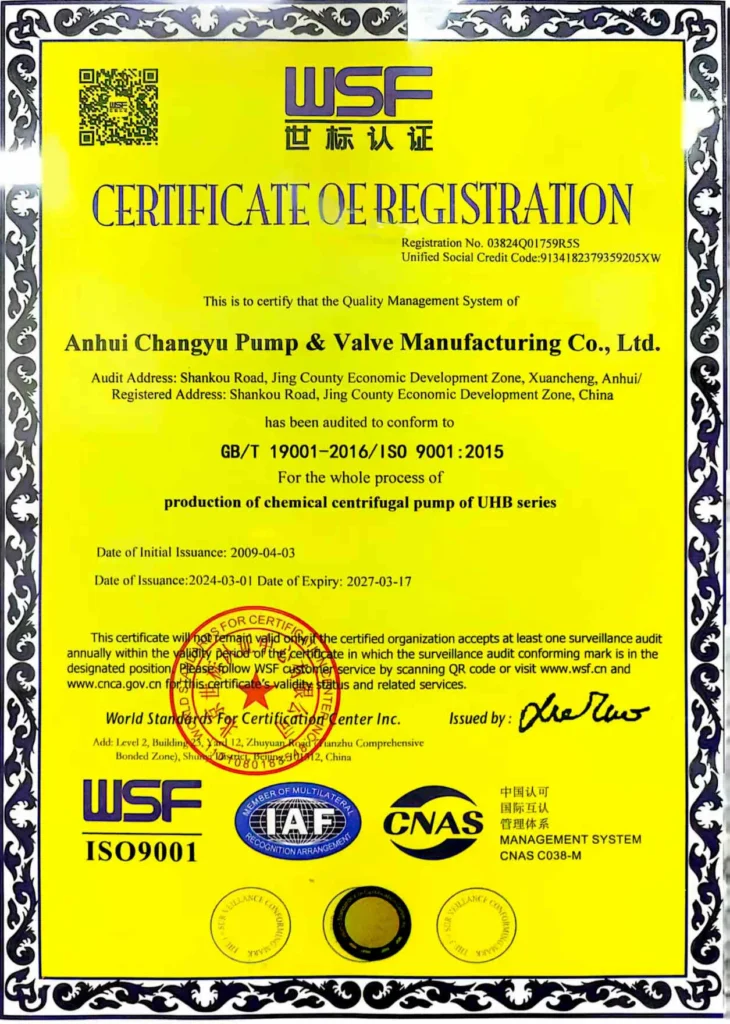
Controlo de qualidade é especialmente importante em serviço de cloreto férrico porque a fiabilidade da bomba a longo prazo depende não só da seleção do material, mas também da consistência do fabrico e da qualidade da montagem. Em Bomba Changyu, Antes da entrega, os nossos engenheiros prestam muita atenção à verificação do material molhado, à integridade do revestimento, à precisão dimensional e à montagem estanque. Isso ajuda a garantir que cada bomba de cloreto férrico seja construída para suportar uma transferência química estável, risco reduzido de vazamento e operação mais confiável a longo prazo em condições industriais reais.


Referência de caso: Uma solução prática de bomba de cloreto férrico para serviço de transferência
Num projeto de transferência de cloreto férrico, o cliente necessitava de uma bomba para descarga acima do solo e armazenamento para o processo, em que a compatibilidade do material, o desempenho estável da auto-ferragem e a fiabilidade de funcionamento a longo prazo eram essenciais. Como o serviço de cloreto férrico exige muito da resistência à corrosão e da contenção de líquidos, a bomba não podia ser selecionada apenas com base em pressupostos gerais de serviço químico.
Depois de analisar as condições químicas, a disposição da instalação e o serviço de transferência, foi selecionada uma bomba auto-ferrante revestida a flúor para proporcionar um caminho molhado mais adequado para o serviço corrosivo, melhorando também a praticidade do lado da sucção. Em comparação com uma disposição convencional de bomba metálica, esta configuração ajudou a reduzir as preocupações de manutenção relacionadas com o ataque de materiais e suportou um desempenho de transferência mais estável a longo prazo.

Depois que o sistema foi colocado em operação, o cliente ficou satisfeito com a estabilidade geral da bomba, a manutenção diária mais fácil e a adequação aprimorada para o manuseio de cloreto férrico. Os engenheiros da Changyu Pump recomendam rever a concentração, a temperatura, a elevação de sucção, os requisitos de contenção e as condições de lavagem de encerramento em conjunto antes de finalizar a seleção de uma bomba de cloreto férrico, porque a capacidade de serviço a longo prazo depende muitas vezes da condição de funcionamento total e não apenas da escolha do material.
Erros comuns na seleção de uma bomba de cloreto férrico
O primeiro erro comum está a escolher por preço ou potência antes de verificar a compatibilidade química. Com o cloreto férrico, a escolha errada de baixo custo torna-se frequentemente a opção mais cara, uma vez consideradas a corrosão e a manutenção.
O segundo erro está a verificar apenas o material do invólucro. A compatibilidade do cloreto férrico tem de incluir todo o percurso molhado, incluindo revestimentos, juntas, diafragmas, elastómeros e componentes internos.
O terceiro erro é assumir que um tipo de bomba funciona para todas as tarefas. A transferência a granel, a dosagem, a descarga e o serviço de elevação por sucção podem apontar para diferentes soluções de bombas, mesmo quando o líquido é o mesmo.
Perguntas frequentes sobre as bombas de cloreto férrico
P: O que é uma bomba de cloreto férrico?
A: A bomba de cloreto férrico é uma bomba química concebida para transferir, fazer circular ou dosear cloreto férrico utilizando materiais e uma construção adequados a serviços corrosivos.
Q: Que tipo de bomba é melhor para a transferência de cloreto férrico?
A: Para a transferência a granel a partir de sistemas de armazenamento ou manuseamento, são normalmente utilizadas bombas centrífugas de acionamento magnético, enquanto as bombas de diafragma e de dosagem são frequentemente preferidas para tarefas precisas de alimentação de produtos químicos.
P: Que materiais são normalmente utilizados nas bombas de cloreto férrico?
A: As construções com revestimento de PP, PVDF, PTFE, ETFE e fluoropolímero são normalmente referidas para o serviço de cloreto férrico porque oferecem uma melhor resistência do que muitos materiais metálicos normais.
Q: O aço inoxidável pode lidar com cloreto férrico?
A: Muitas referências da indústria avisam que o cloreto férrico é corrosivo para muitos aços inoxidáveis, especialmente a concentrações e temperaturas mais elevadas, pelo que o aço inoxidável nunca deve ser considerado adequado sem uma análise completa da compatibilidade.
Q: Uma bomba de acionamento magnético é adequada para cloreto férrico?
A: Sim. As bombas de acionamento magnético são frequentemente utilizadas para a transferência de cloreto férrico porque melhoram o confinamento e reduzem o risco de fugas em comparação com as disposições convencionais de transferência selada.
Q: Quando é que devo utilizar uma bomba de diafragma para o cloreto férrico?
A: Uma bomba de diafragma é especialmente útil quando a aplicação requer precisão de dosagem, alimentação intermitente ou serviço de descarga flexível em vez de transferência centrífuga contínua.
P: Onde é que as bombas de cloreto férrico são normalmente utilizadas?
A: São normalmente utilizados no tratamento de águas residuais, em sistemas de transferência de produtos químicos e em determinadas linhas de processos industriais, como aplicações relacionadas com a gravura e a metalurgia.
P: Que informações devo preparar antes de pedir uma recomendação?
A: Prepare a concentração de cloreto férrico, a temperatura, o caudal, a pressão ou a altura manométrica, o tipo de serviço, a disposição da instalação e quaisquer requisitos de controlo de fugas antes de solicitar uma recomendação de bomba.
Considerações finais
Escolher o melhor bomba de cloreto férrico não é apenas uma questão de caudal e pressão. A verdadeira decisão depende de compatibilidade química, estratégia de confinamento, esquema de instalação, e a fiabilidade a longo prazo de cada componente molhado que entra em contacto com o líquido.
Quer a sua aplicação envolva a transferência de cloreto férrico, a dosagem, a descarga ou o serviço de elevação por sucção, a seleção da estrutura correta da bomba pode reduzir o risco de fugas, melhorar a estabilidade da manutenção e apoiar um funcionamento mais seguro a longo prazo da fábrica.
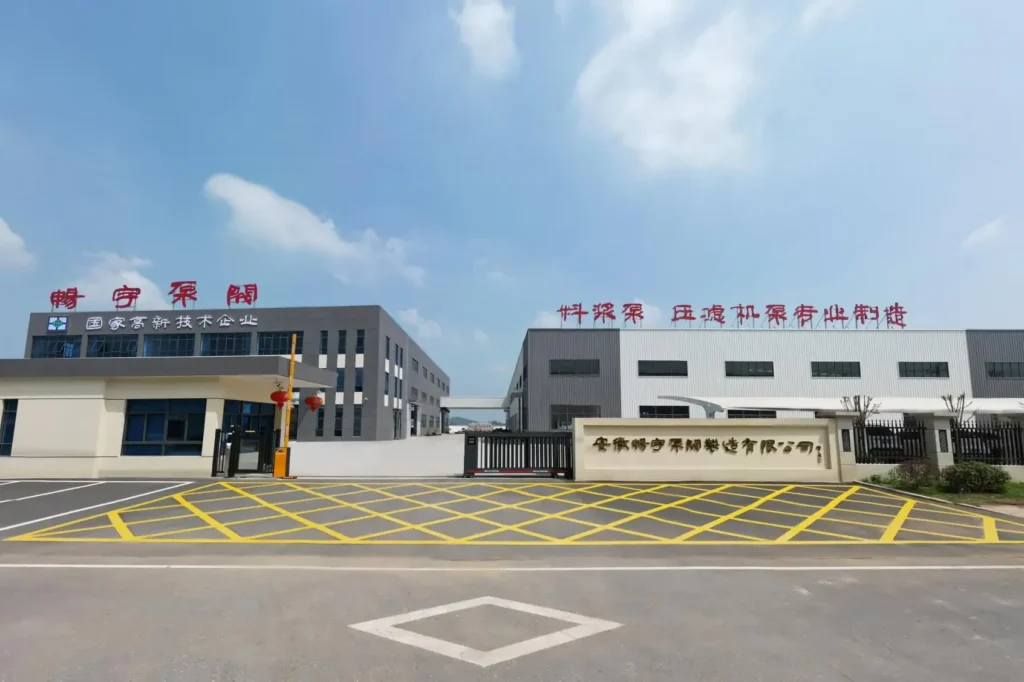
Se estiver a avaliar uma bomba de cloreto férrico para o seu sistema, contacto Bomba Changyu com o seu concentração, temperatura, caudal, altura, e pormenores de instalação. A nossa equipa pode ajudá-lo a rever as condições de funcionamento e recomendar uma solução de bomba mais adequada para a sua aplicação.