
1. Introdução
Bomba de deslocamento positivo vs. bomba centrífuga — esta é uma escolha importante que influencia a decisão de seleção de bombas industriais. O cerne da decisão assenta numa única diferença operacional: o caudal de uma bomba centrífuga varia com a pressão do sistema, enquanto uma bomba de deslocamento positivo fornece um caudal quase constante, independentemente das variações de pressão. Esta distinção repercute-se em todos os aspetos do desempenho da bomba — tolerância à viscosidade, eficiência, capacidade de pressão, sensibilidade ao cisalhamento e requisitos de manutenção. Compreender que tipo de bomba a sua aplicação necessita antes de consultar as curvas de desempenho é o ponto de partida para uma especificação bem-sucedida.
Este guia apresenta uma comparação estruturada em oito dimensões, um quadro de seleção em quatro etapas e recomendações específicas para cada aplicação, destinadas a engenheiros e especialistas em compras. Com base em mais de duas décadas de experiência no desenvolvimento de tecnologias de bombas centrífugas e de deslocamento positivo para aplicações industriais exigentes, a Changyu Pump oferece conhecimentos comprovados em ambas as famílias de bombas. Contacte-nos indicando os parâmetros do seu fluido para obter uma recomendação específica.
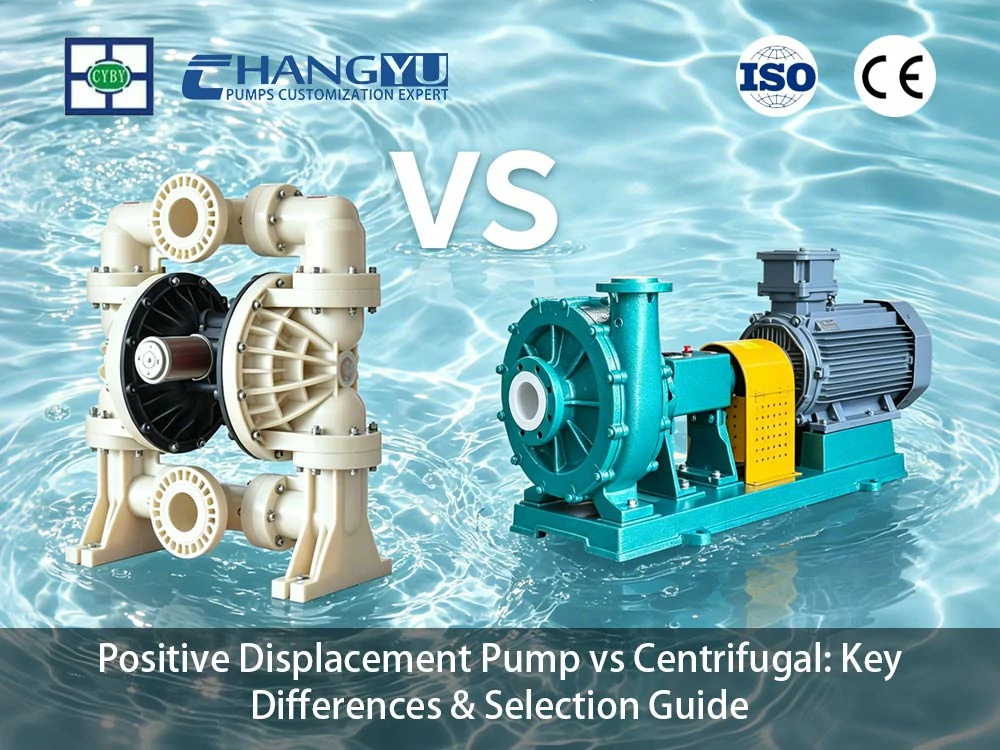
2. Como funcionam as bombas centrífugas?
Uma bomba centrífuga é uma máquina rotodinâmica que utiliza um impulsor rotativo para converter a energia mecânica proveniente de um acionador em energia cinética no fluido, a qual é depois convertida em energia de pressão na carcaça em espiral. O fluido entra pelo centro do impulsor, acelera radialmente para fora sob força centrífuga, e entra na voluta, onde a área de expansão do fluxo converte a velocidade em pressão.
A característica distintiva de uma bomba centrífuga é a relação inversa entre o caudal e a pressão: à medida que a pressão do sistema aumenta, o caudal diminui. Conforme observa o Hydraulic Institute, o desempenho de uma bomba centrífuga é tal que o caudal é variável em função da pressão diferencial do sistema ou da altura manométrica total — pode atingir um caudal variável enquanto funciona a uma velocidade de rotação constante.
As bombas centrífugas são mais adequadas para aplicações de alto caudal e viscosidade baixa a moderada. Proporcionam um caudal contínuo e sem pulsações, sendo utilizadas na maioria das tarefas de transferência de água, solventes e produtos químicos leves. São especificamente concebidas para um único caudal de ponto de máxima eficiência (BEP) — à medida que a bomba funciona fora do BEP, a eficiência diminui e a zona de funcionamento admissível é limitada.
3. Como funcionam as bombas de deslocamento positivo?
Uma bomba de deslocamento positivo (PD) funciona com base num princípio fundamentalmente diferente. Em vez de adicionar energia cinética ao fluido, retém um volume fixo de fluido numa cavidade e empurra mecanicamente esse fluido retido para o tubo de descarga. O caudal é diretamente proporcional à velocidade da bomba e é, em grande medida, independente da pressão do sistema — na prática, o caudal é diretamente proporcional à velocidade de rotação da bomba; se aumentar a velocidade de rotação, o caudal aumenta proporcionalmente.
Este princípio de funcionamento torna as bombas PD particularmente eficazes quando é necessário um caudal constante e preciso, independentemente das flutuações na pressão de descarga. À medida que os componentes internos da bomba — lóbulos, engrenagens, diafragmas, parafusos ou palhetas — rodam ou realizam movimentos alternativos, criam cavidades em expansão no lado da sucção que aspiram o fluido; em seguida, vedam e transportam o fluido para o lado da descarga, onde a cavidade se contrai e expulsa o fluido.
As principais características incluem:
- Caudal praticamente constante, independentemente da pressão do sistema — as bombas PD apresentam um caudal mais ou menos constante, independentemente da pressão
- Capacidade de bombear fluidos de alta viscosidade, em situações em que as bombas centrífugas perdem eficiência
- A maioria dos modelos de bombas PD são de autoaspiração a seco, capazes de esvaziar uma tubagem de sucção sem que seja necessário encher previamente a bomba — uma vantagem significativa em relação às bombas centrífugas
- Forças de cisalhamento mais baixas sobre o fluido bombeado, tornando-as adequadas para produtos sensíveis ao cisalhamento
Os principais subtipos de bombas PD — bombas de engrenagens, bombas de diafragma (AODD), bombas de cavidade progressiva e bombas peristálticas — apresentam, cada um, intervalos de viscosidade, tolerâncias a sólidos e capacidades de pressão distintos. Para uma análise detalhada dos tipos de bombas PD, consulte Visão geral da bomba de deslocamento positivo na Wikipédia.
4. 8 diferenças fundamentais entre as bombas centrífugas e as bombas de deslocamento positivo
8 diferenças principais num relance
| Dimensão de comparação | Bomba centrífuga | Bomba de deslocamento positivo |
|---|---|---|
| Caudal vs. Pressão | O caudal diminui à medida que a pressão aumenta | O caudal é praticamente constante, independentemente da pressão |
| Manuseamento da viscosidade | A eficiência diminui acima de ~200 cP | A eficiência aumenta com o aumento da viscosidade |
| Eficiência | Atinge o ponto de equilíbrio (BEP) (50–90%+); diminui à medida que se afasta do ponto de referência | Estável numa ampla gama (normalmente 90%+) |
| Capacidade de pressão | Limitado por etapa (~130 m por etapa) | Até 275 bar (equipamento); 350 bar (especializado) |
| Sensibilidade ao cisalhamento | Maior velocidade de cisalhamento (1 750–3 500 RPM) | Baixa velocidade de cisalhamento (100–600 RPM) |
| Auto-limpeza | Requer escorva ou sucção submersa | Autoaspiração a seco (na maioria dos modelos) |
| NPSH/Cavitação | Sensível; risco de cavitação em caudais fora do projeto | NPSHR mais baixo a velocidades mais baixas; melhor sucção |
| Manutenção | Mais simples para fluidos limpos | Mais complexo; menor custo total de propriedade (TCO) para fluidos difíceis |
4.1 Caudal vs. Pressão: Variável vs. Constante
A diferença mais fundamental entre os dois tipos de bomba reside na forma como o caudal responde à pressão do sistema.
Bombas centrífugas: O caudal diminui à medida que a pressão do sistema aumenta. A uma determinada velocidade de rotação, a bomba fornece o seu caudal máximo a baixa pressão e um caudal progressivamente menor à medida que a pressão de descarga aumenta — atingindo, por fim, uma altura manométrica de corte, na qual o caudal cai para zero. Esta característica de caudal variável torna as bombas centrífugas adequadas para aplicações em que é aceitável alguma variação no caudal.
Bombas de deslocamento positivo: O caudal permanece praticamente constante, independentemente das variações de pressão. Uma bomba PD fornece aproximadamente o mesmo volume por rotação, quer a pressão de descarga seja de 1 bar ou de 100 bar. O caudal é diretamente proporcional à velocidade de rotação da bomba e, à medida que a pressão aumenta, a bomba necessita simplesmente de mais potência para manter esse caudal constante. Isto faz com que as bombas PD sejam a escolha padrão para medição, dosagem e qualquer aplicação que exija um caudal consistente face a contrapressões variáveis.
4.2 Gestão da viscosidade: Diminuição da eficiência vs. Aumento da eficiência
A viscosidade é a propriedade do fluido que mais influencia a escolha entre a bomba centrífuga e a bomba de deslocamento. Os dois tipos de bomba reagem à viscosidade de formas opostas, o que define um critério de seleção claro.
Bombas centrífugas: A eficiência é minimamente afetada abaixo dos 50 cP, diminui entre 10 % e 30 % entre os 200 e os 500 cP e sofre uma perda significativa de desempenho acima dos 500 cP. Por volta dos 1 000 cP, as bombas centrífugas sofrem perdas de carga de 8 m ou mais e reduções de eficiência de aproximadamente 20 % em comparação com fluidos semelhantes à água. As bombas centrífugas não são geralmente recomendadas acima de 1 000 cP.
Bombas de deslocamento positivo: A eficiência aumenta, na verdade, com viscosidades mais elevadas. Como observa a Viking Pump, o caudal da bomba PD aumenta efetivamente com a viscosidade, uma vez que os líquidos de maior viscosidade preenchem as folgas internas da bomba, produzindo uma maior eficiência volumétrica. A viscosidade reduz efetivamente o deslizamento interno (recirculação), pelo que a bomba fornece uma percentagem maior do seu deslocamento teórico por rotação. Por esta razão, as bombas PD são preferidas para o manuseamento de fluidos de alta viscosidade — óleos espessos, polímeros, pastas e lamas — onde as bombas centrífugas funcionariam longe do seu BEP ou falhariam completamente.
Limites da seleção: Para viscosidades inferiores a cerca de 200 cP, com requisitos de caudal moderados a elevados, as bombas centrífugas são geralmente a opção mais económica. Para viscosidades superiores a 500 cP, as bombas PD devem ser consideradas como a principal opção. Entre 200 e 500 cP, a decisão depende de outros fatores — caudal, pressão e sensibilidade ao cisalhamento.
4.3 Eficiência: Picos no ponto de equilíbrio (BEP) vs. Estável em toda a gama
Bombas centrífugas: A eficiência atinge o seu máximo no ponto de equilíbrio (BEP) e diminui à medida que o ponto de funcionamento se afasta deste ponto de projeto em qualquer direção. Enquanto as bombas de deslocamento positivo podem atingir eficiências superiores a 90%, as eficiências das bombas centrífugas podem variar entre 50% e mais de 90%, dependendo do tipo e do tamanho. A curva de eficiência acentuada de uma bomba centrífuga significa que esta deve ser cuidadosamente adaptada ao ponto de funcionamento normal do sistema para se alcançar um consumo de energia aceitável.
Bombas de deslocamento positivo: A eficiência mantém-se relativamente estável em toda a gama de funcionamento. As variações de pressão têm um efeito reduzido na eficiência das bombas PD, ao passo que produzem um efeito drástico na eficiência das bombas centrífugas. As bombas PD mantêm uma elevada eficiência numa gama de funcionamento muito mais ampla, tornando-as a escolha preferida para aplicações em que a curva do sistema varia significativamente ou em que a bomba tem de funcionar em vários pontos de funcionamento.
4.4 Capacidade de pressão: limitada por fase vs. alta pressão
Bombas centrífugas: A capacidade de pressão é limitada por fase. Uma bomba centrífuga de fase única consegue normalmente atingir uma altura manométrica de até cerca de 130 metros. Para pressões mais elevadas, é necessário utilizar várias fases em série. As bombas centrífugas são mais adequadas para uma pressão máxima de 7 MPa (70 bar) e caudais de 7 000 m³/h, podendo ser dispostas em série até um máximo de 8 bombas.
Bombas de deslocamento positivo: A capacidade de pressão é limitada principalmente pela resistência estrutural da carcaça da bomba e pela potência do motor. As bombas PD podem gerar pressões muito mais elevadas do que os modelos centrífugos — as bombas de engrenagens padrão podem atingir até 275 bar (até 350 bar em modelos especializados), as bombas AODD até 30 bar e as bombas de cavidade progressiva até 48 bar. Para aplicações que requerem alta pressão diferencial com caudais baixos a moderados, as bombas PD são a especificação padrão.
4.5 Sensibilidade ao cisalhamento: alta velocidade vs. baixa velocidade
Bombas centrífugas: O impulsor de alta velocidade gera forças de cisalhamento significativas no fluido bombeado. As bombas centrífugas funcionam normalmente a velocidades mais elevadas (frequentemente entre 1 750 e 3 500 RPM) e podem causar cisalhamento prejudicial ao produto devido às altas velocidades e às forças de impacto. Por este motivo, as bombas centrífugas não são recomendadas para fluidos sensíveis ao cisalhamento, tais como lamas biológicas, soluções de polímeros e produtos alimentares, nos quais a integridade do produto é um requisito de qualidade.
Bombas de deslocamento positivo: As bombas PD funcionam a velocidades mais baixas (normalmente entre 100 e 600 RPM) e produzem um cisalhamento substancialmente menor. Os modelos peristálticos e de cavidade progressiva são particularmente suaves, tornando-os adequados para a transferência de frutos inteiros, iogurte, natas, molhos e outros produtos sensíveis ao cisalhamento, sem que estes se deteriorem.
4.6 Auto-escorvante: Requer escorvamento vs. Auto-escorvante a seco
Bombas centrífugas: As bombas centrífugas padrão não conseguem bombear ar e têm de ser escorvadas — o corpo da bomba e a tubagem de sucção têm de ser enchidos com líquido antes do arranque. Se a tubagem de sucção esvaziar entre ciclos de funcionamento, a bomba tem de ser novamente escorvada. Existem modelos de bombas centrífugas autoescorvantes, mas estes aumentam a complexidade e o custo.
Bombas de deslocamento positivo: Praticamente todas as bombas PD são auto-escorvantes a seco. Conseguem esvaziar uma linha de sucção sem que seja necessário encher previamente a bomba — uma vantagem significativa em relação às bombas centrífugas, que, na maioria dos casos, precisam de ser ventiladas antes de poderem funcionar. As bombas AODD e as bombas peristálticas são particularmente eficazes na autoescorvagem a partir de uma sucção a seco, tornando-as a escolha preferida para a descarga de camiões-cisterna, drenagem de fossas e qualquer instalação em que a bomba esteja montada acima da fonte de líquido.
4.7 NPSH e risco de cavitação: sensível vs. tolerante
Bombas centrífugas: O NPSHr (requerido) varia em função do caudal, que é determinado pela pressão e pela viscosidade. Uma bomba centrífuga é sensível à cavitação — se o NPSHa ficar abaixo do NPSHr, formam-se bolhas de vapor na entrada do impulsor, que colapsam violentamente, causando ruído, vibração e danos no impulsor. As bombas centrífugas devem ser cuidadosamente adaptadas às condições de sucção do sistema para evitar a cavitação.
Bombas de deslocamento positivo: O NPSHr varia em função do caudal, que é determinado pela velocidade — quanto menor for a velocidade de uma bomba de deslocamento positivo, menor será o NPSHr. As bombas de deslocamento positivo apresentam, geralmente, melhores características de sucção e são menos vulneráveis à cavitação, uma vez que o seu mecanismo de deslocamento não depende da velocidade do fluido para gerar pressão.
4.8 Custos de manutenção e ciclo de vida: mais simples vs. mais complexo, mas com um TCO mais baixo
Bombas centrífugas: Uma construção mais simples, com menos peças móveis, traduz-se num custo inicial mais baixo e numa manutenção mais fácil para aplicações com fluidos limpos. O preço de aquisição de uma bomba centrífuga é normalmente inferior ao de uma bomba PD equivalente. No entanto, quando se lidam com fluidos viscosos, abrasivos ou em condições variáveis, os custos de manutenção podem aumentar significativamente devido ao desgaste das vedações, à erosão do impulsor e à sobrecarga dos rolamentos resultante do funcionamento fora do ponto de eficiência máxima (BEP).
Bombas de deslocamento positivo: Custo inicial mais elevado devido a uma construção mais complexa, com folgas internas mais reduzidas e mais componentes sujeitos a desgaste. No entanto, para as aplicações exigentes para as quais foram concebidas — fluidos de alta viscosidade, alta pressão, abrasivos ou sensíveis ao cisalhamento — as bombas PD proporcionam frequentemente um custo total de propriedade mais baixo, uma vez que funcionam de forma eficiente numa gama mais ampla de condições e requerem manutenção menos frequente quando corretamente especificadas. Uma bomba PD selecionada para uma aplicação de alta viscosidade que uma bomba centrífuga não conseguiria lidar de forma eficiente recuperará o seu custo inicial mais elevado através de poupanças de energia e de tempo de inatividade reduzido.
4.9 Resumo das principais diferenças
| Fator de seleção | Bomba centrífuga | Bomba de deslocamento positivo |
|---|---|---|
| Princípio de funcionamento | O impulsor rotativo adiciona energia cinética ao fluido | Retém um volume fixo e desloca-o mecanicamente |
| Caudal vs. Pressão | O caudal diminui à medida que a pressão do sistema aumenta | O caudal é praticamente constante, independentemente da pressão |
| Limite de viscosidade | A eficiência diminui acima de ~200 cP; o valor ideal é 1 000 cP | A eficiência aumenta ou mantém-se estável a uma viscosidade elevada |
| Eficiência | Picos no BEP; 50–90%+, dependendo do tipo e do tamanho | Estável numa ampla gama de condições de funcionamento; normalmente 90%+ |
| Capacidade de pressão | Limitado por fase (fase única ~130 m; 70 bar máx.) | Até 275 bar (engrenagem, padrão); até 350 bar (especializado); 30 bar (AODD); 48 bar (PC) |
| Sensibilidade ao cisalhamento | Maior velocidade de cisalhamento (normalmente entre 1 750 e 3 500 RPM) | Cisalhamento mais baixo (normalmente entre 100 e 600 RPM) |
| Auto-limpeza | Os modelos padrão requerem sucção inundada ou escorva manual | A maioria das concepções de PD são auto-ferrantes a partir de sucção seca |
| NPSH/Cavitação | Sensível ao NPSH; risco de cavitação em caudais fora do projeto | NPSHR mais baixo a velocidades mais baixas; melhor desempenho de sucção |
| Manutenção | Mais simples para fluidos limpos; a vedação é a peça sujeita a maior desgaste | Mais complexos; diafragmas, tubos, engrenagens ou estatores são os principais itens de desgaste |
| Custo inicial | Inferior | Mais alto |
| Custo total de propriedade (TCO) para fluidos difíceis | Mais elevado (energia, manutenção, tempo de inatividade) | Inferior (funciona de forma eficiente nas condições de projeto) |
5. Como escolher entre uma bomba centrífuga e uma bomba de deslocamento positivo: um guia em 4 passos
Passo 1: Caracterizar as propriedades do fluido
Documente a composição química, a concentração, o pH, a temperatura, a densidade, a viscosidade, a pressão de vapor e o teor de sólidos do fluido. A viscosidade do fluido — e não uma classificação genérica — é o parâmetro mais importante para a escolha entre uma bomba centrífuga e uma de deslocamento positivo. Para fluidos com viscosidade inferior a aproximadamente 200 cP e requisitos de caudal moderados a elevados, uma bomba centrífuga é a opção inicial adequada. Para fluidos acima de 500 cP, as bombas de deslocamento positivo devem ser avaliadas como a principal opção. A região entre 200 e 500 cP é uma zona de transição onde outros fatores — pressão, caudal e sensibilidade ao cisalhamento — tornam-se decisivos.
Para uma análise mais aprofundada sobre a seleção de materiais para fluidos corrosivos, consulte o nosso Bomba de processo químico: Tipos, seleção e guia de aplicações.
Passo 2: Definir o caudal, a altura manométrica total e os requisitos do processo
Calcule o caudal necessário e a altura manométrica total (TDH), tendo em conta a elevação estática, as perdas por atrito no sistema de tubagem e a pressão no ponto de destino. Determine se a aplicação requer um caudal constante face a uma pressão variável — uma característica que favorece fortemente as bombas PD — ou se é aceitável uma variação do caudal em função da pressão. Para aplicações de medição e dosagem, especifique a precisão e a repetibilidade necessárias.
Passo 3: Escolher o tipo de bomba adequado ao fluido e às condições de funcionamento
Com base nas oito dimensões de comparação apresentadas na Secção 4, escolha o tipo de bomba adequado às características do fluido, aos requisitos de caudal e pressão e às restrições de instalação:
- Escolha uma bomba centrífuga quando: A viscosidade do fluido é inferior a aproximadamente 200 cP, o caudal é elevado (superior a 20 m³/h), a pressão de descarga é moderada, é aceitável alguma variação do caudal em função da pressão, o fluido não é sensível ao cisalhamento e a bomba pode ser instalada com aspiração submersa ou com um modelo autoescorvante.
- Escolha uma bomba de deslocamento positivo quando: A viscosidade do fluido é superior a aproximadamente 500 cP, é necessário um caudal constante face a uma pressão variável, a pressão de descarga é elevada, o fluido é sensível ao cisalhamento, a bomba deve auto-escorvar a partir de uma sucção a seco ou é necessária uma medição ou dosagem precisa.
Para obter orientações detalhadas sobre a seleção de bombas centrífugas, consulte o nosso guia de bombas centrífugas industriais.
Passo 4: Avaliar o custo total de propriedade
O preço de aquisição de uma bomba representa normalmente apenas 15–25 % do seu custo ao longo da vida útil. O consumo de energia (que representa frequentemente 60–70 % do custo ao longo da vida útil), a frequência de substituição de peças de desgaste, a mão-de-obra de manutenção e o custo de produção associado a paragens não planeadas contribuem, cada um, para o custo total de propriedade. Uma bomba PD com um custo inicial mais elevado, mas com uma vida útil substancialmente mais longa e maior eficiência numa aplicação de alta viscosidade, apresenta habitualmente um TCO mais baixo do que uma bomba centrífuga a funcionar longe do seu BEP na mesma aplicação. Avalie o TCO num horizonte de três a cinco anos para uma comparação precisa.
6. Recomendações de aplicação: Escolha entre bombas centrífugas e de deslocamento positivo
6.1 Por viscosidade
| Gama de viscosidade | Tipo de bomba recomendado | Exemplos de aplicações |
|---|---|---|
| < 200 cP | Bomba centrífuga (ideal) | Água, solventes leves, produtos químicos de baixa viscosidade, água de refrigeração |
| 200–500 cP | Centrífuga ou PD (avaliar ambas) | Óleos leves, algumas soluções químicas, pastas líquidas |
| 500–10 000 cP | Bomba de deslocamento positivo | Óleos pesados, polímeros, adesivos, pastas espessas |
| > 10.000 cP | Bomba de deslocamento positivo (de engrenagens, de pistão ou de diafragma) | Pastas, graxas, petróleo bruto pesado, lamas |
6.2 Por setor
- Processamento químico: As bombas centrífugas são utilizadas na maior parte das transferências de ácidos a granel, solventes e produtos intermédios com viscosidade baixa a moderada. As bombas centrífugas de acionamento magnético permitem o manuseamento de produtos químicos perigosos com contenção sem fugas. As bombas de diafragma PD e as bombas de engrenagens dosam aditivos e catalisadores com precisão.
- Petróleo e gás: As bombas centrífugas são utilizadas para o transporte de água de produção e de hidrocarbonetos leves. As bombas de cavidade progressiva e de engrenagens PD são utilizadas para o transporte de petróleo bruto, lama de perfuração e produtos de alta viscosidade a alta pressão.
- Alimentação e bebidas: As bombas centrífugas transportam produtos de baixa viscosidade (leite, cerveja, sumos). As bombas de lóbulos PD e as bombas peristálticas são adequadas para produtos viscosos (chocolate, iogurte, molhos) e fluidos sensíveis ao cisalhamento.
- Farmacêutico: As bombas peristálticas e de diafragma da PD destinam-se à dosagem e à transferência de fluidos de alta pureza. As bombas centrífugas são utilizadas para o tratamento de água de serviço e para a circulação de produtos químicos CIP.
- Mineração: As bombas centrífugas para lamas são adequadas para a transferência de lamas abrasivas em grandes volumes. As bombas de diafragma e de mangueira PD são adequadas para rejeitos de alta densidade e para a dosagem de reagentes.
6.3 Por condição de funcionamento
| Condição | Melhor tipo de bomba | Motivo |
|---|---|---|
| Alto caudal, baixa pressão, baixa viscosidade | Centrífuga | Mais económico, manutenção simples |
| Baixo caudal, alta pressão, qualquer viscosidade | Deslocamento positivo | Fluxo constante, alta eficiência em toda a gama de pressões |
| Fluidos viscosos e sensíveis ao cisalhamento | PD (peristáltica, de cavidade progressiva) | Baixo cisalhamento, manuseamento cuidadoso |
| É necessária autoaspiração; a bomba deve estar situada acima do líquido | PD (AODD, peristáltico) | Capacidade de autoaspiração a seco |
| Caudal constante contra pressão variável | Deslocamento positivo | Vazão independente da pressão |
| Limpo, não perigoso, para funcionamento contínuo | Centrífuga | Custos de investimento e manutenção mais baixos |
7. Soluções de bombagem Changyu para aplicações centrífugas e de deslocamento positivo
A Changyu Pump concebe e fabrica bombas centrífugas e de deslocamento positivo para aplicações em ambientes corrosivos, abrasivos e de alta temperatura nos setores do processamento químico, da mineração, do tratamento de água e da indústria em geral.
Bomba centrífuga de acionamento magnético da série CYQ
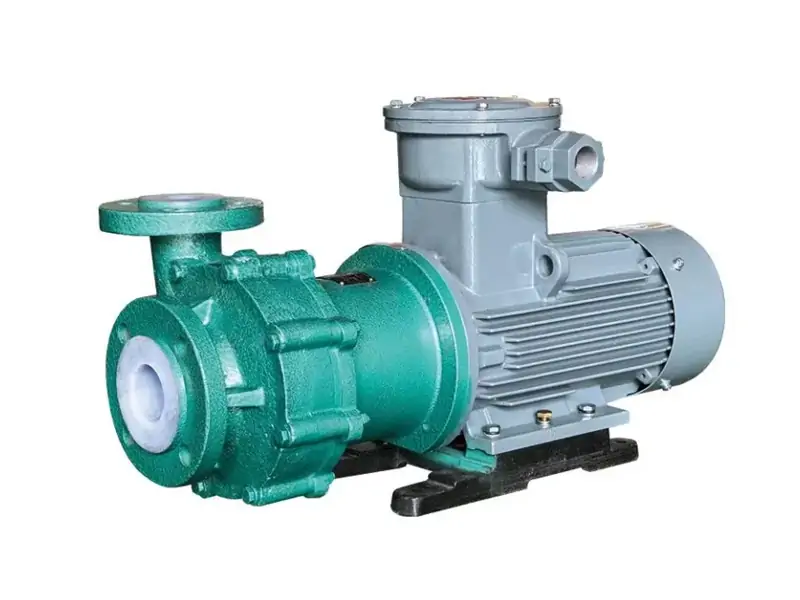
A série CYQ é uma bomba centrífuga de acionamento magnético sem vedação com componentes húmidos revestidos a FEP, PFA ou PTFE. O binário é transmitido através de uma manga de isolamento fixa, eliminando a vedação mecânica e garantindo, por definição, a ausência total de fugas. Para a transferência de produtos químicos perigosos — intermediários tóxicos, solventes de alto valor, ácidos corrosivos —, a Série CYQ proporciona a contenção absoluta necessária para um funcionamento seguro e em conformidade com as normas. O design desta bomba centrífuga oferece o desempenho de alto caudal e baixa viscosidade, bem como a manutenção simples, que a Secção 4 identifica como vantagens das bombas centrífugas.
Especificações principais: Caudal 3-800 m³/h | Altura 15-125 m | Potência 2,2-110 kW | Temperatura -20°C a 180°C
Bomba centrífuga resistente à corrosão em UHMWPE da série UHB
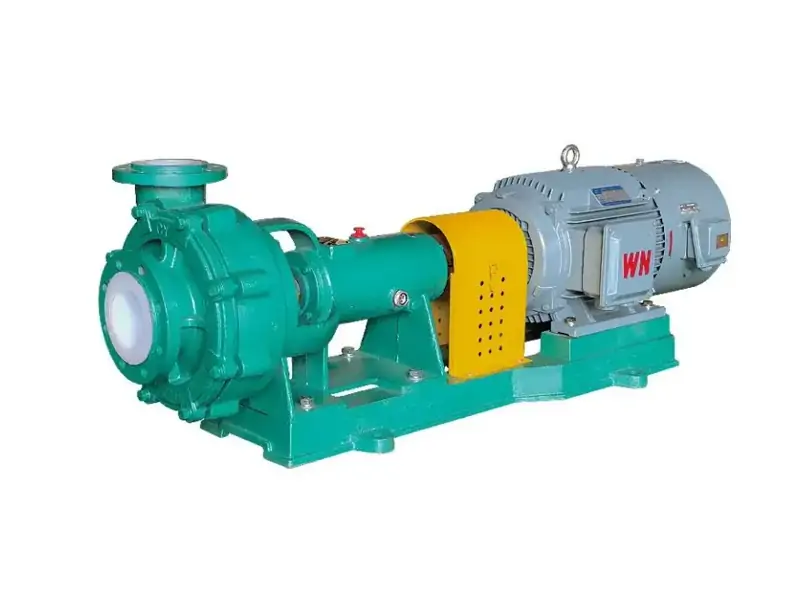
A série UHB é uma bomba centrífuga de estágio único em cantilever com um revestimento de aço UHMW-PE Revestimento com espessura de 8 a 20 mm, especificamente concebido para fluidos quimicamente agressivos e abrasivos-corrosivos. O revestimento em UHMW-PE oferece uma resistência ao desgaste 7 a 10 vezes superior à do aço carbono, proporcionando simultaneamente uma ampla compatibilidade química com ácidos, álcalis e soluções salinas.
Especificações principais: Caudal 3-2,600 m³/h | Altura 5-100 m | Potência 0.75-300 kW | Temperatura -20°C a 90°C
Bomba centrífuga autoescorvante de fluoroplástico série FZB
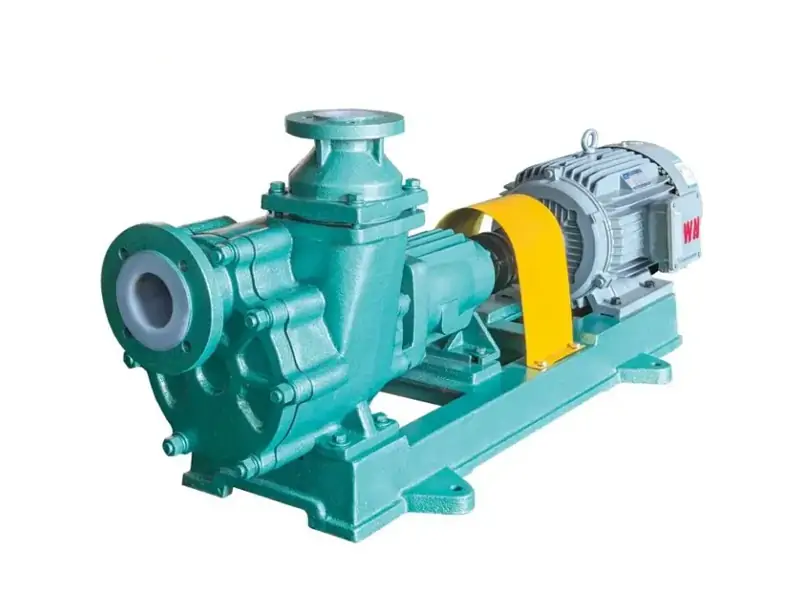
A série FZB é uma bomba centrífuga autoaspirante cujos componentes em contacto com o fluido são revestidos com FEP (F46) ou PFA. Após o enchimento inicial, a bomba retira automaticamente o ar da linha de sucção e atinge uma altura de autoescorvamento de até 5 metros. A capacidade de autoescorvamento, combinada com a resistência total à corrosão do fluoroplástico, torna-a adequada para a descarga de camiões-cisterna, a drenagem de fossas e a transferência de produtos químicos em locais subterrâneos.
Especificações principais: Caudal 2,5-100 m³/h | Altura 15-50 m | Potência 0,75-55 kW | Temperatura -20°C a 150°C
Bomba de diafragma duplo acionada a ar da série BFQ (AODD — Deslocamento positivo)

A série BFQ é uma bomba AODD de deslocamento positivo cujos materiais do corpo incluem aço fundido, ferro dúctil, liga de alumínio, PP, aço inoxidável e PVDF. Totalmente acionada a ar comprimido, é intrinsecamente isenta de vedantes, autoescorvante desde uma sucção a seco até 7,6 metros e pode funcionar a seco sem sofrer danos. Para fluidos corrosivos, abrasivos, de alta viscosidade e voláteis, a Série BFQ proporciona o caudal constante, o manuseamento suave de baixo cisalhamento e a flexibilidade operacional que as bombas centrífugas não conseguem igualar em condições de fluido difíceis. Esta bomba de deslocamento positivo AODD proporciona o caudal constante contra pressão variável, autoescorvamento a seco e manuseamento de alta viscosidade que a Secção 4 identifica como vantagens do PD.
Especificações principais: Caudal máximo de trabalho até 1 041 l/min | Pressão de trabalho 0,84 MPa | Altura de sucção 7,6 m | Passagem de sólidos 9,4 mm
8. Perguntas frequentes sobre bombas centrífugas e de deslocamento positivo
P1: Qual é a principal diferença entre uma bomba centrífuga e uma bomba de deslocamento positivo?
R: A principal diferença reside na forma como o caudal responde à pressão. O caudal de uma bomba centrífuga diminui à medida que a pressão do sistema aumenta; uma bomba de deslocamento positivo fornece um caudal praticamente constante, independentemente das variações de pressão. As bombas centrífugas utilizam um impulsor rotativo para conferir energia cinética ao fluido; as bombas de deslocamento positivo retêm um volume fixo e deslocam-no mecanicamente para o tubo de descarga.
P2: A partir de que viscosidade devo passar de uma bomba centrífuga para uma bomba de deslocamento positivo?
R: As bombas centrífugas são mais eficientes abaixo de aproximadamente 200 cP, com a eficiência a ser minimamente afetada abaixo de 50 cP e a diminuir entre 10 % e 30 % no intervalo de 200 a 500 cP. Acima de 500 cP, a perda de eficiência de uma bomba centrífuga torna-se economicamente significativa, devendo as bombas PD ser consideradas como a principal opção. As bombas centrífugas não são geralmente recomendadas acima de 1000 cP.
P3: Uma bomba centrífuga consegue bombear fluidos de alta viscosidade?
R: As bombas centrífugas podem ser classificadas para lidar com viscosidades até 1 000 cSt e superiores, mas a sua eficiência diminui drasticamente à medida que a viscosidade aumenta. Em viscosidades elevadas, as bombas de deslocamento positivo são claramente a melhor opção, tendo em conta os elevados custos energéticos resultantes da perda de eficiência das bombas centrífugas.
P4: As bombas de deslocamento positivo são autoescorvantes?
R: Sim, a maioria das bombas PD são autoescorvantes a seco — conseguem esvaziar uma tubagem de sucção sem que seja necessário encher previamente a bomba. Esta é uma vantagem significativa em relação às bombas centrífugas, que geralmente requerem escorvamento ou sucção submersa. As bombas AODD e as bombas peristálticas são particularmente eficazes no autoescorvamento a partir de uma sucção a seco.
P5: Qual é o tipo de bomba mais eficiente?
R: As bombas PD podem atingir rendimentos superiores a 90 %, enquanto os rendimentos das bombas centrífugas variam entre 50 % e mais de 90 %, dependendo do tipo, tamanho e ponto de funcionamento. No entanto, uma bomba centrífuga a funcionar próximo do seu ponto de melhor rendimento (BEP) com um fluido de baixa viscosidade pode igualar ou superar o rendimento de uma bomba PD, pelo que a comparação depende das condições específicas da aplicação.
P6: As bombas de deslocamento positivo requerem uma válvula de alívio de pressão?
R: Sim. Como as bombas PD fornecem um caudal quase constante independentemente da pressão, podem gerar pressões perigosamente elevadas se forem utilizadas com uma válvula de descarga fechada. É necessária uma válvula de alívio de pressão ou um sistema de derivação para proteger a bomba e o sistema contra sobrepressão. As bombas centrífugas, por outro lado, podem funcionar com uma válvula fechada na altura manométrica de corte sem sofrerem danos imediatos (embora o funcionamento prolongado nessa condição provoque o sobreaquecimento do fluido).
P7: Que tipo de bomba lida melhor com sólidos?
R: Isso depende do projeto específico da bomba, e não da categoria da bomba. As bombas centrífugas com impulsores semiabertos ou embutidos podem processar lamas com um teor de sólidos de 30–40 % em peso. As bombas PD — em particular as bombas de diafragma AODD — podem processar um teor de sólidos de até 60–80 % em peso, dependendo do projeto específico. As bombas PD de cavidade progressiva e peristálticas também são eficazes com fluidos carregados de sólidos.
P8: Como posso calcular qual o tipo de bomba que terá um custo total de propriedade mais baixo?
R: TCO = custo de capital inicial + custo energético (60–70 % do custo ao longo da vida útil) + frequência e custo de substituição de peças de desgaste + mão de obra de manutenção + custo de paragem da produção. Avalie num horizonte de 3 a 5 anos. Para aplicações de alta viscosidade ou condições variáveis, em que uma bomba centrífuga funcionaria longe do seu BEP, uma bomba PD proporciona frequentemente um TCO mais baixo, apesar de um preço de aquisição inicial mais elevado, porque a poupança de energia e a manutenção reduzida compensam a diferença de capital.
9. Recomendações dos engenheiros especializados da Changyu Pump
- A viscosidade deve ser o fator determinante na escolha inicial do tipo de bomba, e não apenas o caudal e a altura manométrica. Uma bomba centrífuga selecionada para um fluido de 500 cP pode, em teoria, satisfazer os requisitos de caudal e altura manométrica, mas consumir substancialmente mais energia do que uma bomba de deslocamento positivo (PD) destinada à mesma aplicação. Acima de 500 cP, considere as bombas de deslocamento positivo (PD) como a primeira opção. As bombas centrífugas não são, geralmente, recomendadas para viscosidades superiores a 1 000 cP.
- Tenha em conta toda a gama de funcionamento, e não apenas o ponto de projeto. As bombas centrífugas são concebidas para um único ponto de eficiência máxima (BEP); a eficiência diminui à medida que o ponto de funcionamento se afasta desse caudal. Se a sua aplicação exigir que a bomba funcione numa ampla gama de caudais, a curva de eficiência estável de uma bomba PD poderá proporcionar um melhor desempenho global.
- Tenha em conta os requisitos de auto-aspiração na escolha do tipo de bomba. Se a bomba tiver de ser montada acima da fonte de líquido e não puder contar com uma sucção submersa, a capacidade de autoescorvamento a seco da maioria das bombas PD — ou um modelo centrífugo com autoescorvamento — deve ser incluída nas especificações desde o início.
- Para fluidos perigosos ou de elevado valor, opte por bombas centrífugas ou de diafragma PD com acionamento magnético sem vedantes. A eliminação da vedação mecânica elimina tanto uma via de fuga como uma tarefa de manutenção de rotina. O custo inicial mais elevado é normalmente recuperado através da eliminação das substituições da vedação, da redução do consumo de água de lavagem e da dispensa de relatórios sobre emissões.
10. Conclusão
A escolha entre bomba de deslocamento positivo vs centrífuga é uma decisão que começa pelas propriedades do fluido — em particular a viscosidade — e abrange todos os aspetos do desempenho da bomba. As bombas centrífugas dominam as aplicações de alto caudal, baixa viscosidade e funcionamento contínuo por uma boa razão: são simples, económicas e fiáveis quando utilizadas nas condições para as quais foram concebidas. As bombas de deslocamento positivo servem as aplicações que as bombas centrífugas não conseguem tratar de forma eficiente — fluidos de alta viscosidade, serviços de alta pressão, produtos sensíveis ao cisalhamento e processos que requerem um caudal constante contra pressão variável.
O processo de seleção começa com uma caracterização completa do fluido, prossegue com a escolha do tipo de bomba com base nas oito dimensões de comparação descritas neste guia e conclui-se com uma avaliação do custo total de propriedade num horizonte de três a cinco anos. Uma bomba que funcione no seu ponto de melhor rendimento (BEP), com materiais verificados para o fluido específico, proporcionará o menor custo total de propriedade e o maior tempo médio entre reparações.
As plataformas de bombas centrífugas (CYQ, UHB, FZB) e de deslocamento positivo (BFQ) da Changyu Pump oferecem soluções resistentes à corrosão e ao desgaste, sem vedantes, para aplicações industriais exigentes de manuseamento de fluidos. Contactar a nossa equipa de engenharia de acordo com os parâmetros do seu fluido e os requisitos do seu processo. Iremos fornecer-lhe uma recomendação detalhada sobre a bomba e um orçamento adaptado à sua aplicação.