
Quick Answer
A wear resistant slurry pump is a heavy-duty centrifugal pump engineered with specialized materials and design features that resist the abrasive action of solid particles suspended in liquid. Unlike standard pumps, which may fail within weeks in abrasive service, wear resistant slurry pumps incorporate hard metal alloys, elastomer linings, or ceramic components that extend wet-end service life to months or years. Four core selection factors:
- Material selection is the dominant factor in pump wear life: High-chrome white iron (CrMo, 600–700 HB) provides the optimal balance of hardness, toughness, and cost for the majority of hard-rock mining slurries. Natural rubber excels with fine, rounded particles in neutral pH. Ceramic liners offer maximum hardness for extreme wear conditions but have the lowest fracture toughness — they resist cutting wear exceptionally well but are vulnerable to impact from large particles exceeding 1–2 mm.
- Hardness must be balanced against fracture toughness: The inverse relationship between hardness and toughness governs all wear material selection. High-chrome alloys (KIC 25–35 MPa√m) tolerate occasional tramp oversize that would fracture ceramic liners (KIC 3–5 MPa√m). Selecting a material without evaluating both properties leads to either rapid wear (too soft) or catastrophic failure (too brittle).
- Ore characteristics dictate the material selection path: Angular quartz particles in gold ore (Mohs 7) require hard metal. Rounded, fine particles in copper flotation tailings allow rubber liners. Acidic copper leach solutions demand corrosion-resistant materials regardless of abrasion severity — standard CrMo corrodes rapidly below pH 4.
- Total cost of ownership analysis justifies premium material investments: A high-chrome alloy pump with a 12-month wet-end life may cost half as much per replacement as a ceramic-lined pump, but if the ceramic pump lasts 30 months and eliminates multiple unplanned downtime events, its 5-year TCO is significantly lower. The dominant cost driver in abrasive slurry pump service is not parts cost — it is production downtime.
In mining and mineral processing, slurry pump wear is the single largest contributor to unplanned maintenance costs. A mill discharge pump handling freshly ground ore, a tailings pump moving silica-rich waste across kilometers of pipeline, or a dredge pump processing abrasive mineral sands — each subjects its wet-end components to a continuous barrage of hard, sharp particles. When the pump material is softer than the particles it is pumping, material removal occurs at every contact. The difference between a pump that operates reliably for 18 months and one that requires wet-end replacement every 8 weeks is rarely the pump design — it is the material specification.
Changyu Pump has manufactured slurry pumps for abrasive mining and industrial applications for over two decades. This guide provides the structured framework for wear material selection — from understanding the wear mechanisms that degrade pump components, to comparing the five primary wear materials, to evaluating material investments through total cost of ownership analysis.
1. What Makes Slurry Pump Materials Wear Resistant for Abrasive Applications?
Slurry pump materials resist wear through two fundamentally different mechanisms: hardness-based resistance (hard metals and ceramics) and resilience-based resistance (elastomers). Understanding which mechanism applies to a given slurry is the foundation of correct material selection.
The Five Wear Mechanisms in Slurry Pumps
- Cutting wear: Sharp, angular particles slide across the pump surface at shallow angles (15–45°), removing material through micro-cutting. This is the dominant wear mechanism in gold and iron ore slurries containing quartz. Resistance requires high hardness — a material harder than the particle cannot be cut.
- Erosion wear: Fine particles entrained in high-velocity flow impact surfaces repeatedly at shallow angles, causing gradual material loss through a combination of micro-cutting and surface fatigue. Most severe in cyclone feed and high-velocity tailings circuits.
- Impact wear: Large particles strike pump surfaces at steep angles (60–90°), particularly at the volute tongue and impeller discharge. This can plastically deform ductile materials or fracture brittle materials. Resistance requires high fracture toughness.
- Fatigue wear: Repeated particle impacts at stresses below the material’s yield point can initiate subsurface cracks that propagate over time, eventually causing surface spalling. This mechanism is significant in high-pressure, long-distance tailings pumps where particle impacts accumulate over billions of cycles.
- Corrosion-erosion synergy: Acidic process water or leaching agents chemically attack the pump material surface, forming a weakened corrosion layer that abrasive particles then remove. This combined mechanism is particularly aggressive in copper heap leaching and some gold CIL/CIP circuits.
The Hardness-Toughness Trade-off
The fundamental challenge in wear material selection is that hardness and fracture toughness are inversely correlated in most engineering materials. The hardest materials (ceramics) have the lowest fracture toughness — they resist cutting wear exceptionally well but are vulnerable to impact from large particles. The toughest materials (elastomers) are the softest — they absorb impact energy effectively but are cut by sharp, angular particles. Finding the optimal balance between cutting wear resistance and impact damage tolerance requires matching the material to the specific particle characteristics of the slurry — a process detailed in Sections 2 and 3.
The Influence of Slurry Concentration on Wear
Solids concentration affects wear rate in a non-linear manner. At low to moderate concentrations (10–30% by weight), increasing solids content increases wear rate proportionally as more particles contact the pump surface per unit time. However, at high concentrations (above approximately 40% by weight), particle-to-particle interactions begin to buffer the impact energy transmitted to the pump surface. In dense, high-concentration slurries, the actual wear rate may be lower than in a more dilute slurry of the same ore type — a counterintuitive effect that should inform material selection for thickener underflow and paste pumping applications.
2. What Are the Best Materials for Wear Resistant Slurry Pumps?
Five materials serve the majority of abrasive slurry pump applications. Each occupies a distinct position on the hardness-toughness spectrum, with corresponding application windows defined by ore characteristics and operating conditions.
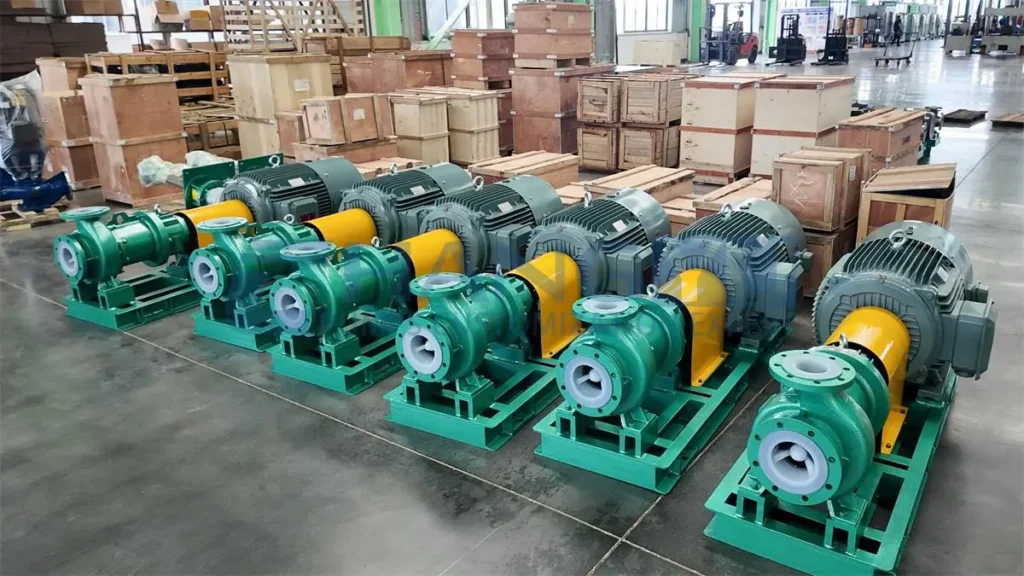
The Five Primary Wear Materials
High-Chrome White Iron (CrMo):
- Hardness: 600–700 HB (approximately HV 600–700). Fracture toughness: KIC 25–35 MPa√m.
- Wear mechanism: Hardness resists cutting. The microstructure consists of hard chromium carbides (M7C3 type, HV 1200–1600) embedded in a martensitic matrix.
- Best for: Angular, hard particles (Mohs > 5) — iron ore, gold ore, coarse copper tailings, mineral sands.
- Typical wet-end life: 6–18 months depending on ore abrasiveness. In highly abrasive iron ore tailings, 12–18 months is achievable with correct CrMo grade selection.
- Limitations: Corrodes in acidic slurries below pH 4. Not suitable for copper heap leaching or other acidic circuits without corrosion protection.
Natural Rubber:
- Hardness: < 50 HB. The material relies on resilience — elastic deformation absorbs particle impact energy, and the rubber recovers without material loss.
- Best for: Fine, rounded particles (Mohs < 4) in neutral pH — copper flotation tailings, fine gold tailings, coal slurries, oil sands (primary choice for hydrotransport).
- Typical wet-end life: 12–24 months in appropriate applications. Sharp, angular particles cut rubber and can reduce life to weeks.
- Limitations: Cut by sharp, angular particles. Temperature limit 70°C. Degrades in hydrocarbon or strong acid environments.
Ceramic Liners (SiC / Al₂O₃):
- Hardness: HV 1500–2800 — significantly harder than any naturally occurring mineral particle except diamond. Fracture toughness: KIC 3–5 MPa√m — brittle.
- Best for: Very fine, non-impact slurries — mineral sands tailings, fine flotation concentrate, coal fine tailings. Also suitable for high-velocity applications where cutting wear dominates.
- Typical wet-end life: 24–36 months in consistently fine-particle circuits. Brittle fracture risk from occasional oversize particles can reduce actual service life to 18–24 months.
- Limitations: Fractures under impact from particles exceeding 1–2 mm. Higher initial cost than CrMo or rubber. Not for circuits with tramp oversize. SiC degrades in strong alkaline environments (pH > 10) at temperatures above approximately 80°C; Al₂O₃ maintains stability across pH 2–12.
Polyurethane:
- Hardness: 60–90 HB. Combines some of the resilience of rubber with improved cut resistance.
- Best for: Fine to medium particles, moderate pH, where both cut resistance and impact absorption are required.
- Typical wet-end life: 8–16 months in appropriate applications.
- Limitations: Temperature limited; sensitive to hydrolysis in hot water above 50°C. Not for sharp, angular particles.
UHMW-PE (Ultra-High Molecular Weight Polyethylene):
- Excellent abrasion resistance combined with chemical inertness. Lower cost than ceramic or high-grade alloys. Used as a lining material in a steel housing — the steel provides pressure containment; the UHMW-PE provides the wear and corrosion resistant wetted surface.
- Best for: Combined corrosion and moderate abrasion applications — acidic tailings, chemical plant slurries, FGD gypsum slurry.
- Typical wet-end life: 12–24 months in appropriate applications.
- Limitations: Temperature limited to approximately 90°C. Not for high-velocity coarse solids.
Wear Material Comparison Matrix
| Material | Hardness | Fracture Toughness | Best Particle Type | pH Range | Relative Cost | Typical Life Range |
|---|---|---|---|---|---|---|
| High-chrome CrMo | 600–700 HB | KIC 25–35 | Angular, hard (Mohs > 5) | 4–12 | 1× (baseline) | 6–18 months |
| Natural rubber | < 50 HB | High (resilient) | Rounded, soft (Mohs < 4) | 5–9 | 0.8–1.2× | 12–24 months (appropriate use) |
| Ceramic (SiC/Al₂O₃) | HV 1500–2800 | KIC 3–5 | Very fine, non-impact | 2–10 (SiC); 2–12 (Al₂O₃) | 5–8× | 24–36 months (fine particles) |
| Polyurethane | 60–90 HB | Medium | Fine to medium, mixed | 4–9 | 1.0–1.5× | 8–16 months |
| UHMW-PE | Medium-high | Medium-high | Fine, corrosive | 2–12 | 1.5–3× | 12–24 months |
Note: Ceramic pH range is grade-dependent. SiC degrades in strong alkaline environments (pH > 10) at temperatures above approximately 80°C. Al₂O₃ maintains stability across pH 2–12. Verify specific grade compatibility for your process conditions.
Engineers at Changyu Pump recommend: High-chrome white iron (CrMo, 26–28% Cr) is the appropriate starting point for the majority of hard-rock mining slurry applications. Its combination of 600–700 HB hardness and 25–35 MPa√m fracture toughness provides the most reliable balance of cutting wear resistance and impact tolerance for ores ranging from iron to copper to gold. Natural rubber should be specified only when particle shape is confirmed as rounded and pH is neutral — a mismatch with angular particles will result in rapid cutting wear. For oil sands hydrotransport, natural rubber is the primary recommendation, with high-chrome CrMo reserved for high-temperature or coarse tailings applications. Ceramic liners are reserved for fine-particle circuits with no impact risk, where their extreme hardness delivers maximum service life. The key to material selection is not choosing the “best” material in absolute terms, but choosing the material that matches the specific combination of particle hardness, shape, size, and slurry chemistry in the target application.
3. How to Select the Right Wear Material for Your Slurry Pump Application?
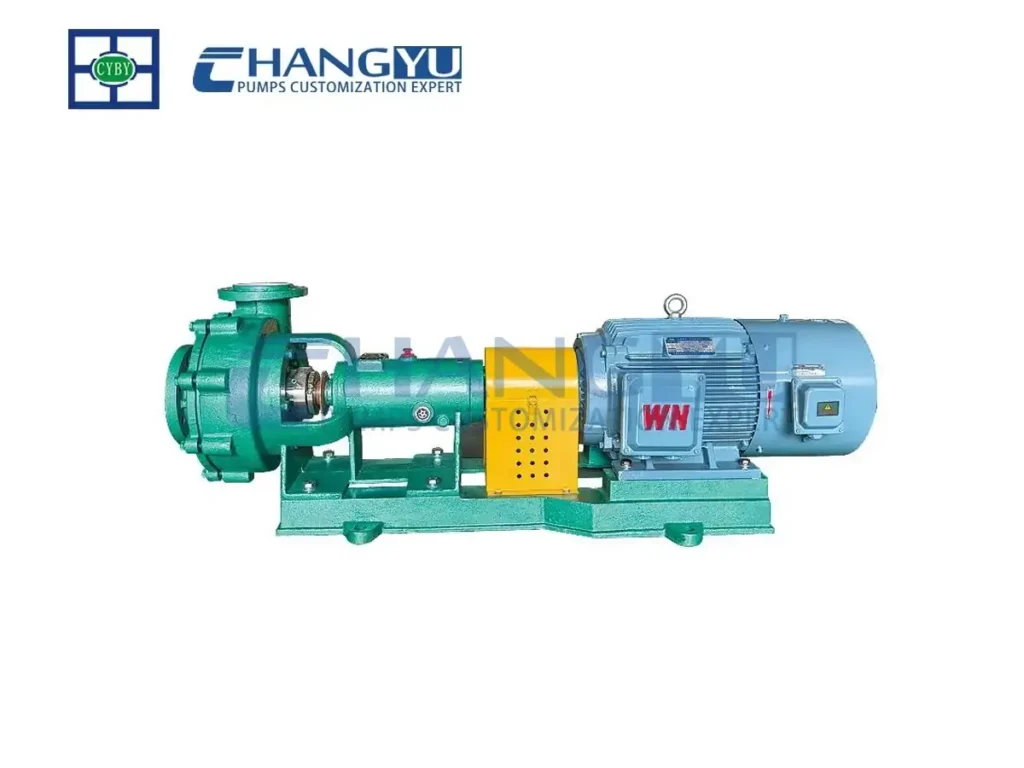
Material selection for abrasive slurry pumps follows a systematic decision process that begins with ore characterization and proceeds through material property evaluation to economic validation. This chapter provides the ore-specific selection matrix, a step-by-step decision tree, and the common mistakes that lead to premature wear failures.
Ore-Material Selection Matrix
The table below matches common ore types to their recommended wear materials based on the ore’s characteristic hardness, particle shape, and pH. Each ore type lists both a primary recommendation and an economical alternative where applicable.
| Ore Type | Hardness (Mohs) | Particle Shape | pH Range | Primary Material | Alternative (Budget) | Alternative (Extended Life) |
|---|---|---|---|---|---|---|
| Iron ore (hematite/magnetite) | 5.5–6.5 | Angular, sharp | 6–8 | High-chrome CrMo | — | Ceramic (fine tailings only) |
| Gold ore (quartz-rich) | 7.0 | Highly angular | 5–9 | High-chrome CrMo | — | Ceramic (fine tailings only) |
| Copper ore (flotation) | 3.5–4.0 | Mixed | 9–11 | High-chrome CrMo | Rubber (if fine and rounded) | Ceramic (concentrate) |
| Copper ore (heap leach) | 3.5–4.0 | Mixed | 1.5–3 | Stainless CrMo or UHMW-PE lined | — | Duplex 2205 |
| Coal | 1.0–2.0 | Rounded | 5–7 | Natural rubber | Polyurethane | — |
| Mineral sands | 6.0–6.5 | Rounded to sub-angular | 6–8 | High-chrome CrMo | Rubber (if fine) | Ceramic (if very fine) |
| Phosphate | 3.0–5.0 | Rounded | 2–4 | UHMW-PE lined | Rubber (if fine and pH > 4) | Duplex stainless |
| Oil sands | 2.0–4.0 | Rounded to sub-angular | 6–8 | Natural rubber (primary for hydrotransport) | High-chrome CrMo (coarse tailings, high-temperature) | Tungsten carbide (extreme wear zones) |
Step-by-Step Material Selection Decision Tree
Step 1: Characterize the ore particles. Determine the hardest mineral in the slurry (not the target mineral — the gangue mineral that causes wear). Measure particle shape (angular vs rounded), size distribution (d50 and d100), and concentration (Cw%).
Step 2: Assess the chemical environment. Measure pH, chloride concentration, temperature, and any corrosive species (acids, leaching agents). If pH is below 4, standard high-chrome CrMo is not suitable regardless of its wear resistance.
Step 3: Evaluate impact risk. Determine the maximum particle size that may enter the pump. If particles exceeding 2 mm are possible, ceramic materials carry brittle fracture risk.
Step 4: Select material category using the matrix above. Match the ore characteristics to the recommended material, considering both the primary recommendation and any budgetary or performance alternatives.
Step 5: Validate with TCO analysis. Perform a 5-year total cost of ownership comparison (Section 4) before finalizing material selection. Premium materials with higher initial cost often deliver lower lifecycle cost in abrasive service.
Five Common Wear Material Selection Mistakes
- Selecting material based on ore mineral hardness rather than gangue hardness. A copper mine with quartz-rich host rock requires materials selected for quartz (Mohs 7), not chalcopyrite (Mohs 3.5–4). The target mineral is rarely the mineral that causes pump wear.
- Specifying rubber liners for angular particles. Magnetite, hematite, and freshly crushed quartz particles have sharp edges that cut rubber on contact. Rubber’s resilience-based protection mechanism only works with rounded particles that bounce off the surface.
- Using the same material across all circuits in a single concentrator. Mill discharge pumps encounter coarse, angular particles at high velocity and require hard metal. Flotation feed pumps handle fine, chemically conditioned slurry and may perform better with rubber. Circuit-specific material selection optimizes total plant wear costs.
- Rejecting premium materials based on initial purchase price. A high-chrome alloy pump with a 6-month wet-end life may cost less per unit than a ceramic-lined pump, but the ceramic pump’s 30-month life eliminates multiple unplanned downtime events — each potentially costing more than the pump itself in lost production.
- Ignoring slurry chemistry when selecting wear materials. Standard high-chrome CrMo corrodes rapidly in acidic conditions below pH 4. A copper heap leach pump specified for wear resistance alone may fail from corrosion within weeks, regardless of its abrasion resistance. Always verify both chemical compatibility and wear resistance before finalizing material selection.
For a broader overview of material selection methodology across the full spectrum of abrasive mining applications, see our dedicated guide on Material Selection for Slurry Pumps in Abrasive Mining.
4. What Is the Total Cost of Ownership for Wear Resistant Slurry Pumps?
The purchase price of a wear resistant slurry pump represents a fraction of its total lifetime cost. Wet-end replacement parts, labor, and — most critically — production downtime during unplanned pump outages dominate the lifecycle economics. This section provides a quantified TCO comparison based on a typical iron ore tailings application.
5-Year TCO Comparison: Three Material Strategies
Assumptions: Iron ore tailings slurry (SG 1.5, 35% solids by weight, angular silica-rich particles, Mohs 6–7), 200 m³/h at 35 m head, 7,000 operating hours per year, unplanned downtime cost estimated at $85,000 per event. The baseline replacement frequency of 6 months represents a conservative industry estimate; actual intervals vary by ore characteristics. The case study in Section 6 documents a 5-month interval for a specific iron ore tailings application.
| Cost Component | High-Chrome CrMo (Baseline) | Natural Rubber (If Applicable) | Ceramic (SiC) Liner |
|---|---|---|---|
| Initial wet-end cost | $10,000–$15,000 | $8,000–$12,000 | $50,000–$80,000 |
| Wet-end replacement frequency | Every 6 months | Every 6 weeks (not suitable — angular particles cut rubber) | Every 30 months |
| Wet-end replacements (5 yr) | 10 replacements | Not recommended for this ore | 2 replacements |
| Total wet-end parts cost (5 yr) | $100,000–$150,000 | N/A — premature failure | $100,000–$160,000 |
| Unplanned downtime events (5 yr) | 8–10 events | N/A | 1–2 events (brittle fracture risk from occasional oversize particles) |
| Estimated downtime cost (5 yr) | $680,000–$850,000 | N/A | $85,000–$170,000 |
| Estimated 5-Year TCO | $780,000–$1,000,000 | Not recommended | $185,000–$330,000 |
The TCO Insight
The analysis reveals a clear economic conclusion: in abrasive iron ore tailings service, the ceramic-lined pump’s 5–8× material cost premium is recovered many times over through reduced unplanned downtime. The dominant cost driver is not the purchase price of the wet-end components — it is the production downtime caused by their failure. Each unplanned wet-end replacement in this scenario costs $85,000 in lost production, dwarfing the $10,000–$15,000 cost of the replacement parts themselves.
The rubber-lined pump is included in the table to illustrate a critical point: a material that is chemically compatible but mechanically unsuitable (rubber with angular particles) generates the highest effective cost — not through high parts cost, but through the extreme frequency of failure. This reinforces the principle that material selection must be based on particle characteristics first, with economic analysis following — not the reverse.
5. What Industry Standards Govern Wear Resistant Slurry Pumps?
Industry standards define the design, testing, and material specifications that distinguish purpose-engineered wear resistant slurry pumps from generic industrial pumps. When evaluating manufacturers, verify compliance with the applicable standards for your ore type and operating conditions.
| Standard | Scope | Relevance to Wear Resistant Slurry Pump Selection |
|---|---|---|
| ANSI/HI 12.1-12.6 | Rotodynamic slurry pumps — nomenclature, application, and operation | The primary standard governing slurry pump selection, performance testing, and NPSH verification. Provides the methodology for slurry derating calculations. |
| ASTM A532 | Abrasion-resistant cast irons | Defines the chemical composition, microstructure, and hardness requirements for high-chrome white iron used in slurry pump wet-end components. Specifies grades including 26% Cr and 28% Cr alloys. |
| ASTM D471 | Rubber property — effect of liquids | The definitive standard for validating elastomer liner compatibility with process fluids. Immersion testing per this standard at maximum operating temperature is the only reliable method for confirming rubber liner suitability. |
| ISO 9001 | Quality management systems | Baseline certification for manufacturing consistency, material traceability, and process control. |
Note: ISO 2858 (End-suction centrifugal pumps — dimensions) provides dimensional interchangeability for certain pump designs but is primarily applicable to chemical process pumps rather than heavy-duty slurry pumps. For slurry pump dimensional and performance standards, ANSI/HI 12.1-12.6 is the governing reference.
Engineers at Changyu Pump recommend: When evaluating wear resistant slurry pump suppliers, request material certifications that reference the applicable ASTM standards — ASTM A532 for high-chrome alloy wet-end components, ASTM D471 for elastomer liners. A manufacturer’s internal laboratory wear data, while informative, should be treated as indicative rather than definitive if it is not supported by ASTM-certified material testing. For critical applications, request site-specific wear life references from operating mines with ore characteristics comparable to your own. A supplier that cannot provide both ASTM material certification and field performance data from similar ore types cannot adequately guarantee wear life in your application.
6. Case Study of Wear Resistant Slurry Pump: Extending Slurry Pump Wear Life in an Iron Ore Tailings Application
An iron ore concentrator in Western Australia operated tailings pumps with standard high-chrome CrMo wet-end components. The tailings slurry contained angular magnetite and quartz particles (Mohs 5.5–7.0) at 35% solids concentration by weight. Wet-end replacement was required approximately every 5 months, with each replacement causing 36 hours of unplanned downtime.
Inspection of the worn components revealed that the CrMo alloy (26% Cr, 650 HB) was being cut by the harder quartz particles (Mohs 7, HV 800–1000) that constituted approximately 20% of the tailings solids. The chromium carbides in the alloy, while harder than the magnetite particles, were not hard enough to resist cutting by quartz. Material loss was uniform across the impeller vanes and volute liner, consistent with a hardness-driven cutting wear mechanism.
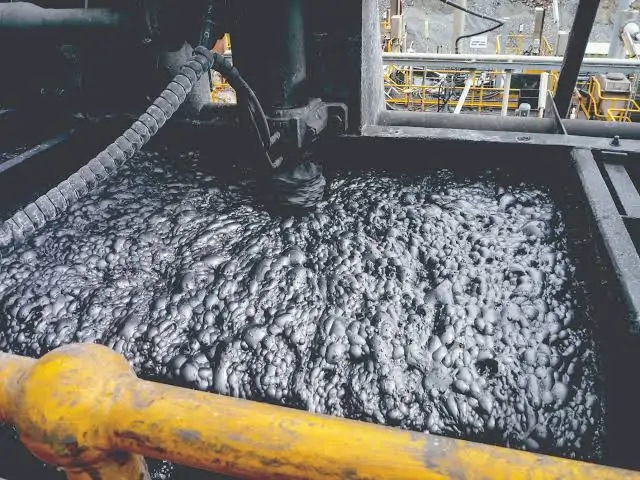
Changyu Pump upgraded the wet-end components to a higher-grade CrMo alloy (28% Cr, 700+ HB) with hard chrome plating on the impeller vane leading edges. The increased chromium content produced a higher volume fraction of hard carbides in the microstructure, while the chrome plating (HV 850–1050) provided additional hardness at the surfaces experiencing the highest-velocity particle impact. Additionally, the impeller clearance was adjusted to the manufacturer’s minimum specification to reduce internal recirculation — a secondary contributor to localized wear at the impeller eye.
Wet-end replacement interval extended from 5 months to approximately 16 months — a threefold improvement. The material upgrade cost (approximately 15% above the standard CrMo specification) was recovered within the first avoided unplanned downtime event. The mine subsequently applied the same material specification to all tailings pump positions, converting a total of eight pumps over the following two years.
Key takeaway: Wear life extension is achieved not through a single change — a better material alone — but through the combination of optimized material grade, surface treatment at high-wear zones, and correct impeller clearance. Each factor contributes incrementally, and their combined effect is greater than the sum of their individual contributions. Material upgrade without clearance adjustment, or clearance adjustment without material upgrade, would have delivered only a fraction of the 16-month service life achieved.
7. Wear Resistant Slurry Pump Solutions from Changyu Pump
Changyu Pump manufactures pump series configured for the full spectrum of abrasive slurry applications, from mill discharge to tailings disposal. The product table below matches each series to its appropriate wear-resistant application.
| Ore / Application | Primary Wear Challenge | Recommended Series | Key Wear-Resistant Feature |
|---|---|---|---|
| Iron ore, gold ore tailings | Extreme abrasion + high pressure | PGY Series | High-chrome alloy (BTMCr27/Cr28/Cr33), 600–700 HB; double-casing design |
| Copper flotation (alkaline) | Moderate abrasion + corrosion | HB Series | All stainless steel (304/316L/2205/2507); ISO 2858 design |
| Copper heap leach (acidic) | Corrosion + fine abrasion | UHB Series | UHMW-PE lined; combined wear and chemical resistance |
| Mineral sands, coal | Moderate to high abrasion | PGY Series or HB Series | Application-dependent — see material matrix in Section 3 |
PGY Series — Heavy Duty High-Head Slurry Pump
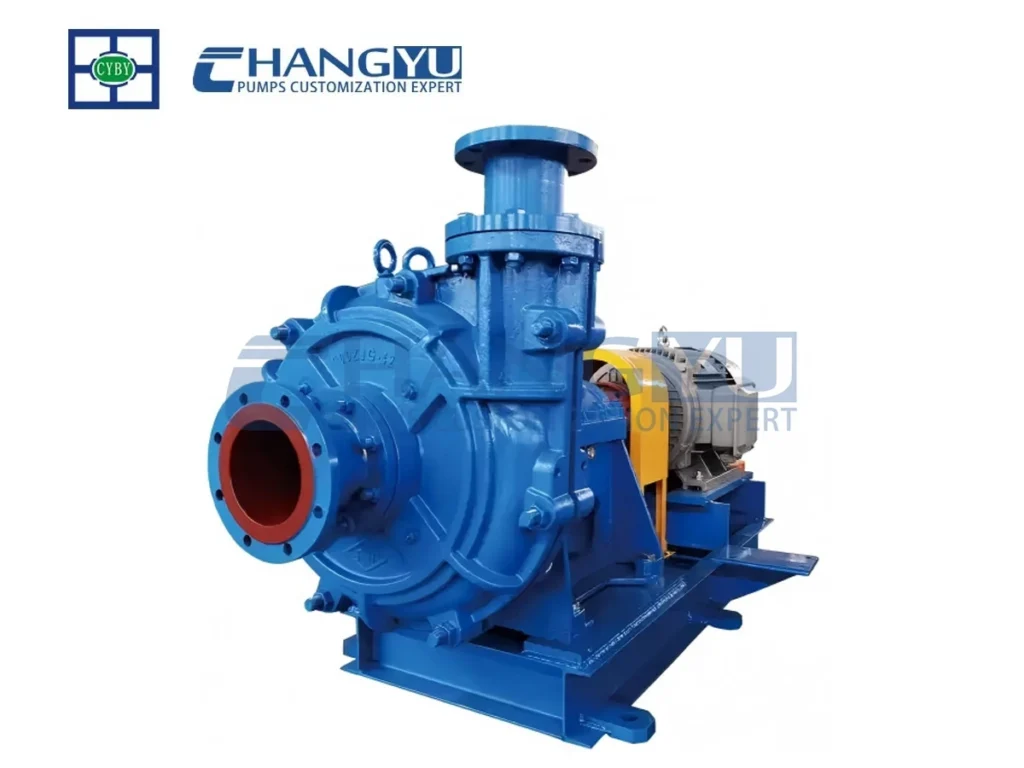
Engineered for high-head and severe-wear conditions. High-chrome alloy wetted parts (BTMCr27, Cr28, Cr33) provide the hardness required for angular, abrasive particles in iron, gold, and mineral sands tailings. Double-casing design allows wetted part replacement without dismantling piping — a significant maintenance advantage in remote tailings pump stations. Oil-lubricated bearing assembly ensures long-term reliability under continuous operation.
| Parameter | Specification |
|---|---|
| Flow rate | 117–976 m³/h |
| Head | 21.1–101.6 m |
| Motor power | 22–560 kW |
| Speed | 730 / 980 / 1,480 r/min |
| Materials | BTMCr27 / BTMCr28 / BTMCr33 / duplex stainless steel |
HB Series — Stainless Steel Slurry Pump
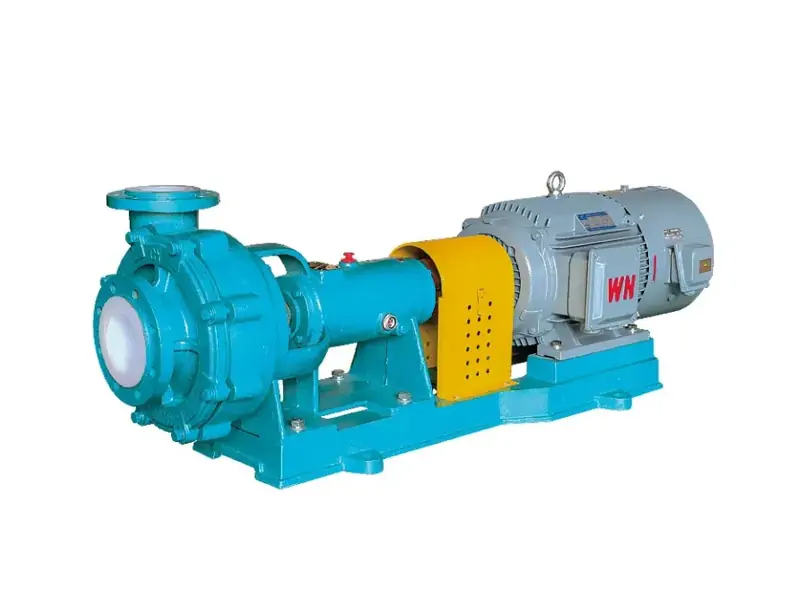
ISO 2858 compliant horizontal centrifugal pump with all-stainless steel wetted construction. Application boundary: The HB Series is recommended for applications where corrosion resistance is the primary requirement and abrasion is moderate — such as copper flotation circuits operating at alkaline pH, or chemical plant slurries with mild abrasive content. For high-abrasion mining slurries with angular, hard particles, the PGY Series with high-chrome alloys is the required specification. Available in 304, 316L, 2205, and 2507 grades to match the corrosion profile of the application.
| Parameter | Specification |
|---|---|
| Flow rate | 10–60 m³/h |
| Head | 20–120 m |
| Motor power | 3–45 kW |
| Speed | 2,900 r/min |
| Temperature | -20°C to 120°C |
| Materials | 304 / 316L / 2205 / 2507 |
UHB Series — UHMW-PE Lined Slurry Pump
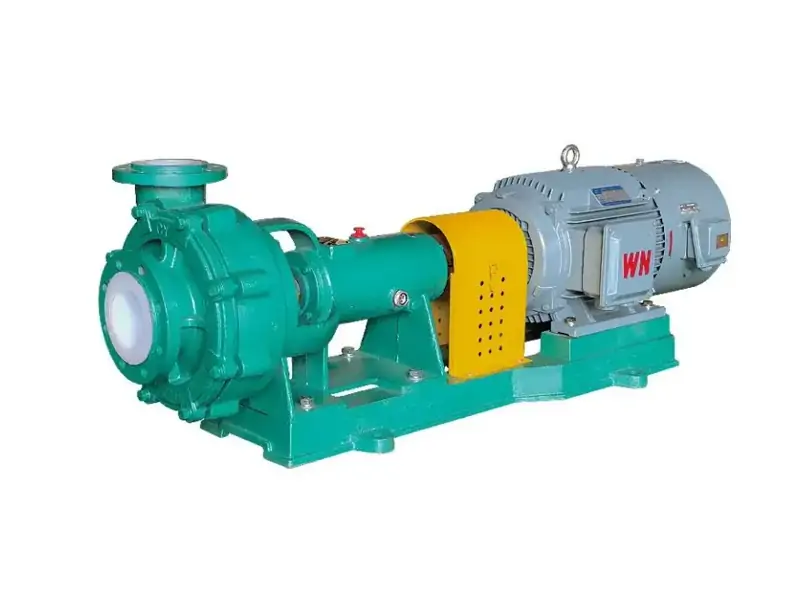
Steel-lined UHMW-PE centrifugal pump for combined corrosion and moderate abrasion applications. UHMW-PE provides excellent wear resistance against fine, low-impact particles combined with chemical inertness across a wide pH range. Best suited for acidic tailings, FGD gypsum slurry, and chemical plant effluents where both corrosion and abrasion are present but impact from large particles is absent.
| Parameter | Specification |
|---|---|
| Flow rate | 3–2,600 m³/h |
| Head | 5–100 m |
| Motor power | 0.75–300 kW |
| Speed | 750–2,900 r/min |
| Temperature | -20°C to 90°C |
| Lining material | UHMW-PE |
For ore-specific pump recommendations across gold, iron, copper, and mineral processing circuits, see our companion guide on Best Slurry Pumps for Gold, Iron, Copper & Mineral Processing.
FAQs about Wear Resistant Slurry Pumps
Q: What is the most wear resistant material for slurry pumps?
A: Ceramic liners (silicon carbide or alumina) offer the highest hardness (HV 1500–2800) and provide the longest service life in fine-particle, non-impact applications. However, ceramics have low fracture toughness (KIC 3–5 MPa√m) and can fracture under impact from particles exceeding 1–2 mm. For most mining applications, high-chrome white iron (CrMo, 600–700 HB) provides the optimal balance of wear resistance and impact tolerance.
Q: How long should a wear resistant slurry pump last?
A: Wet-end component life in abrasive mining service ranges from 3 months to 3+ years depending on ore hardness, particle shape, material selection, and operating conditions. High-chrome CrMo in iron ore tailings typically achieves 12–18 months. Rubber liners with rounded, fine particles may last 12–24 months. Ceramic liners in fine-particle circuits can achieve 24–36 months.
Q: Can rubber-lined pumps handle abrasive mining slurries?
A: Only under specific conditions. Rubber liners perform well with fine, rounded particles (Mohs < 4) in neutral pH — including oil sands hydrotransport, where rubber is the primary recommendation. Angular particles — common in freshly crushed ore — cut rubber surfaces and can reduce service life to weeks. Always verify particle shape before specifying rubber liners for mining applications.
Q: What is the difference between 26% Cr and 28% Cr high-chrome alloy?
A: The higher chromium content (28% vs 26%) produces a greater volume fraction of hard M7C3 carbides in the alloy microstructure, improving cutting wear resistance. The 28% Cr grade is typically specified for the most abrasive circuits — iron ore, gold ore with high quartz content — while 26% Cr serves moderate-abrasion applications. The cost difference is approximately 10–15%.
Q: What standards should I reference when specifying wear resistant slurry pumps?
A: ANSI/HI 12.1-12.6 governs slurry pump selection and performance testing. ASTM A532 defines the chemical composition and hardness requirements for high-chrome white iron wet-end components. ASTM D471 provides the methodology for validating elastomer liner compatibility with process fluids.
Changyu Pump Engineer’s Avoidance Checklist
- Match wear material to the hardest particle in the slurry — not the target mineral being recovered. Quartz host rock requires materials selected for quartz (Mohs 7), regardless of whether the target mineral is gold, copper, or iron.
- Verify particle shape before specifying rubber liners. Angular, freshly crushed particles cut rubber on contact. Reserve rubber for rounded particles — milled tailings, mineral sands, coal slurries, and oil sands hydrotransport.
- Do not use the same wear material across all circuits in a single concentrator. Mill discharge demands maximum hardness. Flotation feed may perform better with rubber. Circuit-specific material selection minimizes total plant wear costs.
- Specify adjustable impeller clearance on all mining slurry pumps. As wet-end components wear, external clearance adjustment restores efficiency without pump disassembly — extending effective wear life between replacements.
- For acidic circuits (pH < 4), verify corrosion resistance alongside wear resistance. Standard high-chrome CrMo corrodes rapidly in acid, regardless of its wear properties. Specify stainless CrMo grades, duplex stainless, or lined pumps.
- Request ASTM A532 or ASTM D471 material certifications from pump suppliers. A manufacturer’s internal wear data without ASTM-certified material testing should be treated as indicative, not definitive.
- Perform a 5-year TCO analysis before rejecting premium wear materials based on initial cost. In abrasive mining service, the lowest purchase price almost never delivers the lowest lifecycle cost.
- Keep a complete spare wet-end assembly in inventory for each critical pump position. The carrying cost is trivial compared to the production loss from waiting for replacement parts during an unplanned outage.
Conclusion
Wear resistant slurry pump selection is fundamentally a materials engineering decision. The interaction between ore particles and pump materials — governed by particle hardness, shape, size, and slurry chemistry — determines whether a pump operates reliably for 18 months or requires wet-end replacement every 8 weeks. High-chrome white iron (CrMo, 600–700 HB) provides the optimal balance of hardness, toughness, and cost for the majority of hard-rock mining applications. Natural rubber serves a distinct window — fine, rounded, neutral pH particles — and is the primary recommendation for oil sands hydrotransport. Ceramic liners offer maximum hardness for extreme wear conditions where impact risk is absent.
Material selection must be validated through total cost of ownership analysis. The dominant cost driver in abrasive slurry pump service is not the purchase price of wet-end components — it is the production downtime caused by their failure. Premium materials that extend service life from months to years deliver their cost premium back through eliminated unplanned outages, often within the first avoided downtime event.
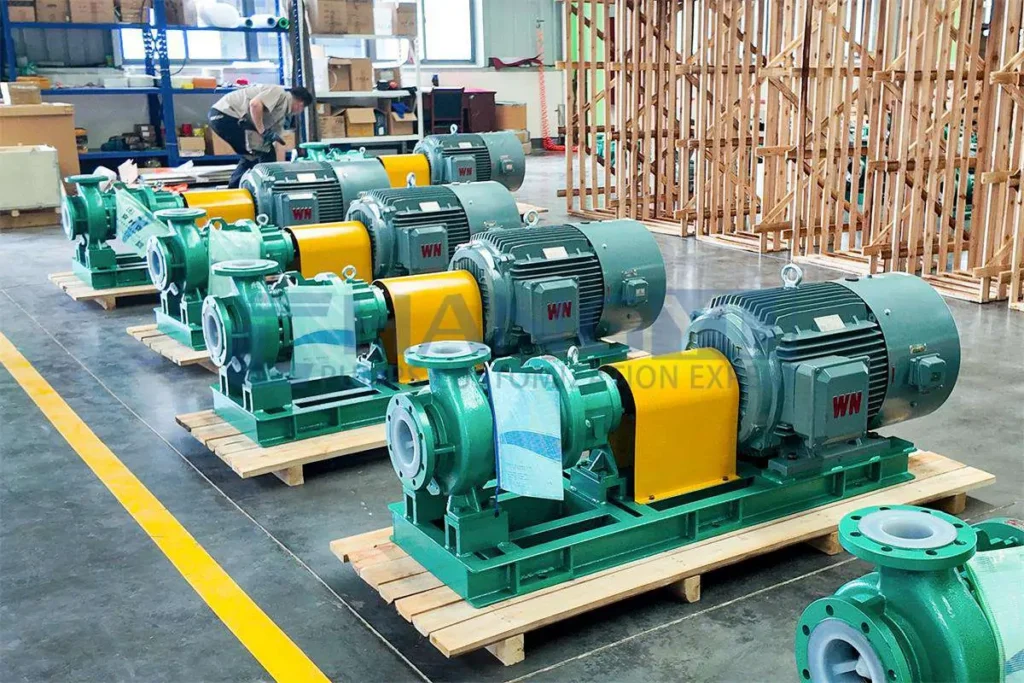
Changyu Pump’s engineering team provides ore-specific wear material recommendations backed by over 20 years of slurry pump manufacturing experience across the full spectrum of mining and mineral processing applications.