

| Products
Home >> Products >> Diaphragm Pump
Product Categories
Request a Quote
What Is a Diaphragm Pump?
A Diaphragm Pump is a positive displacement pump designed to transfer liquids by the reciprocating movement of a flexible diaphragm combined with inlet and outlet check valves. It is widely used for pumping corrosive chemicals, abrasive slurries, high-viscosity fluids, solvents, oils, food products, wastewater, and other demanding process media where leakage prevention and reliable suction performance are critical.
Simply put, it works much like the beating of a human heart. Through the diaphragm continuously “bulging” and “caving in,” together with one-way valves (ball valves), it draws liquid in and pushes it out. This simple pumping principle allows a diaphragm pump to operate safely under dry-running conditions, handle solids-containing fluids, provide self-priming capability, and deliver stable flow in applications where centrifugal pumps are often unsuitable.
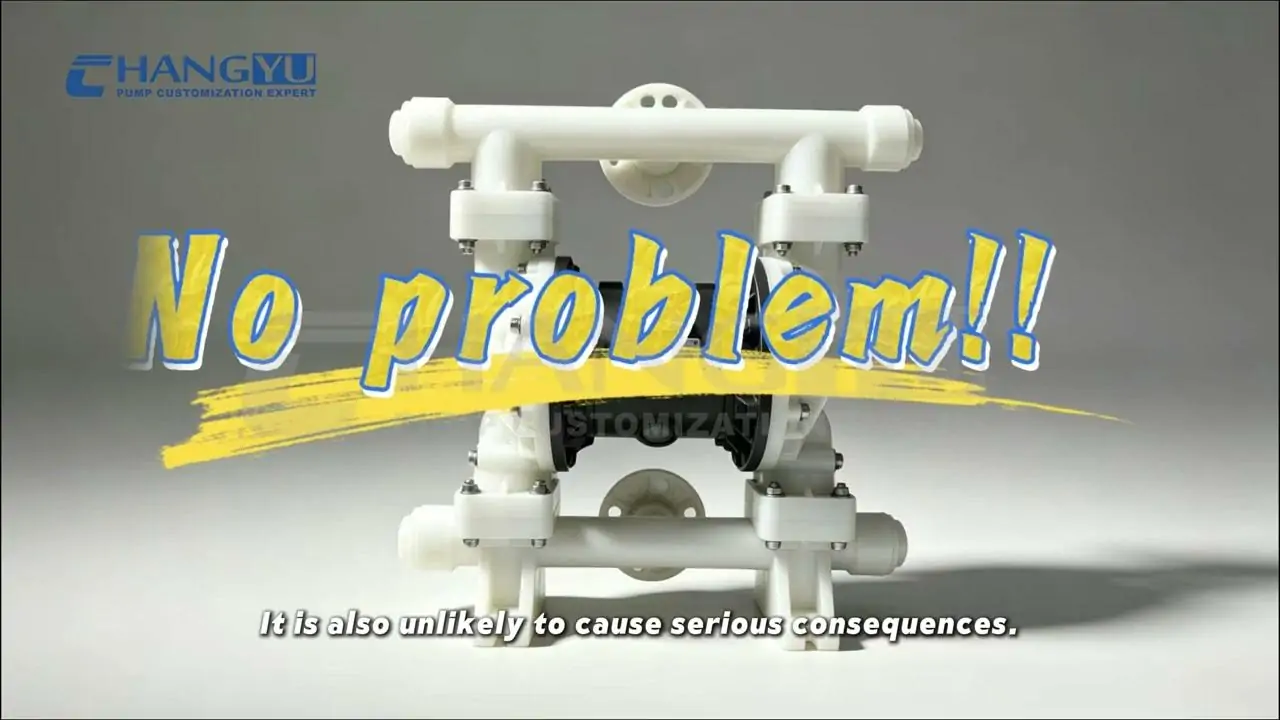
At ChangyuPump, we manufacture diaphragm pumps for industrial fluid handling systems where durability, chemical compatibility, and operational reliability are essential. Our product range includes air operated diaphragm pumps (AODD) and electric diaphragm pumps, engineered for chemical processing, mining, water treatment, food and beverage production, pharmaceuticals, coatings, ceramics, pulp and paper, and general industrial transfer.


Every diaphragm pump is manufactured using precision-machined components, wear-resistant diaphragm materials, and strict quality control to ensure long service life and consistent pumping performance. Whether transferring aggressive chemicals, high-solid-content slurry, shear-sensitive liquids, or viscous media, ChangyuPump provides reliable pumping solutions backed by professional engineering support, customized material selection, and global application experience.
How Does a Diaphragm Pump Work?
A Diaphragm Pump operates by repeatedly changing the volume inside the pump chamber through the reciprocating movement of a flexible diaphragm. Working together with inlet and outlet check valves, this positive displacement pumping mechanism creates alternating suction and discharge cycles for continuous fluid transfer.
Step 1. Power Transmission
The pumping cycle begins with the drive system, which can be powered by an electric motor, hydraulic mechanism, electromagnetic actuator, or compressed air.
- Mechanical or Hydraulic Drive: A motor rotates a crankshaft or eccentric mechanism, converting rotary motion into the reciprocating movement of a piston or connecting rod. Hydraulic pressure then transfers this motion to the diaphragm.
- Air Operated Diaphragm Pump (AODD): Compressed air is alternately directed into two air chambers through an air distribution valve, driving the diaphragms back and forth without electrical power.
Step 2. Suction Stroke
As the diaphragm moves away from the pump chamber, the chamber volume increases and internal pressure decreases, creating a vacuum.
During this stage:
- The inlet check valve opens automatically.
- The outlet check valve remains closed.
- Liquid is drawn smoothly into the pump chamber until it reaches the required volume.
This self-priming action enables a diaphragm pump to handle liquids with high viscosity, suspended solids, or entrained air.
Step 3. Discharge Stroke
When the diaphragm moves toward the pump chamber, the chamber volume decreases and internal pressure rises.
As pressure builds:
- The outlet check valve opens.
- The inlet check valve closes to prevent backflow.
- The pumped liquid is forced out through the discharge port under positive pressure.
This cycle provides stable flow while minimizing leakage and maintaining accurate fluid transfer.
Step 4. Continuous Pumping Cycle
Most industrial Diaphragm Pumps use a dual-diaphragm or dual-chamber design. While one diaphragm performs the suction stroke, the other simultaneously completes the discharge stroke.
The automatic synchronization of both diaphragms creates a continuous pumping cycle with smooth flow, reduced pulsation, and reliable operation across a wide range of industrial applications.
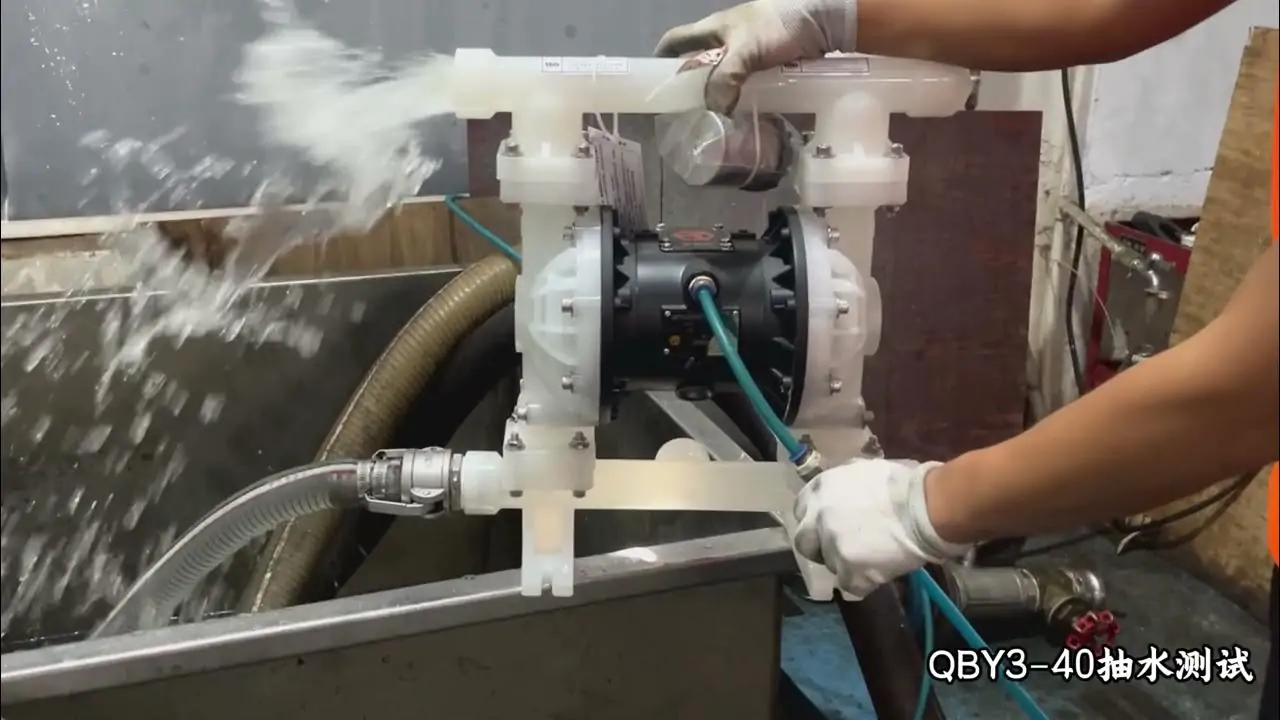
Key Operating Advantages
Complete Fluid Isolation
The flexible diaphragm completely separates the drive mechanism from the process fluid, eliminating shaft seals and significantly reducing the risk of leakage or contamination. This design is ideal for handling corrosive chemicals, toxic liquids, abrasive slurries, high-purity media, and particle-containing fluids.
Precise Flow Control
Flow rate can be adjusted by changing the motor speed, air supply, drive frequency, or stroke length. This allows diaphragm pumps to deliver accurate and repeatable dosing performance in chemical processing, water treatment, pharmaceuticals, food production, and other precision fluid handling applications.
Working Principle Summary
In simple terms, a Diaphragm Pump converts mechanical energy or compressed air into fluid movement through a continuous cycle of diaphragm displacement → chamber volume change → pressure differential → check valve switching. This positive displacement operating principle provides reliable self-priming performance, leak-free fluid isolation, and efficient transfer of clean liquids, viscous media, abrasive slurries, and chemically aggressive fluids across a wide range of industrial processes.
ChangyuPump Diaphragm Pump Types
At ChangyuPump, we manufacture two primary types of Diaphragm Pump solutions to meet different industrial fluid transfer requirements. Depending on the available power source, operating environment, and process conditions, customers can choose between Air Operated Diaphragm Pumps (AODD) and Electric Diaphragm Pumps for reliable, leak-free fluid handling.
Air-Operated Diaphragm Pump (AODD)
An air-operated diaphragm pump uses compressed air as its power source. An internal air distribution valve alternately directs compressed air to each diaphragm chamber, causing the diaphragms to reciprocate and continuously draw in and discharge fluid through inlet and outlet check valves.
Key Features
- Explosion-proof operation with no electrical components, making it suitable for hazardous and flammable environments.
- Dry-running capability without damaging the pump.
- Excellent self-priming performance for reliable suction.
- Flow rate can be adjusted by regulating the compressed air supply.
- Handles corrosive chemicals, abrasive slurries, viscous liquids, shear-sensitive products, and solids-containing media.
- Simple structure with low maintenance requirements and long service life.
Typical Applications
- Chemical processing
- Wastewater treatment
- Mining and mineral processing
- Paints and coatings
- Ceramics
- Printing and ink transfer
- Oil and gas
- General industrial fluid transfer
Electric Diaphragm Pump
An Electric Diaphragm Pump is driven by an electric motor that converts rotary motion into the reciprocating movement of the diaphragm through a gearbox and mechanical transmission system. The diaphragm works together with check valves to complete continuous suction and discharge cycles with stable flow performance.
Key Features
- High self-priming capability for efficient fluid transfer.
- Suitable for liquids containing suspended solids and abrasive particles.
- Seal-less diaphragm design eliminates shaft leakage and prevents process contamination.
- Delivers stable flow with precise output control.
- Ideal for continuous-duty operation with high pumping efficiency.
- Lower operating noise and reduced compressed air consumption compared with pneumatic systems.
Typical Applications
- Water and wastewater treatment
- Construction site dewatering
- Fine chemical processing
- Slurry transfer
- Food and beverage processing
- Pharmaceutical manufacturing
- Agricultural irrigation
- Industrial liquid conveying
How to Choose the Right Diaphragm Pump for Your Application
Selecting the right equipment requires more than matching flow rate or pressure. Long-term performance depends on matching the pump to the characteristics of the process fluid and the operating conditions. Factors such as liquid viscosity, chemical compatibility, solid particle size, required flow rate, discharge pressure, suction conditions, and installation environment all influence pump efficiency, service life, and maintenance costs.
Whether you are transferring corrosive chemicals, abrasive slurry, wastewater, solvents, food-grade liquids, or high-viscosity media, selecting the correct diaphragm pump ensures stable operation, reduced downtime, and lower total operating costs.
Selection Guide
| Selection Factor | Recommended Configuration | Recommended Drive |
|---|---|---|
| Corrosive acids or alkalis | PTFE or PVDF wetted parts with chemical-resistant diaphragms | Air-Operated Diaphragm Pump (AODD) |
| Flammable solvents or hazardous liquids | Explosion-proof operation without electrical components | Air-Operated |
| Abrasive slurry or solids-containing liquids | Wear-resistant diaphragms with large particle passages | Air-Operated |
| High-viscosity fluids | Large flow passages with positive displacement pumping | Air-Operated |
| Continuous production lines | Stable continuous-duty operation with consistent flow | Electric Diaphragm Pump |
| Precise liquid transfer | Variable flow control with stable output | Electric |
| Wastewater and sludge transfer | Self-priming with excellent solids-handling capability | Air-Operated or Electric |
| Food, pharmaceutical, and hygienic processes | FDA-compliant materials with sanitary construction | Sanitary Diaphragm Pump |
| Remote locations without electrical power | Compressed-air operation | Air-Operated |
| General industrial liquid transfer | Balanced efficiency and operating cost | Air-Operated or Electric |
ChangyuPump Engineering Recommendations
Selecting a Pump should always be based on the actual operating conditions rather than flow rate alone. Our engineers recommend evaluating the following parameters before selecting a pump model:
- Liquid type and chemical composition
- Viscosity and specific gravity
- Maximum particle size and solids concentration
- Required flow rate (L/min or m³/h)
- Discharge pressure and suction lift
- Fluid temperature
- Pipe size and connection type
- Duty cycle and operating hours
- Available power source (compressed air or electricity)
- Explosion-proof or hygienic requirements
Providing this information allows our engineering team to recommend the most suitable diaphragm pump configuration, diaphragm material, valve ball material, wetted components, and connection standard for maximum reliability and service life.
Diaphragm Pumps for Sale from ChangyuPump
ChangyuPump manufactures a complete range of Diaphragm Pumps for sale, including Air Operated Diaphragm Pumps (AODD) and Electric Diaphragm Pumps for demanding industrial fluid transfer applications.
Every diaphragm pump is engineered for reliable self-priming performance, leak-free operation, chemical resistance, and long service life. Multiple construction materials—including aluminum, stainless steel, cast iron, polypropylene (PP), PVDF, and PTFE—are available to match different process requirements. We also provide customized configurations, OEM manufacturing, and application-specific solutions for chemical processing, mining, wastewater treatment, food production, pharmaceuticals, coatings, ceramics, oil and gas, and many other industries.
Whether you need a standard industrial diaphragm pump or a fully customized fluid handling solution, ChangyuPump delivers dependable pumping systems backed by professional engineering support and global manufacturing experience.
Contact ChangyuPump for Expert Diaphragm Pump Selection
Our engineering team will recommend the most suitable pump type, material configuration, flow capacity, and connection standard based on your application.
Contact ChangyuPump today for professional diaphragm pump selection assistance, customized engineering solutions, OEM/ODM manufacturing, and competitive quotations. We are committed to helping you find the right diaphragm pump for reliable, efficient, and cost-effective fluid transfer.
Email: [email protected]
TEL/WA: +86-13651913727
