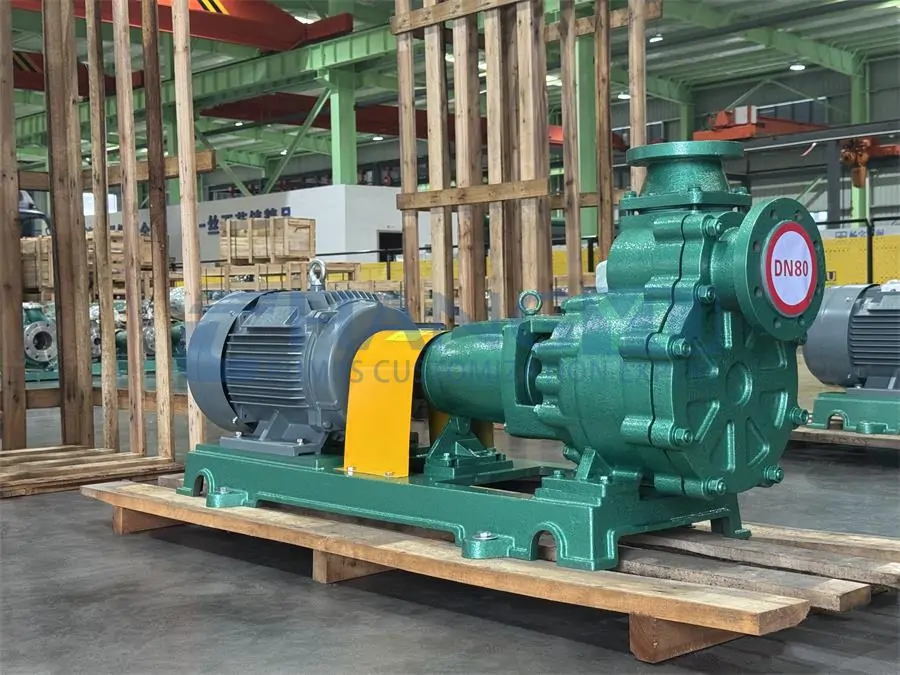
Self priming transfer pumps are essential engineering solutions designed to lift fluids from reservoirs located below the pump’s suction centerline, effectively overcoming the air-binding issues that paralyze standard centrifugal pumps. When managing toxic, corrosive, or highly valuable industrial fluids, the ability to automatically evacuate air from the suction line without manual intervention is critical for safety and efficiency. Leveraging over 20 years of fluid engineering and manufacturing expertise, Changyu Pump provides high-performance self-priming solutions that guarantee continuous, leak-free operation in the most demanding chemical environments.
What is a Self-Priming Transfer Pump and How Does It Work?
Standard centrifugal pumps cannot pump air; if air enters the suction line, the pump becomes “air-bound” and ceases to function. A self-priming transfer pump circumvents this limitation by integrating a built-in fluid reservoir and a specialized recirculation chamber.
How does it work? Before the very first startup, the pump casing is manually filled with liquid. As the impeller rotates, it creates a low-pressure vacuum at its eye, drawing air from the suction line into the pump. The impeller mixes this air with the retained liquid. This air-liquid mixture is pushed into the separation chamber, where the lighter air is expelled through the discharge port, and the heavier liquid falls back into the impeller to grab more air. Once all the air is evacuated from the suction piping, the pump operates exactly like a standard centrifugal pump.
3 Top Self-Priming Transfer Pumps of Changyu Pump
Selecting the right self priming pump depends heavily on the fluid’s chemical aggressiveness, specific gravity, and your facility’s safety constraints. Here are our top three highly recommended models engineered for industrial excellence:
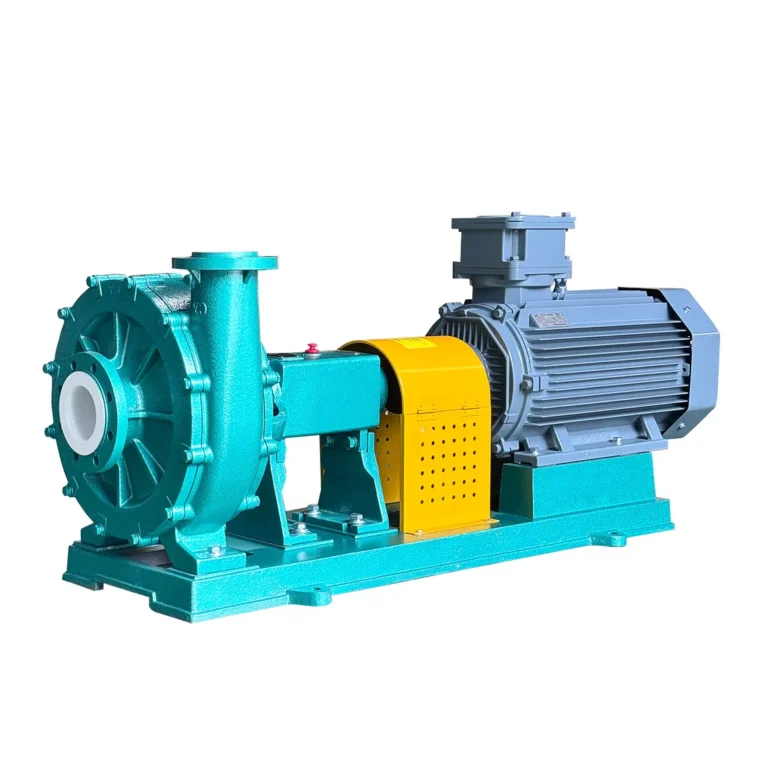
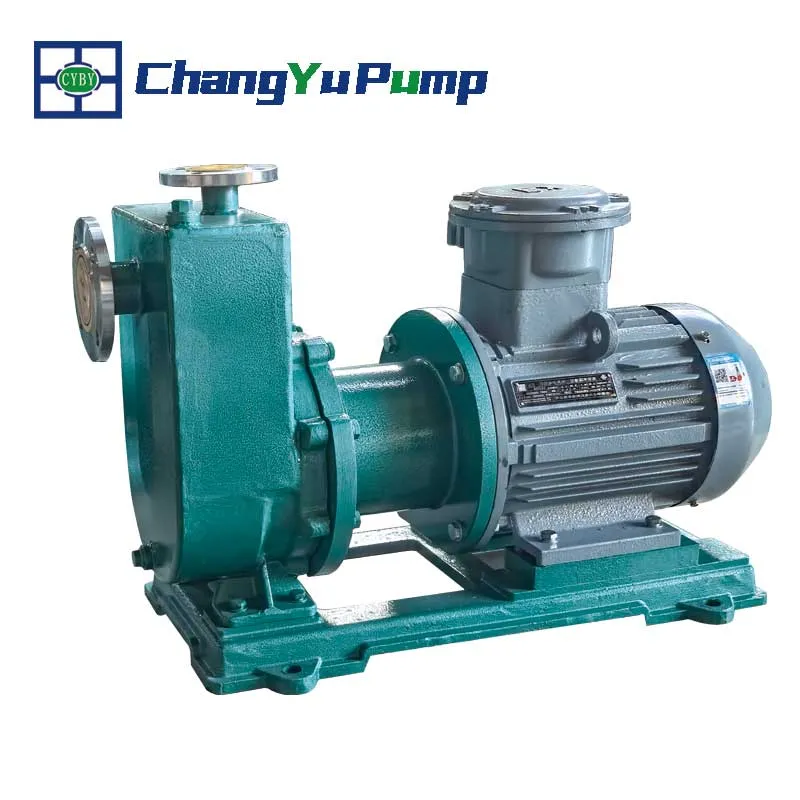
1. CQZ Stainless Steel Self-Priming Magnetic Drive Pump
When handling hazardous solvents or valuable chemicals where zero leakage is mandatory, the CQZ Stainless Steel Self-Priming Magnetic Drive Pump is the premium choice. By combining magnetic drive technology (which eliminates vulnerable mechanical seals) with a self-priming casing, this pump securely lifts corrosive liquids from underground tanks without the risk of environmental contamination. The stainless steel construction ensures high structural rigidity and resistance to a wide range of organic solvents.
| Model | Flow (m³/h) | Head (m) | Efficiency (%) | Motor Power (kW) | Speed (rpm) | Inlet (mm) | Outlet (mm) |
|---|---|---|---|---|---|---|---|
| Small Flow / High Speed (2900 rpm) | |||||||
| 32-20-125 | 3.2 | 20 | 16 | 1.5 | 2900 | 32 | 20 |
| 32-20-160 | 3.2 | 32 | 15 | 2.2 | 2900 | 32 | 20 |
| 40-25-160 | 6.3 | 32 | 23 | 3.0 | 2900 | 40 | 25 |
| 50-32-200 | 12.5 | 50 | 30 | 7.5 | 2900 | 50 | 32 |
| 65-50-125 | 25 | 20 | 41 | 4.0 | 2900 | 65 | 50 |
| 65-40-250 | 25 | 80 | 24 | 30 | 2900 | 65 | 40 |
| Medium Flow / High Speed (2900 rpm) | |||||||
| 80-65-125 | 50 | 20 | 56 | 5.5 | 2900 | 80 | 65 |
| 80-50-250 | 50 | 80 | 38 | 37 | 2900 | 80 | 50 |
| 100-80-160 | 100 | 32 | 47 | 22 | 2900 | 100 | 80 |
| 100-65-250 | 100 | 80 | 51 | 55 | 2900 | 100 | 65 |
| 125-100-200 | 200 | 50 | 59 | 55 | 2900 | 125 | 100 |
| Large Flow / Low Speed (1450 rpm) | |||||||
| 150-125-250 | 200 | 20 | 51 | 22 | 1450 | 150 | 125 |
| 150-125-400 | 200 | 50 | 56 | 55 | 1450 | 150 | 125 |
| 200-150-250 | 400 | 20 | 68 | 37 | 1450 | 200 | 150 |
| 200-150-400 | 400 | 50 | 52 | 110 | 1450 | 200 | 150 |
| 250-200-400 | 600 | 50 | 47 | 185 | 1450 | 250 | 200 |
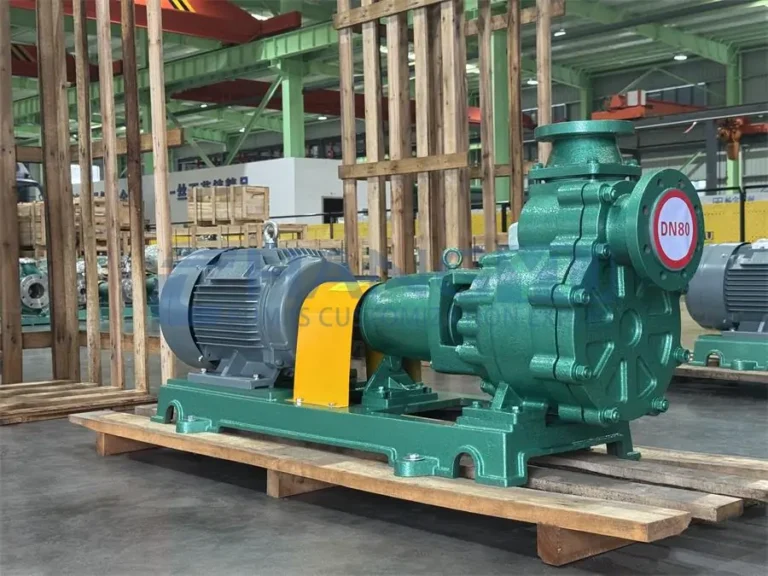
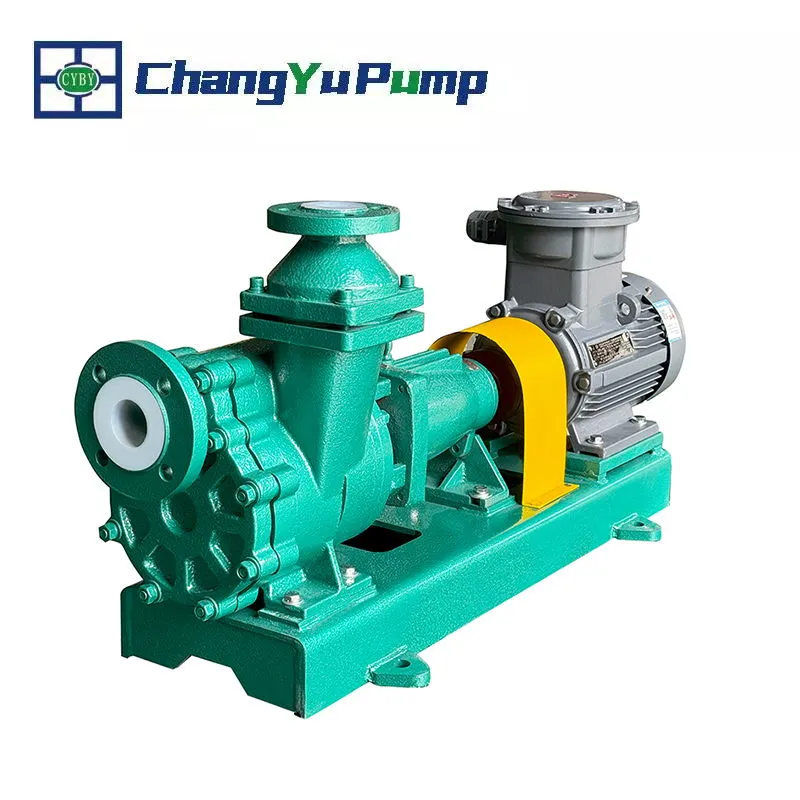
2. Fluoroplastic Centrifugal Self-Priming Pump
For highly aggressive media such as concentrated sulfuric acid, hydrochloric acid, or strong alkalis, standard metals degrade rapidly. The Fluoroplastic Centrifugal Self-Priming Pump utilizes a heavy-duty fluoroplastic (PTFE/FEP) lining on all wetted components. It retains the robust mechanical strength of a cast-iron outer shell while providing absolute chemical inertness internally, making it ideal for low-level acid transfer and wastewater neutralization pits.
Specifications
| Model | Flow (m³/h) | Head (m) | Motor Power (KW) | Speed (r/min) | Self-priming Height(m) | Self-priming Time (s) | Efficiency (%) | NPSHr(m) | Inlet | Outlet |
|---|---|---|---|---|---|---|---|---|---|---|
| 25FZB-20LP | 1.5-6 | 16-19 | 2.2 | 2900 | 0.7 | 180 | 10-25 | 3 | 25 | 25 |
| 40FZB-20P | 5-12 | 17-22 | 3 | 2900 | 1 | 180 | 35-46 | 3 | 40 | 50 |
| 40FZB-30L | 5-12 | 28-32 | 4 | 2900 | 3 | 150 | 34-48 | 3.5 | 40 | 50 |
| 50FZB-20P | 8-15 | 17-22 | 3 | 2900 | 1 | 180 | 35-42 | 3 | 50 | 50 |
| 50FZB-30L | 8-15 | 28-32 | 4 | 2900 | 3 | 150 | 24-30 | 3.5 | 50 | 50 |
| 50FZB-45L | 8-15 | 43-47 | 7.5 | 2900 | 3 | 150 | 24-35 | 3.5 | 50 | 40 |
| 50FZB-70L | 8-15 | 68-72 | 15 | 2900 | 3 | 150 | 20-26 | 4 | 50 | 32 |
| 65FZB-30L | 15-35 | 27-32 | 7.5 | 2900 | 3 | 200 | 37-42 | 4 | 65 | 50 |
| 65FZB-45L | 15-35 | 38-47 | 11 | 2900 | 3 | 180 | 30-44 | 4 | 65 | 40 |
| 65FZB-70L | 15-35 | 65-72 | 22 | 2900 | 3 | 180 | 30-42 | 4 | 65 | 40 |
| 80FZB-30L | 35-60 | 28-35 | 11 | 2900 | 3.5 | 180 | 51-63 | 4.5 | 80 | 65 |
| 80FZB-45L | 35-60 | 42-47 | 15 | 2900 | 3.5 | 200 | 45-53 | 4.5 | 80 | 65 |
| 80FZB-70L | 35-60 | 65-72 | 30 | 2900 | 3.5 | 250 | 43-50 | 5 | 80 | 50 |
| 100FZB-30L | 65-110 | 28-32 | 18.5 | 2900 | 3.5 | 200 | 56-80 | 6 | 100 | 80 |
| 100FZB-45L | 65-110 | 40-46 | 30 | 2900 | 4 | 250 | 48-55 | 6 | 100 | 80 |
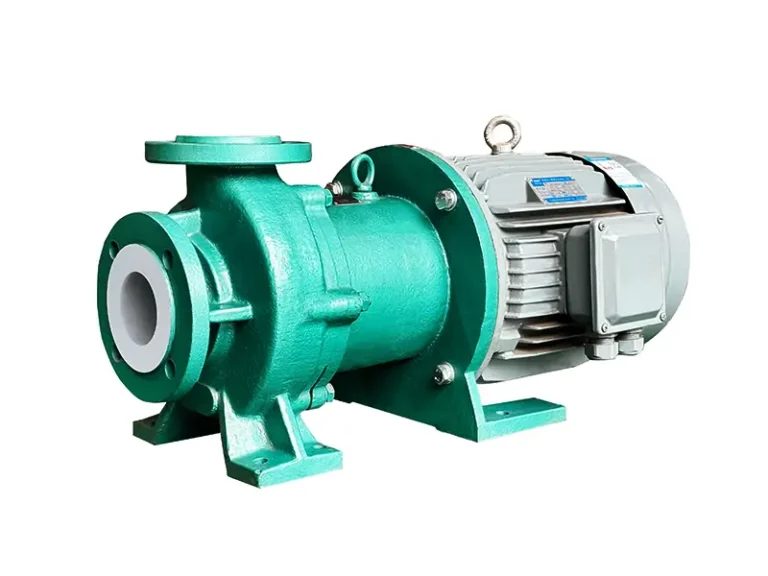
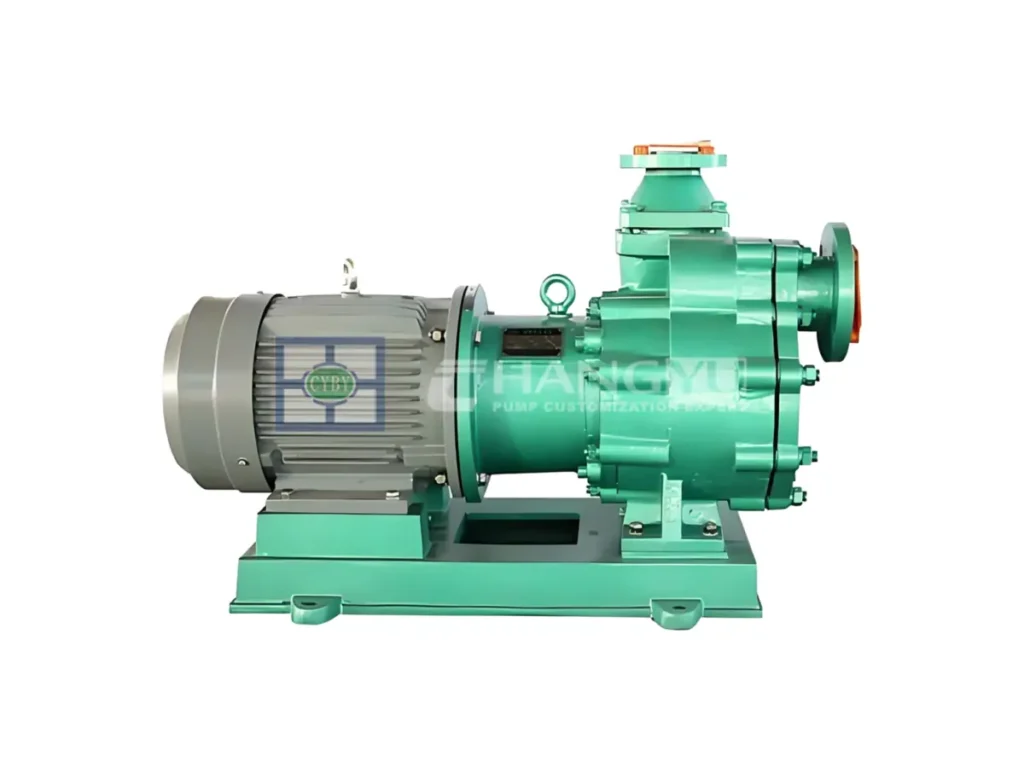
3. ZCQ Series Fluorine-Lined Magnetic Self-Priming Pump
Representing the pinnacle of chemical pumping technology, the ZCQ Series Fluorine-Lined Magnetic Self-Priming Pump merges three distinct advantages: exceptional negative suction lift, zero-leakage magnetic drive, and extreme corrosion resistance. Completely lined with fluoroplastics, this unit is engineered for the most hostile applications—such as unloading tanker trucks filled with highly toxic chemicals—ensuring maximum operator safety and equipment longevity.
Note: Unsure about model selection? Contact us, and our expert engineers will provide you with professional and customized solutions.
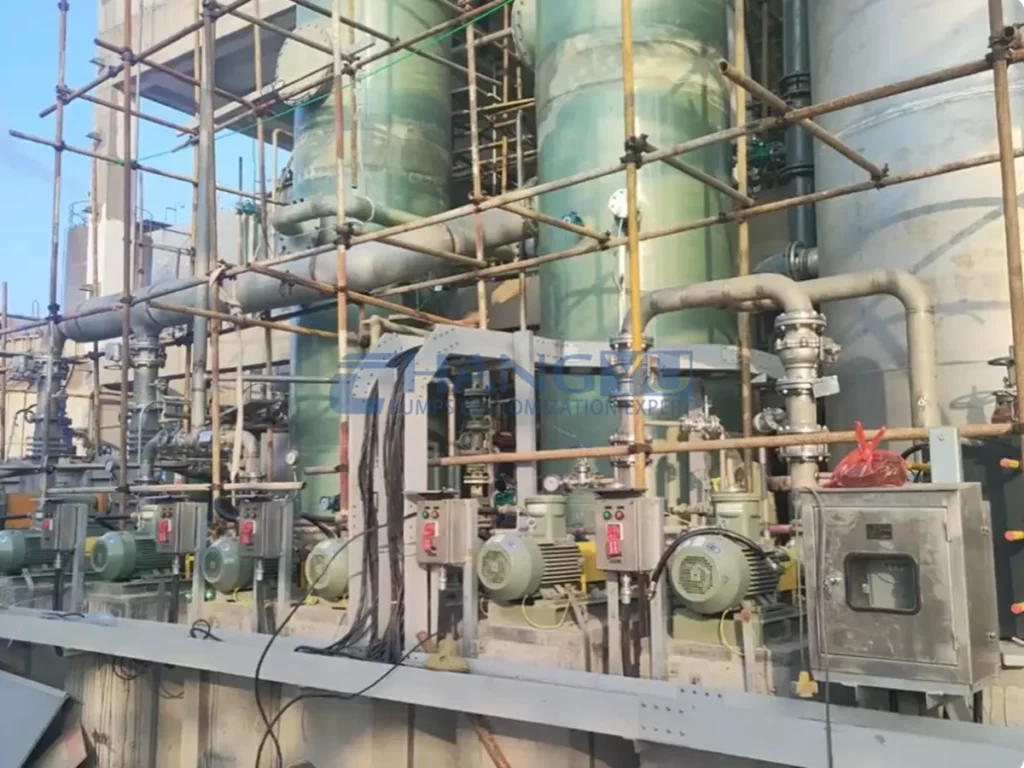
Real-World Application Cases for Our Self-Priming Pumps
These specialized pumps excel in hazardous scenarios where gravity-fed suction or submerged motors are impossible or unsafe. Here is how they resolve critical engineering challenges:
- Tanker Truck Unloading: A petrochemical facility needed to unload toxic solvents from top-hatch tanker trucks. By installing the CQZ Stainless Steel Magnetic Drive Pump, they achieved a rapid self-priming lift without needing a flooded suction line, while the sealless design ensured zero fugitive emissions.
- Underground Acid Storage: A fertilizer plant struggled with frequent mechanical seal failures when pumping sulfuric acid from a deep underground tank. They upgraded to the ZCQ Series Fluorine-Lined Magnetic Pump, which effortlessly lifted the heavy acid while entirely eliminating seal-leakage issues and chemical degradation.
- Wastewater Treatment Sumps: An industrial plant utilized the Fluoroplastic Centrifugal Self-Priming Pump to draw highly corrosive effluent from an open pit to a surface-level neutralization tank. The pump’s efficient air-handling capability prevented vapor-lock, ensuring continuous automated operation.
How to Choose the Most Suitable Self-Priming Transfer Pump?
To select the optimal self-priming pump, systematically evaluate your fluid dynamics and physical site constraints. Follow these critical steps before ordering:
- Step 1: Evaluate Leakage Tolerance. If you are transferring toxic, flammable (ATEX), or highly valuable fluids, a magnetic drive pump (like the CQZ or ZCQ series) is mandatory. It completely eliminates mechanical seals and the associated risk of leaks.
- Step 2: Analyze Fluid Properties (Specific Gravity & Viscosity). Heavier liquids (higher specific gravity) require a longer priming time because the “effective static lift” increases proportionally. Furthermore, highly viscous fluids or abrasive slurries can drastically reduce priming efficiency and cause premature impeller wear.
- Step 3: Calculate the Suction Lift & Vapor Pressure. Accurately measure the vertical distance from the liquid surface to the pump inlet. Also, account for fluid temperature; hot fluids have high vapor pressure, which increases the risk of cavitation during the vacuum-creating priming phase.
Not sure which configuration matches your specific tank parameters? Welcome to contact our Changyu Pump engineering team. Simply provide your working conditions, and we will offer targeted model selection and a tailored solution.
Advanced Troubleshooting: Why Did My Pump Fail to Prime?
Even premium pumps can experience operational issues if system conditions change. If your pump fails to prime, check these critical factors immediately:
- Air Leaks in the Suction Line: The most common failure. Even a microscopic air leak at a flange or joint will introduce air faster than the pump can expel it, destroying the necessary vacuum.
- Insufficient Retained Liquid: If the pump casing was not manually filled before the first start, or if the retained liquid evaporated or siphoned back into the pit, the pump cannot mix air and will dry-run.
- Clogged Suction Filters: Debris blocking the inlet strainer restricts fluid flow, preventing the fluid from reaching the impeller eye and establishing the required suction pressure.
What Are the Most Frequently Asked Questions (FAQs)?
Q1: Do I need to fill a self-priming pump with liquid every time I use it?
A: No. You only need to fill the pump casing before its very first use. The internal volute retains enough liquid to automatically re-prime for all subsequent starts.
Q2: What is the maximum suction lift for a self-priming pump?
A: Depending on the specific model, specific gravity of the fluid, and altitude, industrial self-priming pumps typically achieve a maximum vertical suction lift of 4 to 6 meters.
Q3: Can a self-priming transfer pump run dry?
A: No. Extended dry running will rapidly destroy internal components due to excessive heat. The casing must always retain liquid to facilitate the priming cycle and lubricate the internals.
Q4: Why choose a magnetic drive self-priming pump?
A: Magnetic drive pumps have no mechanical shaft seals, meaning they offer 100% leak-free operation. This is crucial for protecting personnel from toxic chemical spills and fugitive emissions.
Q5: How does fluid temperature affect the self-priming process?
A: High temperatures increase the fluid’s vapor pressure. During the vacuum phase of priming, this hot fluid can flash into vapor (boil), causing severe cavitation and halting the priming process.
Q6: Are fluoroplastic pumps durable enough for industrial use?
A: Yes. While the wetted internals are lined with highly inert fluoroplastics (PTFE/FEP), the outer shell is constructed from robust cast iron or steel to provide high mechanical strength.
Q7: Can these pumps handle highly viscous fluids?
A: High viscosity severely impedes the air-liquid separation process during priming and increases wear. They are best suited for water-like or mildly viscous chemicals.
Q8: What happens if there is an air leak in the suction pipe?
A: An air leak will continuously introduce air into the system. The pump will fail to establish a vacuum, meaning it will never draw the liquid up the pipe.
Q9: Why does my pump take longer to prime than usual?
A: Slow priming is typically caused by a change in fluid specific gravity, excessive suction pipe length, a partially clogged inlet, or a minor air leak.
Q10: Does Changyu Pump provide customized motor options?
A: Yes. We can equip our pumps with explosion-proof (Ex/ATEX) or premium-efficiency motors to comply with your specific facility safety standards.
Contact Changyu Pump for Your Fluid Transfer Solutions
When your process requires lifting dangerous, corrosive, or high-value chemicals from underground tanks or tanker trucks, relying on standard pumps leads to leaks, air-binding, and costly downtime. Self-priming transfer pumps—especially our advanced magnetic drive and fluoroplastic models—deliver the ultimate combination of safety, automated priming, and chemical resistance.
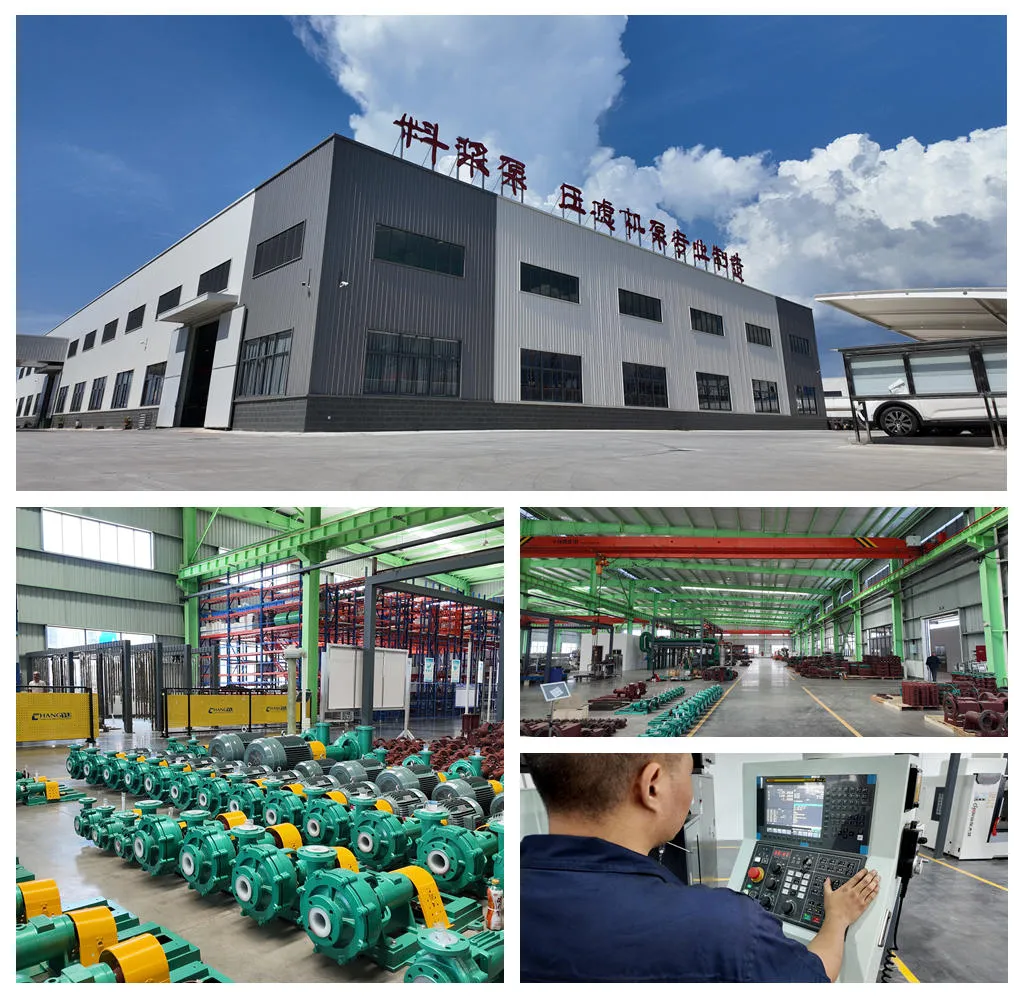
Are you currently struggling with suction lift limitations, or do you need to specify a zero-leakage pump for a new chemical storage facility? Contact Changyu Pump today. With over 20 years of dedicated manufacturing experience, our engineering team will evaluate your exact fluid composition, suction lift requirements, and safety standards to recommend the perfect solution. Reach out now for a free technical consultation and a highly competitive, factory-direct quotation!