
Respuesta Rápida
Un Bomba de lodo FGD es una bomba de servicio pesado diseñada para manejar la lechada de piedra caliza abrasiva y la lechada de yeso propensa a incrustaciones en sistemas de desulfuración de gases de combustión húmedos. Estas bombas enfrentan una combinación única de desafíos: la lechada de piedra caliza es altamente abrasiva con hasta un 30% de contenido sólido, mientras que la lechada de yeso tiende a cristalizar y formar incrustaciones duras en los componentes internos de la bomba durante los períodos de inactividad. Factores clave de selección:
- El material determina la vida útil por desgaste: La lechada de piedra caliza abrasiva erosiona rápidamente las bombas metálicas estándar. Las bombas revestidas con UHMW-PE (polietileno de peso molecular ultraalto) ofrecen una resistencia superior combinada tanto al desgaste abrasivo de las partículas de piedra caliza como a la corrosión química del entorno de la lechada, superando típicamente a las bombas de aleación de cromo alto en dos a cuatro veces en servicio de lodo FGD.
- El diseño del impulsor previene obstrucciones: La incrustación de yeso y los sólidos de la lechada pueden bloquear los pasajes estrechos del impulsor. Los impulsores semiabiertos — que no tienen cubierta frontal, dejando los álabes expuestos en el lado de succión — eliminan los espacios confinados entre cubiertas donde se acumulan los sólidos. Combinados con trayectorias de flujo amplias, este diseño resiste obstrucciones y mantiene la eficiencia a medida que ocurre el desgaste.
- La selección del sello previene fugas: El lodo FGD contiene partículas finas que penetran las caras de los sellos mecánicos estándar, causando fallas prematuras. Los sistemas de lavado de sellos externos y los sellos mecánicos dobles protegen contra la entrada de lodo y extienden la vida útil del sello.
- La velocidad afecta todo: Las velocidades de operación más bajas reducen la tasa de desgaste, extienden la vida útil de los componentes y mejoran la confiabilidad a largo plazo. Una bomba que opera a 1,450 rpm durará más que la misma bomba a 2,900 rpm por un factor de tres a cuatro en servicio abrasivo de FGD.
En una planta de energía a carbón, una falla de la bomba de lodo FGD no solo detiene una bomba — puede apagar todo el sistema de desulfuración, forzando a la planta a reducir la carga o enfrentar sanciones por incumplimiento de emisiones. La lechada de piedra caliza abrasiva desgasta los materiales de bomba estándar en cuestión de meses. La lechada de yeso cristaliza durante cualquier parada no planificada, agarrotando los impulsores y bloqueando las tuberías de descarga.
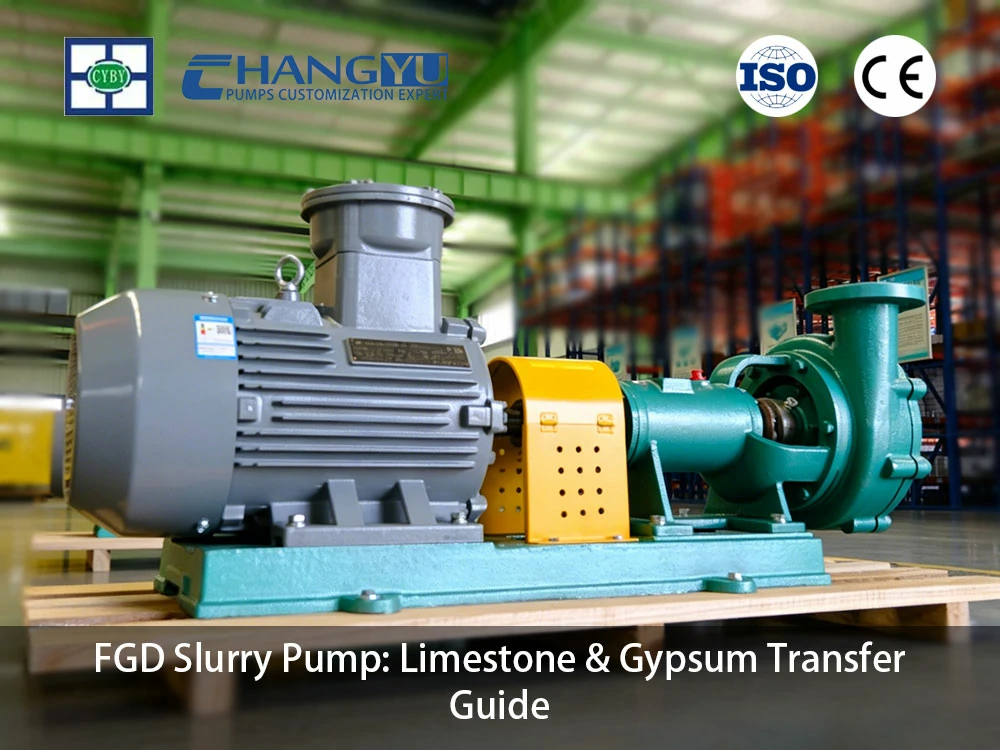
Después de leer esta guía, comprenderá los desafíos específicos del lodo en sistemas FGD, qué materiales de bomba proporcionan la vida útil más larga, cómo prevenir que la incrustación de yeso obstruya sus bombas y cómo seleccionar la bomba adecuada para cada etapa del proceso FGD. Con más de 20 años de experiencia en fabricación de bombas, Changyu Pump presenta esta guía de selección estructurada para aplicaciones de bombas de lodo FGD.
¿Cuáles Son los Principales Desafíos del Lodo en Sistemas FGD?
Desulfuración de gases de combustión húmedos (FGD) elimina el dióxido de azufre de los gases de escape de plantas de energía al depurar el gas de combustión con una lechada de piedra caliza. Este proceso genera dos corrientes de lodo distintas, cada una presentando diferentes desafíos para la bomba.
Las Dos Corrientes de Lodo FGD
Lechada de piedra caliza: La piedra caliza triturada se mezcla con agua para formar una lechada que contiene 25–30% de partículas sólidas en peso. Esta lechada se bombea desde el sistema de preparación de piedra caliza hasta la torre absorbedora. Las partículas de piedra caliza son angulares y duras, creando condiciones altamente abrasivas que erosionan las carcasas de la bomba, los impulsores y los sellos. La lechada es alcalina (pH 8–10), lo que limita la elección de materiales — algunos metales que resisten la abrasión pueden corroerse en el entorno alcalino, y viceversa.
Lechada de yeso: Dentro de la torre absorbedora, la piedra caliza reacciona con el dióxido de azufre para formar sulfito de calcio, que se oxida a sulfato de calcio dihidratado — yeso. La lechada de yeso, que contiene 15–25% de sólidos, se bombea desde el absorbedor hasta el sistema de deshidratación. El yeso presenta un desafío diferente al de la piedra caliza: tiende a cristalizar y formar incrustaciones duras en los componentes internos de la bomba, particularmente durante los períodos de inactividad cuando la lechada se enfría y el agua se evapora. La incrustación de yeso se acumula en las superficies del impulsor, en las cámaras de sellado y alrededor de las válvulas de descarga, reduciendo progresivamente el flujo y eventualmente agarrotando la bomba.
Dónde Se Ubican las Bombas FGD
| Etapa FGD | Fluido | Contenido en sólidos | Desafío principal | Tipo de bomba |
|---|---|---|---|---|
| Preparación de piedra caliza | Lechada de piedra caliza | 25–30% | Abrasión severa | Bomba de lodo con revestimiento resistente al desgaste |
| Circulación del absorbedor | Lechada mixta de piedra caliza/yeso | 15–25% | Abrasión + incrustación | Bomba de lodo con diseño antiincrustante |
| Purga/transferencia de yeso | Lodo de yeso | 15–25% | Incrustación + abrasión moderada | Bomba de lodo con pasajes de flujo amplios |
| Filtrado/agua residual | Solución de cloruro ácido | < 1% | Corrosión | Bomba resistente a la corrosión |
¿Cuáles Son los Mejores Materiales para Bombas de Lodo FGD?
La selección del material es el factor más importante que determina la vida útil de la bomba de lodo FGD. El material debe resistir tanto el desgaste mecánico de las partículas sólidas como la corrosión química del entorno de la lechada.
Comparación de Materiales para Bombas de Lodo FGD
| Material | Resistencia a la abrasión | Resistencia a la corrosión | Antiincrustante | Límite de temperatura | Vida útil típica en FGD |
|---|---|---|---|---|---|
| Aleación de Alto Cromo (Cr27-Cr33) | Bueno — resiste el desgaste por corte; erosión de la matriz en lechadas de partículas finas | Moderado — se corroe en condiciones ácidas | Pobre — la incrustación se adhiere al metal | 150°C+ | 6–12 meses |
| Caucho natural | Bueno — la resiliencia absorbe el impacto de partículas | Bueno — resistente al rango de pH de FGD; limitado por temperatura (< 70°C) y entornos oxidantes | Bueno — superficie antiadherente | 70 °C | 8–14 meses |
| Acero inoxidable dúplex (2205/2507) | Moderado — más blando que el cromo alto | Excelente — PREN 33–44 | Pobre — la incrustación se adhiere a superficies metálicas; las superficies pulidas (Ra ≤ 0.4 μm) reducen la adhesión en comparación con superficies fundidas rugosas | 120 °C | 8–16 meses |
| UHMW-PE Revestido | Excelente — absorbe la energía de impacto de partículas; particularmente efectivo en lechadas húmedas de partículas finas | Excelente — inerte a ácidos y álcalis | Excelente — superficie antiadherente que libera incrustaciones | 90 °C | 18–36 meses |
Por Qué las Bombas Revestidas con UHMW-PE Sobresalen en FGD
UHMW-PE (polietileno de peso molecular ultraalto) es un polímero de ingeniería de alto rendimiento con un peso molecular que típicamente supera los 3 millones de g/mol. Esta estructura le otorga propiedades únicas que abordan directamente los desafíos del lodo FGD:
- Utilizado como un revestimiento grueso dentro de una carcasa de bomba de acero, el UHMWPE ofrece una combinación de propiedades que ninguna aleación metálica puede igualar. El UHMW-PE tiene un índice de resistencia a la abrasión varias veces superior al del acero al carbono. En el servicio con lechada de piedra caliza, las bombas revestidas de UHMW-PE superan consistentemente a las bombas de aleación de alto cromo por un factor de dos a tres. A diferencia de las bombas metálicas, que se desgastan progresivamente a medida que las partículas afiladas erosionan la matriz más blanda que rodea los carburos duros, el UHMW-PE absorbe la energía del impacto de las partículas mediante la deformación de la cadena molecular: el material se deforma elásticamente y se recupera en lugar de ser cortado.
- Inercia química: El UHMW-PE es resistente a todo el rango de pH que se encuentra en los sistemas FGD, desde lechada de piedra caliza alcalina (pH 8–10) hasta lechada de yeso ácida y aguas residuales que contienen cloruros (pH 3–6). A diferencia de los metales, no se corroe en ninguno de estos entornos.
- Superficie antiadherente: La incrustación de yeso tiene dificultades para adherirse a la superficie hidrofóbica y de baja fricción del UHMW-PE. La incrustación que se forma se desprende fácilmente durante la operación normal o con una limpieza mecánica ligera. Esta propiedad antiincrustante es una ventaja operativa significativa sobre las bombas metálicas, que requieren limpieza con ácido o desincrustación mecánica regular.
- Menor peso: Las bombas revestidas de UHMW-PE son más ligeras que las bombas totalmente metálicas de capacidad equivalente, lo que simplifica la instalación y el manejo durante el mantenimiento.
Los ingenieros de Changyu Pump recomiendan: Para el servicio con lechada de piedra caliza y lechada de yeso, las bombas revestidas de UHMW-PE proporcionan el equilibrio óptimo entre resistencia a la abrasión, resistencia a la corrosión y propiedades antiincrustantes. La prima en el costo del material sobre la aleación de alto cromo se recupera dentro del primer año de operación gracias a una vida útil prolongada y un mantenimiento reducido. Para el filtrado FGD limpio y las aguas residuales, donde no hay sólidos pero la corrosión sigue siendo una preocupación, las bombas de acero inoxidable ofrecen una alternativa rentable. Especifique dúplex 2205 o 2507 para aguas residuales FGD con alto contenido de cloruros; el 316L solo es adecuado para aplicaciones con bajo contenido de cloruros (< 500 mg/L).
¿Cómo Prevenir la Obstrucción en Bombas de Yeso FGD?
La incrustación de yeso y los sólidos de la lechada pueden bloquear los pasajes de la bomba durante la operación y atascar la bomba durante la parada. Prevenir estas fallas requiere atención tanto al diseño de la bomba como a los procedimientos operativos.
Características de Diseño de la Bomba que Resisten la Obstrucción
Impulsor semiabierto: Un impulsor semiabierto no tiene cubierta frontal: los álabes del impulsor están expuestos en el lado de succión, eliminando el espacio confinado entre cubiertas donde se acumulan los sólidos en los diseños de impulsores cerrados. Los sólidos que ingresan al impulsor son expulsados hacia afuera por la fuerza centrífuga sin acumularse en espacios confinados. La holgura entre los álabes del impulsor y la carcasa es ajustable; a medida que ocurre el desgaste, la holgura se puede reajustar para mantener la eficiencia. Para el servicio con lechada FGD, los impulsores semiabiertos proporcionan el mejor equilibrio entre resistencia a la obstrucción, eficiencia y tolerancia al desgaste.
Pasajes de flujo amplios: Los pasajes del impulsor y la voluta deben dimensionarse para pasar la partícula sólida más grande esperada más un margen de seguridad. Para la lechada de piedra caliza, los pasajes deben acomodar partículas de hasta 10–15 mm. Para la lechada de yeso, que contiene sólidos más blandos pero más adhesivos, los pasajes más anchos evitan la acumulación que los pasajes estrechos fomentan.
Superficies internas antiadherentes: Los componentes internos de la bomba revestidos de UHMW-PE resisten la adhesión de incrustaciones. Los cristales de yeso que se forman durante los períodos de inactividad se desprenden de la superficie lisa e hidrofóbica cuando la bomba se reinicia, en lugar de acumularse capa por capa como lo hacen en las superficies metálicas rugosas.
Prácticas Operativas que Previenen la Obstrucción
Velocidad de flujo mínima: Mantenga una velocidad mínima de lechada de 1.5–2.0 m/s en las tuberías de succión y descarga de la bomba. Las velocidades más bajas permiten que los sólidos se asienten y acumulen, bloqueando eventualmente la tubería o la entrada de la bomba.
Enjuague posterior a la parada: Después de cada parada del sistema FGD, enjuague la bomba con agua limpia durante 3–5 minutos para desplazar la lechada de la carcasa, el impulsor y la cámara del sello. Esto evita que se forme incrustación de yeso durante el período de inactividad. Para paradas prolongadas, drene la carcasa de la bomba por completo después del enjuague.
Ajuste regular de la holgura del impulsor: A medida que el impulsor y la carcasa se desgastan, la holgura aumenta y la eficiencia disminuye. Los mecanismos de ajuste externo permiten reajustar la holgura sin desmontar la bomba. Verifique y ajuste la holgura en los intervalos de mantenimiento programados.
Los ingenieros de Changyu Pump recomiendan: Para todas las bombas de lechada FGD, especifique un impulsor semiabierto con holgura ajustable y carcasa revestida de UHMW-PE. La combinación de superficies antiadherentes y pasajes de flujo amplios minimiza el riesgo de obstrucción. Un enjuague con agua limpia después de cada parada, incluso breve, evita que la incrustación de yeso se endurezca en la bomba.
¿Cómo Seleccionar la Bomba de Lechada FGD Correcta?
La selección de la bomba de lechada FGD sigue un proceso estructurado que comienza con las características específicas de la lechada y continúa con la selección del material, el dimensionamiento hidráulico y la especificación del sello.
Selección de Bomba por Etapa del Proceso FGD
| Etapa FGD | Tipo de lechada | Requisito clave | Bomba recomendada | Material |
|---|---|---|---|---|
| Preparación de piedra caliza | Lechada de piedra caliza fresca, 25–30% de sólidos | Máxima resistencia a la abrasión | Bomba de lodo con revestimiento resistente al desgaste | Revestido de UHMW-PE |
| Circulación del absorbedor | Lechada mixta de piedra caliza/yeso, 15–25% de sólidos | Resistencia a la abrasión + antiincrustante | Bomba de lodo con diseño antiincrustante | Revestido de UHMW-PE |
| Purga/transferencia de yeso | Lechada de yeso, 15–25% de sólidos | Resistencia a incrustaciones + abrasión moderada | Bomba de lodo con pasajes de flujo amplios | Revestido de UHMW-PE |
| Filtrado/agua residual | Solución de cloruro ácida, < 1% de sólidos | Resistencia a la corrosión | Bomba centrífuga resistente a la corrosión | Acero inoxidable dúplex (2205 como mínimo); 316L solo para bajo contenido de cloruros (< 500 mg/L) |
Selección de Bomba de Lechada FGD en Cinco Pasos
Paso 1: Caracterice la lechada. Mida la concentración de sólidos, la distribución del tamaño de partículas, el pH, la temperatura y el contenido de cloruros. Estos parámetros determinan el mecanismo de desgaste dominante (abrasión, corrosión o ambos) y guían la selección del material.
Paso 2: Seleccione el material. Para lechada con un contenido de sólidos superior al 10%, especifique bombas revestidas de UHMW-PE. Para líquidos FGD limpios, las bombas de acero inoxidable ofrecen una resistencia a la corrosión rentable. La aleación de alto cromo y las bombas revestidas de caucho son opciones alternativas cuando el UHMW-PE no está disponible, pero espere una vida útil más corta.
Paso 3: Elija el tipo de impulsor. Para el servicio con lechada FGD, especifique un impulsor semiabierto con holgura ajustable. El pasaje de flujo ancho resiste la obstrucción, y la holgura ajustable mantiene la eficiencia a medida que ocurre el desgaste.
Paso 4: Seleccione la disposición del sello. El lodo de FGD contiene partículas finas que destruyen los sellos mecánicos estándar. Especifique un sistema de lavado con agua limpia externa o un sello mecánico doble con fluido de barrera. El agua de lavado evita que el lodo ingrese a las caras del sello y elimina cualquier partícula que penetre.
Centrífuga de acero inoxidable dúplex. Calcule el caudal requerido y la altura dinámica total. Aplique factores de reducción por lodo para tener en cuenta las mayores pérdidas por fricción y la eficiencia reducida en comparación con el agua. Dimensione el motor con un factor de servicio mínimo de 1.15 para servicio continuo. Para aplicaciones de FGD, especifique una velocidad de bomba de 1,450 rpm o menor para reducir la tasa de desgaste y extender la vida útil de los componentes.
¿Cómo Extender la Vida Útil de la Bomba de Lodo de FGD?
La vida útil de la bomba de lodo de FGD está determinada por tres factores controlables: velocidad de operación, gestión del espacio libre del impulsor y prácticas de mantenimiento.
Selección de Velocidad
La velocidad de operación tiene un efecto desproporcionado en la tasa de desgaste. La relación es aproximadamente exponencial: duplicar la velocidad aumenta la tasa de desgaste por un factor de tres a cuatro, no de dos. Esto se debe a que el desgaste es función tanto del número de impactos de partículas (proporcional a la velocidad) como de la energía de cada impacto (proporcional al cuadrado de la velocidad).
Para bombas de lodo de FGD, especifique motores de 4 polos (1,450–1,500 rpm a 50 Hz) en lugar de motores de 2 polos (2,900–3,000 rpm). La bomba de menor velocidad será más grande y más costosa inicialmente, pero la vida útil extendida y los costos de mantenimiento reducidos generalmente recuperan esta prima dentro de los primeros dos años de operación. La velocidad más baja (1,450 rpm) reduce la tasa de desgaste por un factor de tres a cuatro en comparación con la operación a 2,900 rpm.
Gestión del Espacio Libre del Impulsor
A medida que el impulsor y la carcasa se desgastan, el espacio libre entre el disco frontal del impulsor y el revestimiento del lado de succión aumenta. La recirculación interna se eleva, reduciendo el caudal y la eficiencia. El ajuste externo del impulsor permite restablecer el espacio libre a la especificación original sin abrir la bomba, un procedimiento típico de 15 minutos en comparación con varias horas para un reemplazo completo del extremo húmedo.
Verifique el espacio libre del impulsor mensualmente durante los primeros seis meses de operación para establecer la tasa de desgaste. Ajuste según sea necesario para mantener el espacio libre dentro del rango especificado por el fabricante. Cuando se agote el rango de ajuste, planifique el reemplazo del extremo húmedo en la próxima ventana de mantenimiento programada.
Preventive Maintenance Schedule
| Intervalo | Acción | Propósito |
|---|---|---|
| Semanal | Verifique la vibración de la bomba, la temperatura del rodamiento y la presión de descarga | Detección temprana de problemas en desarrollo |
| Mensual | Mida el caudal a velocidad constante; compare con la línea base | Detecta el desgaste del impulsor: una caída del caudal del 10% por debajo de la línea base indica que se necesita ajuste o reemplazo |
| Trimestral | Inspeccione el sistema de lavado del sello mecánico; verifique el flujo y la presión del agua de lavado | Previene la falla del sello por lavado inadecuado |
| Anualmente | Inspección completa de la bomba; mida el desgaste de la carcasa y el impulsor; reemplace los componentes de desgaste según lo indicado | Scheduled maintenance prevents unplanned downtime |
Los ingenieros de Changyu Pump han observado: La causa más común de falla prematura de la bomba de FGD, más allá de la selección del material, es operar la bomba con un espacio libre excesivo del impulsor. Una bomba que funciona con un espacio libre más allá del máximo del fabricante pierde del 15 al 25% de su caudal de diseño y experimenta un desgaste acelerado de la carcasa debido al lodo recirculante. Las verificaciones mensuales del espacio libre y los ajustes oportunos son la actividad de mantenimiento más rentable para las bombas de lodo de FGD.
El costo total de propiedad de las bombas de lodo de FGD está dominado por el tiempo de inactividad no planificado y la frecuencia de reemplazo del extremo húmedo, no por el precio de compra inicial. Una bomba revestida de UHMW-PE con un costo inicial más alto pero tres veces la vida útil de una bomba de aleación de alto cromo ofrece un TCO a 5 años significativamente más bajo.
Caso de Estudio de Bomba de Lodo de FGD: Triplicando la Vida Útil en un Sistema de FGD de una Central Eléctrica
Una central eléctrica de carbón en India operaba cuatro bombas de lodo de aleación de alto cromo para transferir lodo de piedra caliza desde el sistema de preparación hasta las torres absorbedoras. El lodo contenía un 28% de sólidos de piedra caliza en peso con morfología de partículas angulares (Mohs 3–4). Velocidad de la bomba: 1,450 rpm. Caudal: 200 m³/h a 35 m de altura.
Los componentes del extremo húmedo de aleación de alto cromo (impulsor, revestimiento de la voluta y garganta) requerían reemplazo cada 6–8 meses. Cada reemplazo costaba aproximadamente $8,000 en piezas y requería 12 horas de inactividad por bomba. Con cuatro bombas, la planta promediaba un reemplazo del extremo húmedo cada dos meses, además de reparaciones de emergencia ocasionales por fallas de sellos y obstrucciones.
El análisis de causa raíz por parte de los ingenieros de Changyu Pump confirmó que la aleación de alto cromo (650 HB) estaba siendo cortada por las partículas angulares de piedra caliza. Si bien los carburos de cromo en la aleación eran más duros que las partículas de piedra caliza, la matriz martensítica más blanda que rodeaba los carburos se estaba desgastando preferentemente, socavando los carburos y acelerando la pérdida de material. Además, se acumulaba incrustación de yeso en las superficies metálicas de la voluta durante paradas breves, lo que requería limpieza mecánica que dañaba aún más las superficies de desgaste.

Changyu Pump reemplazó las cuatro bombas de aleación de alto cromo con bombas de lodo revestidas de UHMW-PE de la Serie UHB. El revestimiento de UHMW-PE proporcionó una resistencia a la abrasión superior: el material absorbía la energía de impacto de las partículas en lugar de ser cortado. La superficie antiadherente eliminó la acumulación de incrustación de yeso. Los impulsores semiabiertos con espacio libre ajustable mantuvieron los caudales de diseño entre los intervalos de mantenimiento programados.
Después de 18 meses de operación continua: la primera inspección del extremo húmedo de UHMW-PE mostró un desgaste uniforme y predecible con una vida útil estimada de 24 a 30 meses, una mejora de tres a cuatro veces en comparación con las bombas de aleación de alto cromo. El tiempo de inactividad no planificado por fallas de la bomba se redujo a cero. La planta estandarizó las bombas revestidas de UHMW-PE para todos los servicios de lodo de FGD durante el próximo ciclo de revisión.
Conclusión clave: En el servicio de lodos FGD, el mecanismo de desgaste abrasivo que destruye las bombas metálicas es fundamentalmente diferente del mecanismo de desgaste en bombas revestidas de UHMW-PE. Las bombas metálicas son cortadas por partículas afiladas a medida que la matriz más blanda se erosiona; el UHMW-PE absorbe el impacto mediante deformación elástica. El resultado es una extensión de la vida útil de tres a cuatro veces, con la prima del costo del material recuperada dentro de la primera sustitución evitada del extremo húmedo.
Soluciones de Bombas para Lodos FGD de Changyu Pump
Changyu Pump fabrica dos series de bombas adecuadas para lodos FGD y aplicaciones de proceso.
Guía de Selección de Productos para Bombas FGD
| Aplicación FGD | Desafío principal | Series recomendadas | Característica clave |
|---|---|---|---|
| Lodo de piedra caliza, lodo de yeso | Abrasión + corrosión + incrustación | Serie UHB | Revestido de UHMW-PE; impulsor semiabierto; antiincrustante |
| Filtrado FGD, agua de proceso | Corrosión sin sólidos | Serie HB | Acero inoxidable completo; seleccione 316L para agua de proceso con bajo contenido de cloruro; especifique 2205 o 2507 para aguas residuales FGD con alto contenido de cloruro |
Serie UHB — Bomba de Lodos Revestida de UHMW-PE para Piedra Caliza y Yeso FGD
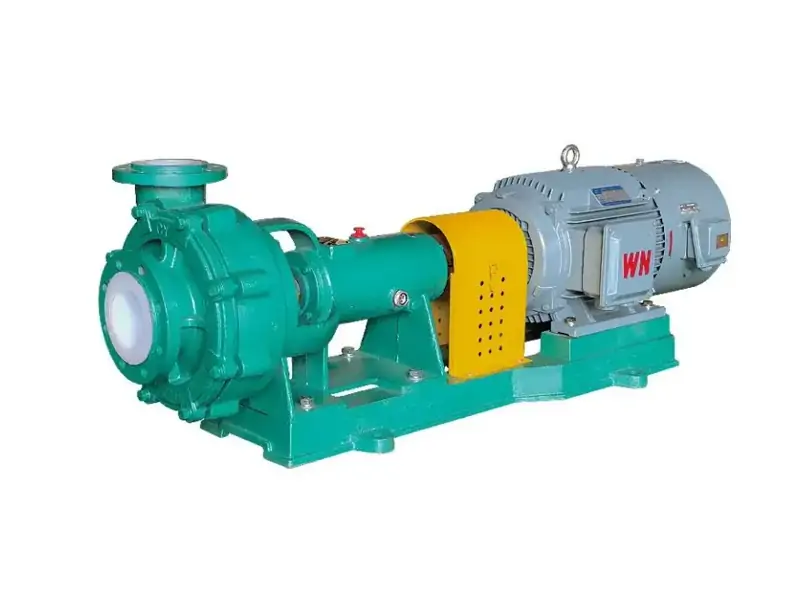
Bomba centrífuga de acero revestido con UHMW-PE diseñada para lodos corrosivos y abrasivos. El impulsor semiabierto maneja un alto contenido de sólidos sin obstrucciones. El revestimiento de UHMW-PE proporciona resistencia combinada a la abrasión, inercia química en todo el rango de pH de FGD y una superficie antiadherente que resiste la acumulación de incrustaciones de yeso. El ajuste externo del impulsor mantiene la eficiencia de diseño a medida que ocurre el desgaste. Ampliamente utilizado en sistemas FGD de centrales eléctricas de carbón para lodo de piedra caliza, lodo de yeso y circulación de absorbedor.
| Parámetro | Especificaciones |
|---|---|
| Caudal | 3–2 600 m³/h |
| Cabeza | 5–100 m |
| Potencia del motor | 0,75–300 kW |
| Velocidad | 750–2,900 r/min (1,450 rpm recomendado para FGD) |
| Temperatura | De -20 °C a 90 °C |
| Material del forro | UHMW-PE |
| Solids capacity | Hasta un 30% en peso |
Serie HB — Bomba de Acero Inoxidable para Agua de Proceso FGD
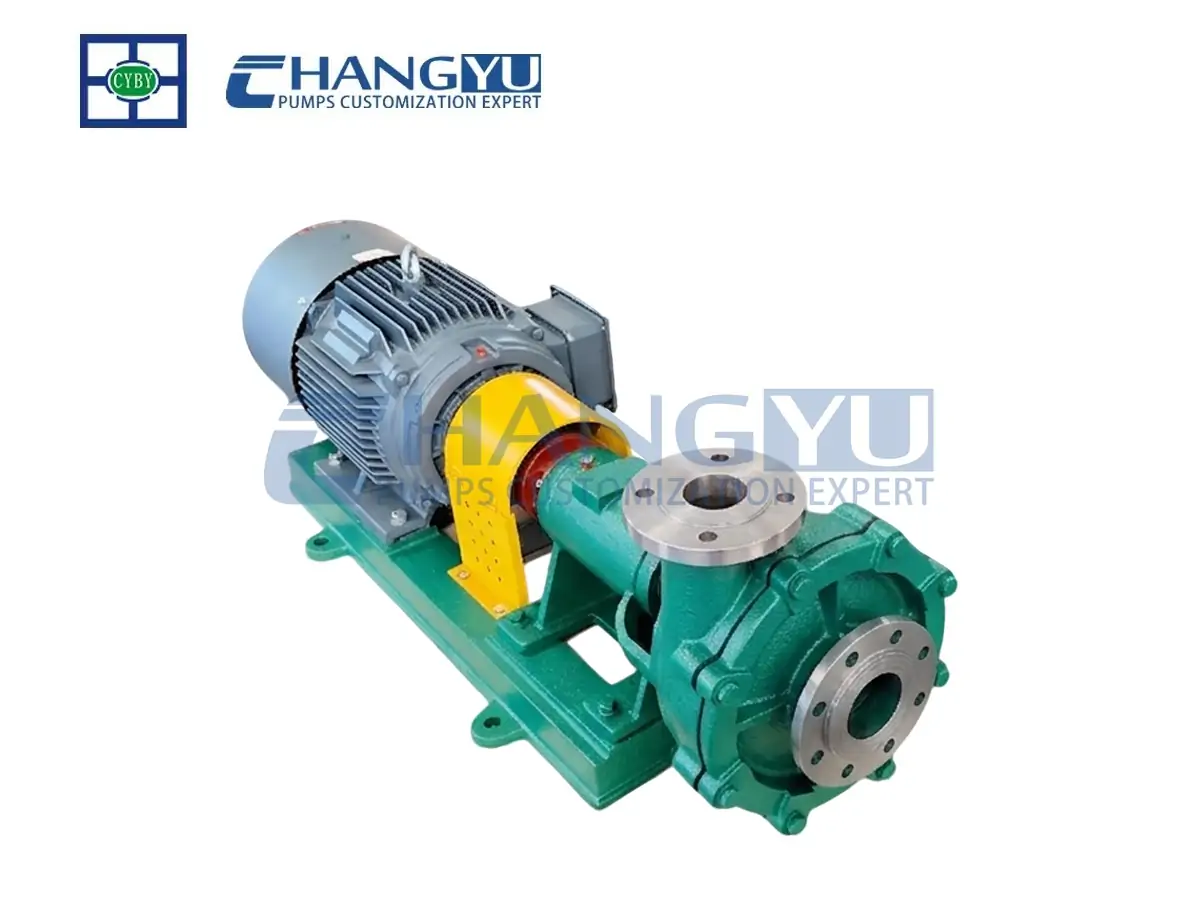
Bomba centrífuga horizontal diseñada según ISO 2858 con construcción de partes húmedas completamente de acero inoxidable. Adecuada para agua de filtrado FGD, agua de proceso y aplicaciones de fluidos limpios donde se requiere resistencia a la corrosión pero no hay sólidos. Disponible en grados 304, 316L, 2205 y 2507. Seleccione 316L para agua de proceso con bajo contenido de cloruro; especifique 2205 o 2507 para aguas residuales FGD con alto contenido de cloruro para prevenir corrosión por picaduras y corrosión en hendiduras.
| Parámetro | Especificaciones |
|---|---|
| Caudal | 10–60 m³/h |
| Cabeza | 20–120 m |
| Potencia del motor | 3–45 kW |
| Velocidad | 2 900 rpm |
| Temperatura | De -20 °C a 120 °C |
| Materiales | 304, 316L, 2205, 2507 |
Preguntas Frecuentes sobre Bombas para Lodos FGD
P: ¿Cuál es el mejor material para bombas de lodos FGD?
R: Las bombas revestidas de UHMW-PE (polietileno de peso molecular ultraalto) proporcionan la mejor combinación de resistencia a la abrasión, resistencia a la corrosión y propiedades antiincrustantes para el servicio de lodo de piedra caliza y yeso. Superan a las bombas de aleación de alto cromo de dos a cuatro veces en aplicaciones FGD típicas.
P: ¿Cómo evito que la incrustación de yeso obstruya mi bomba FGD?
R: Tres medidas funcionan juntas: especifique una bomba con superficies revestidas de UHMW-PE antiadherentes, use un impulsor semiabierto (sin cubierta frontal) con pasajes de flujo amplios, e implemente un lavado con agua limpia después de cada parada para desplazar el lodo antes de que el yeso cristalice.
P: ¿Qué velocidad de bomba es mejor para el servicio de lodos FGD?
R: Especifique motores de 4 polos (1,450–1,500 rpm) en lugar de motores de 2 polos (2,900–3,000 rpm). La velocidad más baja reduce la tasa de desgaste en un factor de tres a cuatro en comparación con la operación a 2,900 rpm y extiende significativamente la vida útil de los componentes del extremo húmedo.
P: ¿Qué tipo de impulsor es mejor para el lodo de yeso FGD?
R: Un impulsor semiabierto con ajuste de holgura. El diseño abierto — sin cubierta frontal — elimina el espacio confinado donde los sólidos se acumulan en impulsores cerrados. La holgura ajustable permite que la bomba mantenga la eficiencia de diseño a medida que ocurre el desgaste.
P: ¿Con qué frecuencia deben mantenerse las bombas de lodos FGD?
R: Verificaciones semanales de vibración y presión. Medición mensual del caudal para detectar desgaste. Inspección trimestral del sistema de lavado del sello. Inspección anual completa de la bomba con reemplazo de componentes desgastados según sea necesario. La holgura del impulsor debe verificarse mensualmente y ajustarse según sea necesario.
P: ¿Puedo usar acero inoxidable 316L para bombas de aguas residuales FGD?
R: Solo para aplicaciones con bajo contenido de cloruro (< 500 mg/L). Las aguas residuales FGD típicamente contienen niveles altos de cloruro (a menudo 20,000–50,000 mg/L) del proceso de combustión de carbón. Para aguas residuales FGD con alto contenido de cloruro, el dúplex 2205 o 2507 es el requisito mínimo para prevenir corrosión por picaduras y corrosión en hendiduras.
Lista de verificación de prevención del ingeniero de Changyu Pump
- Especifique bombas revestidas de UHMW-PE para todos los servicios de lodos FGD. La prima del material se recupera dentro de la primera sustitución evitada del extremo húmedo.
- Seleccione motores de 4 polos (1,450 rpm) para bombas de lodos FGD. La velocidad más baja extiende dramáticamente la vida útil del desgaste — en un factor de tres a cuatro en comparación con 2,900 rpm.
- Especifique impulsores semiabiertos con ajuste de holgura externo. La ausencia de una cubierta frontal elimina la acumulación de sólidos, y la holgura ajustable permite la recuperación de eficiencia sin desmontar la bomba.
- Instale sistemas de lavado de sello mecánico con agua limpia externa. Las partículas de lodos FGD destruirán los sellos mecánicos estándar sin un lavado adecuado.
- Mantenga una velocidad mínima de lodo de 1.5–2.0 m/s en las tuberías de succión y descarga para evitar la sedimentación de sólidos.
- Lave las bombas con agua limpia durante 3–5 minutos después de cada parada. Esto evita que la incrustación de yeso se endurezca durante los períodos de inactividad.
- Verifique la holgura del impulsor mensualmente y ajústela para mantener la especificación de diseño. La holgura excesiva acelera el desgaste de la carcasa y reduce el flujo.
- Mantenga componentes de repuesto del extremo húmedo — impulsor, revestimiento de la voluta, buje de la garganta — en inventario para todas las bombas FGD críticas. Los plazos de entrega de piezas de repuesto no deben dictar el programa de mantenimiento.
Conclusión
Un Bomba de lodo FGD opera en la intersección de tres fuerzas destructivas: el desgaste abrasivo de las partículas de piedra caliza, la química corrosiva del entorno del lodo y la tendencia a la incrustación del yeso. Un material de bomba que resiste solo uno de estos desafíos — como la aleación de alto cromo, que maneja la abrasión pero no la incrustación — fallará prematuramente debido a los otros dos.
Las bombas revestidas de UHMW-PE se han consolidado como la solución preferida para el servicio de lodos FGD porque abordan los tres desafíos simultáneamente. A diferencia de las bombas metálicas, que son progresivamente cortadas a medida que las partículas afiladas erosionan la matriz más blanda que rodea los carburos duros, el UHMW-PE absorbe la energía de impacto de las partículas mediante deformación elástica. Su inercia química elimina la corrosión como mecanismo de fallo en todo el rango de pH del FGD. Su superficie antiadherente evita la acumulación de incrustaciones de yeso. Cuando se combina con una selección de velocidad correcta, un diseño de impulsor semiabierto sin cubierta frontal y prácticas de mantenimiento disciplinadas, las bombas de lodos FGD revestidas de UHMW-PE ofrecen una vida útil fiable y predecible que respalda la operación ininterrumpida de la planta de energía.
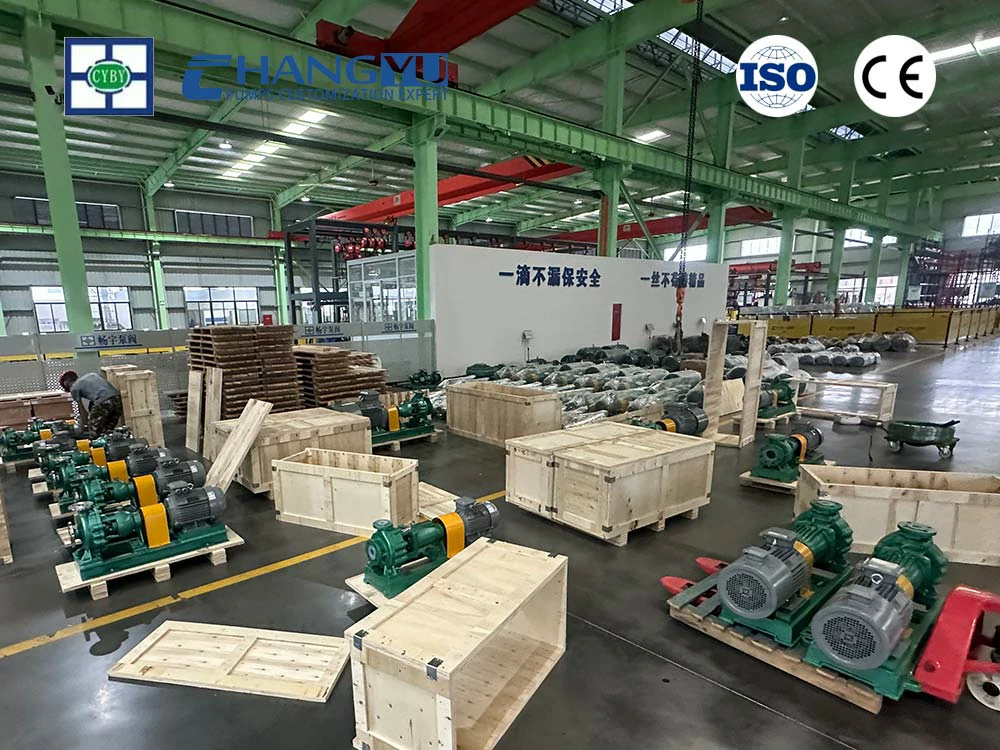
El equipo de ingeniería de Changyu Pump proporciona evaluaciones técnicas personalizadas para aplicaciones de bombas de lodos FGD, que abarcan la caracterización de lodos, la selección de materiales, el dimensionamiento hidráulico y la especificación de sellos. Dos décadas de experiencia en fabricación en los sectores de generación de energía e industrial respaldan cada recomendación.
Contacte a Changyu Pump para una evaluación técnica gratuita →