
Introducción: Los planes de sellado de bombas describen cómo el líquido mantiene lubricado y frío un sello mecánico; la elección correcta depende del fluido, las condiciones de operación, los límites de contaminación y los servicios disponibles en sitio. El Plan 11 necesita líquido limpio adecuado y circulación suficiente, los Planes 21/23 añaden enfriamiento, el Plan 32 suministra un lavado externo, y los Planes 53/54 soportan sellos duales presurizados.
En Bomba ChangYu, iniciamos una consulta sobre una bomba química de acero inoxidable preguntando qué podría impedir que el sello funcione: calor, partículas, cristales o un suministro de líquido poco confiable. Así es como comparamos los planes de sellado de bombas y convertimos “sello mecánico incluido” en una cotización útil.
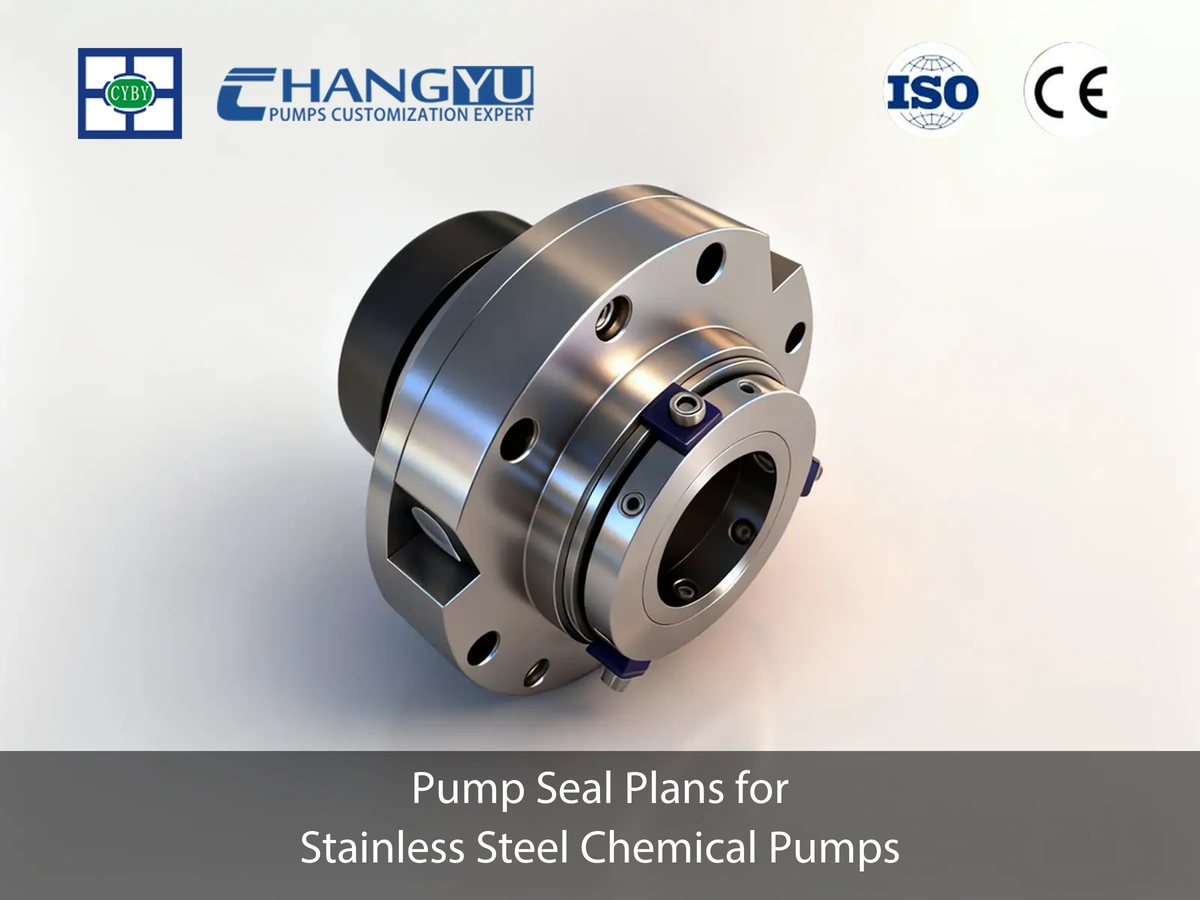
¿Qué hacen realmente los planes de sellado de bombas?
El sello mecánico ayuda a mantener el líquido dentro de la bomba alrededor de su eje giratorio. Sus caras necesitan una película fina de líquido para reducir la fricción y eliminar el calor. La cámara de sellado es el espacio alrededor del sello.
Los planes de sellado de bombas describen la tubería de soporte utilizada para mantener esas condiciones. La API 682 asigna a estos arreglos números familiares, para que compradores y proveedores puedan discutir la misma trayectoria de flujo. Un número de plan identifica el arreglo; el cumplimiento total de la API debe confirmarse por separado si su proyecto lo requiere.
Confirmamos tres puntos antes de recomendar una configuración de sellado:
- ¿Qué llega al sello? ¿El propio líquido bombeado, un lavado externo limpio o líquido entre dos sellos?
- ¿Qué problema resuelve? ¿Demasiado calor, partículas, depósitos o un requisito de control de fugas?
- ¿Puede el sitio soportarlo? ¿Está disponible el agua de enfriamiento, un suministro de líquido limpio u otro servicio requerido siempre que se necesite?
Cuando proponemos una configuración, explicamos cómo se adapta a su líquido, condiciones de operación y servicios en sitio.
Elección de planes de sellado de bombas: comience con su líquido
Al comparar planes de sellado para bombas, comience aquí. Marque los valores desconocidos para confirmación.
| Pregunta | Qué compartir con nosotros | Qué considerar |
|---|---|---|
| ¿Está limpio el líquido? | Contenido de sólidos, tamaño de partícula y si las partículas se sedimentan | Plan 11 donde la presión, la circulación y las condiciones térmicas se adapten al líquido limpio; lavado externo o un sello dual diseñado para servicio sucio |
| ¿Está caliente o es probable que hierva cerca del sello? | Temperaturas de operación, composición y presión | Enfriamiento con Plan 21/23 y una verificación del riesgo de ebullición |
| ¿Puede formar cristales o reaccionar cuando cambian las condiciones? | Qué sucede cuando se enfría, se evapora o permanece durante una parada | Control de temperatura, lavado compatible y prevención de depósitos |
| ¿Puede entrar otro líquido al producto? | Líquido aprobado y adición máxima permitida | Plan 32 solo dentro de ese margen; evaluar la fuga de líquido de barrera por separado |
| ¿Qué fuga puede aceptar el sitio? | Peligros del producto, fuga permitida y requisitos de recolección | Arreglo del sello, monitoreo y drenaje |
Los planes de sellado de bombas deben cubrir la puesta en marcha y la parada, así como la operación normal. Una solución salina puede fluir libremente cuando está caliente pero cristalizarse después de enfriarse. Añadir un enfriador sin verificar ese comportamiento puede crear una obstrucción.
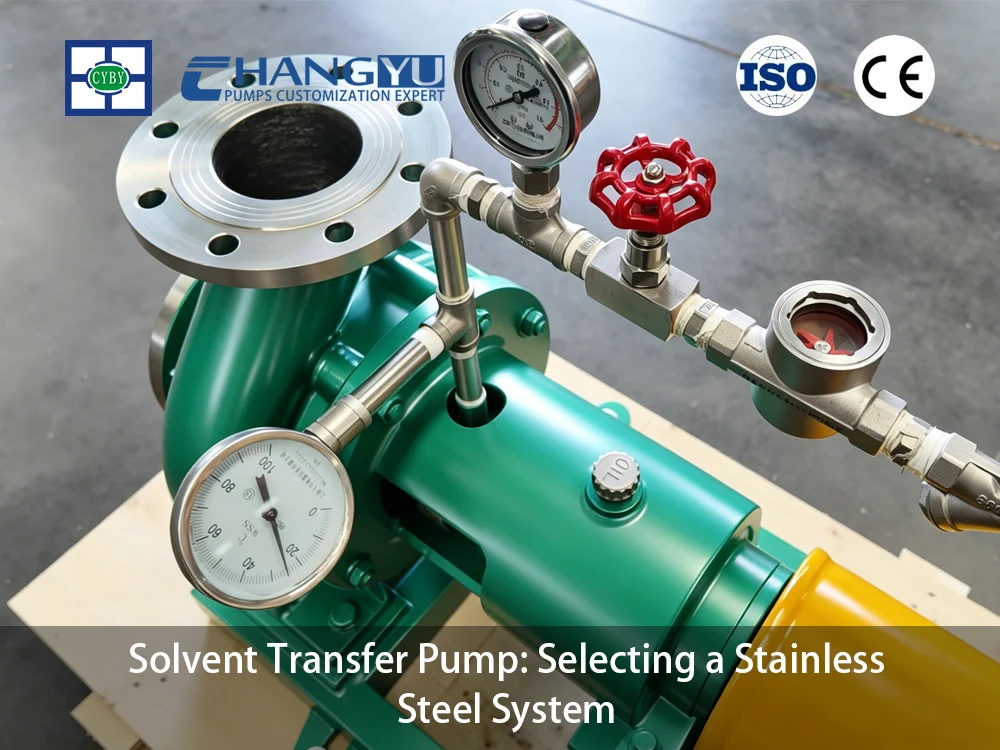
Para servicio con solventes, nuestro Bomba de transferencia de solventes: Selección de un sistema de acero inoxidable cubre compatibilidad, condiciones de succión y requisitos de fuga antes de la selección del sello.
Siga el líquido: cinco trayectorias de flujo simples
Para entender un lavado de sello de bomba, siga el líquido. Estos esquemas muestran planes de sellado de bombas comunes; solicite el diagrama completo de tubería e instrumentación, o P&ID.
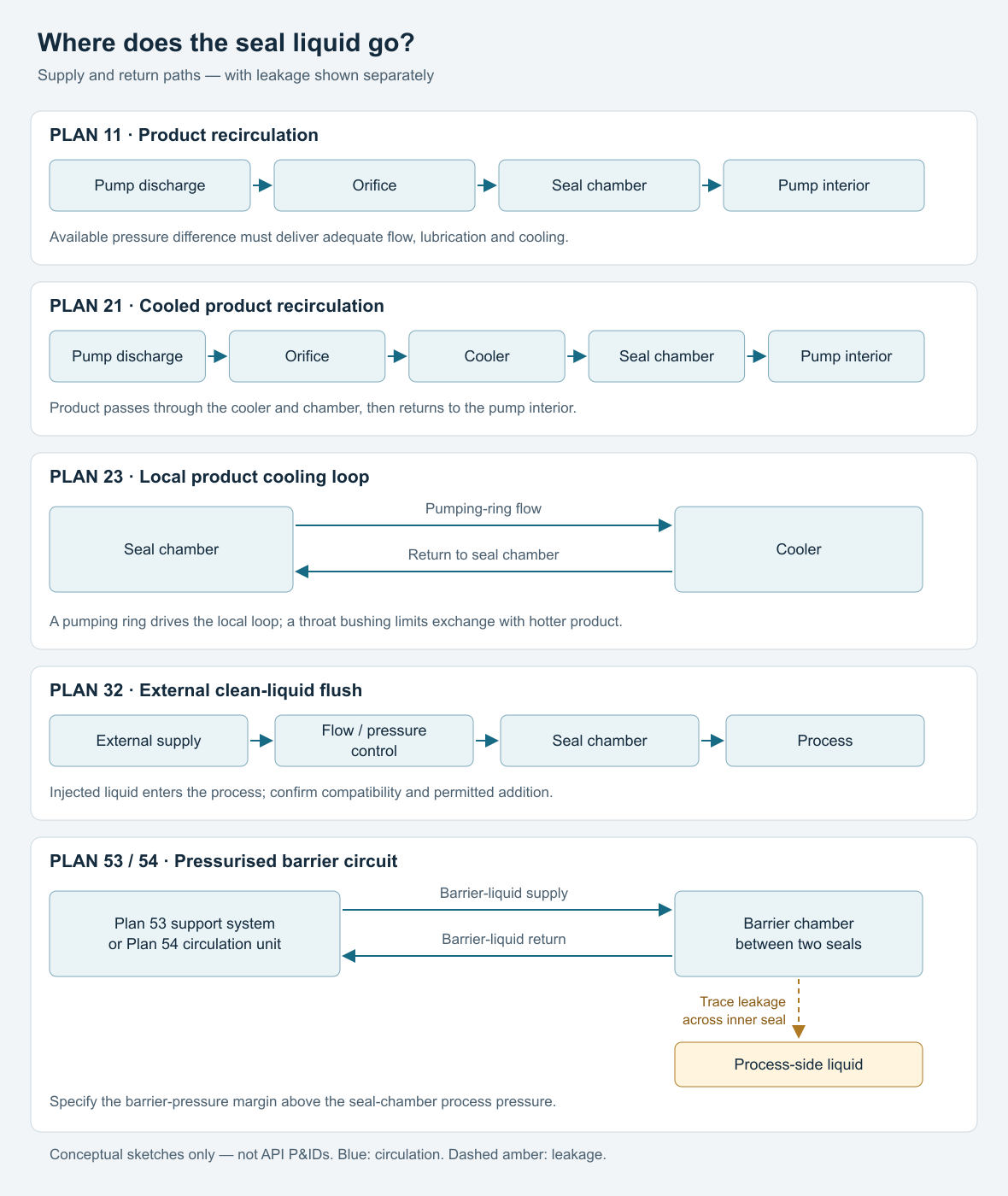
Plan 11: use el líquido bombeado
El Plan 11 se considera comúnmente para servicios de líquido limpio adecuados cuando la presión de descarga de la bomba puede proporcionar circulación adecuada a la cámara de sellado. Verifique la trayectoria de flujo real y el rango de operación para confirmar lubricación y enfriamiento suficientes; la circulación del producto no elimina partículas.
Pregúntenos: “¿Llegará suficiente líquido al sello en todo nuestro rango de operación, incluida la velocidad mínima?”
Planes 21 y 23: añada enfriamiento donde ayude
La diferencia entre estos arreglos de enfriamiento es qué se enfría. El Plan 21 enfría el producto desde la salida de la bomba. El Plan 23 enfría un circuito local de cámara, normalmente impulsado por un anillo de bombeo; un buje de garganta limita la mezcla con producto más caliente. Todavía necesita espacio adecuado, circulación y venteo.
Pregúntenos: “What temperature will this maintain, what cooling water is needed, and could cooling cause crystals?”
Plan 32: bring in a clean external liquid
This support system uses another liquid to protect the faces. For Plan 32, confirm compatibility, permitted addition and enough supply pressure at the pump connection after pipe and valve losses. Even a small continuous flow affects production: 0.5 L/min adds 720 litres per day. This illustrates the impact, not a recommended flow.
Pregúntenos: “What can enter the product, how much, and what happens if the supply stops?”
Plans 53 and 54: support a pressurised dual seal
Plans 53 and 54 provide pressurised barrier liquid between two seals. Its pressure must stay above the process pressure on the seal-chamber side by the margin specified for the selected seal arrangement. For a proposed system, we confirm the required pressure margin and circulation with the seal supplier for normal operation, startup, shutdown and foreseeable utility interruptions. Plan 53A/B/C use different pressurising arrangements; Plan 54 uses an external circulation unit.
Small amounts of barrier liquid can enter the product through the inner seal. Confirm the contamination allowance before accepting a pressurised dual seal.
Pregúntenos: “Which variant fits our duty, what services does it need, and is its expected leakage acceptable?”
Compare common pump seal plans at a glance
Use this table to compare pump seal plans, then confirm the choice against your actual service.
| Plan | Main job | Possible fit | Main buying check |
|---|---|---|---|
| 11 | Circulate pumped liquid to the seal | Clean service with adequate driving pressure | Pressure difference, flow, lubrication and cooling |
| 21 | Cool liquid drawn from the outlet | Clean hot liquids that tolerate cooling | Cooler capacity, water supply and fouling |
| 23 | Cool a local seal-chamber loop | Suitable hot service | Chamber space, pumping ring and circulation |
| 32 | Inject clean external liquid | Dirty or deposit-forming service allowing addition | Compatibility, pressure and dilution |
| 53A/B/C | Supply barrier liquid between dual seals | Service needing clean face lubrication and leakage control | Exact variant, pressure margin and leakage allowance |
| 54 | Supply externally circulated barrier liquid | Service requiring a dedicated support unit | Circulation, cooling and supply-failure response |
| 62 | Treat the outside of the seal with a quench | Leakage that forms crystals or deposits | Suitable medium and safe drainage |
Plan 62 differs from the other pump seal plans here: it treats the atmospheric side, meaning the outside of the seal, using a suitable medium such as water, steam or nitrogen. It can help control deposits, but it does not replace the liquid film or cooling needed inside the seal chamber.
Let Us Help You Choose a Seal Configuration
As a pump supplier, we help you match the pump, seal materials and support requirements to your application. Use the form below to share your liquid composition, temperature, required flow and head, and any limits on leakage or product contamination. We can help you narrow down suitable options and clarify the proposed configuration and auxiliary-equipment supply scope for your quotation.
Correo electrónico: [email protected]
TEL/WA: +86-13651913727
How Stainless Steel Chemical Pumps Affect Seal Plan Selection
A stainless steel casing does not make every part around the seal compatible with the liquid. For corrosive, crystallising or volatile media, we review pump seal plans alongside the casing material: the support system must handle the same chemistry and changing conditions.
Four checks connect the pump specification to the seal selection:
- Coolers and fittings: identify their materials separately. The pump’s stainless steel grade does not establish the grade of its cooler, tubing or valves.
- Seal faces and elastomers: check the face pairing and the rubber sealing parts against the liquid and temperature. A compatible casing cannot compensate for an unsuitable seal component.
- Cooling-water quality: chloride risk depends on the specific stainless steel grade, temperature, stress and water conditions. There is no universal chloride limit for every installation.
- External liquids: check flush and barrier liquids for compatibility with both the process and the equipment, including any permitted contamination.
A seal-face compatibility case: In a case we shared, a new mechanical seal leaked after just three days, and replacements of the same model failed in the same way. The video attributes the damage to static-charge accumulation and discharge at the seal faces in a low-conductivity liquid. It illustrates why face materials and fluid properties should be reviewed alongside flushing and cooling. Any material change should be confirmed by the seal supplier for the actual duty.
For a stainless steel chemical pump such as our CYH series, we check the liquid, temperature, face pairing, elastomers and support requirements together. Casing material alone does not decide the plan. Available seal configurations and auxiliary equipment must be confirmed for the specific model and quotation.
If your specification only says “standard seal,” share your liquid details and required duty with us. We can help clarify the seal configuration and the equipment to include in the quotation; the checklist below identifies what needs confirming.
What We Confirm Before You Order
Before quoting pump seal plans, we review the following items with you and the seal supplier. This helps us define the configuration, supply responsibilities and site connections in the quotation.
| Artículo | What we confirm with you |
|---|---|
| Seal arrangement and pump seal plans | Single or dual seal, exact plan numbers, and any required API compliance or exceptions |
| Pressure and temperature | Minimum, normal and maximum seal-chamber conditions, including startup and shutdown |
| Risk of boiling at the seal | Whether chamber pressure stays sufficiently above the liquid’s vapour pressure at the expected temperature; show the calculation basis |
| Flow and cooling | Required circulation, cooler capacity and cooling-water temperature, pressure, flow and quality |
| External flush or barrier liquid | Approved fluid, required pressure and flow, barrier pressure margin where applicable, contamination allowance and response to supply loss |
| Connections and monitoring | P&ID, connection sizes, materials, vents, drains, instruments and required alarms or shutdown controls |
| Leakage and maintenance | Expected leakage, collection route, spare seal or cartridge and access for servicing |
| What the price includes | Seal, cooler, reservoir or support unit, tubing, fittings, instruments, installation and commissioning responsibilities |
Request gauge or absolute units when checking pressure conditions for pump seal plans. Boiling-risk calculations need consistent absolute pressures; the discharge gauge alone cannot establish the margin.
Pump seal plans need an operating sequence: when must support services start, and how long should they continue after stopping? The pump may remain hot and pressurised with its motor off.
A short requirement you can copy into an enquiry
You can copy this requirement for pump seal plans into an enquiry:
Please identify the seal arrangement and exact piping plans, and provide a piping and instrumentation drawing. Confirm seal-chamber pressure and temperature, the margin against boiling at the seal, required flush or barrier-liquid conditions, and cooling-water needs. State any liquid entering the product, the required monitoring, startup and shutdown sequence, and response to loss of utilities. List all included equipment, buyer-supplied items and any exceptions to the specified standard.
When comparing pump seal plans, look at the installed cost as well as the pump price. A cheaper quotation may leave the cooler, support unit or instruments for you to buy separately.
How Should a Pump Seal Flush Be Specified?
Specify the pump seal flush using its source, composition, available pressure and temperature, required flow and permitted addition to the process. For seal plans for pumps, the drawing should distinguish product recirculation, an external flush and a barrier-liquid circuit; these have different effects on contamination and utilities.
Ask the supplier to confirm how the proposed pump seal plans maintain the required conditions during normal running, startup and shutdown. Include the response to loss of the flush or cooling supply, and identify which instruments and auxiliary equipment are included in the quotation.
Preguntas frecuentes
Does “mechanical seal included” mean the flush system is included?
No. Ask us to identify the exact plan number and provide an itemised equipment list in your quotation. The seal, tubing, cooler and support unit may have different supply responsibilities.
Is Plan 21 always better than Plan 11?
No. Plan 21 adds cooling but also needs a suitable utility supply. Choose it only where cooling helps the liquid and seal; compare Plan 23 for suitable hot service.
Can a dual seal be used when dilution is prohibited?
Check the contamination allowance. Pressurised barrier systems can introduce small amounts of liquid into the product. Other seal arrangements have different leakage behaviour and must be assessed against both product-quality and emissions requirements.
Does a stainless steel pump need a special seal plan?
Pump seal plans depend on the liquid and operating conditions. Stainless steel adds compatibility checks for the support equipment.
Get a seal configuration review for your pump
To review pump seal plans for your application, send us the liquid composition, operating temperature, required flow and head, and any limits on leakage or product contamination. If some data is unavailable, share what you have and identify what still needs confirmation.
For enquiries about seal plans for pumps, useful supporting details include the existing model or nameplate photo, suction conditions and available cooling water or flush liquid. If a seal has failed, add photographs, the piping sketch and when the problem occurs.
Correo electrónico: [email protected]
TEL/WA: +86-13651913727
You can also review our CYH Series stainless steel centrifugal chemical pump y gama de bombas de acero inoxidable before requesting a configuration quotation. CYH lists single and double mechanical seals with silicon carbide or tungsten carbide options; confirm the face pairing, elastomers and auxiliary equipment for your model in the actual quotation.
Before confirming pump seal plans, agree the pump seal flush requirements, contamination allowance and auxiliary-equipment supply scope. Clear duty data helps us review seal plans for pumps together with the liquid compatibility and operating conditions.
References and further reading
- American Petroleum Institute — API Standard 682: Pumps—Shaft Sealing Systems for Centrifugal and Rotary Pumps. Official public scope and contents overview; use the edition specified for your project.
- Hydraulic Institute — Mechanical Seals for the Pump Industry: Selection, Installation, Maintenance, and Troubleshooting, 2nd Edition. Guidebook information and further reading on seal selection and support systems.