
Giới thiệu: Các phương án làm kín bơm mô tả cách chất lỏng giữ cho phớt cơ khí được bôi trơn và làm mát; lựa chọn đúng phụ thuộc vào chất lỏng, điều kiện vận hành, giới hạn nhiễm bẩn và dịch vụ sẵn có tại hiện trường. Phương án 11 cần chất lỏng sạch phù hợp và tuần hoàn đầy đủ, Phương án 21/23 bổ sung làm mát, Phương án 32 cung cấp dòng xả bên ngoài, và Phương án 53/54 hỗ trợ phớt kép có áp suất.
Tại Bơm ChangYu, chúng tôi bắt đầu yêu cầu về bơm hóa chất thép không gỉ bằng cách hỏi điều gì có thể khiến phớt ngừng hoạt động: nhiệt, hạt, tinh thể hoặc nguồn cung cấp chất lỏng không đáng tin cậy. Đây là cách chúng tôi so sánh các phương án làm kín bơm và biến “đã bao gồm phớt cơ khí” thành một báo giá hữu ích.
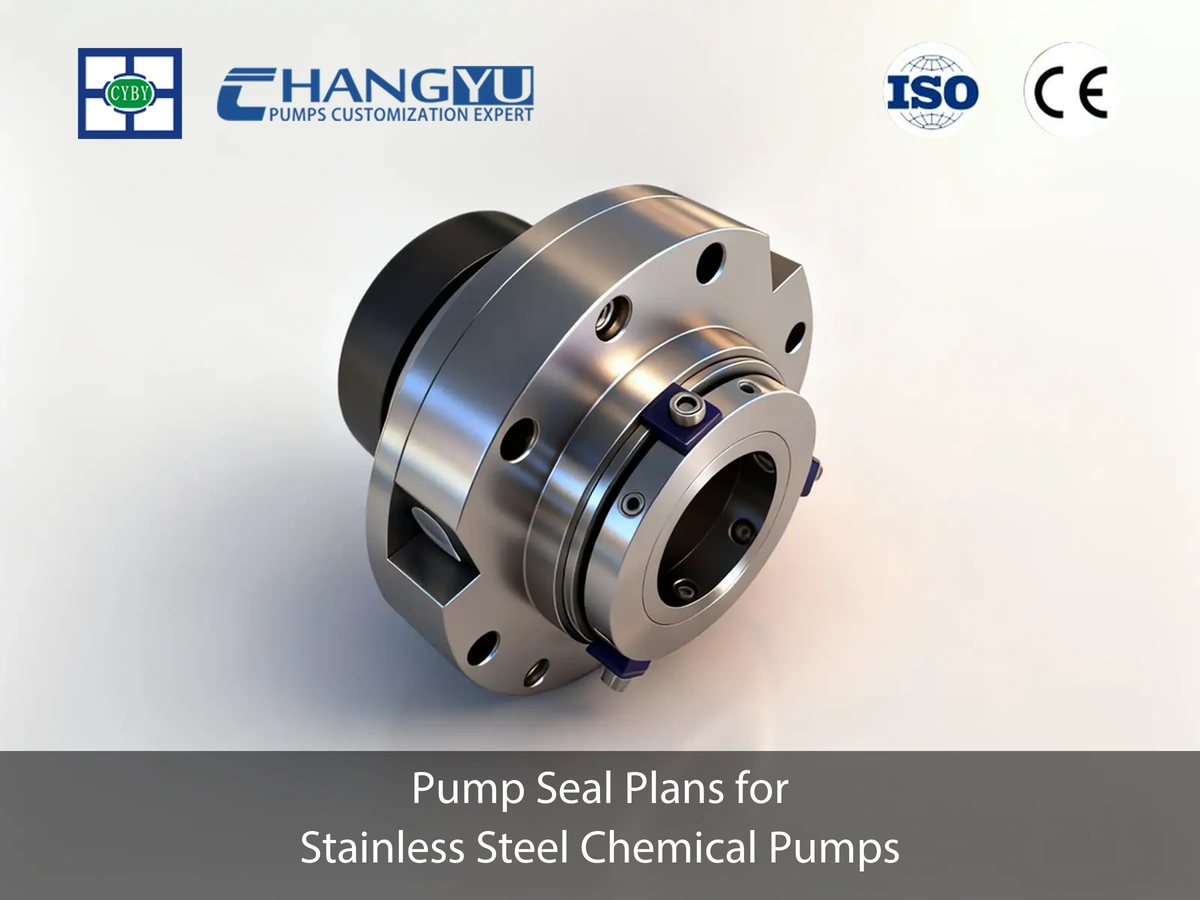
Các phương án làm kín bơm thực sự làm gì?
Phớt cơ khí giúp giữ chất lỏng bên trong bơm quanh trục quay của nó. Các mặt phớt cần một màng chất lỏng mỏng để giảm ma sát và loại bỏ nhiệt. buồng phớt là không gian xung quanh phớt.
Các phương án làm kín bơm mô tả đường ống hỗ trợ được sử dụng để duy trì các điều kiện đó. API 682 cung cấp cho các bố trí này những con số quen thuộc, để người mua và nhà cung cấp có thể thảo luận về cùng một đường dòng chảy. Một số phương án xác định bố trí; việc tuân thủ API đầy đủ phải được xác nhận riêng nếu dự án của bạn yêu cầu.
Chúng tôi xác nhận ba điểm trước khi đề xuất cấu hình phớt:
- Điều gì tiếp xúc với phớt? Chính chất lỏng được bơm, dòng xả bên ngoài sạch hoặc chất lỏng giữa hai phớt?
- Nó giải quyết vấn đề gì? Quá nhiều nhiệt, hạt, cặn lắng hoặc yêu cầu kiểm soát rò rỉ?
- Hiện trường có thể hỗ trợ nó không? Nước làm mát, nguồn cung cấp chất lỏng sạch hoặc dịch vụ cần thiết khác có sẵn bất cứ khi nào cần không?
Khi chúng tôi đề xuất một cấu hình, chúng tôi giải thích cách nó phù hợp với chất lỏng, điều kiện vận hành và dịch vụ tại hiện trường của bạn.
Chọn phương án làm kín bơm: bắt đầu với chất lỏng của bạn
Khi so sánh các phương án làm kín cho bơm, hãy bắt đầu ở đây. Đánh dấu các giá trị chưa biết để xác nhận.
| Câu hỏi | Những gì cần chia sẻ với chúng tôi | Những gì cần cân nhắc |
|---|---|---|
| Chất lỏng có sạch không? | Hàm lượng chất rắn, kích thước hạt và liệu các hạt có lắng không | Phương án 11 khi áp suất, tuần hoàn và điều kiện nhiệt phù hợp với chất lỏng sạch; dòng xả bên ngoài hoặc phớt kép được thiết kế cho dịch vụ bẩn |
| Nó có nóng hoặc có khả năng sôi gần phớt không? | Nhiệt độ vận hành, thành phần và áp suất | Làm mát với Phương án 21/23 và kiểm tra nguy cơ sôi |
| Nó có thể tạo tinh thể hoặc phản ứng khi điều kiện thay đổi không? | Điều gì xảy ra khi nó nguội đi, bay hơi hoặc lưu lại trong thời gian ngừng hoạt động | Kiểm soát nhiệt độ, dòng xả tương thích và ngăn ngừa cặn lắng |
| Chất lỏng khác có thể xâm nhập vào sản phẩm không? | Chất lỏng được phê duyệt và lượng bổ sung tối đa được phép | Phương án 32 chỉ trong mức cho phép đó; đánh giá rò rỉ chất lỏng ngăn cách riêng |
| Hiện trường có thể chấp nhận mức rò rỉ nào? | Mối nguy của sản phẩm, mức rò rỉ được phép và yêu cầu thu gom | Bố trí phớt, giám sát và thoát nước |
Các phương án làm kín bơm nên bao gồm khởi động và dừng máy cũng như vận hành bình thường. Dung dịch muối có thể chảy tự do khi ấm nhưng kết tinh sau khi nguội. Thêm bộ làm mát mà không kiểm tra hành vi đó có thể tạo ra tắc nghẽn.
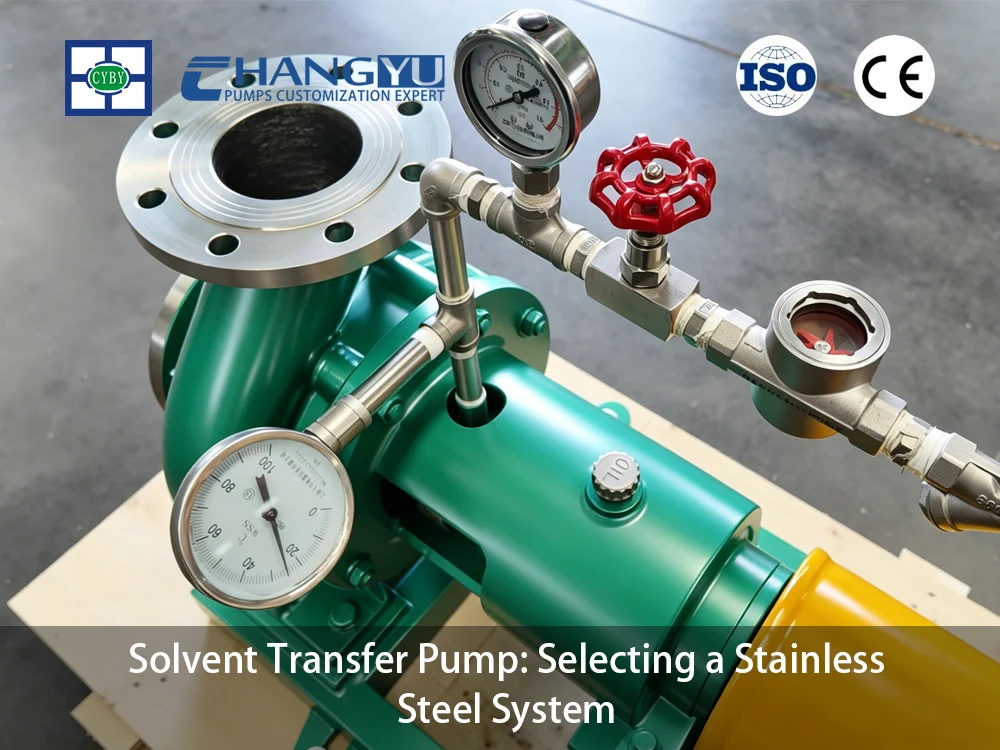
Đối với nhiệm vụ dung môi, chúng tôi Bơm chuyển dung môi: Lựa chọn hệ thống thép không gỉ bao gồm tính tương thích, điều kiện hút và yêu cầu rò rỉ trước khi chọn phớt.
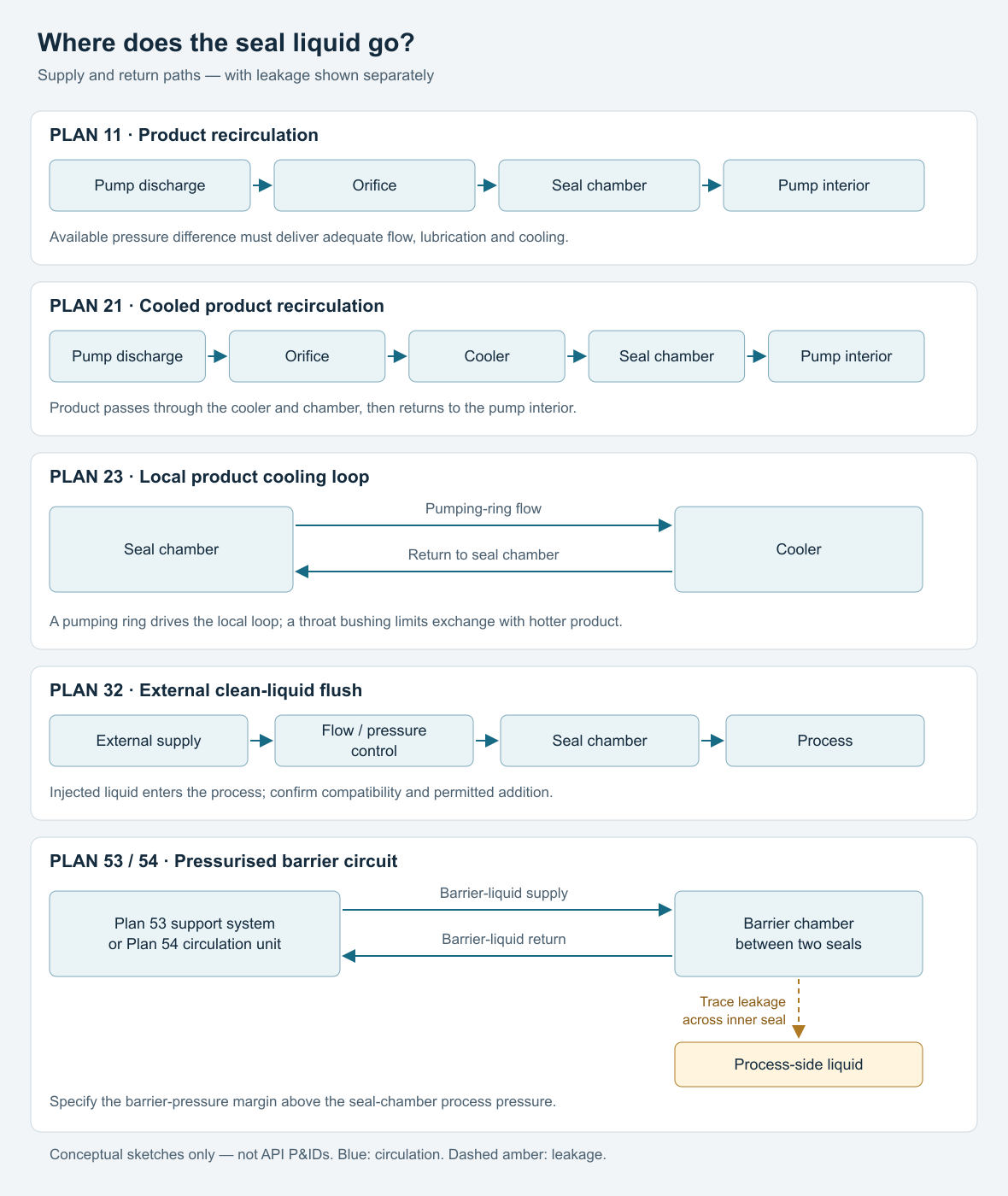
Theo dõi chất lỏng: năm đường dòng chảy đơn giản
Để hiểu dòng xả làm kín bơm, hãy theo dõi chất lỏng. Các bản phác thảo này hiển thị các phương án làm kín bơm phổ biến; yêu cầu bản vẽ đường ống và thiết bị đo lường đầy đủ, hoặc P&ID.
Phương án 11: sử dụng chất lỏng được bơm
Phương án 11 thường được xem xét cho các dịch vụ chất lỏng sạch phù hợp khi áp suất xả của bơm có thể cung cấp tuần hoàn đầy đủ đến buồng phớt. Kiểm tra đường dòng chảy thực tế và phạm vi vận hành để xác nhận đủ bôi trơn và làm mát; tuần hoàn sản phẩm không loại bỏ hạt.
Hỏi chúng tôi: “Liệu đủ chất lỏng đến phớt trong toàn bộ phạm vi vận hành của chúng tôi, bao gồm tốc độ tối thiểu?”
Phương án 21 và 23: thêm làm mát khi có ích
Sự khác biệt giữa các bố trí làm mát này là những gì được làm mát. Phương án 21 làm mát sản phẩm từ đầu ra của bơm. Phương án 23 làm mát vòng tuần hoàn buồng cục bộ, thường được dẫn động bởi vòng bơm; ống lót cổ hút hạn chế trộn với sản phẩm nóng hơn. Nó vẫn cần không gian phù hợp, tuần hoàn và thông hơi.
Hỏi chúng tôi: “What temperature will this maintain, what cooling water is needed, and could cooling cause crystals?”
Plan 32: bring in a clean external liquid
This support system uses another liquid to protect the faces. For Plan 32, confirm compatibility, permitted addition and enough supply pressure at the pump connection after pipe and valve losses. Even a small continuous flow affects production: 0.5 L/min adds 720 litres per day. This illustrates the impact, not a recommended flow.
Hỏi chúng tôi: “What can enter the product, how much, and what happens if the supply stops?”
Plans 53 and 54: support a pressurised dual seal
Plans 53 and 54 provide pressurised barrier liquid between two seals. Its pressure must stay above the process pressure on the seal-chamber side by the margin specified for the selected seal arrangement. For a proposed system, we confirm the required pressure margin and circulation with the seal supplier for normal operation, startup, shutdown and foreseeable utility interruptions. Plan 53A/B/C use different pressurising arrangements; Plan 54 uses an external circulation unit.
Small amounts of barrier liquid can enter the product through the inner seal. Confirm the contamination allowance before accepting a pressurised dual seal.
Hỏi chúng tôi: “Which variant fits our duty, what services does it need, and is its expected leakage acceptable?”
Compare common pump seal plans at a glance
Use this table to compare pump seal plans, then confirm the choice against your actual service.
| Plan | Main job | Possible fit | Main buying check |
|---|---|---|---|
| 11 | Circulate pumped liquid to the seal | Clean service with adequate driving pressure | Pressure difference, flow, lubrication and cooling |
| 21 | Cool liquid drawn from the outlet | Clean hot liquids that tolerate cooling | Cooler capacity, water supply and fouling |
| 23 | Cool a local seal-chamber loop | Suitable hot service | Chamber space, pumping ring and circulation |
| 32 | Inject clean external liquid | Dirty or deposit-forming service allowing addition | Compatibility, pressure and dilution |
| 53A/B/C | Supply barrier liquid between dual seals | Service needing clean face lubrication and leakage control | Exact variant, pressure margin and leakage allowance |
| 54 | Supply externally circulated barrier liquid | Service requiring a dedicated support unit | Circulation, cooling and supply-failure response |
| 62 | Treat the outside of the seal with a quench | Leakage that forms crystals or deposits | Suitable medium and safe drainage |
Plan 62 differs from the other pump seal plans here: it treats the atmospheric side, meaning the outside of the seal, using a suitable medium such as water, steam or nitrogen. It can help control deposits, but it does not replace the liquid film or cooling needed inside the seal chamber.
Let Us Help You Choose a Seal Configuration
As a pump supplier, we help you match the pump, seal materials and support requirements to your application. Use the form below to share your liquid composition, temperature, required flow and head, and any limits on leakage or product contamination. We can help you narrow down suitable options and clarify the proposed configuration and auxiliary-equipment supply scope for your quotation.
Email: [email protected]
TEL/WA: +86-13651913727
How Stainless Steel Chemical Pumps Affect Seal Plan Selection
A stainless steel casing does not make every part around the seal compatible with the liquid. For corrosive, crystallising or volatile media, we review pump seal plans alongside the casing material: the support system must handle the same chemistry and changing conditions.
Four checks connect the pump specification to the seal selection:
- Coolers and fittings: identify their materials separately. The pump’s stainless steel grade does not establish the grade of its cooler, tubing or valves.
- Seal faces and elastomers: check the face pairing and the rubber sealing parts against the liquid and temperature. A compatible casing cannot compensate for an unsuitable seal component.
- Cooling-water quality: chloride risk depends on the specific stainless steel grade, temperature, stress and water conditions. There is no universal chloride limit for every installation.
- External liquids: check flush and barrier liquids for compatibility with both the process and the equipment, including any permitted contamination.
A seal-face compatibility case: In a case we shared, a new mechanical seal leaked after just three days, and replacements of the same model failed in the same way. The video attributes the damage to static-charge accumulation and discharge at the seal faces in a low-conductivity liquid. It illustrates why face materials and fluid properties should be reviewed alongside flushing and cooling. Any material change should be confirmed by the seal supplier for the actual duty.
For a stainless steel chemical pump such as our CYH series, we check the liquid, temperature, face pairing, elastomers and support requirements together. Casing material alone does not decide the plan. Available seal configurations and auxiliary equipment must be confirmed for the specific model and quotation.
If your specification only says “standard seal,” share your liquid details and required duty with us. We can help clarify the seal configuration and the equipment to include in the quotation; the checklist below identifies what needs confirming.
What We Confirm Before You Order
Before quoting pump seal plans, we review the following items with you and the seal supplier. This helps us define the configuration, supply responsibilities and site connections in the quotation.
| Mặt hàng | What we confirm with you |
|---|---|
| Seal arrangement and pump seal plans | Single or dual seal, exact plan numbers, and any required API compliance or exceptions |
| Pressure and temperature | Minimum, normal and maximum seal-chamber conditions, including startup and shutdown |
| Risk of boiling at the seal | Whether chamber pressure stays sufficiently above the liquid’s vapour pressure at the expected temperature; show the calculation basis |
| Flow and cooling | Required circulation, cooler capacity and cooling-water temperature, pressure, flow and quality |
| External flush or barrier liquid | Approved fluid, required pressure and flow, barrier pressure margin where applicable, contamination allowance and response to supply loss |
| Connections and monitoring | P&ID, connection sizes, materials, vents, drains, instruments and required alarms or shutdown controls |
| Leakage and maintenance | Expected leakage, collection route, spare seal or cartridge and access for servicing |
| What the price includes | Seal, cooler, reservoir or support unit, tubing, fittings, instruments, installation and commissioning responsibilities |
Request gauge or absolute units when checking pressure conditions for pump seal plans. Boiling-risk calculations need consistent absolute pressures; the discharge gauge alone cannot establish the margin.
Pump seal plans need an operating sequence: when must support services start, and how long should they continue after stopping? The pump may remain hot and pressurised with its motor off.
A short requirement you can copy into an enquiry
You can copy this requirement for pump seal plans into an enquiry:
Please identify the seal arrangement and exact piping plans, and provide a piping and instrumentation drawing. Confirm seal-chamber pressure and temperature, the margin against boiling at the seal, required flush or barrier-liquid conditions, and cooling-water needs. State any liquid entering the product, the required monitoring, startup and shutdown sequence, and response to loss of utilities. List all included equipment, buyer-supplied items and any exceptions to the specified standard.
When comparing pump seal plans, look at the installed cost as well as the pump price. A cheaper quotation may leave the cooler, support unit or instruments for you to buy separately.
How Should a Pump Seal Flush Be Specified?
Specify the pump seal flush using its source, composition, available pressure and temperature, required flow and permitted addition to the process. For seal plans for pumps, the drawing should distinguish product recirculation, an external flush and a barrier-liquid circuit; these have different effects on contamination and utilities.
Ask the supplier to confirm how the proposed pump seal plans maintain the required conditions during normal running, startup and shutdown. Include the response to loss of the flush or cooling supply, and identify which instruments and auxiliary equipment are included in the quotation.
Câu hỏi thường gặp
Does “mechanical seal included” mean the flush system is included?
No. Ask us to identify the exact plan number and provide an itemised equipment list in your quotation. The seal, tubing, cooler and support unit may have different supply responsibilities.
Is Plan 21 always better than Plan 11?
No. Plan 21 adds cooling but also needs a suitable utility supply. Choose it only where cooling helps the liquid and seal; compare Plan 23 for suitable hot service.
Can a dual seal be used when dilution is prohibited?
Check the contamination allowance. Pressurised barrier systems can introduce small amounts of liquid into the product. Other seal arrangements have different leakage behaviour and must be assessed against both product-quality and emissions requirements.
Does a stainless steel pump need a special seal plan?
Pump seal plans depend on the liquid and operating conditions. Stainless steel adds compatibility checks for the support equipment.
Get a seal configuration review for your pump
To review pump seal plans for your application, send us the liquid composition, operating temperature, required flow and head, and any limits on leakage or product contamination. If some data is unavailable, share what you have and identify what still needs confirmation.
For enquiries about seal plans for pumps, useful supporting details include the existing model or nameplate photo, suction conditions and available cooling water or flush liquid. If a seal has failed, add photographs, the piping sketch and when the problem occurs.
Email: [email protected]
TEL/WA: +86-13651913727
You can also review our CYH Series stainless steel centrifugal chemical pump và dải bơm thép không gỉ before requesting a configuration quotation. CYH lists single and double mechanical seals with silicon carbide or tungsten carbide options; confirm the face pairing, elastomers and auxiliary equipment for your model in the actual quotation.
Before confirming pump seal plans, agree the pump seal flush requirements, contamination allowance and auxiliary-equipment supply scope. Clear duty data helps us review seal plans for pumps together with the liquid compatibility and operating conditions.
References and further reading
- American Petroleum Institute — API Standard 682: Pumps—Shaft Sealing Systems for Centrifugal and Rotary Pumps. Official public scope and contents overview; use the edition specified for your project.
- Hydraulic Institute — Mechanical Seals for the Pump Industry: Selection, Installation, Maintenance, and Troubleshooting, 2nd Edition. Guidebook information and further reading on seal selection and support systems.