
When two pumps are both described as stainless steel, it is easy to assume that the main difference is their size or price. In practice, the more useful questions are where the liquid comes from, whether it contains solids, and what happens if the shaft seal leaks. A pump transferring clean process water from a flooded tank has a different job from one lifting solvent from a lower vessel or moving slurry through a production line. When we compare stainless steel industrial centrifugal pumps, we start with those differences, not with the alloy name alone.
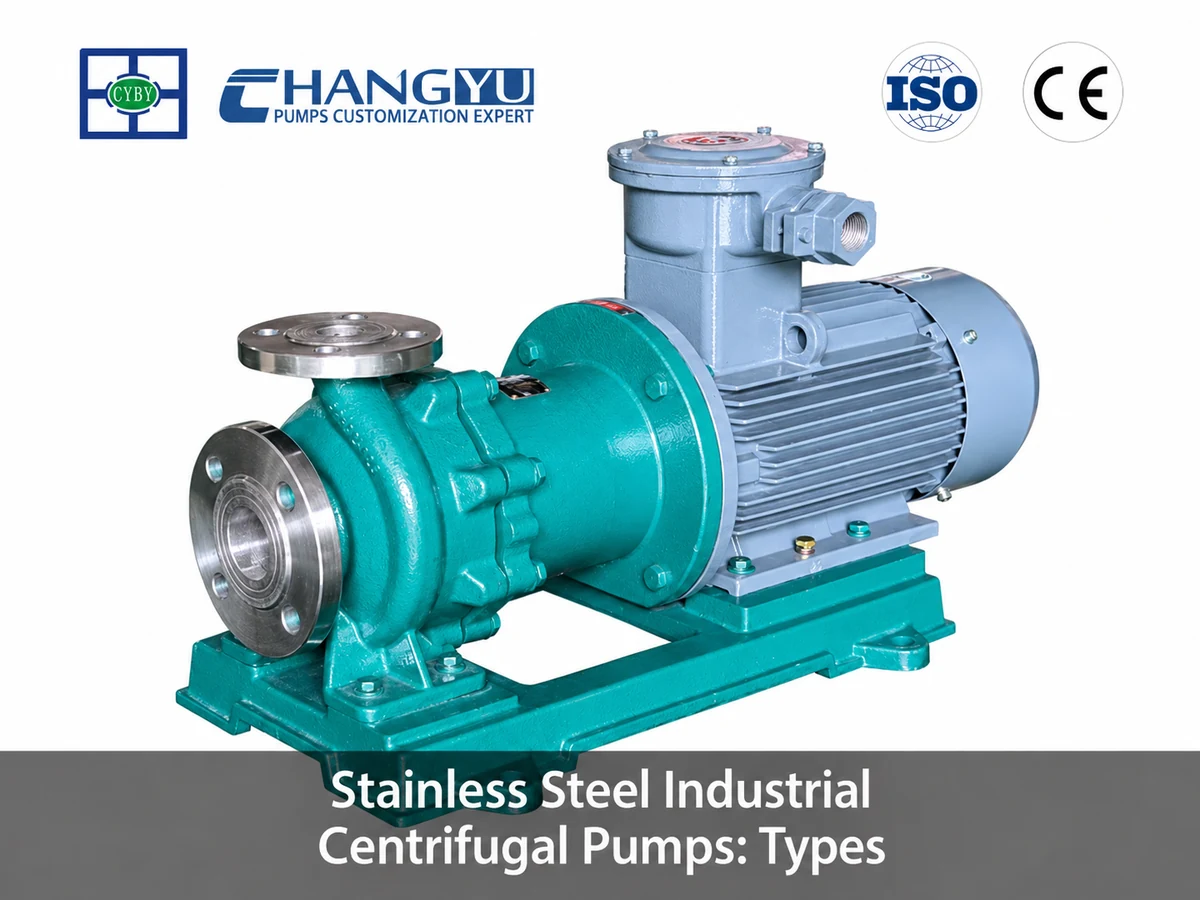
De Changyu stainless steel centrifugal pumps include horizontal mechanically sealed pumps, magnetic-drive pumps, self-priming magnetic pumps, vertical immersed pumps, y bombas para lodos. These are not five completely separate pumping principles: some descriptions refer to the installation, others to the drive or the liquid being handled. Understanding that distinction makes product comparisons much easier and helps explain why stainless steel industrial centrifugal pumps with similar flow and head ratings can need very different installation and maintenance arrangements.
How Stainless Steel Industrial Centrifugal Pumps Are Classified
A stainless steel centrifugal pump transfers energy through a rotating impeller. Within that working principle, the number of stages, impeller geometry, drive arrangement, and installation can change. “Single-stage” means one pumping stage; “horizontal” describes the shaft orientation; “magnetic-drive” describes torque transmission; and “slurry” identifies the kind of service the design addresses. We recommend reading these descriptions together when comparing stainless steel industrial centrifugal pumps, rather than treating each one as a competing category.
| Descripción | The question it answers | What to look at next |
|---|---|---|
| Single-stage or multistage | How is the required head developed? | Performance curve and operating range |
| Mechanically sealed or magnetic-drive | How does the drive connect to the liquid-containing assembly? | Sealing, lubrication and cooling |
| Horizontal or vertical immersed | Where are the pump and motor installed? | Liquid levels, piping and maintenance access |
| Clean-liquid or slurry configuration | What liquid and particles must pass through? | Impeller passages, wear and materials |
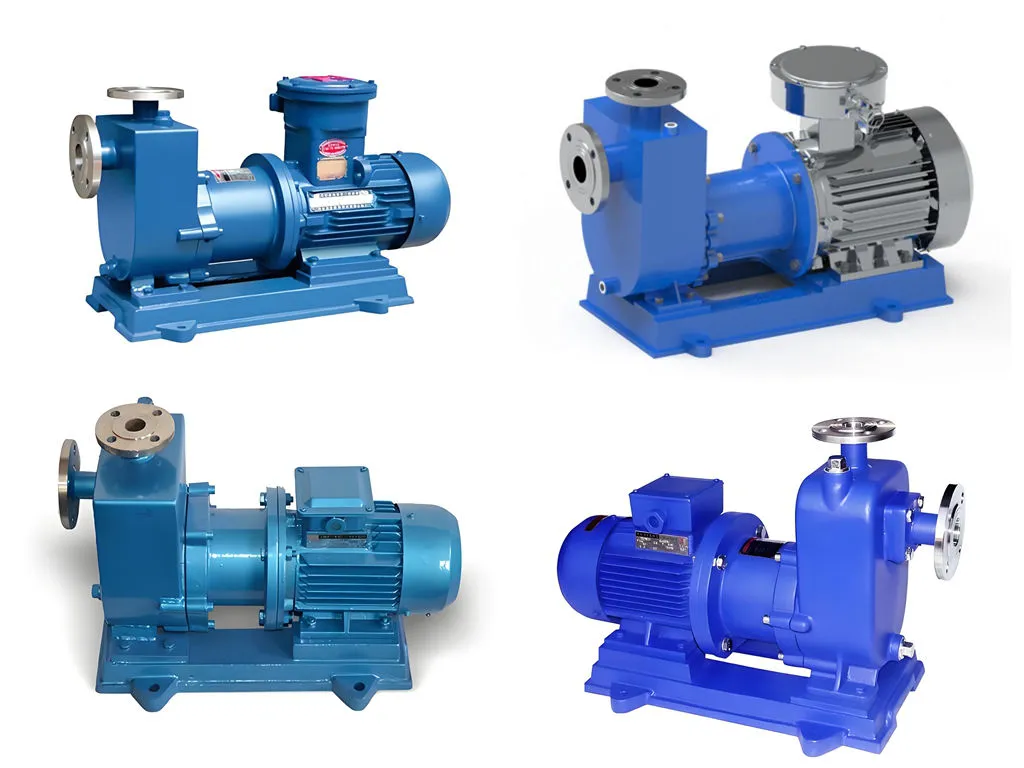
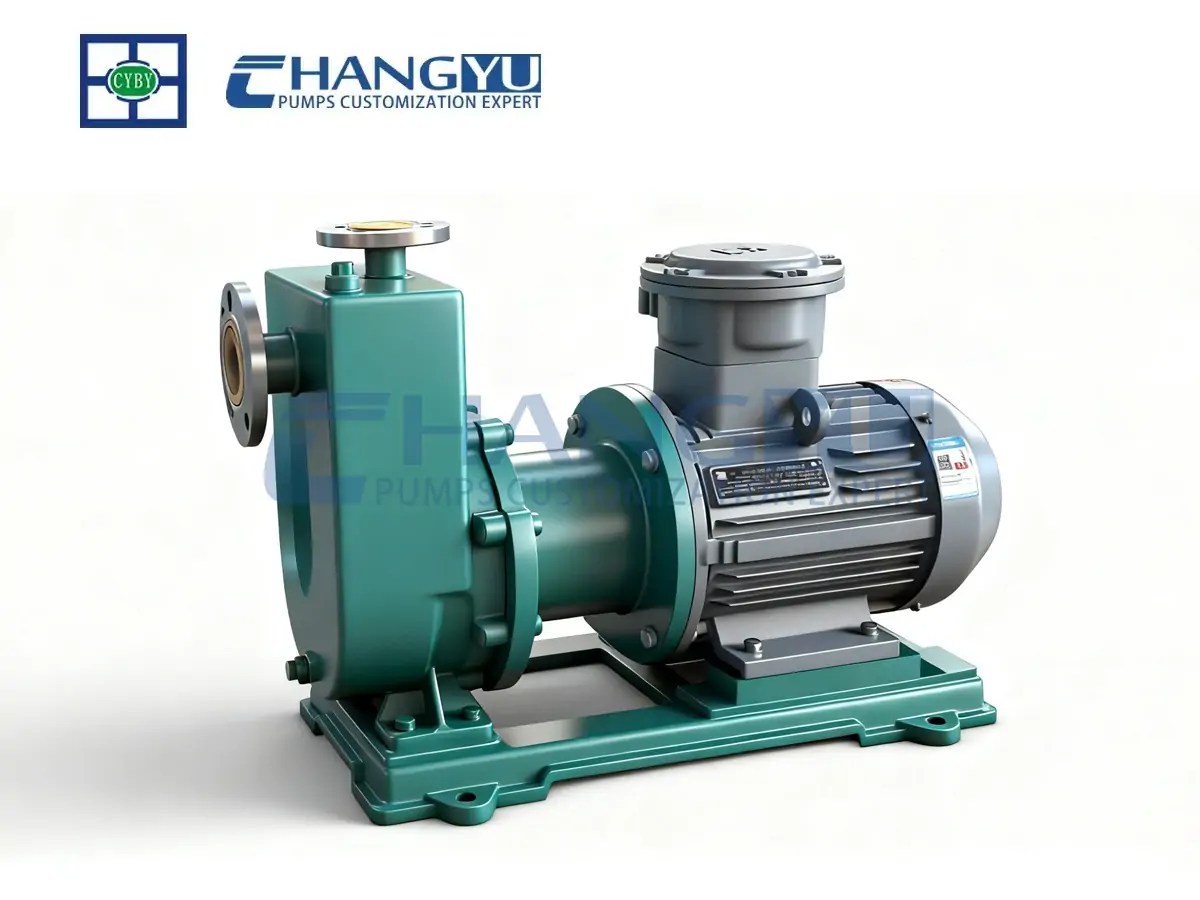
The distinction is particularly useful with self-priming magnetic pumps. Magnetic coupling transfers power across a stationary containment shell, while the self-priming structure helps remove air from the suction line before liquid delivery begins. Changyu’s CQZ series combines both features. It remains a centrifugal pump, so adding self-priming to stainless steel industrial centrifugal pumps does not change their fundamental working principle or remove their need for suitable inlet conditions.
Horizontal Single-Stage Pumps: General Transfer or Chemical Service?
What CYA and CYH Have in Common—and Where They Differ
Horizontal single-stage pumps are a familiar choice for continuous transfer and circulation because the motor, coupling arrangement, and servicing points can be accessed above floor level. The CYA product page describes clean water and liquids with similar properties, without solid particles, and offers different materials and sealing configurations. Within stainless steel industrial centrifugal pumps, this makes the stainless versions of CYA a useful starting point for appropriate clean-liquid duties; it does not turn every CYA configuration into a universal chemical pump.
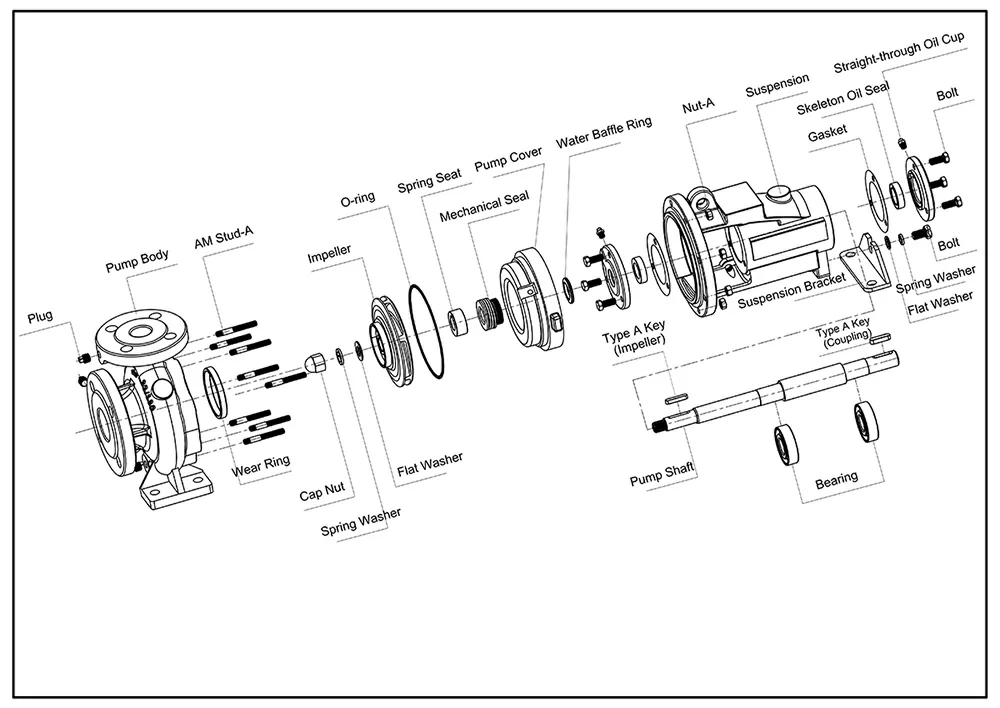
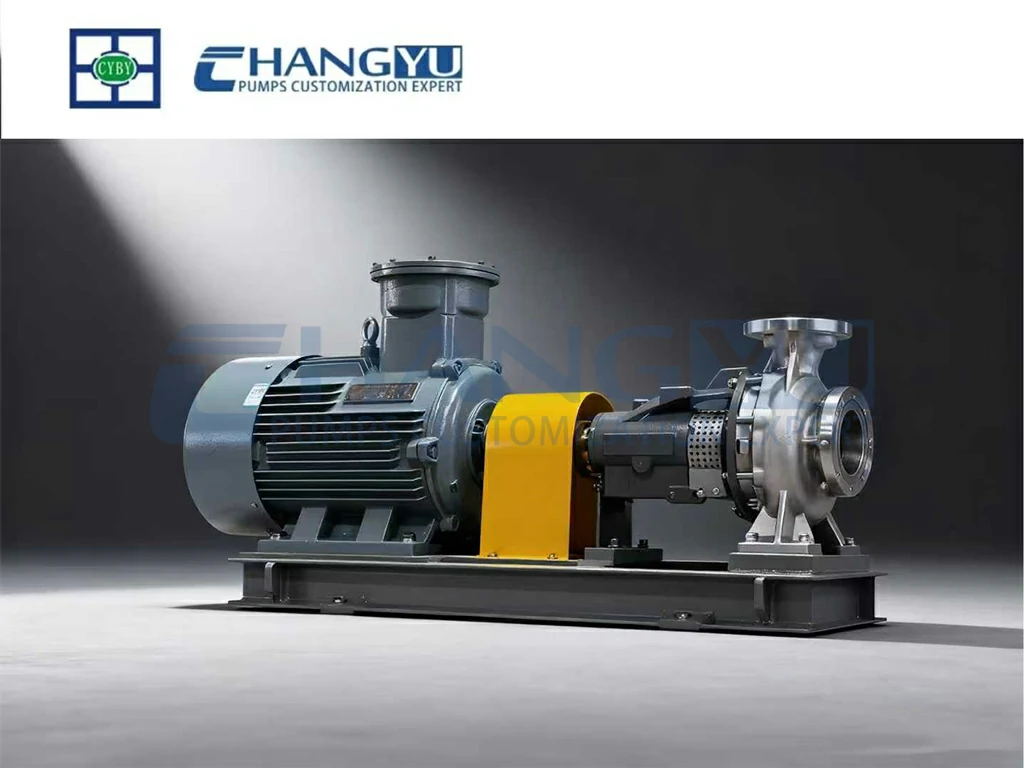
El Serie CYH is presented for chemical process transfer, with a horizontal, single-stage, single-suction arrangement and mechanical-seal options. Here the seal environment matters as much as the casing alloy. A liquid may remain manageable inside the pump but form deposits near the seal, or expose the seal to a different condition during cleaning. A stainless steel chemical pump consequently needs its casing, seal faces, secondary seals, and any supporting liquid considered together. This is a more meaningful comparison between stainless steel industrial centrifugal pumps than simply saying that one series is “more corrosion-resistant.”
Maintenance layout can also affect the choice. Both product pages describe rear-access or back-pull-out arrangements, but the actual removal space depends on the supplied configuration. A pump positioned tightly against a wall may fit the piping layout yet leave insufficient room to service its rotating assembly. When laying out stainless steel industrial centrifugal pumps, account for component removal and pipe support at the same time as the footprint; those practical details influence whether routine maintenance becomes a straightforward job or an extended shutdown.
When a Multistage Pump Deserves a Look
A single-stage design is not automatically inferior to a multistage design. The question is how efficiently the proposed pump delivers the required flow and head. A stainless steel multistage centrifugal pump develops head through successive impellers and may suit duties requiring that arrangement, but it also introduces additional components and clearances. For stainless steel industrial centrifugal pumps, stage count belongs in a curve-based comparison rather than a ranking from basic to advanced.
If a single-stage pump comfortably meets the duty within its recommended operating range, additional stages may offer no useful advantage. Conversely, a demanding head requirement may justify a multistage design instead of forcing a single-stage unit into an unsuitable operating point. Solids and maintenance requirements remain part of that decision. We explain the distinction here without recommending a Changyu multistage model that has not been verified in the product range.
If you’d like to learn more about stainless steel industrial pumps, contact us today to speak with one of our professional engineers.
Correo electrónico: [email protected]
TEL/WA: +86-13651913727
Magnetic Drive: Removing the Conventional Shaft-Seal Leakage Point
What Changes Inside the Pump
A mechanically sealed pump has a rotating shaft crossing the stationary liquid-containing boundary. A magnetic-drive pump instead uses an outer magnetic assembly to drive an inner assembly through a stationary containment shell. The conventional dynamic shaft seal at that boundary is removed. For stainless steel industrial centrifugal pumps handling volatile, hazardous, or valuable liquids, that can be an important reason to consider magnetic drive—but the shell, static seals, and piping joints still form part of the system that retains the liquid.
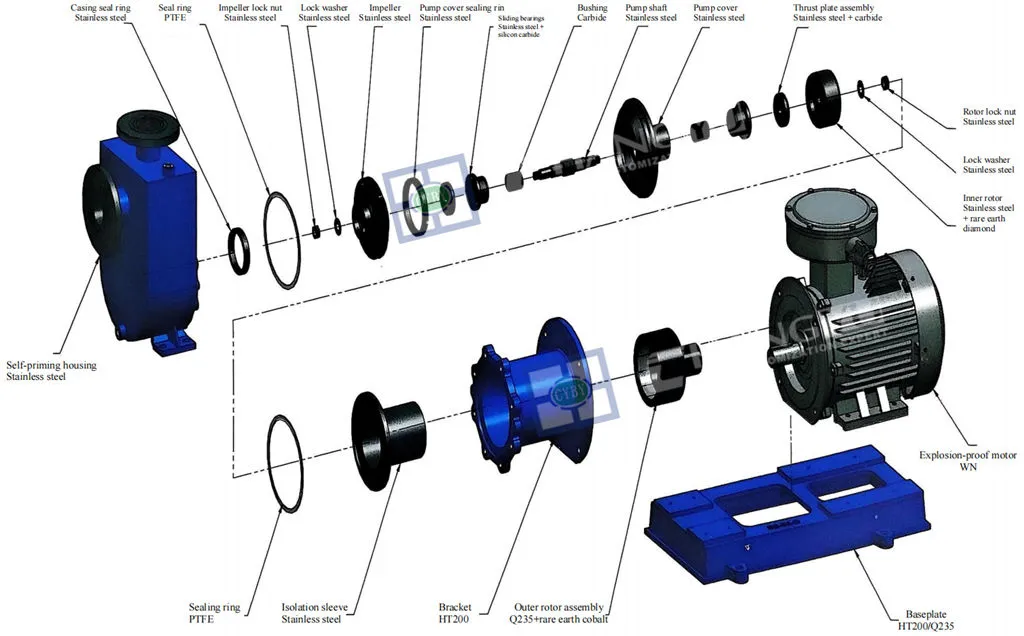
The change also moves the maintenance focus. Many magnetic designs use the pumped liquid to lubricate internal bearings and carry away heat, so interruption of that circulation can be damaging even without a mechanical shaft seal to replace. A stainless steel magnetic drive pump handling an apparently clean solvent still needs an assessment of vapor formation, minimum flow, and loss of liquid. Ferromagnetic particles and abrasive solids raise further questions because they can interfere with the magnetic assembly or wear internal components. Choosing magnetic stainless steel industrial centrifugal pumps is therefore as much about the liquid’s behavior inside the pump as its external leakage risk.
At Changyu, we offer the CQ y CYC series for this type of evaluation. An example from our work is the published South Korean fine chemical transfer project, which reports a CYC configuration at 12 m³/h, 32 m design head, 4 kW, and 40°C, with 316L main metallic wetted parts. The case shows how materials, duty, and drive arrangement come together in a supplied system. Its undisclosed chemical composition means those figures should not become a recipe for selecting stainless steel industrial centrifugal pumps for another solvent mixture.
Why Self-Priming Does Not Mean Dry-Running
A stainless steel self priming pump addresses the startup problem of an appropriate suction-lift installation. Liquid retained in the priming arrangement supports the evacuation of air from the suction line; initial filling is still necessary where the design requires it. An air leak, an emptied chamber, or unsuitable piping can prevent that process. For self-priming stainless steel industrial centrifugal pumps, the customer’s question is not just “Can it lift liquid?” but whether it can establish prime under the actual temperature, liquid level, and pipe arrangement.
After priming, the pump must still receive liquid under acceptable suction conditions. Hot or volatile liquids can leave less available net positive suction head, commonly called NPSHA, and self-priming does not correct that shortage. CQZ combines self-priming with magnetic drive, so its internal lubrication and cooling requirements remain relevant during startup as well as normal running. For a stainless steel mag drive pump in this arrangement, priming instructions and protective controls deserve as much attention as the advertised lift capability.
Vertical Immersed Pumps and Slurry Pumps
FY: The Pump Is in the Liquid, the Motor Is Above It
A vertical immersed arrangement can make sense when liquid is collected in a tank or sump and a horizontal suction line would be inconvenient. Changyu’s FY series places the hydraulic section below the liquid level while the motor stays above it; its conventional motor power range is 1.5–22 kW, with other powers available as custom configurations. Among stainless steel industrial centrifugal pumps, this is an installation choice, not a claim that the electric motor is designed for full immersion.
That difference matters when comparing FY with a fully submersible pump. A submerged motor introduces its own requirements for sealing, insulation, cable entry, and cooling. FY instead needs attention to immersion length, shaft support, and the minimum liquid level that keeps the inlet operating properly. Immersing the wet end avoids a long external suction line, but vortices and entrained gas can still interrupt delivery. For stainless steel industrial centrifugal pumps in tanks, the lowest operating level and the space needed to lift the assembly out are often more useful purchasing details than a general statement about compactness.
HB: Look at the Particles as Well as the Corrosion
A stainless steel slurry pump has to deal with particles moving through the liquid, not just the liquid’s chemistry. Large particles challenge passage size; hard or sharp particles can produce wear even at relatively modest concentration; settling changes what the pump encounters at restart. A concentration figure on its own cannot describe all of this. Slurry stainless steel industrial centrifugal pumps need a particle description alongside the chemical analysis, including size distribution, hardness, shape, and whether the solids percentage is measured by mass or volume.
De Changyu HB series can handle low-, medium-, and high-concentration media, with the actual pump configuration matched to particle and liquid properties. That does not establish a universal maximum concentration or permission to pass every large, hard particle. The official HB introduction video is useful for seeing the product discussion and slurry-oriented impeller features; its application examples are not ratings for every supplied model. This is an important distinction when customers compare stainless steel industrial centrifugal pumps using broad descriptions such as “abrasive” or “high solids.”
Material choice also involves a trade-off between chemical attack and wear. A grade selected to resist localized corrosion may not solve damage caused by an unsuitable flow passage or operating speed. Conversely, a wear-resistant component can still be chemically unsuitable. For slurry service, the impeller, casing passages, seals, and liquid characteristics have to be considered as an assembly rather than as isolated material upgrades.
If you’d like to learn more about our article on material selection, please read our article:Guía de Selección de Material para Bombas de Acero Inoxidable
A Published Project Shows Why One Pump Type May Not Be Enough
De Changyu synthetic rubber material transfer case in Japan describes a production section handling styrene, caustic soda solution, latex, antioxidants, and defoamers. In that project, we combined CYH centrifugal pumps for styrene and caustic soda with BFQ air-operated double diaphragm pumps for latex and additives. It is a useful practical comparison because the choice between stainless steel industrial centrifugal pumps and another pumping principle was driven by the different liquids, not by a desire to standardize every line on one series.
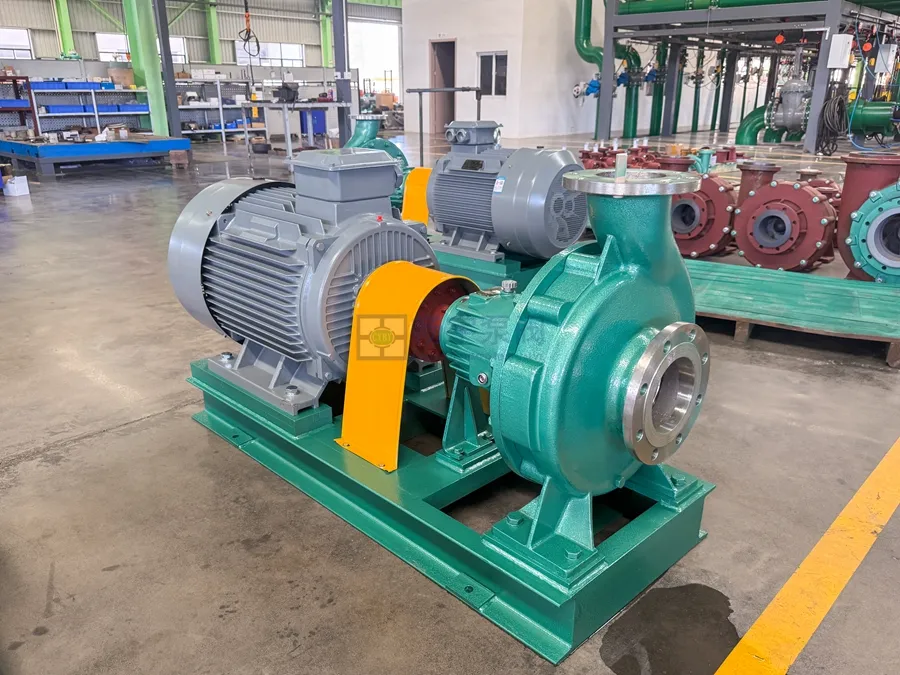 Bomba química centrífuga de acero inoxidable serie CYH
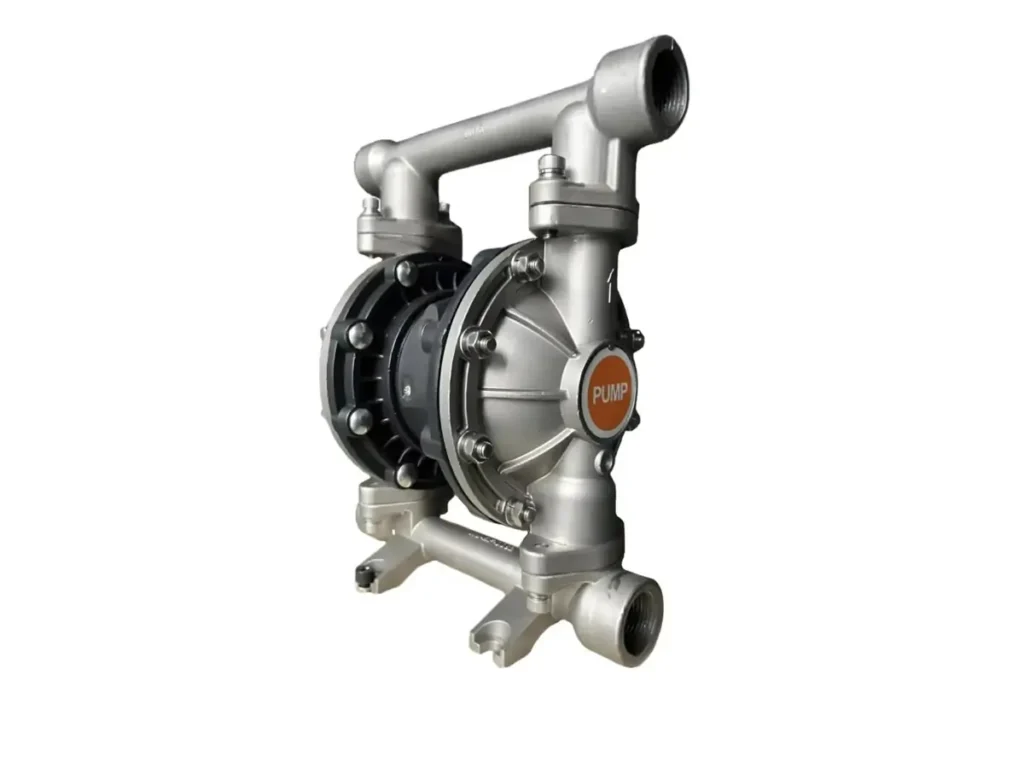 Bomba de diafragma
The case reports 316L for the caustic soda application, while explaining that latex viscosity and shear behavior influenced the diaphragm-pump choice. What can reasonably be learned is the selection approach: continuous transfer, liquid behavior, sealing, and material compatibility were considered separately for each medium. Stainless steel industrial centrifugal pumps remain candidates where they fit the duty; they do not become the right answer simply because other equipment in the same factory uses them.
For a viscous liquid, compare the corrected centrifugal performance with alternatives such as diaphragm or screw pumps. Changyu’s centrifugal pump viscosity article explains why both the pump curve and pipe resistance can change with viscosity, particularly between warm operation and a cold restart. That comparison is more useful than imposing one viscosity cutoff on all stainless steel industrial centrifugal pumps. Dry-running capability, shear effects, and inlet filling must likewise be evaluated for the alternative design rather than assumed.
Which Changyu Series Should You Start With?
We use the following table to give a first direction for comparing stainless steel industrial centrifugal pumps. Once the installation and liquid have narrowed the options, the model curve and complete material specification decide whether the proposed unit actually fits.
| Your main requirement | Starting series | The next important question |
|---|---|---|
| Clean-liquid transfer or circulation | Stainless configuration of CYA | Is the liquid solids-free and compatible with the supplied materials? |
| Chemical process transfer using a mechanical seal | CYH | What conditions reach the seal during running, startup and cleaning? |
| Reducing the conventional dynamic shaft-seal leakage risk | CQ or CYC | Can internal bearings and cooling operate reliably with this liquid? |
| Suction lift together with magnetic drive | CQZ | Are priming and NPSH conditions acceptable at the lowest liquid level? |
| Transfer from a tank with an immersed wet end | FY | What immersion length, liquid levels and removal space are available? |
| Particle-containing liquid | HB | What are the particle properties, concentration and wear conditions? |
One further distinction is important for food and pharmaceutical customers: stainless steel construction is not proof of hygienic suitability. Surface condition, cleanability, drainability, connections, and applicable documentation still matter. If hygiene is part of the specification for stainless steel industrial centrifugal pumps, raise it at the beginning rather than adding it after the model has been selected. Changyu’s materials guide also explains why the wetted assembly should be specified component by component instead of using only a casing grade.
Discuss Your Application with Changyu Pump
At Changyu Pump, we are a manufacturer and supplier of chemical-transfer and other industrial pumps, including the configurations discussed here. When asking about stainless steel industrial centrifugal pumps, send the liquid composition, temperature, viscosity, solids information, required flow and head, and a simple tank or piping sketch. Póngase en contacto con Changyu with those details so we can discuss a suitable series and work toward a documented model selection for your application.
Correo electrónico: [email protected]
TEL/WA: +86-13651913727
FAQ: Stainless Steel Industrial Centrifugal Pumps
¿Puede una bomba ser a la vez de accionamiento magnético y autocebante?
Sí. Estos términos describen características diferentes en lugar de tipos de bombas competidoras. La transmisión magnética describe cómo llega el par al rotor interno; la autocebante describe cómo una bomba adecuadamente cebada establece el suministro desde una instalación con elevación de succión. Nuestra serie CQZ combina ambas. Al comparar bombas centrífugas industriales de acero inoxidable, verifique el procedimiento de cebado y los requisitos de lubricación interna en conjunto, no solo la descripción de elevación de succión.
¿Debo elegir una bomba de una sola etapa o una bomba multietapa?
Comparamos el rango de operación requerido con la curva propuesta antes de decidir el número de etapas. Una bomba de una sola etapa puede ya cumplir con el servicio, mientras que etapas sucesivas pueden proporcionar la altura necesaria para otra aplicación. Con las bombas centrífugas industriales de acero inoxidable, las etapas adicionales no mejoran automáticamente la eficiencia o la confiabilidad; los sólidos, el acceso de mantenimiento, la velocidad y la región de operación permitida aún necesitan revisión.
¿Es el accionamiento magnético siempre la mejor opción para productos químicos?
No necesariamente. La eliminación del sello dinámico de eje convencional puede resolver un problema de fuga, pero muchos diseños de accionamiento magnético dependen del líquido para la lubricación de los cojinetes y la eliminación de calor. Los cristales, las partículas abrasivas, la formación de vapor o la circulación interrumpida pueden hacer que el servicio sea más exigente. Comparamos esas condiciones con las alternativas de sello mecánico al revisar bombas centrífugas industriales de acero inoxidable para una línea química.
¿El motor FY funciona por debajo del nivel del líquido?
No. En nuestra configuración FY, la sección hidráulica está sumergida y el motor permanece por encima del líquido. La potencia convencional del motor es de 1,5-22 kW; otras potencias requieren una configuración personalizada. Para estas bombas centrífugas industriales de acero inoxidable, confirme la longitud de inmersión, el nivel mínimo de operación, el soporte del eje y el espacio de elevación en lugar de tratar la FY como una bomba con motor totalmente sumergido.
¿Se puede considerar el HB tanto para lodos diluidos como concentrados?
Sí. Podemos evaluar HB para medios de baja, media y alta concentración, con la configuración adaptada al servicio real. La concentración por sí sola no establece la idoneidad: importan su base de medición, tamaño de partícula, dureza, comportamiento de sedimentación y química. Para servicios con lodos dentro de bombas centrífugas industriales de acero inoxidable, envíe esos detalles junto con el caudal y la altura para que podamos evaluar el tamaño de paso, el desgaste y los materiales.
¿Puedo reemplazar una bomba existente por un tipo diferente con el mismo caudal y altura?
Esos dos números son solo el punto de partida. Verifique la curva completa, las condiciones de entrada, las conexiones, la velocidad de accionamiento, la potencia, el sellado, los controles y el espacio de mantenimiento. Una configuración de accionamiento magnético o sumergida también puede cambiar la forma en que debe operar la instalación. Necesitamos el modelo actual, los detalles del líquido y el croquis de tuberías para comparar bombas centrífugas industriales de acero inoxidable de reemplazo sin asumir un ajuste de sustitución directa.
References and Further Reading
The industry sources below provide technical background. Our project pages document specific applications; they do not replace the drawings, performance data and material review for your own equipment.
Hydraulic Institute Data Tool – Pump Types. Industry definitions and classification by construction and pumping principle.
Hydraulic Institute Data Tool – References. Official directory covering sealless pumps, centrifugal slurry pumps, operating regions and viscosity guidelines; consult the applicable project edition.
Hydraulic Institute – Mechanical Seals for the Pump Industry, 2nd Edition. Public guidebook overview covering seal components, operating requirements and troubleshooting; the full book is a separate publication.
Changyu Pump – Synthetic Rubber Material Transfer Project in Japan. Our published application reference for using different pump configurations on different liquids, not a universal model rating.