
Introduction
Production d'engrais soumet les pompes à certaines des conditions les plus agressives de toute l'industrie des procédés chimiques. Les matières premières et les produits intermédiaires — acide phosphorique à 95–100°C chargé de cristaux de gypse, acide sulfurique à des concentrations allant jusqu'à 98%, solutions d'ammoniac nécessitant un confinement absolument étanche, et boues NPK mixtes à la fois corrosives et abrasives — présentent chacun une combinaison distincte d'attaque chimique et d'usure mécanique que les pompes de procédé standard ne sont pas conçues pour gérer. Le défi principal : “ Ces matériaux peuvent être hautement abrasifs et/ou corrosifs. De plus, lorsque ces matériaux doivent être transférés d'une étape du procédé à une autre, ils peuvent prendre diverses formes, y compris des solutions et des suspensions ou des boues. ”
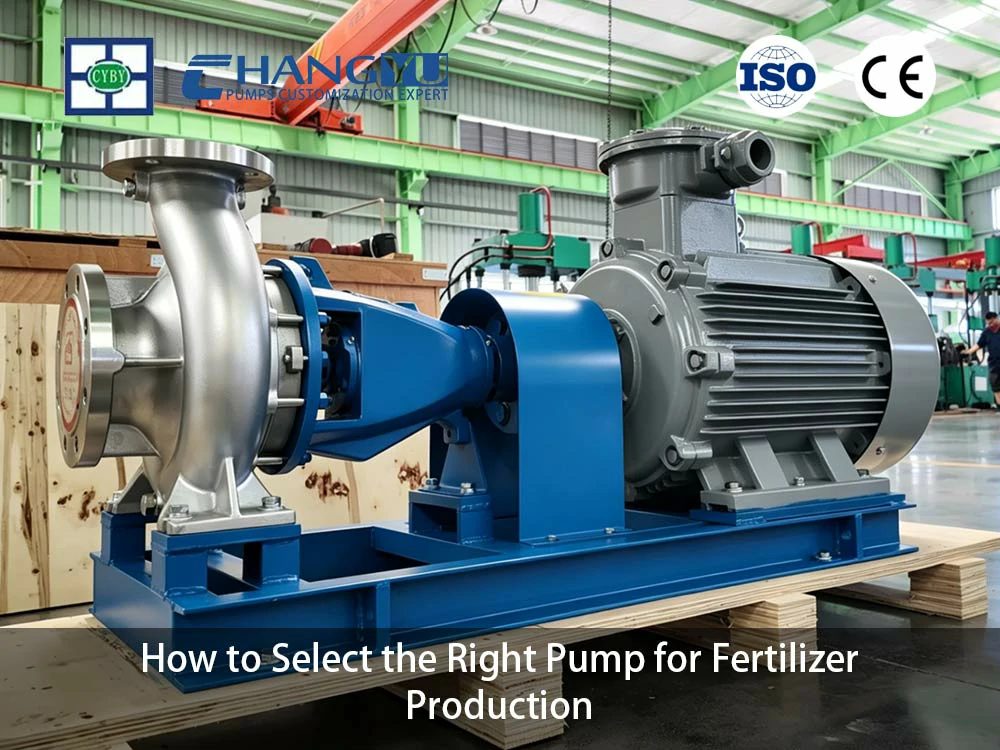
Les conséquences d'une défaillance de pompe dans une usine d'engrais s'étendent bien au-delà du coût d'une roue de remplacement. Une défaillance de la pompe d'alimentation du filtre à boues dans un réacteur d'attaque à l'acide phosphorique a un impact direct de détérioration sur le taux de production de l'ensemble de l'usine. Une défaillance de la pompe de circulation de l'évaporateur dans l'unité de concentration arrêtera complètement le processus de production. Ce ne sont pas des risques isolés — ils sont la réalité quotidienne de la fabrication d'engrais, où les pompes fonctionnent en continu dans des environnements qui combinent températures élevées, solides abrasifs, acides corrosifs et gaz entraînés.
Ce guide fournit une référence structurée couvrant les types de pompes adaptés à chaque étape de la production d'engrais, la logique de sélection des matériaux qui détermine si une pompe dure des mois ou des années, les technologies d'étanchéité et de sécurité pour les milieux dangereux, un cadre de sélection en six étapes, et une étude de cas quantitative issue du service des engrais phosphatés. S'appuyant sur plus de deux décennies d'expérience en ingénierie des pompes, Pompe Changyu apporte une expertise approfondie dans la spécification de solutions de pompage résistantes à la corrosion et à l'usure pour l'industrie des engrais.
Qu'est-ce qui rend la production d'engrais une application de pompage difficile ?
1 Les quatre défis d'ingénierie
La fabrication d'engrais soumet les pompes à quatre exigences simultanées qui interagissent d'une manière que les pompes de procédé standard ne sont pas conçues pour traiter :
- Corrosion : Les acides sont présents tout au long de la chaîne de production — acide sulfurique (jusqu'à 98%) dans l'acidulation, acide phosphorique (28–54% P₂O₅) dans le réacteur et la boucle de concentration, acide chlorhydrique dans certaines étapes de purification, et flux d'acides mixtes dans le traitement des déchets. Chaque acide attaque les matériaux via un mécanisme de corrosion différent. La pompe à boues d'acide phosphorique est, dans le processus de production d'engrais phosphatés, un type de pompe collectif parmi divers types, et est un type typique de pompe à forte résistance à la corrosion et à l'usure.
- Abrasion : Les impuretés du phosphate rocheux, les cristaux de gypse (CaSO₄·0.5H₂O), le sable de silice et les particules de catalyseur créent une pâte abrasive qui érode les corps de pompe et les roues. Changyu Pump a documenté une application d'alimentation de filtre à boues d'acide phosphorique traitant 33% de solides à 95–100°C, où les pièces de la pompe précédente soumises à la plus forte érosion et corrosion n'ont duré que 3 à 6 mois avant de nécessiter un remplacement.
- Température élevée : Les boucles de concentration d'acide phosphorique fonctionnent à 86–100°C. La dilution de l'acide sulfurique chaud génère de la chaleur exothermique. Les processus de granulation des boues NPK fonctionnent à 105°C. Ces températures accélèrent à la fois le taux de corrosion chimique et le taux d'usure mécanique, tout en dégradant les joints élastomères et les lubrifiants des roulements.
- Entraînement de gaz : L'ammoniac (NH₃) est mélangé à de l'eau et introduit tout au long du processus de production, par exemple pour la neutralisation de l'acide phosphorique. Du CO₂, du SiF₄ et d'autres gaz sont libérés lors de l'acidulation et de la réaction. Les pompes doivent gérer un écoulement diphasique sans blocage de vapeur ni perte d'amorçage.
2 Le coût de se tromper
Le coût d'une sélection incorrecte de pompe dans une usine d'engrais se répercute sur trois niveaux. Au niveau des composants, une roue ou un corps qui tombe en panne en 3 mois au lieu de 24 mois double ou triple les dépenses en pièces de rechange. Au niveau du système, un arrêt non planifié de pompe stoppe le réacteur en amont et la ligne de filtration ou de granulation en aval. Au niveau de l'usine, une seule défaillance de la pompe de circulation de l'évaporateur arrête l'ensemble de l'unité de concentration d'acide phosphorique — faisant de la fiabilité des pompes un déterminant direct de la production annuelle. Dans les usines nationales d'engrais phosphatés, les composants de pompe en alliage CD-4MCu dans des conditions de service similaires ont été documentés pour durer environ 1 500 à 4 000 heures de fonctionnement, les alternatives en fonte à haute teneur en chrome ne durant qu'environ 1 200 heures de fonctionnement — preuve supplémentaire de la nature exigeante de ces applications.
3 Milieux d'engrais typiques et exigences de pompage
| Type d'engrais | Étapes clés du procédé | Milieux typiques | Défi du pompage primaire | Types de pompes recommandés |
|---|---|---|---|---|
| Phosphate (MAP/DAP/TSP) | Acidulation, réaction d'attaque, filtration, concentration | H₂SO₄ (98%), H₃PO₄ (28–54% P₂O₅), boue d'acide phosphorique (33% de solides), 95–100°C | Corrosion acide chaude combinée + abrasion par cristaux de gypse + gaz | Pompe centrifuge de procédé (654 SMO/CD4MCuN), pompe à boues (UHMW-PE), pompe à flux axial (circulation d'évaporateur) |
| Azote (Urée, Nitrate d'ammonium) | Synthèse d'ammoniac, synthèse d'urée, prilling/granulation | NH₃, carbamate d'ammonium, solution d'urée (140°C), nitrate d'ammonium fondu | Température élevée, risque de cristallisation, toxicité (zéro fuite requis) | Pompe à entraînement magnétique, pompe centrifuge en acier inoxydable |
| NPK Composé | Pré-neutraliseur, réacteur tubulaire, granulateur, sécheur | Boue acide mixte (H₃PO₄ + H₂SO₄), boue NPK (105°C), urée-nitrate d'ammonium | Corrosion simultanée + abrasion + température élevée + solides | Pompe à boues revêtue d'UHMW-PE, pompe centrifuge en acier inoxydable duplex |
| Potasse (MOP/SOP) | Flottation, cristallisation, séchage | Saumure de KCl (chaude, saturée), réactifs aminés, boue de cristalliseur | Fissuration par corrosion sous contrainte due aux chlorures, entartrage, abrasion | Pompe en acier inoxydable duplex, pompe revêtue de caoutchouc |
| Traitement des déchets | Effluent de laveur, eau de bassin à gypse, eaux usées acides | H₂SO₄ dilué, H₂SiF₆, solides CaSO₄, pH 1–4 | pH variable, solides abrasifs, grands volumes de débit | Pompe revêtue de fluoroplastique, pompe revêtue de UHMW-PE |
Une logique détaillée de sélection des pompes par étape de procédé est fournie dans la Section 4.
Quels sont les principaux types de pompes utilisés dans la production d'engrais ?
1 Pompes centrifuges de procédé (API et ISO)
Centrifuge Les pompes pour engrais sont la configuration la plus largement déployée pour le transfert d'acide en vrac, l'alimentation des réacteurs et le transfert de liquide entre les étapes de la chaîne de production d'engrais. Pour le service des engrais, ces pompes sont construites dans deux configurations de matériaux principales : métallique (acier inoxydable 316L, acier inoxydable duplex CD4MCuN, acier inoxydable super austénitique 654 SMO, Hastelloy C-276) et non métallique (revêtue de fluoroplastique avec PTFE, PFA ou FEP). Le choix entre une construction métallique et non métallique dépend de l'acide spécifique, de sa concentration, de sa température et de la présence de solides abrasifs.
Dans le service des boues d'acide phosphorique, certains cas ont montré que la sélection des matériaux seule peut déterminer si les pièces d'usure d'une pompe durent 3 à 6 mois ou 12 à 24 mois. Dans un procédé hémihydrate à 95–100°C manipulant de l'acide P₂O₅ à 41 % avec des contaminants HF, H₂SiF₆, H₂SO₄ et Cl⁻, l'acier inoxydable duplex CD4MCuN — largement utilisé dans les procédés dihydrate — n'était pas suffisant. La mise à niveau vers le 654 SMO® (acier inoxydable super austénitique à 6 % de Mo) combinée à une vitesse de fonctionnement réduite de 850 tr/min et une roue à plein diamètre a prolongé la durée de vie moyenne des pièces les plus sujettes à l'usure de 3 à 6 mois à 12 à 24 mois, réduisant la fréquence de maintenance jusqu'à 75 %.
Spécifications clés : Débits jusqu'à 7 000 m³/h, hauteurs manométriques jusqu'à 160 m, températures jusqu'à 180°C. Idéal pour : transfert d'acide en vrac, alimentation des réacteurs, transfert de filtrat, circulation de scrubber.
2 Pompes à boues chimiques
Chimique pompes à boues sont spécialement conçues pour les milieux corrosifs chargés de solides qui dominent la production d'engrais phosphatés et NPK. Contrairement aux pompes de procédé standard, les pompes à boues intègrent des passages d'écoulement internes élargis pour laisser passer les cristaux de gypse et les particules de roche phosphatée non réagies, des matériaux mouillés résistants à l'usure sélectionnés pour l'environnement combiné de corrosion et d'abrasion, et des roues semi-ouvertes moins sujettes au colmatage que les conceptions fermées. Chuangyu Pump propose des pompes de procédé résistantes à l'usure — telles que Pompe à boues abrasives série UHB — qui comblent l'écart entre les pompes centrifuges de procédé standard et les pompes à boues traditionnelles en combinant l'efficacité hydraulique d'une pompe de procédé avec la résistance à l'abrasion requise pour le service des boues.
Pour les applications de boues d'acide phosphorique — en particulier dans les fonctions de cuve d'attaque, d'alimentation du filtre et de transfert de boues — les pompes avec revêtements en UHMW-PE (polyéthylène de masse molaire très élevée) se sont avérées très efficaces. L'UHMW-PE est un plastique technique anticorrosion et résistant à l'usure de nouvelle génération pour les pompes, offrant une excellente résistance à l'abrasion et aux chocs parmi tous les plastiques. Dans des conditions standardisées de test d'usure abrasive, sa résistance à l'usure est environ 7 à 10 fois supérieure à celle de l'acier au carbone et de l'acier inoxydable. Les résultats réels sur le terrain peuvent varier en fonction de la vitesse de fonctionnement, de la charge en solides, des caractéristiques des particules et des pratiques de maintenance. L'UHMW-PE offre une large compatibilité chimique avec l'acide sulfurique, l'acide phosphorique et leurs mélanges à des températures allant jusqu'à 90°C, ce qui le rend largement déployé dans l'industrie des engrais phosphatés et sulfatés pour l'acide dilué, la liqueur mère, les boues d'acide phosphorique et autres milieux corrosifs-abrasifs.
Spécifications clés : Débits jusqu'à 2 600 m³/h, hauteurs manométriques jusqu'à 100 m, manipulation de solides jusqu'à 15 % en poids. Idéal pour : boues d'acide phosphorique, boues NPK, circulation de cuve d'attaque, alimentation du filtre.
3 Pompes à entraînement magnétique
Entraînement magnétique Les pompes pour engrais éliminent complètement le joint d'étanchéité mécanique en transmettant le couple à travers une enveloppe de confinement stationnaire à l'aide d'un couplage magnétique. Le fluide de procédé est entièrement enfermé dans un carter scellé — aucun arbre rotatif ne traverse la limite de pression. Cette conception sans joint assure une étanchéité nulle par conception, faisant des pompes à entraînement magnétique la spécification standard pour le service de l'ammoniac, les solutions de nitrate d'ammonium et toute application d'engrais où le fluide pompé est toxique, inflammable ou réglementé sur le plan environnemental.
Les pompes centrifuges auto-amorçantes à entraînement magnétique sont bien établies comme le type de pompe préféré pour la manipulation de liquides agressifs, corrosifs et autres liquides dangereux grâce à leur capacité éprouvée à fonctionner de manière sûre, fiable, sans fuite et avec une faible maintenance. Dans la production d'engrais, les pompes à entraînement magnétique jouent des rôles critiques dans l'injection d'eau ammoniacale, le transfert de solution d'urée, la manipulation de nitrate d'ammonium et toute application où les émissions fugitives doivent être éliminées. Pour une compréhension plus approfondie de la technologie des pompes sans joint, consultez notre guide des pompes à entraînement magnétique.
Spécifications clés : Débits jusqu'à 800 m³/h, hauteurs manométriques jusqu'à 125 m, températures jusqu'à 180°C (revêtement PFA). Idéal pour : eau ammoniacale, nitrate d'ammonium, solution d'urée, milieux dangereux/toxiques nécessitant une étanchéité nulle.
4 Pompes à membrane (électriques et pneumatiques)
Diaphragme Les pompes pour engrais utilisent une membrane flexible alternative pour déplacer le fluide, formant une barrière sans joint entre le fluide de procédé et le mécanisme d'entraînement. Les pompes à membrane électriques fournissent un débit stable et continu pour le dosage, le mesurage et l'injection de produits chimiques dans la production d'engrais. Les pompes à membrane pneumatiques double effet (AODD) sont la spécification standard pour les transferts intermittents, portables ou en zones dangereuses où de l'air comprimé est disponible et où l'alimentation électrique à la pompe n'est pas souhaitée.
Dans les usines d'engrais, les pompes à membrane servent des niches spécifiques : dosage d'acide pour le contrôle du pH, injection de floculant et de réactif dans le traitement des eaux usées, et transfert de flux de déchets à haute viscosité ou chargés de solides où les pompes centrifuges ne sont pas recommandées.
Spécifications clés : Débits jusqu'à 1 041 L/min (AODD), 480 L/min (électrique), passage de solides jusqu'à 9,4 mm. Idéal pour : dosage chimique, injection de réactif, drainage de puisard, transfert intermittent.
5 Pompes à flux axial et à flux mixte
Les pompes axiales gèrent les débits les plus élevés à faibles hauteurs de refoulement — le profil hydraulique exact requis pour les boucles de circulation d'évaporateur dans la concentration d'acide phosphorique. Les pompes axiales sont largement utilisées dans la production d'acide phosphorique d'extraction et de phosphate d'ammonium.
6 Comparaison des types de pompes pour engrais
| Type de pompe | Méthode de scellement | Zéro fuite | Manipulation des solides | Meilleure application | Plage de débit typique |
|---|---|---|---|---|---|
| Pompe centrifuge de process (API/ISO) | Garniture mécanique simple ou double | Non (dépendant du sceau) | Minimal (liquides propres) | Transfert d'acide en vrac, alimentation du réacteur, filtrat | 1–7 000 m³/h |
| Pompe pour boues chimiques / résistante à l'usure | Garniture mécanique ou dynamique | Non | Jusqu'à 40% en poids | Boue d'acide phosphorique, boue NPK, cuve d'attaque | 3-2 600 m³/h |
| Entraînement magnétique | Sans soudure (enveloppe de confinement statique) | Oui (à dessein) | Minime | Ammoniac, nitrate d'ammonium, solution d'urée | 3-800 m³/h |
| Pompe à membrane (électrique / AODD) | Sans joint (barrière à membrane) | Oui (à dessein) | Jusqu'à 70% en poids ; solides jusqu'à 9,4 mm | Dosage chimique, injection de réactif, drainage de puisard | Jusqu'à 1 041 L/min |
| Écoulement axial | Garniture mécanique | Non | Jusqu'à 5% de solides | Circulation d'évaporateur, circulation de cristalliseur | Jusqu'à 12 000 m³/h |
Quels sont les meilleurs matériaux pour la construction de pompes pour engrais ?
1 Le défi de la sélection des matériaux
La sélection des matériaux pour une pompe pour engrais nécessite de naviguer dans une matrice où le même matériau qui résiste à un acide à une température donnée peut échouer de manière catastrophique lorsqu'il est exposé à un autre acide — ou même au même acide à une concentration plus élevée ou avec des impuretés différentes.
3.2 Matériaux non métalliques
UHMW-PE (Polyéthylène de très haut poids moléculaire) Les pompes revêtues fournissent une barrière chimique qui isole le corps de pompe en acier du milieu agressif tout en absorbant l'énergie d'impact des particules. Dans des conditions standardisées de test d'usure abrasive, la résistance à l'usure de l'UHMW-PE est environ 7 à 10 fois supérieure à celle de l'acier au carbone et de l'acier inoxydable. Les résultats réels sur le terrain peuvent varier en fonction de la vitesse de fonctionnement, de la charge en solides, des caractéristiques des particules et des pratiques de maintenance. L'UHMW-PE présente une excellente résistance à l'abrasion et aux chocs parmi tous les plastiques, ainsi qu'une résistance au fluage et une bonne résistance à la corrosion. Il est largement utilisé dans l'industrie des engrais phosphatés et sulfurés pour l'acide dilué, la liqueur mère, la boue d'acide phosphorique et d'autres milieux corrosifs-abrasifs à des températures allant jusqu'à 90°C. Pour une discussion détaillée des propriétés de l'UHMW-PE dans les applications chimiques, voir notre Pompe à boues à haute teneur en solides : Guide de sélection pour les applications abrasives.
PTFE et PFA offrent une résistance chimique quasi universelle pour les acides forts, les mélanges d'acides et les produits chimiques oxydants à des températures allant jusqu'à 180°C (revêtement PFA). Les deux sont inertes à l'acide sulfurique, l'acide phosphorique, l'acide chlorhydrique et l'acide nitrique dans leurs plages de température nominales. Les pompes revêtues de PTFE sont utilisées pour le transfert d'acide général et les effluents de laveur ; les pompes revêtues de PFA sont spécifiées pour les applications à plus haute température telles que la circulation d'acide sulfurique chaud et la décharge du réacteur.
PP (Polypropylène) est l'option non métallique la plus économique et offre une bonne résistance à l'acide sulfurique dilué (≤40%), à l'acide phosphorique et à de nombreuses solutions alcalines à des températures inférieures à 80°C. Il est attaqué par les acides oxydants forts (acide nitrique, acide sulfurique concentré au-dessus de 40%) et de nombreux solvants organiques.
PVDF (fluorure de polyvinylidène) offre une excellente résistance à l'acide sulfurique concentré (jusqu'à 98%), à l'acide chlorhydrique à toutes les concentrations, à l'acide nitrique et à la plupart des solvants organiques à des températures allant jusqu'à 120°C. Sa résistance mécanique est supérieure à celle du PP et du PTFE.
3 Matériaux métalliques
CD4MCuN est un acier inoxydable duplex avec une résistance à la corrosion et une résistance mécanique supérieures à celles du 316 SS dans la plupart des applications. Les pompes ANSI en CD4 peuvent résister à des applications plus abrasives que les pièces en 316 SS, et peuvent être plus résistantes à la fissuration et à la piqûration que l'Alloy 20. Le CD4MCuN est largement spécifié pour les applications d'acide phosphorique dans les procédés dihydrates. Langley Alloys note que la teneur en cuivre du CD4MCuN augmente considérablement la résistance aux acides sulfurique, nitrique et phosphorique, ce qui en fait le choix par défaut pour les articles utilisés dans la production d'engrais.
654 SMO® est un acier inoxydable super austénitique à 6% de Mo avec une excellente résistance à la corrosion par l'acide chaud à haute teneur en chlorures. Il combine une très bonne résistance à la corrosion et une meilleure résistance à l'érosion que certains aciers inoxydables austénitiques plus courants, et est de plus en plus utilisé dans l'industrie du phosphate pour les applications de procédé hémihydrate où le CD4MCuN s'avère insuffisant.
Acier inoxydable 316L offre une bonne résistance aux produits chimiques doux et aux solvants organiques mais a des limites bien documentées avec les acides minéraux. Il échoue rapidement dans l'acide chlorhydrique à toute concentration et dans l'acide sulfurique au-dessus d'environ 15% de concentration.
Hastelloy C-276 offre la plus large résistance métallique à la corrosion pour les acides chauds et les environnements oxydants, à un coût de matériau correspondant plus élevé.
4 Référence rapide pour la sélection des matériaux
| Matériau | Meilleur pour | Gamme de pH | Temp. max. | Application typique d'engrais |
|---|---|---|---|---|
| Doublure en UHMW-PE | Combinaison de corrosion sévère et d'abrasion | Large (acide, alcali, sel) | ~90°C | Boue d'acide phosphorique, boue NPK, acide dilué, liqueur mère |
| Revêtement PTFE/PFA | Résistance chimique maximale | pH 0-14 | ~180°C (PFA) | H₂SO₄ concentré chaud, mélanges d'acides, effluent de laveur |
| PP | Service acide/alcalin économique | pH 2-12 | ~80°C | Rinçage de galvanoplastie, H₂SO₄ dilué, solutions alcalines |
| PVDF | Acides concentrés, chlorures, solvants | pH 0-14 | ~120°C | HCl, HNO₃, H₂SO₄ concentré |
| CD4MCuN Duplex SS | Corrosion-abrasion combinée | pH 2-12 | ~110°C | Acide phosphorique (procédé dihydrate), DGD, drainage minier acide |
| 654 SMO® | Acide chaud + chlorures élevés | pH 0-14 | ~120°C | Acide phosphorique (procédé hémihydrate), environnements à haute teneur en Cl⁻ |
| ACIER INOXYDABLE 316L | Chimie compatible vérifiée uniquement | pH 3-10 | ~120°C | Effluents chimiques doux, eau de process, solutions d'urée |
| Hastelloy C-276 | Acides chauds, produits chimiques oxydants | pH 0-14 | ~120°C | Mélanges d'acides, service corrosif à haute température |
Comment associer la technologie de pompe à chaque étape de la production d'engrais ?
1 Production et manutention d'acide sulfurique
L'acide sulfurique concentré (93–98%) est utilisé dans toute la production d'engrais — dans l'acidulation du phosphate naturel, dans les procédés d'acide mixte NPK et dans les systèmes de lavage. Le défi technique est que la corrosivité de l'acide sulfurique concentré envers l'acier au carbone dépend de la vitesse d'écoulement. L'acier au carbone résiste à l'acide sulfurique concentré statique au-dessus de 80% à basse température car une couche protectrice de sulfate de fer se forme à la surface. Dans des conditions d'écoulement à l'intérieur d'un corps de pompe, cette couche protectrice s'érode et l'acier au carbone devient inadapté pour les composants de la pompe en contact avec le fluide.
Pour le transfert d'acide sulfurique concentré, les pompes centrifuges revêtues de PFA ou de PTFE offrent une compatibilité chimique vérifiée pour toutes les concentrations et températures dans la plage nominale du revêtement. Le CD4MCuN duplex inoxydable et le Hastelloy C-276 sont utilisés dans des fenêtres spécifiques concentration-température où une pompe métallique est structurellement préférée.
2 Production d'acide phosphorique et d'engrais phosphatés
La production d'acide phosphorique présente le défi combiné le plus sévère de corrosion-abrasion dans l'industrie des engrais. Le processus implique la réaction du phosphate naturel avec l'acide sulfurique pour produire de l'acide phosphorique et du gypse (sulfate de calcium). La boue résultante — contenant 28–54 % de P₂O₅ acide, des cristaux de gypse à 33 % de solides, et des contaminants corrosifs incluant HF, H₂SiF₆, H₂SO₄, et Cl⁻ à 95–100 °C — est pompée à travers une série de réacteurs, filtres et concentrateurs.
La sélection des matériaux pour les pompes à boue d'acide phosphorique doit être adaptée au processus spécifique. Dans les procédés dihydrates fonctionnant à des températures plus basses (70–80 °C), l'acier inoxydable duplex CD4MCuN offre une durée de vie acceptable. Dans les procédés hémihydrates fonctionnant à des températures plus élevées (95–100 °C) avec des niveaux d'impuretés plus élevés, le passage à l'acier inoxydable super austénitique 654 SMO®, combiné à une vitesse de fonctionnement réduite et une conception de roue à diamètre plein, prolonge la durée de vie des pièces d'usure de quelques mois à plusieurs années. Les ingénieurs de Changyu Pump ont documenté dans des installations d'usines d'engrais phosphatés que les pompes revêtues de UHMW-PE manipulant de la boue d'acide phosphorique à 70–90 °C avec 30–35 % de solides offrent systématiquement une durée de vie de la roue dépassant 14 mois, contre 3 à 6 mois pour les pompes en alliage CD4MCuN dans des conditions de procédé hémihydrate similaires.
Pour la boucle de concentration d'acide phosphorique, les pompes à flux axial font circuler l'acide à travers des échangeurs de chaleur et des évaporateurs à des débits allant jusqu'à 12 000 m³/h. Ces pompes doivent manipuler de l'acide à 50–52 % de P₂O₅ avec des contaminants (sulfates, chlorure, fluor, environ 4–5 % de solides) à 86 °C, fonctionnant en continu pour éviter l'arrêt de l'unité de concentration.
3 Production d'ammoniac, d'urée et de nitrate d'ammonium
L'ammoniac et ses dérivés nécessitent un confinement sans fuite en raison de leur toxicité, inflammabilité et impact environnemental. Assurer que l'eau ammoniacale est administrée avec succès dans le processus de production est le travail de la pompe de procédé, et contrôler la quantité d'émissions fugitives pendant le processus de production est critique car les organismes de réglementation accordent de plus en plus d'attention aux niveaux d'émissions qui atteignent l'atmosphère lors de la fabrication industrielle.
Les pompes centrifuges à entraînement magnétique avec des composants mouillés revêtus de fluoroplastique (PTFE ou PFA) sont la spécification standard pour l'injection d'eau ammoniacale, le transfert de solution de nitrate d'ammonium et la circulation de solution d'urée. La conception sans garniture élimine le joint mécanique — le chemin de fuite le plus courant pour les fluides dangereux. Pour le service de synthèse d'urée, où le fluide de procédé inclut du carbamate d'ammonium à des températures allant jusqu'à 140 °C, des pompes centrifuges à entraînement magnétique en acier inoxydable ou des pompes centrifuges en alliage à haute résistance avec doubles joints mécaniques et systèmes de fluide barrière API Plan 53/54 sont spécifiées.
4 Production d'engrais composés NPK
La production d'engrais NPK mélange de l'acide phosphorique, de l'ammoniac, de l'acide sulfurique, de l'urée et de la potasse pour créer des granulés multi-nutriments. Le processus génère une boue mixte qui est simultanément corrosive (à cause des acides résiduels), abrasive (à cause des particules de phosphate non réagies et de la silice) et à haute température (jusqu'à 105 °C dans le granulateur).
Les pompes à boue manipulant des mélanges NPK doivent combiner la résistance à la corrosion requise pour le service de l'acide phosphorique avec la résistance à l'abrasion requise pour un écoulement chargé de solides. Les pompes centrifuges revêtues de UHMW-PE offrent la meilleure protection combinée pour les applications de boue NPK à des températures allant jusqu'à 90 °C. Pour les processus NPK à plus haute température, des pompes métalliques en CD4MCuN ou 654 SMO® avec des roues semi-ouvertes et des plaques d'usure remplaçables sont spécifiées.
5 Étape du processus d'engrais — Type de pompe — Matrice de correspondance des matériaux
| Étape du processus | Milieux typiques | Température | Type de pompe recommandé | Matériau recommandé |
|---|---|---|---|---|
| Transfert d'acide sulfurique | H₂SO₄ 93–98 % | ≤80°C | Pompe centrifuge de procédé | Revêtue PFA/PTFE, CD4MCuN, Hastelloy C-276 |
| Attaque du phosphate naturel | H₂SO₄ + boue de phosphate naturel | 70–90 °C | Pompe à boue chimique | Revêtue UHMW-PE, CD4MCuN |
| Cuve d'attaque / réacteur | H₃PO₄ 28–41 % P₂O₅ + solides de gypse (33 %) | 70–100 °C | Pompe à boue chimique ou pompe de procédé résistante à l'usure | CD4MCuN (dihydrate), 654 SMO® (hémihydrate), UHMW-PE (≤90 °C) |
| Alimentation du filtre à boue | Boue H₃PO₄ avec HF, H₂SiF₆, Cl⁻ | 95–100 °C | Pompe de procédé résistante à l'usure | 654 SMO®, roue semi-ouverte, vitesse réduite |
| Concentration d'acide phosphorique | H₃PO₄ 50–54 % P₂O₅, 4–5 % de solides | 86 °C | Pompe à flux axial | Duplex en alliage à haute résistance, 654 SMO® |
| Injection d'eau ammoniacale | NH₃·H₂O | ≤50°C | Centrifuge à entraînement magnétique | Revêtue PTFE/PFA, acier inoxydable |
| Circulation de solution d'urée | Urée, carbamate d'ammonium | 140 °C | Centrifuge à entraînement magnétique ou en alliage à haute résistance | Acier inoxydable, acier inoxydable duplex |
| Granulation de boue NPK | Boue d'acide mixte (H₃PO₄ + H₂SO₄ + NH₃) | ≤105 °C | Pompe à boue chimique | UHMW-PE (≤90 °C), CD4MCuN, 654 SMO® |
| Effluent du scrubber | H₂SO₄ dilué, H₂SiF₆, CaSO₄ | ≤60 °C | Pompe centrifuge de procédé | Revêtue PTFE/PFA, PP, PVDF |
Comment sélectionner la bonne pompe pour engrais : un cadre en 6 étapes
Étape 1 : Caractériser le milieu de procédé
Documenter le profil chimique et physique complet : type d'acide et concentration, pH, température incluant toute excursion de procédé, teneur en solides (pourcentage en poids, distribution granulométrique, dureté des particules), viscosité, densité spécifique, et la présence de tout gaz ou composant volatil. L'identité du milieu — et non une étiquette générique “ acide ” ou “ boue ” — détermine la fenêtre de compatibilité des matériaux.
Chiffres clés : Type d'acide, concentration, température, % de solides, taille des particules, teneur en gaz.
Étape 2 : Définir la charge hydraulique
Calculer le débit requis et la hauteur manométrique totale, en tenant compte de la hauteur statique, des pertes par frottement dans la tuyauterie de refoulement, et de toute exigence de pression à destination. Pour l'acide sulfurique concentré à une densité spécifique de 1,84, vérifier que le moteur est dimensionné pour la demande de puissance élevée. Pour les boues d'acide phosphorique avec 33 % de solides, tenir compte des pertes par frottement supplémentaires générées par l'écoulement chargé de solides.
Chiffres clés : Débit (m³/h ou GPM), hauteur manométrique totale, densité spécifique, pertes par frottement dans la tuyauterie.
Étape 3 : Faire correspondre les matériaux à la chimie du procédé
Sélectionnez les matériaux de la pompe en fonction des données de compatibilité des matériaux pour l'acide spécifique à sa température de fonctionnement maximale. Confirmez chaque composant mouillé — corps, roue, manchon d'arbre, joints toriques, joints statiques et faces d'étanchéité — par rapport aux données de compatibilité. Pour l'acide phosphorique, vérifiez si le procédé est dihydrate (le CD4MCuN peut suffire) ou hémihydrate (654 SMO® ou UHMW-PE requis). Pour le service à l'ammoniac, vérifiez les exigences de confinement sans fuite.
Logique de décision clé : H₂SO₄ >80% → revêtu de PFA/PTFE ou Hastelloy ; H₃PO₄ dihydrate → CD4MCuN ; H₃PO₄ hémihydrate → 654 SMO® ou UHMW-PE ; NH₃ → pompe à entraînement magnétique sans garniture.
Étape 4 : Sélectionnez le type de pompe
Faites correspondre le type de pompe à l'étape du procédé, aux exigences de débit et au profil de solides. Transfert d'acide en vrac → pompe centrifuge de procédé. Boue d'acide phosphorique → pompe à boue chimique ou pompe de procédé résistante à l'usure. Circulation d'évaporateur → pompe à flux axial. Ammoniac/nitrate d'ammonium → pompe à entraînement magnétique. Dosage chimique → pompe à membrane.
Logique de décision clé : Acide propre, débit élevé → centrifuge ; boue avec solides → pompe à boue ou pompe de procédé résistante à l'usure ; faible hauteur, très haut débit → flux axial ; toxique/volatil → entraînement magnétique ; intermittent/dosage → membrane.
Étape 5 : Sélectionnez le système d'étanchéité
Pour les milieux dangereux ou toxiques (ammoniac, nitrate d'ammonium, acides concentrés), sélectionnez une pompe à entraînement magnétique sans garniture ou un double joint mécanique avec un système de fluide barrière sous pression (API Plan 53/54). L'API Plan 53 utilise un réservoir de fluide barrière sous pression pour maintenir la pression du fluide barrière au-dessus de la pression du fluide de procédé au niveau des faces d'étanchéité, garantissant que toute fuite à travers le joint intérieur est du fluide barrière dans le procédé, et non du fluide de procédé dans l'atmosphère. L'API Plan 54 utilise une source de fluide sous pression externe dans le même but. Pour la boue d'acide phosphorique, un joint dynamique ou un double joint mécanique avec un plan de rinçage approprié empêche l'entrée de solides entre les faces d'étanchéité.
Logique de décision clé : Toxique/inflammable → entraînement magnétique ou API Plan 53/54 ; boue avec solides → joint dynamique ou double joint avec plan de rinçage.
Étape 6 : Évaluer le coût total de possession
Tenez compte du coût d'investissement, de la consommation d'énergie (généralement 60–70% du coût total de possession), de la fréquence de remplacement des pièces d'usure, de la main-d'œuvre de maintenance et du coût de production des temps d'arrêt non planifiés. L'étude de cas sur l'acide phosphorique démontre le principe du TCO : en passant du CD4MCuN au 654 SMO® et en réduisant la vitesse de fonctionnement, la durée de vie moyenne des pièces d'usure est passée de 3 à 6 mois à 12 à 24 mois, réduisant la fréquence de maintenance jusqu'à 75%. Le coût initial plus élevé du matériau a été récupéré grâce à l'élimination des temps d'arrêt et à la réduction des dépenses en pièces de rechange.
Facteurs clés : Énergie (60 à 701 TP3T de coût sur toute la durée de vie), pièces d'usure, main-d'œuvre d'entretien, coût des temps d'arrêt de production.
Technologies d'étanchéité et de sécurité pour les pompes d'engrais
1 Systèmes de joints mécaniques
Les doubles joints mécaniques avec un système de fluide barrière sous pression (API Plan 53) ou une barrière gazeuse (API Plan 74) sont la spécification standard pour les milieux dangereux dans la production d'engrais. La pression du fluide barrière doit dépasser la pression du fluide de procédé au niveau des faces d'étanchéité afin que toute fuite soit du fluide barrière dans le procédé, et non du fluide de procédé dans l'atmosphère.
- API Plan 53 (Fluide barrière sous pression) : Un réservoir de fluide barrière sous pression maintient la pression du fluide barrière au-dessus de la pression du fluide de procédé au niveau des faces d'étanchéité du joint intérieur. Si le joint intérieur fuit, du fluide barrière propre entre dans le procédé, et non du fluide de procédé dans l'atmosphère. Il s'agit de la configuration standard pour les services à l'acide phosphorique, à l'acide sulfurique et aux acides mixtes.
- API Plan 54 (Fluide barrière sous pression externe) : Une source externe fournit un fluide barrière propre et sous pression à la chambre d'étanchéité. Cette configuration est utilisée lorsque le fluide de procédé contient des solides qui contamineraient un système de fluide barrière en boucle fermée.
- Pour le service de boue d'acide phosphorique, Changyu Pump utilise une configuration de double joint mécanique qui offre le confinement requis tout en résistant aux solides abrasifs présents dans la boue.
2 Technologie sans garniture à entraînement magnétique
Les pompes à entraînement magnétique éliminent complètement le joint mécanique en transmettant le couple à travers une enveloppe de confinement stationnaire. Pour le service à l'ammoniac, les solutions de nitrate d'ammonium et toute application d'engrais où les émissions fugitives doivent être éliminées, cette conception sans garniture offre un confinement sans fuite par conception. L'enveloppe de confinement et les paliers internes doivent être évalués pour la température du fluide de procédé, et l'accouplement magnétique doit être dimensionné pour la densité du fluide à la température de fonctionnement.
3 Exigences ATEX/IECEx
Les installations de production d'engrais manipulent de l'ammoniac, qui peut former des mélanges inflammables avec l'air, et générer des poussières combustibles à partir de la manipulation des produits. Le Directive ATEX régit les équipements destinés à être utilisés dans des atmosphères explosives au sein de l'Union européenne. Pour le marché intérieur chinois, les normes antidéflagrantes GB 3836 s'appliquent. Les moteurs de pompe et l'instrumentation dans les zones classifiées doivent porter la certification ATEX, IECEx ou GB 3836 appropriée.
Gestion de la maintenance et du coût du cycle de vie pour les pompes d'engrais
1 Modes de défaillance courants
Les modes de défaillance les plus fréquents dans le service des pompes d'engrais sont : l'érosion de la roue et du corps par les solides abrasifs (cristaux de gypse, silice, phosphate naturel non réagi) ; la corrosion due à l'attaque acide aux joints de grains, accélérée par une température élevée ; la fuite d'étanchéité due à l'entrée de solides entre les faces d'étanchéité ou à la dégradation chimique des élastomères d'étanchéité ; la défaillance des paliers due à la contamination du lubrifiant par le fluide de procédé ou la poussière externe ; et les dommages par cavitation dus à une marge NPSH insuffisante à des températures élevées.
2 Calendrier de maintenance préventive
| Intervalle | Tâche |
|---|---|
| Quotidiennement | Surveillez le courant du moteur et la pression de refoulement ; vérifiez les vibrations ou bruits inhabituels ; vérifiez le débit de rinçage du joint |
| Hebdomadaire | Vérifier la température des roulements et l'état du lubrifiant ; rechercher d'éventuelles fuites visibles au niveau des joints d'étanchéité |
| Mensuel | Mesurez le jeu roue-corps ; inspectez les plaques d'usure pour détecter les rainures ou l'amincissement ; vérifiez l'état des joints toriques et des joints statiques |
| Trimestrielle | Inspection complète de l'extrémité humide ; remplacement du lubrifiant des paliers ; vérification de l'intégrité du joint par un essai de pression. |
| Annuellement | Démontage complet de la pompe ; mesure et remplacement de tous les composants d'usure (roue, bagues d'usure, joints, paliers) ; vérification de l'intégrité du corps et de l'arbre. |
3 Référence rapide de dépannage
| Symptôme | Cause probable | Mesures recommandées |
|---|---|---|
| Diminution progressive du débit | Usure de la roue ou augmentation des jeux internes | Ajuster le jeu de la roue ; remplacer les bagues d'usure si le jeu dépasse la limite fixée par le fabricant. |
| Augmentation soudaine des vibrations | Accumulation de solides sur la roue ; cavitation | Nettoyez la roue ; vérifiez la marge NPSH ; vérifiez le tamis d'aspiration |
| Fuite du joint | Pénétration de particules abrasives entre les faces d'étanchéité ; attaque chimique sur l'élastomère | Inspectez les faces d'étanchéité pour détecter les rayures ; remplacez les élastomères adaptés à la chimie du procédé |
| Déclenchement de la surcharge du moteur | Augmentation de la viscosité ; blocage de solides ; grippage du palier | Nettoyer la roue ; vérifier que les conditions de procédé sont dans les limites nominales de la pompe |
| Perforation du corps de pompe | Combinaison corrosion-abrasion dépassant la capacité du matériau | Améliorer le matériau (ex. : CD4MCuN → 654 SMO®) ; réduire la vitesse de fonctionnement |
4 Évaluation du coût du cycle de vie
L'étude de cas sur l'acide phosphorique fournit un exemple chiffré d'optimisation du coût du cycle de vie. Les pièces d'usure de la pompe précédente duraient de 3 à 6 mois ; après la mise à niveau vers le matériau 654 SMO®, la réduction de la vitesse et l'utilisation d'une roue pleine grandeur à conception semi-ouverte, la durée de vie des pièces d'usure est passée à 12–24 mois — soit une réduction de 75% de la fréquence de maintenance. La construction modulaire de la nouvelle pompe signifiait que seules les pièces usées devaient être remplacées, et non l'ensemble de la pompe. Une évaluation du coût du cycle de vie doit prendre en compte le coût d'investissement, la consommation d'énergie, la fréquence de remplacement des pièces d'usure, la main-d'œuvre de maintenance et le coût de production des arrêts non planifiés sur un horizon de 3 à 5 ans.
Solutions de pompes Changyu pour l'industrie des engrais
Les séries de pompes Changyu suivantes répondent aux principaux défis de pompage dans la production d'engrais — chacune étant adaptée à des étapes de procédé spécifiques, aux caractéristiques des fluides et aux exigences opérationnelles.
Série UHB Pompe résistante à la corrosion en UHMWPE
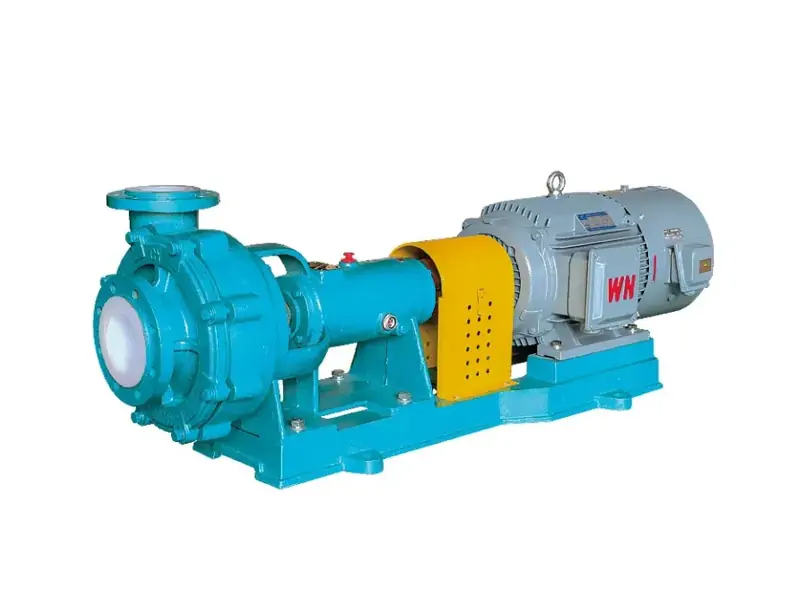
La série UHB est une pompe centrifuge en porte-à-faux, mono-étagée, à aspiration unique, dotée d'une chemise en acier. UHMW-PE corps de pompe, spécialement conçu pour les fluides chimiquement agressifs et abrasifs-corroifs. Le revêtement en PE-UHMW — un plastique technique anticorrosion et résistant à l'usure de nouvelle génération offrant une excellente résistance à l'abrasion et aux chocs parmi tous les plastiques — assure une protection combinée contre la corrosion et l'usure pour la boue d'acide phosphorique, la boue mixte NPK, l'acide sulfurique dilué, la liqueur mère et diverses pulpes de minerai corrosives dans l'industrie de la fusion. Dans les usines d'engrais phosphatés, la série UHB est utilisée pour la circulation du bac d'attaque, l'alimentation du filtre à boue et le transfert de boue entre les étapes, où le fluide de procédé combine de l'acide phosphorique chaud avec des cristaux de gypse — des conditions dans lesquelles les pompes à revêtement en PE-UHMW ont démontré une durée de vie de la roue dépassant 14 mois.
Principales spécifications : Débit 3-2,600 m³/h | Hauteur de chute 5-100 m | Puissance 0.75-300 kW | Température -20°C à 90°C
Pompe à entraînement magnétique pour procédés chimiques de la série CYQ
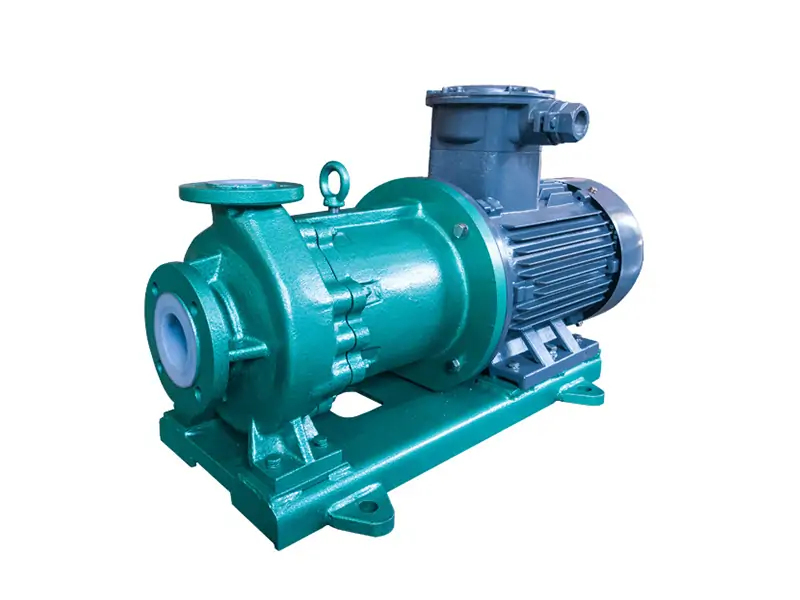
La série CYQ est une pompe à entraînement magnétique de troisième génération entièrement étanche, dont les composants en contact avec le fluide sont revêtus d'une couche d'aluminium. FEP, PFA ou PTFE. La chemise de confinement centrale en PEEK avec technologie de renfort en fibre de carbone porte la limite de pression à 3,0 MPa et élimine physiquement les pertes par courants de Foucault, garantissant une étanchéité nulle et une efficacité énergétique élevée dans des conditions de fonctionnement difficiles de -20°C à 150°C. Pour les applications d'engrais impliquant l'injection d'eau ammoniacale, le transfert de nitrate d'ammonium, la manipulation d'acide sulfurique concentré et les solvants organiques inflammables/explosifs — où même une fuite mineure du joint mécanique est inacceptable — la conception à entraînement magnétique élimine complètement le joint mécanique, offrant le confinement sans fuite requis pour un fonctionnement sûr et conforme dans les unités de production d'engrais azotés et de nitrate d'ammonium.
Principales spécifications : Débit 3-800 m³/h | Hauteur de chute 15-125 m | Puissance 2.2-110 kW | Vitesse 2,950 r/min | Température -20°C à 180°C
Pompe centrifuge à revêtement fluoroplastique de la série IHF

La série IHF est une pompe centrifuge dont le corps et les composants d'écoulement sont revêtus d'une couche d'aluminium. FEP, PFA ou PTFE. Le revêtement en plastique fluoré isole le corps métallique de la pompe du fluide de procédé corrosif, offrant une compatibilité chimique vérifiée pour les acides forts (sulfurique, phosphorique, nitrique, chlorhydrique), les bases fortes et les solvants organiques dans les limites de température du revêtement (PFA jusqu'à environ 180°C). Pour les applications de production d'engrais impliquant l'attaque de la roche phosphatée, le transfert d'acide sulfurique en vrac, la circulation des effluents de laveur et le traitement des eaux usées chimiques où une résistance chimique à large spectre est requise, la série IHF offre la compatibilité chimique la plus large de toute plateforme de pompe monomatériau.
Principales spécifications : Débit 1,6-2 600 m³/h | Hauteur de chute 5-130 m | Puissance 1,5-110 kW | Température -20°C à 180°C
Pompe électrique à membrane série BFD
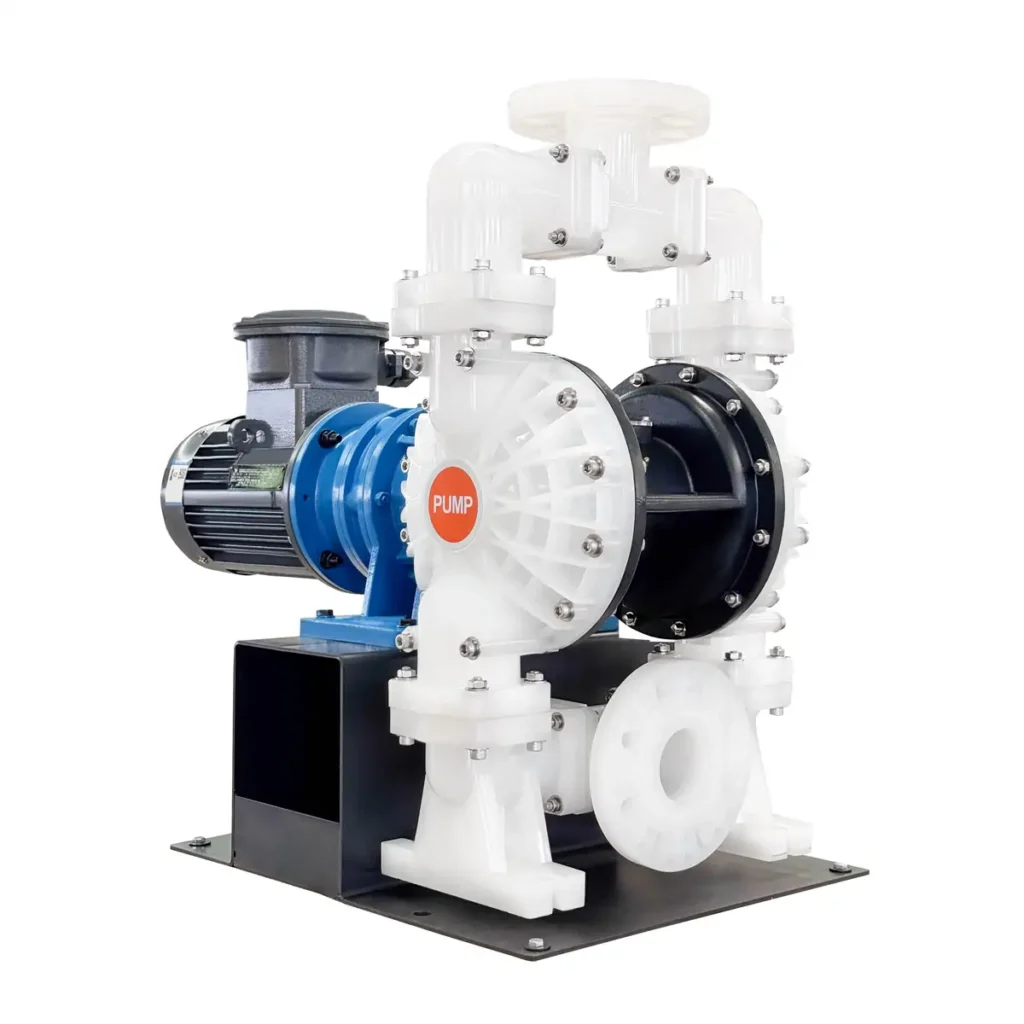
La série BFD est une pompe à membrane électrique motorisée qui fournit un débit stable et continu sans infrastructure d'air comprimé. La membrane forme une barrière sans joint entre le fluide de procédé et le mécanisme d'entraînement, ce qui la rend adaptée aux fluides corrosifs, abrasifs, à haute viscosité et volatils rencontrés dans la production d'engrais. Pour le dosage chimique, l'injection de réactifs, le contrôle du pH et le dosage de floculants dans le traitement des eaux usées des usines d'engrais, la série BFD offre un débit stable, une faible consommation d'énergie et une maintenance simplifiée par rapport aux alternatives pneumatiques.
Principales spécifications : Débit jusqu'à 480 L/min | Hauteur de chute jusqu'à 84 m | Puissance 0,75-45 kW | Température -20°C à 120°C
Pompe pneumatique à double membrane de la série BFQ

La série BFQ est une pompe pneumatique à double membrane dont le corps est en acier inoxydable. acier moulé, fonte ductile, alliage d'aluminium, PP, acier inoxydable et PVDF. Alimenté entièrement par air comprimé, il est intrinsèquement sans joint, auto-amorçant et peut fonctionner à sec sans dommage. Pour le drainage des puisards d'usine d'engrais, l'assèchement d'urgence, le transfert portable d'acide et les applications en zones dangereuses où l'alimentation électrique à la pompe n'est pas souhaitée, la série BFQ offre la flexibilité opérationnelle et la compatibilité chimique requises pour les services intermittents et de transfert auxiliaire.
Principales spécifications : Débit maximum jusqu'à 1 041 L/min | Pression de travail 0,84 MPa | Hauteur d'aspiration 7,6 m | Passage des solides 9,4 mm
Référence rapide pour la sélection des pompes d'engrais
| Série de pompes | Type | Meilleure application d'engrais | Matériaux clés |
|---|---|---|---|
| UHB | Centrifugeuse à revêtement UHMW-PE | Boue d'acide phosphorique, boue NPK, acide dilué, liqueur mère | UHMW-PE |
| CYQ | Entraînement magnétique sans joint | Eau ammoniacale, nitrate d'ammonium, H₂SO₄ concentré, fluides dangereux | FEP, PFA, PTFE |
| IHF | Centrifugeuse à revêtement fluoroplastique | Transfert d'acide en vrac, attaque de roche phosphatée, effluent de laveur, eaux usées chimiques | FEP, PFA, PTFE |
| BFD | Membrane électrique | Dosage chimique, injection de réactifs, contrôle du pH | Acier moulé, SS, PP, PVDF |
| BFQ | Double diaphragme pneumatique | Drainage de puisard, assèchement d'urgence, transfert portable d'acide | Acier moulé, SS, PP, PVDF |
Étude de cas : Prolongation de la durée de vie des pompes dans une usine d'engrais phosphatés
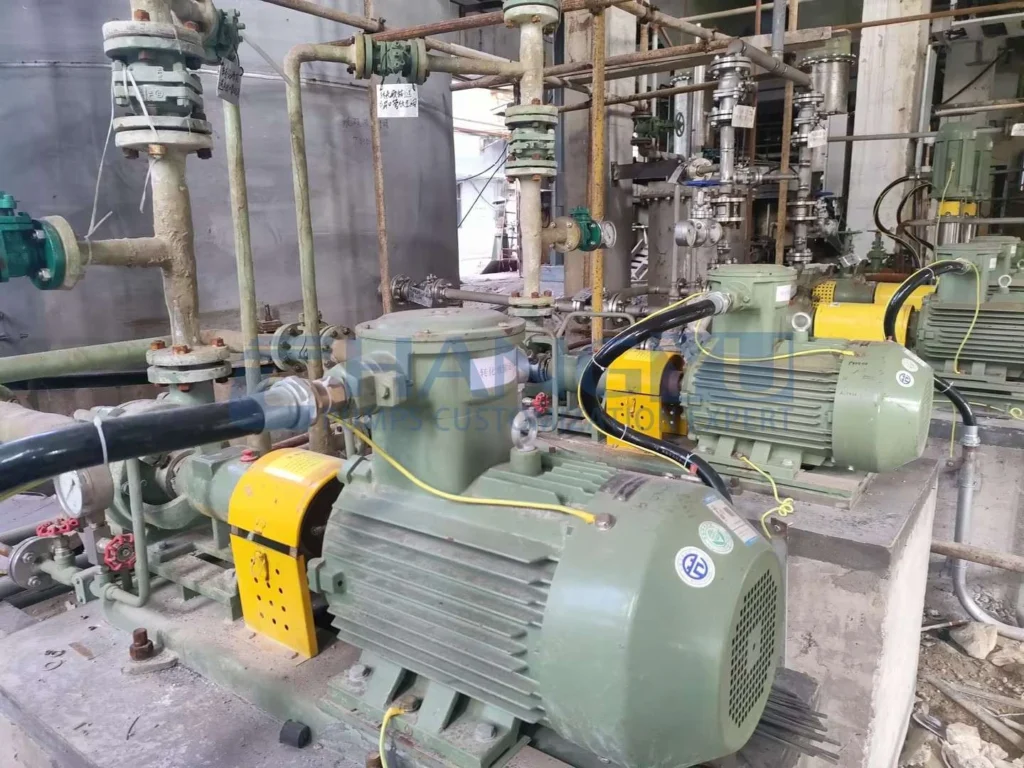
Le défi du client : Un producteur d'engrais phosphatés subissait des défaillances d'usure chroniques sur les pompes à boue manipulant la circulation du bac d'attaque d'acide phosphorique. Les conditions de procédé étaient sévères : acide à 41% de P₂O₅ avec des contaminants corrosifs (HF, H₂SiF₆, H₂SO₄, Cl⁻), 33% de solides (CaSO₄·0,5H₂O), température de fonctionnement de 95–100°C et présence de gaz entraîné. Les pompes existantes — construites en acier inoxydable duplex CD4MCuN et fonctionnant à environ 1 800 tr/min — nécessitaient le remplacement des pièces les plus usées tous les 3 à 6 mois. Dans des conditions de service similaires dans des usines d'engrais phosphatés nationales, il a été documenté que les composants de pompe en alliage CD-4MCu durent environ 1 500 à 4 000 heures de fonctionnement. Chaque défaillance provoquait une interruption de l'unité de réaction d'attaque, impactant directement le taux de production d'acide phosphorique de l'usine.
Analyse d'ingénierie : Les ingénieurs de Changyu Pump ont évalué les données de fonctionnement ainsi que le profil chimique et physique complet du fluide de procédé. La cause première de l'usure rapide était double. Le matériau CD4MCuN, bien qu'adéquat pour les procédés dihydratés à des températures plus basses, était insuffisant pour les conditions du procédé hémihydraté à 95–100°C avec des niveaux élevés d'impuretés de chlorure et de fluorure. La vitesse de fonctionnement élevée d'environ 1 800 tr/min produisait des vitesses en bout de pale qui accéléraient l'usure par érosion — une relation bien établie dans l'ingénierie des pompes à boues où le taux d'usure est proportionnel approximativement au cube de la vitesse en bout de pale.
Solution déployée : Changyu Pump a remplacé les pompes existantes en CD4MCuN par Série UHB Pompes centrifuges à revêtement UHMW-PE qui présente les modifications de conception suivantes :
- Un carter revêtu de PE-UHMW avec des parties mouillées épaissies : Le revêtement en PE-UHMW a éliminé tout contact de l'acide avec le carter de la pompe, supprimant ainsi la composante de corrosion de l'équation d'usure. La capacité d'absorption des chocs du matériau a également réduit le taux d'usure abrasive due à l'impact des cristaux de gypse.
- Des passages d'écoulement élargis et une roue semi-ouverte : Les jeux internes agrandis et la conception de la roue semi-ouverte ont permis aux solides de gypse de traverser la pompe sans colmatage et sans être broyés entre la roue et la paroi du carter.
- Système d'étanchéité dynamique propriétaire : La configuration du joint a été sélectionnée pour sa tolérance aux solides abrasifs présents dans la boue, éliminant l'intrusion de solides qui avait endommagé les précédents joints mécaniques.
- Vitesse de fonctionnement réduite : La pompe a été dimensionnée pour fonctionner à une vitesse de rotation plus faible tout en fournissant le débit et la hauteur manométrique requis, réduisant ainsi la vitesse en bout de pale et le taux d'usure abrasive associé.
Résultats quantifiés (évaluation à 18 mois) :
| Métrique | Avant la mise à niveau (CD4MCuN, ~1 800 tr/min) | Après la mise à niveau (PE-UHMW, vitesse réduite) | Amélioration |
|---|---|---|---|
| Durée de vie des pièces d'usure | 3–6 mois | > 14 mois (toujours en service) | Extension de 3 à 5 fois |
| Arrêts imprévus liés à la pompe par an | 3–4 | < 1 | Réduction d'environ 75 % |
| Coût de maintenance annuel par pompe | 28 000 USD | 9 800 USD | Réduction d'environ 65 % |
| Stock de pièces de rechange pour pompe | Élevé (remplacement fréquent) | Faible (durée de vie prolongée) | Stock réduit d'environ 60 % |
L'usine a par la suite étendu la spécification de la pompe à revêtement PE-UHMW à d'autres postes de transfert de boues sur la ligne de production d'acide phosphorique.
Foire aux questions sur les pompes pour engrais
Q1 : Quels sont les meilleurs matériaux pour les pompes à boues d'acide phosphorique ?
R : Le choix du matériau dépend du procédé spécifique. Pour les procédés dihydratés à des températures plus basses (70–80°C), l'acier inoxydable duplex CD4MCuN offre une durée de vie acceptable. Pour les procédés hémihydratés à des températures plus élevées (95–100°C) avec des niveaux d'impuretés plus élevés, l'acier inoxydable super austénitique 654 SMO® ou les pompes à revêtement PE-UHMW offrent la résistance combinée à la corrosion et à l'abrasion requise.
Q2 : Une pompe à entraînement magnétique peut-elle être utilisée pour le service de l'ammoniac dans la production d'engrais ?
R : Oui. Les pompes à entraînement magnétique sont la spécification standard pour l'injection d'eau ammoniacale, le transfert de nitrate d'ammonium et toute application d'engrais nécessitant une rétention sans fuite. La conception sans joint élimine le joint mécanique — la voie de fuite la plus courante pour les fluides toxiques et inflammables.
Q3 : Quelle est la différence entre le CD4MCuN et le 654 SMO pour les applications d'engrais ?
R : Le CD4MCuN est un acier inoxydable duplex offrant une meilleure résistance à la corrosion et une résistance mécanique supérieure au 316L, largement utilisé dans les procédés d'acide phosphorique dihydraté. Le 654 SMO® est un acier inoxydable super austénitique à 6 % de Mo offrant une résistance supérieure à l'acide chaud à haute teneur en chlorure, prolongeant la durée de vie des pièces d'usure de quelques mois à plusieurs années dans le service hémihydraté.
Q4 : Comment sélectionner une pompe pour la production d'engrais composés NPK ?
R : La production de NPK génère une boue mixte qui est à la fois corrosive (due aux acides résiduels) et abrasive (due aux particules n'ayant pas réagi). Les pompes centrifuges à revêtement PE-UHMW offrent la meilleure protection combinée à des températures allant jusqu'à 90°C. Pour les procédés NPK à plus haute température, des pompes métalliques en CD4MCuN ou 654 SMO® avec des roues semi-ouvertes et des plaques d'usure remplaçables sont spécifiées.
Q5 : Qu'est-ce qui cause l'usure rapide des pompes à boues d'engrais ?
R : Trois facteurs interagissent : une vitesse de fonctionnement excessive — le taux d'usure est proportionnel approximativement au cube de la vitesse en bout de pale — combinée à une inadéquation des matériaux (utilisation de CD4MCuN là où du 654 SMO® ou du PE-UHMW est requis), et la synergie corrosion-abrasion où l'attaque acide affaiblit la surface métallique, qui est ensuite éliminée par l'impact des particules à un rythme accéléré.
Q6 : Quel système d'étanchéité est recommandé pour les pompes à boues d'acide phosphorique ?
R : Des joints mécaniques doubles avec un système de fluide barrière sous pression (Plan API 53) ou un joint dynamique avec une configuration de joint mécanique double assurent la rétention requise pour le service des boues d'acide phosphorique. Les faces des joints doivent être en carbure de silicium contre carbure de silicium pour une résistance maximale à l'abrasion.
Q7 : À quelle fréquence les pompes pour engrais doivent-elles être entretenues ?
R : Quotidiennement : surveiller le courant du moteur, la pression de refoulement et vérifier les vibrations inhabituelles. Hebdomadairement : vérifier le débit de rinçage du joint et la température des roulements. Mensuellement : mesurer le jeu de la roue et inspecter les plaques d'usure. Trimestriellement : inspection complète de la partie hydraulique. Annuellement : démontage complet et remplacement de tous les composants d'usure.
Q8 : Comment évaluer le coût total de possession d'une pompe pour engrais ?
R : Prendre en compte le coût d'investissement, la consommation d'énergie (60 à 70 % du coût sur la durée de vie), la fréquence de remplacement des pièces d'usure, la main-d'œuvre de maintenance et le coût de production des arrêts imprévus. Une pompe avec un coût de matériau initial plus élevé mais une durée de vie sensiblement plus longue dans les conditions de procédé spécifiques offre systématiquement un TCO inférieur.
11. Recommandations de sélection des experts de Changyu Pump Engineers
- Adaptez les matériaux à la chimie spécifique du procédé, et non à une étiquette générique “ résistant aux acides ”. Le CD4MCuN convient aux procédés d'acide phosphorique dihydraté à des températures plus basses mais échoue dans les procédés hémihydratés avec des niveaux plus élevés de chlorure et de fluorure. Vérifiez la compatibilité des matériaux avec l'acide spécifique à sa température de fonctionnement maximale et à son profil d'impuretés.
- Réduisez la vitesse de fonctionnement dans la mesure du possible. L'usure par érosion est proportionnelle approximativement au cube de la vitesse de la pointe de la roue. L'étude de cas de Changyu Pump démontre la valeur technique : la réduction de la vitesse, combinée à une roue de diamètre plein, a directement contribué à prolonger la durée de vie des pièces d'usure de 4 à 8 fois.
- Spécifiez un confinement sans fuite pour l'ammoniac, le nitrate d'ammonium et les fluides dangereux. Les pompes sans joint à entraînement magnétique éliminent le joint mécanique — la voie de fuite la plus courante — et offrent le confinement sans fuite requis pour un fonctionnement sûr et conforme avec les fluides toxiques et inflammables.
- Utilisez des pompes revêtues de PE-UHMW pour les services combinés de corrosion et d'abrasion à des températures modérées. Pour la boue d'acide phosphorique, la boue de NPK et l'acide dilué avec des solides abrasifs à des températures allant jusqu'à 90°C, le PE-UHMW offre la meilleure protection combinée à un coût de matériau inférieur à celui des alliages de haute qualité.
- Évaluez le coût total de possession sur un horizon de 3 à 5 ans, et non le seul prix d'achat. Tenez compte de l'énergie, des pièces d'usure, de la main-d'œuvre de maintenance et du coût de production des temps d'arrêt. Une pompe avec un coût de matériau initial plus élevé mais une durée de vie nettement plus longue dans les conditions de processus spécifiques offre systématiquement un TCO inférieur.
12. Conclusion
Choisir la bonne pompe pour la production d'engrais nécessite de naviguer dans une matrice où la chimie du processus, le profil des solides, la température et les exigences de contrôle des émissions influencent chacun indépendamment la spécification de la pompe. La chaîne de production d'acide phosphorique — du transfert d'acide sulfurique à l'attaque du phosphate naturel, en passant par la filtration de la boue et la concentration de l'acide — exige toute la gamme des technologies de pompes : pompes centrifuges de process pour le transfert d'acide en vrac, pompes à boue chimique et pompes de process résistantes à l'usure pour les services de boue abrasive et corrosive, pompes à flux axial pour la circulation des évaporateurs, et pompes à entraînement magnétique pour les services à l'ammoniac sans fuite.
La décision de sélection du matériau est le point de départ duquel découlent le type de pompe, la configuration du joint et les paramètres de fonctionnement. L'acier inoxydable duplex CD4MCuN sert les processus d'acide phosphorique dihydraté. L'acier inoxydable super austénitique 654 SMO® et les pompes revêtues de PE-UHMW prolongent la durée de vie dans les applications hémihydratées et à haute température. L'étude de cas fournit un exemple quantifié : le passage du CD4MCuN au PE-UHMW combiné à une réduction de la vitesse de fonctionnement a prolongé la durée de vie des pièces d'usure de 3 à 6 mois à plus de 14 mois, réduisant la fréquence de maintenance jusqu'à 75 %.
Dans toutes les applications d'engrais, les principes restent cohérents : caractérisez complètement le fluide de process ; adaptez le système de matériaux à la chimie spécifique de l'acide, à la température et au profil d'impuretés ; sélectionnez le type de pompe adapté au service hydraulique et à la teneur en solides ; réduisez la vitesse de fonctionnement lorsque cela est pratique ; spécifiez un confinement sans fuite pour les fluides dangereux ; et évaluez le coût total de possession sur un horizon de plusieurs années.
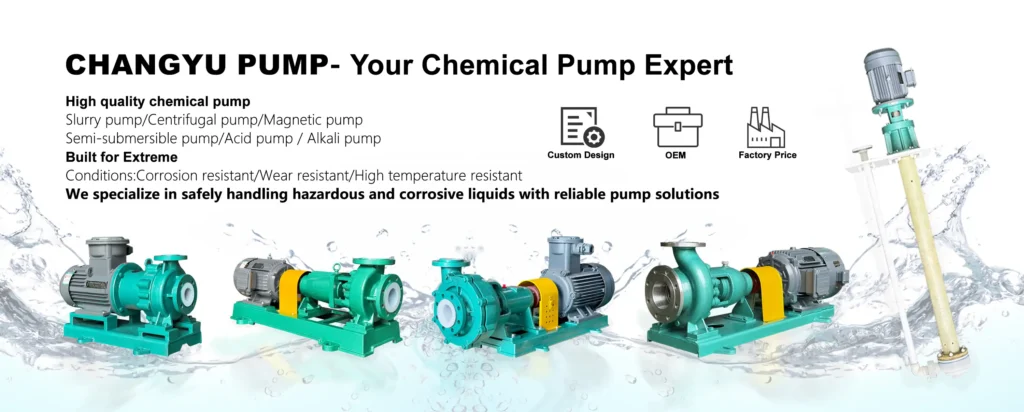
Contacter Changyu Pump avec vos paramètres et exigences de processus d'engrais. Notre équipe d'ingénierie fournira une recommandation de pompe détaillée et un devis adapté à votre application spécifique.