
Réponse rapide
Les meilleures pompes à boue pour le traitement de l'or, du fer, du cuivre et des minéraux partagent une base commune : une construction centrifuge lourde avec des revêtements d'usure remplaçables. Cependant, chaque type de minerai impose des exigences distinctes en matière de matériaux, de conception de la roue et de configuration de la pompe. Facteurs de sélection clés par type de minerai :
- Minerai d'or: La fonte blanche à haute teneur en chrome (CrMo, 600–700 HB / environ HV 600–700) est la norme pour les boues d'or abrasives riches en silice. Les revêtements en caoutchouc fonctionnent bien avec les résidus d'or finement broyés à pH neutre.
- Minerai de fer: Le CrMo à haute teneur en chrome est requis — les particules angulaires et denses de magnétite et d'hématite coupent rapidement les revêtements en caoutchouc. Des configurations de pompes en série haute pression sont souvent nécessaires pour le transport des résidus sur de longues distances.
- Minerai de cuivre: Le choix du matériau dépend du circuit de procédé. Les circuits de flottation alcalins permettent l'utilisation de revêtements en caoutchouc ; la lixiviation acide en tas exige des alliages résistants à la corrosion ou des pompes revêtues.
- Traitement des minéraux: Pour tous les types de minerai, le coût total de possession est dominé par la fréquence de remplacement des pièces en contact avec le fluide et les temps d'arrêt non planifiés — et non par le prix d'achat initial.
Les pompes pour le traitement des minéraux manipulent des boues qui détruisent les pompes industrielles standard en quelques semaines. La combinaison de particules dures et angulaires, de densités de boue élevées et d'eau de procédé souvent corrosive crée un environnement d'usure où le choix des matériaux et la conception de la pompe déterminent si une pompe fonctionne de manière fiable pendant 18 mois ou tombe en panne en 8 semaines. Une mine d'or avec un minerai riche en quartz, un concentrateur de minerai de fer avec une boue dense de magnétite et une mine de cuivre avec lixiviation acide en tas nécessitent chacun des spécifications de pompe différentes — même si les trois sont classés comme “pompes à boues.”
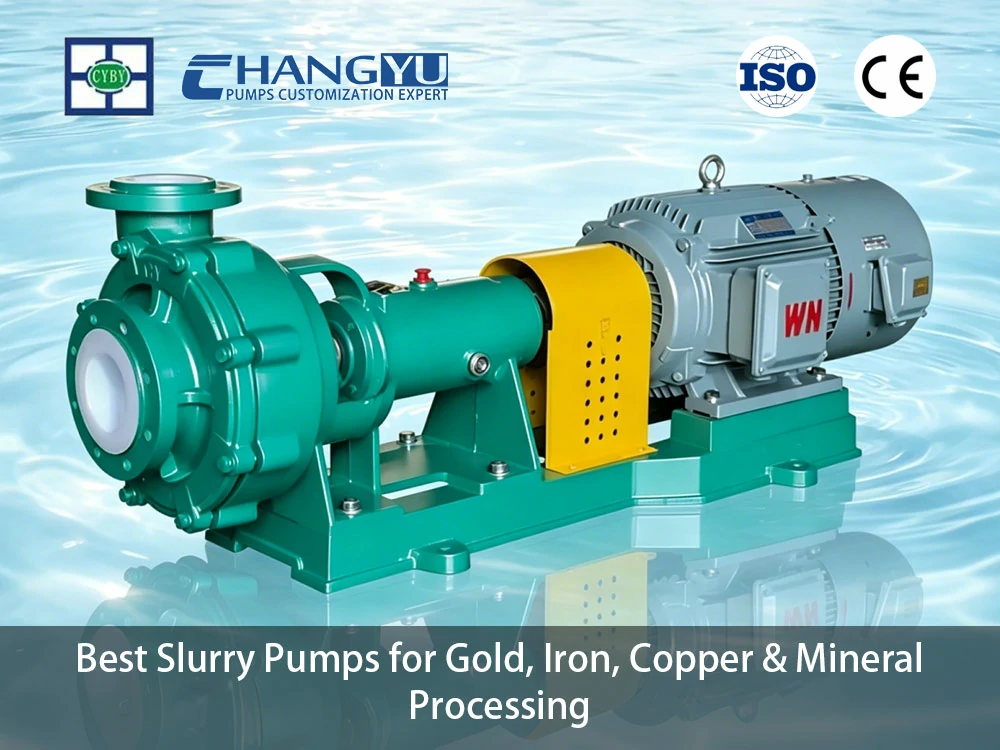
Pompe Changyu a fabriqué des pompes à boue pour les applications minières et de traitement des minéraux sur l'ensemble du spectre des types de minerai. Ce guide fournit des recommandations de pompes spécifiques au minerai, des conseils de sélection des matériaux et le cadre du coût total de possession pour évaluer les investissements dans les pompes à boue pour les circuits de traitement des minéraux, et d'or, de fer et de cuivre.
Qu'est-ce qui rend les boues de traitement des minéraux si abrasives pour les pompes à boue ?
Les boues de traitement des minéraux soumettent les composants de la pompe à quatre mécanismes d'usure simultanés. La contribution relative de chaque mécanisme varie selon le type de minerai, et cette variation guide le choix des matériaux.
- Usure par coupe: Des particules tranchantes et angulaires glissent sur les surfaces de la pompe à des angles faibles, enlevant de la matière par micro-coupe. Dominante dans les boues d'or et de minerai de fer à haute teneur en silice.
- Usure par érosion: Des particules fines entraînées dans un écoulement à haute vitesse impactent les surfaces de manière répétée, provoquant une perte de matière progressive. Présente dans toutes les boues minérales ; la plus sévère dans les circuits d'alimentation des cyclones et de résidus.
- Usure par impact: De grosses particules frappent les surfaces de la pompe à des angles raides, provoquant une déformation plastique ou une rupture fragile. La plus significative dans les applications de décharge de broyeur et de puisard de concasseur.
- Synergie corrosion-érosion: L'eau de procédé acide ou les agents de lixiviation attaquent la surface du matériau de la pompe, formant une couche affaiblie que les particules abrasives enlèvent ensuite. La plus significative dans la lixiviation acide en tas du cuivre et certains circuits CIL/CIP de l'or.
Remarques : Le mécanisme d'usure dominant détermine le matériau d'usure optimal.
Quelles pompes à boue sont les meilleures pour les applications d'extraction d'or ?
Le traitement du minerai d'or présente une combinaison unique de défis : le minerai contient généralement du quartz (Mohs 7), qui est plus dur que les matériaux de pompe standard. L'or est souvent traité par lixiviation au cyanure, ce qui introduit des exigences de compatibilité chimique. Et le minerai d'or est fréquemment finement broyé pour maximiser la récupération, produisant des boues abrasives avec des concentrations élevées de solides.
Type de pompe recommandé: Pompe centrifuge horizontale à boue avec composants en contact avec le fluide en CrMo à haute teneur en chrome.
Matériau d'usure principal: Fonte blanche à haute teneur en chrome (26–28 % Cr, 600–700 HB). Les carbures de chrome durs résistent à la coupe par les particules de quartz angulaires. Pour les résidus finement broyés à pH neutre, les revêtements en caoutchouc naturel offrent une alternative économique — la résilience du caoutchouc absorbe l'impact des particules fines sans coupe.
Circuits d'extraction d'or et exigences des pompes:
| Circuit | Solides | Taille des particules | Sévérité de l'usure | Matériau |
|---|---|---|---|---|
| Débit du moulin | 40–70% | Jusqu'à 25 mm | Extrême | CrMo à haute teneur en chrome |
| Alimentation par cyclone | 40–60% | Jusqu'à 25 mm | Extrême | CrMo à haute teneur en chrome |
| Alimentation de lixiviation (CIL/CIP) | 40–50 % | < 150 μm | Modéré | Caoutchouc (finement broyé, pH neutre) ; CrMo à haute teneur en chrome (particules grossières ou angulaires) |
| Résidus | 30–45 % | < 1 mm | Modéré à élevé | CrMo ou caoutchouc |
Les ingénieurs de Changyu Pump notent: Les résidus d'or contiennent souvent du cyanure résiduel, qui n'attaque pas directement les matériaux de la pompe mais nécessite une attention particulière pour la sélection des garnitures mécaniques et les procédures de sécurité de maintenance. Les garnitures mécaniques doubles avec fluide de barrière et des matériaux de garniture compatibles avec le cyanure assurent un confinement fiable pour les boues contenant du cyanure.
Quelles pompes à boue sont les meilleures pour le traitement du minerai de fer ?
Le minerai de fer (hématite, magnétite) présente l'environnement abrasif le plus exigeant dans le traitement des minéraux. Les particules de magnétite ont une dureté Mohs de 5,5 à 6,5 avec une morphologie angulaire aux arêtes vives. Les densités de boue sont parmi les plus élevées dans l'exploitation minière — généralement 1,5–1,8 SG — imposant des charges extrêmes sur les roulements et les arbres de la pompe. Les concentrateurs de minerai de fer nécessitent également le transport des résidus sur de longues distances, exigeant une capacité de pompe haute pression.
Type de pompe recommandé: Pompe centrifuge horizontale à boue robuste avec pièces en contact avec le fluide en CrMo à haute teneur en chrome, roulements surdimensionnés et jeu de roue ajustable.
Matériau d'usure principal: La fonte blanche à haute teneur en chrome est requise. Le caoutchouc naturel et le polyuréthane sont inadaptés — les particules angulaires de magnétite et d'hématite coupent les élastomères au contact. La seule décision concernant le matériau est le grade spécifique de CrMo (généralement 26–28 % Cr, 600–700 HB) et s'il faut spécifier un chromage dur sur la roue pour une durée de vie d'usure supplémentaire.
Circuits de minerai de fer et exigences des pompes:
| Circuit | Solides | Exigence de hauteur manométrique | Sévérité de l'usure | Configuration |
|---|---|---|---|---|
| Débit du moulin | 40–70% | 30–60 m | Extrême | CrMo monocellulaire |
| Alimentation du séparateur magnétique | 30–50% | 15–25 m | Haut | CrMo monocellulaire |
| Transfert de concentré | 40–60% | 20–40 m | Haut | CrMo monocellulaire |
| Résidus (courte distance) | 30–50% | 20–40 m | Haut | CrMo monocellulaire |
| Résidus (longue distance) | 30–50% | 50–150+ m | Haut | Configuration en série (plusieurs pompes monocellulaires) |
Quelles pompes à boue sont les meilleures pour l'extraction du cuivre ?
Le traitement du minerai de cuivre implique deux environnements chimiques fondamentalement différents. Dans le circuit de flottation, la pulpe est alcaline (pH 9–11) et les minéraux de cuivre (chalcopyrite, dureté Mohs 3,5–4) sont relativement tendres. Dans le circuit de lixiviation en tas, une solution d'acide sulfurique (pH 1,5–3) crée un environnement corrosif que les alliages standard à haute teneur en chrome ne peuvent pas supporter. La sélection de la pompe doit distinguer ces deux circuits.
Circuit de flottation alcaline:
- Type de pompe recommandé: Pompe centrifuge horizontale pour pulpe
- Matériau d'usure: Les revêtements en caoutchouc fonctionnent bien avec un concentré de cuivre fin et non abrasif en pH alcalin. Le CrMo à haute teneur en chrome est une alternative pour une alimentation de flottation plus grossière.
- Considération clé: La mousse de flottation peut entraîner de l'air dans la pulpe — la pompe doit gérer une teneur modérée en gaz sans perdre son amorçage.
Circuit de lixiviation en tas acide:
- Type de pompe recommandé: Pompe centrifuge en acier inoxydable ou revêtue
- Matériau d'usure: Le CrMo standard se corrode rapidement dans l'acide sulfurique en dessous de pH 4. Spécifiez l'acier inoxydable 316 (basse température, < 30°C uniquement) ; le duplex 2205 ; ou les pompes revêtues d'UHMW-PE pour la résistance aux acides.
- Considération clé: Les solutions de lixiviation sont généralement pauvres en solides (solution de lixiviation enrichie) ou contiennent des solides fins et précipités. L'usure est secondaire par rapport à la résistance à la corrosion.
Circuits de cuivre et exigences des pompes:
| Circuit | pH | Sévérité de l'usure | Risque de corrosion | Matériau |
|---|---|---|---|---|
| Alimentation de flottation | 9–11 | Modéré | Faible | Caoutchouc ou CrMo |
| Transfert de concentré | 9–11 | Haut | Faible | CrMo à haute teneur en chrome |
| Alimentation de lixiviation en tas (acide) | 5–3 | Faible à modéré | Haut | Acier inoxydable 316 (< 30°C) / Duplex 2205 / Revêtement UHMW-PE |
| Résidus | Variable | Modéré à élevé | Modéré | CrMo ou caoutchouc |
Comment sélectionner le bon matériau d'usure pour les pompes à pulpe minières ?
Les trois principaux matériaux d'usure — la fonte blanche à haute teneur en chrome, le caoutchouc naturel et les céramiques — ont chacun une fenêtre de fonctionnement distincte. La décision de sélection est dictée par la dureté du minerai, la forme des particules, le pH de la pulpe et la présence d'impact de grosses particules. C'est le fondement d'une sélection efficace du matériau d'usure des pompes à pulpe.
Fonte blanche à haute teneur en chrome (CrMo):
- Dureté : 600–700 HB / environ HV 600–700. Mécanisme d'usure : La dureté résiste à la coupe.
- Idéal pour : Particules angulaires et dures (Mohs > 5) — minerais d'or, de fer et de cuivre grossier.
- Limitations : Se corrode dans les pulpes acides en dessous de pH 4. Ne convient pas à la lixiviation en tas du cuivre.
Caoutchouc naturel:
- Dureté : < 50 HB (repose sur la résilience, pas la dureté).
- Idéal pour : Particules fines et arrondies (Mohs < 4) en pH neutre — résidus fins de flottation du cuivre, résidus fins d'or.
- Limitations : Coupé par des particules angulaires et tranchantes. Limite de température 70°C.
Céramique (SiC / Al₂O₃):
- Dureté : HV 1500–2800. Mécanisme d'usure : Dureté extrême résiste à la coupe.
- Idéal pour : Pulpes très fines sans impact — sables minéraux, résidus fins.
- Limitations : Fragile — se fracture sous l'impact de particules > 1–2 mm. Coût plus élevé.
Matrice de sélection des matériaux pour les pulpes minières:
| Type de minerai | Dureté des particules (Mohs) | Forme des particules | pH | Matériau recommandé |
|---|---|---|---|---|
| Or (riche en quartz) | 7.0 | Anguleuse | 600–700 HB | CrMo à haute teneur en chrome |
| Or (résidus fins) | 7.0 | Fines, arrondies | 600–700 HB | Caoutchouc (si pH neutre) |
| Minerai de fer (magnétite) | 5–6.5 | Anguleuse | 6-8 | CrMo à haute teneur en chrome |
| Cuivre (flottation) | 5–4.0 | Mélangé | 9–11 | Caoutchouc ou CrMo |
| Cuivre (lixiviation en tas) | 5–4.0 | Fines | 5–3 | Acier inoxydable 316 (< 30°C) / Duplex 2205 / Revêtement UHMW-PE |
| Sables minéraux | 0–6.5 | Arrondie | 6-8 | CrMo à haute teneur en chrome (préféré) ; Caoutchouc (acceptable pour les fines, < 100 μm avec une durée de vie réduite) |
Les ingénieurs de Changyu Pump recommandent: Faire correspondre le matériau d'usure aux particules les plus dures et les plus tranchantes de la pulpe — pas à la moyenne. Une mine de cuivre avec des résidus riches en quartz nécessite des matériaux sélectionnés pour le quartz (Mohs 7), pas pour le minerai de cuivre (Mohs 3,5–4). Ce seul principe prévient la cause la plus fréquente de défaillance prématurée de la partie hydraulique dans les pompes de traitement des minéraux. Lors de la sélection du matériau de la roue de la pompe à pulpe, considérez que les bords d'attaque des aubes de la roue subissent l'usure par coupe la plus élevée — spécifiez le matériau compatible le plus dur pour ces zones à forte usure.
Étude de cas : Prolonger la durée de vie d'une pompe à pulpe dans une application de résidus de cuivre
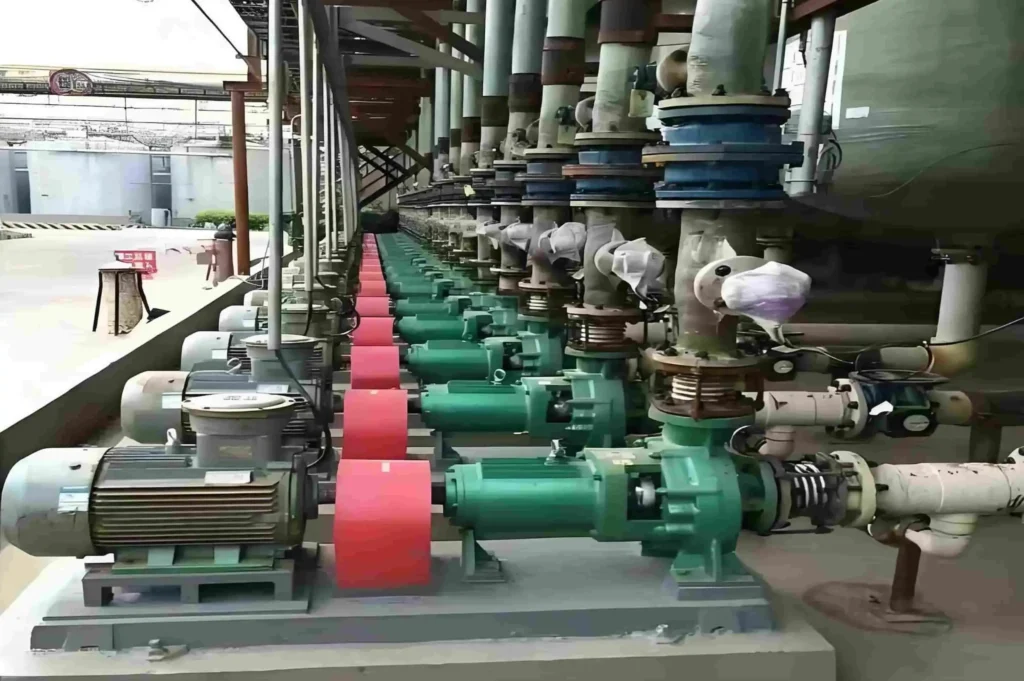
Une mine de cuivre au Chili exploitait des pompes à résidus avec des composants hydrauliques en CrMo à haute teneur en chrome. Les résidus contenaient des particules riches en quartz (Mohs 7) de la roche hôte — nettement plus dures que les minéraux de cuivre pour lesquels les pompes avaient été spécifiées. Le remplacement de la partie hydraulique était nécessaire tous les 3 à 4 mois, chaque remplacement entraînant 36 heures d'arrêt non planifié et des pertes de production d'environ $85 000 par événement.
L'inspection a confirmé que l'alliage CrMo (650 HB) était coupé par les particules de quartz plus dures (HV 800–1000) à chaque contact de particule. La sélection du matériau — appropriée pour le minerai de cuivre — n'avait pas tenu compte de la teneur en quartz dans les résidus.
Changyu Pump a mis à niveau les composants hydrauliques vers un alliage CrMo de qualité supérieure avec un placage au chrome dur sur la roue (HV 850–1050). La surface chromée offrait un avantage de dureté par rapport aux particules de quartz que l'alliage d'origine ne pouvait pas atteindre.
L'intervalle de remplacement de la partie hydraulique est passé de 3–4 mois à plus de 16 mois — une amélioration de 4 à 5 fois. La prime de coût du matériau a été récupérée en 5 mois grâce à l'élimination des arrêts non planifiés.
Key takeaway: La sélection du matériau doit tenir compte des particules les plus dures de la pulpe — pas du minéral cible à récupérer. Une mine de cuivre avec une roche hôte en quartz nécessite des matériaux d'usure sélectionnés pour le quartz, pas pour la chalcopyrite.
Solutions de pompes à pulpe minières de Changyu Pump
Changyu Pump fabrique des séries de pompes configurées pour l'ensemble des applications de pulpe minière, du refoulement du broyeur à l'élimination des résidus.
Sélection de produits pour les applications minières
| Application | Type de minerai | Challenge | Série recommandée | Matériau |
|---|---|---|---|---|
| Débit du moulin | Or, fer | Usure extrême | PGY Series | CrMo à haute teneur en chrome |
| Résidus (abrasifs) | Or, fer | Usure élevée + hauteur manométrique élevée | PGY Series | CrMo à haute teneur en chrome |
| Alimentation de flottation du cuivre | Cuivre | Usure modérée | Série HB | Caoutchouc ou CrMo |
| Lixiviation en tas du cuivre | Cuivre | Corrosion | Série UHB | Doublure en UHMW-PE |
| Sables minéraux | Sables minéraux | Abrasion | Série HB | CrMo ou caoutchouc |
Série PGY — Pompe à pulpe robuste à haute hauteur manométrique
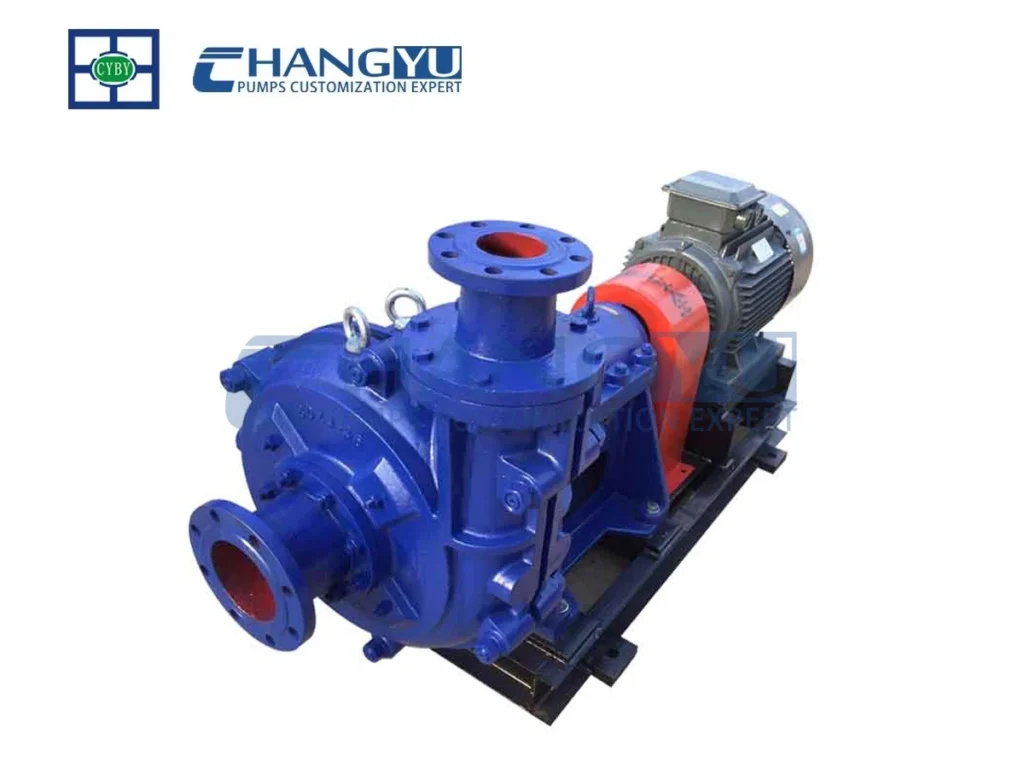
Conçue pour les conditions de haute hauteur manométrique et d'usure sévère. La conception à double enveloppe permet le remplacement des pièces en contact avec le fluide sans démonter la tuyauterie. Disponible en alliages à haute teneur en chrome (BTMCr27, Cr28, Cr33) pour les résidus abrasifs d'or, de fer et de cuivre. Hauteur manométrique maximale d'environ 100 mètres — adaptée au transport de résidus sur de longues distances.
| Paramètres | Spécifications |
|---|---|
| Débit | 117–976 m³/h |
| Tête | 1–101.6 m |
| Puissance du moteur | 22–560 kW |
| Matériaux | BTMCr27 / BTMCr28 / BTMCr33 / acier inoxydable duplex |
Série HB — Pompe à pulpe en acier inoxydable
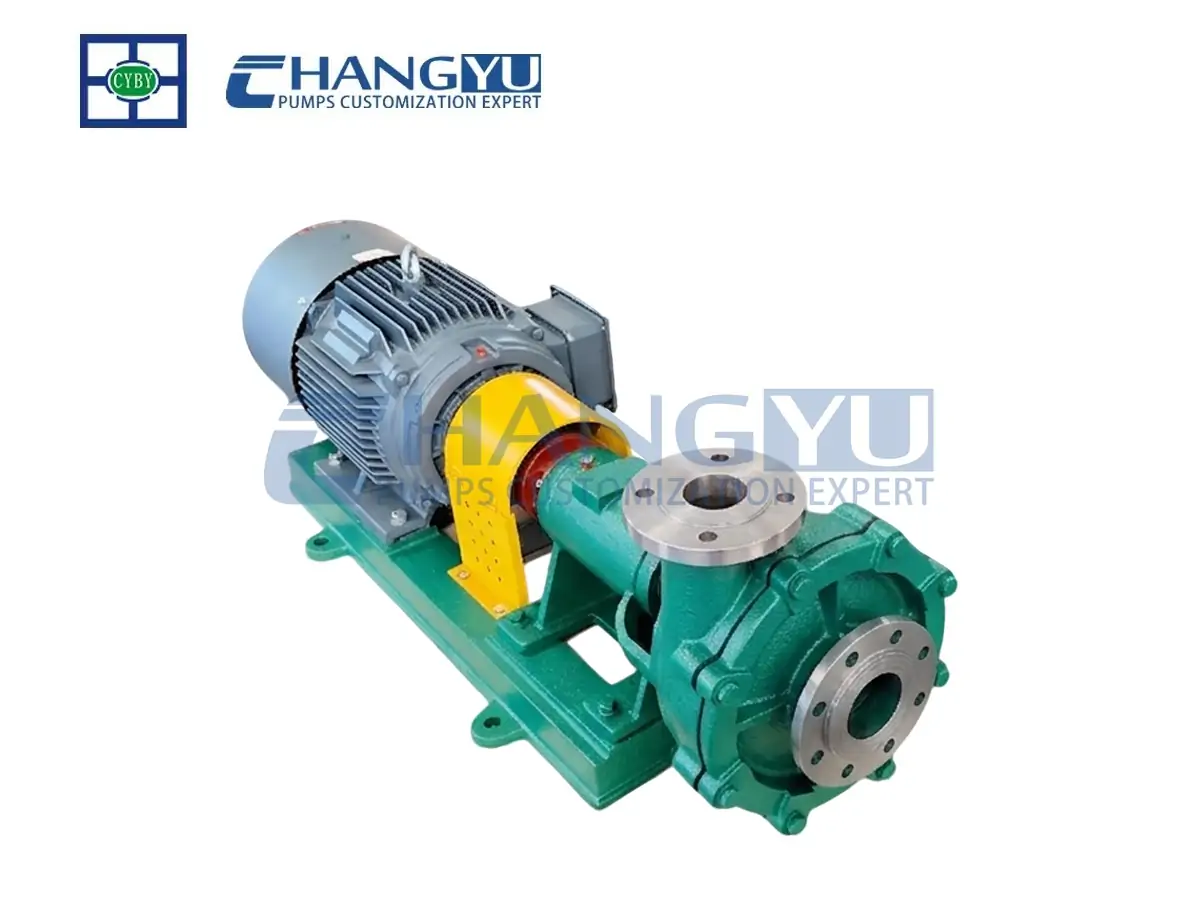
Pompe centrifuge horizontale conforme à la norme ISO 2858 avec une construction entièrement en acier inoxydable pour les parties en contact avec le fluide. Convient aux circuits de flottation du cuivre, aux pulpes à abrasion modérée et aux applications où une résistance à la corrosion est requise en plus de la résistance à l'usure. Disponible en nuances 304, 316L, 2205 et 2507.
| Paramètres | Spécifications |
|---|---|
| Débit | 10-60 m³/h |
| Tête | 20-120 m |
| Puissance du moteur | 3-45 kW |
| Matériaux | 304 / 316L / 2205 / 2507 |
Série UHB — Pompe à pulpe chimique revêtue d'UHMW-PE
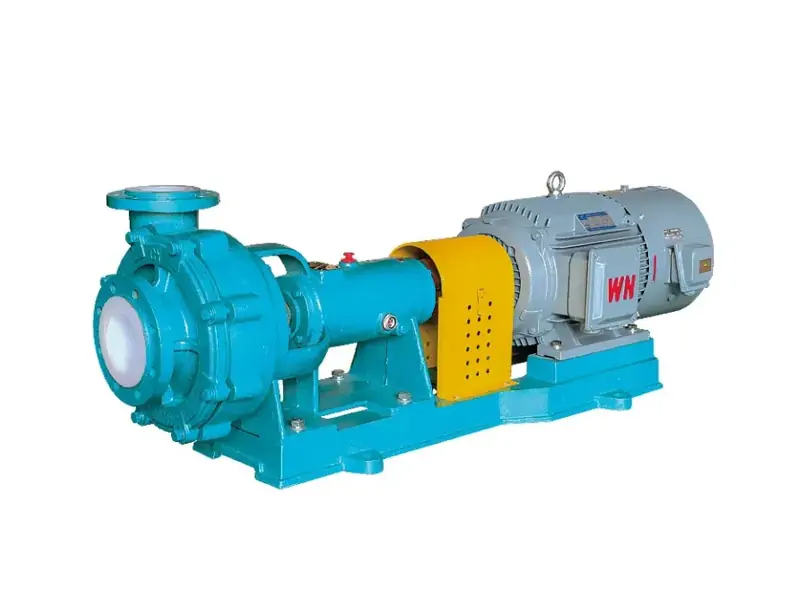
Pompe centrifuge en acier revêtu d'UHMW-PE pour solutions acides de lixiviation du cuivre et boues minérales corrosives. L'UHMW-PE offre une excellente résistance à l'acide sulfurique aux concentrations et températures typiques de la lixiviation en tas du cuivre, combinée à une résistance à l'abrasion pour les solides fins.
| Paramètres | Spécifications |
|---|---|
| Débit | 3-2 600 m³/h |
| Tête | 5-100 m |
| Puissance du moteur | 0,75-300 kW |
| Température | De -20°C à 90°C |
| Matière de la doublure | UHMW-PE |
FAQ sur les meilleures pompes à boue pour le traitement de l'or, du fer, du cuivre et des minéraux
Q : Quelle est la meilleure pompe à boue pour l'extraction de l'or ?
R : Les pompes à boue centrifuges en fonte blanche à haute teneur en chrome sont la norme pour les boues aurifères abrasives riches en quartz. Pour les résidus aurifères finement broyés à pH neutre, les revêtements en caoutchouc naturel offrent une alternative économique avec une bonne durée de vie à l'usure.
Q : Puis-je utiliser la même pompe à boue pour le minerai de fer et le minerai de cuivre ?
R : Pas sans modification. Le minerai de fer nécessite du CrMo à haute teneur en chrome pour les boues de magnétite angulaires à haute densité. Le minerai de cuivre dans les circuits de flottation alcalins peut utiliser des revêtements en caoutchouc ; le minerai de cuivre dans la lixiviation acide en tas nécessite des matériaux résistants à la corrosion tels que l'acier inoxydable ou les pompes revêtues.
Q : Quelle est la durée de vie des composants de la partie hydraulique des pompes à boue minières ?
R : La durée de vie de la partie hydraulique varie de 3 mois à plus de 2 ans selon l'abrasivité du minerai, les caractéristiques des particules et le choix des matériaux. Le CrMo à haute teneur en chrome dans les résidus de minerai de fer atteint généralement 12 à 18 mois. Les revêtements en caoutchouc avec des particules angulaires tranchantes peuvent tomber en panne en quelques semaines.
Q : Quel matériau d'usure est le meilleur pour les pompes de traitement des minéraux ?
R : La fonte blanche à haute teneur en chrome (CrMo, 600–700 HB) est la valeur par défaut pour les particules dures et angulaires (or, minerai de fer). Le caoutchouc naturel convient aux particules fines et arrondies à pH neutre (flottation du cuivre, résidus d'or fins). Les céramiques offrent une durée de vie maximale dans les circuits à particules fines sans risque d'impact.
Q : Quelles normes s'appliquent aux pompes à boue minières ?
A : Normes pour les pompes à boue minières incluent ANSI/HI 12.1-12.6, qui régit la sélection et les tests de performance des pompes à boue. ASTM A532 définit la fonte blanche à haute teneur en chrome pour les composants de la partie hydraulique. ISO 9001 fournit une certification de gestion de la qualité de base.
Liste de contrôle des mesures de prévention pour les ingénieurs en pompes chez Changyu
- Faites correspondre le matériau d'usure à la particule la plus dure dans la boue — pas au minéral cible. La roche hôte de quartz dans une mine de cuivre nécessite des matériaux sélectionnés pour le quartz, pas pour la chalcopyrite.
- Ne spécifiez pas de revêtements en caoutchouc pour les particules angulaires. Les particules de magnétite, d'hématite et de quartz coupent le caoutchouc au contact. Réservez le caoutchouc pour les particules fines et arrondies à pH neutre.
- Spécifiez un jeu de roue réglable sur toutes les pompes à boue minières. À mesure que les composants de la partie hydraulique s'usent, le réglage externe du jeu rétablit l'efficacité sans démontage de la pompe.
- Maintenez la vitesse de la canalisation au-dessus de la vitesse de sédimentation critique — généralement 2,5–4,0 m/s pour les boues minières. Des vitesses plus faibles provoquent le dépôt de solides et le blocage de la canalisation.
- Pour les circuits de lixiviation acide du cuivre, spécifiez de l'acier inoxydable (316 uniquement en dessous de 30°C), du duplex 2205 ou des pompes revêtues. Le CrMo standard à haute teneur en chrome se corrode rapidement en dessous de pH 4.
- Gardez un ensemble complet de pièces de rechange pour la partie hydraulique en stock pour chaque position de pompe critique. Le coût de possession est négligeable par rapport à la perte de production lors d'un arrêt non planifié.
- Demandez des références de durée de vie d'usure auprès de mines en exploitation avec des caractéristiques de minerai similaires. Les données d'usure en laboratoire ne remplacent pas les performances documentées sur le terrain.
- Effectuez une analyse TCO de la pompe à boue minière sur 5 ans avant de rejeter les matériaux haut de gamme en raison du coût initial. Dans un service minier abrasif, la pompe la moins chère est rarement la moins coûteuse à posséder.
Conclusion
La meilleure pompe à boue pour le traitement des minéraux n'est pas un modèle unique — c'est la pompe correctement spécifiée pour le minerai, le circuit et les conditions d'exploitation spécifiques. Le traitement de l'or exige du CrMo à haute teneur en chrome pour résister à la coupe par les particules de quartz angulaires. Le minerai de fer nécessite les mêmes alliages à haute teneur en chrome, mais souvent dans des configurations de pompes en série à haute pression pour le transport des résidus sur de longues distances. Le traitement du cuivre se divise en deux stratégies de matériaux distinctes : le caoutchouc ou le CrMo pour la flottation alcaline, et les alliages résistants à la corrosion ou les pompes revêtues pour la lixiviation acide en tas. Pour tous les types de minerai, l'analyse TCO démontre systématiquement que les matériaux d'usure haut de gamme — sélectionnés pour les caractéristiques spécifiques du minerai — offrent des coûts de cycle de vie inférieurs à ceux des alternatives génériques.
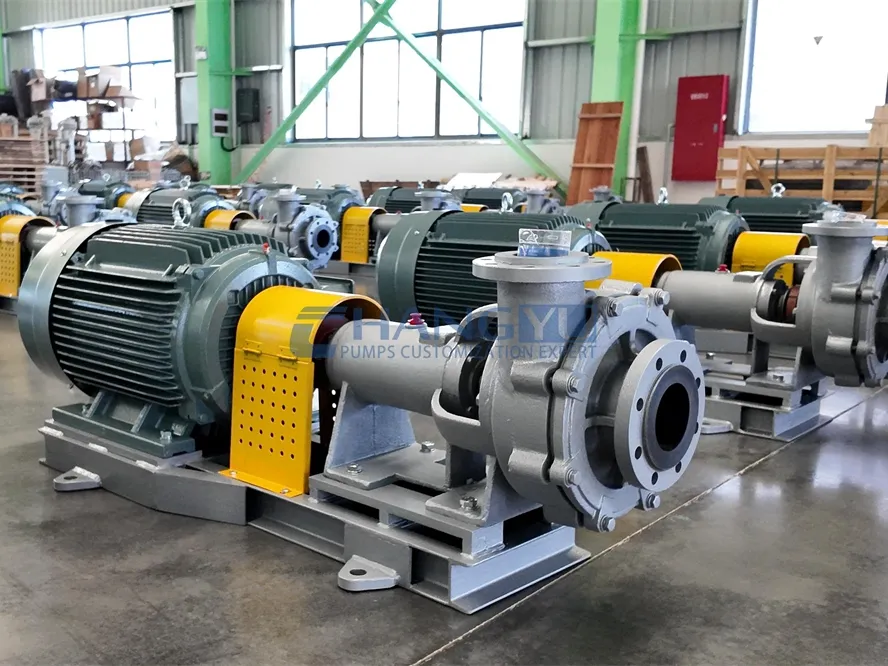
L'équipe d'ingénierie de Changyu Pump fournit des évaluations techniques spécifiques au minerai pour les applications de pompes à boue minières, soutenues par 20 ans d'expérience en fabrication dans l'ensemble des circuits de traitement des minéraux.
Contactez Changyu Pump pour une évaluation technique gratuite →