
Aperçu du projet
| Objet | Détails |
|---|---|
| Client | Une entreprise de fabrication de produits chimiques fins |
| L'industrie | Fabrication de pigments organiques et d'intermédiaires chimiques |
| Section processus | Procédé de traitement des eaux usées |
| Fluide pompé | Eaux usées résiduaires générées lors de la production de Violet Permanent, contenant de l'anthracène, de l'acide chlorhydrique, de l'acide sulfurique, des polluants alcalins et des intermédiaires organiques tels que le carbazole |
| Type de pompe | Pompe à boues résistante à la corrosion de la série UHB |
| Objectif de l'application | Pour résoudre les défis de corrosion, d'usure et de fonctionnement continu lors du transfert d'eaux usées chimiques complexes |
| Localisation du projet | Chine |
Contexte du projet
Dans la production chimique fine, la section de traitement des eaux usées n'est pas simplement un processus de transfert de liquide. Par rapport aux eaux usées industrielles conventionnelles, les eaux usées chimiques contiennent souvent plusieurs composants chimiques, des substances corrosives et des impuretés en suspension, ce qui crée des exigences plus élevées pour les équipements de pompage.
Dans ce projet, le client fabrique des pigments organiques tels que le Violet Permanent. Au cours du processus de production, divers liquides résiduaires sont générés et transférés vers le système de traitement des eaux usées. Contrairement aux eaux usées générales, ces eaux usées chimiques contiennent de l'acide chlorhydrique, de l'acide sulfurique, des polluants alcalins, de l'anthracène, du carbazole et d'autres intermédiaires organiques.
En raison de la composition complexe du fluide, les pompes utilisées dans cette application doivent résister à la fois à la corrosion chimique et à l'usure mécanique lors d'un fonctionnement à long terme. Les pompes métalliques standard peuvent gérer les applications de transfert de liquide courantes, mais elles rencontrent souvent des difficultés avec les eaux usées acides contenant des impuretés et des compositions chimiques fluctuantes.
Pendant la phase initiale de fonctionnement, l'équipement de pompage existant du client a rencontré plusieurs problèmes :
- Une corrosion est apparue sur les composants en contact avec le fluide après un contact prolongé avec les eaux usées acides, affectant le fonctionnement continu.
- Les intermédiaires organiques et les impuretés présents dans les eaux usées ont provoqué une usure des passages d'écoulement internes et réduit les performances de la pompe.
- Des exigences de maintenance fréquentes ont accru la pression opérationnelle sur le système de traitement des eaux usées.
Par conséquent, l'exigence clé de ce projet n'était pas simplement de sélectionner une pompe pour eaux usées, mais d'identifier une solution capable de gérer des eaux usées chimiques corrosives avec des composants complexes et des impuretés.
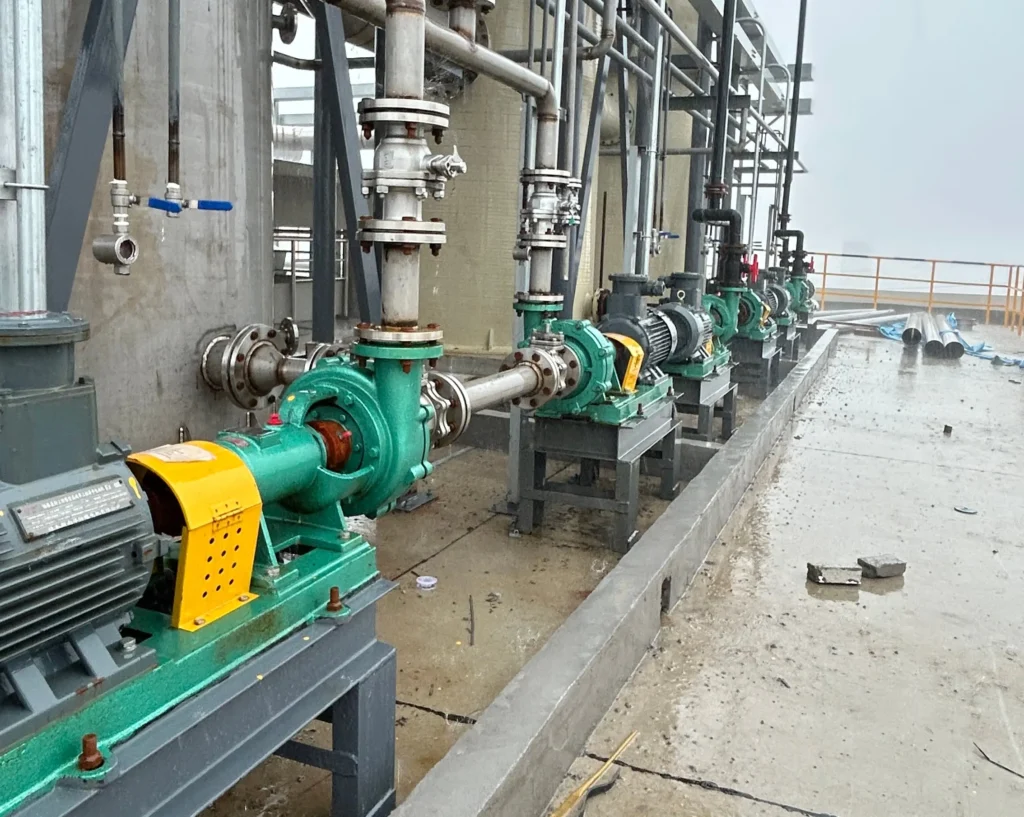
Après analyse des conditions de fonctionnement, Pompe Changyu a recommandé la Pompe à boue de la série UHB pour cette application de traitement d'eaux usées chimiques.
Solution Changyu Pump
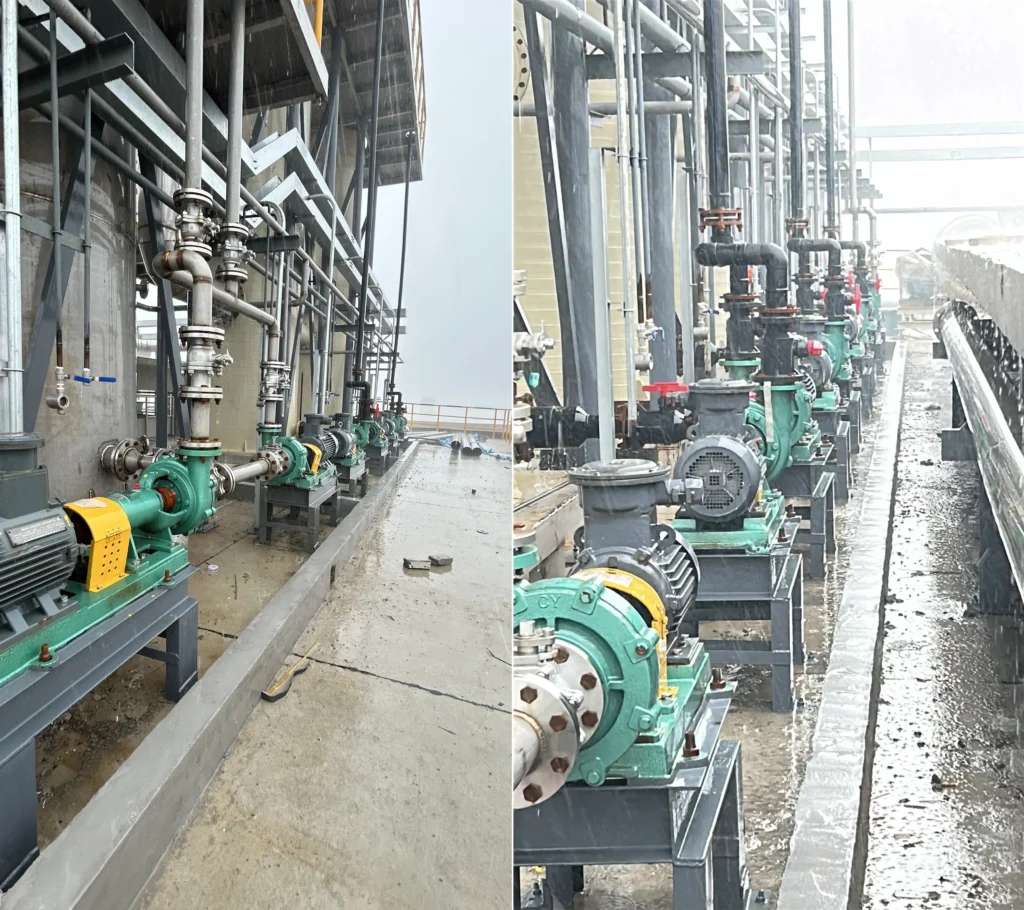
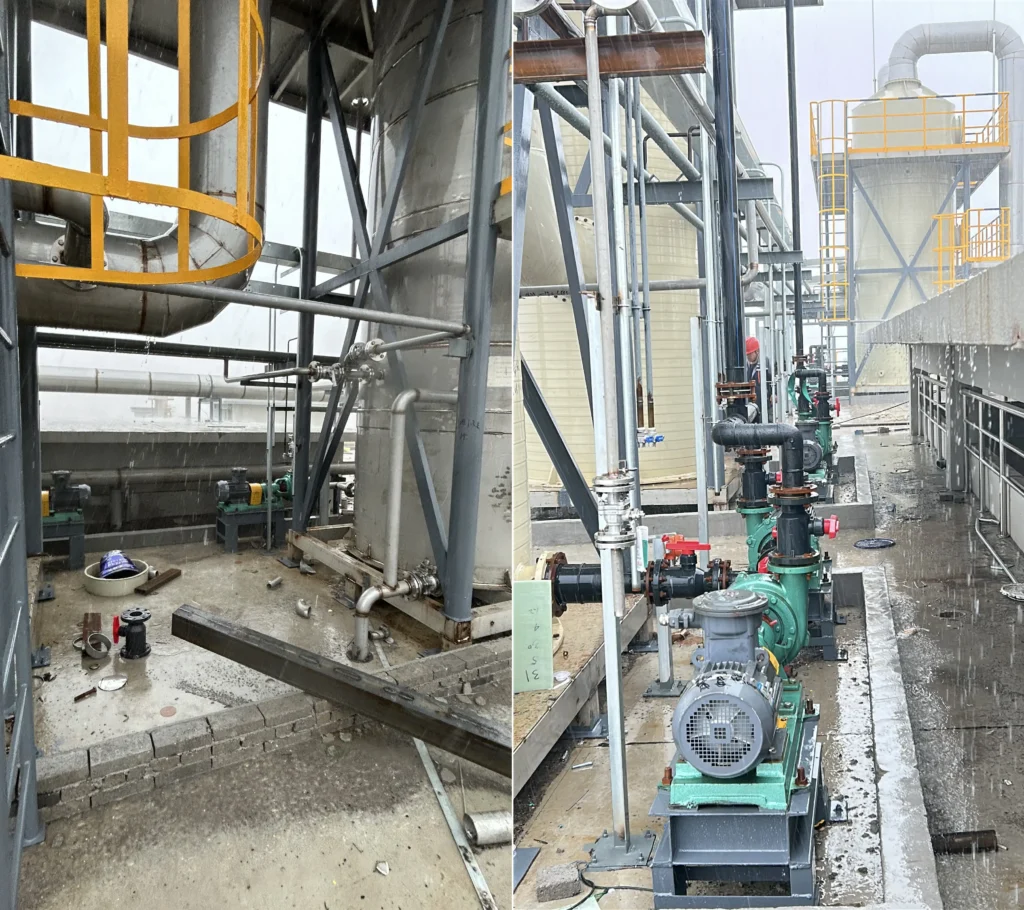
Pour ce projet, Changyu Pump a fourni une solution de pompage basée sur la pompe à boues résistante à la corrosion de la série UHB.
Lors de la sélection de la pompe appropriée pour les applications d'eaux usées chimiques, l'équipe d'ingénierie s'est concentrée sur trois facteurs critiques :
Premièrement, les eaux usées contenaient de l'acide chlorhydrique et de l'acide sulfurique, ce qui exigeait des matériaux de pompe offrant une forte résistance chimique pour éviter une corrosion rapide des composants en contact avec le fluide.
Deuxièmement, les eaux usées comprenaient des intermédiaires organiques tels que l'anthracène et le carbazole. La pompe devait être capable de gérer les dépôts potentiels, les impuretés et l'usure causés par des conditions de fluide complexes.
Troisièmement, le processus de traitement des eaux usées exigeait un fonctionnement continu stable, réduisant les temps d'arrêt causés par les pannes liées à la corrosion et la maintenance.
Sur la base de ces exigences, Changyu Pump a sélectionné la pompe à boues de la série UHB comme solution recommandée.
Avantages d'application de la pompe à boues de la série UHB
Conception résistante à la corrosion pour les eaux usées chimiques : La pompe à boues de la série UHB adopte une structure en polyéthylène à poids moléculaire ultra élevé doublé d'acier (UHMWPE).
Par rapport aux pompes métalliques conventionnelles, cette configuration de matériaux réduit le contact direct entre les eaux usées chimiques corrosives et les composants métalliques, ce qui la rend adaptée aux applications impliquant de l'acide chlorhydrique, de l'acide sulfurique, des solutions alcalines et d'autres fluides industriels agressifs.
Pour les usines chimiques, la compatibilité des matériaux est l'un des facteurs les plus importants affectant la durée de vie de la pompe et la fiabilité du système.
Adaptée aux eaux usées contenant des intermédiaires organiques et des impuretés: Les eaux usées générées lors de la production de Violet Permanent contiennent de l'anthracène, du carbazole et d'autres intermédiaires organiques, ce qui les rend plus complexes que les eaux usées industrielles ordinaires.
La pompe de la série UHB est conçue pour le transfert de boues et de fluides corrosifs. Sa structure permet de gérer de manière stable les eaux usées contenant des impuretés et réduit les problèmes opérationnels causés par les variations du fluide.
Cela la rend adaptée aux systèmes de traitement d'eaux usées chimiques où une résistance à la corrosion et une résistance à l'usure sont toutes deux requises.
Résistance combinée à la corrosion et à l'usure : Dans les environnements de production chimique réels, les défis de transfert des eaux usées ne sont généralement pas causés uniquement par la corrosion.
Par exemple :
- Les composants acides provoquent une corrosion chimique ;
- Les impuretés solides provoquent une usure mécanique ;
- Un fonctionnement à long terme accélère la dégradation des composants en contact avec le fluide et des systèmes d'étanchéité.
Par conséquent, sélectionner uniquement une pompe résistante à la corrosion peut ne pas répondre pleinement aux exigences des applications d'eaux usées complexes.
La pompe de la série UHB combine des matériaux résistants à la corrosion avec une capacité de traitement des boues, ce qui en fait un choix approprié pour les conditions exigeantes de traitement des eaux usées chimiques. Lorsque le procédé alimente un filtre-presse, utilisez le cycle de filtration réel pour évaluer une pompe dédiée Pompe de filtre-presse ChangYu.
Référence des paramètres techniques
| Objet | Paramètres |
| Modèle de produit | Pompe à boues résistante à la corrosion de la série UHB |
| Fluide d'application | Eaux usées de production chimique |
| Caractéristiques moyennes | Contient de l'acide chlorhydrique, de l'acide sulfurique, des intermédiaires organiques et des polluants alcalins |
| Structure de la pompe | Pompe centrifuge horizontale monocellulaire à simple aspiration |
| Matériau principal | PE-UHMW doublé d'acier |
| Domaines d'application | Traitement des eaux usées chimiques, transfert d'eaux usées acides, gestion de boues corrosives |
Pour plus de spécifications produit et de caractéristiques d'application, veuillez consulter notre page produit : Pompes à boues industrielles de la série UHB
Guide de sélection d'ingénierie
Pour les systèmes de traitement des eaux usées chimiques, la sélection des pompes ne doit pas être basée uniquement sur le terme “ eaux usées ”.
Différents procédés de fabrication génèrent des eaux usées aux compositions chimiques, niveaux de corrosion, teneurs en solides et conditions de fonctionnement complètement différents.
Par exemple :
- Les eaux usées de fabrication de colorants peuvent contenir des intermédiaires organiques ;
- Les eaux usées de lavage acide peuvent présenter des caractéristiques fortement corrosives ;
- Les sous-produits de réaction chimique peuvent contenir des solides en suspension ou des matériaux cristallisés.
Lors de la sélection des meilleures pompes résistantes à la corrosion pour les eaux usées chimiques, les ingénieurs doivent généralement évaluer :
- La composition chimique des eaux usées ;
- La concentration en acide et en alcali ;
- La teneur en particules solides ;
- La température de fonctionnement ;
- Le débit et la hauteur manométrique requis ;
- Les conditions de fonctionnement en continu.
Parmi ces facteurs, la compatibilité des matériaux est généralement la considération la plus importante.
De nombreuses défaillances de pompes ne sont pas causées par un débit ou une hauteur manométrique insuffisants, mais par une sélection incorrecte des matériaux pour l'environnement chimique réel. Par conséquent, les applications d'eaux usées chimiques nécessitent une sélection de pompe basée sur les conditions de fonctionnement réelles plutôt que sur la seule catégorie d'eaux usées.
Changyu Pump possède une vaste expérience au service des industries de traitement chimique, de production de nouveaux matériaux, d'exploitation minière et de transfert de fluides corrosifs. Sur la base des conditions réelles du procédé, notre équipe d'ingénierie fournit un support allant de l'analyse des conditions de fonctionnement et de la sélection des pompes aux solutions d'application.
Courriel : [email protected]
TÉL/WA : +86-13651913727