
Selecionar o caminho certo é comprovada em campo nas seguintes é uma decisão crítica de engenharia em mineração, processamento mineral e indústria pesada. A escolha errada leva a desgaste prematuro, paradas não planejadas e alto custo total de propriedade.
Resposta rápida
A é comprovada em campo nas seguintes é uma bomba de serviço pesado projetada com seu eixo posicionado horizontalmente e sua carcaça montada em uma base no nível do solo. Esta configuração é o padrão da indústria para transportar polpas abrasivas de alta densidade em mineração, processamento de minerais e dragagem. Diferentemente das bombas verticais que submergem seus rotores na fonte de fluido, as bombas horizontais dependem de sucção afogada ou de altura de sucção cuidadosamente calculada, e todo o seu conjunto rotativo é acessível ao nível do solo para manutenção. Principais fatores de seleção:
- O design estrutural impulsiona a confiabilidade: A construção de dupla carcaça com revestimentos de desgaste substituíveis permite que componentes desgastados sejam trocados sem substituir a bomba inteira. Um conjunto de mancais de serviço pesado lubrificado por banho de óleo ou óleo forçado absorve as cargas radiais e axiais extremas impostas por polpas com gravidades específicas superiores a 1,5. Um mecanismo de ajuste de folga do rotor ajustável externamente permite que a folga frontal crítica seja redefinida para a especificação de fábrica sem abrir a carcaça da bomba.
- A seleção do material de desgaste determina a vida útil do serviço: O ferro branco de alto cromo (CrMo, 600–700 HB) continua sendo o padrão para partículas angulares e grossas em mineração de rocha dura. Os revestimentos de borracha natural protegem contra partículas finas e arredondadas em pH neutro. O aço inoxidável duplex (2205/2507, 250–300 HB / 25–30 HRC) atende a polpas corrosivas contendo cloretos ou ácidos, onde o CrMo padrão sofreria corrosão. Os materiais cerâmicos oferecem dureza máxima, mas são tipicamente limitados à proteção localizada contra desgaste em zonas de alta velocidade.
- O método de vedação do eixo deve corresponder às características da polpa: Um expelidor centrífugo combinado com gaxeta ou selo mecânico é a configuração padrão para grandes bombas de polpa horizontais. O expelidor reduz a pressão na caixa de gaxeta durante a operação, estendendo significativamente a vida útil do selo em comparação com bombas sem esse recurso.
A bomba centrífuga configurada horizontalmente é um dos tipos predominantes de bombas de polpa em plantas de processamento mineral em todo o mundo. Ao percorrer a maioria das concentradoras, as bombas de descarga de moinho, bombas de alimentação de ciclone, bombas de underflow de espessador e bombas de rejeitos serão quase certamente projetos horizontais.
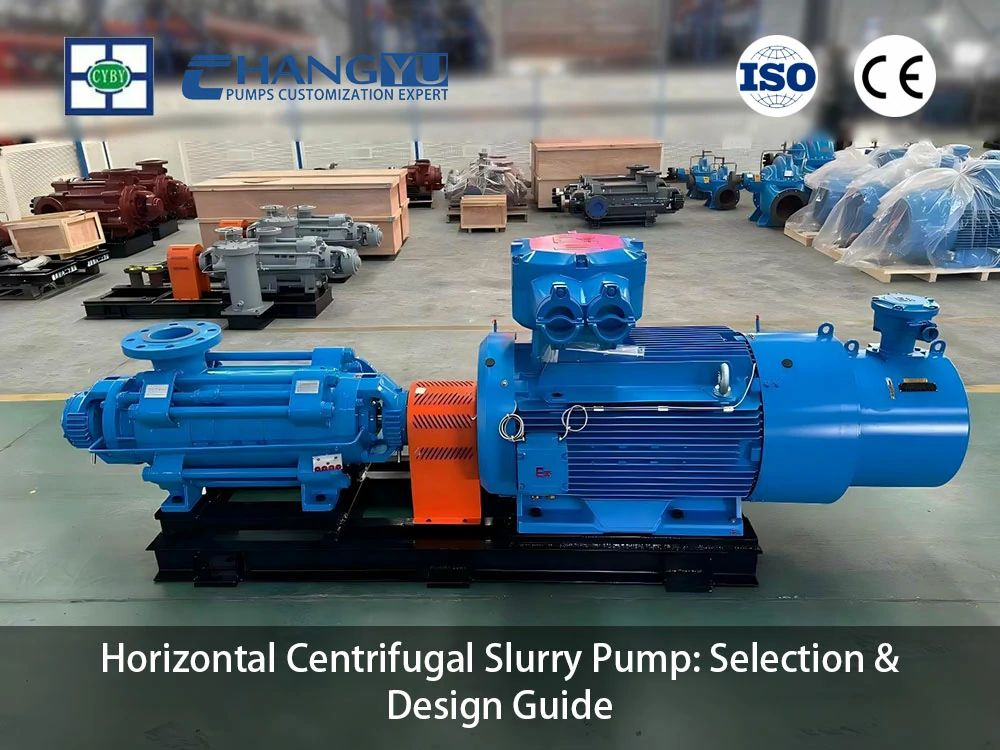
A configuração horizontal também simplifica o design mecânico dos recursos que tornam as bombas de polpa duráveis. Uma dupla carcaça com revestimentos substituíveis é mais fácil de projetar quando a bomba se divide ao longo de um plano horizontal. Um mecanismo de ajuste de folga do rotor é mais acessível quando montado em um eixo horizontal no nível do solo. Esses recursos de design — não a orientação horizontal em si, mas a engenharia que ela permite — são o que distinguem uma bomba de polpa horizontal projetada para esse fim de uma bomba centrífuga padrão usada em serviço abrasivo.
A Changyu Pump fabrica bombas de polpa horizontais para aplicações de mineração e industriais há mais de duas décadas. Este guia aborda as vantagens do design estrutural das bombas de polpa horizontais, os materiais de desgaste disponíveis e as práticas de seleção e manutenção que determinam a vida útil da bomba.
Por que escolher uma bomba de polpa horizontal? Principais vantagens de design
A configuração da bomba de polpa horizontal tornou-se o padrão da indústria para serviço de polpa abrasiva não por tradição, mas porque a orientação permite recursos de design específicos que são difíceis ou impossíveis de implementar efetivamente em projetos de bombas verticais. Compreender esses recursos — e como eles contribuem para a confiabilidade e manutenibilidade da bomba — é a base para uma seleção informada de bombas.
Construção de Dupla Carcaça com Revestimentos Substituíveis
Uma bomba de polpa horizontal emprega um design de carcaça de duas camadas. A carcaça externa — tipicamente ferro dúctil ou aço fundido — fornece integridade estrutural e contenção de pressão. A carcaça interna consiste em componentes de desgaste substituíveis: um revestimento de voluta, um bocal de garganta no lado de sucção e um revestimento de placa de estrutura no lado de acionamento. Quando a polpa desgasta esses componentes internos, apenas os revestimentos são substituídos — não toda a carcaça da bomba.
Conjunto de Rolamentos de Serviço Pesado
As bombas de polpa horizontais lidam com densidades de fluido que impõem demandas extremas aos mancais. Uma polpa com gravidade específica de 1,5 — típica de rejeitos de minério de ferro — impõe cargas radiais e axiais 50% maiores do que a mesma bomba operando com água. O conjunto de mancais deve absorver essas cargas continuamente, 24 horas por dia, mantendo o alinhamento do eixo dentro de milésimos de polegada.
Grandes bombas de polpa horizontais usam rolamentos de rolos superdimensionados, lubrificados por banho de óleo ou óleo forçado rolamentos com vidas úteis L10 calculadas para a densidade específica da polpa e condições operacionais. A caixa de mancais é dividida horizontalmente — correspondendo à divisão da carcaça da bomba — permitindo que a metade superior seja removida para inspeção dos mancais sem perturbar o eixo ou o rotor. Nas maiores bombas, sensores de temperatura de mancais e sondas de vibração são integrados à caixa, fornecendo monitoramento contínuo de condição que permite manutenção preditiva em vez de reparo reativo.
Folga Ajustável do Rotor
A folga entre o escudo frontal do rotor e o bocal de garganta do lado de sucção é a especificação dimensional mais importante em uma bomba de polpa horizontal. Quando a bomba é nova, essa folga é definida para o valor mínimo do fabricante — tipicamente 0,4–0,8 mm, dependendo do tamanho da bomba. À medida que o rotor e o bocal de garganta se desgastam, essa folga aumenta. O resultado é recirculação interna: fluido que foi acelerado pelo rotor vaza de volta para o lado de sucção através do espaço ampliado, reduzindo a vazão efetiva e a eficiência da bomba.
A folga do rotor da bomba de polpa horizontal O mecanismo de ajuste permite que essa folga seja redefinida sem abrir o invólucro da bomba. Um parafuso externo ou parafuso de elevação move todo o conjunto do alojamento do mancal e do eixo axialmente, empurrando o rotor para mais perto do bocal de sucção e restaurando a folga original. Em uma bomba grande de rejeitos, restaurar a folga do rotor a partir de uma condição desgastada pode recuperar de 3 a 5 pontos percentuais de eficiência perdida — representando dezenas de milhares de dólares em economia anual de energia em uma bomba que consome centenas de quilowatts.
Sistema de Selagem de Eixo Baseado em Expeller
A vedação do eixo em uma bomba de polpa horizontal deve impedir que a polpa abrasiva escape ao longo do eixo rotativo enquanto opera em pressões de descarga que podem exceder 100 metros de altura manométrica. A configuração mais confiável para bombas grandes combina um expeller centrífugo (também chamado de repeller ou selo dinâmico) com uma gaxeta convencional ou selo mecânico. Este vedação do eixo da bomba de polpa horizontal arranjo é padrão em bombas grandes de descarga de moinho e de rejeitos.
O expeller é um pequeno rotor aberto montado no eixo atrás do rotor principal. Quando a bomba opera, o expeller gira e gera força centrífuga que empurra a polpa para longe do eixo e de volta para o invólucro da bomba. Isso reduz a pressão na caixa de gaxeta para quase atmosférica — às vezes até subatmosférica — durante a operação. A gaxeta ou o selo mecânico então só precisa fornecer uma vedação estática durante a parada, quando o expeller não está girando. Essa combinação estende drasticamente a vida útil do selo em comparação com uma bomba que depende apenas de gaxeta ou selo mecânico contra a pressão total de descarga.
Bombas de Polpa Horizontais vs Verticais: Qual Configuração?
A escolha entre uma configuração de bomba de polpa horizontal e vertical é frequentemente determinada pelo local de instalação, em vez das características da própria polpa. Cada configuração oferece vantagens distintas para aplicações específicas.
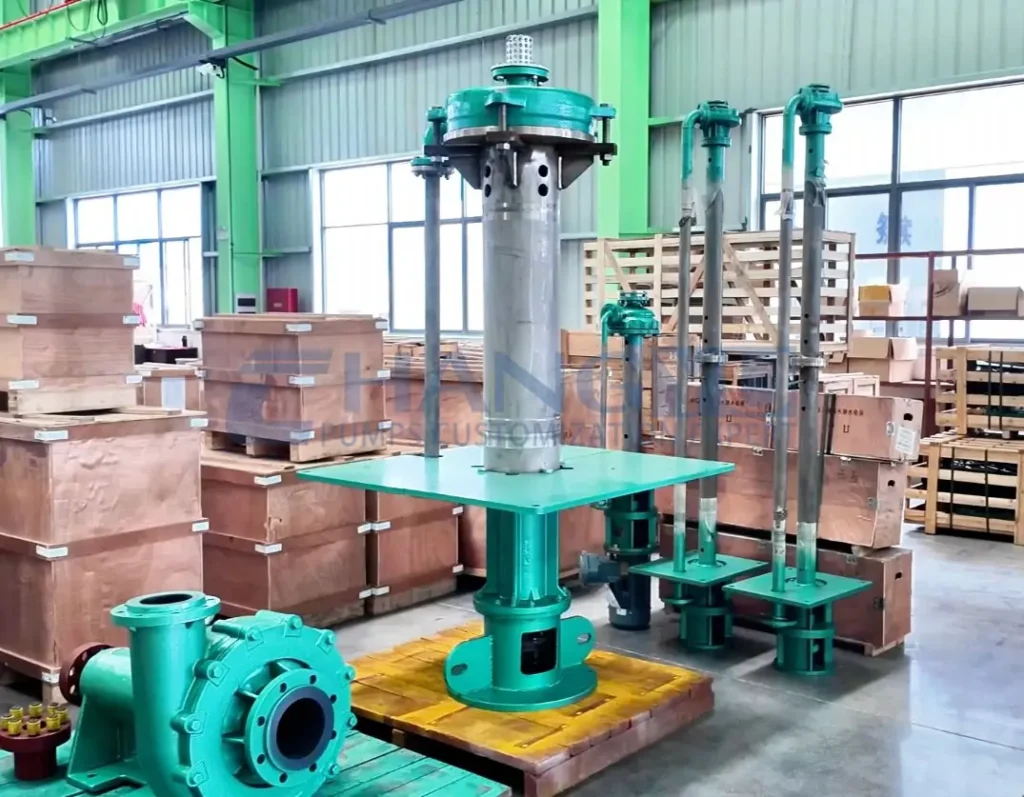
Comparação de Configurações
| Fator | Bomba de polpa horizontal | Bomba de Polpa Vertical |
|---|---|---|
| Espaço de instalação | Maior — requer base e casa de bombas no nível do piso | Pequena no nível do piso; motor elevado acima do poço ou tanque úmido |
| Gerenciamento de NPSH | Requer sucção afogada ou cálculo cuidadoso de NPSH | Vantagem inerente — rotores submersos na fonte de fluido |
| Acesso para manutenção | Bomba completamente acessível no nível do piso; substituição do rotor e revestimento sem guindaste | Motor acessível no nível do piso; extração do elemento da bomba do poço requer guindaste e desconexão da tubulação |
| Passagem de sólidos | Idêntico para projeto de rotor equivalente | Idêntico para projeto de rotor equivalente |
| Vedação do eixo | Expeller mais gaxeta ou selo mecânico — padrão, confiável | Eixo submerso requer múltiplos mancais de linha e selos |
| Custo de capital (somente bomba) | Menor para desempenho hidráulico equivalente | Maior — tubo de coluna, cabeçote de descarga, estrutura do poço |
| Melhor para | Bombas de processo: descarga de moinho, alimentação de ciclone, rejeitos, underflow de espessador | Bombas de poço, rebaixamento de poço profundo, drenagem de piso |
Princípio de seleção: Use bombas horizontais para aplicações de processo em que a bomba está no nível do solo e a fonte de fluido está no nível ou acima da linha de centro da bomba. Use bombas verticais somente quando a fonte de fluido estiver abaixo do nível do solo (poço, cava ou escavação profunda) ou quando restrições de espaço no nível do solo tornarem a instalação horizontal impraticável.
Quando a Configuração Horizontal É a Escolha Preferida
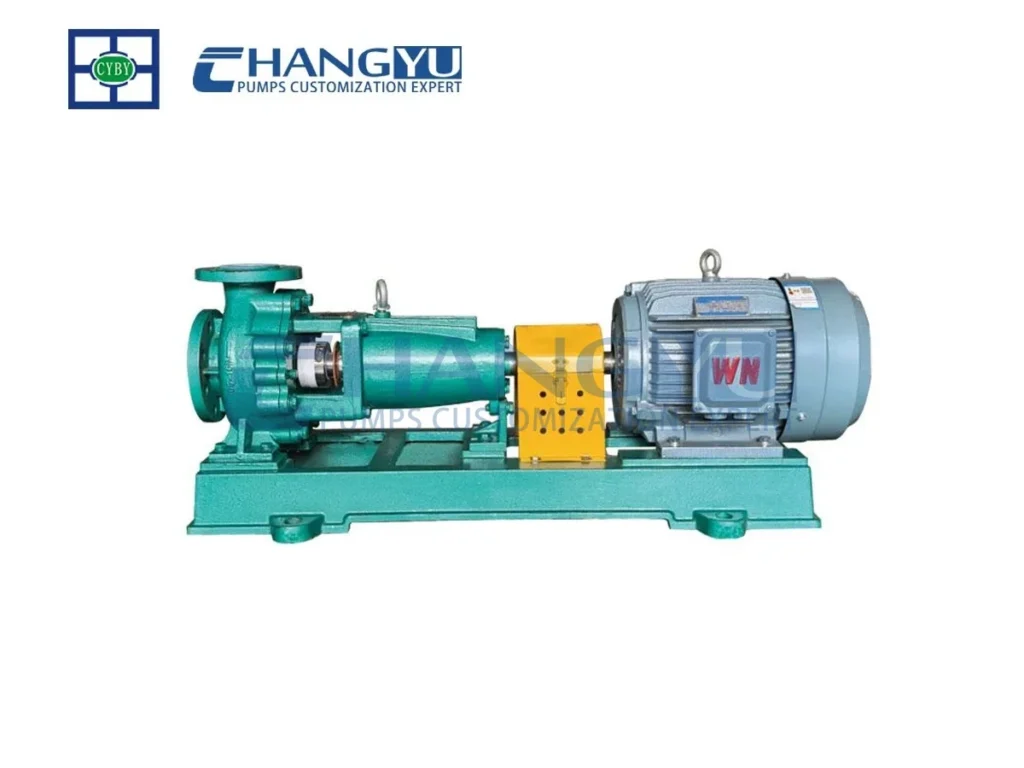
Bombas horizontais são a especificação padrão para as bombas de processo primárias em uma planta de processamento mineral. Bombas de descarga de moinho, bombas de alimentação de ciclone, bombas de rejeitos de flotação e bombas de transferência de concentrado são quase exclusivamente projetos horizontais. A razão é a manutenção: essas bombas lidam com as polpas de maior desgaste da planta, e seus componentes de parte úmida exigem substituição em intervalos programados. Uma bomba horizontal permite que esse trabalho seja realizado no nível do piso, com acesso total ao invólucro, rotor e eixo.
Bombas horizontais também simplificam a implementação dos recursos de projeto descritos na Seção 1. Construção de duplo invólucro, ajuste de folga do rotor e selagem baseada em expeller são todos mais práticos de projetar em um eixo horizontal. Uma bomba vertical com seu rotor submerso no fundo de uma longa linha de eixo não pode incorporar facilmente o ajuste externo de folga, e seu arranjo de vedação deve lidar com o nível variável de fluido no poço.
Quando a Configuração Vertical Pode Ser Mais Apropriada
Bombas verticais são especificadas quando a fonte de fluido está abaixo da bomba — um poço, um tanque úmido ou uma escavação profunda. O rotor submerso elimina preocupações com altura de sucção e requisitos de autoescavação. Bombas verticais também são preferidas quando o espaço disponível no nível do piso é limitado, ou quando a bomba deve operar com um nível de fluido flutuante que faria uma bomba horizontal perder a escorva.
Engenheiros da Changyu Pump observam: Para aplicações de polpa de processo — descarga de moinho, alimentação de ciclone, rejeitos — a configuração horizontal é a escolha correta. O acesso para manutenção, a integração de recursos de projeto e a prática industrial estabelecida favorecem bombas horizontais para esses serviços. Bombas verticais servem a um propósito diferente: drenagem de poço, coleta de lavagem de piso e aplicações onde a bomba deve captar de abaixo do nível do piso. Especificar uma bomba vertical para uma aplicação de processo para economizar espaço é uma falsa economia — as dificuldades de manutenção superarão em muito a economia de espaço ao longo da vida operacional da bomba.
Para um exame detalhado dos recursos de design de bombas de polpa de grande porte e dos requisitos de construção de serviço pesado, consulte nosso guia sobre Bombas de Polpa de Grande Porte: Guia Completo de Seleção & Materiais.
Quais Materiais de Desgaste São Melhores para Bombas de Polpa Horizontais?
A seleção de materiais de desgaste para bombas de polpa horizontais deve considerar a dureza das partículas, a forma, o tamanho e o ambiente químico da polpa. Quatro categorias de materiais atendem à maioria das aplicações, cada uma com pontos fortes e limitações distintos.
Ferro Branco de Alto Cromo (CrMo)
Ferro branco de alto cromo (600–700 HB, KIC 25–35 MPa√m) é o material de desgaste padrão para bombas de polpa horizontais em mineração de rocha dura. Sua microestrutura — carbonetos de cromo duros em uma matriz martensítica — fornece a dureza para resistir ao corte por partículas angulares e a tenacidade para suportar impactos ocasionais de material sobredimensionado. Para bombas horizontais que manuseiam minério de ferro, minério de ouro e rejeitos grossos de cobre, o CrMo de alto cromo é a especificação padrão. O grau com 28% Cr fornece volume adicional de carboneto para os circuitos mais abrasivos a um custo moderadamente maior em relação ao grau padrão com 26% Cr.
Borracha natural
Revestimentos de borracha protegem contra desgaste por resiliência — o material se deforma elasticamente sob impacto de partículas e se recupera sem perda de material. Esse mecanismo funciona com partículas arredondadas em pH neutro a temperaturas abaixo de 70°C. Bombas horizontais com revestimento de borracha atendem a aplicações específicas: rejeitos de flotação de cobre com partículas finas, polpas de preparação de carvão e areias minerais. A borracha não é adequada para partículas angulares recém-britadas — elas cortam a superfície da borracha no contato.
Aço inoxidável duplex (2205/2507)
O aço inoxidável duplex aborda uma limitação do CrMo de alto cromo: sua baixa resistência à corrosão em ambientes ácidos ou com alto teor de cloreto. Na lixiviação em pilhas de cobre, onde o pH da polpa pode cair abaixo de 3, o CrMo padrão corrói rapidamente, independentemente de sua resistência ao desgaste. Em operações de mineração costeira, águas subterrâneas com alto teor de cloreto atacam os componentes da bomba de CrMo. O duplex 2205 (PREN 33–36, 250–300 HB / 25–30 HRC, KIC ~50–100 MPa√m) e o super duplex 2507 (PREN 40–44) fornecem a resistência combinada à corrosão e ao desgaste que essas aplicações exigem. A bomba de polpa horizontal da Série HB da Changyu Pump está disponível em ambos os graus.
Cerâmica (SiC / Al₂O₃)
Materiais cerâmicos oferecem dureza (HV 1500–2800) muito superior a qualquer partícula mineral, proporcionando máxima resistência ao desgaste por corte. No entanto, sua baixa tenacidade à fratura (KIC 3–5 MPa√m) os torna vulneráveis a impactos de partículas que excedem 1–2 mm. Em aplicações de bombas horizontais, as cerâmicas são tipicamente aplicadas como proteção localizada contra desgaste — placas ou insertos na língua da voluta e nas bordas de ataque das pás do rotor — em vez de revestimentos monolíticos completos.
Comparação de Materiais de Desgaste para Bombas de Polpa Horizontais
| Material | Dureza | Melhor aplicação | Tolerância a Impacto | Limitações: |
|---|---|---|---|---|
| Ferro branco com alto teor de cromo CrMo (26–28% Cr) | Limitado por temperatura; sensível à hidrólise em água quente acima de 50°C; ainda é cortado por partículas angulares e afiadas | Partículas angulares e duras (Mohs > 5); pH neutro | Boa — KIC 25–35 | Material |
| Borracha natural | < 50 HB (resiliente) | Partículas arredondadas e macias (Mohs < 4); pH neutro | Excelente (resiliente) | Vida Útil Típica (meses) |
| Duplex 2205 / 2507 | 250–300 HB (25–30 HRC) | Polpas corrosivas (pH baixo, alto teor de cloreto); abrasão moderada | Bom — KIC ~50–100 | 2–3× |
| Cerâmica (SiC) | HV 2200–2800 | Partículas muito finas, sem impacto | Ruim — KIC 3–5 | 5–8× |
Engenheiros da Changyu Pump recomendam: Para a maioria das bombas de polpa horizontais em mineração de rocha dura — minério de ferro, minério de ouro e rejeitos de cobre com quartzo — o ferro branco de alto cromo (CrMo, 26–28% Cr) é a especificação de material apropriada. Ele fornece o melhor equilíbrio entre resistência ao desgaste por corte, tolerância a impactos e custo. O aço inoxidável duplex deve ser especificado quando a química da polpa exigir resistência à corrosão que o CrMo não pode fornecer — soluções de lixiviação ácidas, águas subterrâneas com alto teor de cloreto ou água de processo misturada com água do mar. A borracha natural é reservada para aplicações de partículas finas, arredondadas e pH neutro, onde pode fornecer 18–24 meses de vida útil sem o desgaste por corte que partículas angulares causam.
Para uma comparação abrangente de materiais de desgaste em toda a gama de aplicações de bombas de polpa e tipos de minério, consulte nosso guia sobre Bomba de Polpa Resistente ao Desgaste: Um Guia Completo de Materiais e Seleção.
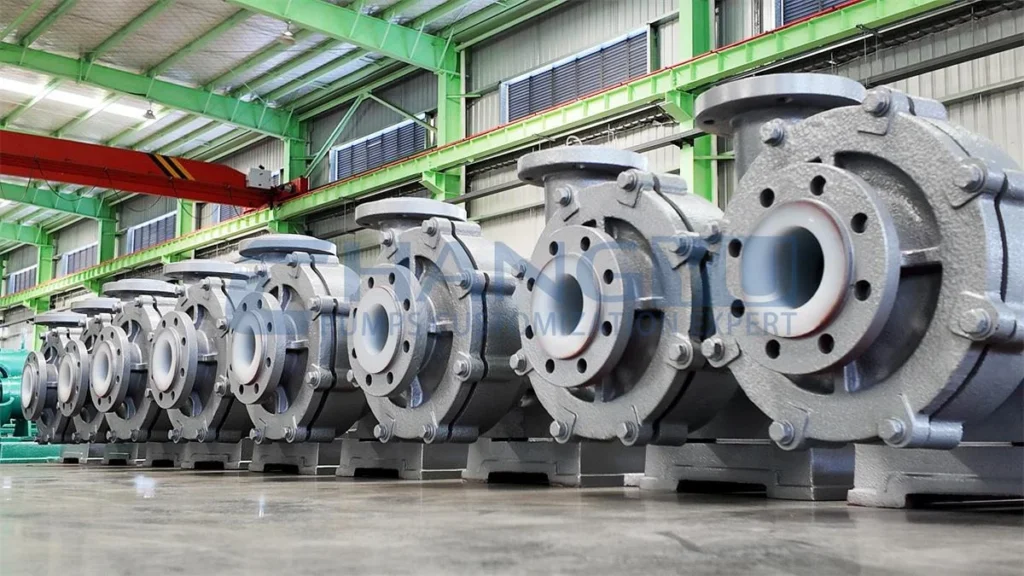
Como Selecionar uma Bomba Centrífuga Horizontal de Polpa?
A seleção de bombas de polpa horizontais segue um processo estruturado. Cada etapa restringe as opções disponíveis nas etapas subsequentes, e erros cometidos no início do processo — particularmente na caracterização da polpa — se propagam por toda a seleção.
Passo 1: Caracterizar o chorume
Defina a concentração de sólidos (por peso e volume), a distribuição do tamanho de partículas (d50 e d100), a forma das partículas (angular vs arredondada), a dureza do minério (escala de Mohs), o pH da polpa, a concentração de cloreto e a temperatura. O d100 — a maior partícula que a bomba deve passar — determina diretamente o tamanho mínimo da passagem do rotor. Uma bomba de descarga de moinho pode encontrar material sobredimensionado que excede 100 mm, enquanto uma bomba de rejeitos que manuseia o overflow do hidrociclone vê um d100 abaixo de 1 mm.
Etapa 2: Calcular os Requisitos Hidráulicos
Determine a vazão necessária e a altura manométrica total. Aplique fatores de correção para polpa para considerar os efeitos dos sólidos no desempenho da bomba. Uma bomba selecionada com base em sua curva de desempenho com água, sem correção, será subdimensionada para serviço com polpa. Para bombas horizontais, verifique se o NPSH disponível excede o NPSH requerido da bomba por uma margem mínima de 1 metro na vazão operacional real.
Etapa 3: Selecionar Materiais de Desgaste
Combine o material de desgaste com as características do minério usando a estrutura da Seção 3. A decisão flui da dureza e forma das partículas: partículas angulares e duras → CrMo de alto cromo; partículas finas, arredondadas e pH neutro → borracha; polpa corrosiva → aço inoxidável duplex; zonas localizadas de alto desgaste → insertos cerâmicos.
Etapa 4: Determinar o Tamanho e a Velocidade da Bomba
Selecione um tamanho de bomba onde a vazão de projeto esteja dentro de 70–120% da vazão do Ponto de Melhor Eficiência (BEP). Para bombas horizontais em serviço abrasivo, selecione a velocidade operacional mais baixa prática — tipicamente 400–600 r/min para bombas grandes, 800–1.200 r/min para bombas médias. Velocidades mais baixas reduzem as taxas de desgaste proporcionalmente. Uma bomba operando a 500 r/min alcançará aproximadamente o dobro da vida útil das partes molhadas em comparação com uma bomba idêntica operando a 700 r/min.
Etapa 5: Especificar a Configuração de Selagem e Rolamentos
Selecione o método de vedação do eixo com base na pressão de descarga e nas características do fluido. Para pressões de descarga acima de 30 metros, uma combinação de expeller com gaxeta é o padrão. Para aplicações de alta pressão, um arranjo de expeller com selo mecânico proporciona confiabilidade adicional de vedação. Especifique lubrificação por banho de óleo ou óleo forçado para os rolamentos, com monitoramento de temperatura e vibração para bombas acima de 100 kW.
Engenheiros da Changyu Pump recomendam: Ao selecionar uma bomba de polpa horizontal, inclua uma margem de vazão de 10–15% acima do requisito de projeto para considerar variações de processo e a perda gradual de eficiência que ocorre à medida que os componentes do lado úmido se desgastam. No entanto, evite superdimensionamento excessivo — uma bomba operando abaixo de 60% da vazão do Ponto de Melhor Eficiência (BEP) apresenta aumento de vibração, redução de eficiência e desgaste acelerado. A margem deve posicionar o ponto de operação dentro da Região de Operação Permitida, não empurrá-lo para fora.
Como Manter uma Bomba Centrífuga Horizontal de Polpa?
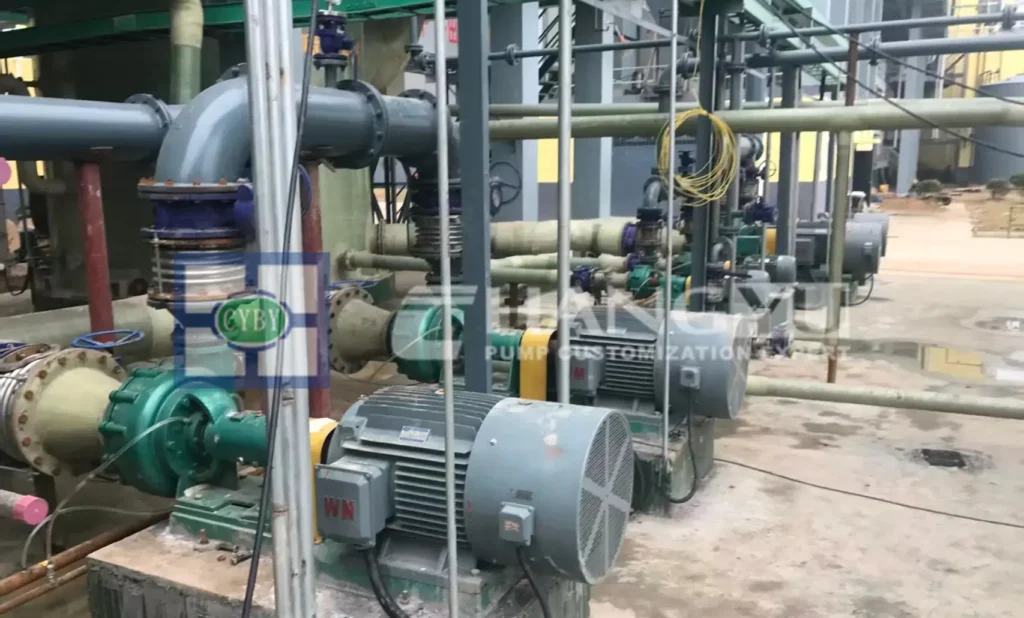
A manutenção de bombas de polpa horizontais concentra-se no gerenciamento do desgaste. Diferentemente de uma bomba centrífuga de água, onde o rotor e a carcaça podem durar décadas, os componentes do lado úmido de uma bomba de polpa são projetados para se desgastar e serem substituídos. O programa de manutenção deve rastrear as taxas de desgaste, programar substituições e preservar a eficiência entre substituições por meio do ajuste da folga do rotor.
Substituição de Componentes do Lado Úmido
Os intervalos de substituição do lado úmido são determinados pela abrasividade do minério, pela seleção de materiais e pelas condições operacionais. Uma bomba de alto cromo CrMo em serviço de rejeitos de minério de ferro normalmente requer substituição em 12–18 meses. A mesma bomba em rejeitos de cobre menos abrasivos pode operar por 24–36 meses. A chave para a manutenção planejada é rastrear a taxa de desgaste por meio de medições regulares de vazão e pressão. Quando a vazão a uma determinada velocidade e pressão de descarga cai 10% abaixo da linha de base estabelecida com novos componentes de desgaste, o lado úmido está se aproximando do fim de sua vida útil.
Ajuste da Folga do Rotor
A folga do rotor deve ser verificada e ajustada em intervalos programados — não apenas quando o desempenho degrada. Em uma bomba horizontal de grande porte, o mecanismo de ajuste de folga permite que isso seja realizado em menos de uma hora sem abrir a carcaça. O ajuste regular mantém a eficiência e previne o desgaste acelerado que ocorre quando uma folga ampliada permite aumento da recirculação interna.
Lubrificação e Monitoramento de Rolamentos
Rolamentos lubrificados por banho de óleo exigem verificação do nível de óleo semanalmente e trocas de óleo nos intervalos especificados pelo fabricante. Sistemas de óleo forçado exigem substituição de filtros e análise de óleo em intervalos programados. Para bombas acima de 100 kW, sensores de temperatura de rolamentos e sondas de vibração fornecem alerta precoce de problemas em desenvolvimento. Um aumento gradual na temperatura do rolamento ao longo de várias semanas pode indicar degradação do óleo ou dano incipiente ao rolamento. Um aumento súbito na vibração pode sinalizar desgaste do rotor, acúmulo de sólidos ou falha iminente do rolamento.
Engenheiros da Changyu Pump observam: A prática de manutenção mais eficaz para bombas de polpa horizontais é o ajuste regular da folga do rotor. Em uma bomba operando a 500 kW, manter a folga correta pode recuperar 3–5 pontos percentuais de eficiência em comparação a uma bomba com folga desgastada — representando $5.000–$10.000 em economia anual de energia por bomba. O mecanismo de ajuste é fornecido por um motivo; usá-lo em intervalos programados é uma das atividades de manutenção de maior retorno em uma planta de processamento mineral.
Para orientação de manutenção aplicável a todos os tipos e tamanhos de bombas de polpa para mineração, consulte nosso guia sobre Bombas de Lama na Mineração: Como Escolher a Bomba Certa para Serviço Pesado.
Estudo de Caso de Bomba Centrífuga Horizontal de Polpa: Otimizando a Vida Útil de Desgaste em uma Bomba de Polpa Horizontal de Grande Porte para Minério de Ferro
Uma concentradora de minério de ferro na Austrália Ocidental operava uma bomba de polpa horizontal da série PGY em serviço de rejeitos — classificada para 800 m³/h a 65 m de altura manométrica, acionada por um motor de 560 kW — com componentes padrão de ferro branco de alto cromo com 26% Cr. Os rejeitos continham partículas angulares de magnetita e quartzo (Mohs 5,5–7,0) a 35% de concentração de sólidos. A substituição do lado úmido era necessária aproximadamente a cada 6 meses.
A inspeção dos componentes desgastados mostrou a liga de 26% Cr sendo cortada pelas partículas mais duras de quartzo (Mohs 7) que constituíam aproximadamente 20% dos sólidos dos rejeitos. A perda de material concentrava-se no cutwater da voluta e nas bordas de ataque das pás do rotor — as zonas de maior velocidade.
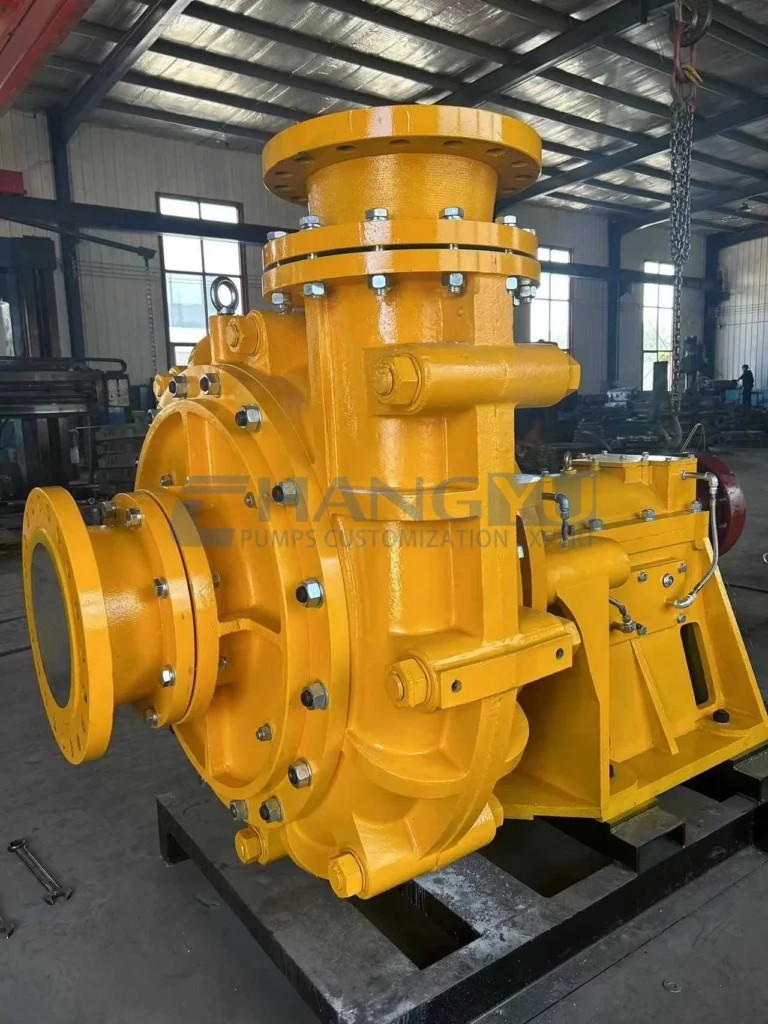
A Changyu Pump atualizou o lado úmido para liga de 28% Cr com cromação dura (HV 850–1050) nas bordas de ataque das pás do rotor e no cutwater da voluta. A folga do rotor foi ajustada para a especificação mínima. O intervalo de substituição do lado úmido foi estendido de 6 meses para 18 meses — uma melhoria de três vezes. O prêmio de custo do material de aproximadamente 15% foi recuperado no primeiro evento de substituição evitado. Três bombas de rejeitos adicionais foram atualizadas para a mesma especificação no ano seguinte.
Conclusão principal: Pequenas diferenças no grau do material produzem grandes diferenças no custo operacional de bombas de polpa horizontais. A economia de materiais premium aumenta à medida que o tamanho da bomba cresce — o custo de cada evento de substituição aumenta com a potência da bomba, a vazão e a criticidade para a produção.
Soluções de Bombas Centrífugas Horizontais de Polpa da Changyu Pump
A Changyu Pump fabrica séries de bombas de polpa horizontais configuradas para todo o espectro de aplicações abrasivas e corrosivas. Como fabricante especializado em bombas de polpa horizontais, cada série atende a uma combinação específica de requisitos de desgaste, corrosão e temperatura.
| Aplicação | Desafio primário | Séries recomendadas | Material Chave | Vida Típica do Extremo Úmido |
|---|---|---|---|---|
| Lama corrosiva, rejeitos ácidos | Corrosão + abrasão moderada | Série UHB | Forro em UHMW-PE | 2–3 anos |
| Flotação de cobre, processo químico | Desgaste + corrosão combinados | Série HB | Aço inoxidável 304/316L/2205/2507 | 12–24 meses |
| Alta temperatura, corrosão forte (condições extremas, partículas finas) | Corrosão + temperatura + sólidos | Série CYG | Revestimento em PFA (8–20 mm) | 3–5 anos |
Série UHB — Bomba Centrífuga Horizontal de Polpa Resistente à Corrosão com Revestimento em UHMW-PE
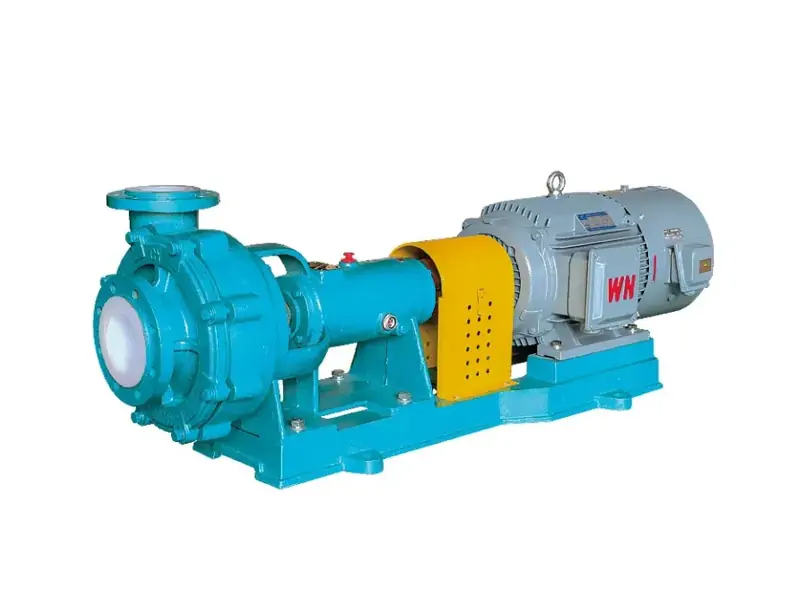
Bomba centrífuga horizontal de cantilever, estágio único, sucção simples, com construção em aço revestido com UHMW-PE. Projetada para fluidos quimicamente agressivos, corrosivos e polpas com sólidos moderados. O revestimento em UHMW-PE proporciona resistência combinada ao desgaste e à corrosão, com partes molhadas espessadas e passagens de fluxo alargadas. Vazões de até 2.600 m³/h, temperaturas de -20°C a 90°C.
| Parâmetro | Especificação |
|---|---|
| Caudal | 3-2,600 m³/h |
| Cabeça | 5-100 m |
| Potência do motor | 0,75-300 kW |
| Velocidade | 750-2.900 r/min |
| Temperatura | -20°C a 90°C |
| Material do forro | UHMW-PE |
Série HB — Bomba Centrífuga Horizontal de Polpa em Aço Inoxidável
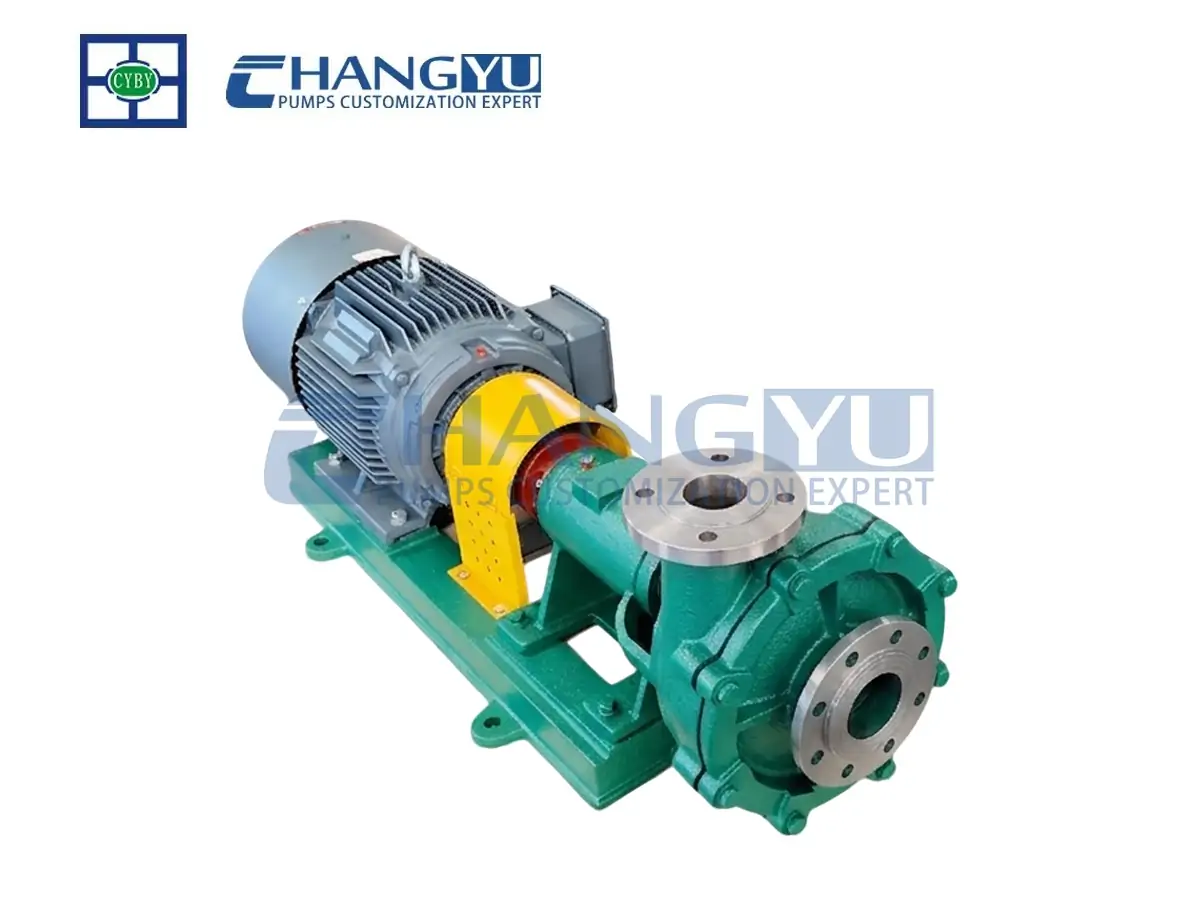
Bomba centrífuga horizontal em conformidade com ISO 2858, com construção totalmente em aço inoxidável nas partes molhadas. Projetada para polpas abrasivas e fluidos de corrosividade média, onde são necessárias resistência ao desgaste e à corrosão. Disponível nos graus 304, 316L, 2205 e 2507 para atender ao perfil específico de corrosão da aplicação. Vazões de 10 a 60 m³/h, alturas manométricas de até 120 m.
| Parâmetro | Especificação |
|---|---|
| Caudal | 10-60 m³/h |
| Cabeça | 20-120 m |
| Potência do motor | 3-45 kW |
| Velocidade | 2.900 r/min |
| Temperatura | -20°C a 120°C |
| Materiais | 304 / 316L / 2205 / 2507 |
Série CYG — Bomba Centrífuga Horizontal de Polpa em Aço Inoxidável para Alta Temperatura
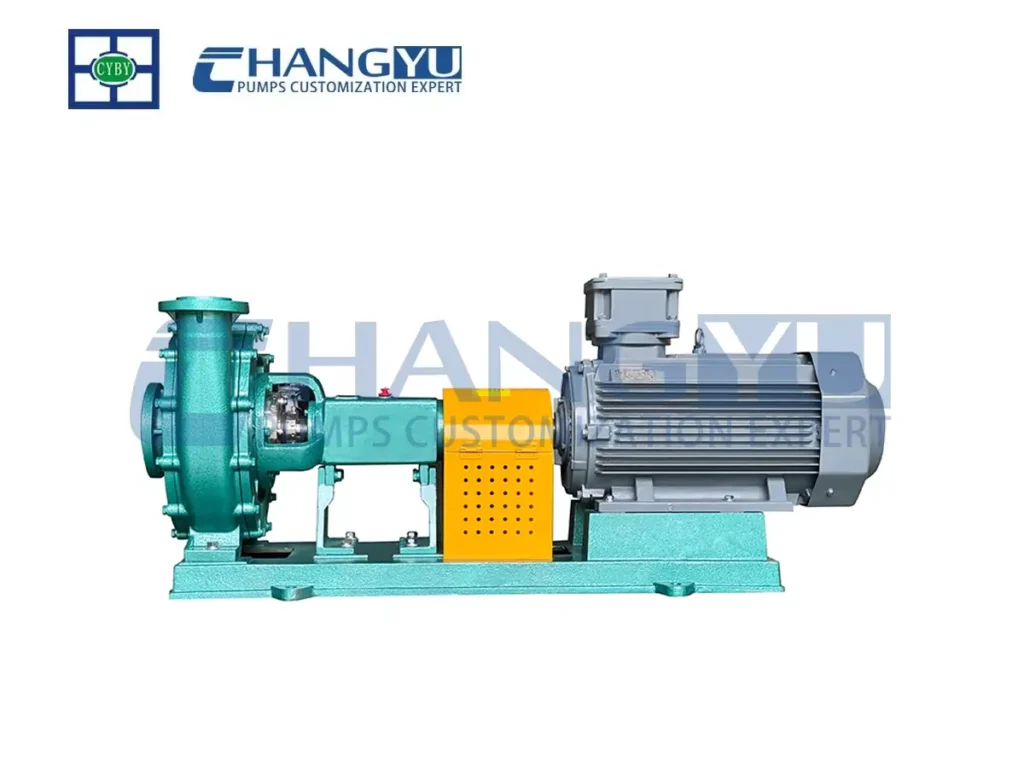
Bomba centrífuga horizontal revestida com PFA para condições extremas: substâncias altamente corrosivas, altas temperaturas e alto teor de sólidos. O revestimento em PFA de 8–20 mm é integrado ao corpo de aço por meio de processo de sinterização moldada, eliminando o risco de fissuração do fluoroplástico. Adequada para hidrometalurgia, dessulfurização e transporte de polpas corrosivas em alta temperatura. Não destinada a aplicações com partículas grandes e de alto impacto.
| Parâmetro | Especificação |
|---|---|
| Caudal | 3-2,600 m³/h |
| Cabeça | 5-100 m |
| Potência do motor | 0,75-300 kW |
| Velocidade | 968-3.450 r/min |
| Temperatura | -80°C a 160°C |
| Material do forro | PFA (espessura de 8–20 mm) |
Perguntas Frequentes sobre Bombas Centrífugas Horizontais de Polpa
P: Quais são as principais vantagens de uma bomba de polpa horizontal em relação a um projeto vertical?
R: Bombas horizontais proporcionam acesso total à manutenção ao nível do piso — impulsores, revestimentos, mancais e selos podem ser reparados sem necessidade de guindastes ou entrada em poços. Elas também permitem construção de dupla carcaça com revestimentos substituíveis, ajuste da folga do impelidor e selagem de eixo por expeller — características mais práticas de implementar em um eixo horizontal do que em um eixo vertical submerso.
P: Qual material devo especificar para o impelidor de uma bomba de polpa horizontal?
R: Ferro branco de alto cromo (CrMo, 26–28% Cr, 600–700 HB) é o padrão para partículas angulares e duras em mineração de rocha dura. Para polpas corrosivas com baixo pH ou alto teor de cloretos, especifica-se aço inoxidável duplex (2205 ou 2507). Impulsores de borracha natural são limitados a partículas finas e arredondadas em pH neutro.
P: Com que frequência devo ajustar a folga do impelidor em uma bomba de polpa horizontal?
R: Verifique a folga pelo menos trimestralmente em bombas em serviço abrasivo. Ajuste conforme a especificação mínima do fabricante sempre que a folga aumentar de forma mensurável. O ajuste regular mantém a eficiência da bomba e evita o desgaste acelerado causado pela recirculação interna ampliada.
P: Qual método de selagem de eixo é o melhor para bombas de polpa horizontais?
R: Um expeller centrífugo combinado com gaxeta ou selo mecânico é a configuração padrão para bombas de grande porte. O expeller reduz a pressão na caixa de gaxeta durante a operação, prolongando a vida do selo. Selos mecânicos duplos com fluido de barreira são especificados para aplicações de alta pressão ou com polpas perigosas.
P: Bombas de polpa horizontais podem lidar com sólidos grandes?
R: Sim. Bombas de polpa horizontais com passagens largas no impelidor passam sólidos de até 100–150 mm de diâmetro, dependendo do tamanho da bomba. A configuração horizontal não limita a passagem de sólidos — a geometria do impelidor e da voluta determina o tamanho máximo das partículas.
P: Como o aço inoxidável duplex se compara ao CrMo de alto cromo em termos de vida útil ao desgaste em bombas de polpa?
R: O aço inoxidável duplex (250–300 HB) tem menor resistência à abrasão que o CrMo de alto cromo (600–700 HB), mas fornece resistência essencial à corrosão em polpas ácidas ou com alto teor de cloretos, onde o CrMo sofreria corrosão. Especifique aço inoxidável duplex quando a química da polpa assim exigir, não como substituição geral do CrMo em aplicações abrasivas de pH neutro.
Lista de verificação de prevenção do engenheiro de bombas da Changyu
- Especifique configuração horizontal para todas as bombas de polpa de processo — descarga de moinho, alimentação de ciclone, rejeitos, underflow de espessador. O acesso à manutenção e a integração de recursos de projeto justificam a maior área ocupada.
- Verifique se a bomba possui mecanismo de ajuste da folga do impelidor. Esse recurso, por si só, pode recuperar de 3 a 5 pontos percentuais de eficiência em uma bomba desgastada e prolongar a vida útil das partes molhadas entre substituições.
- Especifique arranjo de selagem de eixo com expeller mais gaxeta ou expeller mais selo. O expeller reduz a pressão na caixa de gaxeta durante a operação, prolongando a vida do selo por um fator de dois a três em comparação a uma bomba sem esse recurso.
- Selecione a menor velocidade de operação prática. Uma bomba operando a 500 r/min alcança aproximadamente o dobro da vida útil das partes molhadas em comparação a uma bomba idêntica a 700 r/min. A bomba maior e mais lenta tem maior custo inicial, mas menor custo de ciclo de vida.
- Corresponda o material de desgaste à partícula mais dura da polpa — não ao mineral alvo. A rocha hospedeira de quartzo exige materiais selecionados para o quartzo, independentemente de o alvo ser ferro, cobre ou ouro.
- Para polpas corrosivas, verifique se o material especificado oferece resistência tanto à corrosão quanto ao desgaste. O CrMo padrão corrói rapidamente abaixo de pH 4. Aço inoxidável duplex ou bombas revestidas são necessários para serviços ácidos ou com alto teor de cloretos.
- Inclua monitoramento de temperatura dos mancais e vibração em bombas acima de 100 kW. O custo dos sensores é recuperado na primeira vez que evitam uma falha não planejada de mancal.
- Mantenha em stock um conjunto completo de peças sobressalentes para a parte húmida para cada posição crítica da bomba. Os prazos de entrega para grandes fundidos de alto cromo podem se estender por meses. Um conjunto sobressalente converte uma possível parada prolongada em uma substituição programada.
Conclusão
A bomba centrífuga horizontal para polpa tornou-se o padrão da indústria para serviços com polpa abrasiva porque sua configuração permite características de projeto que melhoram diretamente a confiabilidade e a manutenibilidade. A construção de dupla carcaça com revestimentos substituíveis converte o desgaste da carcaça de uma grande substituição em uma tarefa de manutenção programada. O ajuste da folga do rotor preserva a eficiência da bomba à medida que os componentes se desgastam. Um sistema de vedação de eixo baseado em expelidor prolonga a vida útil do selo ao reduzir a pressão que o selo deve conter. Essas características — e o acesso de manutenção que a orientação horizontal proporciona — tornam a configuração horizontal a escolha correta para bombas de polpa de processo em toda uma planta de processamento mineral. A seleção de materiais — CrMo de alto cromo para polpas abrasivas de pH neutro; aço inoxidável duplex para polpas corrosivas; borracha para partículas finas e arredondadas — determina por quanto tempo essas características de projeto podem manter o desempenho da bomba antes da próxima substituição programada do extremo úmido.
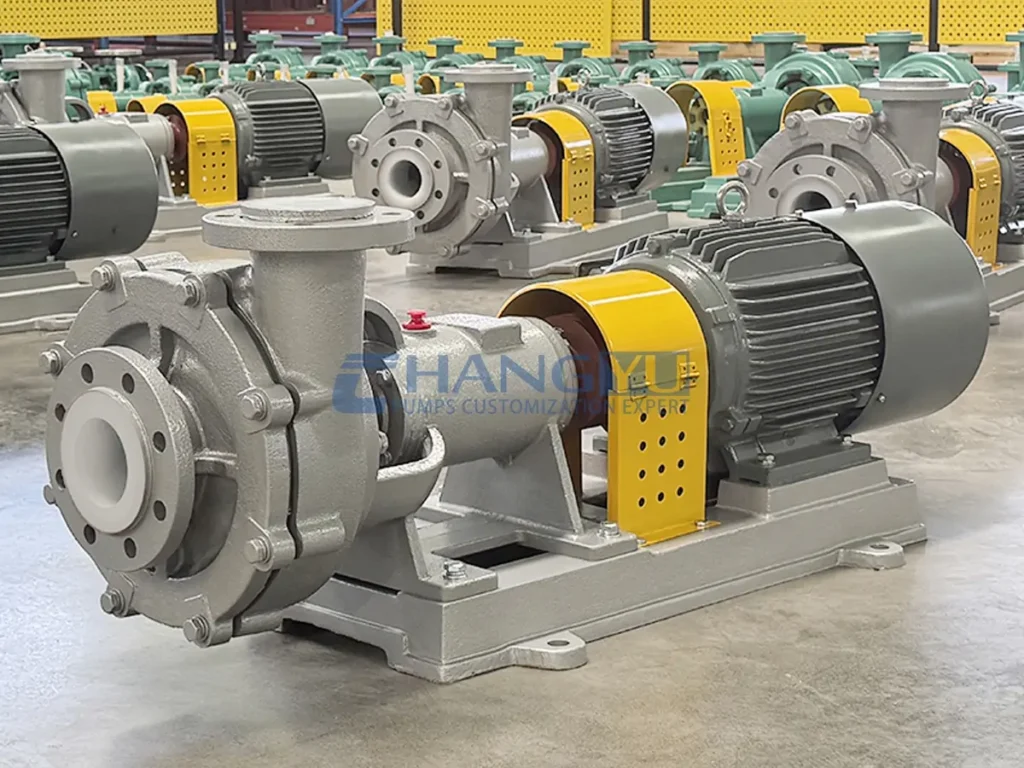
A equipe de engenharia da Changyu Pump fornece recomendações específicas de bombas de polpa horizontais para cada aplicação, respaldadas por mais de 20 anos de experiência em fabricação de bombas em todo o espectro de aplicações de mineração, processamento mineral e polpas industriais.