
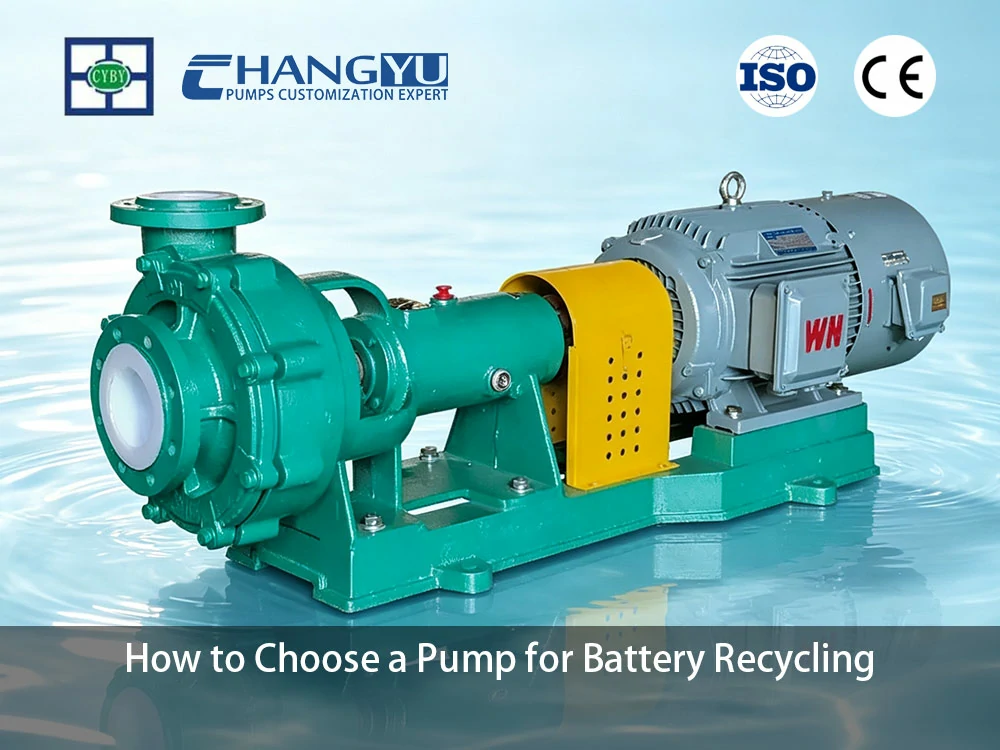
Escolher a bomba certa para reciclagem de baterias resume-se a três princípios: conheça seu meio, separe o sujo do limpo e combine o material com a aplicação. Instalações de reciclagem de baterias de chumbo-ácido lidam com uma mistura de fluidos agressivos — ácido sulfúrico residual, líquido circulante ácido, eletrólito de bateria e lama ácida contendo lodo de chumbo e partículas suspensas. Esses meios atacam as bombas tanto química quanto mecanicamente. Bomba Changyu é especializada em soluções de bombas resistentes à corrosão e à abrasão e oferece linhas de produtos direcionadas que atendem a cada desafio específico de bombeamento.
Conheça Seu Meio: O Que Você Está Bombeando?
O material da bomba é o fator mais importante — e começa com a compreensão da composição do fluido. A reciclagem de baterias envolve quatro tipos distintos de meios, cada um impondo diferentes exigências aos materiais da bomba:
- Ácido sulfúrico residual — fortemente corrosivo, relativamente limpo → desafio principal: corrosão
- Líquido circulante ácido — corrosivo, pode conter sólidos residuais → desafio: corrosão + abrasão leve
- Lama ácida com lodo de chumbo — corrosivo e altamente abrasivo → desafio: abrasão + corrosão
- Eletrólito de bateria — altamente ácido, limpo → desafio: corrosão
Conclusão: Antes de selecionar qualquer bomba, analise cada fluxo de fluido em sua planta — teor de sólidos, tamanho de partículas, concentração de ácido e temperatura. Uma bomba que funciona para ácido limpo falhará em semanas ao lidar com lama contendo lodo de chumbo.
O Desafio Duplo: Corrosão e Abrasão
As duas maiores ameaças à longevidade das bombas na reciclagem de baterias são corrosão e abrasão, frequentemente atuando simultaneamente.
- Corrosão ataca superfícies metálicas ao contato com ácido sulfúrico e eletrólito, causando corrosão por pites, afinamento e eventual falha estrutural
- Abrasão de lodo de chumbo e partículas suspensas erode rotores, carcaças e vedações — mesmo em materiais resistentes à corrosão
- Bombas químicas padrão projetadas para líquidos limpos falham rapidamente sob esse ataque duplo
- O resultado são reparos frequentes, paradas não planejadas e custos crescentes de manutenção
Conclusão: A solução não é encontrar uma única bomba que faça tudo adequadamente — é combinar cada tipo de fluido com uma bomba projetada especificamente para suas exigências.
A Estratégia de Duas Bombas: Por Que Funciona
Uma abordagem eficaz separa a lama suja do ácido limpo e combina cada um com uma bomba projetada para seus requisitos específicos.
- Lama ácida com lodo de chumbo e sólidos → precisa de uma bomba que priorize resistência à abrasão enquanto mantém resistência à corrosão
- Fluxos de ácido mais limpos (ácido sulfúrico residual, ácido circulante, eletrólito) → precisam de uma bomba otimizada para resistência à corrosão com capacidade de lidar com sólidos residuais
- Usar duas bombas especializadas estende significativamente a vida útil do equipamento e reduz os custos gerais de manutenção em comparação com uma única bomba de uso geral
1 Para Lama Ácida → Bomba de Lama Resistente à Abrasão UHB-ZK
Para lama ácida contendo partículas sólidas, uma bomba com componentes de fluxo em polietileno de ultra-alto peso molecular (UHMW-PE) e PTFE oferece o desempenho mais confiável. A bomba de lama resistente à abrasão e à corrosão UHB-ZK da Changyu Pump é construída exatamente com esses materiais.
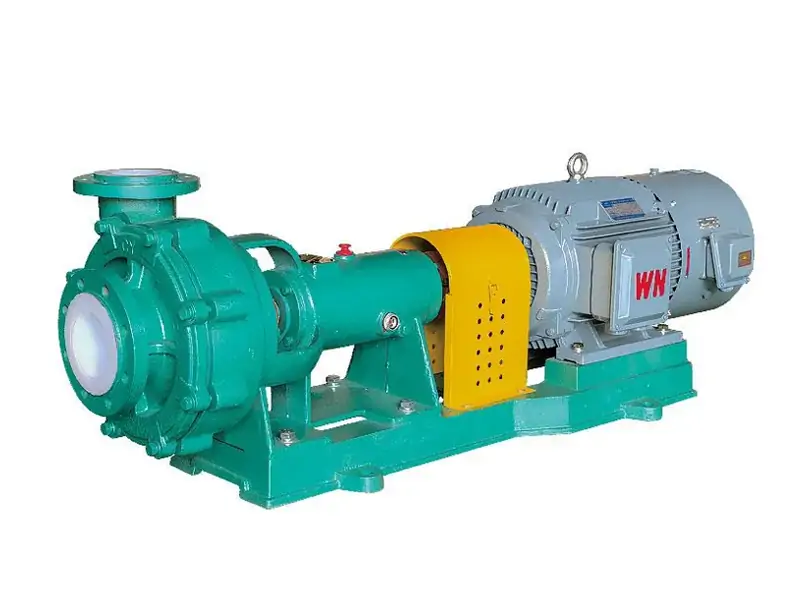
Caraterísticas principais:
- Material: Componentes de fluxo em UHMW-PE + PTFE — excepcional resistência à abrasão contra sólidos suspensos, forte resistência química contra ácidos
- Design de vedação: Estrutura de vedação à prova de vazamentos para circulação contínua de ácido e produção de chumbo
- Parâmetros típicos:
| Gama de caudais : | 3m³/h~2600m³/h |
|---|---|
| Gama de cabeças: | 5m~100m |
| Potência do motor : | 0,75kw~300kw |
| Velocidade: | 750~2900 r/min |
| Gama de temperaturas médias: | -20℃~90℃ |
| Materiais personalizáveis: | UHMW-PE / PTFE |
Conclusão: Essa combinação de material e design permite que a UHB-ZK lide com condições que destruiriam rapidamente bombas metálicas padrão.
2 Para Ácido Limpo → Bomba Centrífuga com Revestimento de Fluoroplástico CYF
Para fluxos de ácido limpo, uma bomba com revestimento de fluoroplástico oferece a solução mais confiável a longo prazo. A CYF da Changyu Pump bomba centrífuga revestida apresenta um revestimento de F46 de alto desempenho no interior da carcaça.
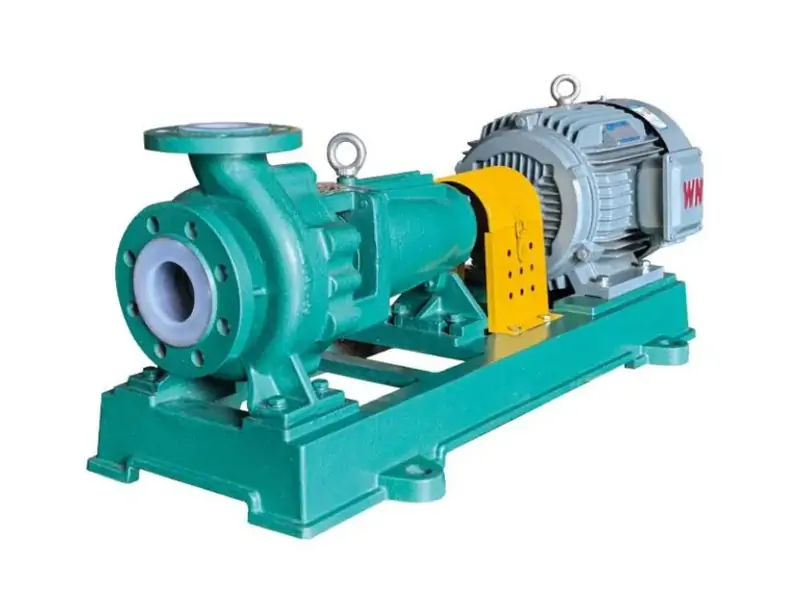
Caraterísticas principais:
| Gama de caudais : | 1,6 m³/h-2600 m³/h |
|---|---|
| Gama de cabeças: | 5 m-130 m |
| Potência do motor : | 1,5 kw-110 kw |
| Velocidade: | 1450-2900 r/min |
| Gama de temperaturas médias: | -20°C~180°C |
| Materiais personalizáveis: | Aço revestido com FEP, PFA ou PTEF |
Conclusão: O material do revestimento previne eficazmente a corrosão, prolonga a vida útil e reduz a frequência de intervenções de manutenção.
Tabela de Decisão: Corresponda Seu Meio à Bomba Certa
| Seu Meio | Bomba Recomendada | Material Chave | Por Que Funciona |
|---|---|---|---|
| Lama ácida com lodo de chumbo e sólidos | Changyu UHB-ZK bomba de polpa | UHMW-PE / PTFE | Resistência à abrasão + resistência à corrosão |
| Ácido sulfúrico residual, ácido circulante, eletrólito | Changyu CYF bomba centrífuga revestida | Revestimento de fluoroplástico F46 | Resistência à corrosão + tolerância a sólidos traço |
| Serviço misto (lama e ácido limpo) | Combinação UHB-ZK + CYF Ambos os materiais | Cobre toda a faixa sem comprometimento | Casos Reais: O Que um Sistema de Bomba Adequadamente Correspondido Entrega |
Bombas selecionadas corretamente entregam melhorias mensuráveis tanto na estabilidade operacional quanto na redução de custos.
Em uma aplicação real de planta de reciclagem de baterias, a atualização de bombas químicas de uso geral para uma combinação direcionada UHB-ZK + CYF produziu resultados claros:. Transferência estável de ácido
- ✅ sem paradas inesperadas Desgaste de componentes significativamente reduzido
- ✅ confirmado por inspeção visual Ciclos de manutenção estendidos
- ✅ — menos intervenções, menos tempo de inatividade Custos gerais de manutenção mais baixos
- ✅ — o consumo de peças sobressalentes caiu Tempo de inatividade não planejado eliminado
- ✅ — a continuidade da produção melhorou Esses resultados são alcançáveis quando a seleção da bomba é baseada em uma compreensão completa do meio, não em suposições genéricas.
Conclusão: FAQ.
Uma única bomba pode lidar tanto com lama ácida quanto com ácido limpo em uma planta de reciclagem de baterias?
Usar uma bomba para ambos é possível, mas não é o ideal. A lama precisa de resistência à abrasão (UHMW-PE), enquanto o ácido limpo precisa de resistência à corrosão (revestimento de fluoroplástico). Uma única bomba compromete um ou ambos os aspectos. A
- combinação UHB-ZK + CYF da Changyu Pump cobre ambos os serviços sem comprometimento. Qual é o melhor material para bombear lama ácida com lodo de chumbo?.
UHMW-PE combinado com PTFE oferece o melhor equilíbrio entre resistência à abrasão e resistência química. Este é o material usado na
- bomba de lama. A bomba de lama resistente à abrasão e à corrosão UHB-ZK da Changyu Pump O que causa falhas nas vedações de bombas em plantas de reciclagem de baterias?.
A combinação de corrosão por ácido sulfúrico e partículas abrasivas do lodo de chumbo ataca as faces das vedações e elastômeros. Selecionar bombas com resistência à abrasão além da resistência à corrosão aborda diretamente esse modo de falha.
- Como você decide entre uma bomba de lama e uma bomba centrífuga revestida?.
O fator decisivo é o
- teor de sólidos . Se o fluido contém partículas suspensas, como lodo de chumbo, escolha uma bomba de lama como a UHB-ZK. Se o fluido é ácido relativamente limpo, uma bomba centrífuga revestida como a CYF é suficiente e mais econômica.. Obtenha a Bomba Certa para Sua Planta de Reciclagem de Baterias.
Obtenha a bomba certa para sua planta de reciclagem de baterias
Não tem certeza de qual configuração de bomba se adequa à sua aplicação específica de reciclagem de baterias? Contacto Bomba Changyu para discutir suas condições de meio, requisitos de vazão e metas operacionais.
Como podemos ajudar:
- Analisar seus fluxos de fluido — teor de sólidos, concentração de ácido, temperatura, taxa de fluxo
- Recomendar a combinação ideal de bombas — UHB-ZK, CYF, ou um sistema completo
- Fornecer suporte de engenharia para integração ao seu layout de planta existente
Contactar a Changyu Pump para uma consultoria adaptada às condições da sua planta.