
Bombas magnéticas químicas são a resposta definitiva da indústria a um dos problemas mais persistentes e dispendiosos do processamento químico: a falha do vedante mecânico. Se a sua instalação lida com fluidos tóxicos, corrosivos ou inflamáveis, uma única falha de vedante pode desencadear violações ambientais, tempo de inatividade não planeado e incidentes de segurança graves - tudo em minutos. Este guia fornece tudo o que você precisa para selecionar, especificar e operar o selo mecânico correto. bomba magnética química para a sua aplicação, com o apoio de mais de 20 anos de experiência no terreno dos engenheiros da Bomba Changyu.
📌 Atualizado em 2026 - Inclui os mais recentes requisitos de conformidade ISO 15783, API 685 e ATEX.
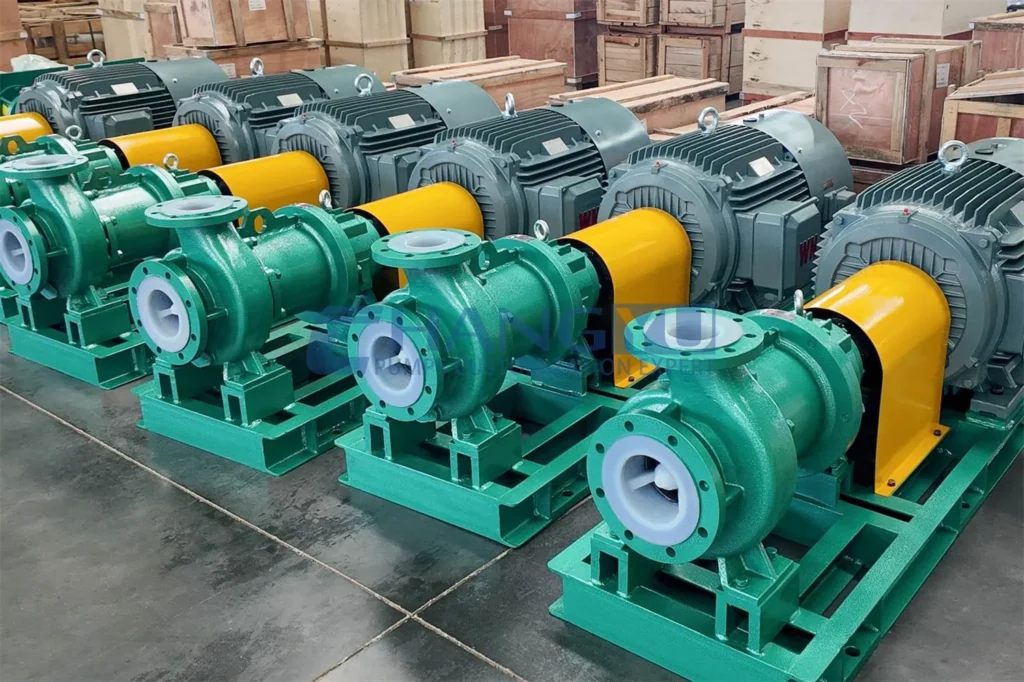
O que é uma bomba magnética química?
A bomba magnética química (também designado por bomba de acionamento magnético ou bomba de acionamento magnético sem vedação) é uma bomba centrífuga que transmite o binário do motor para o impulsor através de um acoplamento magnético - sem qualquer penetração do veio através da caixa da bomba.
O resultado é um extremidade húmida hermeticamente selada com nenhum vedante mecânico. Sem vedante significa sem desgaste do vedante, sem substituição do vedante e de forma crítica, não há fuga para fluidos de processo tóxicos, corrosivos ou inflamáveis.
O que isto significa para si: A eliminação dos vedantes mecânicos não reduz apenas os custos de manutenção - elimina a única fonte de maior probabilidade de libertação não planeada de produtos químicos nas suas instalações, reduzindo diretamente a sua responsabilidade ambiental e a exposição à OSHA.
| Componente | Função | Materiais comuns |
|---|---|---|
| Conjunto do íman exterior | Acionado por motor; transmite o binário através de um campo magnético | Ímanes de terras raras NdFeB |
| Concha de contenção | Separa hermeticamente as zonas húmidas e secas | PEEK, cerâmica Al₂O₃, Hastelloy C |
| Conjunto do íman interior | Recebe o binário magnético; acciona o impulsor | NdFeB com revestimento resistente à corrosão |
| Impulsor | Bombas de fluido de processo | PP, PVDF, ETFE, 316L SS |
| Rolamentos de manga | Suporta o conjunto rotativo; lubrificado com fluido | Carbono grafite, PTFE, SiC, Al₂O₃ |
| Corpo da bomba | Contém fluido de processo | PP, PVDF, revestido a ETFE, aço inoxidável 316L |
Normas aplicáveis: ISO 15783, ASME B73.3, API 685, Diretiva ATEX 2014/34/UE
Como funciona uma bomba magnética química?
A compreensão do princípio de funcionamento é essencial para uma correta resolução de problemas e uma especificação segura.
Passo 1 - O motor acciona o anel magnético exterior
O motor elétrico faz rodar um conjunto exterior de ímanes permanentes montado no exterior do invólucro de contenção a uma velocidade síncrona.
Etapa 2 - O fluxo magnético penetra no invólucro de contenção
O campo magnético rotativo passa através do invólucro de contenção não magnético (PEEK ou cerâmica) com perdas de fluxo negligenciáveis. Sem contacto físico. Sem penetração no veio.
Passo 3 - Os ímanes internos sincronizam e accionam o impulsor
O conjunto de ímanes internos na zona húmida fixa-se no campo rotativo e acciona o impulsor a uma velocidade idêntica.
Etapa 4 - Obtenção de um confinamento hermético completo
O fluido do processo nunca entra em contacto com a atmosfera exterior. Isto satisfaz EPA 40 CFR Parte 63 requisitos de emissões zero e Diretiva 2010/75/UE da UE normas de emissões industriais sem sistemas suplementares de apoio à selagem.
⚠️ Aviso crítico - Desacoplamento magnético: O desacoplamento ocorre quando a exigência de binário do sistema excede o limite nominal do acoplamento (funcionamento a seco, bloqueio súbito, pico de viscosidade acima das especificações). A bomba pára de mover o fluido enquanto o motor continua a funcionar - segue-se a destruição do rolamento dentro de 30-90 segundos. Instalar sempre um monitor de potência em tempo real ou um fluxostato com um relé de disparo automático definido para responder dentro de 2-3 segundos.
Como selecionar os materiais certos para uma bomba magnética química
Cada componente molhado deve ser verificado independentemente em relação ao seu fluido de processo. Um material correto para o corpo da bomba não significa nada se o material do rolamento ou do O-ring for incompatível.
Seleção do material da caixa da bomba e do impulsor
| Material | Temperatura máxima | Pontos fortes | Limitações | Melhores aplicações |
|---|---|---|---|---|
| Polipropileno (PP) | 80°C | Baixo custo, bom para produtos químicos suaves | Não para solventes aromáticos/clorados | Tratamento de água, ácidos suaves, galvanoplastia |
| PVDF | 120°C | Excelente resistência a halogéneos e oxidantes | Não para cetonas, ésteres, aminas | HCl, HNO₃, Cl₂, NaOCl |
| Revestido a ETFE | 150°C | Ampla resistência química, incluindo HF | Custo mais elevado | Semicondutores, serviços farmacêuticos e de HF |
| revestido a PTFE | 180°C | Resistência química quase universal | Menor resistência mecânica | Ácidos fumegantes, oxidantes agressivos |
| Hastelloy C-276 | 200°C+ | Ácidos oxidantes, ambientes com cloretos | Não para H₂SO₄ concentrado a quente | Cl₂ húmido, FeCl₃, serviço de ácido misto |
| Aço inoxidável 316L | 200°C | Rentável para um serviço suave | Não para ambientes ricos em cloretos | Produtos químicos em geral, de qualidade alimentar |
Seleção do material do invólucro de contenção
| Material | Resistência química | Pressão máxima | Permeabilidade magnética | Melhor para |
|---|---|---|---|---|
| PEEK | Muito bom | 16 barras | Excelente | Serviço químico geral |
| Cerâmica de alumina (Al₂O₃) | Excelente | 10 barras | Excelente | Fluidos limpos altamente corrosivos |
| Carboneto de silício (SiC) | Superior | 16 barras | Excelente | Lamas abrasivas + corrosivas |
| Hastelloy C | Excelente | 25 bar | Bom | Serviço corrosivo a alta pressão |
Seleção do material do rolamento
| Material | Tolerância de funcionamento a seco | Resistência à abrasão | Resistência química | Recomendado para |
|---|---|---|---|---|
| Carbono Grafite | Pobres | Moderado | Bom | Líquidos limpos não oxidantes |
| Composto de PTFE | Moderado | Moderado | Excelente | Ácidos oxidantes |
| Cerâmica de alumina (Al₂O₃) | Pobres | Bom | Excelente | Fluidos limpos corrosivos |
| Carboneto de silício (SiC/SiC) | Pobres | Excelente | Excelente | Serviço abrasivo, aplicações ultra-puras |
Referência rápida sobre compatibilidade química
| Química | Concentração | Material húmido recomendado |
|---|---|---|
| Ácido sulfúrico (H₂SO₄) | Até 70% | PVDF ou ETFE |
| Ácido sulfúrico (H₂SO₄) | 70-98% | revestido a PTFE + Hastelloy C |
| Ácido clorídrico (HCl) | Todas as concentrações | PVDF ou ETFE |
| Ácido fluorídrico (HF) | Todas as concentrações | PTFE/ETFE + rolamentos PTFE + O-rings FFKM |
| Ácido nítrico (HNO₃) | Até 65% | PVDF |
| Hidróxido de sódio (NaOH) | Até 50% | PP ou PVDF |
| Cloreto férrico (FeCl₃) | Todas as concentrações | PVDF ou Hastelloy C |
| Hipoclorito de sódio (NaOCl) | Até 15% | PVDF |
| Acetona / MEK / Tolueno | Todas as concentrações | Revestimento em ETFE ou PTFE |
Como escolher a bomba magnética química correta: Guia de especificação em 6 passos
Selecionar a opção errada bomba magnética química é um dos erros mais dispendiosos na engenharia de instalações químicas - conduzindo a uma falha prematura, a um tempo de inatividade não planeado ou, pior ainda, a uma fuga perigosa. Siga estes seis passos em sequência para garantir sempre uma especificação correta e segura.
Passo 1 - Identificar o seu fluido de processo (o passo mais importante)
Antes de qualquer outro parâmetro, é necessário definir completamente o fluido que está a bombear. Este passo único determina todas as decisões de material e de conceção que se seguem.
Forneça os seguintes dados de fluido para cada especificação de bomba:
| Parâmetro do fluido | Porque é que é importante | O que fornecer |
|---|---|---|
| Nome do fluido / nome químico | Determina a compatibilidade do material | por exemplo, ácido clorídrico, cloreto férrico, NaOH |
| Concentração (%) | A corrosividade muda drasticamente com a concentração | por exemplo, 35% HCl vs. 10% HCl requerem materiais diferentes |
| Valor do pH | Indica a acidez ou alcalinidade | por exemplo, pH 1 (fortemente ácido) vs. pH 13 (fortemente alcalino) |
| Gravidade específica (SG) | Afecta o cálculo da potência do motor | Por exemplo, SG 1,0 (água) vs. SG 1,84 (98% H₂SO₄) |
| Temperatura de funcionamento (°C) | Define o limite superior para todos os materiais molhados | Fornecer a temperatura normal e máxima |
| Viscosidade (cP) | A viscosidade elevada reduz o desempenho da bomba | Água padrão = 1 cP; solventes pesados podem ser 50-500 cP |
| Teor de sólidos (ppm / %) | As partículas abrasivas danificam os rolamentos e o impulsor | Especificar a dimensão das partículas e a dureza, se existir |
| Pressão de vapor (bar abs) | Crítico para NPSH e prevenção de cavitação | Verificar a ficha de dados do fluido à temperatura de funcionamento |
⚠️ Nota crítica: O mesmo produto químico em concentrações diferentes pode exigir materiais de bomba completamente diferentes. Por exemplo, o aço inoxidável suporta H₂SO₄ diluído, mas é rapidamente destruído por H₂SO₄ concentrado - especificar sempre a concentração exacta e não apenas a designação química.
O que isto significa para si: Ignorar ou adivinhar qualquer um destes parâmetros de fluido é a causa principal da falha prematura da bomba química no terreno. Uma folha de dados completa sobre o fluido demora 10 minutos a preparar e pode poupar meses de inatividade.
Passo 2 - Definir os seus requisitos hidráulicos
Quando o seu fluido estiver totalmente caracterizado, determine o desempenho necessário da bomba:
- Caudal (Q): Caudal volumétrico necessário em m³/h ou GPM nas condições de funcionamento
- Cabeça total (H): Soma da altura manométrica estática + perdas por fricção + contrapressão do sistema, expressa em metros ou PSI
- Ponto de funcionamento: A combinação de Q e H que a sua bomba deve atingir em condições normais de funcionamento
- Ponto de Melhor Eficiência (BEP): Selecione um modelo de bomba de modo a que o seu ponto de funcionamento se enquadre 80-110% do fluxo BEP na curva da bomba - operar muito fora deste intervalo causa recirculação, vibração e desgaste prematuro dos rolamentos💡 Sempre adicione um 10-15% margem de segurança para os cálculos do caudal e da altura manométrica, a fim de ter em conta o envelhecimento das condutas, os futuros aumentos de capacidade e a incerteza das medições.
Passo 3 - Verificar a margem NPSH
Altura de aspiração positiva líquida (NPSH) é o parâmetro mais frequentemente ignorado - e o mais suscetível de destruir uma bomba nas semanas seguintes à instalação.
A regra: O NPSHa (disponível) deve exceder o NPSHr (exigido pela bomba) em mínimo 0,5 m; recomenda-se vivamente 1,0 m ou mais.
Calcular o NPSHa nas condições mais desfavoráveis:
- Temperatura máxima do fluido (pressão de vapor mais elevada)
- Elevação máxima de aspiração ou nível mínimo do reservatório de aspiração
- Diâmetro mínimo do tubo de sucção e comprimento máximo da tubagem
Causas comuns de NPSHa insuficiente: temperatura elevada do fluido, elevação de sucção excessiva, tubagem de sucção subdimensionada e válvulas de sucção parcialmente fechadas.
O que isto significa para si: Um NPSH insuficiente provoca cavitação - implosão violenta de bolhas de vapor no interior da bomba que destrói impulsores e rolamentos em poucas semanas. É silenciosa, invisível e pode ser evitada com um simples cálculo antes da instalação.
Passo 4 - Selecionar materiais húmidos com base nos dados do fluido
Com o seu fluido totalmente definido no Passo 1, selecione agora os materiais para cada componente molhado. Cada componente deve ser verificado de forma independente - um material de revestimento correto não significa nada se o material do O-ring ou da chumaceira for incompatível.
Componentes que exigem uma verificação individual dos materiais:
| Componente | Opções de materiais comuns | Fator-chave de seleção |
|---|---|---|
| Corpo da bomba e impulsor | PP, PVDF, ETFE, revestido a PTFE, aço inoxidável 316L, Hastelloy C | Compatibilidade química + temperatura |
| Concha de contenção | PEEK, cerâmica Al₂O₃, SiC, Hastelloy C | Resistência química + pressão nominal |
| Rolamentos de manga | Carbono grafite, PTFE, Al₂O₃, SiC/SiC | Resistência à abrasão + compatibilidade química |
| O-rings e juntas | PTFE, FKM (Viton), EPDM, FFKM (Kalrez) | Resistência química + temperatura nominal |
| Fixadores internos | Aço inoxidável 316L, Hastelloy C, revestido a PTFE | Mesma exposição a fluidos que o invólucro |
Consultar o Tabela de referência rápida de compatibilidade química na secção Seleção de material acima para fazer corresponder o seu fluido específico à combinação de material correta.
Passo 5 - Dimensionar corretamente o acoplamento magnético
O acoplamento magnético é o coração de um bomba de acionamento magnético sem vedação - e a fonte mais comum de falhas no terreno quando incorretamente dimensionadas.
- O binário de aperto do acoplamento magnético deve exceder o binário máximo do sistema com um fator de segurança mínimo de 1,5
- Conta para binário de arranque, que é tipicamente 2× o binário de funcionamento normal
- Conta para viscosidade máxima à temperatura mínima de funcionamento (condições de arranque a frio)
- Ter em conta as potenciais condições transitórias: fecho súbito da válvula, bloqueio parcial, densidade changes⚠️ Acoplamento subdimensionado = eventos crónicos de desacoplamento magnético = destruição rápida do rolamento. Se a sua bomba “perde a escorva” repetidamente sem razão aparente, a causa mais provável é um acoplamento magnético subdimensionado.
Passo 6 - Confirmar as certificações necessárias para a sua candidatura
| Certificação | Necessário quando |
|---|---|
| ISO 15783 | Especificação geral da bomba rotodinâmica sem vedante - recomendada para todas as aplicações |
| API 685 | Serviço de refinaria de petróleo, petroquímica e gás natural |
| ATEX Zona 1 / Zona 2 | Fluidos inflamáveis ou áreas classificadas como atmosfera explosiva (ponto de inflamação <60°C) |
| IECEx | Certificação equivalente à ATEX para mercados fora da UE (Ásia, Médio Oriente, Austrália) |
| FDA 21 CFR | Contacto direto com fluidos de processos alimentares, de bebidas ou farmacêuticos |
| Marcação CE | Obrigatório para venda ou instalação nos mercados da União Europeia |
| ASME B73.3 | Norma de permutabilidade dimensional para instalações de bombas de processos químicos |
📋 Lista de verificação rápida de especificações - Envie-a ao seu fornecedor:
- Nome do fluido + concentração + pH
- Gravidade específica + viscosidade + temperatura (normal e máxima)
- Teor de sólidos (se for caso disso)
- Caudal necessário (m³/h ou GPM)
- Altura total requerida (m ou PSI)
- ☐ NPSHa nas piores condições
- Certificações necessárias (zona ATEX / FDA / API / CE)
- Condições do local (interior/exterior, temperatura ambiente, altitude)
Fornecer estes dados a Equipa de engenharia da Changyu Pump e receba uma recomendação de bomba totalmente verificada com confirmação de compatibilidade de material e ficha de dados certificada - no prazo de 24 horas.
Bomba Changyu Bomba Química Magnética Série: 4 Soluções de Engenharia
Bomba Changyu tem estado a trabalhar sem mar bomba de acionamento magnético para aplicações químicas corrosivas em todo o mundo há mais de duas décadas. Os quatro modelos seguintes representam uma gama selecionada do nosso bomba magnética química escolhidos para cobrir os cenários mais comuns de manuseamento de fluidos corrosivos. Para aplicações que requerem configurações especializadas, materiais personalizados ou capacidades de fluxo mais elevadas, a nossa equipa de engenharia está disponível para recomendar a solução mais adequada a partir da nossa gama completa de produtos.
1. Bomba de acionamento magnético resistente a produtos químicos da série CYQ
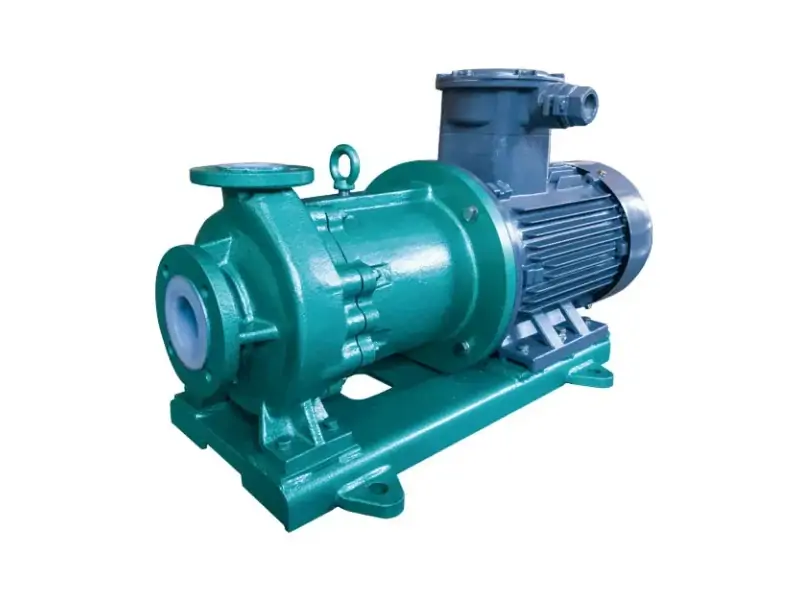
O Série CYQ é o nosso núcleo bomba de acionamento magnético resistente a produtos químicos, A Série CYQ foi concebida para a transferência em serviço contínuo de ácidos corrosivos, álcalis e meios químicos agressivos em aplicações industriais gerais. Com um design de acoplamento magnético totalmente sem vedação, a Série CYQ proporciona um desempenho fiável de fuga zero numa vasta gama de condições de serviço químico.
Principais especificações técnicas:
- Tipo de acionamento: Acoplamento magnético sem vedação - sem vedação mecânica
- Materiais húmidos: PVDF / PP (seleção dependente do fluido)
- Temperatura máxima: 120°C
- Caudal máximo: Até 100 m³/h
- Cabeça máxima: Até 50m
- Compatibilidade química: HCl, H₂SO₄ (diluído a moderado), NaOH, NaOCl, e a maioria dos ácidos inorgânicos e álcalis
Destaques estruturais:
- Acionamento magnético hermeticamente selado - fuga zero verificada desde a conceção
- Impulsor fechado para uma elevada eficiência hidráulica em toda a gama de funcionamento
- Múltiplas opções de material de revestimento para corresponder a um serviço químico específico
- Design compacto montado no pé, compatível com as configurações padrão da base da bomba
- Certificação CE; versões com certificação ATEX disponíveis mediante pedido
Os engenheiros da Changyu Pump recomendam a Série CYQ como a bomba magnética versátil para o serviço geral de instalações químicas - económica, comprovada e de manutenção simples.
2. Bomba magnética em aço inoxidável para serviço pesado da série CYC
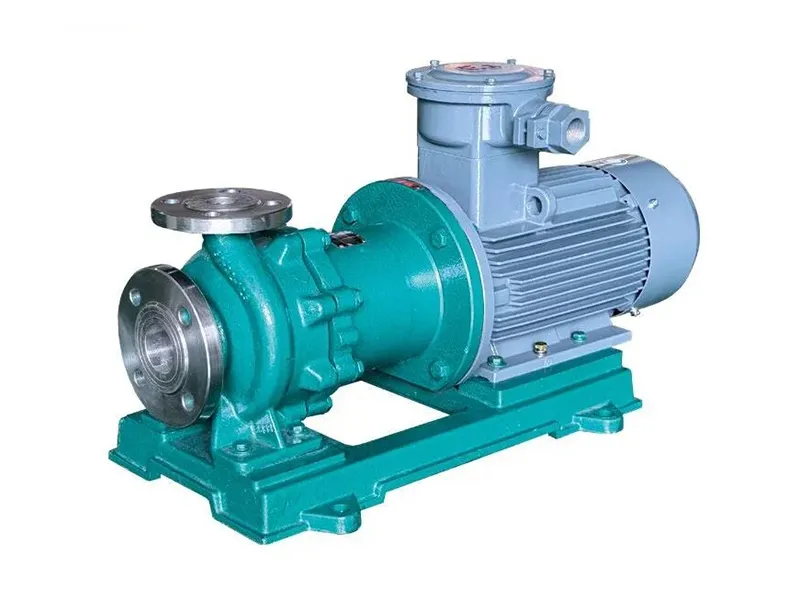
O Série CYC é o nosso bomba de acionamento magnético em aço inoxidável para serviço pesado, O sistema de acionamento magnético de alta velocidade, de aço inoxidável, foi concebido especificamente para aplicações industriais exigentes que requerem a resistência à corrosão do aço inoxidável e a segurança absoluta do acionamento magnético sem fugas. É a escolha preferida para serviços farmacêuticos, alimentares e químicos moderados em que é necessária uma construção metálica.
Principais especificações técnicas:
- Tipo de acionamento: Acoplamento magnético sem vedação
- Materiais húmidos: Aço inoxidável 316L (standard); outras ligas a pedido
- Temperatura máxima: 200°C
- Caudal máximo: Até 200 m³/h
- Cabeça máxima: Até 80m
- Compatibilidade química: Ácidos diluídos, álcalis, solventes orgânicos, produtos farmacêuticos intermédios, fluidos de qualidade alimentar, água desionizada
Destaques estruturais:
- Construção completa em aço inoxidável 316L com água - resistência mecânica superior às alternativas de plástico
- Acoplamento magnético de alta resistência para ciclos de trabalho exigentes e fluidos de viscosidade mais elevada
- ✅ Superfícies internas polidas disponíveis (Ra ≤ 0,8μm) para aplicações farmacêuticas e higiénicas
- ✅ Configurações compatíveis com CIP e SIP disponíveis
- Certificado CE; certificação de material compatível com a FDA disponível; opções ATEX a pedido
O que isto significa para si: Quando o seu processo exige resistência da construção metálica combinada com fiabilidade do acionamento magnético sem fugas - e as bombas revestidas a plástico não conseguem satisfazer as suas exigências de pressão ou temperatura - a Série CYC é a resposta de engenharia.
Com base nos mais de 20 anos de fabrico de bombas de aço inoxidável da Changyu Pump, a série CYC tem um desempenho consistente na transferência de solventes farmacêuticos e na dosagem de produtos químicos de elevada pureza, onde o controlo da contaminação e a eliminação de fugas são obrigatórios.
3. Bomba autoescorvante magnética com revestimento de flúor da série ZCQ
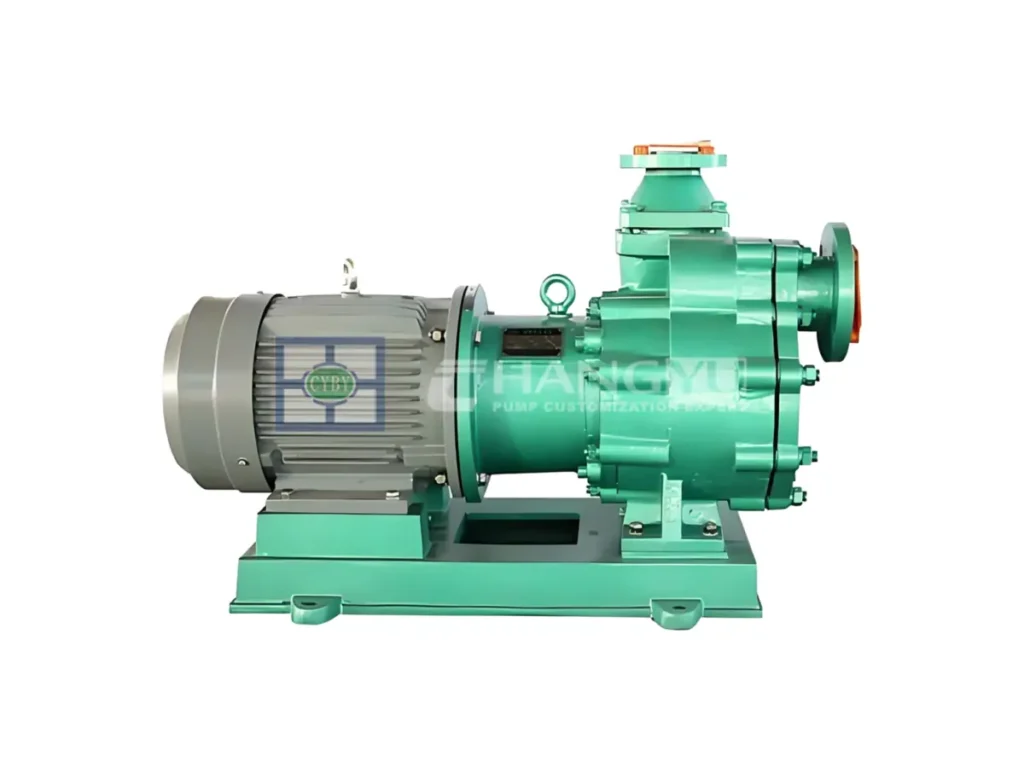
O Série ZCQ proporciona a convergência de duas capacidades críticas: acionamento magnético sem vedação desempenho sem fugas combinado com fiabilidade da auto-aspiração. Esta é a solução de engenharia quando é necessário garantir um funcionamento sem fugas e a capacidade de lidar com condições de aspiração difíceis - instalações de reservatórios acima do nível do solo, poços parcialmente drenados ou sistemas em que a fiabilidade da escorva é fundamental para a segurança do operador.
Principais especificações técnicas:
- Tipo de acionamento: Acoplamento magnético sem vedação - totalmente hermético
- Materiais húmidos: Revestimento em fluoroplástico (PTFE / F46)
- Elevador com aspiração automática: Até 4m
- Temperatura máxima: 120°C
- Caudal máximo: Até 50 m³/h
- Material do rolamento: Cerâmica de alumina de alta pureza (Al₂O₃)
- Compatibilidade química: HF, HCl, H₂SO₄, HNO₃, ácidos mistos e praticamente todos os fluidos corrosivos agressivos
Destaques estruturais:
- Vedação mecânica zero - acionamento magnético hermeticamente selado em toda a sua extensão
- A capacidade de auto-aspiração elimina a necessidade de válvulas de pé ou bombas de aspiração externas
- Extremidade húmida totalmente em fluoroplástico para a mais ampla gama de meios químicos agressivos
- Construção compacta e leve para transferências portáteis ou instalações com limitações de espaço
- Certificação CE; versão com certificação ATEX disponível a pedido
Os engenheiros da Changyu Pump recomendam especificamente a Série ZCQ para a transferência de produtos químicos de processos húmidos de semicondutores, manuseamento de solventes farmacêuticos e qualquer aplicação que combine HF ou serviço de ácido misto com condições de sucção acima do nível.
4. Bomba de acionamento magnético auto-ferrante de aço inoxidável da série CQZ
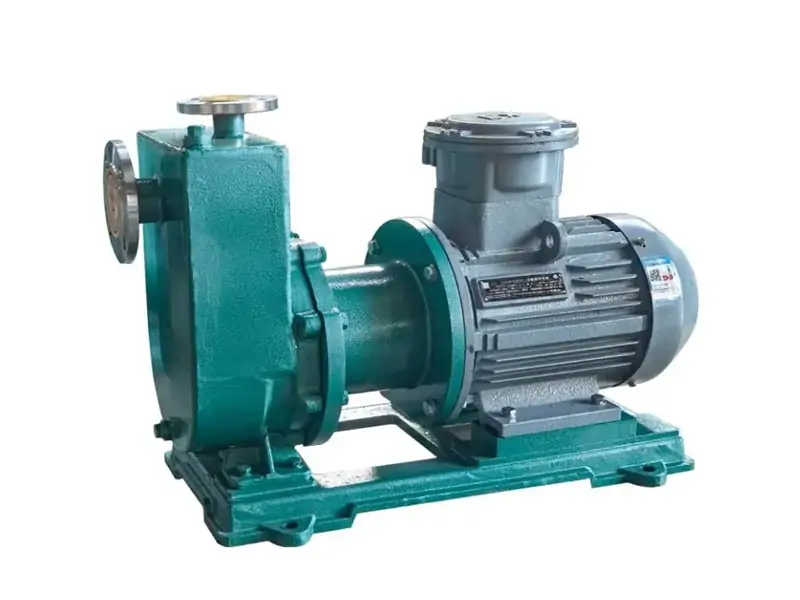
O Série CQZ é o nosso bomba de acionamento magnético auto-ferrante em aço inoxidável - que oferece uma resistência mecânica em aço inoxidável 316L com a vantagem operacional da capacidade de auto-aspiração, tudo dentro de um design de acionamento magnético hermeticamente selado e sem fugas.
Principais especificações técnicas:
- Tipo de acionamento: Acoplamento magnético sem vedação
- Materiais húmidos: Aço inoxidável 316L
- Elevador com aspiração automática: Até 5m
- Temperatura máxima: 150°C
- Caudal máximo: Até 30 m³/h
- Compatibilidade química: Ácidos diluídos, álcalis, solventes orgânicos, produtos farmacêuticos intermédios, fluidos de qualidade alimentar
Destaques estruturais:
- A construção em aço inoxidável combina a durabilidade mecânica com uma resistência fiável à corrosão
- Conceção auto-aspirante para um arranque fiável a partir de condições de aspiração acima do nível do solo ou parcialmente drenadas
- Acionamento magnético totalmente sem vedação - zero fugas durante toda a vida útil
- Pegada compacta ideal para sistemas montados em skid, unidades de transferência móveis e integração de equipamento OEM
- Certificação CE; documentação de materiais em conformidade com a FDA disponível
O que isto significa para si: A série CQZ elimina a necessidade de escolher entre a conveniência da auto-aspiração e a segurança de vazamento zero - obtém ambas numa única unidade compacta de aço inoxidável que se encaixa onde as bombas magnéticas de sucção final padrão não conseguem.
Bomba magnética química vs. bomba de vedação mecânica: Qual é a mais adequada para si?
Nem todas as aplicações requerem uma bomba de acionamento magnético. Aqui está uma comparação honesta e baseada em dados para orientar a sua decisão.
| Parâmetro | Bomba magnética química | Bomba de vedação mecânica |
|---|---|---|
| Fugas | Zero (hermeticamente fechado) | 0,5-3 mL/hr típico (desgaste do vedante) |
| Temperatura máxima | 250°C (especializado) | 350°C+ |
| Pressão máxima | 25 bar standard | 100+ bar |
| Tolerância de funcionamento em seco | Muito mau - segundos para danificar | Minutos (com descarga de vedação) |
| Serviço de fluidos abrasivos | Limitada (versões SiC) | Mais adequado |
| Líquidos tóxicos/inflamáveis | Solução definitiva | Requer um suporte de vedação complexo |
| Conformidade com emissões zero EPA/UE | Conformidade total desde a conceção | Requer o Plano 52/53/54 |
| Custo do capital inicial | 25-45% premium | Linha de base |
| Custo de manutenção dos selos | Zero | $500-$5,000 por evento |
| Tempo médio entre reparações (MTBR) | 5-10 anos | 1-3 anos |
| Economia típica de TCO em 5 anos | $12,000-$18,000 por bomba | — |
Regra de decisão de engenharia:
- Escolha a unidade magnética quando: o fluido é tóxico, carcinogénico, inflamável (ponto de inflamação <60°C) ou regulamentado para emissões zero
- Escolha o vedante mecânico quando: temperatura >250°C, pressão >25 bar, sólidos abrasivos >500 ppm, ou o orçamento de capital é a principal restrição
Estudo de caso do mundo real: Como uma fábrica economizou $47.000/ano ao mudar para bombas de acionamento magnético
Um fabricante de especialidades químicas no Sudeste Asiático estava a operar 18 bombas de vedação mecânica em serviço 35% HCl e FeCl₃. O registo de manutenção mostrava:
- Intervalo médio de substituição dos vedantes: 8 meses
- Custo médio por evento de selagem (peças + mão de obra + tempo de inatividade): $2.600
- Comunicação anual de incidentes ambientais: 4
O desafio: Cumprir os novos regulamentos de emissões zero no prazo de 12 meses sem paragem da linha de produção.
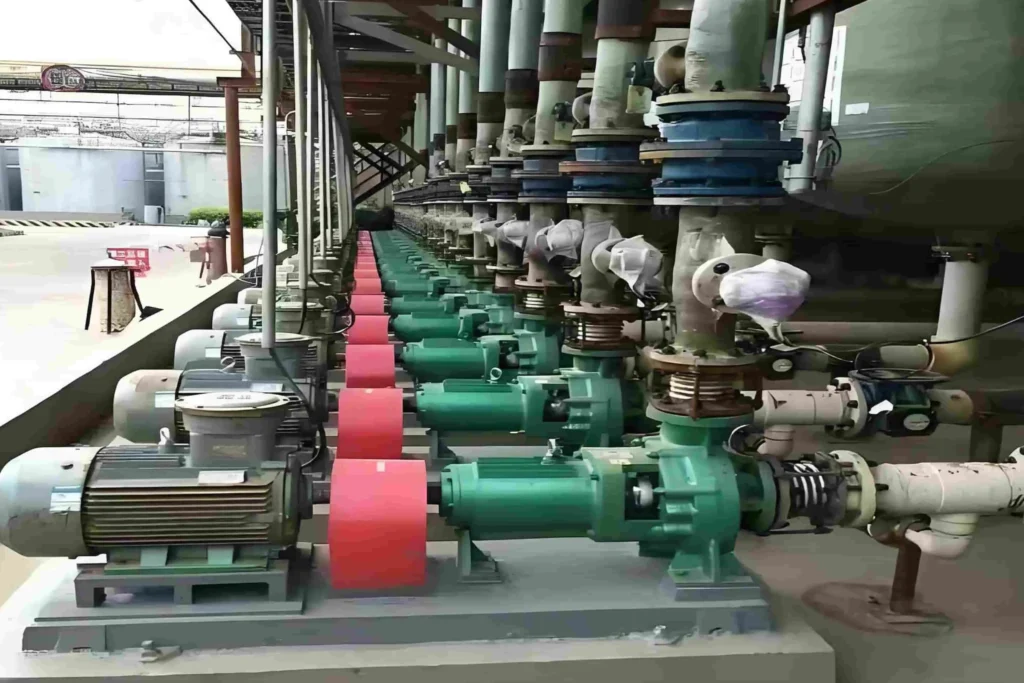
A solução: A equipa de engenharia da Changyu Pump especificou 18 unidades de PVDF Bombas de acionamento magnético da série CYQ com pares de rolamentos SiC/SiC e O-rings FFKM. A instalação foi efectuada em fases ao longo de 6 semanas durante as janelas de manutenção programadas - sem interrupção da produção.
Resultados na revisão de 24 meses:
- Custos de manutenção relacionados com os selos: $0
- Incidentes ambientais: 0
- Poupança total de custos verificada: $47,200 durante 24 meses
- Todas as 18 bombas a funcionar dentro dos parâmetros de desempenho originais
“O ROI foi mais rápido do que o previsto. Recuperámos a totalidade do investimento de capital em 14 meses.” - Diretor de Manutenção, fábrica de produtos químicos do Sudeste Asiático
Indústrias de Aplicação e Configurações Recomendadas
| Indústria | Fluidos de processo típicos | Modelo de bomba Changyu recomendado |
|---|---|---|
| Semicondutores / Eletrónica | HF, H₂SO₄, H₂O₂, água de enxaguamento ultrapura | Série ZCQ (fluoroplástico, pureza ultra-alta) |
| Farmacêutico / Biotecnologia | APIs, solventes, agentes de limpeza | Série CYC (aço inoxidável 316L, com capacidade CIP/SIP) |
| Cloro-alcalino / Químico a granel | Soluções de Cl₂, NaOH, HCl | Série CYQ (PVDF, ATEX Zona 2) |
| Acabamento de metais / galvanização | FeCl₃, CuSO₄, H₂SO₄, ácido crómico | Série CYQ (PVDF, rolamentos de cerâmica) |
| Petroquímica / Refinaria | Solventes aromáticos, ácidos diluídos | Série CYC (aço inoxidável 316L, API 685) |
| Tratamento de água e de águas residuais | Dosagem de NaOCl, H₂SO₄ | Série CYQ (PP ou PVDF, custo optimizado) |
| Alimentação e bebidas | Ácidos, desinfectantes, aromatizantes | Série CYC / CQZ (FDA 316L) |
| Sistemas portáteis / montados em skids | Fluidos corrosivos variáveis | Série CQZ (auto-ferrante SS compacto) |
| Transferência de tanques acima do nível do solo | Ácidos corrosivos, solventes | Série ZCQ (auto-ferrante fluoroplástico) |
Como é que a bomba Changyu garante a qualidade da bomba magnética química?
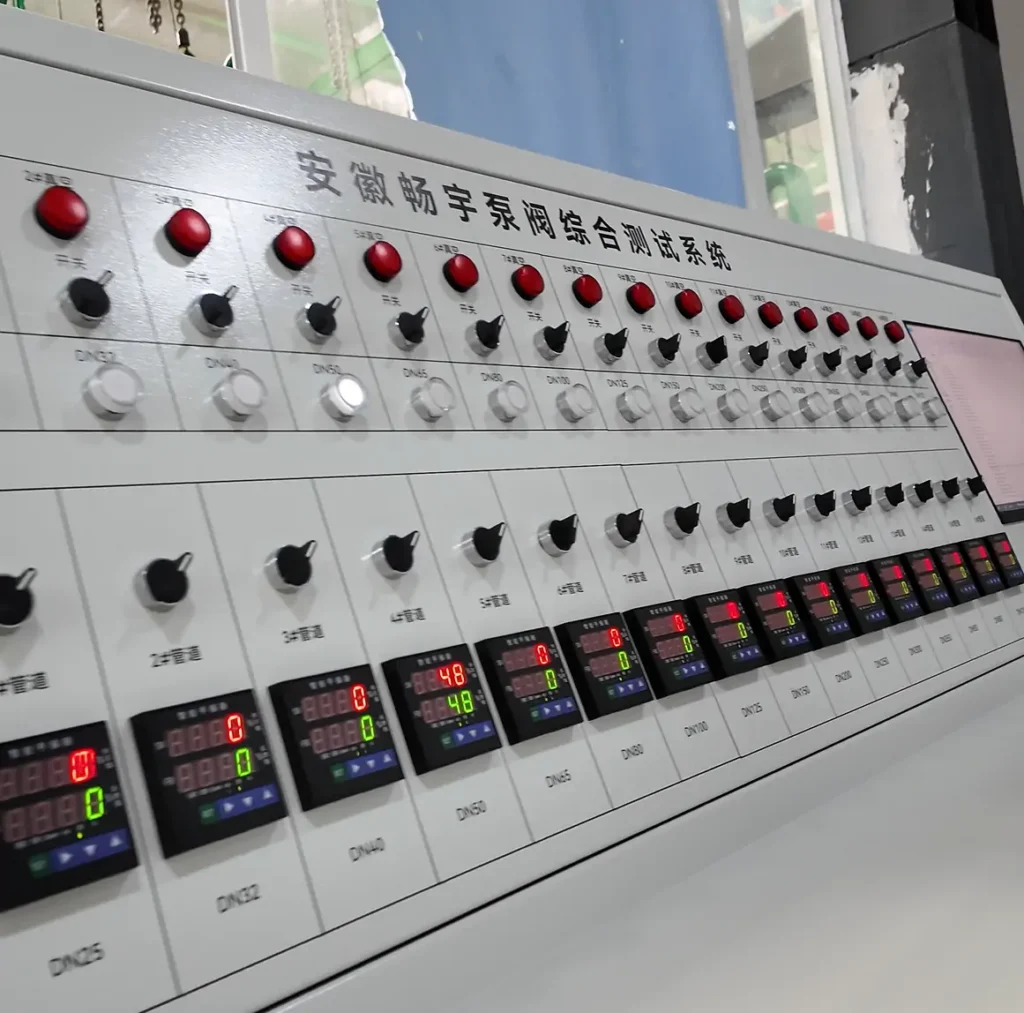
Todos Bomba Changyu A bomba magnética química é submetida a um rigoroso controlo de qualidade em várias fases antes da expedição:
Verificação dos materiais
- Revisão da certificação das matérias-primas recebidas em relação às normas de materiais ASTM, ISO e DIN
- Componentes fluoroplásticos verificados através de espetroscopia FTIR para autenticidade do material
Controlo dimensional
- Componentes maquinados em CNC verificados com tolerâncias de ±0,01mm utilizando CMM (Máquina de Medição por Coordenadas)
- Equilíbrio dinâmico do impulsor por ISO 1940-1 Grau G2.5
Ensaio de desempenho hidráulico
- 100% de bombas testadas em equipamento de ensaio hidráulico certificado por ISO 9906 Grau 2
- Relatório de teste individual emitido com cada bomba: caudal, cabeça, potência, eficiência no ponto de funcionamento
Ensaios de pressão e de estanquidade
- Ensaio de pressão hidrostática a 1,5× a pressão máxima de funcionamento de acordo com a norma ISO 5199
- Verificação de fuga zero em todas as unidades; teste de fuga de hélio para unidades com certificação ATEX (<1×10-⁶ mbar-L/s)
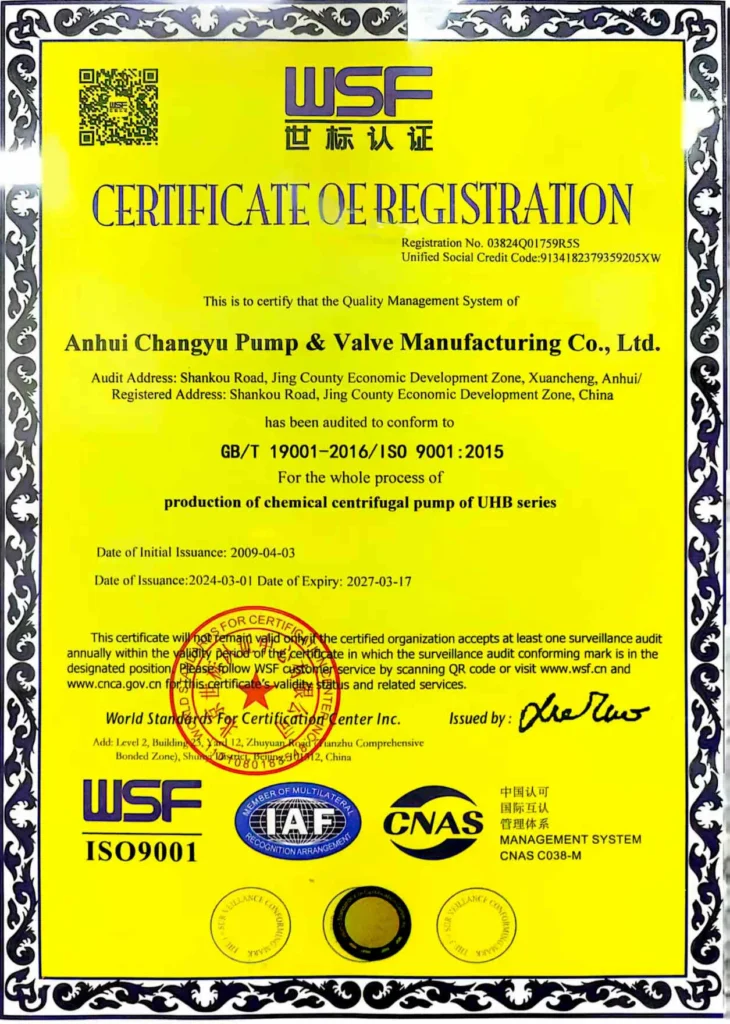
Certificações detidas: CE, ISO 9001:2015, ATEX (modelos selectivos), API 685 (modelos selectivos)


Bomba magnética química vs. bomba de vedação mecânica: Comparação de custos em 5 anos
| Categoria de custos | Bomba de vedação mecânica | Bomba magnética química |
|---|---|---|
| Compra inicial (por unidade) | $1,800 | $2,700 |
| Substituições de vedantes ×3 ao longo de 5 anos | $7,800 | $0 |
| Tempo de inatividade não planeado (2 eventos) | $9,000 | $900 |
| Consumo de energia | $12,000 | $12,300 |
| Sanções de conformidade ambiental | Risco variável | $0 |
| Total de 5 anos | $30,600+ | $15,900 |
| Poupança líquida por bomba | — | $14,700+ |
Com base em dados de campo da Changyu Pump de mais de 200 comparações de instalações, 2021-2025.
Como instalar uma bomba magnética química: Lista de verificação de comissionamento antes do arranque
Antes do primeiro arranque, verifique todos os itens desta lista de verificação:
- Tubagem de aspiração completamente escorvada; corpo da bomba completamente cheio; todo o ar ventilado
- Direção de rotação verificada através de um teste de corrida momentânea
- NPSHa confirmado ≥0,5 m acima do NPSHr da bomba no ponto de funcionamento
- Filtro em Y instalado na linha de sucção (tamanho da malha de acordo com as especificações do fabricante)
- Dispositivo de proteção contra funcionamento a seco (monitor de potência ou fluxostato) ligado, calibrado e testado
- Todos os parafusos da flange têm o torque especificado; tensão zero na tubagem dos bocais da bomba
- Proteção do acoplamento instalada de acordo com OSHA 29 CFR 1910.219
- Feixe de contenção de produtos químicos/bandeja de recolha de água no local e corretamente dimensionado
- ✅ 30 minutos de colocação em funcionamento supervisionada com monitorização contínua da corrente do motor💡 Os engenheiros da Changyu Pump recomendam vivamente uma entrada em funcionamento supervisionada com monitorização contínua do consumo de corrente do motor, confirmação do caudal de descarga e temperatura da chumaceira antes de passar ao funcionamento total.
6 regras críticas dos engenheiros de bombas da Changyu para evitar erros dispendiosos
Regra 1 - Nunca assumir a compatibilidade do material. Verificar sempre.
Verifique cada componente molhado em relação ao seu fluido, concentração e temperatura exactos. Um material de O-ring errado destrói a bomba em 72 horas.
Regra 2 - Dimensione o acoplamento magnético com um fator de segurança de binário mínimo de 1,5×.
Ter em conta o binário de arranque (2× binário de funcionamento) e a pior viscosidade possível à temperatura mínima de funcionamento. Acoplamento subdimensionado = desacoplamento crónico = falha prematura.
Regra 3 - Instale a proteção contra funcionamento a seco antes do primeiro arranque, não após a primeira falha.
As chumaceiras de cerâmica e SiC são lubrificadas com fluido. Sem fluxo, eles falham em segundos. Um monitor de potência $200 evita a substituição de uma bomba $2.500+.
Regra 4 - Calcule o NPSHa antes de selecionar a bomba, não após a instalação.
Calcular nas piores condições possíveis: temperatura máxima do fluido, elevação máxima de aspiração, diâmetro mínimo do tubo de aspiração. Manter o NPSHa > NPSHr + 1,0m sempre que possível.
Regra 5 - Não especifique uma bomba magnética normal para serviço de polpas abrasivas.
Para sólidos abrasivos >50 ppm, especifique pares de rolamentos SiC/SiC e impulsor aberto, ou contacte a nossa equipa de engenharia para obter opções de bombas magnéticas para polpas abrasivas especificamente concebidas.
Regra 6 - Faça corresponder a classificação da zona ATEX à sua avaliação da área perigosa.
Tanto o motor como o conjunto da bomba têm de ter a certificação ATEX/IECEx correta para a classificação da sua zona. Uma bomba não ATEX numa área classificada constitui um risco de segurança e uma violação regulamentar.
Pronto para especificar o direito bomba magnética química para a sua aplicação? Contactar a equipa de engenharia da Changyu Pump com os seus dados de fluido, requisitos de caudal e condições do local - recomendações tecnicamente verificadas e fichas de dados certificadas entregues em 24 horas.
Saiba mais sobre a nossa equipa de engenharia | Saiba mais sobre as nossas bombas magnéticas químicas | Obter o seu orçamento personalizado
Perguntas mais frequentes: Bombas magnéticas químicas
Q1: Qual é o melhor material de bomba magnética química para o serviço de ácido fluorídrico (HF)?
Para Bomba de acionamento magnético HF aplicações, especifique a Série ZCQ com revestimento completo em fluoroplástico PTFE/F46, rolamentos de cerâmica e anéis de vedação FFKM. O PVDF standard NÃO é adequado para HF concentrado. Verifique cada componente molhado independentemente.
Q2: O que é que causa o desacoplamento magnético numa bomba de acionamento magnético e como é que o posso evitar?
Desacoplamento do acoplamento magnético ocorre quando a exigência de binário do sistema excede o limite nominal do acoplamento - mais frequentemente devido a funcionamento a seco, bloqueio súbito ou viscosidade inesperadamente elevada. Instale um monitor de potência com um disparo automático de 2-3 segundos; dimensione o acoplamento para 1,5 × o binário máximo calculado.
Q3: Quanto tempo dura uma bomba magnética sem vedante em serviço químico contínuo?
Com uma seleção correta do material e uma instalação adequada, 5-10 anos MTBR é típico da indústria. Os pares de rolamentos SiC/SiC em serviço corrosivo limpo excedem regularmente os 10 anos sem substituição, de acordo com os registos de serviço no terreno da Changyu Pump em mais de 500 instalações.
Q4: Que bomba magnética Changyu Pump devo escolher para a sucção de um tanque acima do nível?
Para condições de sucção acima do nível do solo ou difíceis, escolha o Série ZCQ (fluoroplástico, para HF e ácidos agressivos) ou o Série CQZ (aço inoxidável 316L, para serviço mais corrosivo e de qualidade alimentar). Ambas oferecem capacidade de auto-aspiração até uma altura de sucção de 4-5 m, com acionamento magnético completo e conceção de fuga zero.
Q5: Qual é a temperatura máxima de funcionamento de uma bomba magnética química?
Modelos standard com revestimento de plástico (CYQ, ZCQ): 120°C. Versões com revestimento de fluoroplástico: até 180°C. Modelos resistentes em aço inoxidável (CYC, CQZ): até 150-200°C. Contacte a Changyu Pump para aplicações acima de 150°C para confirmar o modelo ideal e a configuração do material.
Q6: As bombas magnéticas Changyu Pump têm certificação ATEX para atmosferas explosivas?
Sim - Configurações com certificação ATEX estão disponíveis para áreas classificadas como Zona 1 e Zona 2 nas séries CYQ, CYC, ZCQ e CQZ, em conformidade com a Diretiva ATEX 2014/34/UE e IECEx. Especifique a classificação da sua zona quando efetuar o pedido.
Q7: Como é que eu calculo o NPSH para a instalação da minha bomba magnética química?
NPSHa = (P_sucção absoluta - P_vapor) ÷ (ρ × g). O NPSHa deve exceder o NPSHr em pelo menos 0,5 m. Calcular no pior dos casos: temperatura máxima do fluido, elevação máxima de sucção e tamanho mínimo do tubo de sucção. Contacte a Changyu Pump para uma análise gratuita da verificação do NPSH.
Q8: Qual é a poupança de custos a 5 anos de uma bomba magnética versus uma bomba de vedação mecânica?
Com base na análise da Changyu Pump de mais de 200 instalações no terreno, as bombas magnéticas químicas proporcionam uma poupança média de TCO em 5 anos de $12.000-$18.000 por bomba em serviço químico corrosivo, impulsionado pela eliminação dos custos de substituição de vedantes, tempo de inatividade reduzido e zero penalizações de conformidade ambiental.
Conclusão
Bombas magnéticas químicas são a solução validada pela engenharia e em conformidade com a regulamentação para o manuseamento de fluidos de processo corrosivos, tóxicos e inflamáveis. O design do acionamento magnético hermeticamente selado elimina o risco de fuga mais provável, proporciona reduções mensuráveis dos custos de manutenção e assegura a total conformidade com as normas globais de emissão zero.
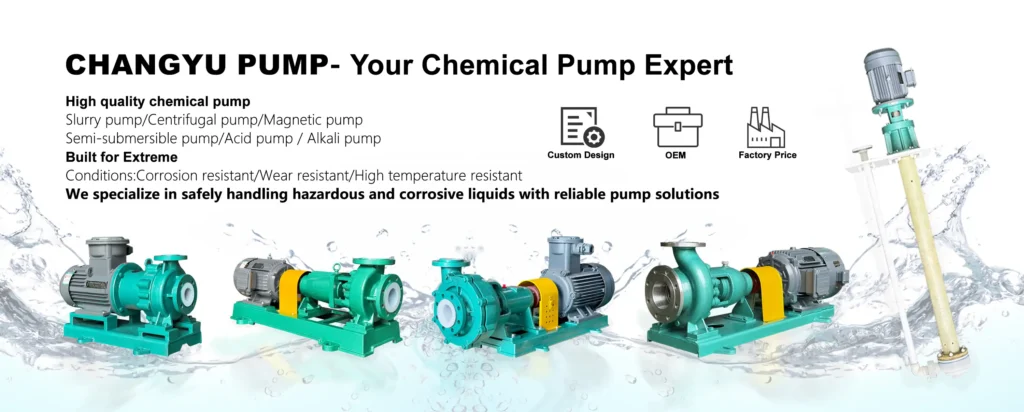
Com mais de 20 anos de experiência em engenharia de bombas de acionamento magnético para indústrias de processamento químico em mais de 20 países, Bomba Changyu oferece quatro soluções concebidas com objectivos específicos - o Séries CYQ, CYC, ZCQ e CQZ - para cobrir todas as combinações de compatibilidade química, requisitos de fluxo, material de construção e condições operacionais exigidas pelas suas instalações.
Contacto Changyu Pump hoje - forneça os seus dados de fluido e requisitos de fluxo e receba uma recomendação de bomba tecnicamente verificada com folha de dados certificada no prazo de 24 horas.