
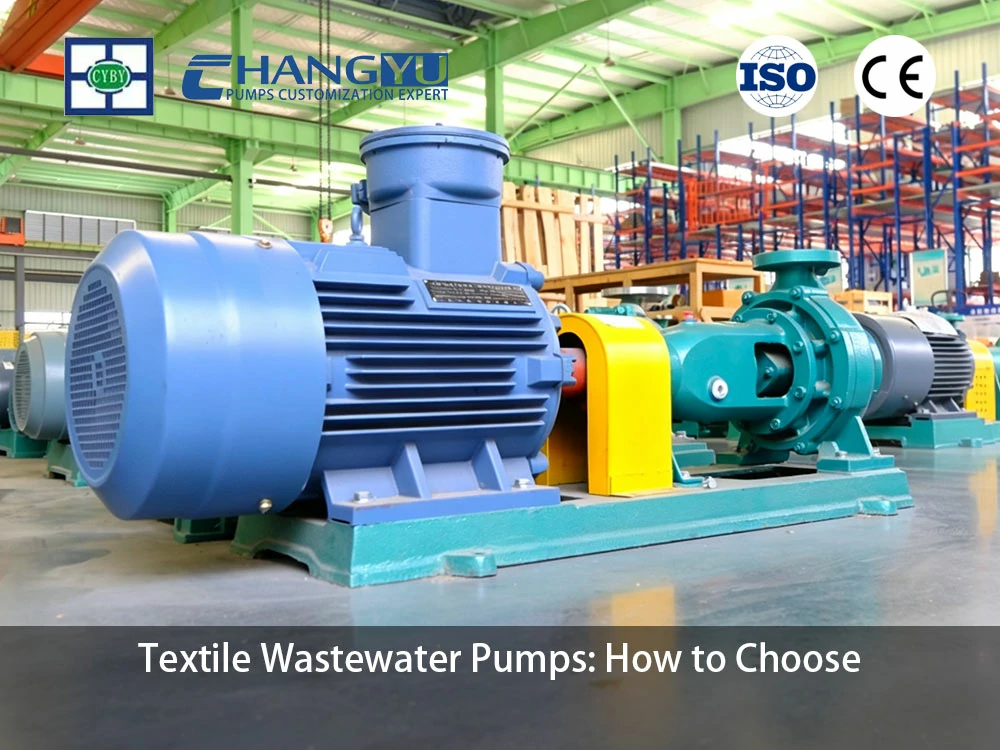
Bombas para efluentes têxteis são uma categoria especializada de bombas centrífugas resistentes à corrosão, projetadas para lidar com efluentes agressivos, carregados de fibras e de alta temperatura gerados em operações de processamento têxtil úmido. Ao contrário das bombas industriais padrão, elas devem suportar condições alternadas de acidez e alcalinidade, temperaturas elevadas e sólidos propensos a entupimento — tudo simultaneamente. Este artigo fornece um guia prático de seleção para engenheiros de planta e profissionais de compras que precisam escolher a bomba certa para sua aplicação de efluentes têxteis.
Principais Conclusões
- O efluente têxtil apresenta um conjunto particularmente desafiador de problemas de bombeamento devido às suas amplas flutuações de pH, temperaturas elevadas e composição química complexa. — O pH flutua amplamente entre condições ácidas e alcalinas, as temperaturas atingem 60–90°C, e o efluente contém corantes, fibras, álcalis e solventes orgânicos que atacam materiais convencionais de bombas.
- A seleção de materiais é uma decisão crítica: fluoroplástico (FEP/PFA/PTFE) é a escolha preferida para fluxos mistos de ácido-álcali, enquanto o UHMWPE se destaca em lamas abrasivas com alto teor de fibras.
- Quatro tipos de bombas da Changyu Pump cobrem a maioria das aplicações de efluentes têxteis — FYH para drenagem de tanques e fossas de tingimento, CYF para transferência química, FZB para descarga autoescorvante de tanques e UHB para fluxos com lamas e sólidos.
- Em geral,nenhuma bomba única pode lidar com todas as etapas do processo têxtil; adequar o tipo de bomba à etapa específica do processo é essencial para confiabilidade e vida útil.
O Que Torna o Efluente Têxtil um Desafio para Bombas?
O processamento têxtil úmido gera efluentes com uma combinação exclusivamente agressiva de propriedades. Compreender essas características é o primeiro passo para selecionar a bomba para efluentes têxteis.
Principais Propriedades Que Afetam o Desempenho da Bomba
| Propriedade | Faixa Típica | Impacto na Bomba |
|---|---|---|
| pH | Flutua entre condições ácidas e alcalinas | Corrosão de peças metálicas; ataque acelerado em revestimentos inadequados |
| Temperatura | 60–90°C (licor de tingimento, branqueamento) | Degradação térmica de vedações; risco aumentado de cavitação |
| Sólidos em suspensão | Fibras, fiapos, partículas de corante | Entupimento do rotor; falha do selo mecânico |
| Conteúdo químico | Corantes, pigmentos, solventes orgânicos, sais | Ataque químico em peças molhadas |
| Cloretos | Elevados (de agentes de branqueamento) | Corrosão por pites em aço inoxidável |
Os engenheiros da Changyu Pump recomendam: Sempre analise a faixa completa de pH e a temperatura de pico do seu fluxo de efluentes — não apenas os valores médios. Uma bomba selecionada para condições médias pode falhar em semanas sob cargas de pico.
Fonte de dados: O efluente de processamento têxtil normalmente contém fluxos alternados de ácido-álcali das etapas de tingimento, branqueamento e acabamento, com teor de fibras que causa entupimento em bombas padrão. .
Modos Comuns de Falha de Bombas em Plantas Têxteis
- Corrosão por pites — Cloretos de agentes de branqueamento atacam aço inoxidável 304/316L
- Entupimento por fibra — Fiapos e fios se enrolam no rotor, causando falha do selo e queima do motor
- Choque térmico — Ciclos intermitentes de quente-frio degradam elastômeros e causam vazamento no selo
- Cavitação — Operação em alta temperatura com baixas margens de NPSH danifica as superfícies do rotor
Qual Material É Recomendado para a Construção de Bombas para Efluentes Têxteis?
O princípio é direto: fluoroplástico ou UHMWPE para efluentes têxteis; aço inoxidável sozinho geralmente não é recomendado para fluxos mistos de ácido-álcali. Aqui está a justificativa de engenharia.
Fluoroplástico (FEP/PFA/PTFE) — Para Fluxos Mistos de Ácido-Álcali
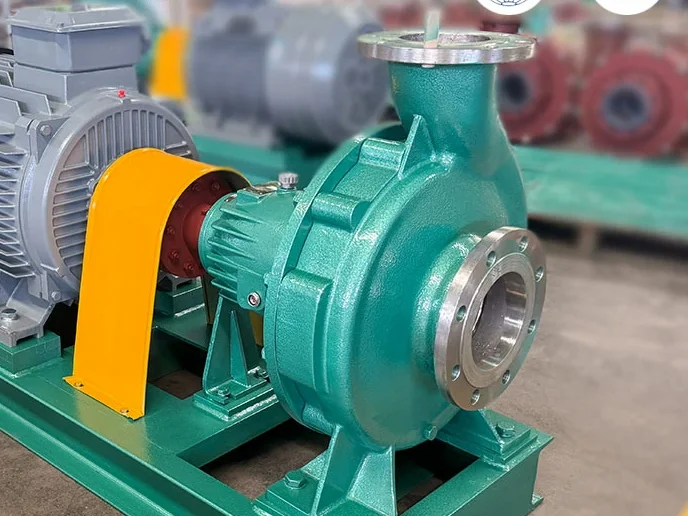
Revestimentos de fluoroplástico fornecem resistência química excepcionalmente ampla, tornando-os adequados para uma vasta gama de meios agressivos em todo o processo de tratamento de efluentes têxteis. Eles lidam com qualquer concentração de ácidos, álcalis e solventes orgânicos sem degradação. A série CYF, por exemplo, opera continuamente de -20°C a 180°C com revestimento FEP/PFA/PTFE, lidando com “ácido sulfúrico, ácido clorídrico, ácido nítrico, ácido fluorídrico, álcalis, agentes oxidantes, solventes orgânicos e efluentes corrosivos” — todos os produtos químicos encontrados no processamento têxtil úmido. A série FYH usa liga de fluoroplástico para todas as peças molhadas, tornando-a adequada para drenagem de fossas de tingimento onde o pH oscila entre ácido e alcalino. .

Os engenheiros da Changyu Pump recomendam: Para fluxos onde a temperatura excede 120°C — como licor de tingimento pressurizado ou linhas de agentes de branqueamento — especifique revestimento PFA em vez de FEP padrão. O PFA mantém a integridade mecânica até 180°C, enquanto o FEP começa a amolecer acima de 150°C. .
UHMWPE — Para Lamas Abrasivas com Teor de Fibras
Polietileno de ultra-alto peso molecular (UHMWPE) oferece mais de 9× a resistência ao desgaste do aço carbono. A série UHB apresenta revestimento UHMWPE de 8–20 mm de espessura com um rotor semiaberto que evita o entupimento por fibras. Essa combinação de resistência à abrasão e design anticlogamento a torna a escolha preferida para transferência de lodo e efluentes têxteis carregados de fibras.
H3: Guia Rápido de Seleção de Materiais
| Condição | Material recomendado | Fundamentação de engenharia |
|---|---|---|
| Mistura ácido-base, sólidos mínimos | FEP/PFA/PTFE | Mais ampla resistência química, -20°C a 180°C |
| Lodo abrasivo com fibras | UHMWPE | Revestimento de 8–20mm, resistência ao desgaste 9× maior que aço carbono |
| Alta temperatura (>120°C) | PFA | Estabilidade térmica até 180°C |
| pH neutro, baixo teor de cloreto | 316L (escopo limitado) | Apenas para fluxos não agressivos e com baixo teor de cloreto |
Quando Você Deve Usar Cada um dos 4 Tipos de Bomba para Efluentes Têxteis?
Em Bomba Changyu, recomendamos combinar o tipo de bomba à etapa específica do processo. Aqui estão as quatro séries de bombas que cobrem a maioria das aplicações de efluentes têxteis.
① Série FYH — Por que Escolher uma Bomba Submersível de Fluoroplástico para Tanques de Tingimento?
Recomendado para: Drenagem de tanques de tingimento, elevação de poços de coleta, efluentes com fibras, coleta de efluentes ácidos e alcalinos.
Quando o nível do líquido está abaixo do solo ou em um poço profundo, a série FYH é a escolha adequada. Seu design vertical de eixo longo permite que a entrada da bomba seja submersa diretamente no fluido, eliminando a necessidade de escorvamento. O impulsor aberto de duplo balanceamento lida com fibras e sólidos sem entupir, tornando-a especialmente adequada para aplicações em poços de coleta têxteis. .
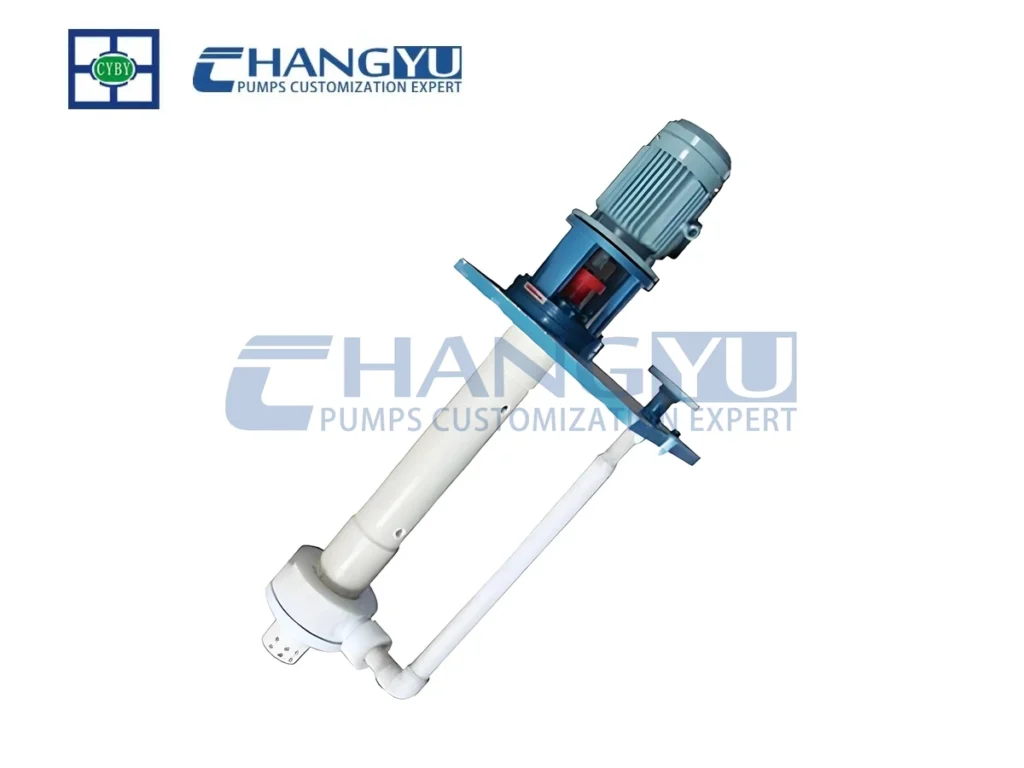
| Parâmetro | Faixa |
|---|---|
| Caudal | 5-400 m³/h |
| Cabeça | 5-50 m |
| Temperatura | -20°C a 90°C |
| Materiais | FEP, UHMWPE, PTFE (personalizável) |
| Impulsor | Aberto de duplo balanceamento (anti-entupimento) |
Por que se adequa: A FYH é explicitamente listada para aplicações de “tingimento têxtil”, e sua construção em fluoroplástico resiste aos fluxos alternados de ácidos e álcalis comuns nos processos de tingimento. A instalação vertical também economiza espaço no chão de fábrica em áreas congestionadas.
Os engenheiros da Changyu Pump recomendam: Para tanques de tingimento com mais de 3 metros de profundidade, especifique a opção de eixo estendido. A extremidade hidráulica submersa da FYH elimina a necessidade de tubo de sucção, reduzindo perdas de pressão e prevenindo a entrada de ar comum em linhas de sucção longas. .
Link do produto: Bomba submersível resistente a produtos químicos da série FYH
② Série CYF — Como uma Bomba Centrífuga de Fluoroplástico Lida com Dosagem Química?
Recomendado para: Dosagem de ácidos e álcalis, transferência de produtos químicos de branqueamento, circulação de licor de tingimento em alta temperatura.
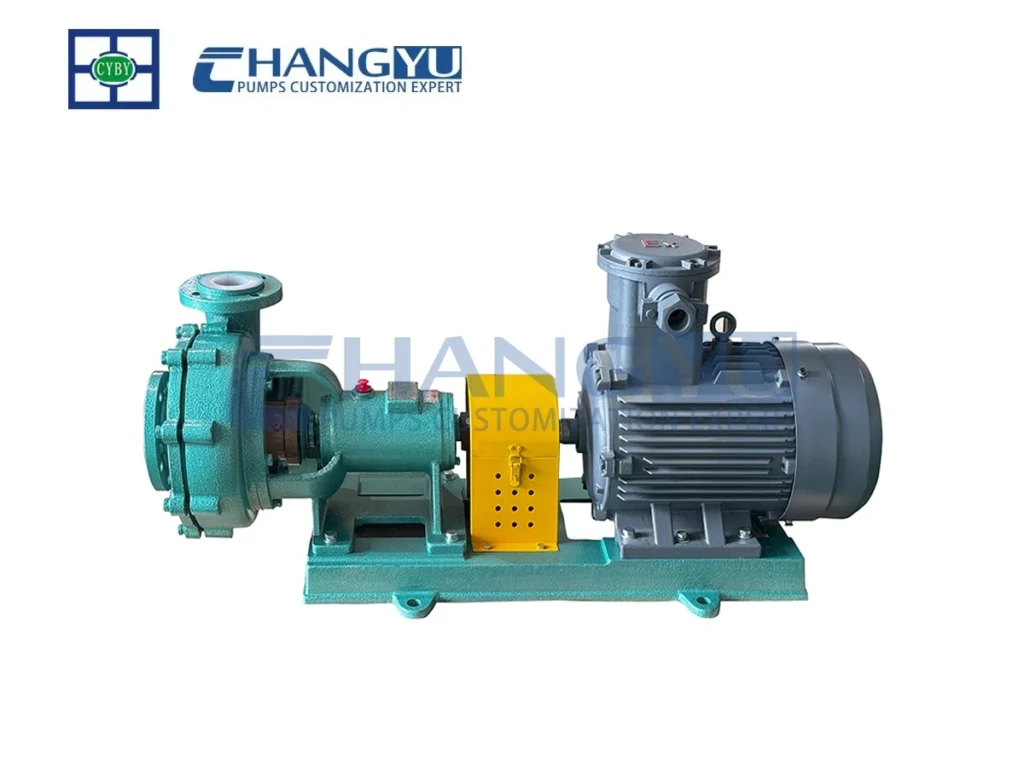
Para transferência contínua acima do solo de produtos químicos corrosivos, a série CYF é nossa recomendação padrão. É uma bomba centrífuga de estágio único e sucção simples projetada conforme normas ISO, com revestimento em FEP/PFA/PTFE e selo mecânico externo tipo fole. .
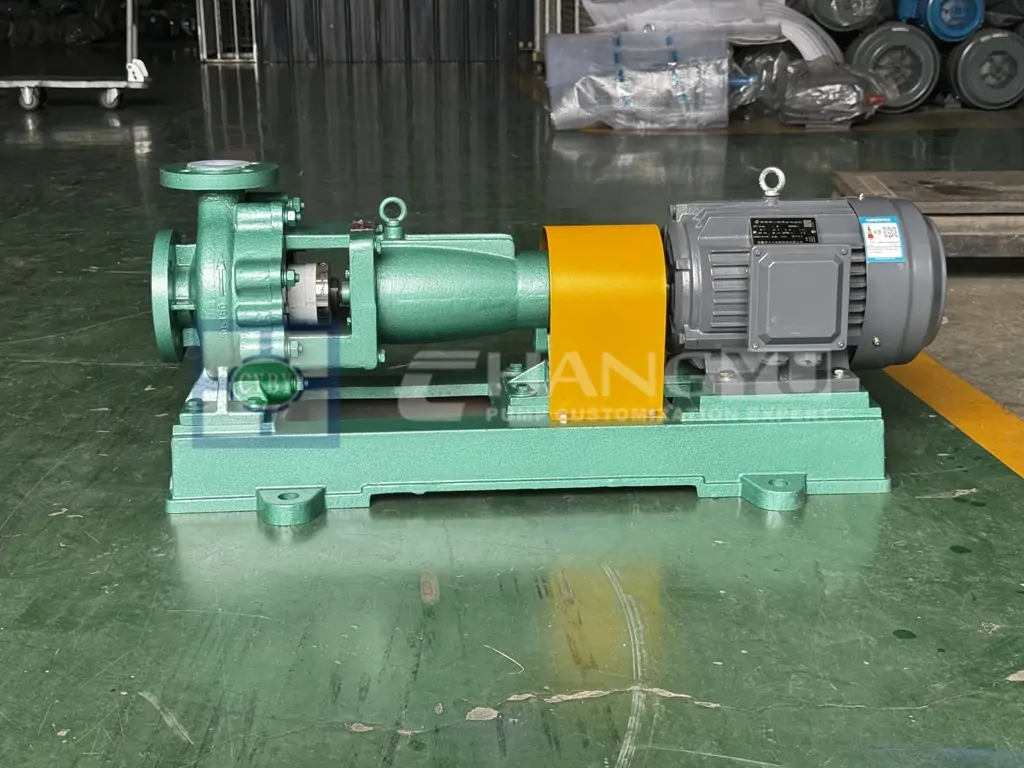
| Parâmetro | Faixa |
|---|---|
| Caudal | 1,6–2600 m³/h |
| Cabeça | 5–130 m |
| Temperatura | -20°C a 180°C |
| Materiais | Revestimento em FEP, PFA, PTFE |
| Selo | A série CYF adota uma carcaça de aço combinada com uma estrutura de revestimento de fluoroplástico FEP. Comparado com bombas convencionais de aço inoxidável 316L, este design evita que o meio corrosivo entre em contato direto com os componentes metálicos de pressão. |
Por que se adequa: A CYF lida com “ácido sulfúrico, ácido clorídrico, ácido nítrico, ácido fluorídrico, álcalis, agentes oxidantes, solventes orgânicos e efluentes corrosivos” — todos os produtos químicos encontrados no processamento têxtil úmido. Sua tolerância a temperatura de 180°C cobre os fluxos mais quentes de licor de tingimento e branqueamento.
Os engenheiros da Changyu Pump recomendam: Quando a CYF é usada para dosagem intermitente de produtos químicos de branqueamento (ex.: hipoclorito de sódio ou peróxido de hidrogênio), instale uma linha de lavagem no selo mecânico. Isso evita o acúmulo de cristais durante períodos de espera, uma causa comum de falha de selo em plantas têxteis. .
Link do produto: Bomba centrífuga de fluoroplástico da série CYF
③ Série FZB — O que Torna uma Bomba Autoescorvante Adequada para Descarregamento de Tanques Subterrâneos?
Recomendado para: Descarregamento de tanques subterrâneos, transferência química intermitente, transferência de pasta de estamparia, descarregamento de tambores.
Quando a fonte de líquido está abaixo do nível da bomba — como tanques de armazenamento subterrâneos ou tambores — uma bomba autoescorvante elimina a necessidade de válvulas de pé ou escorvamento manual. A série FZB alcança sucção automática de até 5 metros (7 metros com válvula de pé) após o enchimento inicial. .
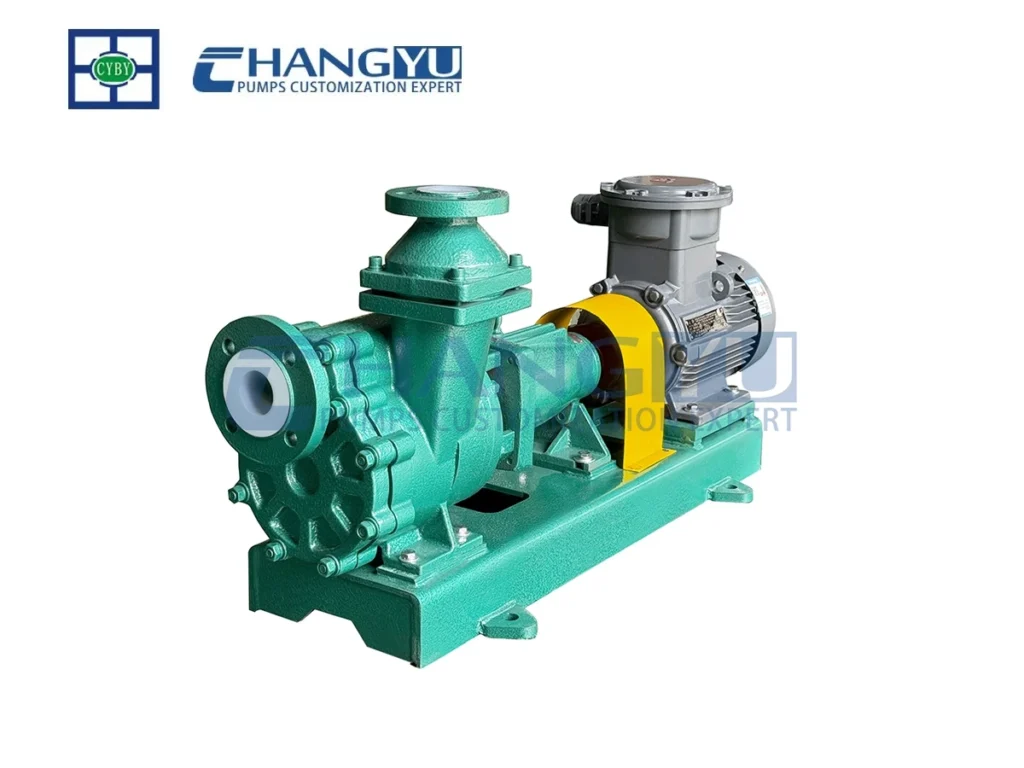
| Parâmetro | Faixa |
|---|---|
| Caudal | 2,5–100 m³/h |
| Cabeça | 15–50 m |
| Temperatura | -20°C a 150°C |
| Altura de auto-aspiração | Até 5 m (7 m com válvula de pé) |
| Materiais | Revestimento em FEP, PFA, PTFE |
Por que se adequa: A série FZB é explicitamente listada para aplicações na indústria de “estamparia e tingimento têxtil”, incluindo bombeamento de líquidos corrosivos de tanques subterrâneos e descarregamento de caminhões-tanque químicos. Sua capacidade autoescorvante é essencial para plantas com armazenamento químico abaixo do nível do solo.
Os engenheiros da Changyu Pump recomendam: Para aplicações autoescorvantes envolvendo pasta de estamparia ou soluções viscosas de corante, selecione a FZB com diâmetro de tubo de sucção maior que a entrada da bomba. Isso reduz a velocidade do fluxo na linha de sucção, minimizando perdas por atrito durante a fase de escorvamento e garantindo reinício confiável após cada lote. .
Link do produto: Bomba centrífuga autoescorvante de fluoroplástico série FZB
④ Série UHB — Onde Você Deve Usar uma Bomba de Polpa com Revestimento em UHMWPE?
Recomendado para: Transferência de lodo, efluentes com areia, efluentes de alta abrasão, polpa com fibras.
Quando o efluente contém sólidos abrasivos, fibras ou partículas cristalinas, a série UHB é a opção mais durável. Seu revestimento em UHMWPE (8–20 mm de espessura) proporciona mais de 9× a resistência ao desgaste do aço carbono, e o impulsor semiaberto evita entupimentos. .
| Parâmetro | Faixa |
|---|---|
| Caudal | 3–2600 m³/h |
| Cabeça | 5-100 m |
| Temperatura | -20°C a 90°C |
| Espessura do revestimento | 8–20 mm UHMWPE |
| Impulsor | Semiaberto, anti-entupimento |
| Selo | Selo dinâmico tipo K com camisa de resfriamento |
Por que se adequa: A série UHB é projetada para “meios corrosivos e abrasivos” onde bombas padrão falham. O catálogo de produtos da Changyu Pump lista “efluentes têxteis” e “indústrias de tingimento” entre suas aplicações. O impulsor semiaberto e o selo dinâmico tipo K a tornam particularmente eficaz para efluentes têxteis com fibras.
Os engenheiros da Changyu Pump recomendam: Para efluentes têxteis contendo tanto partículas abrasivas (>5% em peso) quanto fibras longas, a UHB com selo dinâmico tipo K é a configuração preferida. O selo dinâmico cria uma barreira centrífuga que impede que partículas alcancem as faces do selo — um recurso crítico quando selos mecânicos convencionais falhariam em semanas.
Link do produto: Bomba de polpa abrasiva série UHB
Como Combinar a Bomba para Efluentes Têxteis à Aplicação — Um Gráfico Rápido de Seleção
| Cenário de aplicação | Bomba Recomendada | Material | Fundamentação de engenharia |
|---|---|---|---|
| Drenagem de poço de tanque de tingimento | FYH | FEP/UHMWPE | Submersível vertical, lida com fibras, sem necessidade de escorvamento |
| Dosagem de ácidos (HCl, H₂SO₄) | CYF | FEP/PFA | Alto fluxo, limite de temperatura de 180°C, dimensões padrão ISO |
| Transferência de álcalis (NaOH) | CYF | FEP/PFA | Resiste à soda cáustica em qualquer concentração |
| Licor de tingimento em alta temperatura (80–150°C) | CYF | PFA | Tolerância a temperaturas de até 180°C |
| Lodo com fibras e sólidos | UHB | UHMWPE | Revestimento antiabrasivo de 8–20mm, impulsor anti-entupimento |
| Descarregamento de tanques subterrâneos | FZB | FEP/PFA | Autoescorvante até 5m, reinício automático |
| Transferência de pasta de impressão | FZB | FEP/PFA | Design autoescorvante para fluidos viscosos |
Qual Sistema de Selo Você Deve Usar para Bombas de Efluentes Têxteis?
O selo é o componente mais vulnerável em qualquer bomba que manuseia efluentes têxteis. A Changyu Pump oferece três abordagens de selagem, cada uma adequada a diferentes condições.
- A série CYF adota uma carcaça de aço combinada com uma estrutura de revestimento de fluoroplástico FEP. Comparado com bombas convencionais de aço inoxidável 316L, este design evita que o meio corrosivo entre em contato direto com os componentes metálicos de pressão. — Padrão nas séries CYF e FZB. O anel estacionário usa alumina cerâmica 99,9% ou carbeto de silício; o anel rotativo usa material preenchido com PTFE. Adequado para líquidos limpos a levemente sujos. .
- Vedante dinâmico tipo K — Padrão na série UHB. Cria uma barreira centrífuga que impede que partículas atinjam as faces do selo. Inclui camisa de água de resfriamento para operação em alta temperatura. Recomendado para efluentes com lodo e fibras. .
- Design vertical sem selo — A série FYH elimina selos mecânicos por meio de seu design semissubmerso: o motor é montado acima do nível do líquido, e o eixo da bomba se estende para dentro do fluido. Isso remove o principal caminho de vazamento e reduz a manutenção. .
Os engenheiros da Changyu Pump recomendam: Para plantas têxteis que lidam com múltiplos lotes químicos, padronize o selo mecânico de fole externo (CYF/FZB) para transferência química limpa e o selo dinâmico tipo K (UHB) para correntes com lodo e fibras. Usar o tipo de selo correto para cada aplicação reduz o custo total de propriedade mais do que qualquer outra decisão isolada.
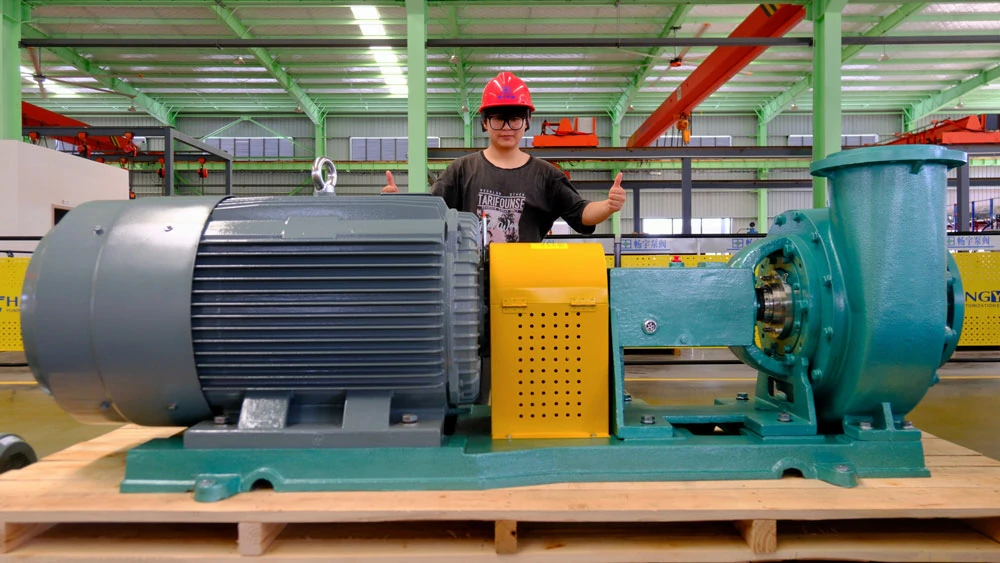
Como Instalar e Manter Bombas de Efluentes Têxteis
Instalação Submersível (FYH) vs. Horizontal (CYF/FZB/UHB)
- FYH (submersível vertical): Monte diretamente no topo do tanque ou na tampa do poço. O eixo da bomba se estende para dentro do líquido. Sem necessidade de fundação ou escorvamento. Adequado para espaços confinados e poços profundos. .
- CYF/FZB/UHB (horizontal): Requerem fundação de concreto e tubulação de sucção. Adequados para instalações acima do solo onde o acesso à bomba é necessário para manutenção rotineira.
Lidando com Operação Intermitente em Processos em Lote
Plantas têxteis frequentemente operam em lotes. Ciclos frequentes de partida-parada podem causar choque térmico e danos ao selo. A Changyu Pump recomenda:
- Instale uma linha mínima de recirculação para manter o fluxo durante o modo de espera
- Use uma válvula de retenção para evitar refluxo e rotação reversa
- Para a série FZB, o design autoescorvante permite reinício automático sem intervenção manual
Lista de Verificação de Inspeção Rotineira
| Frequência | Item de Verificação |
|---|---|
| Diário | Corrente do motor, vibração, vazamento visível |
| Semanal | Limpeza do filtro ou crivo, fluxo de lavagem do selo |
| Mensal | Folga do impulsor, espessura do revestimento (série UHB) |
| Trimestral | Condição do selo mecânico, substituição da graxa dos rolamentos |
| Anualmente | Revisão completa da bomba, inspeção do revestimento, alinhamento do eixo |
Conclusão: Obtenha a Bomba de Efluentes Têxteis Certa para Sua Planta
Selecionar o caminho certo bomba para efluentes têxteis resume-se a três decisões: material (fluoroplástico ou UHMWPE), tipo de bomba (FYH, CYF, FZB ou UHB), e sistema de selo (mecânico, dinâmico ou sem selo). Acertar essas três decisões garantirá que a bomba opere de forma confiável por anos, mesmo nos ambientes têxteis mais exigentes.
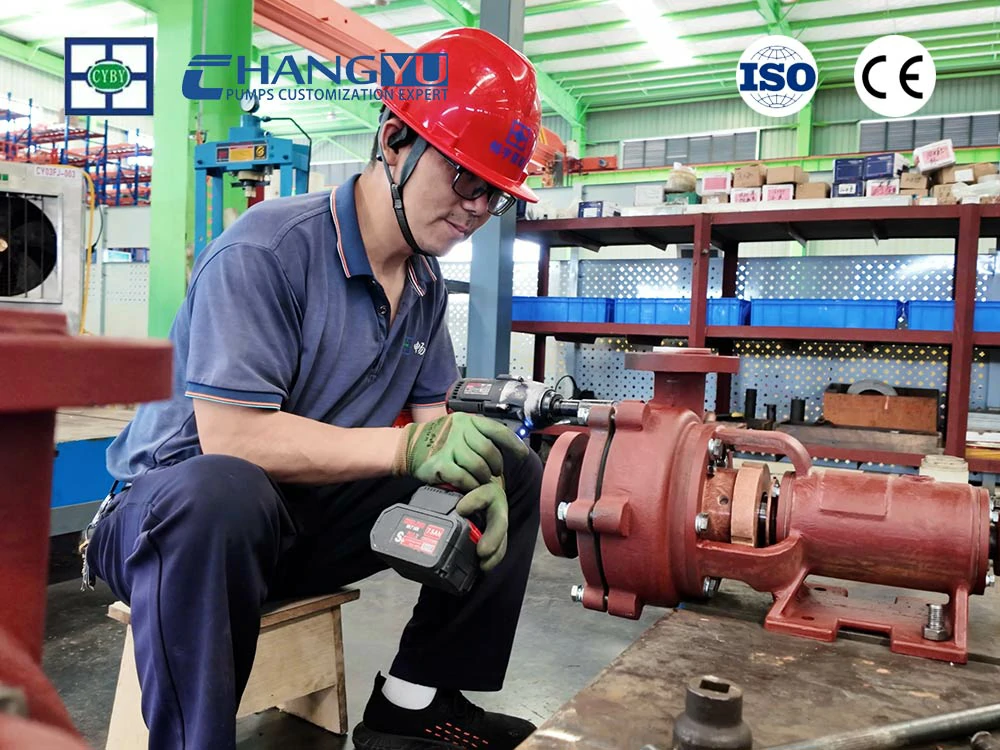
Em Bomba Changyu, fabricamos bombas resistentes à corrosão desde 2006. Nossa instalação certificada ISO 9001 e CE em Anhui, China, produz mais de 20.000 unidades anualmente, atendendo clientes nas indústrias têxtil, química, metalúrgica e ambiental em todo o mundo. Nossa equipe de engenharia implantou bombas revestidas com fluoroplástico e UHMWPE em centenas de plantas têxteis na Ásia, Europa e África.
Estamos prontos para ajudá-lo a selecionar a bomba certa para sua aplicação específica de efluentes têxteis. Envie-nos seus parâmetros de processo — vazão, altura manométrica, composição do meio (incluindo faixa de pH e temperatura) e teor de sólidos — e nossa equipe de engenharia fornecerá uma recomendação personalizada em até 24 horas.
Contate-nos hoje:
- Correio eletrónico: [email protected]
- WhatsApp/Telefone: +86-13651913727
Deixe a Changyu Pump ser sua parceira no manuseio de fluidos confiável e resistente à corrosão.
Terminologia
📖 Bomba Revestida com Fluoroplástico
Uma bomba centrífuga cujas partes molhadas são revestidas com fluoropolímeros como PTFE, FEP ou PFA. Esses materiais são quase inertes a todos os produtos químicos, exceto metais alcalinos fundidos e gás flúor em altas temperaturas. Bombas revestidas com fluoroplástico são a escolha padrão para o manuseio de ácidos mistos, álcalis e solventes orgânicos nas indústrias química, de tingimento têxtil, galvanoplastia e farmacêutica. Elas normalmente operam em temperaturas de -20°C a 180°C e estão disponíveis em configurações horizontal, vertical e autoescorvante. (Veja também: Fluoropolímero na Wikipedia)
📖 Revestimento de UHMWPE (Bomba)
Uma camada de polietileno de ultra alto peso molecular (UHMW-PE) ligada à superfície interna de uma carcaça de bomba metálica, tipicamente com 8–20 mm de espessura. O UHMWPE oferece mais de 9× a resistência à abrasão do aço carbono combinada com resistência química a ácidos e álcalis (até 80% de ácido sulfúrico, 50% de ácido nítrico). É o material padrão para bombas de polpa que manuseiam meios abrasivos, corrosivos ou com fibras em processamento químico, mineração e tratamento de águas residuais têxteis. A faixa de temperatura de operação é tipicamente de -20°C a 90°C (até 120°C com graus modificados) . (Veja também: UHMWPE na Wikipedia)
📖 Vedação Dinâmica (Bomba Centrífuga)
Um dispositivo de vedação sem contato usado em bombas centrífugas que manuseiam fluidos abrasivos ou com partículas. Ele usa um disco rotativo tipo impulsor para criar força centrífuga que empurra as partículas sólidas para longe das faces de vedação, prevenindo o desgaste. Uma bucha de estrangulamento estacionária ou placa de desgaste completa a vedação. Vedações dinâmicas são comumente encontradas em bombas de polpa e frequentemente são combinadas com um sistema de lavagem com água de resfriamento para lidar com aplicações de alta temperatura de até 90°C . (Veja também: Vedação mecânica na Wikipedia)
FAQ
P: Posso usar uma bomba de aço inoxidável para águas residuais têxteis?
R: O aço inoxidável (304/316L) é adequado apenas para fluxos de pH neutro e baixo teor de cloreto. Para as águas residuais de tingimento com ácidos e álcalis mistos típicas de plantas têxteis, é necessário revestimento de fluoroplástico (FEP/PFA/PTFE) ou UHMWPE.
P: Como prevenir o entupimento por fibras em bombas de águas residuais têxteis?
R: Escolha bombas com impulsores abertos ou semiabertos. A série FYH usa um impulsor aberto de duplo balanceamento, e a série UHB usa um impulsor semiaberto — ambos são projetados para lidar com meios contendo fibras .
P: Autoescorvante vs submersível — qual é melhor para plantas têxteis?
R: Use submersível (FYH) para poços profundos e fossas onde o nível do líquido está abaixo do solo. Use autoescorvante (FZB) para descarga de tanques subterrâneos e transferência intermitente onde a bomba deve ser montada acima do nível do líquido. Cada projeto atende a um cenário de instalação diferente.
P: Qual material é recomendado para licor de tingimento em alta temperatura?
R: PFA (perfluoroalcoxi) é o material preferido para aplicações de alta temperatura, com tolerância de temperatura de até 180°C. A série CYF está disponível com revestimento de PFA .