
Resposta rápida
Bombas de polpa de papel lidam com os duplos desafios de sólidos fibrosos e produtos químicos corrosivos em fábricas de polpa e papel. Quatro fatores principais de seleção:
- Projeto do impulsor para manuseio de fibras: Impulsores de vórtice ou semi-abertos resistem ao entupimento por fibras longas; impulsores com selo dinâmico reduzem a pressão na câmara do selo para prolongar a vida útil do selo.
- Seleção de material para licor negro: O aço inoxidável Duplex 2205 proporciona até 3–5× a vida útil do 316L em licor negro acima de 80°C devido à resistência superior à corrosão cáustica e erosão.
- Gerenciamento de consistência: Polpa de baixa consistência (<6%) usa bombas centrífugas convencionais; polpa de média consistência (6–15%) requer desgaseificação assistida por vácuo para evitar bloqueio de vapor.
- Planos de lavagem do selo: API Plan 32 (lavagem externa com água limpa) ou Plan 53C (selo duplo com fluido de barreira) evita a cristalização do licor negro nas faces do selo mecânico — a causa mais comum de falha prematura do selo em bombas de fábrica de polpa.
Hidróxido de sódio, sulfeto de sódio e ácidos orgânicos atacam os materiais da bomba, enquanto fibras de madeira, nós e areia os erodem. Uma bomba padrão pode falhar em semanas no serviço de licor negro — não por qualquer defeito de fabricação, mas porque o material e a configuração do selo foram especificados para água, não para a realidade química e física de uma fábrica de polpa.
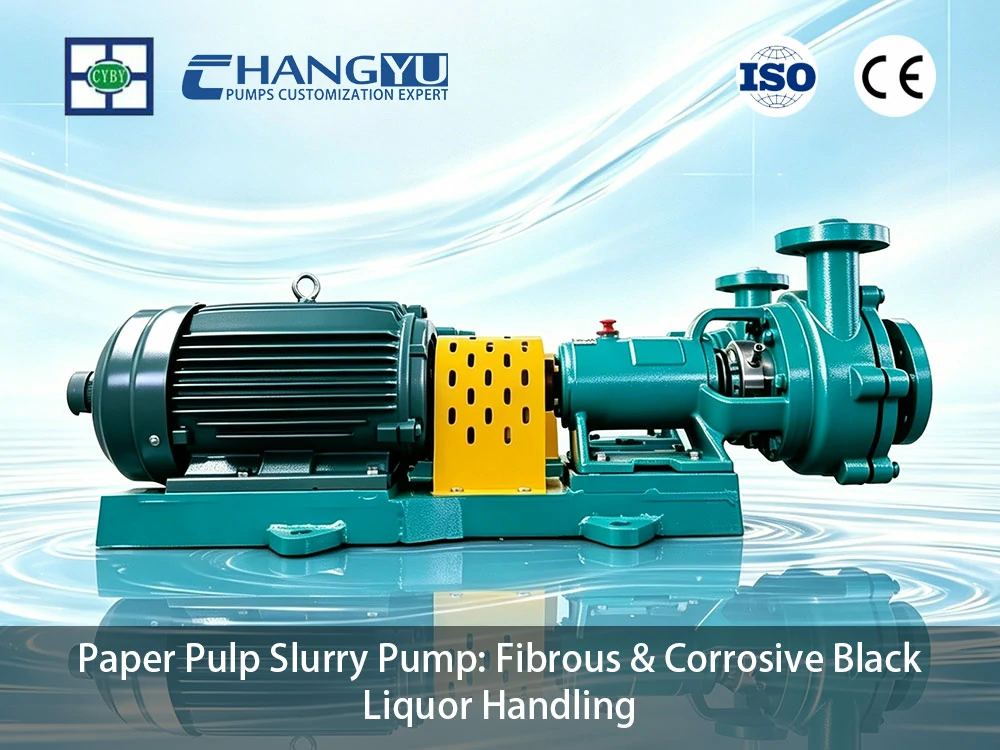
A Changyu Pump fabrica bombas resistentes à corrosão para processamento químico, polpa e papel e aplicações de lamas abrasivas há mais de duas décadas. Este guia aborda o manuseio de fibras, corrosão do licor negro, considerações de consistência e os planos de lavagem do selo que determinam se uma bomba de polpa de papel oferece serviço confiável ou se torna um problema recorrente de manutenção.
O Que Torna uma Bomba de Polpa de Papel Diferente das Bombas Padrão?
Uma bomba de polpa de papel deve resistir simultaneamente ao entupimento físico por fibras longas de madeira e ao ataque químico dos licores de cozimento. Bombas centrífugas padrão com impulsores fechados e carcaças de ferro fundido não são adequadas para serviço contínuo em fábrica de polpa.
- Emaranhamento de fibras: Fibras de madeira de 1–5 mm de comprimento envolvem as pás do impulsor fechado, reduzindo progressivamente o fluxo até ocorrer bloqueio total. Impulsores semi-abertos e de vórtice eliminam as superfícies onde as fibras se acumulam.
- Corrosão cáustica: O licor negro (pH 10–12, temperatura 80–110°C) ataca o ferro fundido e aços inoxidáveis padrão. Aços inoxidáveis duplex e revestimentos de fluoropolímero fornecem a resistência química necessária.
- Sólidos abrasivos: Areia, casca e nós arrastados na polpa erodem as carcaças e impulsores da bomba. Materiais resistentes ao desgaste — ligas de alto cromo, UHMW-PE ou aço inoxidável duplex — são necessários para componentes molhados.
Como Lidar com Material Fibroso em Bombas de Polpa de Papel?
Impulsor O projeto determina se uma bomba de polpa opera de forma confiável ou sofre entupimentos repetidos. Cada projeto representa uma troca deliberada entre passagem de fibras, eficiência hidráulica e resistência ao acúmulo de gás.
Quatro Projetos de Impulsor para Serviço de Polpa
Quatro Tipos Comuns de Impulsores de Bomba de Esgoto
O impulsor fica recuado na parede traseira da voluta, criando um vórtice que puxa fluido e fibras através da bomba. O contato da fibra com o impulsor é mínimo. Este projeto oferece a maior passagem livre e quase imunidade ao emaranhamento de fibras. A eficiência é menor (35–55%), mas para polpa bruta onde a confiabilidade supera o custo de energia, é a escolha padrão.
Impulsor semi-aberto:
As pás do impulsor são fixadas a um disco traseiro sem um disco dianteiro. A face aberta permite que as fibras passem sem a constrição dos projetos fechados. A eficiência é maior que os tipos de vórtice (50–60%). Combinado com um arranjo de palhetas traseiras (selo dinâmico), este projeto também reduz a pressão na câmara do selo, protegendo o selo mecânico da entrada de fibras. Nota: As palhetas traseiras adicionam aproximadamente 3–8% ao consumo de energia da bomba e podem acumular fibras em aplicações de alta consistência — equilibre os benefícios de proteção do selo contra esses fatores.
Impulsor de Canal (Único/Duplo):
Uma passagem única ou dupla larga através do impulsor acomoda fibras e pequenos sólidos. Maior eficiência (55–70%) do que projetos de vórtice ou semi-abertos. Adequado para polpa peneirada ou aplicações onde o teor de fibra é controlado e previsível.
Impulsor Triturador/Cortador:
Mecanismo de corte integrado tritura fibras e nós antes que entrem no canal de fluxo. Usado em reciclagem de papel usado e manuseio de refugos onde materiais fibrosos e contaminantes plásticos estão presentes. Requer afiação periódica e não é recomendado para polpa abrasiva — a areia acelera o desgaste do cortador.
Matriz de Seleção para Manuseio de Fibras
| Tipo de Polpa | Comprimento da Fibra | Consistência | Matriz de Seleção de Impulsor de Bomba de Esgoto | Fundamentação |
|---|---|---|---|---|
| Polpa de madeira virgem (não branqueada) | 2–5 mm | 2–6% | Semi-aberto com palhetas traseiras | Passagem de fibra + proteção do selo |
| Polpa de madeira virgem (branqueada) | 1–3 mm | 2–6% | Semi-aberto ou canal | Polpa mais limpa permite maior eficiência |
| Fibra reciclada / OCC | Mista, com contaminantes | 2–4% | Vórtice ou triturador | Tolerância máxima para material estranho |
| Manuseio de refugos/rejeitos | Misto, grosso | 1–3% | Vórtice | Teor de sólidos imprevisível |
| Polpa de alta consistência | N/A | > 10% | Não aplicável — requer tecnologia de bomba MC | Veja Seção 4 |
Máxima passagem de sólidos + peças de desgaste substituíveis Para polpa virgem não branqueada com fibras longas, impulsores semi-abertos com palhetas traseiras fornecem o melhor equilíbrio de passagem de fibra, eficiência e proteção do selo mecânico. As palhetas traseiras criam um diferencial de pressão que reduz a migração de fibras para a câmara do selo — o recurso de projeto mais eficaz para prolongar a vida útil do selo em serviço de polpa.
Quais Materiais Resistem à Corrosão do Licor Negro em Bombas de Polpa de Papel?
O licor negro — o produto químico de cozimento gasto do processo kraft de polpação — combina alta temperatura (80–110°C), alto pH (10–12) e sólidos abrasivos. Isso cria uma sinergia de corrosão-erosão que ataca os materiais da bomba de forma mais agressiva do que qualquer mecanismo isoladamente.
Como o Licor Negro Ataca os Materiais da Bomba
A solução cáustica A solução ataca a camada de óxido passivo em aços inoxidáveis, enquanto os sólidos arrastados erodem a superfície enfraquecida. O resultado: taxas de perda de material 2–5× maiores do que o previsto apenas com dados de corrosão ou erosão. Essa sinergia explica por que bombas padrão de aço 304L ou 316L — adequadas para soda cáustica fria — falham rapidamente em licor negro acima de 80°C.
Guia de Seleção de Material para Bombas de Licor Negro
| Material | Limite de temperatura | Resistência à corrosão | Resistência à abrasão | Recomendação |
|---|---|---|---|---|
| Ferro fundido | Não recomendado | Ruim — ataque cáustico rápido | Baixa | Não utilizar em qualquer serviço de licor negro |
| Aço Inoxidável 304L | Não recomendado acima de 60°C | Moderado em baixa temperatura | Baixa | Não recomendado — inadequado para licor negro quente |
| Aço inoxidável 316L | Não recomendado acima de 70°C | Melhor que 304L, mas ainda vulnerável | Baixa | Marginal — aceitável apenas para licor negro frio e diluído |
| Duplex 2205 (UNS S31803) | Até 110°C | Excelente — alto teor de cromo e molibdênio | Bom — dureza superior aos graus austeníticos | Melhor escolha geral para serviço de licor negro |
| Super Duplex 2507 (UNS S32750) | Até 130°C | Superior — PREN > 40 | Excelente | Especificado para as condições mais agressivas |
| Forro em UHMW-PE | Até 90°C * | Excelente — inerte à soda cáustica | Bom — resiliente, absorve impacto de partículas | Alternativa robusta ao aço inoxidável duplex quando a temperatura permitir; para serviço contínuo de licor negro acima de 80°C, o aço inoxidável duplex é preferido devido a considerações de expansão térmica |
| Revestido com PTFE/PFA | Até 120–180°C | Excelente — totalmente inerte | Moderado — macio, vulnerável a sólidos grossos | Para aplicações de alta pureza ou alta temperatura com mínimos sólidos |
Correspondência de Material por Processo de Fábrica de Celulose
| Localização da Fábrica | Médio | Temperatura | Material recomendado |
|---|---|---|---|
| Licor negro fraco (de lavadores) | Licor negro diluído, pH 10–11 | 60–80°C | Duplex 2205 ou revestido com UHMW-PE |
| Licor negro forte (de evaporadores) | Licor negro concentrado, pH 11–12 | 90–110°C | Duplex 2205 ou Super Duplex 2507 |
| Licor verde (de tanque de dissolução) | Carbonato de sódio + sulfeto, abrasivo | 80-100°C | Duplex 2205 (resistente ao desgaste) |
| Licor branco (de caustificadores) | Hidróxido de sódio, limpo | 70–90°C | Duplex 2205 ou 316L (menos abrasivo) |
| Filtrado da planta de branqueamento | Ácido, contendo cloreto | 40–70°C | Revestido com PTFE/PFA ou duplex 2205 |
Engenheiros da Changyu Pump observaram em centenas de instalações de bombas em fábricas de celulose: o duplex 2205 oferece consistentemente 3–5× a vida útil do 316L em serviço de licor negro acima de 80°C. O custo inicial mais alto do material é normalmente recuperado nos primeiros 12 meses através da eliminação de paradas não planejadas e intervalos de manutenção estendidos.
Planos de Flushing de Selo para Bombas de Licor Negro: Prevenindo Danos por Cristalização
A tendência do licor negro de cristalizar nas vedação mecânica faces é a causa única mais comum de falha prematura do selo da bomba em fábricas de celulose. À medida que o licor negro evapora na interface do selo, os sólidos dissolvidos precipitam — formando cristais abrasivos que destroem as faces do selo em semanas. A solução é um plano de flushing de selo adequadamente projetado que impede o licor negro de atingir as faces do selo.
Plano API 32 — Flushing Externo com Água Limpa:
Um fluxo contínuo de água limpa (ou condensado) é injetado na câmara do selo a uma pressão 1–2 bar (15–30 psi) acima da pressão de descarga da bomba. Isso cria uma barreira de fluido limpo nas faces do selo, impedindo completamente o contato do licor negro com o selo. A vazão é tipicamente de 2–8 L/min, dependendo do tamanho do selo. Este é o arranjo preferido para serviço de licor negro onde água de flushing limpa está disponível.
Plano API 53C — Selo Duplo com Fluido de Barreira Pressurizado:
Um arranjo de selo mecânico duplo com um reservatório de fluido de barreira pressurizado. A pressão do fluido de barreira excede a pressão do corpo da bomba, garantindo que qualquer vazamento através do selo interno seja de fluido de barreira limpo para dentro da bomba — e não de licor negro para dentro do selo. Este arranjo é especificado quando água de flushing limpa não está disponível ou quando é necessário vazamento zero do processo para conformidade ambiental.
Máxima passagem de sólidos + peças de desgaste substituíveis Para bombas de licor negro operando acima de 80°C, o Plano API 32 com flushing de condensado limpo é o arranjo de selo preferido. O flushing de condensado fornece tanto resfriamento quanto diluição, prevenindo a cristalização nas faces do selo. O Plano 53C é especificado para locais remotos onde o fornecimento de água de flushing é não confiável, ou para aplicações críticas ao meio ambiente onde qualquer vazamento de licor negro é inaceitável.
Por que a Consistência é Importante no Bombeamento de Polpa de Papel?
Consistência da polpa — a porcentagem de fibra seca em peso na suspensão — determina o comportamento hidráulico do fluido e a tecnologia de bomba necessária para movê-la. Uma bomba que lida com polpa de consistência de 3% sem esforço pode falhar completamente em consistência de 10%, mesmo que o tipo de fibra e o ambiente químico sejam idênticos.
Faixas de Consistência e Requisitos de Bomba
| Faixa de Consistência | Comportamento do Fluxo | Tecnologia de Bomba | Desafio Principal |
|---|---|---|---|
| Baixa consistência (< 2%) | Comporta-se como água — fluxo turbulento | Bomba centrífuga padrão | Acúmulo de fibra no rotor |
| Baixa-média consistência (2–6%) | Transicional — as fibras começam a interagir | Rotor semi-aberto ou vortex | Floculação de fibra; NPSH reduzido |
| Média consistência (6–15%) | Não Newtoniano — as fibras formam uma rede; arrastamento de ar | Bomba MC com desgaseificação a vácuo ou rotor fluidizante | Remoção de gás; altos requisitos de sucção |
| Alta consistência (> 15%) | Pastoso — não mais bombeável com bombas centrífugas | Bomba de deslocamento positivo (cavidade progressiva) | Mecanismo de alimentação necessário |
Tecnologia de Bomba de Média Consistência
Em consistência de 6–15%, a polpa pode conter 10–25% de ar arrastado por volume, com valores mais altos em temperaturas mais baixas e consistências mais altas. Uma bomba centrífuga padrão sofrerá bloqueio de vapor sob essas condições — o ar se separa da fibra e se acumula no olho do rotor, bloqueando o fluxo de líquido.
As bombas MC abordam isso através de duas tecnologias principais:
- Desgaseificação assistida a vácuo: Uma bomba de vácuo conectada à sucção da bomba remove o ar arrastado antes que ele entre no rotor. Isso pode reduzir o teor de ar de 20–30% para abaixo de 5%, restaurando a capacidade da bomba de gerar altura manométrica.
- Rotor fluidizante (gerador de turbulência): Um rotor especialmente projetado na entrada da bomba cria alto cisalhamento que quebra a rede de fibras e libera o ar arrastado. O ar liberado é então separado e removido.
Engenheiros da Changyu Pump observam: Para polpa com consistência acima de 6%, uma bomba centrífuga padrão — independentemente do design do rotor — não funcionará de forma confiável sem desgaseificação assistida a vácuo ou um rotor fluidizante na entrada. A bomba deve ser projetada especificamente para serviço de MC. Tentar usar uma bomba de baixa consistência em média consistência é o erro de especificação mais comum e mais caro em aplicações de bombas em fábricas de polpa.
Como Selecionar a Bomba de Polpa de Papel Certa para Sua Fábrica?
A seleção da bomba de polpa exige a correspondência do tipo de bomba, material e configuração do selo com as condições específicas do processo em cada ponto da fábrica. Uma bomba corretamente especificada para armazenamento de polpa branqueada falhará rapidamente em serviço de evaporação de licor negro se os requisitos de material e selo não forem ajustados.
Seleção de Bombas para Fábrica de Polpa em Resumo
| Localização da Fábrica | Médio | Desafio Principal | Bomba Recomendada | Material recomendado |
|---|---|---|---|---|
| Pátio de madeira / manuseio de cavacos | Água com casca, areia, cascalho | Abrasão | Série UHB (maior vazão) ou Série HB (menor vazão) | Duplex 2205 ou liga de alto cromo |
| Polpação / digestor | Licor negro quente (80–110°C) | Corrosão cáustica + temperatura | Série HB (duplex 2205) ou Série CYB-ZKJ | Duplex 2205 ou revestido com FEP/PFA |
| Lavagem de polpa marrom | Licor negro fraco (60–80°C) | Corrosão + fibra | Série UHB | Forro em UHMW-PE |
| Planta de branqueamento | Filtrado de cloreto ácido | Corrosão ácida | Série CYQ (acionamento magnético) | Revestido com FEP/PFA — vazamento zero |
| Preparação de massa | Polpa virgem/reciclada (2–6%) | Entupimento por fibra | Série UHB com rotor vortex | UHMW-PE ou duplex 2205 |
| Aproximação da máquina de papel | Polpa limpa e peneirada (1–3%) | Baixa pulsação | Série CYB-ZKJ | Revestido com FEP/PFA |
| Evaporação de licor negro | Licor negro forte (90–110°C) | Formação de cristais + corrosão | Série HB com plano de lavagem Plan 32 | Partes molhadas em duplex 2205 |
Processo de Seleção de Bomba de Polpa em Sete Etapas
Etapa 1: Caracterizar a polpa.
Determinar o tipo de fibra (virgem/reciclada), comprimento da fibra, consistência e presença de contaminantes (areia, nós, plásticos).
Etapa 2: Caracterizar o ambiente químico.
Identificar o fluido do processo (licor negro, licor branco, licor verde, filtrado de branqueamento), pH, temperatura, teor de cloreto e tendência de cristalização.
Etapa 3: Determinar os requisitos hidráulicos.
Calcular a vazão, altura manométrica total e NPSH disponível. Para polpa acima de 2% de consistência, aplicar fatores de redução nas curvas de desempenho da bomba.
Etapa 4: Selecionar o tipo de rotor.
Corresponder o design do rotor às características da fibra e consistência conforme a matriz na Seção 2.
Etapa 5: Selecionar os materiais.
Corresponder os materiais molhados ao perfil químico e de temperatura conforme a matriz na Seção 3.
Etapa 6: Especificar o plano de lavagem do selo.
Para licor negro e outros fluidos cristalizantes, especificar API Plan 32 (lavagem externa) ou Plan 53C (selo duplo com fluido de barreira). Consulte a Seção 3 para detalhes.
Etapa 7: Verificar a margem de NPSH.
A polpa tem NPSH disponível menor que a água devido à perturbação do fluxo induzida pela fibra. Aplicar uma margem de NPSH mínima de 30% acima do NPSH requerido da bomba, aumentando para 50% para polpa acima de 4% de consistência.
Máxima passagem de sólidos + peças de desgaste substituíveis Quando uma única localização da fábrica combina múltiplos desafios — como licor negro quente com sólidos abrasivos na bomba de recirculação do evaporador — priorize a seleção do material sobre o tipo de rotor. O custo da falha por corrosão supera em muito o custo de um design de rotor ligeiramente menos eficiente. Especifique duplex 2205 ou super duplex 2507 para os componentes molhados e selecione o tipo de rotor que forneça passagem adequada de sólidos dentro da restrição de material.
Por Que as Bombas de Polpa de Papel Falham Prematuramente e Como Prevenir?
As bombas de polpa e papel falham por razões bem compreendidas e amplamente preveníveis através de especificação sistemática e disciplina operacional. Os três modos de falha mais comuns — falha do selo por cristalização, entupimento do rotor por acúmulo de fibra e perfuração do corpo por ataque químico — cada um tem medidas preventivas definidas.
Modos de Falha Comuns e Ações Preventivas
| Modo de falha | Causa Raiz | Ação Preventiva |
|---|---|---|
| Falha do selo mecânico (1–6 meses) | Cristalização de licor negro nas faces do selo; entrada de fibra na câmara do selo | Lavagem externa API Plan 32; rotor semiaberto com palhetas traseiras para reduzir a pressão na câmara do selo |
| Entupimento do rotor (vazão reduzida) | Acúmulo de fibra nas palhetas do rotor fechado | Atualizar para rotor semiaberto ou vortex |
| Perfuração do corpo (6–18 meses) | Corrosão cáustica de ferro fundido ou 304L em licor negro quente | Atualizar para duplex 2205 ou corpo revestido com UHMW-PE |
| Falha do rolamento (12–24 meses) | Bomba operando fora do BEP devido a superdimensionamento; altas cargas radiais da polpa | Selecionar bomba com BEP próximo à vazão normal de operação; reduzir o diâmetro do rotor se necessário |
| Bloqueio de ar / perda de escorva | Ar arrastado em polpa de média consistência | Instalar sistema de desgaseificação a vácuo ou rotor fluidizante na entrada |
Manutenção Programada para Bombas de Polpa e Papel
| Intervalo | Ação | Finalidade |
|---|---|---|
| Semanal | Verificar a vazão e pressão da lavagem do selo; ouvir ruídos anormais ou vibração | Detecção precoce de falha no sistema de lavagem ou problemas no rolamento |
| Mensal | Inspecionar o filtro da lavagem do selo; limpar ou substituir se entupido | Previne perda de pressão da lavagem e contaminação das faces do selo |
| Trimestral | Verificar a folga do rotor; ajustar se o desgaste exceder os limites do fabricante | Mantém a eficiência da bomba e reduz o cisalhamento da fibra |
| Anualmente | Substituir o selo mecânico; inspecionar o rotor e placas de desgaste quanto à perda de material | A substituição planejada evita tempo de inatividade não planejado |
| Baseado em condição | Substituir componentes de desgaste quando a espessura cair abaixo do mínimo | Aborda o desgaste no estágio mais precoce detectável |
Estudo de Caso de Bomba de Polpa de Papel: Resolvendo a Crise de Vida Curta da Bomba de Licor Negro
Uma fábrica de polpa kraft no Sudeste Asiático operava três bombas centrífugas circulando licor negro forte (pH 11,5, 95–105°C) através do sistema evaporador. Especificação original: componentes molhados em aço inoxidável 304L com selos mecânicos simples.
As bombas exigiam substituição do selo mecânico a cada 2–3 meses. A inspeção dos selos falhados mostrou forte cristalização de licor negro nas faces do selo e anéis de vedação inchados. Os corpos em 304L apresentaram afinamento de parede após 18 meses, com corrosão por pites concentrada no cutwater da voluta. Cada parada não planejada custou aproximadamente 6 horas de inatividade do evaporador.
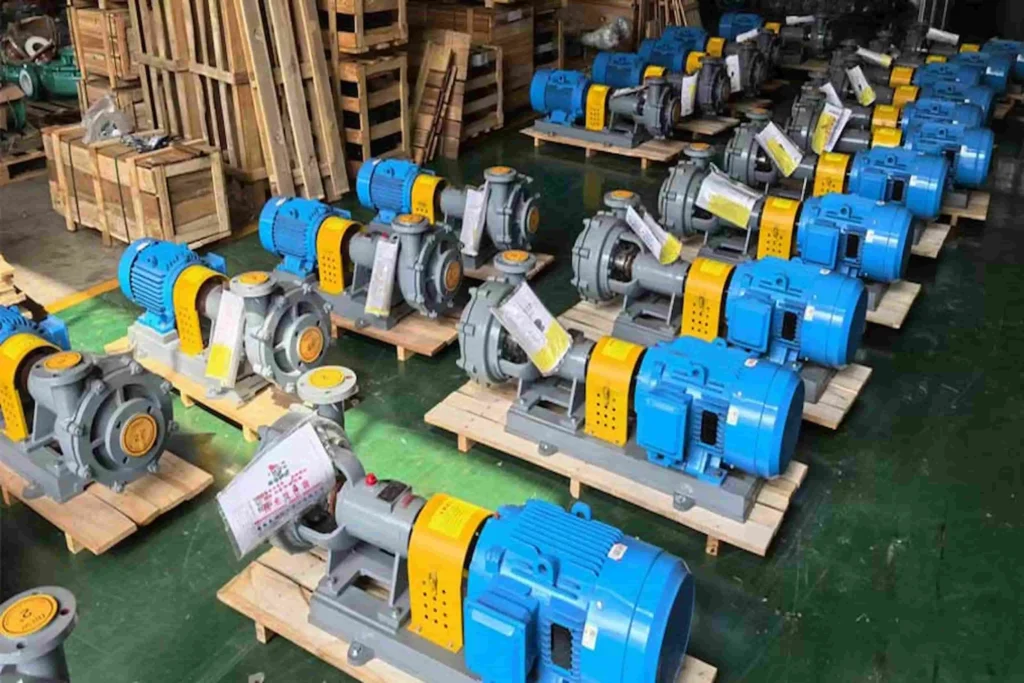
A análise de causa raiz identificou dois fatores contribuintes:
- O material 304L era inadequado para licor negro quente e concentrado — a corrosão cáustica estava removendo material na voluta enquanto a alta temperatura acelerava o ataque.
- Os selos mecânicos simples não possuíam sistema de lavagem, permitindo que o licor negro entrasse na câmara do selo, evaporasse nas faces do selo e precipitasse cristais que destruíam as faces do selo.
A planta substituiu todas as três bombas por bombas da série HB da Changyu, com componentes molhados em duplex 2205 e lavagem do selo conforme API Plan 32 usando condensado limpo. Os invólucros e rotores em duplex 2205 forneceram a resistência à corrosão cáustica que o 304L não conseguia, enquanto a lavagem contínua com condensado evitou que o licor negro atingisse as faces do selo.
Ao longo de três anos de operação: zero falhas de selo mecânico, zero substituições de invólucro e tempo de inatividade do evaporador atribuído a falha da bomba foi eliminado. O custo de substituição da bomba foi recuperado em 9 meses através da eliminação de substituições de selos e do tempo de atividade de produção.
Conclusão principal: Em serviço de licor negro quente, o aço inoxidável 304L não é um material adequado. O duplex 2205 combinado com a lavagem do selo API Plan 32 fornece a resistência à corrosão e a proteção do selo que o bombeamento confiável de licor negro exige. O prêmio de custo do material é recuperado no primeiro ano através da eliminação de falhas de selo.
Soluções de Bombas para Polpa de Papel da Changyu Pump
A Changyu Pump oferece quatro séries de bombas adequadas para aplicações de polpa de papel e licor negro. Cada série aborda combinações específicas de teor de fibra, agressividade química e temperatura operacional encontradas nos processos de fábrica de polpa.
Guia de Seleção de Produtos para Bombas de Polpa e Papel
| Aplicação | Desafio Principal | Séries recomendadas | Material / Característica Principal |
|---|---|---|---|
| Licor negro (quente, corrosivo) | Corrosão cáustica + cristalização | Série HB | Disponível em duplex 2205 e 2507 para resistência cáustica superior |
| Licor negro (menor teor de sólidos, alta temperatura) | Proteção contra corrosão com construção revestida | Série CYB-ZKJ | Revestido em FEP/PFA; selo mecânico duplo com lavagem Plan 32 |
| Polpa de celulose (fibrosa, com contaminantes) | Entupimento por fibra + corrosão leve | Série UHB | Revestido em UHMW-PE; opções de rotor vortex ou semi-aberto |
| Produtos químicos de planta de branqueamento | Ácido/base forte + requisito de vazamento zero | Série CYQ | Revestimento em FEP/PFA/PTFE; acionamento magnético — sem selo dinâmico |
Série HB — Bomba de Aço Inoxidável para Licor Negro Abrasivo e Polpa
Bomba centrífuga horizontal em conformidade com ISO 2858 com construção totalmente em aço inoxidável nas partes molhadas. Disponível em 316L, duplex 2205 e super duplex 2507 para toda a gama de ambientes químicos de fábrica de polpa. A opção duplex 2205 fornece a resistência à corrosão cáustica recomendada na Seção 3 para serviço de licor negro quente.
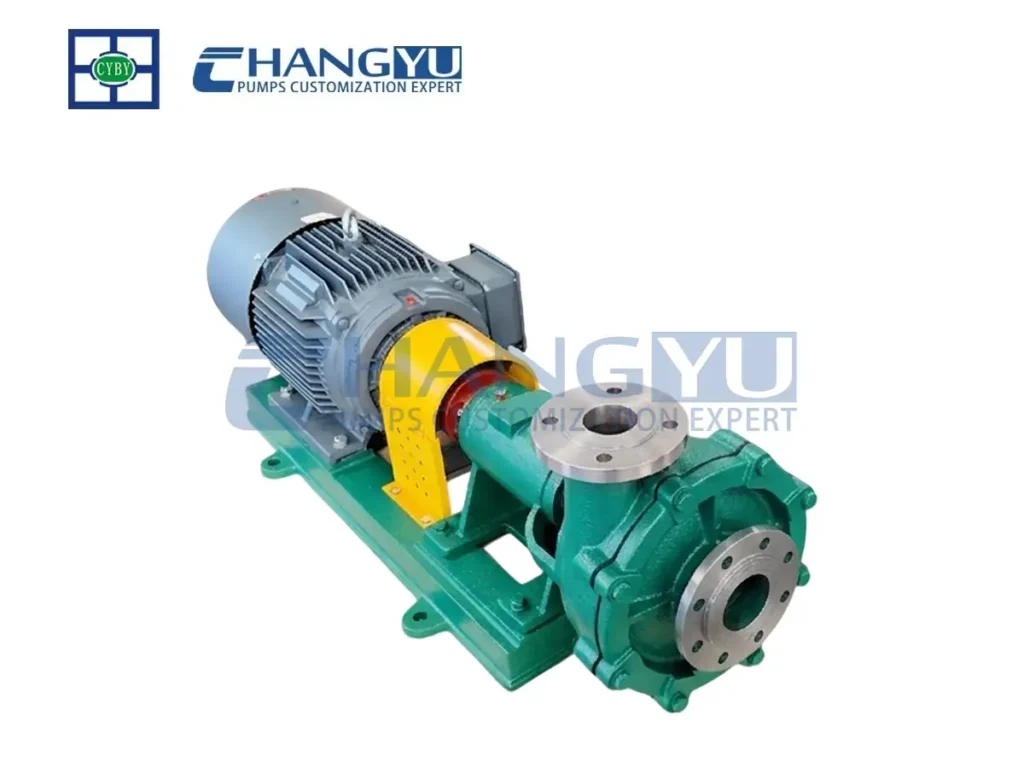
| Parâmetro | Especificação |
|---|---|
| Caudal | 10-60 m³/h |
| Cabeça | 20-120 m |
| Potência do motor | 3-45 kW |
| Velocidade | 2.900 r/min |
| Temperatura | -20°C a 120°C |
| Materiais | 316L / 2205 / 2507 |
Série CYB-ZKJ — Bomba Centrífuga Revestida com Fluoropolímero para Licor Negro
Bomba centrífuga revestida em FEP/PFA projetada para transferência de produtos químicos corrosivos. Selo mecânico duplo com lavagem API Plan 32 ou Plan 53C fornece vedação confiável para aplicações de licor negro. O revestimento de fluoropolímero isola o invólucro da bomba do fluido bombeado, fornecendo resistência química equivalente à construção sólida de fluoropolímero.
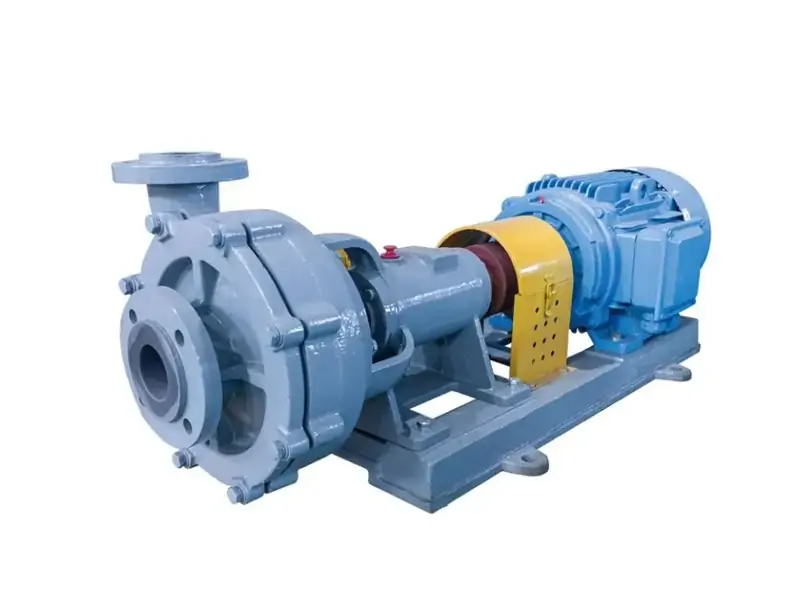
| Parâmetro | Especificação |
|---|---|
| Caudal | 3-2,600 m³/h |
| Cabeça | 5-100 m |
| Potência do motor | 0,75-300 kW |
| Temperatura | -80°C a 120°C |
| Materiais de revestimento | FEP (padrão), PFA (opção para altas temperaturas) |
Série UHB — Bomba Revestida em UHMW-PE para Polpa de Celulose Fibrosa
Bomba centrífuga revestida em UHMW-PE com invólucro de aço para polpa fibrosa com contaminantes. O UHMW-PE fornece resistência combinada à corrosão e abrasão, adequado para massa marrom, fibra reciclada e aplicações de papel reciclado. Disponível com rotor vortex ou semi-aberto para manuseio de fibras.

| Parâmetro | Especificação |
|---|---|
| Caudal | 3-2,600 m³/h |
| Cabeça | 5-100 m |
| Potência do motor | 0,75-300 kW |
| Velocidade | 750-2.900 r/min |
| Temperatura | -20°C a 90°C |
| Material do forro | UHMW-PE |
Série CYQ — Bomba de Acionamento Magnético para Produtos Químicos de Planta de Branqueamento
Bomba química de acionamento magnético com revestimento fluoroplástico FEP/PFA/PTFE e acoplamento magnético de terras raras. Estrutura totalmente selada elimina vazamento do selo do eixo — a configuração preferida para produtos químicos perigosos de planta de branqueamento onde qualquer vazamento é inaceitável. Sem selo dinâmico significa que nenhum sistema de lavagem do selo é necessário.
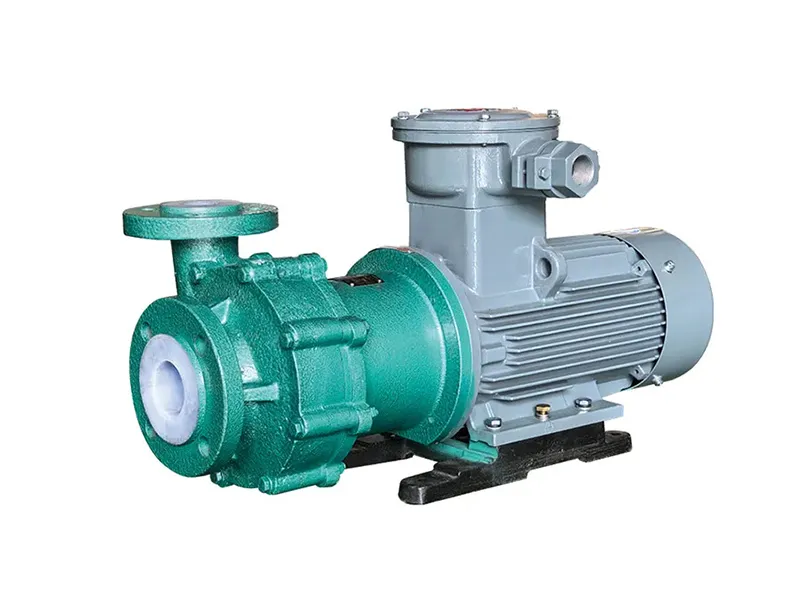
| Parâmetro | Especificação |
|---|---|
| Caudal | 3-800 m³/h |
| Cabeça | 15–125 m |
| Potência do motor | 2,2–110 kW |
| Velocidade | 950 r/min |
| Temperatura | -20°C a 180°C |
| Materiais de revestimento | FEP / PFA / PTFE |
Ver Bomba de Acionamento Magnético CYQ →
Perguntas Frequentes sobre Bombas para Polpa de Papel
P: Que tipo de rotor é melhor para polpa de papel?
R: Rotores semi-abertos com palhetas traseiras fornecem o melhor equilíbrio de passagem de fibra, eficiência e proteção do selo mecânico para polpa de madeira virgem. Rotores vortex oferecem resistência máxima a entupimentos para fibra reciclada e papel reciclado com contaminantes imprevisíveis.
P: Que material devo especificar para serviço de bomba de licor negro?
R: O aço inoxidável duplex 2205 é o material recomendado para licor negro quente acima de 80°C. Ele fornece 3–5× a vida útil do 304L ou 316L através de resistência superior à corrosão cáustica e erosão. Para as condições mais agressivas, bombas super duplex 2507 ou revestidas em FEP/PFA são especificadas.
P: Por que os selos da bomba falham tão rapidamente em licor negro?
R: O licor negro cristaliza nas faces do selo mecânico à medida que evapora, formando cristais abrasivos que destroem as superfícies do selo em semanas. A lavagem externa com água limpa/condensado API Plan 32 evita que o licor negro atinja as faces do selo, estendendo a vida do selo de meses para anos.
P: Uma bomba centrífuga padrão pode lidar com polpa de consistência média?
R: Não. Polpa acima de 6% de consistência requer uma bomba MC projetada especificamente com desgaseificação assistida a vácuo ou um rotor de entrada fluidizante. Bombas centrífugas padrão sofrerão bloqueio de vapor devido ao teor de ar arrastado de 10–25% na polpa de consistência média.
P: Como a fibra reciclada difere da fibra virgem nos requisitos da bomba?
R: A fibra reciclada contém contaminantes plásticos, grampos e outros materiais estranhos não presentes na polpa virgem. Rotores vortex ou rotores picadores são preferidos por sua tolerância a sólidos imprevisíveis, enquanto a polpa virgem permite projetos de rotor semi-aberto ou de canal mais eficientes.
P: Com que frequência a folga do rotor da bomba de polpa deve ser ajustada?
R: A inspeção e ajuste trimestrais são recomendados para bombas de polpa em serviço contínuo. Operar com folga excessiva reduz a eficiência da bomba em 5–15% e aumenta o cisalhamento da fibra, o que degrada a qualidade da polpa em sistemas de aproximação da máquina de papel.
Lista de verificação de prevenção do engenheiro de bombas da Changyu
- Não especifique aço inoxidável 304L ou 316L para licor negro quente acima de 80°C. A taxa de corrosão cáustica é inaceitável. O duplex 2205 é o material mínimo recomendado.
- Sempre especifique lavagem externa API Plan 32 para selos de bomba de licor negro. A lavagem com condensado limpo evita a cristalização que destrói as faces do selo em semanas.
- Corresponda o tipo de impulsor às características da fibra — não apenas aos requisitos hidráulicos. Polpa de fibra longa virgem requer impulsores semi-abertos; fibra reciclada com contaminantes requer impulsores de vórtice.
- Não utilize uma bomba centrífuga padrão para polpa acima de 6% de consistência. Bombas MC com desgaseificação a vácuo são necessárias.
- Verifique o NPSH disponível com uma margem mínima de 30% para serviço de polpa. A polpa tem NPSH disponível menor do que a água devido à perturbação do fluxo induzida pelas fibras. Aumente a margem para 50% acima de 4% de consistência.
- Instale filtros de lavagem do selo e verifique-os mensalmente. Um filtro entupido priva o selo do fluxo de lavagem e causa a falha do selo que a lavagem foi projetada para prevenir.
- Ajuste a folga do impulsor trimestralmente. Folga desgastada reduz a eficiência e aumenta o cisalhamento das fibras. Em sistemas de aproximação de máquinas de papel, o cisalhamento excessivo degrada a qualidade da polpa.
- Mantenha selos mecânicos e impulsores sobressalentes em estoque para bombas críticas. Os prazos de entrega de componentes especiais em aço inoxidável duplex em fábricas de polpa podem se estender por semanas, enquanto uma bomba com falha pode paralisar uma linha de produção inteira.
Conclusão
Uma bomba de polpa de celulose deve ser especificada para a combinação específica de características da fibra e ambiente químico em cada ponto da fábrica. Uma bomba que manuseia pasta branqueada de forma confiável falhará em meses em serviço de licor negro se o material e a configuração do selo não forem ajustados. O aço inoxidável Duplex 2205 emergiu como o material ideal para aplicações de licor negro quente, proporcionando 3–5× a vida útil dos graus convencionais de aço inoxidável. A lavagem do selo conforme API Plan 32 com condensado limpo previne a cristalização do licor negro, que é a causa mais comum de falha prematura do selo em fábricas de polpa.
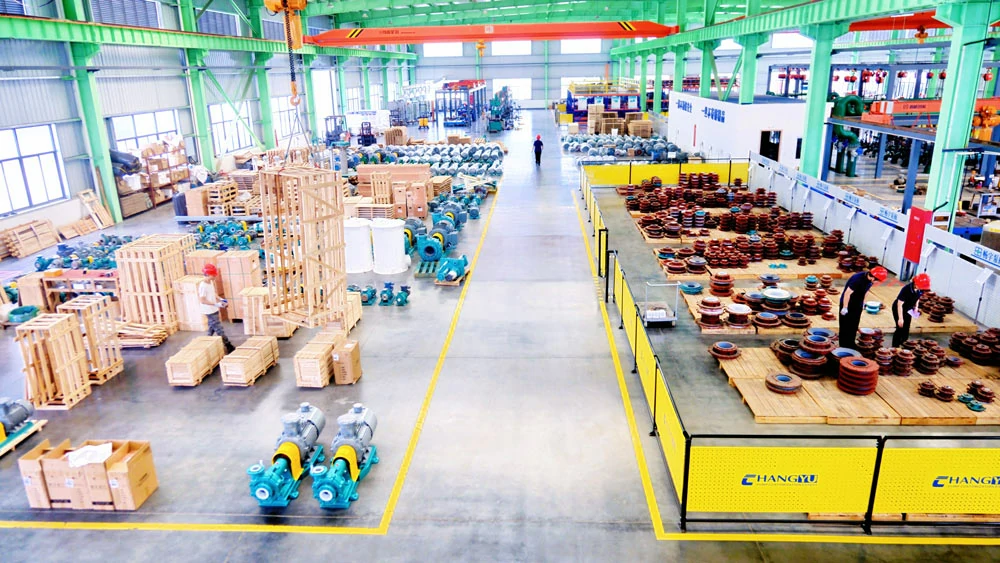
Quando estiver pronto para especificar uma bomba para sua aplicação de polpa e papel, a equipe de engenharia da Changyu Pump pode fornecer uma avaliação técnica abrangendo manuseio de fibras, seleção de materiais e configuração de lavagem do selo, adaptada às suas condições específicas de processo. Duas décadas de fabricação de bombas resistentes à corrosão em processamento químico e aplicações de polpa e papel embasam cada recomendação.