
Respuesta Rápida
Bombas de pulpa de papel manejan los desafíos gemelos de sólidos fibrosos y químicos corrosivos en plantas de pulpa y papel. Cuatro factores clave de selección:
- Diseño del impulsor para manejo de fibras: Los impulsores de vórtice o semiabiertos resisten la obstrucción por fibras largas; los impulsores con sello dinámico reducen la presión en la cámara del sello para prolongar la vida útil del sello.
- Selección de materiales para licor negro: El acero inoxidable Dúplex 2205 proporciona hasta 3–5 veces la vida útil del 316L en licor negro por encima de 80°C debido a su resistencia superior a la corrosión cáustica y la erosión.
- Gestión de la consistencia: La pulpa de baja consistencia (<6%) utiliza bombas centrífugas convencionales; la pulpa de consistencia media (6–15%) requiere desgasificación asistida por vacío para evitar el bloqueo de vapor.
- Planes de lavado de sellos: El Plan API 32 (lavado externo con agua limpia) o el Plan 53C (sello doble con fluido de barrera) previene la cristalización del licor negro en las caras del sello mecánico — la causa más común de falla prematura del sello en bombas de plantas de pulpa.
El hidróxido de sodio, el sulfuro de sodio y los ácidos orgánicos atacan los materiales de la bomba, mientras que las fibras de madera, los nudos y la arena los erosionan. Una bomba estándar puede fallar en semanas en servicio de licor negro — no por ningún defecto de fabricación, sino porque el material y la configuración del sello se especificaron para agua, no para la realidad química y física de una planta de pulpa.
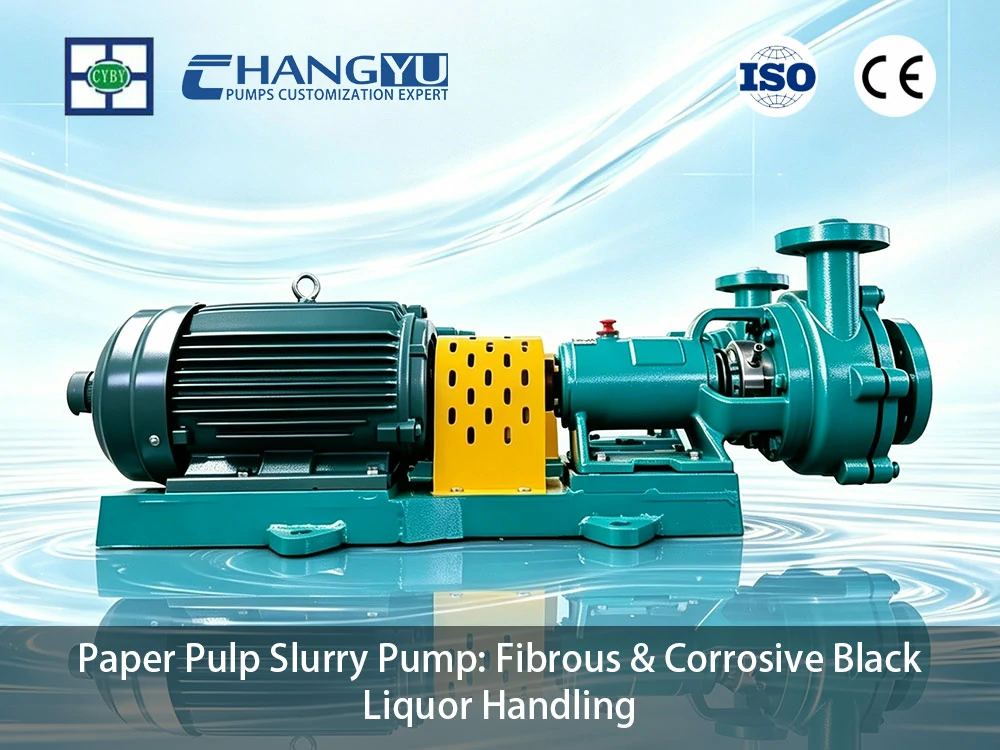
Changyu Pump ha fabricado bombas resistentes a la corrosión para procesamiento químico, pulpa y papel, y aplicaciones de lodos abrasivos durante más de dos décadas. Esta guía cubre el manejo de fibras, la corrosión del licor negro, las consideraciones de consistencia y los planes de lavado del sello que determinan si una bomba de pulpa de papel ofrece un servicio confiable o se convierte en un problema de mantenimiento recurrente.
¿Qué Hace que una Bomba de Pulpa de Papel sea Diferente de las Bombas Estándar?
Una bomba de pulpa de papel debe resistir simultáneamente la obstrucción física de fibras largas de madera y el ataque químico de los licores de cocción. Las bombas centrífugas estándar con impulsores cerrados y carcasas de hierro fundido no son adecuadas para servicio continuo en plantas de pulpa.
- Enredo de fibras: Las fibras de madera de 1–5 mm de longitud se enrollan alrededor de los álabes del impulsor cerrado, reduciendo progresivamente el flujo hasta que ocurre un bloqueo completo. Los impulsores semiabiertos y de vórtice eliminan las superficies donde se acumulan las fibras.
- Corrosión cáustica: El licor negro (pH 10–12, temperatura 80–110°C) ataca el hierro fundido y los aceros inoxidables estándar. Los aceros inoxidables dúplex y los revestimientos de fluoropolímero proporcionan la resistencia química requerida.
- Sólidos abrasivos: La arena, la corteza y los nudos arrastrados en la pulpa erosionan las carcasas y los impulsores de la bomba. Se requieren materiales resistentes al desgaste — aleaciones de alto cromo, UHMW-PE o acero inoxidable dúplex — para los componentes en contacto con el fluido.
¿Cómo Manejar el Material Fibroso en Bombas de Pulpa de Papel?
Impulsor El diseño determina si una bomba de pulpa opera de manera confiable o sufre obstrucciones repetidas. Cada diseño representa una compensación deliberada entre el paso de fibras, la eficiencia hidráulica y la resistencia a la acumulación de gas.
Cuatro Diseños de Impulsores para Servicio de Pulpa
Vortex (Recessed) Impeller:
El impulsor está ubicado en la pared trasera de la voluta, creando un vórtice que atrae el fluido y las fibras a través de la bomba. El contacto de las fibras con el impulsor es mínimo. Este diseño proporciona el paso libre más grande y una casi inmunidad al enrollamiento de fibras. La eficiencia es menor (35–55%), pero para pulpa cruda donde la confiabilidad supera el costo energético, es la opción predeterminada.
Impulsor semiabierto:
Los álabes del impulsor están unidos a un cubo trasero sin un cubo frontal. La cara abierta permite que las fibras pasen sin la constricción de los diseños cerrados. La eficiencia es mayor que los tipos de vórtice (50–60%). Combinado con un arreglo de álabes traseros (sello dinámico), este diseño también reduce la presión en la cámara del sello, protegiendo el sello mecánico de la entrada de fibras. Nota: Los álabes traseros agregan aproximadamente 3–8% al consumo de energía de la bomba y pueden acumular fibras en aplicaciones de alta consistencia — equilibre los beneficios de protección del sello contra estos factores.
Impulsor de Canal (Simple/Doble):
Un paso simple o doble ancho a través del impulsor acomoda fibras y sólidos pequeños. Mayor eficiencia (55–70%) que los diseños de vórtice o semiabiertos. Adecuado para pulpa tamizada o aplicaciones donde el contenido de fibra es controlado y predecible.
Impulsor Triturador/Cortador:
Mecanismo de corte integrado que tritura fibras y nudos antes de que entren al paso de flujo. Se utiliza en reciclaje de papel de desecho y manejo de recortes donde están presentes materiales fibrosos y contaminantes plásticos. Requiere afilado periódico y no se recomienda para pulpa abrasiva — la arena acelera el desgaste del cortador.
Matriz de Selección para Manejo de Fibras
| Tipo de Pulpa | Longitud de Fibra | Consistencia | Recommended Impeller | Justificación |
|---|---|---|---|---|
| Pulpa de madera virgen (sin blanquear) | 2–5 mm | 2–6% | Semiabierto con álabes traseros | Paso de fibra + protección del sello |
| Pulpa de madera virgen (blanqueada) | 1–3 mm | 2–6% | Semiabierto o de canal | Pulpa más limpia permite mayor eficiencia |
| Fibra reciclada / OCC | Mixta, con contaminantes | 2–4% | Vórtice o triturador | Tolerancia máxima para material extraño |
| Manejo de recortes / rechazos | Mixta, gruesa | 1–3% | Vórtice | Contenido de sólidos impredecible |
| Pulpa de alta consistencia | N/A | > 10% | No aplicable — requiere tecnología de bomba MC | Ver Sección 4 |
Los ingenieros de Changyu Pump recomiendan: Para pulpa virgen sin blanquear con fibras largas, los impulsores semiabiertos con álabes traseros proporcionan el mejor equilibrio de paso de fibra, eficiencia y protección del sello mecánico. Los álabes traseros crean un diferencial de presión que reduce la migración de fibras hacia la cámara del sello — la característica de diseño más efectiva para extender la vida del sello en servicio de pulpa.
¿Qué Materiales Resisten la Corrosión del Licor Negro en Bombas de Pulpa de Papel?
El licor negro — el químico de cocción gastado del proceso kraft — combina alta temperatura (80–110°C), alto pH (10–12) y sólidos abrasivos. Esto crea una sinergia de corrosión-erosión que ataca los materiales de la bomba de manera más agresiva que cualquiera de los mecanismos por separado.
Cómo el Licor Negro Ataca los Materiales de la Bomba
La solución cáustica caliente La solución ataca la capa de óxido pasivo en los aceros inoxidables mientras que los sólidos arrastrados erosionan la superficie debilitada. El resultado: tasas de pérdida de material que son 2–5 veces mayores de lo que se predeciría solo con datos de corrosión o erosión. Esta sinergia explica por qué las bombas estándar de 304L o 316L, adecuadas para sosa cáustica fría, fallan rápidamente en licor negro por encima de 80°C.
Guía de Selección de Materiales para Bombas de Licor Negro
| Material | Límite de temperatura | Resistencia a la corrosión | Resistencia a la abrasión | Recomendación |
|---|---|---|---|---|
| Hierro Fundido | No recomendado | Pobre: ataque cáustico rápido | Bajo | No usar para ningún servicio de licor negro |
| Acero Inoxidable 304L | No recomendado por encima de 60°C | Moderado a baja temperatura | Bajo | No recomendado: inadecuado para licor negro caliente |
| Acero inoxidable 316L | No recomendado por encima de 70°C | Mejor que 304L pero aún vulnerable | Bajo | Marginal: aceptable solo para licor negro frío y diluido |
| Duplex 2205 (UNS S31803) | Hasta 110°C | Excelente: alto contenido de cromo y molibdeno | Buena: mayor dureza que los grados austeníticos | Mejor opción general para servicio de licor negro |
| Super Duplex 2507 (UNS S32750) | Hasta 130°C | Superior: PREN > 40 | Excelente | Especificado para las condiciones más agresivas |
| Revestido de UHMW-PE | Hasta 90°C * | Excelente: inerte al cáustico | Buena: resistente, absorbe el impacto de partículas | Alternativa sólida al acero inoxidable dúplex cuando la temperatura lo permite; para servicio continuo de licor negro por encima de 80°C, se prefiere el acero inoxidable dúplex debido a consideraciones de expansión térmica |
| Revestido de PTFE/PFA | Hasta 120–180°C | Excelente: completamente inerte | Moderada: blando, vulnerable a sólidos gruesos | Para aplicaciones de alta pureza o alta temperatura con mínimos sólidos |
Correspondencia de Materiales por Proceso de Planta de Pulpa
| Ubicación de la Planta | Medio | Temperatura | Material recomendado |
|---|---|---|---|
| Licor negro débil (de lavadoras) | Licor negro diluido, pH 10–11 | 60–80°C | Duplex 2205 o revestido de UHMW-PE |
| Licor negro fuerte (de evaporadores) | Licor negro concentrado, pH 11–12 | 90–110°C | Duplex 2205 o Super Duplex 2507 |
| Licor verde (del tanque de disolución) | Carbonato de sodio + sulfuro, abrasivo | 80–100 °C | Duplex 2205 (resistente al desgaste) |
| Licor blanco (de caustificadores) | Hidróxido de sodio, limpio | 70–90 °C | Duplex 2205 o 316L (menos abrasivo) |
| Filtrado de planta de blanqueo | Ácido, con contenido de cloruro | 40–70°C | Revestido de PTFE/PFA o Duplex 2205 |
Los ingenieros de Changyu Pump han observado en cientos de instalaciones de bombas en plantas de pulpa: el Duplex 2205 ofrece consistentemente una vida útil 3–5 veces mayor que el 316L en servicio de licor negro por encima de 80°C. El mayor costo inicial del material generalmente se recupera dentro de los primeros 12 meses gracias a la eliminación de tiempos de inactividad no planificados y la extensión de los intervalos de mantenimiento.
Planes de Lavado de Sello para Bombas de Licor Negro: Prevención de Daños por Cristalización
La tendencia del licor negro a cristalizar en las caras sello mecánico es la causa individual más común de falla prematura del sello de la bomba en las plantas de pulpa. A medida que el licor negro se evapora en la interfaz del sello, los sólidos disueltos precipitan, formando cristales abrasivos que destruyen las caras del sello en semanas. La solución es un plan de lavado de sello diseñado adecuadamente que evite que el licor negro llegue a las caras del sello.
Plan API 32 — Lavado Externo con Agua Limpia:
Se inyecta un flujo continuo de agua limpia (o condensado) en la cámara del sello a una presión de 1–2 bar (15–30 psi) por encima de la presión de descarga de la bomba. Esto crea una barrera de fluido limpio en las caras del sello, evitando que el licor negro entre en contacto con el sello por completo. El caudal suele ser de 2–8 L/min dependiendo del tamaño del sello. Esta es la disposición preferida para el servicio de licor negro cuando se dispone de agua de lavado limpia.
Plan API 53C — Sello Doble con Fluido de Barrera Presurizado:
Una disposición de sello mecánico doble con un depósito de fluido de barrera presurizado. La presión del fluido de barrera supera la presión de la carcasa de la bomba, asegurando que cualquier fuga a través del sello interno sea fluido de barrera limpio hacia la bomba, no licor negro hacia el sello. Esta disposición se especifica cuando no se dispone de agua de lavado limpia o cuando se requiere una fuga cero del proceso para el cumplimiento ambiental.
Los ingenieros de Changyu Pump recomiendan: Para bombas de licor negro que operan por encima de 80°C, el Plan API 32 con lavado de condensado limpio es la disposición de sello preferida. El lavado con condensado proporciona tanto enfriamiento como dilución, evitando la cristalización en las caras del sello. El Plan 53C se especifica para ubicaciones remotas donde el suministro de agua de lavado no es confiable, o para aplicaciones críticas para el medio ambiente donde cualquier fuga de licor negro es inaceptable.
¿Por Qué es Importante la Consistencia en el Bombeo de Pasta de Pulpa de Papel?
La consistencia de la pulpa (el porcentaje de fibra seca en peso en la suspensión) determina el comportamiento hidráulico del fluido y la tecnología de bomba requerida para moverlo. Una bomba que maneja pulpa de consistencia al 3% sin esfuerzo puede fallar completamente a una consistencia del 10%, incluso si el tipo de fibra y el entorno químico son idénticos.
Rangos de Consistencia y Requisitos de la Bomba
| Rango de Consistencia | Comportamiento del flujo | Tecnología de Bomba | Desafío clave |
|---|---|---|---|
| Baja consistencia (< 2%) | Se comporta como agua: flujo turbulento | Bomba centrífuga estándar | Acumulación de fibra en el impulsor |
| Baja-media consistencia (2–6%) | Transicional: las fibras comienzan a interactuar | Impulsor semiabierto o de vórtice | Floculación de fibras; NPSH reducido |
| Consistencia media (6–15%) | No newtoniano: las fibras forman una red; arrastre de aire | Bomba MC con desgasificación al vacío o rotor fluidizante | Eliminación de gas; altos requisitos de succión |
| Alta consistencia (> 15%) | Similar a una pasta: ya no se puede bombear con bombas centrífugas | Bomba de desplazamiento positivo (cavidad progresiva) | Se requiere mecanismo de alimentación |
Tecnología de Bomba de Consistencia Media
A una consistencia del 6–15%, la pulpa puede contener entre un 10 y un 25% de aire arrastrado en volumen, con valores más altos a temperaturas más bajas y consistencias más altas. Una bomba centrífuga estándar se bloqueará por vapor en estas condiciones: el aire se separa de la fibra y se acumula en el ojo del impulsor, bloqueando el flujo de líquido.
Las bombas MC abordan esto mediante dos tecnologías clave:
- Desgasificación asistida por vacío: Una bomba de vacío conectada a la succión de la bomba elimina el aire arrastrado antes de que entre en el impulsor. Esto puede reducir el contenido de aire del 20–30% a menos del 5%, restaurando la capacidad de la bomba para generar altura.
- Rotor fluidizante (generador de turbulencia): Un rotor especialmente diseñado en la entrada de la bomba crea un alto cizallamiento que rompe la red de fibras y libera el aire arrastrado. Luego, el aire liberado se separa y se elimina.
Los ingenieros de Changyu Pump señalan: Para pulpa con consistencia superior al 6%, una bomba centrífuga estándar — independientemente del diseño del impulsor — no funcionará de manera confiable sin desgasificación asistida por vacío o un rotor de entrada fluidizante. La bomba debe diseñarse específicamente para servicio de consistencia media. Intentar usar una bomba de baja consistencia en aplicaciones de consistencia media es el error de especificación más común y costoso en aplicaciones de bombas en plantas de pulpa.
¿Cómo seleccionar la bomba de pulpa de papel adecuada para su planta?
La selección de bombas de pulpa requiere hacer coincidir el tipo de bomba, el material y la configuración del sello con las condiciones específicas del proceso en cada punto de la planta. Una bomba correctamente especificada para el almacenamiento de pulpa blanqueada fallará rápidamente en el servicio de evaporación de licor negro si no se ajustan los requisitos de material y sello.
Selección de bombas para plantas de pulpa de un vistazo
| Ubicación de la Planta | Medio | Desafío clave | Bomba recomendada | Material recomendado |
|---|---|---|---|---|
| Patio de madera / manejo de astillas | Agua con corteza, arena, granalla | Abrasión | Serie UHB (caudal mayor) o Serie HB (caudal menor) | Dúplex 2205 o aleación de alto cromo |
| Pulpeo / digestor | Licor negro caliente (80–110°C) | Corrosión cáustica + temperatura | Serie HB (dúplex 2205) o Serie CYB-ZKJ | Dúplex 2205 o revestido de FEP/PFA |
| Lavado de pasta marrón | Licor negro débil (60–80°C) | Corrosión + fibra | Serie UHB | Revestido de UHMW-PE |
| Planta de blanqueo | Filtrado de cloruro ácido | Corrosión ácida | Serie CYQ (accionamiento magnético) | Revestido de FEP/PFA — cero fugas |
| Preparación de pasta | Pulpa virgen/reciclada (2–6%) | Obstrucción por fibra | Serie UHB con impulsor vortex | UHMW-PE o dúplex 2205 |
| Sección de máquina de papel | Pulpa limpia y tamizada (1–3%) | Baja pulsación | Serie CYB-ZKJ | Revestido de FEP/PFA |
| Evaporación de licor negro | Licor negro fuerte (90–110°C) | Formación de cristales + corrosión | Serie HB con lavado Plan 32 | Piezas en contacto con el fluido en dúplex 2205 |
Proceso de selección de bombas de pulpa en siete pasos
Paso 1: Caracterizar la pulpa.
Determinar el tipo de fibra (virgen/reciclada), la longitud de la fibra, la consistencia y la presencia de contaminantes (arena, nudos, plásticos).
Paso 2: Caracterizar el entorno químico.
Identificar el fluido del proceso (licor negro, licor blanco, licor verde, filtrado de blanqueo), pH, temperatura, contenido de cloruro y tendencia a la cristalización.
Paso 3: Determinar los requisitos hidráulicos.
Calcular el caudal, la altura dinámica total y el NPSH disponible. Para pulpa con consistencia superior al 2%, aplicar factores de reducción a las curvas de rendimiento de la bomba.
Paso 4: Seleccionar el tipo de impulsor.
Hacer coincidir el diseño del impulsor con las características de la fibra y la consistencia según la matriz de la Sección 2.
Paso 5: Seleccionar los materiales.
Hacer coincidir los materiales en contacto con el fluido con el perfil químico y de temperatura según la matriz de la Sección 3.
Paso 6: Especificar el plan de lavado del sello.
Para licor negro y otros fluidos cristalizantes, especificar API Plan 32 (lavado externo) o Plan 53C (sello doble con fluido de barrera). Consulte la Sección 3 para más detalles.
Paso 7: Verificar el margen de NPSH.
La pulpa tiene un NPSH disponible menor que el agua debido a la disrupción del flujo inducida por la fibra. Aplicar un margen de NPSH mínimo del 30% por encima del NPSH requerido de la bomba, aumentando al 50% para pulpa con consistencia superior al 4%.
Los ingenieros de Changyu Pump recomiendan: Cuando una sola ubicación de la planta combina múltiples desafíos — como licor negro caliente con sólidos abrasivos en la bomba de recirculación del evaporador — priorice la selección del material sobre el tipo de impulsor. El costo de una falla por corrosión supera con creces el costo de un diseño de impulsor ligeramente menos eficiente. Especifique dúplex 2205 o súper dúplex 2507 para los componentes en contacto con el fluido, y seleccione el tipo de impulsor que proporcione un paso de sólidos adecuado dentro de la restricción del material.
¿Por qué fallan prematuramente las bombas de pulpa de papel y cómo prevenirlo?
Las bombas de pulpa y papel fallan por razones que son bien conocidas y en gran medida prevenibles mediante una especificación sistemática y disciplina operativa. Los tres modos de falla más comunes — falla del sello por cristalización, obstrucción del impulsor por acumulación de fibra y perforación de la carcasa por ataque químico — tienen cada uno medidas preventivas definidas.
Modos de falla comunes y acciones preventivas
| Modo de fallo | Causa raíz | Acción preventiva |
|---|---|---|
| Falla del sello mecánico (1–6 meses) | Cristalización de licor negro en las caras del sello; ingreso de fibra a la cámara del sello | Lavado externo API Plan 32; impulsor semiabierto con álabes traseros para reducir la presión en la cámara del sello |
| Obstrucción del impulsor (caudal reducido) | Acumulación de fibra en los álabes del impulsor cerrado | Actualizar a impulsor semiabierto o vortex |
| Perforación de la carcasa (6–18 meses) | Corrosión cáustica de hierro fundido o 304L en licor negro caliente | Actualizar a carcasa revestida de dúplex 2205 o UHMW-PE |
| Falla del rodamiento (12–24 meses) | Bomba operando fuera del BEP debido a sobredimensionamiento; altas cargas radiales de la pulpa | Seleccionar bomba con BEP cercano al caudal de operación normal; reducir el diámetro del impulsor si es necesario |
| Bloqueo por aire / pérdida de cebado | Aire arrastrado en pulpa de consistencia media | Instalar sistema de desgasificación al vacío o rotor de entrada fluidizante |
Mantenimiento programado para bombas de pulpa y papel
| Intervalo | Acción | Propósito |
|---|---|---|
| Semanal | Verificar el caudal y la presión del lavado del sello; escuchar ruidos o vibraciones inusuales | Detección temprana de falla del sistema de lavado o problemas en los rodamientos |
| Mensual | Inspeccionar el filtro de lavado del sello; limpiar o reemplazar si está obstruido | Previene la pérdida de presión de lavado y la contaminación de las caras del sello |
| Trimestral | Verificar la holgura del impulsor; ajustar si el desgaste excede los límites del fabricante | Mantiene la eficiencia de la bomba y reduce el cizallamiento de la fibra |
| Anualmente | Reemplazar el sello mecánico; inspeccionar el impulsor y las placas de desgaste por pérdida de material | El reemplazo planificado evita tiempos de inactividad no planificados |
| Basado en condición | Reemplazar los componentes de desgaste cuando el espesor caiga por debajo del mínimo | Aborda el desgaste en la etapa más temprana detectable |
Caso práctico de bomba de pulpa de papel: Resolviendo la crisis de vida corta de la bomba de licor negro
Una planta de pulpa kraft en el sudeste asiático operaba tres bombas centrífugas que circulaban licor negro fuerte (pH 11.5, 95–105°C) a través del sistema del evaporador. Especificación original: componentes en contacto con el fluido de acero inoxidable 304L con sellos mecánicos simples.
Las bombas requerían reemplazo del sello mecánico cada 2–3 meses. La inspección de los sellos fallados mostró una fuerte cristalización de licor negro en las caras del sello y juntas tóricas hinchadas. Las carcasas de 304L mostraban adelgazamiento de la pared después de 18 meses, con corrosión por picaduras concentrada en el cortante de la voluta. Cada parada no planificada costaba aproximadamente 6 horas de tiempo de inactividad del evaporador.
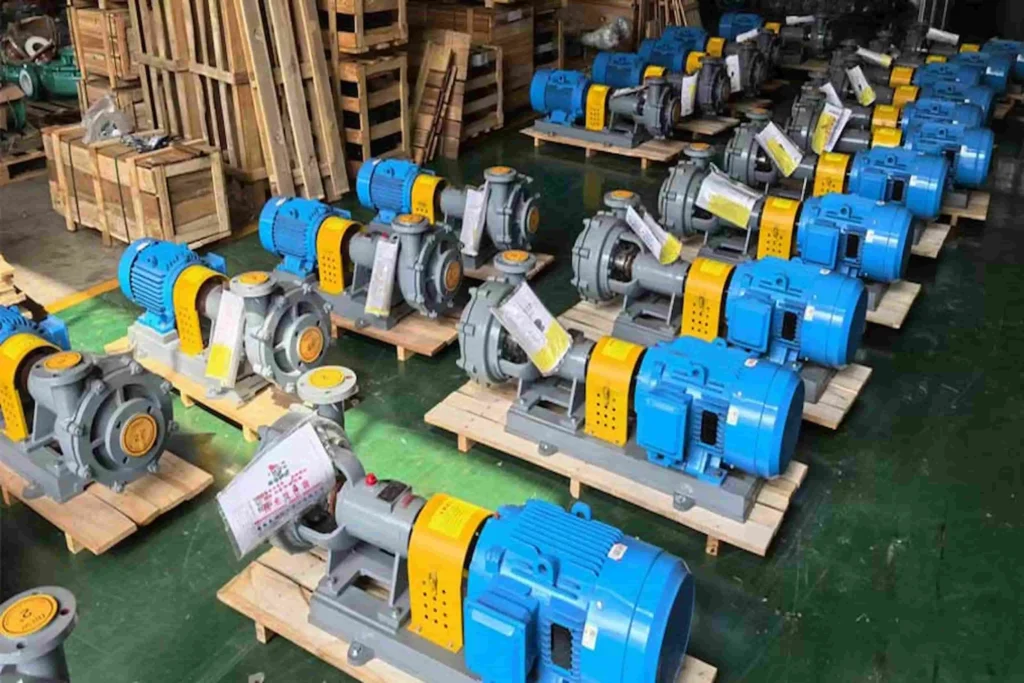
El análisis de causa raíz identificó dos factores contribuyentes:
- El material 304L era inadecuado para licor negro caliente y concentrado — la corrosión cáustica estaba eliminando material en la voluta mientras que la alta temperatura aceleraba el ataque.
- Los sellos mecánicos simples carecían de un sistema de lavado, lo que permitía que el licor negro ingresara a la cámara del sello, se evaporara en las caras del sello y precipitara cristales que destruían las caras del sello.
La planta reemplazó las tres bombas con bombas de la serie HB de Changyu, que cuentan con componentes húmedos de dúplex 2205 y un lavado de sello API Plan 32 con condensado limpio. Las carcasas y los impulsores de dúplex 2205 proporcionaron la resistencia a la corrosión cáustica que el 304L no podía ofrecer, mientras que el lavado continuo con condensado evitó que el licor negro llegara a las caras del sello.
Durante tres años de operación: cero fallas de sellos mecánicos, cero reemplazos de carcasas y tiempo de inactividad del evaporador atribuido a fallas de la bomba eliminado. El costo de reemplazo de la bomba se recuperó en 9 meses mediante la eliminación de reemplazos de sellos y el tiempo de actividad de producción.
Conclusión clave: En servicio de licor negro caliente, el acero inoxidable 304L no es un material adecuado. El dúplex 2205 combinado con el lavado de sello API Plan 32 proporciona la resistencia a la corrosión y la protección del sello que requiere un bombeo confiable de licor negro. La prima del costo del material se recupera dentro del primer año mediante la eliminación de fallas de sellos.
Soluciones de bombas de pulpa de papel de Changyu Pump
Changyu Pump ofrece cuatro series de bombas adecuadas para aplicaciones de pulpa de papel y licor negro. Cada serie aborda combinaciones específicas de contenido de fibra, agresión química y temperatura de operación que se encuentran en los procesos de las plantas de pulpa.
Guía de selección de productos de bombas para pulpa y papel
| Solicitud | Desafío clave | Series recomendadas | Material / Característica clave |
|---|---|---|---|
| Licor negro (caliente, corrosivo) | Corrosión cáustica + cristalización | Serie HB | Disponible en dúplex 2205 y 2507 para una resistencia cáustica superior |
| Licor negro (sólidos bajos, alta temperatura) | Protección contra la corrosión con construcción revestida | Serie CYB-ZKJ | Revestido de FEP/PFA; sello mecánico doble con lavado Plan 32 |
| Pasta de pulpa (fibrosa, con contaminantes) | Obstrucción por fibra + corrosión leve | Serie UHB | Revestido de UHMW-PE; opciones de impulsor vortex o semiabierto |
| Químicos de planta de blanqueo | Ácido/álcali fuerte + requisito de fuga cero | Serie CYQ | Revestimiento de FEP/PFA/PTFE; accionamiento magnético — sin sello dinámico |
Serie HB — Bomba de acero inoxidable para licor negro abrasivo y pulpa
Bomba centrífuga horizontal conforme a ISO 2858 con construcción de acero inoxidable en todas las partes húmedas. Disponible en 316L, dúplex 2205 y súper dúplex 2507 para toda la gama de entornos químicos de plantas de pulpa. La opción de dúplex 2205 proporciona la resistencia a la corrosión cáustica recomendada en la Sección 3 para servicio de licor negro caliente.
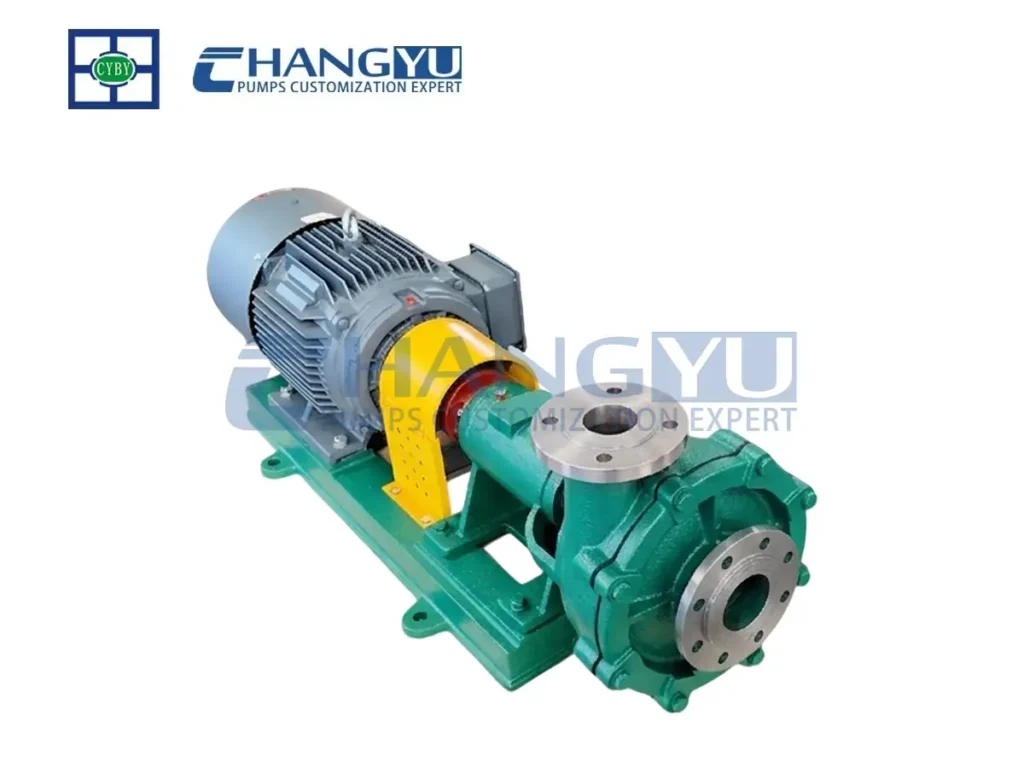
| Parámetro | Especificaciones |
|---|---|
| Caudal | 10–60 m³/h |
| Cabeza | 20–120 m |
| Potencia del motor | 3–45 kW |
| Velocidad | 2 900 rpm |
| Temperatura | De -20 °C a 120 °C |
| Materiales | 316L / 2205 / 2507 |
Serie CYB-ZKJ — Bomba centrífuga revestida de fluoropolímero para licor negro
Bomba centrífuga revestida de FEP/PFA diseñada para la transferencia de productos químicos corrosivos. El sello mecánico doble con lavado API Plan 32 o Plan 53C proporciona un sellado confiable para aplicaciones de licor negro. El revestimiento de fluoropolímero aísla la carcasa de la bomba del fluido bombeado, proporcionando una resistencia química equivalente a la construcción de fluoropolímero sólido.
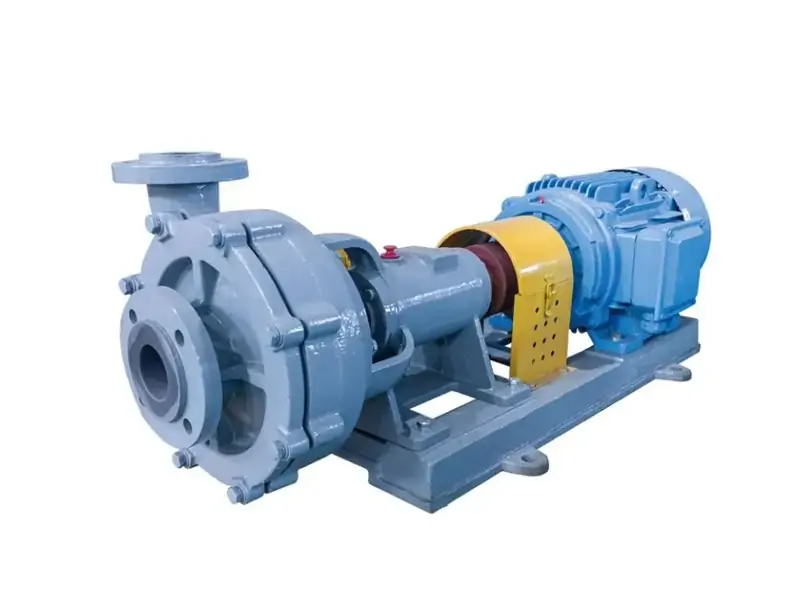
| Parámetro | Especificaciones |
|---|---|
| Caudal | 3–2 600 m³/h |
| Cabeza | 5–100 m |
| Potencia del motor | 0,75–300 kW |
| Temperatura | de -80 °C a 120 °C |
| Materiales de revestimiento | FEP (estándar), PFA (opción de alta temperatura) |
Serie UHB — Bomba revestida de UHMW-PE para pasta de pulpa fibrosa
Bomba centrífuga de acero revestida de UHMW-PE para pulpa fibrosa con contaminantes. El UHMW-PE proporciona resistencia combinada a la corrosión y la abrasión, adecuado para pasta marrón, fibra reciclada y aplicaciones de papel de desecho. Disponible con impulsor vortex o semiabierto para el manejo de fibras.

| Parámetro | Especificaciones |
|---|---|
| Caudal | 3–2 600 m³/h |
| Cabeza | 5–100 m |
| Potencia del motor | 0,75–300 kW |
| Velocidad | 750–2 900 rpm |
| Temperatura | De -20 °C a 90 °C |
| Material del forro | UHMW-PE |
Serie CYQ — Bomba de accionamiento magnético para químicos de planta de blanqueo
Bomba química de accionamiento magnético con revestimiento fluoroplástico de FEP/PFA/PTFE y acoplamiento magnético de tierras raras. La estructura completamente sellada elimina las fugas del sello del eje — la configuración preferida para productos químicos peligrosos de plantas de blanqueo donde cualquier fuga es inaceptable. Sin sello dinámico significa que no se requiere un sistema de lavado de sello.
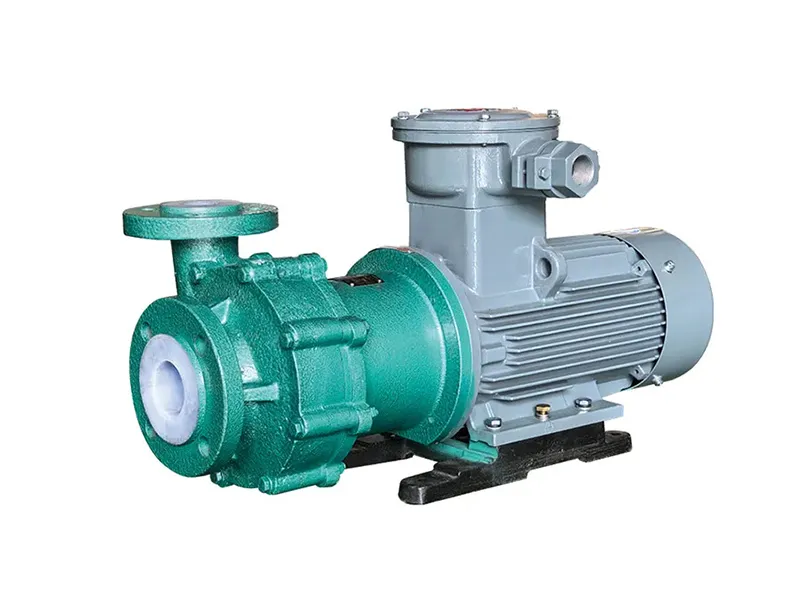
| Parámetro | Especificaciones |
|---|---|
| Caudal | 3–800 m³/h |
| Cabeza | 15–125 m |
| Potencia del motor | 2–110 kW |
| Velocidad | 2,950 r/min |
| Temperatura | De -20 °C a 180 °C |
| Materiales de revestimiento | FEP / PFA / PTFE |
Ver bomba de accionamiento magnético CYQ →
Preguntas frecuentes sobre bombas de pulpa de papel
P: ¿Qué tipo de impulsor es mejor para la pulpa de papel?
R: Los impulsores semiabiertos con álabes traseros proporcionan el mejor equilibrio de paso de fibra, eficiencia y protección del sello mecánico para pulpa de madera virgen. Los impulsores vortex ofrecen la máxima resistencia a la obstrucción para fibra reciclada y papel de desecho con contaminantes impredecibles.
P: ¿Qué material debo especificar para el servicio de bomba de licor negro?
R: El acero inoxidable dúplex 2205 es el material recomendado para licor negro caliente por encima de 80°C. Proporciona de 3 a 5 veces la vida útil del 304L o 316L mediante una resistencia superior a la corrosión cáustica y la erosión. Para las condiciones más agresivas, se especifican bombas de súper dúplex 2507 o revestidas de FEP/PFA.
P: ¿Por qué fallan tan rápido los sellos de las bombas en el licor negro?
R: El licor negro cristaliza en las caras del sello mecánico a medida que se evapora, formando cristales abrasivos que destruyen las superficies del sello en semanas. El lavado externo con agua/condensado limpio API Plan 32 evita que el licor negro llegue a las caras del sello, extendiendo la vida útil del sello de meses a años.
P: ¿Puede una bomba centrífuga estándar manejar pulpa de consistencia media?
R: No. La pulpa por encima del 6% de consistencia requiere una bomba MC diseñada específicamente con desgasificación asistida por vacío o un rotor de entrada fluidizante. Las bombas centrífugas estándar se bloquearán por vapor debido al contenido de aire arrastrado del 10–25% en la pulpa de consistencia media.
P: ¿En qué se diferencia la fibra reciclada de la fibra virgen en los requisitos de la bomba?
R: La fibra reciclada contiene contaminantes plásticos, grapas y otros materiales extraños que no están presentes en la pulpa virgen. Se prefieren los impulsores vortex o los impulsores trituradores por su tolerancia a sólidos impredecibles, mientras que la pulpa virgen permite diseños de impulsores semiabiertos o de canal más eficientes.
P: ¿Con qué frecuencia se debe ajustar la holgura del impulsor de la bomba de pulpa?
R: Se recomienda una inspección y ajuste trimestral para las bombas de pulpa de servicio continuo. Operar con una holgura excesiva reduce la eficiencia de la bomba en un 5–15% y aumenta el cizallamiento de la fibra, lo que degrada la calidad de la pulpa en los sistemas de aproximación de la máquina de papel.
Lista de verificación de prevención del ingeniero de Changyu Pump
- No especifique acero inoxidable 304L o 316L para licor negro caliente por encima de 80°C. La tasa de corrosión cáustica es inaceptable. El dúplex 2205 es el material mínimo recomendado.
- Especifique siempre un lavado externo API Plan 32 para los sellos de bombas de licor negro. El lavado con condensado limpio evita la cristalización que destruye las caras del sello en semanas.
- Ajuste el tipo de impulsor a las características de la fibra, no solo a los requisitos hidráulicos. La pulpa virgen de fibra larga requiere impulsores semiabiertos; la fibra reciclada con contaminantes requiere impulsores de vórtice.
- No utilice una bomba centrífuga estándar para pulpa con una consistencia superior al 6%. Se requieren bombas MC con desgasificación al vacío.
- Verifique el NPSH disponible con un margen mínimo del 30% para servicio de pulpa. La pulpa tiene un NPSH disponible menor que el agua debido a la interrupción del flujo inducida por las fibras. Aumente el margen al 50% por encima del 4% de consistencia.
- Instale filtros de lavado de sellos y revíselos mensualmente. Un filtro obstruido priva al sello del flujo de lavado y provoca la falla del sello que el lavado estaba diseñado para prevenir.
- Ajuste la holgura del impulsor trimestralmente. La holgura desgastada reduce la eficiencia y aumenta el cizallamiento de las fibras. En los sistemas de aproximación de la máquina de papel, el cizallamiento excesivo degrada la calidad de la pulpa.
- Mantenga sellos mecánicos e impulsores de repuesto en inventario para bombas críticas. Los plazos de entrega en las plantas de pulpa para componentes especializados de acero inoxidable dúplex pueden extenderse a semanas, mientras que una bomba averiada puede detener toda una línea de producción.
Conclusión
Una bomba de pulpa de papel debe especificarse para la combinación específica de características de fibra y entorno químico en cada punto de la planta. Una bomba que maneja de manera confiable pasta blanqueada fallará en cuestión de meses en servicio de licor negro si no se ajustan el material y la configuración del sello. El acero inoxidable Dúplex 2205 ha surgido como el material óptimo para aplicaciones de licor negro caliente, proporcionando de 3 a 5 veces la vida útil de los grados de acero inoxidable convencionales. El lavado de sellos según el Plan 32 de API con condensado limpio previene la cristalización del licor negro, que es la causa más común de falla prematura de sellos en las plantas de pulpa.
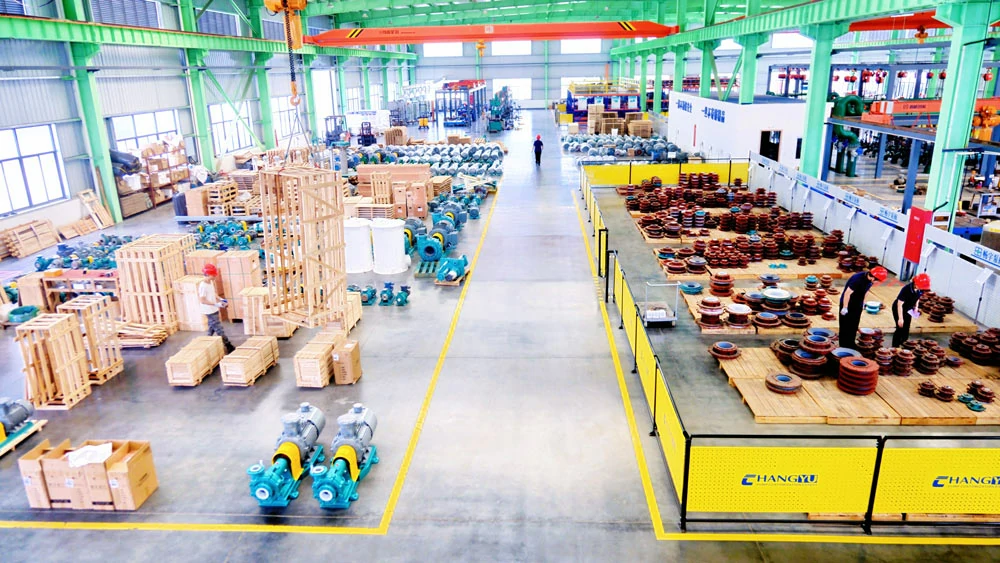
Cuando esté listo para especificar una bomba para su aplicación de pulpa y papel, el equipo de ingeniería de Changyu Pump puede proporcionar una evaluación técnica que cubra el manejo de fibras, la selección de materiales y la configuración del lavado de sellos adaptada a sus condiciones de proceso específicas. Dos décadas de fabricación de bombas resistentes a la corrosión en procesos químicos y aplicaciones de pulpa y papel respaldan cada recomendación.
Contacte a Changyu Pump para una evaluación técnica gratuita →