
Trả lời nhanh
A bơm nghiền nhà máy bia là một máy bơm cấp thực phẩm được thiết kế để vận chuyển hỗn hợp ngũ cốc mạch nha nghiền và nước nóng được gọi là nghiền. Hỗn hợp sền sệt này đặc, mài mòn và chứa các chất rắn lớn, dạng sợi có thể nhanh chóng làm tắc nghẽn máy bơm tiêu chuẩn. Các yếu tố lựa chọn chính:
- Khả năng chống tắc nghẽn ngăn chặn sự cố dừng máy: Vỏ trấu ngũ cốc đã qua sử dụng, rơm lúa mạch và các chất rắn lớn khác sẽ quấn quanh hoặc làm nghẹt cánh bơm ly tâm tiêu chuẩn. Máy bơm nghiền phải kết hợp các thiết kế xoáy, một kênh, khoang tiến triển hoặc màng ngăn cung cấp khả năng thông qua chất rắn không bị hạn chế.
- Hoạt động cắt thấp bảo vệ hương vị: Bơm tốc độ cao, mạnh mẽ có thể xé nát vỏ trấu ngũ cốc, giải phóng tannin đắng và các hợp chất chát vào dịch nha. Một hành động bơm nhẹ nhàng, cắt thấp là rất quan trọng để bảo tồn hương vị dự định của bia.
- Thiết kế vệ sinh đảm bảo an toàn sản phẩm: Mọi bề mặt tiếp xúc với dịch nha phải là cấp thực phẩm, không độc hại và chịu được các điều kiện nóng, axit của quá trình nấu bia. Thép không gỉ đánh bóng, kết cấu không có khe hở và chất đàn hồi tuân thủ FDA là các yêu cầu tiêu chuẩn.
- Khả năng tương thích CIP đơn giản hóa việc vệ sinh: Máy bơm phải có thể vệ sinh tại chỗ mà không cần tháo rời hoàn toàn. Thiết kế tự thoát nước và bề mặt bên trong được đánh bóng cho phép các chu kỳ vệ sinh tự động khử trùng máy bơm giữa các mẻ, ngăn ngừa nhiễm khuẩn.
Trong một nhà máy bia bận rộn, một máy bơm bị tắc sẽ dừng sản xuất. Thùng nghiền phải được làm trống, máy bơm phải được tháo rời và một lớp ngũ cốc rối phải được kéo ra khỏi cánh bơm trước khi quá trình nấu bia có thể tiếp tục. Kịch bản này, gây ra bởi việc chỉ định một máy bơm nước ly tâm tiêu chuẩn cho một hỗn hợp sền sệt đặc, nhiều chất rắn, là một trong những lỗi thiết bị phổ biến nhất trong ngành công nghiệp nấu bia. Một máy bơm hoạt động hoàn hảo cho dịch nha loãng, sạch có thể bị nghẹt trong vòng vài giây trên một mẻ nghiền đặc.
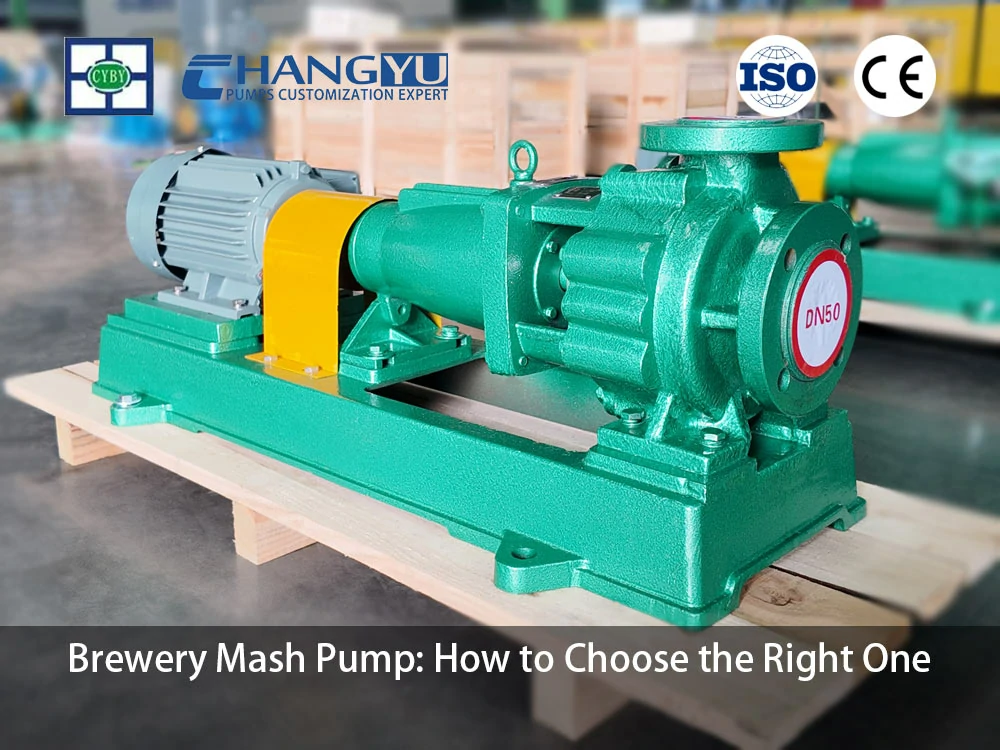
Sau khi đọc hướng dẫn này, bạn sẽ hiểu những thách thức cụ thể của việc bơm nghiền, thiết kế máy bơm nào chống tắc nghẽn và bảo vệ tính toàn vẹn của ngũ cốc, các yêu cầu vệ sinh và CIP nào áp dụng cho máy bơm nhà máy bia, và cách chọn máy bơm phù hợp với quy mô sản xuất và quy trình của bạn. Với hơn 20 năm kinh nghiệm sản xuất máy bơm, Changyu Pump trình bày hướng dẫn lựa chọn có cấu trúc này để giúp bạn xác định đúng máy bơm nghiền ngay từ ngày đầu tiên.
Máy Bơm Nghiền Nhà Máy Bia Là Gì?
Trong quá trình nấu bia , lúa mạch mạch nha được xay và trộn với nước nóng trong một thùng nghiền. Hỗn hợp nghiền thu được là một hỗn hợp sền sệt giống như cháo phải được tuần hoàn để làm trong dịch nha và sau đó được chuyển đến thùng lọc để lọc. Đây là công việc của máy bơm nghiền.
Tại Sao Máy Bơm Tiêu Chuẩn Bị Hỏng Trong Dịch Vụ Nghiền
Một máy bơm ly tâm tiêu chuẩn được thiết kế cho nước hoặc chất lỏng loãng sẽ bị hỏng nhanh chóng trong dịch vụ nghiền vì ba lý do:
- Tắc nghẽn: Vỏ trấu ngũ cốc đã qua sử dụng có dạng sợi và xơ. Chúng quấn quanh các cánh bơm kín và mắc kẹt trong các đoạn xoắn ốc hẹp, dần dần hạn chế dòng chảy cho đến khi máy bơm dừng lại.
- Hư hỏng do cắt: Một cánh bơm ly tâm quay ở tốc độ 2.900 hoặc 3.600 vòng/phút tác động lực cơ học mạnh lên hỗn hợp nghiền. Vỏ trấu ngũ cốc bị xé nát, giải phóng tannin đắng và polyphenol chát vào dịch nha.
- Mài mòn và ăn mòn: Môi trường nghiền nóng, axit kết hợp với các hạt ngũ cốc mài mòn làm tăng tốc độ suy thoái vật liệu trong các máy bơm không được thiết kế cho dịch vụ này.
Máy Bơm Nghiền So Với Máy Bơm Tiêu Chuẩn: Sự Khác Biệt Chính
| Tính năng | Bơm ly tâm tiêu chuẩn | Máy Bơm Nghiền Nhà Máy Bia |
|---|---|---|
| Cánh bơm / Cơ chế | Cánh bơm kín — hẹp, dễ bị tắc | Xoáy, một kênh, khoang tiến triển hoặc màng ngăn — đường dẫn dòng chảy mở |
| Lực cắt | Cao — xé nát vỏ trấu ngũ cốc | Thấp — bảo vệ tính toàn vẹn của ngũ cốc |
| Vật liệu | Gang, chất đàn hồi tiêu chuẩn | Thép không gỉ (304/316L), chất đàn hồi tuân thủ FDA |
| Khả năng vệ sinh | Không được thiết kế cho CIP | Bề mặt đánh bóng, không có khe hở, tự thoát nước |
| Phạm vi nhiệt độ | Bị giới hạn bởi phớt tiêu chuẩn | Được thiết kế cho nghiền nóng (lên đến 78°C điển hình) và chu kỳ CIP |
| Xử lý vật liệu rắn | Tối thiểu — cánh bơm kín bị tắc ngay lập tức trên nghiền ngũ cốc nguyên hạt | Xuất sắc — xử lý tới 50% chất rắn ngũ cốc theo thể tích |
Vật Liệu Nào Là Tốt Nhất Cho Máy Bơm Nghiền Nhà Máy Bia?
Việc lựa chọn vật liệu cho máy bơm nhà máy bia được thúc đẩy bởi các quy định an toàn thực phẩm, khả năng tương thích hóa học với hỗn hợp nghiền và chất tẩy rửa, và khả năng chống mài mòn do các hạt ngũ cốc gây ra.
Yêu Cầu Vật Liệu Tiếp Xúc
Hỗn hợp nghiền là một hỗn hợp sền sệt nóng (thường 65–78°C), hơi axit (pH 5.2–5.6) chứa các hạt ngũ cốc mài mòn. Sau khi quá trình chuyển nghiền hoàn tất, máy bơm phải chịu các chu kỳ vệ sinh CIP mạnh mẽ sử dụng dung dịch kiềm nóng (natri hydroxit) và axit. Tất cả các vật liệu tiếp xúc phải chịu được sự kết hợp của các điều kiện này.
| Chất liệu | Ứng Dụng Trong Máy Bơm Nhà Máy Bia | Thuộc Tính Chính |
|---|---|---|
| Thép không gỉ 316L | Vỏ bơm, cánh quạt, trục | Khả năng chống ăn mòn tuyệt vời đối với dịch nha axit và hóa chất CIP |
| Thép không gỉ 304 | Vỏ máy bơm cho các khu vực không quan trọng | Chấp nhận được cho các thành phần bên ngoài; 316L được ưu tiên cho các bộ phận tiếp xúc |
| EPDM (Lưu hóa Peroxide) | Stator (máy bơm khoang tiến triển), miếng đệm, vòng chữ O | Tuân thủ FDA; khả năng chống nước nóng và axit nhẹ tốt |
| PTFE | Màng ngăn, phớt, miếng đệm | Khả năng chống hóa chất phổ quát; phù hợp cho CIP nhiệt độ cao |
| FKM / Viton | Phớt cho các ứng dụng nhiệt độ cao | Định mức nhiệt độ cao hơn EPDM; chỉ các cấp độ thực phẩm mới được chấp nhận |
| UHMW-PE | Lớp lót máy bơm, các thành phần chịu mài mòn | Khả năng chống mài mòn tuyệt vời; trơ về mặt hóa học; tuân thủ FDA |
| Gang, Đồng thau, Đồng đỏ | KHÔNG được phép cho các thành phần tiếp xúc | Ăn mòn và rửa trôi chất gây ô nhiễm vào sản phẩm |
Yêu Cầu Về Độ Hoàn Thiện Bề Mặt
Các bề mặt bên trong của máy bơm nhà máy bia phải được đánh bóng đến độ hoàn thiện mịn chống lại sự bám dính của vi khuẩn và cho phép vệ sinh kỹ lưỡng. Đối với máy bơm nghiền, độ nhám bề mặt Ra ≤ 0.8 μm trên các bề mặt tiếp xúc là tiêu chuẩn ngành. Đánh bóng điện hóa sau khi đánh bóng cơ học giúp tăng cường hơn nữa khả năng chống ăn mòn và khả năng vệ sinh bằng cách loại bỏ các khuyết tật bề mặt vi mô nơi vi khuẩn có thể cư trú.
Khớp công suất động cơ với công suất tiêu thụ của bơm tại điểm vận hành cộng với biên độ an toàn. Đối với nhiệm vụ liên tục, chỉ định hệ số dịch vụ tối thiểu 1,15. Đối với dịch vụ chất lỏng dễ cháy, chỉ định động cơ chống nổ với chứng nhận ATEX hoặc IECEx phù hợp với phân loại khu vực nguy hiểm. Đối với tất cả các thành phần máy bơm tiếp xúc tiếp xúc trực tiếp với dịch nha hoặc nghiền, hãy chỉ định thép không gỉ 316L với bề mặt đánh bóng và chất đàn hồi EPDM lưu hóa peroxide hoặc PTFE. Tránh bất kỳ hợp kim chứa đồng nào — các ion đồng xúc tác các phản ứng oxy hóa tạo ra mùi vị lạ, giống như bìa cứng trong bia thành phẩm.
Làm thế nào để bảo vệ độ nguyên vẹn của mash bằng bơm cắt thấp?
Ứng suất cắt là lực cơ học tác động lên mash khi nó đi qua bơm. Lực cắt cao xé toạc vỏ lúa mạch, giải phóng tannin đắng, hợp chất chát và tinh bột chưa chuyển hóa vào dịch wort lỏng. Các chất chiết xuất này làm giảm hương vị bia, tạo ra vị đắng gắt và vẻ ngoài đục.
Các loại bơm khác nhau tác động lực cắt như thế nào
| Loại bơm | Mức độ cắt | Ảnh hưởng đến mash | Ứng dụng xuất sắc nhất |
|---|---|---|---|
| Ly tâm (cánh kín) | Cao | Xé nát vỏ trấu; giải phóng tannin và protein tạo độ đục | Không phù hợp để bơm mash ngũ cốc nguyên hạt |
| Ly tâm (cánh xoáy) | Thấp đến trung bình | Ít hư hại hạt hơn; chất rắn đi qua mà không bị ép qua khe hở hẹp. Hiệu suất thấp hơn (35–55%) so với thiết kế cánh kín. | Chấp nhận được cho tuần hoàn; không lý tưởng cho bơm mash chính |
| Thể tích xoắn ốc (trục vít) | Rất thấp | Dòng chảy nhẹ nhàng, không xung; ít hư hại vỏ trấu | Lý tưởng — lựa chọn tốt nhất để bảo toàn độ nguyên vẹn của hạt |
| Màng điện | Rất thấp | Dòng chảy xung, nhưng nhẹ nhàng về mặt cơ học; không có cánh quạt tốc độ cao. Không phù hợp cho các ứng dụng yêu cầu dòng chảy ổn định, không xung. | Tốt — phù hợp cho mash đặc và hàm lượng chất rắn cao |
Tại sao bơm thể tích xoắn ốc là tiêu chuẩn ngành
Bơm thể tích xoắn ốc (PC) sử dụng rôto kim loại xoắn đơn quay bên trong stato đàn hồi xoắn kép. Rôto quay tạo ra một loạt các khoang kín tiến dần từ đầu hút đến đầu xả, nhẹ nhàng mang mash mà không có va đập tốc độ cao và trộn hỗn loạn đặc trưng của bơm ly tâm. Kết quả là hư hại do cắt gần như bằng không đối với vỏ hạt và bia sạch hơn, vị mượt hơn.
Tốc độ quay của bơm PC thường là 200–400 vòng/phút cho dịch vụ mash — chậm hơn một bậc so với bơm ly tâm ở 2.900 vòng/phút. Tốc độ thấp này, kết hợp với cơ chế dịch chuyển tích cực, có nghĩa là mash chịu ứng suất cơ học tối thiểu trong quá trình bơm.
Khớp công suất động cơ với công suất tiêu thụ của bơm tại điểm vận hành cộng với biên độ an toàn. Đối với nhiệm vụ liên tục, chỉ định hệ số dịch vụ tối thiểu 1,15. Đối với dịch vụ chất lỏng dễ cháy, chỉ định động cơ chống nổ với chứng nhận ATEX hoặc IECEx phù hợp với phân loại khu vực nguy hiểm. Đối với bơm mash ngũ cốc nguyên hạt nơi chất lượng bia là ưu tiên, hãy chỉ định bơm thể tích xoắn ốc hoạt động ở 200–400 vòng/phút (mức thấp hơn cho mash có hàm lượng vỏ trấu cao hoặc hạt lớn). Hành động bơm nhẹ nhàng bảo toàn độ nguyên vẹn của hạt, giảm thiểu chiết xuất tannin và tạo ra wort sạch hơn. Đối với các nhà máy bia sử dụng thùng lọc hoặc máy lọc mash nơi có thể chấp nhận một số nén vỏ trấu, bơm màng cung cấp một giải pháp thay thế hiệu quả, chi phí thấp hơn với khả năng xử lý chất rắn tuyệt vời.
Làm thế nào để ngăn tắc nghẽn khi bơm mash?
Tắc nghẽn là vấn đề vận hành phổ biến nhất trong bơm mash. Sự kết hợp của vỏ hạt dạng sợi, tinh bột hồ hóa dính và nồng độ chất rắn cao tạo ra hỗn hợp có thể chặn các đường dẫn của bơm trong vài giây nếu chọn sai loại bơm.
So sánh khả năng chống tắc nghẽn của các loại bơm
| Loại bơm | Khả năng chống tắc nghẽn | Cơ chế | Xử lý chất rắn tốt nhất |
|---|---|---|---|
| Ly tâm xoáy | Tốt | Cánh quạt lõm — chất rắn đi qua buồng xoắn mà không tiếp xúc với cánh quạt | Chất rắn hỗn hợp, mảnh vụn không thể đoán trước |
| Ly tâm một kênh | Trung bình | Một đường dẫn rộng — ít có khả năng tắc hơn cánh kín | Mash đã lọc; hàm lượng vỏ trấu thấp hơn |
| Thể tích xoắn ốc (trục vít) | Tuyệt vời | Các khoang kín liên tục mang chất rắn mà không bị cản trở | Mash ngũ cốc nguyên hạt, lên đến 50% chất rắn |
| Màng điện | Tuyệt vời | Chất rắn đi qua van một chiều lớn mà không bị thắt lại | Mash đặc, chất rắn cao, hạt dạng sợi |
| Ly tâm cánh kín | Kém | Vỏ trấu quấn quanh cánh và chặn các đường dẫn hẹp | Không phù hợp cho mash ngũ cốc nguyên hạt |
Nồng độ chất rắn theo giai đoạn nấu bia
| Giai đoạn nấu bia | Hàm lượng chất rắn điển hình | Hành vi dòng chảy | Loại bơm được khuyến nghị |
|---|---|---|---|
| Tuần hoàn thùng mash | 15–25% chất rắn hạt | Cháo bán lỏng | Thể tích xoắn ốc hoặc ly tâm xoáy |
| Bơm mash sang thùng lọc | 20–30% chất rắn hạt | Bùn đặc, nhớt | Thể tích xoắn ốc hoặc màng |
| Chảy wort yếu | 1–3% chất rắn lơ lửng mịn (cặn protein, mảnh vỏ trấu mịn) | Chất lỏng loãng với các hạt lơ lửng | Ly tâm một kênh hoặc thể tích xoắn ốc |
| Bơm bã hạt | 25–35% chất rắn ướt | Bánh đặc, bán khô | Thể tích xoắn ốc với cấp liệu trục vít |
Khớp công suất động cơ với công suất tiêu thụ của bơm tại điểm vận hành cộng với biên độ an toàn. Đối với nhiệm vụ liên tục, chỉ định hệ số dịch vụ tối thiểu 1,15. Đối với dịch vụ chất lỏng dễ cháy, chỉ định động cơ chống nổ với chứng nhận ATEX hoặc IECEx phù hợp với phân loại khu vực nguy hiểm. Đối với bơm mash ngũ cốc nguyên hạt nơi cần cả khả năng chống tắc và cắt thấp, bơm thể tích xoắn ốc là lựa chọn tốt nhất. Đối với các nhà máy bia xử lý hàm lượng chất rắn rất cao hoặc tải trọng hạt thay đổi, bơm màng điện cung cấp khả năng chống tắc tối đa với lợi ích bổ sung là chịu được chạy khô — nếu thùng mash cạn trong quá trình bơm, bơm màng sẽ không bị hư hại.
Các yêu cầu về vệ sinh và CIP cho bơm nhà máy bia là gì?
Bơm nhà máy bia phải đáp ứng các tiêu chuẩn vệ sinh thực phẩm và được thiết kế để vệ sinh tại chỗ mà không cần tháo rời. Bất kỳ bề mặt bơm nào tiếp xúc với wort hoặc bia đều có thể chứa vi khuẩn, nấm men hoang dã hoặc cặn hóa chất tẩy rửa nếu không được thiết kế và bảo trì đúng cách.
Tiêu chuẩn vệ sinh cho thiết bị nhà máy bia
| Tiêu chuẩn | Phạm vi | Yêu cầu Chính đối với Bơm |
|---|---|---|
| Quy định 21 CFR của Cục Quản lý Thực phẩm và Dược phẩm Hoa Kỳ (FDA) | Vật liệu chế tạo tiếp xúc thực phẩm | Tất cả các bộ phận tiếp xúc với sản phẩm phải tuân thủ FDA; chất đàn hồi phải là loại thực phẩm |
| Tiêu chuẩn Vệ sinh 3-A | Thiết kế thiết bị cho chế biến sữa và thực phẩm | Kết cấu không có khe hở; bề mặt đánh bóng đến Ra ≤ 0,8 μm; thiết kế tự thoát |
| EHEDG | Thiết kế thiết bị vệ sinh châu Âu | Khả năng làm sạch đã được kiểm chứng; thiết kế vô trùng cho các ứng dụng quan trọng |
Bơm tương thích CIP kết hợp các tính năng thiết kế cụ thể cho phép nó được làm sạch hiệu quả bởi hệ thống CIP tự động bên ngoài mà không cần tháo rời thủ công:
- Vỏ bơm tự thoát: Vỏ bơm phải thoát hoàn toàn khi dừng. Không được có chất lỏng đọng lại trong buồng xoắn, buồng phớt hoặc đường ống hút — chất lỏng đọng lại chứa vi khuẩn và pha loãng mẻ tiếp theo.
- Bề mặt bên trong được đánh bóng: Bề mặt tiếp xúc với sản phẩm được đánh bóng đến Ra ≤ 0,8 μm chống lại sự bám dính của vi khuẩn và cho phép dung dịch làm sạch tiếp xúc với mọi bề mặt. Đánh bóng điện hóa càng tăng cường khả năng làm sạch.
- Thiết kế phớt không có khe hở: Phớt cơ khí phải được thiết kế với các mặt phẳng và chất đàn hồi tuân thủ FDA. Kết nối kẹp vệ sinh thay thế các phụ kiện ren có thể giữ lại sản phẩm và cản trở việc làm sạch.
- Kết nối cấp CIP: Vỏ bơm có thể bao gồm các cổng chuyên dụng cho phép dung dịch làm sạch CIP bên ngoài được cấp đến tất cả các bề mặt bên trong ở tốc độ dòng chảy yêu cầu (tối thiểu 1,5 m/s trong buồng xoắn bơm).
Chu trình CIP điển hình của nhà máy bia
| Bước | Giải pháp | Nhiệt độ | Thời gian | Mục đích |
|---|---|---|---|---|
| Rửa sơ bộ | Nước | Nhiệt độ môi trường | 5–10 phút | Loại bỏ chất rắn lỏng lẻo |
| Rửa kiềm | 1–2% NaOH | 70–85°C | 20–30 phút | Remove organic soils, proteins, hop resins |
| Intermediate rinse | Nước | Nhiệt độ môi trường | 5–10 phút | Remove caustic residue |
| Acid wash | 5–1% phosphoric or nitric acid | Ambient–45°C | 15–20 min | Remove beerstone (calcium oxalate), neutralize residual caustic |
| Final rinse | Nước | Nhiệt độ môi trường | 5–10 phút | Remove acid residue |
| Sanitize | Peracetic acid or hot water | As specified | 5–15 min | Kill residual microorganisms |
Note: Acid wash temperatures above 45°C may accelerate corrosion of stainless steel, particularly with nitric acid solutions.
Khớp công suất động cơ với công suất tiêu thụ của bơm tại điểm vận hành cộng với biên độ an toàn. Đối với nhiệm vụ liên tục, chỉ định hệ số dịch vụ tối thiểu 1,15. Đối với dịch vụ chất lỏng dễ cháy, chỉ định động cơ chống nổ với chứng nhận ATEX hoặc IECEx phù hợp với phân loại khu vực nguy hiểm. For any brewery pump, verify that the manufacturer provides a polished surface finish certificate and FDA-compliant material documentation for all wetted components.
How to Select the Right Brewery Mash Pump?
Selecting a mash pump involves matching the pump type, materials, and features to the specific demands of your brewing process and production scale.
Step 1: Define Your Mash Characteristics.
Determine the typical grain bill, mash thickness (water-to-grain ratio), solids concentration, and any special ingredients that affect flow behavior. A thick mash for a high-gravity imperial stout behaves very differently from a thin mash for a light lager.
Step 2: Match the Pump Type to Your Process.
| Brewery Type | Production Scale | Mash Transfer Method | Loại bơm được khuyến nghị |
|---|---|---|---|
| Nano / microbrewery | < 5 BBL per batch | Manual or single pump | Electric diaphragm — simple, self-priming, handles high solids |
| Craft brewery | 5–30 BBL per batch | Pump transfer | Progressive cavity — gentle, continuous, low-shear |
| Regional brewery | 30–100+ BBL per batch | Automated transfer | Progressive cavity with VFD for flow control |
| Large-scale industrial | > 100 BBL per batch | Fully automated | Progressive cavity or large vortex centrifugal with CIP integration |
Step 3: Select Materials.
For all wetted components, specify 316L stainless steel with polished surfaces (Ra ≤ 0.8 μm). Elastomers must be peroxide-cured EPDM or PTFE, FDA-compliant. For abrasive mashes with high grain loading, consider UHMW-PE lined components for extended wear life.
Step 4: Verify CIP Compatibility.
Xác nhận rằng bơm có khả năng tự xả, không có khe hở, và được thiết kế để vệ sinh CIP ở nhiệt độ và nồng độ hóa chất sử dụng trong chu trình vệ sinh của bạn. Yêu cầu chứng nhận độ hoàn thiện bề mặt và tài liệu truy xuất nguồn gốc vật liệu.
Bước 5: Định cỡ Bơm.
Định cỡ bơm theo tốc độ chuyển yêu cầu (thường 1–3 BBL mỗi phút đối với nhà máy bia thủ công) và tổng cột áp (bao gồm tổn thất ma sát đường ống cho bã nghiền nhớt). Đối với bơm khoang tiến, chọn tốc độ trong khoảng 200–400 vòng/phút để giảm thiểu lực cắt. Tăng kích thước đường ống hút lên một đường kính ống để đảm bảo NPSH đầy đủ với bã nghiền nóng, nhớt.
Khớp công suất động cơ với công suất tiêu thụ của bơm tại điểm vận hành cộng với biên độ an toàn. Đối với nhiệm vụ liên tục, chỉ định hệ số dịch vụ tối thiểu 1,15. Đối với dịch vụ chất lỏng dễ cháy, chỉ định động cơ chống nổ với chứng nhận ATEX hoặc IECEx phù hợp với phân loại khu vực nguy hiểm. Đối với bất kỳ nhà máy bia nào sản xuất bã nghiền nguyên hạt, hãy đầu tư vào bơm khoang tiến để chuyển bã nghiền. Hoạt động bơm nhẹ nhàng trực tiếp cải thiện chất lượng bia bằng cách giảm thiểu chiết xuất tannin, và hoạt động không tắc nghẽn loại bỏ nguyên nhân phổ biến nhất gây chậm trễ ngày nấu bia. Chi phí ban đầu cao hơn của bơm khoang tiến được thu hồi thông qua giảm thời gian ngừng hoạt động, chất lượng dịch đường ổn định và tuổi thọ thiết bị kéo dài.
Changyu Pump Giải pháp Bơm cho Nhà máy Bia
Changyu Pump sản xuất bốn dòng bơm phù hợp cho các ứng dụng xử lý bã nghiền và dịch đường của nhà máy bia.
Hướng dẫn Lựa chọn Sản phẩm Bơm cho Nhà máy Bia
| Đơn đăng ký | Yêu cầu Chính | Các bộ phim được đề xuất | Tính năng chính |
|---|---|---|---|
| Chuyển bã nghiền nguyên hạt | Cắt thấp + chống tắc | Bơm Trục vít Loại G | Khoang tiến; không xung; nhẹ nhàng với vỏ hạt |
| Chuyển bã nghiền đặc / chất rắn cao | Chống tắc tối đa | Bơm màng điện dòng BFD | Tự mồi; an toàn khi chạy khô; xử lý chất rắn lớn |
| Lưu lượng cao / Tuần hoàn CIP dịch đường | Thể tích lớn + thiết kế vệ sinh | Bơm bùn bằng thép không gỉ dòng HB | Toàn bộ thép không gỉ; thiết kế ISO 2858; tương thích CIP |
| Dịch đường nóng / quy trình nhiệt độ cao | Chịu nhiệt + vệ sinh | Bơm Ly tâm Thép không gỉ Dòng CYH | ISO 2858; bề mặt đánh bóng; lên đến 165°C |
Bơm Trục vít Đơn Loại G — Chuyển Bã Nghiền Cắt Thấp
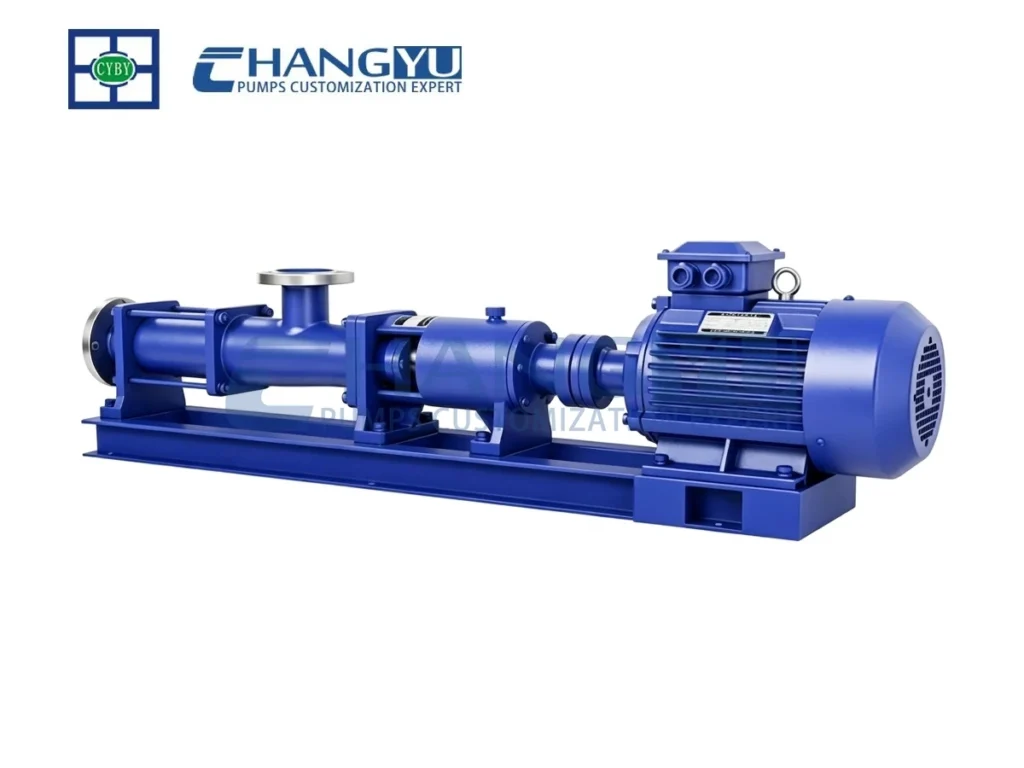
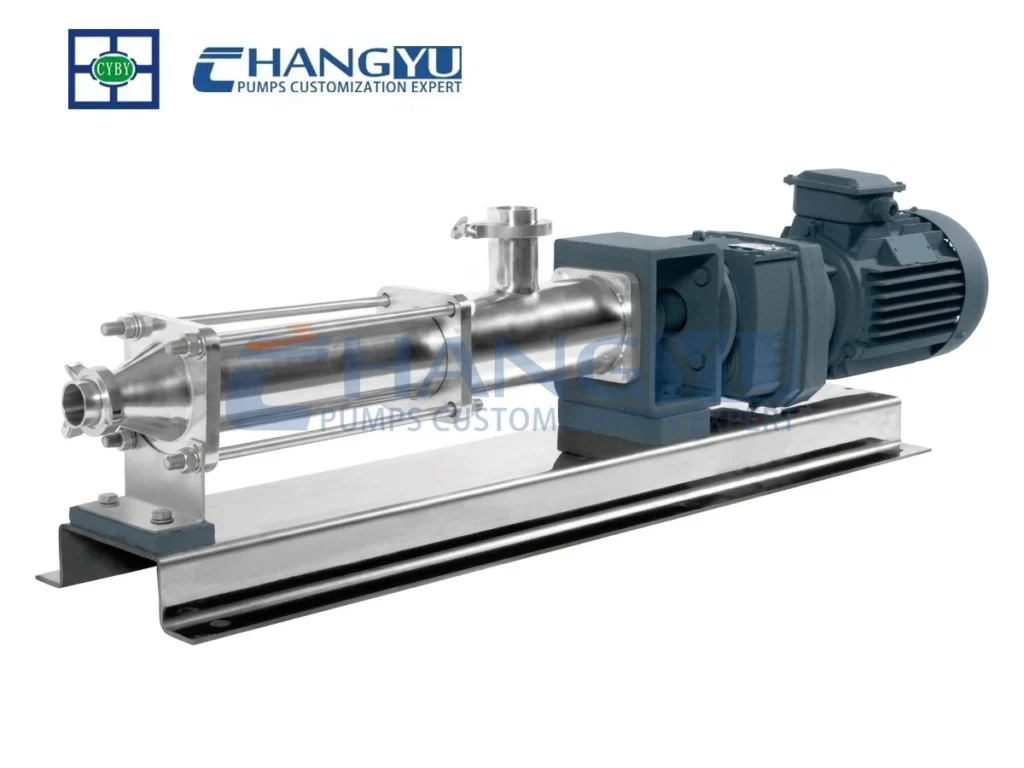
Bơm khoang tiến bộ với rôto lệch tâm và stato đàn hồi xoắn kép. Xử lý bột nghiền nguyên hạt mà không bị tắc và cung cấp dòng chảy không xung. Tốc độ vận hành thấp (200–400 vòng/phút cho dịch vụ bột nghiền) bảo toàn tính toàn vẹn của vỏ hạt, giảm thiểu chiết xuất tannin. Stato có sẵn bằng EPDM cấp thực phẩm để tương thích CIP. Được sử dụng rộng rãi trong các nhà máy bia thủ công và khu vực để vận chuyển bột nghiền, tuần hoàn wort và xử lý ngũ cốc đã qua sử dụng.
| Tham số | Thông số kỹ thuật |
|---|---|
| Lưu lượng | 0–200 m³/h |
| Trưởng phòng | 60–120 m |
| Công suất động cơ | 0,55–37 kW |
| Tốc độ | 400–960 vòng/phút (200–400 vòng/phút khuyến nghị cho bột nghiền) |
| Nhiệt độ | -20°C đến 150°C |
| Vật liệu | Gang, thép không gỉ; stato EPDM cấp thực phẩm |
Dòng Bơm Màng Điện BFD — Vận Chuyển Bột Nghiền Không Tắc
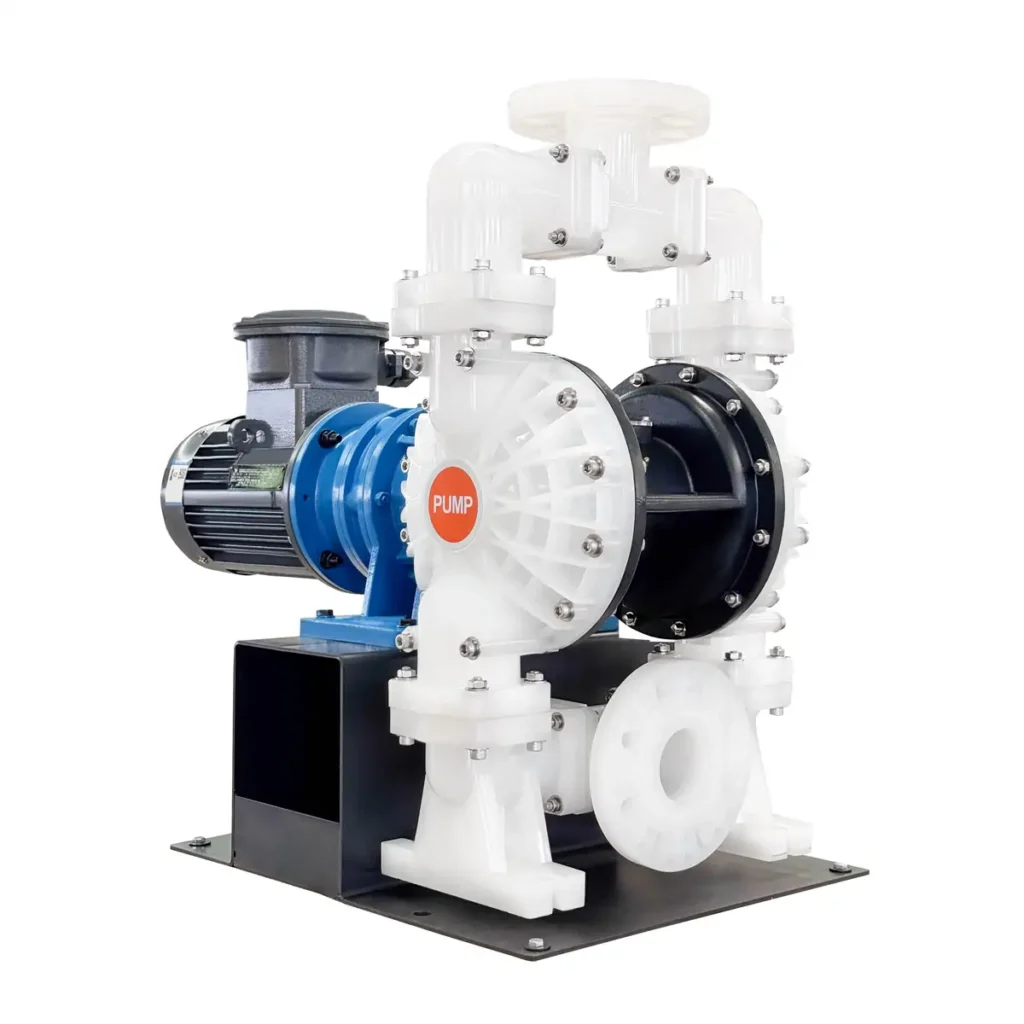
Bơm màng vận hành bằng điện cho bột nghiền đặc, có hàm lượng chất rắn cao. Tự mồi và có khả năng chạy khô — nếu thùng nghiền cạn trong quá trình vận chuyển, bơm không bị hỏng. Van một chiều xử lý chất rắn lớn và vỏ hạt mà không bị tắc. Có sẵn bằng PP, thép không gỉ và PVDF để tương thích với hóa chất CIP.
| Tham số | Thông số kỹ thuật |
|---|---|
| Lưu lượng | Lên đến 480 lít/phút |
| Trưởng phòng | Lên đến 84 m |
| Công suất động cơ | 0,75–45 kW |
| Tốc độ | 968–3.450 vòng/phút |
| Nhiệt độ | -20°C đến 120°C |
| Vật liệu | Thép đúc, gang dẻo, hợp kim nhôm, PP, thép không gỉ, PVDF |
Dòng Bơm Bùn Thép Không Gỉ HB — Tuần Hoàn Wort và CIP Lưu Lượng Cao
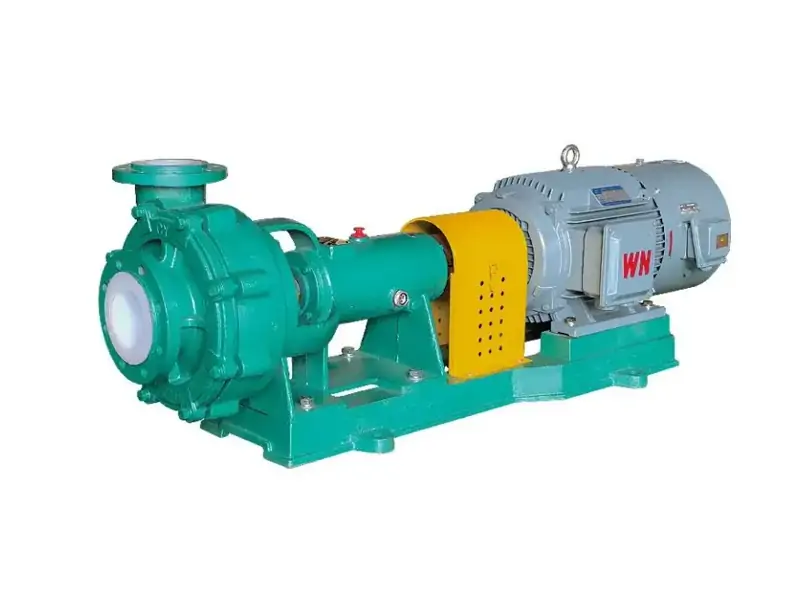
Bơm ly tâm ngang được thiết kế theo ISO 2858 với kết cấu thép không gỉ toàn bộ phần tiếp xúc ướt. Phù hợp cho tuần hoàn wort lưu lượng cao, tuần hoàn thùng lọc và cung cấp dung dịch làm sạch CIP. Có sẵn các cấp 304, 316L, 2205 và 2507 để tương thích với hóa chất CIP. Bề mặt bên trong được đánh bóng và thiết kế không khe hở hỗ trợ vận hành vệ sinh.
| Tham số | Thông số kỹ thuật |
|---|---|
| Lưu lượng | 10–60 m³/giờ |
| Trưởng phòng | 20–120 m |
| Công suất động cơ | 3–45 kW |
| Tốc độ | 2.900 vòng/phút |
| Nhiệt độ | -20°C đến 120°C |
| Vật liệu | 304, 316L, 2205, 2507 |
Dòng Bơm Ly Tâm Thép Không Gỉ CYH — Vận Chuyển Wort Nóng
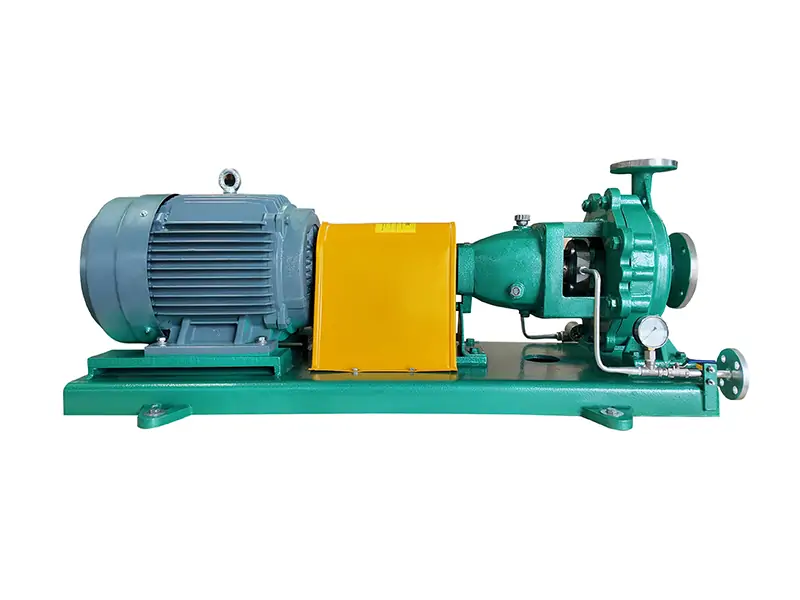
Bơm ly tâm công xôn một tầng, một hút được thiết kế theo ISO 2858. Bề mặt thép không gỉ đánh bóng và chất đàn hồi cấp thực phẩm đáp ứng các yêu cầu vệ sinh của nhà máy bia. Xử lý wort nóng ở nhiệt độ lên đến 165°C — phù hợp cho vận chuyển nồi nấu, cấp liệu xoáy và tuần hoàn bộ trao đổi nhiệt. Có sẵn bằng thép không gỉ 304, 316L và duplex.
| Tham số | Thông số kỹ thuật |
|---|---|
| Lưu lượng | 0,8–750 m³/h |
| Trưởng phòng | 3–130 m |
| Công suất động cơ | 2,2–110 kW |
| Tốc độ | 968–3.450 vòng/phút |
| Nhiệt độ | -20°C đến 165°C |
| Vật liệu | Thép 304, 316L, duplex |
Nghiên Cứu Điển Hình về Bơm Bột Nghiền Nhà Máy Bia: Giải Quyết Vấn Đề Tắc Bơm Bột Nghiền
Một nhà máy bia thủ công tại Úc sản xuất khoảng 15 BBL mỗi mẻ đã sử dụng một máy bơm ly tâm tiêu chuẩn bằng thép không gỉ với cánh bơm kín để chuyển hỗn hợp nghiền từ thùng nghiền sang thùng lọc. Máy bơm ban đầu được thiết kế cho việc chuyển dịch nha và đã được tái sử dụng cho công việc nghiền.
Trong ba ngày nấu bia đầu tiên, máy bơm bị tắc hai lần. Mỗi lần tắc cần 30–45 phút để thông: máy bơm phải được cách ly, tháo rời, và cánh bơm phải được làm sạch thủ công khỏi vỏ hạt đã nén chặt. Lần tắc thứ hai xảy ra giữa quá trình chuyển, để lại một nửa hỗn hợp nghiền trong thùng và làm chậm quá trình nấu bia hơn một giờ.
Phân tích nguyên nhân gốc rễ bởi các kỹ sư của Changyu Pump xác nhận rằng thiết kế cánh bơm kín về cơ bản không phù hợp cho việc chuyển hỗn hợp nghiền ngũ cốc nguyên hạt. Các kênh cánh bơm hẹp, được thiết kế cho dịch nha loãng, sạch, đã giữ lại vỏ hạt, tích tụ dần cho đến khi dòng chảy dừng lại. Ngoài ra, tốc độ cánh bơm 2.900 vòng/phút đang tạo ra lực cắt quá mức, bằng chứng là hương vị lạ, chát và sần sùi được phát hiện trong bia thành phẩm.
Changyu Pump đã thay thế máy bơm ly tâm bằng máy bơm khoang tiến triển hoạt động ở tốc độ 300 vòng/phút. Rô-to xoắn đơn và stato xoắn kép tạo ra các khoang kín vận chuyển hỗn hợp nghiền nhẹ nhàng từ đầu hút đến đầu xả mà không có điểm thắt nơi hạt có thể tích tụ. Tốc độ vận hành thấp đã loại bỏ thiệt hại do lực cắt lên vỏ hạt.
Mười hai tháng sau khi thay thế: không có lần tắc nào trong quá trình chuyển hỗn hợp nghiền, không có sự chậm trễ nào trong ngày nấu bia do hỏng máy bơm, và đội ngũ nấu bia báo cáo sự cải thiện rõ rệt về độ trong của dịch nha và độ mượt của bia thành phẩm. Nhà máy bia đã tiêu chuẩn hóa sử dụng máy bơm khoang tiến triển Changyu cho tất cả các quá trình chuyển có liên quan đến ngũ cốc.
Bài học chính: Một máy bơm được thiết kế cho dịch nha sạch không thể xử lý hỗn hợp nghiền ngũ cốc nguyên hạt. Cánh bơm kín hoạt động hoàn hảo cho chất lỏng loãng là nguyên nhân trực tiếp gây tắc nghẽn trong dịch vụ hỗn hợp nghiền. Máy bơm khoang tiến triển, hoạt động ở tốc độ thấp, cung cấp cả hoạt động không tắc nghẽn và xử lý nhẹ nhàng bảo vệ chất lượng bia.
Câu hỏi thường gặp về Máy bơm hỗn hợp nghiền nhà máy bia
Hỏi: Loại máy bơm nào tốt nhất để chuyển hỗn hợp nghiền?
Đáp: Máy bơm khoang tiến triển (trục vít đơn) là tiêu chuẩn ngành cho việc chuyển hỗn hợp nghiền ngũ cốc nguyên hạt. Nó cung cấp hoạt động không tắc nghẽn, lực cắt rất thấp bảo vệ tính toàn vẹn của hạt, và dòng chảy không xung. Đối với hỗn hợp nghiền rất đặc hoặc nhà máy bia nhỏ, máy bơm màng điện là một giải pháp thay thế hiệu quả về chi phí với khả năng xử lý chất rắn tuyệt vời.
Hỏi: Tôi có thể sử dụng máy bơm ly tâm tiêu chuẩn cho hỗn hợp nghiền không?
Đáp: Không nếu không có sửa đổi. Một máy bơm ly tâm cánh kín tiêu chuẩn sẽ nhanh chóng bị tắc trên hỗn hợp nghiền ngũ cốc nguyên hạt. Nếu cần máy bơm ly tâm, hãy chỉ định thiết kế cánh bơm xoáy cho phép chất rắn đi qua mà không tiếp xúc với cánh bơm. Tuy nhiên, máy bơm ly tâm vẫn tạo ra lực cắt cao hơn so với các lựa chọn thay thế khoang tiến triển hoặc màng.
Hỏi: Vật liệu nào an toàn cho máy bơm nhà máy bia?
Đáp: Thép không gỉ 316L với bề mặt đánh bóng (Ra ≤ 0,8 μm) cho tất cả các bộ phận tiếp xúc với chất lỏng. Chất đàn hồi phải là EPDM hoặc PTFE lưu hóa peroxide, tuân thủ FDA. Tránh đồng, đồng thau và đồng đỏ — các kim loại này rửa trôi các ion gây ra phản ứng làm hỏng bia. Gang không được phép cho bất kỳ bề mặt tiếp xúc sản phẩm nào.
Hỏi: Làm thế nào để vệ sinh máy bơm hỗn hợp nghiền nhà máy bia?
Đáp: Máy bơm nhà máy bia phải tương thích CIP — có thể vệ sinh tại chỗ mà không cần tháo rời. Một chu trình CIP điển hình bao gồm rửa sơ, rửa kiềm nóng (70–85°C), rửa axit và khử trùng. Máy bơm phải tự thoát nước để loại bỏ hoàn toàn chất lỏng giữa các chu trình. Xác minh rằng tất cả các vật liệu tiếp xúc với chất lỏng tương thích với hóa chất CIP của bạn.
Hỏi: Máy bơm hỗn hợp nghiền nên hoạt động ở tốc độ nào?
Đáp: Đối với máy bơm khoang tiến triển, hãy vận hành ở 200–400 vòng/phút cho dịch vụ hỗn hợp nghiền. Tốc độ thấp hơn làm giảm thiệt hại do lực cắt lên vỏ hạt và kéo dài tuổi thọ stato. Đối với máy bơm ly tâm trong dịch vụ dịch nha, tốc độ động cơ tiêu chuẩn (1.450–2.900 vòng/phút) có thể chấp nhận được đối với chất lỏng loãng, không có chất rắn.
Hỏi: Làm thế nào để chọn kích thước máy bơm hỗn hợp nghiền cho nhà máy bia của tôi?
Đáp: Chọn kích thước dựa trên tốc độ chuyển yêu cầu (thường là 1–3 BBL mỗi phút cho nhà máy bia thủ công) và tổng cột áp. Đối với hỗn hợp nghiền nhớt, hãy tăng kích thước đường ống hút lên một đường kính ống để đảm bảo NPSH đầy đủ. Chọn máy bơm hoạt động ở nửa dưới của dải tốc độ để có biên độ cho hỗn hợp nghiền đặc hơn hoặc tăng công suất trong tương lai.
Danh sách kiểm tra phòng ngừa dành cho kỹ sư bơm Changyu
- Không bao giờ sử dụng lại máy bơm dịch nha sạch cho việc chuyển hỗn hợp nghiền ngũ cốc nguyên hạt. Thiết kế cánh bơm và kênh dẫn sẽ gây tắc nghẽn ngay lập tức.
- Chỉ định máy bơm khoang tiến triển cho việc chuyển hỗn hợp nghiền chính. Hành động nhẹ nhàng, lực cắt thấp trực tiếp cải thiện chất lượng bia.
- Xác minh rằng tất cả các vật liệu tiếp xúc với chất lỏng có tài liệu tuân thủ FDA. Một miếng đệm không tuân thủ duy nhất có thể làm nhiễm bẩn toàn bộ mẻ.
- Đánh bóng bề mặt bên trong đến Ra ≤ 0,8 μm. Bề mặt thô hơn chứa vi khuẩn và chống lại việc vệ sinh CIP.
- Thiết kế lắp đặt máy bơm để tự thoát nước. Chất lỏng đọng lại trong máy bơm sau CIP là rủi ro nhiễm bẩn.
- Vận hành máy bơm khoang tiến triển ở 200–400 vòng/phút cho hỗn hợp nghiền. Tốc độ cao hơn làm tăng lực cắt và đẩy nhanh sự mài mòn stato.
- Lắp đặt VFD (bộ truyền động tần số thay đổi) để kiểm soát lưu lượng. Điều này cho phép tốc độ máy bơm được điều chỉnh phù hợp với các độ đặc khác nhau của hỗn hợp nghiền và tốc độ chuyển.
- Dự trữ stato, phớt cơ khí và miếng đệm thay thế trong kho. Các bộ phận của máy bơm hỗn hợp nghiền mòn nhanh hơn các bộ phận của máy bơm dịch nha sạch.
Kết luận
Một máy bơm hỗn hợp nghiền nhà máy bia không phải là máy bơm hàng hóa. Sự kết hợp giữa hỗn hợp nghiền đặc, mài mòn, nhu cầu xử lý chất rắn nhẹ nhàng và các yêu cầu nghiêm ngặt về vệ sinh thực phẩm tạo ra một ứng dụng đòi hỏi khắt khe mà máy bơm tiêu chuẩn không thể đáp ứng. Máy bơm khoang tiến triển đã trở thành tiêu chuẩn ngành cho việc chuyển hỗn hợp nghiền ngũ cốc nguyên hạt vì nó giải quyết duy nhất cả ba thách thức: hoạt động không tắc nghẽn thông qua thiết kế khoang liên tục, lực cắt gần như bằng không thông qua tốc độ vận hành thấp và khả năng tương thích CIP đầy đủ thông qua thép không gỉ đánh bóng và cấu trúc không có khe hở.
Đối với các nhà máy bia thủ công nơi chất lượng bia là nền tảng của thương hiệu, việc lựa chọn máy bơm hỗn hợp nghiền ảnh hưởng trực tiếp đến hương vị, độ trong và tính nhất quán của mọi mẻ. Một máy bơm nghiền nát vỏ hạt sẽ giải phóng vị đắng vào bia. Một máy bơm bị tắc sẽ dừng sản xuất. Khoản đầu tư vào một máy bơm hỗn hợp nghiền được chỉ định đúng cách sẽ được thu hồi thông qua giảm thời gian chết, chất lượng dịch nha nhất quán và loại bỏ các hương vị lạ liên quan đến máy bơm.
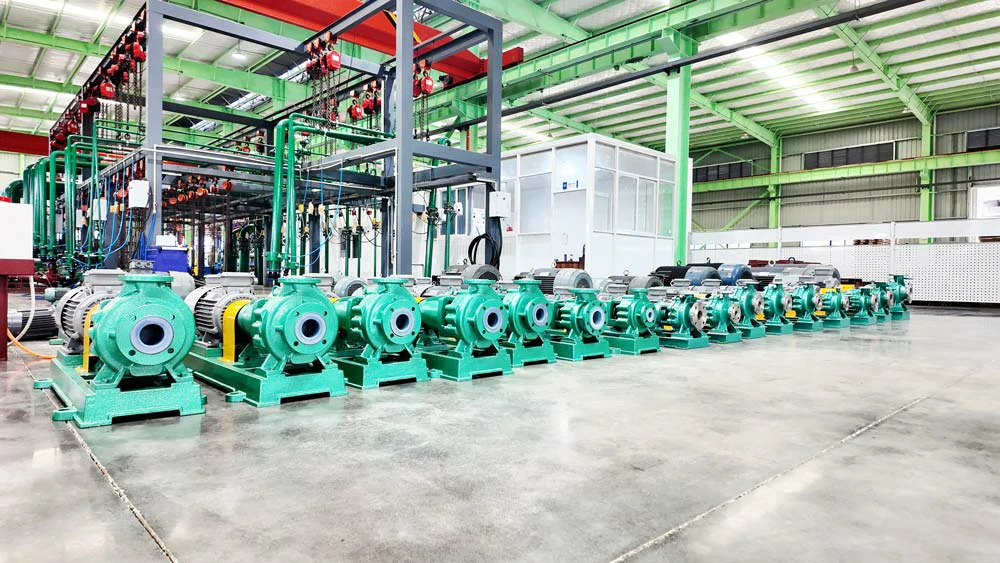
Đội ngũ kỹ thuật của Changyu Pump cung cấp các đánh giá kỹ thuật phù hợp cho các ứng dụng bơm trong nhà máy bia — bao gồm đặc tính của hỗn hợp nghiền, lựa chọn bơm, khả năng tương thích vật liệu và tích hợp CIP. Hai thập kỷ kinh nghiệm sản xuất trong các lĩnh vực thực phẩm, đồ uống và công nghiệp là nền tảng cho mọi khuyến nghị.