
Quick Answer
A brewery mash pump is a food-grade pump engineered to transfer the mixture of crushed malted grains and hot water known as mash. This slurry is thick, abrasive, and contains large, stringy solids that can quickly clog a standard pump. Key selection factors:
- Clog resistance prevents shutdowns: Spent grain husks, barley straw, and other large solids will wrap around or choke a standard centrifugal impeller. Mash pumps must incorporate vortex, single-channel, progressive cavity, or diaphragm designs that provide unrestricted solids passage.
- Low-shear operation protects flavor: Aggressive, high-speed pumping can shred grain husks, releasing bitter tannins and astringent compounds into the wort. A low-shear, gentle pumping action is critical for preserving the intended flavor profile of the beer.
- Sanitary design ensures product safety: Every surface that contacts the wort must be food-grade, non-toxic, and resistant to the hot, acidic conditions of the brewing process. Polished stainless steel, crevice-free construction, and FDA-compliant elastomers are standard requirements.
- CIP compatibility simplifies cleaning: The pump must be cleanable-in-place without requiring full disassembly. A self-draining design and polished internal surfaces allow automated cleaning cycles to sanitize the pump between batches, preventing bacterial contamination.
In a busy brewery, a clogged pump stops production. The mash tun must be emptied, the pump disassembled, and a matted layer of grain pulled from the impeller before brewing can continue. This scenario, caused by specifying a standard centrifugal water pump for a thick, solids-laden slurry, is one of the most common equipment failures in the brewing industry. A pump that works perfectly for thin, clean wort can choke within seconds on a dense mash.
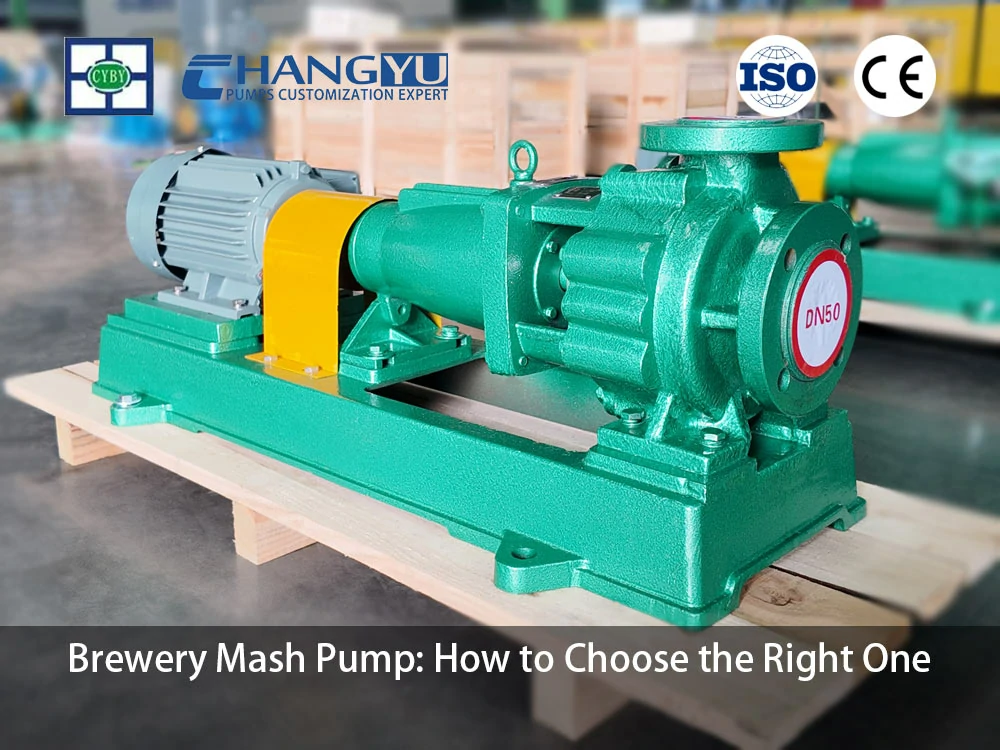
After reading this guide, you will understand the specific challenges of pumping mash, which pump designs resist clogging and protect grain integrity, what sanitary and CIP requirements apply to brewery pumps, and how to select a pump that matches your production scale and process. With over 20 years of pump manufacturing experience, Changyu Pump presents this structured selection guide to help you specify the right mash pump from day one.
1. What Is a Brewery Mash Pump?
In the brewing process, malted barley is milled and mixed with hot water in a mash tun. The resulting mash is a porridge-like slurry that must be recirculated to clarify the wort and then transferred to the lauter tun for filtration. This is the job of the mash pump.
Why Standard Pumps Fail in Mash Service
A standard centrifugal pump designed for water or thin fluids will fail rapidly in mash service for three reasons:
- Clogging: Spent grain husks are fibrous and stringy. They wrap around closed impeller vanes and lodge in narrow volute passages, progressively restricting flow until the pump stalls.
- Shear damage: A centrifugal impeller spinning at 2,900 or 3,600 rpm subjects the mash to intense mechanical forces. Grain husks are torn apart, releasing bitter tannins and astringent polyphenols into the wort.
- Wear and corrosion: The hot, acidic mash environment combined with abrasive grain particles accelerates material degradation in pumps not designed for this service.
Mash Pump vs Standard Pump: Key Differences
| Feature | Standard Centrifugal Pump | Brewery Mash Pump |
|---|---|---|
| Impeller / Mechanism | Closed impeller — narrow, easily blocked | Vortex, single-channel, progressive cavity, or diaphragm — open flow path |
| Shear forces | High — shreds grain husks | Low — protects grain integrity |
| Materials | Cast iron, standard elastomers | Stainless steel (304/316L), FDA-compliant elastomers |
| Cleanability | Not designed for CIP | Polished surfaces, crevice-free, self-draining |
| Temperature range | Limited by standard seals | Designed for hot mash (up to 78°C typical) and CIP cycles |
| Solids handling | Minimal — closed impeller clogs immediately on whole-grain mash | Excellent — handles up to 50% grain solids by volume |
2. What Materials Are Best for Brewery Mash Pumps?
Material selection for a brewery pump is driven by food safety regulations, chemical compatibility with the mash and cleaning agents, and resistance to the abrasive wear caused by grain particles.
Wetted Material Requirements
The mash is a hot (typically 65–78°C), slightly acidic (pH 5.2–5.6) slurry containing abrasive grain particles. After the mash transfer is complete, the pump is subjected to aggressive CIP cleaning cycles using hot caustic (sodium hydroxide) and acid solutions. All wetted materials must withstand this combination of conditions.
| Material | Application in Brewery Pumps | Key Property |
|---|---|---|
| 316L Stainless Steel | Pump casing, impeller, shaft | Excellent corrosion resistance to acidic wort and CIP chemicals |
| 304 Stainless Steel | Pump casing for non-critical areas | Acceptable for external components; 316L preferred for wetted parts |
| EPDM (Peroxide-cured) | Stator (progressive cavity pump), gaskets, O-rings | FDA-compliant; good resistance to hot water and mild acids |
| PTFE | Diaphragm, seals, gaskets | Universal chemical resistance; suitable for high-temperature CIP |
| FKM / Viton | Seals for high-temperature applications | Higher temperature rating than EPDM; only food-grade grades acceptable |
| UHMW-PE | Pump lining, wear components | Excellent abrasion resistance; chemically inert; FDA-compliant |
| Cast Iron, Brass, Bronze | NOT permitted for wetted components | Corrodes and leaches contaminants into the product |
Surface Finish Requirements
The internal surfaces of brewery pumps must be polished to a smooth finish that resists bacterial adhesion and allows thorough cleaning. For mash pumps, a surface roughness of Ra ≤ 0.8 μm on wetted surfaces is the industry standard. Electropolishing after mechanical polishing further enhances corrosion resistance and cleanability by removing microscopic surface imperfections where bacteria can colonize.
Engineers at Changyu Pump recommend: For all wetted pump components in direct contact with wort or mash, specify 316L stainless steel with polished surfaces and peroxide-cured EPDM or PTFE elastomers. Avoid any copper-containing alloys — copper ions catalyze oxidation reactions that produce stale, cardboard-like off-flavors in finished beer.
3. How to Protect Mash Integrity with Low Shear Pumping?
Shear stress is the mechanical force applied to the mash as it passes through the pump. High shear forces tear open the barley husks, releasing bitter tannins, astringent compounds, and unconverted starches into the liquid wort. These extractives degrade beer flavor, creating harsh bitterness and hazy appearance.
How Different Pump Types Apply Shear
| Pump Type | Shear Level | Effect on Mash | Best Application |
|---|---|---|---|
| Centrifugal (closed impeller) | High | Shreds husks; releases tannins and haze-forming proteins | Not suitable for whole-grain mash transfer |
| Centrifugal (vortex impeller) | Low to moderate | Less grain damage; solids pass without being forced through narrow clearances. Lower efficiency (35–55%) compared to closed impeller designs. | Acceptable for recirculation; not ideal for primary mash transfer |
| Progressive Cavity (screw) | Very low | Gentle, pulsation-free flow; minimal husk damage | Ideal — best choice for preserving grain integrity |
| Electric Diaphragm | Very low | Pulsing flow, but mechanically gentle; no high-speed impeller. Not suitable for applications requiring steady, pulse-free flow. | Good — suitable for thick mashes and high solids content |
Why Progressive Cavity Pumps Are the Industry Standard
Progressive cavity (PC) pumps use a single-helix metal rotor turning inside a double-helix elastomer stator. The rotating rotor creates a series of sealed cavities that progress from suction to discharge, gently carrying the mash without the high-velocity impingement and turbulent mixing that characterize centrifugal pumps. The result is near-zero shear damage to grain husks and a cleaner, smoother-tasting beer.
The PC pump’s rotating speed is typically 200–400 rpm for mash service — an order of magnitude slower than a centrifugal pump at 2,900 rpm. This low speed, combined with the positive displacement mechanism, means the mash experiences minimal mechanical stress during transfer.
Engineers at Changyu Pump recommend: For whole-grain mash transfer where beer quality is the priority, specify a progressive cavity pump operating at 200–400 rpm (lower end for mashes with high husk content or large grain particles). The gentle pumping action preserves grain integrity, minimizes tannin extraction, and produces a cleaner wort. For breweries using a lauter tun or mash filter where some husk compaction is acceptable, a diaphragm pump provides an effective, lower-cost alternative with excellent solids handling.
4. How to Prevent Clogging When Pumping Mash?
Clogging is the most common operational problem in mash pumping. The combination of stringy grain husks, sticky gelatinized starch, and high solids concentration creates a mixture that can block pump passages within seconds if the wrong pump type is specified.
Pump Type Clog Resistance Comparison
| Pump Type | Clog Resistance | Mechanism | Best Solids Handling |
|---|---|---|---|
| Vortex Centrifugal | Good | Impeller recessed — solids pass through the volute without contacting the impeller | Mixed solids, unpredictable debris |
| Single-Channel Centrifugal | Moderate | Single wide passage — less likely to clog than closed impeller | Screened mash; lower husk content |
| Progressive Cavity (Screw) | Excellent | Continuous sealed cavities carry solids without obstruction | Whole-grain mash, up to 50% solids |
| Electric Diaphragm | Excellent | Solids pass through large check valves without constriction | Thick mash, high solids, fibrous grain |
| Closed-Impeller Centrifugal | Poor | Husks wrap around vanes and block narrow passages | Not suitable for whole-grain mash |
Solids Concentration by Brewing Stage
| Brewing Stage | Typical Solids Content | Flow Behavior | Recommended Pump Type |
|---|---|---|---|
| Mash tun recirculation | 15–25% grain solids | Semi-fluid porridge | Progressive cavity or vortex centrifugal |
| Mash transfer to lauter tun | 20–30% grain solids | Thick, viscous slurry | Progressive cavity or diaphragm |
| Weak wort runoff | 1–3% fine suspended solids (protein trub, fine husk particles) | Thin fluid with suspended particles | Single-channel centrifugal or progressive cavity |
| Spent grain transfer | 25–35% wet solids | Dense, semi-dry cake | Progressive cavity with auger feed |
Engineers at Changyu Pump recommend: For whole-grain mash transfer where both clog resistance and low shear are required, a progressive cavity pump is the best choice. For breweries handling very high solids content or variable grain loads, an electric diaphragm pump provides maximum clog resistance with the added benefit of dry-run tolerance — if the mash tun runs empty during transfer, the diaphragm pump will not be damaged.
5. What Are the Hygienic and CIP Requirements for Brewery Pumps?
Brewery pumps must meet food-grade sanitation standards and be designed for cleaning-in-place without disassembly. Any pump surface that contacts wort or beer can harbor bacteria, wild yeast, or cleaning chemical residues if not properly designed and maintained.
Sanitary Standards for Brewery Equipment
| Standard | Scope | Key Requirements for Pumps |
|---|---|---|
| FDA 21 CFR | Materials of construction for food contact | All wetted components must be FDA-compliant; elastomers must be food-grade |
| 3-A Sanitary Standards | Equipment design for dairy and food processing | Crevice-free construction; polished surfaces to Ra ≤ 0.8 μm; self-draining design |
| EHEDG | European hygienic equipment design | Validated cleanability; sterile design for critical applications |
A CIP-compatible brewery pump incorporates specific design features that allow it to be effectively cleaned by an external automated CIP system without manual disassembly:
- Self-draining casing: The pump casing must drain completely when stopped. No liquid should pool in the volute, seal chamber, or suction piping — pooled liquid harbors bacteria and dilutes the next batch.
- Polished internal surfaces: Wetted surfaces polished to Ra ≤ 0.8 μm resist bacterial adhesion and allow cleaning solutions to contact every surface. Electropolishing further enhances cleanability.
- Crevice-free seal design: The mechanical seal must be designed with flush faces and FDA-compliant elastomers. Sanitary clamp connections replace threaded fittings that trap product and resist cleaning.
- CIP supply connections: The pump casing may include dedicated ports that allow external CIP cleaning solutions to be supplied to all internal surfaces at the required flow velocity (typically 1.5 m/s minimum in the pump volute).
Typical Brewery CIP Cycle
| Step | Solution | Temperature | Duration | Purpose |
|---|---|---|---|---|
| Pre-rinse | Water | Ambient | 5–10 min | Remove loose solids |
| Caustic wash | 1–2% NaOH | 70–85°C | 20–30 min | Remove organic soils, proteins, hop resins |
| Intermediate rinse | Water | Ambient | 5–10 min | Remove caustic residue |
| Acid wash | 0.5–1% phosphoric or nitric acid | Ambient–45°C | 15–20 min | Remove beerstone (calcium oxalate), neutralize residual caustic |
| Final rinse | Water | Ambient | 5–10 min | Remove acid residue |
| Sanitize | Peracetic acid or hot water | As specified | 5–15 min | Kill residual microorganisms |
Note: Acid wash temperatures above 45°C may accelerate corrosion of stainless steel, particularly with nitric acid solutions.
Engineers at Changyu Pump recommend: For any brewery pump, verify that the manufacturer provides a polished surface finish certificate and FDA-compliant material documentation for all wetted components.
6. How to Select the Right Brewery Mash Pump?
Selecting a mash pump involves matching the pump type, materials, and features to the specific demands of your brewing process and production scale.
Step 1: Define Your Mash Characteristics.
Determine the typical grain bill, mash thickness (water-to-grain ratio), solids concentration, and any special ingredients that affect flow behavior. A thick mash for a high-gravity imperial stout behaves very differently from a thin mash for a light lager.
Step 2: Match the Pump Type to Your Process.
| Brewery Type | Production Scale | Mash Transfer Method | Recommended Pump Type |
|---|---|---|---|
| Nano / microbrewery | < 5 BBL per batch | Manual or single pump | Electric diaphragm — simple, self-priming, handles high solids |
| Craft brewery | 5–30 BBL per batch | Pump transfer | Progressive cavity — gentle, continuous, low-shear |
| Regional brewery | 30–100+ BBL per batch | Automated transfer | Progressive cavity with VFD for flow control |
| Large-scale industrial | > 100 BBL per batch | Fully automated | Progressive cavity or large vortex centrifugal with CIP integration |
Step 3: Select Materials.
For all wetted components, specify 316L stainless steel with polished surfaces (Ra ≤ 0.8 μm). Elastomers must be peroxide-cured EPDM or PTFE, FDA-compliant. For abrasive mashes with high grain loading, consider UHMW-PE lined components for extended wear life.
Step 4: Verify CIP Compatibility.
Confirm that the pump is self-draining, crevice-free, and designed for CIP cleaning at the temperatures and chemical concentrations used in your cleaning cycle. Request a surface finish certificate and material traceability documentation.
Step 5: Size the Pump.
Size the pump for the required transfer rate (typically 1–3 BBL per minute for craft breweries) and total head (including pipe friction losses for viscous mash). For progressive cavity pumps, select a speed in the 200–400 rpm range to minimize shear. Oversize the suction line by one pipe diameter to ensure adequate NPSH with hot, viscous mash.
Engineers at Changyu Pump recommend: For any brewery producing whole-grain mashes, invest in a progressive cavity pump for mash transfer. The gentle pumping action directly improves beer quality by minimizing tannin extraction, and the clog-free operation eliminates the most common cause of brew-day delays. The higher initial cost of a progressive cavity pump is recovered through reduced downtime, consistent wort quality, and extended equipment life.
7. Changyu Pump Brewery Pump Solutions
Changyu Pump manufactures four pump series suitable for brewery mash and wort handling applications.
Brewery Pump Product Selection Guide
| Application | Primary Requirement | Recommended Series | Key Feature |
|---|---|---|---|
| Whole-grain mash transfer | Low shear + clog resistance | G-Type Screw Pump | Progressive cavity; pulsation-free; gentle to grain husks |
| Thick mash / high solids transfer | Maximum clog resistance | BFD Series Electric Diaphragm Pump | Self-priming; dry-run safe; handles large solids |
| High-flow wort / CIP circulation | High volume + sanitary design | HB Series Stainless Steel Slurry Pump | All stainless steel; ISO 2858 design; CIP-compatible |
| Hot wort / high-temperature process | Temperature resistance + sanitary | CYH Series Stainless Steel Centrifugal Pump | ISO 2858; polished surfaces; up to 165°C |
G-Type Single Screw Pump — Low-Shear Mash Transfer
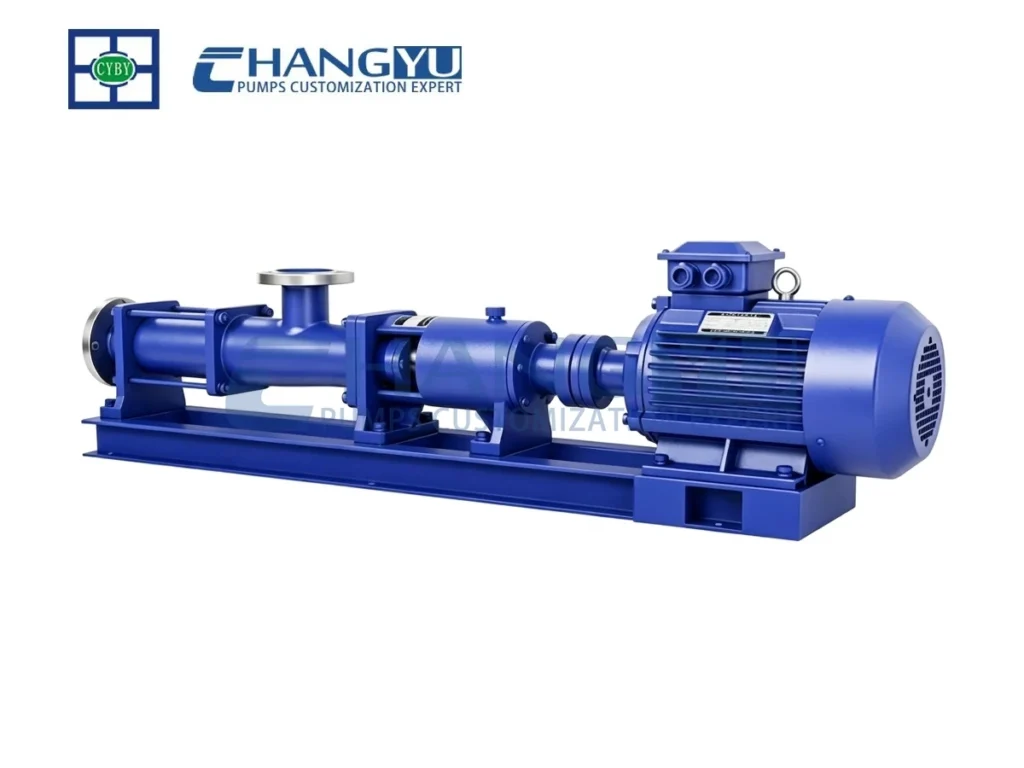
Progressive cavity pump with eccentric rotor and double-helix elastomer stator. Handles whole-grain mash without clogging and delivers pulsation-free flow. The low operating speed (200–400 rpm for mash service) preserves grain husk integrity, minimizing tannin extraction. Stator available in food-grade EPDM for CIP compatibility. Widely used in craft and regional breweries for mash transfer, wort circulation, and spent grain handling.
| Parameter | Specification |
|---|---|
| Flow rate | 0–200 m³/h |
| Head | 60–120 m |
| Motor power | 0.55–37 kW |
| Speed | 400–960 r/min (200–400 rpm recommended for mash) |
| Temperature | -20°C to 150°C |
| Materials | Cast iron, stainless steel; food-grade EPDM stator |
BFD Series Electric Diaphragm Pump — Clog-Free Mash Transfer
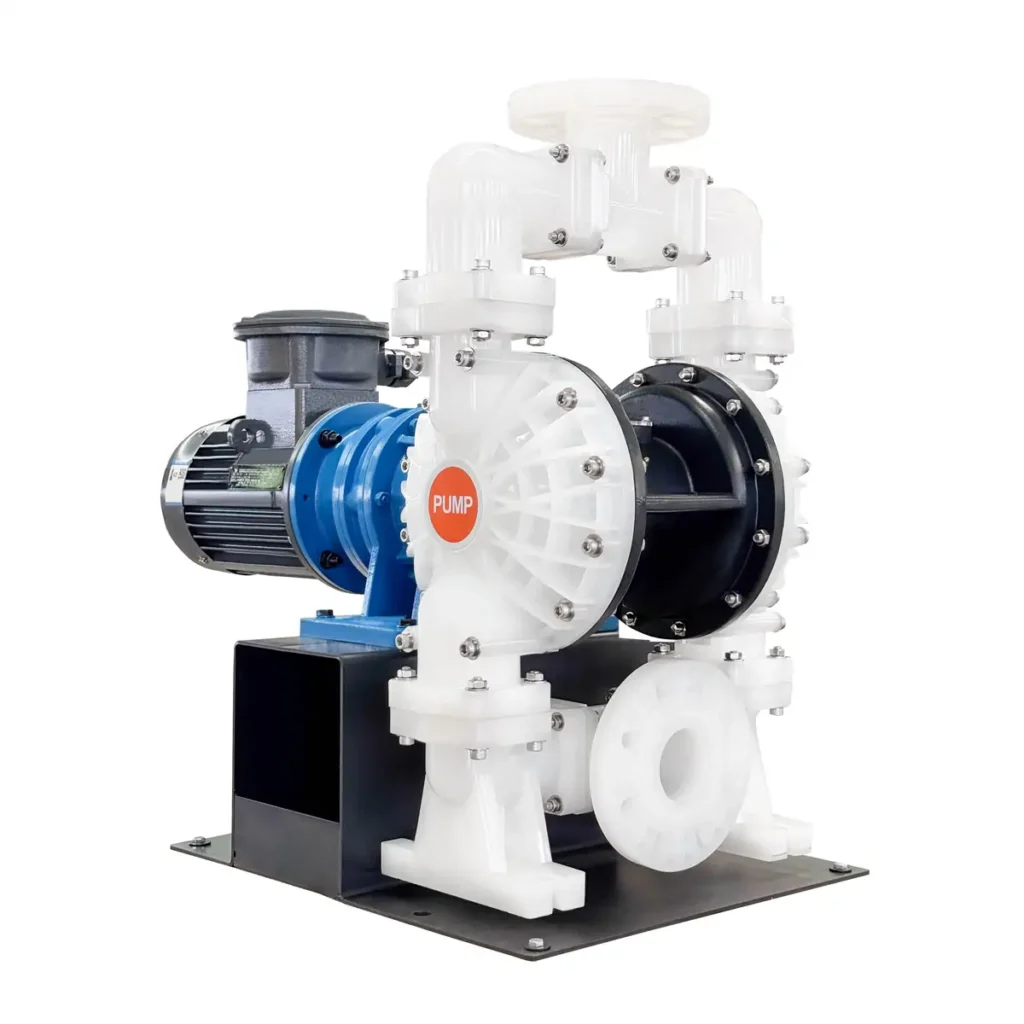
Electrically operated diaphragm pump for thick, high-solids mashes. Self-priming and capable of running dry — if the mash tun empties during transfer, the pump is not damaged. Check valves handle large solids and grain husks without clogging. Available in PP, stainless steel, and PVDF for compatibility with CIP chemicals.
| Parameter | Specification |
|---|---|
| Flow rate | Up to 480 L/min |
| Head | Up to 84 m |
| Motor power | 0.75–45 kW |
| Speed | 968–3,450 r/min |
| Temperature | -20°C to 120°C |
| Materials | Cast steel, ductile iron, aluminum alloy, PP, stainless steel, PVDF |
HB Series Stainless Steel Slurry Pump — High-Flow Wort and CIP Circulation
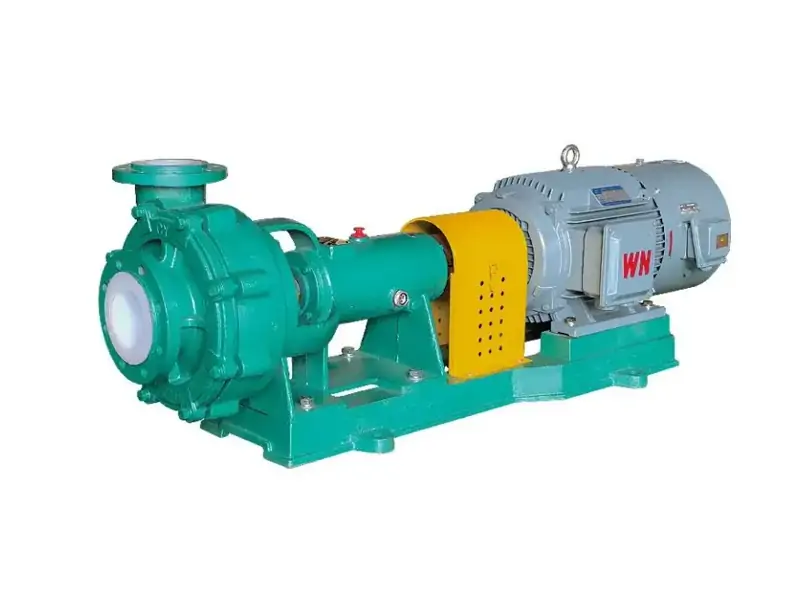
Horizontal centrifugal pump designed to ISO 2858 with all-stainless steel wetted construction. Suitable for high-flow wort circulation, lauter tun recirculation, and CIP cleaning solution supply. Available in 304, 316L, 2205, and 2507 grades for compatibility with CIP chemicals. Polished internal surfaces and crevice-free design support hygienic operation.
| Parameter | Specification |
|---|---|
| Flow rate | 10–60 m³/h |
| Head | 20–120 m |
| Motor power | 3–45 kW |
| Speed | 2,900 r/min |
| Temperature | -20°C to 120°C |
| Materials | 304, 316L, 2205, 2507 |
CYH Series Stainless Steel Centrifugal Pump — Hot Wort Transfer
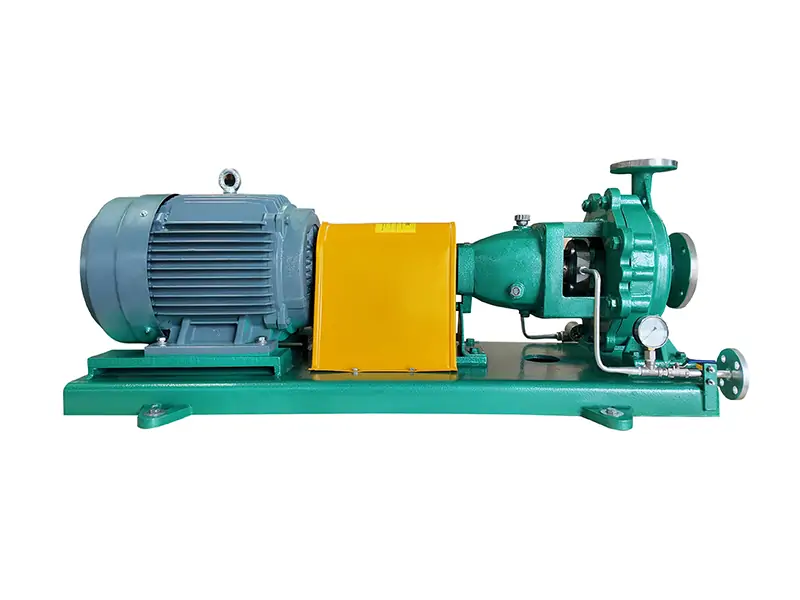
Single-stage, single-suction cantilevered centrifugal pump designed to ISO 2858. Polished stainless steel surfaces and food-grade elastomers meet brewery sanitary requirements. Handles hot wort at temperatures up to 165°C — suitable for kettle transfer, whirlpool feed, and heat exchanger circulation. Available in 304, 316L, and duplex stainless steel.
| Parameter | Specification |
|---|---|
| Flow rate | 0.8–750 m³/h |
| Head | 3–130 m |
| Motor power | 2.2–110 kW |
| Speed | 968–3,450 r/min |
| Temperature | -20°C to 165°C |
| Materials | 304, 316L, duplex steel |
8. Case Study of Brewery Mash Pump: Solving a Mash Pump Clogging Issue
A craft brewery in Australia producing approximately 15 BBL per batch used a standard stainless steel centrifugal pump with a closed impeller to transfer mash from the mash tun to the lauter tun. The pump was originally specified for wort transfer and had been repurposed for mash duty.
Within the first three brew days, the pump clogged twice. Each clog required 30–45 minutes to clear: the pump had to be isolated, disassembled, and the impeller manually cleaned of compacted grain husks. The second clog occurred mid-transfer, leaving half the mash in the tun and delaying the brew by over an hour.
Root cause analysis by Changyu Pump engineers confirmed that the closed impeller design was fundamentally unsuited to whole-grain mash transfer. The narrow impeller passages, designed for thin, clean wort, trapped grain husks that progressively accumulated until flow stopped. Additionally, the 2,900 rpm impeller speed was generating excessive shear, evidenced by the astringent, grainy off-flavor detected in the finished beer.
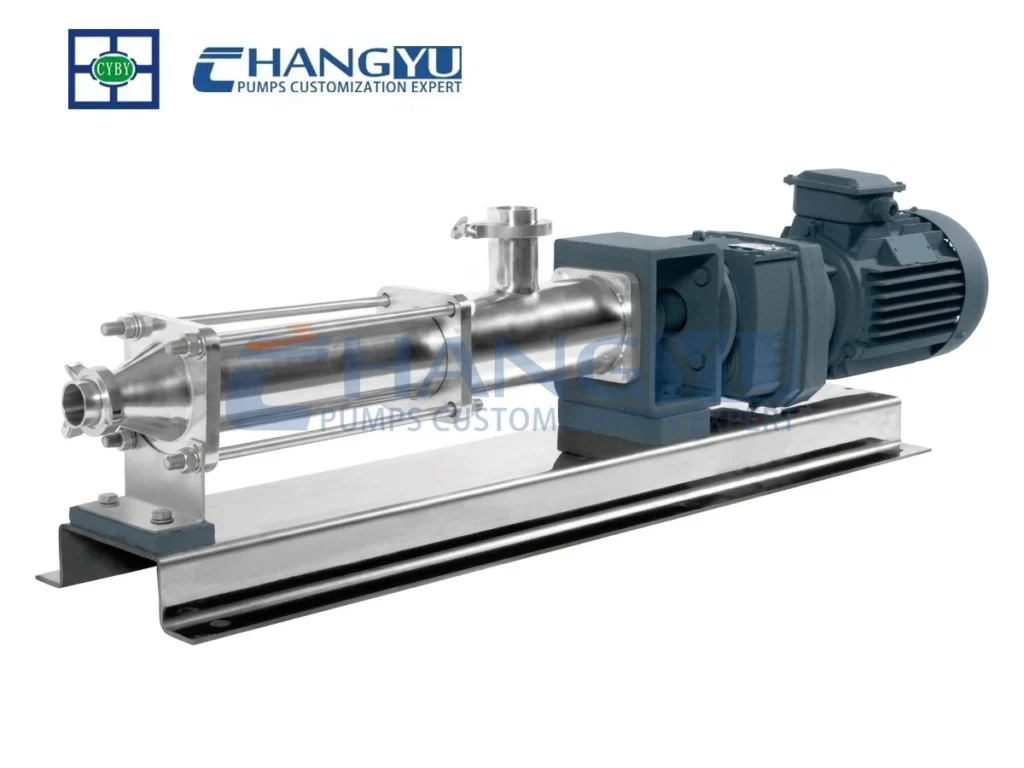
Changyu Pump replaced the centrifugal pump with a progressive cavity pump operating at 300 rpm. The single-helix rotor and double-helix stator created sealed cavities that carried the mash gently from suction to discharge without constriction points where grain could accumulate. The low operating speed eliminated the shear damage to grain husks.
Twelve months after the replacement: zero clogs during mash transfer, zero brew-day delays attributed to pump failure, and a noticeable improvement in wort clarity and finished beer smoothness reported by the brewing team. The brewery standardized on Changyu progressive cavity pumps for all grain-involved transfers.
Key takeaway: A pump designed for clean wort cannot handle whole-grain mash. The closed impeller that works perfectly for thin fluids is the direct cause of clogging in mash service. Progressive cavity pumps, operating at low speed, provide both clog-free operation and the gentle handling that protects beer quality.
FAQs about Brewery Mash Pumps
Q: What type of pump is best for transferring mash?
A: A progressive cavity (single screw) pump is the industry standard for whole-grain mash transfer. It provides clog-free operation, very low shear that protects grain integrity, and pulsation-free flow. For very thick mashes or small breweries, an electric diaphragm pump is a cost-effective alternative with excellent solids handling.
Q: Can I use a standard centrifugal pump for mash?
A: Not without modification. A standard closed-impeller centrifugal pump will clog rapidly on whole-grain mash. If a centrifugal pump is required, specify a vortex impeller design that allows solids to pass without contacting the impeller. However, centrifugal pumps still generate higher shear than progressive cavity or diaphragm alternatives.
Q: What materials are safe for brewery pumps?
A: 316L stainless steel with polished surfaces (Ra ≤ 0.8 μm) for all wetted components. Elastomers must be peroxide-cured EPDM or PTFE, FDA-compliant. Avoid copper, brass, and bronze — these metals leach ions that cause beer staling reactions. Cast iron is not permitted for any product-contact surface.
Q: How do I clean a brewery mash pump?
A: Brewery pumps must be CIP-compatible — cleanable-in-place without disassembly. A typical CIP cycle includes a pre-rinse, hot caustic wash (70–85°C), acid wash, and sanitization. The pump must be self-draining to allow complete liquid removal between cycles. Verify that all wetted materials are compatible with your CIP chemicals.
Q: What speed should a mash pump operate at?
A: For progressive cavity pumps, operate at 200–400 rpm for mash service. Lower speeds reduce shear damage to grain husks and extend stator life. For centrifugal pumps in wort service, standard motor speeds (1,450–2,900 rpm) are acceptable for thin, solids-free fluids.
Q: How do I size a mash pump for my brewery?
A: Size based on the required transfer rate (typically 1–3 BBL per minute for craft breweries) and total head. For viscous mash, oversize the suction line by one pipe diameter to ensure adequate NPSH. Select a pump that operates in the lower half of its speed range to provide margin for thicker mashes or future capacity increases.
Changyu Pump Engineer’s Avoidance Checklist
- Never repurpose a clean wort pump for whole-grain mash transfer. The impeller and passage design will cause immediate clogging.
- Specify a progressive cavity pump for primary mash transfer. The gentle, low-shear action directly improves beer quality.
- Verify that all wetted materials have FDA-compliant documentation. A single non-compliant gasket can contaminate an entire batch.
- Polish internal surfaces to Ra ≤ 0.8 μm. Rougher surfaces harbor bacteria and resist CIP cleaning.
- Design the pump installation to be self-draining. Pooled liquid in the pump after CIP is a contamination risk.
- Operate progressive cavity pumps at 200–400 rpm for mash. Higher speeds increase shear and accelerate stator wear.
- Install a VFD (variable frequency drive) for flow control. This allows the pump speed to be matched to different mash thicknesses and transfer rates.
- Keep spare stators, mechanical seals, and gaskets in inventory. Mash pump components wear faster than clean wort pump components.
Conclusion
A brewery mash pump is not a commodity pump. The combination of thick, abrasive mash, the need for gentle solids handling, and the strict requirements of food-grade sanitation create a demanding application that standard pumps cannot satisfy. The progressive cavity pump has become the industry standard for whole-grain mash transfer because it uniquely addresses all three challenges: clog-free operation through its continuous cavity design, near-zero shear through its low operating speed, and full CIP compatibility through polished stainless steel and crevice-free construction.
For craft breweries where beer quality is the foundation of the brand, the choice of mash pump directly affects the flavor, clarity, and consistency of every batch. A pump that shreds grain husks releases bitterness into the beer. A pump that clogs stops production. The investment in a properly specified mash pump is recovered through reduced downtime, consistent wort quality, and the elimination of pump-related off-flavors.
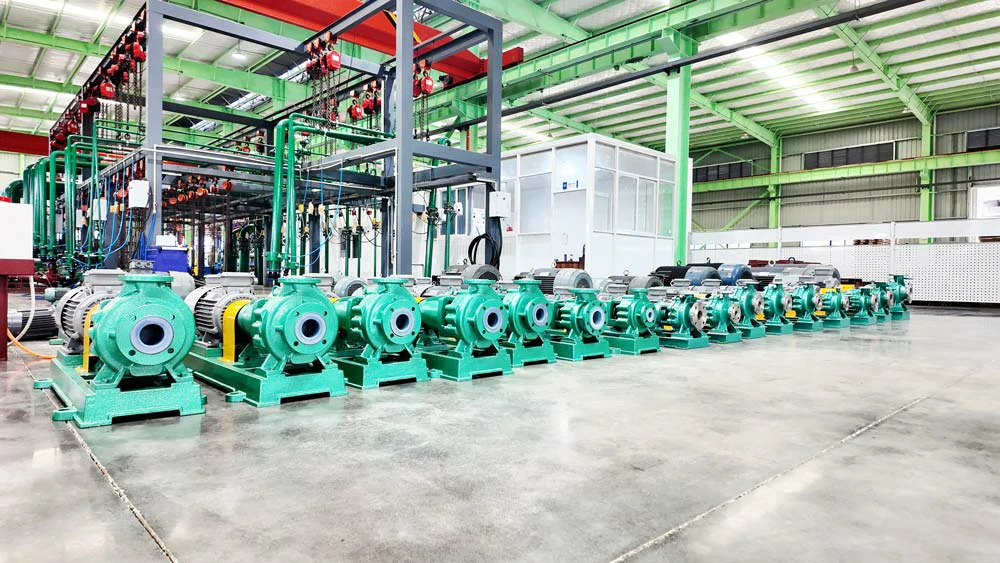
Changyu Pump’s engineering team provides tailored technical assessments for brewery pump applications — covering mash characterization, pump selection, material compatibility, and CIP integration. Two decades of manufacturing experience across food, beverage, and industrial sectors inform every recommendation.