
Hiện tượng ăn mòn rỗ tái diễn trong bơm nước biển, áp suất cấp không đủ sau lọc, tiếng ồn và độ rung tăng khi thủy triều xuống, hoặc sự không rõ ràng về loại bơm khi lập báo giá thường cùng chỉ ra một vấn đề: chúng ta chưa xác định loại bơm cấp nước biển phù hợp với vị trí của bơm trong hệ thống, điều kiện vận hành thực tế và yêu cầu về vật liệu của các bộ phận tiếp xúc với lưu chất.
Tại changyupump, chúng tôi khuyến nghị trước tiên xác định bơm đảm nhiệm việc lấy nước, cấp nước cho hệ thống tiền xử lý, tăng áp đường ống hay cấp nước áp suất cao trước màng SWRO. Sau đó, chúng tôi xác định lưu lượng, cột áp, điều kiện đầu vào và vật liệu. Bài viết này giúp bạn phân biệt các nhiệm vụ đó, hiểu rõ nguy cơ ăn mòn và xâm thực, đồng thời xác định các điều kiện để đưa các dòng CYH, CQZ và CYC của chúng tôi vào danh sách so sánh lựa chọn.
Nếu đã có dữ liệu dự án, bạn có thể bắt đầu bằng cách cung cấp cho các kỹ sư của chúng tôi lưu lượng, cột áp yêu cầu hoặc áp suất đầu vào và đầu ra, nhiệt độ nước tối đa, mực chất lỏng thấp nhất và thông tin về chất lượng nước. Chúng tôi sẽ thảo luận các phương án dựa trên những dữ liệu này, thay vì đề xuất một mẫu bơm chỉ dựa vào thuật ngữ “bơm nước biển”.
Bơm cấp nước biển là gì và hoạt động như thế nào?
Bơm cấp nước biển liên tục cấp nước biển cho hệ thống công nghệ. Tên gọi này mô tả nhiệm vụ của bơm; bản thân nó không quyết định cấu tạo, cấp áp suất hay vật liệu.
Một nguyên lý vận hành phổ biến là nguyên lý của bơm ly tâm: động cơ quay cánh bơm, truyền năng lượng cho chất lỏng. Sau đó, vỏ bơm và các đường dẫn dòng chuyển đổi một phần động năng thành áp năng, đưa nước biển qua đường ống đến các thiết bị phía sau. Khi cần cột áp lớn hơn, bơm ly tâm đa cấp phù hợp cho phép chất lỏng lần lượt đi qua nhiều cánh bơm để nhận thêm năng lượng.

Tài liệu dự án cũng có thể sử dụng các thuật ngữ bơm cấp nước biển, bơm vận chuyển nước biển và bơm tăng áp nước biển. Hai thuật ngữ đầu nhấn mạnh chức năng cấp và vận chuyển, trong khi thuật ngữ cuối nhấn mạnh chức năng tăng áp; cùng một kết cấu bơm có thể đảm nhiệm các nhiệm vụ này. Các kỹ sư của chúng tôi trước tiên xem xét sơ đồ dòng chảy của hệ thống và các thông số vận hành để xác định yêu cầu thực tế đằng sau từng tên gọi.
Các ứng dụng phổ biến bao gồm cấp nước đầu vào và cấp cho hệ thống tiền xử lý trong khử mặn nước biển, cũng như cấp nước biển làm mát cho bộ trao đổi nhiệt bằng bơm nước biển làm mát. Các hệ thống nước dằn tàu, nước chữa cháy và các hệ thống khác cũng có thể sử dụng nước biển, nhưng cần xác nhận riêng phương án vận hành, yêu cầu đối với tổ bơm và các chứng nhận áp dụng.
Bơm cấp nước biển và bơm cao áp SWRO khác nhau như thế nào?
Những khác biệt chính là vị trí của bơm trong hệ thống và áp suất chênh lệch cần thiết. Thuật ngữ bơm cấp nước biển cho hệ thống thẩm thấu ngược đôi khi chỉ bơm cung cấp nước đầu vào ổn định cho bơm cao áp, và đôi khi chỉ bơm trực tiếp tăng áp cho các mô-đun màng. Vì vậy, tài liệu mua sắm cần nêu rõ thiết bị nào được kết nối với đầu hút và đầu đẩy của bơm.
SWRO là viết tắt của thẩm thấu ngược nước biển. Hệ thống sử dụng áp suất hữu hiệu cao hơn áp suất thẩm thấu tương ứng để đưa một phần nước qua màng, đồng thời giữ lại phần lớn muối ở phía nước cô đặc. Yêu cầu áp suất của bơm cao áp phía trước màng phải được xác định dựa trên các yếu tố như độ mặn, nhiệt độ nước, thiết kế hệ thống màng, lưu lượng nước thấm và tỷ lệ thu hồi.
| Vị trí trong hệ thống | Các loại bơm phổ biến | Cơ sở lựa chọn chính |
|---|---|---|
| Từ điểm lấy nước biển đến bể nước thô hoặc hệ thống xử lý | bơm lấy nước biển / bơm vận chuyển nước biển | Mực nước thủy triều, điều kiện đầu hút, lưu lượng, hạt rắn và tổn thất đường ống |
| Từ bể nước thô đến thiết bị lọc và tiền xử lý | bơm cấp nước biển / bơm tiền xử lý nước biển | Lưu lượng xử lý, tổn thất áp suất qua thiết bị và áp suất yêu cầu tại điểm cuối |
| Cung cấp thêm áp suất đầu vào cho thiết bị phía sau | bơm tăng áp nước biển / bơm tăng áp SWRO | Áp suất đầu vào tối thiểu, nhu cầu phía sau và phạm vi điều chỉnh vận hành |
| Cấp nước biển áp suất cao cho các mô-đun màng SWRO | bơm cấp RO áp suất cao | Áp suất yêu cầu của hệ thống màng, áp suất nước cấp, đặc tính nước biển và yêu cầu về cấp áp suất |
Trước tiên, hãy kiểm tra đơn vị cột áp và áp suất. Với nước biển có khối lượng riêng ước tính khoảng 1.025 kg/m³, cột áp 60–80 m tương ứng với chênh áp khoảng 6–8 bar. Không được nhầm giá trị này với áp suất cấp cao 60–80 bar ở phía trước màng SWRO. Nếu bản thân bơm cần tạo ra chênh áp 60–80 bar, cột áp tương ứng sẽ vào khoảng 600–800 m. Khi vận hành thực tế cũng phải tính đến áp suất đầu vào: áp suất đầu ra của bơm không đồng nhất với chênh áp do bơm tạo ra.
Do đó, chúng tôi đánh giá riêng các nhiệm vụ lấy nước đầu vào cho hệ thống khử mặn, tăng áp tiền xử lý và cấp nước áp suất cao cho hệ thống màng. Việc một dòng bơm phù hợp với ứng dụng bơm nước biển trong hệ thống khử mặn không có nghĩa là dòng bơm đó đáp ứng mọi nhiệm vụ trong hệ thống.
Làm thế nào để xác định lưu lượng và cột áp cho bơm cấp nước biển?
Trước tiên, chúng tôi xác định lưu lượng vận hành thông thường, tối thiểu và tối đa, sau đó tính tổng cột áp động mà bơm phải cung cấp. Tổng cột áp này phải bù được chênh lệch cao độ, tổn thất trên đường ống và van, tổn thất áp suất qua thiết bị lọc và đáp ứng yêu cầu áp suất tại điểm cuối, đồng thời tính đến phần áp suất đầu vào hiện có.
Đối với bơm cho hệ thống lọc nước biển, tổn thất áp suất qua bộ lọc thay đổi từ trạng thái sạch đến thời điểm cần vệ sinh. Nếu chỉ lựa chọn bơm theo bộ lọc sạch, lưu lượng có thể không đủ về sau. Ngược lại, việc cộng tất cả các biến thiên có thể xảy ra thành một mức dự phòng quá lớn có thể khiến bơm vận hành ngoài phạm vi hợp lý trong thời gian dài. Các kỹ sư của chúng tôi so sánh đường đặc tính hệ thống và đường đặc tính bơm ở các điều kiện vận hành khác nhau.
Ba điều kiện thường bị bỏ qua cần được nêu rõ khi yêu cầu báo giá:
- Dòng nước mà bơm xử lý trong dự án khử mặn. Lưu lượng nước thấm qua màng, lưu lượng cấp vào màng và tổng lưu lượng nước đầu vào của nhà máy thường khác nhau và cần được tính riêng dựa trên tỷ lệ thu hồi, tổn thất trong quá trình tiền xử lý và nhu cầu nước rửa ngược.
- Phương thức vận hành của nhiều bơm. Vận hành một bơm, vận hành song song, chuyển sang bơm dự phòng và điều khiển tốc độ biến đổi đều làm thay đổi điểm vận hành thực tế. Chỉ so sánh lưu lượng tối đa trên nhãn bơm là không đủ.
- Các điều kiện đầu vào tối thiểu đã được xác định hay chưa. Mực thủy triều thấp nhất, mức nước tối thiểu trong bể và tổn thất áp suất qua lưới lọc đầu hút đều ảnh hưởng đến áp suất đầu vào và lưu lượng có thể đạt được.
Chúng tôi cũng xem xét BEP, hay điểm hiệu suất tốt nhất: điểm bơm đạt hiệu suất cao nhất ở tốc độ và cấu hình cánh bơm xác định. Việc lựa chọn cần đảm bảo các điều kiện vận hành chính nằm trong phạm vi vận hành cho phép của nhà sản xuất và gần vùng hiệu suất phù hợp nhất có thể, qua đó giảm tiêu thụ năng lượng, rung động và tuần hoàn nội bộ. Khối lượng riêng của nước biển thay đổi theo độ mặn và nhiệt độ, vì vậy công suất động cơ cũng cần được kiểm tra theo chất lỏng thực tế.
Những vật liệu nào phù hợp cho bơm nước biển chống ăn mòn?
Phương pháp lựa chọn vật liệu bơm nước biển của chúng tôi đòi hỏi đánh giá đồng thời chất lượng nước, chế độ vận hành và tất cả các bộ phận tiếp xúc với chất lỏng. Clorua trong nước biển tự nhiên có thể gây ăn mòn rỗ, tạo ra các lỗ cục bộ và ăn sâu dần vào kim loại. Trong khi đó, ăn mòn khe thường xảy ra bên dưới gioăng, trong các khe hở lắp ghép hoặc dưới lớp cặn. Một số vật liệu cũng có thể bị nứt do ăn mòn ứng suất: hiện tượng nứt do tác động kết hợp của môi trường ăn mòn và ứng suất kéo.
Vì vậy, chúng tôi không mặc nhiên coi thép không gỉ là phù hợp với nước biển. Bảng so sánh sau giúp xác định những vật liệu cần xem xét. Cấu hình cụ thể vẫn cần được xác nhận dựa trên chất lượng nước, nhiệt độ tối đa, việc clo hóa, nước biển còn lưu trong bơm khi ngừng hoạt động và điều kiện chế tạo. [1]
| Lựa chọn vật liệu | Vai trò trong lựa chọn vật liệu cho nước biển | Các điều kiện được ưu tiên xem xét |
|---|---|---|
| Thép không gỉ 316L | Có thể phù hợp với một số ứng dụng có clorua khi đã có cơ sở xác lập tính phù hợp; không phải lựa chọn mặc định cho vận hành liên tục với nước biển tự nhiên | Ăn mòn rỗ, khe hở, nhiệt độ, cặn lắng và điều kiện khi ngừng hoạt động |
| Thép không gỉ hai pha 2205 | Nhìn chung có khả năng chống ăn mòn cục bộ do clorua tốt hơn 316L và có thể được đưa vào so sánh cho các dự án sử dụng nước biển | Việc clo hóa, nhiệt độ, khe hở, cấu trúc pha và chất lượng chế tạo |
| Thép không gỉ siêu kép 2507 | Một trong những lựa chọn chính cần so sánh cho các điều kiện nước biển khắt khe hơn | Actual corrosion environment, casting standards, heat treatment and inspection requirements |
| 254SMO / 6Mo stainless steel | A high-alloy option for comparison; suitability cannot be confirmed by grade designation alone | Water quality, temperature, wetted parts and availability for the specific model |
| titanium / nickel aluminium bronze | Options for some seawater projects, with a different basis for suitability from stainless steel | Liquid compatibility, velocity, contaminants, galvanic relationships and construction conditions |
PREN stands for pitting resistance equivalent number. It uses elements such as chromium, molybdenum and nitrogen to estimate the relative pitting resistance of certain stainless steels and can support initial material screening. PREN is not a universal seawater service-life score, and titanium or bronze should not be ranked using the same formula. It cannot independently determine allowable water temperature, sand content or maintenance intervals. [1]
When comparing a duplex stainless steel seawater pump with a super duplex seawater pump, we work through the parts list: the casing, impeller, cover, shaft sleeve, wetted seal metals, fasteners and static sealing materials. Common grade names such as 2507 must also be matched to the applicable casting or other product-form standard. A generic material name on a quotation is not sufficient.
How Can You Reduce Seawater Pump Corrosion and Cavitation?
Our approach to seawater pump corrosion protection starts with suitable materials and construction, supported by operating and maintenance measures. Seawater retained after shutdown, deposits, biological fouling and crevices can all change the local environment. Our engineers discuss draining, flushing and standby-pump management according to system conditions. Chlorination also requires checking compatibility with metals, seals and the downstream membrane system.
Dissimilar-metal connections also need inspection. The term galvanic corrosion describes what occurs when different metals are electrically connected in an electrolyte, potentially accelerating corrosion of the more active metal. When carbon-steel piping connects to a corrosion-resistant alloy pump, the approach should account for area ratio, coatings, electrical connections and the protection system. Insulation or cathodic protection, which protects metal by making it the cathode in an electrochemical system, must follow the system design and cannot replace a review of wetted materials.
Corrosion and cavitation require separate diagnosis. The term cavitation describes what occurs when a local pressure drop forms vapor bubbles in the liquid, which then collapse in a higher-pressure region. It can cause noise, vibration and surface damage. Upgrading materials alone cannot resolve cavitation caused by insufficient inlet pressure.
NPSHa is the net positive suction head available from the system; NPSHr is the net positive suction head required by the pump at a specified operating point. Both are usually expressed in meters. We calculate NPSHa under conditions such as minimum liquid level, maximum water temperature, maximum flow and increased suction-strainer pressure loss. The margin above NPSHr is determined according to pump type, operating conditions and project requirements. A fixed additional 2 m is not a universal rule for every seawater pump.
On site, initial checks should include air leakage in the suction piping, a blocked strainer, excessive suction losses and vortex-induced air entrainment. For raw water containing sand, we also confirm particle size, concentration, hardness and flow-passage velocity, comparing materials, impeller, clearances and seals together. A higher material grade alone cannot eliminate wear.
Should You Choose a Horizontal, Vertical or Self Priming Seawater Pump?
Installation conditions directly affect pump construction. For in-plant transfer downstream of a raw-water tank, pretreatment supply, and pipeline boosting, a horizontal centrifugal pump is often worth considering first if you can maintain suitable inlet conditions. Maintenance access also depends on the coupling, back-pull-out construction and available space for dismantling.
For deep wells, coastal intake wells or large intake systems with significant tidal variation, a vertical turbine pump, which uses a long vertical shaft, or a suitable submersible construction may better fit the layout. Even with a submerged impeller, submergence depth, inlet flow conditions, vortices, shaft system and maintenance conditions require review. Submergence does not remove the need for inlet design.
Where the pump is above the liquid level and air must be removed from the suction line, consider a self-priming pump. Under specified conditions, self-priming construction helps evacuate suction-line air, but it has suction-lift, priming-time and operating limitations. It does not permit dry running, meaning operation without the required liquid. Initial filling and subsequent starts must follow the instructions for the specific model.
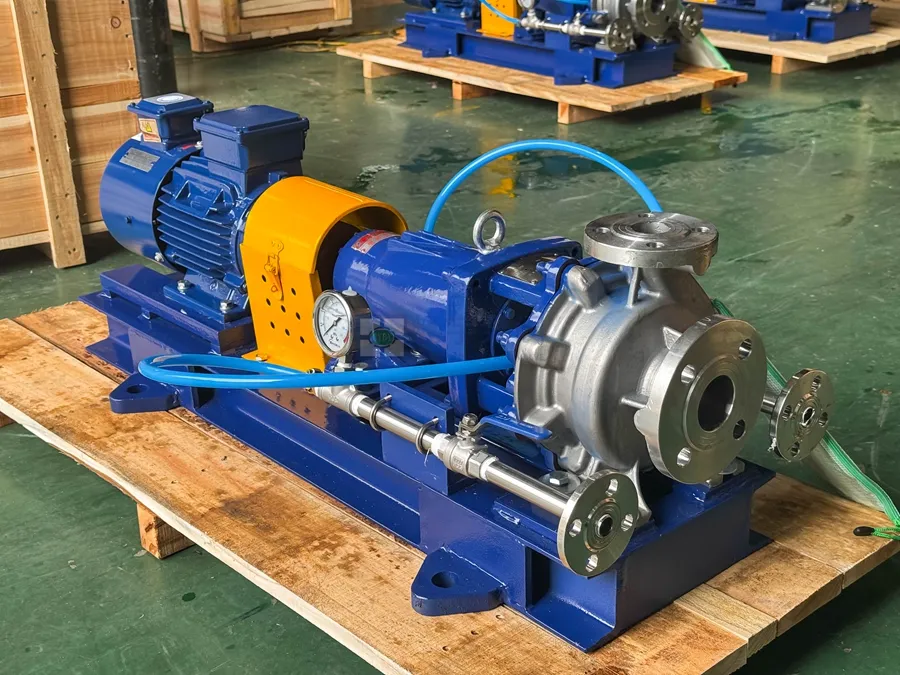
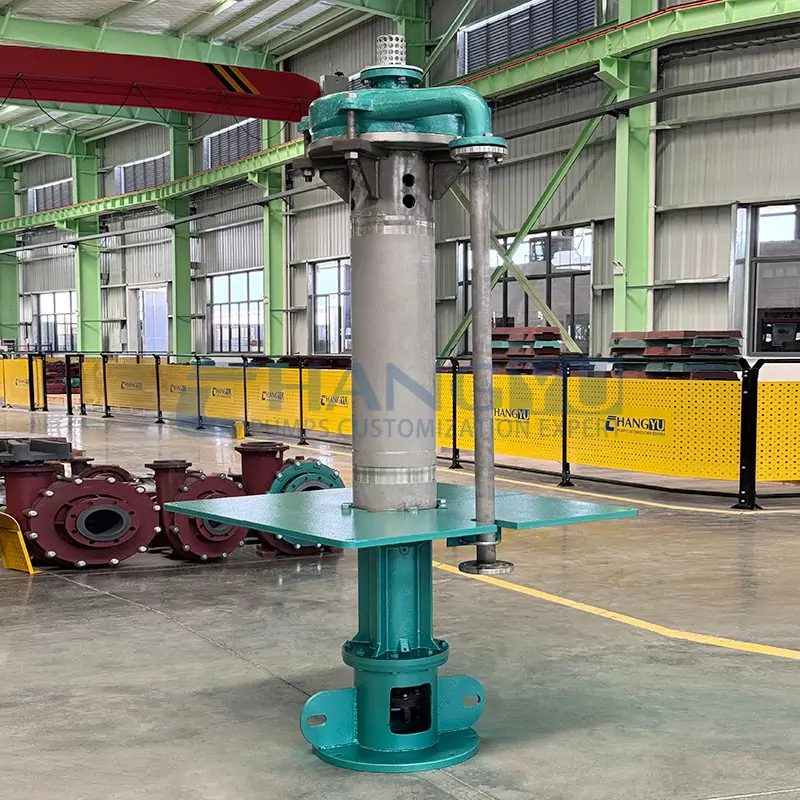

We first confirm whether the project falls within the construction and performance ranges of our existing series. Large intake pumping stations, marine firewater and high-pressure membrane feed require separate checks of pressure ratings, certifications and scope of supply.
Which Changyupump Series Can Be Evaluated for a Seawater Feed Pump Project?
For seawater supply, boosting and transfer, we focus on CYH, then assess CQZ or CYC according to self-priming and leakage-control requirements. The following are our published series ranges for initial screening. Maximum flow and maximum head do not represent the same operating point; the specific model must be confirmed against performance curves, the wetted-materials list and technical confirmation documents. [2][3][4]
| Dòng sản phẩm | Series Flow and Head | Duties to Compare | Conditions for Seawater Use |
|---|---|---|---|
| Máy bơm hóa chất ly tâm bằng thép không gỉ CYH | 0.8–750 m³/h; 3–130 m | In-plant transfer, pretreatment supply and boosting | Confirm wetted configurations such as duplex stainless steel, mechanical seals and inlet conditions |
| CQZ stainless steel self priming magnetic drive pump | 3–800 m³/h; 12.5–130 m | Transfer requiring self-priming and attention to shaft-seal leakage control | Confirm materials, priming conditions, particles and internal lubrication and cooling |
| CYC heavy duty stainless steel magnetic pump | 3.6–100 m³/h; 20–80 m | Process-liquid transfer where liquid conditions are suitable and leakage control matters | Standard stainless steel options do not directly establish suitability for natural seawater |
CYH for Seawater Transfer and Pretreatment Supply
Của chúng tôi Máy bơm hóa chất ly tâm bằng thép không gỉ CYH has a single-stage, single-suction cantilever construction. It can be compared for seawater transfer, pretreatment supply and boosting projects within its performance-curve range. Material options include 316L, 2205 and 2507. Seawater projects require further confirmation of the specific model and the complete wetted-parts configuration. [2]
For continuous-supply systems where mechanical seals can be maintained on site, we prioritize flow and head, wetted seal materials, flushing conditions and standby arrangements. A mechanical seal limits liquid leakage around the rotating shaft. Its seal-face pair and elastomers must be selected for the seawater, particles and cleaning liquids involved. Suitable spacer-coupling and back-pull-out configurations also require sufficient maintenance clearance.
The CYH series head range can support initial screening for some seawater booster pump projects; it does not directly establish suitability for high-pressure feed upstream of SWRO membranes. We first verify the required differential pressure and discharge pressure rating, then determine whether a separate high-pressure pump option should be assessed.
CQZ for Self Priming Seawater Transfer
Của chúng tôi CQZ stainless steel self priming magnetic drive pump combines self-priming construction with magnetic drive. In this arrangement, magnetic drive transmits power through magnetic coupling, eliminating a conventional shaft-through mechanical seal and helping reduce leakage and maintenance issues at that point. Material options include 316L and 2205, but suitability for the specific seawater duty still requires confirmation. [3]
Where the pump sits above the tank liquid level, we check the minimum level, suction-pipe length and diameter, air leakage, seawater temperature and allowable priming time. CQZ must be filled before its first start as instructed. Its internal bearings still depend on the specified liquid for lubrication and cooling, so dry running is not permitted. Sand, crystallization or biological debris may affect internal circulation. If raw-water conditions are unsuitable, the pump construction should be reconsidered rather than simply adding an inlet strainer.
CYC for Compatible Clean Process Liquids
Của chúng tôi CYC heavy duty stainless steel magnetic pump can be compared for clean process-liquid duties where leakage control matters. For seawater or chloride-containing liquids, we first confirm the suitability of wetted materials, the containment shell, internal circulation and plain bearings, then assess the operating point. [4]
Standard CYC materials include 304, 316 and 316L. These options do not, by themselves, justify a commitment to long-term natural seawater service. If a project requires duplex stainless steel or another specified alloy, we first confirm availability for that model and its wetted parts. We do not apply CYH or CQZ material options directly to CYC.
Already have a flow diagram or pump schedule? Send us your seawater feed pump operating conditions. Our engineers can use them to compare series, wetted materials and inlet conditions, and clarify the information needed for selection and quotation.
Email: [email protected]
TEL/WA: +86-13651913727
Câu hỏi thường gặpS
Can a Seawater Feed Pump Handle Raw Seawater Containing Sand?
This depends on the particles and pump construction. For a seawater intake pump duty, we establish the size, content and variability of sand, shells, biological debris and fibers before discussing intake screens, pretreatment, impeller flow passages, seals and materials. A pump designed for clean process liquids cannot be used directly for sandy raw seawater solely because its materials resist corrosion.
Filtration also has a cost: increasing strainer pressure loss reduces inlet pressure. We include filtration rating, allowable differential pressure from blockage and maintenance intervals in the inlet-condition calculation, paying particular attention to magnetic-drive pump internal circulation passages.
Can a Seawater Booster Pump Use Variable Speed Control?
We can assess variable speed control within the limits of the specific pump, motor and system. In systems with substantial flow variation, speed adjustment can work with pressure or flow control, but allowable speed, minimum flow, minimum inlet pressure and motor-cooling conditions must be established.
We do not promise a fixed energy-saving percentage simply because variable-speed control is used. Savings depend on elevation difference, equipment pressure requirements, piping resistance and operating hours. Where static head or fixed terminal pressure represents a large share of the requirement, low-speed operating capability needs separate calculation.
Can 316L Be Used for Continuous Seawater Service?
We do not use 316L as a universal default for continuous natural seawater service or specify a fixed time to failure without considering water quality and construction. Seawater temperature, chlorination, crevices, deposits and shutdown conditions jointly affect corrosion risk. Specific duties with comparable operating records can be assessed. Projects with higher reliability requirements or existing pitting should compare 2205, 2507 or other materials supported by an appropriate basis for use. [1]
If you are replacing a damaged stainless steel seawater pump, please also provide photographs of the failed areas, operating duration and a water analysis. We first distinguish corrosion, cavitation and particle wear before discussing changes to materials and construction.
How Much Does a Seawater Feed Pump Cost?
The seawater pump price depends on the operating point, wetted materials, seals, pressure-rating requirements, motor, installation arrangement and inspection documents. A price without these conditions can support only a very preliminary budget and cannot directly compare final supply packages.
We recommend comparing each seawater pump quotation on the same scope: whether the motor and baseplate are included, whether all wetted parts meet the agreed material specification, which tests and documents are provided, and the scope of spares, installation and maintenance. Continuous-duty projects should also compare energy consumption and downtime impact, alongside the pump purchase price.
Which Standards Should Be Specified for a Seawater Feed Pump?
Standards should be selected according to the project industry, pump construction and procurement requirements. General industrial centrifugal-pump projects may reference specifications such as ISO 5199; petroleum and related demanding duties may specify API 610. Compliance of a particular model with a standard and its edition must be confirmed item by item in the quotation and technical agreement. Seawater use alone does not establish compliance.
For duplex stainless steel castings, specify the applicable casting standard, grade, heat treatment and inspection conditions, such as checking ASTM A890/A995 where applicable to the project. NORSOK M-650 addresses qualification requirements for certain material manufacturers and manufacturing processes. Its applicability depends on the procurement specification; it is not a universally mandatory certification for all seawater pumps.
NACE MR0175 / ISO 15156 addresses materials in H₂S-containing oil and gas production environments within its defined scope. It should not be applied automatically to ordinary seawater projects. Marine, firewater and other special applications also require separate confirmation of classification-society, regulatory and pump-set requirements. For us, the standards list must translate into requirements for the specific model, scope of supply and delivery documents.
Why Work with Changyupump as Your Seawater Feed Pump Supplier?
We are Changyupump, Anhui Changyu Pump and Valve Manufacturing Co., Ltd. Established in 2006, our factory is located in Jing County, Xuancheng, Anhui. Our site covers approximately 20,000 m² and is equipped with CNC equipment, machining centers and pump-testing systems. Our products include centrifugal, magnetic-drive, self-priming and other industrial pump series, allowing us to discuss different configurations for corrosive-liquid transfer requirements. [5]
As a seawater feed pump supplier or seawater pump manufacturer you are comparing, we aim to match every procurement requirement to a verifiable configuration. Our engineers use the system position, flow, head, water quality and maintenance approach to define the product series, wetted materials, seals, motor and conditions that require further confirmation.
Our published quality-control process includes metal composition checks, impeller dynamic balancing, shaft runout checks and factory testing. For duplex stainless steel and other special-material projects, the technical agreement should also specify part materials, manufacturing condition, inspection methods and acceptance criteria. Clean-water performance testing can verify hydraulic performance; it does not replace the material basis for seawater corrosion resistance. [6]
If you are looking for a seawater booster pump manufacturer or have seawater pump OEM requirements, please also provide project drawings, connections, installation space, electrical conditions and document requirements. We first confirm the available scope of supply, then establish quotation and delivery terms.
Where Can You Find a Seawater Feed Pump PDF or Pump Catalogue?
If you are searching for a seawater feed pump PDF, seawater pump catalogue PDF or seawater pump datasheet, we recommend reviewing the proposed series documents first, then requesting a datasheet for the specific model at your project operating point. General catalogues support initial screening; final selection still requires the model curve, wetted materials and installation conditions.
You can use the following existing document resources:
- CYH Series Specifications PDF: review the CYH series specifications, then confirm the proposed model’s performance curve and configuration with us.
- CQZ Self Priming Stainless Steel Magnetic Pump PDF: support initial discussions of self-priming, magnetic drive and installation requirements.
- CYC Stainless Steel Magnetic Drive Pump PDF: compare the CYC series, with seawater wetted configurations subject to separate confirmation.
- Changyupump PDF Download Center: view published documents for other series.
Our seawater pump material compatibility review considers the actual operating conditions. If the catalogue does not clearly match your flow, head or materials, send us the parameters rather than completing procurement based only on a catalogue cover or a similar model.
How Can You Get a Seawater Feed Pump Selection and Quotation?
Selecting a seawater feed pump requires assessing system position, flow and differential pressure, inlet conditions and wetted materials together. First distinguish seawater intake, pretreatment boosting and high-pressure feed upstream of SWRO membranes. Then check corrosion, cavitation, particles and maintenance conditions to match the pump to the site’s needs.
You do not need to determine every material grade before contacting us. You can start with the following information, which our engineers will use to identify any additional conditions that need clarification:
- Application and process: intake, transfer, pretreatment, boosting or high-pressure membrane feed, together with the connections between relevant equipment.
- Operating requirements: normal, minimum and maximum flow; required head, or minimum inlet pressure and target outlet pressure.
- Seawater conditions: normal and maximum temperatures, salinity or chloride content, water quality and chlorination, and particle size and concentration.
- Site conditions: minimum liquid level or tidal level, installation elevation, suction piping, continuous or intermittent operation, and requirements for power supply, materials, standards and documents.
Please also send any existing pump schedule, P&ID, installation drawing or failure photographs. P&ID stands for piping and instrumentation diagram: a diagram showing the relationships between piping, equipment, valves and instruments. It helps us confirm the pump duty and control requirements.
Email: [email protected]
TEL/WA: +86-13651913727