
غالبًا ما يشير تكرار التآكل النَّقري في مضخة مياه البحر، أو عدم كفاية ضغط الإمداد بعد الترشيح، أو زيادة الضوضاء والاهتزازات عند انخفاض المد، أو عدم اليقين بشأن نوع المضخة عند إعداد عرض السعر، إلى المشكلة نفسها: وهي أننا لم نوائم موضع مضخة تغذية مياه البحر في النظام مع ظروف تشغيلها الفعلية والمواد الملامسة للسائل.
في changyupump، نوصي أولًا بتحديد ما إذا كانت المضخة تُستخدم لسحب المياه، أو تغذية مرحلة المعالجة الأولية، أو تعزيز الضغط في خطوط الأنابيب، أو التغذية عالية الضغط قبل أغشية التناضح العكسي لمياه البحر (SWRO). ثم نحدد التدفق والارتفاع الضاغط وظروف الدخول والمواد. تساعدك هذه المقالة على التمييز بين هذه المهام، وفهم مخاطر التآكل والتجويف، وتحديد الظروف التي يمكن فيها إدراج مضخات سلسلة CYH وCQZ وCYC ضمن مقارنتك عند الاختيار.
إذا كانت لديك بيانات المشروع بالفعل، يمكنك البدء بتزويد مهندسينا بمعدل التدفق، والارتفاع الضاغط المطلوب أو ضغطَي الدخول والخروج، ودرجة حرارة المياه القصوى، والحد الأدنى لمنسوب السائل، ومعلومات جودة المياه. سنناقش الخيارات استنادًا إلى هذه البيانات، بدلًا من التوصية بطراز اعتمادًا على مصطلح «مضخة مياه البحر» وحده.
ما هي مضخة تغذية مياه البحر وكيف تعمل؟
توفّر مضخة تغذية مياه البحر إمدادًا مستمرًا من مياه البحر إلى نظام العمليات، وقد تُسمّى أيضًا مضخة إمداد مياه البحر. يصف هذا الاسم مهمة المضخة، لكنه لا يحدد بمفرده تصميمها الإنشائي أو تصنيف ضغطها أو موادها.
من مبادئ التشغيل الشائعة مبدأ عمل مضخة الطرد المركزي: يدير المحرك دافعةً تنقل الطاقة إلى السائل. يحوّل غلاف المضخة وممرات التدفق بعد ذلك جزءًا من طاقة السرعة إلى ضغط، مما يدفع مياه البحر عبر الأنابيب إلى المعدات اللاحقة. وعندما يلزم ارتفاع ضاغط أكبر، تتيح مضخة طرد مركزي متعددة المراحل ومناسبة للتطبيق مرور السائل عبر عدة دافعات بالتتابع لاكتساب الطاقة.

قد تستخدم وثائق المشروع أيضًا مصطلحات مضخة إمداد مياه البحر، ومضخة نقل مياه البحر، ومضخة تعزيز ضغط مياه البحر. يشير المصطلحان الأولان إلى الإمداد والنقل، بينما يشير المصطلح الأخير إلى زيادة الضغط؛ وقد يؤدي تصميم المضخة نفسه هذه المهام. يراجع مهندسونا أولًا مخطط تدفق النظام ومعايير التشغيل لتحديد المتطلبات الفعلية التي يشير إليها الاسم.
تشمل التطبيقات الشائعة إمداد أنظمة تحلية مياه البحر بالمياه عند المأخذ ومرحلة المعالجة الأولية، وكذلك إمداد المبادلات الحرارية بمياه التبريد باستخدام مضخة تبريد بمياه البحر. وقد تستخدم أنظمة الاتزان ومكافحة الحرائق وغيرها مياه البحر أيضًا، لكن يجب التحقق بصورة منفصلة من ترتيبات تشغيلها ومتطلبات مجموعات المضخات والشهادات المطبقة عليها.
ما الفرق بين مضخة تغذية مياه البحر ومضخة الضغط العالي في نظام التناضح العكسي لمياه البحر (SWRO)؟
يتمثل الفرق الأساسي في موضع المضخة داخل النظام وفرق الضغط المطلوب. يشير مصطلح مضخة تغذية التناضح العكسي لمياه البحر أحيانًا إلى مضخة توفر إمدادًا مستقرًا عند مدخل مضخة الضغط العالي، وأحيانًا إلى المضخة التي تضغط الماء مباشرةً لتغذية وحدات الأغشية. لذلك، يجب أن تحدد وثائق الشراء المعدات المتصلة بمدخل المضخة ومخرجها.
يشير الاختصار SWRO إلى التناضح العكسي لمياه البحر. يستخدم النظام ضغطًا فعالًا أعلى من الضغط الأسموزي ذي الصلة لدفع جزء من الماء عبر الأغشية، مع احتجاز معظم الأملاح في جانب المحلول المركز. ويجب تحديد الضغط المطلوب لمضخة الضغط العالي الواقعة قبل الأغشية استنادًا إلى عوامل تشمل الملوحة ودرجة حرارة المياه وتصميم نظام الأغشية وإنتاج المياه النافذة ومعدل الاسترداد.
| الموضع في النظام | أنواع المضخات الشائعة | أساس الاختيار الرئيسي |
|---|---|---|
| مأخذ مياه البحر إلى خزان المياه الخام أو نظام المعالجة | مضخة مأخذ مياه البحر / مضخة نقل مياه البحر | مناسيب المد والجزر وظروف المدخل والتدفق والجسيمات ومقاومة الأنابيب |
| خزان المياه الخام إلى معدات الترشيح والمعالجة الأولية | مضخة تغذية مياه البحر / مضخة المعالجة الأولية لمياه البحر | تدفق المعالجة، وفواقد الضغط في المعدات، والضغط المطلوب عند نقطة الاستخدام |
| توفير ضغط إضافي عند مدخل المعدات الواقعة في المراحل اللاحقة | مضخة تعزيز ضغط مياه البحر / مضخة تعزيز ضغط SWRO | الحد الأدنى لضغط المدخل، ومتطلبات المعدات اللاحقة، ونطاق ضبط التشغيل |
| إمداد وحدات أغشية SWRO بمياه البحر عالية الضغط | مضخة تغذية RO عالية الضغط | الضغط المطلوب لنظام الأغشية، وضغط التغذية، وخصائص مياه البحر، ومتطلبات تصنيف الضغط |
تحقق أولاً من وحدات الارتفاع الضاغط والضغط. بالنسبة إلى مياه البحر ذات الكثافة المقدّرة بنحو 1,025 كجم/م³، يقابل ارتفاع ضاغط يتراوح بين 60–80 مترًا ضغطًا تفاضليًا يبلغ نحو 6–8 بار. ويجب عدم الخلط بين ذلك وبين ضغط التغذية العالي البالغ 60–80 بار قبل أغشية SWRO. إذا كان مطلوبًا من المضخة نفسها توليد ضغط تفاضلي يتراوح بين 60–80 بار، فإن الارتفاع الضاغط المقابل يبلغ نحو 600–800 متر. ويجب أيضًا أخذ ضغط المدخل في الحسبان أثناء التشغيل الفعلي: فضغط مخرج المضخة ليس هو نفسه الضغط التفاضلي الذي تولّده المضخة.
لذلك نقيّم سحب مياه البحر للتحلية، وتعزيز الضغط للمعالجة المسبقة، والتغذية عالية الضغط للأغشية كلًّا على حدة. ولا تعني ملاءمة سلسلة من المضخات لتطبيق في تحلية مياه البحر أنها تغطي جميع مهام الضخ داخل نظام التحلية.
كيف تُحدَّد مواصفات مضخة تغذية مياه البحر وفقًا للتدفق والارتفاع الضاغط؟
نحدد أولاً معدلات تدفق التشغيل العادية والدنيا والقصوى، ثم نحسب الارتفاع الديناميكي الكلي الذي يجب أن توفره المضخة. ويجب أن يغطي ذلك فرق الارتفاع، ومقاومة الأنابيب والصمامات، وفواقد الضغط في معدات الترشيح، ومتطلبات الضغط عند نقطة الاستخدام، مع مراعاة مساهمة ضغط المدخل المتاح.
في مضخة نظام ترشيح مياه البحر، يتغير فقد الضغط عبر المرشح بين حالة نظافته والنقطة التي يحين عندها موعد تنظيفه. وقد يؤدي الاختيار على أساس مرشح نظيف فقط إلى عدم كفاية التدفق لاحقًا. وفي المقابل، فإن إضافة كل تغير محتمل كهامش مبالغ فيه قد يؤدي إلى تشغيل المضخة خارج نطاق مناسب لفترات طويلة. ويقارن مهندسونا منحنيات النظام ومنحنيات المضخة في ظل ظروف تشغيل مختلفة.
ينبغي تحديد ثلاثة شروط كثيرًا ما تُغفل عند طلب عرض سعر:
- تيار المياه الذي تتعامل معه المضخة في مشروع التحلية. فعادةً ما تختلف معدلات تدفق المياه النافذة عبر الأغشية، والمياه المغذية للأغشية، وإجمالي مياه السحب للمحطة، ويجب حساب كل منها على حدة باستخدام معدل الاسترداد وفواقد المعالجة الأولية ومتطلبات الغسيل العكسي.
- كيفية تشغيل المضخات المتعددة. فتشغيل مضخة واحدة، والتشغيل على التوازي، والتحويل إلى المضخة الاحتياطية، والتحكم في السرعة المتغيرة، كلها تغير نقطة التشغيل الفعلية. ولا تكفي مقارنة الحد الأقصى للتدفق المذكور على لوحة البيانات فقط.
- ما إذا كانت ظروف الدخول الدنيا قد حُددت. فأدنى مستوى للجزر، والحد الأدنى لمستوى الخزان، وفقد الضغط عبر مصفاة السحب، كلها تؤثر في ضغط الدخول والتدفق الممكن تحقيقه.
نأخذ أيضًا في الاعتبار نقطة أفضل كفاءة (BEP)، وهي نقطة تشغيل المضخة عند أعلى كفاءة لها بسرعة محددة وتكوين محدد للمروحة. وينبغي أن يحافظ الاختيار على ظروف التشغيل الرئيسية ضمن نطاق التشغيل المسموح به من الشركة المصنّعة، وبأقرب ما يمكن عمليًا إلى منطقة كفاءة مناسبة، للحد من استهلاك الطاقة والاهتزاز وإعادة التدوير الداخلي. وتتغير كثافة مياه البحر باختلاف الملوحة ودرجة الحرارة، لذا ينبغي أيضًا التحقق من قدرة المحرك بناءً على السائل الفعلي.
ما المواد المناسبة لمضخة مياه بحر مقاومة للتآكل؟
يتطلب نهجنا في اختيار مواد مضخات مياه البحر تقييم جودة المياه وأنماط التشغيل وجميع الأجزاء الملامسة للسائل معًا. يمكن أن تسبب الكلوريدات الموجودة في مياه البحر الطبيعية تآكلًا بالنقر، تتشكل فيه حفر موضعية وتتعمق داخل المعدن. أما التآكل الشقي فيحدث عادةً أسفل الحشيات، أو في خلوصات الأسطح المتزاوجة، أو تحت الترسبات. وقد تتعرض بعض المواد أيضًا للتشقق الناتج عن التآكل الإجهادي، وهو تشقق ينجم عن التأثير المشترك لبيئة مسببة للتآكل وإجهاد شد.
لهذا السبب، لا نعتبر الفولاذ المقاوم للصدأ مناسبًا لمياه البحر بمجرد كونه مقاومًا للصدأ. تساعد المقارنة التالية على تحديد المواد التي ينبغي مناقشتها. ومع ذلك، يظل من الضروري التأكد من ملاءمة التكوين المحدد لجودة المياه ودرجة الحرارة القصوى والمعالجة بالكلور ومياه البحر المحتجزة أثناء التوقف وحالة التصنيع. [1]
| خيار المادة | دورها في اختيار مواد مضخات مياه البحر | الظروف التي نوليها الأولوية |
|---|---|---|
| فولاذ 316L المقاوم للصدأ | قد تناسب بعض تطبيقات الكلوريدات التي توجد أدلة موثوقة تدعم استخدامها فيها؛ وليست خيارًا افتراضيًا للتشغيل المستمر بمياه البحر الطبيعية | النقر والشقوق ودرجة الحرارة والترسبات وظروف التوقف |
| 2205 من الفولاذ المقاوم للصدأ المزدوج 2205 | توفر عمومًا مقاومة أفضل للتآكل الموضعي الناتج عن الكلوريدات مقارنةً بـ 316L، ويمكن إدراجها ضمن المقارنات لمشاريع مياه البحر | المعالجة بالكلور ودرجة الحرارة والشقوق والبنية الطورية وجودة التصنيع |
| 2507 من الفولاذ المقاوم للصدأ المزدوج الفائق الازدواجية | أحد الخيارات الرئيسية التي ينبغي مقارنتها لظروف مياه البحر الأكثر قسوة | Actual corrosion environment, casting standards, heat treatment and inspection requirements |
| 254SMO / 6Mo stainless steel | A high-alloy option for comparison; suitability cannot be confirmed by grade designation alone | Water quality, temperature, wetted parts and availability for the specific model |
| titanium / nickel aluminium bronze | Options for some seawater projects, with a different basis for suitability from stainless steel | Liquid compatibility, velocity, contaminants, galvanic relationships and construction conditions |
PREN stands for pitting resistance equivalent number. It uses elements such as chromium, molybdenum and nitrogen to estimate the relative pitting resistance of certain stainless steels and can support initial material screening. PREN is not a universal seawater service-life score, and titanium or bronze should not be ranked using the same formula. It cannot independently determine allowable water temperature, sand content or maintenance intervals. [1]
When comparing a duplex stainless steel seawater pump with a super duplex seawater pump, we work through the parts list: the casing, impeller, cover, shaft sleeve, wetted seal metals, fasteners and static sealing materials. Common grade names such as 2507 must also be matched to the applicable casting or other product-form standard. A generic material name on a quotation is not sufficient.
How Can You Reduce Seawater Pump Corrosion and Cavitation?
Our approach to seawater pump corrosion protection starts with suitable materials and construction, supported by operating and maintenance measures. Seawater retained after shutdown, deposits, biological fouling and crevices can all change the local environment. Our engineers discuss draining, flushing and standby-pump management according to system conditions. Chlorination also requires checking compatibility with metals, seals and the downstream membrane system.
Dissimilar-metal connections also need inspection. The term galvanic corrosion describes what occurs when different metals are electrically connected in an electrolyte, potentially accelerating corrosion of the more active metal. When carbon-steel piping connects to a corrosion-resistant alloy pump, the approach should account for area ratio, coatings, electrical connections and the protection system. Insulation or cathodic protection, which protects metal by making it the cathode in an electrochemical system, must follow the system design and cannot replace a review of wetted materials.
Corrosion and cavitation require separate diagnosis. The term cavitation describes what occurs when a local pressure drop forms vapor bubbles in the liquid, which then collapse in a higher-pressure region. It can cause noise, vibration and surface damage. Upgrading materials alone cannot resolve cavitation caused by insufficient inlet pressure.
NPSHa is the net positive suction head available from the system; NPSHr is the net positive suction head required by the pump at a specified operating point. Both are usually expressed in meters. We calculate NPSHa under conditions such as minimum liquid level, maximum water temperature, maximum flow and increased suction-strainer pressure loss. The margin above NPSHr is determined according to pump type, operating conditions and project requirements. A fixed additional 2 m is not a universal rule for every seawater pump.
On site, initial checks should include air leakage in the suction piping, a blocked strainer, excessive suction losses and vortex-induced air entrainment. For raw water containing sand, we also confirm particle size, concentration, hardness and flow-passage velocity, comparing materials, impeller, clearances and seals together. A higher material grade alone cannot eliminate wear.
Should You Choose a Horizontal, Vertical or Self Priming Seawater Pump?
Installation conditions directly affect pump construction. For in-plant transfer downstream of a raw-water tank, pretreatment supply, and pipeline boosting, a horizontal centrifugal pump is often worth considering first if you can maintain suitable inlet conditions. Maintenance access also depends on the coupling, back-pull-out construction and available space for dismantling.
For deep wells, coastal intake wells or large intake systems with significant tidal variation, a vertical turbine pump, which uses a long vertical shaft, or a suitable submersible construction may better fit the layout. Even with a submerged impeller, submergence depth, inlet flow conditions, vortices, shaft system and maintenance conditions require review. Submergence does not remove the need for inlet design.
Where the pump is above the liquid level and air must be removed from the suction line, consider a self-priming pump. Under specified conditions, self-priming construction helps evacuate suction-line air, but it has suction-lift, priming-time and operating limitations. It does not permit dry running, meaning operation without the required liquid. Initial filling and subsequent starts must follow the instructions for the specific model.
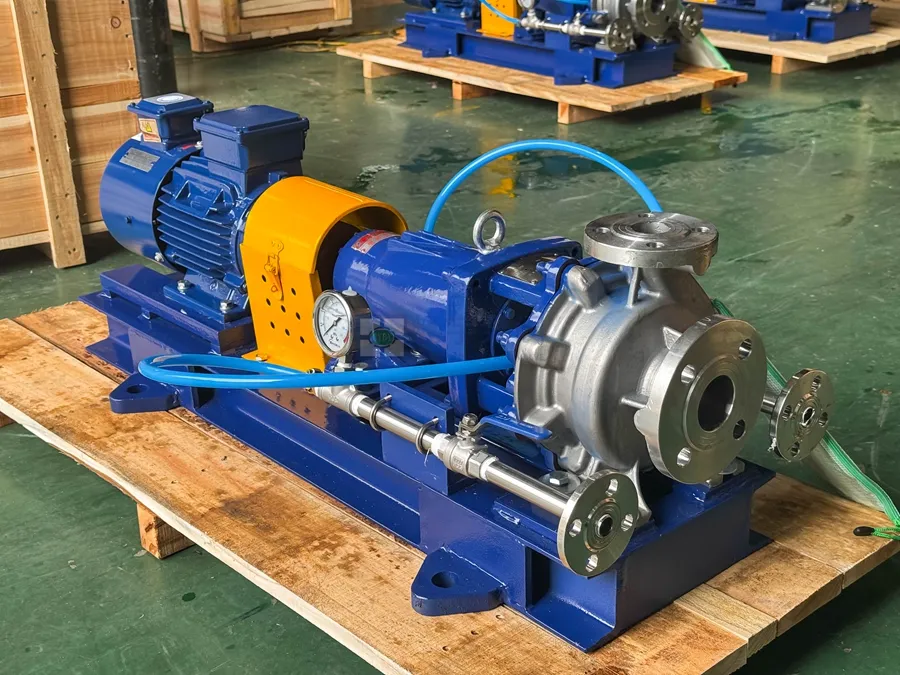
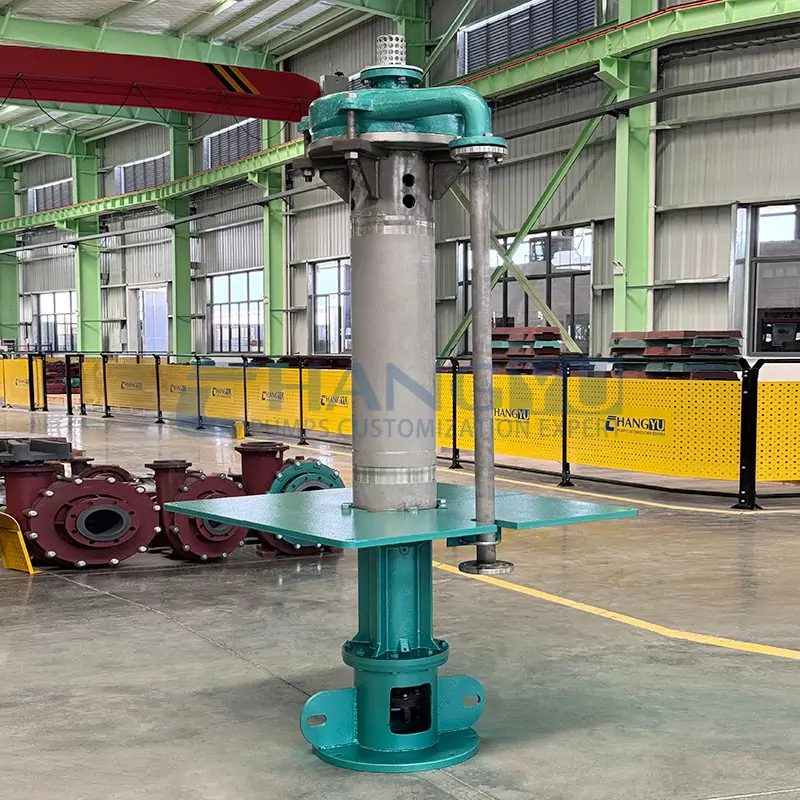

We first confirm whether the project falls within the construction and performance ranges of our existing series. Large intake pumping stations, marine firewater and high-pressure membrane feed require separate checks of pressure ratings, certifications and scope of supply.
Which Changyupump Series Can Be Evaluated for a Seawater Feed Pump Project?
For seawater supply, boosting and transfer, we focus on CYH, then assess CQZ or CYC according to self-priming and leakage-control requirements. The following are our published series ranges for initial screening. Maximum flow and maximum head do not represent the same operating point; the specific model must be confirmed against performance curves, the wetted-materials list and technical confirmation documents. [2][3][4]
| سلسلة المنتجات | Series Flow and Head | Duties to Compare | Conditions for Seawater Use |
|---|---|---|---|
| CYH المصنوعة من الفولاذ المقاوم للصدأ للمواد الكيميائية بالطرد المركزي | 0.8–750 m³/h; 3–130 m | In-plant transfer, pretreatment supply and boosting | Confirm wetted configurations such as duplex stainless steel, mechanical seals and inlet conditions |
| CQZ stainless steel self priming magnetic drive pump | 3–800 m³/h; 12.5–130 m | Transfer requiring self-priming and attention to shaft-seal leakage control | Confirm materials, priming conditions, particles and internal lubrication and cooling |
| CYC heavy duty stainless steel magnetic pump | 3.6–100 m³/h; 20–80 m | Process-liquid transfer where liquid conditions are suitable and leakage control matters | Standard stainless steel options do not directly establish suitability for natural seawater |
CYH for Seawater Transfer and Pretreatment Supply
لدينا CYH المصنوعة من الفولاذ المقاوم للصدأ للمواد الكيميائية بالطرد المركزي has a single-stage, single-suction cantilever construction. It can be compared for seawater transfer, pretreatment supply and boosting projects within its performance-curve range. Material options include 316L, 2205 and 2507. Seawater projects require further confirmation of the specific model and the complete wetted-parts configuration. [2]
For continuous-supply systems where mechanical seals can be maintained on site, we prioritize flow and head, wetted seal materials, flushing conditions and standby arrangements. A mechanical seal limits liquid leakage around the rotating shaft. Its seal-face pair and elastomers must be selected for the seawater, particles and cleaning liquids involved. Suitable spacer-coupling and back-pull-out configurations also require sufficient maintenance clearance.
The CYH series head range can support initial screening for some seawater booster pump projects; it does not directly establish suitability for high-pressure feed upstream of SWRO membranes. We first verify the required differential pressure and discharge pressure rating, then determine whether a separate high-pressure pump option should be assessed.
CQZ for Self Priming Seawater Transfer
لدينا CQZ stainless steel self priming magnetic drive pump combines self-priming construction with magnetic drive. In this arrangement, magnetic drive transmits power through magnetic coupling, eliminating a conventional shaft-through mechanical seal and helping reduce leakage and maintenance issues at that point. Material options include 316L and 2205, but suitability for the specific seawater duty still requires confirmation. [3]
Where the pump sits above the tank liquid level, we check the minimum level, suction-pipe length and diameter, air leakage, seawater temperature and allowable priming time. CQZ must be filled before its first start as instructed. Its internal bearings still depend on the specified liquid for lubrication and cooling, so dry running is not permitted. Sand, crystallization or biological debris may affect internal circulation. If raw-water conditions are unsuitable, the pump construction should be reconsidered rather than simply adding an inlet strainer.
CYC for Compatible Clean Process Liquids
لدينا CYC heavy duty stainless steel magnetic pump can be compared for clean process-liquid duties where leakage control matters. For seawater or chloride-containing liquids, we first confirm the suitability of wetted materials, the containment shell, internal circulation and plain bearings, then assess the operating point. [4]
Standard CYC materials include 304, 316 and 316L. These options do not, by themselves, justify a commitment to long-term natural seawater service. If a project requires duplex stainless steel or another specified alloy, we first confirm availability for that model and its wetted parts. We do not apply CYH or CQZ material options directly to CYC.
Already have a flow diagram or pump schedule? Send us your seawater feed pump operating conditions. Our engineers can use them to compare series, wetted materials and inlet conditions, and clarify the information needed for selection and quotation.
البريد الإلكتروني: [email protected]
الهاتف/واتساب: +86-13651913727
الأسئلة الشائعةS
Can a Seawater Feed Pump Handle Raw Seawater Containing Sand?
This depends on the particles and pump construction. For a seawater intake pump duty, we establish the size, content and variability of sand, shells, biological debris and fibers before discussing intake screens, pretreatment, impeller flow passages, seals and materials. A pump designed for clean process liquids cannot be used directly for sandy raw seawater solely because its materials resist corrosion.
Filtration also has a cost: increasing strainer pressure loss reduces inlet pressure. We include filtration rating, allowable differential pressure from blockage and maintenance intervals in the inlet-condition calculation, paying particular attention to magnetic-drive pump internal circulation passages.
Can a Seawater Booster Pump Use Variable Speed Control?
We can assess variable speed control within the limits of the specific pump, motor and system. In systems with substantial flow variation, speed adjustment can work with pressure or flow control, but allowable speed, minimum flow, minimum inlet pressure and motor-cooling conditions must be established.
We do not promise a fixed energy-saving percentage simply because variable-speed control is used. Savings depend on elevation difference, equipment pressure requirements, piping resistance and operating hours. Where static head or fixed terminal pressure represents a large share of the requirement, low-speed operating capability needs separate calculation.
Can 316L Be Used for Continuous Seawater Service?
We do not use 316L as a universal default for continuous natural seawater service or specify a fixed time to failure without considering water quality and construction. Seawater temperature, chlorination, crevices, deposits and shutdown conditions jointly affect corrosion risk. Specific duties with comparable operating records can be assessed. Projects with higher reliability requirements or existing pitting should compare 2205, 2507 or other materials supported by an appropriate basis for use. [1]
If you are replacing a damaged stainless steel seawater pump, please also provide photographs of the failed areas, operating duration and a water analysis. We first distinguish corrosion, cavitation and particle wear before discussing changes to materials and construction.
How Much Does a Seawater Feed Pump Cost?
The seawater pump price depends on the operating point, wetted materials, seals, pressure-rating requirements, motor, installation arrangement and inspection documents. A price without these conditions can support only a very preliminary budget and cannot directly compare final supply packages.
We recommend comparing each seawater pump quotation on the same scope: whether the motor and baseplate are included, whether all wetted parts meet the agreed material specification, which tests and documents are provided, and the scope of spares, installation and maintenance. Continuous-duty projects should also compare energy consumption and downtime impact, alongside the pump purchase price.
Which Standards Should Be Specified for a Seawater Feed Pump?
Standards should be selected according to the project industry, pump construction and procurement requirements. General industrial centrifugal-pump projects may reference specifications such as ISO 5199; petroleum and related demanding duties may specify API 610. Compliance of a particular model with a standard and its edition must be confirmed item by item in the quotation and technical agreement. Seawater use alone does not establish compliance.
For duplex stainless steel castings, specify the applicable casting standard, grade, heat treatment and inspection conditions, such as checking ASTM A890/A995 where applicable to the project. NORSOK M-650 addresses qualification requirements for certain material manufacturers and manufacturing processes. Its applicability depends on the procurement specification; it is not a universally mandatory certification for all seawater pumps.
NACE MR0175 / ISO 15156 addresses materials in H₂S-containing oil and gas production environments within its defined scope. It should not be applied automatically to ordinary seawater projects. Marine, firewater and other special applications also require separate confirmation of classification-society, regulatory and pump-set requirements. For us, the standards list must translate into requirements for the specific model, scope of supply and delivery documents.
Why Work with Changyupump as Your Seawater Feed Pump Supplier?
We are تشانجيوبامب, Anhui Changyu Pump and Valve Manufacturing Co., Ltd. Established in 2006, our factory is located in Jing County, Xuancheng, Anhui. Our site covers approximately 20,000 m² and is equipped with CNC equipment, machining centers and pump-testing systems. Our products include centrifugal, magnetic-drive, self-priming and other industrial pump series, allowing us to discuss different configurations for corrosive-liquid transfer requirements. [5]
As a seawater feed pump supplier or seawater pump manufacturer you are comparing, we aim to match every procurement requirement to a verifiable configuration. Our engineers use the system position, flow, head, water quality and maintenance approach to define the product series, wetted materials, seals, motor and conditions that require further confirmation.
Our published quality-control process includes metal composition checks, impeller dynamic balancing, shaft runout checks and factory testing. For duplex stainless steel and other special-material projects, the technical agreement should also specify part materials, manufacturing condition, inspection methods and acceptance criteria. Clean-water performance testing can verify hydraulic performance; it does not replace the material basis for seawater corrosion resistance. [6]
If you are looking for a seawater booster pump manufacturer or have seawater pump OEM requirements, please also provide project drawings, connections, installation space, electrical conditions and document requirements. We first confirm the available scope of supply, then establish quotation and delivery terms.
Where Can You Find a Seawater Feed Pump PDF or Pump Catalogue?
If you are searching for a seawater feed pump PDF, seawater pump catalogue PDF or seawater pump datasheet, we recommend reviewing the proposed series documents first, then requesting a datasheet for the specific model at your project operating point. General catalogues support initial screening; final selection still requires the model curve, wetted materials and installation conditions.
You can use the following existing document resources:
- CYH Series Specifications PDF: review the CYH series specifications, then confirm the proposed model’s performance curve and configuration with us.
- CQZ Self Priming Stainless Steel Magnetic Pump PDF: support initial discussions of self-priming, magnetic drive and installation requirements.
- CYC Stainless Steel Magnetic Drive Pump PDF: compare the CYC series, with seawater wetted configurations subject to separate confirmation.
- Changyupump PDF Download Center: view published documents for other series.
Our seawater pump material compatibility review considers the actual operating conditions. If the catalogue does not clearly match your flow, head or materials, send us the parameters rather than completing procurement based only on a catalogue cover or a similar model.
How Can You Get a Seawater Feed Pump Selection and Quotation?
Selecting a seawater feed pump requires assessing system position, flow and differential pressure, inlet conditions and wetted materials together. First distinguish seawater intake, pretreatment boosting and high-pressure feed upstream of SWRO membranes. Then check corrosion, cavitation, particles and maintenance conditions to match the pump to the site’s needs.
You do not need to determine every material grade before contacting us. You can start with the following information, which our engineers will use to identify any additional conditions that need clarification:
- Application and process: intake, transfer, pretreatment, boosting or high-pressure membrane feed, together with the connections between relevant equipment.
- Operating requirements: normal, minimum and maximum flow; required head, or minimum inlet pressure and target outlet pressure.
- Seawater conditions: normal and maximum temperatures, salinity or chloride content, water quality and chlorination, and particle size and concentration.
- Site conditions: minimum liquid level or tidal level, installation elevation, suction piping, continuous or intermittent operation, and requirements for power supply, materials, standards and documents.
Please also send any existing pump schedule, P&ID, installation drawing or failure photographs. P&ID stands for piping and instrumentation diagram: a diagram showing the relationships between piping, equipment, valves and instruments. It helps us confirm the pump duty and control requirements.
البريد الإلكتروني: [email protected]
الهاتف/واتساب: +86-13651913727