
Introduction
Fertilizer production subjects pumps to some of the most aggressive conditions in the entire chemical process industry. The raw materials and intermediate products — phosphoric acid at 95–100°C laden with gypsum crystals, sulfuric acid at concentrations up to 98%, ammonia solutions that require absolute leak-free containment, and mixed NPK slurries that are simultaneously corrosive and abrasive — each present a distinct combination of chemical attack and mechanical wear that standard process pumps are not designed to handle. The core challenge: “These materials can be highly abrasive and/or corrosive. Also, when these materials need to be transferred from one stage of the process to another, they can take various forms, including solutions and suspensions or slurries.”
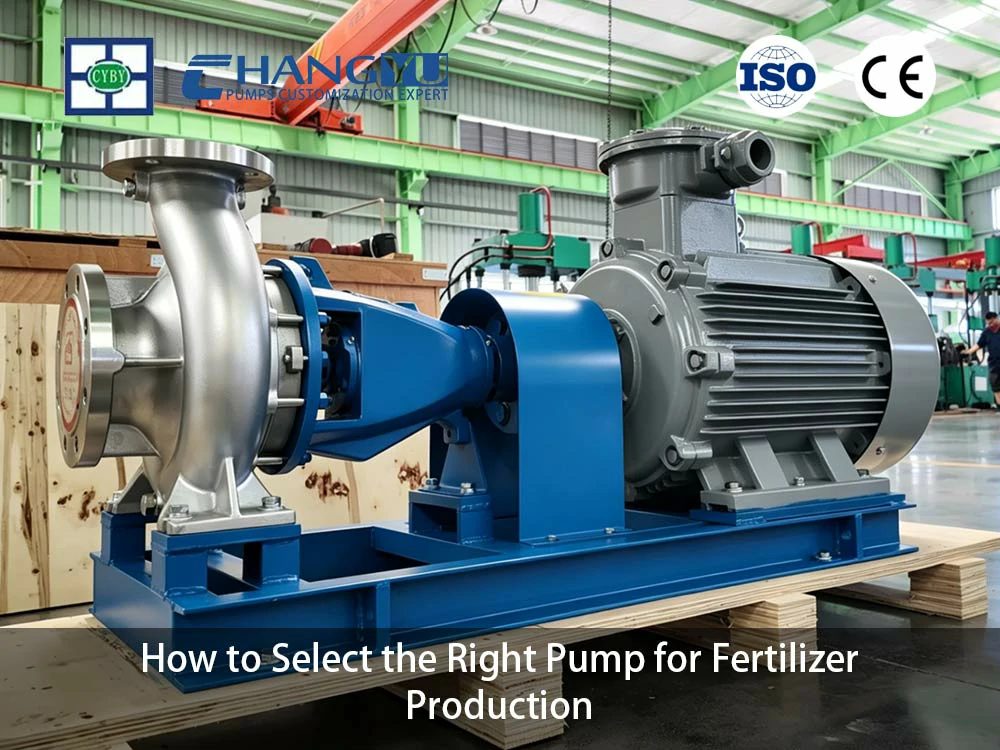
The consequences of pump failure in a fertilizer plant extend far beyond the cost of a replacement impeller. A slurry filter feed pump failure in a phosphoric acid attack tank has a direct deteriorating impact on the production rate of the entire plant. An evaporator circulation pump failure in the concentration unit will stop the production process entirely. These are not isolated risks — they are the everyday reality of fertilizer manufacturing, where pumps operate continuously in environments that combine high temperatures, abrasive solids, corrosive acids, and entrained gases.
This guide provides a structured reference covering the pump types matched to each stage of fertilizer production, the material selection logic that determines whether a pump lasts months or years, sealing and safety technologies for hazardous media, a six-step selection framework, and a quantitative case study from phosphate fertilizer service. Drawing on over two decades of pump engineering experience, Changyu Pump brings deep expertise in specifying corrosion- and wear-resistant pump solutions for the fertilizer industry.
1. What Makes Fertilizer Production a Challenging Pumping Application?
1.1 The Four Engineering Challenges
Fertilizer manufacturing subjects pumps to four simultaneous demands that interact in ways standard process pumps are not designed to address:
- Corrosion: Acids are present throughout the production chain — sulfuric acid (up to 98%) in acidulation, phosphoric acid (28–54% P₂O₅) in the reactor and concentration loop, hydrochloric acid in certain purification steps, and mixed acid streams in waste treatment. Each acid attacks materials through a different corrosion mechanism. Phosphoric acid slurry pump is in the process of phosphate fertilizer production of various kinds of pump to collectively, is a typical kind of strong corrosion resistance and wear resistance of the pump.
- Abrasion: Phosphate rock impurities, gypsum crystals (CaSO₄·0.5H₂O), silica sand, and catalyst particles create a grinding paste that erodes pump casings and impellers. Changyu Pump documented a phosphoric acid slurry filter feed application handling 33% solids at 95–100°C, where the previous pump’s parts subject to the highest erosion and corrosion lasted only 3 to 6 months before requiring replacement.
- High temperature: Phosphoric acid concentration loops operate at 86–100°C. Hot sulfuric acid dilution generates exothermic heat. NPK slurry granulation processes run at 105°C. These temperatures accelerate both the chemical corrosion rate and the mechanical wear rate, while also degrading elastomeric seals and bearing lubricants.
- Gas entrainment: Ammonia (NH₃) is mixed with water and introduced throughout the production process, such as for the neutralization of phosphoric acid. CO₂, SiF₄, and other gases are released during acidulation and reaction. Pumps must handle two-phase flow without vapor locking or losing prime.
1.2 The Cost of Getting It Wrong
The cost of an incorrect pump selection in a fertilizer plant cascades through three levels. At the component level, an impeller or casing that fails in 3 months instead of 24 months doubles or triples spare parts expenditure. At the system level, an unscheduled pump shutdown stops the upstream reactor and the downstream filtration or granulation line. At the plant level, a single evaporator circulation pump failure stops the entire phosphoric acid concentration unit — making pump reliability a direct determinant of annual production output. In domestic phosphate fertilizer plants, CD-4MCu alloy pump components in similar service conditions have been documented to last approximately 1,500–4,000 operating hours, with high-chromium cast iron alternatives lasting only about 1,200 operating hours — further evidence of the demanding nature of these applications.
1.3 Typical Fertilizer Media and Pumping Requirements
| Fertilizer Type | Key Process Stages | Typical Media | Primary Pumping Challenge | Recommended Pump Types |
|---|---|---|---|---|
| Phosphate (MAP/DAP/TSP) | Acidulation, attack reaction, filtration, concentration | H₂SO₄ (98%), H₃PO₄ (28–54% P₂O₅), phosphoric acid slurry (33% solids), 95–100°C | Combined hot acid corrosion + gypsum crystal abrasion + gas | Centrifugal process pump (654 SMO/CD4MCuN), slurry pump (UHMW-PE), axial flow pump (evaporator circulation) |
| Nitrogen (Urea, Ammonium Nitrate) | Ammonia synthesis, urea synthesis, prilling/granulation | NH₃, ammonium carbamate, urea solution (140°C), ammonium nitrate melt | High temperature, crystallization risk, toxicity (zero-leakage required) | Magnetic drive pump, stainless steel centrifugal pump |
| NPK Compound | Pre-neutralizer, pipe reactor, granulator, dryer | Mixed acid slurry (H₃PO₄ + H₂SO₄), NPK slurry (105°C), urea-ammonium nitrate | Simultaneous corrosion + abrasion + high temperature + solids | UHMW-PE lined slurry pump, duplex stainless centrifugal pump |
| Potash (MOP/SOP) | Flotation, crystallization, drying | KCl brine (hot, saturated), amine reagents, crystallizer slurry | Chloride stress corrosion cracking, scaling, abrasion | Duplex stainless steel pump, rubber-lined pump |
| Waste Treatment | Scrubber effluent, gypsum pond water, acidic wastewater | Dilute H₂SO₄, H₂SiF₆, CaSO₄ solids, pH 1–4 | Variable pH, abrasive solids, large flow volumes | Fluoroplastic-lined pump, UHMW-PE lined pump |
Detailed process-stage pump selection logic is provided in Section 4.
2. What Are the Main Types of Pumps Used in Fertilizer Production?
2.1 Centrifugal Process Pumps (API and ISO)
Centrifugal fertilizer pumps are the most widely deployed configuration for bulk acid transfer, reactor feed, and inter-stage liquid transfer across the fertilizer production chain. For fertilizer service, these pumps are constructed in two primary material configurations: metallic (316L stainless steel, CD4MCuN duplex stainless, 654 SMO super austenitic stainless, Hastelloy C-276) and non-metallic (fluoroplastic-lined with PTFE, PFA, or FEP). The choice between metallic and non-metallic construction depends on the specific acid, its concentration, temperature, and the presence of abrasive solids.
In phosphoric acid slurry service, some cases have shown that material selection alone can determine whether a pump’s wear parts last 3–6 months or 12–24 months. In a hemihydrate process at 95–100°C handling 41% P₂O₅ acid with HF, H₂SiF₆, H₂SO₄, and Cl⁻ contaminants, CD4MCuN duplex stainless — widely used in dihydrate processes — was not sufficient. Upgrading to 654 SMO® (6%Mo super austenitic stainless steel) combined with a reduced operating speed of 850 rpm and a full-diameter impeller extended the average lifetime of the highest-wear parts from 3–6 months to 12–24 months, reducing maintenance frequency by up to 75%.
Key specification: Flow rates up to 7,000 m³/h, heads up to 160 m, temperatures up to 180°C. Best for: bulk acid transfer, reactor feed, filtrate transfer, scrubber circulation.
2.2 Chemical Slurry Pumps
Chemical slurry pumps are specifically designed for the solid-laden, corrosive media that dominate phosphate and NPK fertilizer production. Unlike standard process pumps, slurry pumps incorporate enlarged internal flow passages to pass gypsum crystals and unreacted phosphate rock particles, wear-resistant wetted materials selected for the combined corrosion-abrasion environment, and semi-open impellers that are less susceptible to clogging than closed designs. Chuangyu Pump offer wear-resistant process pumps — such as UHB Series Abrasive Slurry Pump — which bridge the gap between standard centrifugal process pumps and traditional slurry pumps by combining the hydraulic efficiency of a process pump with the abrasion resistance required for slurry service.
For phosphoric acid slurry applications — particularly in the attack tank, filter feed, and slurry transfer duties — pumps with UHMW-PE (ultra-high molecular weight polyethylene) linings have proven highly effective. UHMW-PE is a new generation of anticorrosive and wear-resistant engineering plastic for pumps with excellent abrasion resistance and impact resistance among all plastics. Under standardized abrasive wear test conditions, its wear resistance is approximately 7–10 times that of carbon steel and stainless steel. Actual field results may vary depending on operating speed, solids loading, particle characteristics, and maintenance practices. UHMW-PE provides broad chemical compatibility with sulfuric acid, phosphoric acid, and their mixtures at temperatures up to 90°C, making it widely deployed in phosphate sulfate fertilizer industry for dilute acid, mother liquor, phosphoric acid slurry and other corrosive-abrasive media.
Key specification: Flow rates up to 2,600 m³/h, heads up to 100 m, solids handling up to 15% by weight. Best for: phosphoric acid slurry, NPK slurry, attack tank circulation, filter feed.
2.3 Magnetic Drive Pumps
Magnetic drive fertilizer pumps eliminate the mechanical shaft seal entirely by transmitting torque across a stationary containment shell using a magnetic coupling. The process fluid is fully enclosed within a sealed casing — no rotating shaft penetrates the pressure boundary. This sealless design achieves zero leakage by design, making magnetic drive pumps the standard specification for ammonia service, ammonium nitrate solutions, and any fertilizer application where the pumped fluid is toxic, flammable, or environmentally regulated.
Magnetically driven, self-priming centrifugal pumps are well established as the preferred type of pump for handling aggressive, corrosive and other hazardous liquids thanks to their proven ability for safe, reliable, leak-free and low maintenance operation. In fertilizer production, magnetic drive pumps serve critical roles in ammonia water injection, urea solution transfer, ammonium nitrate handling, and any application where fugitive emissions must be eliminated. For a deeper understanding of sealless pump technology, see our magnetic drive pump guide.
Key specification: Flow rates up to 800 m³/h, heads up to 125 m, temperatures up to 180°C (PFA-lined). Best for: ammonia water, ammonium nitrate, urea solution, hazardous/toxic media requiring zero leakage.
2.4 Diaphragm Pumps (Electric and Air-Operated)
Diaphragm fertilizer pumps use a reciprocating flexible membrane to displace fluid, forming a sealless barrier between the process fluid and the drive mechanism. Electric diaphragm pumps provide stable, continuous flow for dosing, metering, and chemical injection applications in fertilizer production. Air-operated double diaphragm (AODD) pumps are the standard specification for intermittent, portable, or hazardous-area transfer duties where compressed air is available and electrical power at the pump is not desired.
In fertilizer plants, diaphragm pumps serve specific niches: acid dosing for pH control, flocculant and reagent injection in wastewater treatment, and transfer of high-viscosity or solids-laden waste streams where centrifugal pumps are not recommended.
Key specification: Flow rates up to 1,041 L/min (AODD), 480 L/min (electric), solids passage up to 9.4 mm. Best for: chemical dosing, reagent injection, sump drainage, intermittent transfer.
2.5 Axial Flow and Mixed Flow Pumps
Axial flow pumps handle the highest flow rates at low heads — the exact hydraulic profile required for evaporator circulation loops in phosphoric acid concentration. Axial flow pumps are extensively used in extraction phosphoric acid and ammonium phosphate production.
2.6 Fertilizer Pump Type Comparison
| Pump Type | Sealing Method | Zero-Leakage | Solids Handling | Best Application | Typical Flow Range |
|---|---|---|---|---|---|
| Centrifugal Process (API/ISO) | Single or double mechanical seal | No (seal-dependent) | Minimal (clean liquids) | Bulk acid transfer, reactor feed, filtrate | 1–7,000 m³/h |
| Chemical Slurry / Wear-Resistant Process | Mechanical or dynamic seal | No | Up to 40% by weight | Phosphoric acid slurry, NPK slurry, attack tank | 3–2,600 m³/h |
| Magnetic Drive | Sealless (static containment shell) | Yes (by design) | Minimal | Ammonia, ammonium nitrate, urea solution | 3–800 m³/h |
| Diaphragm (Electric/AODD) | Sealless (diaphragm barrier) | Yes (by design) | Up to 70% by weight; solids up to 9.4 mm | Chemical dosing, reagent injection, sump drainage | Up to 1,041 L/min |
| Axial Flow | Mechanical seal | No | Up to 5% solids | Evaporator circulation, crystallizer circulation | Up to 12,000 m³/h |
3. What Materials Are Best for Fertilizer Pump Construction?
3.1 The Material Selection Challenge
Material selection for a fertilizer pump requires navigating a matrix where the same material that resists one acid at a given temperature may fail catastrophically when exposed to another acid — or even the same acid at a higher concentration or with different impurities.
3.2 Non-Metallic Materials
UHMW-PE (Ultra-High Molecular Weight Polyethylene) lined pumps provide a chemical barrier that isolates the steel pump casing from the aggressive medium while absorbing particle impact energy. Under standardized abrasive wear test conditions, UHMW-PE’s wear resistance is approximately 7–10 times that of carbon steel and stainless steel. Actual field results may vary depending on operating speed, solids loading, particle characteristics, and maintenance practices. UHMW-PE exhibits outstanding abrasion resistance and impact resistance among all plastics, along with creep resistance and good corrosion resistance. It is widely used in phosphate sulfate fertilizer industry for dilute acid, mother liquor, phosphoric acid slurry, and other corrosive-abrasive media at temperatures up to 90°C. For a detailed discussion of UHMW-PE properties across chemical applications, see our High Solids Slurry Pump: Selection Guide for Abrasive Applications.
PTFE and PFA offer near-universal chemical resistance for strong acids, mixed acid streams, and oxidizing chemicals at temperatures up to 180°C (PFA-lined). Both are inert to sulfuric acid, phosphoric acid, hydrochloric acid, and nitric acid within their temperature ratings. PTFE-lined pumps serve general acid transfer and scrubber effluent duties; PFA-lined pumps are specified for higher-temperature applications such as hot sulfuric acid circulation and reactor discharge.
PP (Polypropylene) is the most economical non-metallic option and provides good resistance to dilute sulfuric acid (≤40%), phosphoric acid, and many alkaline solutions at temperatures below 80°C. It is attacked by strong oxidizing acids (nitric acid, concentrated sulfuric acid above 40%) and many organic solvents.
PVDF (Polyvinylidene Fluoride) provides excellent resistance to concentrated sulfuric acid (up to 98%), hydrochloric acid at all concentrations, nitric acid, and most organic solvents at temperatures up to 120°C. Its mechanical strength is superior to both PP and PTFE.
3.3 Metallic Materials
CD4MCuN is a duplex stainless steel with greater corrosive resistance and strength than 316 SS in most applications. ANSI pumps in CD4 can withstand more abrasive applications than parts in 316 SS, and may be more resistant to cracking and pitting than Alloy 20. CD4MCuN is widely specified for phosphoric acid applications in dihydrate processes. Langley Alloys notes that the copper content in CD4MCuN greatly increases resistance to sulfuric, nitric and phosphoric acids, making it the default choice for items being used in the production of fertiliser.
654 SMO® is a 6%Mo super austenitic stainless steel with excellent resistance to corrosion by hot acid with a high chlorides content. It combines very good resistance to corrosion and better erosion resistance than some more common austenitic stainless steels, and is increasingly used in the phosphate industry for hemihydrate process applications where CD4MCuN proves insufficient.
316L stainless steel provides good resistance to mild chemicals and organic solvents but has well-documented limits with mineral acids. It fails rapidly in hydrochloric acid at any concentration and in sulfuric acid above approximately 15% concentration.
Hastelloy C-276 provides the broadest metallic corrosion resistance for hot acids and oxidizing environments, at a correspondingly higher material cost.
3.4 Material Selection Quick Reference
| Material | Best For | pH Range | Max Temp | Typical Fertilizer Application |
|---|---|---|---|---|
| UHMW-PE Lined | Combined severe corrosion + abrasion | Broad (acid, alkali, salt) | ~90°C | Phosphoric acid slurry, NPK slurry, dilute acid, mother liquor |
| PTFE/PFA Lined | Maximum chemical resistance | pH 0–14 | ~180°C (PFA) | Hot concentrated H₂SO₄, mixed acids, scrubber effluent |
| PP | Economical acid/alkali service | pH 2–12 | ~80°C | Electroplating rinse, dilute H₂SO₄, alkaline solutions |
| PVDF | Concentrated acids, chlorides, solvents | pH 0–14 | ~120°C | HCl, HNO₃, concentrated H₂SO₄ |
| CD4MCuN Duplex SS | Combined corrosion-abrasion | pH 2–12 | ~110°C | Phosphoric acid (dihydrate process), FGD, acid mine drainage |
| 654 SMO® | Hot acid + high chlorides | pH 0–14 | ~120°C | Phosphoric acid (hemihydrate process), high-Cl⁻ environments |
| 316L SS | Verified compatible chemistry only | pH 3–10 | ~120°C | Mild chemical effluents, process water, urea solutions |
| Hastelloy C-276 | Hot acids, oxidizing chemicals | pH 0–14 | ~120°C | Mixed acids, high-temperature corrosive service |
4. How Do You Match Pump Technology to Each Stage of Fertilizer Production?
4.1 Sulfuric Acid Production and Handling
Concentrated sulfuric acid (93–98%) is used throughout fertilizer production — in phosphate rock acidulation, in NPK mixed acid processes, and in scrubbing systems. The engineering challenge is that concentrated sulfuric acid’s corrosivity toward carbon steel depends on flow velocity. Carbon steel resists static concentrated sulfuric acid above 80% at low temperatures because a protective iron sulfate layer forms on the surface. Under flowing conditions inside a pump casing, this protective layer erodes, and carbon steel becomes unsuitable for pump wetted components.
For concentrated sulfuric acid transfer, PFA- or PTFE-lined centrifugal pumps provide verified chemical compatibility across all concentrations and temperatures within the liner’s rated range. CD4MCuN duplex stainless and Hastelloy C-276 serve in specific concentration-temperature windows where a metallic pump is structurally preferred.
4.2 Phosphoric Acid and Phosphate Fertilizer Production
Phosphoric acid production presents the most severe combined corrosion-abrasion challenge in the fertilizer industry. The process involves reacting phosphate rock with sulfuric acid to produce phosphoric acid and gypsum (calcium sulfate). The resulting slurry — containing 28–54% P₂O₅ acid, gypsum crystals at 33% solids, and corrosive contaminants including HF, H₂SiF₆, H₂SO₄, and Cl⁻ at 95–100°C — is pumped through a series of reactors, filters, and concentrators.
Material selection for phosphoric acid slurry pumps must be matched to the specific process. In dihydrate processes operating at lower temperatures (70–80°C), CD4MCuN duplex stainless provides acceptable service life. In hemihydrate processes operating at higher temperatures (95–100°C) with higher impurity levels, upgrading to 654 SMO® super austenitic stainless steel, combined with reduced operating speed and full-diameter impeller design, extends wear part life from months to years. Changyu Pump engineers have documented in phosphate fertilizer plant installations that UHMW-PE lined pumps handling phosphoric acid slurry at 70–90°C with 30–35% solids consistently deliver impeller service life exceeding 14 months, compared to 3–6 months for CD4MCuN alloy pumps in similar hemihydrate process conditions.
For the phosphoric acid concentration loop, axial flow pumps circulate acid through heat exchangers and evaporators at flow rates up to 12,000 m³/h. These pumps must handle 50–52% P₂O₅ acid with contaminants (sulfates, chloride, fluorine, ≈ 4–5% solids) at 86°C, operating continuously to prevent the concentration unit from shutting down.
4.3 Ammonia, Urea, and Ammonium Nitrate Production
Ammonia and its derivatives require zero-leakage containment due to their toxicity, flammability, and environmental impact. Ensuring that the ammonia water is successfully administered in the production process is the job of the process pump, and controlling the amount of fugitive emissions during the production process is critical because regulatory bodies pay more and more attention to the levels of emissions that reach the atmosphere during industrial manufacturing.
Magnetic drive centrifugal pumps with fluoroplastic-lined (PTFE or PFA) wetted components are the standard specification for ammonia water injection, ammonium nitrate solution transfer, and urea solution circulation. The sealless design eliminates the mechanical seal — the most common leak path for hazardous fluids. For urea synthesis service, where the process fluid includes ammonium carbamate at temperatures up to 140°C, stainless steel magnetic drive pumps or high-alloy centrifugal pumps with double mechanical seals and API Plan 53/54 barrier fluid systems are specified.
4.4 NPK Compound Fertilizer Production
NPK fertilizer production mixes phosphoric acid, ammonia, sulfuric acid, urea, and potash to create multi-nutrient granules. The process generates a mixed slurry that is simultaneously corrosive (from residual acids), abrasive (from unreacted phosphate particles and silica), and high-temperature (up to 105°C in the granulator).
Slurry pumps handling NPK mixtures must combine the corrosion resistance required for phosphoric acid service with the abrasion resistance required for solids-laden flow. UHMW-PE lined centrifugal pumps provide the best combined protection for NPK slurry applications at temperatures up to 90°C. For higher-temperature NPK processes, CD4MCuN or 654 SMO® metallic pumps with semi-open impellers and replaceable wear plates are specified.
4.5 Fertilizer Process Stage — Pump Type — Material Matching Matrix
| Process Stage | Typical Media | Temperature | Recommended Pump Type | Recommended Material |
|---|---|---|---|---|
| Sulfuric acid transfer | H₂SO₄ 93–98% | ≤80°C | Centrifugal process pump | PFA/PTFE-lined, CD4MCuN, Hastelloy C-276 |
| Phosphate rock acidulation | H₂SO₄ + phosphate rock slurry | 70–90°C | Chemical slurry pump | UHMW-PE lined, CD4MCuN |
| Attack tank / reactor | H₃PO₄ 28–41% P₂O₅ + gypsum solids (33%) | 70–100°C | Chemical slurry pump or wear-resistant process pump | CD4MCuN (dihydrate), 654 SMO® (hemihydrate), UHMW-PE (≤90°C) |
| Slurry filter feed | H₃PO₄ slurry with HF, H₂SiF₆, Cl⁻ | 95–100°C | Wear-resistant process pump | 654 SMO®, semi-open impeller, reduced speed |
| Phosphoric acid concentration | H₃PO₄ 50–54% P₂O₅, 4–5% solids | 86°C | Axial flow pump | High-alloy duplex, 654 SMO® |
| Ammonia water injection | NH₃·H₂O | ≤50°C | Magnetic drive centrifugal | PTFE/PFA-lined, stainless steel |
| Urea solution circulation | Urea, ammonium carbamate | 140°C | Magnetic drive or high-alloy centrifugal | Stainless steel, duplex stainless |
| NPK slurry granulation | Mixed acid slurry (H₃PO₄ + H₂SO₄ + NH₃) | ≤105°C | Chemical slurry pump | UHMW-PE (≤90°C), CD4MCuN, 654 SMO® |
| Scrubber effluent | Dilute H₂SO₄, H₂SiF₆, CaSO₄ | ≤60°C | Centrifugal process pump | PTFE/PFA-lined, PP, PVDF |
5. How to Select the Right Fertilizer Pump: A 6-Step Framework
Step 1: Characterize the Process Medium
Document the full chemical and physical profile: acid type and concentration, pH, temperature including any process excursions, solids content (percentage by weight, particle size distribution, particle hardness), viscosity, specific gravity, and the presence of any gas or volatile components. The medium’s identity — not a generic “acid” or “slurry” label — determines the material compatibility window.
Key data points: Acid type, concentration, temperature, solids %, particle size, gas content.
Step 2: Define the Hydraulic Duty
Calculate the required flow rate and total dynamic head, accounting for static lift, friction losses through the discharge piping, and any pressure requirement at the destination. For concentrated sulfuric acid at specific gravity 1.84, verify that the motor is sized for the elevated power demand. For phosphoric acid slurries with 33% solids, account for the additional friction losses generated by solids-laden flow.
Key data points: Flow rate (m³/h or GPM), total dynamic head, specific gravity, pipe friction losses.
Step 3: Match Materials to the Process Chemistry
Select pump materials based on the material compatibility data for the specific acid at its maximum operating temperature. Confirm every wetted component — casing, impeller, shaft sleeve, O‑rings, gaskets, and seal faces — against the compatibility data. For phosphoric acid, verify whether the process is dihydrate (CD4MCuN may suffice) or hemihydrate (654 SMO® or UHMW-PE required). For ammonia service, verify zero-leakage containment requirements.
Key decision logic: H₂SO₄ >80% → PFA/PTFE-lined or Hastelloy; H₃PO₄ dihydrate → CD4MCuN; H₃PO₄ hemihydrate → 654 SMO® or UHMW-PE; NH₃ → magnetic drive sealless.
Step 4: Select the Pump Type
Match the pump type to the process stage, flow requirements, and solids profile. Bulk acid transfer → centrifugal process pump. Phosphoric acid slurry → chemical slurry pump or wear-resistant process pump. Evaporator circulation → axial flow pump. Ammonia/ammonium nitrate → magnetic drive pump. Chemical dosing → diaphragm pump.
Key decision logic: Clean acid, high flow → centrifugal; slurry with solids → slurry pump or wear-resistant process pump; low head, very high flow → axial flow; toxic/volatile → magnetic drive; intermittent/dosing → diaphragm.
Step 5: Select the Sealing System
For hazardous or toxic media (ammonia, ammonium nitrate, concentrated acids), select a magnetic drive sealless pump or a double mechanical seal with a pressurized barrier fluid system (API Plan 53/54). API Plan 53 uses a pressurized barrier fluid reservoir to maintain barrier fluid pressure above the process fluid pressure at the seal faces, ensuring that any leakage across the inboard seal is barrier fluid into the process, not process fluid into the atmosphere. API Plan 54 uses an external pressurized fluid source for the same purpose. For phosphoric acid slurry, a dynamic seal or double mechanical seal with appropriate flush plan prevents solids ingress between seal faces.
Key decision logic: Toxic/flammable → magnetic drive or API Plan 53/54; slurry with solids → dynamic seal or double seal with flush plan.
Step 6: Evaluate Total Cost of Ownership
Factor in capital cost, energy consumption (typically 60–70% of lifetime cost), wear part replacement frequency, maintenance labor, and the production cost of unplanned downtime. The phosphoric acid case study demonstrates the TCO principle: by upgrading from CD4MCuN to 654 SMO® and reducing operating speed, the average lifetime of wear parts increased from 3–6 months to 12–24 months, reducing maintenance frequency by up to 75%. The higher initial material cost was recovered through eliminated downtime and reduced spare parts expenditure.
Key factors: Energy (60–70% of lifetime cost), wear parts, maintenance labor, production downtime cost.
6. Sealing and Safety Technologies for Fertilizer Pumps
6.1 Mechanical Seal Systems
Double mechanical seals with a pressurized barrier fluid system (API Plan 53) or a gas barrier (API Plan 74) are the standard specification for hazardous media in fertilizer production. The barrier fluid pressure must exceed the process fluid pressure at the seal faces so that any leakage is barrier fluid into the process, not process fluid into the atmosphere.
- API Plan 53 (Pressurized Barrier Fluid): A pressurized barrier fluid reservoir maintains barrier fluid pressure above process fluid pressure at the inboard seal faces. If the inboard seal leaks, clean barrier fluid enters the process, not process fluid into the atmosphere. This is the standard configuration for phosphoric acid, sulfuric acid, and mixed acid services.
- API Plan 54 (External Pressurized Fluid): An external source provides clean, pressurized barrier fluid to the seal chamber. This configuration is used when the process fluid contains solids that would contaminate a closed-loop barrier fluid system.
- For phosphoric acid slurry service, Changyu Pump uses a dual mechanical seal configuration that provides the required containment while resisting the abrasive solids present in the slurry.
6.2 Magnetic Drive Sealless Technology
Magnetic drive pumps eliminate the mechanical seal entirely by transmitting torque across a stationary containment shell. For ammonia service, ammonium nitrate solutions, and any fertilizer application where fugitive emissions must be eliminated, this sealless design provides zero-leakage containment by design. The containment shell and internal bearings must be rated for the process fluid temperature, and the magnetic coupling must be sized for the fluid’s specific gravity at the operating temperature.
6.3 ATEX/IECEx Requirements
Fertilizer production facilities handle ammonia, which can form flammable mixtures with air, and generate combustible dust from product handling. The ATEX directive governs equipment intended for use in explosive atmospheres within the European Union. For the Chinese domestic market, GB 3836 explosion-proof standards apply. Pump motors and instrumentation in classified areas must carry the appropriate ATEX, IECEx, or GB 3836 certification.
7. Maintenance and Life-Cycle Cost Management for Fertilizer Pumps
7.1 Common Failure Modes
The most frequent failure modes in fertilizer pump service are: impeller and casing erosion from abrasive solids (gypsum crystals, silica, unreacted phosphate rock); corrosion from acid attack at grain boundaries, accelerated by elevated temperature; seal leakage from solids ingress between seal faces or chemical degradation of seal elastomers; bearing failure from lubricant contamination by process fluid or external dust; and cavitation damage from insufficient NPSH margin at elevated temperatures.
7.2 Preventive Maintenance Schedule
| Interval | Task |
|---|---|
| Daily | Monitor motor current and discharge pressure; check for unusual vibration or noise; verify seal flush flow |
| Weekly | Check bearing temperature and lubricant condition; inspect for visible leakage at seals and gaskets |
| Monthly | Measure impeller-to-casing clearance; inspect wear plates for grooving or thinning; check O‑ring and gasket condition |
| Quarterly | Full wet-end inspection; replace bearing lubricant; verify seal integrity through pressure testing |
| Annually | Complete pump disassembly; measure and replace all wear components (impeller, wear rings, seals, bearings); verify casing and shaft integrity |
7.3 Troubleshooting Quick Reference
| Symptom | Probable Cause | Recommended Action |
|---|---|---|
| Gradual flow decline | Impeller wear or increased internal clearances | Adjust impeller clearance; replace wear rings if gap exceeds manufacturer limit |
| Sudden vibration increase | Solids accumulation on impeller; cavitation | Clean impeller; verify NPSH margin; check suction strainer |
| Seal leakage | Grit ingress between seal faces; chemical attack on elastomer | Inspect seal faces for scoring; replace elastomers matched to process chemistry |
| Motor overload trip | Increased viscosity; solids jam; bearing seizure | Clear impeller; verify process conditions within pump rating |
| Casing perforation | Combined corrosion-abrasion exceeding material capability | Upgrade material (e.g., CD4MCuN → 654 SMO®); reduce operating speed |
7.4 Life-Cycle Cost Evaluation
The phosphoric acid case study provides a quantified example of life-cycle cost optimization. The previous pump’s wear parts lasted 3–6 months; after upgrading to 654 SMO® material, reducing speed, and using a full-diameter impeller with semi-open design, wear part life extended to 12–24 months — a 75% reduction in maintenance frequency. The modular construction of the new pump meant only worn parts needed replacement, not the entire pump assembly. A life-cycle cost evaluation should factor in capital cost, energy consumption, wear part replacement frequency, maintenance labor, and the production cost of unplanned downtime over a 3–5 year horizon.
8. Changyu Pump Solutions for the Fertilizer Industry
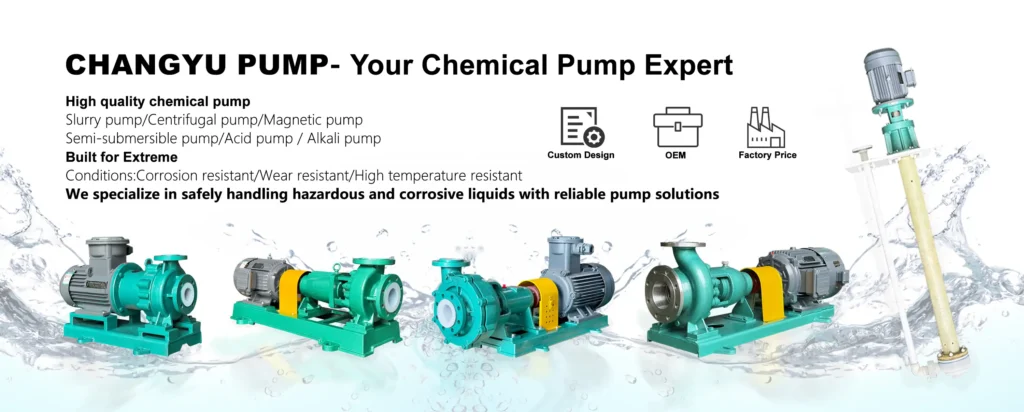
The following Changyu Pump series address the key pumping challenges in fertilizer production — each matched to specific process stages, media characteristics, and operational requirements.
UHB Series UHMWPE Corrosion Resistant Pump
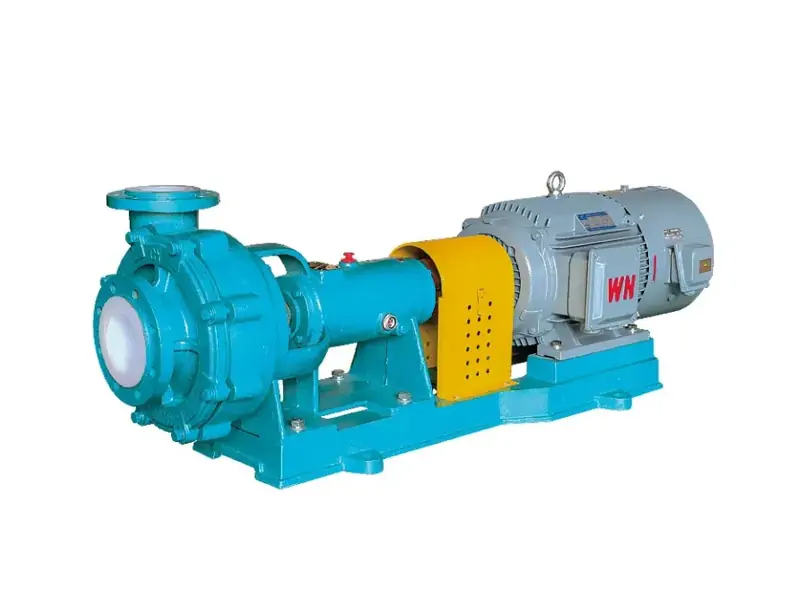
The UHB Series is a cantilever, single-stage, single-suction centrifugal pump with a steel-lined UHMW-PE casing, specifically designed for chemically aggressive and abrasive-corrosive fluids. The UHMW-PE lining — a new generation anticorrosive and wear-resistant engineering plastic with excellent abrasion resistance and impact resistance among all plastics — provides combined corrosion and wear protection for phosphoric acid slurry, NPK mixed slurry, dilute sulfuric acid, mother liquor, and various corrosive ore pulp in the smelting industry. In phosphate fertilizer plants, the UHB Series serves attack tank circulation, slurry filter feed, and inter-stage slurry transfer duties where the process medium combines hot phosphoric acid with gypsum crystals — conditions under which UHMW-PE lined pumps have demonstrated impeller service life exceeding 14 months.
Key Specifications: Flow 3–2,600 m³/h | Head 5–100 m | Power 0.75–300 kW | Temperature -20°C to 90°C
CYQ Series Magnetic Drive Chemical Process Pump
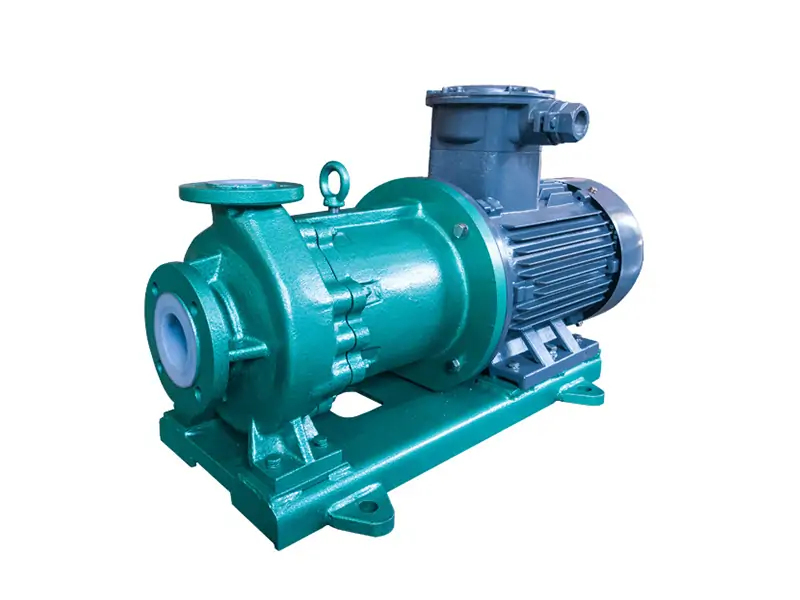
The CYQ Series is a third-generation fully sealed magnetic drive pump with wetted components lined in FEP, PFA, or PTFE. The core PEEK containment shell with carbon fiber reinforcement technology raises the pressure limit to 3.0 MPa and physically eliminates eddy current losses, ensuring zero leakage and high energy efficiency under harsh operating conditions from -20°C to 150°C. For fertilizer applications involving ammonia water injection, ammonium nitrate transfer, concentrated sulfuric acid handling, and flammable/explosive organic solvents — where even minor mechanical seal leakage is unacceptable — the magnetic drive design eliminates the mechanical seal entirely, providing the zero-leakage containment required for safe, compliant operation in nitrogen fertilizer and ammonium nitrate production units.
Key Specifications: Flow 3–800 m³/h | Head 15–125 m | Power 2.2–110 kW | Speed 2,950 r/min | Temperature -20°C to 180°C
IHF Series Fluoroplastic Lined Centrifugal Pump

The IHF Series is a centrifugal pump with the casing and flow-through components lined in FEP, PFA, or PTFE. The fluoroplastic lining isolates the metal casing from the corrosive process fluid, providing verified chemical compatibility for strong acids (sulfuric, phosphoric, nitric, hydrochloric), strong alkalis, and organic solvents within the liner’s temperature rating (PFA to approximately 180°C). For fertilizer production applications involving phosphate rock acidulation, bulk sulfuric acid transfer, scrubber effluent circulation, and chemical wastewater treatment where broad-spectrum chemical resistance is required, the IHF Series provides the widest chemical compatibility of any single-material pump platform.
Key Specifications: Flow 1.6–2,600 m³/h | Head 5–130 m | Power 1.5–110 kW | Temperature -20°C to 180°C
BFD Series Electric Diaphragm Pump
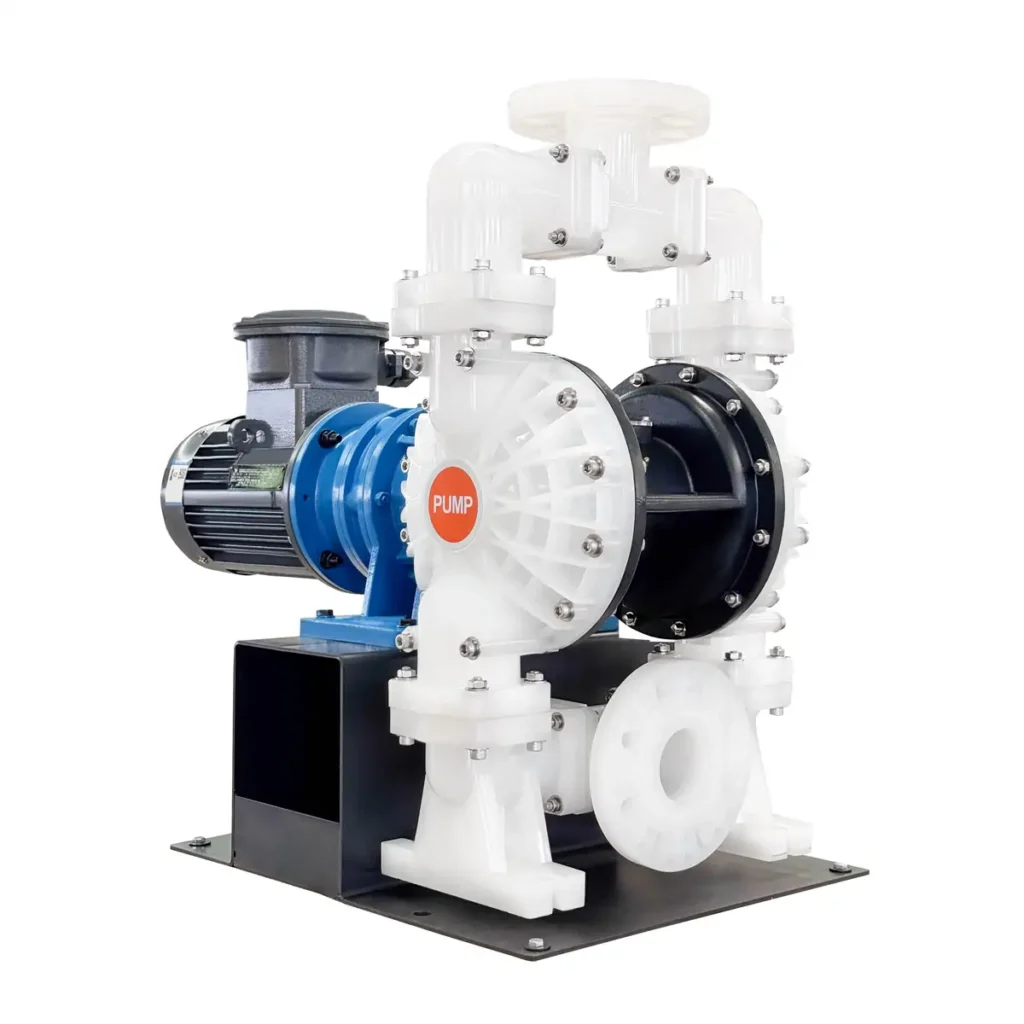
The BFD Series is a motor-driven electric diaphragm pump that provides stable, continuous flow without compressed-air infrastructure. The diaphragm forms a sealless barrier between the process fluid and the drive mechanism, making it suitable for corrosive, abrasive, high-viscosity, and volatile fluids encountered in fertilizer production. For chemical dosing, reagent injection, pH control, and flocculant metering in fertilizer plant wastewater treatment, the BFD Series delivers stable flow rate, low energy consumption, and simplified maintenance compared to pneumatic alternatives.
Key Specifications: Flow up to 480 L/min | Head up to 84 m | Power 0.75–45 kW | Temperature -20°C to 120°C
BFQ Series Air Operated Double Diaphragm Pump

The BFQ Series is a pneumatic double-diaphragm pump with body materials spanning cast steel, ductile iron, aluminum alloy, PP, stainless steel, and PVDF. Powered entirely by compressed air, it is inherently sealless, self-priming, and can run dry without damage. For fertilizer plant sump drainage, emergency dewatering, portable acid transfer, and hazardous-area applications where electrical power at the pump is not desired, the BFQ Series provides the operational flexibility and chemical compatibility required for intermittent-duty and auxiliary transfer services.
Key Specifications: Maximum working flow up to 1,041 L/min | Working pressure 0.84 MPa | Suction lift 7.6 m | Solids passage 9.4 mm
Fertilizer Pump Selection Quick Reference
| Pump Series | Type | Best Fertilizer Application | Key Materials |
|---|---|---|---|
| UHB | UHMW-PE lined centrifugal | Phosphoric acid slurry, NPK slurry, dilute acid, mother liquor | UHMW-PE |
| CYQ | Magnetic drive sealless | Ammonia water, ammonium nitrate, concentrated H₂SO₄, hazardous media | FEP, PFA, PTFE |
| IHF | Fluoroplastic-lined centrifugal | Bulk acid transfer, phosphate rock acidulation, scrubber effluent, chemical wastewater | FEP, PFA, PTFE |
| BFD | Electric diaphragm | Chemical dosing, reagent injection, pH control | Cast steel, SS, PP, PVDF |
| BFQ | Air-operated double diaphragm | Sump drainage, emergency dewatering, portable acid transfer | Cast steel, SS, PP, PVDF |
9. Case Study: Extending Pump Service Life in a Phosphate Fertilizer Plant
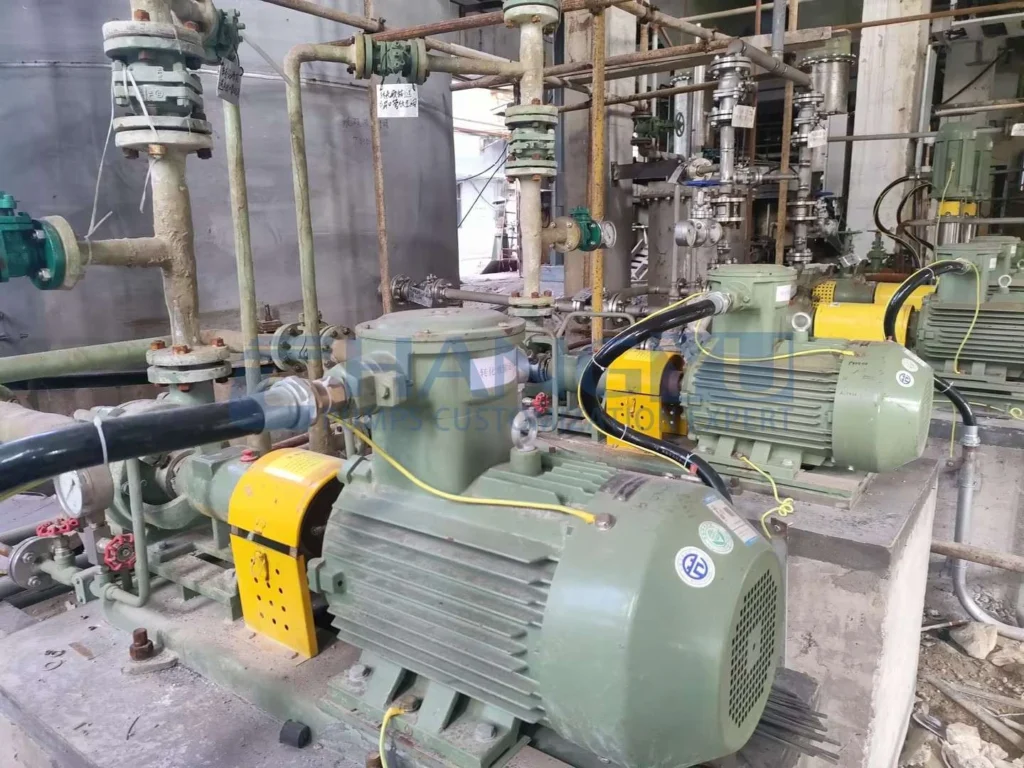
Customer Challenge: A phosphate fertilizer producer was experiencing chronic wear failures on the slurry pumps handling phosphoric acid attack tank circulation. The process conditions were severe: 41% P₂O₅ acid with corrosive contaminants (HF, H₂SiF₆, H₂SO₄, Cl⁻), 33% solids (CaSO₄·0.5H₂O), operating temperature 95–100°C, and the presence of entrained gas. The existing pumps — constructed from CD4MCuN duplex stainless steel and operating at approximately 1,800 rpm — required replacement of the highest-wear parts every 3 to 6 months. In similar service conditions at domestic phosphate fertilizer plants, CD-4MCu alloy pump components have been documented to last approximately 1,500–4,000 operating hours. Each failure caused an interruption to the attack reaction unit, directly impacting the plant’s phosphoric acid production rate.
Engineering Analysis: Changyu Pump engineers assessed the operating data and the complete chemical and physical profile of the process medium. The root cause of the rapid wear was twofold. The CD4MCuN material, while adequate for dihydrate processes at lower temperatures, was insufficient for the hemihydrate process conditions at 95–100°C with high chloride and fluoride impurity levels. The elevated operating speed of ~1,800 rpm was producing impeller tip velocities that accelerated erosive wear — a well-established relationship in slurry pump engineering where wear rate is proportional to approximately the cube of the tip speed.
Solution Deployed: Changyu Pump replaced the existing CD4MCuN pumps with UHB Series UHMW-PE lined centrifugal pumps featuring the following design changes:
- UHMW-PE lined casing with thickened wetted parts: The UHMW-PE lining eliminated acid contact with the pump casing entirely, removing the corrosion component from the wear equation. The material’s impact absorption capability also reduced the abrasive wear rate from gypsum crystal impingement.
- Widened flow passages and semi-open impeller: The enlarged internal clearances and semi-open impeller design allowed gypsum solids to pass through the pump without clogging and without being ground between the impeller and casing wall.
- Proprietary dynamic sealing system: The seal configuration was selected for its tolerance to the abrasive solids present in the slurry, eliminating the solids ingress that had damaged the previous mechanical seals.
- Reduced operating speed: The pump was sized to operate at a lower rotational speed while delivering the required flow and head, reducing impeller tip velocity and the associated abrasive wear rate.
Quantified Results (18-month evaluation):
| Metric | Before Upgrade (CD4MCuN, ~1,800 rpm) | After Upgrade (UHMW-PE, reduced speed) | Improvement |
|---|---|---|---|
| Wear part service life | 3–6 months | > 14 months (still in service) | 3–5× extension |
| Unplanned pump-related downtime events per year | 3–4 | < 1 | ~75% reduction |
| Annual maintenance cost per pump | USD 28,000 | USD 9,800 | ~65% reduction |
| Pump replacement parts inventory | High (frequent replacement) | Low (extended service life) | Inventory reduced by ~60% |
The plant subsequently extended the UHMW-PE lined pump specification to additional slurry transfer positions across the phosphoric acid production line.
10. Frequently Asked Questions About Fertilizer Pumps
Q1: What materials are best for phosphoric acid slurry pumps?
A: The material choice depends on the specific process. For dihydrate processes at lower temperatures (70–80°C), CD4MCuN duplex stainless steel provides acceptable service life. For hemihydrate processes at higher temperatures (95–100°C) with higher impurity levels, 654 SMO® super austenitic stainless steel or UHMW-PE lined pumps provide the required combined corrosion-abrasion resistance.
Q2: Can a magnetic drive pump be used for ammonia service in fertilizer production?
A: Yes. Magnetic drive pumps are the standard specification for ammonia water injection, ammonium nitrate transfer, and any fertilizer application where zero-leakage containment is required. The sealless design eliminates the mechanical seal — the most common leak path for toxic and flammable fluids.
Q3: What is the difference between CD4MCuN and 654 SMO for fertilizer applications?
A: CD4MCuN is a duplex stainless steel with greater corrosion resistance and strength than 316L, widely used in dihydrate phosphoric acid processes. 654 SMO® is a 6%Mo super austenitic stainless steel with superior resistance to hot acid with high chloride content, extending wear part life from months to years in hemihydrate service.
Q4: How do I select a pump for NPK compound fertilizer production?
A: NPK production generates a mixed slurry that is simultaneously corrosive (from residual acids) and abrasive (from unreacted particles). UHMW-PE lined centrifugal pumps provide the best combined protection at temperatures up to 90°C. For higher-temperature NPK processes, CD4MCuN or 654 SMO® metallic pumps with semi-open impellers and replaceable wear plates are specified.
Q5: What causes rapid wear in fertilizer slurry pumps?
A: Three factors interact: excessive operating speed — wear rate is proportional to approximately the cube of impeller tip velocity — combined with material mismatch (using CD4MCuN where 654 SMO® or UHMW-PE is required), and the corrosion-abrasion synergy where acid attack weakens the metal surface, which is then removed by particle impact at an accelerated rate.
Q6: What sealing system is recommended for phosphoric acid slurry pumps?
A: Double mechanical seals with a pressurized barrier fluid system (API Plan 53) or a dynamic seal with dual mechanical seal configuration provide the required containment for phosphoric acid slurry service. The seal faces should be silicon carbide against silicon carbide for maximum abrasion resistance.
Q7: How often should fertilizer pumps be serviced?
A: Daily: monitor motor current, discharge pressure, and check for unusual vibration. Weekly: check seal flush flow and bearing temperature. Monthly: measure impeller clearance and inspect wear plates. Quarterly: full wet-end inspection. Annually: complete disassembly and replacement of all wear components.
Q8: How do I evaluate total cost of ownership for a fertilizer pump?
A: Factor in capital cost, energy consumption (60–70% of lifetime cost), wear part replacement frequency, maintenance labor, and the production cost of unplanned downtime. A pump with a higher initial material cost but substantially longer service life in the specific process conditions routinely delivers lower TCO.
11. Expert Selection Recommendations from Changyu Pump Engineers
- Match materials to the specific process chemistry, not to a generic “acid-resistant” label. CD4MCuN serves dihydrate phosphoric acid processes at lower temperatures but fails in hemihydrate processes with higher chloride and fluoride levels. Verify material compatibility against the specific acid at its maximum operating temperature and impurity profile.
- Reduce operating speed wherever practical. Erosive wear is proportional to approximately the cube of the impeller tip velocity. Changyu Pump’s case study demonstrates the engineering value: reducing speed, combined with a full-diameter impeller, contributed directly to extending wear part life by 4–8×.
- Specify zero-leakage containment for ammonia, ammonium nitrate, and hazardous media. Magnetic drive sealless pumps eliminate the mechanical seal — the most common leak path — and provide the zero-leakage containment required for safe, compliant operation with toxic and flammable fluids.
- Use UHMW-PE lined pumps for combined corrosion-abrasion duties at moderate temperatures. For phosphoric acid slurry, NPK slurry, and dilute acid with abrasive solids at temperatures up to 90°C, UHMW-PE provides the best combined protection at lower material cost than high-grade alloys.
- Evaluate total cost of ownership over a 3–5 year horizon, not the purchase price alone. Factor in energy, wear parts, maintenance labor, and the production cost of downtime. A pump with a higher initial material cost but substantially longer service life in the specific process conditions routinely delivers lower TCO.
12. Conclusion
Selecting the right pump for fertilizer production requires navigating a matrix where the process chemistry, solids profile, temperature, and emission control requirements each independently influence the pump specification. The phosphoric acid production chain — from sulfuric acid transfer through phosphate rock acidulation, slurry filtration, and acid concentration — demands the full spectrum of pump technologies: centrifugal process pumps for bulk acid transfer, chemical slurry pumps and wear-resistant process pumps for abrasive-corrosive slurry duty, axial flow pumps for evaporator circulation, and magnetic drive pumps for zero-leakage ammonia service.
The material selection decision is the starting point from which pump type, seal configuration, and operating parameters all follow. CD4MCuN duplex stainless serves dihydrate phosphoric acid processes. 654 SMO® super austenitic stainless and UHMW-PE lined pumps extend service life into hemihydrate and high-temperature applications. The case study provides a quantified example: upgrading from CD4MCuN to UHMW-PE combined with reduced operating speed extended wear part life from 3–6 months to over 14 months, reducing maintenance frequency by up to 75%.
Across all fertilizer applications, the principles remain consistent: characterize the process medium completely; match the material system to the specific acid chemistry, temperature, and impurity profile; select the pump type matched to the hydraulic duty and solids content; reduce operating speed where practical; specify zero-leakage containment for hazardous media; and evaluate total cost of ownership over a multi-year horizon.
Contact Changyu Pump with your fertilizer process parameters and requirements. Our engineering team will provide a detailed pump recommendation and quotation tailored to your specific application.