

| Products
Home >> Products >> Magnetic Pump
Product Categories
Request a Quote
What Is a Magnetic Drive Pump?
A magnetic drive pump, also known as a magnetically driven pump, is an industrial fluid transfer device that utilizes the principle of a permanent magnet coupling to achieve contactless power transmission. Its core structure consists of three components: the pump body, the magnetic drive unit (magnetic coupler), and the electric motor. The operating principle is as follows: when the electric motor drives the outer magnetic rotor to rotate, the magnetic field penetrates the air gap and the non-magnetic isolation sleeve, causing the inner magnetic rotor—which is connected to the impeller—to rotate synchronously. This transforms dynamic seals into static seals, thereby achieving contactless power transmission. This design fundamentally eliminates the need for traditional shaft seal structures, achieving truly zero leakage.
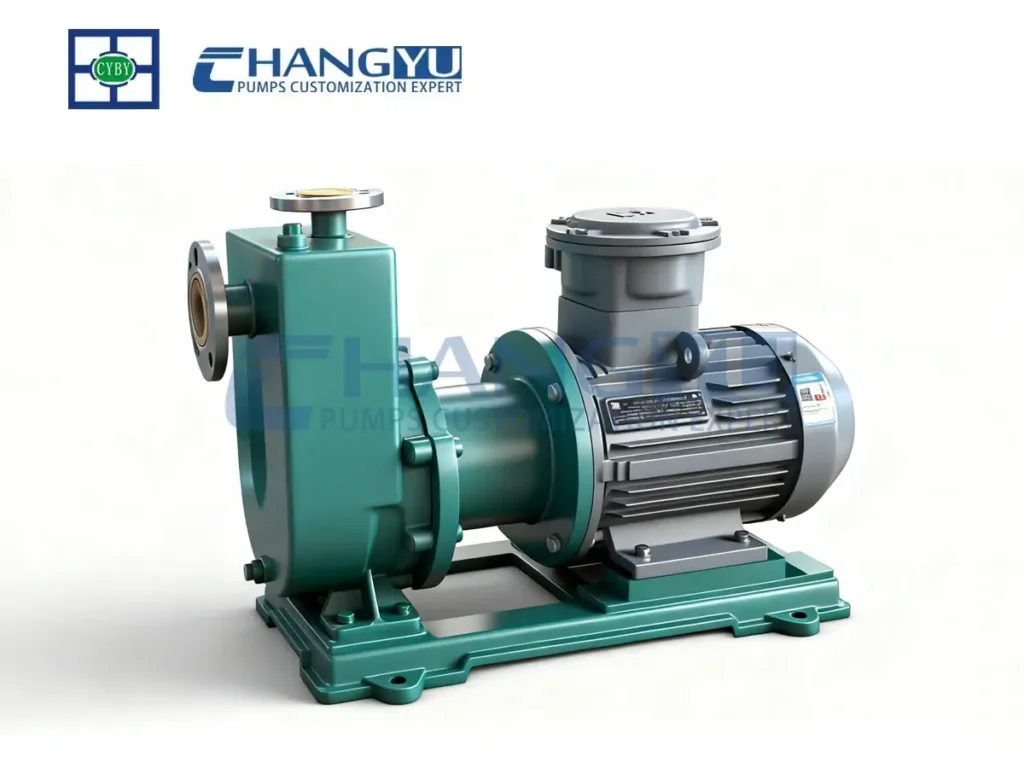
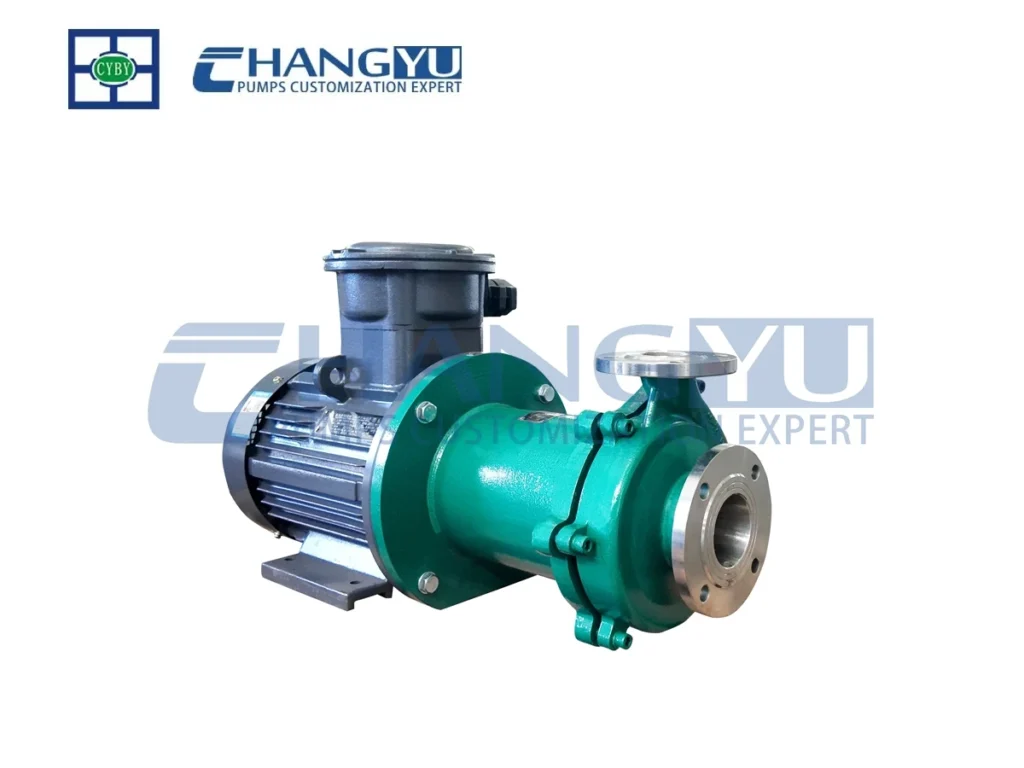
The core advantages of magnetic drive pumps lie in their fully sealed, leak-free, and corrosion-resistant characteristics, which completely resolve the issues of “spills, leaks, drips, and seepage” associated with flammable, explosive, toxic, and hazardous media in industries such as chemical processing. They require no separate lubrication or cooling systems, feature low power consumption and high efficiency, and include overload protection. As a result, they are widely used in industries with extremely high safety and sealing requirements, such as petrochemicals, pharmaceuticals, electroplating, food processing, and environmental protection.
Changyu Pump manufactures a full range of magnetic drive chemical pumps, corrosion-resistant plastic magnetic pumps, and industrial stainless steel magnetic pumps, designed to meet ISO-standard fluid handling requirements for safe, efficient, and continuous industrial operations.
Types of Magnetic Pumps
Magnetic pumps are grouped based on wetted material, temperature resistance, and operating conditions. Each type differs in structure and applicable fluid characteristics.
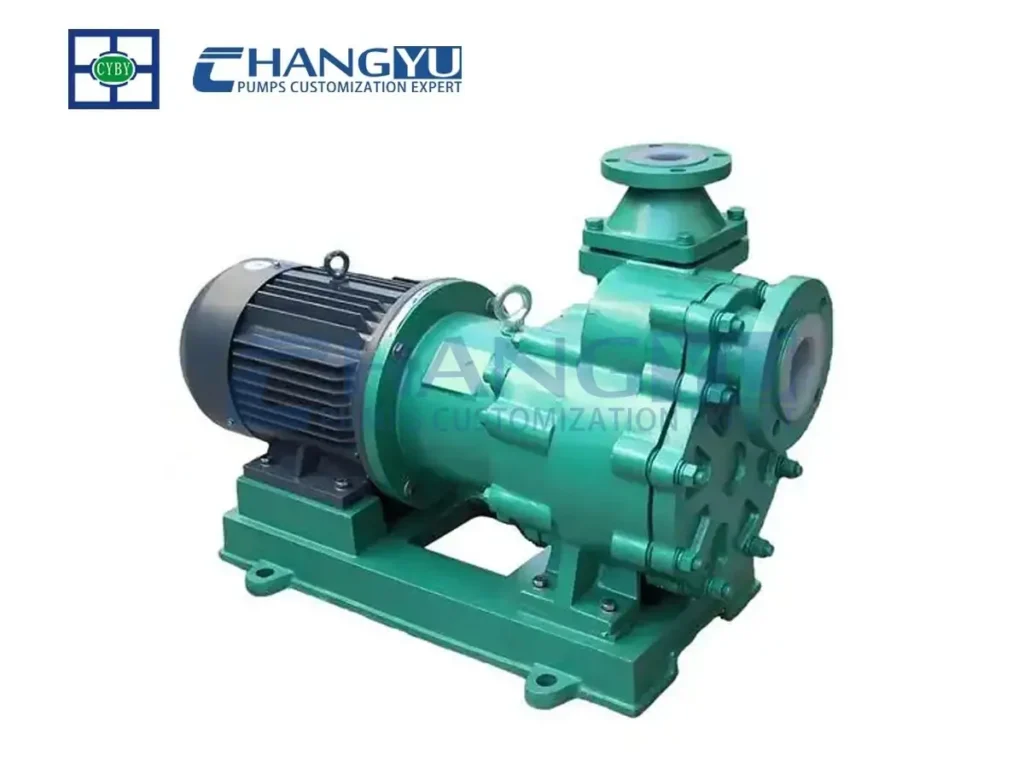
Fluoroplastic Lined Magnetic Pump (FEP / PFA / PTFE)
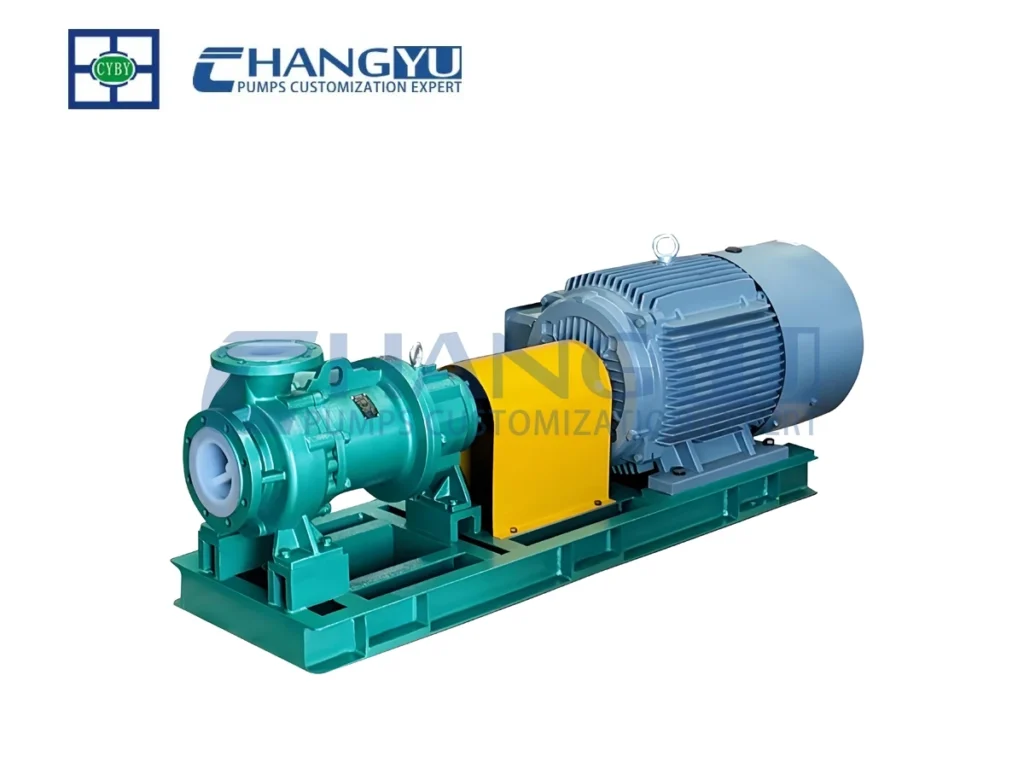
Fluoroplastic lined magnetic pumps use a steel shell with an internal lining of FEP, PFA, or PTFE. The lining material is in direct contact with the conveyed fluid, while the outer shell provides mechanical strength and pressure support.
FEP is commonly used for general chemical resistance applications. PFA is applied in higher temperature and higher purity chemical conditions. PTFE is used in media with strong corrosive properties and wider chemical compatibility requirements.
This structure is used in chemical transfer systems involving strong acids, alkalis, and mixed corrosive solutions where both corrosion resistance and pressure stability are required.
Stainless Steel Magnetic Pump
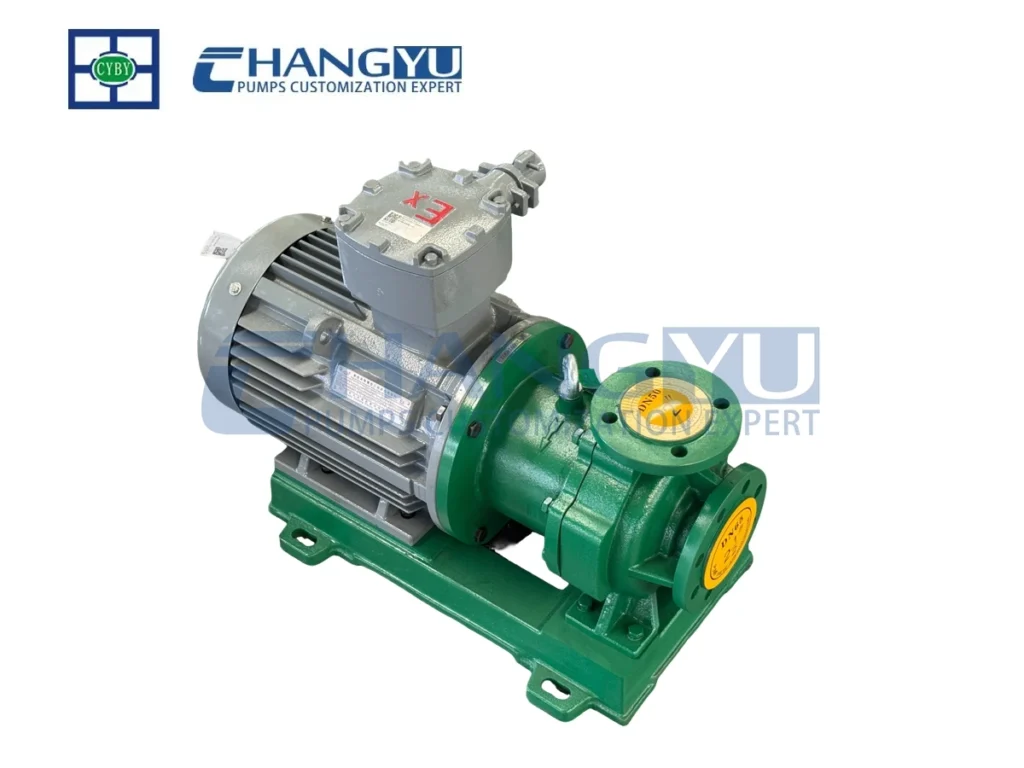
Stainless steel magnetic pumps use 304 or 316L as the main wetted material. The pump body is typically cast or precision welded stainless steel structure, and the magnetic coupling section is isolated from the process fluid to eliminate mechanical shaft seal contact.
Compared with plastic lined pumps, stainless steel construction provides higher structural rigidity and better resistance to pressure fluctuation, especially in systems with frequent start-stop conditions or unstable pipeline pressure.
This type is commonly used in solvent transfer systems, chemical dosing lines, and process equipment where fluid cleanliness and moderate corrosion resistance are required. In practice, 316L is selected for chloride-containing media, while 304 is used for general chemical solutions with lower corrosion intensity.

To compare magnetic drive with mechanically sealed, self-priming and immersed designs, see our guide to stainless steel industrial centrifugal pump configurations.
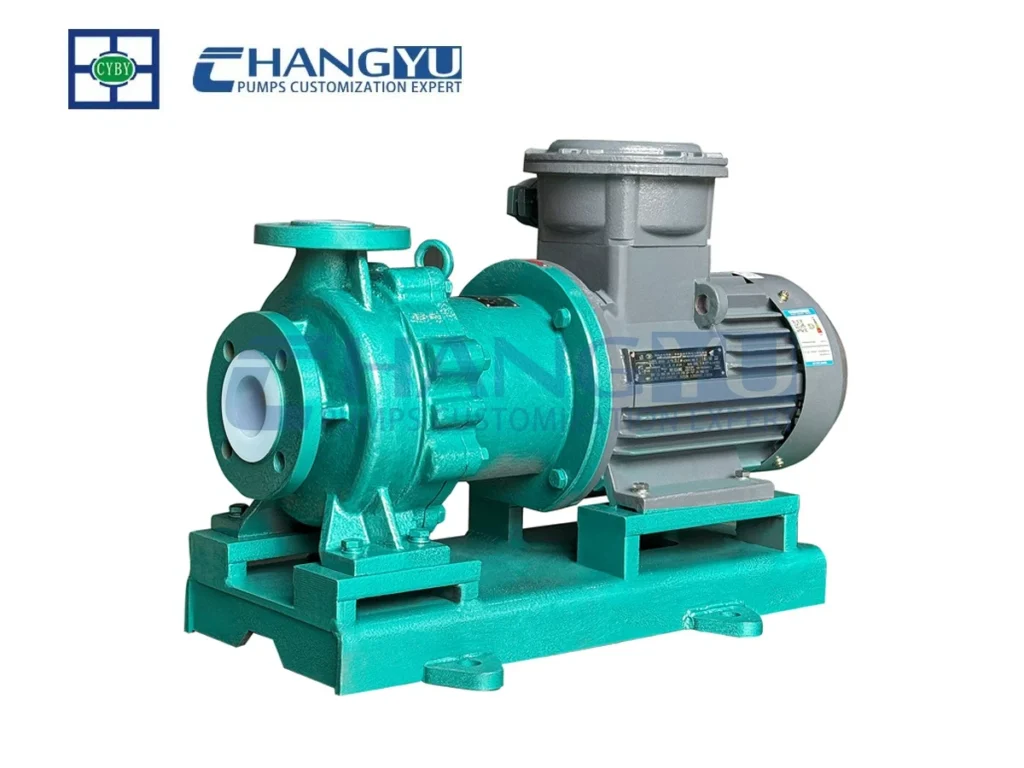
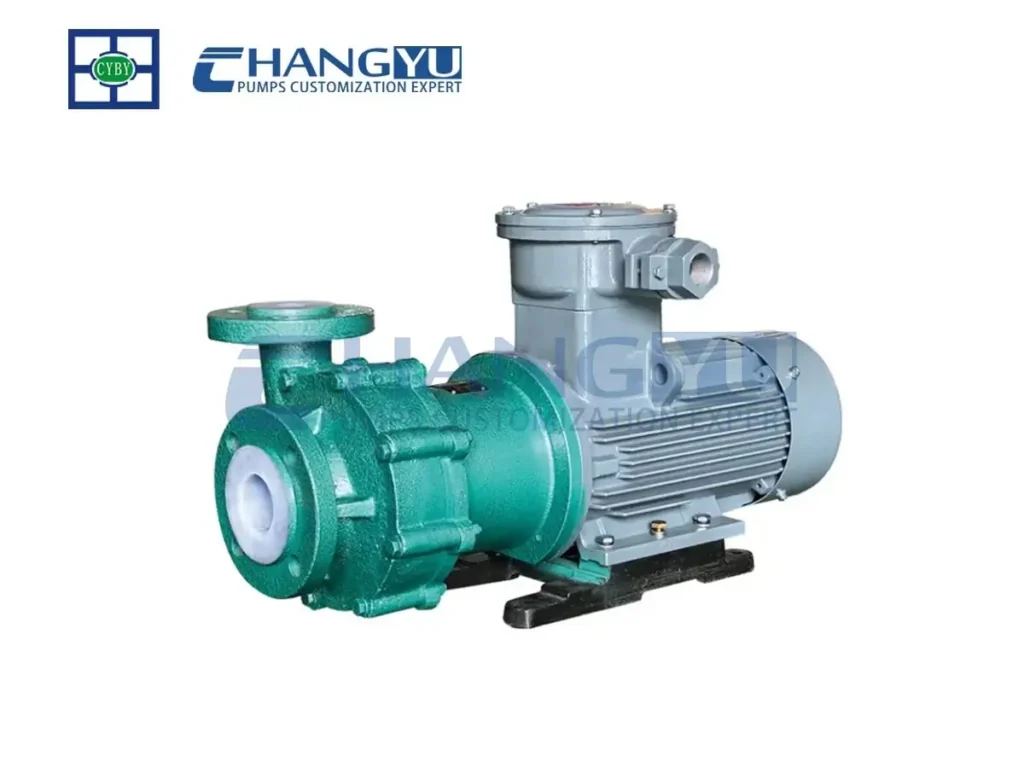
Chemical Process Magnetic Pump
Chemical process magnetic pumps use a seal-less magnetic drive structure where torque is transmitted through a magnetic coupling instead of a mechanical shaft seal. The pump casing is typically made of corrosion-resistant materials or lined structures depending on the chemical media being handled.
In chemical systems, this type is selected for continuous transfer of corrosive liquids such as acids, alkalis, and organic solvents. The absence of a mechanical seal reduces leakage risk in long-running process lines, especially where media volatility or toxicity is involved. Material selection is usually based on chemical concentration and operating temperature, with different configurations used for acid transfer, solvent circulation, or intermediate chemical storage systems.
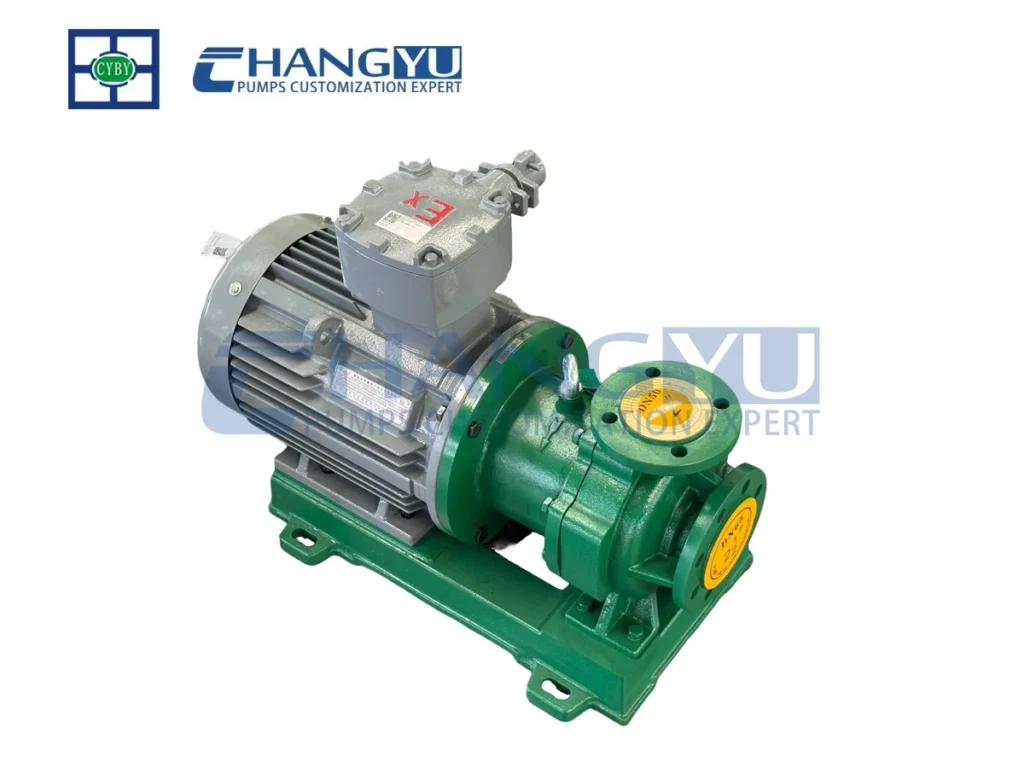
Industrial Magnetic Drive Pump
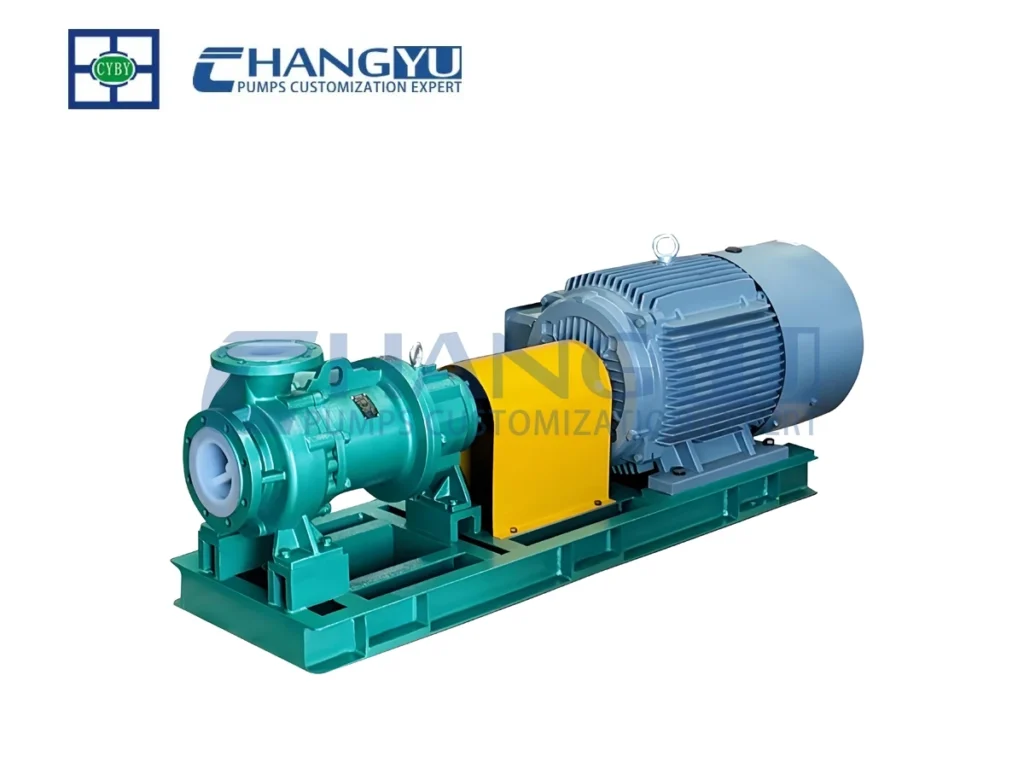
Industrial magnetic drive pumps are used in continuous operation systems with relatively high flow demand and long operating cycles. The structure follows the same magnetic coupling principle, with reinforced magnetic assemblies and upgraded bearing support to handle higher torque loads.
Compared with standard chemical duty pumps, industrial configurations are more focused on mechanical stability under long-term operation, including resistance to vibration, pipeline load changes, and frequent duty cycles. These pumps are commonly installed in large-scale production lines such as chemical manufacturing plants, centralized water treatment systems, and process transfer stations where stable flow delivery is required over extended periods.
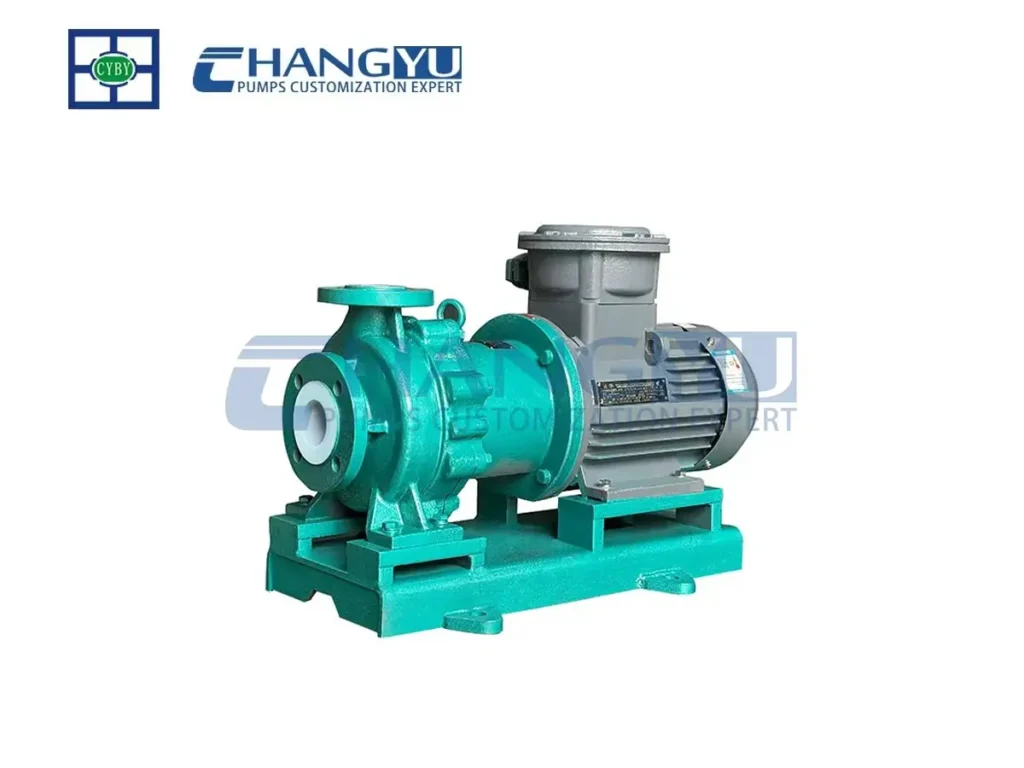
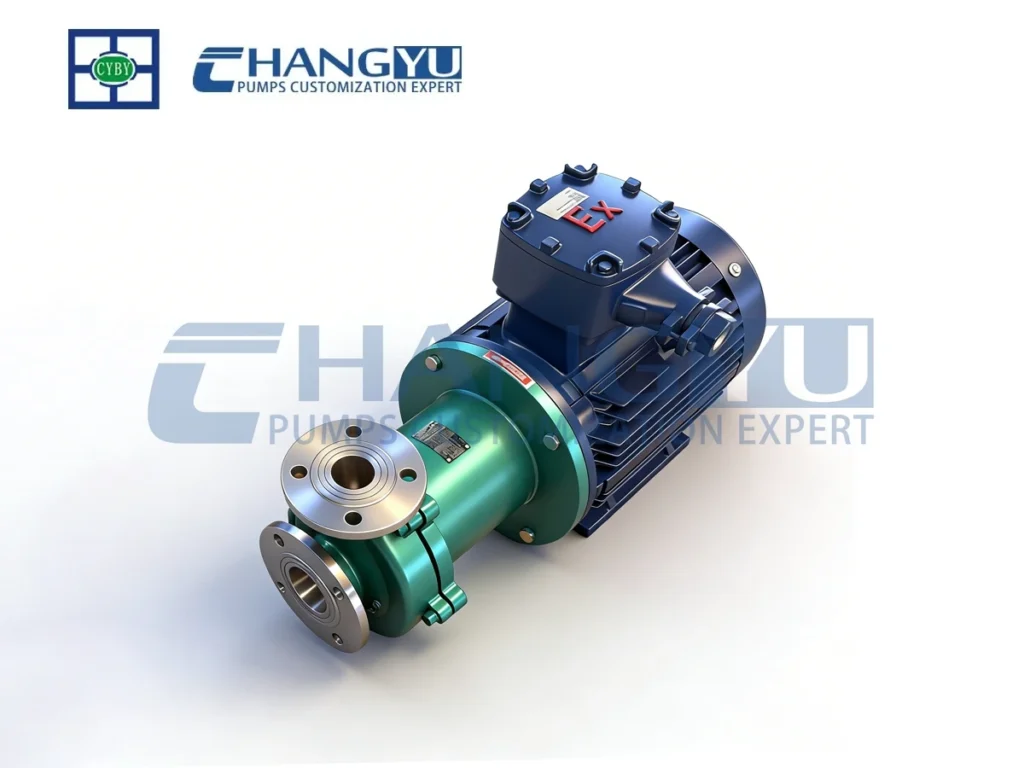
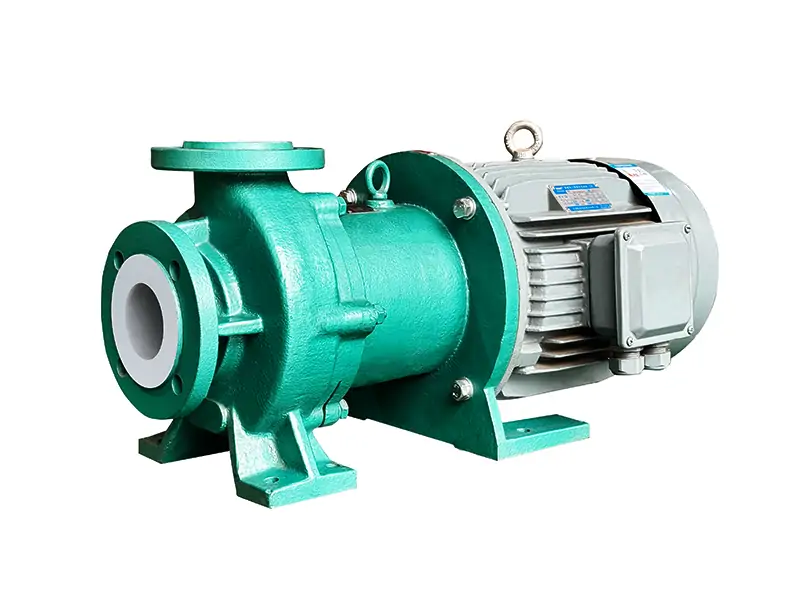
Magnetic Pump Applications
| Industry / System | Typical Media | Pump Type Selection | Material Notes |
|---|---|---|---|
| Chemical Industry | Acids, alkalis, solvents, intermediate chemicals | Chemical process magnetic pump / fluoroplastic lined pump | FEP / PFA / PTFE lined or stainless steel depending on concentration |
| Petrochemical System | Hydrocarbon liquids, light solvents | Stainless steel magnetic pump / industrial magnetic drive pump | 316L commonly used for solvent compatibility |
| Pharmaceutical Production | Active ingredients, purified liquids, solvents | Stainless steel magnetic pump | 316L or higher grade for cleanliness and corrosion control |
| Electroplating Industry | Acidic plating solutions, metal salts | Fluoroplastic lined magnetic pump | Strong acid resistance required (PFA / PTFE lining) |
| Water Treatment System | Industrial wastewater, chemical dosing liquids | Plastic lined / stainless steel magnetic pump | Material selected based on corrosion level and impurity content |
| Heat Transfer System | Thermal oil, circulating heating media | High temperature magnetic pump | High temperature resistant magnetic coupling required |
| Fine Chemical Process | Mixed chemical solutions, reagents | Chemical process magnetic pump | Material selection depends on reaction stability and corrosion behavior |
| Industrial Production Line | Process fluids, circulating liquids | Industrial magnetic drive pump | Focus on continuous operation and mechanical stability |
Magnetic Pump vs Traditional Chemical Pump
Magnetic drive pumps and traditional sealed centrifugal chemical pumps differ mainly in shaft sealing method, leakage risk, and maintenance structure. The comparison below summarizes typical engineering differences in chemical process applications.
| Item | Magnetic Pump | Traditional Chemical Pump |
|---|---|---|
| Sealing Structure | Seal-less design, torque transmitted via magnetic coupling | Mechanical shaft seal or packing seal required |
| Leakage Risk | No dynamic shaft seal, leakage points mainly at static gaskets | Seal wear may cause leakage over time |
| Maintenance Requirement | No seal replacement, maintenance mainly bearings and wear parts | Regular seal inspection and replacement required |
| Suitable Media | Corrosive, toxic, volatile, or high-purity liquids | General chemical liquids with lower sealing risk |
| Operating Condition | Stable for continuous or intermittent operation with low leakage tolerance | Sensitive to seal condition under long operation cycles |
| Energy Transfer | Magnetic coupling introduces slight transmission loss | Direct mechanical transmission from motor to impeller |
| System Safety | Reduced risk of external leakage in sealed process systems | Higher dependency on seal condition for safety |
Summary
Magnetic pumps remove the mechanical shaft seal as a failure point in chemical transfer systems. Traditional chemical pumps rely on seal systems to maintain containment between the motor and process fluid. Selection between the two types is typically based on fluid toxicity, corrosion level, and leakage tolerance requirements in the process design.
How to Select a Magnetic Pump
Magnetic pump selection is based on process conditions, fluid properties, and system requirements. The main selection parameters are flow rate, head, temperature, corrosion level, and particle content in the medium.
1. Fluid Type and Corrosiveness
The chemical composition of the fluid determines the wetted material.
- For general chemical solutions: 304 or 316L stainless steel is typically used
- For strong acids and alkalis: fluoroplastic lined structures (FEP / PFA / PTFE) are selected
- For high corrosion environments: high alloy materials such as 904L, TA2, or HC276 may be required
2. Operating Temperature
Temperature affects both magnetic coupling stability and material performance.
- Low to medium temperature conditions: standard stainless steel or lined pumps
- High temperature conditions: high temperature magnetic pumps with reinforced coupling structure
3. Flow Rate and System Pressure
Flow and pressure determine pump size and structural strength.
- Small flow systems: compact magnetic pumps used for dosing or laboratory systems
- Medium to large flow systems: industrial magnetic drive pumps with reinforced housing
- High pressure or unstable pipelines: stainless steel pump bodies with higher mechanical strength
4. Continuous or Intermittent Operation
Operating mode affects bearing wear and system stability.
- Continuous operation: industrial magnetic drive pumps with stable coupling design
- Intermittent operation: standard chemical process magnetic pumps
5. Media Cleanliness and Particle Content
Solid content in the fluid affects internal wear.
- Clean liquids: standard magnetic drive structure
- Fluids with slight particles: pumps with improved wear-resistant design or filtration before inlet
Summary
Magnetic pump selection is not based on a single parameter. In practice, material compatibility, temperature condition, and system pressure are evaluated together to determine pump type and configuration. The final selection is usually a balance between corrosion resistance, mechanical strength, and operating stability.
Customization & Technical Support
Magnetic pump selection cannot be determined by a single parameter. In most cases, it requires a combined evaluation of fluid properties, operating temperature, pressure conditions, corrosion level, and system layout. Different working conditions may lead to different material and structural configurations.
Changyu Pump provides customized magnetic pump solutions based on actual process requirements, including material selection, pump configuration, and application matching. Our engineering team supports selection review and technical clarification for different chemical and industrial systems.
For detailed selection guidance or application-specific recommendations, please contact us. Our technical team can assist in evaluating working conditions and providing suitable pump configuration suggestions for your project.
Email: [email protected]
TEL/WA: +86-13651913727