
إذا كان السائل في حوض التجميع لديك يحتوي على مواد مسببة للتآكل أو جسيمات صلبة، فقد تتعرض مضختك الحالية لتآكل متكرر في موانع التسرب وانسداد وانخفاض في معدل التدفق. قد تفكر في استخدام مضخة رأسية، لكنك غير متأكد من الفرق بين المضخة الرأسية الكابولية ومضخة حوض التجميع الرأسية والمضخة الرأسية الغاطسة. ابدأ بالتحقق من كيفية إسناد العمود، والمكونات الملامسة للسائل، وإمكانية بقاء المدخل مغمورًا بالقدر الكافي عند أدنى مستوى تشغيل.
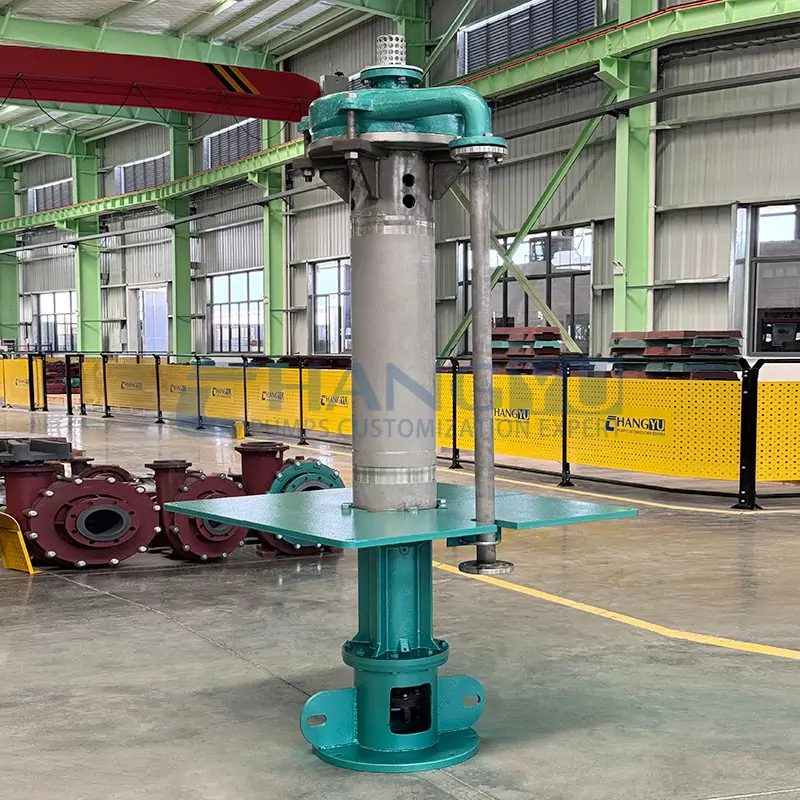
يشير مصطلح المضخات الرأسية الكابولية عادةً إلى مضخات طرد مركزي رأسية يكون فيها المحرك ومحامل الإسناد فوق مستوى السائل، ويمتد عمودها إلى أسفل، بينما تكون دافعتها مغمورة في السائل. لا يحتوي التصميم الكابولي الحقيقي على محامل إسناد أسفل مستوى السائل، مما يحد من تعرض المحامل المغمورة للجسيمات الكاشطة أو الأوساط المسببة للتآكل. ويخضع طول العمود غير المسنود لحدود تفرضها صلابة العمود وسرعته والأحمال الواقعة عليه؛ لذا فإن مجرد إطالة العمود لا تجعله مناسبًا لحوض تجميع بأي عمق.
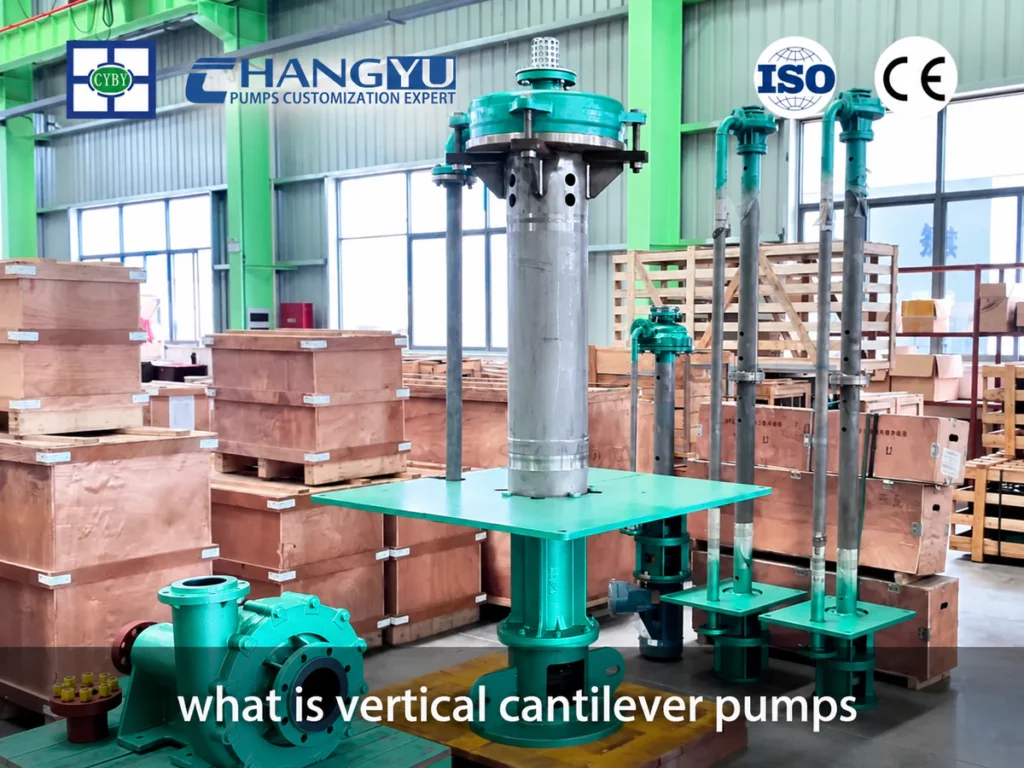
في Changyupump، نقيّم السائل ومستويات التشغيل وظروف التركيب لمساعدتك على التمييز بين تكوينات المضخات الرأسية. توضح هذه المقالة كيفية تحديد ما إذا كان التصميم الكابولي يناسب ظروف التشغيل لديك، والمعايير التي تحكم الاختيار، ودور منتجاتنا ذات الصلة ووثائقنا الفنية في هذا التقييم.
كيف تعمل المضخة الرأسية الكابولية
يدير المحرك العمود والدافعة. يدخل السائل إلى مركز الدافعة ويكتسب طاقة، ثم يمر عبر مجاري التدفق في جسم المضخة إلى المخرج قبل انتقاله عبر أنبوب الطرد. وهذا هو مبدأ تشغيل مضخة الطرد المركزي؛ أما مصطلح «العمودية ذات العمود الكابولي» فيصف ترتيب تركيبها ودعمها.
في المضخة العمودية ذات العمود الكابولي النموذجية، تتحمل المحامل الموجودة فوق صفيحة التثبيت أحمال الدوار، بينما يدير العمود الكابولي الدافعة المغمورة. ويغني مدخل السحب المغمور مباشرة في السائل عادةً عن أنبوب سحب خارجي. لكن قبل التشغيل، يجب غمر مدخل السحب بعمق كافٍ، وملء مجاري التدفق بالسائل بالقدر المطلوب، واستيفاء الحد الأدنى لمنسوب التشغيل الذي تحدده الشركة المصنعة.

يعد غياب محامل الدعم المغمورة وغياب مانع التسرب الميكانيكي ميزتين تصميميتين مختلفتين. وقد تظل هناك حاجة إلى حشوة إحكام أو عزل بالغاز أو ترتيبات إحكام أخرى، بحسب ضغط الوعاء وتطاير السائل ومتطلبات احتواء الأبخرة. ويشير مصطلح «عديمة مانع التسرب» إلى الاستغناء عن ترتيب تقليدي محدد لإحكام التسرب. ولا يثبت هذا المصطلح بحد ذاته أن المضخة ذات تصميم كابولي أو أن النظام الكامل خالٍ من مخاطر التسرب.
أنواع المضخات الرأسية
يشمل مصطلح المضخة العمودية فئة واسعة، تضم مضخات تسحب من الخزانات وأحواض التجميع، إضافةً إلى وحدات تُركّب في خطوط الأنابيب لتعزيز الضغط. نوصي بتحديد مصدر السائل والوظيفة المطلوبة أولاً، ثم مقارنة التدفق وارتفاع الضخ والمواد.
| الكلمة المفتاحية لنوع المضخة | التكوين والاستخدامات الشائعة | ما يجب التمييز بينه أثناء الاختيار |
|---|---|---|
| مضخة ناتئ عمودي | تدعم المحامل الموجودة فوق السائل عموداً كابولياً ودافعة مغمورة لتطبيقات أحواض التجميع والخزانات المناسبة. | لا توجد محامل دعم مغمورة؛ وطول العمود غير المدعوم محدود. |
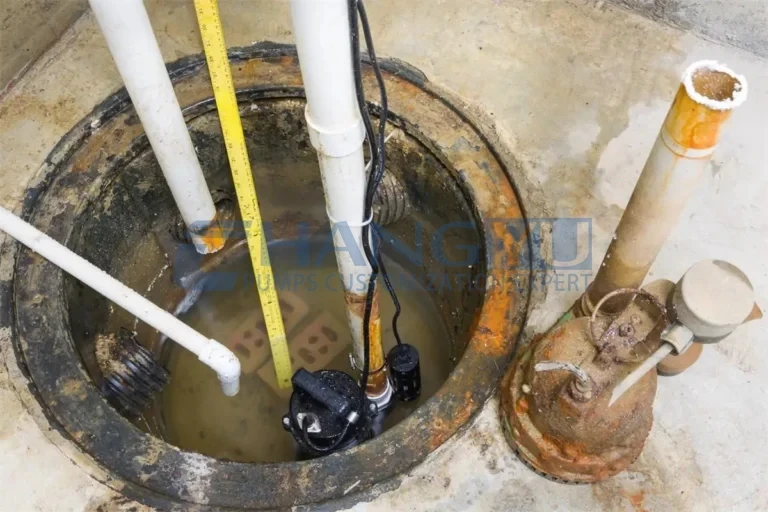
| مضخة الحوض العمودية | تسحب من حوض تجميع أو خزان؛ وقد تستخدم ترتيباً كابولياً أو ترتيبات أخرى لدعم العمود. | تصف كلمة «حوض التجميع» التطبيق، لا ترتيب المحامل. |
| مضخة عمودية خطية / مضخة طرد مركزي عمودية خطية | مضخة طرد مركزي رأسية تُركّب في خط أنابيب للتدوير وتعزيز الضغط. | لا يمتد عمودها عادةً لمسافة طويلة داخل حوض تجميع لسحب السائل. |
| مضخة رأسية متعددة المراحل / مضخة طرد مركزي رأسية متعددة المراحل | تزيد المراوح المتعاقبة الارتفاع الهيدروليكي، وتُستخدم هذه المضخات عادةً لإمدادات المياه وتعزيز الضغط. | لا يعني الارتفاع الهيدروليكي الأكبر ملاءمة المضخة للحمأة شديدة الكشط. |
| مضخة توربينية رأسية | تتضمن عادةً مجموعات أوعية مغمورة وأنبوب عمود وعمود إدارة لتطبيقات مثل سحب المياه. | تشتمل التصاميم الشائعة ذات العمود الطويل على محامل توجيه، وتختلف عن ترتيبات الدعم الكابولي الحقيقية. |
| مضخة غاطسة رأسية | قد تشير مصطلحات السوق إلى وحدة قابلة للغمر بالكامل أو إلى مضخة رأسية لا يُغمر منها سوى الجزء الهيدروليكي. | تحقّق من إمكانية غمر المحرك ومواضع المحامل ومتطلبات الحماية. |
يركز مصطلح مضخة الحمأة الرأسية على قدرة التعامل مع المواد الصلبة، بينما يصف مصطلح مضخة حوض التجميع الرأسية الموقع الذي يُسحب منه السائل. وقد يصف المصطلحان المضخة نفسها، لكن أياً منهما لا يغني عن التحقق من ترتيب الدعم الكابولي وقدرة تمرير المواد الصلبة والمواد المقاومة للتآكل.


الفرق بين المضخات الرأسية والأفقية
يبدأ الاختيار بين التركيب الرأسي والأفقي بتحديد مصدر السائل وكيفية ضمان إمداد موثوق للمروحة. في أحواض التجميع تحت الأرض والخزانات وأحواض المعادلة، يضع الترتيب الرأسي المغمور مدخل المضخة مباشرةً داخل السائل ويقلل المساحة الأرضية المطلوبة. وغالباً ما تُركّب المضخة الأفقية خارج حوض التجميع، حيث تكون الصيانة والاستبدال أسهل عادةً، لكن ترتيب مدخلها وأنابيب السحب يتطلبان تصميماً دقيقاً.
تحتاج المضخة الرأسية ذات العمود الكابولي إلى خلوص علوي كافٍ لرفع المضخة كاملةً أو مجموعة الدوّار لإجراء الصيانة. وقد تحدد الأرضيات أو الأنابيب أو منصات التشغيل فوق حوض التجميع مدى قابلية هذا الترتيب للتطبيق، قبل أن تصبح المساحة التي تشغلها المضخة عاملاً حاسماً. أما المضخة الأفقية فتحتاج إلى مساحة صيانة عند مستوى الأرضية؛ كما يمكن لترتيب السحب المغمور أسفل مستوى السائل أن يوفر ظروفاً ملائمة عند المدخل.
يفحص مهندسونا أيضًا تغيرات مستوى السائل، وفواقد الأنابيب، ودرجة حرارة السائل. يمكن أن يحسّن التركيب المغمور ظروف السحب، لكنه لا يزيل التجويف تلقائيًا: إذ تتكون فقاعات البخار عندما ينخفض الضغط الموضعي إلى مستوى متدنٍ للغاية، ثم تنهار عند استعادة الضغط. ويمكن أن يؤدي ارتفاع درجة حرارة السائل، أو انخفاض مستويات التشغيل، أو انسداد المدخل إلى حدوث التجويف في المضخة الرأسية أيضًا.
أين تُستخدم المضخات الرأسية الكابولية؟
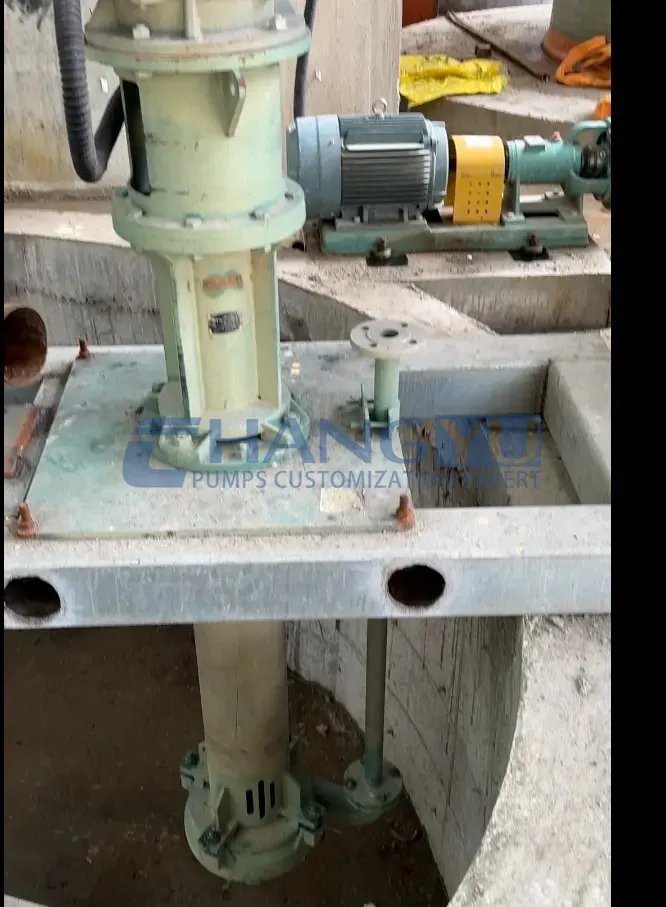
عندما تتسبب الجسيمات الموجودة في حوض التجميع في تآكل مكونات الدعم المغمورة، أو عندما يجعل السائل صيانة تلك المكونات صعبة، يجدر تقييم المضخات الرأسية الكابولية. وتشمل التطبيقات المعتادة أحواض تجميع مياه الصرف الصناعي، وتصريف سوائل العمليات المحتوية على جسيمات دقيقة، وأحواض الملاط في العمليات المعدنية، ونقل السوائل الكيميائية عند ملاءمة المواد المختارة لها.
تشترك هذه التطبيقات في الحاجة إلى سحب موثوق للسائل وتقليل نقاط الصيانة التي يصعب الوصول إليها تحت مستوى السائل. وفي حالة الملاط الكاشط، أي السائل المحتوي على جسيمات تسبب التآكل الميكانيكي، يجب أيضًا تقييم صلابة الجسيمات وحجمها وتركيز المواد الصلبة وهندسة ممرات التدفق. ولا يعالج الدعم الكابولي سوى جزء من المشكلة؛ إذ تظل المواد المقاومة للتآكل وتصميم الدافعة مؤثرين في الأداء أثناء التشغيل.
نعيد تقييم التهيئة إذا كان حوض التجميع عميقًا للغاية، أو كان السائل متطايرًا، أو كان الوعاء يعمل تحت ضغط مرتفع، أو كان الملاط عالي اللزوجة. وقد تكون مضخة مغمورة ذات عمود طويل، أو وحدة غاطسة بالكامل مناسبة، أو مضخة ملاط أفقية، أو مضخة إزاحة موجبة أكثر ملاءمة لبعض التطبيقات. ويجب أن يستند الاختيار إلى مهمة النقل، لا إلى تصنيف المضخة كرأسية فحسب.

كيف نختار مضخة رأسية كابولية
أولاً،, حدد تركيب السائل وتركيزه ودرجة حرارته العادية ودرجة حرارته القصوى. قد يتطلب الحمض أو القلوي نفسه مواد مختلفة باختلاف التركيز ودرجة الحرارة والشوائب. وبالنسبة إلى السوائل الملحية أو المختلطة، نحتاج أيضًا إلى معلومات عن الكلوريدات والمواد المؤكسدة وسوائل التنظيف. ولا تكفي قيمة الرقم الهيدروجيني وحدها عادةً لاختيار المواد المقاومة للتآكل.
ثانيًا،, حدد محتوى المواد الصلبة وسجّل أقصى حجم للجسيمات وصلابتها وشكلها ووجود الألياف. يتميز المكره المفتوح بريش مكشوفة ويمكن أن يساعد على مرور بعض السوائل المحتوية على مواد صلبة، لكن يجب التحقق من حجم الجسيمات المسموح به والخلوص والكفاءة لكل طراز. ولا يعني التصميم المفتوح أن جميع أنواع الجسيمات ستمر دون انسداد.
ثالثًا،, حدد معدل التدفق والرفع. معدل التدفق هو حجم السائل المطلوب نقله لكل وحدة زمن، أما الرفع فهو الطاقة التي تضيفها المضخة لكل وحدة وزن من السائل، ويُعبّر عنه عادةً بالأمتار. يشمل الرفع المطلوب للنظام فروق الارتفاع ومتطلبات ضغط المخرج والفواقد في الأنابيب والصمامات، وليس عمق الحوض وحده. تؤثر الكثافة في متطلبات قدرة العمود، كما يمكن أن تؤثر تغيرات اللزوجة في الأداء والكفاءة.
رابعًا،, قدّم المسافة من صفيحة التثبيت إلى المدخل، والخلوص عن القاع، ومستوى السائل العادي والأدنى، وأبعاد فتحة الحوض، وحيز الرفع المتاح. في الترتيب الكابولي الحقيقي، يجب التحقق من طول العمود المسموح به دون دعم. أما في ترتيب العمود الطويل المزود بمساند توجيه مغمورة، فيجب أيضًا التحقق من مواد الجلبة ومحمل التوجيه ومتطلبات التشحيم.
وأخيرًا،, نتحقق من منحنى الأداء عند نقطة التشغيل الفعلية، أي المزيج المطلوب من معدل التدفق والارتفاع الضاغط. ونقيّم أيضًا موقعها بالنسبة إلى BEP، أي نقطة أفضل كفاءة، لأن التشغيل بعيدًا عنها قد يزيد الاهتزاز والأحمال. وتستلزم ظروف المدخل التحقق من NPSH، أي صافي ارتفاع السحب الموجب، مع توفير هامش مناسب لطراز المضخة وظروف تشغيلها. وينبغي أيضًا توفير الحماية من انخفاض مستوى السائل والحمل الزائد عند الاقتضاء.
If you are unsure which option to choose, contact our engineering team. We will assist within 24 hours.
البريد الإلكتروني: [email protected]
الهاتف/واتساب: +86-13651913727
أي سلسلة من مضخات Changyupump الرأسية تناسب تطبيقك
If you are looking for a vertical cantilever pump, send us your purchasing specification and sump drawing first. We will establish whether the project explicitly requires a design without submerged support bearings, then evaluate the configurations we can offer. Changyupump’s FYH and FY are immersed pump series relevant to tank and sump transfer. Whether a particular model meets the cantilever requirement must be confirmed against its structural drawing and technical agreement.
FYH Series for corrosive tank liquids
For corrosive tank liquids, acid or alkali process drainage and chemical wastewater, we can begin by evaluating the المضخة شبه الغاطسة الفلورية البلاستيكية الفلورية من سلسلة FYH. The series uses an immersed vertical arrangement, and we offer material configurations including FEP and UHMWPE. FEP is a fluoroplastic, while UHMWPE is ultra-high-molecular-weight polyethylene. Their chemical resistance, wear resistance and temperature limits differ, so they are not interchangeable.
When customers want to reduce maintenance associated with conventional mechanical seals, we discuss the options in relation to the specific FYH construction. If the liquid contains particles, we also check whether the impeller, sleeves and guide supports suit the medium. An immersed installation, the removal of a particular mechanical seal and the absence of submerged bearings are separate features that we clarify during selection.
FY Series for metal material options
For duties suited to metallic wetted parts, we can evaluate the مضخة غاطسة عمودية غاطسة من الفولاذ المقاوم للصدأ من سلسلة FY. We offer material options including 304, 316, 316L, 2205 and 2507; 2205 and 2507 are duplex stainless steels. These grades identify configurations available for discussion. Final selection still depends on liquid composition, concentration, temperature and solids.
The immersed pump end of the FY draws directly from a tank or sump. Depending on the duty, we can discuss open or semi-open impellers, immersion length and motor configuration. If your specification requires all support bearings to remain above the liquid level, we will check the drawing before confirming a configuration, rather than treating the immersed-pump name as a structural commitment.
CYL and CDL Series for circulation and pressure boosting
For pipeline circulation or pressure boosting, compare the مضخة الطرد المركزي الرأسية ذات التوصيل الخطي من سلسلة CYL. For clean liquids or other media permitted by the model specification, a مضخة طرد مركزي رأسية متعددة المراحل من سلسلة CDL may be considered where greater head is needed. These series address pipeline transfer and multistage boosting respectively; they do not directly replace a sump intake arrangement for solids-bearing liquids.
We introduce these series to help narrow your options according to the duty. A quotation should specify the materials, impeller, bearing arrangement, immersion length and duty point, rather than only a model number or maximum flow.
الأسئلة الشائعة حول المضخات الرأسية
The following questions cover installation, maintenance and related pump types so that you can request a quotation with clearer technical requirements.
How does a vertical turbine pump work
A vertical turbine pump usually transfers energy to the liquid through submerged impellers. The liquid passes through the guide components into the column pipe and then to the surface discharge. In a common multistage bowl assembly, successive impellers add head. This is the basic process described by vertical turbine pump working principle.
Common long-shaft configurations use guide bearings to support the drive shaft; a submersible vertical turbine pump may instead use a submerged motor. When comparing either with a vertical cantilever pump, check the support arrangement, motor position and installation depth. Calling both a vertical pump does not mean that their installation or maintenance requirements are the same.
Does vertical turbine pump installation apply to vertical cantilever pumps
No. The procedures are not directly interchangeable. A vertical turbine pump installation commonly involves bowl assemblies, sectional column pipes, long-shaft connections and bearing lubrication. For a vertical cantilever pump, the main checks include unsupported shaft length, mounting-plate rigidity, running clearances and lifting space.
Both types require checks of motor rotation, minimum operating level, inlet-to-bottom clearance and independent support for discharge piping. Use the installation drawing for the specific model to establish clearances and assembly tolerances, rather than using another pump type’s manual as the installation specification.
Can a vertical cantilever pump run dry
The word cantilever alone does not establish that dry running is permitted. The absence of submerged support bearings may reduce some risks associated with liquid-lubricated components, but internal rubbing, heat buildup, residual liquid and other sealing components must still be considered. Lubrication conditions are especially important for immersed pumps that have guide bearings or sleeves.
We recommend model-specific low-level shutdown protection and written confirmation of whether temporary loss of liquid is permitted and for how long. Intermittent operation does not mean continuous operation without liquid is acceptable.
How do you maintain and troubleshoot vertical cantilever pumps?
Routine maintenance should track changes in flow, discharge pressure, current, vibration and bearing temperature, with lubrication of the upper bearings as specified. During shutdown inspections, check the impeller and casing for wear, changes in clearance, corrosion and loose fasteners. If the actual pump supplied has submerged guide supports, inspect its sleeves and guide bearings as well.
If flow declines, first check liquid level, rotation, inlet or outlet blockage and valve positions. If vibration increases, investigate air entrainment, cavitation, impeller imbalance, alignment and support condition. Before inspection, stop and isolate the equipment, then drain and clean it as required by the liquid being handled. A vertical turbine pump maintenance program and vertical turbine pump troubleshooting may also involve long-shaft guide bearings, sectional shafts and bowl assemblies; those procedures cannot simply be applied to a cantilever pump.
Can a vertical slurry pump handle every type of slurry
No. The suitability of a vertical slurry pump depends on particle hardness, maximum size, solids concentration, settling behavior and corrosiveness. Fine-particle chemical wastewater and high-concentration mineral slurry can have very different material, passage and power requirements.
For settling media, assess agitation, deposits at the sump bottom and shutdown flushing arrangements. Wear-resistant pump construction can slow wear, but it cannot resolve every sedimentation or system blockage problem.
Can vertical booster pumps replace a vertical sump pump
Usually not as a direct replacement. The main function of vertical booster pumps is to increase pipeline pressure, typically where suitable inlet conditions are already available. A vertical sump pump draws liquid from a sump. Their inlet conditions and permissible media may differ.
If a site needs both sump intake and higher discharge pressure, we assess whether a single pump can meet the duty or whether staged transfer and separate boosting are needed. The ability of downstream equipment to handle any particles must be checked at the same time.
What should you ask vertical pump manufacturers before ordering
When comparing vertical pump manufacturers, ask each supplier to base its proposal on the same duty conditions and specify the duty point, structural drawing, materials list, minimum liquid level, immersion length, sealing and lubrication arrangements, spare parts and scope of supply. For vertical cantilever pumps, ask specifically whether any support bearings are below the liquid level.
If you are also comparing vertical turbine pump manufacturers or vertical turbine pumps suppliers, first confirm whether the configuration offered suits your sump and liquid. Fire protection, deep-well abstraction and chemical wastewater transfer have different technical requirements. A supplier’s use of the term vertical pump does not replace a review of its specific product.
لماذا تتعاون مع Changyupump لاختيار المضخة الرأسية
We are Changyupump, Anhui Changyu Pump and Valve Manufacturing Co., Ltd., established in 2006. Our product range includes chemical centrifugal pumps, slurry pumps, magnetic drive pumps and immersed pumps. For corrosion, abrasion and sump intake problems, we evaluate the liquid conditions together with the equipment configuration.
You can discuss the FYH and FY immersed pump series with us, or compare CYL and CDL products for pipeline circulation and boosting. Our engineers first need to understand the duty, then confirm a model and configuration. Where the project explicitly requires no submerged bearings, we include that requirement in the proposal review and base the supply on the confirmed drawings and technical documents.
أين يمكنك العثور على وثائق المضخات الرأسية بصيغة PDF؟
To review construction, performance parameters and installation information before requesting a quotation, start with the semi-submersible pump catalogue PDF linked from our FYH product page. It covers several chemical immersed pump series, so locate the relevant model and avoid applying the construction or temperature limits of one series to another.
For pipeline transfer and boosting arrangements, refer to the vertical inline pump specifications PDF و vertical multistage centrifugal pump specifications PDF respectively.
If you are looking for a vertical cantilever pump PDF, tell us the required configuration and duty conditions. We will provide the relevant documents once the structure is confirmed. A general catalogue supports initial comparison; final selection also requires the model-specific performance curve, installation drawing and agreed technical conditions.
تواصل مع Changyupump بشأن تطبيق المضخة الرأسية لديك
Selecting vertical cantilever pumps means establishing whether cantilever support suits the liquid, immersion length and site installation conditions. Bearings located above the liquid can reduce submerged maintenance points, while actual performance still depends on materials, solids passage, duty point and level control. Deeper sumps, different corrosion conditions and pipeline boosting duties require the corresponding immersed, inline or multistage configuration.
If you face repeated seal damage, sump-pump blockage or declining flow, or are unsure whether you need a true design without submerged bearings, contact Changyupump. Please provide the liquid name and concentration, temperature, solids content and maximum particle size, required flow and head, sump dimensions and minimum liquid level. An existing pump nameplate, failure photographs or a sump drawing will also help us understand the problem more quickly.
البريد الإلكتروني: [email protected]
الهاتف/واتساب: +86-13651913727