
1. What Is a Heavy Duty Slurry Pump?
Heavy duty slurry pump — a rugged, high-durability centrifugal pump specifically engineered to transport abrasive, high-density, and often corrosive solid-liquid mixtures—collectively known as slurry—in demanding industrial environments. In industrial terms, slurry is a semi-liquid mixture of solid particles suspended in a liquid medium—typically water, but also acids, alkalis, or hydrocarbon solutions depending on the process. Common examples include ore concentrate in mining, limestone slurry in power plant FGD systems, and crystallized product streams in chemical manufacturing.
Unlike standard water pumps or light-duty process pumps, a heavy duty slurry pump is built with thicker casing sections, wear-resistant wetted components, and reinforced bearing assemblies designed to withstand the relentless erosive forces of suspended solid particles traveling at high velocities through the pump volute and impeller. At its core, a heavy duty centrifugal slurry pump operates on the principle of centrifugal force — a rotating impeller converts mechanical energy from the drive motor into kinetic energy within the fluid, generating the pressure required to move dense, solids-laden media through pipeline systems.
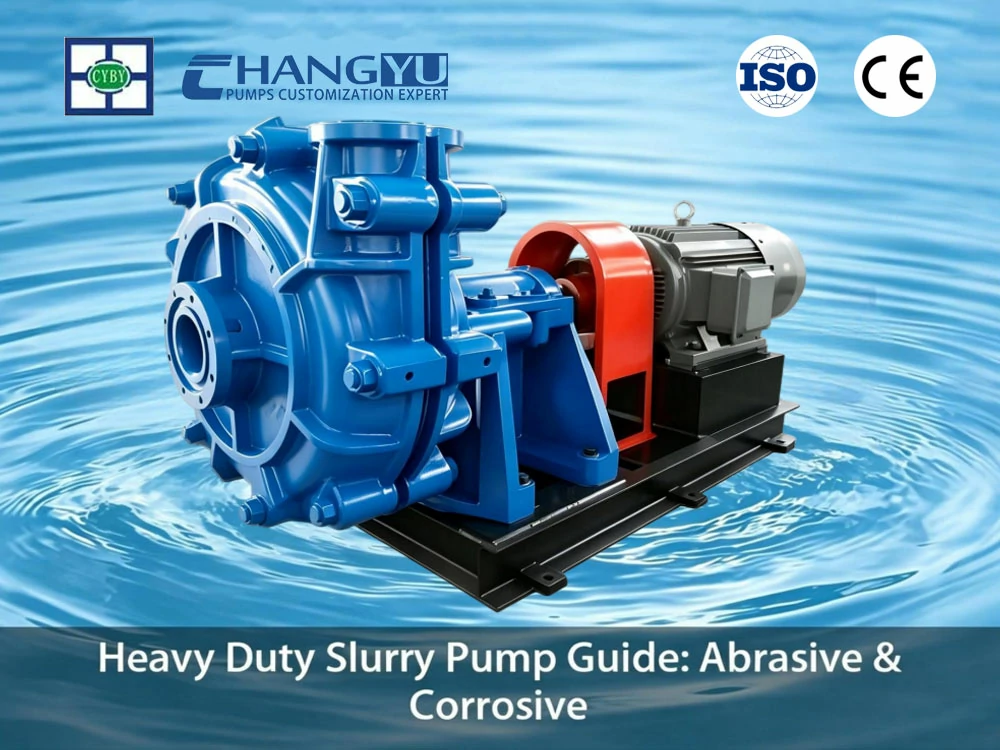
What distinguishes a true heavy duty slurry pump from a conventional centrifugal pump is not just its operating principle—it is the combination of deliberate material choices, structural reinforcement, and hydraulic optimization that enables reliable performance under conditions that would destroy ordinary pumping equipment within hours. Engineers at Changyu Pump have spent over two decades optimizing heavy duty slurry pump designs to solve exactly these challenges—reducing wear life variability and total cost of ownership across thousands of global installations. Field data consistently shows that properly specified slurry pumps operating in abrasive environments can achieve a 3- to 5-times improvement in wear life—making initial pump selection the single most critical decision in any slurry pump application.
2. Why Trust This Guide: Changyu Pump’s 20+ Years of Field Experience
The recommendations in this guide are not drawn from textbooks or theoretical models alone — they are built on more than 20 years of hands-on engineering experience in designing, manufacturing, and field-deploying heavy duty slurry pump solutions across mining, chemical processing, steel production, environmental engineering, and power generation industries. Our engineering team has witnessed firsthand the failure modes that shorten pump service life: impeller erosion from angular particles, casing perforation from combined corrosion and abrasion, premature bearing failure from solids ingress, and chronic seal leakage on high-solids duties.
Each of these failure modes represents real downtime cost for operators — and each has informed the design improvements embedded in our current product lines. This guide brings that accumulated experience to you in a structured, actionable format.
3. Types of Heavy Duty Slurry Pumps
Understanding the fundamental pump configurations is essential before evaluating specific models. The type of heavy duty slurry pump you choose directly affects installation flexibility, maintenance access, and long-term operating cost. Whether you need an industrial slurry pump for a fixed process plant or a submersible unit for a deep sump, matching the configuration to the installation is the first step in building a reliable system.
3.1 Horizontal Heavy Duty Slurry Pumps — The Industry Workhorse
The horizontal heavy duty slurry pump is the most widely deployed configuration in mining, mineral processing, and chemical plants worldwide. These pumps are typically dry-installed on a baseplate or skid, with the pump shaft oriented horizontally. Their cantilevered design allows the bearing assembly to remain isolated from the wet end, reducing contamination risk. Horizontal slurry pumps are ideally suited for high-flow, high-head applications where the pump operates as part of a fixed process system—hydrocyclone feed, flotation circuits, tailings transfer, and regrind mill discharge are all classic horizontal pump duties.
Key advantages of horizontal heavy duty slurry pumps:
- Easier access to wet-end components for routine maintenance
- Higher efficiency at design duty points compared to vertical alternatives
- Wide range of sizes—from 25 mm (1″) to 450 mm (18″) discharge diameters
- Compatible with both high-chrome alloy and elastomer-lined constructions
What this means for you: If your application involves a fixed installation with adequate floor space and the pump operates against moderate to high system head, a horizontal heavy duty slurry pump will almost always deliver the lowest total cost of ownership over the equipment lifecycle.
3.2 Vertical and Cantilever Heavy Duty Slurry Pumps — For Wet Pit & Sump Applications
Vertical heavy duty slurry pump designs place the motor above the liquid level, with a long shaft extending down into the sump or pit. Cantilever configurations eliminate any submerged bearings, making them ideal for applications where the pump must operate partially or fully submerged in abrasive slurry. These pumps excel in sump drainage, floor washdown collection, and mill spillage recovery duties. The global market for heavy duty vertical slurry pumps alone was valued at approximately USD 1.28 billion in 2025, reflecting their critical role in mining and processing infrastructure.
What this means for you: If your installation has fluctuating liquid levels, confined sump space, or requires a pump that can handle occasional dry-running without immediate damage, a vertical or cantilever design should be your starting point.
3.3 Submersible Heavy Duty Slurry Pumps — For Deep and Hard-to-Access Locations
Submersible heavy duty slurry pump units integrate the motor and pump into a single sealed assembly that operates fully submerged. These pumps are equipped with agitators or mechanical stirrers to keep settled solids in suspension, enabling smooth suction even in deep, sediment-heavy environments. Modern submersible slurry pumps from leading manufacturers can handle solids concentrations of up to 70% by weight and are available with motor ratings up to 1,000 HP.
3.4 Quick Comparison: Horizontal vs. Vertical vs. Submersible Slurry Pumps
| Selection Factor | Horizontal Heavy Duty Slurry Pump | Vertical Cantilever Slurry Pump | Submersible Slurry Pump |
|---|---|---|---|
| Installation | Dry-installed on baseplate/skid | Motor above liquid; shaft submerged | Fully submerged motor + pump unit |
| Best Fit | Fixed process systems, high-head duties, long-distance transport | Sumps, pits, fluctuating liquid levels, mill spillage | Deep inaccessible sumps, dredging, confined spaces |
| Maintenance Access | Easy access to wet-end; routine service on-site | Motor remains accessible above liquid; shaft inspection requires lifting | Requires complete unit retrieval for servicing |
| Solids Handling | Up to 40% by weight standard; higher with specialized designs | Depends on impeller design; typically up to 40% | Up to 70% solids with agitator-assisted models |
| Dry-Run Tolerance | Limited; requires gland seal water in many configurations | Cantilever design tolerates intermittent dry running | Requires submersion for cooling |
Key Takeaway: There is no universally “better” pump type. The optimal configuration depends on your installation constraints, system duty point, solids concentration, and maintenance access — which is why a proper slurry pump selection guide methodology is essential. When comparing a heavy duty pump vs standard pump, the heavy duty unit’s reinforced construction becomes indispensable as soon as abrasive solids enter the stream. Still unsure which pump type fits your installation? Welcome to contact Changyu Pump engineers for a free technical consultation.
4. Key Materials for Heavy Duty Slurry Pump Construction
Material selection is arguably the most consequential decision in specifying a heavy duty slurry pump. The wetted components—impeller, volute or casing, wear plates, and shaft sleeve—are in constant contact with an abrasive, often corrosive medium traveling at high velocity. Choosing the wrong material can reduce pump service life from years to weeks. A structured slurry pump selection guide always begins with a thorough material compatibility analysis.
4.1 High-Chrome White Iron — The Gold Standard for Abrasion Resistance
High-chrome white iron, also known as high-chromium cast iron, is the most widely used material for heavy duty slurry pump wet-end components. With chromium content ranging from 25% to 30%, this alloy achieves Brinell hardness values exceeding 600 BHN, making it among the hardest cast materials available for pump construction. Its exceptional abrasion resistant properties make it the first-choice material for applications involving coarse, angular, high-hardness particles—typical in mining, sand and gravel, and mineral processing operations. A high chrome slurry pump is the standard recommendation for neutral-pH abrasive slurries.
What this means for you: If your slurry contains hard, angular particles (such as silica sand, ore concentrate, or coal ash) and chemical corrosion is secondary, high-chrome white iron will deliver the longest wear life per dollar invested. However, it has limited corrosion resistance in acidic environments below approximately pH 4. For neutral-pH abrasive slurries where high-chrome white iron is the optimal material choice, Changyu Pump’s HB Abrasive Slurry Pump Series delivers exceptional wear life.
4.2 Elastomer Linings — Natural Rubber & Polyurethane for Fine Particle Slurries
For slurries dominated by fine, rounded particles (such as tailings, limestone slurry, or kaolin clay), elastomer-lined heavy duty slurry pump casings and impellers offer distinct advantages. Natural rubber linings absorb particle impact energy, reducing erosive wear, while polyurethane provides excellent resistance to cutting wear from sharper particles. A rubber lined slurry pump is a common specification in tailings and FGD applications. Elastomer-lined pumps are typically limited to temperatures below 70°C (160°F) and are incompatible with strong solvents or oxidizing chemicals that can degrade the lining material.
4.3 High-Chromium Alloy Steel & Duplex Stainless Steel — Balancing Wear and Corrosion Resistance
When the pumped medium presents both abrasive wear and chemical corrosion—common in hydrometallurgical processing, phosphoric acid production, and flue gas desulfurization (FGD) systems—neither high-chrome iron nor elastomers alone may be sufficient. High-chromium alloy steels with 15–30% chromium content, such as Cr27 and Cr28 grades, combine excellent abrasion resistant performance with moderate corrosion resistance. For more aggressive chemical environments, duplex stainless steels (such as CD4MCu) provide superior pitting and crevice corrosion resistance while maintaining reasonable hardness for moderate abrasion duties.
4.4 Fluoroplastic Linings — For Aggressively Corrosive, Abrasive Slurries
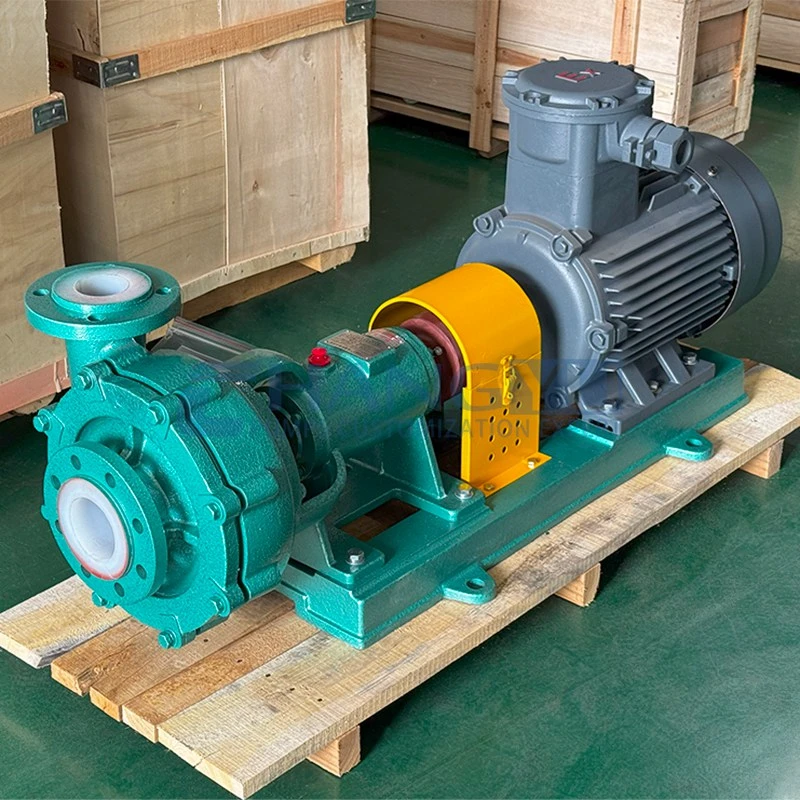
For the most demanding combined-duty applications—where slurry contains both abrasive solid particles and highly corrosive chemicals (strong acids, oxidizing agents, or mixed acid streams)—fluoroplastic-lined heavy duty slurry pump constructions offer unmatched protection. Materials such as PTFE (polytetrafluoroethylene), FEP (fluorinated ethylene propylene), and UHMW-PE (ultra-high molecular weight polyethylene) provide near-universal chemical resistance while absorbing moderate particle impact. Changyu Pump pioneered the integration of fluoroplastic lining technology in slurry pump applications, with lining thicknesses ranging from 8 to 20 mm, enabling these pumps to handle acidic slurries that would destroy both metal and conventional elastomer components within days. This technology is standard in Changyu Pump’s CYB-ZKJ Chemical Horizontal Slurry Pump.
What this means for you: If your operation involves pumping acidic or caustic slurries—such as those found in chemical processing, titanium dioxide production, or non-ferrous metal smelting—a fluoroplastic-lined pump will dramatically reduce replacement frequency and unplanned downtime compared to metal pumps.
4.5 Material Selection Comparison Table
| Material | Hardness | Abrasion Resistance | Corrosion Resistance | Max Temperature | Typical Cost Index | Best Application |
|---|---|---|---|---|---|---|
| High-Chrome White Iron (Cr25-30%) | 600+ BHN | Excellent | Low (poor below pH 4) | 110°C | $$ | Coarse abrasive particles, neutral pH, mining & aggregates |
| Natural Rubber Lining | N/A (elastomer) | Good (fine particles) | Moderate (acids OK, solvents no) | 70°C | $ | Fine, rounded particles, tailings, limestone slurry |
| Polyurethane Lining | N/A (elastomer) | Very Good (cutting wear) | Moderate | 70°C | $ | Sharp fine particles, moderate abrasion |
| Duplex Stainless Steel (CD4MCu) | 280-350 BHN | Moderate | Good (pH 2-12 range) | 110°C | $$$ | Combined corrosion & abrasion, hydrometallurgy, FGD |
| Fluoroplastic Lined (FEP/PTFE/UHMW-PE) | N/A (lining) | Moderate | Excellent (near-universal) | 90-120°C | $$$$ | Strong acids, oxidizing agents, mixed chemical slurries |
| High-Chrome Alloy Steel (Cr27-28) | 450-600 BHN | Very Good | Moderate | 110°C | $$$ | High abrasion + moderate corrosion, mineral processing |
Notes: Need help selecting the right material for your slurry composition? Send your slurry analysis data to Changyu Pump for a free material recommendation.
5. How to Select the Right Heavy Duty Slurry Pump: A Step-by-Step Framework
A systematic slurry pump selection guide methodology is the difference between a heavy duty slurry pump that delivers years of reliable service and one that becomes a recurring maintenance burden. Engineers at Changyu Pump recommend the following structured approach to slurry pump sizing and configuration.
Step 1: Characterize the Slurry Properties
Before selecting any pump, you must quantify the medium it will handle. Key slurry properties include:
- Solids concentration (by weight or volume)—higher concentrations demand more robust pump construction
- Particle size distribution (PSD)—angular, coarse particles cause significantly more wear than fine, rounded particles
- Slurry specific gravity (SG)—affects power requirements and pipe friction losses
- pH and chemical composition—determines the corrosion component of the wear mechanism
- Temperature—impacts material selection, seal type, and bearing lubrication requirements
- Viscosity—non-Newtonian slurries require different hydraulic design approaches
What this means for you: A slurry that appears “similar” to another in basic appearance can behave completely differently inside a pump. Quantify all six properties before proceeding to pump selection. Even a single unexamined variable can reduce predicted pump life by 50% or more.
Step 2: Define the System Duty Point
The pump must deliver the required flow rate against the total dynamic head (TDH) of the system. Calculating TDH requires accounting for:
- Static head (elevation difference between suction and discharge)
- Friction losses through the entire pipeline length, including bends, valves, and fittings
- Velocity head at the discharge point
- Any pressure requirements at the destination vessel
Accurate slurry pump sizing at this stage ensures the pump operates near its best efficiency point (BEP) on the slurry pump performance curve, minimizing energy consumption and wear.
Step 3: Determine the Limit Deposit Velocity
For settling slurries—those where solid particles tend to form a bed in horizontal pipe sections—the pump must maintain flow velocity above the limit deposit velocity (LDV) , the minimum velocity at which solids remain in suspension and no stationary bed forms. This phenomenon is closely related to the principles of non-Newtonian fluid behavior, where the relationship between shear stress and shear rate is not linear. Operating below the LDV leads to pipeline blockage, accelerated local wear at the bottom of the pipe, and pump cavitation damage. This is one of the most frequently overlooked parameters in slurry pump selection — and one of the most costly when ignored.
Step 4: Select Pump Configuration and Materials
Based on the slurry properties, duty point, LDV requirements, and installation constraints, identify:
- Pump type: horizontal, vertical/cantilever, or submersible
- Material scheme: high-chrome iron, elastomer-lined, duplex stainless, or fluoroplastic-lined
- Seal type: expeller/dynamic seal, gland packing, or mechanical seal—depending on solids content and leakage tolerance
Step 5: Evaluate Total Cost of Ownership (TCO)
A heavy duty slurry pump purchase decision that focuses solely on initial acquisition price is a false economy. True total cost of ownership must account for:
- Energy consumption over the pump’s service life (often 60-70% of lifetime cost)
- Wear part replacement frequency and cost
- Maintenance labor and downtime cost per event
- Spare parts inventory carrying cost
What this means for you: An inexpensive pump that requires quarterly impeller replacements, consumes 15% more energy, and causes 48 hours of unplanned downtime per year will cost far more over five years than a premium pump with double the initial price but half the operating cost. Contact Changyu Pump engineers with your operating parameters for a detailed TCO analysis.
6. Heavy Duty Slurry Pump Applications Across Industries
The heavy duty slurry pump is an essential asset across multiple industrial sectors. Understanding how each industry applies these pumps reveals the breadth of design requirements that a quality pump must satisfy.
6.1 Mining and Mineral Processing — The Largest Market
Mining operations represent the single largest application segment for heavy duty slurry pump equipment. From ore grinding and classification circuits to tailings disposal and concentrate transport, slurry pumps handle every stage of mineral processing. The global slurry pump market is estimated at approximately USD 2.77 billion in 2025, with mining accounting for the dominant share, and is projected to grow at a CAGR of 5.27% through 2031. (Source: Industry Market Research, 2025) Key mining applications include:
- Mill discharge pumping — handling coarse, high-density slurries from SAG and ball mills
- Hydrocyclone feed — delivering consistent pressure for mineral classification
- Tailings transport — moving waste material to storage facilities, often over long distances
- Flotation circuits — transferring slurry between flotation cells
6.2 Chemical Processing — Where Corrosion Meets Abrasion
In chemical manufacturing, heavy duty slurry pump applications often combine abrasive solids with aggressive chemical environments. Phosphoric acid production, titanium dioxide manufacturing, and pigment processing all involve pumping corrosive slurries containing hard crystalline particles. These applications demand the dual protection of fluoroplastic linings or specialized duplex stainless steels. The chemical industry is also expanding into new slurry pump application areas driven by decarbonization technologies and CO₂ capture processes.
6.3 Steel Production & Power Generation
Steel mills generate large volumes of scale-bearing wastewater and slag slurry that must be pumped from descaling stations, continuous casting operations, and gas cleaning systems. In coal-fired power plants, heavy duty slurry pump units handle ash slurry transport from boilers to ash ponds, as well as limestone slurry in flue gas desulfurization (FGD) systems. The solids concentrations, combined with elevated temperatures and variable pH, make pump material selection especially critical in these industries.
6.4 Environmental Engineering & Wastewater Treatment
Municipal and industrial wastewater treatment facilities rely on heavy duty slurry pump equipment for primary sludge transfer, grit chamber sediment removal, and digested sludge handling. These applications test pump reliability through continuous operation, variable solids loading, and the presence of fibrous or stringy materials that can clog standard impellers.
7. Changyu Pump Heavy Duty Slurry Pump Solutions
Changyu Pump offers a comprehensive range of heavy duty slurry pump solutions designed to meet the diverse demands outlined throughout this guide. Each product series is engineered with targeted material and hydraulic optimizations for specific application profiles.
7.1 Chemical Horizontal Slurry Pump — CYB-ZKJ Series
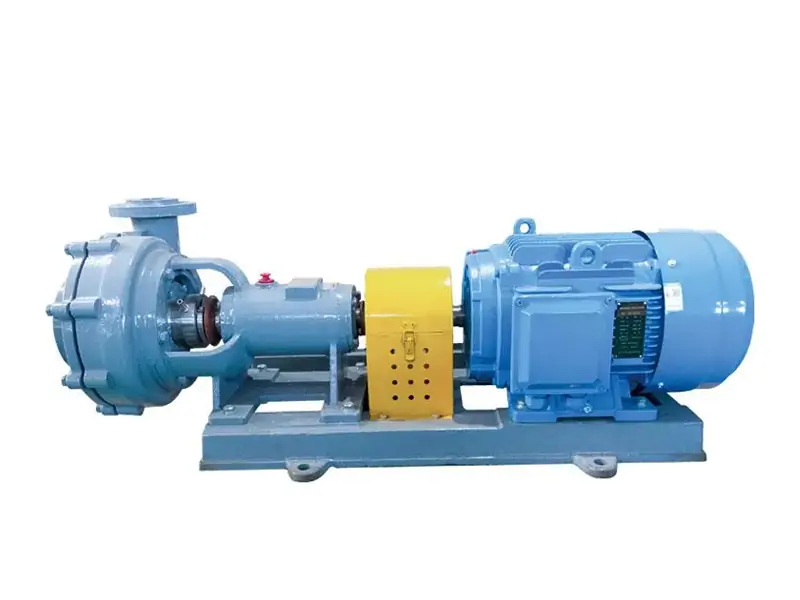
The CYB-ZKJ Series corrosion-resistant horizontal slurry pump is a high-performance centrifugal pump designed for conveying acidic or alkaline slurries containing fine particles. Constructed with imported FEP/PTFE lining material at 8–20 mm thickness, this pump employs patented plastic-lined technology to resist thermal deformation, cracking, and delamination under demanding operating conditions.
Key Specifications:
| Flow Rate Range : | 3m³/h~2600m³/h |
|---|---|
| Head Range: | 5m~100m |
| Motor Power : | 0.75kw~300kw |
| Speed: | 968-3450 r/min |
| Medium Temperature Range: | -80℃~ 120℃ |
| Customizable Materials: | FEP |
What this means for you: The CYB-ZKJ Series is the optimal choice for chemical plants, hydrometallurgical facilities, and environmental engineering projects where the pumped slurry contains both abrasive solids and corrosive chemicals—eliminating the need to choose between wear protection and chemical resistance.
7.2 HB Abrasive Slurry Pump — HB Series
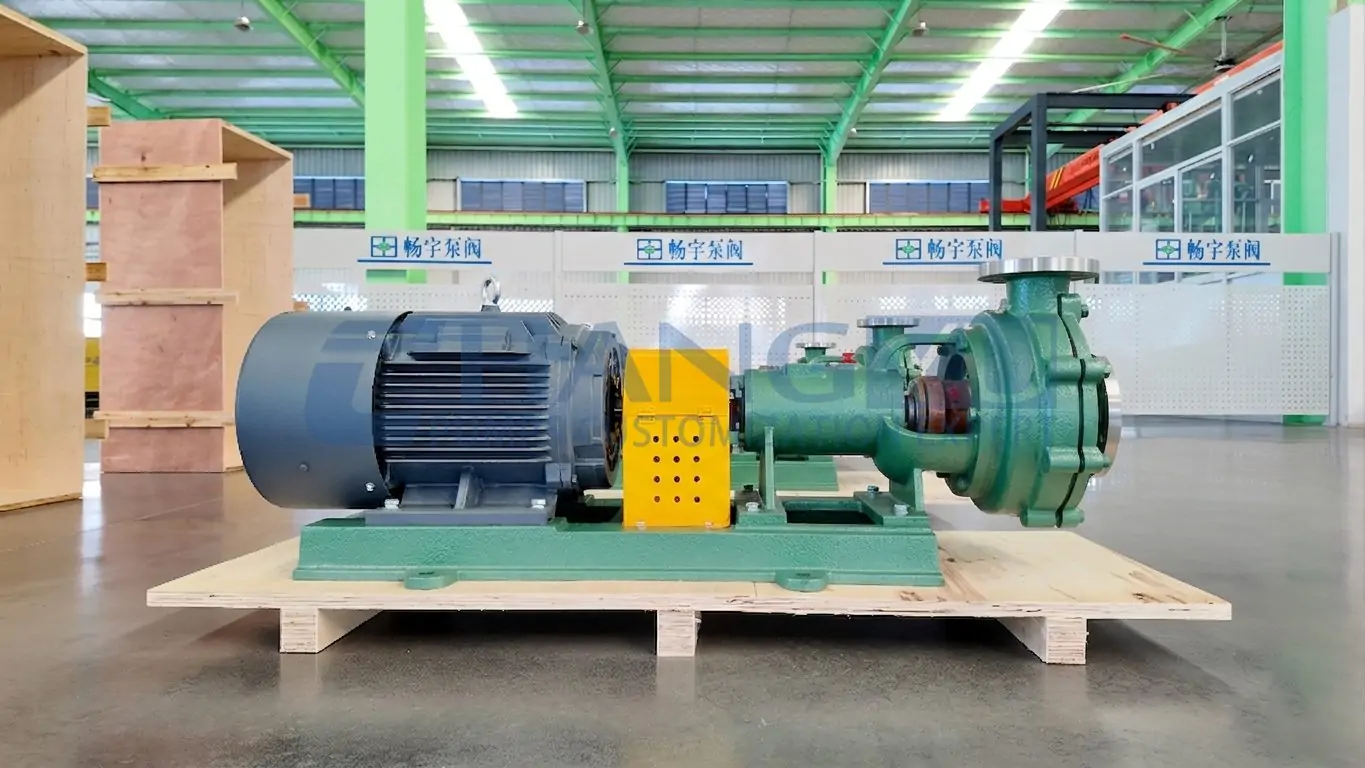
The HB Series industrial slurry pump features a cantilevered single-stage centrifugal design with a semi-open impeller and cartridge mechanical seal, specifically engineered for conveying solid-laden or crystalline corrosive media. With exceptional wear resistance, impact resistance, and creep resistance, this pump delivers high flow capacity with dual corrosion-and-abrasion protection.
Key Specifications:
| Flow Rate Range : | 10 m³/h ~ 60 m³/h |
|---|---|
| Head Range: | 20 m ~ 120 m |
| Motor Power : | 3 kw ~ 45 kw |
| Speed: | 2900 r/min |
| Medium Temperature Range: | -20°C ~ 120°C |
| Customizable Materials: | 304、316、316L、2205、2507 |
What this means for you: The HB Series is purpose-built for non-ferrous metal smelting, steel production, titanium dioxide manufacturing, and chemical processing operations where high-concentration abrasive slurries must be moved reliably with minimal maintenance intervention.
7.3 High Temperature Chemical Pump — CYG Series
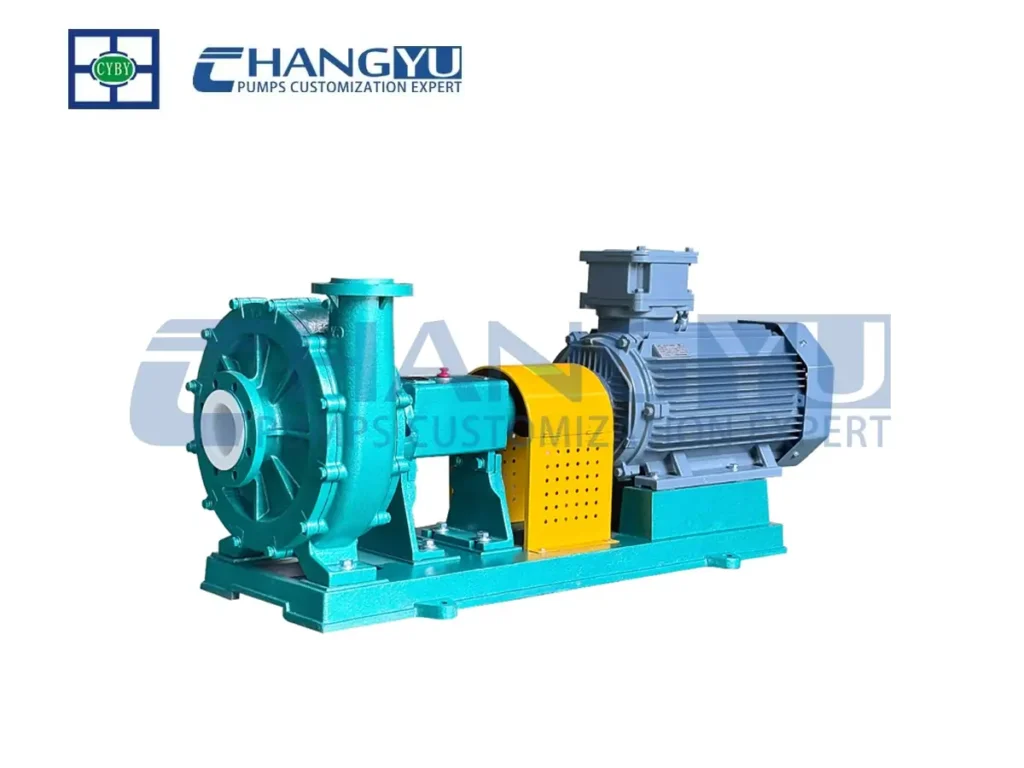
The CYG Series PFA-lined high-temperature chemical pump extends Changyu Pump’s fluoroplastic technology into elevated-temperature service. Constructed with perfluoroalkoxy (PFA) lining, this pump handles corrosive fluids and slurries at temperatures beyond the range of standard FEP-lined equipment. It is ideally suited for chemical reactor discharge, hot acid transfer, and high-temperature crystallization processes where thermal stability of the lining material is non-negotiable.
Key Specifications:
| Flow Rate Range : | 3m³/h~2600m³/h |
|---|---|
| Head Range: | 5 m ~ 100 m |
| Motor Power : | 0.75 kw~300 kw |
| Speed: | 968 ~ 3450 r/min |
| Medium Temperature Range: | -80℃~160℃ |
| Customizable Materials: | PFA |
8. Quality Control: How Changyu Pump Ensures Pump Reliability
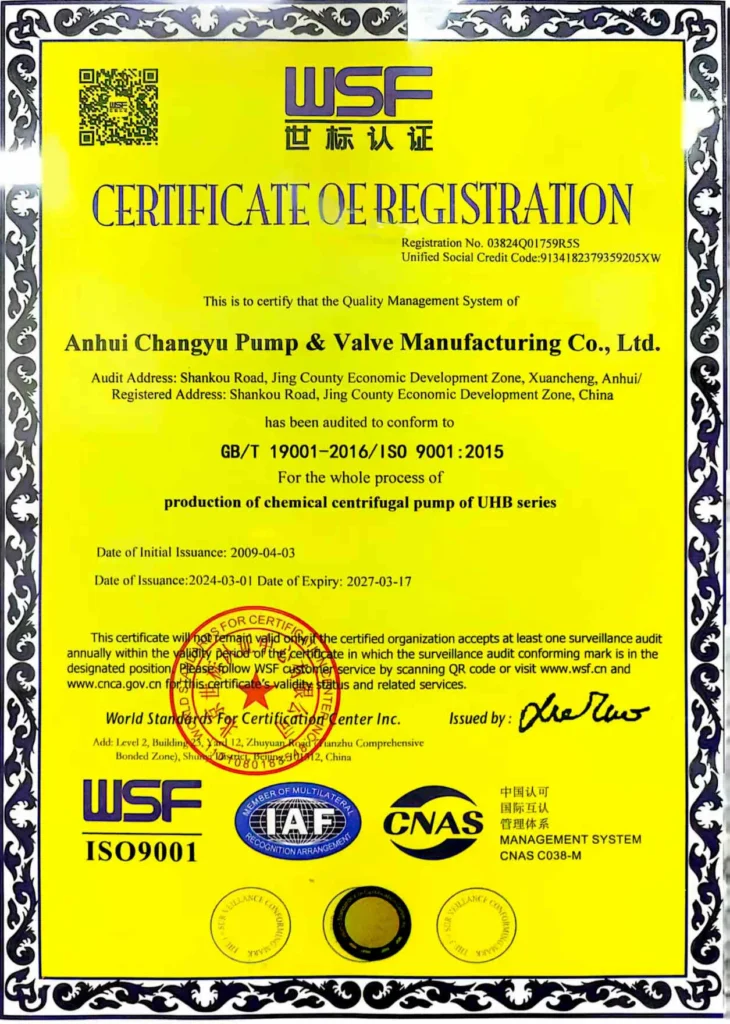
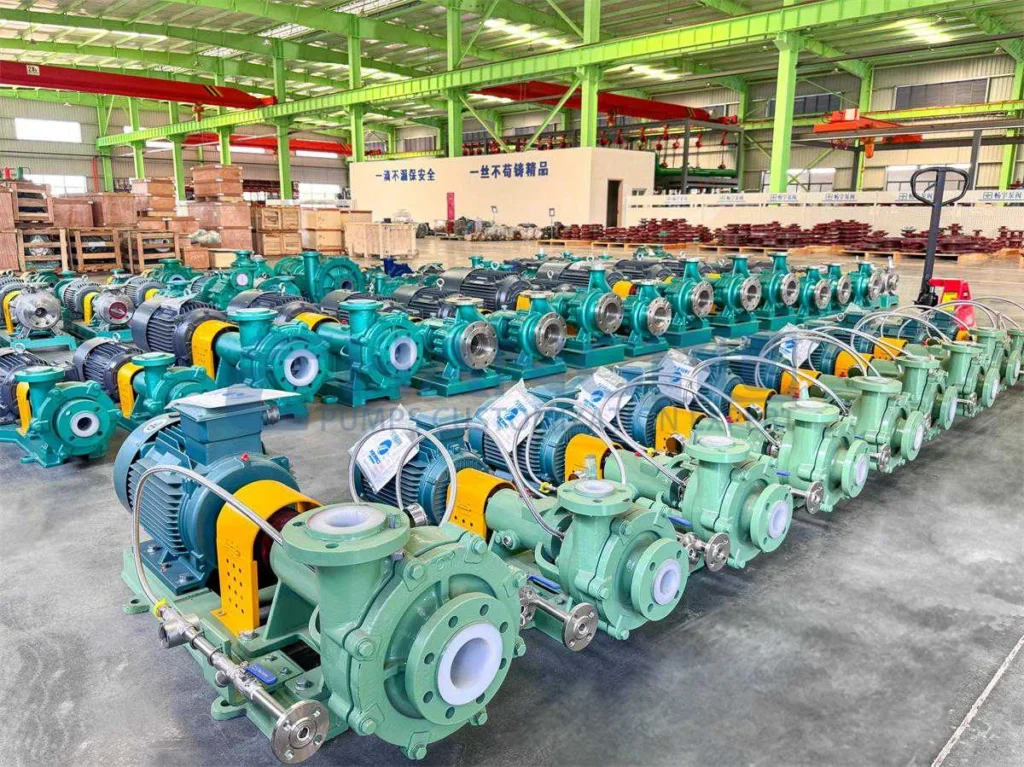
Every heavy duty slurry pump leaving Changyu Pump’s manufacturing facility undergoes a rigorous, multi-stage quality assurance program. This program is designed not just to catch defects, but to prevent them from occurring in the first place—because in slurry pumping, a material defect invisible to the naked eye can translate into a premature wear failure costing the operator thousands of dollars in downtime.
Material Verification: All incoming raw materials—including high-chrome alloys, fluoroplastic resins, and elastomer compounds—undergo spectral analysis to verify chemical composition against specification. Each material batch receives documented certification before release to production.
In-Process Inspection: During manufacturing, critical dimensions of impellers, casings, wear plates, and shaft assemblies are measured against design tolerances at every machining stage. Lining thickness is verified using ultrasonic testing to ensure uniform coverage and absence of voids.
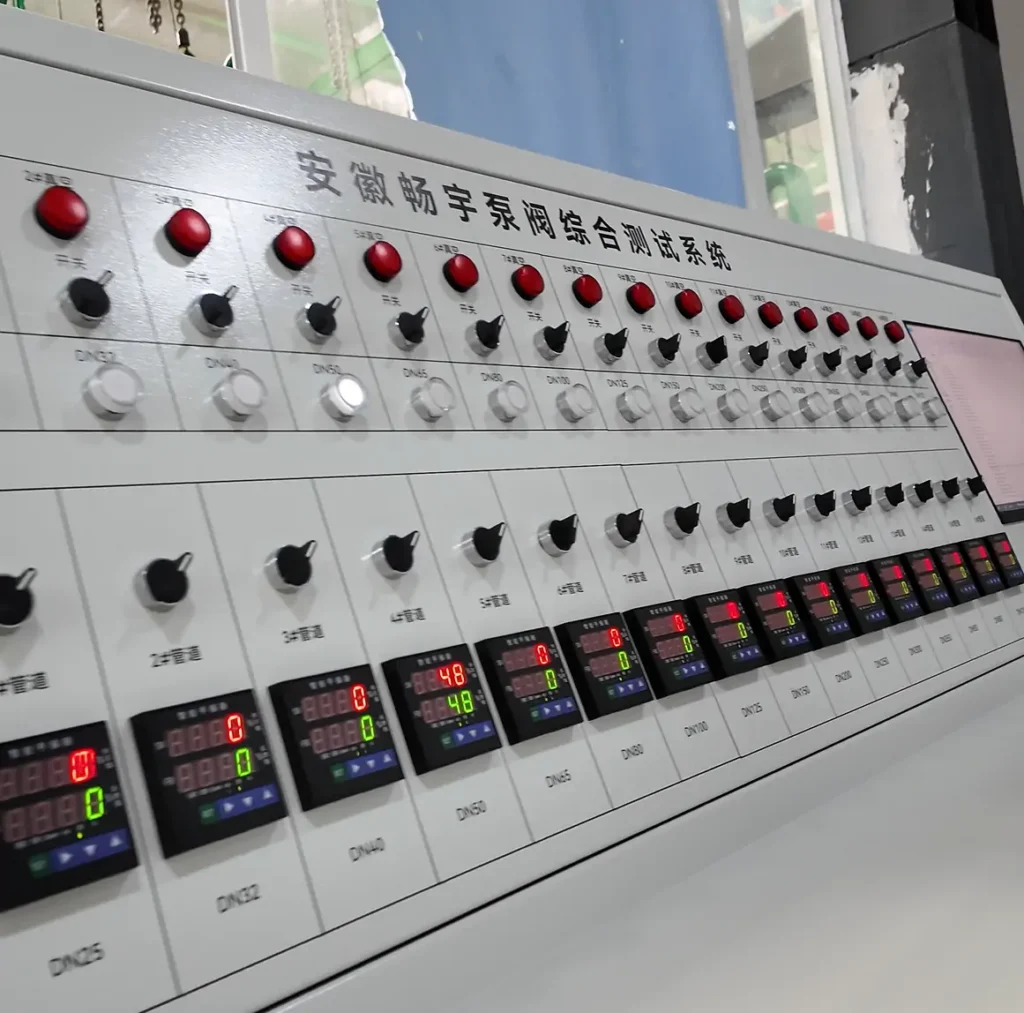
Hydraulic Performance Testing: Every assembled pump is subjected to a full hydraulic performance test against its published curve. Flow rate, head, power consumption, and efficiency are recorded at multiple duty points and compared to design specifications.
Final Assembly Audit: Before packaging, each pump undergoes a complete assembly audit including bolt torque verification, seal integrity check, bearing preload confirmation, and free rotation test of the rotating assembly.
What this means for you: When your heavy duty slurry pump arrives on site with full quality documentation, you can commission it with confidence—reducing startup delays, warranty claims, and the operational risk associated with unverified equipment.


9. Case Study: Extending Pump Service Life in a Titanium Dioxide Processing Plant
Customer Challenge: A titanium dioxide manufacturer in Southeast Asia was experiencing chronic wear failures on the slurry pumps handling titanium dioxide slurry with residual sulfuric acid content. The existing high-chrome alloy pumps required impeller and casing replacement every 4 months, with each replacement causing 8–12 hours of production downtime. The combined cost of replacement parts, maintenance labor, and lost production was approaching USD 45,000 per pump annually. What made this case particularly challenging was the dual wear mechanism: hard TiO₂ crystals caused mechanical abrasion while the residual sulfuric acid (pH 2–3) attacked the high-chrome alloy matrix, accelerating material loss at the grain boundaries.
Changyu Pump’s Solution: After analyzing slurry samples and reviewing the plant’s operating data, Changyu Pump engineers recommended replacing the existing metal pumps with the UHB Series fluoroplastic-lined slurry pump. The key decision drivers were: (1) the UHMW-PE lining provides complete chemical resistance to sulfuric acid at the operating concentration, eliminating the corrosion component of the wear mechanism; (2) the 8–20 mm lining thickness absorbs particle impact energy from TiO₂ crystals, reducing erosive wear; and (3) the cartridge mechanical seal design eliminates the gland water requirement, reducing water consumption and eliminating seal flush water contamination of the product stream.
Quantified Results: After 12 months of continuous operation with the UHB Series pumps, the plant reported:
- Impeller replacement interval extended from 4 months to over 18 months — a 350%+ improvement
- Annual maintenance cost per pump reduced by approximately 62%
- Unplanned production downtime related to pump failures decreased by over 70%
- Seal water consumption eliminated, saving approximately 1,200 m³ of process water per pump per year
The plant has since standardized on Changyu Pump UHB Series pumps across all slurry handling duties. Ready to achieve similar results? Send your specifications to our engineering team for a guaranteed manufacturing solution.
10. Frequently Asked Questions (FAQ)
Q1: What is a heavy duty slurry pump?
A: A heavy duty slurry pump is a rugged centrifugal pump designed to transport abrasive solid-liquid mixtures (slurry) in demanding industrial environments. It features reinforced casings, wear-resistant wetted parts, and heavy-duty bearing assemblies for extended service life under severe conditions.
Q2: What is the difference between a slurry pump and a water pump?
A: A heavy duty slurry pump is built with thicker, more robust abrasion resistant components to handle abrasive solid-liquid mixtures. Unlike a standard water pump designed for clean fluids, a slurry pump has specialized hydraulics to pass solids and withstand corrosion, making it essential for industrial slurries.
Q3: What is a centrifugal slurry pump?
A: A centrifugal slurry pump is a type of heavy-duty pump that uses centrifugal force to move abrasive slurries. It features a robust casing and wear-resistant impeller, making it the industry standard for efficiently transporting high-density, large-particle mixtures in mining and chemical processing.
Q4: How long does a slurry pump last?
A: Service life varies by operating conditions. In highly abrasive applications, a well-specified heavy duty slurry pump can achieve 3,000-6,000 hours between major overhauls. Using advanced wear-resistant materials can extend the pump wear life to over 14,000 hours in optimized installations.
Q5: Can a heavy duty slurry pump handle corrosive chemicals?
A: Yes. Fluoroplastic-lined (FEP, PTFE, UHMW-PE) heavy duty slurry pump models provide excellent corrosion resistance for acidic, caustic, and oxidizing slurries. Metal pumps are limited to specific pH ranges depending on the alloy selected.
Q6: How do you maintain a slurry pump?
A: Effective slurry pump maintenance includes regular inspection of the impeller and wear plates, proper bearing lubrication, and monitoring of seal performance to prevent leaks. Implementing a proactive maintenance schedule extends pump service life and minimizes unplanned downtime.
Q7: How do I select the correct heavy duty slurry pump size?
A: Selection requires quantifying six slurry properties (solids concentration, particle size, specific gravity, pH, temperature, viscosity), calculating total dynamic head, determining limit deposit velocity, and matching these parameters to pump performance curves.
Q8: What are the key signs that a heavy duty slurry pump needs maintenance?
A: Declining flow rate at constant speed, increased vibration, rising power consumption, reduced discharge pressure, and visible leakage from the seal area all indicate that a heavy duty slurry pump requires inspection and possible component replacement.
11. Changyu Pump Engineers’ 7 Decision Criteria for Selecting a Heavy Duty Slurry Pump
Drawing on over two decades of field experience across mining, chemical, and industrial applications, Changyu Pump engineers recommend evaluating the following seven criteria before finalizing any heavy duty slurry pump specification:
- Quantify all six slurry properties before selecting a pump model. Solids concentration, particle size distribution, specific gravity, pH, temperature, and viscosity each independently influence pump material and hydraulic selection—and a misjudgment on any single parameter can reduce pump wear life by half or more.
- Calculate the limit deposit velocity for your pipeline and ensure the pump can sustain it throughout the operating range. Operating below LDV is one of the most common causes of premature pump operating cost escalation and pipeline blockage in slurry systems.
- Do not select pump materials on abrasion resistance alone if the slurry contains corrosive components. The combined corrosion-abrasion mechanism can accelerate material loss far beyond what either mechanism would produce independently. When in doubt, request a material compatibility analysis from your pump supplier.
- Evaluate total cost of ownership—not purchase price—when comparing pump options. Include energy cost (typically 60–70% of lifetime cost), wear part replacement frequency, maintenance labor, and downtime cost in your pump operating cost comparison model.
- Match the seal type to both the slurry and the site conditions. Expeller seals reduce flush water consumption but lose effectiveness at low speeds. Mechanical seals provide zero leakage but require clean flush water and are sensitive to solids ingress. For combined corrosion-abrasion duties, cartridge mechanical seals with fluoroplastic faces often provide the best balance of reliability and service life.
- Plan for spare parts inventory from the day of installation. The two wear components with the highest replacement frequency—impeller and wear plates/liners—should be kept in stock to minimize downtime when replacement becomes necessary.
- Consider modular pump designs that allow in-field clearance adjustment without disassembly. Adjustable wear plates and easy-clearance designs extend service intervals and reduce the maintenance labor hours required per service event. When ordering spare impellers, specify the same material heat lot as the original pump whenever possible—minor alloy composition variations between heat lots can produce measurable differences in pump wear life and complicate maintenance planning.
Conclusion
A heavy duty slurry pump is not a commodity—it is a critical production asset whose selection directly impacts operating cost, production uptime, and process reliability. The key to maximizing slurry pump performance lies not in any single design feature, but in the systematic matching of pump configuration, material selection, and hydraulic design to your specific slurry properties and operating conditions. This guide has provided the structured framework needed to make that match with confidence.
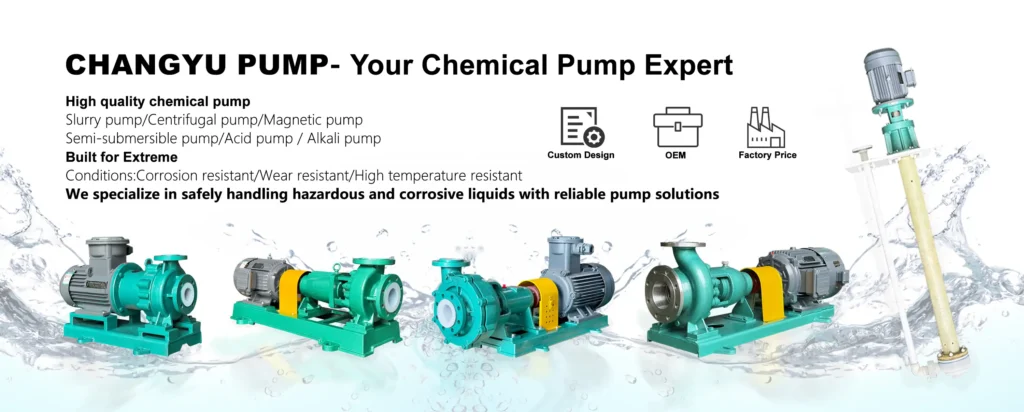
Whether you are specifying a new pump for a greenfield project or seeking to resolve chronic wear failures in an existing installation, the engineering team at Changyu Pump is available to support your selection process with technical analysis, application-specific recommendations, and comprehensive quotations.
Contact Changyu Pump today to discuss your slurry handling requirements. Send your operating parameters to our engineering team, and we will provide a detailed pump recommendation and quotation tailored to your application.