
Quick Answer
Material selection for slurry pumps in abrasive mining requires a systematic approach that balances material hardness, fracture toughness, and corrosion resistance against the specific characteristics of the ore being processed. Key selection factors — in order of engineering priority — include:
- (1) Ore hardness and particle shape — angular particles above Mohs 5 require hard metal alloys (high-chrome CrMo at 600–700 HB minimum); rounded, softer particles allow elastomer liners (natural rubber, polyurethane) to perform effectively.
- (2) Hardness-toughness balance — the hardest materials (ceramics at HV 2000+) provide maximum cutting wear resistance but risk brittle fracture from large-particle impact; tungsten carbide (HV 1200–1800, KIC 10–15 MPa√m) offers the optimal balance for most abrasive mining circuits.
- (3) Slurry chemistry — acidic process water or saline conditions require corrosion-resistant material options: stainless steel alloys, tungsten carbide with nickel binder, or FEP/PFA-lined pumps with wear-resistant impellers.
- (4) Total cost of ownership — premium materials (tungsten carbide at 3–5× the cost of high-chrome CrMo) deliver 4–6× longer service life in abrasive service, with the material cost premium typically recovered within 6–12 months through eliminated unplanned downtime.
- (5) Circuit-specific selection — mill discharge demands maximum hardness; flotation feed allows elastomer use; tailings transport requires predictable, extended wear life for sustained continuous operation.
In abrasive mining applications, even high-chrome white iron wet-end components can experience rapid wear when processing slurries containing hard, quartz-rich minerals. While component replacement costs are significant, the financial impact of unplanned downtime — halting production for critical maintenance — is typically 7-10 times greater. This costly challenge persists industry-wide when material selection defaults to a simple binary choice between ‘high-chrome alloy’ and ‘rubber,’ rather than conducting systematic evaluation of ore characteristics, advanced material alternatives, and full lifecycle economics.
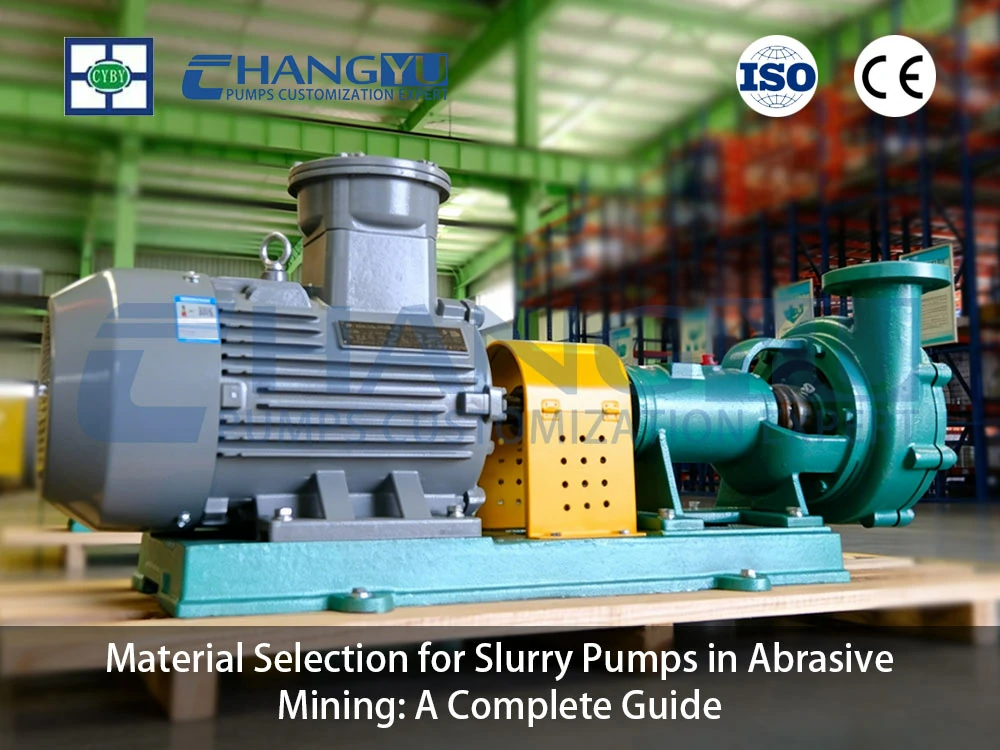
With over 20 years in pump manufacturing and materials engineering for abrasive mining applications, Changyu Pump has specified and supplied wear solutions for iron, copper, gold, and other hard-rock mineral processing circuits. This guide gives you the complete material selection framework — from understanding the wear mechanisms that destroy pump components, to evaluating both traditional and advanced materials, to performing a quantified total cost of ownership analysis that justifies the investment in premium wear materials.
1. What Are the Wear Mechanisms Affecting Material Selection in Abrasive Mining?
A detailed understanding of the wear mechanisms operating in slurry pumps is the foundation of correct material selection. The relative contribution of each mechanism varies depending on ore type, particle characteristics, and circuit conditions.
The Four Wear Mechanisms
1. Cutting Wear (Abrasive Wear):
- Mechanism: Sharp, angular particles slide across the pump surface at a shallow angle (typically 15–45°). The particle edge acts as a micro-cutting tool, removing a chip of material from the surface.
- Dominant in: Volute cutwater, impeller vane leading edges, throatbush — areas of high-velocity, directional flow
- Material property required: High hardness — a surface harder than the particle resists cutting. When particles exceed the pump material’s hardness, material removal occurs at every contact.
2. Erosion Wear (Low-Angle Particle Impingement):
- Mechanism: Fine particles entrained in the high-velocity slurry stream impact the pump surface at shallow angles, gradually eroding material through a combination of cutting and fatigue.
- Dominant in: Impeller shrouds, volute walls — areas of high-velocity turbulent flow
- Material property required: High hardness combined with some ductility — purely brittle materials can suffer micro-chipping under repeated particle impacts.
3. Impact Wear (High-Angle Particle Impact):
- Mechanism: Large particles strike the pump surface at a steep angle (60–90°), particularly at the volute tongue and impeller discharge, creating a high-stress contact that can plastically deform ductile materials or fracture brittle materials.
- Dominant in: Impeller eye, volute tongue — areas where flow direction changes abruptly
- Material property required: High fracture toughness — the material must absorb impact energy without cracking. This is the weakness of ceramic materials.
4. Corrosion-Erosion Synergy:
- Mechanism: The slurry’s chemical environment (pH, dissolved ions from the ore body) attacks the pump material surface, forming a corrosion layer that is then removed by abrasive particles — exposing fresh material to further corrosion.
- Dominant in: Circuits with acidic process water, saline water, or chemical additives
- Material property required: Corrosion resistance in addition to wear resistance — stainless steel alloys, corrosion-resistant binders, or lined pump options.
Relative Contribution in Abrasive Mining
Engineers at Changyu Pump, based on 20 years of wear analysis in hard-rock mineral processing circuits, have observed that cutting wear typically accounts for 50–60% of total wet-end material loss in abrasive mining slurries. Impact wear accounts for 20–30%, driven by occasional large particles from the crushing circuit. Erosion wear and corrosion-erosion synergy account for the remaining 15–20%.
The practical implication for material selection: in abrasive mining service, hardness is the dominant material property requirement. Fracture toughness cannot be ignored — brittle materials will fail from impact — but the primary selection criterion must be hardness sufficient to resist cutting by the abrasive particles in the ore.
2. How Do Traditional Materials Compare for Slurry Pumps in Abrasive Mining?
Before examining advanced material solutions, it is essential to understand the performance envelope of conventional slurry pump materials. These materials — high-chrome white iron, natural rubber, and polyurethane — form the baseline against which advanced materials are evaluated.
High-Chrome White Iron (CrMo): The Industry Standard
High-chrome CrMo alloy (typically 26–28% Cr, 600–700 HB) is the default wet-end material for most hard-rock mining slurry pumps. Its microstructure consists of hard chromium carbides (M7C3 type, approximately HV 1200–1600) embedded in a martensitic matrix (approximately HV 500–600).
Performance characteristics:
- Hardness: 600–700 HB — adequate for particles up to approximately Mohs 6.5
- Fracture toughness: KIC 25–35 MPa√m — good impact resistance; tolerates tramp oversize
- Corrosion resistance: Moderate — suitable for neutral to alkaline pH; corrodes in acidic conditions below pH 4
- Typical service life in abrasive mining: 3–6 months in highly abrasive circuits (iron ore, copper ore with quartz); 12–18 months in moderate abrasion circuits
- Cost: Baseline — the reference against which other materials are compared
Limitations in abrasive mining: When ore particles exceed Mohs 6.5–7 (quartz, garnet, hard silicates), the particle hardness approaches or exceeds that of the chromium carbides. At this point, the particles begin cutting through both the matrix and the carbides, and the wear rate accelerates significantly. High-chrome CrMo remains the cost-effective choice for medium-abrasion circuits but reaches its economic limit in severe abrasive service.
Natural Rubber: Resilience-Based Wear Protection
Natural rubber liners rely on a fundamentally different wear resistance mechanism than hard metals. Rather than resisting cutting through high hardness, rubber absorbs particle impact energy through elastic deformation and then recovers without material loss.
Performance characteristics:
- Hardness: < 50 HB — intentionally soft and resilient
- Wear mechanism: Particles bounce off the rubber surface; the energy is absorbed by elastic deformation
- Optimal conditions: Fine, rounded particles (sand, milled ore) in neutral pH slurries at temperatures below 70°C
- Limitations: Sharp, angular particles cut the rubber surface; hydrocarbons and strong acids cause chemical degradation; temperature above 70°C accelerates aging and reduces resilience
- Typical service life in abrasive mining: 6–18 months in appropriate applications (fine, rounded particles); weeks to months with sharp, angular particles
Polyurethane: Between Rubber and Metal
Polyurethane occupies a middle ground between the resilience of rubber and the hardness of metal. It offers improved cut resistance compared to natural rubber while retaining some impact-absorbing capability.
Performance characteristics:
- Hardness: 60–90 HB
- Wear mechanism: Combines some resilience with improved cut resistance
- Optimal conditions: Fine to medium particles, moderate pH range, temperatures below 50°C
- Limitations: Temperature-limited; sensitive to hydrolysis in hot water above 50°C; still cut by sharp, angular particles
- Typical service life in abrasive mining: 3–12 months depending on particle characteristics
Traditional Material Performance Summary
Table: Traditional Material Performance in Abrasive Mining
| Material | Typical Hardness | Wear Mechanism | Best Particle Type | pH Range | Max Temperature | Relative Cost |
|---|---|---|---|---|---|---|
| High-chrome CrMo | 600–700 HB | Hardness — resists cutting | Angular, hard (up to Mohs 6.5) | 4–12 | 150°C+ | 1× (baseline) |
| Natural rubber | < 50 HB | Resilience — absorbs impact | Rounded, soft to medium | 5–9 | 70°C | 0.8–1.2× |
| Polyurethane | 60–90 HB | Mixed — resilience + cut resistance | Fine, rounded to sub-angular | 4–9 | 50°C | 1.0–1.5× |
The key selection guideline for traditional materials: use high-chrome CrMo for hard, angular particles; use rubber for fine, rounded particles in neutral pH; use polyurethane as an intermediate option where both cut resistance and impact absorption are required. When these materials cannot deliver the required service life, advanced materials must be considered.
3. How Do Advanced Materials Enhance Slurry Pump Life in Abrasive Mining?
When conventional materials reach their economic limit — when the cost of frequent wet-end replacements and associated downtime exceeds the premium for advanced materials — the material selection advances to the next tier. Tungsten carbide, silicon carbide ceramics, alumina ceramics, and composite lining systems each offer a different balance of hardness, toughness, cost, and application suitability.
The Hardness-Toughness Trade-off
The fundamental material selection challenge for abrasive slurry pumps is that hardness and fracture toughness are inversely correlated in most engineering materials. The hardest materials are the most brittle. The toughest materials are the softest.
- High hardness = Low toughness: Ceramics (SiC, Al2O3) — extremely hard but brittle; cannot tolerate impact from large particles
- Moderate hardness = Moderate toughness: Tungsten carbide (WC) — the optimal balance for most abrasive mining applications
- Low hardness = High toughness: Metals and elastomers — tough but wear rapidly against hard particles
Advanced Material Options
Tungsten Carbide (WC-Co / WC-Ni):
- Composition: Tungsten carbide particles in a cobalt or nickel binder matrix (typically 6–12% binder by weight)
- Hardness: HV 1200–1800 (depending on binder content and grain size)
- Fracture toughness: KIC 10–15 MPa√m — adequate for moderate impact from particles up to 10–15 mm
- Wear resistance: The tungsten carbide grains (HV 2000+) provide cutting resistance against hard mineral particles. The binder wears preferentially, gradually exposing fresh carbide grains — this self-sharpening mechanism maintains consistent wear resistance throughout the component life.
- Typical service life in abrasive mining: 12–18 months depending on particle hardness and impact conditions — a 4–6× improvement over high-chrome CrMo
- Cost: 3–5× the cost of equivalent high-chrome CrMo components
- Limitations: Oxidizes in air above 500–600°C; higher cost than CrMo
- Best for: Primary slurry circuits, mill discharge, tailings with hard, angular particles up to 10–15 mm
Silicon Carbide (SiC) Ceramic:
- Hardness: HV 2200–2800 — among the hardest practical engineering materials
- Fracture toughness: KIC 3–5 MPa√m — brittle; vulnerable to fracture under impact
- Wear resistance: Exceptional cutting resistance due to extreme hardness. Impact from particles exceeding 1–2 mm can cause brittle fracture.
- Typical service life: 18–24 months in consistently fine-particle circuits; 14–18 months where occasional oversize particles may impact
- Cost: 5–8× the cost of equivalent CrMo components
- Best for: Fine tailings, concentrate circuits with small particles and minimal impact risk
Alumina (Al2O3) Ceramic:
- Hardness: HV 1500–2000
- Fracture toughness: KIC 3–4 MPa√m — brittle
- Wear resistance: Good cutting resistance, generally inferior to SiC due to lower hardness
- Cost: 2–4× the cost of equivalent CrMo components
- Best for: Economical ceramic option in fine-particle circuits with low impact risk
Ceramic-Rubber Composite Liners:
- Composition: Ceramic tiles (typically alumina or SiC) bonded to a rubber backing layer
- Hardness: HV 1500–2800 (same as the ceramic used)
- Fracture toughness: Improved over solid ceramic — the rubber backing absorbs impact and prevents crack propagation
- Cost: 4–6× the cost of equivalent CrMo components
- Best for: Circuits with mixed fine particles and occasional larger tramp material
Advanced Materials Performance Summary
Table: Advanced Material Performance in Abrasive Mining
| Material | Hardness (HV) | Fracture Toughness (KIC, MPa√m) | Relative Cost | Best Particle Size Range | Typical Life vs CrMo |
|---|---|---|---|---|---|
| High-chrome CrMo (baseline) | 600–700 | 25–35 | 1× | Any (but wears rapidly above Mohs 6.5) | Baseline |
| Tungsten carbide (WC) | 1200–1800 | 10–15 | 3–5× | Up to 10–15 mm | 4–6× longer |
| Silicon carbide (SiC) | 2200–2800 | 3–5 | 5–8× | < 1–2 mm | 5–7× longer (fine particles) |
| Alumina (Al2O3) | 1500–2000 | 3–4 | 2–4× | < 1–2 mm | 4–6× longer (fine particles) |
| Ceramic-rubber composite | 1500–2800 | Improved | 4–6× | Mixed | 5–6× longer |
*Note: In tungsten carbide (WC-Co), hardness and toughness are inversely correlated. Lower cobalt content (6%) yields higher hardness (HV 1600–1800) with lower toughness (KIC 10–12). Higher cobalt content (10–12%) yields improved toughness (KIC 13–15) with reduced hardness (HV 1200–1400).*
The Material Selection Sweet Spot
Engineers at Changyu Pump, based on wear performance data from hard-rock mining operations worldwide, recommend tungsten carbide (WC) as the optimal material for the majority of abrasive mining slurry pump applications. The combination of HV 1200–1800 hardness and 10–15 MPa√m fracture toughness provides the best balance of cutting wear resistance and impact tolerance across the range of particle sizes encountered in typical hard-rock processing circuits.
For extreme abrasive conditions involving diamond, garnet, or other ultra-hard particles above Mohs 7.5, please contact our engineers.
4. How to Select the Right Wear Material for Your Mining Slurry Pump?
Material selection for abrasive mining slurry pumps is a systematic engineering decision. The process follows a logical sequence from ore characterization through material evaluation to economic validation.
Step-by-Step Material Selection Process
Step 1: Characterize the Ore Particles.
- Measure the hardness of the abrasive particles (Mohs scale or Vickers hardness)
- Determine particle shape (angular, sharp-edged vs rounded)
- Establish particle size distribution (d50 and d100)
- Identify the primary wear mechanism (cutting vs impact vs erosion)
Step 2: Evaluate the Slurry Chemistry.
- Measure slurry pH and temperature
- Identify corrosive species (chlorides, sulfates, acids)
- If corrosive conditions exist, specify corrosion-resistant materials or lined pump options
Step 3: Select the Material Category.
- Soft, rounded particles (Mohs < 4), neutral pH → Natural rubber or polyurethane — lowest cost, adequate life
- Medium-hard particles (Mohs 4–6), any shape → High-chrome CrMo — industry standard, acceptable life
- Hard, angular particles (Mohs 6–7.5) → High-chrome CrMo for budget-constrained; tungsten carbide for maximum life
- Very hard particles (Mohs > 7.5), fine particle size → Silicon carbide or alumina ceramic
- Corrosive + abrasive → Stainless steel alloy, WC-Ni, or FEP/PFA-lined pump with wear-resistant impeller
Step 4: Validate with TCO Analysis.
- Calculate 5-year TCO including wet-end replacement parts, labor, and unplanned downtime cost
- Compare material options against the baseline
- In abrasive mining, premium materials typically deliver positive ROI within 6–12 months
Ore-Material Selection Matrix
Table: Ore Type vs Recommended Wear Material
| Ore Type | Typical Hardness (Mohs) | Particle Shape | pH Range | Primary Material Recommendation | Alternative (Budget) | Alternative (Extended Life) |
|---|---|---|---|---|---|---|
| Iron ore | 5.5–6.5 | Angular | 6–8 | High-chrome CrMo | — | Tungsten carbide |
| Copper ore (flotation) | 3.5–4.0 | Mixed | 9–11 | High-chrome CrMo | Rubber (if fine) | — |
| Copper ore (heap leach) | 3.5–4.0 | Mixed | 1.5–3 | Stainless CrMo or WC-Ni | — | FEP/PFA-lined + WC impeller |
| Gold ore (quartz-rich) | 7.0 | Highly angular | 5–9 | High-chrome CrMo (minimum) | — | Tungsten carbide or SiC ceramic |
| Coal | 1.0–2.0 | Rounded | 5–7 | Natural rubber | Polyurethane | — |
| Mineral sands | 6.0–6.5 | Rounded to sub-angular | 6–8 | High-chrome CrMo | Rubber (if fine) | Tungsten carbide |
| Phosphate | 3.0–5.0 | Rounded | 2–4 (acidic) | Stainless steel or rubber | — | WC-Ni (corrosion-resistant) |
5. What Is the TCO Impact of Material Selection for Mining Slurry Pumps?
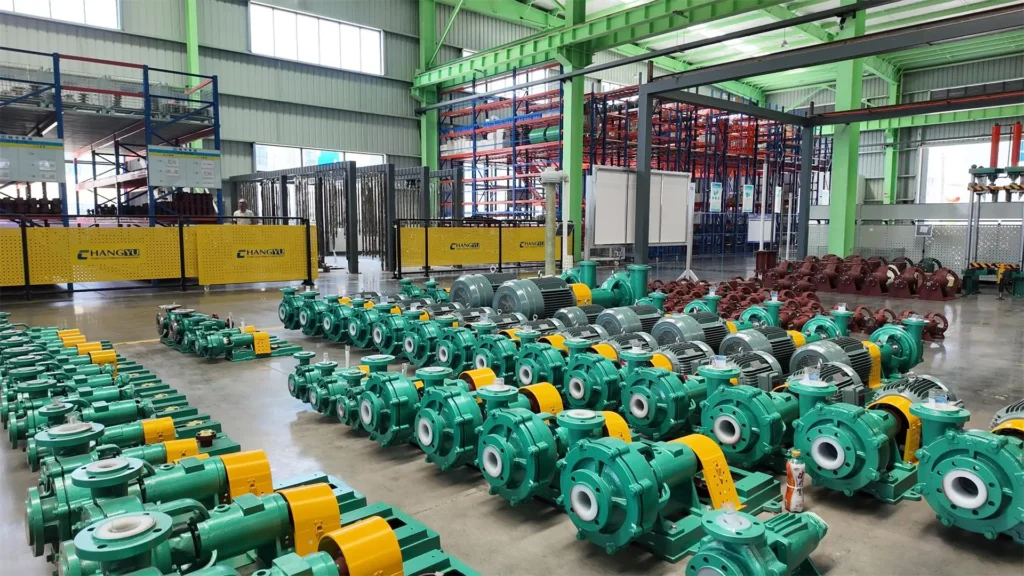
The material cost premium for tungsten carbide and ceramic components — typically 3–8× the cost of high-chrome CrMo — can create hesitation for procurement teams. However, a total cost of ownership analysis reveals that premium materials deliver dramatically lower lifecycle costs in abrasive service.
5-Year TCO Comparison: Three Material Strategies
Assumptions: Copper tailings slurry, 200 m³/h at 35 m head, quartz-rich particles (Mohs 7), 7,000 operating hours per year, unplanned downtime cost estimated at $85,000 per event.
Table: 5-Year Total Cost of Ownership — Material Selection Comparison
| Cost Component | High-Chrome CrMo (Baseline) | Tungsten Carbide (WC) Liners | Silicon Carbide (SiC) Ceramic |
|---|---|---|---|
| Initial wet-end cost | $10,000–$15,000 | $35,000–$55,000 | $50,000–$80,000 |
| Replacement frequency | Every 4 months (3× per year) | Every 18 months (0.67× per year) | Every 20–24 months (0.5× per year) |
| Wet-end replacements (5 yr) | 15 replacements | 3–4 replacements | 2–3 replacements |
| Total wet-end parts cost (5 yr) | $150,000–$225,000 | $105,000–$220,000 | $100,000–$240,000 |
| Unplanned downtime events (5 yr) | 12–15 events | 1–2 events | 0–1 events |
| Estimated downtime cost (5 yr) | $1,020,000–$1,275,000 | $85,000–$170,000 | $0–$85,000 |
| Estimated 5-Year TCO | $1,180,000–$1,515,000 | $225,000–$445,000 | $150,000–$405,000 |
| TCO vs High-Chrome Baseline | Baseline | 71–81% reduction | 73–87% reduction |
*Note: Downtime cost estimated at $85,000 per event based on a 36-hour outage at a large copper mine. Actual costs vary significantly depending on mine throughput, commodity prices, and specific production loss calculations. The fundamental TCO conclusion — that premium materials deliver order-of-magnitude lifecycle cost reductions — is robust across a wide range of downtime cost assumptions.*
The TCO Insight
The key insight: in abrasive mining service, the cost of the pump material is almost irrelevant compared to the cost of the downtime caused by material failure. A high-chrome CrMo wet-end that costs $12,500 but fails every 4 months generates $85,000+ in downtime cost per failure. A tungsten carbide wet-end that costs $45,000 but lasts 18 months eliminates $850,000+ in downtime costs over 5 years. The material cost premium is recovered within the first avoided unplanned downtime event.
For a comprehensive guide to slurry pump selection across all mining circuits, see our Slurry Pumps in Mining guide.
6. What Industry Standards Impact Material Selection for Mining Slurry Pumps?
Industry standards define the design, testing, and material requirements that separate industrial-grade slurry pumps from commodity alternatives.
Standards Overview
Table: Industry Standards for Slurry Pump Wear Materials
| Standard | Scope | Relevance |
|---|---|---|
| ANSI/HI 12.1-12.6 | Rotodynamic slurry pumps — nomenclature, definitions, application, and operation | Primary standard for slurry pump selection and performance testing |
| ASTM A532 | Abrasion-resistant cast irons | Defines chemical composition and hardness for high-chrome white iron |
| ASTM D471 | Rubber property — effect of liquids | Validates elastomer liner compatibility with process fluids |
| ISO 9001 | Quality management systems | Baseline certification for manufacturing consistency |
| ISO 2858 | End-suction centrifugal pumps — dimensions | Provides dimensional interchangeability |
7. Changyu Pump Case Study: Extending Wear Life in an Abrasive Copper Tailings Pump
Case: Chile Copper Mine — Tailings Pump Wet-End Failure Every 4 Months
Application: A copper mine in Chile was transporting flotation tailings (SG 1.45, 30% solids by weight) containing quartz-rich particles (Mohs 7, angular morphology) from the thickener underflow to the tailings storage facility. Particle size ranged from fine (< 100 μm) to approximately 4 mm.
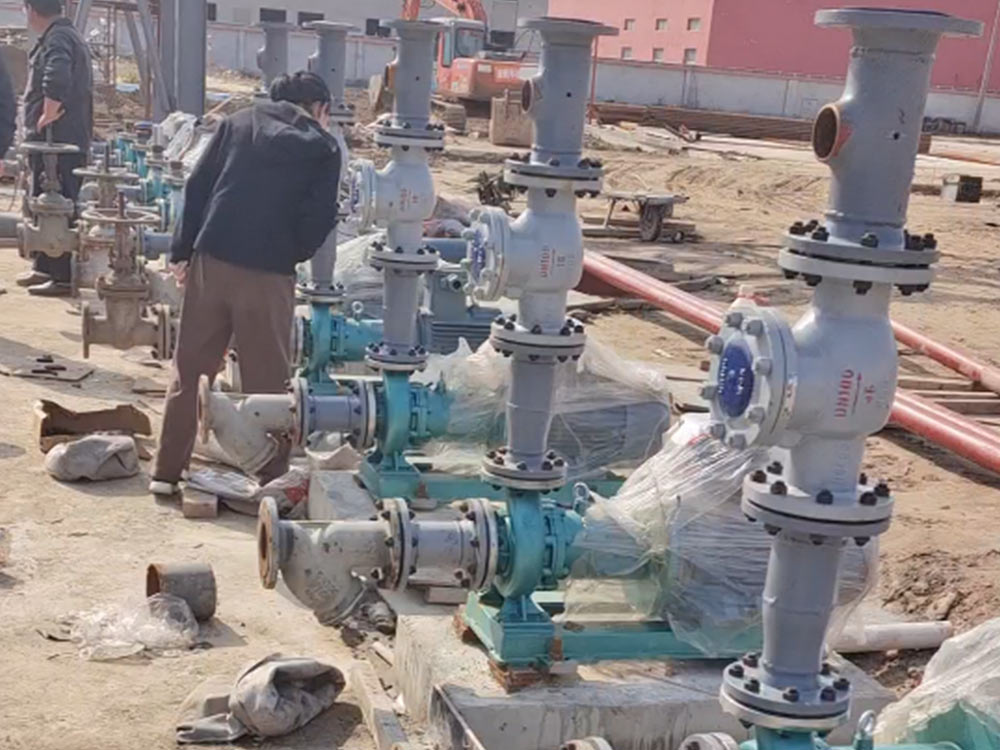
Original Fault Parameters:
- Pump: Competitor slurry pump, high-chrome CrMo (26% Cr, 650 HB) wet-end components
- Flow rate: 200 m³/h at 35 m head
- Failure mode: Uniform cutting wear across impeller vanes and volute liner after approximately 2,200 operating hours (approximately 4 months)
- Consequence: Three unplanned wet-end replacements per year. Each replacement caused 36 hours of downtime. Production losses estimated at $85,000 per event. Annual downtime cost exceeded $255,000.
Root Cause Analysis:
The quartz particles in the tailings (Mohs 7, HV 800–1000) were significantly harder than the high-chrome CrMo alloy (HV 600–700). The hardness ratio of approximately 1.3:1 in favor of the particles meant that the quartz was cutting through both the martensitic matrix and the chromium carbides with each particle contact. The material selection — appropriate for copper ore (Mohs 3.5–4) — had failed to account for the quartz content in the tailings.
Changyu Pump Solution:
- Replaced the high-chrome CrMo wet-end with tungsten carbide (WC-Co, 8% cobalt binder) volute liners and impeller
- Tungsten carbide hardness: HV 1500–1700 — approximately 2.5× harder than the replaced CrMo alloy and harder than the quartz particles
- Impeller: Closed design with WC facing on vanes and shrouds
Post-Installation Results:
- Wet-end replacement interval extended from 2,200 hours to over 12,500 hours (approximately 18 months) — a 5.7× improvement
- Wet-end replacement reduced from 3 events per year to less than 1 event per year
- Unplanned downtime cost reduced from $255,000+ per year to approximately $85,000 per year (one planned replacement)
- The WC wet-end cost premium ($45,000 vs $12,500 for CrMo) was recovered within 5 months of operation
- The mine standardized on Changyu tungsten carbide wet-end components for all tailings pumps
Key Takeaway: In abrasive mining, material selection must account for the hardest particles in the slurry — not the average ore hardness. A copper mine with quartz-rich tailings requires materials selected for quartz (Mohs 7), not copper ore (Mohs 3.5–4). Tungsten carbide, at HV 1500–1700, provides a hardness advantage over quartz that high-chrome CrMo cannot achieve.
8. What Are Changyu Pump’s Material Solutions for Abrasive Mining Slurries?
Changyu Pump manufactures pump series that can be configured with advanced wear materials for abrasive mining service.
Product Selection Guide
Table: Changyu Pump Abrasive Mining — Application Matching
| Mining Circuit | Primary Wear Challenge | Recommended Series | Recommended Material |
|---|---|---|---|
| Mill discharge, cyclone feed | Extreme cutting wear + large particles | HB Series | Tungsten carbide wet-end |
| Flotation feed | Moderate wear, fine particles | HB Series | High-chrome CrMo or rubber |
| Abrasive tailings | Severe cutting wear | HB Series | Tungsten carbide or SiC ceramic |
| Corrosive + abrasive slurry | Cutting wear + acid | CYB-ZKJ Series | FEP/PFA-lined + WC impeller |
| High-temperature abrasive | Cutting wear + heat | CYG Series | PFA-lined + WC or ceramic impeller |
HB Series — Abrasive Slurry Pump
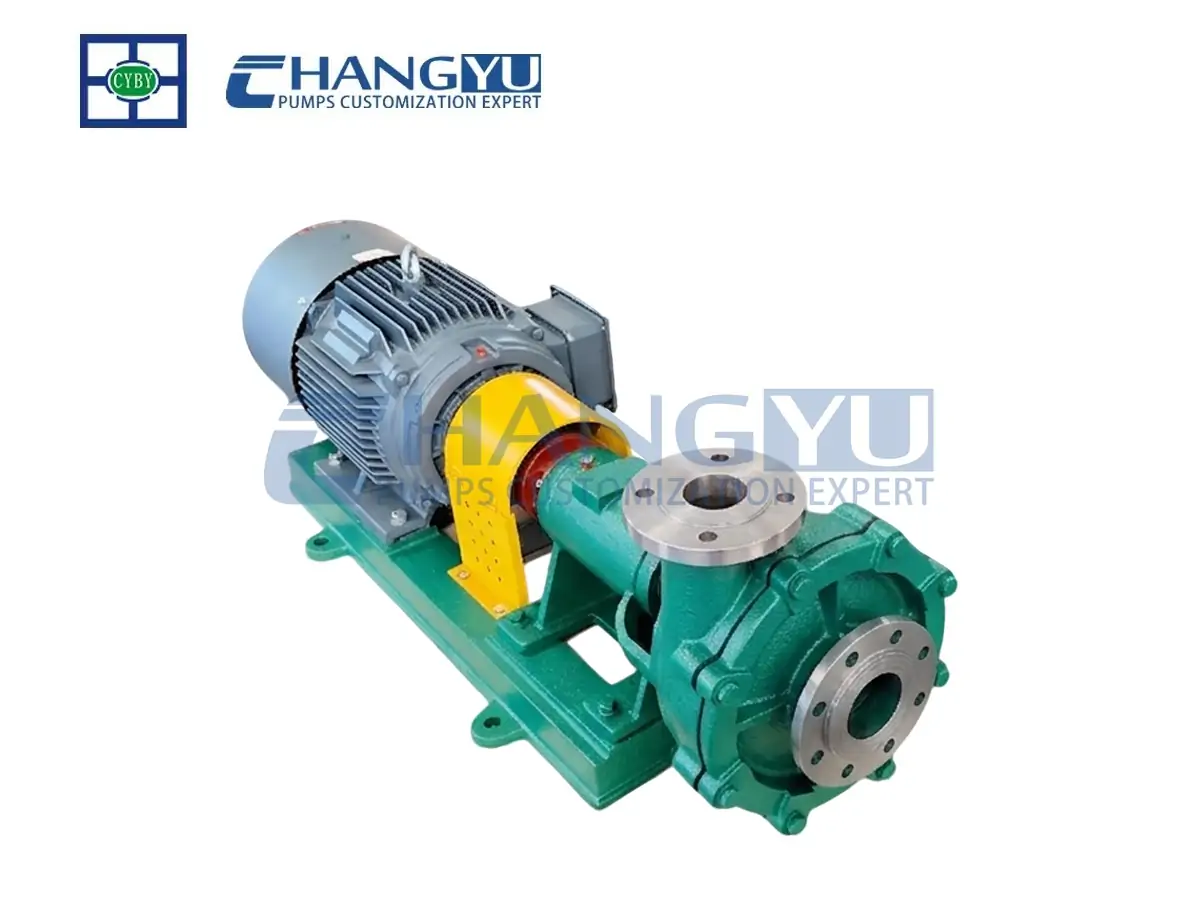
The HB Series is a high-efficiency, single-stage, single-suction horizontal centrifugal pump designed in accordance with ISO 2858 and compliant with CE standards. Built with an all stainless steel wetted structure, the HB Series can be configured with tungsten carbide or ceramic wet-end components for extreme abrasive service.
Table: HB Series Technical Specifications
| Parameter | Specification |
|---|---|
| Pump type | Stainless steel horizontal centrifugal slurry pump |
| Flow rate range | 10–60 m³/h |
| Head range | 20–120 m |
| Motor power | 3–45 kW |
| Speed | 2,900 r/min |
| Medium temperature | -20°C to 120°C |
| Customizable materials | 304, 316, 316L, 2205, 2507 stainless steel; tungsten carbide and ceramic wet-end options available |
View HB Series Abrasive Slurry Pump specifications →
CYB-ZKJ Series — Corrosive Chemical Transfer Pump
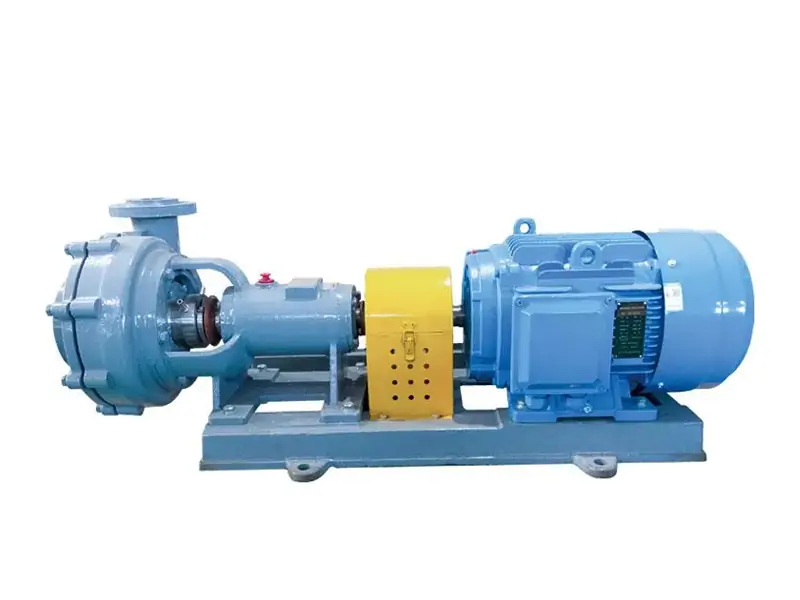
The CYB-ZKJ Series provides chemical resistance for mining circuits where the slurry is not only abrasive but also chemically aggressive. The pump features FEP lining material, providing chemical resistance across a wide pH spectrum within a temperature range of -80°C to 120°C.
Table: CYB-ZKJ Series Technical Specifications
| Parameter | Specification |
|---|---|
| Pump type | FEP/PFA-lined centrifugal chemical transfer pump |
| Flow rate range | 3–2,600 m³/h |
| Head range | 5–100 m |
| Motor power | 0.75–300 kW |
| Speed range | 968–3,450 r/min |
| Medium temperature | -80°C to 120°C |
| Customizable materials | FEP (standard), PFA (high-temperature option) |
View CYB-ZKJ Series Corrosive Chemical Transfer Pump specifications →
CYG Series — High Temperature Chemical Pump
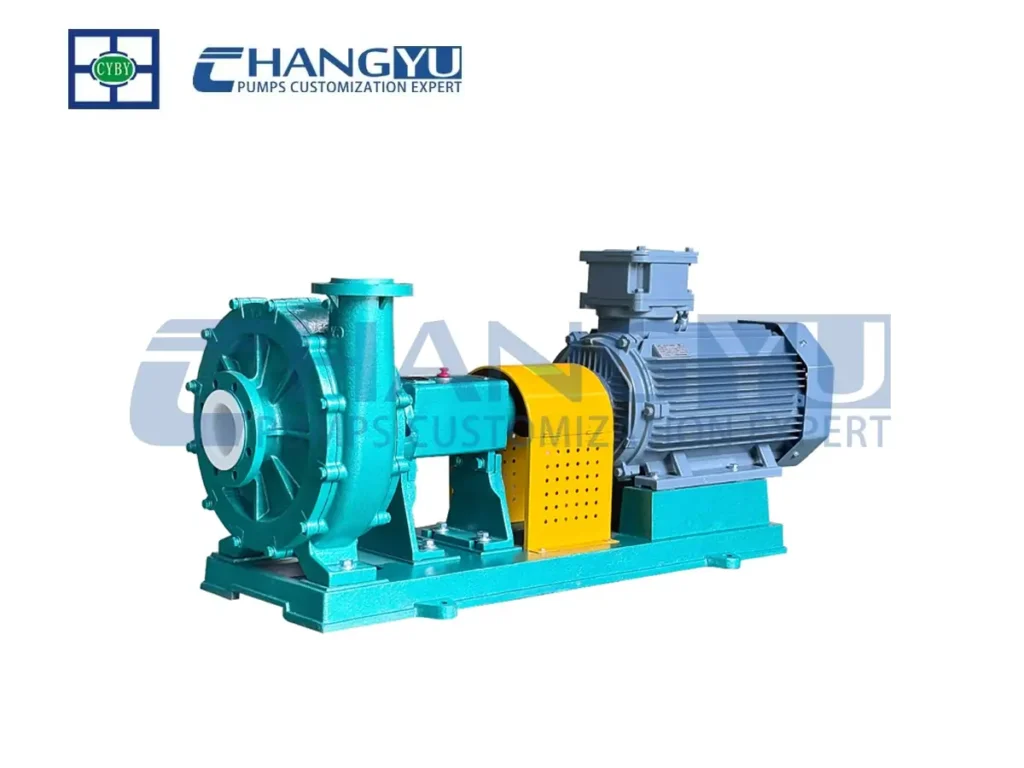
The CYG Series is purpose-built for extreme operating conditions combining high temperatures, corrosive substances, and abrasive solids. At its core is an 8–20 mm-thick PFA lining, integrated with the steel body through an advanced molded sintering process.
Table: CYG Series Technical Specifications
| Parameter | Specification |
|---|---|
| Pump type | PFA-lined high-temperature chemical pump |
| Flow rate range | 3–2,600 m³/h |
| Head range | 5–100 m |
| Motor power | 0.75–300 kW |
| Speed range | 968–3,450 r/min |
| Medium temperature | -80°C to 160°C |
| Customizable materials | PFA lining (8–20 mm thickness) |
View CYG Series High Temperature Chemical Pump specifications →
9. How to Choose a Reliable Manufacturer for Abrasive Slurry Pump Materials?
Selecting the right material is half the decision. The other half is selecting a manufacturer whose materials engineering capability, quality systems, and after-sales support match the demands of abrasive mining operations.
Manufacturer Evaluation Criteria
Table: Manufacturer Evaluation Checklist for Abrasive Slurry Pump Materials
| Criterion | What to Look For | Why It Matters |
|---|---|---|
| Materials engineering capability | In-house metallurgical and elastomer expertise; ability to recommend material for specific ore types | Material selection determines pump wear life |
| Standards compliance | ANSI/HI 12.1-12.6, ASTM A532, ISO 9001 | Ensures manufacturing quality and material consistency |
| Material range | High-chrome CrMo, rubber, polyurethane, tungsten carbide, ceramic — all available | Single-source supply for the complete range of wear solutions |
| Performance testing | Slurry-corrected performance curves; documented wear life data from operating mines | Water test data is misleading for slurry applications |
| Field references | Documented wear life from mines with similar ore characteristics | Laboratory data is not a substitute for field performance |
The definitive recommendation from Changyu Pump’s engineering team: choose a manufacturer that can provide documented wear life data from operating mines with ore characteristics similar to yours. A manufacturer that cannot provide site-specific material performance references cannot properly guarantee pump wear life in your application.
FAQs about Material Selection for Slurry Pumps in Abrasive Mining
Q: What is the best material for abrasive slurry pump impellers?
A: For hard, angular particles above Mohs 5, high-chrome CrMo (600–700 HB) is the baseline. For maximum life, tungsten carbide (HV 1200–1800) provides 4–6× longer service life. For fine, rounded particles, natural rubber is the most cost-effective choice. Material selection must match the ore’s hardness, particle shape, and slurry chemistry.
Q: When should I upgrade from high-chrome alloy to tungsten carbide?
A: Upgrade when high-chrome CrMo wet-end components last less than 6 months and unplanned downtime costs exceed the material cost premium. Tungsten carbide typically costs 3–5× more than CrMo but delivers 4–6× longer life, with the premium recovered within 6–12 months through eliminated downtime.
Q: Can rubber liners handle abrasive mining slurries?
A: Yes — but only under specific conditions. Rubber performs well with fine, rounded, non-abrasive particles (Mohs < 4) in neutral pH at temperatures below 70°C. Sharp, angular particles cut rubber surfaces. Hard, high-velocity particles cause rapid wear. Always match the elastomer to the particle characteristics.
Q: How does slurry pH affect material selection?
A: Acidic slurries (pH < 4) corrode standard high-chrome CrMo and degrade natural rubber. For acidic conditions, specify stainless steel alloys, tungsten carbide with nickel binder (WC-Ni), or FEP/PFA-lined pumps with wear-resistant impellers.
Q: What is the difference between SiC ceramic and tungsten carbide for slurry pumps?
A: SiC ceramic is harder (HV 2200–2800 vs HV 1200–1800 for WC) but more brittle (KIC 3–5 vs 10–15 MPa√m). SiC provides longer life in fine-particle circuits with no impact risk. WC provides better reliability where occasional large particles may impact pump surfaces.
Q: Does Changyu Pump provide advanced wear material options?
A: Yes. Changyu Pump’s HB Series can be configured with tungsten carbide or ceramic wet-end components. The CYB-ZKJ and CYG Series provide FEP/PFA-lined options with tungsten carbide impellers for corrosive or high-temperature abrasive circuits.
Changyu Pump Engineer’s Avoidance Checklist
Based on over 20 years of materials engineering experience in abrasive mining applications, Changyu Pump engineers recommend the following selection discipline:
- Match wear material to the hardest particles in the slurry — not the average ore hardness. A copper mine with quartz tailings requires materials selected for quartz (Mohs 7), not copper ore (Mohs 3.5–4).
- Do not specify elastomers for sharp, angular particles. Natural rubber and polyurethane work with rounded particles. Angular particles cut elastomers on contact.
- Use tungsten carbide as the default upgrade material when high-chrome CrMo life drops below 6 months. Tungsten carbide provides the optimal balance of hardness and toughness for most abrasive mining circuits.
- Evaluate maximum particle size before specifying ceramic materials. Ceramics offer excellent wear life but risk brittle fracture from particles exceeding 1–2 mm.
- Consider corrosion-resistant options for acidic or saline slurries. Standard CrMo corrodes below pH 4. Specify WC-Ni, stainless steel, or lined pumps for corrosive conditions.
- Perform a 5-year TCO analysis before rejecting premium materials based on initial cost. The material cost premium for tungsten carbide or ceramic is recovered within months through eliminated downtime.
- Request wear life references from operating mines with similar ore characteristics. Laboratory wear data is not a substitute for documented field performance.
- Keep a complete spare wet-end assembly in inventory for critical pump positions. The longer lead time for premium material components makes inventory planning essential.
Conclusion
Material selection for slurry pumps in abrasive mining is a systematic engineering discipline that begins with ore characterization, proceeds through material property evaluation, and culminates in a total cost of ownership analysis that validates the economic case for premium materials. The hardness-toughness balance is the central decision criterion: high-chrome CrMo (600–700 HB) remains the cost-effective baseline for medium-abrasion circuits; tungsten carbide (HV 1200–1800, KIC 10–15 MPa√m) has emerged as the optimal upgrade material for severe abrasive service, delivering 4–6× the service life of CrMo with a cost premium recovered within 6–12 months through eliminated unplanned downtime. Ceramic materials (SiC, Al2O3) offer incrementally longer life in fine-particle circuits where impact risk is minimal.
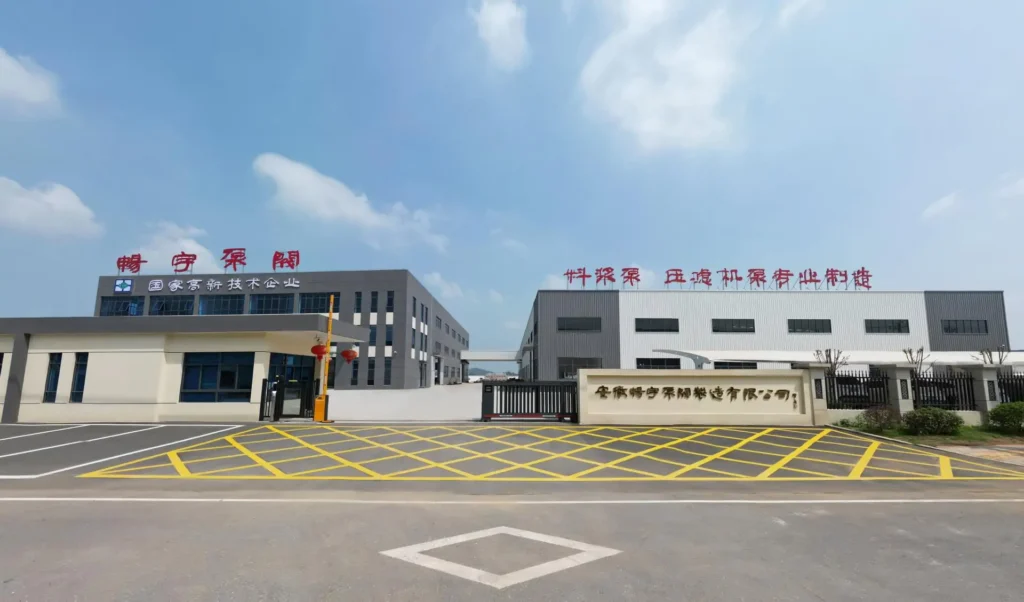
When you are ready to specify wear materials for your abrasive mining application, the engineering team at Changyu Pump can provide a free technical assessment — including ore characterization analysis, material recommendation, and a 5-year TCO projection comparing material options for your specific circuit conditions. With over 20 years of materials engineering experience, tungsten carbide and ceramic wet-end configuration capability, and documented performance in abrasive mining applications worldwide, we ensure your material selection is technically correct and economically justified.
Contact Changyu Pump engineers for a free material selection assessment →