
Rain does not ask permission. It falls on every hectare of exposed rock, runs off the benches, converges at the lowest point of the pit, and stops the face. We have supplied pumps into quarry and open-pit duty for years, and the pattern is consistent: the sites that stay dry are not the ones with the biggest pump, they are the ones that decided early where the water goes and what it is carrying when it gets there.
What follows is about quarry dewatering pumps as they are used on site, not on a datasheet: where water collects, why a pit floor sump behaves nothing like a mine shaft, how to size the duty, and which type belongs at which point in the circuit. If your problem is underground rather than open-cast, our separate guide to mine dewatering pumps covers shafts and stage pumping.
Why Quarry Dewatering Pumps Are Not Mine Pumps With the Roof Off
An underground mine deals with groundwater arriving at a predictable rate through defined headings. A quarry deals with weather. Catchment is huge and largely impervious — blasted rock, compacted haul roads, bare benches. A 20 mm rain event over 40 hectares is 8,000 m³ of water, and with a runoff coefficient around 0.7 that is roughly 5,600 m³ arriving within hours, not days. The UK Health and Safety Executive treats water management as a core part of quarry design for exactly this reason (HSE, quarry water and lagoon safety).
The second difference is mobility. A pit floor sump migrates with the face, sometimes twenty or thirty metres in a week. Every time it moves, suction conditions change, the pump has to be lifted and re-set, and the pipe run gets longer. Equipment specified for a fixed installation rarely survives that treatment.
The Four Water Streams in a Working Quarry
The most useful planning step is to stop thinking about “the water” and separate it into streams. Most quarries have four, and they want different pumps.
The pit floor sump at the active face. The dirtiest water on site: drill fines, blast residue, overburden clay and tyre-track silt. The solids are fine but abrasive, and they settle the moment the pump stops. This stream sets the wear specification for the whole system.
Bench and haul-road runoff. Cleaner, but arrives in peaks. Runoff from benches, ramps and the ROM pad carries grit and should be caught by cut-off drains and a silt trap before it reaches the sump, otherwise the sump pump is being asked to handle storm flow it was never sized for.
Settling pond and recycle return. Once solids have dropped out, the water is a resource. Many quarries return it to the wash plant or the dust-suppression bowser. Low-solids, high-volume duty, and usually the cheapest kilowatt-hour on site.
Clean water for dust suppression and washing. Often overlooked, but it is a pumping duty all the same, and the one place where a standard horizontal centrifugal pump is the right answer.
Map those four streams on a plan before choosing anything. We have seen sites buy one large set of quarry dewatering pumps to cover all of them, and end up with a unit that is oversized for the pond, undersized for the storm, and worn out by the sump.
Sizing Quarry Dewatering Pumps: Head, Flow and the Numbers That Decide
Sizing quarry dewatering pumps starts with total dynamic head, and that is where most site estimates go wrong. It is the sum of static lift, friction losses through pipe, fittings and valves, the discharge head at the outlet, and a margin for fouling. Add ten to fifteen per cent and treat that as the design point.
Suction is the constraint people underestimate. Atmospheric pressure supports about 10.3 m of water column — a theoretical ceiling, not a working figure. Practical suction lift for a self-priming unit is six to seven metres, less at altitude (roughly one metre lost per 1,000 m of elevation) and less again once the water carries solids. A pump installed at nine metres of suction does not deliver its curve; it delivers cavitation, noise and a short seal life.
Flow is set by the inflow you need to beat, plus a margin for storms. Sump volume follows: size the working volume so the pump runs five to ten minutes per cycle and does not exceed ten to fifteen starts per hour. Short cycling is one of the most common causes of motor failure we are asked to diagnose, and it is almost always a sump volume problem rather than a pump problem. Keep suction velocity around 1.0–1.5 m/s so solids stay suspended, and discharge at 1.5–3 m/s — fast enough to move grit, slow enough not to grind the bend.
Running cost deserves a line of arithmetic. Energy per cubic metre is ρgH divided by 3.6 × 10⁶ times efficiency, so at 30 m head and 60% wire-to-water efficiency you need about 0.14 kWh/m³. Move 1,400 m³ a day and you are at roughly 190 kWh, or about USD 23 a day at USD 0.12/kWh — around USD 8,000 a year. Let efficiency fall to 45% through wear and the same duty costs a third more. That is the case for wear-resistant wetted parts, and it is usually stronger than the purchase price difference.
Self-Priming, Submersible or Vertical: Which Quarry Dewatering Pump Goes Where
This is the decision most buyers actually face, so it is worth being direct.
Diesel self-priming sets on a skid or trailer are the backbone of quarry dewatering. They tolerate suction lifts of six to seven metres, pass solids in suspension, prime from dry, and can be repositioned as the face advances. They are also independent of site power, which matters in a new pit where the electrical infrastructure has not caught up. The trade-offs are fuel, noise and a suction line that has to be maintained — an air leak on the suction side is the number one cause of “the pump has lost its prime” calls we get.
Submersible dewatering pumps sit in the water and need no suction line, so priming is a non-issue and they run happily at low level. They suit sumps with a stable position, tight spaces and automatic level control. They are less happy in very abrasive slurries unless specified for it, and harder to service when the sump is full of fines. For a migrating pit floor sump they are usually the second choice rather than the first.
Vertical semi-submersible pumps bridge the two. The impeller sits below the liquid, the motor stays above it on a column, and the unit handles dirty water with a short, robust footprint. They fit a fixed sump or settling tank where you want submersible hydraulics without a submerged motor.
A practical arrangement many quarries settle on:
- a vertical or submersible unit in the main sump running continuously,
- a diesel self-priming set kept for storms and backup,
- and a small pompe centrifuge horizontale on the clean-water circuit.
Three duties, three pumps, each doing what it is good at.
| Service | Qualité de l'eau | Typical choice | Watch out for |
|---|---|---|---|
| Active face sump | High fines, abrasive | Vertical semi-submersible or heavy-duty submersible | Wear on casing and impeller; sump silting |
| Storm / backup | Variable, grit | Diesel self-priming on trailer | Suction air leaks, fuel logistics |
| Settling pond return | Low solids, high volume | Centrifuge horizontale | Efficiency loss from worn impeller |
| Dust suppression | Clean | Centrifuge horizontale | Oversizing; dead-heading against a closed valve |
High-Solids Water: Where Quarry Dewatering Pumps Actually Fail
Quarry water is not slurry and it is not clean water. It sits in between, which is the hardest place to specify.
Two things shorten pump life. The first is abrasion from fine silica and grit, which attacks the impeller eye, the casing cutwater and the seal faces. The second is settling — solids dropping out during a shutdown and being drawn into the pump as a slug on restart.
The answers are unglamorous. Keep velocity up in the suction line. Do not let the sump silt to the point where the pump is dredging a solids bed. Fit a strainer sized for the largest particle you expect, and accept that it needs cleaning. Choose wetted parts with real wear margin, and prefer designs where a wear liner can be replaced instead of a whole casing. Where water is abrasive and corrosive both — common with sulfide-bearing rock and acidic pit water — a lined wetted path is the only specification that lasts; our UHB series UHMW-PE lined pump exists for that duty. Below about pH 5, specify for corrosion as well as abrasion.
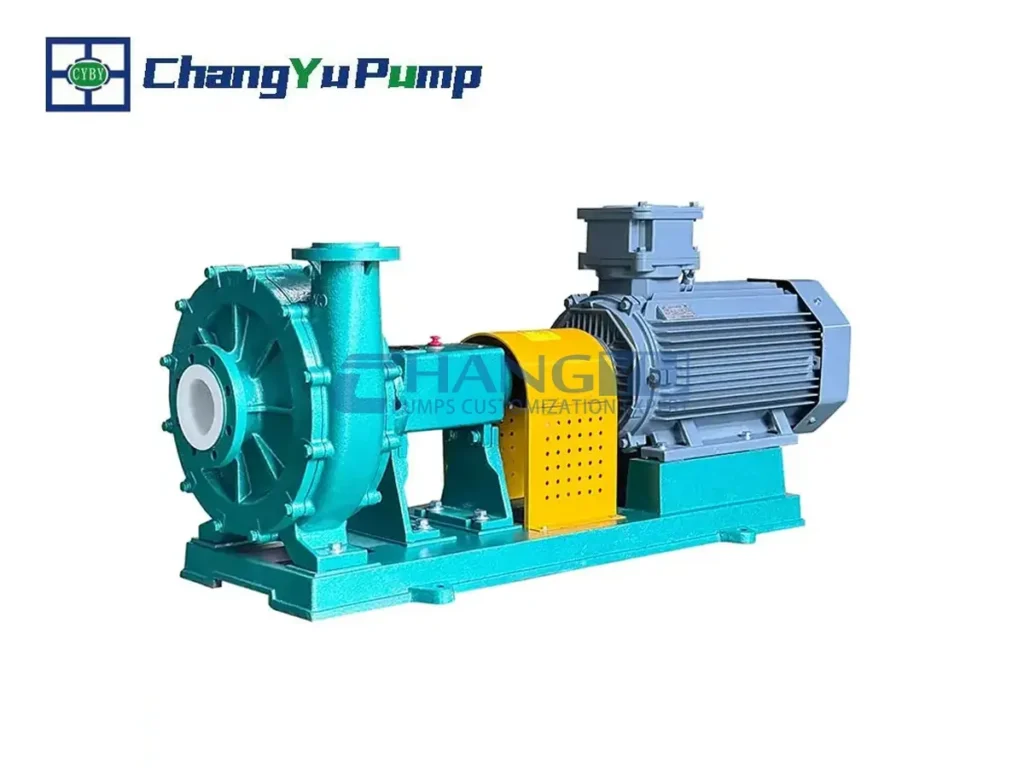
Série UHB Pompe résistante à la corrosion en UHMWPE
USGS keeps a plain-language reference on mine and pit water chemistry worth reading before you assume your water is neutral (USGS Water Science School).
Diesel or Electric: The Decision That Follows the Site, Not the Pump
Electric is cheaper per cubic metre and quieter, and where the sump is within reach of a reliable supply it is usually right. The complication is that quarries move. A sump that relocates every few weeks means cable runs, protection and earthing redone each time, and in a developing pit the power may not be there yet. Diesel solves both, at the cost of fuel: budget roughly 0.25–0.35 litres per kWh at the pump shaft, so a 100 kW set at three-quarter load burns in the region of 19–26 litres an hour. Multiply that by shift hours and fuel price and you have the real comparison.
Our view is that the answer is rarely one or the other. Keep the fixed sump on electric, keep a diesel set on a trailer for storm response and for the weeks when the face has outrun the cable. The capital cost of the backup is small against a lost shift.
If you have any further questions, please contact us.
Courriel : [email protected]
TÉL/WA : +86-13651913727
Six Mistakes We See Repeatedly
- Sizing on average inflow and ignoring the storm.
- Ignoring suction lift — nine metres on a self-priming unit looks fine on paper and does not work in the pit.
- Letting the sump silt until it has lost half its volume, which doubles the cycling rate and accelerates wear.
- Buying one pump for four duties, a compromise at every point and a poor one at the dirtiest.
- Specifying on purchase price, when the energy arithmetic says the cheapest unit is often the most expensive over three years.
- And treating the settling pond as an afterthought, when it is the point where water becomes reusable rather than a discharge problem.
Inside Our Factory
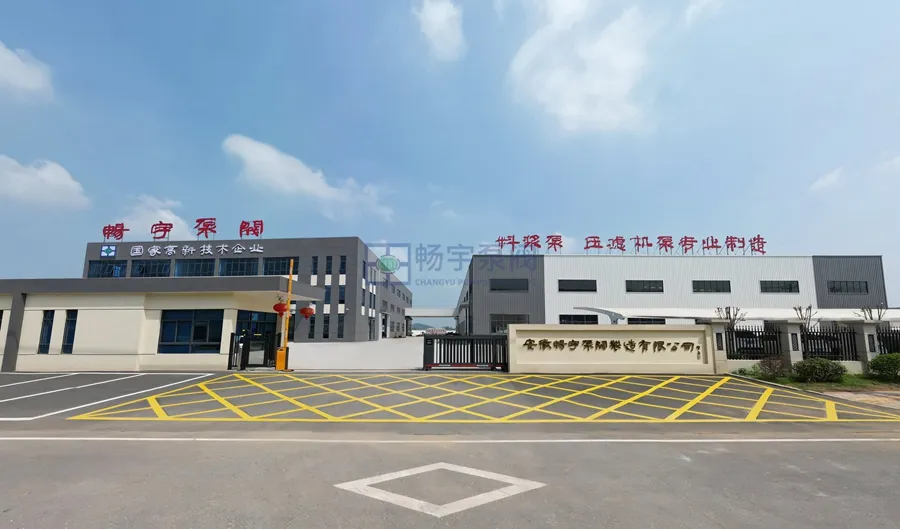
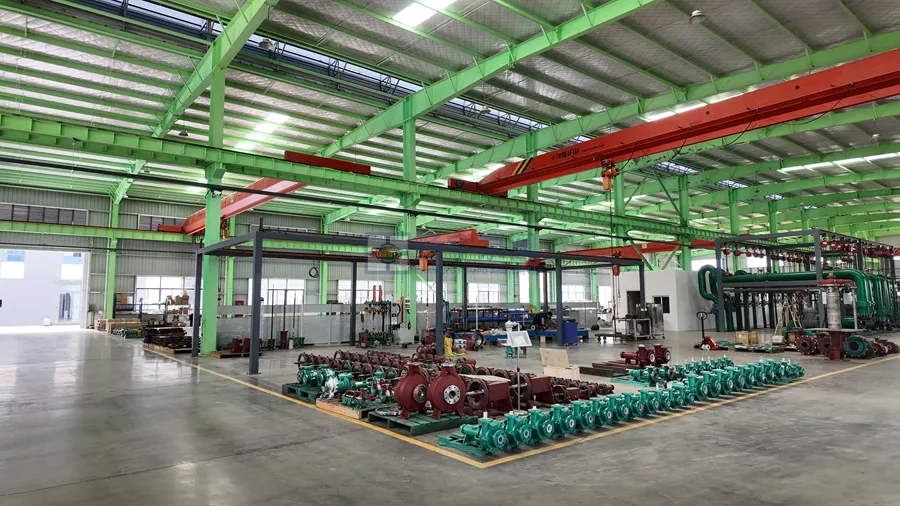
Changyu Pump has manufactured industrial pumps in Anhui, China since 2006, and quarry and mine water duty has been part of that work from the start. Our 100-plus team builds pompes à boues, pompes centrifuges, magnetic drive pumps, submersible and semi-submersible units and pompes à eau in one facility, so a dewatering package can be matched across duties instead of pieced together from different suppliers. We hold CE, ISO, ATEX and EAC certification, and our products run in the United States, South Africa, Europe and Southeast Asia. Every order is factory-tested against its duty point before shipment, and our engineers will review your sump layout, head calculation and water analysis before quoting.




FAQ
Q: How do I calculate the flow rate I need for a quarry sump?
A : Measure inflow in the wettest month, add the storm contribution from your catchment and runoff coefficient, then add 20–30%. Size the sump so the pump cycles five to ten minutes on, not thirty seconds.
Q: Can a self-priming pump handle muddy quarry water?
A : Within limits. It passes solids in suspension but not a solids bed. Keep a strainer on the suction, keep velocity up, and do not let the sump silt. For heavy abrasive loads a wear-lined pump lasts longer.
Q: What is the maximum suction lift for a quarry dewatering pump?
A : Six to seven metres in practice at sea level, less at altitude and with solids present. The theoretical 10.3 m is not achievable. If your geometry needs more, put the pump in the water.
Q: Why does my pump keep losing prime?
A : Almost always an air leak on the suction side — a joint, a worn hose, a damaged foot valve — or a lift beyond the pump’s capability. Check the suction line before touching the pump.
Q: Is a submersible pump better than a self-priming pump for a pit sump?
A : For a fixed sump with level control, submersible is simpler and needs no suction line. For a sump that moves with the face, a trailer-mounted diesel self-priming set is more practical. Many sites run both.
Q: What size quarry dewatering pump does a 40-hectare pit need?
A : Catchment area alone does not set it; rainfall intensity, runoff coefficient and storage do. A 20 mm event over 40 hectares can deliver over 5,000 m³ within hours, so the pump is sized for a storm duration you can accept, with sump storage absorbing the rest.
Q: How much does it cost to run a quarry dewatering pump?
A : At 30 m head and 60% efficiency, roughly 0.14 kWh per cubic metre. Multiply by your tariff and daily volume; wear that drops efficiency to 45% adds about a third.
Q: Can Changyu supply a complete dewatering package rather than a single pump?
A : Yes. We build sump, storm and clean-water pumps in one factory and can quote a matched set with controls after reviewing your duty calculation.
Let Us Look at Your Sump
Send us the pit layout, sump dimensions, head and a water analysis, and we will come back with a selection and the arithmetic behind it — flow, head, expected power draw and running cost. We would rather specify the right unit than the largest one. Reach us through our page de contact, or ask for our selection and technical support service if you want the sump design reviewed alongside the pump.
Courriel : [email protected]
TÉL/WA : +86-13651913727
The Short Version on Quarry Dewatering Pumps
A quarry stays dry when the water is understood as four separate streams rather than one problem. Put the right pump at each point, size for the storm rather than the average, keep suction lift inside six to seven metres, keep sump volume large enough to prevent short cycling, and specify wear margin on the dirtiest duty. Do that, and quarry dewatering pumps stop being a cost line and become the reason the face keeps working.