
Resposta rápida
Bombas na produção de células solares devem lidar com três desafios fundamentalmente diferentes de fluidos em uma única planta de fabricação: misturas de ácidos altamente corrosivos (HF/HNO₃) para texturização de wafers de silício, lamas abrasivas contendo partículas de silício e grãos de diamante do corte de wafers, e produtos químicos ultrapuros onde a contaminação por metais em partes por bilhão degrada a eficiência das células. Bombas industriais padrão falham rapidamente neste ambiente — seja por perfuração por corrosão, desgaste abrasivo ou lixiviação de íons metálicos que compromete a qualidade do produto. Fatores-chave de seleção:
- Combine os materiais da bomba ao ambiente químico específico de cada etapa do processo: Banhos de texturização com ácido misto HF/HNO₃ exigem bombas revestidas com PTFE/PFA; o PVDF pode sofrer fissuração por tensão acima de 60°C nesta condição química e térmica combinada, dependendo da concentração e do grau específico de PVDF. A texturização alcalina com KOH permite mais opções de materiais, mas ainda exige superfícies molhadas não metálicas para evitar contaminação por íons metálicos.
- Selecione projetos resistentes à abrasão para circuitos de lama de corte de wafers: O fluido de corte que transporta partículas de silício (Mohs 7) e grãos de diamante — o abrasivo mais duro conhecido, embora presente em concentrações muito menores que as partículas de silício — exige revestimentos de UHMW-PE ou metal duro. Componentes padrão de aço inoxidável se desgastam em semanas.
- Especifique bombas sem selo ou hermeticamente seladas para processos de alta pureza: Os sistemas de entrega de produtos químicos para PECVD e fornos de difusão não podem tolerar nem mesmo contaminação por metais traço provenientes de detritos de desgaste de selos mecânicos ou corrosão do corpo da bomba. Bombas de acionamento magnético com revestimentos de PTFE/PFA eliminam tanto vazamentos quanto fontes de íons metálicos.
A célula solar linha de produção submete as bombas de processo a condições que abrangem todo o espectro de desafios de manuseio de fluidos industriais. Nos setores de texturização e ataque químico, ácido fluorídrico misturas atacam os materiais da bomba através de um mecanismo sinérgico — o ácido nítrico oxida a superfície do material enquanto o ácido fluorídrico dissolve a camada de óxido, uma ação corrosiva combinada mais agressiva do que qualquer um dos ácidos isoladamente. Na área de corte de wafers, o fluido de corte transporta partículas de silício mais duras que a maioria dos materiais de bomba e abrasivos de diamante mais duros que qualquer metal. Nas zonas de PECVD e difusão, um corpo de bomba liberando até mesmo partes por bilhão de ferro ou níquel pode degradar o tempo de vida dos portadores minoritários de cada wafer processado a jusante.
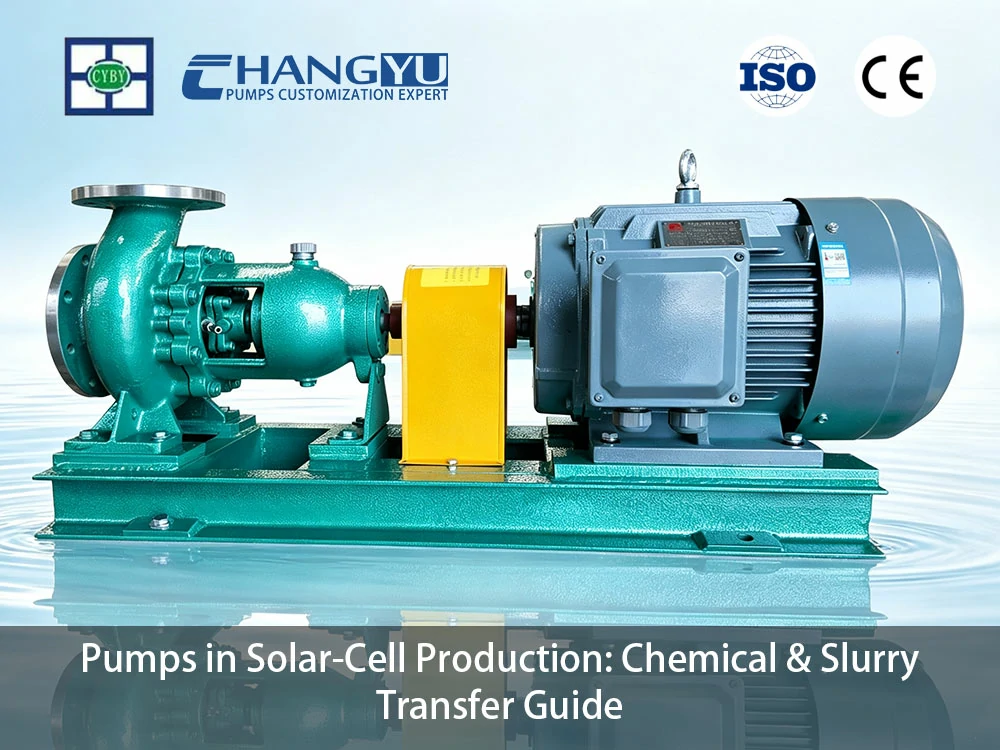
A Changyu Pump fornece bombas resistentes à corrosão e à abrasão para fabricação fotovoltaica há mais de duas décadas. Este guia aborda a seleção de bombas para cada etapa principal da produção de células solares, desde a texturização química até o corte de wafers e a deposição de filmes finos de alta pureza.
O Que Torna o Bombeamento na Produção de Células Solares Tão Desafiador?
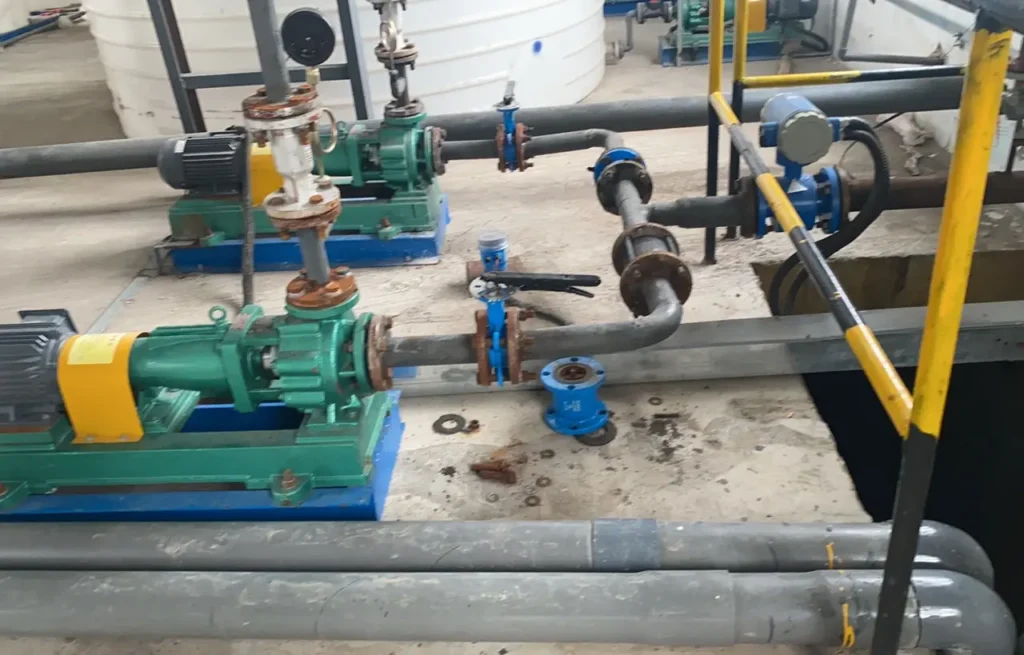
A fabricação de células solares impõe três desafios simultâneos de bombeamento que nenhum projeto de bomba única pode resolver sem uma especificação cuidadosa de materiais.
Manuseio de produtos químicos corrosivos: As etapas de texturização e ataque químico usam misturas de HF/HNO₃, soluções quentes de KOH e banhos de limpeza com HCl/H₂O₂. O HF/HNO₃ apresenta um desafio particular — o ácido nítrico fornece forte potencial oxidante enquanto o ácido fluorídrico forma complexos com os óxidos resultantes e os dissolve. Este mecanismo sinérgico ataca metais e certos polímeros de forma mais agressiva do que qualquer um dos ácidos independentemente.
Transferência de lama abrasiva: O corte de wafers — seja por serragem com fio de diamante ou serragem tradicional com lama — gera fluido de corte contendo partículas duras. A serragem moderna com fio de diamante produz partículas de silício (Mohs 7) do próprio material do wafer, além de grãos de diamante que se desprendem do fio de corte. A serragem tradicional com lama adiciona abrasivos livres de carboneto de silício. Ambos os processos criam fluidos que desgastam materiais padrão de bomba em semanas.
Entrega de produtos químicos ultrapuros: As etapas de PECVD, difusão e enxágue com água ultrapura exigem concentrações de íons metálicos abaixo de partes por bilhão. Íons de ferro, cobre e níquel liberados de superfícies de bomba corroídas ou detritos de desgaste de selos mecânicos atuam como centros de recombinação na rede cristalina do silício. Certos metais, como cobre e níquel, podem reduzir o tempo de vida dos portadores minoritários em concentrações abaixo de 1 ppb.
Como Selecionar Bombas para Manuseio de Produtos Químicos Corrosivos em Texturização e Ataque Químico
Os circuitos de texturização e ataque químico com ácido submetem as bombas aos efeitos corrosivos combinados de ácidos mistos quentes. A seleção de materiais deve levar em conta tanto o ambiente químico quanto a temperatura de operação.
Texturização com ácido misto HF/HNO₃: Este é o ambiente químico mais agressivo na produção de células solares. O HNO₃ oxida superfícies metálicas enquanto o HF dissolve o óxido, impedindo a passivação e permitindo um ataque contínuo. Aços inoxidáveis — incluindo o 316L — não têm resistência eficaz à corrosão neste meio e podem perfurar em semanas. O PVDF tem desempenho adequado em temperaturas ambientes a mornas, mas pode sofrer fissuração por tensão acima de 60°C sob a carga química e térmica combinada, dependendo da concentração e do grau específico de PVDF. Os revestimentos de PTFE e PFA fornecem resistência confiável em toda a faixa de temperatura encontrada nos banhos de texturização, e sua composição não metálica elimina a contaminação por íons metálicos que degrada a qualidade do wafer.
Texturização alcalina com KOH: Usada para texturização de silício monocristalino, o hidróxido de potássio quente ataca o alumínio e os aços inoxidáveis padrão. Ligas de alto teor de níquel ou bombas revestidas com fluoropolímero são necessárias. Como o KOH não apresenta o mesmo desafio oxidativo que o ácido nítrico, os revestimentos de PVDF têm desempenho adequado nas temperaturas elevadas típicas deste processo.
Limpeza com HCl/H₂O₂: A combinação de ácido clorídrico e peróxido de hidrogênio cria um ambiente oxidante e ácido. Bombas revestidas com FEP ou PVDF com selos encapsulados em PTFE fornecem serviço confiável.
Engenheiros da Changyu Pump observam: Para serviço com ácido misto HF/HNO₃ acima de 60°C, o revestimento de PTFE ou PFA é a especificação necessária — o PVDF pode desenvolver trincas por tensão sob essas condições químicas e térmicas combinadas, particularmente acima de 60°C. Sempre verifique a compatibilidade do grau específico de PVDF com suas condições de processo. Este é o erro de seleção de material mais comum observado em instalações de bombas para texturização de células solares. Uma bomba revestida com PVDF que funciona de forma confiável durante a operação inicial pode falhar subitamente após meses de exposição, à medida que microtrincas se propagam pelo material de revestimento.
Para orientação sobre seleção de material de bomba para outras aplicações químicas altamente corrosivas, consulte nosso guia dedicado sobre Bomba de Lixívia Líquida: Um Guia Completo de Seleção & Material.
Como Selecionar Bombas para Transferência de Lamas Abrasivas no Corte de Wafers
O corte de wafers gera fluido de corte que é simultaneamente abrasivo e potencialmente corrosivo, dependendo da química do refrigerante.
O desafio abrasivo: A serragem moderna com fio diamantado produz partículas de silício (Mohs 7) do material do wafer e abrasivos de diamante do desgaste do fio. Essas partículas são angulares, duras e concentradas a 20–40% em peso no fluido de corte. Bombas centrífugas padrão com componentes de ferro fundido ou aço inoxidável na parte molhada desgastam os rotores e as volutas em semanas.
Seleção de material para bombas de lama: Os revestimentos de UHMW-PE (polietileno de ultra-alto peso molecular) fornecem a combinação ideal de resistência à abrasão, compatibilidade química com refrigerantes de água-glicol e custo-benefício para circuitos de lama de corte de wafers. A superfície de baixo atrito do material adicionalmente reduz a adesão de partículas — uma vantagem significativa em circuitos onde partículas de silício, de outra forma, se acumulariam e consolidariam durante períodos de inatividade da bomba.
Transferência de pasta de prata e alumínio: As pastas de metalização contêm pós metálicos suspensos em ligantes orgânicos. Esses materiais são sensíveis ao cisalhamento — o trabalho mecânico excessivo degrada a imprimibilidade — e propensos à sedimentação. Bombas centrífugas de baixa velocidade com revestimentos de UHMW-PE ou fluoropolímero mantêm a circulação adequada sem danificar a estrutura da pasta.
Engenheiros da Changyu Pump recomendam: Mantenha uma velocidade de fluxo mínima de 2,0–2,5 m/s nas linhas de transferência de lama para evitar a sedimentação de partículas de silício e o bloqueio da tubulação. Para circuitos de refrigerante de corte de wafers, bombas revestidas com UHMW-PE fornecem resistência ao desgaste combinada e compatibilidade química com o refrigerante de água-glicol — a superfície de revestimento de baixo atrito reduz a adesão de partículas durante períodos de inatividade da bomba, uma causa comum de danos na partida em serviço de lama abrasiva.
Como Prevenir a Contaminação por Íons Metálicos em Bombas de Alta Pureza para Células Solares
A entrega de produtos químicos de alta pureza para PECVD, difusão e limpeza pós-gravura não pode tolerar contaminação metálica dos materiais da bomba.
O mecanismo de contaminação: Íons metálicos se dissolvem nos produtos químicos do processo a partir de duas fontes relacionadas à bomba — corrosão geral das superfícies molhadas e desgaste mecânico dos componentes dinâmicos. Mesmo um corpo de bomba de aço inoxidável 316L operando em água ultrapura liberará íons de ferro, cromo e níquel em concentrações que degradam a qualidade do wafer. As faces e molas do selo mecânico são uma fonte secundária, mas significativa — detritos de desgaste do selo contendo partículas metálicas entram na corrente do processo a jusante da bomba.
Hierarquia de limpeza de material para bombas de células solares: O aço inoxidável 316L padrão libera íons Fe, Cr e Ni mesmo em serviço químico leve — não recomendado para qualquer processo de célula solar de contato direto. O PVDF fornece boa limpeza com liberação ocasional de íons fluoreto sob condições agressivas. PTFE e PFA oferecem a maior inércia química com liberação de íons insignificante em todos os ambientes de processo de células solares.
Considerações de vedação: Mesmo uma bomba resistente à corrosão pode introduzir contaminação através de seu selo mecânico. Faces de selo duro (carboneto de silício, carboneto de tungstênio) geram detritos de desgaste. As molas do selo — tipicamente de aço inoxidável — corroem em produtos químicos do processo e liberam íons metálicos. Bombas de acionamento magnético eliminam tanto o selo dinâmico quanto a mola metálica, removendo duas fontes de contaminação simultaneamente.
Engenheiros da Changyu Pump recomendam: Para processos PECVD e difusão onde a contaminação por traços metálicos impacta diretamente a eficiência da célula, bombas de acionamento magnético revestidas com PTFE/PFA são a especificação recomendada. O design sem selo elimina os detritos de desgaste do selo mecânico — uma fonte frequentemente negligenciada de contaminação por partículas metálicas em sistemas de entrega de produtos químicos de alta pureza. Quando selos mecânicos são inevitáveis, especifique selos de fole de PTFE sem molas metálicas e faces de selo duro contra duro (carboneto de silício vs. carboneto de silício) para minimizar a geração de partículas de desgaste.
Matriz de Seleção de Bombas para Produção de Células Solares
| Etapa do Processo | Fluido | Desafio primário | Tipo de bomba recomendado | Material recomendado | Alternativa |
|---|---|---|---|---|---|
| Texturização ácida | Mistura HF/HNO₃ | Corrosão forte + oxidação | Centrífuga ou acionamento magnético | Revestido com PTFE/PFA | PVDF (apenas <60°C) |
| Texturização alcalina | KOH (quente) | Corrosão | Centrífuga | PVDF ou PTFE/PFA | Liga de alto níquel |
| Limpeza RCA | HCl/H₂O₂ | Corrosão + oxidação | Centrífuga | FEP ou PVDF | PTFE/PFA |
| Corte de wafers | Fluido de corte + partículas de Si | Abrasão | Centrífuga | Forro em UHMW-PE | Metal duro |
| Transferência de pasta de prata | Pó de Ag + ligante | Sensibilidade ao cisalhamento | Centrífuga de baixa velocidade | UHMW-PE ou FEP | — |
| PECVD/difusão | TMA, POCl₃, precursores líquidos | Contaminação metálica | Acionamento magnético | Revestido com PTFE/PFA | — |
| Água ultrapura | UPW | Contaminação metálica | Centrífuga ou acionamento magnético | PVDF ou PTFE/PFA | — |
Para orientação sobre seleção de bombas para aplicações de lama abrasiva em outras indústrias, consulte nosso guia dedicado sobre Bomba de Polpa de Barbotina Cerâmica: Transferência de Esmalte Abrasivo & Caulim.
Estudo de Caso de Bombas na Produção de Células Solares: Resolvendo um Vazamento por Corrosão de HF/HNO₃ em um Banho de Texturização Solar
Um fabricante de células fotovoltaicas na China operava bombas centrífugas de aço inoxidável 316L para circular ácido misto HF/HNO₃ através de seus banhos de texturização de wafers a aproximadamente 40°C. As bombas serviam a uma linha de produção contínua processando wafers de silício monocristalino.
Dentro de duas semanas após a comissionamento, os operadores da planta descobriram vazamento de ácido proveniente de perfurações por corrosão puntiforme nos invólucros das bombas. A inspeção das bombas removidas revelou corrosão uniforme generalizada das superfícies de aço inoxidável. Além do óbvio risco de segurança devido ao vazamento de ácido, os invólucros das bombas em dissolução estavam liberando íons de ferro, níquel e cromo diretamente no banho de texturização — contaminando as bolachas com íons metálicos que reduziriam a eficiência das células. Engenheiros de processo correlacionaram o período de substituição das bombas com um aumento inexplicável de defeitos na superfície das bolachas.
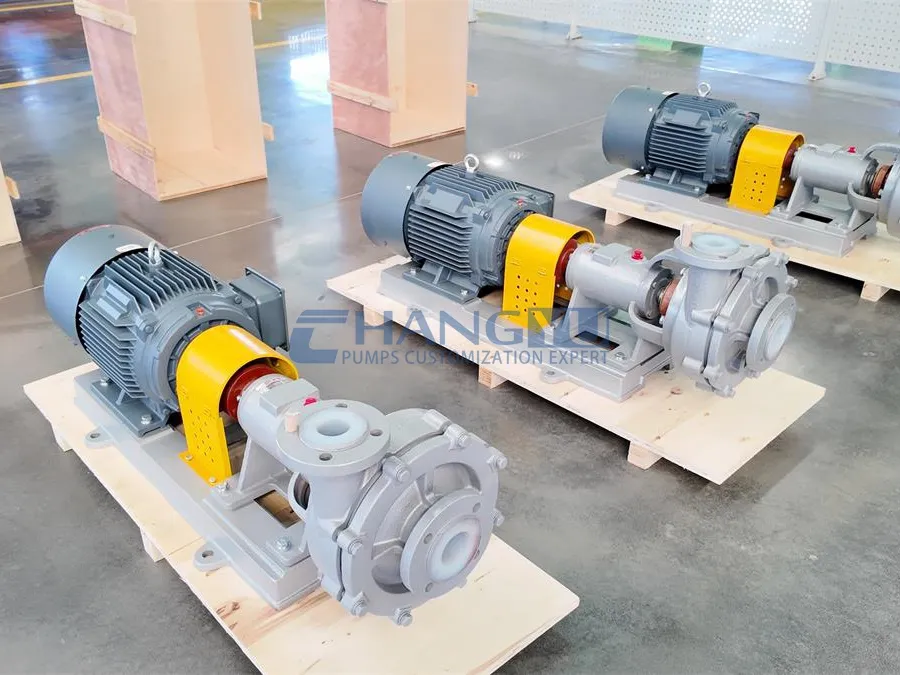
A Changyu Pump substituiu as bombas de aço inoxidável pelas bombas centrífugas revestidas com FEP da Série CYB-ZKJ, com selos mecânicos duplos. O revestimento de fluoropolímero eliminou tanto a corrosão quanto a liberação de íons metálicos. Os selos mecânicos duplos com anéis de vedação encapsulados em PTFE evitaram o vazamento do selo, que também era um problema recorrente com as bombas originais.
Ao longo de 36 meses de operação contínua após a atualização: nenhuma corrosão ou vazamento no invólucro da bomba; as bombas permanecem em serviço até a inspeção mais recente. Os dados do processo mostraram a eliminação das variações periódicas de defeitos nas bolachas que anteriormente estavam correlacionadas com os intervalos de substituição das bombas. A manutenção das bombas foi reduzida de substituição emergencial a cada 2–3 semanas para inspeção anual planejada do selo. O custo inicial mais alto da bomba foi recuperado em quatro meses através da eliminação de interrupções na produção e lotes de bolachas descartados.
Conclusão principal: O aço inoxidável não tem lugar em serviço com ácido misto HF/HNO₃. O componente de ácido nítrico impede a formação da camada passiva de óxido de cromo que normalmente protege o aço inoxidável da corrosão. Uma bomba revestida com fluoropolímero não é uma atualização — é a especificação mínima viável de material para esta aplicação.
Soluções de Bombas para Produção de Células Solares da Changyu Pump
| Aplicação | Desafio | Séries recomendadas | Característica principal |
|---|---|---|---|
| Texturização e ataque químico com ácido | Corrosão por HF/HNO₃ | Série CYB-ZKJ | Revestido com FEP/PFA; selo mecânico duplo |
| POCl₃, TMA, precursores líquidos | Segurança + contaminação metálica | Série CYQ | Acionamento magnético; revestido com PTFE/PFA; vazamento zero |
| Lodo de corte de bolachas | Abrasão + corrosão | Série UHB | Revestido com UHMW-PE; resistente ao desgaste e quimicamente |
| Pasta de prata/alumínio | Sensibilidade ao cisalhamento | Série UHB ou CYB-ZKJ | Operação em baixa rotação; revestimento antiaderente |
| Água ultrapura, limpeza | Contaminação metálica | Série CYQ ou CYB-ZKJ | Superfícies molhadas não metálicas |
Série CYQ — Bomba de Acionamento Magnético para Transferência de Produtos Químicos Perigosos e de Alta Pureza
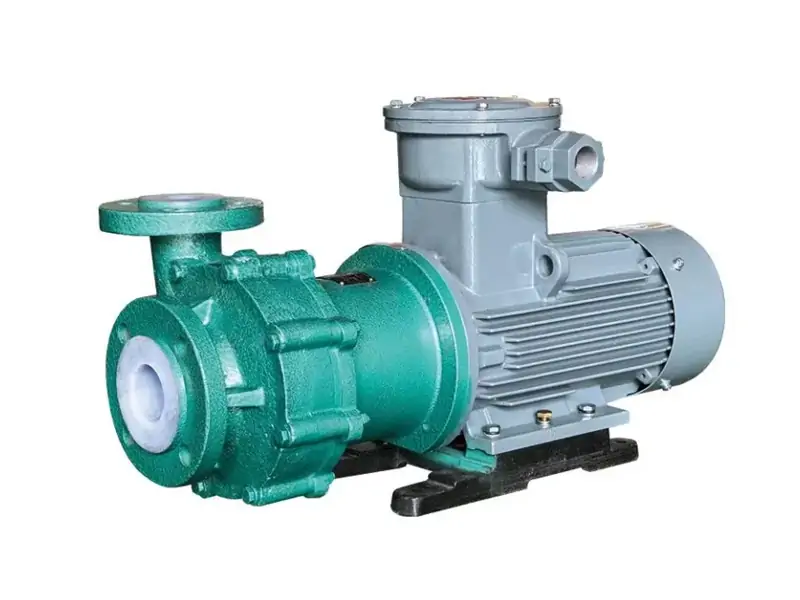
A bomba química de acionamento magnético CYQ é projetada para transferência sem vazamento de produtos químicos altamente corrosivos, tóxicos e de alta pureza. Revestimento espesso de fluoroplástico FEP/PFA/PTFE, acoplamento magnético de terras raras e estrutura totalmente selada eliminam o vazamento do selo do eixo. Ideal para POCl₃, TMA e outros precursores líquidos perigosos em processos PECVD e difusão.
| Parâmetro | Especificação |
|---|---|
| Caudal | 3-800 m³/h |
| Cabeça | 15–125 m |
| Potência do motor | 2,2–110 kW |
| Velocidade | 950 r/min |
| Temperatura | -20°C a 180°C |
| Materiais de revestimento | FEP / PFA / PTFE |
Ver Bomba de Acionamento Magnético CYQ →
Série UHB — Bomba Revestida com UHMW-PE para Transferência de Lodo Abrasivo
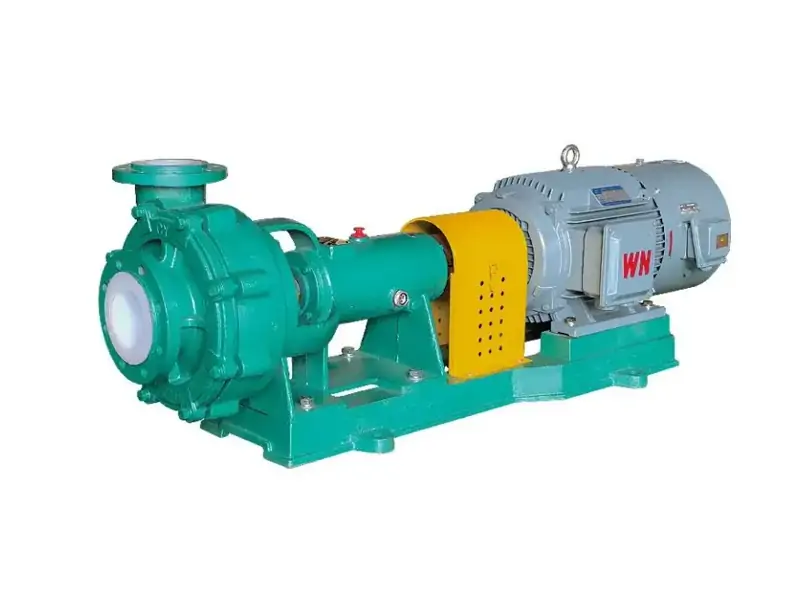
Bomba centrífuga de aço revestida com UHMW-PE para aplicações de lodo abrasivo. Excelente resistência ao desgaste contra partículas de silício e grãos de diamante no fluido de corte de bolachas, combinada com compatibilidade química com fluidos de arrefecimento à base de água-glicol. A superfície de revestimento de baixo atrito reduz a adesão de partículas durante períodos de inatividade.
| Parâmetro | Especificação |
|---|---|
| Caudal | 3-2,600 m³/h |
| Cabeça | 5-100 m |
| Potência do motor | 0,75-300 kW |
| Velocidade | 750-2.900 r/min |
| Temperatura | -20°C a 90°C |
| Material do forro | UHMW-PE |
Série CYB-ZKJ — Bomba Centrífuga Revestida com Fluoropolímero para Serviço com Ácido e Produtos Químicos
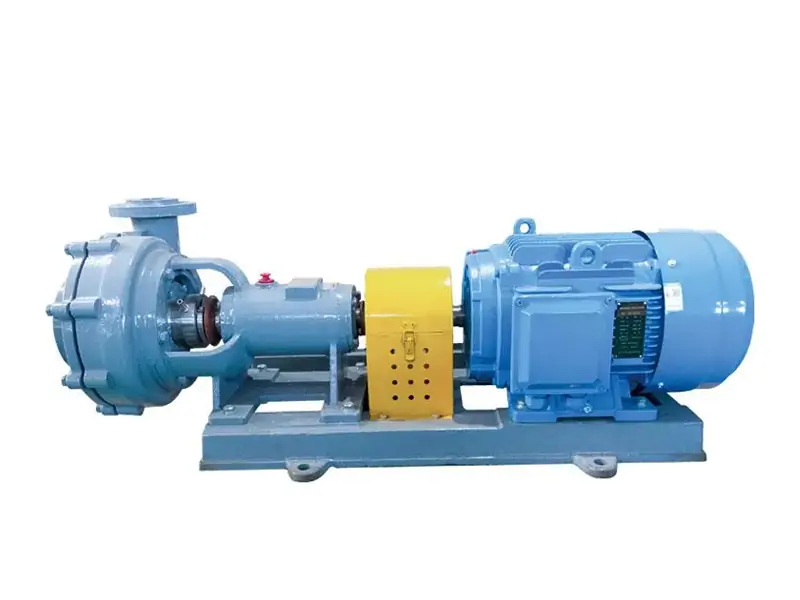
Bomba centrífuga revestida com FEP/PFA para transferência e circulação de produtos químicos corrosivos. O selo mecânico duplo com fluido de barreira fornece vedação confiável para circulação contínua em banhos de texturização e limpeza com ácido. O revestimento de fluoropolímero isola completamente o invólucro da bomba do fluido bombeado.
| Parâmetro | Especificação |
|---|---|
| Caudal | 3-2,600 m³/h |
| Cabeça | 5-100 m |
| Potência do motor | 0,75-300 kW |
| Temperatura | -80°C a 120°C |
| Materiais de revestimento | FEP (padrão), PFA (opção para altas temperaturas) |
Perguntas Frequentes sobre Bombas na Produção de Células Solares
P: Por que as bombas de aço inoxidável não podem ser usadas para banhos de texturização com HF/HNO₃?
R: O componente de ácido nítrico impede a formação da camada protetora de óxido de cromo que normalmente passiva o aço inoxidável. O ácido fluorídrico então ataca o metal exposto, causando corrosão uniforme rápida. Bombas de aço inoxidável podem perfurar em semanas neste serviço, enquanto liberam simultaneamente íons metálicos que contaminam as bolachas.
P: Qual material de bomba é melhor para ácido misto HF/HNO₃?
R: Os revestimentos de PTFE e PFA fornecem a maior resistência química em toda a faixa de temperatura dos banhos de texturização. O PVDF é aceitável em temperaturas ambiente a mornas, mas pode sofrer fissuração por estresse acima de 60°C sob condições químicas e térmicas combinadas de HF/HNO₃, dependendo da concentração e do grau específico de PVDF.
P: Como evito que partículas de silício se depositem nas bombas de lodo de corte de bolachas?
R: Mantenha uma velocidade de fluxo mínima de 2,0–2,5 m/s nas linhas de transferência de lodo. Especifique bombas revestidas com UHMW-PE — a superfície de revestimento de baixo atrito reduz a adesão de partículas durante períodos de inatividade da bomba, uma causa comum de danos na partida em circuitos de lodo abrasivo.
P: Como a contaminação por íons metálicos afeta a eficiência das células solares?
R: Íons metálicos (Fe, Cu, Ni) dissolvidos das superfícies da bomba atuam como centros de recombinação na rede cristalina de silício. Mesmo concentrações de partes por bilhão reduzem o tempo de vida dos portadores minoritários, diminuindo diretamente a eficiência de conversão da célula. Certos metais, como cobre e níquel, são particularmente prejudiciais em concentrações abaixo de 1 ppb. Materiais de bomba não metálicos são necessários para etapas de processo de alta pureza.
P: Qual é a diferença entre PVDF e PTFE/PFA para bombas químicas de células solares?
R: O PVDF oferece boa resistência química e menor custo, adequado para texturização alcalina com KOH e serviço com ácido em temperatura ambiente. O PTFE e o PFA oferecem máxima inércia química e classificações de temperatura mais altas, necessários para HF/HNO₃ quente acima de 60°C e processos de alta pureza onde mesmo a liberação de traços de íons fluoreto do PVDF é inaceitável.
Lista de verificação de prevenção do engenheiro de bombas da Changyu
- Nunca especifique bombas de aço inoxidável para banhos de texturização com ácido misto HF/HNO₃. O ácido nítrico impede a passivação, e o HF ataca o metal exposto.
- Atualize de revestimento PVDF para PTFE/PFA quando a temperatura do banho de texturização exceder 60°C, e sempre verifique a compatibilidade do grau de PVDF com as condições específicas do processo. A fissuração por estresse do PVDF sob exposição combinada a HF/HNO₃ é o erro de seleção de material mais comum em instalações de bombas para células solares.
- Para circuitos de refrigeração de corte de wafers, mantenha uma velocidade de fluxo mínima de 2,0–2,5 m/s para evitar a sedimentação de partículas de silício. Revestimentos de UHMW-PE oferecem a melhor resistência combinada ao desgaste e baixa adesão de partículas.
- Especifique bombas de acionamento magnético para processos de fornecimento de produtos químicos de alta pureza, como PECVD e difusão. Detritos de desgaste de selos mecânicos são uma fonte frequentemente negligenciada de contaminação metálica.
- Quando selos mecânicos forem inevitáveis, especifique projetos de fole de PTFE sem molas metálicas e faces de selo duras (carboneto de silício contra carboneto de silício) para minimizar a geração de partículas de desgaste. Molas de selo padrão em aço inoxidável corroem e liberam íons metálicos no fluxo do processo.
- Lave as bombas com água limpa após cada campanha de produção. Produtos químicos de processo estagnados aceleram a degradação do revestimento e promovem a formação de cristais nas faces do selo.
- Mantenha selos mecânicos, anéis de vedação e juntas sobressalentes em estoque. O ataque oxidativo do HNO₃ em elastômeros torna a substituição de componentes de selo mais frequente do que em outros serviços químicos.
Conclusão
Bombas na produção de células solares atendem a três categorias distintas de fluidos — misturas ácidas corrosivas, lamas de corte abrasivas e produtos químicos ultrapuros — dentro de uma única planta de fabricação. Nenhum projeto ou material de bomba atende adequadamente a todas as três. A texturização com HF/HNO₃ exige bombas revestidas com PTFE/PFA com selos mecânicos duplos. Circuitos de refrigeração de corte de wafers requerem revestimentos de UHMW-PE para resistência combinada ao desgaste e química. O fornecimento de produtos químicos de alta pureza para PECVD e difusão se beneficia de bombas de acionamento magnético que eliminam tanto o vazamento de selos dinâmicos quanto os detritos de desgaste de selos mecânicos. O fio condutor comum em todas as aplicações de bombas para células solares é a exigência de superfícies molhadas não metálicas — a contaminação por íons metálicos de componentes de bomba corroídos degrada diretamente o produto que a bomba deve ajudar a fabricar.
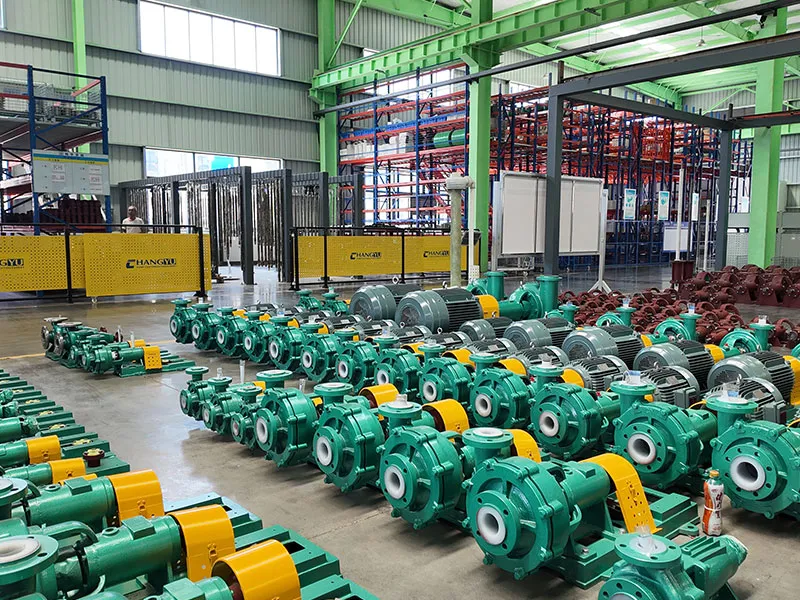
A equipe de engenharia da Changyu Pump fornece recomendações de bombas específicas para aplicações em fabricação fotovoltaica, apoiada por mais de 20 anos de experiência em bombas resistentes à corrosão e à abrasão em processamento químico e aplicações de alta pureza.