
Ключевые выводы
- Выбор материала — фактор #1, определяющий срок службы насоса для рассола — Нержавеющая сталь 304 выходит из строя в течение недель при концентрации хлоридов >1 000 ppm; супердуплекс 2507 (PRE 42–45) выдерживает >15 000 ppm хлоридов при 60°C.
- Для работы с рассолом доступны шесть марок материалов; 904L (PRE 34–36) заполняет промежуток между 316L и 2205, тогда как титан обеспечивает почти полную невосприимчивость к хлоридам при температурах до 120°C (но не подходит для фторидов или восстановительных кислот).
- Конструкция насоса должна соответствовать технологической стадии — одноступенчатый CYH для забора морской воды (0,8–750 м³/ч, напор ≤130 м), многоступенчатый DF для транспортировки рассола под высоким давлением после обратного осмоса (3,75–850 м³/ч, напор до 816 м).
- Конструкция системы уплотнений критически важна для работы с рассолом — рекомендуются схемы промывки API 682 (Plan 11/21/32/62) и двойные торцевые уплотнения с карбидокремниевыми (SiC) парами трения для кристаллизующегося или высокосоленого рассола.
- Анализ совокупной стоимости владения (TCO) показывает, что переход с 316L на 2507 может снизить затраты на жизненный цикл на 30–40% несмотря на более высокую начальную стоимость материала, благодаря увеличенному сроку службы и сокращению простоев.
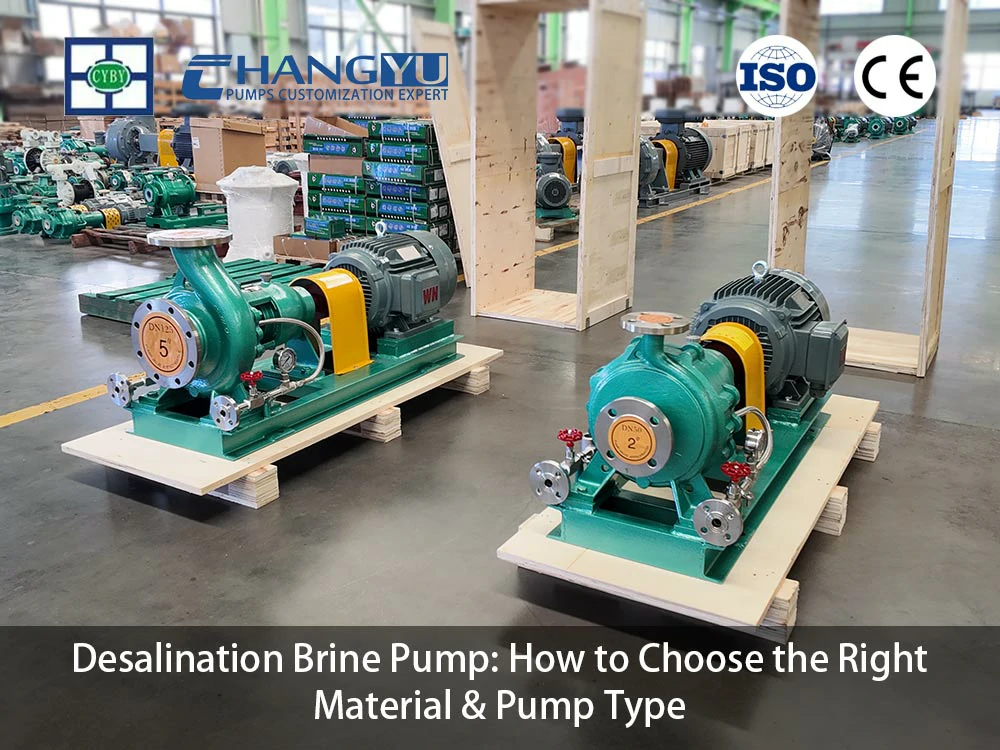
Что такое насос для рассола опреснительных установок?
A насос для рассола опреснительных установок — это специализированное устройство для перекачивания жидкостей, предназначенное для транспортировки высокосоленого концентрированного рассола — побочного продукта процессов обратного осмоса (RO) и термического опреснения. В отличие от стандартных промышленных насосов, насос для рассола опреснительных установок должен выдерживать:
- Концентрации TDS от 50 000 ppm до более 200 000 ppm, в зависимости от солености исходной воды и коэффициента извлечения системы (типичный морской RO при 50% извлечения производит рассол с концентрацией ~70 000 ppm; системы ZLD могут превышать 200 000 ppm).
- Уровни хлоридов которые вызывают быстрое питтинговую коррозию в стандартных нержавеющих сталях.
- Непрерывные рабочие циклы обычные для опреснительных заводов (8 000+ часов в год).
Эти насосы применяются в нескольких технологических точках: забор морской воды, повышение давления подачи RO, отвод рассола и циркуляция в системах с нулевым сбросом жидкости (ZLD).
Коррозионные проблемы при работе с высокосоленым рассолом
1 Питтинговая коррозия, вызванная хлоридами, и значение PRE
Ионы хлорида атакуют пассивную оксидную пленку на нержавеющей стали, создавая локальные питтинги, которые могут проникнуть через стенку в течение нескольких месяцев. Эквивалент сопротивления питтингу (PRE) — стандартный показатель для ранжирования устойчивости материала к хлоридному питтингу:
PRE = %Cr + 3,3 × %Mo + 16 × %N
- 304: PRE 18–20 → ограничение ~200 ppm хлоридов при 60°C
- 316L: PRE 24–26 → ограничение <1 000 ppm хлоридов
- 2507 супердуплекс: PRE 42–45 → выдерживает >15 000 ppm хлоридов
Справочно: Значения PRE определяются по стандартным методам испытаний ASTM G48 на стойкость к питтингу и щелевой коррозии нержавеющих сталей.
2 Коррозионное растрескивание под напряжением (SCC)
Сочетание растягивающего напряжения, температуры и ионов хлорида вызывает быстрое распространение трещин. Аустенитные марки (304, 316L) наиболее уязвимы; дуплексные марки (2205, 2507) обеспечивают значительно лучшую стойкость к SCC благодаря своей ферритно-аустенитной микроструктуре.
3 Щелевая коррозия
Уплотнительные соединения, торцевые поверхности уплотнений и болтовые соединения создают зоны с пониженным содержанием кислорода, где локальная коррозия ускоряется. Это наиболее распространенное место отказа в насосах для рассола, которое устраняется выбором материалов с более высоким PRE и оптимизацией конструкции уплотнений.
Руководство по выбору материалов для насосов рассола опреснительных установок
1 Полная сравнительная таблица материалов (6 марок)
Changyu Pump предлагает градуированную систему выбора материалов на основе концентрации хлоридов, рабочей температуры и содержания частиц. Ниже приведено полное сравнение, включая 904L и титан, которые обычно используются при работе с рассолом, но отсутствуют во многих руководствах:
| Марка | Классификация | Значение PRE | Допустимая концентрация хлоридов (60°C) | Твердость (HB) | Лучшее для | Ограничения |
|---|---|---|---|---|---|---|
| 304 | Аустенитная (базовая) | 18-20 | ~200 ppm | 150-180 | Пресная вода, низкая соленость | Быстро выходит из строя в морском рассоле |
| 316L | Аустенитная (с Mo) | 24-26 | <1 000 ppm | 150-190 | Умеренная морская вода, низкое содержание хлоридов | Не подходит для рассола RO |
| 904L | Super Austenitic | 34–36 | ~8,500 ppm | 170–210 | Sulfuric/phosphoric acid + chloride | Lower SCC resistance than 2205 |
| 2205 | Duplex (Economical) | 34-38 | ~8,500 ppm | 250-280 | Seawater, moderate brine, 5–10% solids | PRE lower than 2507 |
| 2507 | Super Duplex | 42-45 | >15,000 ppm | 280–330 | High-chloride brine, ZLD, 10–15% solids | Более высокая стоимость |
| Titanium (CP Ti) | Active Metal | Н/Д | Near-immune up to 120°C | 180–210 | Extreme chloride, high-temperature | ❌ Not for fluorides or reducing acids |
Corrosion Resistance Ranking (lowest → highest):
304 < 316L < 904L ≈ 2205 < 2507 < Titanium
Wear Resistance Ranking (lowest → highest):
Titanium < 304 ≈ 316L < 904L < 2205 < 2507
Key insight: 904L and 2205 have similar PRE values (34–38), but 2205 offers superior SCC resistance, making it the preferred choice for brine service where both corrosion and mechanical stress are factors.
3.2 Quick Selection Chart for Desalination Brine Pumps
| Рабочее состояние | Рекомендуемый материал | Рекомендуемые серии насосов | Key Parameters |
|---|---|---|---|
| Seawater intake, low-pressure | 2205 Дуплекс | CYH single-stage | 0.8–750 m³/h, ≤130 m, -20°C to 165°C |
| Подача высокого давления обратного осмоса | 2507 Супер Дуплекс | DF multistage | 3.75–850 m³/h, 19–816 m, ≤80°C |
| Brine discharge (medium pressure) | 2507 / 2205 | CYH or DF | Depends on head requirement |
| Brine with particles (5–10% solids) | 2205 / 2507 | DF multistage | Flow rate matched to solids content |
| ZLD system (ultra-concentrated brine) | 2507 | DF multistage | Требуется высокая коррозионная стойкость |
| High-temperature brine (≥80°C) | 2507 / Titanium | CYH single-stage | CYH supports up to 165°C |
| Fluoric acid or fluorides in brine | ❌ Not Titanium | 2507 preferred | Titanium is incompatible with fluorides |
3.3 Material Cost vs. Lifecycle Tradeoff
While 2507 super duplex has a higher initial material cost (approximately 2–3× that of 316L), the совокупная стоимость владения (TCO) analysis tells a different story:
- 316L in brine >1,000 ppm chloride: typical service life 6–12 months, frequent replacement cost
- 2205 in moderate brine: typical service life 3–5 years
- 2507 in high-chloride brine: typical service life 8–10+ years
For a 200 kW pump running 8,000 hours per year (assuming 85% average load factor), the energy cost alone is significant. The DF series achieves a 15% energy efficiency improvement over its lifecycle due to the four-stage axial force balancing system, which translates to approximately 240,000 kWh saved per year under full-load operation, or ~204,000 kWh at 85% load factor.
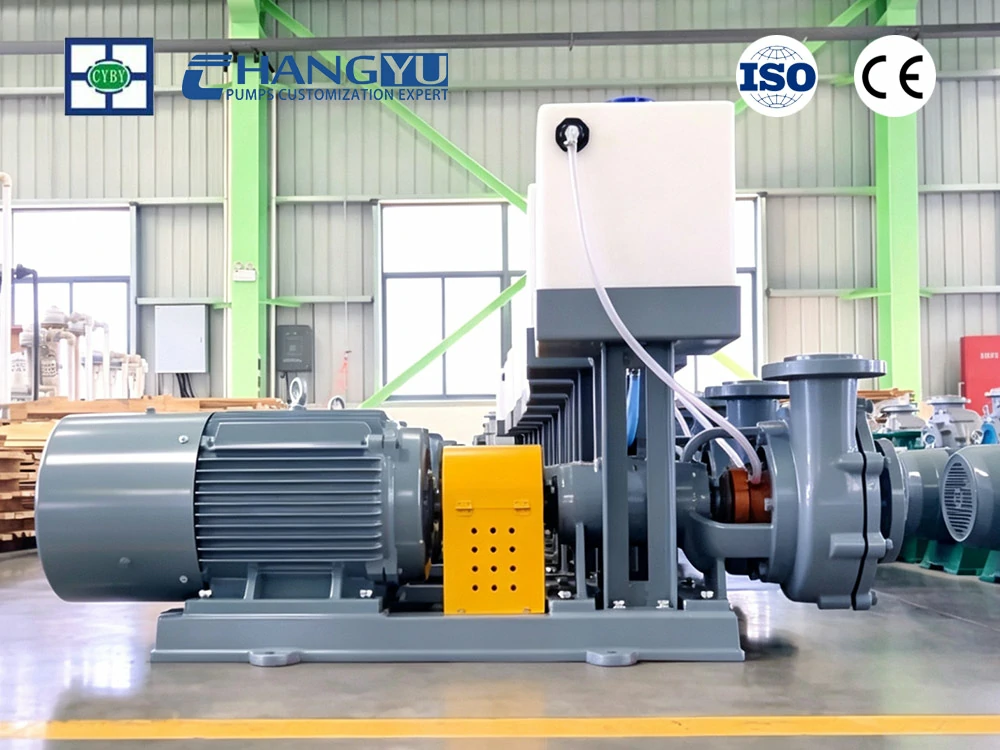
4. Pump Types for Desalination Brine Service
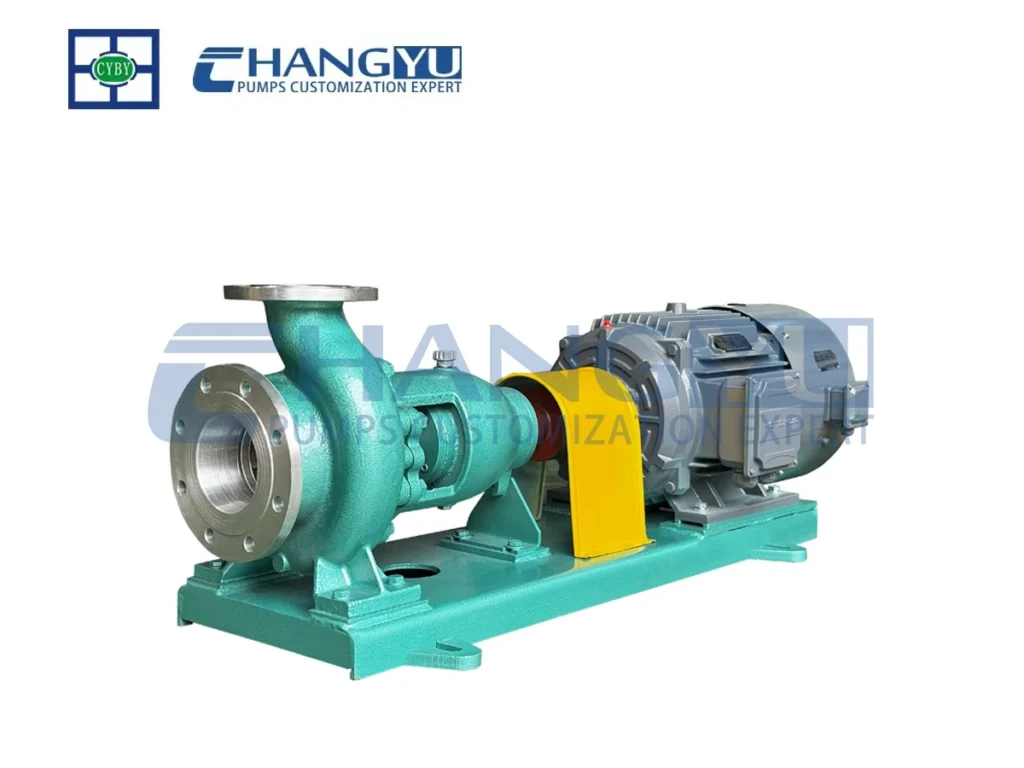
4.1 CYH Series — Single-Stage Centrifugal Seawater Pump
Designed for seawater intake, low-pressure brine transfer, and general marine service.
| Параметр | Range |
|---|---|
| Скорость потока | 0,8–750 м³/ч |
| Глава | 3–130 м |
| Температура | -20°C до 165°C |
| Стандарт | ISO 2858 |
| Материалы | 304, 316L, 2205, 2507 |
| Design | Single-stage, single-suction, cantilever, semi-open impeller |
The CYH series features a semi-open impeller design that reduces cavitation risk and improves passage efficiency for brine with trace solids. Its optimized hydraulic profile minimizes NPSH requirements, making it suitable for low-NPSH installation conditions.
→ CYH Series Centrifugal Sea Water Pump Product Page
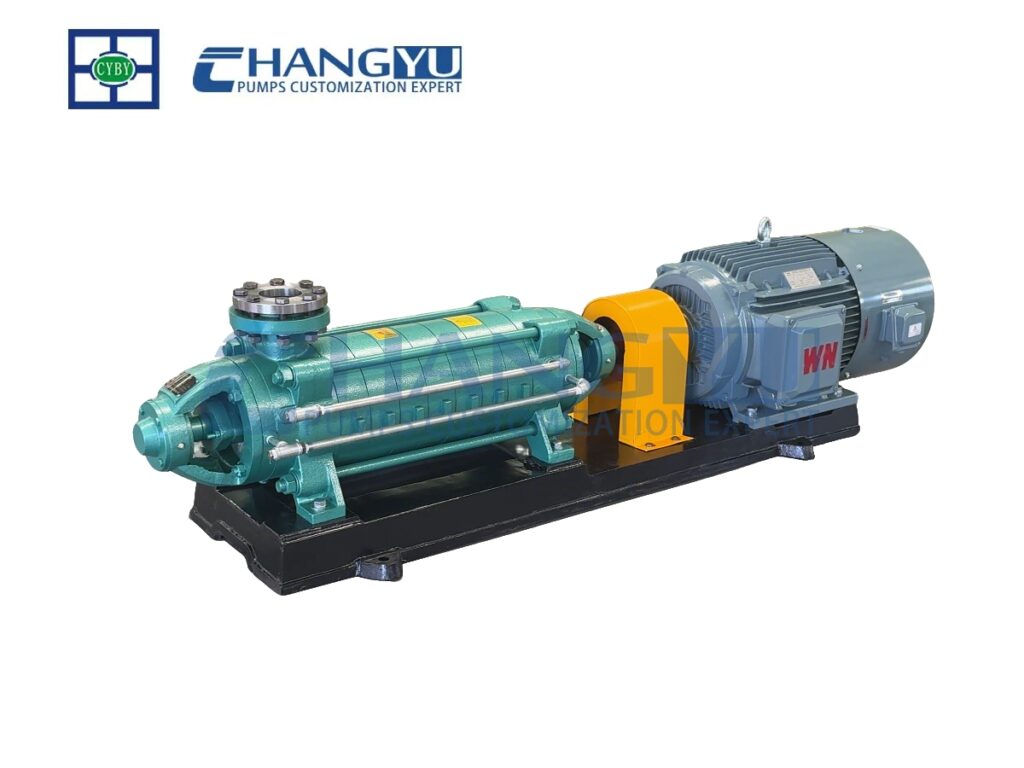
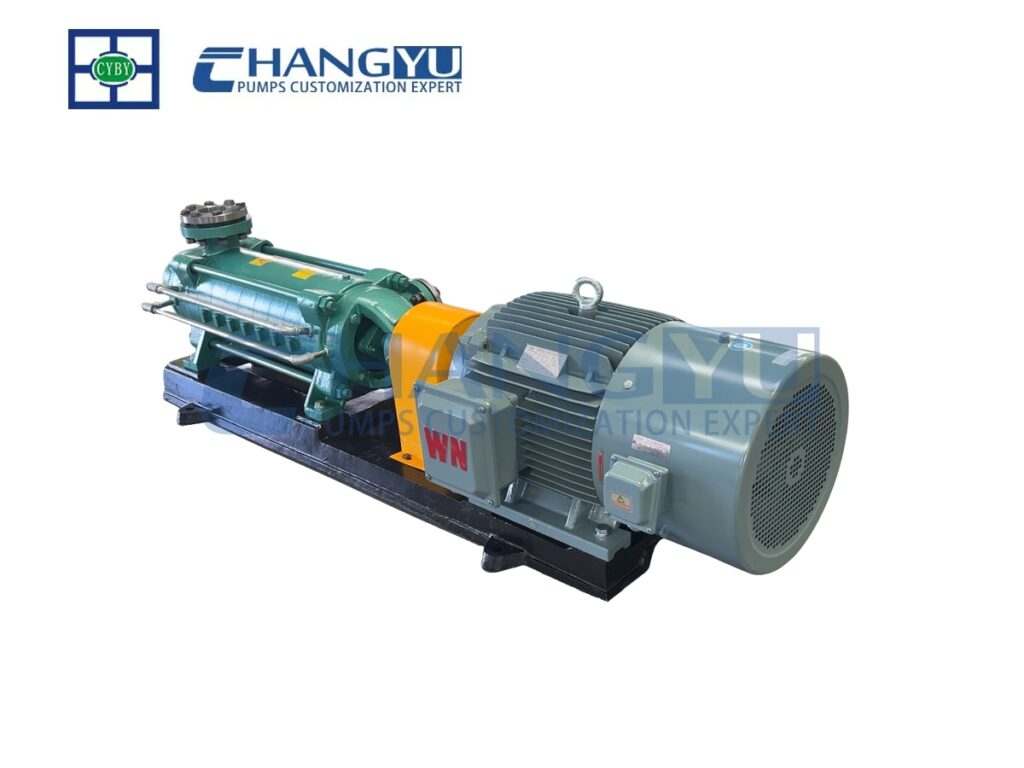
4.2 DF Series — Multistage Pump for RO Brine Transport
Purpose-built for high-pressure brine applications including RO feed, concentrated brine discharge, and ZLD systems.
| Параметр | Range |
|---|---|
| Скорость потока | 3.75–850 m³/h |
| Глава | 19–816 m |
| Температура | ≤80°C |
| Материалы | 316L, 2205, 2507, high-chromium alloy |
| Design | Segmental casing (drum-type), four-stage axial force balancing |
| Эффективность | Up to 82%; 15% energy saving over lifecycle |
Four-stage axial force balancing system:
- Stage 1: Balancing drum offsets ~70% of axial thrust
- Stage 2: Pressure adjustment ring neutralizes another ~20%
- Stage 3: Throttle plate handles the remaining ~10%
- Stage 4: Precision positioning maintains concentricity under variable frequency operation
Сайт differential hardness friction pair design (rotor and stator with different hardness levels) reduces running clearance and boosts overall efficiency by over 3% compared to conventional designs.
→ DF Series Horizontal Multistage Centrifugal Pump Product Page
4.3 Alternative Pump Types for Brine Service
For experienced engineers evaluating all options, the following pump types are also used in brine applications:
| Тип насоса | Преимущества | Ограничения | Typical Brine Application |
|---|---|---|---|
| Вертикальный турбинный насос | High flow, high head in single unit; small footprint | Difficult maintenance; higher NPSH requirement | Seawater intake, deep well brine extraction |
| Насос с магнитным приводом (e.g., CYQ Series) | Zero leakage; no mechanical seal; ideal for toxic/corrosive brine | Limited to lower power; temperature restricted by lining material | Chemical brine, hazardous brine with strict environmental requirements |
| PTFE-lined Pump (e.g., IHF Series) | Excellent corrosion resistance against acids and alkalis; economical | Temperature limited to 120°C (PFA: 180°C); limited pressure rating | Acidic brine from chemical processes |
| Positive Displacement Plunger Pump | High pressure capability; efficient at low flow | High maintenance; pulsation flow; not for solids | Small SWRO systems, high-pressure dosing |
Each pump type has its niche. The selection should be based on flow rate, head, temperature, particle content, and environmental regulations specific to your project.
5. Seal System Design for Desalination Brine Pumps
Seal failure is the most common cause of brine pump downtime. A properly designed seal system is as important as the pump material itself.
5.1 Mechanical Seal Types
| Тип уплотнения | Recommended for Brine Service | Примечания |
|---|---|---|
| Одинарное механическое уплотнение | Low-pressure, clean brine | SiC vs SiC faces; requires clean flush |
| Dual mechanical seal (back-to-back) | Crystallizing brine, high-chloride | API Plan 52/53; barrier fluid protects seal faces |
| Картриджное механическое уплотнение | All brine applications | Pre-assembled, easy replacement, reduces installation error |
| Сальниковая набивка | Older pumps, emergency service | Higher leakage; not recommended for modern brine plants |
5.2 API 682 Flush Plans for Brine Service
Сайт API 682 standard defines seal flush plans that are critical for brine pump reliability:
- Plan 11: Recirculation from pump discharge to seal — suitable for clean brine with no crystallizing tendency
- Plan 21: Recirculation with orifice and cooler — for brine above 80°C that requires cooling before seal face
- Plan 32: Clean external water flush injected into seal chamber — recommended for crystallizing brine to prevent salt deposition on seal faces
- Plan 62: Quench with steam or water — for brine that crystallizes on atmospheric side of seal
For desalination brine with high scaling potential (high Ca²⁺, Mg²⁺, or silica content), API Plan 32 with clean external flush is the most reliable approach.
5.3 Seal Face Material Selection
| Face Material | Твердость | Рекомендуется для | Avoid |
|---|---|---|---|
| Карбид кремния (SiC) | 2,500 HV | Most brine applications; excellent chemical resistance | High-temperature thermal shock |
| Tungsten Carbide (WC) | 1,500 HV | Abrasive brine with particles | Strong oxidizing agents |
| Diamond-Like Carbon (DLC) | 3,000+ HV | Extremely abrasive brine; low-friction requirement | High cost |
6. NPSH Considerations for Desalination Brine Pumps
Brine has a higher density (1,020–1,150 kg/m³ for seawater brine) compared to fresh water, which affects the Чистый положительный напор всасывания (NPSH) calculation:
- NPSHa (Available) = Atmospheric pressure + Static suction head − Friction losses − Vapor pressure of brine
- NPSHr (Required) is provided by the pump manufacturer for each operating point
For brine at 60°C with TDS of 70,000 ppm, the vapor pressure is approximately 5% lower than fresh water at the same temperature, which slightly improves NPSHa. However, the higher density increases friction losses in the suction piping.
Practical guidelines for brine pump installation:
- Maintain at least 0.5 m NPSH margin above NPSHr
- Keep suction piping as short and straight as possible
- For CYH series, the semi-open impeller design provides better cavitation resistance at low NPSH conditions
- For DF series, NPSHr values range from 2.0 to 6.7 m depending on model and stage count
7. Total Cost of Ownership (TCO) Analysis
7.1 Material Cost vs. Service Life
| Material Grade | Relative Material Cost | Typical Service Life in Brine (>10,000 ppm Cl⁻) | 10-Year TCO (per pump) |
|---|---|---|---|
| 316L | 1.0× (baseline) | 6–12 месяцев | Multiple replacements + downtime |
| 2205 | 1.5–1.8× | 3–5 лет | 2–3 замены |
| 2507 | 2.5–3.0× | 8–10+ years | 1 replacement or less |
7.2 Energy Efficiency Impact
The DF series energy efficiency improvement of 15% translates to significant operational savings:
- Example: 200 kW pump, 8,000 hrs/year, 85% average load factor
- Annual energy consumption: 200 × 8,000 × 0.85 = 1,360,000 kWh
- With 15% efficiency improvement: savings of ~204,000 kWh/year
- At $0.10/kWh: $20,400/year in energy savings — enough to offset the material upgrade cost within 2–3 years
8. Case Study of Desalination Brine Pump in a Middle East SWRO Plant
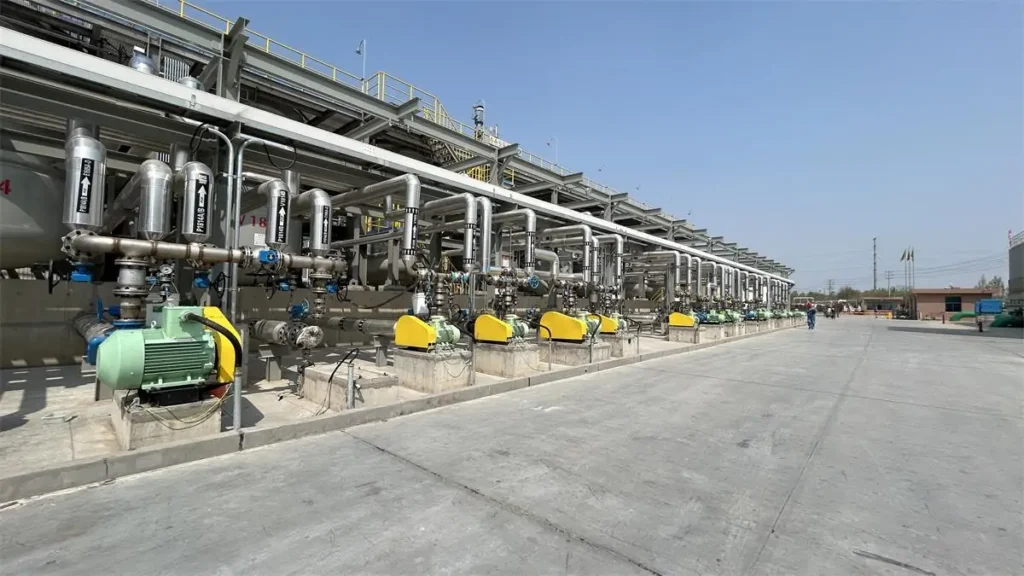
Project Background:
A 100,000 m³/day seawater RO plant in the Arabian Gulf was experiencing pump failures every 6–9 months with 316L pumps in their brine discharge service. The brine TDS ranged from 68,000–72,000 ppm with a temperature of 32–38°C.
Вызов:
- Severe pitting corrosion on impeller and casing
- Mechanical seal failures due to salt crystallization on seal faces
- Unplanned downtime averaging 12 days per year
Решение:
- Upgraded to DF series multistage pump с 2507 super duplex wetted parts
- Installed dual mechanical seal with API Plan 32 clean water flush
- Added four-stage axial force balancing system for variable-frequency operation
Results After 3 Years:
| Метрика | Before (316L) | After (2507 DF) |
|---|---|---|
| Срок службы насоса | 6–9 месяцев | 3+ years (still in service) |
| Seal replacement interval | 3–4 months | 18+ months |
| Annual unplanned downtime | 12 days | <1 day |
| Потребление энергии | Базовый уровень | 15% lower |
| Maintenance cost/year | $18,500 | $3,200 |
9. Frequently Asked Questions
Q1: What is the recommended material for a desalination brine pump?
For concentrated brine (TDS >65,000 ppm), 2507 супер дуплексная нержавеющая сталь is the recommended material. For moderate seawater conditions, 2205 duplex provides an optimal balance of cost and corrosion resistance. For applications involving fluorides or reducing acids, use 2507 or high-chromium alloys instead of titanium.
Q2: What is the maximum chloride concentration for 316L in brine service?
316L is generally limited to environments with less than 1,000 ppm chloride at ambient temperature. Above this threshold, pitting corrosion accelerates significantly. Most seawater brine applications (15,000–20,000 ppm Cl⁻) require at least 2205 duplex.
Q3: How to choose between single-stage and multistage pump for brine?
Use the head requirement as the primary decision criterion:
- Head ≤130 m: CYH single-stage is typically more economical
- Head >130 m or up to 816 m: DF multistage is required
- Also consider temperature: CYH supports up to 165°C, DF is limited to 80°C
Q4: What seal type is recommended for high-salinity brine?
Dual mechanical seal with API Plan 32 clean water flush is recommended for crystallizing brine. For clean brine without crystallization risk, a single SiC/SiC mechanical seal with API Plan 11 recirculation is sufficient.
Q5: What is the maximum temperature for brine pump operation?
Для CYH series: -20°C to 165°C depending on material configuration. For DF series: ≤80°C. For titanium pumps, the practical limit is approximately 120°C for chloride immunity.
Q6: How does PRE value affect material selection?
PRE value is the primary indicator of chloride pitting resistance. The formula is PRE = %Cr + 3.3×%Mo + 16×%N. A higher PRE value indicates better resistance to chloride-induced pitting. For brine service, PRE ≥ 34 (2205 or 904L) is the minimum recommended threshold.
Q7: Can titanium be used for all desalination brine pumps?
Нет. Titanium offers excellent chloride resistance (near-immune up to 120°C) but has critical limitations: it is not suitable for fluorides (e.g., hydrofluoric acid), not recommended for reducing acids (e.g., dilute sulfuric acid), and has low wear resistance (HB 180–210, lowest among the six grades). Titanium should only be used for “clean but corrosive” brine.
Q8: What causes pump failure in desalination plants?
The most common failure modes in order of frequency:
- Коррозия (pitting, SCC, crevice corrosion) — 45% of failures
- Отказа механического уплотнения — 30% of failures
- Bearing failure due to axial thrust imbalance — 15% of failures
- Cavitation damage — 10% of failures
10. Environmental Compliance and Regulatory Considerations
Brine discharge from desalination plants is subject to environmental regulations that may affect pump selection:
- U.S. EPA 316(b): Requires cooling water intake structures to minimize environmental impact
- EU Water Framework Directive: Regulates brine discharge into coastal waters
- Local regulations in the Middle East and Australia: Increasingly stringent brine concentration limits for discharge
ZLD (Zero Liquid Discharge) systems are becoming mandatory in many regions, requiring pumps capable of handling brine concentrations exceeding 200,000 ppm TDS — a duty that demands 2507 super duplex or titanium materials и DF series multistage architecture.
11. Conclusion and Expert Support
Selecting the right desalination brine pump requires evaluating four interconnected factors:
- Material grade — match to chloride concentration, temperature, and particle content
- Pump architecture — single-stage CYH for intake/low-pressure; multistage DF for high-pressure brine transport
- Система уплотнения — API 682 flush plan selection is critical for brine service reliability
- TCO — higher material upfront cost is offset by extended service life and energy savings
О компании Changyu Pump
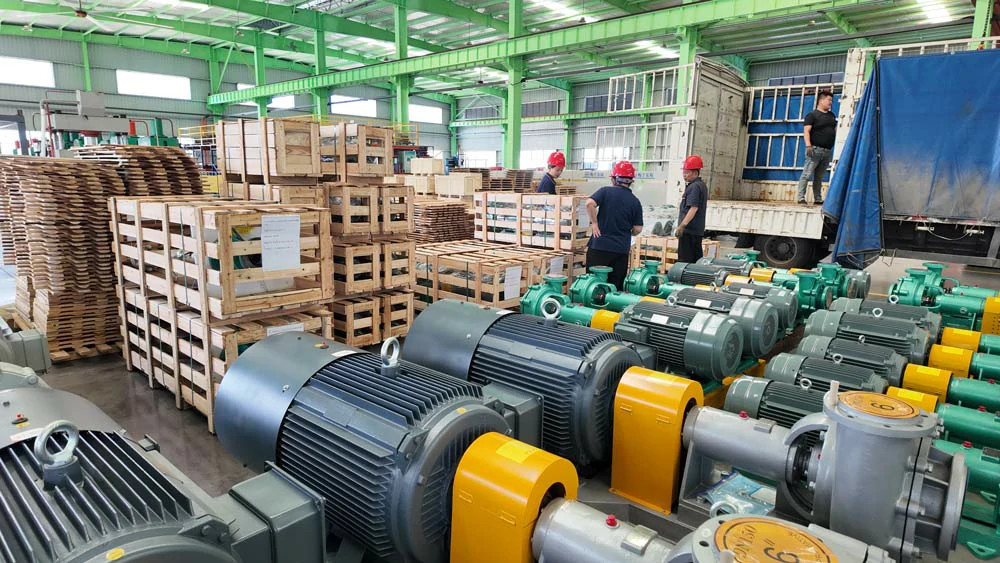
С 20+ years of OEM/ODM experience, ISO 9001, CE, and ATEX certifications, и over 50 patented technologies, Changyu Pump specializes in corrosion-resistant pump solutions for the most demanding fluid handling applications. Our 20,000 m² factory produces 20,000+ pumps annually for clients across 30+ countries.
Send us your operating parameters for a customized pump recommendation within 24 hours:
- Flow rate and head required
- Medium composition (chloride concentration, temperature, pH)
- Particle content (if any)
- Duty cycle and installation conditions
📧 Электронная почта: [email protected]
📞 Phone/WhatsApp/WeChat: +86-13651913727
🏭 Factory: Пересечение улиц Сюаньчжи и Фусин, Интегрированная база интеллектуального производства дельты реки Янцзы, зона развития Цзинсянь, город Сюаньчэн, провинция Аньхой, Китай