
Introduction: Why Your Industrial Sludge Pump Selection Matters
Industrial sludge pump selection is among the most consequential equipment decisions in any wastewater treatment plant, mine dewatering operation, or chemical processing facility that handles high-solids waste streams. Unlike clear-water pumps that operate under predictable hydraulic conditions, a sludge pump must contend with moving targets: solids concentrations that vary from shift to shift, viscosities that change with temperature and composition, and abrasive particles that wear through standard pump casings within months. Selecting the wrong pump does not merely increase the maintenance budget — it generates unplanned downtime, regulatory compliance risks from overflows, and replacement capital costs that accumulate year after year.
Engineers at Changyu Pump have spent over two decades designing and field-deploying industrial sludge pump solutions across these demanding environments. This guide distills that experience into a structured reference covering pump types, material compatibility, a step-by-step selection methodology, maintenance practices, and real-world performance data — providing the information needed to specify a pump with confidence. Contact us with your sludge parameters for a detailed recommendation.
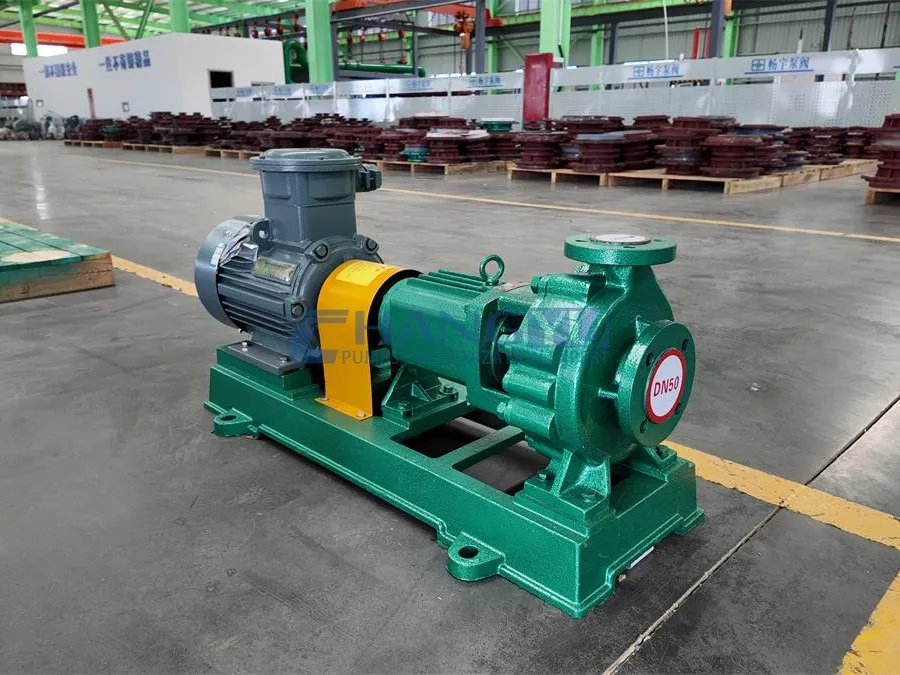
1. What Is an Industrial Sludge Pump?
An industrial sludge pump is a heavy-duty pump engineered to transfer high-solids, high-viscosity, and often abrasive or corrosive waste streams — collectively termed sludge — in industrial processing, wastewater treatment, and mining operations. It differs from a standard slurry pump in the specific characteristics of the medium it is designed to handle: sludge typically contains higher organic content, finer and more cohesive particles, and frequently exhibits non-Newtonian flow behavior where viscosity changes with shear rate.
In practical terms, this means a sludge pump must overcome challenges that standard pumps are not designed to face. The solids in sludge settle rapidly when flow stops, forming a compacted bed that can block the pump on restart. Organic sludges produce gases that disrupt suction. Fibrous materials wrap around closed impellers. And the abrasive component — sand, grit, mineral tailings — steadily erodes internal clearances, reducing hydraulic efficiency over time.
The distinction between an industrial sludge pump and a general-purpose slurry pump lies in three design elements. Sludge pumps incorporate wider internal flow passages (typically 30–50% larger than equivalent slurry pump designs) to pass solids that would clog a standard unit. They feature material selections prioritized for combined chemical-mechanical degradation rather than abrasion resistance alone — because in many industrial sludges, corrosion from acidic or alkaline components accelerates material loss as significantly as mechanical erosion. And they are configured with sealing and drive systems matched to high-viscosity, gas-entrained fluids that challenge conventional mechanical seal flush plans and require specialized impeller geometries.
| Feature | Industrial Sludge Pump | Standard Slurry Pump | Clear Water Pump |
|---|---|---|---|
| Flow Passage Width | Wide (anti-clog design) | Moderate | Narrow |
| Solids Concentration | Up to 30% by weight (varies by type) | Up to 70% by weight | Minimal |
| Viscosity Range | Handles non-Newtonian fluids | Low to moderate | Water only |
| Material Focus | Corrosion + abrasion combined | Abrasion dominant | Standard cast iron |
| Impeller Type | Semi-open, recessed, or screw-type | Closed or semi-open | Closed |
What this means for you: If your waste stream contains settled solids that compact over time, includes fibrous or stringy materials, or exhibits variable pH that corrodes standard pump casings, a dedicated industrial sludge pump is not an upgrade over a standard slurry pump — it is the minimum viable specification for reliable operation.
2. Why Trust This Guide?
The recommendations in this guide draw from more than 20 years of hands-on engineering experience in designing, manufacturing, and field-deploying industrial sludge pump solutions across mining, chemical processing, municipal wastewater, and power generation facilities. Changyu Pump engineers have analyzed the failure modes that shorten pump service life in sludge service — impellers clogged with fibrous solids, casings perforated by combined acid attack and abrasion, seals failed from gas-locked flush water, and bearings contaminated by solids ingress through worn seal faces. Each failure represents a direct operational cost to the facility, and each has informed the design choices embedded in our current industrial sludge pump product lines.
3. What Are the Main Types of Industrial Sludge Pumps?
Selecting a sludge pump type begins with matching the pump’s operating principle to the sludge’s physical characteristics — solids size, concentration, viscosity, and abrasiveness.
3.1 Horizontal Centrifugal Sludge Pumps
Horizontal centrifugal sludge pumps are the most widely deployed configuration for moderate-viscosity sludge transfer. They use a rotating impeller to accelerate the sludge outward, converting velocity into pressure. For sludge service, these pumps are equipped with semi-open or recessed impellers that create wider flow passages, allowing solids up to approximately 30% by weight to pass without clogging. Semi-open impellers prevent debris accumulation between impeller vanes and the casing wall — a common failure point when pumping fibrous or sticky materials with closed impeller designs.
Horizontal designs mount the pump dry on a baseplate, keeping bearings and seals accessible for routine maintenance. They are suited to fixed installations with adequate floor space where the pump operates against moderate to high system head — typical applications include primary sludge transfer in wastewater treatment, thickened sludge feed to digesters, and sludge recirculation in activated sludge processes.
In practice: If your sludge has a viscosity below approximately 500 cP and your installation allows for a dry-mounted pump, a horizontal centrifugal industrial sludge pump with a semi-open impeller will almost always deliver the lowest total cost of ownership.
3.2 Submersible Sludge Pumps
Submersible sludge pumps integrate the motor and pump into a single sealed assembly that operates fully submerged in the sludge. Modern units are equipped with mechanical agitators or stirrers mounted below the suction inlet, which fluidize settled solids before they enter the pump — a critical function in sumps where sludge accumulates and compacts between pumping cycles. Submersible pumps handle solids concentrations up to 40% by weight in some configurations, and motor ratings extend above 100 HP for deep sump applications.
The primary advantage is installation simplicity: the pump is simply lowered into the sump with no baseplate, alignment, or suction piping required. The trade-off is that retrieving the pump for service requires lifting the entire unit, and motor cooling depends on submersion in the pumped fluid. For sumps deeper than approximately 6 meters, a submersible pump may be the only practical configuration.
What this means for you: Submersible designs excel in deep, confined sumps and applications with fluctuating liquid levels where dry-installed pumps would require complex suction piping and priming systems.
3.3 Progressive Cavity Pumps
When sludge viscosity exceeds what a centrifugal pump can handle efficiently, progressive cavity (PC) pumps become the primary selection. A PC pump uses a helical rotor turning inside a stator to create a series of sealed cavities that progress from suction to discharge, delivering a smooth, non-pulsating flow. Because flow rate is directly proportional to speed, PC pumps maintain accurate output even as sludge viscosity changes — a characteristic that centrifugal pumps lose as viscosity increases.
The principles behind progressive cavity pump operation — and the rheological challenges of pumping high-viscosity, non-Newtonian fluids — are closely related to non-Newtonian fluid behavior. In centrifugal pumps, viscous drag on the impeller reduces both flow and head, and efficiency can drop below 50% when sludge viscosity exceeds a few hundred centipoise. PC pumps largely avoid these losses because their displacement mechanism is not dependent on fluid velocity.
What this means for you: For dewatered sludge cake, thickened waste activated sludge, or any sludge with viscosity above approximately 1,000 cP, a progressive cavity pump typically delivers lower energy cost and more predictable flow than a centrifugal alternative.
3.4 Air-Operated Double Diaphragm (AODD) Pumps
Air-operated double diaphragm (AODD) pumps use compressed air to alternately fill and discharge two flexible diaphragm chambers separated by a central air distribution valve. Because there are no rotating seals, close-clearance wear components, or electrical power requirements at the pump, AODD pumps handle highly abrasive sludges — those containing sand, grit, or crystalline solids — without the rapid wear that degrades centrifugal pump performance. They also pass large solids, in some models up to 75 mm in diameter, making them suitable for raw sewage sludge, grit-laden industrial waste, and slurries with unpredictable solids content.
The design is inherently sealless and can run dry without damage, making AODD pumps a practical choice for applications where sludge levels fluctuate and the pump may periodically lose prime. Their self-priming capability — with suction lift up to 7.6 meters — allows installation above the sump rather than in it, simplifying maintenance access. The trade-off is energy efficiency: AODD pumps consume compressed air, which is more expensive per unit of hydraulic power delivered than direct electric drive. However, for intermittent-duty sludge transfer, emergency dewatering, or applications where the combination of abrasion resistance and dry-run capability outweighs energy cost, AODD pumps are a standard specification.
Notes: If your sludge contains large, sharp, or unpredictable solids, if the sump level fluctuates causing intermittent dry running, or if you need a pump that can be installed above the sump for easy access, an AODD pump provides a combination of capabilities that no other pump type matches in a single unit.
3.5 Industrial Sludge Pump Type Comparison Table
| Pump Type | Flow Characteristic | Viscosity Limit | Solids Handling | Dry-Run Tolerance | Maintenance Burden | Typical Application |
|---|---|---|---|---|---|---|
| Horizontal Centrifugal | Continuous, moderate pulsation | ~500 cP | Up to 30% by weight | Poor | Moderate (seal and impeller wear) | Primary/secondary sludge transfer |
| Submersible | Continuous, low pulsation | ~500 cP | Up to 40% by weight (with agitator) | Limited (requires submersion) | Moderate (requires retrieval) | Deep sumps, wet wells, lift stations |
| Progressive Cavity | Continuous, pulse-free | >10,000 cP | Up to 30% by weight | Very poor (stator damage within seconds) | Higher (stator/rotor replacement) | Thickened sludge, dewatered cake |
| AODD Diaphragm | Intermittent, pulsating | >10,000 cP | Large solids (up to 75 mm) | Excellent | Low to moderate (diaphragm and valve replacement) | Grit-laden sludge, raw sewage, unpredictable solids |
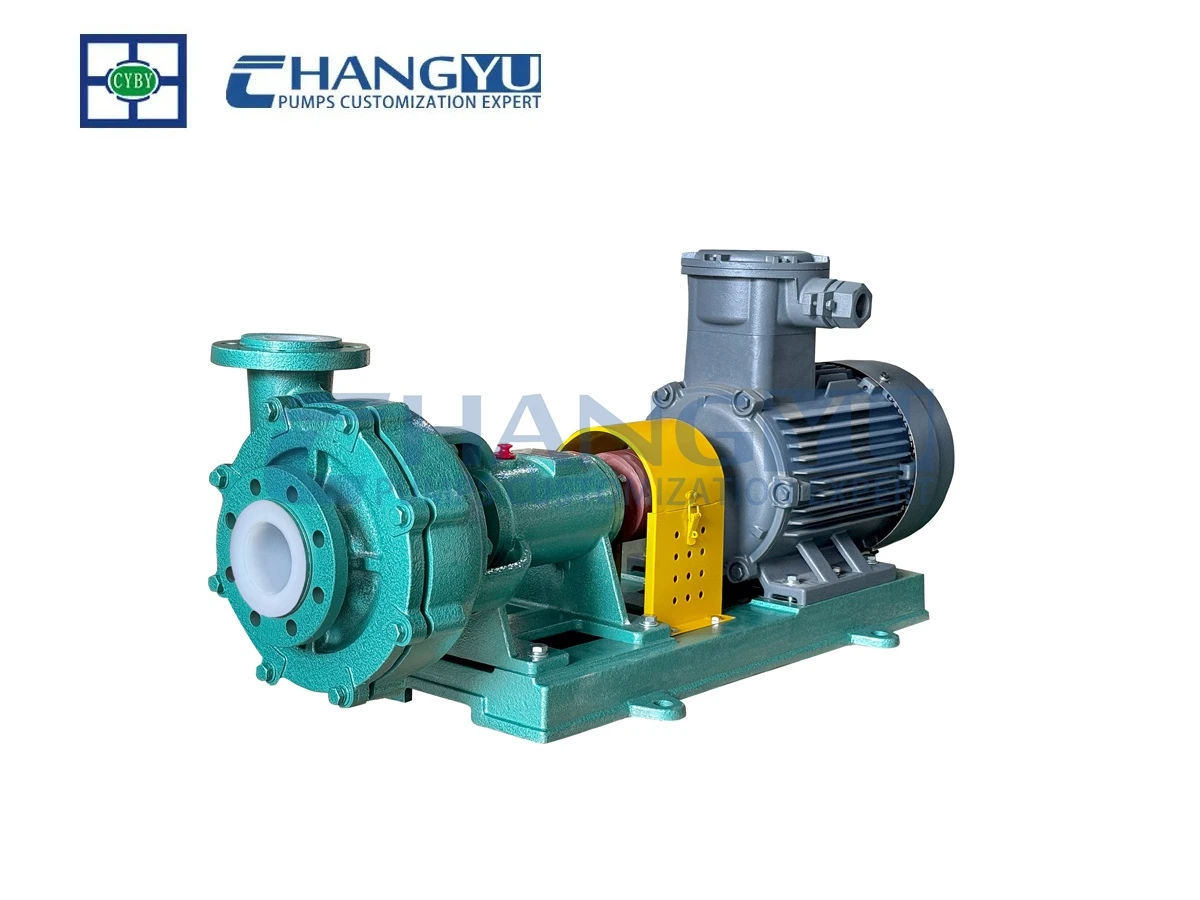
4. How Do Industrial Sludge Pumps Work?
Understanding the operating principles behind each pump type clarifies why certain designs excel in specific sludge applications.
4.1 Centrifugal Pump Principle
A centrifugal sludge pump operates on the principle of centrifugal force — a rotating impeller converts mechanical energy from the drive motor into kinetic energy within the fluid. As the impeller rotates at speeds typically between 750 and 1,800 RPM (sludge pumps are generally operated at lower speeds than clean-water pumps to reduce wear), sludge enters the impeller eye and accelerates outward. In the volute casing, the fluid decelerates, converting velocity to pressure.
For sludge, this principle encounters a fundamental limitation: as viscosity increases, the impeller must work harder to accelerate the fluid against internal friction. Above approximately 500 cP, centrifugal pump efficiency begins to decline markedly. This is why centrifugal pumps are rarely specified for thickened sludge above 5–8% solids by weight.
4.2 Positive Displacement Principle
Progressive cavity and diaphragm pumps operate on a fundamentally different principle. Rather than adding velocity to the fluid, they trap a fixed volume of sludge and mechanically displace it toward the discharge. This makes their flow output independent of system pressure and sludge viscosity. A progressive cavity pump running at 300 RPM will deliver the same volume per revolution whether the sludge has the consistency of water or toothpaste — although the power required increases with viscosity.
Diaphragm pumps achieve the same positive displacement principle through a different mechanism: compressed air pushes against a flexible diaphragm, which expands into the pump chamber to displace fluid on the discharge stroke, then retracts to draw fresh fluid in on the suction stroke. Check valves on both inlet and outlet ensure unidirectional flow. Because the diaphragm completely isolates the fluid from the drive mechanism, AODD pumps can handle sludges that would destroy mechanical seals and close-tolerance rotors within hours.
In practice: For sludges exhibiting non-Newtonian fluid behavior — where viscosity changes with shear rate — understanding the rheology is essential before committing to a pump type. The fundamental engineering distinction is simple: centrifugal pumps add velocity to fluid; positive displacement pumps trap and push fixed volumes. When viscosity rises, the velocity-based approach loses efficiency, while the displacement approach remains largely unaffected.
5. What Materials and Design Features Are Used in Industrial Sludge Pumps?
Material selection and impeller geometry together determine how long an industrial sludge pump operates before requiring intervention.
5.1 Wear-Resistant Materials
High-chrome white iron (25–30% Cr) achieves Brinell hardness above 600 BHN and is the standard material for abrasive, neutral-pH sludge in mining and sand-handling applications. For sludges containing finer particles, natural rubber linings absorb impact energy and can outlast hard metal in specific conditions under 70°C. UHMW-PE (ultra-high molecular weight polyethylene) linings combine moderate wear resistance with broad chemical inertness, handling acidic or caustic sludges at temperatures up to 90°C.
5.2 Corrosion-Resistant Materials
For chemically aggressive sludge — such as those found in chemical plant waste streams, pickling line sumps, or phosphoric acid production — duplex stainless steels like CD4MCu and 2205 provide pitting resistance across a pH range of 2–12 with reasonable hardness (280–350 BHN). For strong acids, fluoroplastic linings including PTFE, FEP, and PFA offer near-universal chemical resistance, with PFA rated for continuous service to 160°C.
For AODD pumps, body material selection extends beyond metals to include polypropylene (PP) and PVDF — materials that provide broad chemical resistance at lower cost than fluoroplastic-lined metal constructions. PP handles most acids, alkalis, and solvents at temperatures up to 80°C, while PVDF extends the temperature range and provides superior resistance to halogenated chemicals.
5.3 Anti-Clogging Impeller Designs
Impeller geometry is the primary defense against clogging. Semi-open impellers allow solids up to approximately 30 mm to pass through the pump without lodging. Recessed impellers (also called vortex or torque-flow impellers) create a vortex that draws only a portion of the solids through the impeller — the majority bypass entirely, making this design ideal for fibrous or stringy materials. Screw centrifugal impellers gently convey solids-laden sludge without damaging delicate particles — an important consideration in biological wastewater treatment where floc integrity affects settling performance.
AODD pumps address the clogging problem differently: they have no impellers at all. Solids pass straight through the pump chamber between the inlet and outlet check valves. The diaphragm simply displaces whatever is in the chamber — solids up to the diameter of the check valve ports pass through without obstruction. This makes AODD pumps inherently resistant to clogging from fibrous, stringy, or irregular solids that would foul a centrifugal impeller within minutes.
5.4 Material and Design Feature Comparison Table
| Material / Feature | Primary Advantage | Limiting Factor | Best Sludge Application |
|---|---|---|---|
| High-Chrome Iron (Cr25-30%) | Extreme abrasion resistance (600+ BHN) | Fails below pH 4 | Abrasive neutral-pH sludge, mining tailings |
| Natural Rubber Lining | Impact energy absorption | 70°C maximum, solvent incompatibility | Fine-particle sludge, flotation tailings |
| UHMW-PE Lining | Combined wear + broad chemical resistance | 90°C maximum | Acidic/caustic sludge, chemical plant waste |
| Duplex Stainless Steel (2205/CD4MCu) | Corrosion + moderate abrasion (pH 2-12) | 110°C maximum | FGD sludge, acid mine drainage |
| Fluoroplastic Lining (PTFE/FEP/PFA) | Near-universal chemical resistance | Moderate abrasion resistance | Strong acid sludge, mixed chemical waste |
| Polypropylene (PP) / PVDF (AODD body) | Broad chemical resistance, lower cost | Temperature limits (PP 80°C, PVDF 120°C) | Chemical sludge, corrosive waste, intermittent duty |
| Semi-Open Impeller | Solids tolerance, easy cleaning | Lower peak efficiency than closed | Fine-to-medium solids, municipal sludge |
| Recessed Impeller | Maximum anti-clogging | Lower hydraulic efficiency | Fibrous sludge, stringy materials |
| Screw Centrifugal Impeller | Gentle solids handling, non-clog | Higher initial cost | Biological sludge, floc preservation |
| AODD Sealless Design | No seals, dry-run capable, anti-clog | Compressed air energy cost | Grit-laden sludge, variable-level sumps, emergency dewatering |
6. How to Select the Right Industrial Sludge Pump: A 6-Step Framework
A systematic selection process follows a logical sequence: define the medium, size the pump, verify the system compatibility, and validate the economics.
Step 1: Define Sludge Properties
Quantify six parameters before evaluating any pump model: solids concentration (percentage by weight), particle size distribution (PSD), sludge viscosity at the operating shear rate, pH and chemical composition, temperature, and the presence of fibrous or stringy materials. For acidic sludge with pH ≤ 5, standard cast iron pumps corrode within 1–3 months, making alloy or fluoroplastic-lined construction essential.
Step 2: Determine Flow Rate and Total Dynamic Head
Calculate the required flow rate (in m³/h or GPM) and the total dynamic head (TDH) — the sum of static lift, friction losses through the discharge pipeline including all bends and valves, velocity head at the discharge point, and any pressure requirement at the destination. This calculation must account for the higher friction losses produced by viscous sludge compared to water.
Step 3: Evaluate Solids Characteristics and Settling Behavior
For sludge containing settleable solids, the pump must maintain flow velocity above the limiting settling velocity to prevent pipeline blockage. A sludge with 3% solids that settles in a horizontal pipe can form a compacted bed within hours of pump shutdown, requiring high torque on restart that can shear pump shafts or trip motors.
Step 4: Match Pump Type and Material to Sludge Rheology
Based on the sludge properties established above, select the pump type: centrifugal (horizontal or submersible) for sludge with viscosity below approximately 500 cP and solids below 30% by weight; progressive cavity for high-viscosity, thickened, or dewatered sludge above 5–8% solids; or AODD diaphragm for highly abrasive, large-particle, or variable-level sludge where dry-run capability and solids tolerance are the dominant selection criteria. Match materials to the combined chemical-mechanical attack profile.
Step 5: Verify NPSH Margin and System Compatibility
For centrifugal pumps, calculate the Net Positive Suction Head available (NPSHA) and ensure it exceeds the pump’s required NPSH (NPSHR) by a margin of at least 1 meter. For positive displacement pumps, verify that suction pressure is adequate to fill the displacement chambers at operating speed. For AODD pumps, verify that the available compressed air supply meets the pump’s pressure and flow requirements at the duty point.
Step 6: Calculate Total Cost of Ownership
The initial purchase price of an industrial sludge pump typically accounts for only 15–25% of its lifetime cost. The remaining 75–85% comes from energy consumption, wear part replacement frequency, maintenance labor, and the production cost of downtime. For AODD pumps, include the cost of compressed air generation in the energy calculation — this can be 3–5 times higher per unit of hydraulic power delivered than direct electric drive. Evaluate TCO over a 3–5 year horizon for accurate comparison.
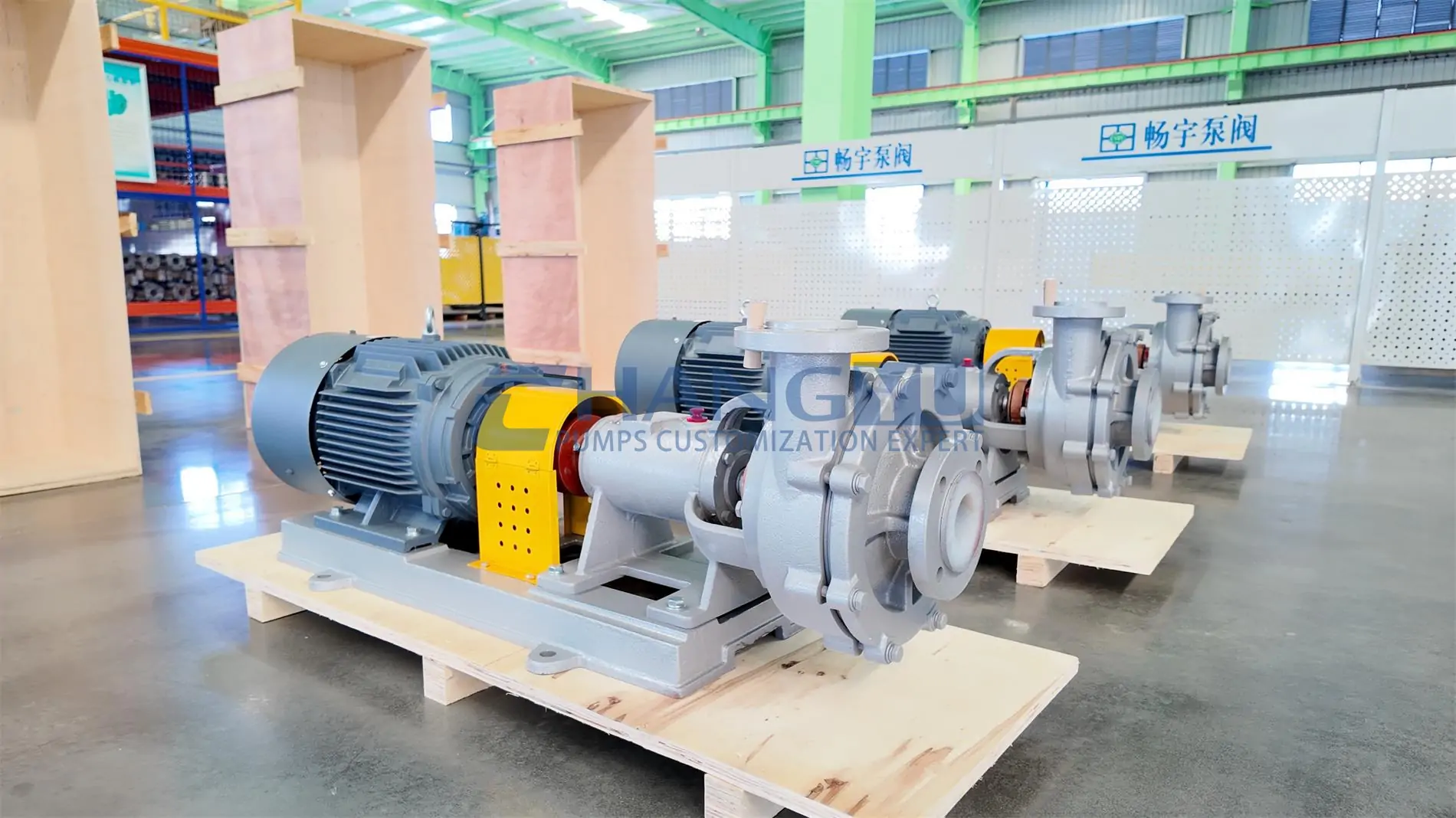
7. What Are the Key Applications of Industrial Sludge Pumps?
Municipal and industrial wastewater treatment represents the largest application segment. Primary sludge (3–6% solids) from sedimentation tanks, waste activated sludge (0.5–2% solids) from biological treatment, and digested sludge (2–6% solids) from anaerobic digesters each require different pump configurations due to their distinct rheological properties.
Mining and mineral processing generates sludge from tailings thickening, mine drainage treatment, and washdown collection. These sludges combine high solids with variable pH, often requiring materials that resist both corrosion and abrasion simultaneously.
Chemical manufacturing produces sludges containing process solids, spent catalysts, and treatment chemicals. The corrosion-abrasion combination demands fluoroplastic-lined or duplex stainless pumps, and the potential for hazardous chemical content requires sealing systems that eliminate fugitive emissions.
Food and beverage processing generates organic sludges from product washdown, byproduct recovery, and wastewater treatment. These sludges are typically low in abrasiveness but high in organic content that produces gases and foaming.
Power generation plants produce flue gas desulfurization (FGD) sludge — a mixture of gypsum, unreacted limestone, and fly ash that is abrasive, mildly acidic (pH 4–6), and produced continuously in large volumes.
8. How Do You Maintain Industrial Sludge Pumps?
A structured preventive maintenance program extends mean time between failures by 200–400% compared to reactive approaches in sludge pump service.
| Interval | Task |
|---|---|
| Daily | Check motor current (or air supply pressure for AODD), listen for unusual vibration or noise, verify seal flush water flow (if applicable) |
| Weekly | Inspect bearing temperature and lubricant condition, check discharge pressure against baseline |
| Monthly | Measure impeller-to-casing clearance (centrifugal), inspect wear plates for thinning, check diaphragm condition (AODD), check shaft runout |
| Quarterly | Full wet-end inspection, replace bearing lubricant, verify seal integrity, inspect check valves and diaphragms (AODD) |
| Annually | Complete pump disassembly, measure and replace all wear components as needed |
Critical maintenance signals in sludge pump service:
- Gradual flow or pressure decline → impeller or wear plate erosion, stator wear in PC pumps, diaphragm fatigue in AODD pumps
- Sudden vibration increase → partial impeller blockage, cavitation, or settled solids on restart
- Rising motor current → internal rubbing, bearing deterioration, or increased sludge viscosity
- Visible leakage at seal → worn mechanical seal faces or gas-locked seal flush
- Pump fails to prime → clogged suction, excessive air entrainment, worn stator (PC), or ruptured diaphragm (AODD)
For AODD pumps, the two highest-frequency maintenance items are diaphragm replacement and check valve inspection. Diaphragm life depends on sludge abrasiveness, chemical compatibility, and operating cycle frequency. Operators should track run hours and establish replacement intervals based on site-specific experience rather than waiting for visible leakage or performance loss.
9. Changyu Pump Industrial Sludge Pump Solutions
Changyu Pump offers a comprehensive range of pump platforms suited to specific industrial sludge challenges. Each product line is engineered for a defined set of operating conditions, enabling precise specification based on sludge properties.
9.1 CYB-ZKJ Series Corrosive Chemical Transfer Pump
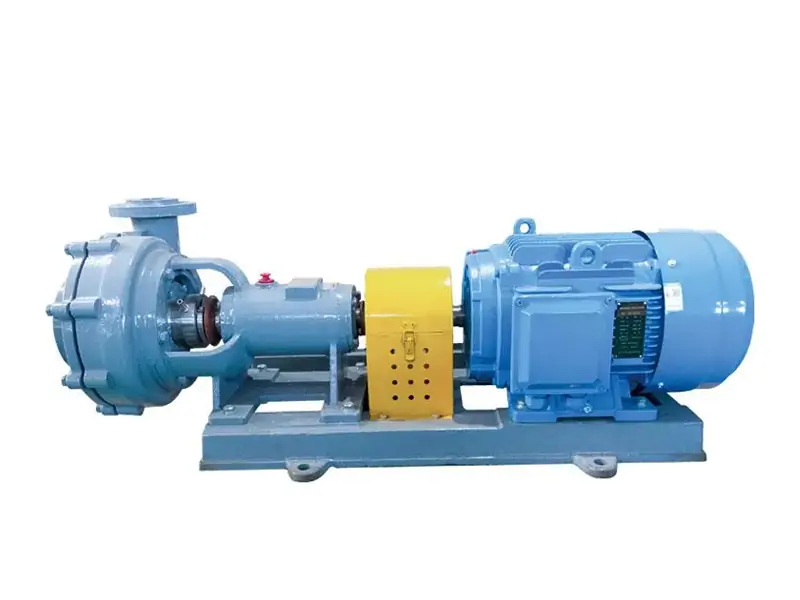
The CYB-ZKJ Series is an industrial sludge pump designed for chemically aggressive sludges encountered in chemical processing, pharmaceutical manufacturing, and hazardous waste treatment. The pump casing and all wetted components are protected by FEP fluoroplastic lining, with PFA available as an upgrade for high-temperature sludge streams. With solids handling capability up to 20% by weight (flexible particles) and an operating temperature window spanning -80°C to 120°C, this pump transfers acidic sludge, alkaline sludge, and mixed chemical waste streams that destroy unprotected metal pumps within weeks.
Key Specifications:
- Flow Rate: 3–2,600 m³/h
- Head: 5–100 m
- Motor Power: 0.75–300 kW
- Speed: 968–3,450 r/min
- Temperature: -80°C to 120°C
Notes: This pump separates the corrosive attack from the structural load — the fluoroplastic lining handles the chemical environment while the steel casing absorbs pipe stresses. For chemical plants managing multiple waste streams with varying pH, a single pump platform can serve multiple sump locations without the material compatibility concerns of alloy pumps.
9.2 UHB Series Industrial Slurry Pump

The UHB Series is a cantilevered single-stage centrifugal pump purpose-built for abrasive and corrosive sludge. Its “steel-lined plastic” construction pairs a structural steel casing with UHMW-PE lining at 8–20 mm thickness, delivering combined abrasion and corrosion protection for sludge containing both hard particles and aggressive chemical constituents. The semi-open impeller passes crystalline solids and fine particulates without clogging. Widely deployed in mining sludge, chemical waste, and industrial effluent applications, this pump extends mean time between overhauls compared to unlined alloy alternatives by removing the corrosion component from the wear equation.
Key Specifications:
- Flow Rate: 3–2,600 m³/h
- Head: 5–100 m
- Motor Power: 0.75–300 kW
- Speed: 750–2,900 r/min
- Temperature: -20°C to 90°C
9.3 CYB-ZKJ Series Corrosion Resistant Horizontal Slurry Pump
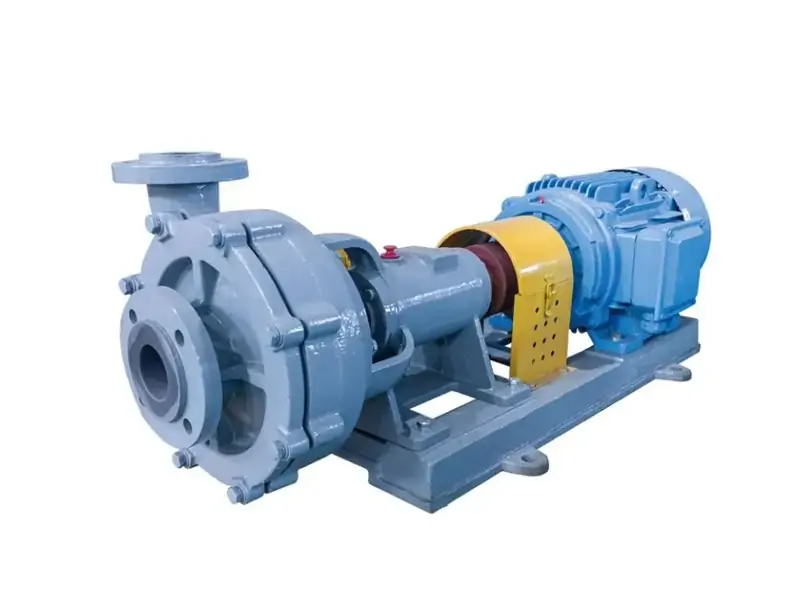
The CYB-ZKJ corrosion-resistant variant is a horizontal centrifugal pump optimized for the broad middle ground of industrial sludge duties — where the medium is not the most extreme in either corrosion or abrasion, but demands reliable performance across varying conditions. Using imported FEP/PTFE material for the casing and all flow-through components, it is suitable for acidic or alkaline clear liquids, slurries, corrosive mineral pulps, and industrial wastewater sludges.
Key Specifications:
- Flow Rate: 3–2,600 m³/h
- Head: 5–100 m
- Motor Power: 0.75–300 kW
- Speed: 968–3,450 r/min
- Temperature: -80°C to 120°C
9.4 BFQ Series Air Operated Double Diaphragm Pump

The BFQ Series is an air-operated double diaphragm (AODD) pump designed for industrial sludge applications where abrasive solids, corrosive chemicals, volatile fluids, or variable fluid levels make conventional centrifugal or progressive cavity pumps impractical. Powered entirely by compressed air, it uses reciprocating flexible diaphragms to displace fluid through a sealless, zero-leakage design — no mechanical seals, no rotating shafts penetrating the casing, and no electrical connections at the pump. This construction allows the BFQ Series to handle high-viscosity sludge, pass solids up to 9.4 mm in diameter, run dry without damage, and self-prime from a suction lift of up to 7.6 meters.
Pump body materials span cast steel, ductile iron, aluminum alloy, polypropylene (PP), stainless steel, and PVDF — enabling precise material matching to the chemical composition of the sludge. The broad material selection makes the BFQ Series suitable for chemical processing, wastewater treatment, coatings, mining, and other harsh operating environments where sludge composition varies or contains aggressive chemicals.
Key Specifications:
- Maximum Flow Rate: 1,041 L/min
- Maximum Working Pressure: 0.84 MPa
- Maximum Suction Lift: 7.6 m
- Maximum Solid Particle Size: 9.4 mm
- Pump Body Materials: Cast Steel, Ductile Iron, Aluminum Alloy, PP, Stainless Steel, PVDF
Notes: The BFQ Series fills a specific gap in the sludge pump lineup. It is the pump you select when the sludge contains large or sharp solids that would destroy a centrifugal pump’s impeller, when the sump level fluctuates causing intermittent dry running, when the installation requires above-sump mounting for maintenance access, or when the sludge contains volatile or flammable components that make electrical pump drives a safety concern. The sealless design eliminates the most common failure points — mechanical seals and submerged bearings — converting what would be weekly maintenance interventions on a conventional pump into quarterly diaphragm and check valve inspections.
10. How Does Changyu Pump Ensure Long Pump Service Life?
Every industrial sludge pump from Changyu Pump undergoes a structured quality assurance process designed to verify performance before the pump enters service — where field failure in a sludge application carries environmental and regulatory consequences beyond the cost of the repair.
- Material Verification: Spectral analysis confirms the elemental composition of all fluoroplastic resins (FEP, PFA, PTFE), UHMW-PE compounds, diaphragm elastomers, and metal alloys (304, 316L, 2205, 2507, high-chrome iron, cast steel, ductile iron). Each material batch carries full traceability to its mill certificate.
- In-Process Inspection: Impeller geometry, casing internal dimensions, lining thickness and bond integrity, shaft straightness, diaphragm integrity, and dynamic balance grade are measured at every critical production stage.
- Hydraulic Performance Testing: Every assembled centrifugal pump is run across multiple duty points on water, with flow, head, power consumption, and efficiency verified against the published performance curve. AODD pumps undergo air consumption and flow rate verification at rated pressure.
- Final Assembly Audit: Bolt torque, seal integrity, bearing preload, and free rotation are confirmed. Mechanical seals undergo static hydrostatic pressure testing; AODD pump check valves and diaphragms are cycle-tested before the pump is cleared for shipment.
11. Case Study: Solving a Corrosive Sludge Transfer Problem
Customer Challenge: A chemical processing plant in Southeast Asia was experiencing repeated failures on the pumps handling sludge from a solvent recovery operation. The sludge contained residual organic solvents, trace hydrochloric acid (pH 2–3), and fine catalyst particles — a combined chemical-mechanical degradation regime. The existing stainless steel pumps required wet-end replacement every 4–5 months. Each failure caused 6–10 hours of process downtime, and the annual per-pump maintenance cost exceeded USD 48,000.
Engineering Analysis: Changyu Pump engineers analyzed sludge samples, operating logs, and failed components. The failure mechanism was identified: the hydrochloric acid preferentially attacked the chromium-depleted grain boundaries in the stainless steel casing, creating microscopic fissures. The fine catalyst particles then mechanically eroded these weakened areas, accelerating material loss far beyond what either corrosion or abrasion would produce independently.
Solution Deployed: The existing pumps were replaced with UHB Series UHMW-PE lined centrifugal pumps. The UHMW-PE lining eliminated the corrosion mechanism entirely by preventing any contact between the acidic sludge and the pump casing. The semi-open impeller passed the catalyst particles without clogging, and the cartridge mechanical seal eliminated the gland seal water requirement.
Quantified Results (18-month evaluation):
- Wet-end replacement interval extended from 4–5 months to over 18 months (still operational) — a 350%+ improvement
- Annual maintenance cost per pump reduced by approximately 62% (from USD 48,000 to under USD 18,000)
- Unplanned process downtime caused by pump failures eliminated over the 18-month evaluation period
- Seal water consumption reduced to zero through the cartridge seal design
12. Frequently Asked Questions
Q1: What is an industrial sludge pump?
A: An industrial sludge pump is a heavy-duty pump engineered to transfer high-solids, high-viscosity, and often abrasive or corrosive waste streams (sludge) in wastewater treatment, mining, and chemical processing. It features wider flow passages, specialized materials, and anti-clog impeller designs distinct from standard slurry pumps.
Q2: Can a centrifugal pump handle viscous sludge?
A: A centrifugal sludge pump handles sludge viscosity up to approximately 500 cP effectively. Above this threshold, hydraulic efficiency declines markedly. For higher-viscosity sludge — such as thickened waste activated sludge or dewatered cake above 5–8% solids — progressive cavity or diaphragm pumps are the standard selection.
Q3: What’s the difference between a sludge pump and a slurry pump?
A: Sludge pumps are engineered for higher organic content, finer and more cohesive particles, and non-Newtonian flow behavior. They incorporate wider flow passages and anti-clog impeller designs. Slurry pumps prioritize abrasion resistance against coarse, angular particles.
Q4: What type of pump is best for high-solids sludge?
A: For sludge above 8–10% solids by weight, a progressive cavity pump delivers smooth, continuous flow. For sludge with large, abrasive, or unpredictable solids, an AODD diaphragm pump provides superior solids tolerance and dry-run capability. The choice depends on whether flow continuity or solids handling is the dominant requirement.
Q5: What materials resist both abrasion and corrosion in sludge?
A: For combined abrasion and corrosion, UHMW-PE linings and duplex stainless steels are the primary material options for centrifugal pumps. For AODD pumps, polypropylene (PP) and PVDF bodies provide broad chemical resistance at lower cost than lined metal constructions.
Q6: How do you size a sludge pump?
A: Quantify six sludge properties (solids concentration, particle size distribution, viscosity, pH, temperature, fibrous content), calculate total dynamic head including viscous friction losses, verify NPSH margin (or suction lift capability for AODD), and select pump type and materials based on these parameters.
Q7: Why does my sludge pump keep clogging?
A: Clogging typically results from an impeller type mismatched to the solids (closed impellers clog on fibrous materials), excessive particle size relative to flow passage width, or inadequate velocity in discharge piping. AODD pumps inherently resist clogging because solids pass straight through the pump chamber between check valves with no impeller to foul.
Q8: How often should a sludge pump be serviced?
A: Daily monitoring of motor current (or air supply for AODD) and vibration, monthly impeller clearance or diaphragm inspection, quarterly wet-end check, and annual complete disassembly. For AODD pumps, diaphragm replacement intervals depend on sludge abrasiveness and operating cycles — track run hours to establish site-specific schedules.
13. Changyu Pump’s 5 Key Selection Recommendations
Drawing on 20+ years of field experience, Changyu Pump engineers recommend these decision criteria for industrial sludge pump selection:
- Quantify all six sludge properties before selecting a pump type. Solids concentration, particle size distribution, viscosity, pH, temperature, and fibrous content each independently influence pump selection — a single overlooked variable can reduce predicted pump life by 50% or more.
- Match the pump operating principle to the sludge rheology. Centrifugal pumps serve well for sludge below approximately 500 cP and 30% solids. Progressive cavity pumps handle high-viscosity, thickened sludge above these thresholds. AODD diaphragm pumps are the primary candidate when solids are large, sharp, or unpredictable, and when dry-run capability is a requirement.
- Select materials for the combined chemical-mechanical attack, not abrasion alone. Acidic or alkaline sludge accelerates material loss beyond what mechanical abrasion would produce independently. A corrosion-resistant material can extend service life longer than a harder material that corrodes.
- Calculate total cost of ownership over a 5-year horizon, not the purchase price. Include energy (or compressed air for AODD), wear parts, maintenance labor, and downtime. A pump with double the initial cost but triple the service life costs far less over five years than a budget pump requiring quarterly rebuilds.
- Plan for maintenance from the day of installation. The components with the highest replacement frequency — impeller and wear plates (centrifugal), stator and rotor (progressive cavity), or diaphragms and check valves (AODD) — should be in stock. When ordering replacements, specify the same material specification to ensure consistent wear patterns and chemical compatibility.
Conclusion
An industrial sludge pump is defined by the waste stream it handles — and specifying the right pump requires a structured understanding of sludge properties, pump operating principles, material compatibility, and total cost of ownership. Whether the application calls for a centrifugal pump handling moderate-viscosity transfer duty, a progressive cavity pump moving thickened sludge to a dewatering press, or an AODD pump managing gritty, variable-level sump drainage, the selection methodology is consistent: define the medium, match the mechanism to the rheology, verify the system compatibility, and validate the economics over a multi-year horizon.
Contact Changyu Pump today with your sludge parameters and operating conditions. Our engineering team will provide a detailed pump recommendation and quotation tailored to your specific application.