
Introduction: Why Your Industrial Centrifugal Pump Selection Matters
Industrial series centrifugal pumps are the workhorses of fluid handling in modern chemical, mining, power, and environmental plants — but they are not interchangeable commodities. A mismatched pump causes production shutdowns, escalating repair costs, and safety incidents. Within this sector, magnetic drive pumps — critical for hazardous chemical handling.
This guide translates Changyu Pump’s 20+ years of engineering experience into an actionable selection framework. You will learn how to classify pump configurations, match materials to aggressive chemicals, avoid the most costly specification errors, and evaluate total ownership cost — so you can specify a pump with confidence, not guesswork. Contact us with your operating parameters for a detailed recommendation.
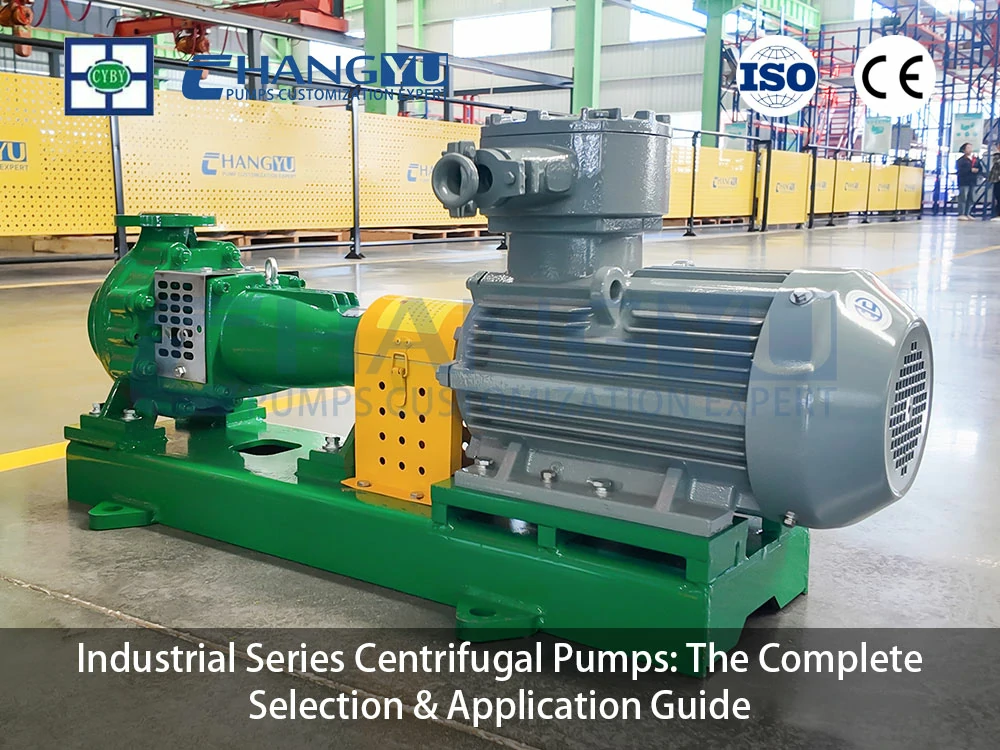
Table of Contents
- What Are Industrial Series Centrifugal Pumps?
- Why Trust This Guide?
- How Do Industrial Centrifugal Pumps Work — and Why It Matters
- Key Components, Sealing & Drive Systems
- How Are Industrial Pump Series Classified by Configuration?
- What Materials Are Best for Industrial Centrifugal Pumps?
- How to Select the Right Industrial Centrifugal Pump: A 5-Step Framework
- What Are the Key Industrial Applications?
- Changyu Pump Industrial Series Centrifugal Pump Solutions
- How Does Changyu Pump Ensure Pump Reliability?
- Case Study: Solving a High-Temperature Corrosive Chemical Transfer Challenge
- Frequently Asked Questions
- Changyu Pump’s 5 Key Selection Recommendations
1. What Are Industrial Series Centrifugal Pumps?
Industrial series centrifugal pumps are heavy-duty kinetic machines designed for high-volume fluid transfer in demanding environments — moving corrosive chemicals, abrasive slurries, high-temperature solutions, or mixtures of these in continuous 24/7 duty. In chemical plants, they circulate acids through reaction systems; in mines, they move tailings slurries through kilometers of pipeline; in power stations, they feed scrubbers that strip pollutants from flue gas. For dimensional interchangeability, pressure-boundary integrity, bearing life, and vibration limits, these pumps are typically manufactured in accordance with international standards such as ISO 2858, ISO 5199, or ANSI B73.1 — enabling replacement or upgrade without modifying existing pipework.
The essence of pump selection is matching: the pump’s materials, hydraulics, and sealing must correspond to the fluid’s chemical identity and physical properties. A pump built for clean water fails within hours when exposed to hot hydrochloric acid; a solvent pump clogs instantly when asked to move 20-wt% solids. Understanding the principles and classification of industrial centrifugal pumps is the first step to getting that match right.
2. Why Trust This Guide?
The recommendations in this guide draw from more than 20 years of hands-on engineering across the entire spectrum of industrial series centrifugal pumps — from chemical and mining to power and environmental applications. Changyu Pump engineers have analyzed failures that shorten pump life: metal volutes perforated by acid attack, hydraulic instability from low-flow operation, seal failures from abrasive slurry, and bearing contamination from inadequate flush water. Each failure represents a real financial cost, and each has informed the material choices and design improvements in our current product lines.
3. How Do Industrial Centrifugal Pumps Work — and Why It Matters
An industrial centrifugal pump is a continuous dynamic machine that adds energy to the fluid through a rotating impeller. The impeller accelerates the fluid radially outward; the volute casing then converts this kinetic energy into pressure, which pushes the fluid through the discharge piping. This characteristic differs fundamentally from positive displacement pumps, which trap and displace discrete volumes.
Pump performance is defined by the pump curve, and the pump should operate near its Best Efficiency Point (BEP). Operation far from BEP wastes energy, increases vibration, and accelerates wear.
A centrifugal pump cannot “suck” fluid — it must be primed (filled with liquid) before start-up. More importantly, the system must supply sufficient Net Positive Suction Head (NPSH). If the available NPSH falls below the pump’s required NPSH, cavitation occurs: vapor bubbles form and collapse violently at the impeller inlet, causing noise, vibration, and pitting. Cavitation does not just damage the impeller — it can turn a new pump into scrap metal within weeks, and it is entirely preventable through correct NPSH calculations. Maintaining an NPSH margin of at least 2 m, or NPSH available > 1.3 × NPSH required, is fundamental to reliable operation.
4. Key Components, Sealing & Drive Systems
Core Hydraulic Components
- Impeller: Transfers energy from the driver to the fluid. Options include closed (maximum efficiency, clean liquids), semi-open (solids up to 20%), and open (fibrous/viscous media). Material must be compatible with fluid chemistry.
- Casing (Volute): Converts velocity into pressure. Precision-cast flow paths minimize turbulence and the resulting erosion.
Support Components
- Shaft: Transmits torque from the driver to the impeller.
- Bearings: Support the rotating assembly and absorb radial and axial loads. In vertical cantilever pumps, all bearings are positioned above the mounting plate, isolated from the pumped fluid.
- Bearing Housing: Provides lubrication reservoirs and, in high-temperature service, may incorporate cooling jackets.
Sealing Systems
Where the shaft penetrates the pump casing, the sealing system must prevent fluid from leaking into the environment.
- Mechanical Seal: Industry standard. Two ultra-flat faces — one rotating with the shaft, one stationary in the casing — run against each other on a microscopic fluid film. Faces lapped to approximately 0.6 µm flatness achieve near-zero leakage.
- K-Type Dynamic Seal: Suited for corrosive slurries containing high concentrations of solid particles, effectively resisting solids ingress during operation.
- Magnetic Drive (Sealless): Eliminates the mechanical seal entirely. Torque is transmitted from the motor to the impeller through a stationary containment shell via a synchronous magnetic coupling. The rotor and process fluid are completely enclosed within the isolation shell, achieving zero leakage by design. This configuration reduces leakage risk, simplifies maintenance, and improves operational availability. It is the preferred choice for toxic, flammable, or high-purity chemicals where even minor seal leakage is unacceptable.
What this means for you: The motor provides power, the shaft and bearings support the rotor, and the seal prevents leakage. For hazardous media — strong acids, toxic solvents, flammable liquids — select a secondary containment seal arrangement or a sealless magnetic drive.
5. How Are Industrial Pump Series Classified by Configuration?
Industrial pumps encompass multiple configurations to meet diverse needs for installation, space constraints, and maintenance access.
5.1 Horizontal End-Suction Series
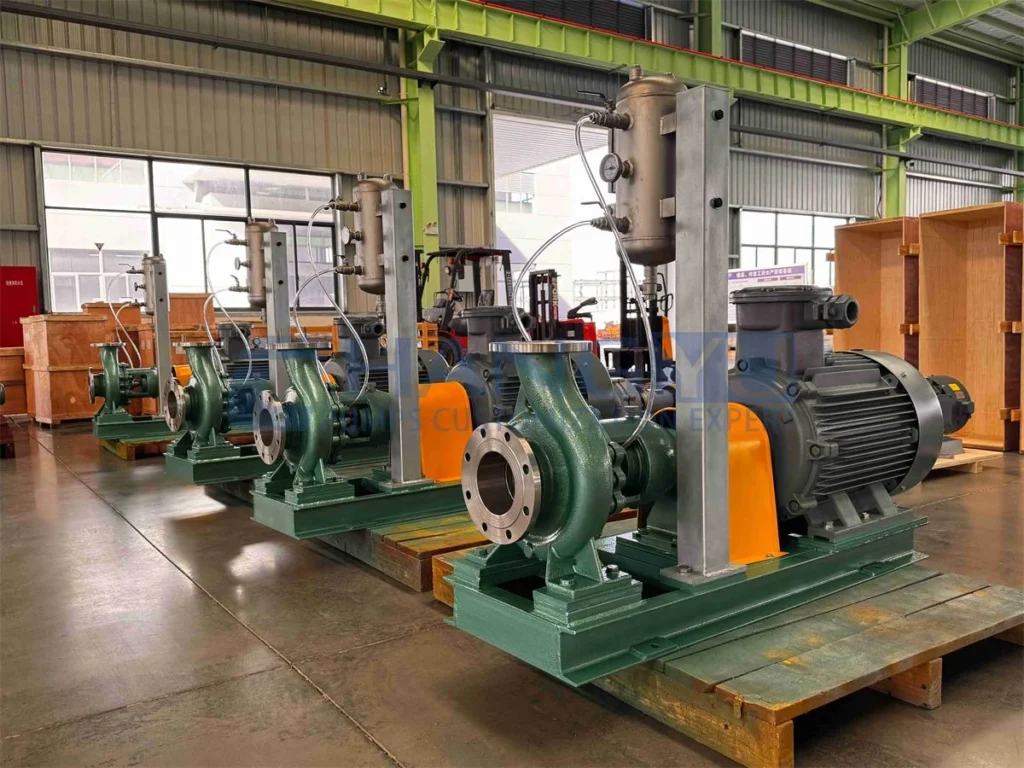
- Design: Cantilevered shaft, single-stage. The impeller overhangs the bearing frame, keeping bearings away from the fluid. Simple, cost-effective, compact.
- Limits: Heads up to approximately 120 m, flows up to approximately 500 m³/h.
- Applications: General process transfer, utility services, water treatment, cooling water circulation.
5.2 Vertical Cantilever Series (Sump/Pit Pumps)
- Design: Motor and bearings are mounted on a baseplate above the sump. A long shaft extends downward to drive a submerged impeller. No bearings or seals below the liquid level. Tolerates intermittent dry running and solids-laden fluids up to 40 wt%.
- Applications: Plant floor drainage, sump pumping, mill spillage collection, chemical containment pits.
5.3 Stainless Steel Series
- Design: All wetted components manufactured from stainless steel (304, 316, 316L, 2205, 2507, 904L). Typically achieves 10–20% higher hydraulic efficiency than equivalent cast iron pumps and does not introduce secondary contamination into the pumped medium.
- Applications: Low-to-medium concentration acids, alkalis, solvents, food-grade and hygienic media, ultrapure water, pharmaceutical process streams.
5.4 Fluoroplastic-Lined Series
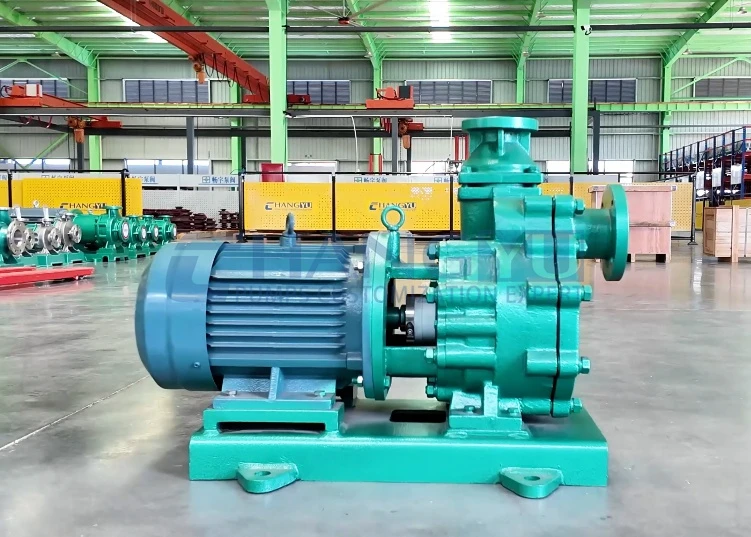
- Design: A “steel-reinforced plastic” composite construction. A carbon steel or ductile iron casing provides structural strength, while an 8–20 mm thick lining of PTFE, FEP, PFA, or UHMW-PE delivers full chemical inertness. The lining forms an absolute barrier against corrosive attack, while the metal shell handles pipe loads and pressure containment.
- Applications: Long-term transfer of hydrochloric acid, sulfuric acid, nitric acid, hydrofluoric acid, and virtually all corrosive chemicals. PFA-lined pumps operate continuously at temperatures up to 160 °C.
5.5 Magnetic Drive (Sealless) Series
- Design: Contactless torque transmission through an isolation shell. An outer magnet assembly driven by the motor transmits magnetic flux through a stationary containment shell to an inner magnet assembly connected to the impeller. The rotor and process fluid are completely enclosed within the shell, achieving zero leakage by design. Some designs can handle small soft particles when equipped with wear-resistant internal linings.
- Applications: Transfer of highly toxic, flammable, explosive, or high-purity chemicals. Widely used in chemical processing, pharmaceutical manufacturing, rare earth separation, electroplating, and the handling of high-value or environmentally regulated fluids. Also increasingly deployed in sustainable marine fuel handling for enhanced safety and environmental compliance.
6. What Materials Are Best for Industrial Centrifugal Pumps?
Material selection governs service life. Wetted components — impeller, casing, wear plates, shaft sleeve — operate in constant contact with the process medium, often facing simultaneous chemical corrosion and mechanical erosion.
6.1 Stainless Steel and High Alloys
- 316L: Resists weak organic acids but fails rapidly in sulfuric acid above 15% concentration or in hydrochloric acid at any concentration.
- 2205 Duplex: Pitting Resistance Equivalent (PREn) of 34–38; suitable for media containing trace chlorides or weak organic acids.
- 2507 Super Duplex / Hastelloy: PREn of 42–45; suitable for high chlorides, hot sulfuric acid, or mixed acid streams.
- A quantitative reference: 316L stainless steel in 20% hydrochloric acid typically exhibits a corrosion rate exceeding 5 mm/year — meaning a 5 mm-thick impeller would perforate within twelve months. In the same environment, fluoroplastic materials remain virtually unaffected.
6.2 Fluoroplastic Linings
For strong acids, mixed solvents, and high-temperature corrosive slurries, fluoroplastics offer near-universal chemical resistance.
- PTFE (Polytetrafluoroethylene): Near-universal chemical inertness. Continuous service temperature up to 120 °C.
- FEP (Fluorinated Ethylene Propylene): Excellent chemical resistance with good thermal stability, operating from -80 °C to 120 °C.
- PFA (Perfluoroalkoxy): Combines PTFE-grade chemical resistance with higher thermal stability, handling continuous service at 160 °C.
- UHMW-PE (Ultra-High Molecular Weight Polyethylene): Outstanding impact toughness and abrasion resistance at moderate temperatures (up to 90 °C), absorbing particle impact energy.
6.3 Material Selection Table
| Material | Hardness | Abrasion Resistance | Corrosion Resistance | Max Temp | Typical Application |
|---|---|---|---|---|---|
| High-Chrome Iron (Cr25-30%) | 600+ BHN | Excellent | Low (<pH 4) | 110 °C | Neutral-pH abrasive slurries |
| Duplex SS (2205/CD4MCu) | 280-350 BHN | Moderate | Good (pH 2-12) | 110 °C | Acid mine water, solvent extraction |
| Fluoroplastic-Lined (PTFE/FEP/PFA/UHMW-PE) | Lining | Moderate | Excellent | 90-160 °C | Strong acids, mixed chemicals |
7. How to Select the Right Industrial Centrifugal Pump: A 5-Step Framework
A systematic methodology separates pumps that serve reliably for years from those that become chronic downtime sources.
Step 1: Define the Fluid Properties
Chemical composition, concentration, pH, temperature, viscosity, specific gravity, and solids content (wt%, particle size distribution). An incorrect assumption about any one of these properties can cause catastrophic failure within days of installation.
Step 2: Define the System Duty Point and Maximum Hydraulic Demand
Calculate total dynamic head — the sum of static lift, friction losses through the pipeline including bends and valves, velocity head at discharge, and any destination pressure requirement. To accommodate system fluctuations, the design head should incorporate a safety factor of 1.2 to 1.5 times the working head.
Step 3: Assess Cavitation Risk and NPSH Margin
Ensure NPSH available ≥ NPSH required + 2 m, or NPSH available > 1.3 × NPSH required. This is a mandatory verification — cavitation is entirely preventable and one of the fastest mechanisms for destroying an impeller.
Step 4: Match Pump Type and Materials
Select the pump configuration (end-suction, vertical cantilever, stainless steel, fluoroplastic-lined, magnetic drive) and material scheme based on the full chemical and solids profile established in Steps 1 and 2.
Step 5: Evaluate Total Cost of Ownership
Initial purchase price is a fraction of lifetime cost. Factor in energy consumption (often the single largest cost component over a pump’s life), wear part replacement frequency, maintenance labor, and the production cost of downtime. A pump with double the purchase price but triple the wear life consistently delivers lower total cost of ownership.
Common Selection Mistakes to Avoid:
- Sizing by pipe diameter alone: An oversized pump runs far from BEP, wastes energy, and vibrates excessively.
- Ignoring NPSH: Cavitation destroys an impeller in weeks — completely avoidable.
- Assuming stainless steel is “corrosion-proof”: 316L fails rapidly in hydrochloric acid; verify compatibility with the actual chemical at its operating temperature.
- Specifying a seal without considering flush water quality: Dirty, contaminated, or insufficient flush water causes premature seal failure.
8. What Are the Key Industrial Applications?
- Chemical & Petrochemical: Transfer of acids, alkalis, solvents, organic chemicals. Requires corrosion-resistant materials and zero-leakage sealing. End-suction and magnetic drive pumps are extensively deployed.
- Mining & Mineral Processing: Handling high-density, highly abrasive slurries. Requires wear-resistant, low-maintenance designs. Vertical cantilever and heavy-duty slurry pumps dominate mill discharge and tailings duties.
- Power Generation & Flue Gas Treatment: Flue gas desulfurization (FGD) systems process limestone and gypsum slurries that are mildly acidic (pH 4–6) yet highly abrasive. Rubber-lined and duplex stainless pumps are the standard selections.
- Water & Environmental: Pumping sludge, chemical reagents, and industrial wastewater. Key requirements include corrosion resistance, anti-clogging capability, and compliance with environmental discharge regulations.
9. Changyu Pump Industrial Series Centrifugal Pump Solutions
Changyu Pump’s industrial series centrifugal pumps embody two decades of chemical pump engineering. The range spans multiple configurations, sealing strategies, and material options — from anti-corrosion fluoroplastic linings to all-metal alloys — covering clean solvents to strong corrosive slurries. Each pump series is designed to address specific operational challenges: preventing mechanical seal failures, stopping hazardous chemical leaks, and ensuring reliable production uptime.
9.1 CYB-ZKJ Series Corrosive Chemical Transfer Pump
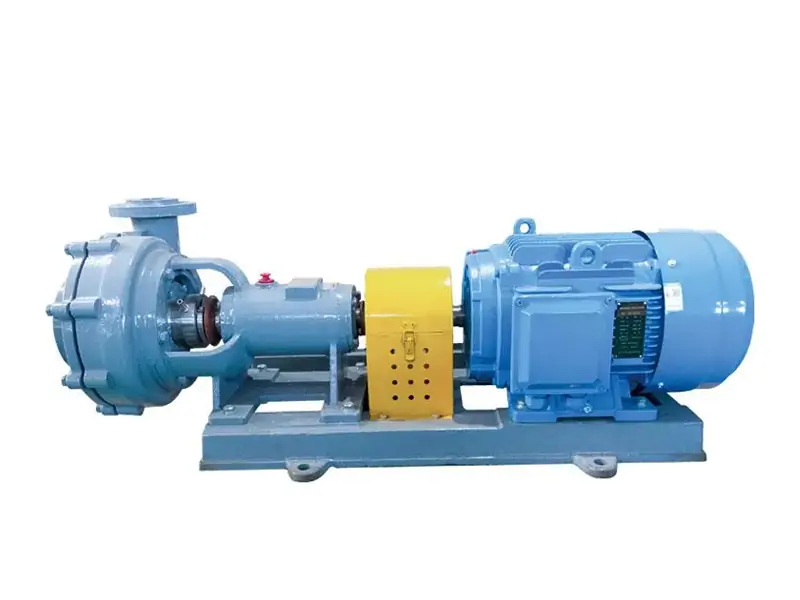
- Overview: Purpose-built for acidic or alkaline media containing up to 20% flexible solid particles. Flow-through components are protected by FEP fluoroplastic lining; PFA lining is available for higher-temperature duties. Operating range spans -80 °C to 120 °C.
- Key Specifications: Flow 3–2,600 m³/h | Head 5–100 m | Power 0.75–300 kW | Speed 968–3,450 r/min.
- Best fit: Chemical plants, smelting operations, and fertilizer facilities where a single pump platform must handle multiple corrosive streams.
9.2 CYG Series High Temperature Chemical Pump
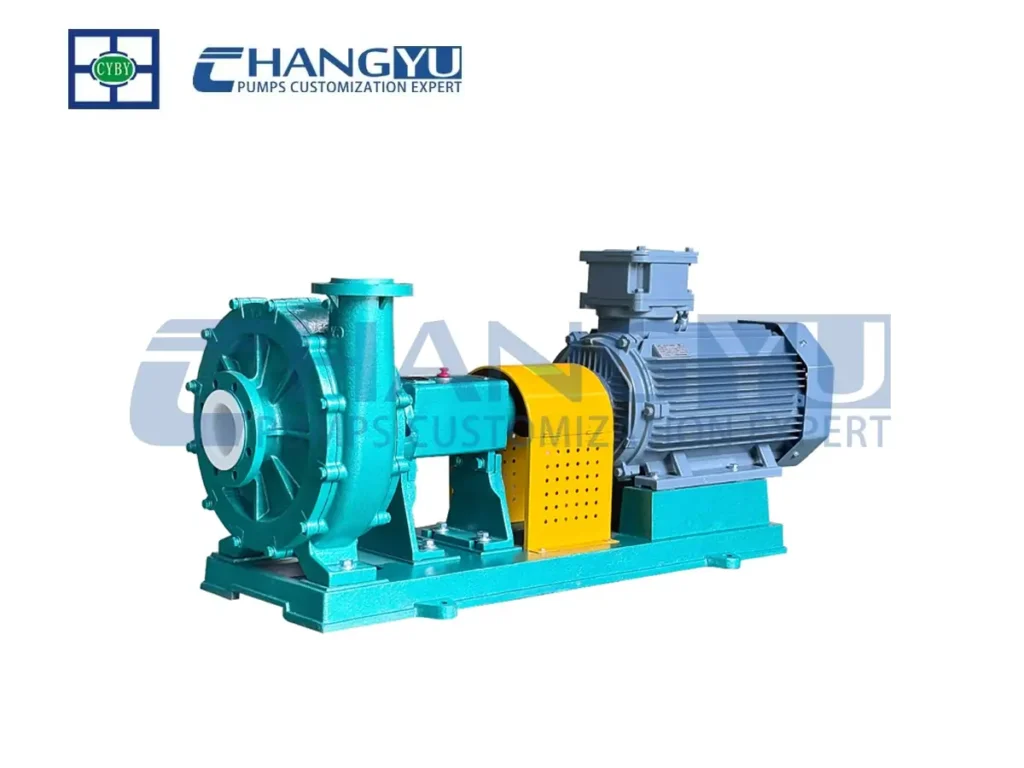
- Overview: Designed for extreme conditions combining highly corrosive substances, elevated temperatures, and high solids content. The pump core features an 8–20 mm-thick PFA lining integrated with the steel body through an advanced molded sintering process, which eliminates the risk of fluoroplastic cracking under thermal cycling. Semi-open impeller and K-type dynamic seal or double-ended mechanical seal options.
- Key Specifications: Flow 3–2,600 m³/h | Head 5–100 m | Power 0.75–300 kW | Temperature -80 °C to 160 °C.
- Best fit: Hydrometallurgy, hot acid transfer, environmental desulfurization — applications where heat and corrosion attack simultaneously.
9.3 UHB Series Horizontal Chemical Slurry Pump
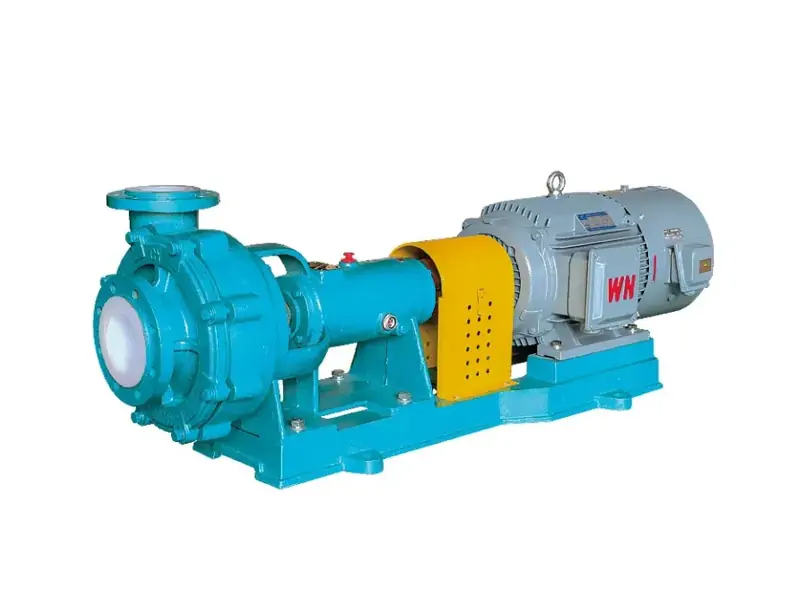
- Overview: A horizontal, single-stage, single-suction centrifugal pump independently developed by Changyu Pump. Its steel-lined UHMW-PE construction delivers combined wear and corrosion resistance. The semi-open impeller ensures high flow capacity, and the pump is available with either mechanical or dynamic seals.
- Key Specifications: Flow 3–2,600 m³/h | Head 5–100 m | Power 0.75–300 kW | Temperature -20 °C to 90 °C.
- Best fit: Chemical, metallurgical, and fertilizer industries conveying abrasive-corrosive slurries containing fine particles.
9.4 CYQ Series Chemical Resistant Magnetic Drive Pump
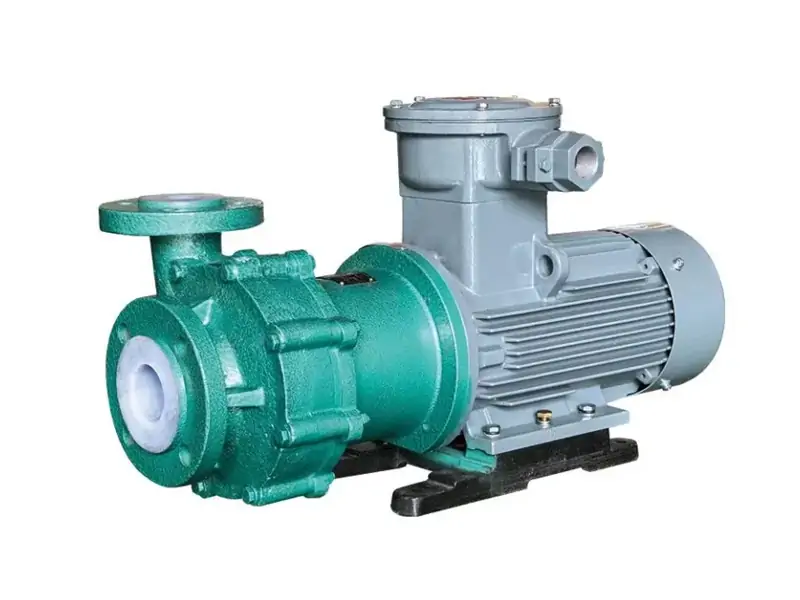
- Overview: A sealless magnetic drive pump in which torque is transmitted through a stationary isolation shell via NdFeB permanent magnets, eliminating the mechanical seal entirely. The rotor and process fluid are completely enclosed — achieving zero leakage by design. The isolation sleeve is rated for 1.6 MPa, and the flow path is protected by high-density FEP/PFA fluoroplastic lining.
- Key Specifications: Flow 3–800 m³/h | Head 15–125 m | Power 2.2–110 kW | Temperature -20 °C to 180 °C.
- Best fit: Transfer of toxic, flammable, explosive, or high-value chemicals — where even minor leakage is unacceptable from a safety, environmental, or product-loss perspective.
10. How Does Changyu Pump Ensure Pump Reliability?
- Material Verification: Spectral analysis confirms the elemental composition and grade of all fluoroplastic resins and metal alloys entering production. Each material batch carries full traceability documentation.
- In-Process Inspection: Impeller geometry, casing tolerances, lining thickness and bond integrity, shaft straightness, and dynamic balance are measured at every manufacturing stage. Ultrasonic testing verifies uniform fluoroplastic lining coverage.
- Hydraulic Performance Testing: Every assembled pump is tested across multiple duty points on water. Flow rate, head, shaft power, efficiency, and noise level are recorded and verified against published performance curves.
- Final Assembly Audit: Bolt torque, seal integrity, bearing preload, and free rotation are confirmed before packaging. Mechanical seals undergo static hydrostatic pressure testing prior to shipment.
11. Case Study: Solving a High-Temperature Corrosive Chemical Transfer Challenge
Customer Challenge: A European chemical recovery plant was experiencing persistent pump failures in a high-temperature organic solvent transfer line containing trace hydrochloric acid. The existing stainless alloy pumps suffered frequent seal failures due to crevice and pitting corrosion, requiring unplanned maintenance every three months at an annual cost exceeding USD 40,000 and generating serious environmental emission concerns.
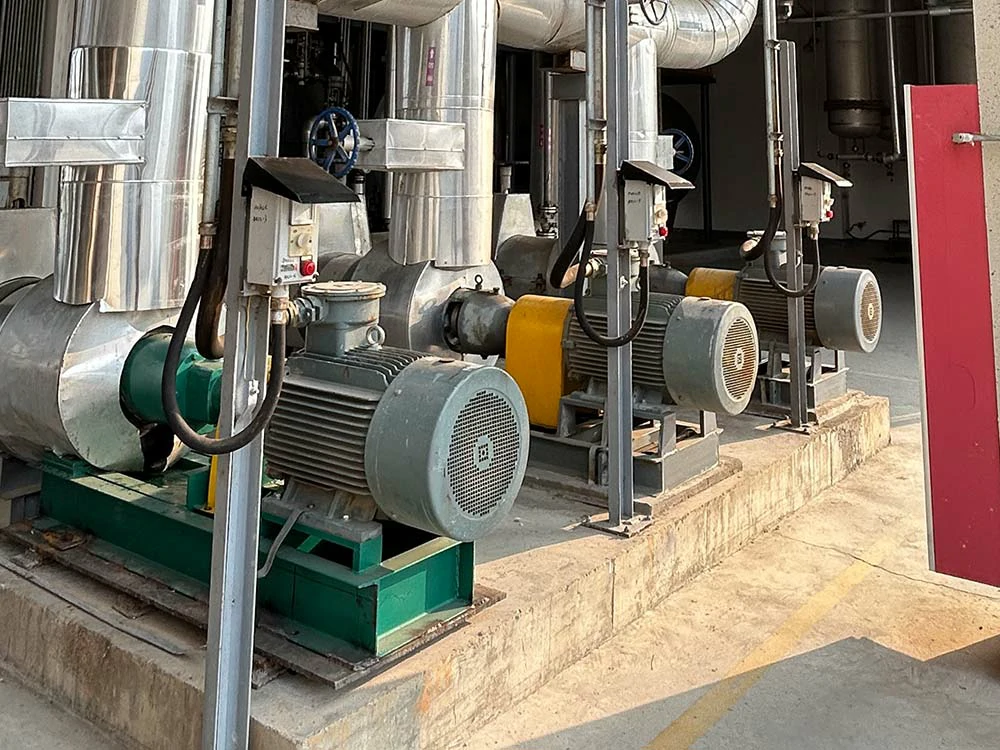
Engineering Analysis: Investigation revealed that at operating temperatures above 110 °C, even minor metallurgical impurities in the corrosion-resistant alloy became initiation sites for pitting in the acidic environment. These pits roughened the mechanical seal faces, accelerating seal degradation and leakage. Standard stainless steel could not withstand this combined high-temperature acid attack.
Solution Deployed: The existing metal pumps were replaced with Changyu Pump’s PFA-lined CYG Series high-temperature chemical pump. The PFA lining provided complete chemical isolation from the aggressive process fluid at temperature, while the steel casing absorbed all external pipe loads. A K-type dynamic seal configuration was selected for its tolerance to the trace solids present in the process stream.
Quantified Results (18-month evaluation):
- Mechanical seal life extended from 3 months to over 18 months (still in service without replacement).
- Annual maintenance cost reduced by 78%, representing over USD 30,000 in annual savings.
- Environmental emissions eliminated through complete prevention of wetted component corrosion and seal leakage.
- Plant availability improved to > 99.6%, significantly enhancing process consistency and productivity.
12. Frequently Asked Questions
Q1: How do centrifugal pumps fundamentally differ from other pump types in fluid dynamics?
A: An industrial centrifugal pump is a continuous dynamic machine that uses a high-speed rotating impeller to generate centrifugal force, accelerating fluid outward and converting kinetic energy into pressure. In contrast, reciprocating pumps (such as diaphragm pumps) trap and displace discrete fluid volumes intermittently, while progressive cavity pumps use a rotor-stator mechanism to create a continuous pushing seal.
Q2: How do you choose the right industrial centrifugal pump for chemical applications?
A: Define the full fluid properties (chemical composition, concentration, pH, temperature, viscosity, solids content), calculate total dynamic head and verify NPSH margin, then match a compatible pump type, material (stainless steel, duplex stainless, or fluoroplastic-lined), and sealing system to these parameters.
Q3: What is the difference between single-stage and multi-stage pumps?
A: A single-stage pump has one impeller and is suited to lower head applications (typically up to approximately 120 m). A multi-stage pump mounts multiple impellers in series on the same shaft, with fluid passing through each stage to progressively build pressure for high-head applications such as boiler feed water, high-rise building water supply, and long-distance pipeline transport.
Q4: Can industrial centrifugal pumps handle high-temperature fluids?
A: Yes, but they require dedicated materials and seals. High temperatures can cause standard seals to fail and degrade material properties. High-temperature applications demand materials such as PFA, duplex stainless steel, or Hastelloy, along with high-temperature seals and appropriate cooling systems.
Q5: What are the best materials for pumping corrosive chemicals?
A: For strong acids — including hydrochloric, sulfuric, and hydrofluoric acid — fluoroplastic-lined pumps (PTFE, FEP, PFA, UHMW-PE) offer near-universal chemical resistance. Standard metal pumps such as 316 stainless steel and cast iron corrode rapidly in these environments. Magnetic drive pumps with fluoroplastic linings provide the combined benefit of material corrosion resistance and seal-free zero-leakage operation.
Q6: How long do industrial centrifugal pumps last?
A: Service life varies significantly depending on operating conditions and maintenance quality. A well-specified, high-quality industrial centrifugal pump can operate for 8,000 to over 20,000 hours between major overhauls. Harsh abrasive conditions, poor NPSH conditions, or corrosive media will significantly shorten pump life.
Q7: What are the signs that a centrifugal pump needs maintenance?
A: Key warning signs include a gradual decline in flow or pressure (indicating internal wear), increased vibration or cavitation noise, rising power consumption (internal rubbing or bearing degradation), and visible leakage from the seal area.
Q8: When should a magnetic drive pump be selected over a conventionally sealed centrifugal pump?
A: A magnetic drive sealless pump should be selected when the process fluid is highly toxic, flammable, explosive, or high in value — where even minor mechanical seal leakage is unacceptable from a safety, environmental, or product-loss perspective. Magnetic drive pumps deliver zero leakage by design, eliminating both seal maintenance costs and the risk of fugitive emissions.
13. Changyu Pump’s 5 Key Selection Recommendations
- Complete a full fluid chemical compatibility analysis before selecting any pump model. Every subsequent decision depends on getting this right.
- Do not assume stainless steel works for all acids. Hydrochloric acid and hot sulfuric acid attack standard stainless steel rapidly. For these media, fluoroplastic-lined or fluoroplastic-lined magnetic drive pumps are the only reliable long-term solution.
- Match the seal and drive type to the safety requirement. For hazardous media, magnetic drive sealless designs or double mechanical seals are mandatory; for non-hazardous chemicals, standard mechanical seals provide cost-effective reliability.
- Evaluate total cost of ownership over a 5-year horizon, not purchase price alone. Factor in energy, wear parts, labor, and downtime. A pump with double the initial price but triple the wear life costs significantly less over its lifetime than a budget alternative requiring frequent overhauls.
- Analyze the complete system curve — do not select a pump in isolation. A pump must work in harmony with its actual suction and discharge piping. An oversized pump operating far from its BEP wastes energy and suffers premature failure.
Conclusion
From the materials lining the flow path to the logic of NPSH and the choice between a mechanical seal and a magnetic drive, every selection decision matters. Whether the task is handling abrasive slurry, high-temperature corrosive acid, or high-value solvent, the right pump — matched to the application and supported by structured maintenance — delivers predictable operating cost and production reliability.
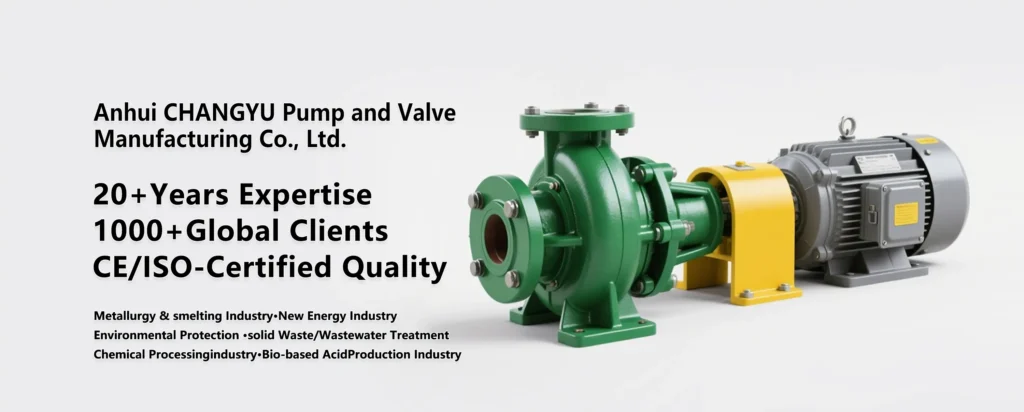
Contact Changyu Pump today with your operating parameters. Our engineering team will provide a pump recommendation and quotation tailored to your industrial application.