
Quick Answer
Selecting the right slurry handling pump requires matching the pump type to the slurry’s characteristics and choosing materials that resist the combined effects of abrasion and corrosion. Key quantified selection factors:
- Pump type selection: Centrifugal pumps handle the majority of slurry applications — flow rates up to thousands of cubic meters per hour, solids concentrations from trace amounts to 40–70% by weight (depending on pump design and slurry rheology), and viscosities up to approximately 300 cSt. Positive displacement pumps — progressive cavity, diaphragm, and peristaltic designs — are specified when viscosity exceeds this range, when precise metering is required, or when the slurry contains large solids that would clog a centrifugal pump.
- Material resistance to abrasion and corrosion: Slurry particles cause abrasive wear that increases with particle hardness, angularity, and flow velocity. Simultaneously, the carrier liquid may be acidic, alkaline, or chloride-rich, attacking pump materials through corrosion. The material selected must resist both mechanisms — high-chrome alloys for neutral-pH abrasive slurries, UHMW-PE linings or duplex stainless steels for corrosive slurries, and fluoropolymer linings for strong acids.
- Viscosity effects on pump suction performance: High slurry viscosity reduces the net positive suction head available (NPSHa), increasing the risk of cavitation. For slurries above 500 cSt, the suction piping must be oversized and the pump speed reduced to maintain adequate suction conditions.
- Lifecycle value considerations: A pump correctly specified for the slurry characteristics — with the right pump type, materials, and operating speed — delivers years of reliable service. A pump mismatched to the slurry can fail within weeks, regardless of its initial purchase price.
Slurry handling is one of the most demanding pump applications in industry. Unlike clean liquids, slurries combine the erosive force of suspended solids with the chemical aggression of the carrier liquid. A slurry pump must simultaneously resist cutting wear from sharp particles, erosion from high-velocity flow, and corrosion from acidic or alkaline process fluids.
Changyu Pump has manufactured slurry handling pumps for mining, chemical processing, power generation, water treatment, and industrial applications for over two decades. This guide provides the framework for slurry pump selection — from pump type and material decisions to the application-specific considerations that determine long-term reliability.
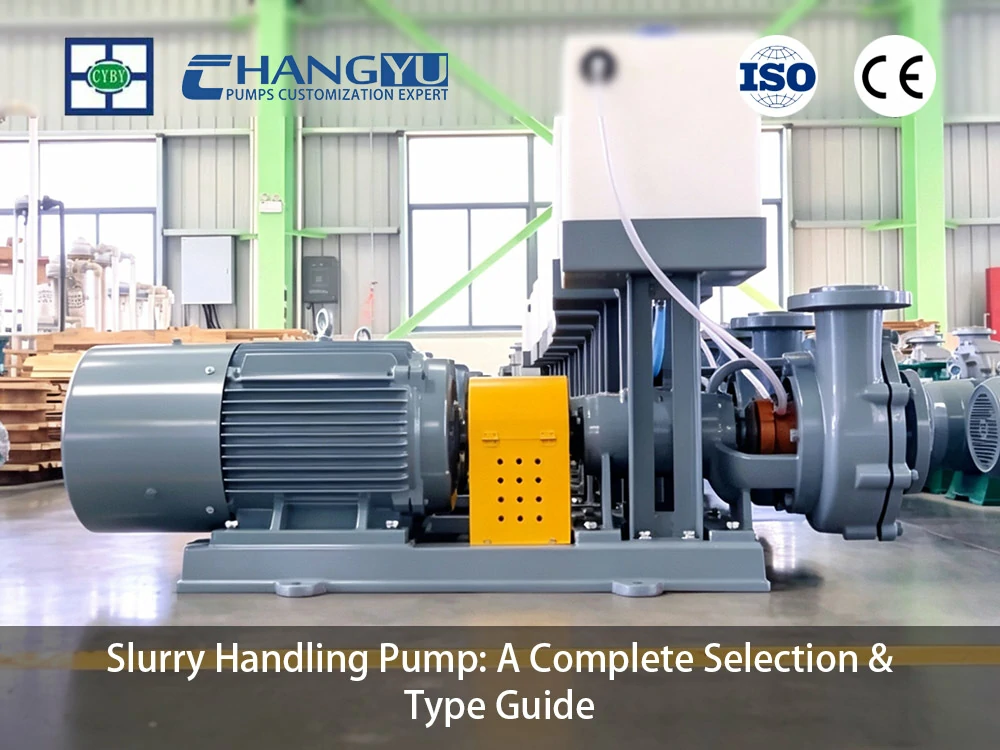
1. What Makes Slurry Handling So Challenging for Slurry Pumps?
A slurry is a mixture of solid particles suspended in a liquid. The solids may be fine or coarse, soft or hard, rounded or angular. The liquid may be neutral water, acidic leach solution, alkaline chemical, or saline process water. The combination of particle characteristics and liquid chemistry determines how the slurry attacks pump materials and influences hydraulic performance.
Abrasive Wear from Suspended Solids
Slurry particles erode pump surfaces through three mechanisms. Cutting wear occurs when sharp, angular particles slide across pump surfaces at shallow angles, removing material. Impact wear occurs when larger particles strike surfaces at steep angles, causing plastic deformation in softer materials or brittle fracture in harder ones. Erosion wear results from fine particles entrained in high-velocity flow, gradually wearing surfaces through repeated micro-impact.
The rate of abrasive wear depends on particle hardness relative to the pump material, particle shape, and flow velocity. The relationship between wear rate and flow velocity follows an approximate cubic relationship — doubling the velocity can increase wear by a factor of 5–10, depending on particle characteristics and pump materials.
Corrosion from the Carrier Liquid
The carrier liquid may attack pump materials through chemical corrosion, even as abrasive solids erode the surface. This corrosion-erosion synergy is more destructive than either mechanism alone: corrosion weakens the metal surface, and abrasive particles remove the weakened layer, exposing fresh metal to further corrosion. Material loss rates can be several times higher than what would be predicted from corrosion or abrasion data alone.
Viscosity Effects on Pump Performance
High slurry viscosity reduces the net positive suction head available at the pump inlet, increasing the risk of cavitation. For slurries above 500 cSt, the suction piping diameter must be increased and the pump operating speed may need to be reduced to maintain adequate suction conditions.
2. Centrifugal vs Positive Displacement: Which Slurry Handling Pump Type Is Right?
The first decision in slurry pump selection is whether a centrifugal pump or a positive displacement pump is the correct type for the application. Each category encompasses multiple designs with distinct characteristics and application windows.
Centrifugal Slurry Pumps
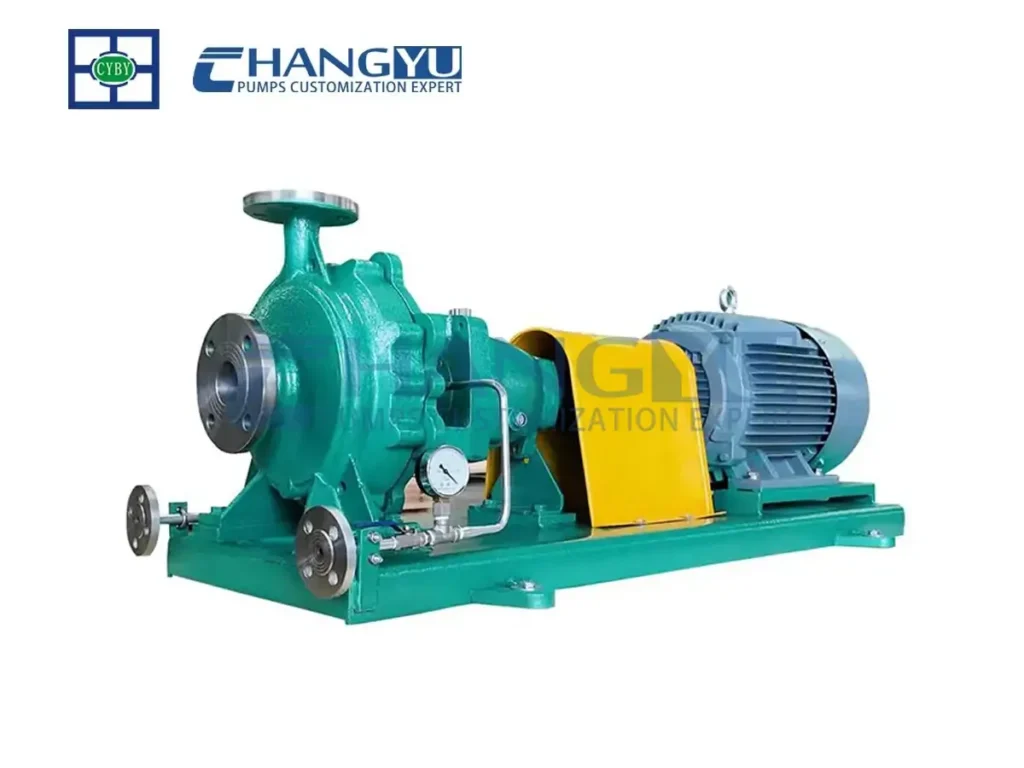
Centrifugal pumps use a rotating impeller to accelerate the slurry outward by centrifugal force, converting rotational kinetic energy into fluid velocity and then into pressure. They handle high flow rates and tolerate a wide range of solids concentrations and particle sizes. Their construction has fewer moving parts than positive displacement alternatives, which keeps capital and maintenance costs lower.
Centrifugal pumps are the standard for mill discharge, tailings transport, FGD absorber recirculation, thickener underflow, and construction dewatering — applications with high flow rates, moderate to high solids concentrations, and continuous operation.
Positive Displacement Slurry Pumps
Positive displacement pumps trap a fixed volume of slurry and push it mechanically through the pump. Unlike centrifugal pumps, where flow decreases as discharge pressure increases, positive displacement pumps deliver nearly constant flow regardless of pressure.
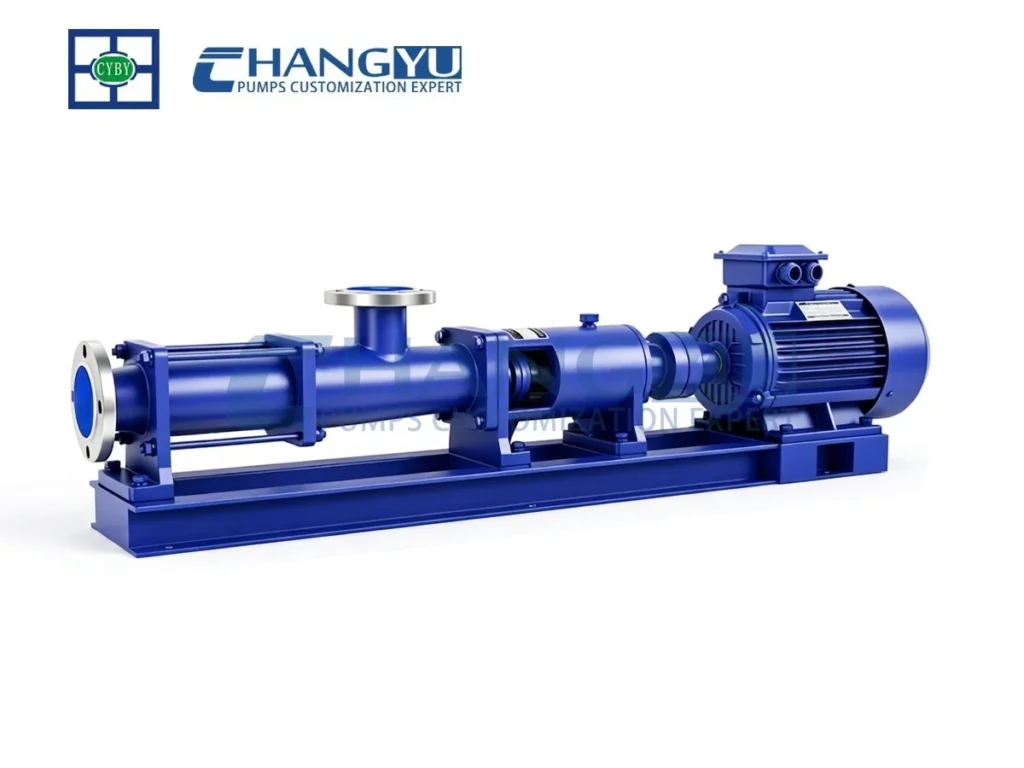
Progressive Cavity (Single-Screw) Pumps:
A single-thread metal rotor turns inside a double-helix elastomer stator, creating sealed cavities that progress from suction to discharge. Progressive cavity slurry pumps handle viscosities exceeding 1,000,000 cSt and solids concentrations above 60%, making them suitable for dewatered sludge, polymer solutions, and high-density thickener underflow. They provide pulsation-free, low-shear flow for shear-sensitive emulsions and flocculants. The elastomer stator is a consumable wear component replaced at predictable intervals.
Diaphragm Pumps:
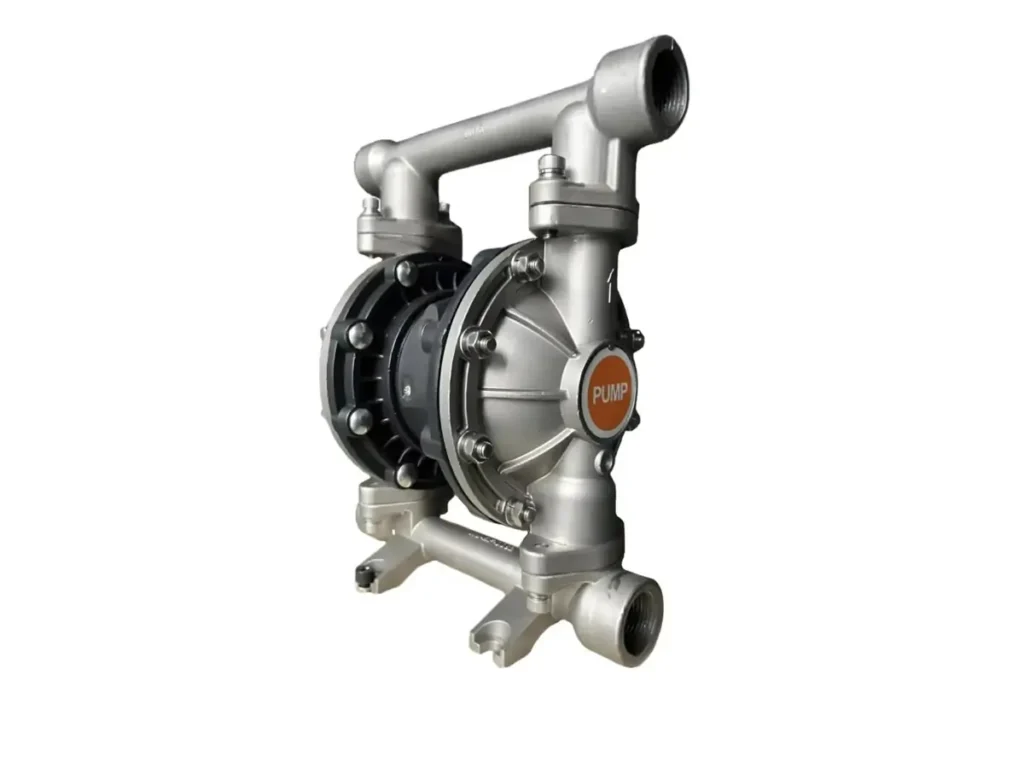
A flexible diaphragm reciprocates to create suction and discharge, with check valves controlling flow direction. Diaphragm pumps handle large solids and are resistant to clogging from fibrous debris. They self-prime, run dry without damage, and handle gas-entrained fluids. Air-operated diaphragm pumps are explosion-proof by design. Electric diaphragm pumps provide higher efficiency and stable flow for continuous-duty applications. Diaphragm pumps are used for construction dewatering, sump drainage, chemical dosing, and applications with unpredictable solids and intermittent flow.
Peristaltic (Hose) Pumps:
A rotating roller compresses a flexible tube, pushing slurry forward. The only wetted component is the tube itself, simplifying material compatibility. Peristaltic pumps provide accurate metering, gentle low-shear pumping, and tolerance for gas-entrained fluids. They are used in chemical dosing, flocculant injection, and small-flow slurry transfer.
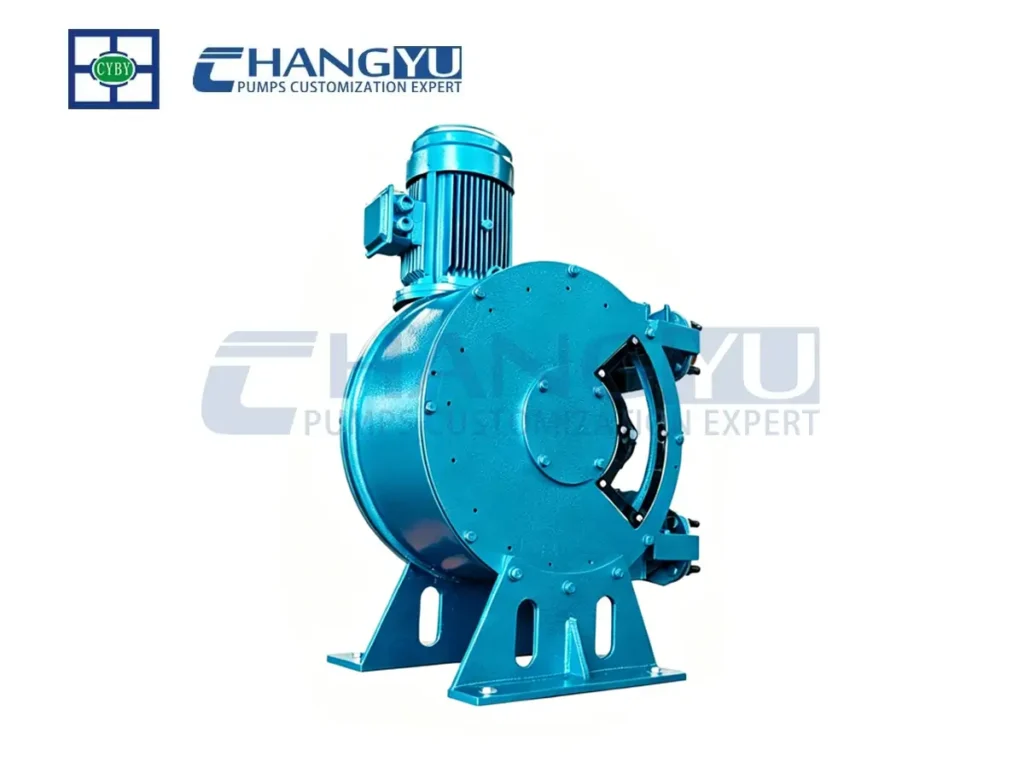
Pump Type Selection Matrix
Table: Pump Type Selection for Slurry Handling
| Slurry Characteristic | Centrifugal Pump | Progressive Cavity Pump | Diaphragm Pump | Peristaltic Pump |
|---|---|---|---|---|
| Maximum flow | Up to 20,000+ m³/h | Up to 200 m³/h | Up to 60 m³/h (AODD); 28 m³/h (EODD) | Up to 50 m³/h |
| Solids concentration | Up to 40–70% (depending on design and rheology) | Up to 60%+ | Up to 80% | Up to 60% |
| Maximum particle size | Up to 100 mm (vortex impeller) | Up to 6.5 mm (depending on pump size) | Up to 9.4 mm (ball valve) | Up to tube diameter |
| Viscosity range | Best below 300 cSt | 1–1,000,000+ cSt | 1–50,000 cSt | 1–100,000 cSt |
| Self-priming | No | Yes | Yes | Yes |
| Dry-run tolerance | None | None — stator destroyed | Unlimited | Limited — tube damage |
| Gas handling | Poor (loses prime above 3–5%) | Moderate (~20%) | Excellent (100% gas slugs) | Excellent |
| Typical applications | Tailings, FGD, thickener underflow | Sludge, polymer, high-viscosity transfer | Construction dewatering, sump drainage, chemical dosing | Chemical metering, flocculant injection |
Simplified Decision Path
For most slurry applications, begin with a centrifugal pump. If the slurry viscosity exceeds approximately 300 cSt, the solids concentration exceeds 60%, precise metering is required, or the pump must self-prime from above the fluid source, a positive displacement pump becomes the correct choice. Progressive cavity pumps handle the highest viscosities and provide low-shear pumping. Diaphragm pumps offer maximum clog resistance and self-priming capability. Peristaltic pumps serve low-flow metering applications where material compatibility and accurate dosing are the priorities.
3. What Materials Resist Abrasion and Corrosion in Slurry Handling Pumps?
Material selection is the single most critical specification decision for a slurry pump. The material must resist the specific combination of abrasive wear and chemical corrosion present in each application.
Material Options for Slurry Pump Construction
Table: Material Selection for Slurry Handling Pumps
| Material | Abrasion Resistance | Corrosion Resistance | Relative Cost | Best For |
|---|---|---|---|---|
| High-Chrome Cr27 (650–700 HB) | High | Poor — corrodes below pH 5 | 1× (baseline) | Neutral pH, high-abrasion slurries |
| High-Chrome Cr33 (700–750 HB) | Very High | Poor — corrodes below pH 5 | 1.2–1.5× | High-silica ores; severe abrasion |
| Natural Rubber | Moderate (fine particles) | Good (neutral pH) | 1–1.3× | Fine, rounded particles; neutral pH |
| UHMW-PE Lined | High | Excellent (pH 1–14) | 1.5–2× | Combined corrosion and abrasion |
| Duplex 2205 Stainless Steel | Moderate | Excellent (acidic, high chloride) | 3–4× | Corrosive slurries with moderate abrasion |
| FEP/PFA Lined | Low — soft, not for coarse solids; adequate for fine chemical precipitates | Excellent (pH 1–14) | 5–8× | Strong acids; high-purity applications |
| Ceramic Lined (SiC) | Excellent | Excellent | 5–8× | Extreme abrasion, fine particles |
Material Selection by Slurry Characteristics
Table: Material Selection Matrix for Slurry Handling
| Slurry Type | pH Range | Abrasive Content | Recommended Material | Typical Service Life |
|---|---|---|---|---|
| Mining tailings (neutral pH) | 6–8 | High (silica, iron ore) | High-chrome Cr33 | 6–12 months |
| Acidic mine water | 3–5 | Moderate to high | UHMW-PE lined or Duplex 2205 | 12–24 months |
| FGD gypsum slurry | 5–6 | Moderate | UHMW-PE lined or Duplex 2205 | 6–10 years |
| Chemical plant slurry | 1–12 | Variable | FEP/PFA lined or UHMW-PE lined | Application-specific |
| Construction sand water | 6–8 | High (quartz) | High-chrome Cr27 or Cr33 | 12–24 months |
| Agricultural drainage | 6–8 | Low to moderate | Cast Iron or Natural Rubber | 12–24 months |
Engineers at Changyu Pump have observed across slurry pump installations: Material selection is a balance between abrasion resistance and corrosion resistance. A high-chrome alloy that provides excellent wear life in neutral-pH mining slurry will fail rapidly from corrosion in acidic chemical slurry. A fluoropolymer-lined pump that provides excellent corrosion resistance will wear prematurely if the slurry contains coarse, angular solids. Match the material to the dominant degradation mechanism — abrasion or corrosion — and verify compatibility with the specific slurry chemistry at the operating temperature.
4. Where Are Slurry Handling Pumps Used?
Slurry handling pumps operate across industries wherever solid-liquid mixtures must be transported.
Mining and Mineral Processing
The largest market for slurry pumps. Mill discharge, cyclone feed, thickener underflow, concentrate transfer, and tailings disposal all require slurry pumps capable of handling high solids concentrations and abrasive ores. Centrifugal pumps with high-chrome alloys provide the wear resistance for silica, iron ore, and other hard mineral particles. Progressive cavity pumps serve high-density thickener underflow and paste backfill where centrifugal pumps lose efficiency.
Chemical and Industrial Processing
Chemical plants handle corrosive slurries — acidic leach solutions, alkaline process streams, and solvent-laden mixtures. Material selection focuses on corrosion resistance, with UHMW-PE linings, duplex stainless steels, and fluoropolymer linings specified based on the chemical composition. Diaphragm pumps are widely used for chemical dosing, sump drainage, and transfer of hazardous or volatile slurries where leak protection is critical.
Power Generation — Flue Gas Desulfurization
FGD systems in coal-fired power plants circulate limestone slurry through absorber towers and transfer gypsum slurry to dewatering systems. Centrifugal pumps with duplex stainless steel or UHMW-PE linings handle the acidic, chloride-rich slurry. Recirculation pumps move large volumes at moderate heads.
Water and Wastewater Treatment
Sludge handling, lime slurry dosing, and chemical precipitation produce slurries that require reliable pumping. Centrifugal pumps with vortex impellers handle the unpredictable solids in municipal wastewater. Progressive cavity pumps transfer dewatered sludge to disposal. Diaphragm pumps provide chemical dosing for flocculants, coagulants, and disinfectants.
Construction and Aggregate Processing
Construction dewatering, sand and gravel washing, and aggregate processing generate abrasive slurries. High-chrome alloys in centrifugal pumps resist the quartz sand that rapidly wears standard materials. Portable, self-priming diaphragm pumps handle the variable solids loads and intermittent operation typical of construction sites.
Slurry Pump Application Comparison
Table: Slurry Pump Application Comparison
| Industry | Typical Slurry | Key Challenge | Recommended Pump Type | Recommended Material |
|---|---|---|---|---|
| Mining | Ore tailings, concentrate | Extreme abrasion | Centrifugal (high-chrome) | High-chrome Cr33 |
| Chemical | Acidic/alkaline process slurry | Corrosion | Centrifugal or Diaphragm | UHMW-PE or Duplex 2205 |
| Power (FGD) | Limestone/gypsum slurry | Chloride corrosion + abrasion | Centrifugal | Duplex 2205 or UHMW-PE |
| Water/Wastewater | Sludge, lime slurry | Mixed solids + debris | Centrifugal (vortex) or Progressive Cavity | Cast Iron or UHMW-PE |
| Construction | Sand-laden water | Quartz abrasion | Centrifugal or Diaphragm | High-chrome Cr27/Cr33 |
5. How to Select the Right Slurry Handling Pump?
Slurry pump selection requires matching the pump type, materials, and operating parameters to the specific slurry characteristics.
Common Slurry Handling Pump Problems and Solutions
Table: Common Slurry Handling Pump Problems and Solutions
| Problem | Root Cause | Solution |
|---|---|---|
| Impeller worn through within weeks | Material inadequate for particle hardness | Upgrade to higher-chrome alloy or ceramic liners |
| Pump clogs repeatedly | Impeller type mismatched to solids | Switch to vortex impeller or diaphragm pump |
| Casing perforation | Corrosion from acidic/alkaline carrier | Upgrade to UHMW-PE lined or duplex stainless steel |
| Cavitation noise and vibration | Viscosity reducing NPSHa; pump speed too high | Increase suction pipe diameter; reduce pump speed |
| Seal failure within weeks | Abrasive particles entering seal chamber | Install API Plan 32 flush or centrifugal expeller seal |
| Motor overload | Slurry density or viscosity higher than design | Verify actual slurry properties; reduce impeller diameter |
Five-Step Slurry Pump Selection Process
Step 1: Characterize the slurry.
Determine solids concentration, particle size distribution, particle shape and hardness (Mohs scale), carrier liquid chemistry (pH, chloride concentration, temperature), and slurry viscosity.
Step 2: Select the pump type.
Use the decision framework in Section 2. Centrifugal pumps for most applications up to 300 cSt. Progressive cavity for high viscosity and high solids. Diaphragm for large solids and self-priming. Peristaltic for low-flow metering.
Step 3: Select materials.
Match wetted materials to the dominant degradation mechanism — abrasion or corrosion — per the matrix in Section 3. Verify material compatibility with the specific slurry chemistry at the operating temperature.
Step 4: Specify seal arrangement.
For abrasive slurries, install API Plan 32 external flush to protect seal faces. For remote sites without flush water, centrifugal expeller seals eliminate external water dependency. Diaphragm pumps and peristaltic pumps have no dynamic shaft seals — the diaphragm or tube isolates the pumped fluid from the drive mechanism.
Step 5: Verify hydraulic conditions.
Confirm that NPSHa exceeds NPSHr by an adequate margin. For high-viscosity slurries, oversize the suction piping and consider reducing pump speed. For settling slurries, verify that minimum flow maintains critical settling velocity throughout the discharge pipeline.
Engineers at Changyu Pump recommend: When the slurry contains both abrasive solids and corrosive chemicals, select materials for the corrosive environment first, then verify abrasion resistance. A material that corrodes will fail regardless of its hardness. Once corrosion resistance is ensured, select the hardest material that provides adequate chemical compatibility.
6. Changyu Pump Slurry Handling Pump Solutions
Changyu Pump offers pump series covering the full range of slurry handling applications — from centrifugal pumps for high-flow, abrasive slurries to positive displacement pumps for high-viscosity, solids-laden mixtures.
Slurry Handling Pump Product Selection Guide
Table: Slurry Handling Pump Product Selection Guide
| Application | Key Challenge | Recommended Series | Pump Type | Key Feature |
|---|---|---|---|---|
| Abrasive mining slurry, tailings | High abrasion | PGY Series | Centrifugal | High-chrome Cr33; flow 117–976 m³/h; head up to 101.6 m |
| Corrosive chemical slurry | Corrosion + abrasion | UHB Series | Centrifugal | UHMW-PE lined; flow 3–2,600 m³/h; pH 1–14 |
| High-solids, debris-laden slurry | Large solids + self-priming | BFD Series | Diaphragm (Positive Displacement) | Solids up to 9.4 mm; flow 480 L/min; electric drive |
| Strong acid / hazardous slurry | Strong corrosion + leak protection | CYB-ZKJ Series | Centrifugal | FEP/PFA-lined; double mechanical seal; flow 3–2,600 m³/h |
For progressive cavity pump applications — high-viscosity slurries above 1,000 cSt, dewatered sludge, paste backfill — contact Changyu Pump for a custom solution.
PGY Series — Heavy Duty High-Head Slurry Handling Pump
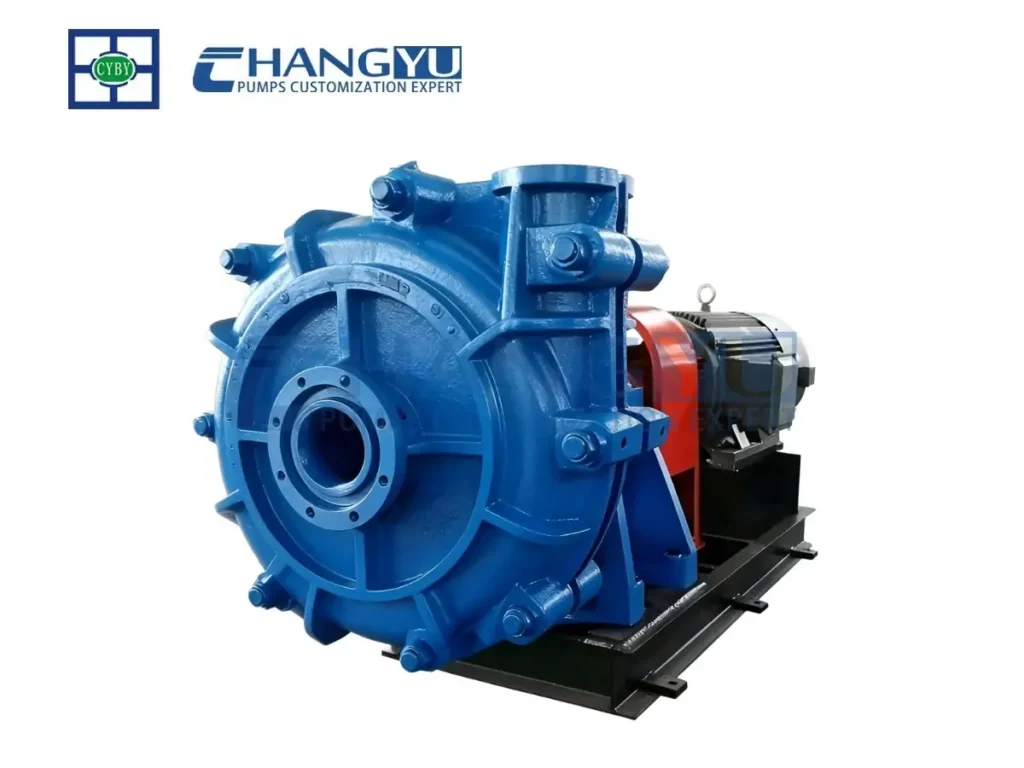
Engineered for high-head and severe-wear conditions. Double-casing construction allows wetted part replacement without dismantling piping. Oil-lubricated bearing assembly ensures long-term reliability. High-chrome Cr33 provides abrasion resistance for mining tailings, sand and gravel, and industrial mineral slurries.
| Parameter | Specification |
|---|---|
| Flow rate | 117–976 m³/h |
| Head | 21.1–101.6 m |
| Motor power | 22–560 kW |
| Speed | 730 / 980 / 1,480 r/min |
| Materials | BTMCr27 / BTMCr28 / BTMCr33 / duplex stainless steel |
UHB Series — UHMW-PE Lined Slurry Handling Pump for Corrosive Slurry
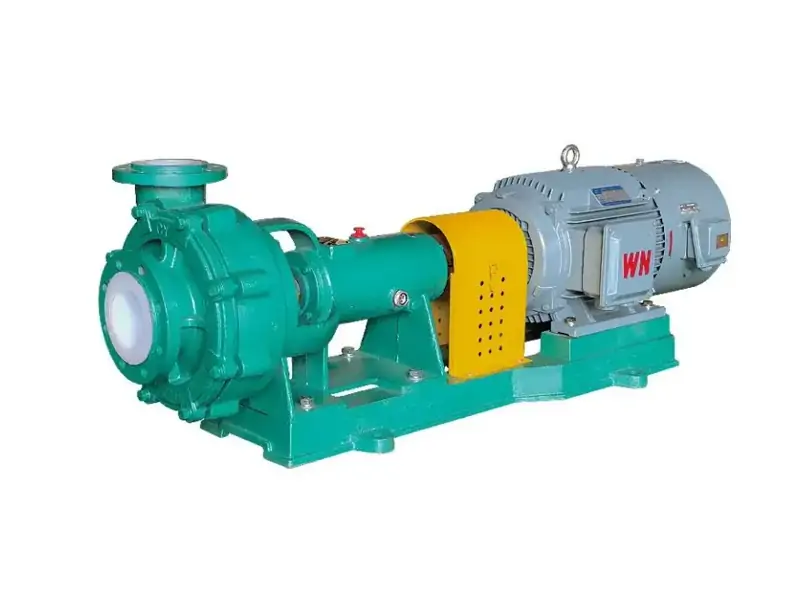
Steel-lined UHMW-PE centrifugal pump for slurries containing chemical additives or acidic process water. UHMW-PE provides combined corrosion resistance (pH 1–14) and abrasion resistance. Wide flow range covers applications from pilot plants to large industrial facilities.
| Parameter | Specification |
|---|---|
| Flow rate | 3–2,600 m³/h |
| Head | 5–100 m |
| Motor power | 0.75–300 kW |
| Speed | 750–2,900 r/min |
| Temperature | -20°C to 90°C |
| Lining material | UHMW-PE |
BFD Series — Electric Diaphragm Slurry Handling Pump for High-Solids Slurry

Electric diaphragm pump designed for slurries containing large solids, fibrous debris, and high solids concentrations. As a positive displacement pump, the BFD Series maintains flow regardless of discharge pressure. Solids passage up to 9.4 mm. Self-priming operation.
| Parameter | Specification |
|---|---|
| Flow rate | 480 L/min |
| Head | 84 m |
| Motor power | 0.75–45 kW |
| Speed | 968–3,450 r/min |
| Temperature | -20°C to 120°C |
| Customizable materials | Cast steel, ductile iron, aluminum alloy, PP, stainless steel, PVDF |
View BFD Series Electric Diaphragm Pump →
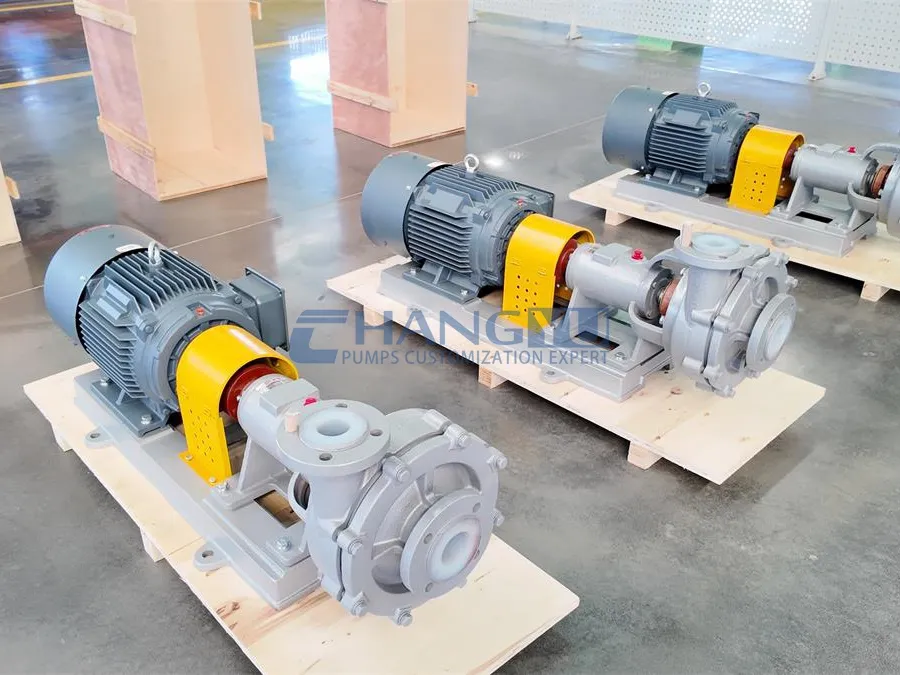
CYB-ZKJ Series — Fluoropolymer-Lined Slurry Handling Pump
FEP/PFA-lined centrifugal pump designed for strong acid and hazardous chemical slurries. The fluoropolymer lining provides chemical resistance across the full pH range at temperatures up to 120°C. Double mechanical seal with API Plan 32 or Plan 53C flush provides reliable sealing.
| Parameter | Specification |
|---|---|
| Flow rate | 3–2,600 m³/h |
| Head | 5–100 m |
| Motor power | 0.75–300 kW |
| Temperature | -80°C to 120°C |
| Lining materials | FEP (standard), PFA (high-temperature option) |
FAQs about Slurry Handling Pumps
Q: What is the difference between a centrifugal slurry pump and a positive displacement slurry pump?
A: Centrifugal pumps use a rotating impeller to accelerate slurry outward — suitable for high flow rates, moderate viscosities (below 300 cSt), and continuous operation. Positive displacement pumps trap and push a fixed volume mechanically — suitable for high viscosities (above 300 cSt), high solids concentrations, and precise metering.
Q: What material is best for abrasive slurry pump service?
A: High-chrome Cr27/Cr33 (650–750 HB) provides the highest abrasion resistance for neutral-pH slurries. For acidic slurries, UHMW-PE linings or duplex stainless steel combine corrosion resistance with adequate abrasion resistance.
Q: When should I choose a diaphragm pump over a centrifugal pump?
A: Choose a diaphragm pump when the slurry contains large solids, when the pump must self-prime from above the fluid source, when the application requires frequent starts and stops, or when the slurry viscosity exceeds approximately 300 cSt.
Q: How does slurry viscosity affect pump selection?
A: High slurry viscosity reduces NPSH available at the pump suction, increasing cavitation risk. Above 500 cSt, oversize the suction piping and reduce pump speed. Above 300 cSt, centrifugal pump efficiency declines and positive displacement pumps become more suitable.
Q: What causes slurry pump impellers to wear out quickly?
A: The abrasive wear rate increases approximately with the cube of flow velocity. Common causes include operating at excessive speed, using materials inadequate for the particle hardness, and corrosion weakening the material surface before abrasive particles remove it.
Q: Can one pump type handle all slurry applications?
A: No. Centrifugal pumps handle the majority of applications but are limited by viscosity and large solids. Diaphragm pumps handle large solids and self-prime but have lower flow capacity. Progressive cavity pumps handle extreme viscosities but have lower pressure limits. The pump type must be matched to the specific slurry characteristics.
Changyu Pump Engineer’s Avoidance Checklist
- Match the pump type to the slurry viscosity. Above 300 cSt, centrifugal pump efficiency declines and positive displacement pumps should be evaluated.
- Match the material to both the abrasive solids and the corrosive carrier liquid. A material that resists abrasion but corrodes will fail as rapidly as a material that resists corrosion but wears.
- For settling slurries, verify that the minimum pump flow maintains critical settling velocity throughout the discharge pipeline.
- Install seal protection for abrasive slurries. API Plan 32 external flush or centrifugal expeller seals prevent abrasive particles from destroying mechanical seal faces.
- For high-viscosity slurries, oversize the suction piping and reduce pump speed to maintain adequate NPSH margin and prevent cavitation.
- When the slurry contains both abrasive solids and corrosive chemicals, select materials for corrosion resistance first, then verify abrasion resistance.
- For applications with unpredictable solids, specify vortex impellers or diaphragm pumps that tolerate debris without clogging.
- Keep spare wear components in inventory. In slurry service, impellers, volute liners, and seals are consumable items. Planned replacement during scheduled maintenance prevents unplanned downtime.
Conclusion
A slurry handling pump is a purpose-specified pump — not a standard pump pressed into slurry service. Two decisions determine pump reliability: the pump type matched to the slurry’s viscosity, solids concentration, and flow requirements, and the materials matched to the combined effects of abrasive wear and chemical corrosion.
Centrifugal pumps handle the majority of slurry applications. Positive displacement pumps — progressive cavity, diaphragm, and peristaltic — extend slurry handling capability into high-viscosity, high-solids, and precision metering applications that centrifugal pumps cannot serve. Material selection must address both the abrasive solids and the corrosive carrier liquid.
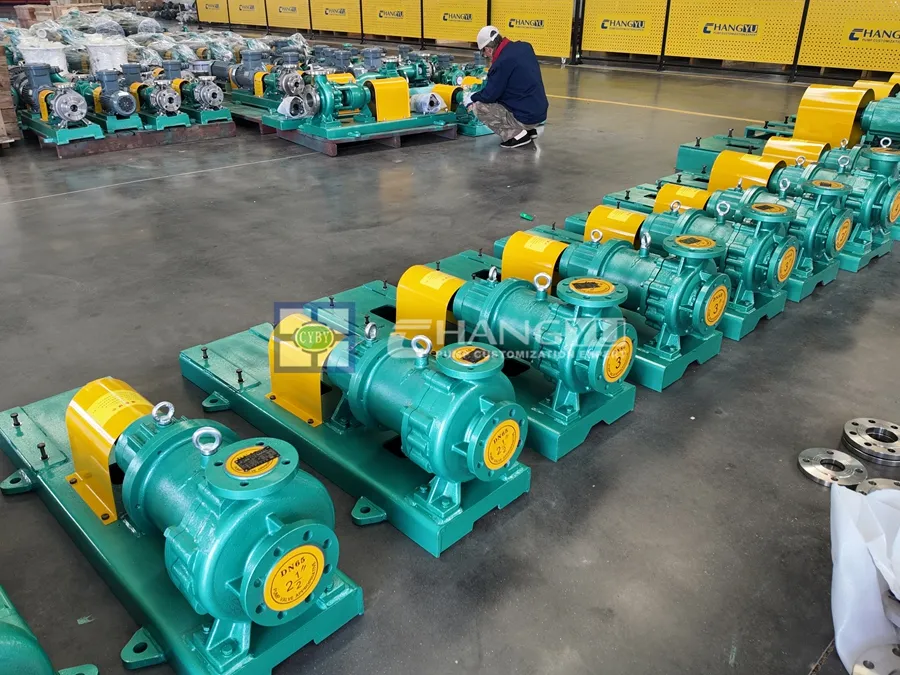
When you are ready to specify a slurry handling pump for your application, Changyu Pump’s engineering team can provide a technical assessment covering slurry characterization, pump type recommendation, and material selection matched to your specific process conditions. Two decades of pump manufacturing across mining, chemical, power generation, and industrial applications inform every recommendation.