
Polyaluminium Chloride production pumps must be selected by process stage, not by a one-size-fits-all approach. The optimal solution for a Polyaluminium Chloride production line is a three-pump combination: a vertical submerged pump for bauxite slurry, a CYF centrifugal pump (F46 fluoroplastic alloy) for HCl reaction liquid circulation, and an optimized CYF centrifugal pump for finished Polyaluminium Chloride transfer.
Key takeaways:
- Replacement cycle extended from 20 days to 24 months — an approximately 36x improvement over the previous single-pump approach
- Production uptime exceeded 98% — down from 8 monthly failures to less than 0.5
- Polyaluminium Chloride purity increased from 92% to 96% — achieved by reducing mechanical wear particle contamination and air bubble entrainment
- Direct economic benefit exceeded ¥450,000/month — including reduced spare parts cost (down approximately 80%), labor maintenance (down approximately 70%), and energy savings of ¥15,000/month
These results come from a full-process pumping solution completed for a Polyaluminium Chloride manufacturer in Shandong, China. Below is a detailed breakdown of the selection logic, solution design, and measurable outcomes for reference by similar manufacturers.
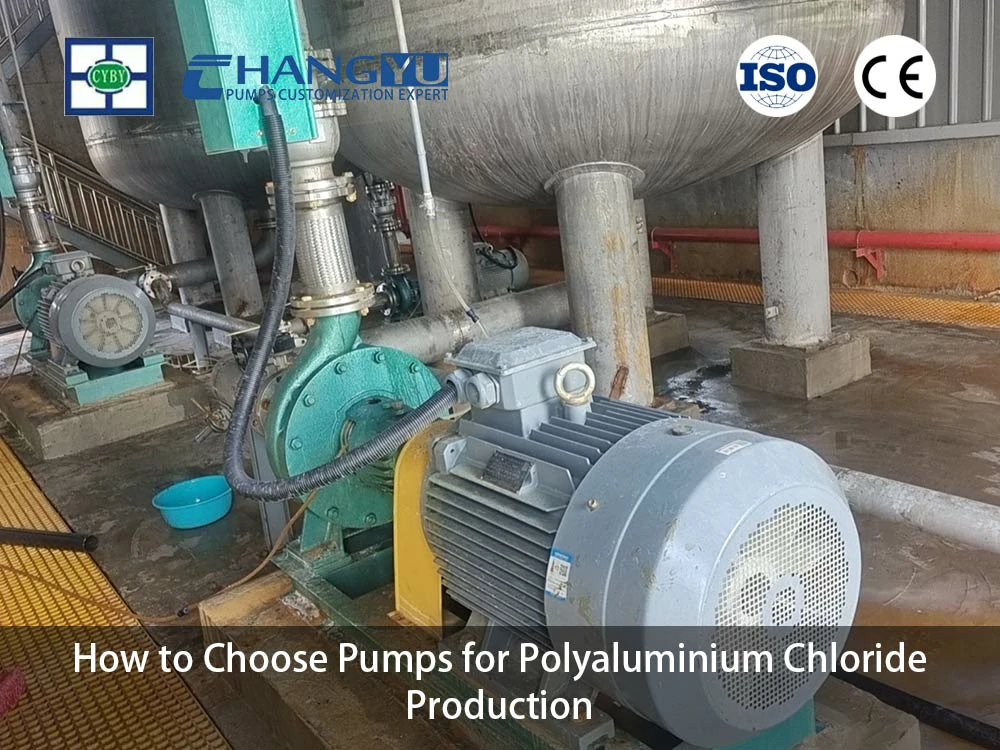
Three Processes, Three Media Conditions, One Integrated Solution
Polyaluminium Chloride (also known as Poly Aluminum Chloride, commonly abbreviated as PAC) production involves three distinct pumping stages — bauxite slurry transfer, hydrochloric acid reaction liquid circulation, and finished Polyaluminium Chloride delivery. Each stage presents a different set of challenges: abrasive solids, high-temperature acid corrosion, and viscous liquid handling with strict purity requirements.
Stage 1: Bauxite Slurry Transfer
Medium Characteristics
| Parameter | Value |
|---|---|
| Concentration | Approx. 35% |
| Particle type | Hard particles with acidic impurities |
| Key requirement | Adapt to slurry concentration and transfer rhythm |
| Main challenge | Impeller wear, casing leakage |
The core problem: Hard particles in bauxite slurry cause continuous abrasion on impellers and pump casings at high flow velocities. Standard pumps experience rapid impeller wear and frequent casing leakage, leading to short replacement cycles.
Stage 2: Hydrochloric Acid Reaction Liquid Circulation
Medium Characteristics
| Parameter | Value |
|---|---|
| Temperature | 80–90°C (high temperature) |
| Medium | Hydrochloric acid reaction liquid, high chloride ion environment |
| Main challenge | Strong corrosion, seal failure, risk of medium leakage |
The core problem: At high temperature, chloride ions (Cl⁻) aggressively attack metal materials. Standard pump seals fail rapidly under these conditions, leading to medium leakage — not only material loss but also safety hazards and environmental compliance risks.
Stage 3: Finished Polyaluminium Chloride Transfer
Medium Characteristics
| Parameter | Value |
|---|---|
| Medium state | Viscous liquid |
| Special requirement | Must avoid air bubble entrainment during transfer |
| Previous pump issues | Low efficiency, frequent failures, monthly losses exceeding ¥100,000 |
The core problem: Finished Polyaluminium Chloride is highly viscous. Standard centrifugal pumps operate at low efficiency and tend to introduce air bubbles during transfer, affecting product uniformity and quality. Frequent breakdowns cause production line interruptions and direct economic losses.
Solution: Vertical Submerged Pump + CYF Centrifugal Pump Combination
A combined pumping solution was designed for this project, matching each of the three stages with a specifically selected pump type.
Solution 1: Bauxite Slurry Transfer — Vertical Submerged Pump
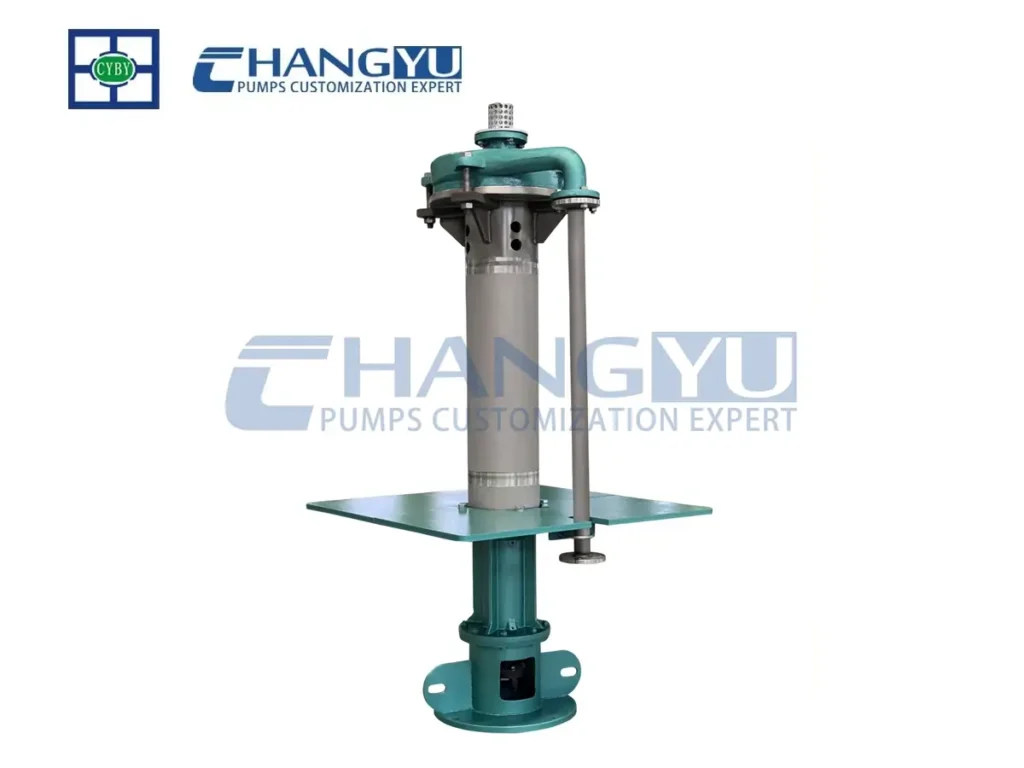
| Configuration | Description |
|---|---|
| Pump type | Vertical submerged pump |
| Wetted parts material | Wear and corrosion-resistant alloy |
| Immersion depth | 1.2m |
| Drive | Variable Frequency Drive (VFD) motor |
| Design advantage | Adapts to slurry concentration fluctuations, adjusts transfer rate on demand |
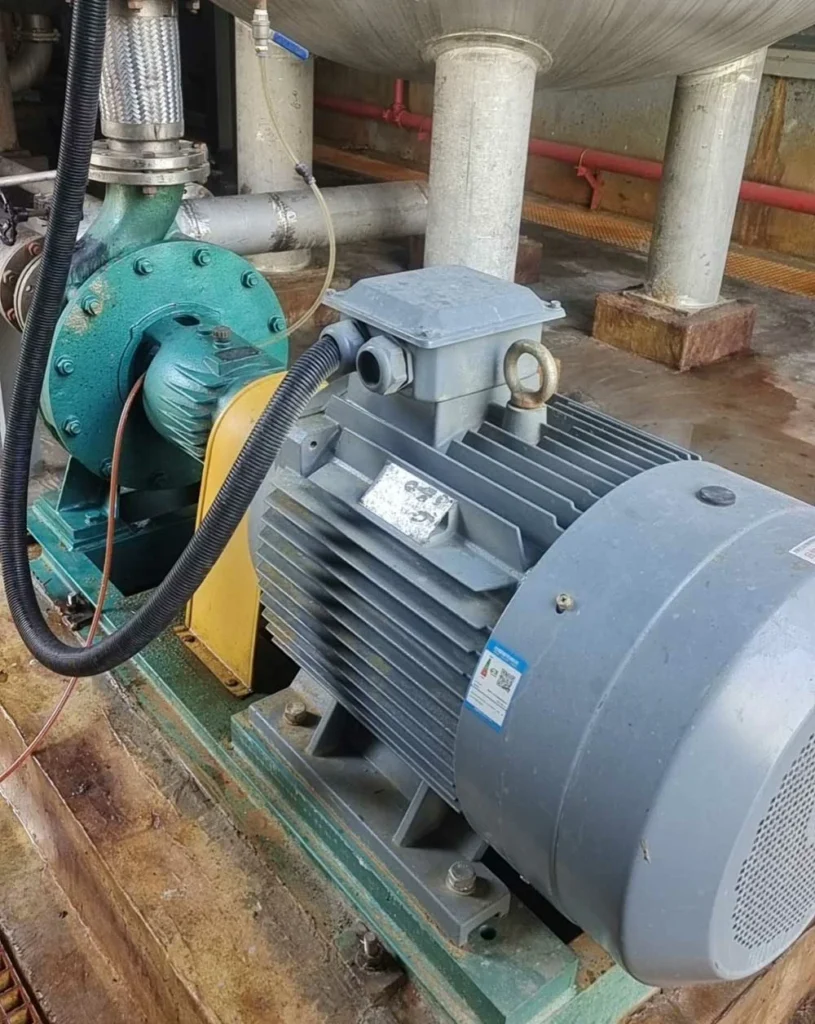
Solution 2: HCl Reaction Liquid Circulation — CYF Centrifugal Pump (F46 Fluoroplastic Alloy)
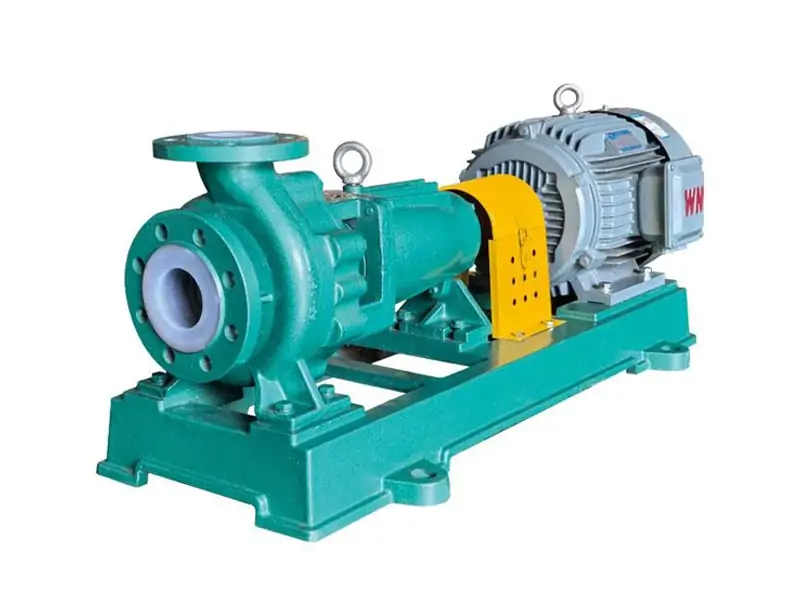
| Configuration | Description |
|---|---|
| Pump type | CYF centrifugal pump (specialized) |
| Wetted parts material | Fluoroplastic alloy (F46) |
| Temperature resistance | Withstands 90°C hydrochloric acid corrosion |
| Structure | Single-stage, single-suction, horizontal |
| Seal system | Bellows mechanical seal with Silicon Carbide (SiC) sealing faces |
| Seal lifespan | 3 times the lifespan of traditional pumps |
Solution 3: Finished Polyaluminium Chloride Transfer — Optimized CYF Centrifugal Pump
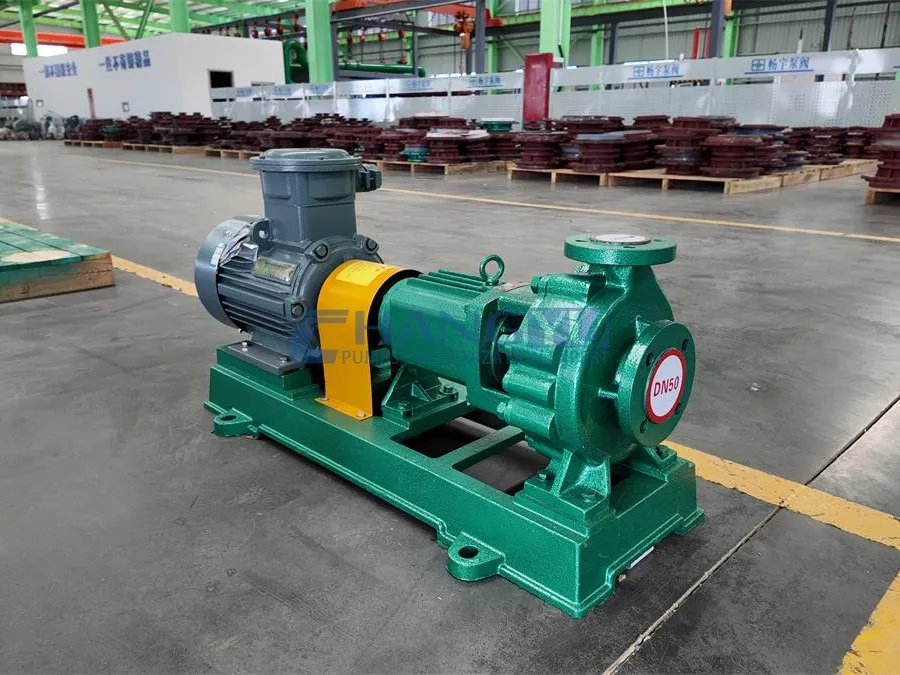
| Configuration | Description |
|---|---|
| Pump type | Optimized CYF centrifugal pump |
| Impeller design | Outlet width increased by 15% |
| Inlet/outlet size | DN125 (large diameter) |
| Motor | High-efficiency energy-saving motor |
| Energy consumption | Reduced by 12% |
| Operating noise | < 75 dB |
Technical Specifications Summary
| Parameter | Vertical Submerged Pump | CYF Centrifugal (HCl) | CYF Centrifugal (PAC) |
|---|---|---|---|
| Medium | Bauxite slurry (35% conc.) | HCl reaction liquid | Finished Polyaluminium Chloride (viscous) |
| Operating temperature | Ambient (slurry) | 80–90°C | Ambient |
| Wetted parts material | Corrosion/abrasion-resistant alloy | Fluoroplastic alloy (F46) | Fluoroplastic alloy (F46) |
| Seal type | Mechanical seal | Bellows mech. seal + Silicon Carbide | Mechanical seal |
| Drive | Variable Frequency Drive | Fixed speed | High-efficiency motor |
| Special design | 1.2m immersion depth | High-temp HCl resistance | 15% wider impeller outlet, DN125 |
Results
Before vs. After
| Metric | Before (Original Pumps) | After (Vertical Submerged + CYF Combo) |
|---|---|---|
| Spare part replacement cycle | 20 days | 24 months (approximately 36x improvement) |
| Monthly failure incidents | 8 times | < 0.5 times |
| Production line uptime | — | > 98% |
| Polyaluminium Chloride purity | 92% | 96% (100% batch pass rate) |
| Daily output per line | 80 tons | 95 tons (+450 tons/month) |
Note on purity improvement: The pump upgrade reduced mechanical wear particle contamination and minimized air bubble entrainment during transfer, both of which contributed to improved product consistency and purity of the final Polyaluminium Chloride.
Economic Impact
| Item | Savings / Revenue Increase |
|---|---|
| Spare parts procurement cost | Reduced by approximately 80% |
| Labor maintenance cost | Reduced by approximately 70% |
| Monthly electricity savings | ¥15,000 (energy optimization) |
| Direct economic benefit | > ¥450,000/month (including capacity increase) |
Source: Joint acceptance report by the manufacturer’s Technical and Production Departments.
Why Choose the Vertical Submerged + CYF Combination?
| Factor | Single Pump Type | Vertical Submerged + CYF Combination |
|---|---|---|
| Process matching | One pump for all, compromises inevitable | Each stage gets a specifically selected pump type |
| Maintenance cost | High-frequency replacements | Approximately 36x longer replacement cycle |
| Production efficiency | Frequent breakdowns, line interruptions | Uptime > 98% |
| Product quality | Bubbles/impurities affect consistency | Polyaluminium Chloride purity from 92% to 96% |
| Total Cost of Ownership (TCO) | Higher | Significantly lower |
FAQ
Q1: What type of pump is best for high-concentration bauxite slurry?
A: A vertical submerged pump is a strong choice for this application. Its immersion design allows the pump to operate directly in the medium, while a Variable Frequency Drive (VFD) motor adjusts the transfer rate in real time based on slurry concentration fluctuations, helping prevent clogging and overload.
Q2: Is F46 material suitable for 90°C hydrochloric acid in chemical pumps?
A: Yes. F46 (perfluoroethylene-propylene copolymer) offers strong chemical stability in high-temperature, strong acid environments. It was specifically selected for this 80–90°C HCl reaction liquid circulation application, and field operating data confirms its reliability.
Q3: Why does Polyaluminium Chloride transfer require a wider impeller outlet and large-diameter ports?
A: Finished Polyaluminium Chloride is highly viscous. Standard impeller and pipe diameters create higher flow resistance and lower efficiency. A 15% wider impeller outlet combined with DN125 ports reduces flow resistance and minimizes the risk of air bubble formation — both of which help maintain product quality.
Q4: Can this solution be directly applied to my plant?
A: Each Polyaluminium Chloride production line has different process parameters, medium compositions, and site conditions, so customization is usually required. However, the selection logic — matching pump types to specific process conditions, and prioritizing material selection based on medium characteristics — applies to all similar scenarios.
Summary
This case demonstrates a key principle: Polyaluminium Chloride production pumping is not about finding one pump that does everything — it is about matching three processes, three pump types, and one integrated solution.
If you are facing pumping challenges in your Polyaluminium Chloride production line, we would be happy to design a tailored solution based on your specific conditions.
Contact Changyu Pump Engineering Team: