
Índice
- ¿Qué es una bomba centrífuga para lodos?
- ¿Por qué confiar en esta guía?: Los más de 20 años de experiencia práctica de Changyu Pump
- Cómo funciona una bomba centrífuga para lodos
- Tipos de bombas centrífugas para lodos
- Materiales de desgaste clave para la fabricación de bombas centrífugas para lodos
- Cómo elegir la bomba centrífuga para lodos adecuada: un marco de 6 pasos
- Mantenimiento de las bombas centrífugas para lodos: la lista de verificación completa
- Soluciones de bombas centrífugas para lodos de Changyu Pump
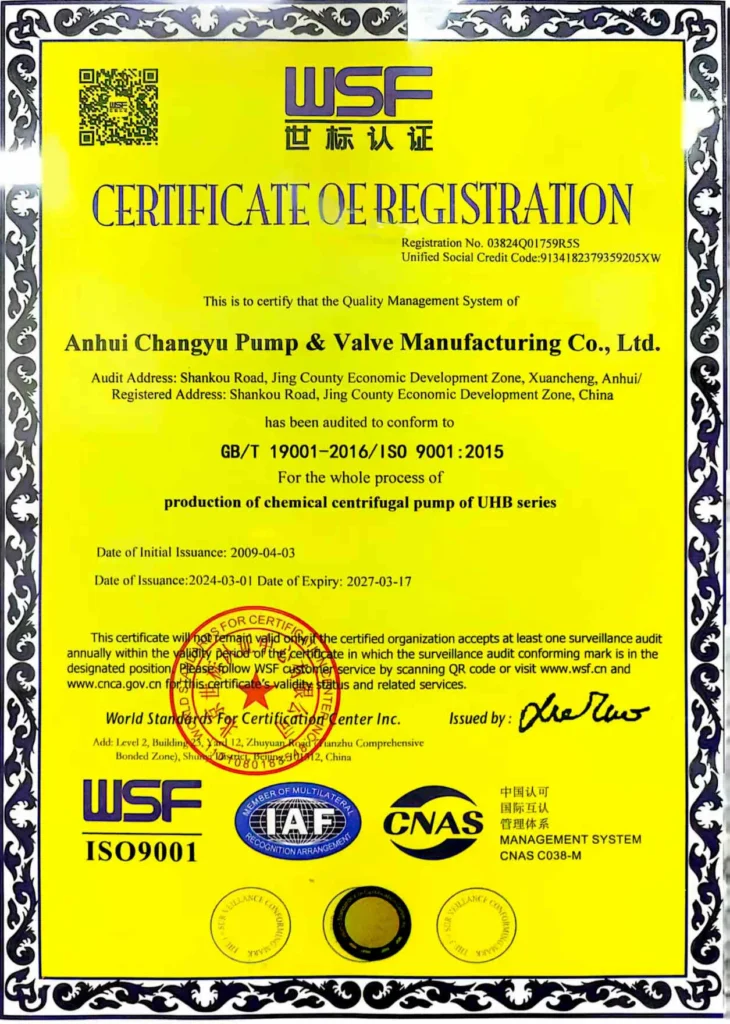
- Control de calidad: cómo Changyu Pump garantiza la fiabilidad de sus bombas
- Caso práctico: Reducción del costo total de propiedad en una planta de procesamiento de minerales
- Preguntas frecuentes (FAQ)
- Los 6 criterios de selección de Changyu Pump Engineers para bombas centrífugas de lodos
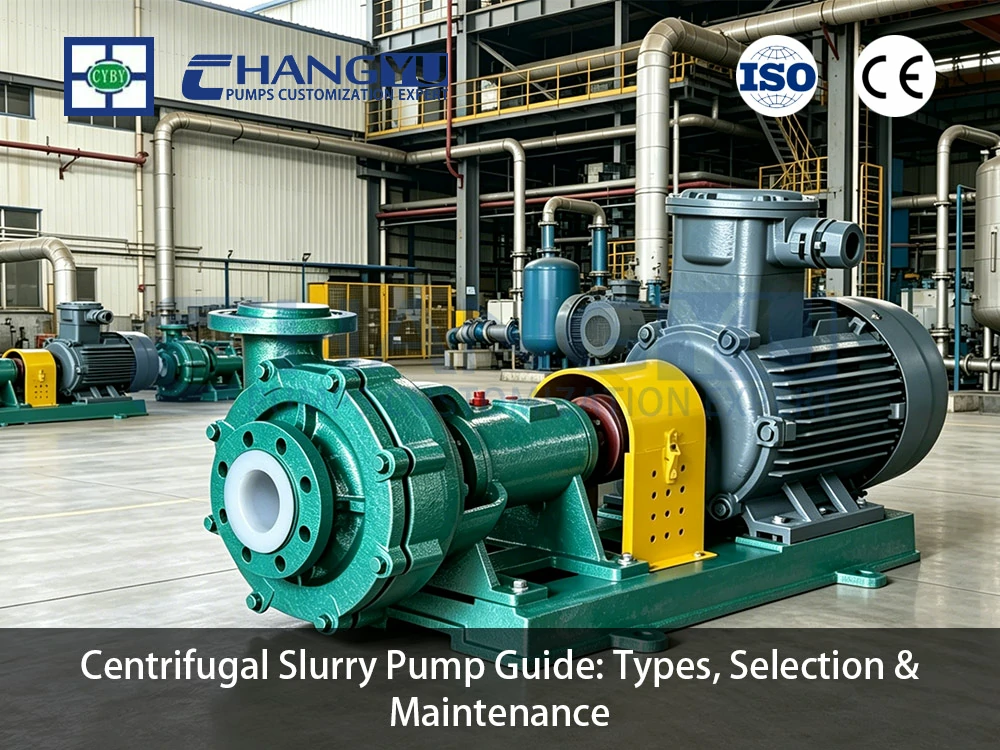
1. ¿Qué es una bomba centrífuga para lodos?
Bomba centrífuga para lodos — una bomba centrífuga de alta resistencia diseñada específicamente para transportar mezclas abrasivas de sólidos y líquidos de alta densidad (conocidas en conjunto como suspensión) en entornos industriales exigentes, como la minería, el procesamiento de minerales, la fabricación de productos químicos y la generación de energía. A diferencia de las bombas centrífugas estándar diseñadas para agua limpia o fluidos de proceso ligeros, una bomba centrífuga para lodos Incorpora secciones de carcasa reforzadas, componentes en contacto con el fluido resistentes al desgaste y conjuntos de cojinetes de alta resistencia diseñados específicamente para soportar las implacables fuerzas erosivas que se generan cuando las partículas sólidas en suspensión se desplazan a gran velocidad a través del impulsor y la voluta de la bomba.
La diferencia fundamental entre un bomba centrífuga para lodos y una bomba centrífuga convencional radica en tres elementos de diseño fundamentales: (1) espesor de la carcasa y del impulsor — Las bombas para lodos utilizan secciones considerablemente más gruesas, normalmente entre un 30 % y un 50 % más que las bombas estándar, para retrasar la rotura de la carcasa debido al desgaste por abrasión; (2) gestión interna de autorizaciones — Las bombas para lodos funcionan con holguras de funcionamiento mayores entre el impulsor y la voluta para permitir el paso de partículas sólidas sin obstrucciones, al tiempo que mantienen la eficiencia hidráulica gracias al ajuste preciso de la holgura frontal; y (3) filosofía de selección de materiales — mientras que las bombas estándar dan prioridad a la resistencia a la corrosión o al costo, las bombas para lodos priorizan la resistencia combinada a la abrasión y la corrosión, y suelen emplear aleaciones de hierro blanco con alto contenido de cromo que superan 600 BHN dureza o revestimientos avanzados de fluoroplástico, tales como PTFE y UHMW-PE.
Los ingenieros de Changyu Pump han observado, tras más de dos décadas de operaciones en el terreno, que una bomba correctamente especificada bomba centrífuga para lodos puede lograr una mejora de entre 3 y 5 veces en la vida útil en comparación con una unidad de especificaciones insuficientes que funcione en condiciones idénticas. Esto hace que la selección inicial de la bomba —y no el precio de compra— sea la decisión más importante que influye en los costos operativos a largo plazo y en el tiempo de actividad de la producción en cualquier instalación de manejo de lodos.
2. Por qué confiar en esta guía: los más de 20 años de experiencia práctica de Changyu Pump
Las recomendaciones de esta guía no se basan únicamente en libros de texto o modelos teóricos, sino que se fundamentan en más de 20 años de experiencia práctica en ingeniería en el diseño, la fabricación y la implementación sobre el terreno bomba centrífuga para lodos soluciones para los sectores de la minería, el procesamiento químico, la producción de acero, la ingeniería ambiental y la generación de energía. Nuestro equipo de ingeniería ha observado de primera mano los tipos de fallas que acortan la vida útil de las bombas: la erosión del impulsor causada por partículas angulares, la perforación de la carcasa debido a la combinación de corrosión y abrasión, la falla prematura de los cojinetes por la entrada de sólidos y las fugas crónicas en los sellos en aplicaciones con alto contenido de sólidos.
Cada uno de estos modos de falla supone un costo real por tiempo de inactividad para los operadores, y cada uno de ellos ha servido de base para las mejoras de diseño incorporadas en nuestro actual bomba centrífuga para lodos líneas de productos. Esta guía te ofrece toda esa experiencia acumulada en un formato estructurado y práctico.
3. Cómo funciona una bomba centrífuga para lodos
Es fundamental comprender el principio de funcionamiento antes de evaluar modelos específicos o tomar una decisión de compra. A bomba centrífuga para lodos funciona según el principio de fuerza centrífuga — Un impulsor giratorio convierte la energía mecánica del motor de accionamiento en energía cinética dentro del fluido, generando la presión necesaria para impulsar medios densos y cargados de sólidos a través de sistemas de tuberías.
La secuencia de funcionamiento sigue cuatro etapas distintas:
- Cebado y succión: La lechada entra en la bomba a través de la entrada de succión situada en el centro del impulsor (el “ojo”). A medida que el impulsor gira a velocidades que suelen oscilar entre 750 y 3450 rpm, el fuerza centrífuga La fuerza generada por las paletas giratorias impulsa la suspensión radialmente hacia afuera, desde el centro del impulsor hacia la periferia.
- Conversión de energía: La energía cinética rotacional que transmite el impulsor se convierte en energía de presión a medida que la suspensión desacelera en la sección transversal creciente de la carcasa en espiral. Este aumento de presión es lo que permite a la bomba superar la altura manométrica del sistema —el efecto combinado de la altura estática, las pérdidas por fricción en las tuberías y los requisitos de presión de descarga—.
- Altas: La suspensión presurizada sale por la boquilla de descarga y entra en el sistema de tuberías, transportando los sólidos en suspensión hasta su destino.
- Flujo continuo: A medida que se descarga el lodo, se forma una zona de baja presión en el ojo del impulsor, lo que atrae lodo nuevo hacia la bomba y permite mantener un funcionamiento continuo.
Lo que esto significa para usted: El bomba centrífuga para lodos El principio de funcionamiento se basa fundamentalmente en la velocidad. La misma velocidad que genera el flujo también produce desgaste: las velocidades en la punta del impulsor en aplicaciones con lodos suelen oscilar entre 15 y 25 m/s, y el desgaste por abrasión es proporcional, aproximadamente, al cubo de esta velocidad. La selección de una bomba con una velocidad de funcionamiento adecuadamente baja para la aplicación requerida puede reducir drásticamente las tasas de desgaste. Una bomba que opera a 1200 RPM puede suministrar solo un 15 % menos de caudal que una a 1450 RPM, pero la tasa de desgaste puede reducirse en más de un 30 %. Por eso los ingenieros de Changyu Pump recomiendan sistemáticamente seleccionar la velocidad de funcionamiento más baja posible para un punto de trabajo dado.
En comparación con las bombas de lodos de desplazamiento positivo, los diseños centrífugos ofrecen una mayor capacidad de caudal a un menor costo de inversión, lo que las convierte en la opción preferida para la mayoría de las aplicaciones mineras y de procesamiento. Sin embargo, con viscosidades de lodos elevadas que se acercan a los 800–1,000 cP, las bombas centrífugas sufren pérdidas de carga de ≥ 8 m y reducciones de eficiencia de hasta un 20 %, momento en el que las bombas de desplazamiento positivo pueden ofrecer una mejor rentabilidad energética.
4. Tipos de bombas centrífugas para lodos
Es fundamental comprender las configuraciones básicas de las bombas antes de evaluar modelos específicos. El tipo de bomba centrífuga para lodos La elección que haga influye directamente en la flexibilidad de la instalación, el acceso para el mantenimiento y los costos operativos a largo plazo.-
4.1 Bombas centrífugas horizontales para lodos: el caballo de batalla del sector
La horizontal bomba centrífuga para lodos es la configuración más utilizada en plantas mineras, de procesamiento de minerales y químicas de todo el mundo. Estas bombas suelen instalarse en seco sobre una placa base o un bastidor, con el eje de la bomba orientado horizontalmente. Su diseño en voladizo permite que el conjunto de cojinetes permanezca aislado de la parte húmeda, lo que reduce el riesgo de contaminación.-
Ventajas principales:
- Acceso más fácil a los componentes del circuito húmedo para el mantenimiento de rutina
- Mayor eficiencia en los puntos de funcionamiento de diseño en comparación con las alternativas verticales
- Amplia gama de tamaños: diámetros de descarga desde 25 mm (1″) hasta 450 mm (18″)
- Compatible tanto con estructuras de aleación con alto contenido de cromo como con revestimientos de elastómero
Lo que esto significa para usted: Si su aplicación implica una instalación fija con el espacio necesario y la bomba funciona con una altura manométrica del sistema de moderada a alta, una bomba horizontal bomba centrífuga para lodos casi siempre supondrá el menor costo total de propiedad.
4.2 Bombas centrífugas verticales para lodos — Para aplicaciones en fosas húmedas y sumideros
Vertical bomba centrífuga para lodos En estos diseños, el motor se coloca por encima del nivel del líquido, con un eje largo que se extiende hacia abajo hasta el sumidero o foso. Las configuraciones en voladizo eliminan cualquier cojinete sumergido, lo que las hace ideales para aplicaciones en las que la bomba debe funcionar parcial o totalmente sumergida.-
4.3 Bombas centrífugas sumergibles para lodos — Para lugares profundos y de difícil acceso
Sumergible bomba centrífuga para lodos Estas unidades integran el motor y la bomba en un único conjunto sellado que funciona totalmente sumergido. Las modernas bombas sumergibles para lodos de los principales fabricantes pueden manejar concentraciones de sólidos de hasta el 70 % en peso.
4.4 Comparación rápida: horizontal, vertical y sumergible
| Factor de selección | Bomba centrífuga horizontal para lodos | Bomba centrífuga vertical para lodos | Bomba sumergible para lodos |
|---|---|---|---|
| Instalación | Instalación en seco sobre placa base/patín | Motor situado por encima del líquido; eje sumergido | Unidad de motor y bomba totalmente sumergida |
| La mejor opción | Sistemas de proceso fijos, aplicaciones de alta altura de elevación, transporte a larga distancia | Sumideros, fosas, niveles de líquido variables | Pozos profundos e inaccesibles, espacios confinados |
| Acceso de mantenimiento | Fácil acceso a la sección húmeda; mantenimiento rutinario in situ | Se puede acceder al motor; la inspección del eje requiere elevación | Requiere la recuperación completa de la unidad |
| Manipulación de sólidos | Hasta 40% según el estándar de peso | Depende del diseño del impulsor; normalmente hasta 40% | Hasta 70% en los modelos con agitador |
| Tolerancia de funcionamiento en seco | Limitado | El diseño en voladizo permite el funcionamiento en seco de forma intermitente | Requiere inmersión para su refrigeración |
5. Materiales clave de desgaste para la fabricación de bombas centrífugas para lodos
Podría decirse que la elección de los materiales es la decisión más importante a la hora de definir un bomba centrífuga para lodos. Los componentes en contacto con el fluido —el impulsor, la voluta o la carcasa, las placas de desgaste y el manguito del eje— están en contacto constante con un medio abrasivo, a menudo corrosivo, que circula a gran velocidad. La elección de materiales inadecuados puede reducir la vida útil de la bomba de años a semanas.
5.1 Hierro blanco con alto contenido de cromo: el referente en resistencia a la abrasión
El hierro blanco con alto contenido de cromo, con un contenido de cromo que oscila entre 25% y 30%, alcanza valores de dureza Brinell superiores a 600 BHN, lo que lo convierte en uno de los materiales de fundición más resistentes que existen para la fabricación de bombas. Su excepcional resistente a la abrasión Sus propiedades lo convierten en el material de elección para partículas gruesas, angulosas y de alta dureza, típicas de la minería y el procesamiento de minerales.-
Lo que esto significa para usted: En el caso de las suspensiones abrasivas de pH neutro, el hierro blanco con alto contenido de cromo ofrece la mayor vida útil por cada dólar invertido. Sin embargo, su resistencia a la corrosión es limitada por debajo de un pH aproximado de 4.
5.2 Revestimientos de elastómero: caucho y poliuretano para partículas finas
En el caso de lodos compuestos principalmente por partículas finas y redondeadas (como los residuos mineros o los lodos de piedra caliza), las carcasas y los impulsores revestidos de elastómero ofrecen ventajas claras. Los revestimientos de caucho natural absorben la energía del impacto de las partículas, mientras que el poliuretano ofrece una excelente resistencia al desgaste por corte causado por partículas más afiladas. Por lo general, estos se limitan a temperaturas inferiores a 70 °C (160 °F).
5.3 Acero inoxidable dúplex: equilibrio entre resistencia al desgaste y a la corrosión
Cuando el fluido bombeado presenta tanto desgaste por abrasión como corrosión química, aceros inoxidables dúplex (como el CD4MCu) ofrecen una resistencia superior a la corrosión por picaduras y en hendiduras, al tiempo que mantienen una dureza razonable (280–350 BHN). Estas aleaciones cubren el vacío existente entre el hierro con alto contenido de cromo (excelente resistencia al desgaste, baja resistencia a la corrosión) y los revestimientos de fluoroplástico (excelente resistencia a la corrosión, resistencia moderada al desgaste).
5.4 Revestimientos de plástico fluorado: máxima protección contra la corrosión y protección moderada contra la abrasión
Para aplicaciones de doble función —en las que los lodos contienen tanto sólidos abrasivos como productos químicos altamente corrosivos—, las construcciones revestidas de plástico fluorado ofrecen una protección inigualable. Materiales como PTFE, FEP, y UHMW-PE ofrecen una resistencia química casi universal y absorben los impactos moderados de partículas. Las bombas de Changyu Pump, revestidas de fluoroplástico bomba centrífuga para lodos Estos modelos cuentan con revestimientos de entre 8 y 20 mm de espesor, lo que les permite soportar lodos ácidos que destruirían los componentes metálicos en cuestión de días.
5.5 Tabla comparativa de selección de materiales
| Material | Dureza | Resistencia a la abrasión | Resistencia a la corrosión | Temperatura máxima | Mejor aplicación |
|---|---|---|---|---|---|
| Hierro blanco con alto contenido en cromo (Cr25-30%) | Más de 600 BHN | Excelente | Bajo (insuficiente por debajo de pH 4) | 110 °C | Partículas abrasivas gruesas, pH neutro |
| Revestimiento de caucho natural | N/A (elastómero) | Bueno (partículas finas) | Moderado | 70 °C | Partículas finas y redondeadas, residuos |
| Revestimiento de poliuretano | N/A (elastómero) | Muy bueno (desgaste por corte) | Moderado | 70 °C | Partículas finas y afiladas |
| Acero inoxidable dúplex (CD4MCu) | 280-350 BHN | Moderado | Bueno (pH 2-12) | 110 °C | Corrosión y abrasión combinadas |
| Revestido de plástico fluorado (FEP/PTFE/UHMW-PE) | N/A (forro) | Moderado | Excelente (casi universal) | 90-120 °C | Ácidos fuertes, agentes oxidantes |
6. Cómo elegir la bomba centrífuga para lodos adecuada: un marco de 6 pasos
Una metodología de selección sistemática marca la diferencia entre un bomba centrífuga para lodos una que ofrezca años de servicio confiable y otra que se convierta en una carga de mantenimiento constante. Los ingenieros de Changyu Pump recomiendan el siguiente enfoque estructurado:
Paso 1: Caracterizar las propiedades de la suspensión
Antes de elegir una bomba, debe determinar las características del fluido que va a bombear. Las propiedades clave de los lodos incluyen:
- Concentración de sólidos (en peso o en volumen)
- Distribución del tamaño de las partículas (PSD) — Las partículas angulosas y gruesas provocan un desgaste considerablemente mayor
- Densidad relativa (SG) de la lechada — afecta a los requisitos de alimentación
- pH y composición química — determina el componente de corrosión
- Temperatura — influye en la elección del material y de la junta
- Viscosidad — Las suspensiones no newtonianas requieren enfoques hidráulicos diferentes
Paso 2: Definir el punto de trabajo del sistema
La bomba debe proporcionar el caudal requerido contra la altura dinámica total (TDH), teniendo en cuenta la altura estática, las pérdidas por fricción, la altura de velocidad y los requisitos de presión de descarga.
Paso 3: Determinar la velocidad límite de depósito
Para la sedimentación de lodos, la bomba debe mantener una velocidad de flujo superior a la velocidad límite de depósito (LDV) — la velocidad mínima a la que los sólidos permanecen en suspensión. Este fenómeno está estrechamente relacionado con los principios de fluido no newtoniano comportamiento. Operar por debajo de la presión de descarga (LDV) es uno de los errores más comunes y costosos que se cometen al seleccionar una bomba para lodos.
Paso 4: Coincidir la configuración y los materiales
Teniendo en cuenta las propiedades de la lechada, el punto de funcionamiento, los requisitos de LDV y las limitaciones de instalación, identifique:
- Tipo de bomba: horizontal, vertical o sumergible
- Esquema de materiales: hierro con alto contenido de cromo, revestido de elastómero, acero inoxidable dúplex o revestido de fluoroplástico
- Tipo de sello: sello de expulsión/dinámico, empaque de prensaestopas o sello mecánico
Paso 5: Evaluar el costo total de propiedad (TCO)
A bomba centrífuga para lodos Una decisión de compra que se base únicamente en el precio inicial es un falso ahorro. La verdadera coste total de propiedad (TCO) debe tener en cuenta:
- Consumo de energía (que suele representar entre el 60 % y el 70 % del costo total a lo largo de la vida útil)
- Frecuencia y costo de sustitución de las piezas de desgaste
- Costos de mano de obra de mantenimiento y de tiempo de inactividad
- Costo de mantenimiento del inventario de repuestos
Paso 6: Solicitar una curva de rendimiento detallada
Pide siempre el Curva de rendimiento de una bomba para lodos que muestran la altura de elevación, la eficiencia y el consumo de energía en todo el rango de funcionamiento. Para aplicaciones con lodos, aplique los siguientes factores de corrección: índice de cabeza (HR) normalmente entre 0,85 y 0,95 y índice de eficiencia (ER) normalmente entre 0,80 y 0,90 para concentraciones moderadas de sólidos. Asegúrese de que el punto de funcionamiento seleccionado se sitúe cerca del punto de máxima eficiencia (BEP).
Cuándo es mejor optar por bombas de desplazamiento positivo
Aunque bombas centrífugas para lodos Aunque las bombas centrífugas son la opción preferida para la mayoría de las aplicaciones mineras y de procesamiento, las bombas de desplazamiento positivo (PD) ofrecen ventajas en condiciones específicas: (1) cuando la viscosidad de la lechada supera los 800–1,000 cP, en cuyo caso las bombas centrífugas sufren pérdidas significativas de eficiencia; (2) cuando se requieren presiones de descarga superiores a 6,000 kPa (60 bar) para el transporte a larga distancia; y (3) para concentraciones de sólidos extremadamente altas, donde el rendimiento de las bombas centrífugas se deteriora drásticamente. En estos casos, consulte con ingenieros especializados en bombas para evaluar si una bomba de desplazamiento positivo ofrece una mejor rentabilidad total.
7. Mantenimiento de bombas centrífugas para lodos: la lista de verificación completa
Un mantenimiento eficaz tiene un impacto directo en bomba centrífuga para lodos vida útil y costos operativos. Los estudios de casos de la industria demuestran que un programa estructurado de mantenimiento preventivo puede prolongar el tiempo medio entre fallos (MTBF) entre un 200 % y un 400 % en comparación con los enfoques reactivos, basados en «funcionar hasta que falle».-
7.1 Calendario de inspecciones de rutina
- Diario: Compruebe la temperatura de los cojinetes, el caudal de agua de lavado de las juntas y cualquier vibración o ruido inusual
- Semanal: Revise el índice de fugas de la empaquetadura, el nivel y el estado del aceite lubricante
- Mensual: Mida la holgura entre el impulsor y la voluta (holgura en la punta) e inspeccione las placas de desgaste
- Trimestral: Inspección completa del circuito húmedo, cambio de la lubricación de los cojinetes
- Anualmente: Desmontaje completo de la bomba, medición y sustitución de todos los componentes sujetos a desgaste
7.2 Ajuste de la holgura del impulsor (holgura en la punta)
La distancia entre la cubierta delantera del impulsor y la placa de desgaste del lado de succión —conocida como la espacio entre la nariz — es el ajuste de mantenimiento más importante. A medida que este espacio libre aumenta debido al desgaste, la recirculación interna se incrementa, lo que reduce el caudal y la eficiencia. Los operadores deben ajustar la carcasa del cojinete para restablecer el espacio libre de la punta a las especificaciones de diseño siempre que el caudal caiga entre un 5 % y un 10 % por debajo del valor de referencia a velocidad constante.
7.3 Cuidado de las juntas y los cojinetes
- Sellos mecánicos: Se requiere agua de lavado limpia y constante. La presión del agua de lavado debe superar la presión de descarga de la bomba en 1–2 bar para evitar la entrada de lodos.
- Empaque de válvula: Mantenga un goteo de entre 30 y 60 gotas por minuto durante el funcionamiento; un goteo insuficiente provoca el desgaste de la empaquetadura, mientras que un goteo excesivo desperdicia agua y puede indicar que los manguitos del eje están desgastados.
- Rodamientos: Los cojinetes lubricados con aceite deben sustituirse por completo cada 2.000–3.000 horas de funcionamiento o cada tres meses, lo que ocurra primero.
7.4 Cinco signos comunes de fallas y medidas de intervención
| Señal de fallo | Causa probable | Medida recomendada |
|---|---|---|
| Disminución gradual del caudal y la presión | Erosión del impulsor y/o de la placa de desgaste | Ajuste la holgura de las puntas; sustituya los componentes desgastados si la holgura se ha agotado |
| Aumento repentino de las vibraciones | Obstrucción parcial del impulsor o cavitación | Apague el equipo e inspeccione el impulsor; revise el filtro de succión |
| Aumento del consumo de energía | Desgaste interno o deterioro de los cojinetes | Comprueba las holguras; revisa los cojinetes |
| Fuga visible en la junta | Superficies de sellos mecánicos desgastadas o empaques de prensaestopas | Sustituir los componentes del sello; ajustar o rellenar el prensaestopas |
| Pitado en el exterior de la carcasa | Corrosión y abrasión combinadas | Evaluar la posibilidad de cambiar el material a acero inoxidable dúplex o a un revestimiento de fluoroplástico |
8. Soluciones de bombas centrífugas para lodos de Changyu Pump
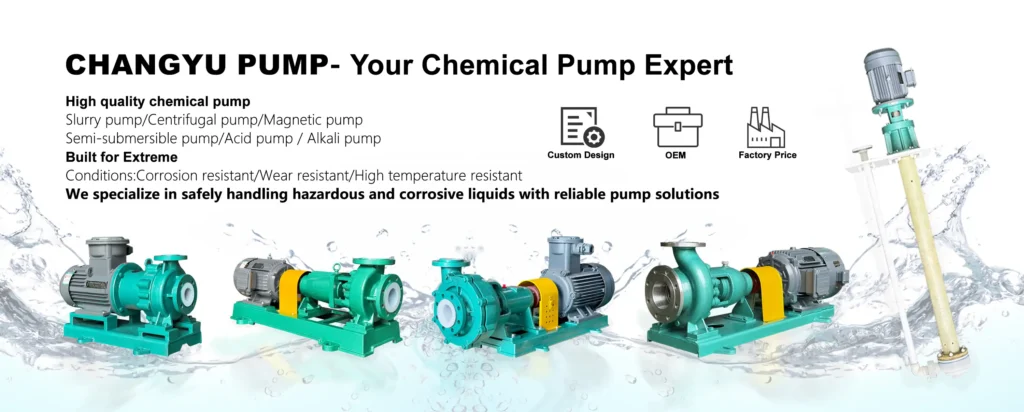
Changyu Pump ofrece una amplia gama de bomba centrífuga para lodos soluciones diseñadas para satisfacer las diversas necesidades descritas a lo largo de esta guía. Cada serie de productos se ha diseñado con optimizaciones específicas en cuanto a materiales y sistemas hidráulicos para perfiles de aplicación concretos.
8.1 Bomba de transferencia de productos químicos corrosivos serie CYB-ZKJ
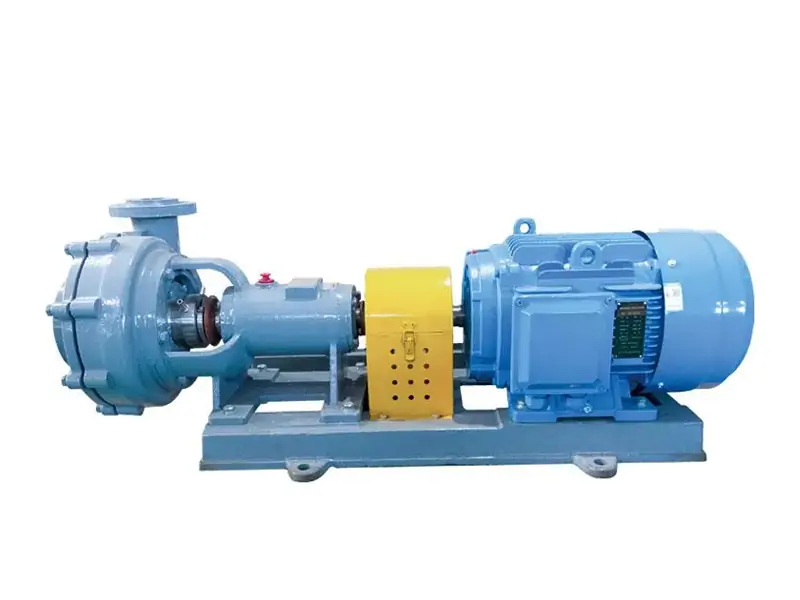
La serie CYB-ZKJ es una serie de alto rendimiento bomba centrífuga para lodos Diseñada para el transporte de medios corrosivos ácidos o alcalinos que contengan hasta un 20 % de partículas sólidas flexibles. Fabricada con revestimiento de FEP, esta bomba emplea una tecnología patentada de revestimiento plástico para resistir la deformación térmica, el agrietamiento y la delaminación en condiciones de funcionamiento exigentes. Para aplicaciones a altas temperaturas, se puede optar por un revestimiento de PFA como alternativa.
Especificaciones principales:
- Rango de caudal: 3–2 600 m³/h
- Rango de cabezas: 5–100 m
- Potencia del motor: 0,75–300 kW
- Velocidad: 968–3 450 r/min
- Rango de temperatura medio: de -80 °C a 120 °C
- Materiales personalizables: FEP (PFA disponible para condiciones de alta temperatura)
Lo que esto significa para usted: La serie CYB-ZKJ es la opción ideal para plantas químicas, operaciones de fundición, industrias de ácido sulfúrico y fertilizantes fosfatados, así como para proyectos de ingeniería ambiental que requieran un transporte confiable de líquidos corrosivos, incluidos ácidos, álcalis y lodos minerales corrosivos. Su amplio rango de aplicaciones abarca desde ácidos diluidos hasta diversos flujos de aguas residuales.
8.2 Bomba para lodos de acero inoxidable de la serie HB
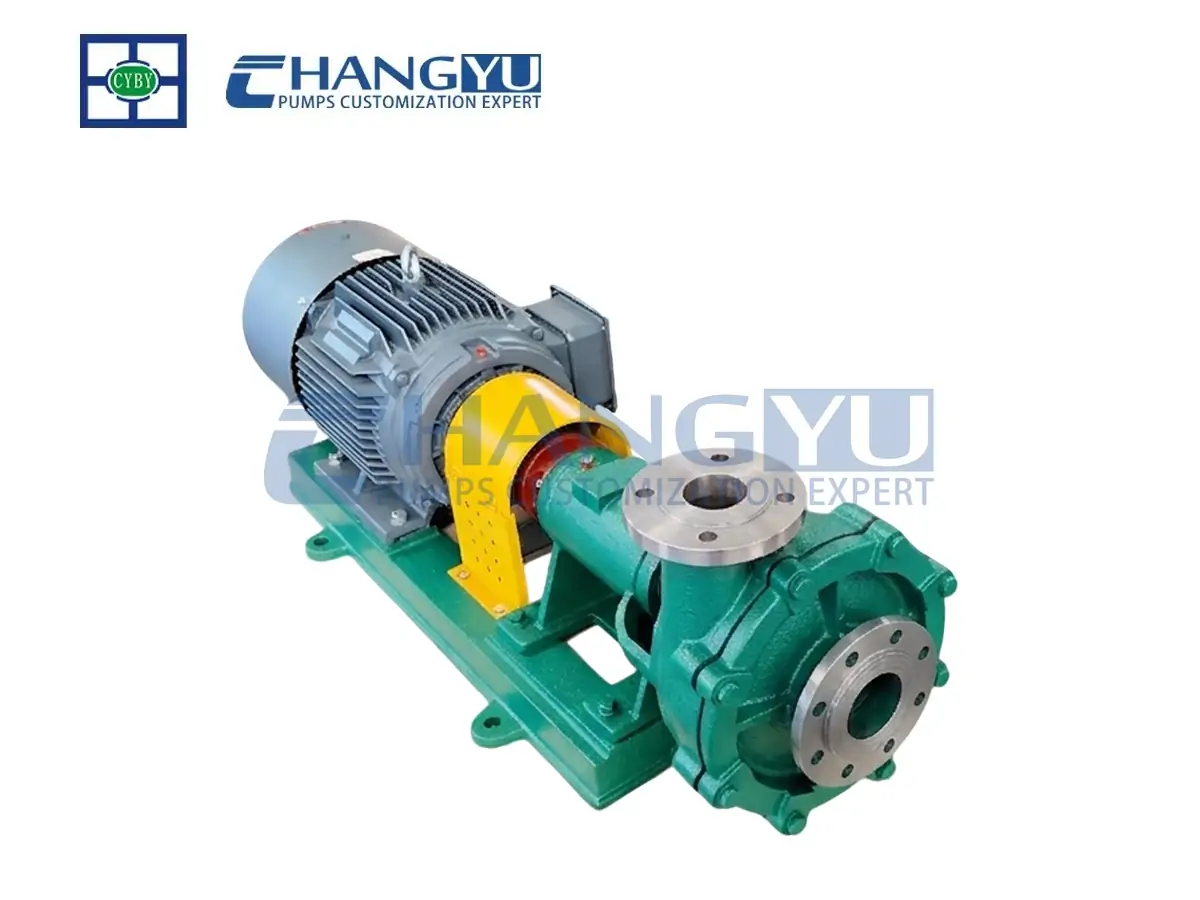
La serie HB de Changyu Pump es una bomba horizontal de una etapa y succión simple de alta eficiencia bomba centrífuga para lodos, diseñado de conformidad con ISO 2858 y conforme a Normas CE. Fabricado con una estructura en contacto con el fluido totalmente de acero inoxidable, está diseñado específicamente para lodos abrasivos y fluidos medianamente corrosivos, lo que garantiza un rendimiento estable, una mayor durabilidad y una vida útil prolongada en entornos industriales exigentes.
Especificaciones principales:
- Rango de caudal: 10–60 m³/h
- Rango de cabezas: 20–120 m
- Potencia del motor: 3–45 kW
- Velocidad: 2 900 rpm
- Rango de temperatura medio: De -20 °C a 120 °C
- Materiales personalizables: 304, 316, 316L, 2205, 2507
Lo que esto significa para usted: La serie HB es ideal para aplicaciones que requieren un producto duradero y que cumpla con las normas bomba centrífuga para lodos con la resistencia a la corrosión del acero inoxidable. La disponibilidad de opciones de acero inoxidable dúplex y súper dúplex (2205, 2507) ofrece una clara vía de mejora para los operadores que se enfrentan a condiciones de corrosión y abrasión combinadas.
8.3 Bomba industrial para lodos de la serie UHB

La bomba industrial para lodos de la serie UHB presenta un diseño centrífugo de una etapa en voladizo con un impulsor semiabierto y un sello mecánico de cartucho, diseñada específicamente para el transporte de fluidos corrosivos con partículas sólidas o cristales. Changyu bombas centrífugas para lodos Los productos de esta serie ofrecen una resistencia excepcional al desgaste, a los impactos y a la fluencia, así como una resistencia superior a la corrosión, lo que garantiza una alta capacidad de flujo con doble protección.
Especificaciones principales:
- Rango de caudal: 3–2 600 m³/h
- Rango de cabezas: 5–100 m
- Potencia del motor: 0,75–300 kW
- Velocidad: 750–2 900 rpm
- Rango de temperatura medio: De -20 °C a 90 °C
- Materiales personalizables: UHMW-PE
Lo que esto significa para usted: La serie UHB está diseñada específicamente para la fundición de metales no ferrosos, la producción de acero, la fabricación de dióxido de titanio y operaciones de procesamiento químico en las que es necesario transportar lodos abrasivos de alta concentración de forma fiable y con un mantenimiento mínimo. El material de revestimiento de UHMW-PE ofrece un equilibrio excepcional entre resistencia al desgaste e inercia química, lo que permite manejar lodos ácidos o cáusticos que degradarían rápidamente los componentes metálicos de las bombas.
9. Control de calidad: cómo Changyu Pump garantiza la fiabilidad de sus bombas
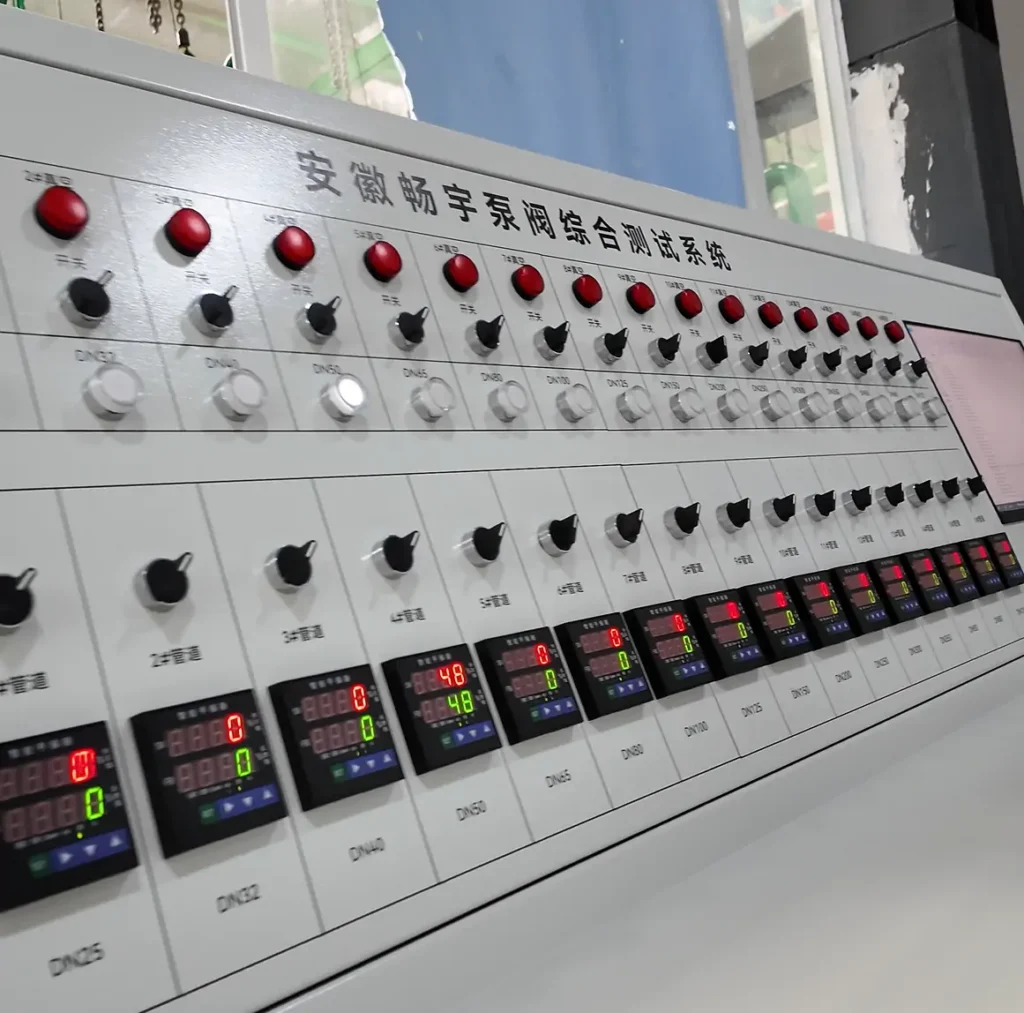
Cada bomba centrífuga para lodos Todos los productos que salen de la planta de fabricación de Changyu Pump se someten a un riguroso programa de control de calidad de varias etapas, diseñado para prevenir defectos antes de que se produzcan.
Verificación de materiales: Todas las materias primas que se reciben —incluidas las aleaciones con alto contenido de cromo, los aceros inoxidables de los grados 304, 316, 316L, 2205 y 2507, las resinas fluoroplásticas (FEP, PFA) y los compuestos de UHMW-PE— se someten a un análisis espectral para verificar que su composición química se ajusta a las especificaciones. Cada lote de material recibe una certificación documentada antes de su entrega a producción.
Inspección durante el proceso: Las dimensiones críticas de los impulsores, las carcasas, las placas de desgaste y los conjuntos de ejes se miden en relación con las tolerancias de diseño en cada etapa del mecanizado. El espesor del revestimiento se verifica mediante ensayos ultrasónicos para garantizar una cobertura uniforme y la ausencia de huecos.
Pruebas de rendimiento hidráulico: Cada bomba montada se somete a una prueba completa de rendimiento hidráulico comparándola con su curva publicada. Se registran el caudal, la altura manométrica, el consumo de energía y la eficiencia en múltiples puntos de funcionamiento, y se comparan con las especificaciones de diseño.
Auditoría del montaje final: Antes del embalaje, cada bomba se somete a una verificación del par de apriete de los pernos, una comprobación de la integridad de las juntas, una confirmación de la precarga de los cojinetes y una prueba de libre rotación del conjunto giratorio.
Lo que esto significa para usted: Cuando tu bomba centrífuga para lodos Cuando el equipo llega a las instalaciones con toda la documentación de calidad, puedes ponerlo en marcha con confianza, lo que reduce los retrasos en la puesta en marcha, las reclamaciones de garantía y el riesgo operativo asociado al uso de equipos no verificados.


10. Estudio de caso: Reducción del costo total de propiedad en una planta de procesamiento de minerales
Reto del cliente: Una planta de concentración de cobre en Sudamérica sufría fallos crónicos por desgaste en el bomba centrífuga para lodos Unidades que procesan lodos de alimentación de hidrociclones. Las bombas existentes, fabricadas en aleación con alto contenido de cromo, requerían el reemplazo del impulsor cada 4 a 5 meses y la sustitución completa de la parte húmeda cada 10 a 12 meses. Cada operación de reemplazo provocaba una interrupción de la producción de entre 8 y 12 horas. El costo anual combinado de las piezas de repuesto, la mano de obra de mantenimiento y la pérdida de producción se acercaba a los 55 000 dólares por bomba.
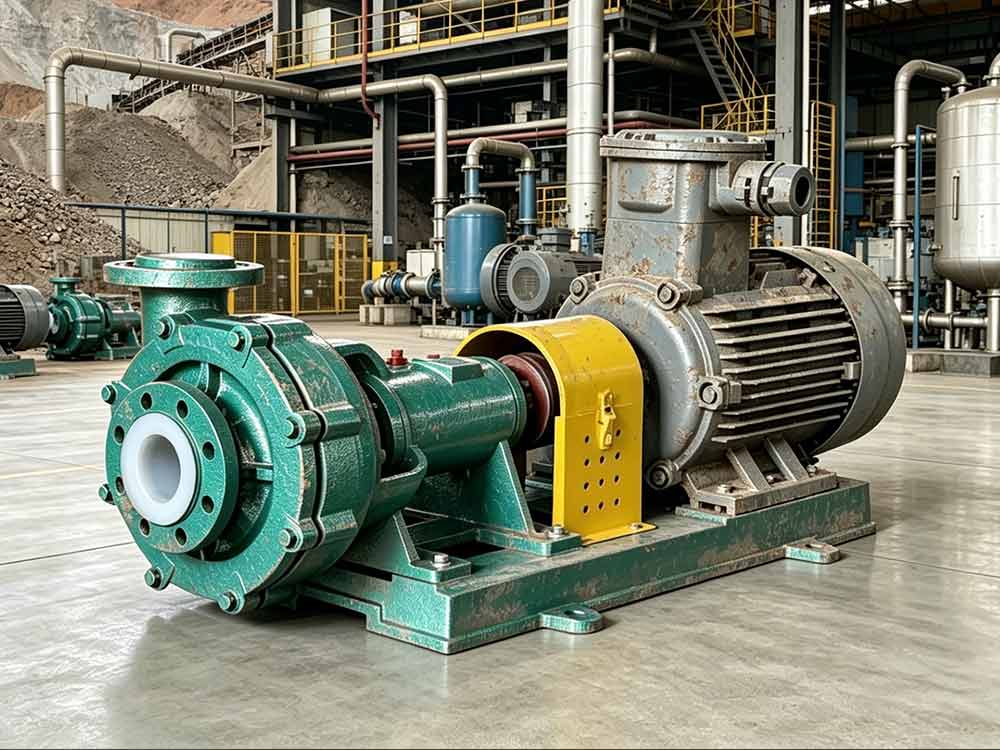
La solución de Changyu Pump: Tras analizar muestras de la suspensión (tamaño de partícula d50 = 280 μm, densidad = 1,45, pH = 6,8), los ingenieros de Changyu Pump determinaron que la bomba existente funcionaba a 1450 rpm con una velocidad en la punta del impulsor de 23 m/s, muy por encima del rango óptimo para esta aplicación abrasiva. La solución recomendada implicaba dos cambios: (1) reemplazar las unidades por la serie UHB de Changyu Pump bombas centrífugas para lodos funcionando a 1.200 rpm con revestimientos de UHMW-PE, lo que reduce la velocidad lineal a 19 m/s; y (2) la implementación de un programa estructurado de mantenimiento preventivo con ajustes trimestrales de la separación entre las puntas.
Resultados cuantificados: Tras 18 meses de funcionamiento ininterrumpido:
- La vida útil del impulsor se ha ampliado de 4 a 5 meses a más de 14 meses — una mejora del 180%+
- El costo anual de mantenimiento por bomba se redujo en aproximadamente 54%
- Las paradas de producción no planificadas se redujeron en más de un 651 %
- El consumo de energía se redujo en aproximadamente un 121 % debido a una velocidad de funcionamiento más baja
Desde entonces, la planta ha adoptado las bombas de la serie UHB de Changyu Pump para todas las aplicaciones de alimentación de hidrociclones. ¿Listo para obtener resultados similares? Envíe sus especificaciones a nuestro equipo de ingeniería para obtener un análisis detallado del costo total de propiedad (TCO).
11. Preguntas frecuentes (FAQ)
P1: ¿Qué es una bomba centrífuga para lodos?
R: A bomba centrífuga para lodos es una bomba centrífuga de alta resistencia diseñada específicamente para transportar mezclas abrasivas de sólidos y líquidos (lodos) en aplicaciones mineras, de procesamiento químico e industriales. Cuenta con carcasas reforzadas, piezas en contacto con el fluido resistentes al desgaste y conjuntos de cojinetes robustos para una vida útil prolongada.
P2: ¿Cómo funciona una bomba centrífuga para lodos?
R: A bomba centrífuga para lodos funciona mediante un impulsor giratorio que convierte la energía mecánica en energía cinética a través de fuerza centrífuga. El impulsor giratorio lanza la suspensión hacia afuera, generando una presión que impulsa la mezcla a través de la carcasa en espiral y hacia la tubería de descarga.
P3: ¿Cuál es la diferencia entre una bomba centrífuga para lodos y una bomba de desplazamiento positivo?
R: A bomba centrífuga para lodos genera flujo al aumentar la velocidad del fluido mediante un impulsor giratorio, lo que lo hace ideal para aplicaciones de alto caudal y altura de elevación moderada. A bomba de desplazamiento positivo mueve volúmenes fijos de lodo por ciclo, lo que lo hace más adecuado para fluidos de alta viscosidad (>800 cP) y aplicaciones a muy alta presión (>60 bar).
P4: ¿Cuáles son los principales tipos de bombas centrífugas para lodos?
R: Los principales tipos son horizontal, voladizo vertical, y sumergible configuraciones. Las bombas horizontales predominan en las aplicaciones de proceso; las bombas verticales se utilizan en sumideros y fosas; las bombas sumergibles se emplean en lugares profundos y de difícil acceso.
P5: ¿Cómo elijo la bomba centrífuga para lodos adecuada?
R: La selección se basa en un marco de seis pasos: caracterizar las propiedades de la suspensión (concentración de sólidos, tamaño de partícula, pH, temperatura, viscosidad), definir el punto de funcionamiento del sistema, calcular la velocidad límite de deposición, seleccionar la configuración y los materiales adecuados, evaluar el costo total de propiedad y solicitar curvas de rendimiento verificadas.
P6: ¿Qué materiales se utilizan en la fabricación de las bombas centrífugas para lodos?
R: Entre los materiales más comunes se encuentran hierro blanco con alto contenido en cromo (25-30% Cr, más de 600 BHN) para resistencia a la abrasión, caucho natural y poliuretano para partículas finas, acero inoxidable dúplex (CD4MCu) para la resistencia combinada a la corrosión y la abrasión, y revestimientos de plástico fluorado (PTFE, FEP, UHMW-PE) para entornos químicos agresivos.
P7: ¿Cómo se realiza el mantenimiento de una bomba centrífuga para lodos?
R: Válido Mantenimiento de bombas centrífugas para lodos incluye comprobaciones diarias de la temperatura y las vibraciones de los cojinetes, mediciones mensuales de la holgura del impulsor (distancia entre las alas), una inspección trimestral de la parte húmeda y un desmontaje completo anual. Es fundamental realizar un cambio adecuado del lubricante cada 2.000–3.000 horas.
P8: ¿Cuáles son los indicios de que una bomba centrífuga para lodos necesita mantenimiento?
R: Las señales de advertencia clave incluyen una disminución gradual del caudal o la presión (lo que indica erosión del impulsor o de la placa de desgaste), un aumento repentino de la vibración (obstrucción o cavitación), un aumento del consumo de energía (deterioro de los cojinetes), fugas visibles en las juntas y picaduras en el exterior de la carcasa.
12. Los seis criterios de selección de Changyu Pump Engineers para bombas centrífugas de lodos
Basándose en más de dos décadas de experiencia en el sector, los ingenieros de Changyu Pump recomiendan evaluar estos seis criterios antes de tomar una decisión definitiva sobre cualquier bomba centrífuga para lodos Especificaciones:
- Para trabajos abrasivos, es preferible utilizar una velocidad de funcionamiento baja. Operar a 1.200 rpm en lugar de a 1.450 rpm puede reducir el caudal en un 15%, pero reduce los índices de desgaste en más de un 30%. Seleccione siempre la velocidad más baja posible para su punto de trabajo.
- Cuantifique las seis propiedades de la lechada antes de seleccionar los materiales. La concentración de sólidos, la distribución del tamaño de las partículas, la densidad, el pH, la temperatura y la viscosidad influyen, cada uno por separado, en el diseño hidráulico y la compatibilidad de los materiales. La omisión de tan solo un parámetro puede reducir la vida útil prevista de la bomba en un 50 % o más.
- Calcule la velocidad límite de depósito antes de determinar el tamaño de la bomba. Operar por debajo del LDV provoca obstrucciones en las tuberías y un desgaste local acelerado; este es uno de los errores de selección más comunes y costosos.
- Solicite curvas de rendimiento corregidas para lodos, no solo curvas para agua. Aplica las correcciones del coeficiente de altura (HR: 0,85–0,95) y del coeficiente de rendimiento (ER: 0,80–0,90). Verifica que el punto de funcionamiento seleccionado se encuentre cerca del punto de máximo rendimiento (BEP).
- Evalúa el costo total de propiedad (TCO) a lo largo de 5 años, no solo el precio de compra. Tenga en cuenta los costos de energía (que representan entre el 60 % y el 70 % del costo total a lo largo de la vida útil), la frecuencia de sustitución de las piezas de desgaste, la mano de obra de mantenimiento y los costos por tiempo de inactividad. Una bomba económica que requiere revisiones trimestrales resulta mucho más costosa que una bomba de alta gama cuyo precio inicial es el doble, pero cuya vida útil es el triple.
- Elija el tipo de sellado que se adapte tanto a las propiedades de los lodos como a la disponibilidad de agua en el emplazamiento. Los sellos de expulsión eliminan la necesidad de agua de lavado, pero pierden eficacia por debajo del 50 % de la velocidad nominal. Los sellos mecánicos no presentan fugas, pero requieren agua de lavado limpia y constante, y son sensibles a la entrada de sólidos.
Conclusión
A bomba centrífuga para lodos no es un producto básico, sino un activo de producción fundamental cuya elección influye directamente en los costos operativos, el tiempo de actividad de la producción y la confiabilidad del proceso. La clave para maximizar el rendimiento de las bombas para lodos radica en la adaptación sistemática de la configuración de la bomba, la selección de materiales, el diseño hidráulico y las prácticas de mantenimiento a las propiedades específicas de los lodos y a las condiciones de operación. Esta guía ofrece el marco estructurado necesario para realizar esa adaptación con confianza.
Ya sea que esté seleccionando una nueva bomba para un proyecto de nueva construcción o buscando resolver fallas crónicas por desgaste en una instalación existente, el equipo de ingeniería de Changyu Pump está a su disposición para ayudarle en el proceso de selección con análisis técnicos, recomendaciones específicas para cada aplicación y cotizaciones detalladas.
Póngase en contacto con Changyu Pump hoy mismo para analizar sus necesidades en materia de manejo de lodos. Envíe sus parámetros operativos a nuestro equipo de ingeniería y le proporcionaremos una recomendación detallada sobre la bomba más adecuada, así como un presupuesto adaptado a su aplicación.