
Máy bơm ly tâm hút đầu là lựa chọn thực tế cho nhiều nhiệm vụ chuyển và tuần hoàn chất lỏng sạch. Đối với dịch vụ thép không gỉ, lựa chọn đúng phụ thuộc vào năm yếu tố: chất lỏng, lưu lượng yêu cầu, tổng cột áp, điều kiện hút và bố trí làm kín.
Bắt đầu với những chi tiết đó trước khi chọn động cơ hoặc so sánh giá cả. Động cơ lớn hơn không thể khắc phục cửa vào bị hạn chế. Hợp kim đắt tiền hơn không thể làm cho cánh bơm chất lỏng sạch phù hợp với bùn mài mòn.
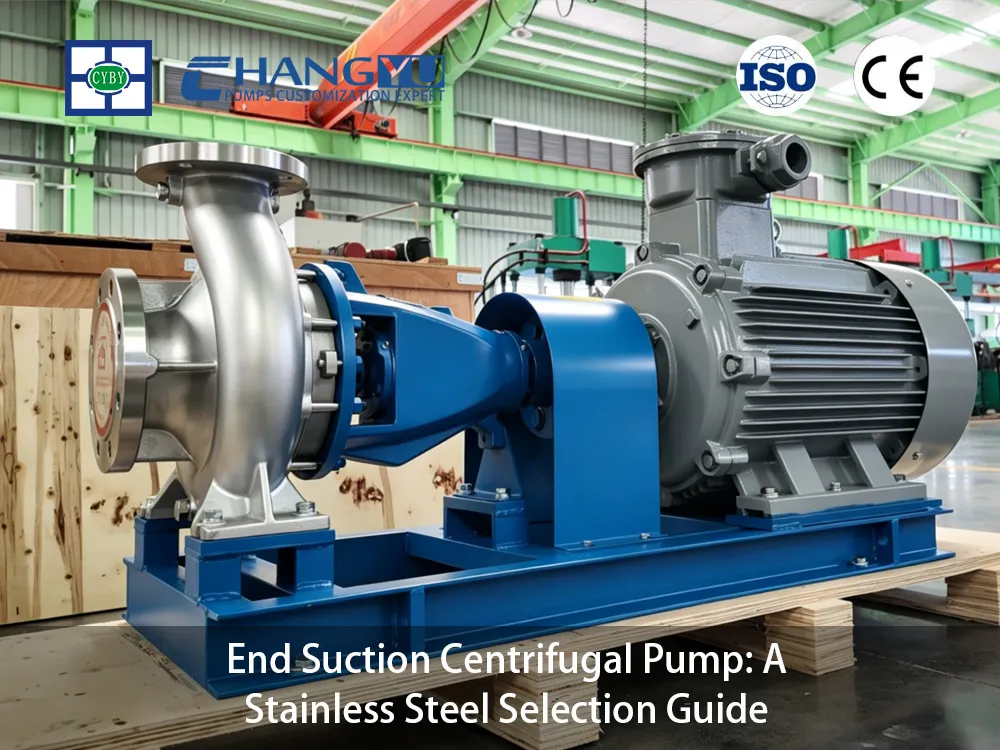
Hướng dẫn này giải thích các bố trí chính và phương pháp lựa chọn từng bước. Nó tập trung vào máy bơm công nghiệp thép không gỉ, với các điểm khởi đầu rõ ràng từ dải sản phẩm của Changyu.
Máy bơm ly tâm hút đầu là gì?
Máy bơm ly tâm hút đầu đưa chất lỏng vào cánh bơm dọc theo trục. Cánh bơm bổ sung năng lượng, và vỏ bơm hướng chất lỏng về phía cửa xả, thường vuông góc với cửa vào.
“Hút đầu” mô tả bố trí cửa vào. “Ly tâm” mô tả nguyên lý bơm. “Thép không gỉ” xác định lựa chọn vật liệu. Mỗi thuật ngữ trả lời một phần khác nhau của câu hỏi lựa chọn.
Bố trí này hữu ích khi lắp đặt nằm ngang phù hợp với nhà máy và chất lỏng phù hợp với cánh bơm và làm kín. CYA Máy bơm ly tâm một cấp nằm ngang CYA là thiết kế hút đầu cho chất lỏng sạch, sử dụng cánh bơm kín.
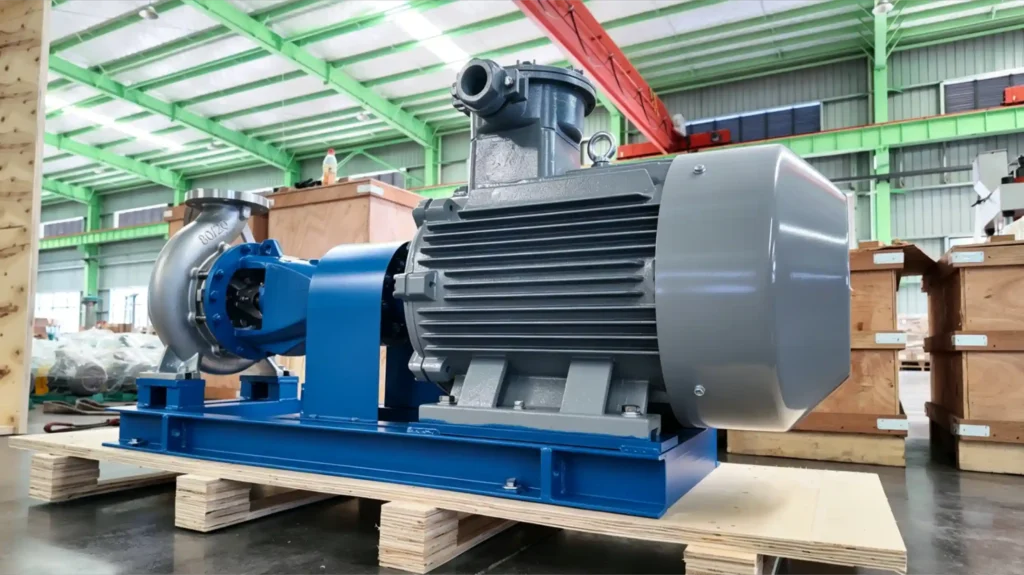
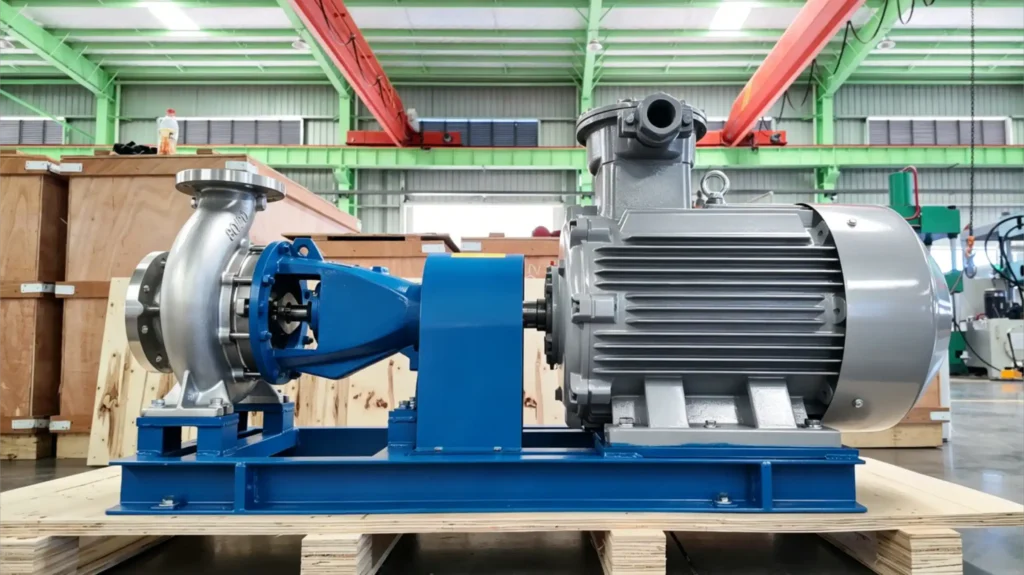
Sạch không nhất thiết có nghĩa là nước uống. Nó có nghĩa là chất lỏng đáp ứng giới hạn của máy bơm đã chọn về hạt và các chất ô nhiễm khác. Tương thích hóa học cần kiểm tra riêng.
So sánh các cấu hình máy bơm thép không gỉ chính
Chọn bố trí dựa trên chất lỏng, không gian có sẵn và nhu cầu bảo trì. Các tùy chọn sau đây không thể thay thế cho nhau, ngay cả khi dải lưu lượng trong catalogue của chúng trùng nhau.
| Cấu hình | Khi nào nên xem xét | Kiểm tra chính trước khi lựa chọn |
|---|---|---|
| Hút đầu ghép gần | Nhiệm vụ chất lỏng sạch với không gian lắp đặt hạn chế | Bố trí động cơ và khả năng tiếp cận để thay thế làm kín |
| Hút đầu gắn khung | Nhiệm vụ được hưởng lợi từ vòng bi bơm riêng và khớp nối | Căn chỉnh, hỗ trợ tấm đế và không gian tháo gỡ |
| Ly tâm quy trình hóa chất | Chuyển hóa chất tương thích yêu cầu làm kín và gói vật liệu chuyên dụng | Thành phần chất lỏng đầy đủ và nhu cầu hỗ trợ làm kín |
| Máy bơm bùn thép không gỉ | Chất lỏng ăn mòn chứa hạt mài mòn | Kích thước hạt, nồng độ, lối đi cánh bơm và mài mòn |
| Ly tâm thẳng hàng hoặc vỏ tách | Dự án nơi bố trí đường ống hoặc yêu cầu lưu lượng lớn hơn ưu tiên bố trí khác | Đường cong nhiệm vụ thực tế, diện tích chiếm chỗ và tiếp cận bảo trì |
Máy bơm ly tâm hút đầu có thể ghép gần hoặc ghép riêng. Máy bơm quy trình hóa chất cũng có thể sử dụng bố trí hút đầu. Những mô tả này trùng lặp; chúng không phải là các cấp hiệu suất riêng biệt.
Cũng phân biệt ghép gần từ cánh bơm kín. Ghép gần mô tả kết nối với động cơ. Cánh bơm kín mô tả chính cánh bơm.
Đối với yêu cầu Changyu, bắt đầu với CYA cho chuyển chất lỏng sạch, CYH cho nhiệm vụ quy trình hóa chất, và HB để đánh giá bùn mài mòn. Lựa chọn model cuối cùng vẫn tuân theo điều kiện vận hành.
Hướng dẫn của chúng tôi về stainless steel industrial centrifugal pump types extends this comparison to magnetic-drive, self-priming, vertical immersed and slurry-service configurations.
Đặt lưu lượng và tổng cột áp cùng nhau
Máy bơm ly tâm hút đầu cần một điểm nhiệm vụ: lưu lượng xác định tại cột áp xác định. Yêu cầu “máy bơm 30 mét” để lại công suất yêu cầu chưa được giải quyết.
Đối với chuyển theo lô, bắt đầu với thể tích và thời gian. Di chuyển 12 mét khối trong 30 phút yêu cầu lưu lượng trung bình 24 mét khối mỗi giờ. Sau đó kiểm tra xem quy trình có cần tốc độ đó trong suốt lô hay cho phép thay đổi.
Tổng cột áp động bao gồm chênh lệch mức chất lỏng, chênh lệch áp suất bình chứa và tổn thất qua đường dòng chảy. Đường ống, khúc cua, van, bộ lọc và bộ trao đổi nhiệt đều đóng góp.
Xem xét ví dụ đơn giản hóa này cho hai bể hở:
- Chênh lệch giữa các mức chất lỏng liên quan: 10 mét.
- Tổn thất đường ống và phụ kiện tại lưu lượng yêu cầu: 8 mét.
- Tổn thất bộ lọc tại điều kiện đã chọn: 4 mét.
- Cột áp nhiệm vụ tính toán: khoảng 22 mét, với chênh lệch cột áp vận tốc không đáng kể.
Đây là một ví dụ minh họa, không phải khuyến nghị chọn model. Nếu bể nhận có áp suất, hãy cộng thêm chênh lệch áp suất đó vào cột áp của chất lỏng thực tế. Nếu bộ lọc bị bẩn, cũng cần tính toán cho trường hợp đó.
- Mẹo thực tế: cung cấp cho nhà cung cấp các điều kiện vận hành bình thường, tối thiểu và tối đa. Tránh thêm biên an toàn tùy ý vào mọi thông số đầu vào; nhiều biên an toàn ẩn có thể tạo ra một máy bơm bị quá lớn nghiêm trọng.
Kiểm tra đường đặc tính máy bơm ly tâm hút đầu cuối
Máy bơm hoạt động tại điểm mà đường đặc tính của nó giao với đường đặc tính hệ thống. Lưu lượng tối đa và cột áp tối đa trong catalogue thường là các điểm khác nhau. Bạn không thể giả định cả hai xảy ra đồng thời.
Yêu cầu cung cấp đường đặc tính được đánh dấu với điều kiện vận hành bình thường và dải dự kiến của bạn. Kiểm tra vị trí của các điểm đó so với điểm hiệu suất tốt nhất và vùng vận hành cho phép của nhà sản xuất.
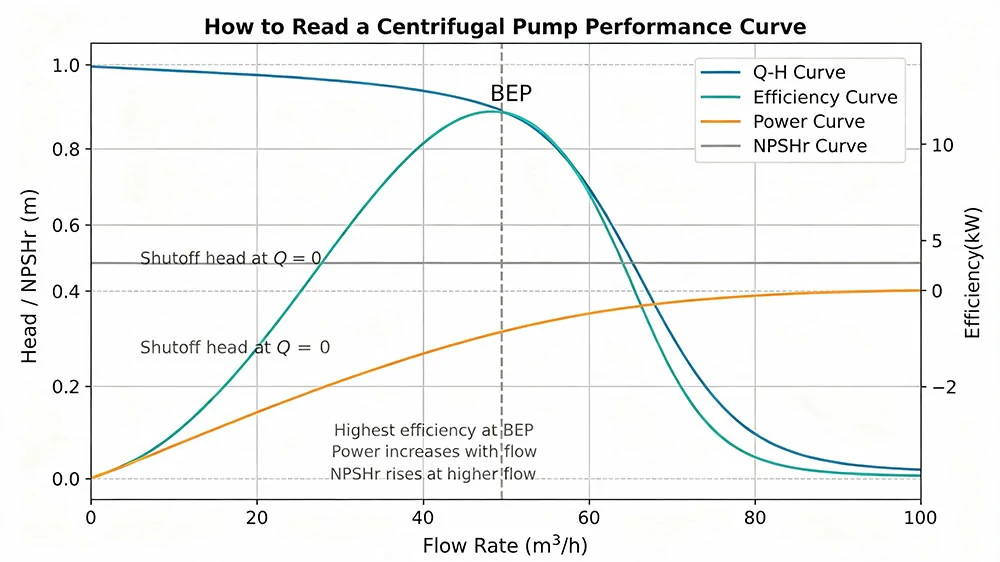
The Câu hỏi thường gặp về máy bơm của Hydraulic Institute giải thích các khái niệm về đường đặc tính và vùng vận hành này. Chúng giúp chuyển việc so sánh catalogue thành kiểm tra cách máy bơm sẽ thực sự vận hành.
Nếu một máy bơm ly tâm hút đầu cuối sẽ chạy phần lớn thời gian trong ngày ở lưu lượng thấp, đừng chỉ chọn nó dựa trên nhu cầu đỉnh ngắn hạn. Hãy thảo luận về một model nhỏ hơn, đường kính cánh bơm phù hợp, hoặc điều khiển tốc độ tùy theo điều kiện vận hành cho phép.
Đối với vận hành tốc độ biến đổi, hãy kiểm tra toàn bộ dải tốc độ. Lưu lượng tối thiểu, làm mát động cơ, điều kiện phớt và cột áp tĩnh của hệ thống vẫn rất quan trọng.
Một báo giá hữu ích bao gồm đường đặc tính, đường kính cánh bơm, tốc độ, công suất tiêu thụ và yêu cầu hút. Chỉ có số model và công suất động cơ là không đủ để so sánh công bằng hai đề nghị.
Xác nhận điều kiện hút trước khi tăng cỡ động cơ
Máy bơm ly tâm hút đầu cuối bằng thép không gỉ phải nhận đủ chất lỏng tại cửa vào. Hút kém có thể gây tiếng ồn, dòng chảy không ổn định, rung động và hư hỏng ngay cả khi điều kiện xả trông có vẻ đúng.
Kiểm tra then chốt là cột áp hút dương ròng, hay NPSH. Hệ thống lắp đặt cung cấp NPSH khả dụng. Máy bơm có yêu cầu NPSH tại lưu lượng và tốc độ đã chọn. Cần có biên an toàn phù hợp giữa hai giá trị này.
Để tham khảo, hãy sử dụng Công cụ Dữ liệu của Hydraulic Institute cùng với dữ liệu của máy bơm đã chọn. Chỉ khớp với một giá trị yêu cầu đã công bố không thiết lập được biên an toàn phù hợp cho mọi ứng dụng.
Xem xét điều kiện khắt khe nhất có thể xảy ra:
- Mức thấp nhất của bể cấp.
- Nhiệt độ chất lỏng cao nhất và áp suất hơi của nó.
- Bất kỳ chân không nào trong bình cấp.
- Tổn thất đường ống hút, bao gồm lưới lọc bị bẩn.
- Rò rỉ khí, cuốn khí và độ ngập của cửa ra bể.
Một máy bơm hoạt động tốt với bể đầy, mát có thể gặp khó khăn gần cuối một mẻ ấm. Hạ thấp máy bơm, giảm tổn thất đầu vào, hoặc điều chỉnh điều kiện vận hành có thể giúp ích khi tính toán hỗ trợ điều đó.
Máy bơm ly tâm hút đầu cuối tiêu chuẩn không tự động mồi. Nếu mức chất lỏng thấp hơn cửa vào, hãy mô tả chiều cao hút và bố trí mồi trước khi đặt hàng.
Chọn thép không gỉ và phớt cơ khí cùng nhau
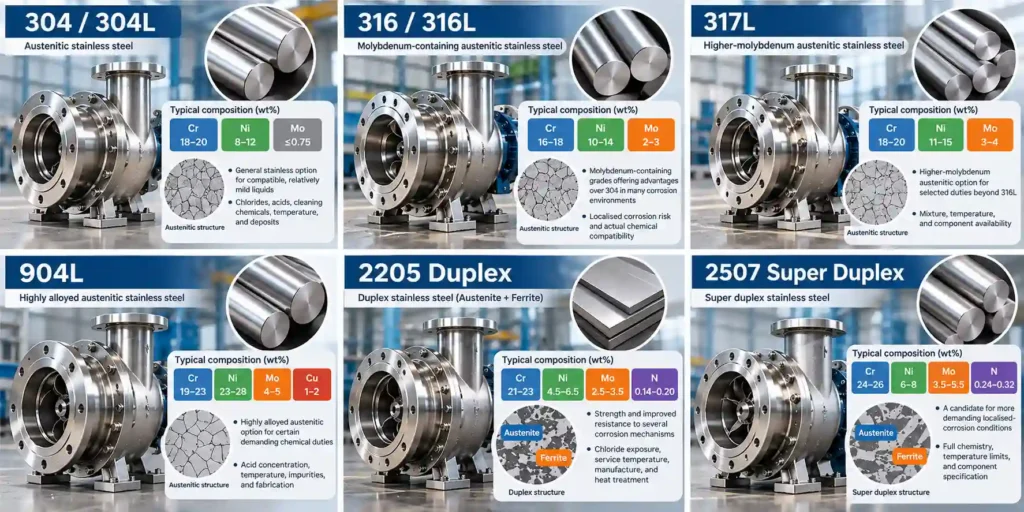
“Kết cấu thép không gỉ” là quá chung chung cho một đặc tả mua hàng. Hãy liệt kê vật liệu của thân bơm, cánh bơm, ống lót trục, mặt phớt, gioăng O-ring và đệm tiếp xúc với chất lỏng.
Thông tin sản phẩm CYA của Changyu bao gồm các lựa chọn 304, 316 và 316L. bộ sưu tập bơm ly tâm thép không gỉ cung cấp cái nhìn rộng hơn về các dòng máy bơm và lựa chọn vật liệu. Tính sẵn có phụ thuộc vào model và linh kiện.
Sử dụng thành phần chất lỏng đầy đủ, nồng độ, nhiệt độ và điều kiện vệ sinh để chọn hợp kim. Clorua, cặn lắng và tạp chất có thể thay đổi kết quả. Chuyển từ 304 sang 316L không phải là giải pháp chống ăn mòn phổ quát.
Đối với phớt cơ khí, hãy chỉ định vật liệu mặt phớt và elastomer tương thích. Xác nhận liệu điều kiện vận hành có cần xả rửa, làm mát hoặc một bố trí hỗ trợ khác hay không.
Tài liệu bảo trì của Changyu nhấn mạnh chạy khô, làm mát kém, rung động, hạt rắn và xả rửa bị tắc là các nguyên nhân có thể gây hỏng phớt. Nếu phớt hỏng lặp lại, hãy điều tra các điều kiện đó trước khi đặt lại cùng loại phớt thay thế.
Mẹo thực tế: yêu cầu một bảng vật liệu linh kiện đính kèm báo giá. Điều này giúp dễ phát hiện thân bơm phù hợp đi kèm với đệm hoặc linh kiện phớt không phù hợp.
Chọn động cơ và chừa chỗ cho bảo trì
Công suất động cơ theo sau lựa chọn thủy lực và tính chất chất lỏng. Khối lượng riêng ảnh hưởng đến công suất cần thiết cho một lưu lượng và cột áp nhất định. Độ nhớt cũng có thể thay đổi hiệu suất và tính năng.
Ví dụ minh họa, điều kiện vận hành 40 mét khối mỗi giờ tại cột áp 35 mét, với khối lượng riêng 900 kilôgam trên mét khối và hiệu suất máy bơm 60%, cần khoảng 5,7 kW công suất trục.
Công thức tính sử dụng khối lượng riêng × trọng lực × lưu lượng × cột áp ÷ hiệu suất, với lưu lượng tính bằng mét khối trên giây. Lựa chọn động cơ cuối cùng phải bao phủ dải vận hành đã phê duyệt, tổn thất truyền động và các yêu cầu dịch vụ áp dụng. Ví dụ này không phải là khuyến nghị chọn cỡ CYA.
Trước khi lắp đặt máy bơm ly tâm hút đầu cuối, hãy kiểm tra bản vẽ bảo trì. Kết cấu tháo kéo ra sau có thể đơn giản hóa việc bảo dưỡng, nhưng chỉ khi có đủ không gian để tháo cụm quay. Xác nhận liệu động cơ có phải di chuyển và liệu có bao gồm khớp nối đệm hay không.
Đỡ đường ống độc lập. Kiểm tra căn chỉnh, chiều quay, bôi trơn, mồi và mức sẵn sàng hỗ trợ phớt theo hướng dẫn được cung cấp.
Sau khi chạy thử nghiệm thu, ghi lại lưu lượng, áp suất, dòng điện và tình trạng phớt bình thường. Đường cơ sở đó giúp đội của bạn nhận ra lưới lọc bị tắc hoặc thay đổi quy trình trước khi thay thế thiết bị còn tốt.
Chuẩn bị một yêu cầu chọn máy hữu ích
Đối với báo giá máy bơm ly tâm hút đầu cuối, hãy gửi một bảng điều kiện vận hành mà cả bộ phận mua hàng và vận hành đều có thể phê duyệt:
- Thành phần chất lỏng, nồng độ và bảng dữ liệu an toàn hiện có.
- Dải nhiệt độ, khối lượng riêng, độ nhớt và thông tin hạt rắn.
- Lưu lượng bình thường và tối đa, kèm tổng cột áp đã tính.
- Mức bể, áp suất bình chứa và chi tiết đường ống hút.
- Hợp kim đề xuất, nhu cầu phớt và yêu cầu tài liệu vật liệu.
- Nguồn điện, phân loại khu vực nếu có liên quan và phương pháp điều khiển.
- Kích thước kết nối, bản vẽ lắp đặt, giờ vận hành và không gian bảo trì.
Đối với việc thay thế, hãy thêm model của bơm cũ và các số đo vận hành thực tế. Giải thích lý do thay thế. Sao chép bảng tên có thể lặp lại vấn đề chọn kích cỡ nếu quy trình đã thay đổi.
Câu hỏi thường gặp
Bơm ly tâm hút đầu có phù hợp cho dịch vụ hóa chất bằng thép không gỉ không?
Có, khi chất lỏng, hợp kim, phớt và điều kiện vận hành phù hợp với model đã chọn. Hút đầu mô tả bố trí cửa vào; nó không xác lập khả năng chống ăn mòn hóa học. Cung cấp đầy đủ hỗn hợp và dải nhiệt độ để có thể đánh giá toàn bộ cụm tiếp xúc ướt.
Loại nào tốt hơn: ghép gần hay lắp trên khung?
Chọn kết cấu ghép gần khi bố trí nhỏ gọn và phương pháp bảo trì của nó phù hợp với nhà máy. Cân nhắc kết cấu lắp trên khung khi vòng bi riêng, bố trí động cơ hoặc lối tiếp cận bảo trì hữu ích. So sánh bản vẽ lắp đặt thực tế và quy trình thay thế trước khi quyết định.
Bơm ly tâm hút đầu có thể xử lý bùn không?
Không nên giả định model dành cho chất lỏng sạch là phù hợp. Các hạt có thể chặn đường dẫn cánh bơm, mài mòn chi tiết và làm hỏng phớt. Chỉ định kích thước hạt, nồng độ, độ cứng và đặc tính lắng. Cấu hình bùn thép không gỉ chuyên dụng có thể là điểm khởi đầu tốt hơn.
Bơm này có tự mồi không?
Mặc định là không. Bơm ly tâm hút đầu thông thường cần bố trí mồi đúng trước khi khởi động. Nếu phải nâng chất lỏng từ dưới cửa vào, hãy cung cấp chi tiết bể chứa và đường ống để kiểm tra đồng thời khả năng mồi và hiệu suất hút.
Tại sao bơm mất lưu lượng khi bể cạn?
Áp suất cửa vào giảm theo mức chất lỏng. Sau đó, không khí lọt vào hoặc hóa hơi có thể làm giảm hiệu suất. Kiểm tra mức tối thiểu, độ ngập, nhiệt độ, hạn chế hút và điểm vận hành. Động cơ lớn hơn không loại bỏ các nguyên nhân này.
Điều gì quan trọng nhất khi so sánh báo giá?
So sánh cùng điểm làm việc, đường cong, danh mục vật liệu, bố trí phớt, cơ sở động cơ và lối tiếp cận bảo trì. Kiểm tra các giả định và giới hạn vận hành trong từng đề nghị. Giá mua thấp nhất chỉ hữu ích khi cấu hình được cung cấp phù hợp với dịch vụ.
Thảo luận về nhiệm vụ bơm thép không gỉ của bạn
Cần hỗ trợ chọn bơm ly tâm hút đầu? Chia sẻ chất lỏng, lưu lượng, cột áp, nhiệt độ và bố trí bể chứa của bạn trong biểu mẫu bên dưới. Bắt đầu với Chi tiết sản phẩm CYA, hoặc liên hệ Changyu để thảo luận về một cấu hình thép không gỉ khác.
Email: [email protected]
TEL/WA: +86-13651913727
Về tác giả và nguồn
Được chuẩn bị bởi Jade, Changyu Pump. Hướng dẫn này dựa trên thông tin sản phẩm Changyu và tài liệu bảo trì được cung cấp, với các tài liệu tham khảo thủy lực độc lập được liên kết trong các phần liên quan. Các ví dụ số chỉ mang tính minh họa. Lựa chọn cuối cùng phụ thuộc vào nhiệm vụ dự án và thông số kỹ thuật thiết bị đã xác nhận.
- Thông tin sản phẩm Changyu CYA: kết cấu và tùy chọn vật liệu.
- Dải bơm thép không gỉ Changyu: các dòng sản phẩm và lựa chọn vật liệu.
- Câu hỏi thường gặp về bơm của Hydraulic Institute: đường cong, vùng vận hành và hướng dẫn hút.
- Công cụ Dữ liệu của Hydraulic Institute: nền tảng kỹ thuật bơm và hệ thống.