
Project Overview
An established pharmaceutical company in India (hereinafter referred to as “the customer”) specializes in the production of active pharmaceutical ingredients (API) and pharmaceutical intermediates.
During the API synthesis process, the customer needed to continuously transfer highly corrosive reaction liquids, including concentrated sulfuric acid (H₂SO₄) and hydrochloric acid (HCl). These chemical media are extremely corrosive, with operating temperatures up to 120°C, requiring a reliable high-temperature sulfuric acid pump with excellent corrosion resistance, stable performance, and long service life.
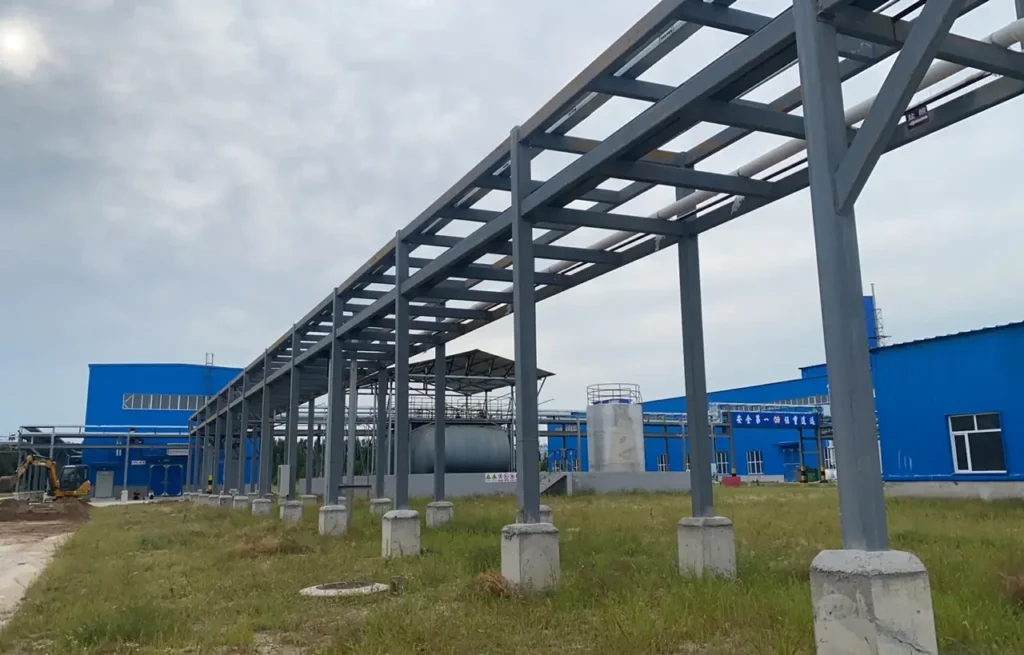
Previously, the customer used imported chemical pumps for this critical process. However, the existing pumps frequently suffered from mechanical seal leakage, corrosion damage of wetted components, and performance degradation under high-temperature operating conditions.
These failures resulted in an average of 4-6 unexpected shutdowns per month for maintenance. In addition to production losses, acid leakage created significant safety risks and increased environmental compliance pressure.
The customer contacted Changyu Pump through our independent website. After detailed communication and technical evaluation, our engineering team identified the main problems affecting the existing acid transfer system and provided a customized solution based on the CYF Series fluoroplastic-lined centrifugal pump.
Challenges Faced by the Customer
Frequent seal failures and media leaks: The mechanical seals in the original pump had an extremely short service life in high-temperature, strong-acid environments, leaking after an average of only 300 hours of operation. This resulted in the waste of expensive raw materials and posed a risk of environmental pollution.
- Severe corrosion of flow-through components: The materials used for the pump body and impeller could not withstand long-term corrosion from mixed acids, leading to pitting and perforation. The average replacement cycle was less than six months, resulting in persistently high maintenance costs.
- Performance Degradation Under High-Temperature Conditions: When pumping concentrated sulfuric acid at 120°C, the original pump’s efficiency dropped by more than 15%, failing to meet the process requirements for constant flow rate and head, which affected reaction yield.
- Long Lead Times for Spare Parts: Key spare parts were dependent on imports, with procurement lead times as long as 8–12 weeks. This resulted in extremely long downtime in the event of a production line failure, severely disrupting production schedules.
- Safety and Environmental Compliance Risks: Leaking acidic media not only corrodes workshop infrastructure but also poses a direct threat to operator health, making it difficult to pass increasingly stringent EHS (Environment, Health, and Safety) audits.
We Investigated the Issues
Our technical team did not stop at the operating parameters provided by the client. We proactively initiated a “Remote In-Depth Diagnosis” service:
- Video-Based On-Site Inspection: Through high-definition video calls, we had the client’s engineers record footage of the pump’s operating condition, details of the leak points, pipeline vibration, and the actual on-site installation environment.
- Collection of Historical Data via Email: We requested that the client provide maintenance records from the past 12 months, spare parts replacement lists, pump operating logs (including flow, pressure, and temperature curves), and medium sample analysis reports from the time of the failure.
- Operating Condition Simulation and Calculations: Based on the collected data, we used CFD (Computational Fluid Dynamics) software to simulate the characteristics of the customer’s actual piping network. We discovered that the original pump’s selection parameters deviated significantly from the system’s actual requirements, causing the pump to operate in the low-efficiency zone for an extended period and exacerbating cavitation and vibration.
Our Proposed Solution
- In response to the identified issues, we proposed an integrated solution comprising “Material Upgrade + Structural Optimization + Precise Pump Selection”:
- Perfluorinated Material Lining: We recommend the CYF series, in which all flow-through components are made of steel-lined FEP (perfluoroethylene-propylene). FEP is resistant to virtually all strong acids, strong alkalis, and organic solvents, and maintains excellent chemical stability and mechanical strength across a wide temperature range of -20°C to 180°C, completely eliminating corrosion issues.
- Leak-Free Structural Design: The CYF series employs an externally mounted bellows mechanical seal, combined with a static sealing point design, which structurally eliminates the dynamic sealing leakage points found in traditional shaft seals, ensuring “zero leakage” under high-pressure and high-temperature operating conditions.
- Precise Hydraulic Model Matching: We have optimized the hydraulic model of the CYF series pumps based on customers’ actual pipeline network resistance curves, ensuring they operate within the optimal efficiency range at the specified operating conditions (flow rate and head), thereby preventing cavitation and vibration and significantly enhancing operational stability.
- Modular Quick-Repair Design: The CYF series features a pull-back design that allows for quick replacement of the impeller and mechanical seal without disassembling the inlet and outlet piping, reducing on-site maintenance time from the original 8 hours to less than 1 hour.
Recommended Pump Model
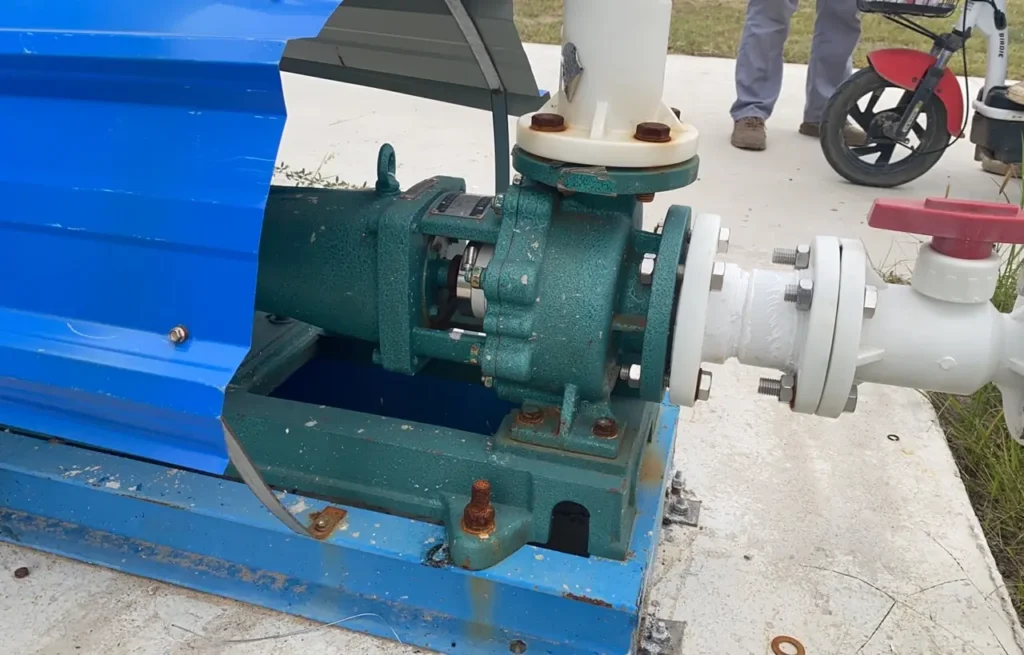
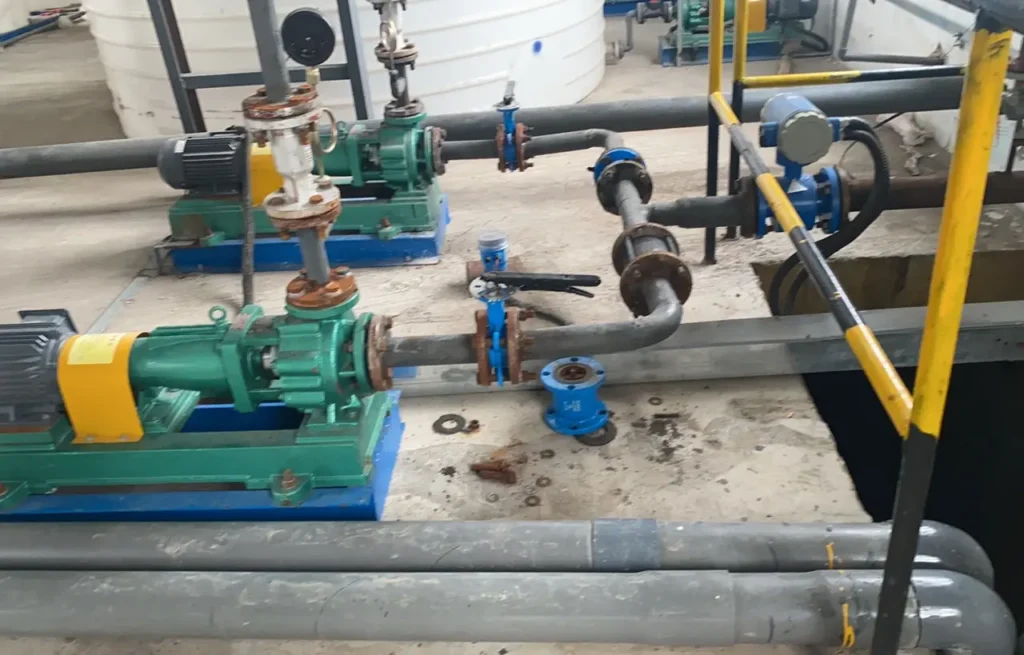
We customized and recommended Changyu Pump CYF Series Hydrochloric Acid Centrifugal Transfer Pump for the customer according to their actual operating conditions.
CYF Parameter Information
| Parameter | Customer Customized Value |
|---|---|
| Model | CYF 80-65-160 |
| Flow Rate | 50 m³/h |
| Head | 45 m |
| Motor Power | 15 kW |
| Speed | 2900 r/min |
| Medium Temperature | 120℃ |
| Wetted Parts Material | Steel-lined FEP |
| Sealing Type | External-mounted bellows mechanical seal |
Comparison Before and After Use
| Comparison Item | Before Improvement (Original Imported Pump) | After Improvement (Changyu CYF Series) |
|---|---|---|
| Mean Time Between Failures (MTBF) | Approx. 300 hours | More than 8,000 hours |
| Replacement Cycle of Wetted Parts | 6 months | More than 3 years |
| Seal Leakage Frequency | 1–2 times per month | Zero leakage |
| Maintenance Downtime per Time | 8 hours | 1 hour |
| Annual Maintenance Cost | Approx. USD 120,000 | Approx. USD 15,000 |
| Pump Operating Efficiency | Below 60% | Stable above 78% |
Changyu Engineers’ Optimization Recommendations for This Operating Condition
Based on the successful experience from this project and years of industry expertise, the Changyu Pump technical team offers the following professional recommendations for the transfer of active pharmaceutical ingredient (API) synthesis reaction solutions (containing sulfuric acid and hydrochloric acid):
- Material selection is key; do not sacrifice service life for cost savings. For high-temperature reaction solutions containing hydrochloric acid and sulfuric acid, we strongly recommend using pump bodies lined with PFA or FEP. Avoid using 304/316L stainless steel (which is highly susceptible to stress corrosion cracking in chloride-ion environments). Although the initial purchase cost is slightly higher, the total cost of ownership is far lower than that of frequently replacing metal pumps.
- For information on choosing materials, please read this article: https://changyupump.com/blog/chemical-pump-material-selection-guide/
- Sealing solutions must be tailored to specific conditions: If the pumped medium contains substances prone to crystallization or small amounts of solid particles, we recommend using a double-face cartridge-type mechanical seal equipped with an external flushing system to prevent particles from entering the sealing faces and causing seal failure. For clean acidic liquids, a single-face bellows seal may be selected to reduce costs.
- Pay attention to Net Positive Suction Head (NPSH) matching: The outlet of a synthetic API reactor is often under negative or low pressure. When selecting a pump, it is essential to verify that the pump’s required Net Positive Suction Head (NPSHr) is less than the system’s available Net Positive Suction Head (NPSHa) to prevent impeller damage and increased vibration caused by cavitation. It is recommended to install a sufficiently long straight pipe section at the pump inlet and minimize the number of elbows.
- For details on the calculation method, please read this article:https://changyupump.com/blog/how-to-calculate-centrifugal-pump-efficiency/
- Temperature management must not be overlooked: When the medium temperature exceeds 120°C, it is recommended to select a bearing housing design with a cooling jacket to prevent high temperatures from being conducted through the shaft to the bearings and motor, which could affect equipment lifespan. Additionally, fluoroplastics have a high coefficient of linear expansion in high-temperature environments, so thermal expansion clearance must be provided during installation.
- Preventive maintenance is preferable to emergency repairs after a failure: It is recommended to establish a regular inspection system, focusing on three key indicators: motor current, bearing temperature, and seal leakage detection ports. Checking the clearance between the impeller and the wear ring every six months and replacing the mechanical seal’s rotating and stationary rings once a year (depending on operating conditions) can effectively prevent unplanned downtime due to sudden failures.
- Spare Parts Stockpiling Should Be Targeted: We recommend that customers establish a minimum safety stock for wear-prone parts (mechanical seals, bearings, O-rings) to avoid prolonged production line downtime caused by lengthy spare parts procurement cycles (especially for cross-border procurement). Our company can provide customized spare parts package solutions to ensure that critical spare parts are shipped within 72 hours.

Conclusion
In the synthesis and production of active pharmaceutical ingredients (APIs), the transfer of highly corrosive reaction solutions—such as sulfuric acid and hydrochloric acid—is an extremely challenging process step. The Changyu Pump CYF Series fluoroplastic-lined centrifugal pumps, with their exceptional corrosion resistance (steel lined with FEP/PFA/PTFE), wide temperature range (-20°C to 180°C), and reliable leak-free seal design, have successfully helped an Indian client resolve a series of pain points—including corrosion-induced failure of metal pumps, frequent leaks, and high maintenance costs—enabling safe, stable, and efficient production operations.
This case study fully demonstrates that the CYF Series is the ideal solution for transporting synthesis reaction liquids in the active pharmaceutical ingredient (API) manufacturing sector—it not only ensures process safety but also reduces overall operating costs, helping pharmaceutical companies achieve high-quality, sustainable production goals.
Email: [email protected]
TEL/WA: +86-13651913727