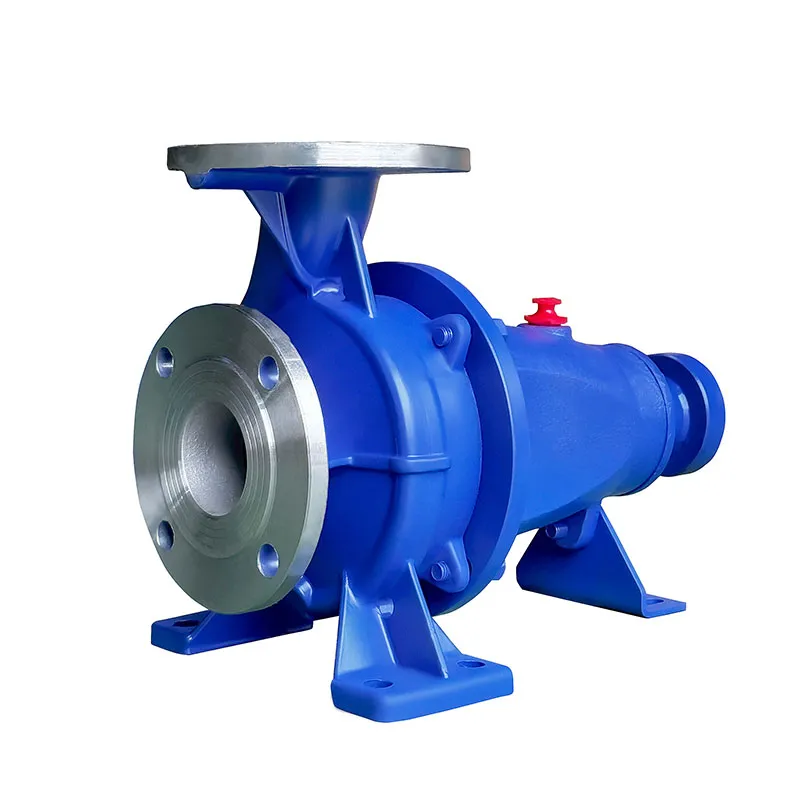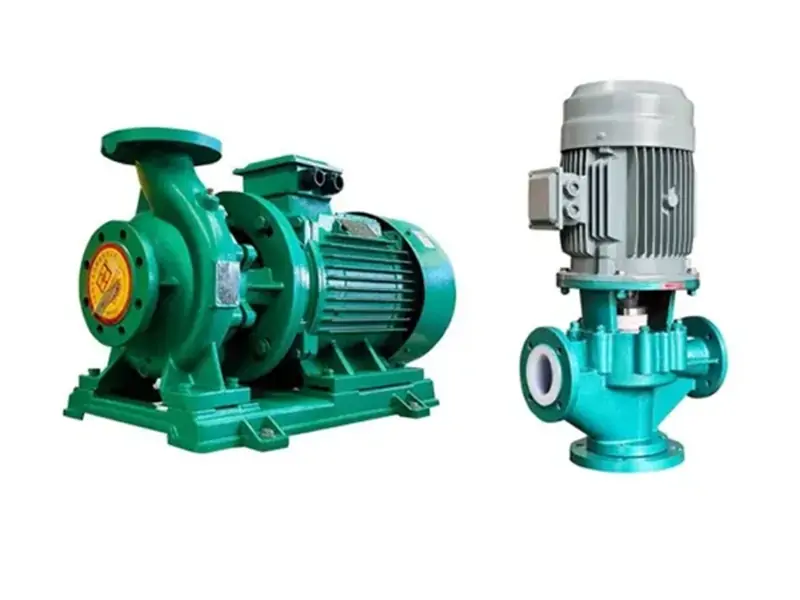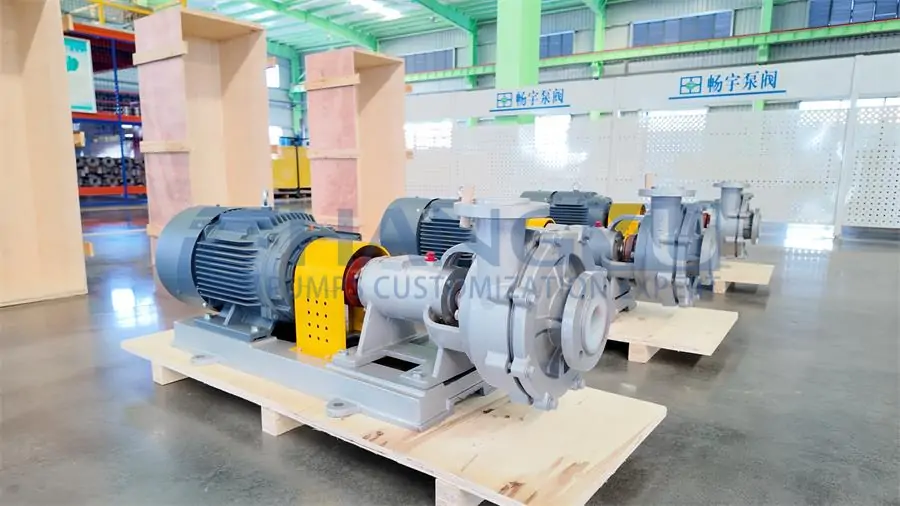
Bombas industriais desempenham um papel fundamental em vários processos químicos, onde são responsáveis pelo transporte de fluidos de forma precisa e eficiente. Compreender como calcular a potência do veio e como selecionar um motor adequado é essencial para otimizar o desempenho da bomba e garantir a fiabilidade operacional a longo prazo.
Abaixo está um resumo do método de cálculo da potência do veio da bomba industrial, juntamente com as principais referências para selecionar um motor adequado.
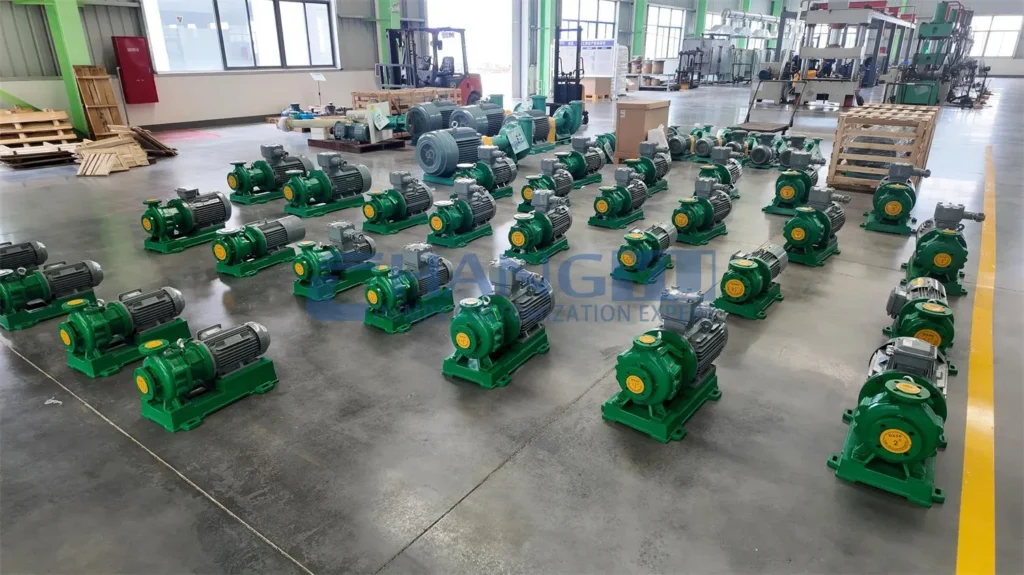
Método de cálculo da potência do veio de uma bomba industrial
Potência hidráulica
A potência hidráulica, também conhecida como cavalo-de-água, refere-se à energia útil obtida pelo fluido por unidade de tempo à medida que passa pela bomba. Representa o trabalho efetivo realizado pela bomba sobre o líquido. A potência hidráulica pode ser calculada utilizando a fórmula:
Pe = ρgQH
Onde Pe é a potência hidráulica (W), Q é o caudal (m³/s), H é a cabeça (m), ρ é a densidade do fluido (kg/m³), e g é a aceleração gravitacional (m/s²).
Potência do veio
A potência do veio é a potência transmitida do motor principal (motor) para o veio da bomba. Inclui a potência hidráulica mais todas as perdas internas da bomba. A potência do veio pode ser calculada dividindo a potência hidráulica pelo rendimento da bomba:
P = Pe / η
Onde P é a potência do veio (W), Pe é a potência hidráulica (W), e η é a eficiência da bomba(que inclui perdas mecânicas, perdas volumétricas e perdas hidráulicas).
Potência do motor
A potência do motor refere-se à potência nominal do motor utilizado para acionar a bomba. A potência necessária do motor deve ter em conta a potência do veio, a eficiência da bomba e a eficiência do motor. A fórmula de cálculo é:
P_motor = P / η_motor × K
Onde P_motor é a potência do motor (W), η_motor é o rendimento do motor (normalmente 0,85-0,95), e K é o fator de segurança (normalmente 1,1-1,25, sendo recomendados valores mais elevados para motores de pequena potência).
Parâmetros-chave no cálculo da potência do veio da bomba industrial
| Parâmetro | Significado físico | Base de cálculo | Unidade |
| Potência hidráulica | Potência útil obtida pelo fluido | Caudal × Altura × Densidade do fluido | kW |
| Potência do veio | Potência total de entrada no veio da bomba | Potência hidráulica ÷ Eficiência da bomba | kW |
| Potência do motor | Potência nominal de saída do motor | Potência do veio ÷ Eficiência do motor × Fator de segurança | kW |
Perdas de eficiência que afectam o cálculo da potência do veio da bomba industrial
1. Trajeto de transmissão de energia
Energia eléctrica → Potência do motor → Potência do veio → Potência hidráulica → Energia dos fluidos
2. Perdas de eficiência
- Perdas de eficiência do motor (perda de cobre, perda de ferro)
- Perdas mecânicas da bomba (fricção da chumaceira)
- Perdas volumétricas da bomba (fugas internas)
- Perdas hidráulicas da bomba (resistência à passagem do caudal)
3. Princípios fundamentais
A potência do motor deve ser 1,1-1,25 vezes superior à potência do veio necessária, tendo também em conta as flutuações da tensão da rede eléctrica e o impacto da corrente de arranque. Na seleção prática, as curvas de desempenho da bomba e as curvas de eficiência do motor devem ser referenciadas para evitar incompatibilidade de potência, o que pode levar a um aumento do consumo de energia ou a danos no equipamento.
Considerações sobre a seleção do motor com base no cálculo da potência do veio da bomba industrial
Compatibilidade
Certifique-se de que o motor selecionado corresponde aos requisitos de potência da bomba e às condições de funcionamento. Os factores a considerar incluem a tensão, a frequência e a potência nominal.
Eficiência
Selecione motores de elevada eficiência para minimizar o consumo de energia e os custos de funcionamento. Recomenda-se a utilização de motores com classificações de eficiência certificadas.
Ciclo de trabalho
O ciclo de funcionamento da aplicação da bomba deve ser considerado ao selecionar um motor. Escolha um motor capaz de funcionamento contínuo ou intermitente de acordo com os requisitos do processo.
Condições ambientais
Avaliar o ambiente de instalação, como a temperatura, a humidade e os potenciais perigos. Selecione motores com índices de proteção e materiais adequados para suportar estas condições.
Requisitos de manutenção
Considere os requisitos de manutenção do motor, incluindo a lubrificação, o arrefecimento e a facilidade de manutenção. A seleção de um motor concebido para uma manutenção conveniente pode ajudar a prolongar a vida útil.
Cálculo bomba industrial A potência do veio e a seleção de um motor adequado são passos fundamentais para otimizar o desempenho do processo químico e a fiabilidade do sistema. Ao compreender os métodos de cálculo da potência do veio e ao considerar factores como a compatibilidade, a eficiência, o ciclo de trabalho, as condições ambientais e os requisitos de manutenção, os utilizadores podem garantir um funcionamento estável da bomba e uma maior eficiência do processo.

Se não tem a certeza de como calcular ou selecionar o modelo certo, contacte-nos agora. A nossa equipa de profissionais irá orientá-lo no processo de seleção e resolver quaisquer problemas que possa ter.
Correio eletrónico: [email protected]
Telefone: +86-13651913727