
A seleção do material da bomba começa pelo líquido, não pelo número da classe. Para uma bomba de aço inoxidável, verifique a composição química completa, a temperatura, os contaminantes e os sólidos. Em seguida, selecione a carcaça, o impulsor, o selo e outras peças molhadas como um conjunto compatível.
Essa abordagem ajuda você a evitar dois erros custosos: comprar uma liga que não suporta o serviço, ou pagar por um upgrade que não resolve o problema real.
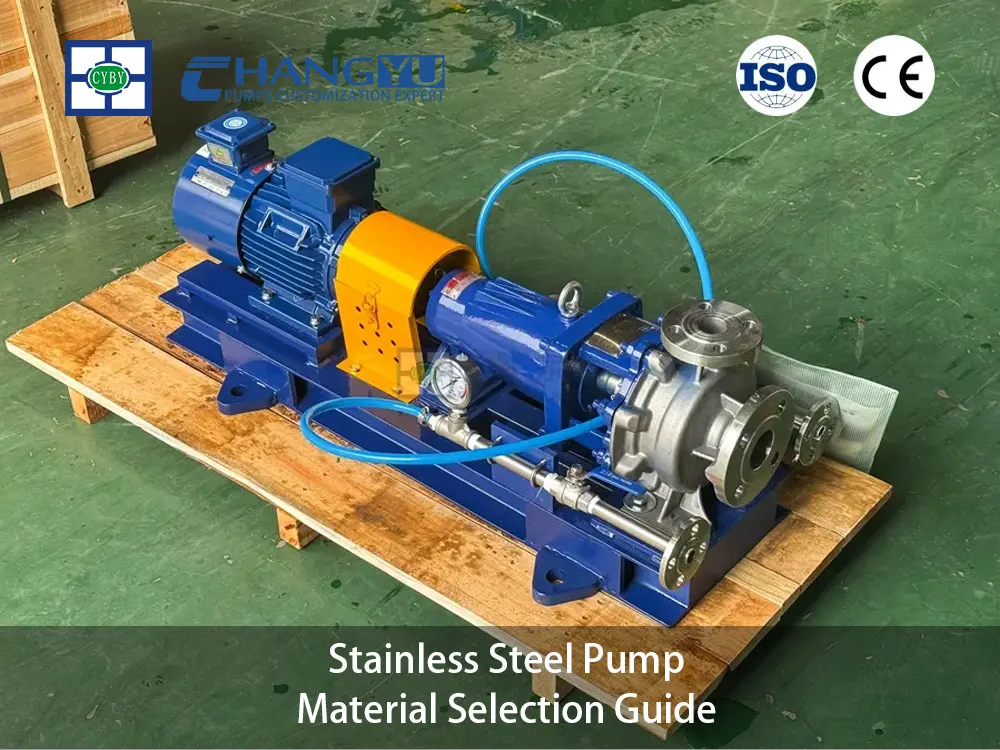
Este guia abrange 304/304L, 316/316L, 317L, 904L, 2205 e 2507. O objetivo é construir uma lista útil para sua bomba e, em seguida, transformá-la em uma especificação de compra clara.
Comece a seleção do material da bomba com um perfil completo do líquido
“Ácido”, “águas residuais” e “solvente” são descrições iniciais. Elas não são suficientes para escolher uma classe de aço inoxidável.
Por exemplo, água de processo fresca e água de processo reciclada podem compartilhar um nome, mas diferem no teor de cloreto e contaminação. Um líquido de limpeza pode expor a bomba a condições mais severas do que a produção normal.
Prepare estes detalhes antes de comparar materiais:
- Nomes químicos, concentrações e variação esperada.
- Temperaturas normais e máximas, incluindo limpeza.
- Teor de cloreto e outras impurezas importantes.
- Concentração de sólidos, tamanho de partícula, dureza e tendência de sedimentação.
- Tempo gasto em operação, parada ou preenchido com líquido estagnado.
- Corrosão anterior ou danos ao selo, com fotografias se disponíveis.
Uma FISPQ ajuda a identificar ingredientes e perigos. Ela pode não fornecer uma avaliação completa de corrosão, particularmente para um líquido recuperado ou misto. Adicione uma análise representativa onde a composição varia. Esta abordagem com foco no fluido é consistente com a orientação da Pumps & Systems sobre materiais para produtos químicos corrosivos e perigosos. Sua discussão sobre equipamentos difere das bombas com selo mecânico consideradas aqui, mas a necessidade de definir a exposição se aplica a ambas.
Tabela de seleção de material de bomba de aço inoxidável
Use esta tabela para restringir as opções. Ela não aprova uma classe para um produto químico não especificado nem garante sua disponibilidade em todos os modelos de bomba.
| Família de classe | Por que considerá-la? | O que deve ser verificado? |
|---|---|---|
| 304 / 304L | Opção de aço inoxidável geral para líquidos compatíveis e relativamente suaves | Cloretos, ácidos, produtos químicos de limpeza, temperatura e depósitos |
| 316 / 316L | Classes contendo molibdênio que oferecem vantagens sobre o 304 em muitos ambientes corrosivos | Risco de corrosão localizada e compatibilidade química real |
| 317L | Opção austenítica com maior teor de molibdênio para serviços selecionados além do 316L | Mistura, temperatura e disponibilidade de componentes |
| 904L | Opção austenítica altamente ligada para certos serviços químicos exigentes | Concentração de ácido, temperatura, impurezas e fabricação |
| 2205 duplex | Resistência e resistência melhorada a vários mecanismos de corrosão | Exposição a cloretos, temperatura de serviço, fabricação e tratamento térmico |
| Super duplex 2507 | Um candidato para condições de corrosão localizada mais exigentes | Química completa, limites de temperatura e especificação de componentes |
Changyu's coleção de bombas centrífugas de aço inoxidável lista essas famílias de materiais em toda a sua linha. Classes especiais precisam de confirmação para o modelo selecionado e componentes molhados.
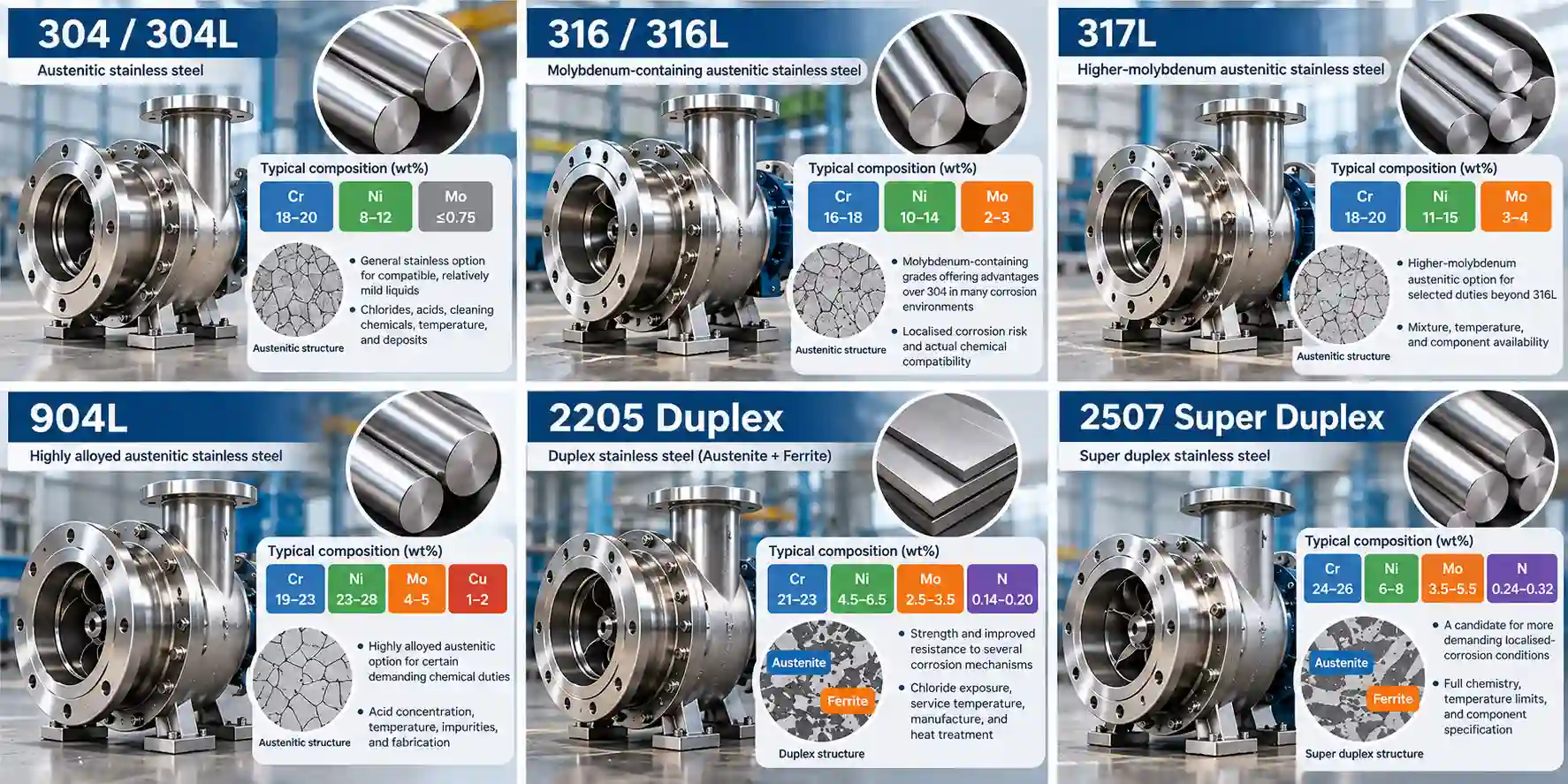
A tabela não é uma escada universal de “básico” para “melhor”. A seleção do material da bomba deve identificar a liga que aborda seu mecanismo de corrosão a um custo total de vida sensato.
Quando você deve considerar 304 ou 316?
O 304 pode ser um ponto de partida sensato para serviços suaves compatíveis. Há pouco valor em fazer upgrade quando a análise do líquido e as condições operacionais não mostram necessidade.
O 316 contém molibdênio, o que melhora a resistência em muitos ambientes. Isso o torna um candidato comum quando o 304 oferece resistência à corrosão insuficiente. Isso não torna o 316 adequado para todo ácido, solução salina ou serviço em água do mar. Da Outokumpu Informações da linha Supra explica as características de classes contendo molibdênio, como 316 e 316L. Use este histórico de liga junto com dados para o líquido real e componentes da bomba.
Conselho prático: pergunte o que a mudança de 304 para 316 pretende prevenir. Uma recomendação que identifica pitting relacionado a cloretos é mais útil do que “316 é melhor”. Se a falha for desgaste abrasivo ou dano por funcionamento a seco, a mudança de liga pode não atingir a causa.
Para serviços com líquidos limpos, revise a bomba horizontal de estágio único CYA. Para serviço químico, comece com a Bomba química em aço inoxidável CYH e especifique o pacote completo de material e vedação.
O que significa o “L” na seleção de material da bomba?
O “L” em 304L ou 316L significa baixo carbono. Um benefício principal é a reduzida suscetibilidade à corrosão intergranular associada à soldagem e sensitização.
Isso não significa que o 316L seja automaticamente muito mais resistente à corrosão por pites de cloreto do que o 316. Nem torna aceitável um serviço químico inadequado.
Para a seleção de material da bomba, distinga o nome da classe familiar da especificação de fabricação. Uma carcaça fundida e um eixo forjado podem ser fornecidos sob normas diferentes. O pedido deve identificar a classe do componente exigida e a norma aplicável, não apenas dizer “todo em aço inoxidável”.”
Quando houver soldagem ou reparo envolvido, discuta o procedimento e qualquer tratamento necessário. A identidade do material, a qualidade de fabricação e as condições operacionais afetam o componente acabado.
Onde se encaixam o 317L e o 904L?
O 317L é uma classe austenítica com maior teor de molibdênio que pode entrar na lista de finalistas para determinados serviços de corrosão além da adequação do 316L. Ainda necessita de uma avaliação em relação ao líquido real.
O 904L é uma classe austenítica altamente ligada usada em certos ambientes químicos exigentes. Não é aprovação irrestrita para ácidos fortes em todas as concentrações e temperaturas. Da Outokumpu Linha Ultra fornece informações independentes sobre o 317L e o 904L. A pergunta útil é qual propriedade atende ao seu serviço, em vez de qual número de classe é mais alto. Para qualquer das opções, verifique a disponibilidade de fundição ou componente desde cedo. Uma liga finalista só é útil se puder ser fornecida no projeto de bomba exigido, com uma vedação adequada e especificação documentada.
Se o líquido for desconhecido ou mudar substancialmente, acorde sobre as evidências necessárias. Isso pode incluir experiência operacional relevante, dados de corrosão ou testes representativos antes do pedido final.
Quando se deve considerar o 2205 ou o 2507?
Os aços inoxidáveis duplex combinam fases austenítica e ferrítica. Em comparação com as classes austeníticas comuns, podem oferecer vantagens úteis de resistência e resistência à corrosão, incluindo melhor resistência à corrosão sob tensão por cloretos.
O 2205 é uma opção duplex. O 2507 é uma opção super duplex considerada para condições de corrosão localizada mais exigentes. No entanto, o 2507 não é automaticamente a resposta sempre que o 2205 parece incerto. A seleção de material da bomba também deve considerar temperatura, química, fabricação e a qualidade do componente acabado.
Conselho prático: se o duplex for proposto, solicite a norma exata do material, os requisitos de fabricação e a lista de componentes. Confirme que a configuração cotada inclui as partes molhadas exigidas, em vez de presumir que uma carcaça duplex significa uma extremidade molhada totalmente duplex.
Da mesma forma, compare o 904L e o duplex quanto ao problema específico de corrosão. São rotas de liga diferentes, não etapas consecutivas em uma classificação universal.
Inclua a vedação, as juntas e as condições de desgaste
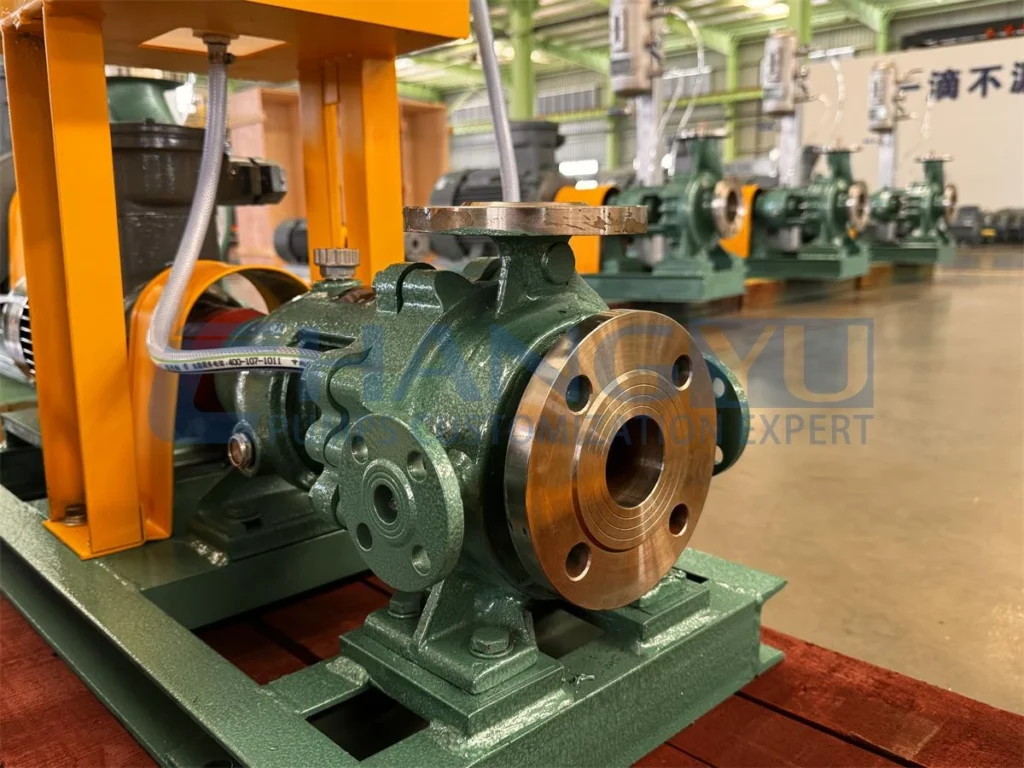
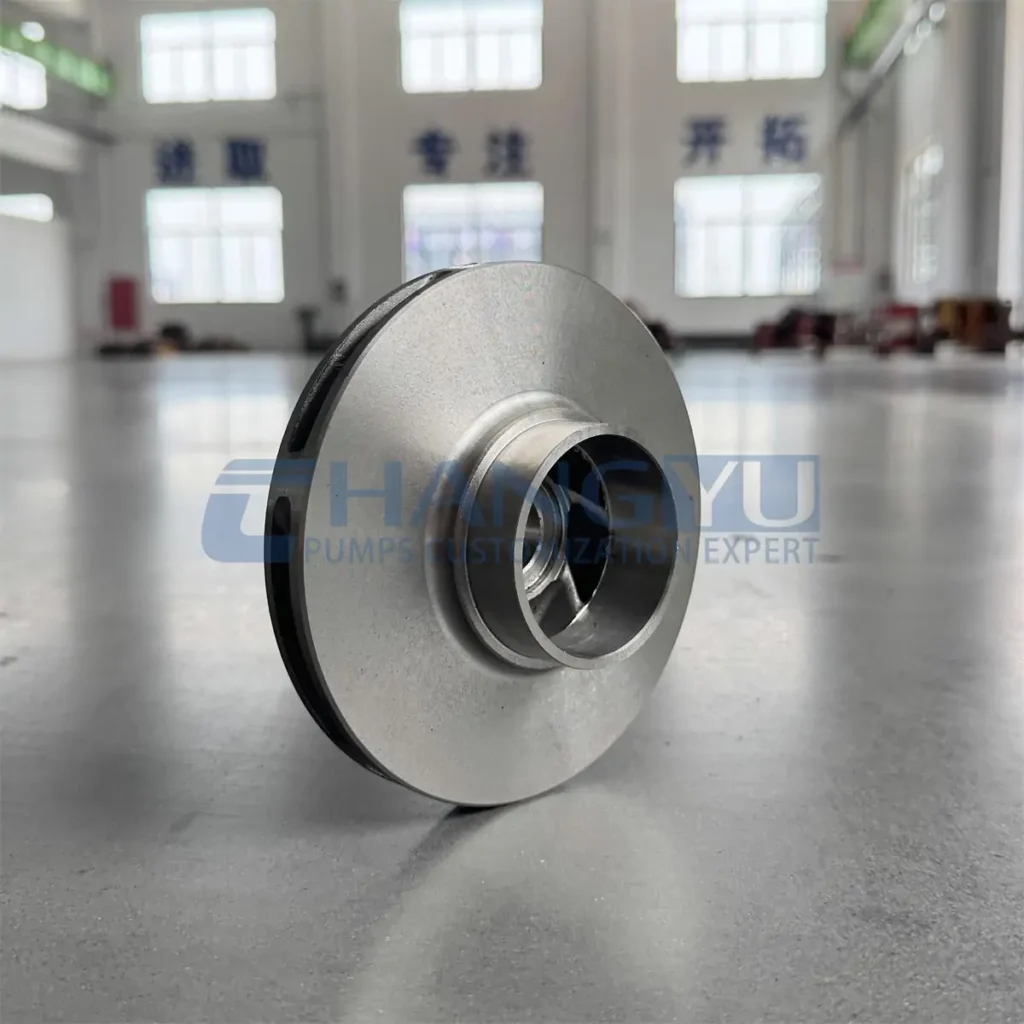
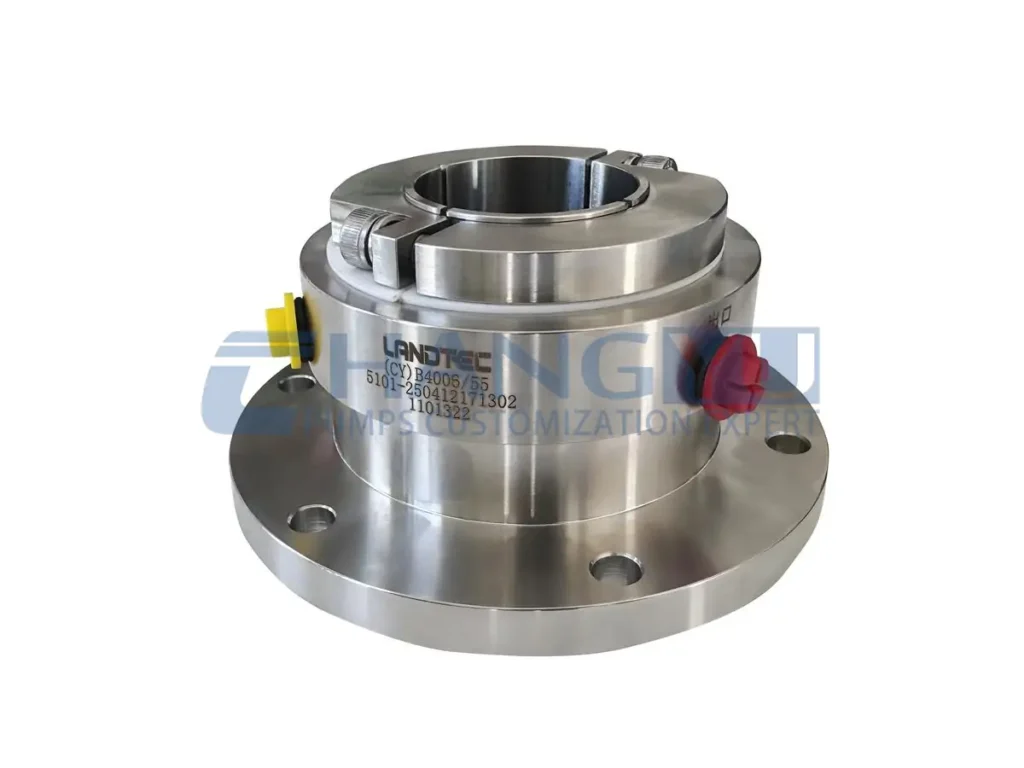
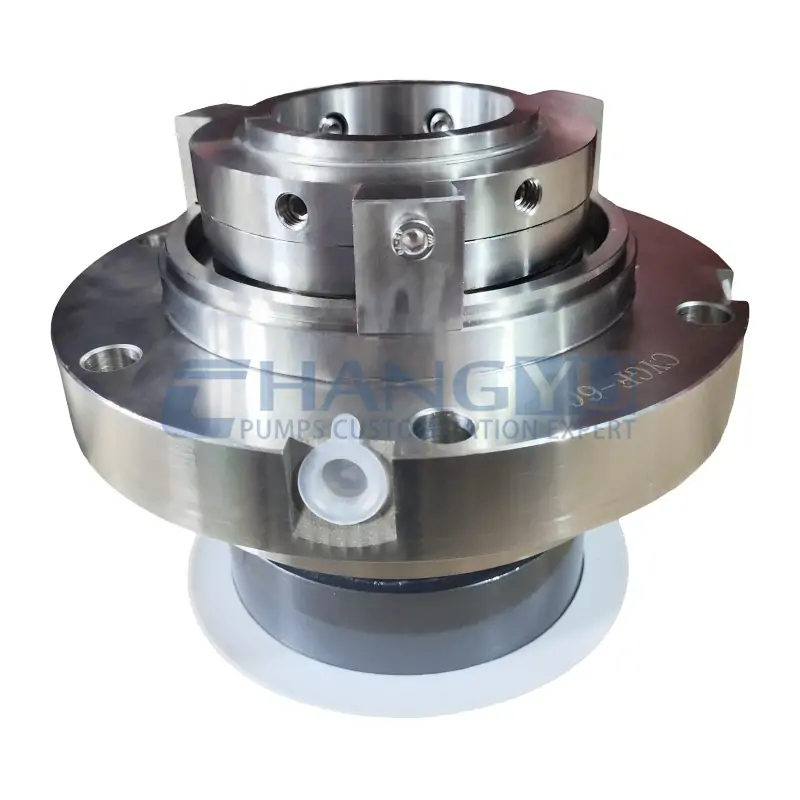
Uma boa seleção de material da bomba cobre tudo o que está exposto ao líquido de processo. Uma carcaça adequada não pode evitar vazamentos causados por um O-ring incompatível.
| Componente | Informações a incluir na especificação |
|---|---|
| Carcaça e impelidor | Classe, norma de fabricação e registros de material exigidos |
| Eixo ou luva molhados | Material e exposição ao líquido |
| Vedação mecânica | Materiais das faces, vedações secundárias e requisitos de suporte |
| O-rings e juntas de vedação | Material ou composto exato e limites de temperatura |
| Circuito de lavagem ou suporte | Compatibilidade do fluido e materiais molhados |
As faces de vedação também precisam de condições operacionais adequadas. A orientação de manutenção fornecida pela Changyu identifica funcionamento a seco, resfriamento inadequado, vibração, partículas e lavagem bloqueada como possíveis causas de falha.
Se o líquido contiver sólidos abrasivos, revise a estrutura da bomba, bem como a liga. Um material mais duro ou mais resistente à corrosão não pode abrir uma passagem de impelidor subdimensionada. A bomba de polpa abrasiva HB é uma família separada a avaliar para tais serviços.
Onde o aço inoxidável for inadequado, uma rota de material diferente pode ser necessária. A bomba resistente à corrosão em UHMWPE UHB da Changyu permanece uma opção para serviços compatíveis, sujeita aos seus próprios limites de temperatura, químicos e mecânicos.
Transforme a avaliação em uma decisão de compra
Considere uma planta ilustrativa que transfere um líquido de processo à temperatura ambiente e usa a mesma bomba para um ciclo de limpeza mais quente. O líquido de produção sozinho parece compatível com a escolha inicial de material.
Uma revisão completa da seleção de material da bomba também verifica o agente de limpeza, sua concentração, tempo de exposição e temperatura máxima. Em seguida, verifica a vedação e as juntas contra ambos os fluidos. Caso contrário, a bomba pode ser selecionada para apenas parte de seu serviço real.
Use a seguinte sequência para manter a decisão prática:
- Defina a operação normal e a exposição credível mais exigente.
- Identifique o provável mecanismo de corrosão ou desgaste.
- Faça uma lista de finalistas de ligas e materiais de vedação compatíveis.
- Confirme a disponibilidade do modelo e dos componentes.
- Acorde sobre as evidências e a documentação necessárias.
- Compare custos de compra, manutenção, substituição e parada.
Não presuma que uma classe premium durará o dobro sem evidências relevantes. Pergunte qual incerteza permanece e como será resolvida.
Certificados de material podem apoiar a rastreabilidade. A identificação positiva de material pode ajudar a verificar a composição da liga dentro da capacidade do método de teste. Não substitui todas as verificações de teor de carbono, tratamento térmico ou qualidade de fundição.
O resultado deve ser um cronograma de material por escrito vinculado a uma faixa operacional definida. Isso é mais útil do que uma recomendação verbal para “usar aço inoxidável”.”
Once the material has been screened, our seleção de bombas químicas de aço inoxidável guide helps turn it into a complete specification for flow, head, sealing, suction conditions and installation.
FAQ
Qual é o primeiro passo na seleção do material da bomba?
Defina a composição completa do líquido e a faixa operacional. Inclua impurezas, sólidos, fluidos de limpeza e temperatura máxima. Em seguida, avalie cada componente molhado. Começar com um grau preferido pode ocultar as condições que realmente determinam a compatibilidade.
O 316L é sempre o melhor material de aço inoxidável para bombas?
Não. Alguns serviços podem usar 304, enquanto outros precisam de uma liga ou rota de material diferente. O baixo teor de carbono do 316L é útil para certas preocupações de corrosão relacionadas à fabricação, mas não torna o grau adequado para todo serviço com cloreto ou ácido.
Posso selecionar o material da bomba usando apenas o pH?
Não. O pH não identifica a química completa, o teor de cloreto, a temperatura ou os sólidos. Dois líquidos com pH semelhante podem atacar um material de forma diferente. Use o pH como um dado dentro da análise do líquido, não como uma especificação completa de compatibilidade.
O 2507 é sempre melhor que o 904L?
Não. Eles pertencem a famílias de ligas diferentes e oferecem vantagens diferentes. Compare-os com o líquido específico, temperatura, mecanismo de corrosão e requisitos dos componentes. Escolher apenas pelo número do grau pode adicionar custo sem resolver o problema relevante.
Um gráfico de corrosão pode tomar a decisão final?
Um gráfico pode ajudar a triar materiais quando sua concentração, temperatura e condições de teste correspondem ao seu serviço. Misturas, contaminantes, depósitos e mudanças operacionais podem alterar o resultado. Use o gráfico com uma revisão em nível de componente e evidências adequadas para serviços incertos.
O que devo enviar para uma recomendação de material?
Envie a análise do líquido, faixas de concentração e temperatura, condições de limpeza, cloretos, sólidos, vazão e altura manométrica. Para uma substituição, inclua fotografias e a localização do dano. Informe por quanto tempo os componentes antigos operaram e o que mudou antes da falha.
Solicite uma análise de material de aço inoxidável
Para seleção de material de bomba, envie à Changyu os detalhes do líquido e da operação através do formulário abaixo. Podemos discutir a família de produtos apropriada e as informações necessárias para uma recomendação de material e vedação. Navegue pela linha de bombas de aço inoxidável ou use nossa página de contato.
Correio eletrónico: [email protected]
TEL/WA: +86-13651913727
Sobre o autor e fontes
Preparado por Jade, Changyu Pump. Este guia utiliza as informações de produtos da Changyu e documentos de materiais e manutenção fornecidos. Referências independentes de ligas apoiam as comparações de graus. Ele fornece uma estrutura de seleção; a compatibilidade e a disponibilidade de componentes precisam de confirmação para o projeto específico.
- Coleção de bombas de aço inoxidável da Changyu: opções de produtos e materiais.
- Outokumpu Supra: histórico do 316/316L.
- Outokumpu Ultra: histórico do 317L e 904L.
- Outokumpu Forta: histórico de duplex e super duplex.
- Artigo sobre seleção de materiais da Pumps & Systems: fatores de avaliação de fluidos.