
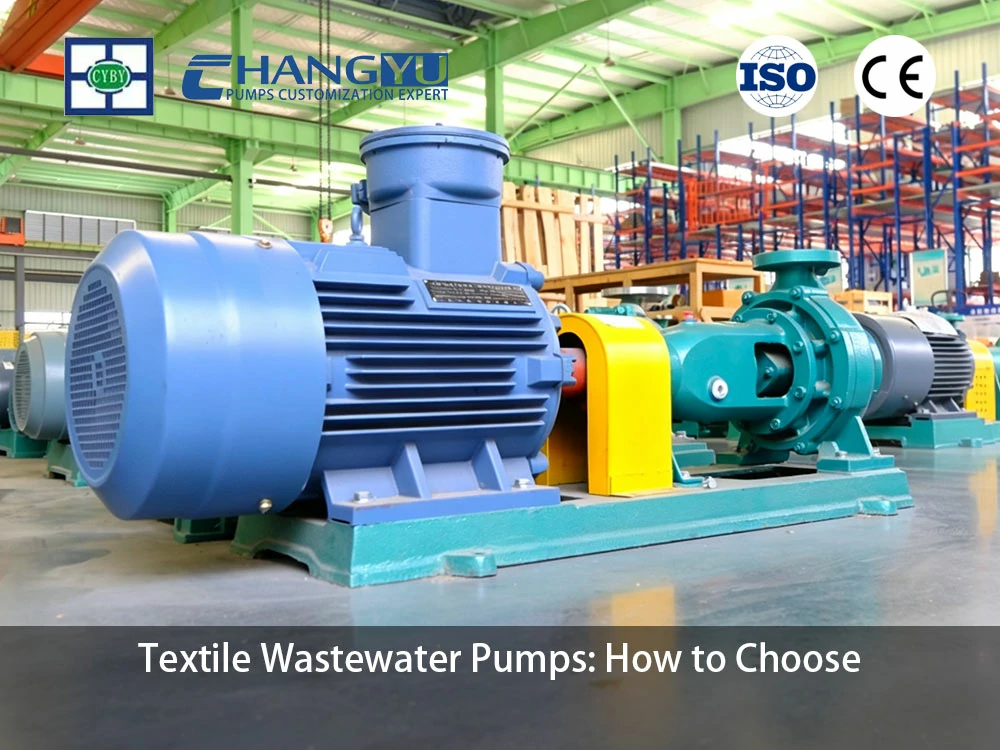
Textile wastewater pumps are a specialized category of corrosion-resistant centrifugal pumps engineered to handle the aggressive, fiber-laden, and high-temperature effluent generated in textile wet processing operations. Unlike standard industrial pumps, they must withstand alternating acidic and alkaline conditions, elevated temperatures, and clogging-prone solids — all simultaneously. This article provides a practical selection guide for plant engineers and procurement professionals who need to choose the right pump for their textile wastewater application.
Key Takeaways
- Textile wastewater presents a particularly demanding set of pumping challenges due to its wide pH fluctuations, elevated temperatures, and complex chemical composition. — pH fluctuates widely between acidic and alkaline conditions, temperatures reach 60–90°C, and the effluent contains dyes, fibers, alkalis, and organic solvents that attack conventional pump materials.
- Material selection is a critical decision: fluoroplastic (FEP/PFA/PTFE) is the preferred choice for mixed acid-alkali streams, while UHMWPE excels in abrasive slurries with high fiber content.
- Four pump types from Changyu Pump cover the majority of textile wastewater applications — FYH for sump and dye pit drainage, CYF for chemical transfer, FZB for self-priming tank unloading, and UHB for slurry and solids-laden streams.
- In general,no single pump can handle all textile process stages; matching the pump type to the specific process step is essential for reliability and service life.
What Makes Textile Wastewater a Challenge for Pumps?
Textile wet processing generates wastewater with a uniquely aggressive combination of properties. Understanding these characteristics is the first step in selecting the right textile wastewater pump.
Key Properties That Affect Pump Performance
| Property | Typical Range | Impact on Pump |
|---|---|---|
| pH | Fluctuates between acidic and alkaline | Corrosion of metal parts; accelerated attack on inadequate linings |
| Temperature | 60–90°C (dye liquor, bleaching) | Thermal degradation of seals; increased cavitation risk |
| Suspended solids | Fibers, lint, dye particles | Clogging of impeller; mechanical seal failure |
| Chemical content | Dyes, pigments, organic solvents, salts | Chemical attack on wetted parts |
| Chlorides | Elevated (from bleaching agents) | Pitting corrosion of stainless steel |
Changyu Pump engineers recommend: Always analyze the full pH range and peak temperature of your wastewater stream — not just the average values. A pump selected for average conditions may fail within weeks under peak loads.
Data source: Textile processing wastewater typically contains alternating acid-alkali streams from dyeing, bleaching, and finishing stages, with fiber content that causes clogging in standard pumps .
Common Pump Failure Modes in Textile Plants
- Corrosion pitting — Chlorides from bleaching agents attack 304/316L stainless steel
- Fiber clogging — Lint and thread wraps around the impeller, causing seal failure and motor burnout
- Thermal shock — Intermittent hot-cold cycling degrades elastomers and causes seal leakage
- Cavitation — High-temperature operation with low NPSH margins damages impeller surfaces
Which Material Is Recommended for Textile Wastewater Pump Construction?
The principle is straightforward: fluoroplastic or UHMWPE for textile wastewater; stainless steel alone is generally not recommended for mixed acid-alkali streams. Here is the engineering rationale.
Fluoroplastic (FEP/PFA/PTFE) — For Mixed Acid-Alkali Streams
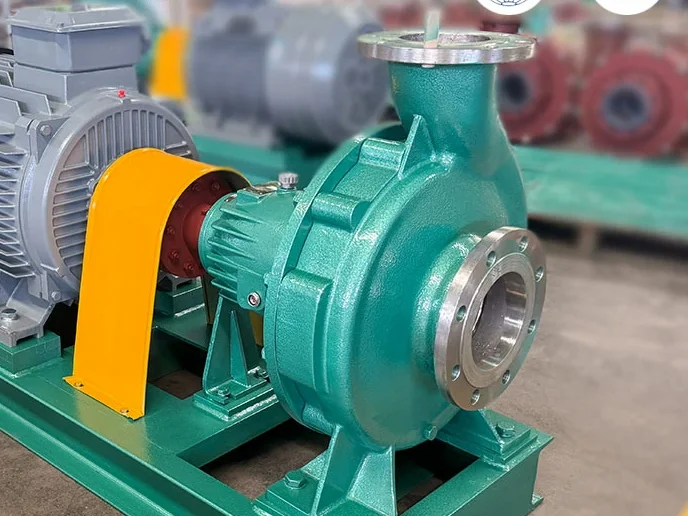
Fluoroplastic linings provide exceptionally broad chemical resistance, making them suitable for a wide range of aggressive media across the textile wastewater treatment process. They handle any concentration of acids, alkalis, and organic solvents without degradation. The CYF series, for example, operates continuously from -20°C to 180°C with FEP/PFA/PTFE lining, handling “sulfuric acid, hydrochloric acid, nitric acid, hydrofluoric acid, alkalis, oxidizing agents, organic solvents, and corrosive wastewater” — all chemicals found in textile wet processing . The FYH series uses fluoroplastic alloy for all wetted parts, making it suitable for dyeing pit drainage where pH swings between acidic and alkaline .

Changyu Pump engineers recommend: For streams where temperature exceeds 120°C — such as pressurised dye liquor or bleaching agent lines — specify PFA lining rather than standard FEP. PFA maintains mechanical integrity up to 180°C, while FEP begins to soften above 150°C .
UHMWPE — For Abrasive Slurries with Fiber Content
Ultra-high molecular weight polyethylene (UHMWPE) offers more than 9× the wear resistance of carbon steel . The UHB series features 8–20 mm thick UHMWPE lining with a semi-open impeller that prevents fiber clogging . This combination of abrasion resistance and anti-clog design makes it the preferred choice for sludge transfer and fiber-laden textile wastewater.
H3: Material Selection Quick Guide
| Condition | Recommended Material | Engineering Rationale |
|---|---|---|
| Mixed acid-alkali, minimal solids | FEP/PFA/PTFE | Broadest chemical resistance, -20°C to 180°C |
| Abrasive slurry with fibers | UHMWPE | 8–20mm lining, 9× carbon steel wear resistance |
| High-temperature (>120°C) | PFA | Thermal stability up to 180°C |
| Neutral pH, low chloride | 316L (limited scope) | Only for non-aggressive, low-chloride streams |
When Should You Use Each of the 4 Textile Wastewater Pump Types?
At Changyu Pump, we recommend matching the pump type to the specific process stage. Here are the four pump series that cover the majority of textile wastewater applications.
① FYH Series — Why Choose a Fluoroplastic Submersible Pump for Dye Pits?
Recommended for: Dyeing pit drainage, sump lifting, fiber-containing wastewater, acidic and alkaline effluent collection.
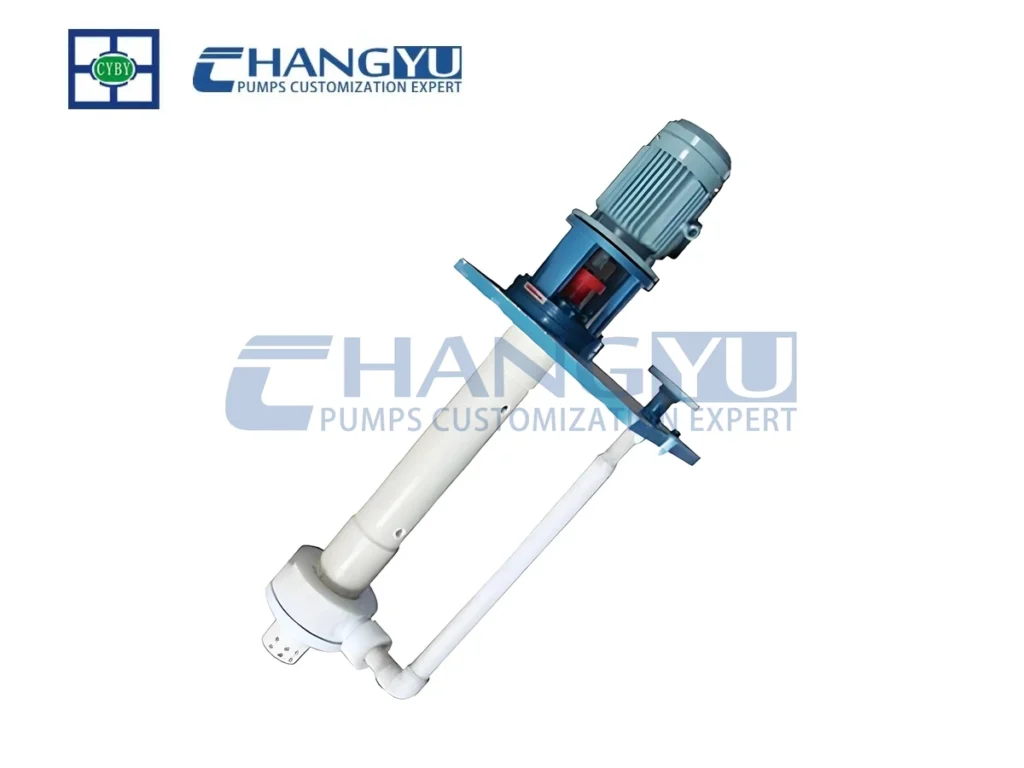
When the liquid level is below ground or in a deep pit, the FYH series is the appropriate choice. Its long-shaft vertical design allows the pump inlet to be submerged directly in the fluid, eliminating the need for priming. The open double-balanced impeller handles fibers and solids without clogging, making it particularly suited to textile sump applications .
| Parameter | Range |
|---|---|
| Flow rate | 5–400 m³/h |
| Head | 5–50 m |
| Temperature | -20°C to 90°C |
| Materials | FEP, UHMWPE, PTFE (customizable) |
| Impeller | Open double-balanced (anti-clog) |
Why it fits: The FYH is explicitly listed for “textile dyeing” applications, and its fluoroplastic construction resists the alternating acid-alkali streams common in dyeing processes . The vertical installation also saves floor space in crowded plant areas.
Changyu Pump engineers recommend: For dye pits deeper than 3 meters, specify the extended shaft option. The FYH’s submerged hydraulic end eliminates the need for a suction pipe, reducing pressure losses and preventing air entrainment common in long suction lines .
Product link: FYH Series Chemical Resistant Submersible Pump
② CYF Series — How Does a Fluoroplastic Centrifugal Pump Handle Chemical Dosing?
Recommended for: Acid and alkali dosing, bleaching chemical transfer, high-temperature dye liquor circulation.
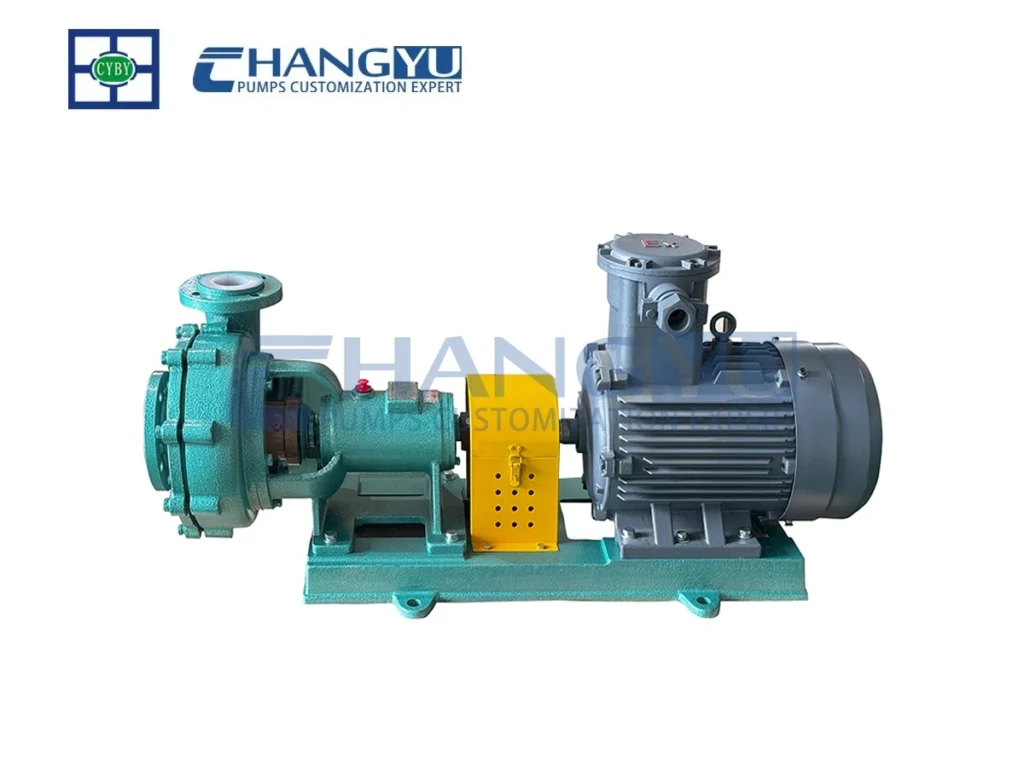
For above-ground, continuous transfer of corrosive chemicals, the CYF series is our standard recommendation. It is a single-stage, single-suction centrifugal pump designed to ISO standards, with FEP/PFA/PTFE lining and an external bellows mechanical seal .
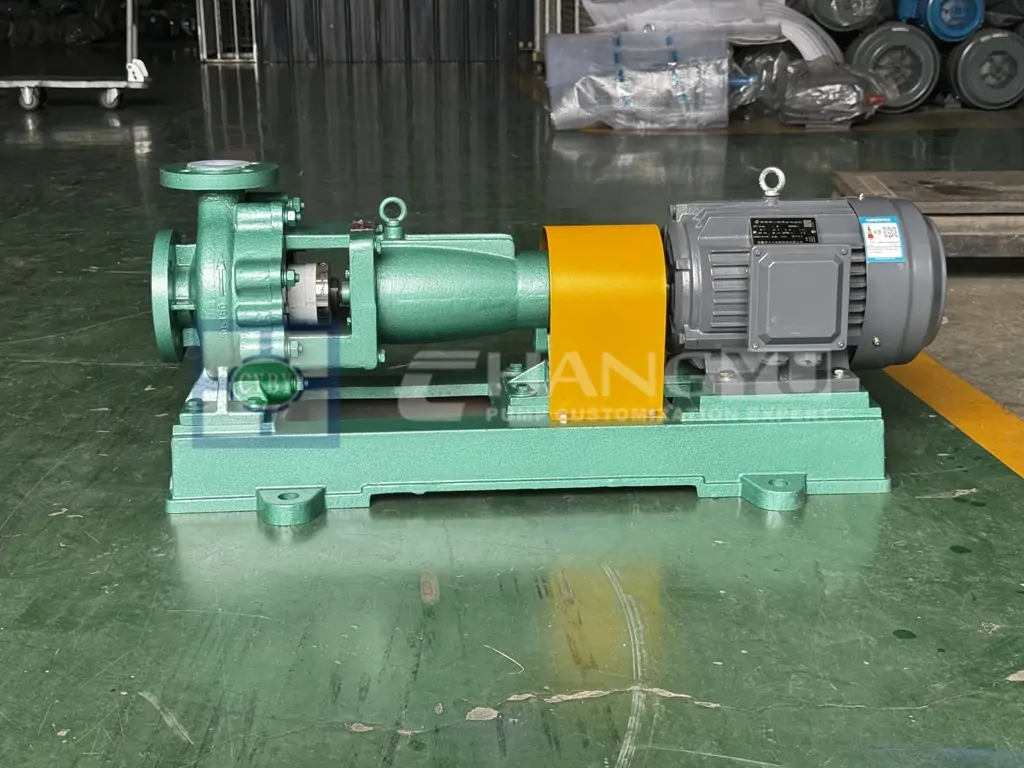
| Parameter | Range |
|---|---|
| Flow rate | 1.6–2600 m³/h |
| Head | 5–130 m |
| Temperature | -20°C to 180°C |
| Materials | FEP, PFA, PTFE lining |
| Seal | External bellows mechanical seal |
Why it fits: The CYF handles “sulfuric acid, hydrochloric acid, nitric acid, hydrofluoric acid, alkalis, oxidizing agents, organic solvents, and corrosive wastewater” — all chemicals found in textile wet processing . Its 180°C temperature tolerance covers the hottest dye liquor and bleaching streams.
Changyu Pump engineers recommend: When the CYF is used for intermittent dosing of bleaching chemicals (e.g., sodium hypochlorite or hydrogen peroxide), install a flushing line at the mechanical seal. This prevents crystal buildup during standby periods, which is a common cause of seal failure in textile plants .
Product link: CYF Series Fluoroplastic Centrifugal Pump
③ FZB Series — What Makes a Self-Priming Pump Suitable for Underground Tank Unloading?
Recommended for: Underground tank unloading, intermittent chemical transfer, printing paste transfer, drum unloading.
When the liquid source is below the pump level — such as underground storage tanks or drums — a self-priming pump eliminates the need for foot valves or manual priming. The FZB series achieves automatic suction up to 5 meters (7 meters with foot valve) after initial filling .
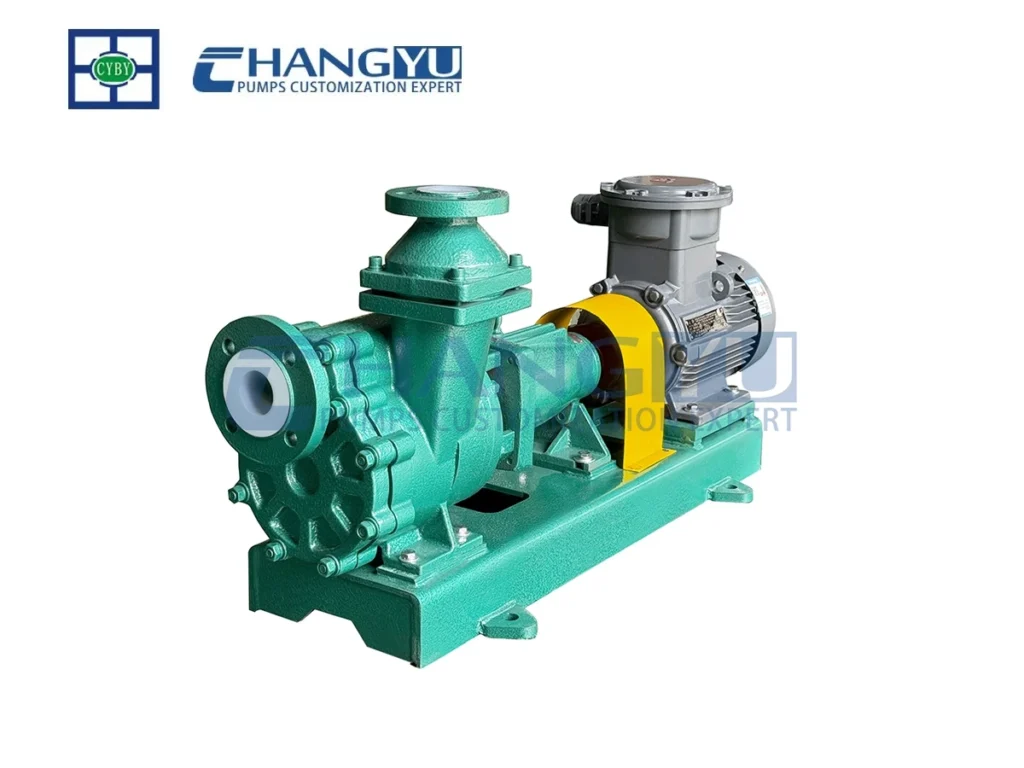
| Parameter | Range |
|---|---|
| Flow rate | 2.5–100 m³/h |
| Head | 15–50 m |
| Temperature | -20°C to 150°C |
| Self-priming height | Up to 5 m (7 m with foot valve) |
| Materials | FEP, PFA, PTFE lining |
Why it fits: The FZB series is explicitly listed for “textile printing and dyeing” industry applications, including pumping corrosive liquids from underground tanks and unloading chemical tankers . Its self-priming capability is essential for plants with below-grade chemical storage.
Changyu Pump engineers recommend: For self-priming applications involving printing paste or viscous dye solutions, select the FZB with a larger suction pipe diameter than the pump inlet. This reduces flow velocity at the suction line, minimizing friction losses during the priming phase and ensuring reliable restart after each batch .
Product link: FZB Series Fluoroplastic Self-Priming Centrifugal Pump
④ UHB Series — Where Should You Use a UHMWPE-Lined Slurry Pump?
Recommended for: Sludge transfer, sand-containing effluent, high-abrasion wastewater, fiber-laden slurry.
When the wastewater contains abrasive solids, fibers, or crystalline particles, the UHB series is the most durable option. Its UHMWPE lining (8–20 mm thick) provides more than 9× the wear resistance of carbon steel, and the semi-open impeller prevents clogging .
| Parameter | Range |
|---|---|
| Flow rate | 3–2600 m³/h |
| Head | 5–100 m |
| Temperature | -20°C to 90°C |
| Lining thickness | 8–20 mm UHMWPE |
| Impeller | Semi-open, anti-clog |
| Seal | K-type dynamic seal with cooling jacket |
Why it fits: The UHB series is designed for “corrosive and abrasive media” where standard pumps fail. Changyu Pump’s product catalog lists “textile wastewater” and “dyeing industries” among its applications . The semi-open impeller and K-type dynamic seal make it particularly effective for fiber-laden textile wastewater.
Changyu Pump engineers recommend: For textile wastewater containing both abrasive particles (>5% by weight) and long fibers, the UHB with a K-type dynamic seal is the preferred configuration. The dynamic seal creates a centrifugal barrier that prevents particles from reaching the seal faces — a critical feature when conventional mechanical seals would fail within weeks
Product link: UHB Series Abrasive Slurry Pump
How to Match Textile Wastewater Pump to Application — A Quick Selection Chart
| Application Scenario | Recommended Pump | Material | Engineering Rationale |
|---|---|---|---|
| Dyeing pit sump drainage | FYH | FEP/UHMWPE | Vertical submersible, handles fibers, no priming required |
| Acid dosing (HCl, H₂SO₄) | CYF | FEP/PFA | High flow, 180°C temperature limit, ISO standard dimensions |
| Alkali transfer (NaOH) | CYF | FEP/PFA | Resists caustic soda at any concentration |
| High-temperature dye liquor (80–150°C) | CYF | PFA | Temperature tolerance up to 180°C |
| Sludge with fibers and solids | UHB | UHMWPE | 8–20mm anti-abrasion lining, anti-clog impeller |
| Underground tank unloading | FZB | FEP/PFA | Self-priming up to 5m, automatic restart |
| Printing paste transfer | FZB | FEP/PFA | Self-priming design handles viscous media |
What Seal System Should You Use for Textile Wastewater Pumps?
The seal is the most vulnerable component in any pump handling textile wastewater. Changyu Pump offers three sealing approaches, each suited to different conditions.
- External bellows mechanical seal — Standard on CYF and FZB series. The stationary ring uses 99.9% alumina ceramic or silicon carbide; the rotating ring uses PTFE-filled material. Suitable for clean to slightly dirty liquids .
- K-type dynamic seal — Standard on UHB series. Creates a centrifugal barrier that prevents particles from reaching the seal faces. Includes a cooling water jacket for high-temperature operation. Recommended for slurry and fiber-laden wastewater .
- Sealless vertical design — The FYH series eliminates mechanical seals through its semi-submersible design: the motor is mounted above the liquid level, and the pump shaft extends down into the fluid. This removes the primary leakage path and reduces maintenance .
Changyu Pump engineers recommend: For textile plants handling multiple chemical batches, standardize on the external bellows mechanical seal (CYF/FZB) for clean chemical transfer and the K-type dynamic seal (UHB) for slurry and fiber-laden streams. Using the correct seal type for each application reduces the total cost of ownership more than any other single decision.
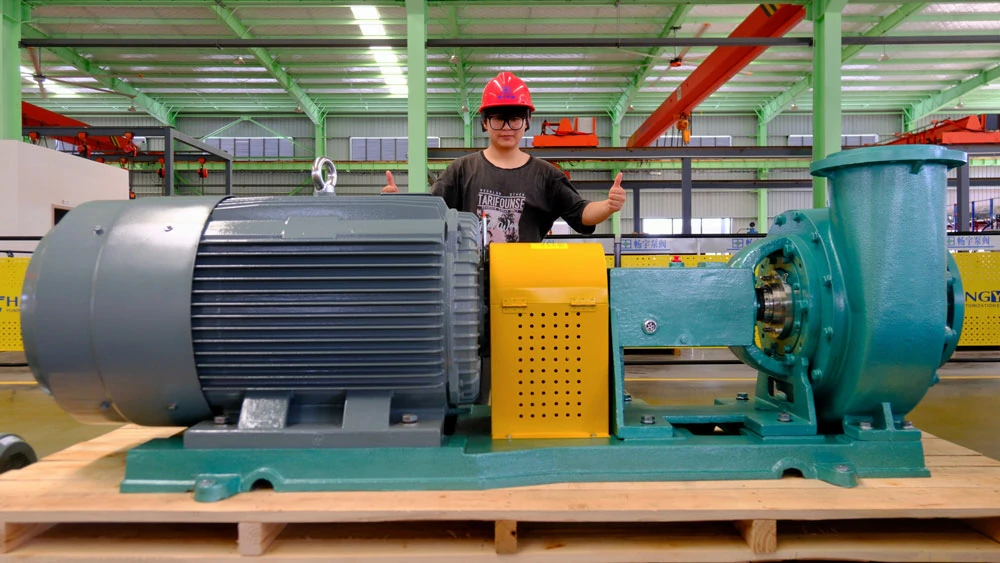
How to Install and Maintain Textile Wastewater Pumps
Submersible (FYH) vs. Horizontal (CYF/FZB/UHB) Installation
- FYH (vertical submersible): Mount directly on the tank top or pit cover. The pump shaft extends down into the liquid. No foundation or priming required. Suitable for confined spaces and deep pits .
- CYF/FZB/UHB (horizontal): Require a concrete foundation and suction piping. Suitable for above-ground installations where pump access is needed for routine maintenance.
Dealing with Intermittent Operation in Batch Processes
Textile plants often operate in batches. Frequent start-stop cycles can cause thermal shock and seal damage. Changyu Pump recommends:
- Install a minimum recirculation line to maintain flow during standby
- Use a check valve to prevent backflow and reverse rotation
- For the FZB series, the self-priming design allows automatic restart without manual intervention
Routine Inspection Checklist
| Frequency | Check Item |
|---|---|
| Daily | Motor current, vibration, visible leakage |
| Weekly | Strainer or filter cleaning, seal flush flow |
| Monthly | Impeller clearance, lining thickness (UHB series) |
| Quarterly | Mechanical seal condition, bearing grease replacement |
| Annually | Full pump overhaul, lining inspection, shaft alignment |
Conclusion: Get the Right Textile Wastewater Pump for Your Plant
Selecting the right textile wastewater pump comes down to three decisions: material (fluoroplastic or UHMWPE), pump type (FYH, CYF, FZB, or UHB), and seal system (mechanical, dynamic, or sealless). Get these three decisions right, and the pump will serve reliably for years in even the most demanding textile environments.
At Changyu Pump, we have been manufacturing corrosion-resistant pumps since 2006. Our ISO 9001 and CE-certified facility in Anhui, China, produces over 20,000 units annually, serving customers in textile, chemical, metallurgical, and environmental industries worldwide . Our engineering team has deployed fluoroplastic and UHMWPE-lined pumps in hundreds of textile plants across Asia, Europe, and Africa.
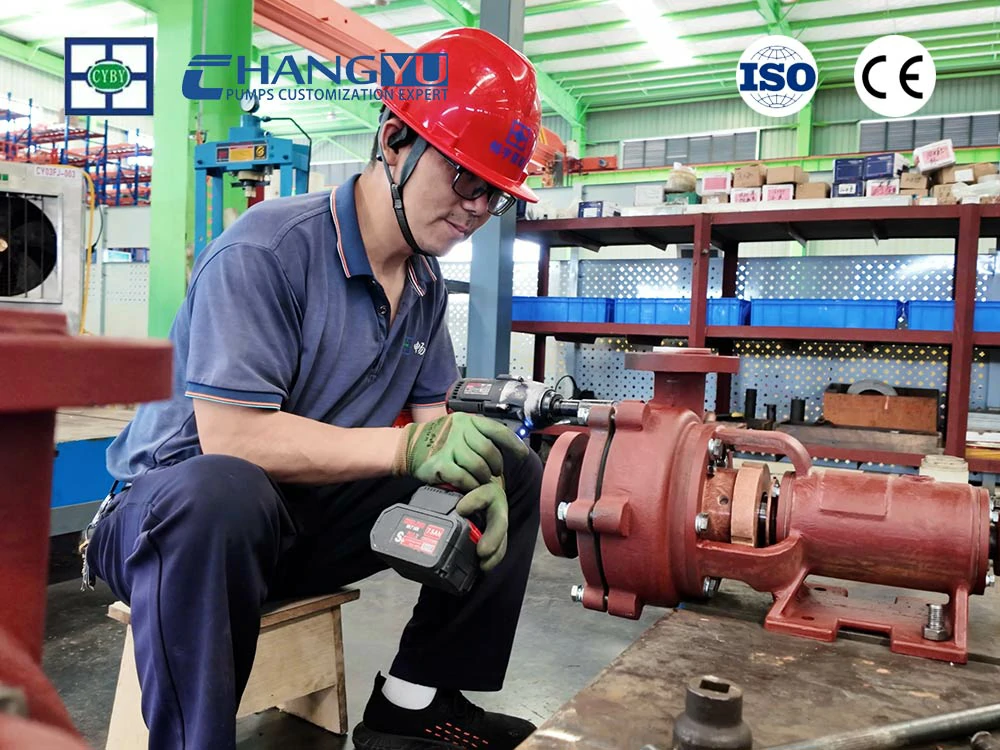
We are ready to help you select the right pump for your specific textile wastewater application. Send us your process parameters — flow rate, head, media composition (including pH range and temperature), and solids content — and our engineering team will provide a customized recommendation within 24 hours.
Contact us today:
- Email: [email protected]
- WhatsApp/Phone: +86-13651913727
Let Changyu Pump be your partner in reliable, corrosion-resistant fluid handling.
Terminology
📖 Fluoroplastic-Lined Pump
A centrifugal pump whose wetted parts are lined with fluoropolymers such as PTFE, FEP, or PFA. These materials are nearly inert to all chemicals except molten alkali metals and fluorine gas at high temperatures. Fluoroplastic-lined pumps are the standard choice for handling mixed acids, alkalis, and organic solvents in chemical processing, textile dyeing, electroplating, and pharmaceutical industries. They typically operate at temperatures from -20°C to 180°C and are available in horizontal, vertical, and self-priming configurations. (See also: Fluoropolymer on Wikipedia)
📖 UHMWPE Lining (Pump)
A layer of ultra-high molecular weight polyethylene (UHMW-PE) bonded to the inner surface of a metal pump casing, typically 8–20 mm thick. UHMWPE offers more than 9× the abrasion resistance of carbon steel combined with chemical resistance to acids and alkalis (up to 80% sulfuric acid, 50% nitric acid). It is the standard material for slurry pumps handling abrasive, corrosive, or fiber-laden media in chemical processing, mining, and textile wastewater treatment. Operating temperature range is typically -20°C to 90°C (up to 120°C with modified grades) . (See also: UHMWPE on Wikipedia)
📖 Dynamic Seal (Centrifugal Pump)
A non-contacting sealing device used in centrifugal pumps handling abrasive or particle-laden fluids. It uses a rotating impeller-like disc to create centrifugal force that pushes solid particles away from the seal faces, preventing wear. A stationary throttle bushing or wear plate completes the seal. Dynamic seals are commonly found in slurry pumps and are often paired with a cooling water flush system to handle high-temperature applications up to 90°C . (See also: Mechanical seal on Wikipedia)
FAQ
Q: Can I use a stainless steel pump for textile wastewater?
A: Stainless steel (304/316L) is suitable only for neutral pH, low-chloride streams. For the mixed acid-alkali dyeing wastewater typical of textile plants, fluoroplastic (FEP/PFA/PTFE) or UHMWPE lining is required.
Q: How to prevent fiber clogging in textile wastewater pumps?
A: Choose pumps with open or semi-open impellers. The FYH series uses an open double-balanced impeller, and the UHB series uses a semi-open impeller — both are designed to handle fiber-containing media .
Q: Self-priming vs submersible — which is better for textile plants?
A: Use submersible (FYH) for deep pits and sumps where the liquid level is below ground. Use self-priming (FZB) for underground tank unloading and intermittent transfer where the pump must be mounted above the liquid level. Each design addresses a different installation scenario.
Q: What material is recommended for high-temperature dye liquor?
A: PFA (perfluoroalkoxy) is the preferred material for high-temperature applications, with a temperature tolerance up to 180°C. The CYF series is available with PFA lining .