
Quick Answer
Selecting the right electric slurry pump requires matching the motor drive system to the slurry characteristics and operating duty, choosing materials that resist abrasion at the pump’s operating speed, and configuring the electrical supply and controls for the site environment. Key quantified selection factors:
- Motor sizing for slurry duty: Electric slurry pumps require motors sized for the maximum power draw across the entire pump curve — not just the rated duty point. A motor sized for the rated flow may overload at higher flow rates where power consumption increases. The motor service factor should be a minimum of 1.15 for continuous slurry duty.
- Speed control and wear management: The relationship between wear rate and flow velocity follows an approximate cubic relationship — doubling the pump speed can increase wear by a factor of 5–10. Variable frequency drives (VFDs) enable pump speed to be matched to process requirements, reducing wear during periods of lower flow demand.
- Motor enclosure and protection for slurry environments: Slurry pump installations expose motors to dust, moisture, and vibration. Totally enclosed fan-cooled (TEFC) motors with IP55 or higher protection ratings are standard for slurry service. In washdown areas or high-humidity installations, IP65 or IP66 ratings are specified.
- Long-term value: Electric motor-driven slurry pumps provide efficient, reliable service for continuous-duty applications. Combined with VFD control, appropriate motor sizing, and correct enclosure protection, they deliver extended pump and motor life with lower energy consumption.
Electric motor-driven slurry pumps are the standard prime mover for most mineral processing, chemical, and industrial slurry applications. The pump’s wet-end materials and impeller design receive most of the attention during specification. But the electric drive system — motor sizing, starting method, speed control, and enclosure protection — determines whether the pump operates reliably or becomes a recurring source of failures.
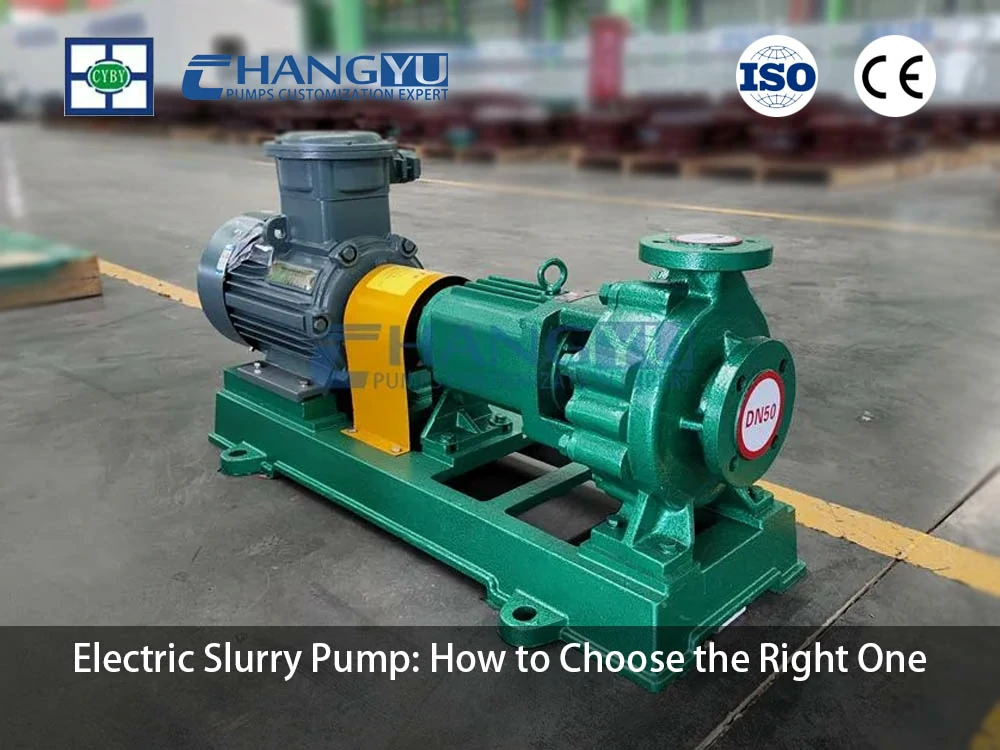
Changyu Pump has manufactured wear-resistant slurry pumps with electric motor drive systems for mining, mineral processing, and chemical applications for over two decades. This guide covers the motor selection, speed control, material specification, and system integration that determine whether an electric slurry pump delivers reliable, energy-efficient service.
1. What Materials Resist Wear in Electric Slurry Pumps?
Material selection for electric slurry pumps is governed by the same velocity-wear relationship that applies to all centrifugal slurry pumps: wear rate increases with the cube of flow velocity. Electric motor-driven pumps offer a distinct advantage — pump speed can be controlled through a VFD, allowing the operator to reduce speed during periods of lower process demand. This makes material selection more flexible, as wear rates can be managed operationally as well as through material upgrades.
Material Options for Electric Slurry Pump Service
Table: Material Selection for Electric Slurry Pumps
| Material | Typical Service Life Reference Range | Best For | Limitations |
|---|---|---|---|
| High-Chrome Cr27 (650–700 HB) | Lower range in abrasive service | Low to moderate abrasion; budget-constrained applications | Rapid wear in high-silica, high-velocity slurries |
| High-Chrome Cr33/Cr33M (700–750 HB) | Mid-to-upper range in abrasive service | High-silica ores (iron, copper); the industry standard for severe duty | Higher cost than Cr27 |
| Natural Rubber | Upper range with fine, rounded particles | Fine, non-abrasive tailings; neutral pH | Cut by sharp, angular particles; temperature limit 70°C; speed limit 900–1,000 r/min |
| Duplex 2205 Stainless Steel | Comparable to Cr33 in corrosive service | Corrosive slurry (acidic leach, high chloride) | Higher cost; verify PREN for chloride levels |
| UHMW-PE Lined | Moderate range in combined corrosion and abrasion | Chemical slurry; moderate abrasion with corrosion | Temperature limit 90°C |
| Ceramic Lined (SiC or Al2O3) | Upper range in fine-particle conditions | Extreme abrasion, fine-particle slurry | Brittle — impact from coarse particles may cause fracture |
Note: Service life varies with ore hardness, particle size distribution, flow velocity, solids concentration, and slurry chemistry. The reference ranges above are based on typical mining industry experience for medium-hardness ores (Mohs 5–7). Actual service life should be verified through site-specific wear data.
Material Matching by Application and Motor Speed
Table: Material Matching for Electric Slurry Pump Applications
| Application | Slurry Characteristics | Typical Motor Speed | Recommended Material |
|---|---|---|---|
| Iron ore tailings | High silica, Mohs 5.5–6.5 | 1,480 r/min (4-pole) | High-chrome Cr33 or tungsten carbide |
| Copper concentrator tailings | Moderate hardness, variable pH | 1,480 r/min (4-pole) | High-chrome Cr33; Duplex 2205 for acidic conditions |
| Gold tailings | Very high silica, Mohs 7 | 980 r/min (6-pole) preferred | Cr33 minimum; ceramic or tungsten carbide for extended life |
| Coal tailings | Low hardness, Mohs 1–2 | 1,480 r/min (4-pole) | Cr27 or natural rubber |
| Chemical plant slurry | Variable pH, moderate solids | 1,480 r/min (4-pole) | UHMW-PE lined or Duplex 2205 |
| FGD gypsum slurry | Moderate abrasion, high chloride | 1,480 r/min (4-pole) | Duplex 2205 or 2507 |
Engineers at Changyu Pump note: Operating an electric slurry pump at reduced speed through a VFD extends wet-end life. A pump at 40 Hz instead of 50 Hz reduces flow velocity by about 20%. Through the velocity-wear relationship, this cuts the wear rate roughly in half. This operational flexibility is a key advantage of electric motor-driven slurry pumps.
2. How to Size an Electric Motor for Slurry Pump Duty?
Motor sizing for slurry pump service differs from motor sizing for clean water applications. The slurry’s higher specific gravity, the pump’s power characteristic across its operating range, and the starting conditions all influence the required motor rating.
Power Consumption Across the Pump Curve
Unlike clean water pumps, where power consumption may peak at high flow and then plateau or decline, slurry pumps typically show increasing power consumption with flow across their entire operating range. A motor sized for the rated duty point may be undersized if the pump operates at higher flows — for example, when multiple pumps share a common discharge header and system resistance varies.
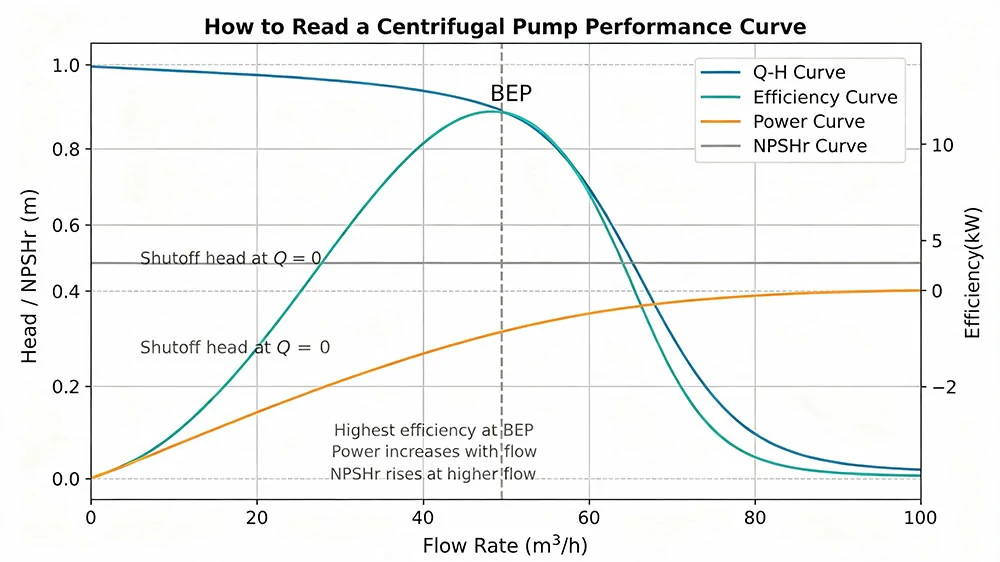
The motor must be sized for the maximum power the pump will draw across its entire expected operating range, not just the design duty point. For pumps operating on VFD control, the motor should be rated for the maximum power at the maximum operating speed.
Service Factor Requirements
A service factor of 1.15 is the minimum for continuous-duty slurry pump applications. This means a motor rated at 100 kW can operate continuously at 115 kW without exceeding its insulation temperature limits. For slurry pumps operating in high-ambient-temperature environments, at high altitude, or with frequent starts, a service factor of 1.2 or higher may be specified.
Starting Method and Inrush Current
Electric slurry pumps with high solids concentrations may require higher starting torque than clean water pumps of equivalent hydraulic power. Settled solids in the pump casing and suction pipe increase the breakaway torque required to initiate rotation.
- Direct-on-line (DOL) and Star-Delta: DOL starting is suitable for smaller pumps (below 30 kW) where the electrical supply can accommodate the inrush current. Star-delta starters reduce inrush current but also cut starting torque to about one-third of DOL torque — often insufficient for slurry pumps with settled solids.
- VFD soft-start: The preferred method for slurry pumps. The VFD ramps up motor speed gradually, eliminating inrush current and reducing mechanical shock on bearings, couplings, and seals. VFD soft-start can be programmed to provide the required starting torque while limiting current draw.
Engineers at Changyu Pump recommend: For electric slurry pumps above 30 kW, specify VFD control. The VFD provides soft-start capability that protects the motor and pump from mechanical shock, allows speed adjustment for process optimization and wear reduction, and eliminates the power factor penalty associated with DOL starting. The VFD cost is recovered through reduced maintenance, lower energy consumption, and extended pump wear life.
3. How to Select Motor Enclosure and Protection for Electric Slurry Pumps?
Slurry pump installations expose electric motors to conditions that are more severe than standard industrial environments. Dust, moisture, vibration, and occasional slurry spills must be accounted for in the motor specification.
Enclosure Protection Ratings
Table: Motor Enclosure Selection for Electric Slurry Pumps
| Installation Environment | Recommended IP Rating | Motor Type | Additional Protection |
|---|---|---|---|
| Indoor mineral processing plant | IP55 minimum | TEFC (Totally Enclosed Fan-Cooled) | Dust seals on shaft; vibration monitoring |
| Outdoor tailings pump station | IP65 | TEFC with weather protection | Rain canopy; space heaters for condensation prevention |
| Washdown area (food, chemical) | IP66 | TEFC with stainless steel hardware | Corrosion-resistant paint or stainless steel motor housing |
| Underground mining | IP55 minimum; flameproof if required | TEFC or flameproof (Ex d) | Gas monitoring where methane may be present; certification per local mining regulations |
| High-humidity tropical installation | IP65 with anti-condensation heaters | TEFC with space heaters | Powered during motor standby to prevent internal condensation |
Vibration and Foundation Considerations
Electric motors on slurry pumps are subjected to higher vibration levels than motors on clean water pumps due to the variable density and solids distribution in the slurry. The motor and pump must be mounted on a common baseplate with adequate rigidity to maintain alignment.
Vibration monitoring provides early warning of developing problems:
- Bearing degradation: Increasing vibration at bearing frequencies indicates bearing wear
- Imbalance: Vibration at running speed (1× RPM) may indicate solids buildup on the impeller
- Misalignment: Vibration at 2× or 3× RPM suggests coupling misalignment
Engineers at Changyu Pump recommend: For motors above 100 kW in continuous slurry service, install vibration sensors on both motor bearings with trending capability. A gradual increase in vibration over weeks or months indicates normal wear; a sudden increase indicates a developing fault that requires immediate investigation.
4. Where Are Electric Slurry Pumps Used?
Electric slurry pumps serve applications across industries where abrasive solids must be transported, and where electrical power is the most practical and economical energy source.
Mineral Processing and Mining
Electric slurry pumps are the standard for mill discharge, cyclone feed, thickener underflow, and tailings transport in mineral processing plants. Motor sizes range from 15 kW for small transfer pumps to over 1,000 kW for large tailings pumps. The availability of reliable grid power or on-site generation makes electric drive the default choice for most mining operations.
Chemical and Industrial Processing
In chemical plants, refineries, and industrial facilities, electric slurry pumps handle corrosive and abrasive process fluids. The precise speed control offered by VFD-equipped electric pumps is particularly valuable in dosing, metering, and reactor feed applications where flow accuracy is critical.
Water and Wastewater Treatment
Electric slurry pumps handle sludge, lime slurry, and chemical precipitates in municipal and industrial water treatment. The ability to operate on automated control systems — starting, stopping, and adjusting speed based on tank level or flow meter signals — makes electric drive the standard for these applications.
Dredging and Marine Applications
Electric slurry pumps are increasingly specified for electric-powered dredgers and marine slurry transport, where emissions regulations and fuel costs favor electric over diesel drive. Shore power or on-board generators supply the electrical power for pumps, winches, and auxiliary systems.
5. How to Select the Right Electric Slurry Pump?
Electric slurry pump selection requires matching the motor, materials, and control system to the specific slurry characteristics and site electrical infrastructure.
Common Electric Slurry Pump Problems and Solutions
Table: Common Electric Slurry Pump Problems and Solutions
| Problem | Root Cause | Solution |
|---|---|---|
| Motor overload at high flow | Motor sized for rated duty, not maximum flow | Resize motor for maximum power across full curve |
| High energy consumption | Fixed-speed operation at constant flow | Install VFD to match speed to process demand |
| Motor winding failure | Moisture ingress; inadequate IP rating | Upgrade to IP65; install space heaters |
| Frequent motor bearing replacement | Vibration from slurry imbalance | Install vibration monitoring; balance impeller |
| Starting failure with settled solids | Insufficient starting torque | Install VFD soft-start; flush pump before restart |
Five-Step Electric Slurry Pump Selection Process
Step 1: Characterize the slurry.
Determine solids concentration, particle size distribution, ore hardness (Mohs scale), pH, chloride concentration, and temperature.
Step 2: Determine hydraulic requirements.
Calculate required flow rate, total dynamic head, and NPSH available. Verify that NPSHa exceeds NPSHr by at least 1 meter or 30%, whichever is larger.
Step 3: Size the motor.
Calculate power draw across the full pump curve. Size the motor for the maximum power, with a minimum service factor of 1.15 for continuous duty. Select starting method based on motor size and site electrical capacity.
Step 4: Select materials.
Match wetted materials to ore hardness, pH, and particle characteristics per the matrix in Section 1.
Step 5: Specify motor enclosure and controls.
Select motor IP rating based on installation environment. Include VFD for pumps above 30 kW or where speed control provides process benefits.
Engineers at Changyu Pump recommend: When specifying an electric slurry pump, verify the starting torque requirement with the motor manufacturer. Settled solids in the pump casing can increase breakaway torque by 30–50% compared to a clean-water start. A VFD soft-start provides reliable starting performance for slurry pumps.
6. Changyu Pump Case Study: Electric Slurry Pump Drive System Upgrade
A phosphate mine in North Africa operated three tailings pumps with fixed-speed electric motors (1,480 r/min, 4-pole). The pumps operated continuously, but the tailings flow rate varied by 30–40% depending on the mill throughput. During low-flow periods, the pumps operated at reduced flow on their curves, wasting energy and experiencing accelerated wear.

The mine replaced the fixed-speed starters with VFDs on all three pumps. The VFDs were programmed to maintain a constant sump level by adjusting pump speed based on a level transmitter signal. Pump speed varied between 1,100 and 1,480 r/min depending on the tailings flow rate.
Results over 18 months of VFD operation:
- Energy consumption reduced by about 22% — the VFD cost was recovered within 14 months through energy savings alone
- Wet-end wear life extended from about 5 months to over 7 months due to reduced operating speed during low-flow periods
- Reduced starting current eliminated voltage dips that had affected other plant equipment during pump starts
Key takeaway: VFD control on electric slurry pumps delivers three simultaneous benefits: reduced energy consumption through speed matching, extended wear life through reduced operating speed during low-demand periods, and improved starting performance that protects both the pump and the site electrical system. The total cost of ownership analysis showed the VFD investment was recovered within 14 months.
7. Changyu Pump Electric Slurry Pump Solutions
Changyu Pump offers three pump series suitable for electric slurry pump applications across mining, chemical processing, and industrial fluid handling. Each series addresses specific combinations of abrasion severity, corrosion potential, and leak protection requirements.
Electric Slurry Pump Product Selection Guide
Table: Electric Slurry Pump Product Selection Guide
| Application | Key Challenge | Recommended Series | Key Feature |
|---|---|---|---|
| Abrasive slurry, high solids | Wear resistance + solids handling | BFD Series (Electric Diaphragm) | Flow up to 480 L/min; head up to 84 m; electric drive for continuous duty |
| Corrosive chemical slurry | Chemical attack + moderate abrasion | CYB-ZKJ Series | FEP/PFA-lined; flow 3–2,600 m³/h; double mechanical seal |
| Hazardous, zero-leakage slurry | Toxic/flammable + zero leakage | CYQ Series | PFA/PTFE-lined magnetic drive; no dynamic seal |
BFD Series — Electric Diaphragm Pump for Abrasive Slurry
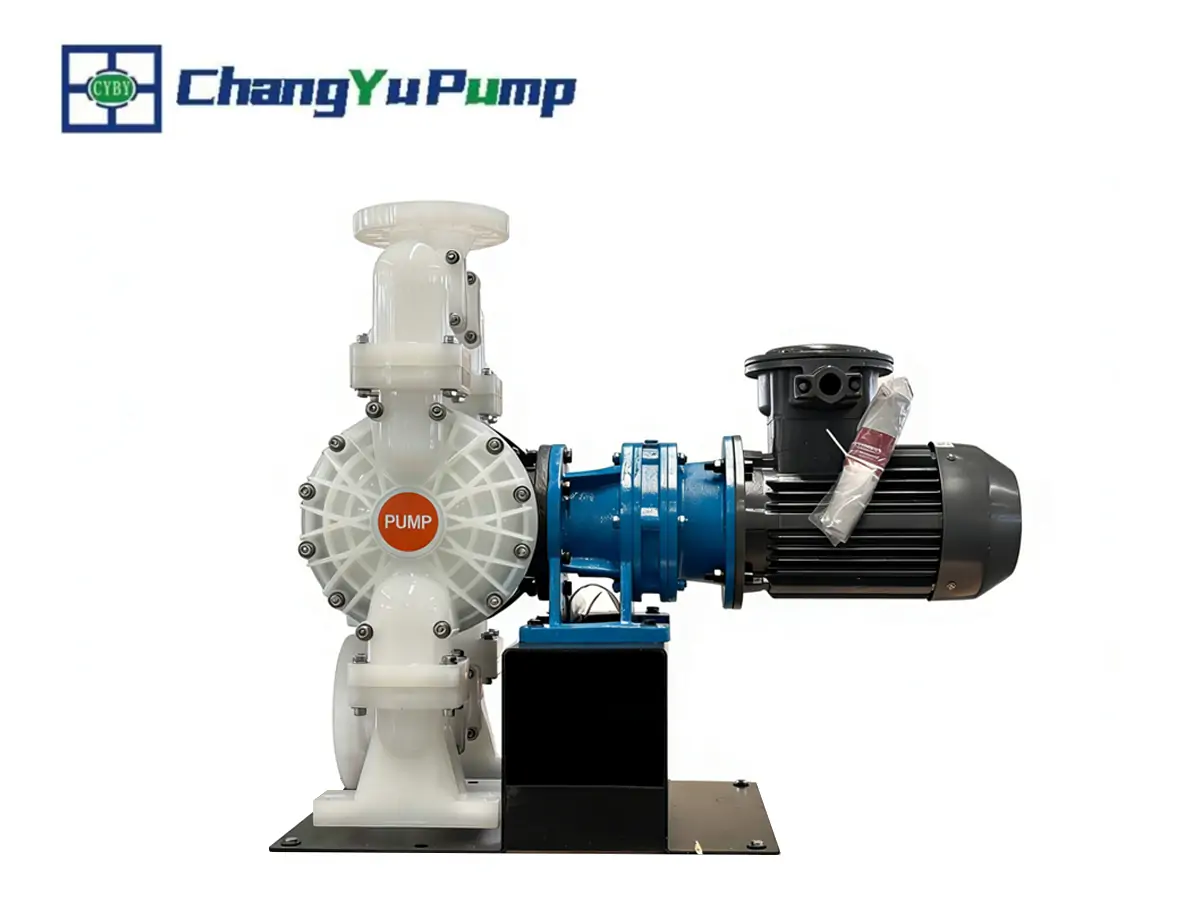
The BFD series electric diaphragm pump is designed for stable and continuous operation. Electric drive provides stable flow rate, low energy consumption, and simplified maintenance compared to pneumatic models. Suitable for corrosive, abrasive, high-viscosity, and volatile fluids — making it a versatile choice for slurry applications where solids handling and leak protection are both required.
| Parameter | Specification |
|---|---|
| Flow rate | 480 L/min |
| Head | 84 m |
| Motor power | 0.75–45 kW |
| Speed | 968–3,450 r/min |
| Temperature | -20°C to 120°C |
| Customizable materials | Cast steel, ductile iron, aluminum alloy, PP, stainless steel, PVDF |
View BFD Series Electric Diaphragm Pump →
CYB-ZKJ Series — Fluoropolymer-Lined Centrifugal Pump for Corrosive Slurry
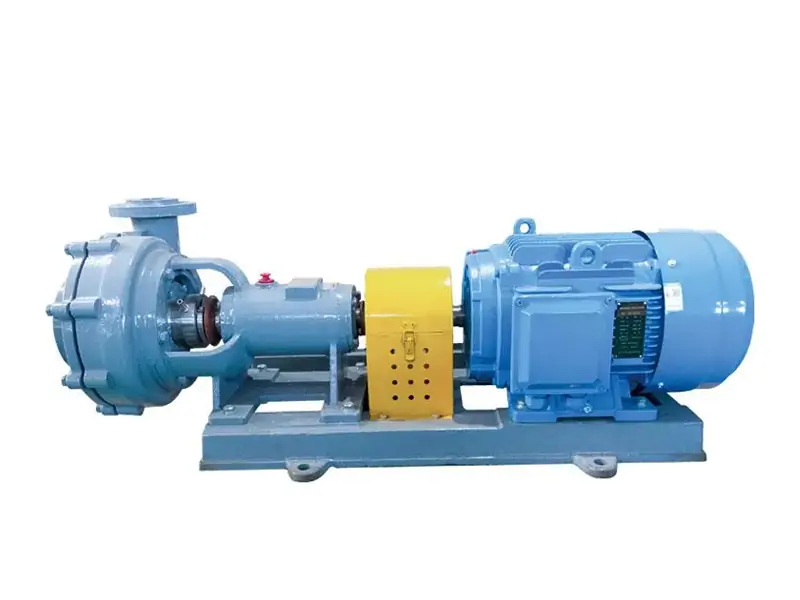
FEP/PFA-lined centrifugal pump designed for corrosive chemical transfer. The fluoropolymer lining isolates the pump casing from the pumped fluid entirely. Double mechanical seal with API Plan 32 or Plan 53C flush provides reliable sealing for continuous-duty slurry applications.
| Parameter | Specification |
|---|---|
| Flow rate | 3–2,600 m³/h |
| Head | 5–100 m |
| Motor power | 0.75–300 kW |
| Temperature | -80°C to 120°C |
| Lining materials | FEP (standard), PFA (high-temperature option) |
CYQ Series — Magnetic Drive Pump for Zero-Leakage Slurry Transfer
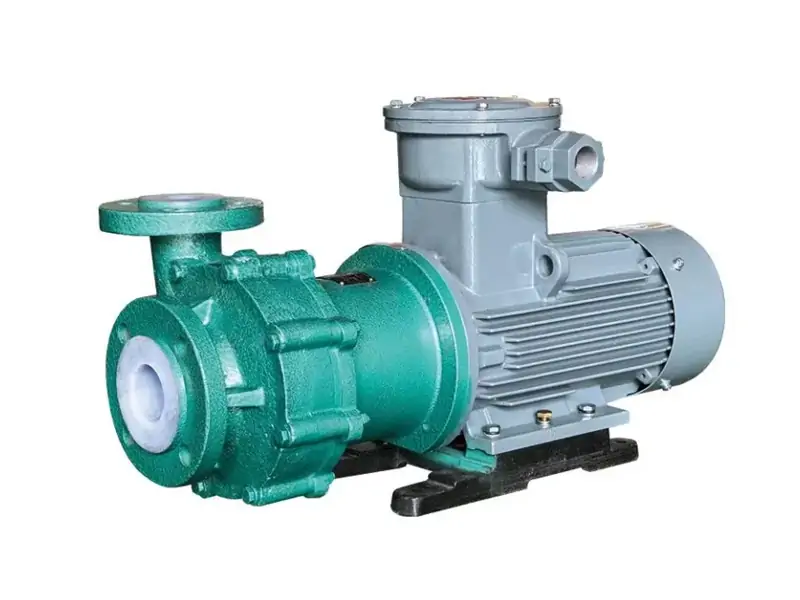
For hazardous fluid applications where any leakage is unacceptable — toxic chemicals, flammable solvents, high-purity products — the CYQ magnetic drive pump eliminates the dynamic shaft seal entirely. Featuring thick-wall FEP/PFA/PTFE fluoroplastic lining, rare-earth magnetic coupling, and a fully sealed structure. Magnetic drive pumps are suitable for clean fluids only. For abrasive or solids-laden slurries, the BFD or CYB-ZKJ Series is recommended.
| Parameter | Specification |
|---|---|
| Flow rate | 3–800 m³/h |
| Head | 15–125 m |
| Motor power | 2.2–110 kW |
| Speed | 2,950 r/min |
| Temperature | -20°C to 180°C |
| Lining materials | FEP / PFA / PTFE |
View CYQ Magnetic Drive Pump →
FAQs about Electric Slurry Pumps
Q: What are the advantages of electric slurry pumps?
A: Electric motor-driven slurry pumps offer excellent system efficiency for continuous-duty applications. Modern IE3/IE4 motors convert 90–96% of electrical input power into mechanical shaft power. Electric pumps provide precise speed control through VFDs, lower noise levels, and reduced maintenance compared to pneumatic alternatives.
Q: How do I size a motor for an electric slurry pump?
A: Size the motor for the maximum power draw across the entire expected pump operating range — not just the rated duty point. Slurry pumps typically show increasing power consumption with flow. Apply a minimum service factor of 1.15 for continuous duty. Verify that the motor starting torque exceeds the pump’s breakaway torque with settled solids in the casing.
Q: What motor protection rating is required for slurry pump service?
A: IP55 (dust-protected, water-jet resistant) is the minimum for indoor mineral processing plants. IP65 (dust-tight, water-jet resistant) is specified for outdoor installations and washdown areas. In underground mining where methane may be present, flameproof (Ex d) motors certified per local regulations are required.
Q: Should I use a VFD on my electric slurry pump?
A: For pumps above 30 kW, a VFD is strongly recommended. Benefits include soft-start capability that reduces mechanical shock and inrush current, speed adjustment for process optimization, and reduced wear rates when operating at lower speeds during low-demand periods. The VFD cost is recovered through energy savings and extended pump life.
Q: Why does my electric slurry pump motor overload?
A: The most common cause is a motor sized for the rated duty point rather than the maximum power across the pump curve. As the pump operates at higher flows, power consumption increases. Resize the motor for the maximum power, or install a VFD to limit the pump’s maximum operating speed.
Q: How does pump speed affect wear life in electric slurry pumps?
A: The relationship between wear rate and velocity follows an approximate cubic relationship. A pump operating at 40 Hz instead of 50 Hz reduces flow velocity by about 20%, which can reduce wear rate by 40–50%. VFD control allows operators to reduce speed during low-demand periods, extending wet-end life.
Changyu Pump Engineer’s Avoidance Checklist
- Size the motor for the maximum power across the full pump curve, not just the rated duty point. Apply a minimum service factor of 1.15 for continuous slurry duty.
- Verify motor starting torque exceeds pump breakaway torque with settled solids. VFD soft-start provides excellent starting performance for slurry pumps.
- For pumps above 30 kW, install VFD control. The energy savings, wear reduction, and starting benefits recover the VFD cost within 12–24 months.
- Select motor IP rating based on the installation environment. IP55 is the minimum for indoor service; IP65 or higher for outdoor or washdown installations.
- Install vibration monitoring on motors above 100 kW. Trending vibration data provides early warning of bearing degradation, impeller imbalance, and misalignment.
- For outdoor or intermittent-duty motors, install space heaters powered during standby to prevent internal condensation and winding damage.
- When using VFD control, verify that the motor is rated for inverter duty with adequate insulation to withstand the voltage spikes generated by VFD switching.
- Keep spare motor bearings, shaft seals, and a complete pump wet-end assembly in inventory for critical electric slurry pumps. Motor lead times can extend to weeks for large units.
Conclusion
Selecting an electric slurry pump requires attention to the motor drive system as well as the pump’s wet-end materials. Three decisions determine pump reliability: motor sizing for the maximum power across the full operating range, material selection matched to the ore characteristics and operating speed, and motor enclosure protection suited to the installation environment.
VFD control provides three simultaneous benefits: reduced energy consumption through speed matching, extended wear life through lower operating speeds during low-demand periods, and improved starting performance that protects the pump, motor, and site electrical system. For pumps above 30 kW, the VFD investment is recovered through these combined benefits.
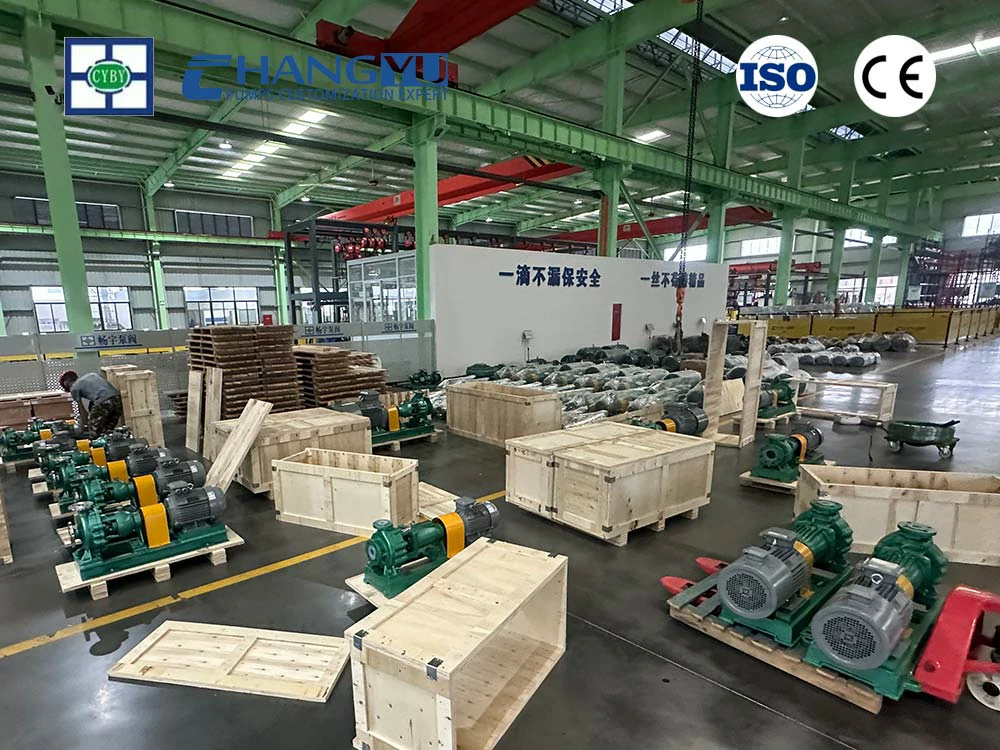
When you are ready to specify an electric slurry pump for your application, Changyu Pump’s engineering team can provide a technical assessment covering slurry characterization, material recommendation, motor sizing, and control configuration matched to your specific operating requirements. Two decades of wear-resistant pump manufacturing across mining, mineral processing, and chemical applications inform every recommendation.