
Quick Answer
Selecting the right high head slurry pump requires matching materials to the accelerated wear caused by high flow velocities, configuring multi-stage systems for reliable operation, and specifying seals that withstand the high discharge pressures generated. Key quantified selection factors:
- Material resistance under high-velocity wear: The relationship between wear rate and flow velocity follows an approximate cubic relationship — doubling the velocity can increase wear by a factor of 5–10, depending on particle characteristics and pump materials. High-chrome Cr33 alloy is the baseline for heads above 50 m in abrasive service.
- NPSH constraints at higher speeds: High head pumps operate at higher rotational speeds, which increases NPSH required. A pump that operates cavitation-free at 30 m head may cavitate at 80 m head with the same suction pressure. Verify NPSHa exceeds NPSHr by at least 1 meter or 30%, whichever is larger.
- Multi-stage configuration integrity: In a series configuration, each downstream pump operates at a higher suction pressure than the pump before it. Verify that the casing pressure rating of each pump exceeds the cumulative head of all upstream pumps, per API 610 and ISO 5199 requirements.
- High-pressure sealing: Discharge pressures in high head slurry service place increased load on mechanical seal faces. During pump startup, seal chamber pressure rises rapidly before the fluid film is established — this pressure surge can damage seal faces. A seal flush system that maintains barrier pressure before pump start, or a VFD soft-start, reduces this risk.
High head slurry pumping combines two of the most demanding requirements in any mineral processing circuit: the need to generate significant pressure to overcome pipe friction and elevation changes over long distances, and the need to resist the abrasive wear that accelerates dramatically at the higher flow velocities required to achieve that head. A pump specified for standard slurry service at 30 m head may require wet-end replacement within weeks when operated at 80 m head — not because the material changed, but because the physics of wear changed.
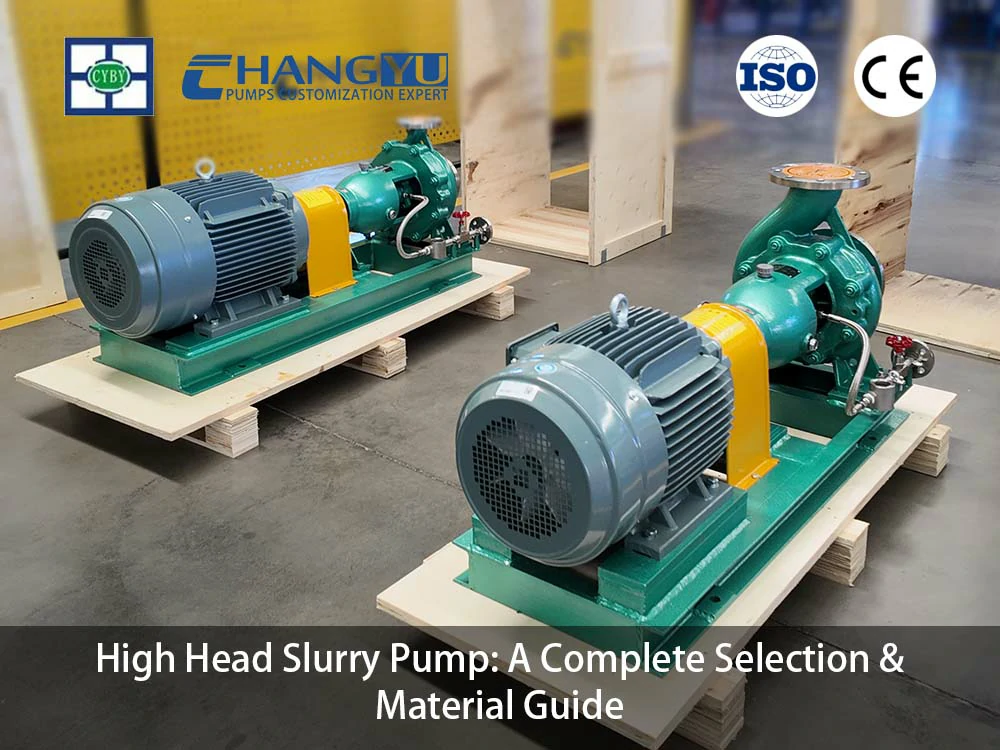
Changyu Pump has manufactured wear-resistant slurry pumps for mining, mineral processing, and chemical applications for over two decades. This guide covers the material selection, multi-stage configuration, seal specification, and operating practices that determine whether a high head slurry pump delivers reliable service or becomes a recurring maintenance problem.
1. What Materials Resist Wear in High Head Slurry Pumps?
Material selection is the single most critical decision for a high head slurry pump. The elevated flow velocities required to achieve high head accelerate abrasive wear through a well-established physical relationship: wear rate increases approximately with the cube of flow velocity — doubling the velocity can increase wear by a factor of 5–10. This means that a pump operating at 80 m head experiences dramatically more wear than the same pump handling the same slurry at 30 m head, even though the solids concentration and particle characteristics are identical.
Material Options for High Head Slurry Service
Table: Material Selection for High Head Slurry Pumps
| Material | Typical Service Life Reference Range | Best For | Limitations |
|---|---|---|---|
| High-Chrome Cr27 (650–700 HB) | Lower range in high-head abrasive service | Low-head, low-silica applications | Rapid wear in high-velocity, high-silica slurries |
| High-Chrome Cr33/Cr33M (700–750 HB) | Mid-to-upper range in high-head service | High-silica ores (iron, copper); the industry standard for severe duty | Higher cost than Cr27 |
| Duplex 2205 Stainless Steel | Comparable to Cr33 in corrosive service | Corrosive high-head underflow (acidic leach, high chloride) | Higher cost; verify PREN for chloride levels |
| UHMW-PE Lined | Moderate range in abrasive service | Combined corrosion and abrasion; chemical underflow | Temperature limit 90°C |
| Ceramic Lined (SiC or Al2O3) | Upper range in fine-particle, low-impact conditions | Extreme abrasion, fine-particle underflow | Brittle — impact from coarse particles may cause fracture |
| Tungsten Carbide Liners (HV 1200–1800) | Upper range; provides impact resistance | High-velocity, fine-particle flowback; better impact resistance than ceramic | Higher cost |
Note: Service life varies significantly with ore hardness, particle size distribution, flow velocity, solids concentration, and slurry chemistry. The reference ranges above are based on typical mining industry experience for medium-hardness ores (Mohs 5–7) at heads of 50–100 m. Actual service life should be verified through site-specific wear data. While higher-grade materials carry a higher initial cost, the total cost of ownership analysis shows that they are typically recovered through fewer pump changeouts, reduced maintenance downtime, and extended production availability.
Material Matching by Ore Type and Head Range
Table: Material Matching for High Head Slurry Applications
| Ore Type | pH Range | Head Range | Typical Material Progression | Key Consideration |
|---|---|---|---|---|
| Iron ore (hematite, magnetite) | 6–8 | 50–100+ m | Cr33 → Tungsten Carbide → Ceramic | High silica content accelerates wear at high velocity |
| Copper ore | 4–11 (varies) | 50–100+ m | Cr33 → Duplex 2205 (acidic) | pH variation requires material flexibility |
| Gold ore (silica-rich) | 5–9 | 50–100+ m | Cr33 → Ceramic or Tungsten Carbide | Quartz hardness (Mohs 7) demands maximum wear resistance |
| Phosphate ore | 2–4 (acidic) | 30–80 m | UHMW-PE → Duplex 2205 | Acid resistance combined with moderate abrasion |
| Coal tailings | 5–7 | 30–60 m | Cr27 → Natural Rubber | Low hardness allows less costly materials |
Engineers at Changyu Pump have observed across high head slurry pump installations: For heads exceeding 50 m in iron ore and silica-rich gold ore service, high-chrome Cr27 wear life is significantly shortened due to the velocity-wear relationship. Upgrading to high-chrome Cr33 or tungsten carbide liners provides extended service life. The material cost premium is typically recovered through reduced pump changeouts and avoided production downtime.
2. How to Configure Multi-Stage High Head Slurry Pump Systems?
When the required system head exceeds what a single pump can deliver, multiple pumps are arranged in series. Each pump adds its head to the total system pressure. While this configuration is common in tailings and long-distance slurry transport, it introduces design constraints that single-pump systems do not face.
Identical Pump Matching
When staging pumps in series, all pumps must have matched performance curves. Mismatched pumps cause uneven load distribution — one pump may operate at a lower flow point on its curve while another operates at a higher flow point, causing one pump to experience accelerated wear from operating away from its best efficiency point. Identical pump models with factory-tested performance curves eliminate this risk.
Casing Pressure Rating Verification
In a series configuration, each downstream pump operates at a higher suction pressure than the pump before it. The second pump’s suction pressure equals the first pump’s discharge pressure plus the static suction pressure. The casing pressure rating of each pump must be verified against the cumulative head of all upstream pumps. This requirement is referenced in API 610 and ISO 5199 standards for pump casing design pressure. Failure to verify casing pressure ratings can result in casing rupture at downstream pump locations.
Surge Analysis and Water Hammer Protection
Long-distance high head pipelines are susceptible to water hammer — pressure surges caused by pump trips, valve closures, or sudden flow changes. A hydraulic surge analysis should be conducted during the design phase to model pump trip scenarios, valve closure times, and pipeline profile. This analysis determines the required location and sizing of surge protection equipment.
Protection measures include:
- Check valves: Installed downstream of each pump to prevent reverse flow if one pump trips offline
- Surge tanks: Located at calculated positions along the pipeline to absorb pressure transients
- Slow-closing valves: Prevent rapid pressure changes during normal valve operation
Engineers at Changyu Pump recommend: Before commissioning a multi-stage high head slurry system, verify that the casing pressure rating of each downstream pump meets or exceeds the cumulative discharge pressure of all upstream pumps. This verification is a standard requirement in API 610 pump specifications and should be documented in the pump selection report.
3. How to Manage High-Pressure Sealing in High Head Slurry Pumps?
The mechanical seal in a high head slurry pump faces challenges beyond those encountered in standard slurry service. High discharge pressures increase the load on seal faces, and the pressure surge during pump startup can damage seals before the fluid film is established.
Startup Pressure Surge
During pump startup, seal chamber pressure rises from suction pressure to discharge pressure rapidly. For high head pumps, this pressure rise can be significant — a pump starting against a closed discharge valve may see seal chamber pressure rise substantially within seconds. Before the fluid film is established between the seal faces, this pressure can cause face damage through dry contact.
Protection measures include:
- A seal flush system that maintains barrier fluid pressure before the pump starts, ensuring the seal faces are lubricated from the moment of rotation
- VFD soft-start capability that gradually ramps up pump speed, allowing the fluid film to establish before full pressure is reached
Seal Flush Plan Selection for High Head Service
Table: Seal Flush Plan Selection for High Head Slurry Pumps
| Seal Flush Plan | Description | Best For | Limitations |
|---|---|---|---|
| API Plan 32 | External clean water injected into seal chamber | Clean flush water available; moderate seal chamber pressures | Flush water must be at a pressure higher than seal chamber pressure |
| API Plan 53C | Double seal with pressurized barrier fluid reservoir | Higher seal chamber pressures; hazardous or regulated slurries | Barrier fluid pressure must be monitored; loss of pressure results in seal failure |
| API Plan 54 | Double seal with external barrier fluid system | Highest seal chamber pressures; high-temperature service | Requires external barrier fluid pump and reservoir |
Engineers at Changyu Pump recommend: For high head slurry pumps operating at elevated discharge pressures, API Plan 53C or Plan 54 double seal arrangements provide the reliability needed for continuous service. The barrier fluid pressure must exceed seal chamber pressure to prevent slurry ingress. For pumps started frequently or against closed discharge valves, a VFD soft-start reduces the startup pressure surge that damages seal faces.
4. Where Are High Head Slurry Pumps Used?
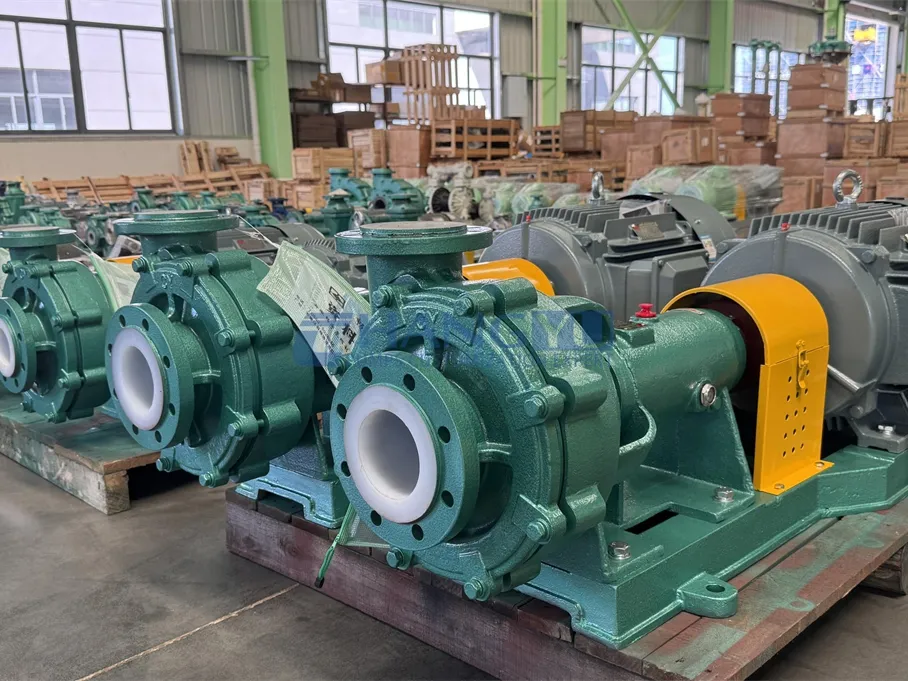
High head slurry pumps serve applications where slurry must be transported over long distances, lifted to significant elevations, or injected into high-pressure process vessels.
Tailings Long-Distance Transport
The most common high head slurry pump application. Tailings are pumped from the processing plant to a tailings storage facility that may be several kilometers away and at a higher elevation. System heads of 50–150 m are typical, requiring either single-stage high head pumps or multi-stage series configurations. For pipelines crossing significant elevation changes, energy dissipation at the pipeline discharge may be required to prevent vacuum conditions on downhill sections. Drop boxes, orifice plates, or energy-dissipating valves are commonly used to manage this excess energy.
Deep Mine Dewatering
Underground mines require pumps capable of lifting slurry-laden water from depths of hundreds of meters. High head slurry pumps in series configurations deliver the necessary head while handling the abrasive solids present in mine water.
High-Pressure Reactor Feed
In hydrometallurgical processes such as pressure oxidation and autoclave leaching, slurry must be fed into high-pressure vessels. Pumps must deliver heads sufficient to overcome the vessel operating pressure plus piping losses, while handling abrasive and often corrosive slurries at elevated temperatures.
5. How to Select the Right High Head Slurry Pump?
High head slurry pump selection requires matching materials, pump configuration, and seal specification to the specific requirements of high-velocity, high-pressure slurry service.
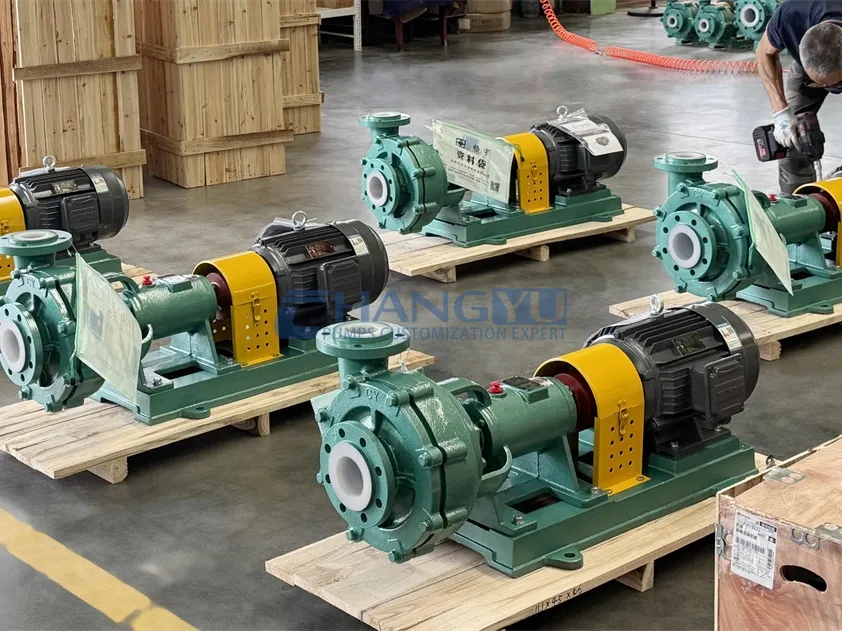
High Head Slurry Pump Type Comparison
Table: High Head Slurry Pump Type Comparison
| Pump Type | Head Range | Flow Range | Solids Handling | Best For |
|---|---|---|---|---|
| Single-Stage High Head | 50–100 m | Up to 1,000+ m³/h | Excellent | Most high head applications; simpler maintenance |
| Multi-Stage Series | 100–200+ m | Up to 1,000+ m³/h | Excellent | Long-distance transport; high elevation lifts |
| Vertical Turbine | 50–150 m | Up to 500 m³/h | Moderate | Deep sump applications; NPSH-limited installations |
Common High Head Slurry Pump Problems and Solutions
Table: Common High Head Slurry Pump Problems and Solutions
| Problem | Root Cause | Solution |
|---|---|---|
| Accelerated wear at high head | Velocity-wear relationship | Upgrade to Cr33, tungsten carbide, or ceramic liners |
| Cavitation at higher speeds | NPSHr increased with pump speed | Lower pump elevation; increase suction pipe diameter; verify NPSHa margin |
| Seal failure after startup | Startup pressure surge | Install VFD soft-start; use Plan 53C with pre-start barrier pressure |
| Uneven load in series pumps | Mismatched pump curves | Use identical pump models with factory-tested curves |
| Pipeline blockage on downhill sections | Solids settlement at low velocity | Maintain critical settling velocity; install energy dissipation |
Five-Step High Head Slurry Pump Selection Process
Step 1: Characterize the slurry.
Determine solids concentration, particle size distribution, ore hardness (Mohs scale), pH, chloride concentration, and temperature.
Step 2: Calculate head and verify NPSH.
Calculate total dynamic head (static lift plus friction losses). Verify that NPSHa exceeds NPSHr by at least 1 meter or 30%, whichever is larger. Note that NPSHr increases with pump speed — a pump that operates cavitation-free at lower head may cavitate at higher head.
Step 3: Determine single-stage or multi-stage configuration.
For heads up to 100 m, a single high head pump may suffice. For heads above 100 m, multi-stage series configuration is required. Select identical pump models for all stages.
Step 4: Select materials.
Match wetted materials to ore hardness, head range, and slurry chemistry per the matrix in Section 1. For silica-rich ores at heads above 50 m, high-chrome Cr33 is the minimum grade.
Step 5: Specify seal arrangement.
Select seal flush plan based on seal chamber pressure and slurry characteristics per the guide in Section 3. For elevated seal chamber pressures, Plan 53C or 54 is recommended.
Engineers at Changyu Pump recommend: When selecting a high head slurry pump, verify NPSH margin at the maximum expected operating head — not the normal operating head. The increase in pump speed at higher head raises NPSHr, and a margin that is adequate at lower head may be insufficient at the upper end of the operating range.
6. Case Study of High Head Slurry Pump: Solving High Head Tailings Pump Short Life
A copper mine in South America operated a multi-stage tailings pumping system transporting concentrator tailings to a storage facility 8 km away with a 120 m elevation rise. Original specification: two pumps in series with high-chrome Cr27 wet-end components and API Plan 32 single mechanical seals. The pumps were mismatched — one was a newer model with slightly different impeller geometry than the other.
The upstream pump required impeller replacement every 6–8 weeks. The downstream pump experienced impeller wear every 4–6 weeks — the accelerated wear traced to the higher suction pressure at the second pump, which increased the effective head across the impeller. Mechanical seal failures occurred every 3–4 months on the downstream pump, with inspection showing seal face damage consistent with startup pressure surge.
Root cause analysis identified three contributing factors:
- The mismatched pump curves caused the upstream pump to operate near its best efficiency point while the downstream pump operated at a less efficient point on its curve, experiencing higher internal velocities and accelerated wear.
- High-chrome Cr27 was inadequate for the silica-rich copper tailings at the high velocities in the second pump.
- The API Plan 32 single seals lacked sufficient barrier pressure at the downstream pump, where seal chamber pressure was elevated by the upstream pump’s discharge pressure.
The mine replaced both pumps with Changyu PGY Series pumps featuring identical high-chrome Cr33M wet-end components and API Plan 53C double mechanical seals. The identical pump models ensured matched performance curves. The Cr33M material provided the wear resistance needed for the high-velocity service. The Plan 53C seals with pressurized barrier fluid maintained seal integrity at the elevated pressures experienced by the downstream pump.
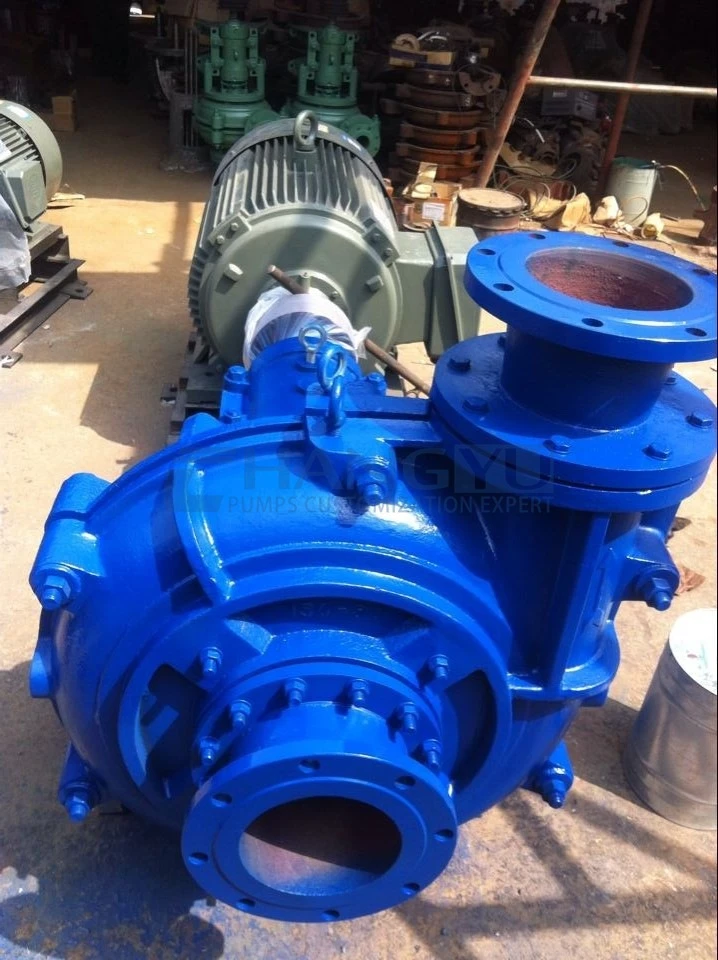
Over 18 months of operation: impeller life on both pumps extended beyond 8 months. Seal failures eliminated. The pump replacement cost was recovered through reduced maintenance downtime and avoided production losses.
Key takeaway: In multi-stage high head slurry pumping, pump curve matching is as critical as material selection. Mismatched pumps cause uneven load distribution that accelerates wear on the overloaded pump. Identical pump models eliminate this risk. For the downstream pump in a series configuration, verify that the casing pressure rating and seal arrangement are rated for the elevated suction pressure created by the upstream pump.
7. Changyu Pump High Head Slurry Pump Solutions
Changyu Pump offers three pump series suitable for high head slurry applications across mining, mineral processing, and chemical industries.
High Head Slurry Pump Product Selection Guide
Table: High Head Slurry Pump Product Selection Guide
| Application | Key Challenge | Recommended Series | Key Feature |
|---|---|---|---|
| Single-stage high head (50–100 m) | High velocity wear | PGY Series | Flow 117–976 m³/h; head up to 101.6 m; high-chrome Cr33M |
| Multi-stage high head (100–200+ m) | Series configuration + wear | PGY Series (multiple units) | Identical models for matched curves; total head 200+ m |
| Corrosive high head | Acid/chloride + abrasion | HB Series | Flow 10–60 m³/h; head 20–120 m; duplex 2205/2507 |
| Chemical/corrosive medium head | Corrosion + moderate abrasion | UHB Series | Flow 3–2,600 m³/h; head 5–100 m; UHMW-PE lined |
PGY Series — Heavy Duty High-Head Slurry Pump
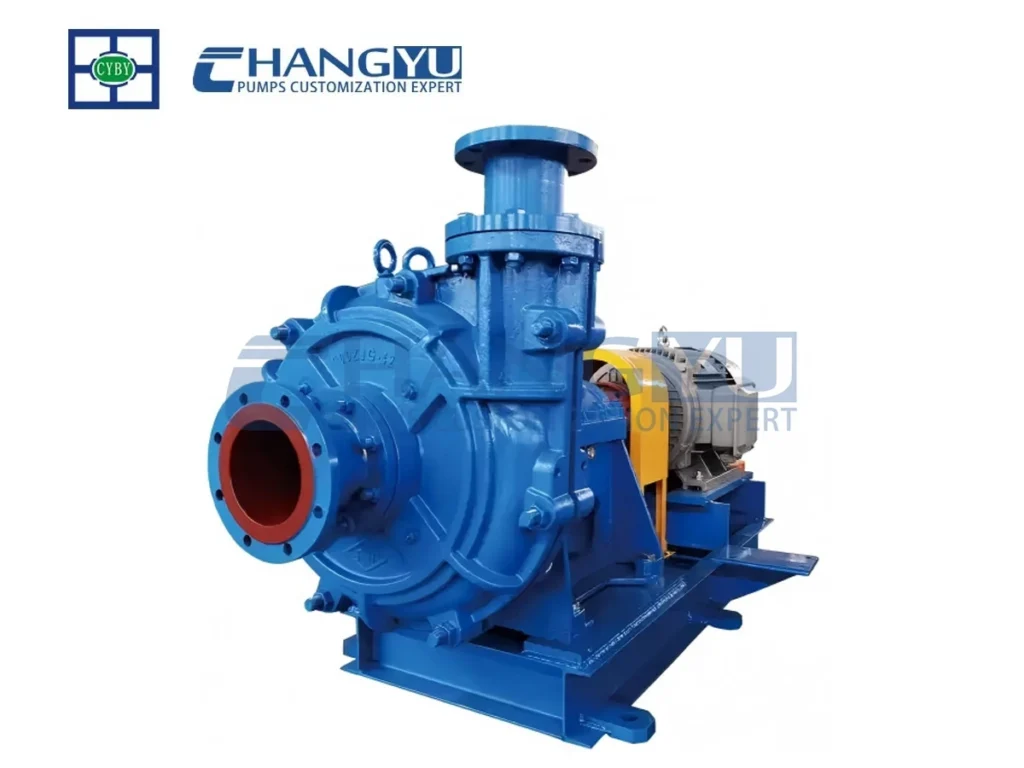
Engineered for high-head and severe-wear conditions. Double-casing construction allows wetted part replacement without dismantling piping. Oil-lubricated bearing assembly ensures long-term reliability under continuous high-load operation. For heads exceeding the single-pump maximum, multiple PGY pumps can be configured in series to achieve total system heads of 200 m or more.
| Parameter | Specification |
|---|---|
| Flow rate | 117–976 m³/h |
| Head | 21.1–101.6 m |
| Motor power | 22–560 kW |
| Speed | 730 / 980 / 1,480 r/min |
| Materials | BTMCr27 / BTMCr28 / BTMCr33 / duplex stainless steel |
UHB Series — UHMW-PE Lined Pump for Corrosive Slurry
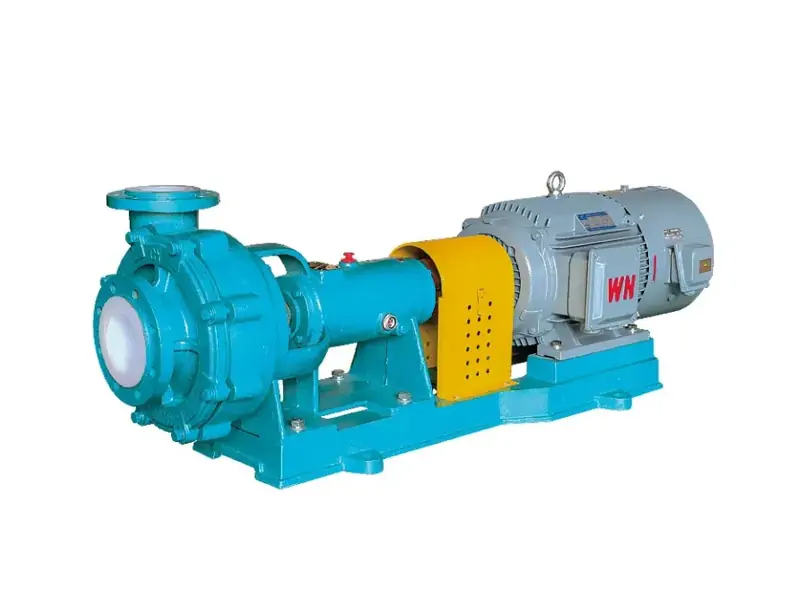
Steel-lined UHMW-PE centrifugal pump for slurry containing chemical additives or acidic process water. UHMW-PE provides combined corrosion resistance and abrasion resistance. Wide flow range covers applications from pilot plants to large concentrators.
| Parameter | Specification |
|---|---|
| Flow rate | 3–2,600 m³/h |
| Head | 5–100 m |
| Motor power | 0.75–300 kW |
| Speed | 750–2,900 r/min |
| Temperature | -20°C to 90°C |
| Lining material | UHMW-PE |
HB Series — Stainless Steel Pump for Corrosive High Head Applications
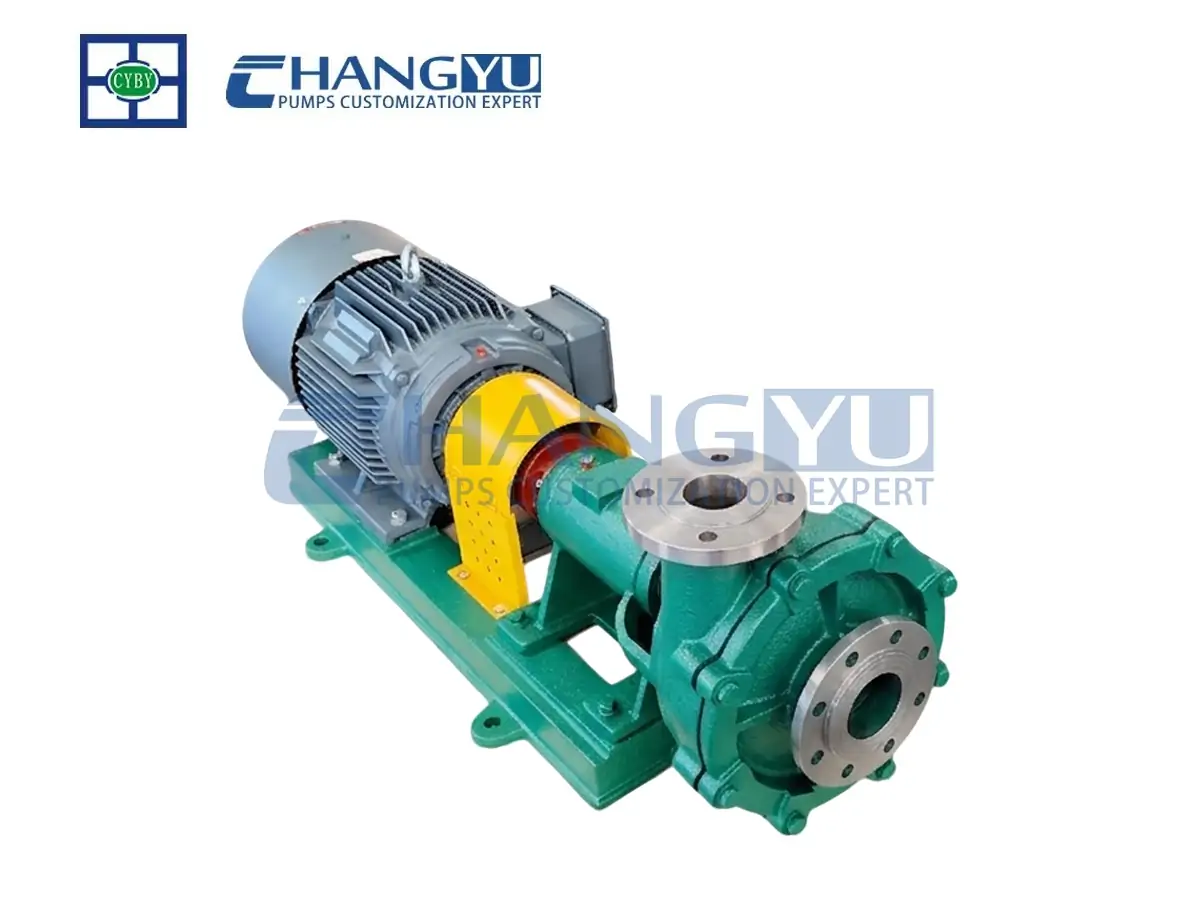
ISO 2858 compliant horizontal centrifugal pump with all-stainless steel wetted construction. Available in 316L, duplex 2205, and super duplex 2507. Suitable for corrosive high head slurry where acid or chloride resistance is required alongside wear resistance.
| Parameter | Specification |
|---|---|
| Flow rate | 10–60 m³/h |
| Head | 20–120 m |
| Motor power | 3–45 kW |
| Speed | 2,900 r/min |
| Temperature | -20°C to 120°C |
| Materials | 304 / 316L / 2205 / 2507 |
FAQs about High Head Slurry Pumps
Q: What makes high head slurry pumping more challenging than standard slurry pumping?
A: High head slurry pumps operate at higher flow velocities to generate the required head. The relationship between wear rate and velocity follows an approximate cubic relationship — doubling the velocity can increase wear by a factor of 5–10. Higher speeds also increase NPSH required, making cavitation more likely if suction conditions are not verified.
Q: What material is best for high head slurry pump impellers?
A: High-chrome Cr33/Cr33M (700–750 HB) is the baseline for heads above 50 m in abrasive service. Tungsten carbide liners provide extended life in high-velocity applications. Duplex 2205 is specified for corrosive high head service.
Q: How do I configure multi-stage high head slurry pumps?
A: Use identical pump models with matched performance curves for all stages. Verify that the casing pressure rating of each downstream pump exceeds the cumulative head of all upstream pumps. Install check valves downstream of each pump.
Q: Why do seals fail more often in high head slurry pumps?
A: High discharge pressures increase load on seal faces. During startup, seal chamber pressure rises rapidly before the fluid film is established. A VFD soft-start or a seal flush system that maintains barrier pressure before pump start reduces this risk.
Q: What is the maximum head a single slurry pump can achieve?
A: Single-stage high head slurry pumps typically achieve up to 100 m head. For heads above 100 m, multi-stage series configurations using identical pump models can achieve total system heads of 200 m or more.
Q: How does high head affect NPSH requirements?
A: Higher pump speeds increase NPSH required. Verify NPSHa exceeds NPSHr by at least 1 meter or 30%, whichever is larger, at the maximum expected operating head, not just the normal operating head.
Changyu Pump Engineer’s Avoidance Checklist
- For heads above 50 m in abrasive service, high-chrome Cr33 is the minimum recommended material. Cr27 wear life is significantly shortened at the elevated velocities required for high head operation.
- Verify NPSH margin at the maximum expected operating head, not the normal head. NPSHr increases with pump speed, and a margin adequate at lower head may be insufficient at higher head.
- For multi-stage series configurations, use identical pump models with factory-tested performance curves. Mismatched pumps cause uneven load distribution and accelerated wear.
- Verify that the casing pressure rating of each downstream pump in a series configuration exceeds the cumulative head of all upstream pumps. This is a standard API 610 requirement.
- Conduct a hydraulic surge analysis during the design phase for long-distance high head pipelines. Water hammer from pump trips can cause catastrophic pipeline failure.
- For pumps started against high discharge pressure, use VFD soft-start to reduce the startup pressure surge that damages mechanical seal faces.
- For elevated seal chamber pressures, API Plan 53C or Plan 54 double seal arrangements provide the reliability needed for continuous service.
- Keep a spare wet-end assembly in inventory for critical high head slurry pumps. The cost of a spare pump is minor compared to the cost of system downtime.
Conclusion
Selecting a high head slurry pump requires addressing the accelerated wear that results from the velocity-wear relationship, configuring multi-stage systems with matched pump curves and verified casing pressure ratings, and specifying seals that withstand high discharge pressures and startup pressure surges. Three decisions determine pump reliability: material selection matched to the head range and ore characteristics, pump configuration that ensures balanced operation across all stages, and seal specification that accounts for the elevated pressures inherent in high head service.
For heads above 50 m in abrasive service, high-chrome Cr33 provides the baseline material specification. For multi-stage configurations, identical pump models eliminate the load imbalance that accelerates wear on individual pumps. API Plan 53C or Plan 54 double seal arrangements provide the reliability needed at the elevated discharge pressures characteristic of high head slurry pumping.
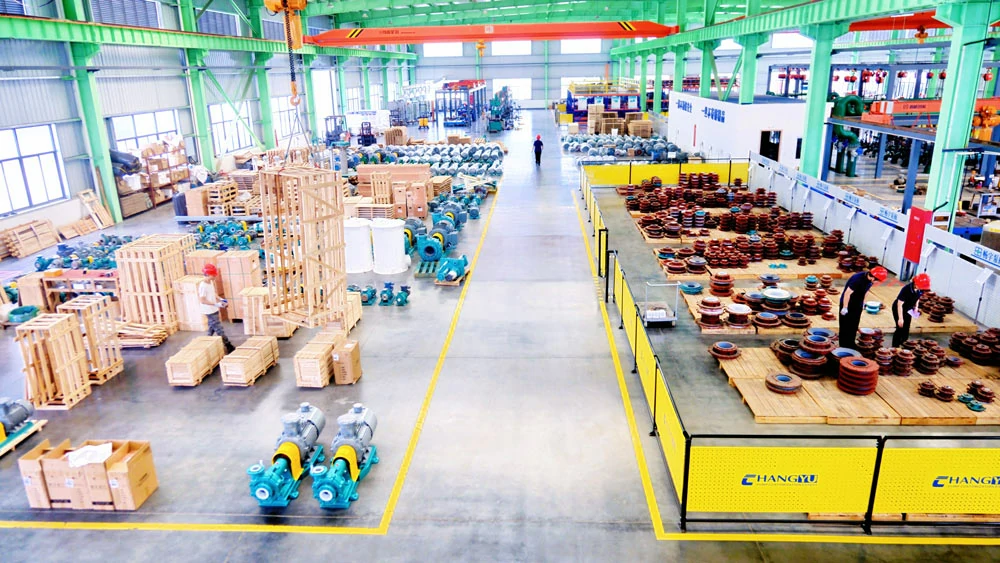
When you are ready to specify a high head slurry pump for your application, Changyu Pump’s engineering team can provide a technical assessment covering slurry characterization, material recommendation, and pump configuration matched to your specific head and flow requirements. Two decades of wear-resistant pump manufacturing across mining, mineral processing, and chemical applications inform every recommendation.