
Project Background
The customer is a lead-acid battery recycling company in Bulgaria, specializing in spent lead-acid battery dismantling, recycled lead production, and by-product recovery. The production process involves waste sulfuric acid, battery electrolyte, acidic circulating liquid, and other process fluids. Some of these fluids also contain small amounts of lead sludge and suspended particles, which makes the Pump for Battery Recycling more demanding than typical clean-liquid applications.
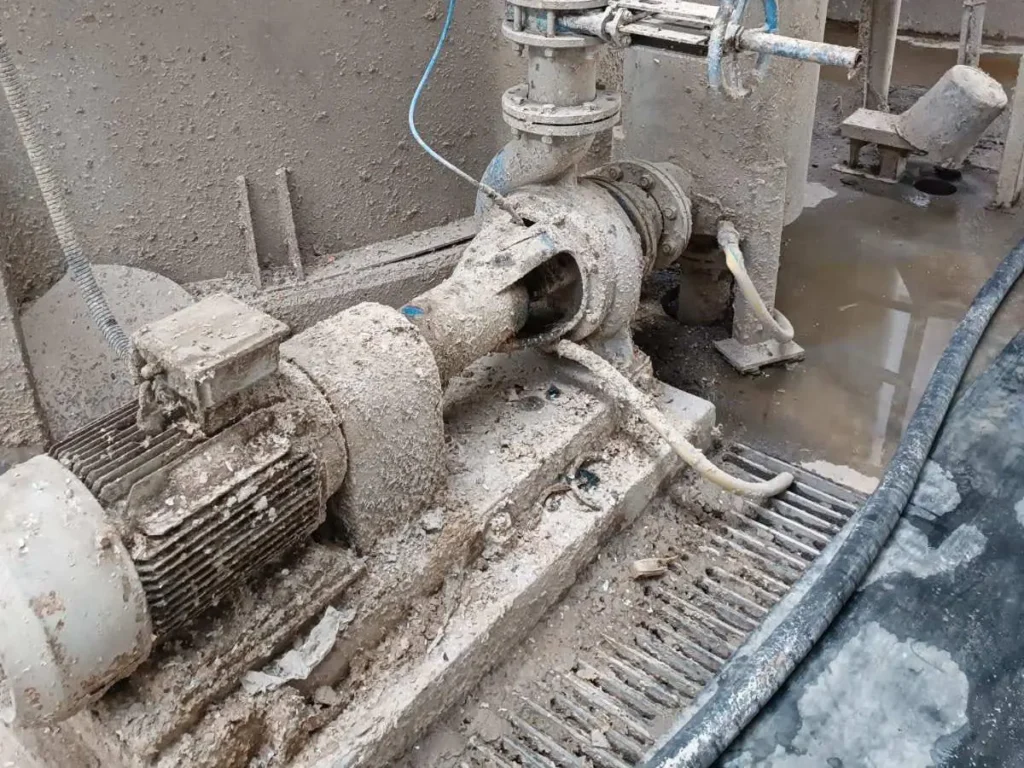
The customer’s existing pumps had been operating under acidic conditions for an extended period. Wear on the wetted parts had become more serious, maintenance was becoming more frequent, and operating stability had gradually declined.
The project was carried out with the support of a local authorized partner in Bulgaria. The partner provided local communication, installation guidance, and after-sales service, while Changyu Pump was responsible for pump selection and technical support.
Project Conditions
The main media involved in this Pump for Battery Recycling project included:
| Pumping Medium | Working Condition | Main Concern |
|---|---|---|
| Waste sulfuric acid | Strongly corrosive | Corrosion resistance |
| Acidic circulating liquid | Corrosive | Long-term operation |
| Acidic slurry with lead mud | Acidic + solid particles | Corrosion and wear |
| Battery electrolyte | Corrosive | Material compatibility |
The more difficult condition was the acidic slurry containing lead mud. For relatively clean acid, corrosion resistance is usually the main concern. When solid particles are present, however, the impeller, pump chamber, and flow passages are also exposed to particle wear.
For this reason, pump selection for battery recycling cannot be based on corrosion resistance alone.
Problems with the Existing Pumping System
The pumps had been exposed to acidic media for a long time. Some of the process streams also contained lead mud and suspended particles, so the wetted parts were subject to both chemical corrosion and mechanical wear.
The main problems included:
- Faster wear of wetted parts
- More frequent maintenance
- Reduced service life of seals
- Lower operating stability
- Maintenance interruptions affecting production
For a lead-acid battery recycling plant, waste acid transfer is part of the continuous production process. Frequent pump maintenance can therefore affect downstream operations.
The customer needed a pumping system that could handle the actual process conditions rather than simply meet the required flow rate and head.
Changyu Pump Selection
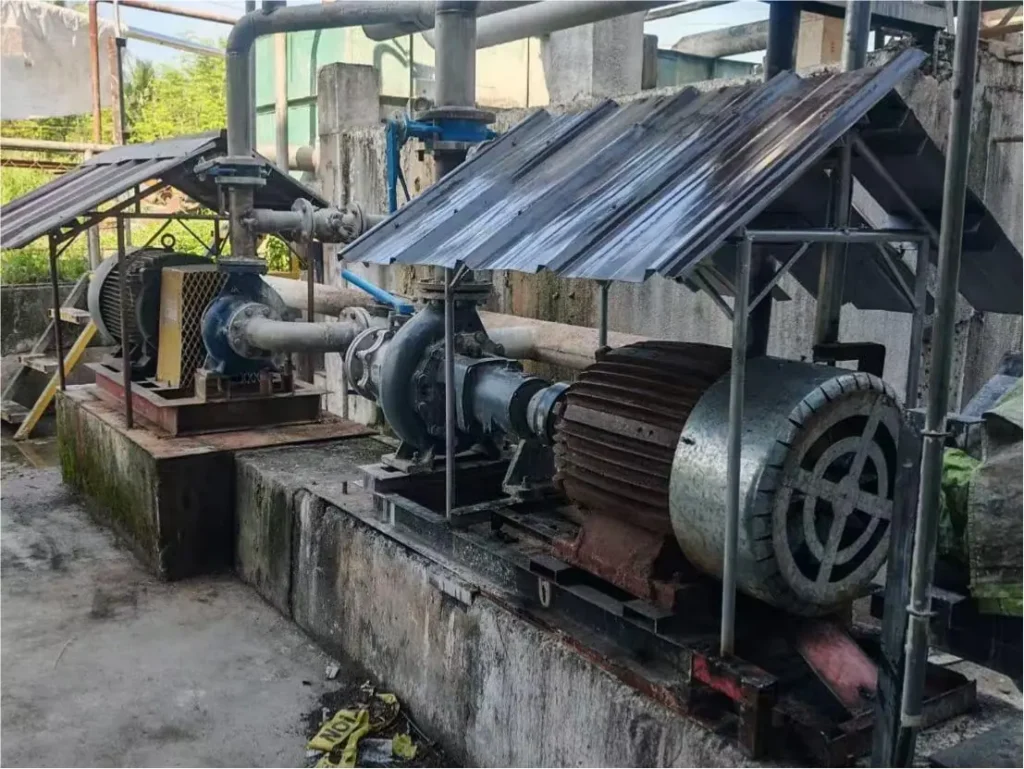
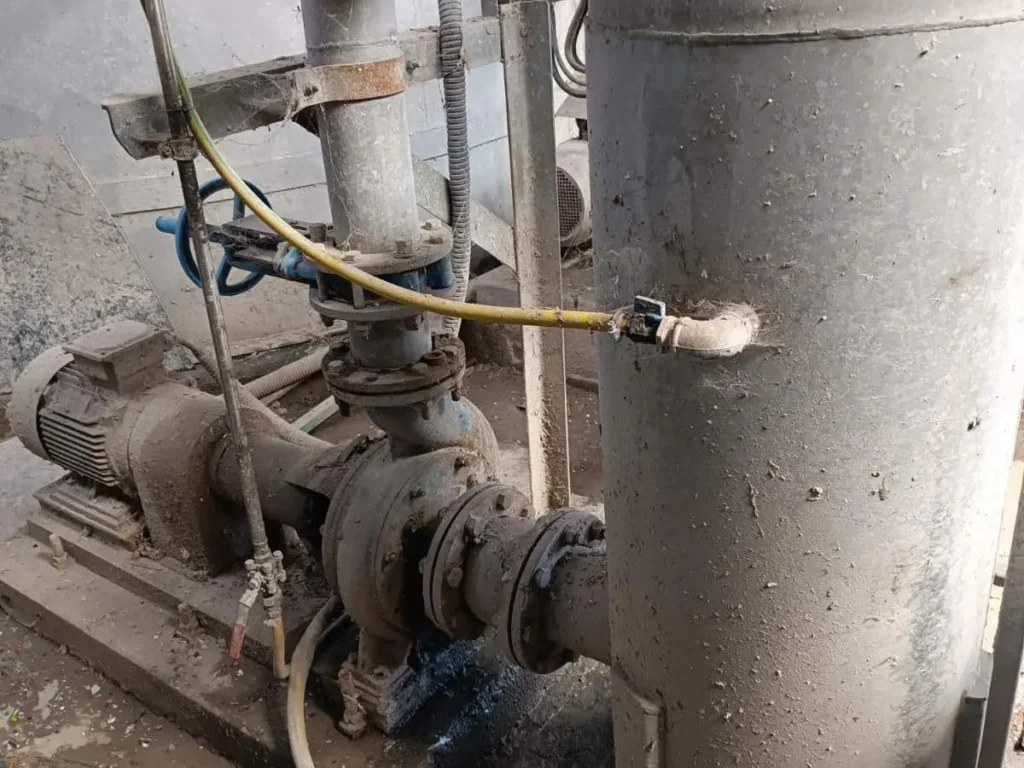
Changyu Pump did not use one pump type for every operating point. Based on the characteristics of each medium, the engineering team selected the UHB wear-resistant and corrosion-resistant slurry pump and the CYF fluoroplastic-lined centrifugal pump.
| Application | Pump | Main Material | Selection Consideration |
|---|---|---|---|
| Acidic slurry with lead mud | UHB slurry pump | UHMW-PE | Corrosion and particle wear |
| Waste sulfuric acid | CYF lined centrifugal pump | PTFE | Corrosion resistance |
| Acidic circulating liquid | UHB / CYF | UHMW-PE / PTFE | Depends on solids and medium |
| Battery electrolyte | CYF lined centrifugal pump | PTFE | Corrosion resistance |
For relatively clean acid, corrosion resistance was the main consideration. For acidic media containing lead mud or suspended particles, wear resistance also had to be taken into account.
UHB Wear-Resistant and Corrosion-Resistant Slurry Pump
For acidic slurry containing small amounts of lead mud and suspended particles, the project used the UHB wear-resistant and corrosion-resistant slurry pump.
The wetted parts of the UHB are made of ultra-high molecular weight polyethylene (UHMW-PE). The material provides corrosion resistance as well as wear resistance, making the pump suitable for acidic slurry containing solid particles.
In this project, the UHB was mainly used for acidic slurry and related circulating media.
For this type of application, corrosion resistance alone is not enough. The wetted parts also need to withstand the continuous wear caused by suspended solids.
For more information about this slurry pump model, please see our product page:UHB Series Industrial Slurry Pumps
CYF Fluoroplastic-Lined Centrifugal Pump
The CYF fluoroplastic-lined centrifugal pump was selected for waste sulfuric acid, battery electrolyte, and other corrosive liquid applications.
The CYF uses a fluoroplastic-lined construction. PTFE and other corrosion-resistant materials protect the wetted areas from direct contact with the corrosive medium.
For waste sulfuric acid and similar fluids, material selection is an important part of pump selection. The CYF was mainly used for acid transfer and circulation in this project.
The pump structure is designed to provide stable liquid transfer under continuous operating conditions while reducing the risk of corrosion to the metal base.
For more information about this fluoroplastic pump, please see our product page:CYF Series Fluoroplastic Centrifugal Pump
Main Equipment Parameters
The main operating parameters for the project were:
| Parameter | Range |
| Flow Rate | 45–55 m³/h |
| Head | 34–42 m |
| Motor Power | 11–15 kW |
| Liquid Temperature | 20–70°C |
| Power Supply | 400V / 50Hz / Three Phase |
| UHB Wetted Material | UHMW-PE |
| CYF Lining Material | PTFE |
The final equipment configuration was selected according to the conditions at each pumping point. The same pump model was not necessarily used throughout the entire system.
Engineer’s Recommendation
For a Pump for Battery Recycling application, Changyu Pump engineers normally look beyond flow rate and head.
These parameters are important, but the characteristics of the medium can have a greater influence on pump selection.
The key information includes:
What is the medium? What is its concentration? What is the temperature? Does it contain solids? How much?
For example:clean sulfuric acid and acidic slurry containing lead mud should not automatically be treated as the same pumping condition.
| Actual Condition | Main Engineering Concern |
|---|---|
| Clean acid | Corrosion resistance |
| Acid with suspended particles | Corrosion + wear |
| Acidic slurry | Wear resistance and flow passage |
| High-temperature acid | Material and seal temperature resistance |
| Continuous operation | Overall pump and sealing reliability |
For battery recycling plants, it is better to provide the complete medium information instead of simply describing the fluid as “waste acid.”
The acid concentration, temperature, flow rate, head, and solids content should be confirmed before final pump and material selection.
Local Support in Bulgaria
The project was completed with the support of a local authorized partner in Bulgaria.
The local partner assisted with project communication, installation guidance, and after-sales service, while Changyu Pump provided technical support for pump selection and equipment configuration.
For overseas industrial projects, local technical support can make installation and follow-up service more convenient for the customer.
Spare parts, maintenance questions, and on-site technical issues can also be handled through the local partner.
Changyu Pump Solutions for Lead-Acid Battery Recycling
Pumping conditions in lead-acid battery recycling plants can vary considerably.
Waste sulfuric acid, battery electrolyte, and acidic circulating liquids mainly create corrosion concerns. Acidic slurry containing lead mud presents another challenge because corrosion and wear occur at the same time.
Changyu Pump selects different pump types and materials according to the actual operating conditions.
In this project:
- The UHB wear-resistant and corrosion-resistant slurry pump was used for acidic media containing lead mud and suspended particles.
- The CYF fluoroplastic-lined centrifugal pump was used mainly for corrosive liquids such as waste sulfuric acid and battery electrolyte.
For more complex applications, the acid concentration, temperature, solids content, and other operating conditions should be checked before final pump selection.
Looking for a Pump for Battery Recycling in Bulgaria?
If your plant is involved in lead-acid battery recycling, recycled lead production, waste acid treatment, or acid circulation, and you are replacing existing pumps or planning a new pumping system, Changyu Pump can provide technical assistance based on the actual process conditions.
The selection can be based on:
- Pumping medium
- Acid concentration
- Solids content
- Operating temperature
- Flow rate
- Head
- Continuous operating conditions
For projects in Bulgaria, customers can also receive installation guidance, technical support, and after-sales service through the local authorized partner.
Changyu Pump focuses on matching the pump to the actual operating conditions of the plant, rather than simply selecting a pump from a standard specification sheet.
If you have similar operational conditions that need to be addressed, contact us today.
Email: [email protected]
TEL/WA: +86-13651913727