
Quick Answer
A single stage horizontal slurry pump uses one impeller mounted on a horizontal shaft to transport abrasive, high-density slurries in mining, mineral processing, and industrial applications. This configuration is the most widely used slurry pump type because it combines sufficient pressure capability for the majority of process duties with simple construction that simplifies maintenance. Key characteristics:
- A single impeller generates the entire discharge head in one pass: Practical limits for single-stage centrifugal slurry pumps range from approximately 60 to 80 meters of head, depending on impeller diameter and rotational speed. Within this range, a single-stage pump is simpler, less expensive, and easier to maintain than a multi-stage alternative.
- Horizontal orientation provides full maintenance access at grade level: Impellers, wear liners, bearings, and shaft seals can all be serviced without crane lifts or sump entries. Double-casing construction allows worn liners to be replaced without disconnecting suction and discharge piping.
- Externally adjustable impeller clearance maintains efficiency as components wear: A bolt or jacking screw moves the entire bearing housing and shaft assembly axially, restoring the original clearance between the impeller and throatbush without opening the pump casing.
A centrifugal pump with a single impeller mounted horizontally is the workhorse of mineral processing plants worldwide. Mill discharge, cyclone feed, flotation tailings, thickener underflow — the pumps handling these duties are almost exclusively single-stage horizontal designs. The reason is practical. A single impeller in a horizontal casing provides enough head for the majority of slurry transport requirements. When the impeller and liners wear — as they inevitably do in abrasive service — the horizontal orientation places every wear component at operator level, accessible without the crane lifts and confined-space entries that vertical pump maintenance demands.
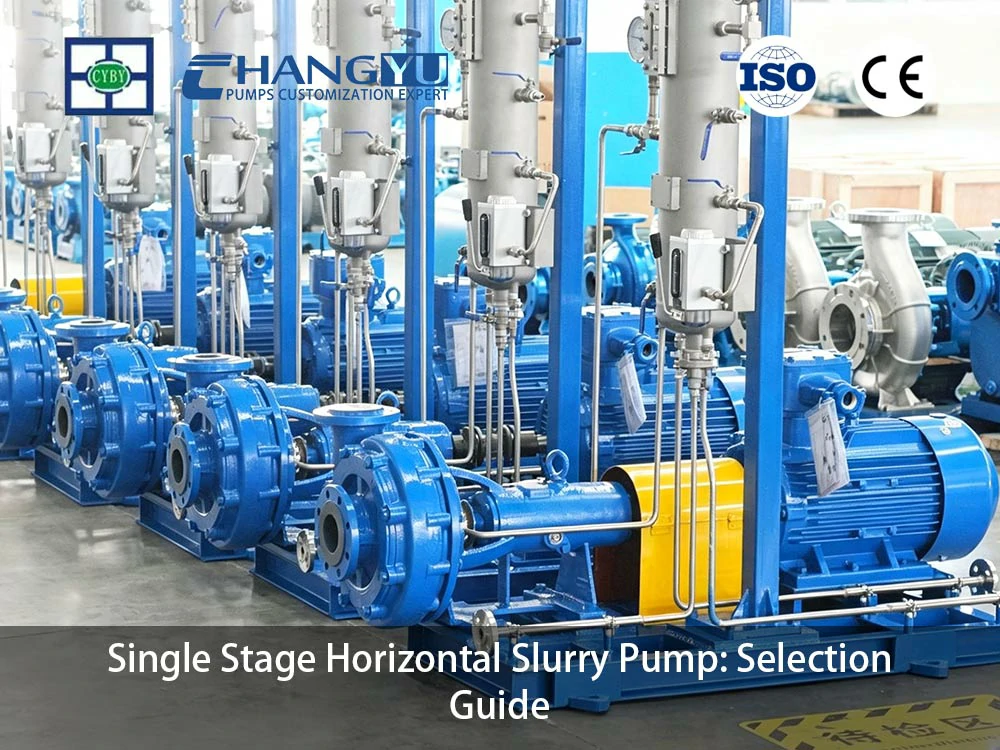
This guide covers the design features that make single-stage horizontal slurry pumps reliable, the operating range within which a single stage is sufficient, the wear materials available, and the selection and maintenance practices that determine service life.
1. What Are the Key Features of a Single Stage Horizontal Slurry Pump?
The single-stage horizontal slurry pump configuration has become the industry standard because it enables specific design features that directly improve reliability and maintainability.
Double-Casing Construction with Replaceable Liners
The pump employs a two-layer casing. The outer casing — ductile iron or cast steel — provides pressure containment and structural support. The inner casing consists of replaceable wear components: a volute liner, a throatbush at the suction side, and a frame plate liner on the drive side. When abrasive wear reaches the replacement threshold, the worn liners are unbolted and replaced with the pump remaining on its baseplate and connected to the suction and discharge piping. The maintenance crew does not need to break flanges, realign the pump and motor, or schedule a crane.
Heavy-Duty Bearing Assembly
A slurry with a specific gravity of 1.5 imposes 50% higher radial and axial loads than the same pump handling water. The bearing assembly absorbs these loads continuously. Oversized, oil-bath lubricated roller bearings with L10 rated lives calculated for the specific slurry density are standard. The bearing housing is split horizontally, allowing the upper half to be removed for inspection without disturbing the shaft or impeller.
Adjustable Impeller Clearance
The clearance between the impeller front shroud and the suction-side throatbush directly affects pump performance. When the pump is new, this clearance is set to the manufacturer’s minimum specification — typically 0.4 to 0.8 mm. As the impeller and throatbush wear, the clearance increases, allowing internal recirculation that reduces efficiency. A single stage slurry pump impeller clearance adjustment mechanism — an external bolt or jacking screw — moves the bearing housing and shaft assembly axially, restoring the original clearance without opening the casing. On a pump drawing several hundred kilowatts, this adjustment can recover 3 to 5 percentage points of lost efficiency.
Shaft Sealing System
The shaft seal must prevent abrasive slurry from escaping along the rotating shaft. For single-stage pumps operating at moderate discharge pressures — up to approximately 80 meters of head — a centrifugal expeller combined with gland packing provides the most reliable and cost-effective single stage slurry pump shaft sealing arrangement. The expeller reduces pressure at the stuffing box to near-atmospheric during operation. The gland packing provides a static seal during shutdown. This combination extends seal life significantly compared to a mechanical seal operating against full discharge pressure. For applications requiring zero visible leakage, a mechanical seal with an API Plan 54 pressurized barrier fluid system is specified.
2. Single Stage vs. Multistage Horizontal Slurry Pumps: When Is One Stage Enough?
The primary distinction between a single-stage and a multi-stage slurry pump is the number of impellers. A single-stage pump contains one impeller that must generate the entire required discharge pressure. A multi-stage pump contains two or more impellers arranged in series, each contributing incremental head.
When a Single Stage Is Sufficient
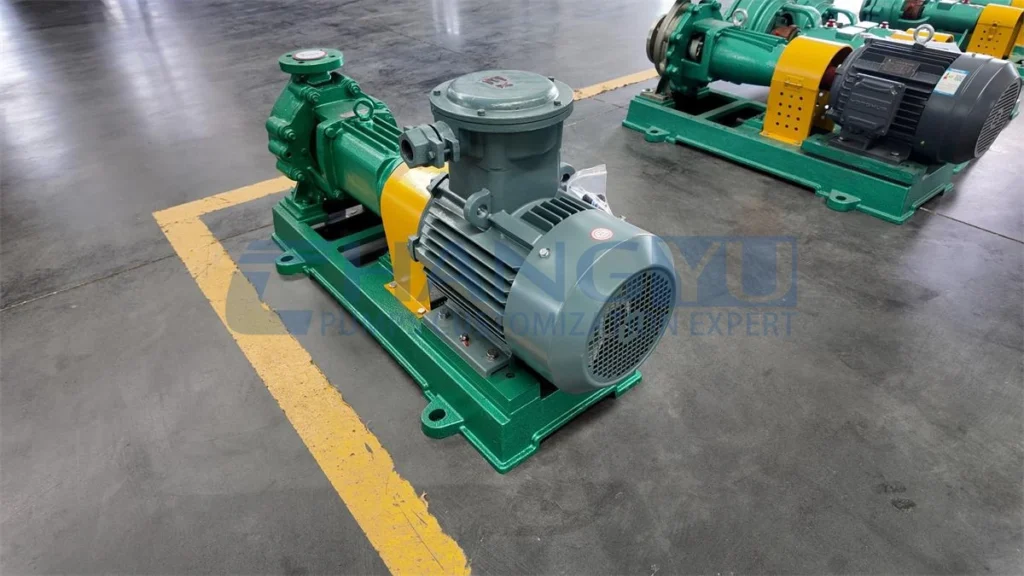
A single-stage centrifugal slurry pump is the appropriate specification when the required discharge head falls within approximately 60 to 80 meters. This encompasses the majority of mineral processing applications: cyclone feed (typically 15 to 40 meters), flotation feed (10 to 25 meters), thickener underflow (20 to 50 meters), and short to medium-distance tailings transfer (20 to 60 meters).
When a Multi-Stage Pump Is Required
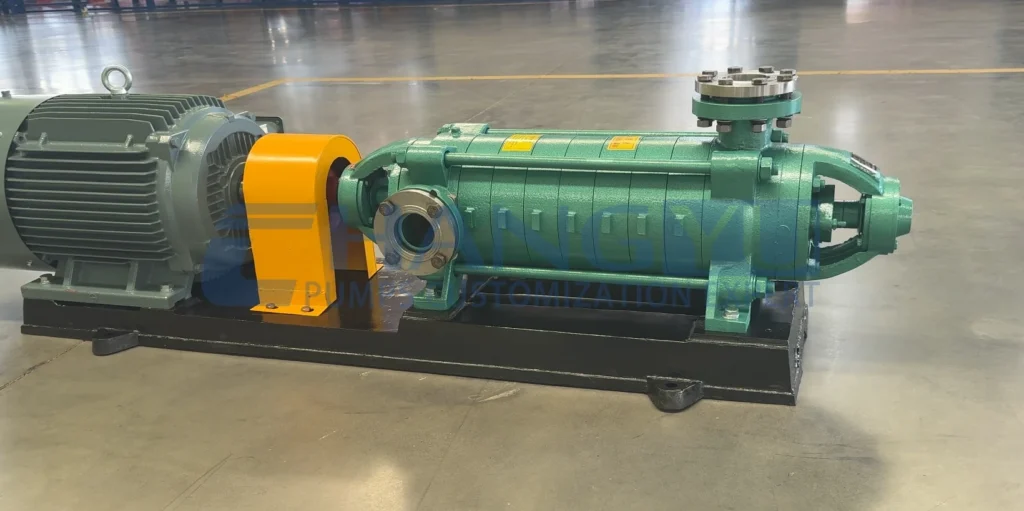
A multi-stage pump becomes necessary when the required discharge head exceeds approximately 80 meters, or when the head approaches the upper limit of single-stage capability and the application demands stable flow across a wide operating range. Long-distance tailings pipelines — often extending 50 kilometers or more — are the primary application for multi-stage slurry pumps. Deep mine dewatering, where water contains abrasive sediments, is another example where specific speed considerations may favor a multi-stage configuration over a single-stage design operating near its hydraulic limits.
Configuration Comparison
| Factor | Single-Stage Pump | Multi-Stage Pump |
|---|---|---|
| Head capability | Up to 60–80 m | 80–300+ m |
| Solids handling | Good — wide impeller passages | Moderate — narrower passages in subsequent stages |
| NPSH requirement | Lower — single impeller suction | Higher — first-stage impeller may require additional suction head |
| Mechanical complexity | Low — fewer rotating components | Moderate to high — multiple impellers, inter-stage seals |
| Maintenance | Simpler — one impeller, one set of liners | More complex — multiple impellers and wear rings |
| Capital cost (relative) | 1× (baseline) | 2–5× |
| Best for | Cyclone feed, flotation feed, thickener underflow, short to medium tailings | Long-distance tailings pipelines, high-pressure applications |
Engineers at Changyu Pump note: If the required total discharge head is below approximately 70 meters, a single-stage pump is almost always more economical than a multi-stage design — not just in initial capital cost, but in total lifecycle cost. The simpler construction reduces both the parts count and the maintenance labor hours per service event. A multi-stage pump should only be specified when the hydraulic requirement cannot be met by a single stage, or when the head is near the upper limit of single-stage capability and the process demands stable operation across a wide flow range.
For design considerations specific to large-format, high-pressure slurry pumps, see our guide on Large Slurry Pumps: A Complete Selection & Material Guide.
3. What Wear Materials Are Best for Single Stage Slurry Pumps?
Wear material selection for single-stage horizontal slurry pumps must account for particle hardness, shape, size, and the chemical environment of the slurry. Five material categories serve the majority of applications.
High-Chrome White Iron (CrMo)
High-chrome white iron (600–700 HB, KIC 25–35 MPa√m) is the standard wear material for single-stage pumps in hard-rock mining. The 28% Cr grade provides the highest carbide volume fraction and is specified for the most abrasive circuits — iron ore, gold ore with high quartz content, and coarse copper tailings. For single-stage pumps operating at moderate heads (< 80 m) with neutral pH, CrMo provides the best balance of cutting wear resistance, impact tolerance, and cost.
Natural Rubber
Rubber liners protect against wear through resilience — the material deforms elastically under particle impact and recovers. This mechanism works with fine, rounded particles in neutral pH at temperatures below 70°C. Rubber-lined single-stage pumps serve copper flotation tailings, fine gold tailings, coal preparation, and mineral sands processing.
Duplex Stainless Steel (2205/2507)
For corrosive slurries — acidic leach solutions, high-chloride process water, or seawater-mixed slurries — standard CrMo corrodes rapidly regardless of its wear resistance. Duplex 2205 (PREN 33–36, 250–300 HB) and super duplex 2507 (PREN 40–44) provide combined corrosion and wear resistance. Single-stage pumps handling copper heap leach solutions or coastal mineral sands with saline groundwater are typical applications.
UHMW-PE Linings
Ultra-high molecular weight polyethylene linings provide combined corrosion and wear resistance for chemically aggressive slurries at moderate temperatures (up to 90°C). UHMW-PE is a cost-effective alternative to duplex stainless steel for acidic tailings, chemical plant slurries, and FGD gypsum slurry.
Ceramic Coatings (SiC / Al₂O₃)
For localized high-wear zones — volute cutwaters and impeller vane leading edges — ceramic coatings or inserts provide maximum hardness (HV 1500–2800). Ceramics are applied as targeted protection rather than full pump linings.
Material Selection Matrix
| Slurry Type | pH | Particle Size | Recommended Material |
|---|---|---|---|
| Iron ore, gold tailings | 6–8 | Angular, coarse | High-chrome CrMo (28% Cr) |
| Copper flotation tailings | 9–11 | Fine, rounded | Natural rubber or CrMo |
| Copper heap leach | 1.5–3 | Fine | Duplex stainless steel or UHMW-PE |
| Coal, mineral sands | 5–7 | Fine to medium | Natural rubber or CrMo |
| Chemical process slurry | 2–10 | Variable | UHMW-PE or PTFE/PFA |
For a comprehensive comparison of wear materials across all slurry pump applications, see our guide on Wear Resistant Slurry Pump: A Complete Material & Selection Guide.
4. How to Select a Single Stage Horizontal Slurry Pump?
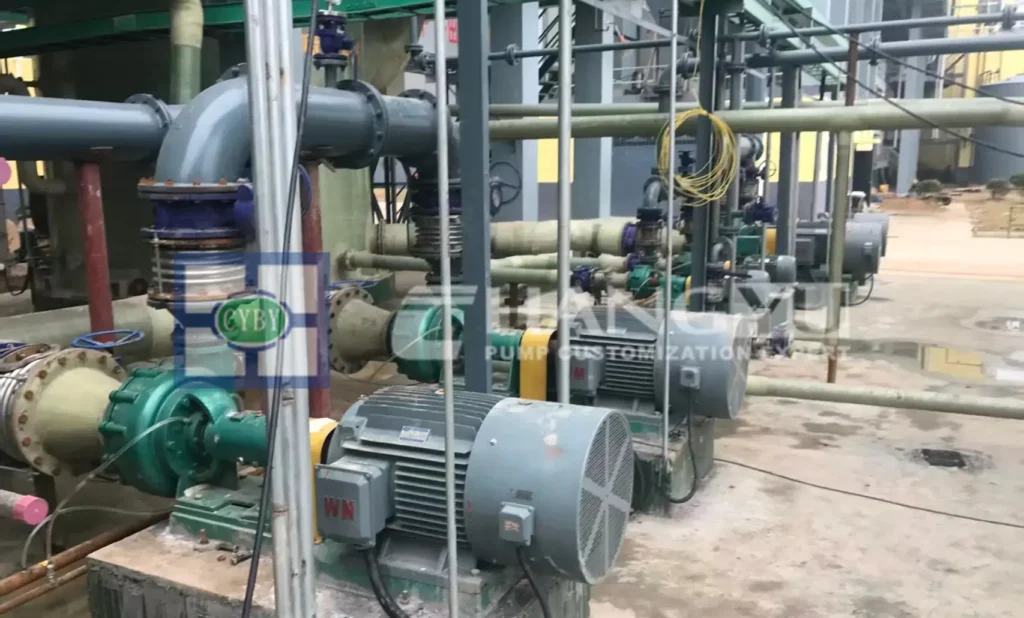
Single-stage slurry pump selection follows a structured process. Errors made early — particularly in slurry characterization — propagate through the entire selection.
Step 1: Characterize the Slurry
Define the solids concentration, particle size distribution (d50 and d100), particle shape, ore hardness (Mohs scale), slurry pH, and temperature. The d100 directly determines the minimum impeller passage size. For single-stage pumps handling mill discharge, tramp oversize may exceed 100 mm.
Step 2: Calculate Hydraulic Requirements
Determine the required flow rate and total dynamic head. If the total head exceeds approximately 70 to 80 meters, verify that a single-stage pump can meet the requirement, or consider a multi-stage alternative. Apply slurry derating factors to account for the effects of solids on pump performance.
Step 3: Select Wear Materials
Match the wear material to the ore characteristics using the matrix in Section 3. For most hard-rock mining applications, high-chrome CrMo is the appropriate specification.
Step 4: Specify Sealing and Bearing Configuration
For discharge pressures up to approximately 80 meters, an expeller-plus-packing combination provides the most cost-effective shaft sealing. Specify oil-bath lubricated roller bearings with temperature and vibration monitoring for pumps exceeding 100 kW.
Engineers at Changyu Pump recommend: When selecting a single-stage slurry pump, verify that the required head falls within the pump’s capable range with adequate margin. Include a 10 to 15 percent flow margin above the design requirement to account for process variations and efficiency loss as wet-end components wear. If the required head exceeds 70 meters, perform a lifecycle cost comparison between a single-stage and a multi-stage pump — the simpler construction of the single-stage design may offset a slightly higher operating speed or impeller diameter.
5. Case Study of Single Stage Horizontal Slurry Pump: Optimizing a Single Stage Tailings Pump
An iron ore concentrator in Western Australia operated a single-stage horizontal slurry pump on tailings duty — rated at 800 m³/h at 65 m head — with standard 26% Cr high-chrome white iron wet-end components. The tailings contained angular magnetite and quartz particles (Mohs 5.5–7.0) at 35% solids concentration. Wet-end replacement was required approximately every 6 months.
Inspection showed the 26% Cr alloy being cut by the harder quartz particles (Mohs 7). Material loss was concentrated at the volute cutwater and impeller vane leading edges. Additionally, the impeller clearance had increased beyond the manufacturer’s recommended maximum due to wear, causing internal recirculation that further accelerated localized wear.
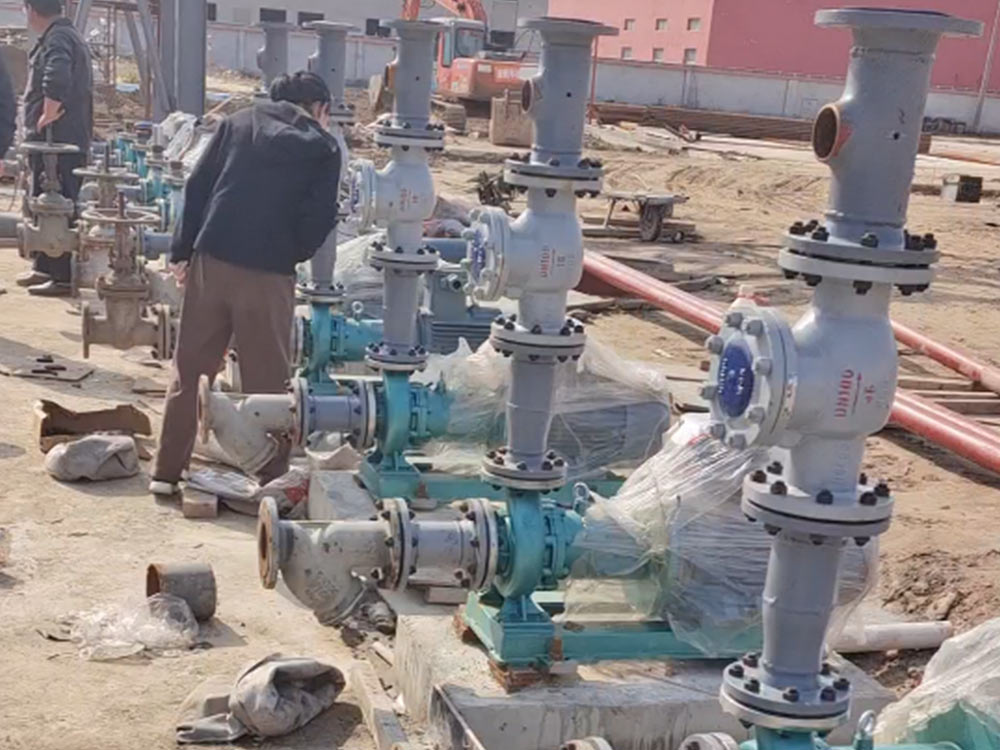
Changyu Pump upgraded the wet-end to 28% Cr alloy with hard chrome plating on the impeller vane leading edges and volute cutwater. The external impeller clearance adjustment mechanism — a standard feature on the pump — was used to restore the original clearance specification without opening the pump casing. This adjustment took approximately 30 minutes and was performed during a scheduled maintenance window.
Wet-end replacement interval extended from 6 months to 18 months. The plant applied the same material specification and clearance adjustment procedure to three additional single-stage tailings pumps.
Key takeaway: On a single-stage horizontal slurry pump, two factors determine wet-end life: the material specification and the impeller clearance. Upgrading the material without adjusting the clearance, or adjusting the clearance without upgrading the material, delivers only a fraction of the achievable life extension. The external clearance adjustment mechanism — a standard feature on well-designed single-stage pumps — enables this combined optimization during routine maintenance.
6. Single Stage Horizontal Slurry Pump Solutions from Changyu Pump
Changyu Pump manufactures single-stage horizontal slurry pump series for the full spectrum of abrasive and corrosive applications.
| Application | Primary Challenge | Recommended Series | Key Material |
|---|---|---|---|
| Corrosive slurry, acidic tailings | Corrosion + moderate abrasion | UHB Series | UHMW-PE lining |
| Chemical process, moderate corrosion + wear | Combined wear + corrosion | CYB-ZKJ Series | FEP/PFA lining; temperature to 120°C |
| High-temperature, strong corrosion (extreme conditions, fine solids) | Corrosion + temperature + fine abrasion | CYG Series | PFA lining (8–20 mm); temperature to 160°C |
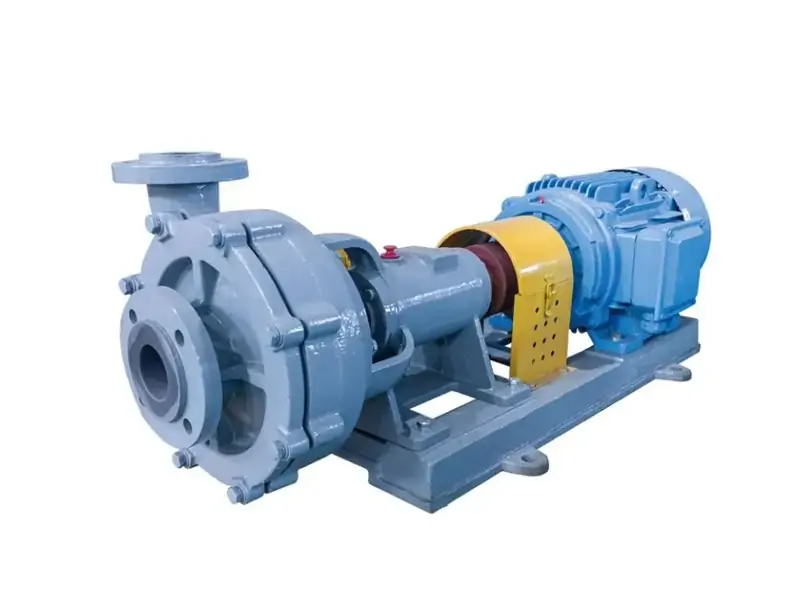
UHB Series — UHMW-PE Lined Corrosion Resistant Slurry Pump
Steel-lined UHMW-PE single-stage horizontal centrifugal pump for corrosive and abrasive slurries. Widened flow passages reduce clogging risk. Flow rates to 2,600 m³/h, heads to 100 m.
| Flow Rate Range : | 3m³/h~2600m³/h |
|---|---|
| Head Range: | 5m~100m |
| Motor Power : | 0.75kw~300kw |
| Speed: | 750~2900 r/min |
| Medium Temperature Range: | -20℃~90℃ |
| Customizable Materials: | UHMW-PE |
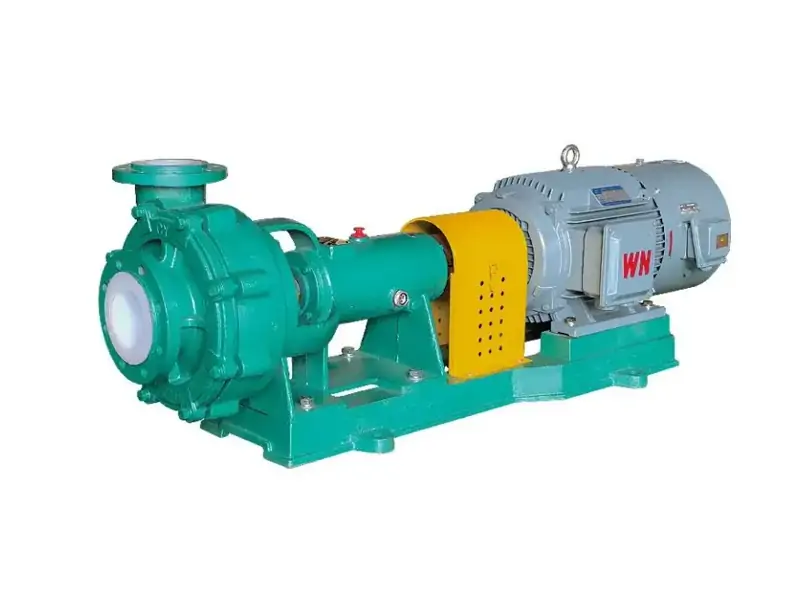
CYB-ZKJ Series — Fluoropolymer-Lined Centrifugal Pump
FEP/PFA-lined single-stage pump for chemically aggressive slurries. Temperature range -80°C to 120°C (FEP) or 180°C (PFA).
| Flow Rate Range : | 3m³/h~2600m³/h |
|---|---|
| Head Range: | 5m~100m |
| Motor Power : | 0.75kw~300kw |
| Speed: | 968-3450 r/min |
| Medium Temperature Range: | -80℃~ 120℃ |
| Customizable Materials: | FEP |
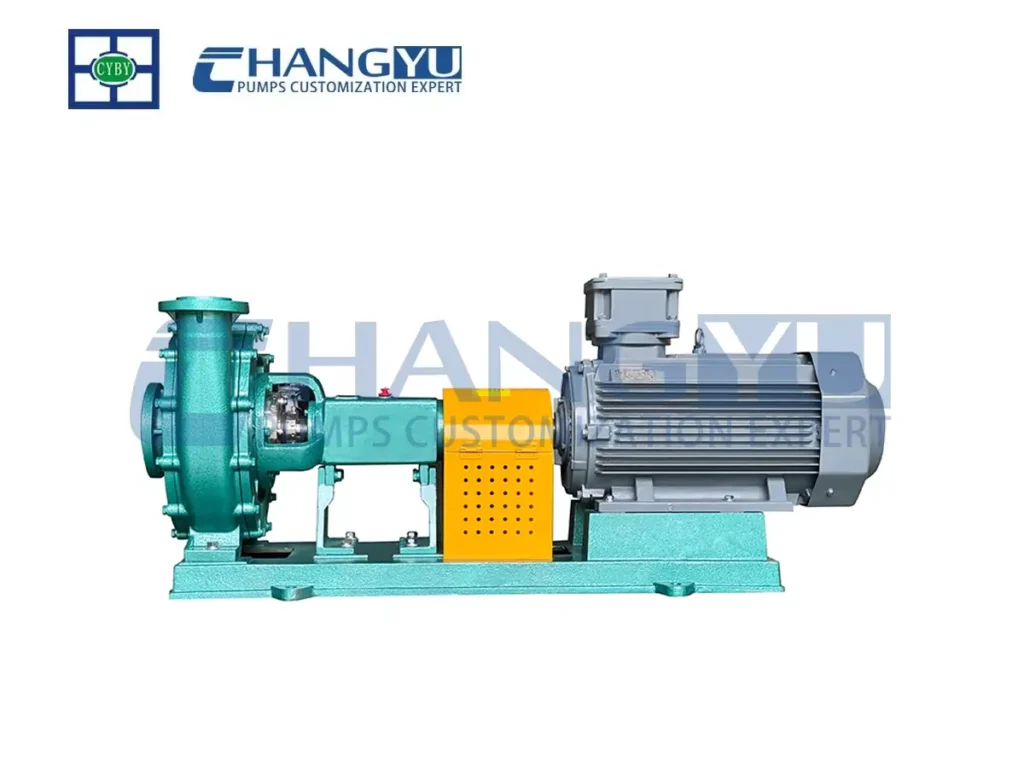
CYG Series — High Temperature Chemical Pump
PFA-lined single-stage pump for extreme conditions: high temperatures, corrosive substances, and fine abrasive solids. PFA lining (8–20 mm), temperature to 160°C.
| Flow Rate Range : | 3m³/h~2600m³/h |
|---|---|
| Head Range: | 5 m ~ 100 m |
| Motor Power : | 0.75 kw~300 kw |
| Speed: | 968 ~ 3450 r/min |
| Medium Temperature Range: | -80℃~160℃ |
| Customizable Materials: | PFA |
FAQs about Single Stage Horizontal Slurry Pumps
Q: What is the maximum head a single-stage horizontal slurry pump can produce?
A: Single-stage centrifugal slurry pumps typically achieve 60 to 80 meters of head, depending on impeller diameter and rotational speed. Beyond this range, a multi-stage pump is required. The exact limit varies with pump size and manufacturer specifications.
Q: What are the advantages of a single-stage pump over a multi-stage pump?
A: Single-stage pumps have simpler construction with fewer rotating components, wider impeller passages for better solids handling, lower NPSH requirements, and significantly lower capital and maintenance costs. They are the preferred choice whenever the hydraulic requirement falls within their head capability.
Q: How often should I adjust the impeller clearance on a single-stage slurry pump?
A: Check clearance at least quarterly on pumps in abrasive service. The external adjustment mechanism allows this to be performed in under an hour without opening the pump casing. Regular adjustment maintains efficiency and extends wet-end life.
Q: What shaft sealing method is recommended for single-stage slurry pumps?
A: A centrifugal expeller combined with gland packing provides the most reliable and cost-effective sealing for moderate discharge pressures. The expeller reduces stuffing box pressure during operation, extending seal life.
Changyu Pump Engineer’s Avoidance Checklist
- Verify that the required discharge head falls within the pump’s single-stage capability — typically 60 to 80 meters. If the head exceeds this range, evaluate a multi-stage pump.
- Specify the external impeller clearance adjustment mechanism. This feature enables efficiency recovery during operation and is one of the highest-return maintenance activities on a slurry pump.
- Select wear material based on the hardest particle in the slurry — not the target mineral. Quartz host rock requires materials selected for quartz, regardless of whether the target is iron, copper, or gold.
- For moderate discharge pressures, an expeller-plus-packing shaft sealing arrangement provides the most cost-effective sealing solution.
- Adjust impeller clearance at scheduled intervals — not just when performance degrades. Regular adjustment maintains efficiency and prevents accelerated internal recirculation wear.
- Keep a complete spare wet-end assembly in inventory for critical pump positions. Lead times for large castings can extend to months.
Conclusion
The single-stage horizontal slurry pump is the most widely used pump configuration in mineral processing because it delivers the head capability required for the majority of process duties — cyclone feed, flotation feed, thickener underflow, and tailings transfer — with the simplest possible construction. A single impeller in a horizontal casing, combined with double-casing replaceable liners, externally adjustable impeller clearance, and an expeller-based shaft sealing system, provides reliable service in abrasive slurries with maintenance procedures that can be performed at grade level during scheduled downtime. When the required discharge head falls within the 60 to 80 meter range, the single-stage pump is almost always the most economical choice — not just in purchase price, but in the total cost of ownership driven by maintenance labor, spare parts inventory, and production availability.
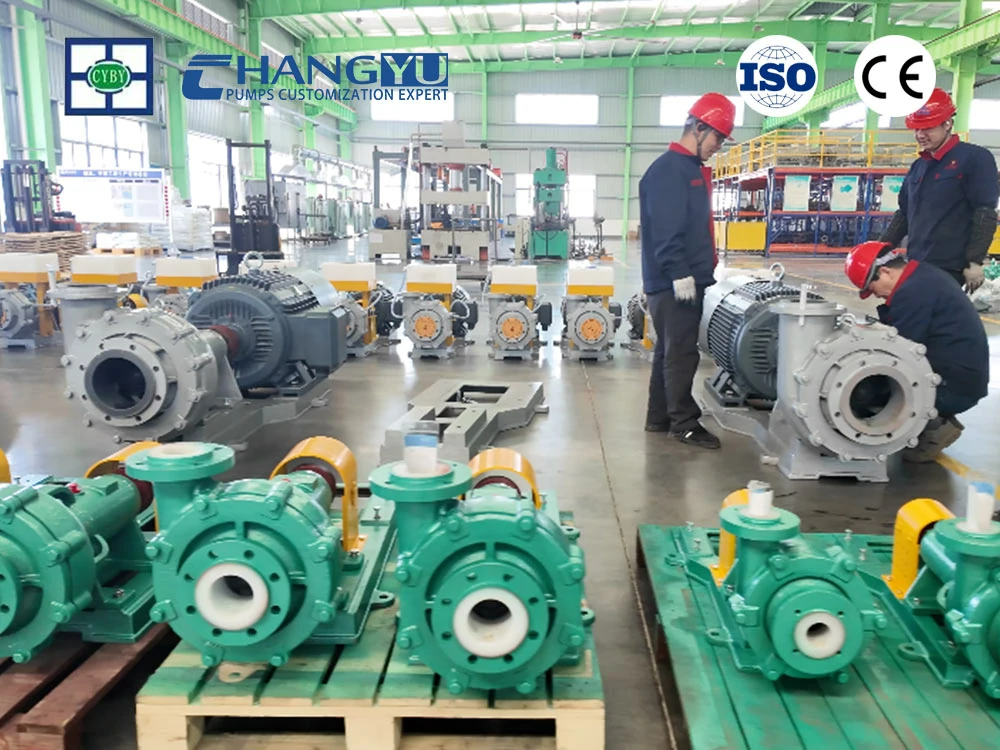
Changyu Pump’s engineering team provides application-specific single-stage slurry pump recommendations backed by over 20 years of pump manufacturing experience across mining, mineral processing, and industrial applications.