
Introduction
FGD Slurry Pump reliability is one of the most important factors affecting the long-term operation of flue gas desulfurization (FGD) systems in steel plants. Because the circulating slurry contains acidic liquid, suspended solids, and dust impurities, conventional slurry pumps often suffer from severe corrosion, rapid wear, and frequent seal failures, resulting in costly maintenance and unexpected downtime.
Project Background
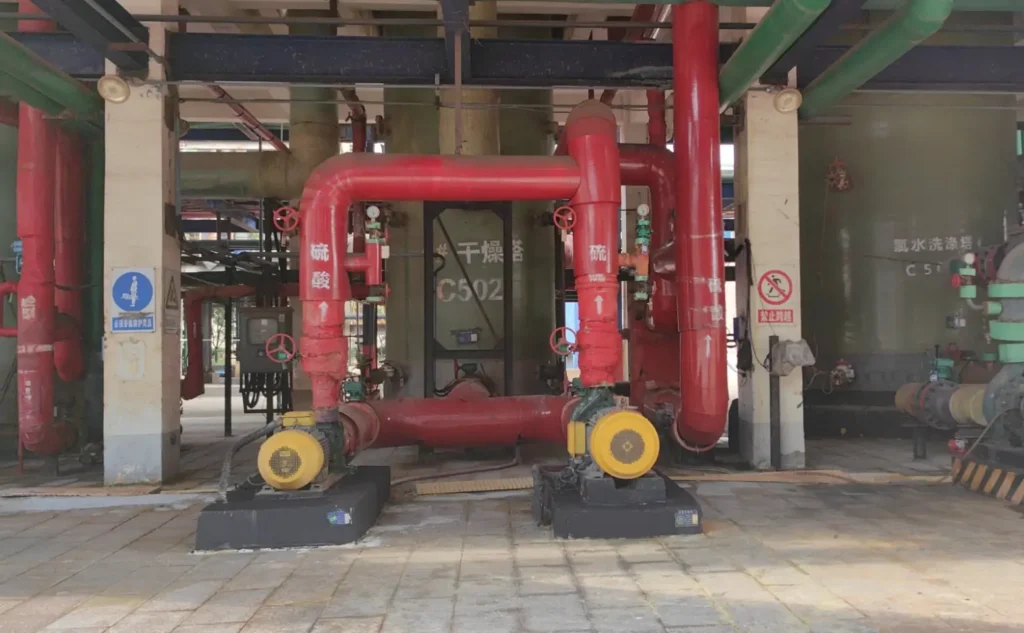
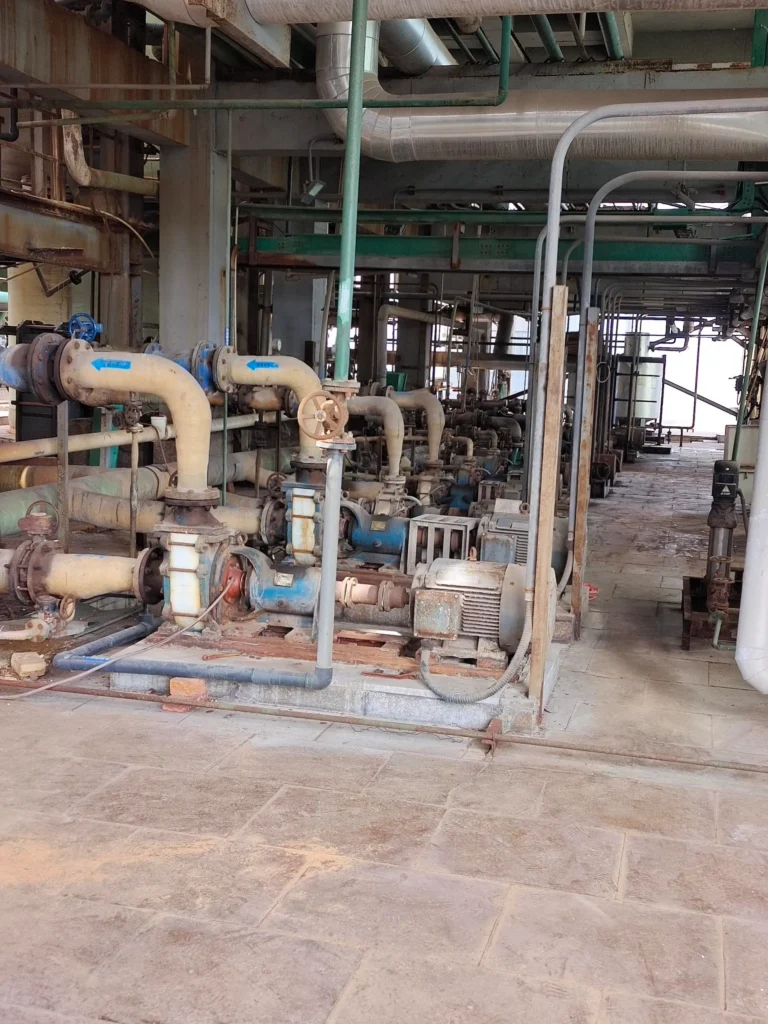
This case comes from a large steel wire manufacturing plant in China, where the flue gas desulfurization system operates continuously to remove sulfur dioxide and other pollutants generated during steel production.
The circulating slurry in the system contains acidic media and large amounts of fine dust particles, creating a highly corrosive and abrasive working environment for the FGD Slurry Pump. At the same time, the production line operates 24 hours a day, requiring the desulfurization system to remain stable without interruption.
Before working with our engineering team, the customer was using a conventional slurry pump whose wear parts lasted only around 15 days. Frequent shutdowns for maintenance not only increased operating costs but also created risks for environmental compliance and production continuity.
To better understand how these problems were solved, let’s look at the challenges the customer faced and the engineering solution that followed.
What Challenges Did the Customer Face?
The project faced three major operational challenges that directly affected the performance of the FGD Slurry Pump in the desulfurization system.
First, the circulating slurry contained acidic media mixed with a large amount of solid dust and particles. This created a highly aggressive working environment, resulting in continuous corrosion and severe abrasion on the pump’s wetted components.
Second, the steel plant operates under a strict 24-hour continuous production schedule. As a result, the stability of the flue gas desulfurization system became extremely critical. Any unexpected failure of the pump could immediately disrupt slurry circulation and potentially lead to risks of exceeding emission limits.
Third, the previously used conventional slurry pump showed extremely limited durability under these conditions. The typical service life of wear parts was only around 15 days, leading to frequent unplanned shutdowns, increased maintenance workload, and repeated interruptions to production efficiency. Over time, this also intensified operational pressure related to both environmental compliance and production continuity.
We Visited the Process Instead of Recommending a Pump Immediately
Before selecting a model, our engineers first focused on understanding the slurry itself.
Inside the FGD system, the circulating liquid contained acidic media mixed with large amounts of fine dust and solid particles generated during the desulfurization process. For an ordinary pump, this combination is extremely destructive. The acidic liquid slowly corrodes the wetted parts, while suspended particles continuously erode the impeller and pump casing. Even if one problem is solved, the other continues to damage the pump.
After reviewing the customer’s maintenance records, it became clear that frequent failures were not caused by insufficient pump performance, but by material wear and sealing reliability.
This changed the entire selection strategy for the FGD Slurry Pump.
Why We Recommended the UHB-ZK FGD Slurry Pump
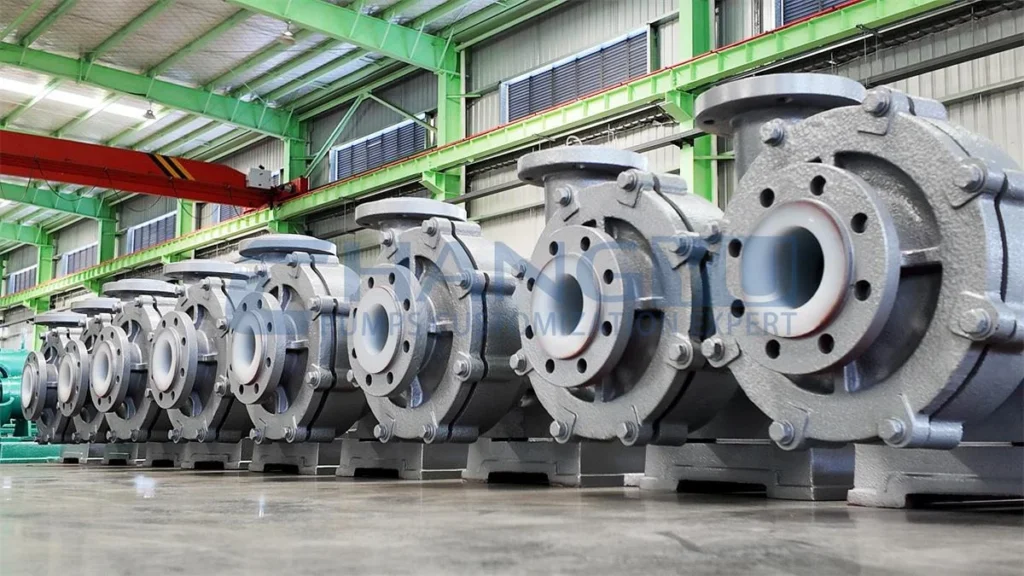
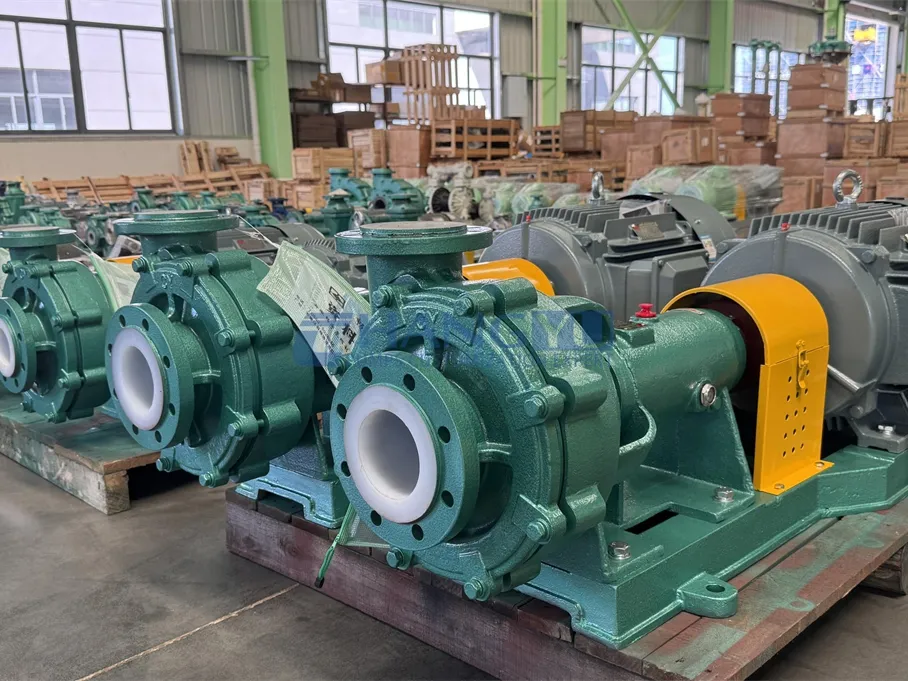
Based on the actual working conditions, our engineering team recommended the UHB-ZK series FGD Slurry Pump.
For specific product parameters and selection manuals:
UHB Series UHMWPE Corrosion Resistant Pump
The key consideration was material selection rather than pump size.
- Its steel-lined UHMWPE wetted parts provide excellent resistance to both chemical corrosion and particle abrasion, making them suitable for transporting aggressive desulfurization slurry over long operating periods.
- At the same time, the hydraulic structure was selected to provide stable slurry circulation required by the FGD absorber system, helping maintain continuous operation without excessive flow fluctuation.
- The sealing system was also upgraded with a customized double mechanical seal and cooling arrangement to improve sealing reliability under continuous service.
Rather than pursuing maximum performance on paper, the design focused on solving the customer’s actual maintenance problems.
Project Results
After commissioning, the FGD Slurry Pump achieved significant improvements in operational performance.
| Performance Indicator | Before Upgrade | After Upgrade |
|---|---|---|
| Wear Parts Replacement Cycle | 15 Days | 18 Months |
| Pump Failure Rate | Frequent | Reduced by more than 90% |
| Maintenance Cost | High | Reduced by approximately 75% |
| System Operation | Frequent Shutdowns | Stable Continuous Operation |
| Environmental Compliance | Operational Risk | Stable Compliance |
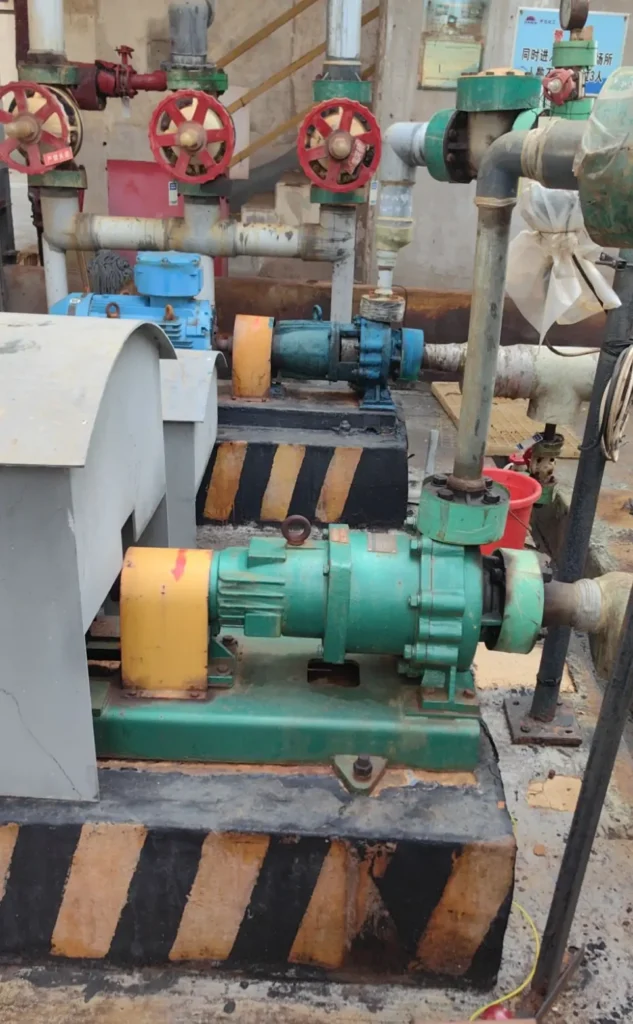
The extended service life of wear components significantly reduced maintenance downtime while improving the overall reliability of the flue gas desulfurization system. The stable slurry circulation also helped maintain consistent sulfur dioxide removal efficiency, supporting continuous environmental compliance for steel production.
Conclusion
This project demonstrated that selecting an FGD Slurry Pump is not simply a matter of flow rate or head.
- Understanding slurry composition, particle content, corrosion characteristics, operating cycle, and maintenance history is often more important than choosing a larger pump.
- For highly abrasive and corrosive desulfurization slurry, appropriate material selection and sealing design can significantly improve service life and reduce operating costs.
- Instead of repeatedly replacing conventional pumps, matching the pump design to the actual working conditions provides a more reliable long-term solution.
For engineers responsible for steel plant desulfurization systems,
If you’re experiencing issues under similar operating conditions, contact us today. Our engineering team will respond within 24 hours with one-on-one support.
Email: [email protected]
TEL/WA: +86-13651913727
