
1. Introduction
Abrasive resistant wastewater slurry pump selection addresses the most destructive force in fluid handling: wear. In municipal wastewater treatment plants, grit channels carry sand and gravel. In industrial wastewater systems, process streams contain catalyst particles, metal fines, and chemical precipitates. In every case, the pump’s wetted components are subjected to continuous low-stress abrasion, impact wear from larger particles, and often simultaneous chemical attack from corrosive wastewater.
Standard wastewater pumps—designed for clean or lightly contaminated water—lack the material hardness, casing thickness, and internal clearances to survive these conditions. A standard cast iron sewage pump installed in a grit-laden wastewater stream can lose impeller material within months, leading to hydraulic imbalance, vibration, seal failure, and ultimately pump replacement.
The solution is a pump whose material system and hydraulic design are matched to the specific wear mechanism of the application. This guide provides a structured reference covering material selection, pump type comparison, anti-clogging design features, and a step-by-step selection framework for engineers specifying abrasive resistant wastewater slurry pumps. Drawing on over two decades of experience engineering wear-resistant pumps for demanding applications, Changyu Pump brings verified expertise across high-chrome, rubber-lined, and UHMW-PE pump technologies. For broader guidance on industrial pump fundamentals, see our industrial centrifugal pumps guide. Contact us with your wastewater parameters for a specific recommendation.
2. What Is an Abrasive Resistant Wastewater Slurry Pump?
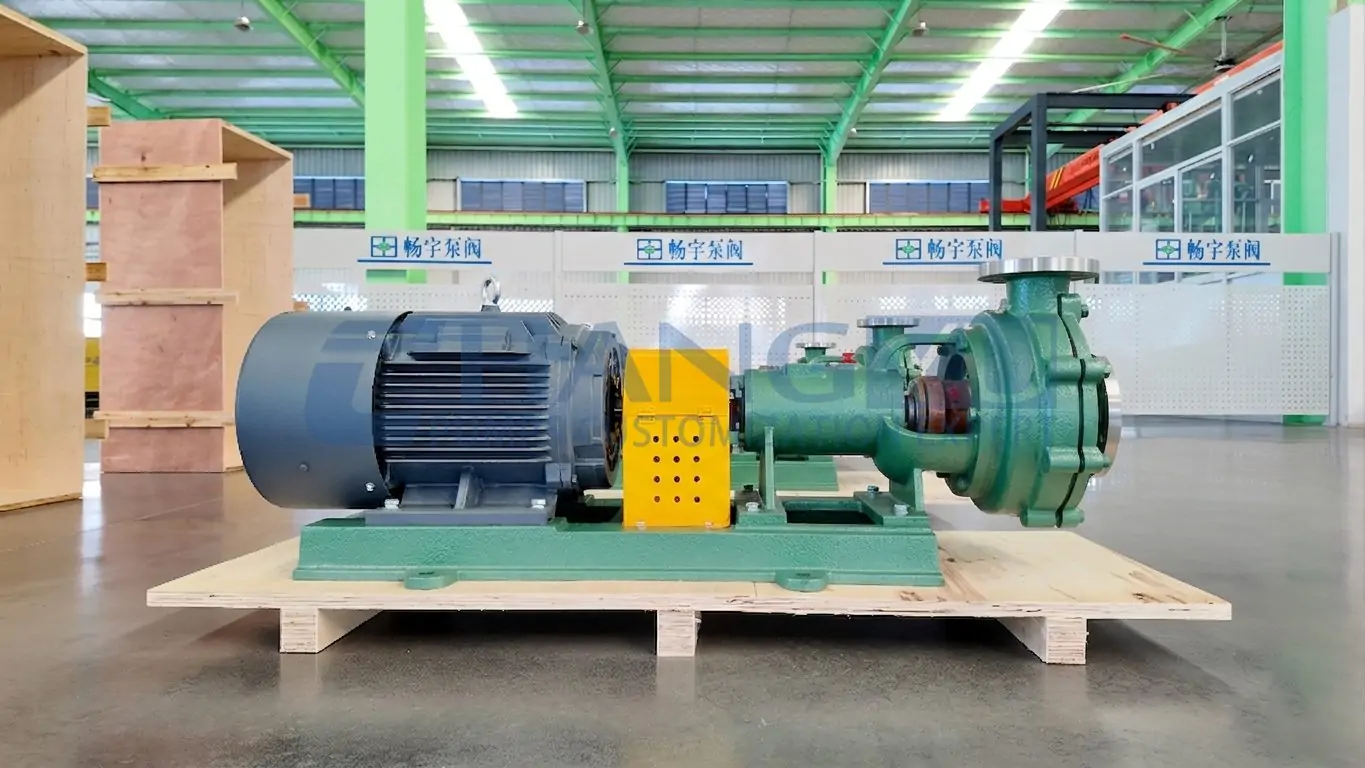
An abrasive resistant wastewater slurry pump is a heavy-duty centrifugal pump specifically engineered to transport wastewater containing abrasive solids—sand, grit, sludge, metal particles, or chemical precipitates—while maintaining hydraulic performance and structural integrity over extended service intervals. Unlike a standard wastewater pump, which prioritizes solids passage (preventing clogging), an abrasive-resistant pump prioritizes material survival: the casing, impeller, wear plates, and shaft sleeve must withstand continuous low-stress abrasion and occasional impact from larger particles.
2.1 How It Differs from Standard Wastewater Pumps
Three design features distinguish an abrasive resistant wastewater slurry pump from a standard non-clog sewage pump:
- Casing and impeller wall thickness: Abrasive-resistant pumps use substantially thicker wall sections—often 30–50% more material than standard designs—to provide a longer wear life before the casing is compromised.
- Wear-resistant material systems: Where standard wastewater pumps use cast iron (150–250 BHN), abrasive-resistant pumps employ high-chrome white iron (600+ BHN), natural rubber linings, or UHMW-PE linings, each matched to the specific solids and chemistry of the wastewater.
- Adjustable internal clearances: As wear occurs, the clearance between the impeller and the suction-side wear plate increases, causing internal recirculation that progressively reduces flow and efficiency. Abrasive-resistant pumps incorporate external clearance adjustment mechanisms that allow the operator to restore the design clearance without pump disassembly.
2.2 The Combined Corrosion-Abrasion Challenge
Wastewater slurry pumping often involves a dual wear mechanism that neither a pure metal pump nor a pure plastic pump can fully address alone. The carrier fluid may be acidic (pH 2–4 in industrial chemical wastewater), alkaline (pH 10–12 in lime-treated sludge), or contain oxidizing agents from water treatment chemicals.
Abrasive resistant centrifugal pumps can be cast in a variety of materials that offer a combination of wear and corrosion resistance. This means that materials that are excellent at resisting pure abrasion—such as high-chrome iron—may fail prematurely in acidic wastewater because the acid attacks the chromium-depleted zones at grain boundaries, weakening the metal matrix that the abrasive particles then erode at an accelerated rate. The corrosion creates microscopic pits at the surface; abrasive particles then preferentially remove material from these weakened zones; and the freshly exposed metal surface corrodes faster than the original surface, perpetuating a self-reinforcing cycle of accelerated material loss.
Conversely, materials that provide excellent corrosion resistance—such as PTFE or PFA—offer only moderate abrasion resistance and may wear through more quickly when handling grit-laden wastewater.
The material selection decision must therefore address the specific combination of pH and particle characteristics in the target application, rather than treating abrasion and corrosion as independent problems. For fluoroplastic-lined pump solutions that address combined corrosion-abrasion challenges, see our CYF Series fluoroplastic centrifugal pump.
2.3 Common Wastewater Slurry Applications
| Wastewater Type | Typical Solids | Key Wear Challenge | Recommended Material | Recommended Pump Configuration |
|---|---|---|---|---|
| Municipal grit channel slurry | Sand, gravel, silt | Low-stress abrasion | High-chrome iron, natural rubber | Horizontal centrifugal slurry pump |
| Primary sludge | Organic solids, rags, grit | Clogging + moderate abrasion | Rubber-lined, UHMW-PE | Horizontal with recessed impeller |
| Industrial chemical wastewater | Catalyst particles, metal fines, precipitates | Corrosion + abrasion combined | UHMW-PE, duplex stainless | Horizontal centrifugal or vertical cantilever |
| Lime-treated sludge | Calcium carbonate particles | Abrasion at high pH (10–12) | Rubber-lined, UHMW-PE | Horizontal centrifugal slurry pump |
| Steel mill scale wastewater | Iron oxide particles, high temperature | High-temperature abrasion | High-chrome iron, duplex stainless | Horizontal centrifugal slurry pump |
| Mining wastewater | Ore tailings, silica sand, pyrite | Severe abrasion + acid mine drainage (pH 2–4) | UHMW-PE, natural rubber | Horizontal centrifugal or vertical cantilever |
3. What Materials Survive Abrasive Wastewater Service?
Material selection is the single most consequential decision in specifying an abrasive resistant wastewater slurry pump. The material must withstand the specific wear mechanism—sliding abrasion, impact abrasion, or combined corrosion-abrasion—while maintaining dimensional stability at the operating temperature and pH.
3.1 High-Chrome White Iron (600+ BHN)
High-chrome white iron (25–35% chromium content) is the hardest material commonly used in slurry pump construction, achieving Brinell hardness values exceeding 600 BHN—approximately three times harder than standard cast iron. This exceptional hardness makes it the material of choice for coarse, angular solids in neutral-pH wastewater, such as grit channel slurry and sand-laden industrial effluent. For a deeper understanding of how high-chrome iron performs in slurry applications, see our high solids slurry pump guide.
Under conditions of pure abrasion, high-chrome iron consistently achieves the longest service life per dollar of material cost. However, it has a well-documented limitation: at pH below 4, the acidic carrier fluid attacks the chromium-depleted zones at grain boundaries, creating microscopic pits. Abrasive particles then preferentially remove material from these weakened zones, and the freshly exposed metal surface corrodes faster than the original surface. This self-reinforcing corrosion-abrasion cycle can reduce pump service life by a factor of 5–10× compared to neutral-pH service.
3.2 Natural Rubber Linings
Natural rubber linings resist wear through a fundamentally different mechanism than hard metals. Rather than resisting particle impact through hardness, rubber absorbs the kinetic energy of impacting particles and releases it elastically. This makes rubber-lined pumps particularly effective against fine, sharp particles that would erode a metal surface through low-stress abrasion—the dominant wear mechanism in many wastewater sludge applications.
Rubber linings are typically applied at 12–20 mm thickness inside a metal casing. The rubber isolates the metal structure from both the abrasive solids and the corrosive carrier fluid. In flue gas desulfurization (FGD) wastewater service, natural rubber liners are corrosion proof against acidic slurries, avoiding the corrosion risks that can plague metal-lined pumps. However, rubber linings are limited to temperatures below approximately 70°C and are incompatible with strong solvents, oils, and oxidizing chemicals that degrade the rubber structure.
3.3 UHMW-PE (Ultra-High Molecular Weight Polyethylene) Linings
UHMW-PE offers a unique combination of properties that neither rubber nor high-chrome iron can match individually: its abrasion resistance is approximately four times that of PTFE and 7–10 times that of carbon steel under standardized abrasive wear test conditions, while its chemical resistance encompasses a broad range of acids, alkalis, and salts at temperatures up to approximately 90°C. For detailed UHMW-PE specifications, see our UHB Series UHMWPE corrosion resistant pump.
This dual resistance is achieved because UHMW-PE combines the elastic energy absorption of an elastomer with the chemical inertness of a high-density polymer. When a sharp particle strikes a UHMW-PE surface, the polymer deforms elastically, absorbing the impact energy without fracturing. When the particle slides across the surface, the low coefficient of friction (0.05–0.11, comparable to PTFE) minimizes material removal.
UHMW-PE is particularly effective in combined corrosion-abrasion environments—acidic industrial wastewater with suspended catalyst particles, phosphate fertilizer effluent with gypsum crystals, and mining wastewater with fine silica sand at low pH. It is limited to temperatures below approximately 90°C and is not recommended for strong oxidizing acids (such as nitric acid) at concentrations above approximately 10% or at elevated temperatures. For nitric acid service, PTFE or PFA-lined pumps are the standard specification.
3.4 Material Selection Quick Reference
| Material | Abrasion Resistance | Corrosion Resistance | pH Range | Max Temp | Best Against | Typical Wastewater Application |
|---|---|---|---|---|---|---|
| High-Chrome Iron (25–35% Cr) | Excellent (600+ BHN) | Low (fails < pH 4) | pH 4–14 | ~110°C | Coarse, angular solids | Grit channel slurry, sand-laden effluent (neutral pH) |
| Natural Rubber Lining | Good (fine particles, impact) | Good (acids, alkalis) | pH 2–12 | ~70°C | Fine, sharp particles; impact | Primary sludge, lime-treated sludge, FGD wastewater |
| UHMW-PE Lining | Excellent (7–10× carbon steel) | Broad (acids, alkalis, salts; not for oxidizing acids) | pH 0–14 (except strong oxidizers) | ~90°C | Combined corrosion + abrasion | Industrial chemical wastewater, mining effluent, fertilizer runoff |
| Duplex Stainless Steel (CD4MCu) | Moderate (280–350 BHN) | Good (pH 2–12) | pH 2–12 | ~110°C | Moderate abrasion + corrosion | Steel mill scale wastewater, hot chemical effluent |
4. Types of Abrasive Resistant Wastewater Slurry Pumps
4.1 Horizontal Centrifugal Slurry Pumps
Horizontal centrifugal pumps are the most widely deployed configuration for wastewater slurry transfer. The pump and motor are mounted on a common baseplate, with the shaft oriented horizontally. This design provides easy access to the mechanical seal, bearings, and impeller for inspection and maintenance.
For abrasive wastewater service, horizontal slurry pumps are constructed with wear-resistant wetted components—high-chrome iron, rubber-lined, or UHMW-PE-lined—and incorporate enlarged internal clearances to accommodate solids passage. The cantilevered shaft design isolates the bearing assembly from the wet end, preventing solids ingress into the bearings. A heavy-duty bearing frame is standard, designed to absorb the higher radial loads generated by dense slurry slugs. For pump solutions specifically designed for corrosive slurry applications, see our chemical horizontal slurry pump.
4.2 Vertical Cantilever Sump Pumps
Vertical cantilever pumps are specifically designed for installation in sumps, pits, and collection basins. The motor and bearings are mounted above the sump cover on a baseplate, with a long cantilever shaft extending downward to a submerged impeller. This configuration places all bearings and seals above the liquid level, completely isolated from the abrasive solids in the wastewater.
The cantilever design eliminates the need for submerged bearings or seals—the components most vulnerable to wear in abrasive service—and tolerates intermittent dry running when the sump level fluctuates. For sump drainage, mill spillage collection, and chemical containment pits where the pump may ingest rough, abrasive media, vertical cantilever pumps provide reliable, low-maintenance operation.
4.3 Anti-Clogging Design Features
Beyond material selection, abrasive resistant wastewater slurry pumps incorporate several hydraulic and mechanical features specifically designed to prevent clogging by fibrous solids, rags, and stringy materials:
- Widened flow passages: Internal flow passages are 30–50% wider than equivalent clean-water pump designs, allowing solids-laden fluid to pass through the pump without accumulating at restrictions.
- Semi-open impellers with back vanes: A semi-open impeller has a shroud on the back side only, providing a large unobstructed passage for solids while the back vanes reduce pressure at the stuffing box to prevent solids ingress into the seal area.
- Recessed impellers (vortex/torque-flow): The impeller is set back into the casing, creating a vortex that draws only a portion of the solids through the impeller itself. The majority of solids bypass the impeller entirely, making this design ideal for fibrous or stringy materials.
- Agitator/stirrer: Some pumps incorporate an agitator on the shaft below the impeller to fluidize settled solids before they enter the suction inlet, particularly in sump applications where solids accumulate between pump cycles.
- External clearance adjustment: As the impeller and wear plates wear, the running clearance increases, reducing flow and efficiency. External adjustment mechanisms allow the operator to restore the design clearance without disassembling the pump.
4.4 Material-Pump Type Correlation
Each wear material is typically paired with specific pump configurations optimized for that material’s properties:
- High-chrome iron is almost exclusively used in horizontal centrifugal slurry pumps with heavy-duty bearing frames, as the metal’s weight and hardness require robust structural support.
- Rubber linings can be applied to both horizontal and vertical pump configurations, providing flexibility for sump installations where the pump must be submerged.
- UHMW-PE linings are applied to horizontal centrifugal pumps with semi-open impellers, where the lining’s impact absorption and low friction coefficient complement the impeller’s solids-passage capability.
5. How to Select the Right Abrasive Resistant Wastewater Slurry Pump: A 4-Step Framework
Step 1: Characterize the Wastewater and Solids
Document the solids type (sand, grit, sludge, metal particles), particle size distribution, particle shape (angular vs. rounded), solids concentration (percentage by weight), pH, temperature, and the presence of any chemicals, oils, or solvents. The solids characteristics determine the dominant wear mechanism (sliding abrasion vs. impact abrasion), while the pH and chemical composition determine whether corrosion will accelerate the abrasive wear.
Step 2: Define Flow Rate and Total Dynamic Head
Calculate the required flow rate and total dynamic head (TDH), accounting for static lift from the sump or basin, friction losses through the discharge piping, and any pressure requirement at the destination. For viscous sludge above approximately 20 cP, apply viscosity correction factors. A flow margin of 10–20% accommodates operational fluctuations and the gradual reduction in pump output that occurs as internal clearances wear.
Step 3: Select Materials and Pump Type
Match the material system to the dominant wear mechanism:
- Coarse, angular solids in neutral-pH wastewater: High-chrome iron
- Fine, sharp particles in neutral to alkaline sludge: Natural rubber lining
- Combined corrosion-abrasion (acidic wastewater with solids): UHMW-PE lining
- Moderate abrasion + moderate corrosion at elevated temperatures: Duplex stainless steel
Select the pump type based on the installation:
- Standard grade-level installation: Horizontal centrifugal slurry pump
- Sump or pit installation: Vertical cantilever sump pump
- Fibrous or stringy solids present: Pump with recessed impeller
Step 4: Match the Sealing System
The mechanical seal or sealing arrangement must prevent solids-laden wastewater from entering the bearing housing while accommodating the abrasive nature of the pumped fluid. For high-solids wastewater service, expeller seals with gland packing are widely used because the expeller creates a centrifugal barrier that keeps solids away from the stuffing box during pump operation. For applications requiring zero leakage, a double mechanical seal with pressurized barrier fluid (API Plan 53) provides the required containment. For hazardous or corrosive wastewater streams, a magnetic drive pump eliminates the dynamic shaft seal entirely—achieving zero leakage by design. For sealless pump solutions, see our ZCQ Series magnetic self-priming pump.
6. Abrasive Resistant Wastewater Slurry Pump Maintenance and Wear Monitoring
6.1 Routine Maintenance Schedule
| Interval | Task |
|---|---|
| Daily | Monitor motor current, discharge pressure, and vibration; listen for unusual noise indicating impeller wear or solids accumulation |
| Weekly | Check bearing temperature and lubricant condition; verify seal flush water flow (if applicable) |
| Monthly | Measure impeller-to-casing clearance; inspect wear plates for thinning or grooving; check shaft runout |
| Quarterly | Full wet-end inspection; replace bearing lubricant; verify seal integrity |
| Annually | Complete pump disassembly; measure and replace all wear components as needed |
6.2 Wear Monitoring Techniques
Impeller clearance measurement is the most reliable indicator of wear progression. As the impeller and wear plates erode, the clearance increases, causing internal recirculation that reduces both flow and efficiency. Operators can monitor wear through three key indicators:
- Cutwater casing inspection: Inspect the exterior of the pump casing near the cutwater for any evidence of liquid weeping or drips. This area experiences the highest internal velocity and is typically the first to be penetrated as internal wear progresses.
- Volute lip condition: When the pump is opened for inspection, observe the condition of the volute lip—the area where the casing narrows at the cutwater. This is the highest-velocity region and typically shows the most advanced wear.
- Prime time monitoring: If a pump that normally reaches full flow within a few seconds of startup takes significantly longer to prime, wear may have reduced its hydraulic efficiency. This simple observation provides an early warning of wear progression before external leakage becomes visible.
When flow rate drops 5–10% below baseline at constant speed, adjust the external clearance adjustment mechanism to restore the design impeller-to-casing clearance. When the wear plates reach their minimum allowable thickness, replace them to prevent casing damage. For a comprehensive guide on pump maintenance best practices, see our industrial transfer pumps guide.
6.3 Common Issues and Solutions
| Problem | Probable Cause | Solution |
|---|---|---|
| Gradual flow/pressure decline | Impeller and wear plate erosion | Adjust impeller clearance; replace wear components if minimum thickness reached |
| Sudden vibration increase | Partial impeller blockage or solids accumulation | Shut down and inspect impeller; clean suction strainer |
| Rising motor current | Internal rubbing from worn bearings or excessive solids concentration | Check bearing condition; verify solids concentration within pump rated range |
| Visible casing leakage near cutwater | Casing wall penetration from internal wear | Replace casing; adjust operating conditions to reduce wear rate |
7. Changyu Pump Solutions for Abrasive Wastewater
Changyu Pump designs and manufactures a comprehensive range of abrasive resistant wastewater slurry pumps engineered for the combined corrosion-abrasion challenges of municipal and industrial wastewater applications.
UHB Series UHMWPE Abrasive Resistant Wastewater Slurry Pump
The UHB Series is a cantilever, single-stage centrifugal pump with a steel-lined UHMW-PE casing at 8–20 mm thickness, specifically engineered for corrosive and abrasive slurries. The UHMW-PE lining delivers wear resistance 7–10 times that of carbon steel while providing broad chemical compatibility with acids, alkalis, and salt solutions at temperatures up to 90°C. Thickened imported wetted parts and widened flow passages ensure long-term stable operation in harsh chemical environments. For wastewater applications involving combined corrosion and abrasion—acidic industrial effluent with suspended solids, lime-treated sludge, and mining wastewater—the UHB Series provides the dual protection that neither a pure metal pump nor a pure plastic pump can deliver alone.
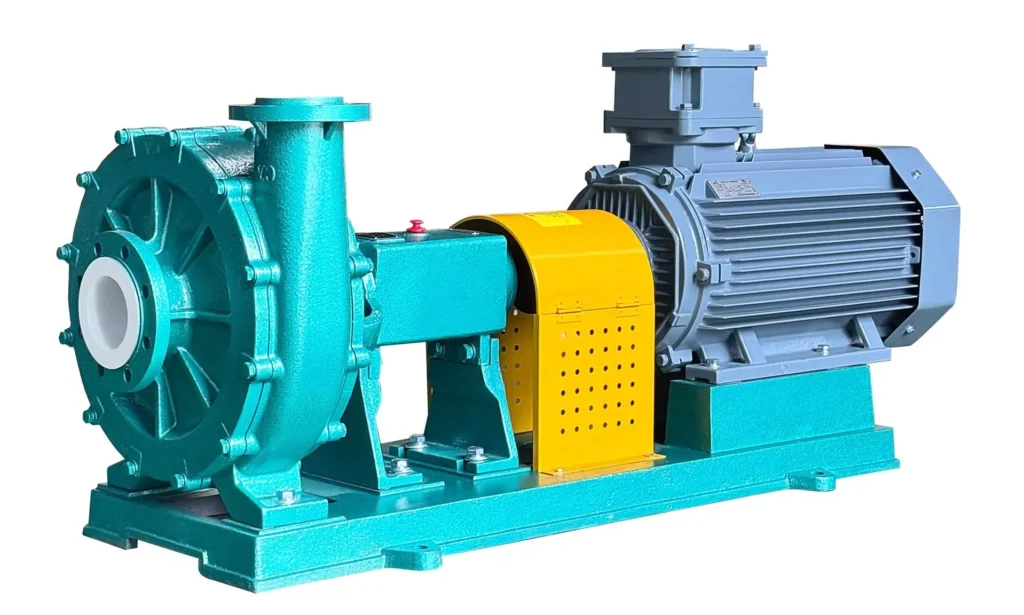
| Flow Rate Range : | 3m³/h~2600m³/h |
|---|---|
| Head Range: | 5m~100m |
| Motor Power : | 0.75kw~300kw |
| Speed: | 750~2900 r/min |
| Medium Temperature Range: | -20℃~90℃ |
| Customizable Materials: | UHMW-PE |
CYB-ZKJ Series Abrasive Resistant Wastewater Slurry Pump
The CYB-ZKJ Series is a high-performance centrifugal pump with FEP lining (PFA available for high-temperature service), designed for conveying corrosive liquids, mineral slurries, and dilute acids containing up to 20% flexible solid particles. For industrial wastewater applications where the chemistry is aggressive but the abrasive load is moderate—chemical plant effluent, plating wastewater, and pharmaceutical process waste—the CYB-ZKJ Series provides broad chemical compatibility within a field-proven centrifugal pump platform.
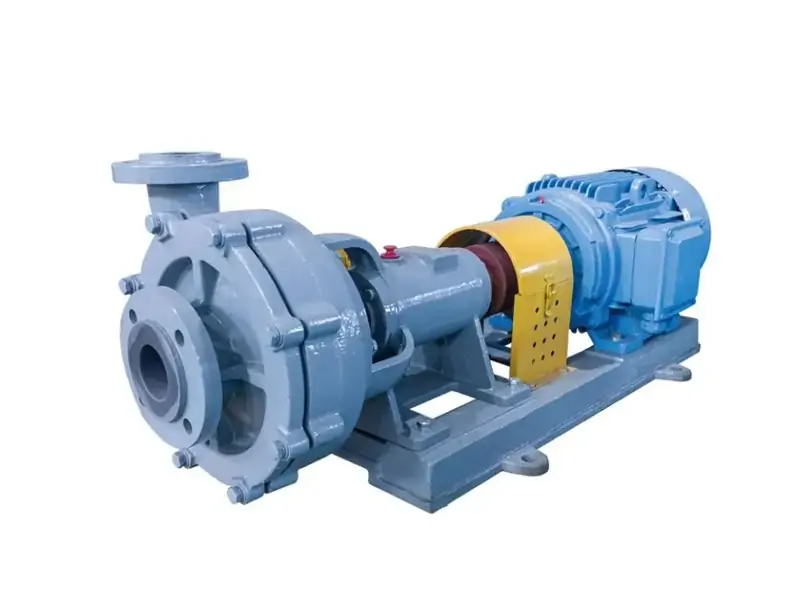
| Flow Rate Range : | 3m³/h~2600m³/h |
|---|---|
| Head Range: | 5m~100m |
| Motor Power : | 0.75kw~300kw |
| Speed: | 968-3450 r/min |
| Medium Temperature Range: | -80℃~ 120℃ |
| Customizable Materials: | FEP |
HB Series Stainless Steel Slurry Pump
The HB Series is a high-efficiency, single-stage, single-suction horizontal centrifugal pump designed in accordance with ISO 2858 and compliant with CE standards. Built with an all stainless steel wetted structure—customizable in 304, 316, 316L, 2205, and 2507—it handles abrasive slurry and medium-corrosive fluids. The duplex and super duplex stainless options (2205, 2507) provide a bridge between standard stainless and full fluoroplastic protection, making the HB Series a cost-effective choice for mildly acidic, abrasive wastewater where the temperature exceeds the limits of polymer linings.
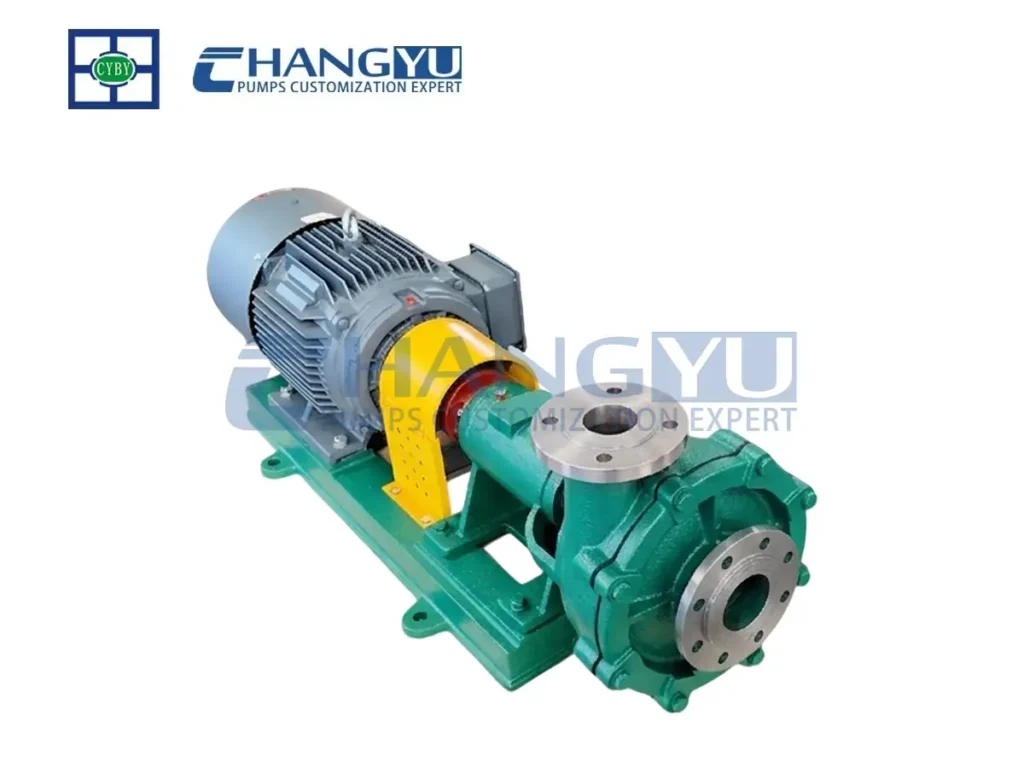
| Flow Rate Range : | 10 m³/h ~ 60 m³/h |
|---|---|
| Head Range: | 20 m ~ 120 m |
| Motor Power : | 3 kw ~ 45 kw |
| Speed: | 2900 r/min |
| Medium Temperature Range: | -20°C ~ 120°C |
| Customizable Materials: | 304、316、316L、2205、2507 |
8. Frequently Asked Questions About Abrasive Resistant Wastewater Slurry Pumps
Q1: How does a wastewater slurry pump differ from a standard sewage pump?
A: A standard sewage pump prioritizes solids passage (preventing clogging by fibrous solids). A wastewater slurry pump prioritizes wear resistance—its casing, impeller, and wear plates are constructed from high-chrome iron (600+ BHN), rubber linings, or UHMW-PE linings that survive continuous exposure to abrasive solids. Standard cast iron sewage pumps (150–250 BHN) wear rapidly in grit-laden wastewater.
Q2: What material is best for abrasive wastewater with acidic conditions?
A: For combined corrosion-abrasion—acidic wastewater (pH 2–4) with suspended solids—UHMW-PE linings provide the best balance. UHMW-PE resists acids, alkalis, and salts while delivering wear resistance 7–10 times that of carbon steel. High-chrome iron, which excels in neutral-pH abrasion, corrodes rapidly below pH 4 as the acid attacks chromium-depleted grain boundaries.
Q3: How do I prevent fibrous solids from clogging an abrasive resistant pump?
A: Select a pump with a semi-open or recessed impeller. Semi-open impellers provide an unobstructed passage for solids. Recessed (vortex) impellers create a vortex that draws only a portion of the solids through the impeller, with the majority bypassing it entirely—ideal for stringy or fibrous materials. Widened flow passages (30–50% larger than standard designs) prevent accumulation at restrictions.
Q4: What maintenance is required for an abrasive resistant slurry pump?
A: Daily: monitor motor current, discharge pressure, and vibration. Monthly: measure impeller clearance and inspect wear plates. Quarterly: full wet-end inspection and bearing lubrication. Annually: complete disassembly and wear component replacement. Adjust the external impeller clearance when flow drops 5–10% below baseline at constant speed.
Q5: Can rubber-lined pumps handle oily wastewater?
A: No. Natural rubber linings are incompatible with oils, solvents, and hydrocarbons, which cause swelling and degradation of the rubber structure. For oily wastewater, specify UHMW-PE or duplex stainless steel wetted components instead.
Q6: What is the pH operating range of UHMW-PE lined wastewater pumps?
A: UHMW-PE lined pumps operate effectively across a broad pH spectrum, handling sulfuric acid concentrations up to 80% and hydrochloric acid at all concentrations. However, UHMW-PE is not recommended for nitric acid (a strong oxidizer) at concentrations above approximately 10% or at elevated temperatures. For nitric acid service, specify PTFE or PFA-lined pumps instead. The temperature limit is approximately 90°C for continuous service.
Q7: How do I know when to replace the wear plates in a slurry pump?
A: Measure impeller clearance monthly. When the clearance can no longer be adjusted to restore the design gap, the wear plates have reached their minimum allowable thickness and must be replaced. Externally, inspect the casing near the cutwater for evidence of liquid weeping—this area is typically the first to be penetrated as internal wear progresses.
Q8: What is the difference between high-chrome iron and UHMW-PE for abrasive service?
A: High-chrome iron (600+ BHN) provides maximum abrasion resistance for coarse, angular solids in neutral-pH wastewater and can operate at temperatures up to 110°C. UHMW-PE provides combined corrosion-abrasion resistance for acidic or alkaline wastewater at temperatures up to 90°C. High-chrome fails rapidly below pH 4; UHMW-PE maintains full chemical resistance and wear performance within its temperature limits, except against strong oxidizing acids such as nitric acid.
9. Expert Recommendations from Changyu Pump Engineers
- Match the material to the wear mechanism, not just the solids concentration. Fine, sharp particles produce low-stress abrasion best resisted by rubber linings. Coarse, angular particles produce impact wear best resisted by high-chrome iron. Combined corrosion-abrasion demands UHMW-PE. The material selection must address both the chemical and mechanical environment.
- Use external impeller clearance adjustment to extend pump service life. As the impeller and wear plates erode, the clearance increases, reducing flow. Adjusting the clearance externally restores performance without disassembly. When flow drops 5–10% below baseline at constant speed, adjust the clearance. When clearance can no longer be restored, replace the wear components.
- For combined corrosion-abrasion in acidic wastewater, specify UHMW-PE linings. High-chrome iron loses service life by a factor of 5–10× at pH below 4 due to corrosion-weakened grain boundaries. UHMW-PE eliminates this failure mode by isolating the metal casing from the corrosive fluid entirely. Note that UHMW-PE is not suitable for nitric acid or other strong oxidizing acids.
- Monitor the pump exterior near the cutwater for early signs of casing penetration. This area experiences the highest internal velocity and typically wears through first. Early detection of casing thinning enables planned maintenance rather than emergency replacement.
10. Conclusion
An abrasive resistant wastewater slurry pump is defined by the material system it employs to survive the specific wear mechanism of the application. High-chrome iron provides maximum abrasion resistance for coarse solids in neutral-pH wastewater. Rubber linings absorb particle impact energy for fine, sharp solids in sludge. UHMW-PE linings provide the combined corrosion-abrasion resistance required by acidic industrial wastewater and mining effluent.
The selection process begins with a complete characterization of the solids and the carrier fluid chemistry, proceeds through material and pump type matching, and is sustained through a structured maintenance program that monitors wear progression and adjusts clearances before performance degradation becomes critical.
Contact Changyu Pump with your wastewater parameters and solids characteristics. Our engineering team will provide a detailed pump recommendation and quotation tailored to your abrasive wastewater application.