
A PTFE centrifugal pump is a corrosion-resistant chemical pump designed to move aggressive fluids that would rapidly damage standard metal pumps. In practice, buyers search this term when they need a pump that can handle strong acids, oxidizing liquids, and other corrosive media without leaking, warping, or suffering rapid wear. At Changyu Pump, with more than 20 years of industry experience, we help buyers match the pump structure, lining material, and sealing style to the real process conditions rather than choosing by product name alone.

Why does a PTFE lined centrifugal pump matter?
Polytetrafluoroethylene (PTFE) is widely used because it offers strong chemical resistance and low friction, which makes it suitable for many aggressive industrial fluids. For chemical centrifugal pumps, the real advantage is not the label itself, but the combination of lining material, temperature range, and system design that prevents corrosion failure.
A pump built for PTFE service is especially useful when the liquid is corrosive but still pumpable by centrifugal force. What this means for you: if the chemical is compatible with PTFE, you can often reduce leak risk and extend service life compared with an unlined pump or an incorrectly selected metal pump.
What applications use PTFE centrifugal pumps?
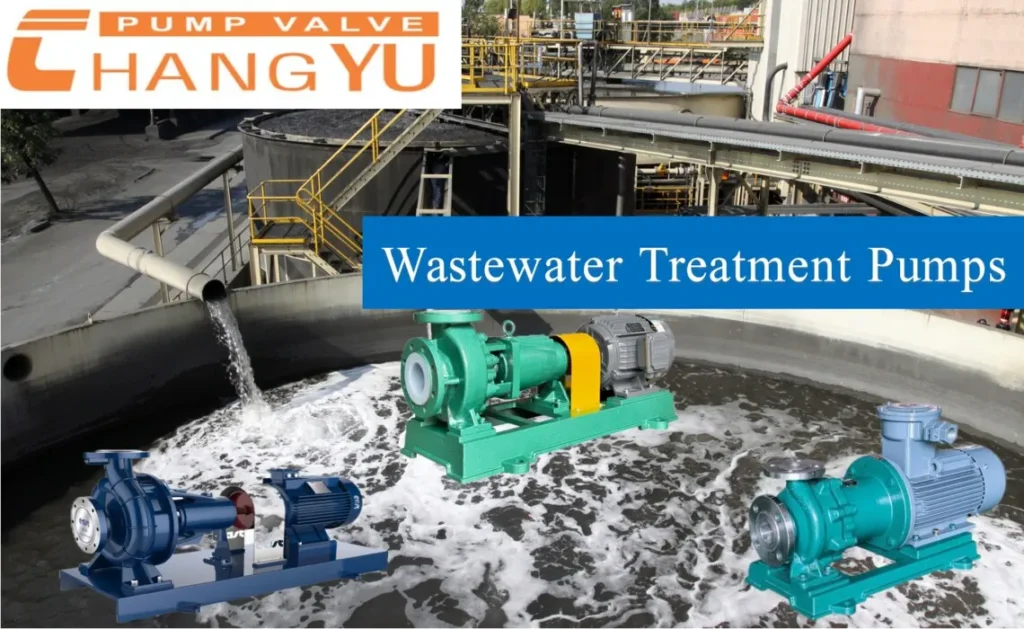
PTFE-lined pumps are commonly used in acid transfer, oxidizing liquid handling, electroplating, chemical processing, pesticide production, and other severe-duty applications where corrosion resistance matters most. They are especially valuable when the process liquid is close to water-like viscosity and requires a reliable centrifugal transfer solution.
Typical application table of PTFE lined centrifugal pump
| Application | Why PTFE is used | Main selection concern |
|---|---|---|
| Strong acid transfer | High corrosion resistance | Concentration and temperature |
| Oxidizing liquids | Better chemical stability | Material compatibility |
| Chemical processing | Lower corrosion risk | Flow and head requirement |
| Electroplating | Resistance to harsh solutions | Seal reliability |
| Pesticide and specialty chemicals | Durability in aggressive media | Lining integrity |
How to choose the right PTFE lined centrifugal pump?
Engineers at Changyu Pump recommend starting with the liquid chemistry first. The correct pump depends on concentration, temperature, specific gravity, solids content, flow rate, and whether the liquid is clean or slurry-like.
1. Confirm chemical compatibility
PTFE performs well in many corrosive services, but the exact fluid still matters. Buyers should always check whether the liquid is an acid, alkali, oxidizer, or slurry before choosing a pump structure.
2. Check temperature window
Temperature affects both corrosion and mechanical life. A pump that works at ambient temperature may not perform the same way when the liquid is hot, so temperature must be included in the selection data.
3. Check specific gravity
Higher specific gravity increases motor load and changes the duty point. If the fluid is denser than water, the motor and hydraulic curve must be adjusted accordingly or overload can occur.
4. Check whether solids are present
PTFE-lined centrifugal pumps work best with clean corrosive liquids. If the liquid contains crystals, suspended solids, or slurry, a standard lined centrifugal pump may wear too quickly and a slurry-type pump may be more suitable.
5. Check sealing requirements
Mechanical seals, magnetic drives, and sealless designs each solve different problems. If leakage control is the highest priority, a magnetic-drive design can be a better fit than a standard sealed pump.
PTFE lined centrifugal pump selection table
| Liquid Condition | Recommended Pump Type | Typical Risk If Wrong |
|---|---|---|
| Clean corrosive acid | PTFE lined centrifugal pump | Corrosion and leakage |
| Hot aggressive liquid | PTFE lined chemical pump | Seal failure |
| Strong oxidizer | PTFE or PFA lined pump | Chemical attack |
| Acid with solids | Corrosion resistant slurry pump | Abrasion and clogging |
| Zero-leak service | Magnetic drive PTFE pump | Fugitive emissions |
Which PTFE centrifugal pumps do we recommend?
Rather than forcing one design into every chemical process, Changyu Pump matches the pump construction to the actual duty point. Below are the models most relevant to PTFE centrifugal pump applications.
IHF Quality Lined Fluorine Centrifugal Pump
This is a strong choice for general corrosive liquid transfer where fluorine lining is needed and the process liquid is clean enough for centrifugal operation. It is commonly used in chemical plants that need corrosion resistance without moving to a slurry-style pump.

Note: if your process is a clean acid or chemical transfer job, the IHF series is a practical starting point.
CYQ Sulfuric Acid Magnetic Drive Centrifugal Pump
This model is designed for sulfuric acid service where leakage control is important. The magnetic-drive layout removes the shaft seal, which helps reduce leak points in corrosive applications.
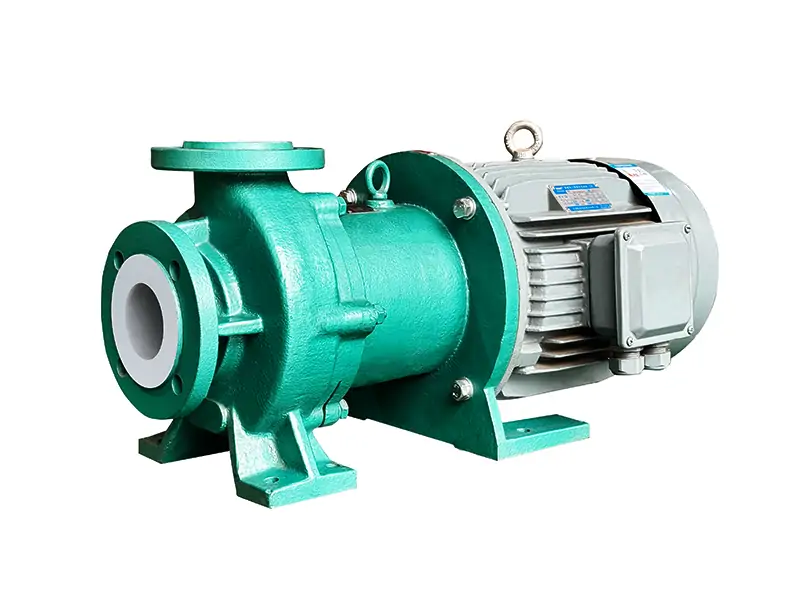
Note: if sealing risk is a major concern, a magnetic-drive option is worth considering.
CYF Series Fluoroplastic Centrifugal Pump
The CYF series is a straightforward fluoroplastic pump for aggressive chemical transfer. It is a useful option when the fluid is corrosive, clean, and needs a chemically resistant centrifugal solution.
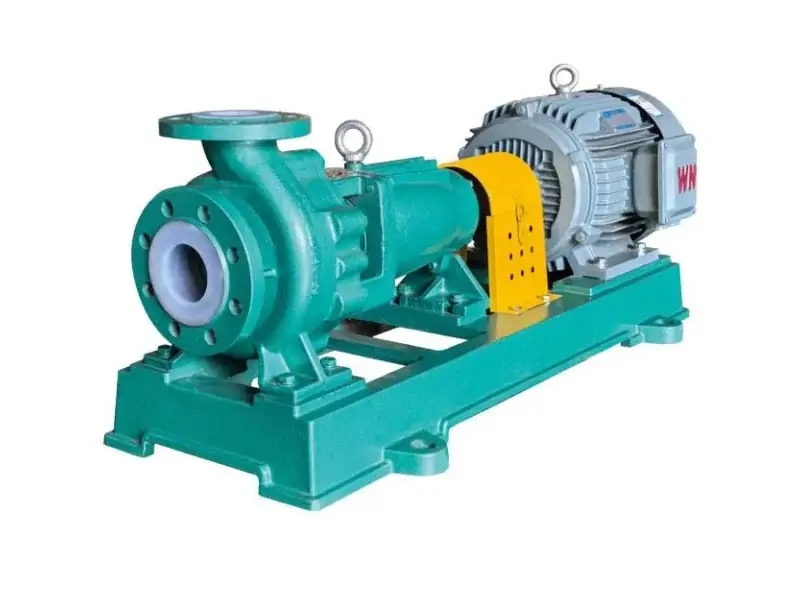
Note: if you need a standard fluoroplastic chemical pump with wide application flexibility, the CYF series is worth reviewing.
Fluorine-Lined Vertical Centrifugal Pipeline Pumps
This vertical pipeline design works well when space is limited and the installation needs an inline layout. Fluorine lining helps maintain corrosion resistance while the vertical structure simplifies piping arrangements in compact plants.

Note: if your plant layout is tight, this style can help reduce footprint without sacrificing chemical compatibility.
Corrosion Resistant Horizontal Slurry Pump
This pump is the better fit when the corrosive liquid also contains abrasive solids or slurry. In those cases, a standard PTFE centrifugal pump may not last as long, so a corrosion-resistant slurry pump becomes the more reliable option.
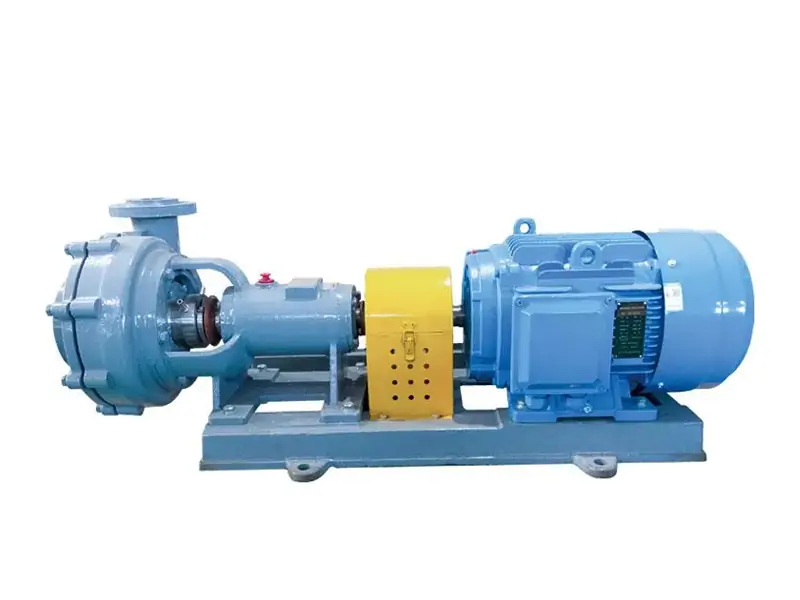
Note: if your process includes particles or sludge, this model is more appropriate than a clean-liquid lined pump.
How does Changyu Pump control quality?
Changyu Pump treats chemical pump quality as a process, not a final inspection. For PTFE centrifugal pumps, the key checks include lining integrity, dimensional accuracy, wetted-part compatibility, and functional testing before shipment.


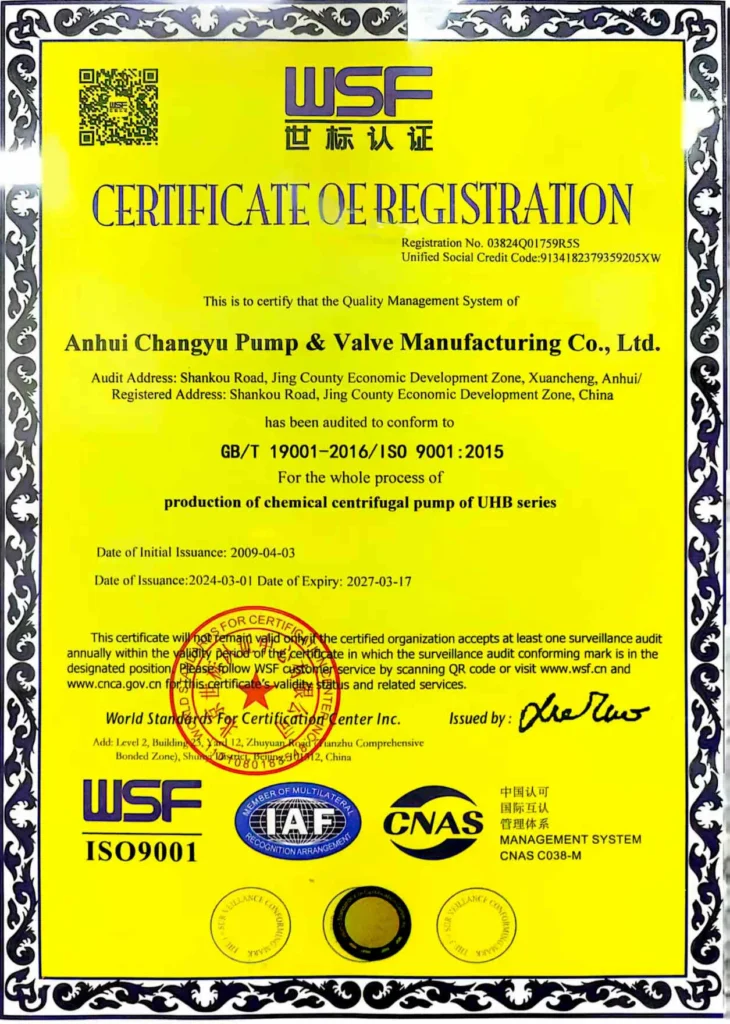
This matters because a lining defect or assembly error can lead to leakage even when the material itself is correct. What this means for you: a well-built PTFE pump should arrive ready for real plant duty, not just for visual acceptance.
Case study of Our PTFE Lined Centrifugal Pump: reducing corrosion failures in acid transfer
A chemical plant was experiencing repeated failures in its acid transfer line. The original pump used a material that could not withstand the liquid chemistry, so the wetted parts wore quickly and maintenance intervals became too short for normal production. After reviewing concentration, temperature, and the presence of solids, Changyu Pump recommended a PTFE-lined centrifugal solution for the clean acid line and a slurry-type corrosion-resistant pump for the abrasive section.

The engineering challenge was that one part of the process was clean and highly corrosive, while another part carried suspended solids. Using one pump type for both sections caused early wear and unstable operation. After separating the duties and matching each one to the correct pump construction, the plant improved reliability and reduced repeated maintenance stoppages.
What problems should buyers avoid?
The most common mistake is choosing PTFE only because the fluid is corrosive. Corrosion resistance alone is not enough; the pump also needs the right hydraulic fit, temperature margin, and sealing configuration.
Another mistake is using a clean-liquid PTFE centrifugal pump for a slurry or crystal-laden application. In that case, the pump may wear or clog faster than expected. A third mistake is ignoring specific gravity when sizing the motor, which can cause overload and poor startup performance.
FAQs
Q1: What is the best use for a PTFE centrifugal pump?
A: PTFE centrifugal pumps are best for clean corrosive liquids, especially acids and oxidizers. They are widely used where strong chemical resistance is needed and the fluid is still suitable for centrifugal transfer.
Q2: Can PTFE pumps handle hot chemicals?
A: Yes, if the temperature stays within the pump’s design range. Temperature must always be checked because higher heat can change both corrosion behavior and mechanical life.
Q3: Is a PTFE lined centrifugal pump better than stainless steel?
A: It depends on the liquid and operating temperature. PTFE is often better for aggressive corrosive media, while stainless steel may be better for higher-temperature fluids or applications that need stronger mechanical durability. The chemistry and temperature should decide the material.
Q4: Can a PTFE centrifugal pump handle slurry?
A: Usually not as well as a slurry pump. If the liquid contains solids, crystals, or abrasive particles, a corrosion-resistant slurry pump is often the safer and longer-lasting choice.
Q5: Why use a magnetic drive PTFE pump?
A: Magnetic drive pumps remove the shaft seal, which helps reduce leakage risk in corrosive service. They are a strong choice when fugitive emissions and maintenance downtime need to be minimized.
Q6: What data should I send for a PTFE pump quote?
A: Send the liquid name, concentration, temperature, specific gravity, flow rate, head, solids content, suction condition, and whether you need a sealed or magnetic-drive design. That helps match the pump to the application.
Q7: Can Changyu Pump provide OEM PTFE pump service?
A: Yes. OEM projects usually include motor selection, flange standards, voltage, material configuration, and export packing. Sending full duty data early helps us recommend the correct model.
Q8: Why do PTFE pumps fail early?
A: Early failure usually comes from using the wrong material, wrong seal type, or wrong pump for slurry service. Matching the pump to chemistry and solids content is the best way to extend service life.
Changyu Pump engineers’ buying tips
- Start with chemical compatibility, not with the pump price.
- Verify temperature before choosing the lining material.
- Include specific gravity in motor sizing.
- Use a slurry pump if the liquid contains solids.
- Consider magnetic drive if leakage control is critical.
- Ask for OEM support when the duty point is unusual.
A PTFE centrifugal pump is a strong solution when the process liquid is corrosive and the pump must resist chemical attack for a long service life. The key is to match the lining, structure, seal type, and hydraulic duty to the actual application, not to a generic product description.
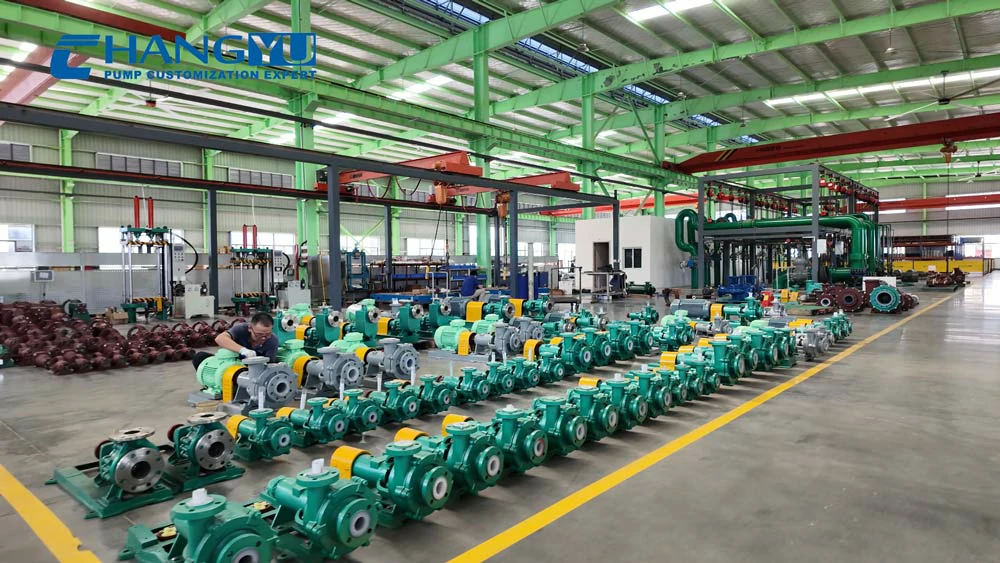
If you need help choosing the right PTFE centrifugal pump, contact Changyu Pump for a factory-direct recommendation and quotation. With more than 20 years of industry experience, our team can review your process data and help you match the right model to your application.