
Pump material selection starts with the liquid, not the grade number. For a stainless steel pump, check the full chemical composition, temperature, contaminants, and solids. Then select the casing, impeller, seal, and other wetted parts as one compatible assembly.
That approach helps you avoid two costly mistakes: buying an alloy that cannot handle the duty, or paying for an upgrade that does not solve the actual problem.
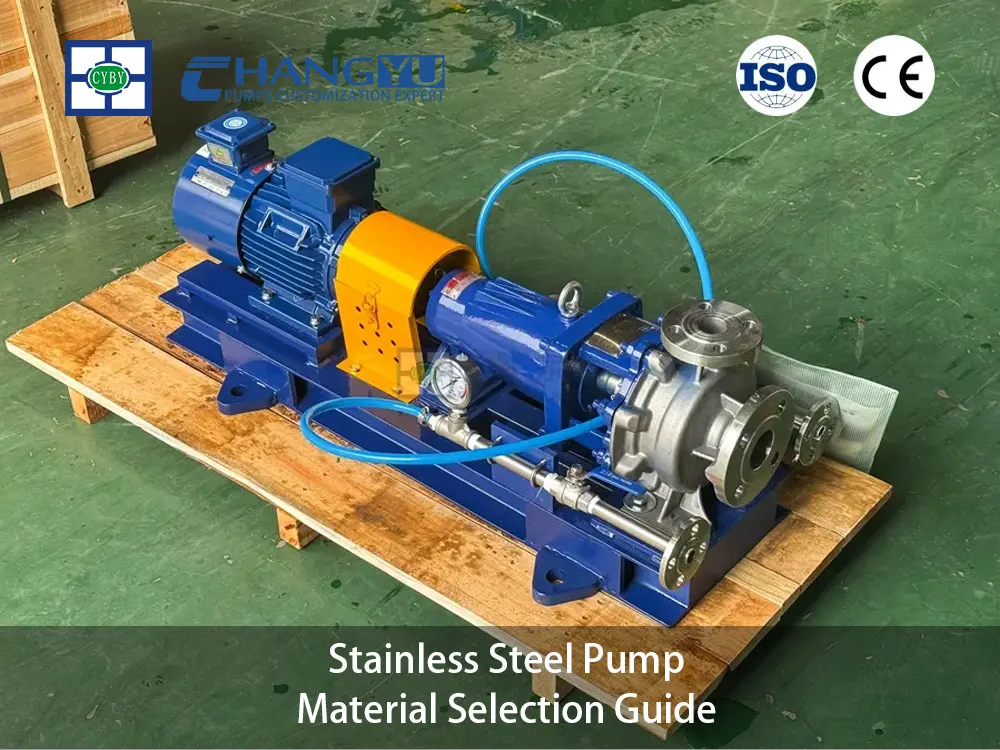
This guide covers 304/304L, 316/316L, 317L, 904L, 2205, and 2507. The aim is to build a useful shortlist for your pump, then turn it into a clear purchase specification.
1. Begin pump material selection with a complete liquid profile
“Acid,” “wastewater,” and “solvent” are starting descriptions. They are not enough to choose a stainless grade.
For example, fresh process water and recycled process water may share a name but differ in chloride content and contamination. A cleaning liquid may expose the pump to conditions more severe than normal production.
Prepare these details before comparing materials:
- Chemical names, concentrations, and expected variation.
- Normal and maximum temperatures, including cleaning.
- Chloride content and other important impurities.
- Solids concentration, particle size, hardness, and settling tendency.
- Time spent running, idle, or filled with stagnant liquid.
- Previous corrosion or seal damage, with photographs if available.
An SDS helps identify ingredients and hazards. It may not provide a complete corrosion assessment, particularly for a recovered or mixed liquid. Add a representative analysis where the composition varies. This fluid-first approach is consistent with Pumps & Systems’ guidance on materials for corrosive and hazardous chemicals. Its equipment discussion differs from the mechanical-seal pumps considered here, but the need to define the exposure applies to both.
2. Stainless steel pump material selection chart
Use this chart to narrow the options. It does not approve a grade for an unspecified chemical or guarantee its availability in every pump model.
| Grade family | Why consider it? | What must be checked? |
|---|---|---|
| 304 / 304L | General stainless option for compatible, relatively mild liquids | Chlorides, acids, cleaning chemicals, temperature, and deposits |
| 316 / 316L | Molybdenum-containing grades offering advantages over 304 in many corrosion environments | Localised corrosion risk and actual chemical compatibility |
| 317L | Higher-molybdenum austenitic option for selected duties beyond 316L | Mixture, temperature, and component availability |
| 904L | Highly alloyed austenitic option for certain demanding chemical duties | Acid concentration, temperature, impurities, and fabrication |
| 2205 duplex | Strength and improved resistance to several corrosion mechanisms | Chloride exposure, service temperature, manufacture, and heat treatment |
| 2507 super duplex | A candidate for more demanding localised-corrosion conditions | Full chemistry, temperature limits, and component specification |
Changyu’s stainless steel centrifugal pump collection lists these material families across its range. Special grades need confirmation for the selected model and wetted components.
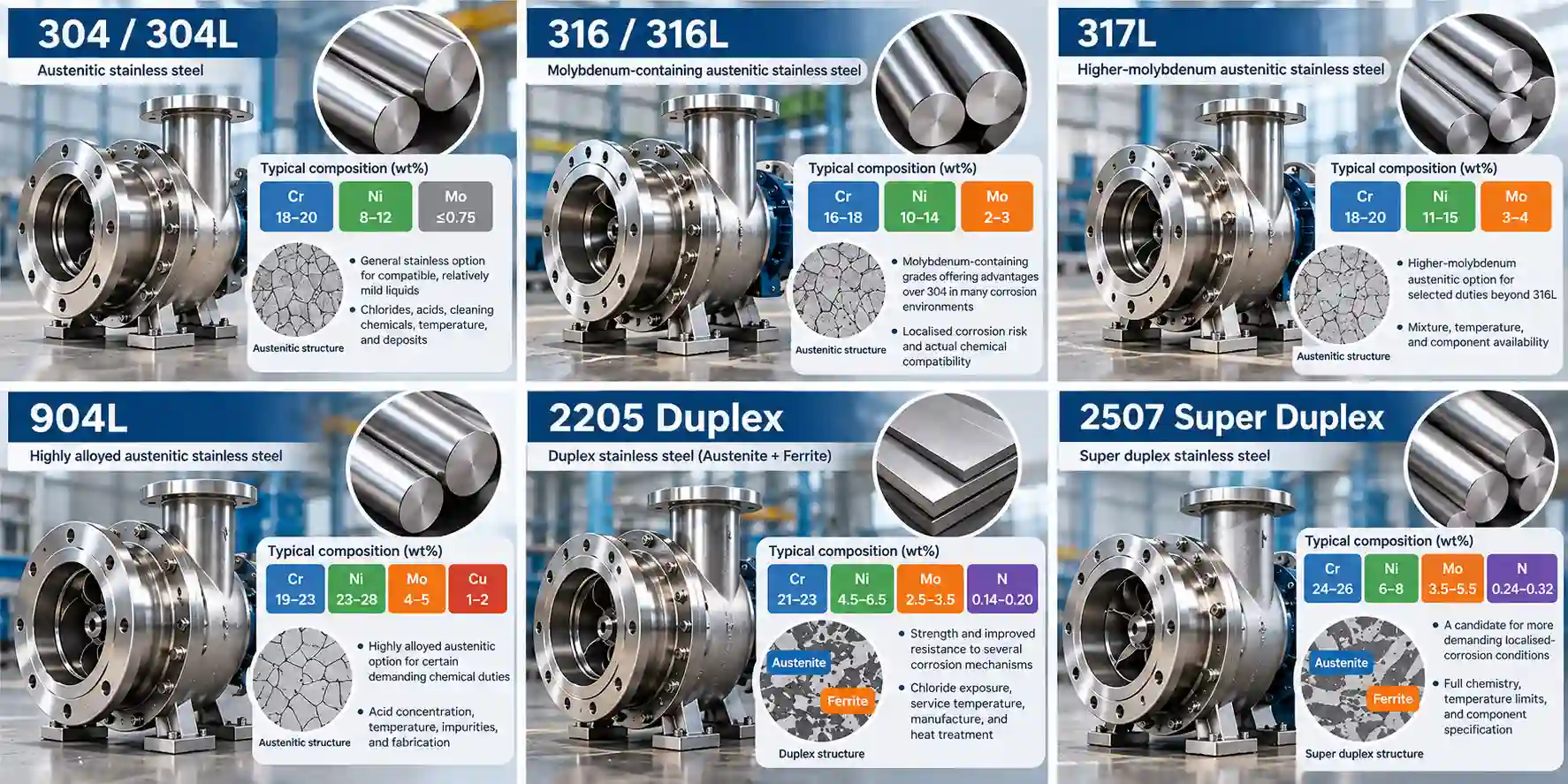
The table is not a universal ladder from “basic” to “best.” Pump material selection should identify the alloy that addresses your corrosion mechanism at a sensible whole-life cost.
3. When should you consider 304 or 316?
304 can be a sensible starting point for compatible mild services. There is little value in upgrading it when the liquid analysis and operating conditions show no need.
316 contains molybdenum, which improves resistance in many environments. That makes it a common candidate when 304 offers insufficient corrosion resistance. It does not make 316 suitable for every acid, salt solution, or seawater duty. Outokumpu’s Supra range information explains the characteristics of molybdenum-containing grades such as 316 and 316L. Use this alloy background alongside data for the actual liquid and pump components.
Practical advice: ask what the change from 304 to 316 is intended to prevent. A recommendation that identifies chloride-related pitting is more useful than “316 is better.” If the failure is abrasive wear or dry-running damage, the alloy change may miss the cause.
For clean-liquid duties, review the CYA horizontal single-stage pump. For chemical service, start with the CYH stainless steel chemical pump and specify the full material and seal package.
4. What does the “L” mean in pump material selection?
The “L” in 304L or 316L means low carbon. A main benefit is reduced susceptibility to intergranular corrosion associated with welding and sensitisation.
It does not mean that 316L is automatically much more resistant to chloride pitting than 316. Nor does it make an unsuitable chemical duty acceptable.
For pump material selection, distinguish the familiar grade name from the manufacturing specification. A cast casing and a wrought shaft may be supplied under different standards. The order should identify the required component grade and applicable standard, not only say “all stainless steel.”
Where welding or repair is involved, discuss the procedure and any required treatment. Material identity, fabrication quality, and operating conditions all affect the finished component.
5. Where do 317L and 904L fit?
317L is a higher-molybdenum austenitic grade that can enter the shortlist for selected corrosion duties beyond the suitability of 316L. It still needs an assessment against the actual liquid.
904L is a highly alloyed austenitic grade used in certain demanding chemical environments. It is not blanket approval for strong acids at every concentration and temperature. Outokumpu’s Ultra range provides independent background on 317L and 904L. The useful question is which property addresses your service, rather than which grade number is higher. For either option, check casting or component availability early. A shortlisted alloy is only useful if it can be supplied in the required pump design, with a suitable seal and documented specification.
If the liquid is unfamiliar or changes substantially, agree on the evidence needed. This may include relevant operating experience, corrosion data, or representative testing before the final order.
6. When should you consider 2205 or 2507?
Duplex stainless steels combine austenitic and ferritic phases. Compared with common austenitic grades, they can offer useful strength and corrosion-resistance advantages, including improved resistance to chloride stress corrosion cracking.
2205 is a duplex option. 2507 is a super duplex option considered for more demanding localised-corrosion conditions. However, 2507 is not automatically the answer whenever 2205 seems uncertain. Pump material selection must also consider temperature, chemistry, fabrication, and the quality of the finished component.
Practical advice: if duplex is proposed, request the exact material standard, manufacturing requirements, and component list. Confirm that the quoted configuration includes the required wetted parts, rather than assuming a duplex casing means a fully duplex wet end.
Likewise, compare 904L and duplex on the specific corrosion problem. They are different alloy routes, not consecutive steps in a universal ranking.
7. Include the seal, gaskets, and wear conditions
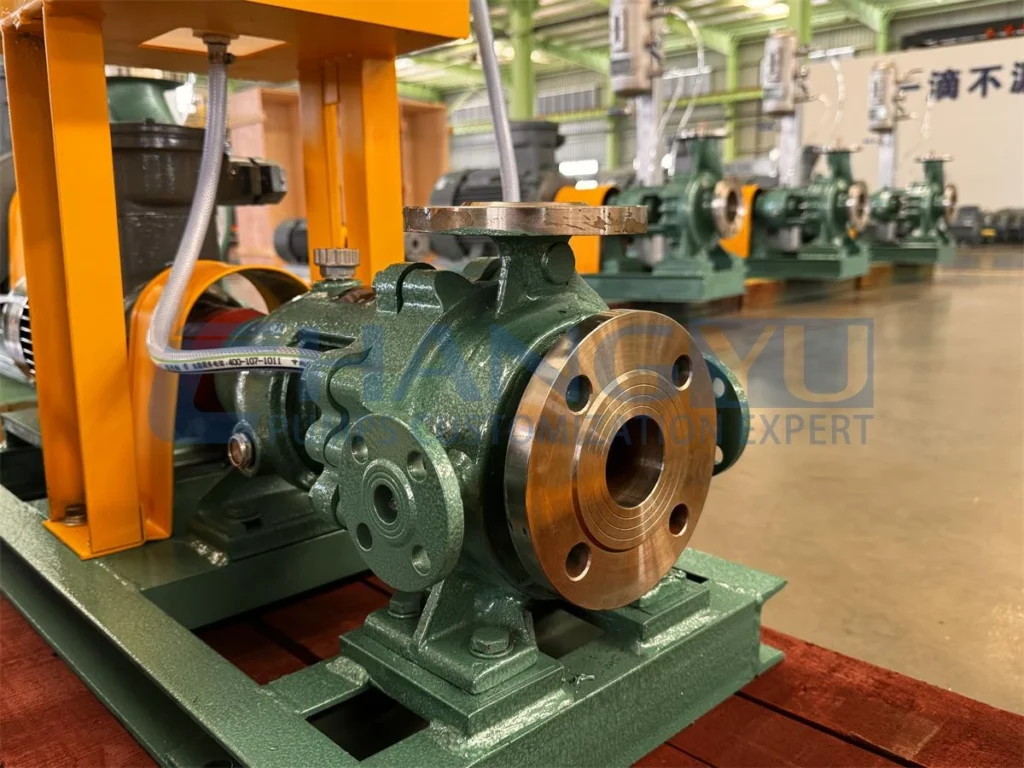
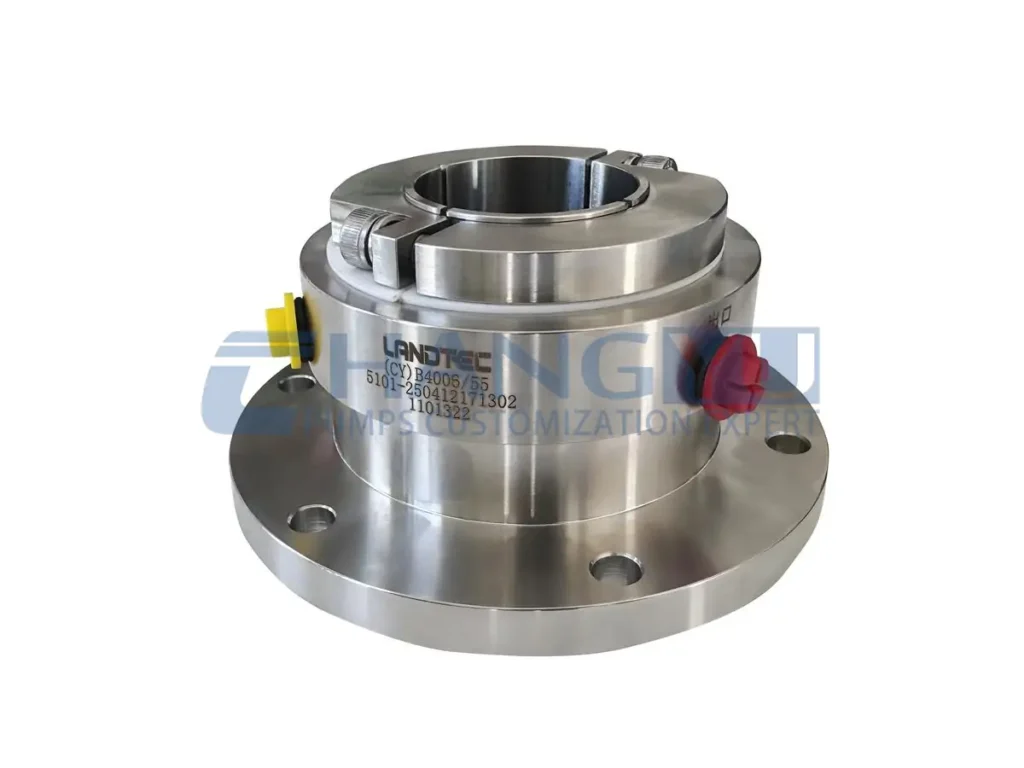
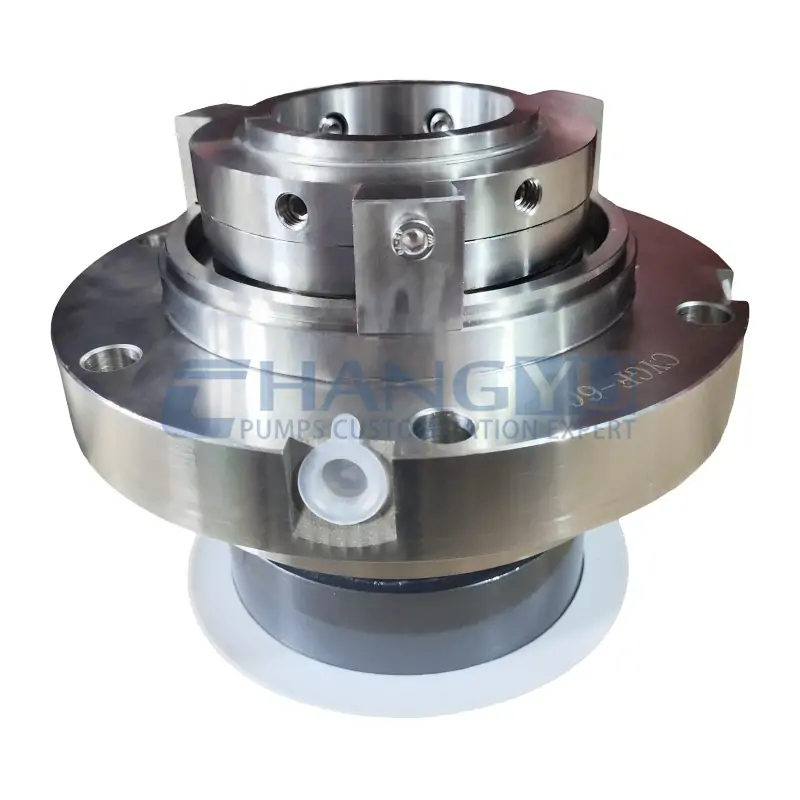
Good pump material selection covers everything exposed to the process liquid. A suitable casing cannot prevent leakage caused by an incompatible O-ring.
| Component | Information to put in the specification |
|---|---|
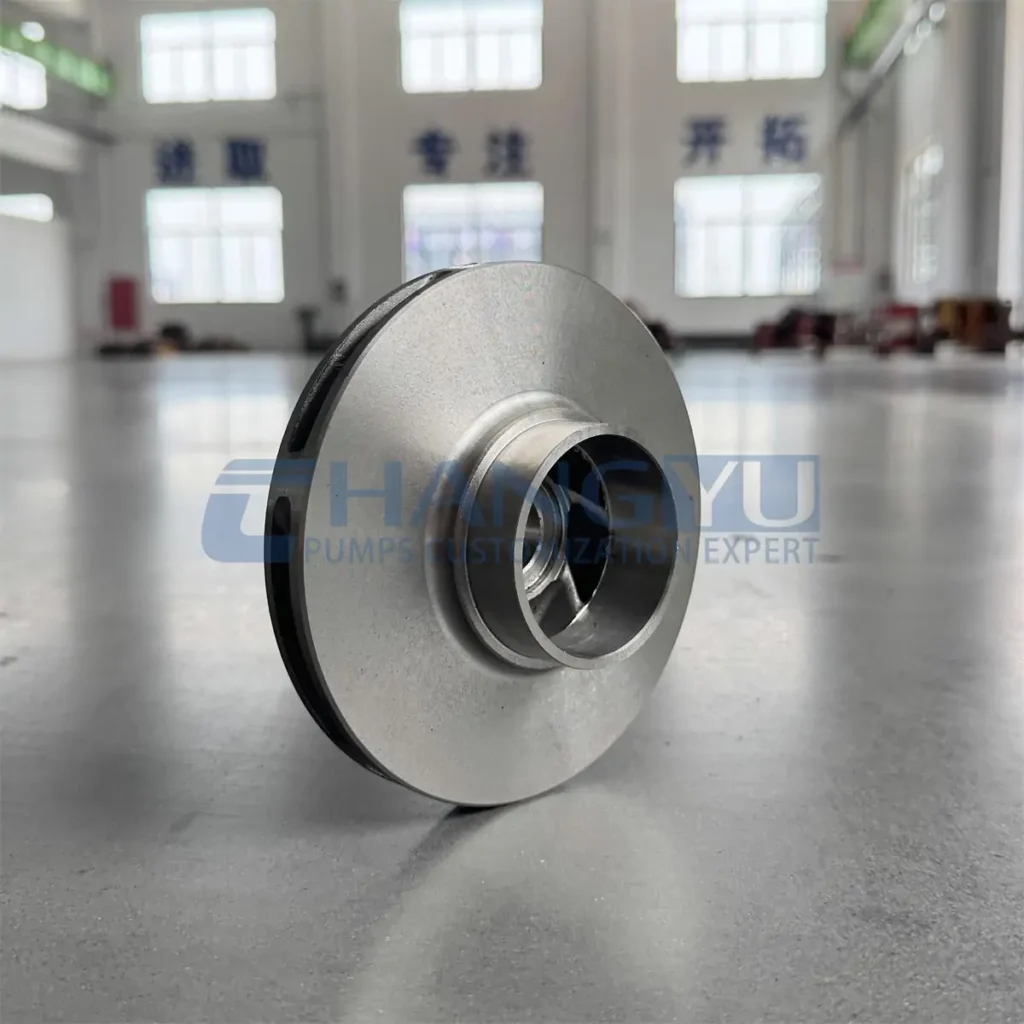
| Casing and impeller | Grade, manufacturing standard, and required material records |
| Wetted shaft or sleeve | Material and exposure to the liquid |
| Mechanical seal | Face materials, secondary seals, and support requirements |
| O-rings and gaskets | Exact material or compound and temperature limits |
| Flush or support circuit | Fluid compatibility and wetted materials |
Seal faces also need suitable operating conditions. Changyu’s supplied maintenance guidance identifies dry running, inadequate cooling, vibration, particles, and blocked flushing as possible causes of failure.
If the liquid contains abrasive solids, review the pump structure as well as the alloy. A harder or more corrosion-resistant material cannot open an undersized impeller passage. The HB abrasive slurry pump is a separate family to assess for such duties.
Where stainless steel is unsuitable, a different material route may be needed. Changyu’s UHB UHMWPE corrosion-resistant pump remains an option for compatible duties, subject to its own temperature, chemical, and mechanical limits.
8. Turn the assessment into a purchase decision
Consider an illustrative plant that transfers a process liquid at room temperature and uses the same pump for a hotter cleaning cycle. The production liquid alone appears compatible with the initial material choice.
A complete pump material selection review also checks the cleaner, its concentration, exposure time, and maximum temperature. It then checks the seal and gaskets against both fluids. Otherwise, the pump may be selected for only part of its real service.
Use the following sequence to keep the decision practical:
- Define normal operation and the most demanding credible exposure.
- Identify the likely corrosion or wear mechanism.
- Shortlist compatible alloys and seal materials.
- Confirm model and component availability.
- Agree on the evidence and documentation needed.
- Compare purchase, maintenance, replacement, and downtime costs.
Do not assume a premium grade will last twice as long without relevant evidence. Ask what uncertainty remains and how it will be resolved.
Material certificates can support traceability. Positive material identification can help verify alloy composition within the test method’s capability. It does not replace every check for carbon content, heat treatment, or casting quality.
The outcome should be a written material schedule tied to a defined operating range. That is more useful than a verbal recommendation to “use stainless.”
FAQ
What is the first step in pump material selection?
Define the complete liquid composition and operating range. Include impurities, solids, cleaning fluids, and maximum temperature. Then assess every wetted component. Starting with a preferred grade can hide the conditions that actually determine compatibility.
Is 316L always the best stainless steel pump material?
No. Some duties can use 304, while others need a different alloy or material route. 316L’s low carbon content is useful for certain fabrication-related corrosion concerns, but it does not make the grade suitable for every chloride or acid service.
Can I select a pump material using pH alone?
No. pH does not identify the full chemistry, chloride content, temperature, or solids. Two liquids with similar pH can attack a material differently. Use pH as one data point within the liquid analysis, not as a complete compatibility specification.
Is 2507 always better than 904L?
No. They belong to different alloy families and offer different advantages. Compare them against the specific liquid, temperature, corrosion mechanism, and component requirements. Choosing by grade number alone can add cost without solving the relevant problem.
Can a corrosion chart make the final decision?
A chart can help screen materials when its concentration, temperature, and test conditions match your duty. Mixtures, contaminants, deposits, and operating changes can alter the result. Use the chart with a component-level review and suitable evidence for uncertain services.
What should I send for a material recommendation?
Send the liquid analysis, concentration and temperature ranges, cleaning conditions, chlorides, solids, flow, and head. For a replacement, include photographs and the location of damage. State how long the old components operated and what changed before the failure.
Request a stainless steel material review
For pump material selection, send Changyu the liquid and operating details through the form below. We can discuss the appropriate product family and the information needed for a material and seal recommendation. Browse the stainless steel pump range or use our contact page.
Email: [email protected]
TEL/WA: +86-13651913727
About the author and sources
Prepared by Jade, Changyu Pump. This guide uses Changyu’s product information and supplied material and maintenance documents. Independent alloy references support the grade comparisons. It provides a selection framework; compatibility and component availability need confirmation for the specific project.
- Changyu stainless steel pump collection: product and material options.
- Outokumpu Supra: 316/316L background.
- Outokumpu Ultra: 317L and 904L background.
- Outokumpu Forta: duplex and super duplex background.
- Pumps & Systems material-selection article: fluid-assessment factors.